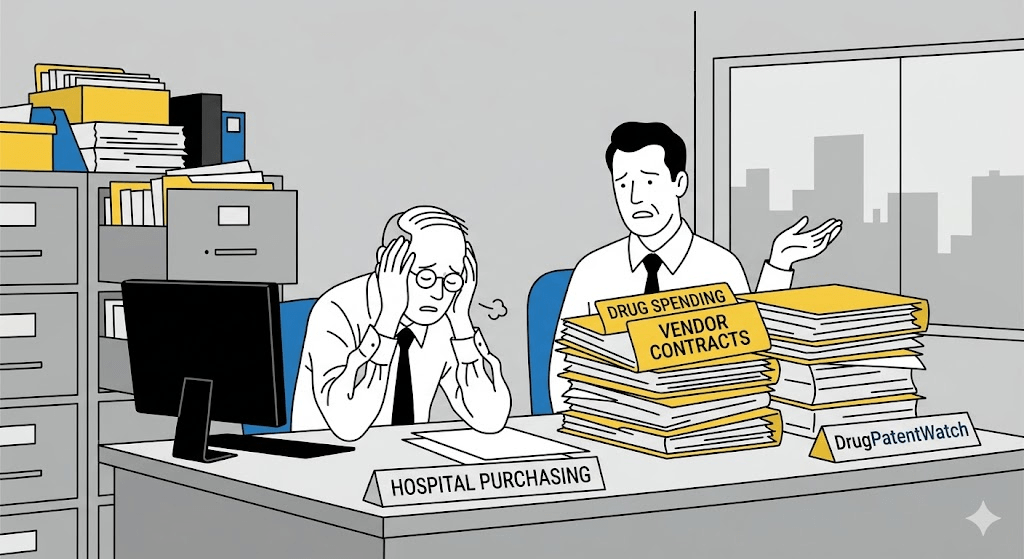
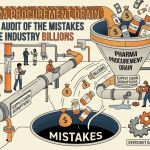
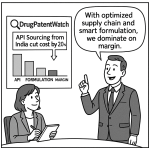
Every three years, a hospital’s pharmacy director sits across from a GPO account team and negotiates contracts that will govern hundreds of millions in pharmaceutical spend. The manufacturer’s sales rep has modeled every scenario. The GPO has years of utilization data. And the hospital’s procurement team, in most cases, walks in with a spreadsheet of last year’s prices and a vague sense that things should cost less.
That information gap is not accidental. It is structural. And it costs U.S. hospitals real money — money that patent expiration intelligence can recover, if procurement leaders know how to use it.
Between 2025 and 2030, nearly 200 drugs — including roughly 70 blockbusters each generating over $1 billion in annual sales — will lose market exclusivity. [1] The total branded revenue exposed runs north of $300 billion, with projections climbing toward $400 billion by 2033 as patent protection lapses on drugs like Keytruda, Eliquis, and Opdivo. [1] For a hospital procurement leader, this is not background noise. It is the most actionable contract negotiation calendar the pharmaceutical industry has produced in a generation.
This article explains how to read that calendar, build it into your GPO negotiation strategy, and convert patent expiration intelligence into contract terms that actually hold.
The Information Asymmetry at the Heart of Every GPO Negotiation
Group purchasing organizations exist because no individual hospital can match the collective leverage of a purchasing consortium. Over 95% of U.S. hospitals use GPOs for pharmaceutical procurement, and the three dominant players — Vizient, Premier, and HealthTrust — represent more than 75% of the market by volume. [2] Vizient alone contracts on behalf of purchasing volume exceeding $140 billion annually, serving 97% of the nation’s academic medical centers. [3]
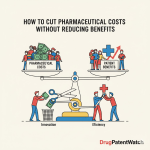
That scale produces genuine savings. The Healthcare Supply Chain Association (HSCA) estimates GPOs save the U.S. healthcare system up to $55 billion annually, with member institutions paying 10% to 18% less on supply chain costs compared to independent purchasing. [4] These numbers are real, and GPO membership delivers value that smaller hospitals could not replicate alone.
But scale is a blunt instrument. GPO contracts are designed for broad applicability across diverse member institutions, which means they rarely reflect the specific negotiating position of any individual hospital. A 400-bed community hospital and a 1,200-bed academic medical center have the same GPO contract terms, different patient populations, radically different formulary compositions, and completely different relationships to the drugs sitting on that contract. The GPO cannot optimize for all of them simultaneously.
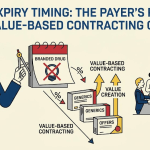
Where GPO contracts systematically underperform is in the timing of generic and biosimilar transition. A standard three-year pharmaceutical contract signed eighteen months before a major patent expiration locks the hospital into pre-expiration pricing during the critical window when the branded manufacturer is most vulnerable to negotiation pressure. The manufacturer knows the cliff is coming. Procurement teams, without patent intelligence, often do not know how close it is.
This is where tools like DrugPatentWatch become operationally relevant. DrugPatentWatch aggregates Orange Book patent data, Paragraph IV certification filings, ANDA approvals, litigation history, and settlement disclosures into a structured intelligence layer that procurement professionals can query by drug, manufacturer, or therapeutic class. Used correctly, that data set transforms a GPO negotiation from a price comparison into a forward-looking conversation about market structure.
How Patent Expiration Actually Works — and Why the Simple Dates Mislead You
The phrase “patent expiration” suggests a single date on a calendar. The reality is a stacked, adversarially constructed portfolio of intellectual property designed to maximize exclusivity duration well beyond any single patent’s expiration.
A branded pharmaceutical product may carry dozens of overlapping patents covering the molecule itself, specific formulations, dosing regimens, manufacturing processes, polymorphic crystal forms, and even delivery device components. Keytruda (pembrolizumab), Merck’s checkpoint inhibitor and the world’s best-selling drug with $29.3 billion in 2024 sales, carries more than 300 patent applications covering indications, formulations, and dosing schedules. [6] The core composition-of-matter patent may expire in 2028, but the full portfolio could generate litigation that keeps biosimilar competitors in legal limbo for years afterward.
Entresto (sacubitril/valsartan) from Novartis shows the other pattern. A key combination patent was scheduled to expire in July 2025, and multiple manufacturers had received FDA approval to market generic versions. Novartis acknowledged a potential loss of exclusivity around mid-2025 in its 2024 annual report, though it flagged ongoing litigation as a modifier. [7] Hospitals that tracked this timeline could use the approaching patent expiration as active leverage in 2024 contract negotiations — before the generic launched — by signaling willingness to delay volume commitment pending the competitive entry.
The key categories of patent protection that procurement analysts need to track are four in number: composition-of-matter patents (the broadest and most valuable, covering the active ingredient itself); formulation and delivery patents (covering specific dosage forms, extended-release mechanisms, or devices); method-of-use patents (covering specific therapeutic indications, which are more easily designed around); and pediatric exclusivity extensions (adding six months to all exclusivity periods for drugs that complete pediatric studies, regardless of whether pediatric use is commercially relevant to a hospital formulary). Each category has a different probability of surviving generic challenge and a different impact on actual competitive entry timing.
The Paragraph IV Pathway: Where Real Entry Timing Lives
The Hatch-Waxman Act of 1984 created the abbreviated new drug application (ANDA) process that governs generic drug entry in the United States. When a generic manufacturer files an ANDA with a Paragraph IV certification — asserting that the listed patents are invalid, unenforceable, or will not be infringed — it triggers a defined legal sequence that determines real market entry timing far more accurately than any nominal expiration date. [8]
The first generic to file a successful Paragraph IV certification earns 180 days of marketing exclusivity before other generic competitors can enter. This first-filer exclusivity is worth hundreds of millions of dollars on high-volume drugs, which is why generic manufacturers invest heavily in patent challenge litigation. The 180-day exclusivity transforms generic development into an information race as much as a scientific one. [9]
When a brand manufacturer receives a Paragraph IV certification, it can initiate patent infringement litigation that automatically triggers a 30-month stay of FDA approval. This is the mechanism that allows manufacturers to push effective generic entry well beyond the nominal patent expiration date while the cases work through district court and appellate review. Settlement agreements, which frequently include authorized generic licenses set to launch on negotiated future dates, add another layer of complexity to actual entry timing.
For procurement purposes, the number of ANDA filers waiting on a particular drug is one of the most useful single data points available. A drug with eight Paragraph IV filers, multiple approved ANDAs, and a clear litigation history heading toward resolution is a different negotiating asset than a drug with one filer whose case is at the Federal Circuit. DrugPatentWatch tracks both landscapes in structured, searchable form — which is why procurement professionals who use it before contract negotiations enter those conversations with fundamentally different information sets than those relying on press releases and analyst notes.
The $300 Billion Patent Cliff: What Procurement Teams Need to Know by Drug Class
The 2025-2030 patent cliff is not uniform across therapeutic categories. It concentrates in oncology immunotherapy, cardiovascular medicine, and autoimmune disease — three areas that together account for the majority of high-spend hospital pharmacy budgets. Understanding the cliff by drug class lets procurement teams sequence their negotiating priorities.
Oncology Immunotherapy: The Biosimilar Question
The immuno-oncology patent cliff centers on two drugs: Keytruda (pembrolizumab) from Merck, with core patents expiring around 2028, and Opdivo (nivolumab) from Bristol Myers Squibb, with U.S. exclusivity expected to end around the same period. [10] Together, these checkpoint inhibitors represent annual revenues exceeding $40 billion globally.
Both are biologics, which means their generic equivalents are biosimilars — structurally similar but not identical copies that require clinical data demonstrating comparable efficacy and safety. Biosimilar development takes three to four years and costs over $100 million, compared to under $3 million and three years for a small-molecule generic. [6] This structural difference matters for procurement strategy: small-molecule generics typically capture 90% of market share within two years of launch, with prices dropping 80-90%. Biosimilar price erosion is slower, typically 30-40% at initial launch, reaching 75% market share only after three to five years. [6]
The hospital-specific implication is significant. For drugs administered in the inpatient or outpatient infusion setting under Part B — which includes pembrolizumab, nivolumab, and most infused oncology biologics — the GPO contract price is the primary determinant of what the hospital pays the manufacturer or distributor. A hospital that achieves a 15% reduction on a $50,000-per-year infused biologic through aggressive GPO negotiation anchored to approaching biosimilar competition is capturing real operational value.
But the Keytruda biosimilar market will not behave like the adalimumab (Humira) market. The Humira biosimilar launch in January 2023 ended a 20-year competition-free period, and by the end of 2023 there were nine approved biosimilars with an eighth ready to launch. Even so, biosimilars account for roughly 25% of spend overall compared to their originator products, according to Vizient member data. [11] That uptake lag reflects payer formulary inertia, rebate structures that favor the brand, and clinical familiarity effects — all of which will also characterize the Keytruda biosimilar market when it emerges.
The procurement takeaway for oncology: use the approaching 2028 Keytruda and Opdivo cliffs as pressure points in current contract negotiations, not post-expiration switching triggers. Manufacturers know what is coming. They will negotiate more aggressively now to lock in volume commitments before biosimilar alternatives create formulary choice.
Cardiovascular: The Small-Molecule Opportunity
The cardiovascular patent cliff involves primarily small-molecule drugs — which means faster generic entry, steeper price erosion, and cleaner procurement math than the biologic-heavy oncology cliff.
Xarelto (rivaroxaban), the other dominant DOAC, faces a 2026 U.S. patent expiry that makes it one of the most closely watched cardiovascular cliffs in current procurement planning. Generics are expected to move quickly, and formulary tightening will likely follow as payers push for cheaper alternatives. [12] A hospital with significant Xarelto volume that has not yet structured its cardiovascular formulary conversations around the 2026 timeline is leaving money on the table in current GPO negotiations.
Autoimmune and Immunology: The Biosimilar Transition Already Underway
The immunology patent cliff is not approaching — it is happening. Humira (adalimumab), the world’s top-selling drug for two decades, lost exclusivity in 2023, generating nine approved biosimilars by year-end. Stelara (ustekinumab) followed with biosimilar entry in January 2025. These transitions are the template for every subsequent biosimilar cliff, and the lessons are directly applicable to hospital GPO strategy.
For hospital procurement specifically, the relevant channel is the GPO-negotiated institutional price for drugs administered in the infusion suite or distributed through hospital outpatient pharmacy. Here, the transition math is cleaner because rebate structures are more transparent. Hospitals affiliated with the two most aggressive contracting GPOs had higher biosimilar uptake relative to other GPOs, according to research analyzing Medicare claims and IQVIA data — suggesting that GPO contracting posture directly affects how much of the biosimilar price discount hospitals actually capture. [2]
‘GPOs save the U.S. healthcare system up to $55 billion annually, with member institutions paying 10% to 18% less on supply chain costs compared to independent purchasing — but hospitals that fail to use patent expiration intelligence in contract timing regularly forgo additional savings that dwarf those baseline figures in high-spend therapeutic classes.’ — Healthcare Supply Chain Association (HSCA), as cited in industry analysis [4]
The Competitive Landscape: How Manufacturers Game the Patent System Against You
To negotiate effectively against pharmaceutical manufacturers, hospital procurement leaders need to understand the full range of intellectual property strategies manufacturers deploy to extend effective market exclusivity beyond the nominal patent term. These strategies are legal, widespread, and specifically designed to delay the generic competition that hospital formularies depend on.
Patent Thickets: Layering Protection Against Generic Challengers
A patent thicket is a dense web of overlapping patents that collectively prevent generic or biosimilar entry even when the primary composition-of-matter patent has expired or been challenged successfully. The strategy works because each individual patent in the thicket must be challenged separately, and each challenge can trigger its own 30-month stay of FDA approval. A generic manufacturer that successfully invalidates the primary patent may find itself facing five additional formulation and delivery patents, each supported by its own Orange Book listing and each capable of triggering independent litigation.
AbbVie’s Humira patent estate is the most extensively documented example of a patent thicket. At its peak, AbbVie had listed more than 130 patents in the Orange Book for adalimumab, covering everything from the antibody molecule itself to specific dosing regimens, specific concentration formulations, specific device designs for the autoinjector, and specific manufacturing processes. A generic or biosimilar manufacturer seeking to enter the market without infringing any of these patents faced a challenge of extraordinary legal complexity. The practical result was that AbbVie maintained effective market exclusivity for approximately two years beyond the expiration of the primary composition-of-matter patent.
For hospital procurement teams, patent thickets create a specific planning problem: the nominal expiration date of the primary patent dramatically understates the actual exclusivity duration. A procurement director who identifies Humira’s core patent expiration and builds a 2023 biosimilar transition plan around that date without accounting for the settlement agreement structure — which specified authorized entry dates several years in advance — would have been surprised by the actual launch timing. The settlement agreements that ended the major Humira patent challenges were disclosed in AbbVie’s SEC filings beginning in 2019, four years before first biosimilar launch. Hospital procurement teams with access to those disclosures could plan accordingly. Teams without that access were reading press releases and guessing.
Evergreening: Formulation Changes as Exclusivity Extensions
Evergreening refers to a manufacturer’s strategy of filing new patents for modified versions of an existing drug — extended-release formulations, new salt forms, new combination products, new delivery devices — and using these new patents to maintain market exclusivity on the reformulated version after the original patent expires. The reformulated version is then aggressively marketed to prescribers and payers as clinically superior, with the dual goal of migrating market share away from the generic-eligible original formulation and establishing a new exclusivity period for the modified product.
Nexium (esomeprazole) is the canonical example. When Prilosec (omeprazole) faced generic entry in 2001, AstraZeneca introduced Nexium — the S-enantiomer of omeprazole — with a new patent covering the specific stereoisomer, extensive marketing claiming clinical superiority over generic omeprazole, and a pricing strategy that preserved Nexium’s revenue despite generic availability of the original compound. The strategy was successful enough that Nexium became a blockbuster in its own right, despite the clinical evidence for meaningful superiority over generic omeprazole being limited. AstraZeneca captured years of additional exclusivity revenue on a molecule that was, from a pharmacological perspective, a modification of an already off-patent compound.
For hospital formulary management, evergreening creates a specific challenge: patients are often transitioned to the new formulation by prescribers who have received manufacturer education about its advantages, which means the generic-eligible original formulation loses market share precisely as it becomes competitively available. A hospital that has successfully negotiated generic omeprazole pricing finds that prescriber preference has shifted to Nexium during the period of evergreening marketing, requiring a secondary formulary management effort to redirect utilization back to the generic-eligible product.
Patent intelligence helps procurement teams identify evergreening patterns early by flagging when manufacturers file new patent applications for formulation modifications of high-spend drugs within three to five years of primary patent expiration. This pattern is predictable enough to be a standard screening criterion in patent monitoring workflows.
Pediatric Exclusivity Extensions: A 6-Month Gift That Costs Hospitals Millions
The Best Pharmaceuticals for Children Act allows manufacturers to earn six additional months of exclusivity on all patents for a drug if they complete pediatric studies requested by the FDA. This applies even if the studies are negative, and even if the drug is rarely or never used in pediatric patients in clinical practice. A blockbuster oncology drug earning six months of pediatric exclusivity on $5 billion in annual sales generates approximately $2.5 billion in additional exclusivity revenue — the studies that earned the extension typically cost $10 to $20 million.
For hospital procurement, pediatric exclusivity is important because it adds exactly six months to every patent listed in the Orange Book for the drug, regardless of which patents are relevant to generic competition. A hospital procurement director who has modeled a competitive entry date based on patent expiration dates must add six months if the manufacturer has obtained or is seeking pediatric exclusivity — which is detectable from FDA records and manufacturer press releases well in advance.
DrugPatentWatch tracks pediatric exclusivity grants as part of its standard patent expiration data, which is one reason it is more reliable than simply reading patent expiration dates from the Orange Book without this adjustment. A procurement director who uses the nominal Orange Book date without the pediatric exclusivity adjustment will systematically plan procurement actions six months too early on any drug where this extension has been granted.
Building a Patent Intelligence Function: What Procurement Teams Actually Need
Patent expiration intelligence is not a one-time lookup. It is a repeating analytical process that needs to be integrated into the procurement calendar at least 18 to 24 months ahead of any major contract negotiation or renewal.
The core data requirements for a functional patent intelligence process cover four areas.
First, patent portfolio mapping. For each high-spend drug on the hospital formulary, procurement teams need to know which patents are listed in the FDA Orange Book, which are composition-of-matter versus formulation or method-of-use, when each expires, and whether any Paragraph IV certifications have been filed. This is the baseline data layer that DrugPatentWatch, the FDA’s Orange Book database, and court dockets provide.
Second, ANDA and biologics license application (BLA) pipeline tracking. The number of ANDA filers waiting to market a generic, combined with the status of any litigation, gives procurement teams a probability-weighted estimate of actual generic entry timing. Multiple filers with settled cases and approved ANDAs is a strong signal of near-term competition. One filer with an active Federal Circuit appeal is a signal to discount the nominal patent date significantly.
Third, authorized generic intelligence. Branded manufacturers frequently respond to generic entry by launching their own authorized generic — a generic version of their own drug sold through a third party, typically at a modest discount to the brand, to capture market share and blunt first-filer exclusivity for the Paragraph IV challenger. Authorized generics suppress the price competition that hospital procurement teams are counting on, because they do not trigger the full generic price erosion dynamic. Knowing whether an authorized generic is likely — which is often signaled in manufacturer SEC filings and conference calls — adjusts the procurement timeline accordingly.
Fourth, settlement agreement disclosure review. Pay-for-delay settlements, now subject to FTC scrutiny following the Supreme Court’s 2013 ruling in FTC v. Actavis, must be disclosed in SEC filings and antitrust regulatory submissions. These settlements frequently specify authorized entry dates — the date on which a generic manufacturer can launch under a license from the brand, in exchange for dropping its patent challenge. That date is often the most reliable single indicator of actual generic entry, and it is buried in legal filings that most procurement teams never read. DrugPatentWatch and similar patent intelligence platforms surface these settlements in structured format, which is their core operational value for procurement professionals.
The 18-Month Rule: Why Timing Intelligence Before the Contract Matters
The negotiating window for patent expiration leverage is finite. It opens when the approaching competitive entry becomes clear enough to price into contract terms, and it closes when the generic or biosimilar actually launches — at which point the leverage converts from anticipatory to reactive.
The optimal negotiating position combines approaching patent expiration with a multi-year contract structure that prices in the competitive transition. A hospital that enters a three-year GPO pharmaceutical contract negotiation eighteen months before a major patent expiration can demand pre-expiration price concessions anchored to the known future competition, automatic pricing tiers that adjust downward when generics or biosimilars enter, and pass-through provisions that guarantee the hospital captures a specified percentage of any price reduction. These terms are available — branded manufacturers will negotiate them when the alternative is losing volume to a competitor before the patent expires — but they require the procurement team to know the timeline exists.
The window for maximum leverage is roughly 12 to 24 months before actual generic market entry — not nominal patent expiration, but actual entry based on Paragraph IV filing status, litigation trajectory, and settlement terms.
GPO Contract Structures That Capture Patent Expiration Value
Understanding patent timelines is necessary but not sufficient. The intelligence has to be translated into specific contract terms that a GPO or manufacturer will actually accept. This requires procurement leaders to understand the contract structures available and which are most effective for each type of patent expiration scenario.
Evergreen Price Protection Clauses
A standard GPO pharmaceutical contract sets a fixed price or a fixed discount from WAC (wholesale acquisition cost) for the contract period, with limited provision for downward price adjustment if generic competition enters. Branded manufacturers like these structures because they provide revenue predictability and limit how quickly they need to respond to competitive entry.
Procurement teams with patent intelligence can replace fixed contracts with evergreen price protection clauses — provisions that automatically trigger renegotiation or pre-specified price reductions when defined competitive events occur. A competitive trigger might be defined as the FDA approval of any ANDA for the branded drug, the first commercial sale of a generic version at a price below a defined threshold, or the loss of exclusivity as determined by the FDA’s Orange Book status change.
The manufacturer’s objection to evergreen clauses is typically framed as complexity and uncertainty. The procurement counter — which requires patent intelligence to make effectively — is that the uncertainty is not symmetric. If the manufacturer’s patent position holds and no generic enters during the contract term, the hospital gets no automatic price reduction and the clause is never triggered. The only scenario where the clause activates is the one the manufacturer’s own Orange Book filings already indicate is likely. That argument closes the negotiation quickly when the procurement team has the litigation timeline in hand.
A hospital with significant utilization of both Xarelto and Eliquis in its cardiovascular formulary can use the approaching Xarelto 2026 cliff to renegotiate its Eliquis contract terms. The argument to BMS/Pfizer is straightforward: when rivaroxaban generics enter at a fraction of current Xarelto pricing, formulary position for Eliquis is not guaranteed. What concession on Eliquis pricing — now, before that competition is active — keeps Eliquis on the preferred formulary tier?
This therapeutic class dynamic is one of the most underutilized tools in hospital pharmaceutical procurement, because it requires the procurement team to understand not just its own formulary composition but the patent landscape across an entire therapeutic class simultaneously. That cross-drug, cross-company view is exactly what DrugPatentWatch’s patent surveillance tools are designed to produce.
Committed Volume with Declining Price Tiers
GPO contracts frequently offer volume commitment structures where hospitals agree to purchase a specified percentage of their formulary utilization through the GPO-contracted product in exchange for deeper discounts. HealthTrust operates a committed model that requires affiliated facilities to purchase a set percentage from HealthTrust’s covered brands. Vizient and Premier both offer optional commitment programs. [2]
For drugs approaching patent expiration, the volume commitment structure can be inverted to the hospital’s advantage. A procurement team with 24 months of patent runway can offer a manufacturer increased volume commitment in exchange for price concessions that step down automatically when generic entry occurs. The manufacturer gets near-term volume protection against the competitive entry it knows is coming. The hospital gets a pre-agreed price floor that limits exposure during the post-expiration price transition.
The critical design element is the step-down schedule. A well-drafted step-down clause might specify that the contract price for Entresto reduces by a defined percentage within 90 days of any generic sacubitril/valsartan achieving commercial availability at a price below a specified threshold, with a second reduction triggered at 180 days if the generic market share exceeds a defined level. These triggers are objective, measurable, and tie the price adjustment to the competitive reality the manufacturer is already modeling internally.
Multi-GPO Contracts and Direct Manufacturer Negotiation
For drugs within 18 months of a significant patent expiration, direct manufacturer negotiation is often superior to GPO contracting because it allows the hospital to make arguments that a generic GPO contract cannot accommodate. A 1,000-bed academic medical center consuming $15 million per year in a single branded biologic is a counterparty a manufacturer will negotiate with directly — especially when that hospital’s procurement director can present a detailed patent litigation timeline showing the competitive entry is both imminent and likely.
The combination of direct negotiation with GPO baseline pricing creates a useful structure: the GPO contract establishes a floor price that the hospital is entitled to, while the direct negotiation seeks terms the GPO cannot obtain because they require individualized volume commitments. When the direct negotiation produces better terms, the hospital takes them. When it does not — because the manufacturer has identified the hospital as a committed formulary anchor and will not concede further — the hospital has the GPO price as a reliable fallback.
The Manufacturer’s Defensive Playbook — and How Patent Intelligence Neutralizes It
Pharmaceutical manufacturers approaching patent expiration have their own playbook, and hospital procurement teams encounter it regularly without always recognizing it for what it is. Understanding the defensive strategies helps procurement leaders anticipate them and position their patent intelligence accordingly.
Pre-Expiration Price Increases
The first and most predictable defensive move is a price increase in the period before patent expiration. Manufacturers reason that raising prices before generic competition enters maximizes total revenue from the exclusivity period and, by setting a higher WAC baseline, ensures that any percentage-of-WAC contract discounts produce lower net prices for generics to compete against.
The Vizient Summer 2024 Pharmacy Market Outlook flagged this pattern directly: products in line to face biosimilar competition are projected to increase their list prices in advance. Reference denosumab was projected to experience the highest percentage price increase of any drug in 2025, directly following FDA approval of its first two biosimilars. [14] This pattern — price hike immediately after biosimilar approval, before biosimilar commercial launch — is now well-documented enough that procurement teams should build it into the contract timeline as a default assumption.
The negotiating response is to demand WAC-independent pricing. Rather than accepting a percentage discount from WAC, a hospital with sufficient volume can negotiate a fixed dollar price or a fixed-price-per-unit that does not adjust upward with WAC changes. This converts a percentage contract into a ceiling contract, capping the hospital’s exposure regardless of what the manufacturer does with its list price.
Rebate Structures Designed to Delay Switching
The second defensive strategy is the loyalty rebate — a contract structure that pays hospitals escalating rebates tied to maintaining a defined market share threshold for the branded product within its therapeutic class. If a hospital’s Eliquis share falls below 60% of total DOAC utilization, for example, it forfeits the top tier of the rebate schedule and receives a lower effective price on all Eliquis purchases, not just incremental volume.
Loyalty rebates are effective because they create a switching cost that does not appear on the invoice. The hospital administrator looking at unit prices sees that the branded drug costs more than the generic. The procurement director modeling the full cost-benefit analysis discovers that switching enough volume to generics to lose the rebate tier actually increases total class spend in the short term, even as it reduces per-unit cost on generics. This calculation forces a threshold analysis that most hospitals perform imprecisely because they lack granular data on rebate tier sensitivity.
The procurement countermove requires modeling the full rebate sensitivity curve, not just the tier thresholds specified in the contract. A hospital that maps out the dollar value of each rebate tier against the volume commitment required to maintain it can identify the switching threshold — the volume migration to generics that would actually improve total class spend net of lost rebates. This analysis, once completed, becomes a negotiating input: the hospital can tell the manufacturer exactly how much volume it is willing to redirect to generics and let the manufacturer decide whether a pricing concession is worth keeping that volume on the brand.
Authorized Generic Flooding
When a first-filer generic manufacturer earns its 180-day exclusivity period, branded manufacturers frequently respond by launching their own authorized generic through a subsidiary or marketing partner. The authorized generic competes directly with the Paragraph IV winner during the exclusivity period, splitting the market and reducing the economics of first-filer exclusivity — which in turn reduces the incentive for subsequent challengers to file Paragraph IV certifications in the first place.
Tracking authorized generic signals — which appear in manufacturer earnings calls, FDA submissions, and quarterly reports — allows procurement teams to build more accurate transition timelines into GPO contract language.
Case Studies: Patent Intelligence in Action
The Humira Biosimilar Transition and What Hospitals That Prepared Captured
AbbVie’s Humira (adalimumab) was the world’s top-selling drug for most of the period from 2012 to 2023, generating peak annual sales exceeding $21 billion. The biosimilar entry date was the most widely anticipated patent cliff in pharmaceutical history, with the first biosimilar launching in January 2023 following settlement agreements that specified entry dates years in advance.
Hospitals that tracked these settlement dates — which were publicly disclosed in AbbVie SEC filings beginning as early as 2019 — had four years to build the Humira biosimilar transition into their GPO contract planning. The hospitals that captured maximum value did three things: they negotiated pre-launch pricing concessions from AbbVie anchored to the known 2023 competition, they built formulary review processes that allowed rapid biosimilar adoption when products launched, and they secured GPO pricing on multiple biosimilar products simultaneously rather than committing exclusively to a single biosimilar in exchange for the deepest single-product discount.
The hospitals that underperformed the transition were those that renewed their Humira contracts in 2021 and 2022 on standard terms — locking in percentage-of-WAC pricing without evergreen provisions — and then found themselves contractually committed to brand pricing as biosimilars launched below their contracted prices. AbbVie’s authorized generic strategy and the complex payer-side rebate dynamics that slowed biosimilar uptake on the outpatient side did not affect the inpatient and infusion center channel the same way, giving hospital procurement teams that had done their preparation actual formulary flexibility their outpatient PBM counterparts lacked.
Ustekinumab, marketed as Stelara by Janssen/J&J, is a biologic immunology treatment for Crohn’s disease, ulcerative colitis, and psoriasis that generated approximately $10 billion in 2024 global sales. Its primary patent expired in 2023, with settlement agreements permitting biosimilar entry in 2025. Seven biosimilars were positioned to launch, making Stelara one of the most competitive biosimilar markets to emerge since Humira.
The hospital procurement teams best positioned for the Stelara transition began their biosimilar formulary review process in Q3 2024, using the anticipated January 2025 biosimilar launch date as a hard deadline for completing P&T committee review and establishing biosimilar pricing tiers. They used the approaching launch to negotiate final pricing concessions from Janssen — which Janssen was willing to give because it preferred retaining some hospital infusion volume at a discount to losing it entirely to biosimilar competitors — and simultaneously negotiated multi-biosimilar contracting arrangements that preserved formulary flexibility.
Entresto’s patent cliff is a cleaner case study because it involves a small-molecule drug with a defined generic entry pathway rather than a biologic with biosimilar complexity. The combination patent expiring in July 2025, with multiple manufacturers holding FDA-approved ANDAs, produced a well-defined competitive entry timeline that procurement-savvy hospitals used beginning 18 months earlier.
The negotiating strategy was straightforward: any hospital renewing a Novartis Entresto contract in late 2023 or early 2024 held meaningful leverage, because Novartis was aware that its 2025 revenue from hospital formularies would be under direct competitive pressure. Hospitals that opened contract discussions by presenting the Paragraph IV filing history and ANDA approval status — data readily available through DrugPatentWatch — could demonstrate to Novartis that they had specific, documented reasons to expect competitive entry, not just general market speculation.
The resulting concessions varied by hospital size and volume, but the general pattern was a combination of pre-expiration price reduction tied to maintained volume commitment, automatic contract transition provisions when generic launch occurred, and confirmation that the hospital would not face retrospective rebate recovery on any volume migrated to generics after the defined entry date. These terms protected the hospital’s transition economics and gave Novartis a structured exit from hospital formularies rather than a chaotic competitive disruption.
The Inflation Reduction Act Overlay: A New Variable in Patent Expiration Planning
The Inflation Reduction Act of 2022 (IRA) added a layer of complexity to patent expiration planning that procurement teams have only begun to fully model. The law’s drug pricing negotiation provisions — which empower Medicare to negotiate prices directly with manufacturers for high-cost Part D drugs — create what analysts at DrugPatentWatch have described as a “regulatory loss of exclusivity” that operates independently of patent status.
For hospital procurement, the IRA’s most immediate practical effect is on drugs simultaneously subject to Medicare negotiation and approaching patent expiration — which is precisely where several of the most important drugs on hospital formularies now sit. Eliquis, Xarelto, Entresto, and Jardiance were all among the early drugs selected for IRA price negotiation. For Medicare-covered patients — a large proportion of most hospital formulary utilization — these drugs will carry CMS-negotiated prices from 2026 onward, regardless of what happens in the commercial market.
The procurement implication is that hospital formulary management for IRA-negotiated drugs needs to track two parallel pricing tracks: the CMS Maximum Fair Price for Medicare-covered utilization, and the GPO or direct manufacturer contract price for commercially-insured utilization. These tracks will diverge, potentially significantly, as IRA prices take effect and the commercial market’s patent-driven dynamics continue on their own timeline.
Hospital procurement directors managing high IRA-drug-concentration formularies need patent intelligence that integrates not just Hatch-Waxman timelines but IRA applicability calendars — tracking which drugs are in which cycle of CMS negotiation, what price levels have been set, and how those levels compare to current GPO and direct contract pricing.
Building the Internal Case: What Finance and Leadership Need to See
Patent expiration intelligence is actionable in the GPO negotiation room. It is less automatically persuasive in the CFO’s office or the health system executive suite, where pharmaceutical procurement is often treated as a clinical operations issue rather than a financial strategy priority. Pharmacy directors and supply chain leaders who want to invest in patent intelligence capabilities — whether through dedicated staff time, platform subscriptions, or external advisory support — need to make the financial case in terms that resonate beyond the formulary.
The quantification framework has three components: identifiable spend at risk, achievable concession rate, and timeline to capture.
Identifiable spend at risk is the current annual hospital expenditure on branded drugs within 24 months of a defined patent expiration event, as determined by patent data, ANDA filing status, and litigation trajectory. For a mid-size health system, this figure often runs into the tens of millions of dollars across three to five high-spend therapeutic classes. The calculation is straightforward once the patent intelligence layer is in place: cross-reference the formulary spend report with a patent expiration calendar and filter for drugs where generic or biosimilar entry is projected within two years.
Achievable concession rate is the percentage reduction in branded drug spend that can be secured through patent-expiration-anchored contract negotiations, before generic entry occurs. Industry benchmarks suggest pre-expiration negotiated discounts of 10% to 20% are achievable for drugs within 12 to 18 months of defined competitive entry, with larger hospitals commanding larger concessions. Institutions paying 10% to 18% less through standard GPO membership routinely see additional savings of 15% to 35% in categories where they have direct negotiating leverage. [4] Patent-expiration-anchored negotiations represent exactly the type of category-specific leverage that produces these additional savings.
Timeline to capture is the period between investment in patent intelligence capability and the first realized savings. For drugs already within 12 months of competitive entry, the capture timeline is immediate — current contract negotiations can be modified or reopened based on the intelligence. For drugs 18 to 24 months out, the investment produces savings in the next contract cycle. The return on investment calculation is typically compelling: a $200,000 annual investment in patent intelligence capability — covering platform access, staff time, and advisory support — that produces $2 million in early generic transition savings in a single contracting cycle represents a 10:1 return, not counting ongoing savings from better-structured multi-year contracts.
Practical Implementation: A 90-Day Action Plan
For procurement directors who recognize the gap between where their patent intelligence is today and where it needs to be, the implementation path is sequential and manageable within a normal operational calendar.
In the first 30 days, the priority is establishing the current patent exposure map. Pull the top 50 pharmaceutical line items by annual spend from the hospital formulary and cross-reference each against the FDA Orange Book. Identify which drugs have Paragraph IV certifications on file, which have Orange Book patent listings expiring within 36 months, and which have documented settlement agreements with defined authorized entry dates. This exercise takes roughly two to three days of analyst time with access to publicly available data through the FDA website and DrugPatentWatch, and it produces an immediate prioritization of where patent intelligence will deliver the highest value.
In days 31 through 60, focus on the two or three drugs with the highest spend and the most clearly defined patent expiration windows. For each, map the full patent portfolio: composition-of-matter versus formulation versus method-of-use, litigation status if applicable, ANDA filers and their FDA approval status, and any settlement terms that are public record. Build a simple probability-weighted timeline for competitive entry — a 90% confidence range for the date when a generic or biosimilar reaches commercial availability — and translate that timeline into a procurement action date. The procurement action date is typically 12 to 18 months before the lower end of the confidence range, which is when contract negotiations should open or reopen.
In days 61 through 90, bring the patent intelligence into the GPO relationship conversation. Most GPOs have pharmacy analytics teams that track patent data independently. The value of the hospital procurement team having its own independent analysis is that it transforms the GPO conversation from a vendor-to-customer briefing into a peer negotiation where both parties are working from the same underlying data. Hospitals that can demonstrate they have done the patent analysis independently signal sophistication that GPO account teams respond to with more flexible contract structures.
Integrating Patent Intelligence with Formulary Management
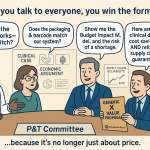
Patent expiration intelligence produces its maximum value when it is integrated into the formulary management process, not siloed in the supply chain function. The P&T committee, which governs formulary additions and removals, is the clinical governance layer that determines whether a biosimilar or generic can actually be used even after the procurement team has secured the pricing. These two processes — clinical formulary review and commercial contract negotiation — need to be synchronized on a patent-expiration-driven timeline rather than on separate administrative calendars.
A best-practice framework syncs the patent-expiration calendar with the P&T committee review schedule at least 12 months in advance. When a drug enters the 18-month-to-competitive-entry window, the P&T committee opens a parallel biosimilar or generic equivalence review at the same time the procurement team opens contract negotiations. The clinical review and the commercial negotiation run simultaneously, both targeting completion before the competitive entry date. This eliminates the common failure mode where the procurement team negotiates an excellent biosimilar price and then discovers the P&T committee has not completed the therapeutic equivalence review, leaving the hospital unable to use the product it has contracted for.
The DrugPatentWatch Intelligence Layer: What the Platform Actually Provides
DrugPatentWatch is referenced throughout this article because it occupies a specific and practically useful position in the patent intelligence stack for pharmaceutical procurement professionals. It is worth being precise about what the platform provides and where it sits relative to other data sources.
The core value of DrugPatentWatch for procurement is its integration of Orange Book patent data with ANDA filing histories, Paragraph IV certification notices, litigation records, and settlement disclosures into a single queryable database. The FDA’s Orange Book provides raw patent data but requires users to understand the legal and regulatory context to interpret it accurately. ANDA filings are public but scattered across FDA databases that require significant navigation. Patent litigation dockets are public but require legal expertise to read correctly. Settlement disclosures are buried in SEC filings that most procurement teams never review.
DrugPatentWatch aggregates these sources and translates them into structured data that a procurement analyst can query by drug name, manufacturer, therapeutic class, or patent expiration date range. The platform’s alerts functionality allows procurement teams to receive real-time notifications when significant events occur — a new Paragraph IV filing, an ANDA approval, a litigation decision, or a settlement disclosure — for the specific drugs on their watchlist.
For GPO negotiation preparation, the most operationally useful features are the patent expiration timelines with confidence intervals (which account for pediatric exclusivity extensions, PTE claims, and potential litigation delays), the ANDA filer count and approval status (which determines the competitive intensity at market entry), and the settlement database (which often reveals actual entry dates that no other public source aggregates). A procurement director spending two hours in DrugPatentWatch before a major GPO contract negotiation will enter that conversation knowing things the GPO account team may not have shared, and knowing things the branded manufacturer’s sales representative is hoping the procurement team does not know.
Beyond Generics: Patent Intelligence for Specialty Drug Strategy
The patent expiration discussion in hospital procurement often defaults to the small-molecule generic story — blockbuster loses patent, generics flood market, prices drop 80%, hospital saves money. This framing misses the most complex and high-value portion of the hospital pharmaceutical spend: specialty drugs and biologics, which account for 54% of total U.S. drug spending according to IQVIA data. [37]
For specialty drugs, patent intelligence serves a different but equally important function. Rather than identifying imminent generic entry, it identifies the period of maximum vulnerability for the branded manufacturer — the window when competitive pressure from other branded alternatives, combined with approaching patent expiration, creates the conditions for meaningful price concessions.
Consider the GLP-1 receptor agonist class, which has become one of the most significant pharmaceutical spending drivers in hospital and ambulatory care settings. Semaglutide (Ozempic/Wegovy, Novo Nordisk) and tirzepatide (Mounjaro/Zepbound, Eli Lilly) are now in the top ten drugs by total spend for Vizient member hospitals. [37] Key semaglutide patents expire between 2031 and 2032, and tirzepatide has similar long-dated exclusivity. Generic entry is not imminent for either.
But the competition between semaglutide and tirzepatide — two products from different companies with different patent timelines — creates intra-class competition that patent intelligence can help procurement teams exploit. A hospital formulary committee considering both products can use the patent landscape of each to inform its formulary positioning decision: which company has more to lose from not securing preferred formulary status, given each product’s patent runway and competitive exposure? The answer informs who is in the stronger negotiating position, and by how much.
Patent intelligence for specialty drugs also helps procurement teams identify “next-in-class” timing — when a competitor product is approaching launch that will create price pressure on the current formulary incumbent. When a biosimilar or new branded competitor targets the same indication as a high-spend hospital drug, the incumbent manufacturer’s willingness to negotiate improves materially. Tracking pipeline approvals and anticipated launch timelines through patent and regulatory databases gives procurement teams visibility into these competitive windows before the launch actually occurs.
Drug Shortage Risk: The Other Side of the Patent Intelligence Coin
Patent expiration intelligence has a risk management dimension that procurement teams focused on cost savings sometimes overlook. Generic drug markets — particularly for sterile injectables administered in the hospital setting — are prone to supply disruption in ways that branded single-source markets are not.
The generic drug manufacturing industry has consolidated significantly since the pricing peak of 2014-2015. Teva, Viatris, Sandoz, and a smaller number of sterile injectable specialists now account for most of the commodity generic supply. This consolidation produces efficiency but reduces redundancy: when a single manufacturer exits a generic market or encounters a manufacturing problem, the remaining suppliers are often insufficient to meet total U.S. demand, producing the drug shortages that hospital pharmacists manage on a near-constant basis.
Patent intelligence helps procurement teams anticipate shortage risk in two ways. First, it identifies which generic markets are likely to have limited supplier diversity — specifically, drugs where only one or two ANDA approvals exist for a specific formulation, or where the manufacturing complexity (sterile parenteral formulations, controlled substances, cold-chain biologics) limits the number of qualified generic producers. These are the drugs most vulnerable to post-patent-expiration supply disruption.
Second, patent intelligence helps procurement teams identify the authorized generic as a supply security tool, not just a competitive pricing factor. When a hospital procurement director anticipates a supply-constrained generic market, negotiating a supply security agreement with the branded manufacturer’s authorized generic program — at a price premium that reflects supply reliability rather than pure cost minimization — may be the correct risk-adjusted decision.
GPO contracts that include failure-to-supply penalties and rebates are increasingly common for exactly this reason. HealthTrust explicitly lists drug shortage strategy and failure-to-supply rebates as components of its pharmacy contracting program. [13] Procurement teams with patent intelligence can calibrate which drugs merit these provisions and at what premium supply security is worth paying.
The Staffing and Training Gap — and What Fills It
Hospital procurement departments are not uniformly staffed to execute patent intelligence-driven strategies. The typical health system pharmacy director combines clinical expertise, formulary management knowledge, and supply chain operational capability — but not necessarily the IP legal literacy to interpret Orange Book filings, Paragraph IV certifications, or court dockets without support.
Closing this gap does not require hiring patent attorneys. It requires training procurement analysts to use the right tools and developing relationships with external resources who can provide interpretive expertise when the legal or regulatory context is complex.
The training investment is modest. A two-day workshop focused on Hatch-Waxman basics — how ANDAs work, what Paragraph IV certifications mean, how 30-month stays operate, how to read an Orange Book patent listing — gives a procurement analyst the context to use platforms like DrugPatentWatch productively. The platform itself is designed for non-attorneys: it translates patent data into procurement-relevant summaries that do not require legal interpretation for routine use.
For complex situations — a patent portfolio with active litigation, a settlement agreement with unusual terms, a drug with multiple overlapping exclusivity protections from different sources — external advisory relationships with healthcare law firms or specialized IP consulting firms provide the interpretive depth that an internal analyst reasonably cannot maintain. Major GPOs including Vizient and Premier have pharmacy analytics teams that provide members with patent expiration briefings, which serve as a useful baseline but should not substitute for independent analysis when the financial stakes justify it.
The organizational structure that works best embeds patent intelligence in the supply chain analytics function, with a defined integration point into the P&T committee calendar and the GPO contract renewal process. A single dedicated analyst with the right tools and training, spending 30% of their time on patent surveillance and contract preparation support, typically produces a return that justifies the investment within the first year if the hospital is managing pharmaceutical spend above $50 million annually.
Looking Forward: The 2026-2030 Contract Planning Horizon
Hospital procurement teams negotiating pharmaceutical contracts in 2025 and 2026 are working in an unusually information-rich environment. The next four years will see the resolution of multiple major patent cliffs simultaneously — cardiovascular, oncology immunotherapy, immunology, and metabolic disease — creating a procurement landscape that rewards preparation and punishes generic contract renewal.
The drugs that deserve the most immediate procurement attention, based on a combination of annual hospital spend, patent clarity, and defined competitive entry timeline, are a specific set. Entresto (sacubitril/valsartan) generic competition arrived in mid-2025 and any hospital that had not optimized its formulary transition strategy before that date is now in reactive mode. Xarelto (rivaroxaban) faces 2026 patent expiration that makes it the most immediate cardiovascular procurement action item. Eliquis (apixaban) effective generic entry in 2028 means the procurement window for pre-expiration concessions is now, not in 2027. Stelara (ustekinumab) biosimilar competition is active and accelerating — hospitals that have not completed their biosimilar formulary review are behind the competitive cycle. And Keytruda (pembrolizumab) and Opdivo (nivolumab) biosimilar entry around 2028 means that 2025 and 2026 are the optimal windows to extract pricing concessions from Merck and BMS anchored to that approaching competition.
The manufacturers know the timeline. The GPOs have their own patent tracking functions. The only question is whether the hospital’s procurement team will enter these negotiations with the same information, or whether it will continue to let information asymmetry work in the other side’s favor.
Key Takeaways
Patent expiration dates are not the same as generic entry dates. The gap between nominal expiration and actual competitive entry — caused by litigation, 30-month stays, settlement agreements, and authorized generics — is where manufacturers extract maximum value from hospital procurement teams who stop at the calendar date. Tracking ANDA filing status, Paragraph IV certification history, and settlement disclosures through platforms like DrugPatentWatch provides actual entry timing, not nominal expiration timing.
The negotiating window closes before the generic launches. Maximum leverage for patent-expiration-anchored contract negotiations exists 12 to 24 months before competitive entry, not after. Hospitals that wait for generics to arrive lose the ability to negotiate pre-expiration pricing concessions and are forced into reactive formulary transitions rather than planned ones.
GPO contracts are a floor, not a ceiling. Large hospitals and academic medical centers that supplement GPO pricing with direct manufacturer negotiations on high-spend drugs approaching patent expiration consistently capture deeper discounts. The GPO contract establishes a baseline. Patent intelligence justifies the ask for better terms above that baseline.
Biosimilar transitions require synchronized clinical and procurement processes. The most common failure mode in biosimilar adoption is securing a competitive price that the hospital cannot use because the P&T committee has not completed its therapeutic equivalence review. Patent-expiration-driven procurement planning needs to trigger P&T review on the same timeline as contract negotiation.
The IRA adds a parallel pricing track that hospital formularies must now manage. Drugs subject to CMS Medicare price negotiation — including several of the most important drugs on hospital formularies — will carry negotiated prices from 2026 onward that operate independently of commercial market patent dynamics. Hospital procurement directors need to track both tracks simultaneously and understand how they interact.
Drug shortage risk is highest in exactly the markets where procurement teams are most focused on cost. Generic markets for sterile injectables and complex formulations are structurally vulnerable to supply disruption. GPO contracts for these categories should include failure-to-supply provisions, and procurement planning should model supply security alongside cost optimization.
FAQ
Q1: How far in advance should a hospital start using patent expiration data to prepare for a GPO contract negotiation?
The practical window is 18 to 24 months before a major patent expiration event — not the nominal expiration date, but the expected date of actual generic or biosimilar market entry based on ANDA pipeline status and litigation history. Within that window, the hospital can credibly present competitive entry as an imminent and documented event rather than a theoretical future possibility, which changes the manufacturer’s negotiating calculus. Starting this process only at contract renewal — which often happens six to twelve months before contract expiration — leaves the procurement team reactive to a timeline the manufacturer has been managing for years.
Q2: What specific data does a hospital procurement team need before entering a patent-expiration-anchored negotiation with a manufacturer or GPO?
The minimum effective data set covers four elements: the full Orange Book patent listing for the drug (not just the primary patent but all listed patents by expiration date), the number and identity of ANDA filers for that drug with their current FDA approval status, the litigation history (whether any Paragraph IV certifications are pending in district court, on appeal, or settled), and any settlement agreements that specify authorized entry dates. This information is available through the FDA’s Orange Book database, court dockets through PACER, and aggregated patent intelligence platforms like DrugPatentWatch. A procurement analyst with two to three hours of preparation can assemble this data set for any single drug before a major negotiation.
Q3: Can smaller hospitals without large pharmacy analytics teams realistically execute patent-expiration-driven GPO negotiations?
Yes, with the right tools and targeted focus. A smaller hospital does not need a comprehensive patent monitoring function across its entire formulary. It needs patent intelligence for its five to ten highest-spend branded drugs — which typically account for 60% to 70% of total pharmaceutical spend. A procurement director or pharmacy director who spends two to four hours per quarter in DrugPatentWatch tracking patent status for those specific drugs will have enough intelligence to meaningfully change the terms of the next GPO contract negotiation cycle. The GPO itself is also a resource: Vizient, Premier, and HealthTrust all have pharmacy analytics teams that provide patent expiration briefings to member institutions. Smaller hospitals should use those briefings as a starting point while supplementing with independent analysis for their highest-spend items.
Q4: How does the Inflation Reduction Act change the patent-expiration-driven procurement strategy for drugs subject to CMS price negotiation?
The IRA creates a parallel pricing track for Medicare-covered utilization that operates independently of patent status. For drugs subject to CMS Maximum Fair Price negotiation — which began with 10 Part D drugs with prices effective 2026 and expanded to additional drugs in subsequent cycles — the hospital’s procurement calculation bifurcates: the CMS negotiated price governs Medicare volume, while GPO or direct manufacturer contract pricing governs commercially-insured volume. The practical implication is that procurement directors managing formularies with high Medicare patient concentration need to understand both price levels and how they interact. Additionally, the IRA creates a specific distortion in the biosimilar market: drugs guaranteed CMS formulary spots through negotiation have less urgency to compete aggressively on price with biosimilars, which can delay the full competitive price erosion that procurement teams are planning around.
Q5: What is the most common mistake hospital procurement teams make when using patent expiration timelines in GPO negotiations?
The most common mistake is treating the nominal patent expiration date as a reliable proxy for actual competitive entry, without accounting for the litigation and regulatory events that determine real market dynamics. A hospital that builds a budget reduction assumption around the calendar date a patent expires — rather than the date a generic or biosimilar reaches commercial availability — will consistently miss its savings targets, because the gap between those two dates runs from months to several years depending on the drug. The second most common mistake is waiting until after competitive entry to renegotiate contracts, at which point the procurement team is managing a transition rather than leveraging a threat. Patent intelligence is most valuable when it is applied prospectively, before the competitive event occurs, not retrospectively after the market has already moved.
References
DrugPatentWatch. (2026, February 25). Beyond the drug patent cliff: How procurement can drive immediate savings with generics and biosimilars. DrugPatentWatch Blog. https://www.drugpatentwatch.com/blog/beyond-the-drug-patent-cliff-how-procurement-can-drive-immediate-savings-with-generics-and-biosimilars/
Dusetzina, S. B., Conti, R. M., Van Nuys, K., et al. (2024). Role of supply chain intermediaries in steering hospital product choice: Group purchasing organizations and biosimilars. PMC. https://pmc.ncbi.nlm.nih.gov/articles/PMC11152204/
Vizient, Inc. (2025, January 28). Vizient forecasts a 3.84% rise in pharmacy spending. Vizient Newsroom. https://www.vizientinc.com/newsroom/news-releases/2025/vizient-forecasts-a-3-84-percent-rise-in-pharmacy-spending
CenterPoint Group. (2026, March 3). Group purchasing organizations explained: What they are and how they work. CenterPoint Group Blog. https://www.centerpointgroup.com/blog/group-purchasing-organizations-explained
Johnson, P., et al. (2024). How drug life-cycle management patent strategies may impact formulary management. American Journal of Managed Care. https://www.ajmc.com/view/a636-article
OKBTF. (2025, December 30). Blockbuster patent expirations 2025 and beyond: Key drugs, timeline, and market impact. https://okbtf.org/blockbuster-patent-expirations-2025-and-beyond-key-drugs-timeline-and-market-impact
Pharmacy Times. (2026, May 3). A pharmacist’s guide to blockbuster patent expirations: 2025 and beyond. https://www.pharmacytimes.com/view/a-pharmacist-s-guide-to-blockbuster-patent-expirations-2025-and-beyond
DrugPatentWatch. (2019, October 29). Hatch-Waxman at 40: The patent war manual that built a $445B savings machine, and a drug shortage crisis. DrugPatentWatch Blog. https://www.drugpatentwatch.com/blog/development-of-the-generic-drug-industry-in-the-us-after-the-hatch-waxman-act-of-1984/
DrugPatentWatch. (2026, March 10). The patent cliff playbook: Pharmaceutical IP valuation, generic entry timing, and biosimilar strategy. DrugPatentWatch Blog. https://www.drugpatentwatch.com/blog/patent-expirations-seizing-opportunities-in-the-generic-drug-market/
Vizient, Inc. (2023, August 1). Vizient: Expansion of specialty drugs driving a 3.42% projected increase in hospital pharmacy spend. Vizient Newsroom. https://newsroom.vizientinc.com/en-US/releases/releases-vizient-expansion-of-specialty-drugs-driving-a-342-projected-increase-in-hospital-pharmacy-spend
Clival. (2025, September 8). Top 10 blockbuster drugs facing U.S. patent expirations (2025–2029). https://clival.com/blog/top-10-blockbuster-drugs-facing-us-patent-expirations
Truveris. (2024, April 10). The impact of timing on pharmacy contracts. https://truveris.com/impact-of-timing-on-pharmacy-contracts/
Center for Biosimilars. (2024, August 3). Vizient report projects price inflation for originators with biosimilars in the pipeline. https://www.centerforbiosimilars.com/view/vizient-report-projects-price-inflation-for-originators-with-biosimilars-in-the-pipeline
Hu, H., & Chen, J. (2021). Optimizing hospital drug procurement with rebate contracts. ScienceDirect. https://www.sciencedirect.com/science/article/abs/pii/S0305048321001122
Managed Healthcare Executive. (2025, March 5). The biosimilars report card. https://www.managedhealthcareexecutive.com/view/the-biosimilars-report-card
DrugPatentWatch. (2025, December 14). The hidden patents that actually decide when generics launch: A strategic analysis of pharmaceutical market exclusivity. DrugPatentWatch Blog. https://www.drugpatentwatch.com/blog/the-hidden-patents-that-actually-decide-when-generics-launch-a-strategic-analysis-of-pharmaceutical-market-exclusivity/