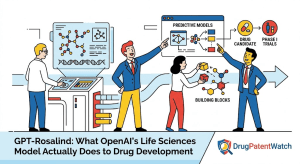
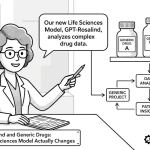
On April 16, 2026, OpenAI did something it had never done before: it shipped a model designed not to chat, generate images, or write code — but to help discover drugs.
GPT-Rosalind, named after Rosalind Franklin, the British chemist whose X-ray crystallography work helped reveal the structure of DNA, is OpenAI’s first domain-specific model. It targets biochemistry, genomics, and protein engineering. Access is gated behind a vetted trusted-access program. Early partners include Amgen, Moderna, Thermo Fisher Scientific, the Allen Institute, and Dyno Therapeutics. The model can be accessed through ChatGPT, Codex, and the OpenAI API — but only if your organization has cleared a qualification and safety review.
The same week, Novo Nordisk signed a sweeping strategic partnership with OpenAI covering everything from drug discovery to manufacturing, supply chain, and commercial operations. Two days before that, Amazon unveiled Amazon Bio Discovery (ABD), its own AI-powered drug discovery platform. In the span of a single business week, the competitive map of pharmaceutical R&D shifted. It is worth pausing to understand what that actually means for the industry, what the model can and cannot do, and how it connects to the larger patent and intellectual property dynamics now bearing down on pharma’s biggest players.
Part I: The Problem GPT-Rosalind Is Trying to Solve
Why Drug Discovery Has Been So Slow for So Long
Drug development is expensive and slow in ways that are hard to fully appreciate without looking at the raw numbers.
It takes between ten and fifteen years for a new drug to progress from target discovery to regulatory approval in the US, with only around one in ten candidates entering clinical trials ultimately reaching the market. That last number — one in ten — understates the cost of failure because it does not capture the enormous resources poured into every failed compound before it even enters a trial. It takes an average of 10 to 15 years and $2.6 billion to bring a single new drug from initial discovery to market approval.
The attrition rate during clinical trials is approximately 90%, meaning that only a small fraction of drugs that enter clinical development ultimately receive approval. And traditional methods start in an even weaker position: high-throughput screening (HTS), a common method, yields only a 2.5% hit rate, which further lengthens timelines, increases cost, and wastes resources.
These numbers frame the opening case for AI in drug development. If you can compress target identification and lead optimization — the first two stages of the pipeline — meaningful downstream savings follow. The biology still kills most programs in Phase II and III, but the compounding cost of running too many weak candidates to that point is enormous. Any tool that filters out weak candidates earlier has real economic value.
The question OpenAI is placing a bet on is whether a large language model, fine-tuned for biological reasoning, can meaningfully improve that early-stage filtering.
What AI Has Already Demonstrated in Discovery
The concept is not speculative. The evidence base for AI-assisted early discovery has been building for several years.
AI-discovered drugs achieve 80–90% success rates in Phase I trials, compared to 40–65% for traditional drugs. That comparison requires a caveat — the sample size for fully AI-discovered drugs in Phase I is still small, and selection bias (AI-led programs tend to be more carefully designed) probably inflates the number. Still, the directional signal is consistent across multiple studies.
Insilico Medicine brought its AI-discovered drug for idiopathic pulmonary fibrosis from target identification to Phase II clinical trials in under 30 months, a process that traditionally takes 6 to 8 years. That is not a rounding error in timeline compression. It represents roughly a 60-70% reduction in preclinical development time for a single program.
At the broader industry level, AI implementation in preclinical research delivers 30–70% cost reductions, primarily through virtual compound screening, predictive modeling, and optimized trial design.
The challenge, and the reason GPT-Rosalind is interesting rather than just another product launch, is that the bottleneck was never just compute or data. It was fragmented workflows. A medicinal chemist, a bioinformatician, a protein engineer, and a literature reviewer each work in different interfaces, use different databases, and produce outputs the others have to manually interpret. GPT-Rosalind’s core design proposition is to collapse those workflows into a single reasoning agent — one that can query databases, read literature, design experiments, and generate hypotheses without forcing a human to act as the translator at each handoff.
Part II: What GPT-Rosalind Actually Does
The Model Architecture and Capabilities
GPT-Rosalind supports evidence synthesis, hypothesis generation, experimental planning, and other multi-step research tasks, designed to help researchers accelerate the early stages of discovery. In practice, the model can query specialized databases, parse recent scientific literature, interact with computational tools, and suggest new experimental pathways — all within the same interface.
OpenAI is also launching a Life Sciences research plugin for Codex that connects models to over 50 scientific tools and data sources, giving researchers programmatic access to biological databases and computational pipelines through a familiar developer interface.
Those 50-plus data sources span human genetics, functional genomics, protein structure, biochemistry, clinical evidence, and public study discovery. That breadth matters because one of the practical frustrations of modern drug discovery is not a lack of data — it is that the data exists in incompatible silos. A researcher chasing a novel oncology target might need to pull from the Human Protein Atlas, UniProt, ClinVar, PubChem, and half a dozen clinical trial registries in a single afternoon. GPT-Rosalind, through the Codex plugin, can act as a unified interface across all of them.
The model is built as a reasoning model — OpenAI’s terminology for architectures optimized for multi-step problem solving rather than single-turn question answering. This matters for scientific workflows where the task is rarely ‘answer one question’ but rather ‘work through a problem that requires ten sequential decisions, each dependent on the last.’
The Benchmark Performance — and Why It Requires Scrutiny
GPT-Rosalind achieved a 0.751 pass rate on BixBench, a benchmark designed around bioinformatics and data analysis. BixBench, developed by Edison Scientific, evaluates models on real-world tasks bioinformaticians perform — processing sequencing data, running statistical analyses, interpreting genomic outputs. A 0.751 pass rate on that benchmark is genuinely strong.
On LABBench2, the model outperformed GPT-5.4 on six out of eleven tasks, with the most significant gains appearing in CloningQA — a task requiring the end-to-end design of reagents for molecular cloning protocols.
The most credible performance signal came from a third-party evaluation.
Using unpublished, previously unseen RNA sequences to guard against benchmark contamination, GPT-Rosalind was tested on sequence-to-function prediction and sequence generation tasks. The best-of-ten model submissions ranked above the 95th percentile of human experts on the prediction task and around the 84th percentile on sequence generation, according to OpenAI and confirmed by multiple outlets covering the launch.
That evaluation was run with Dyno Therapeutics, a gene therapy company focused on AAV capsid protein design. The use of unpublished sequences is the right methodological choice — benchmark contamination (the model having seen test data during training) is a genuine concern with any evaluation based on published datasets. The fact that Dyno’s RNA sequences were held-out and novel strengthens the result.
But the appropriate skepticism is not about fabrication — it is about generalizability. A strong showing on RNA sequence-to-function prediction for AAV gene therapy says very little about whether the model can generate useful hypotheses for, say, a small-molecule kinase inhibitor targeting a novel cancer pathway. Drug discovery is not one task. It is hundreds of tasks, each with its own data requirements, its own failure modes, and its own standard of ‘good enough.’
Pharma companies evaluating GPT-Rosalind would do well to run their own domain-specific benchmarks before committing to workflows that depend on the model’s outputs. The published results are promising; they are not a blank check.
What the Model Cannot Do — Yet
OpenAI’s life sciences research lead Joy Jiao said the company does not yet believe AI can create new disease treatments on its own. However, she said, ‘we do think there’s a real opportunity to help researchers move faster through some of the most complex and time-intensive parts of the scientific process.’
That is a careful and appropriate framing. No fully AI-discovered or AI-designed drug has cleared Phase III trials. Only a few AI-discovered or AI-designed drugs have reached clinical trials. No fully AI-discovered or AI-designed drug has made it through Phase 3 trials.
The gap between ‘this model scores at the 95th percentile of human experts on an RNA task’ and ‘this model discovers a drug that reduces mortality in a Phase III randomized controlled trial’ is enormous. It spans years, billions of dollars, and the irreducible complexity of human biology at scale. GPT-Rosalind is a tool for the front end of discovery. The rest of the pipeline — formulation, ADMET profiling, IND-enabling studies, Phase I dose escalation, Phase II proof-of-concept, Phase III efficacy — remains expensive, slow, and deeply human-dependent.
The model’s honest value proposition is time compression at the hypothesis generation and experimental design stage. That still has real economic value. But drug developers should price that value correctly — not confuse early-stage productivity gains with clinical success rates.
Part III: The Strategic Context — Why This Launched Now
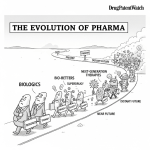
The Patent Cliff Burning a Hole in Pharma’s Balance Sheet
OpenAI’s timing is not coincidental. The pharmaceutical industry is heading into a revenue crisis it has known about for years and scrambled to address with insufficient urgency.
2026 marks the start of a particularly pronounced cliff, with key patents on billion-dollar drugs set to expire. The US market alone is projected to lose more than $230 billion in revenue between 2025 and 2030.
The names on the exposed end of that list are not generic brands. The top 20 drugs heading for the patent cliff accounted for a combined $176 billion in sales, representing 75% of the $236 billion in annual sales set to disappear with the loss of exclusivity. Merck’s Januvia, Pfizer’s Xeljanz, Bristol-Myers Squibb’s Eliquis, and Novo Nordisk’s Ozempic are among the most exposed. Keytruda — currently the world’s best-selling drug — faces biosimilar entry around 2028, representing what analysts describe as the largest growth gap among large-cap pharmaceutical peers.
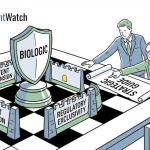
Platforms like DrugPatentWatch track the Orange Book and BPCIA data that define each drug’s actual exclusivity position, including the patent term extensions and regulatory exclusivities layered on top of compound patents. The true date of generic or biosimilar entry is not determined by a single patent’s expiration but by the collapse of the final barrier in this defensive structure. For large-molecule biologics, the BPCIA grants a fixed 12-year data exclusivity period. For small molecules, the Hatch-Waxman Act permits patent term extensions of up to five years, plus separate FDA exclusivity periods for new chemical entities and new indications. Understanding a drug’s actual exclusivity position requires tracking all of these layers simultaneously — precisely the kind of multi-source analytical task where tools like DrugPatentWatch provide a competitive edge.
According to DrugPatentWatch, the most exposed products generated more than $5 billion in annual sales, making them prime targets for generic manufacturers and a focal point for payer-driven cost containment once exclusivity ends.
The scramble to replace those revenues through the pipeline has driven a wave of M&A. Johnson & Johnson closed a $14.6 billion acquisition of Intra-Cellular Therapies. Merck completed its $10 billion purchase of Verona Pharma. Sanofi closed on its up-to-$9.5 billion acquisition of Blueprint Medicines. All three were explicitly motivated by upcoming patent expiries.
But M&A can only go so far. The organic pipeline is the lasting solution, and organic pipeline productivity — measured by new molecular entities reaching Phase I with a defensible shot at approval — has not kept pace with the cliff. That is the structural gap AI-powered discovery is being asked to fill.
Novo Nordisk’s Week: The Biggest Context Clue
The week of April 14-17, 2026 was not a random moment for OpenAI’s pharma push. It was the product of accelerating competitive pressure inside one specific company: Novo Nordisk.
Novo Nordisk signed a strategic partnership with OpenAI covering drug discovery, manufacturing, supply chain, and commercial operations. Its CEO said: ‘Integrating AI in our everyday work gives us the ability to analyse datasets at a scale that was previously impossible, identify patterns we could not see, and test hypotheses faster than ever.’
The strategic pressure behind that statement is specific. By 2025-26, Novo Nordisk’s leadership in the GLP-1 market was under threat. In early 2026, Novo’s next-generation obesity therapy CagriSema failed to match Eli Lilly’s ZepBound in late-stage trials, sending Novo’s stock down roughly 16%. Novo’s first-mover advantage in GLP-1 had eroded. The company’s response was to simultaneously launch an oral version of Wegovy and double down on AI infrastructure.
Eli Lilly announced a multi-year collaboration with Insilico Medicine in March 2026 worth up to $2.75 billion. Insilico is providing Lilly an exclusive license to develop oral therapeutics using its AI drug discovery platform, with $115 million upfront. Novo’s OpenAI partnership is its direct competitive response — but significantly broader in scope, covering the entire organization rather than just lead discovery in specific indications.
Under the partnership, advanced AI will be applied end-to-end, extending beyond discovery into manufacturing, supply chain, and commercial execution via pilots leading to scaled deployment by late 2026. Workforce transformation is treated as a core deliverable, with structured upskilling intended to operationalize AI tools and redesign workflows rather than layering technology onto existing processes.
The distinction is worth noting. Lilly’s Insilico deal is a pipeline bet — a specific technology licensing arrangement focused on oral small-molecule discovery in defined indications. Novo’s OpenAI deal is an enterprise transformation bet. Those are different risk profiles. Pipeline bets pay off when specific drugs advance. Enterprise transformation bets pay off when the entire organization becomes more productive — a more diffuse and harder-to-measure return.
The risk is that AI partnerships in pharma are easier to announce than to translate into clinical results. The hard part — regulatory approval and patient outcomes — still depends on the biology, not the algorithm.
That observation applies to GPT-Rosalind too.
Amazon Bio Discovery and the Platform War
The launch of GPT-Rosalind came only a couple of days after Amazon unveiled Amazon Bio Discovery (ABD), its own AI-powered drug discovery platform, designed to compete with rival systems.
Amazon’s entry into this market reflects the broader logic now driving hyperscaler strategy. Life sciences companies run enormous data workloads on cloud infrastructure. AWS, Azure, and Google Cloud have competed for that workload for a decade on price and compute performance. The new competition is at the model layer — which cloud provider can offer the most capable domain-specific AI that keeps research teams inside their platform.
AWS’s advantage is its existing relationships with biotech and pharma at the data infrastructure layer. If a company already runs its genomics pipelines on AWS, there is real switching cost friction in moving to OpenAI’s API for the analytical layer. Amazon Bio Discovery is designed to eliminate that friction by offering discovery capabilities inside the AWS ecosystem.
OpenAI’s counter-advantage is the quality of the underlying model. GPT-Rosalind’s benchmark results — particularly the Dyno Therapeutics RNA evaluation — suggest a capable foundation. The Life Sciences Codex plugin’s 50-plus data sources also represents a meaningful integration head start that Amazon will need time to match.
The competitive dynamic is not ‘one winner.’ Large pharma companies will almost certainly run multi-vendor strategies, testing GPT-Rosalind for some workflows and platform-native tools from AWS or Google DeepMind for others. The real question is which model earns enough trust in specific high-value tasks to become the default choice for those tasks.
Google DeepMind’s position deserves mention here. AlphaFold2 and its successors have already demonstrated that AI can solve a specific hard biological problem — protein structure prediction — with accuracy that matches or exceeds experimental methods. DeepMind’s AlphaFold protein-structure prediction system earned its creators a share of the 2024 Nobel Prize in Chemistry. That is not a benchmark score; it is a Nobel Prize. OpenAI is entering a space where Google has already established scientific credibility at the highest possible level.
Part IV: The IP and Patent Implications Nobody Is Talking About Enough
Who Owns What a Model Discovers?
The patent question surrounding AI-assisted drug discovery is not fully resolved anywhere in the world, and GPT-Rosalind’s launch sharpens it considerably.
The current USPTO position, affirmed through a series of guidance documents and the Federal Circuit’s 2022 decision in Thaler v. Vidal, is that inventions must have a human inventor. An AI cannot be listed as an inventor. This means that for patent purposes, the human researchers who use GPT-Rosalind to generate a novel molecular hypothesis must be identifiable as the inventors — they must have made a mental contribution to the conception of the claimed invention.
The practical problem is that this line is increasingly difficult to draw. If a medicinal chemist asks GPT-Rosalind to suggest modifications to a lead compound and the model returns a list of structural modifications, one of which turns out to be the key feature that makes the molecule work — who is the inventor? The chemist, who identified the right question and selected from the model’s output? The model, which generated the specific structural suggestion? The answer matters because a patent filed with an incorrect inventor can be challenged and invalidated.
Patent attorneys advising pharma clients on GPT-Rosalind workflows will need to document every stage of human decision-making in the discovery process more carefully than they did when discovery was purely wet-lab-driven. The documentation is not just good practice — it is the legal basis for a defensible inventorship claim.
What GPT-Rosalind Does to Freedom-to-Operate Analysis
Beyond the inventorship question, AI models capable of reading and synthesizing scientific literature at scale have another IP implication: they dramatically reduce the cost of freedom-to-operate (FTO) analysis.
FTO analysis — the process of determining whether a specific commercial activity would infringe existing patents — has historically been expensive, slow, and performed by specialized patent counsel. A full FTO analysis for a novel drug candidate might take weeks and cost tens of thousands of dollars, because it requires reading and interpreting thousands of patent claims across multiple jurisdictions.
A model like GPT-Rosalind, integrated with a patent database, could reduce the initial screening phase of FTO analysis from weeks to hours. This does not eliminate the need for legal counsel to make the final infringement determination — that requires legal training and judgment that no current AI model reliably provides. But it compresses the preliminary technical analysis phase enough to change how companies resource their IP operations.
Companies like DrugPatentWatch already provide structured access to Orange Book data, patent term extension filings, exclusivity timelines, and ANDA activity — the raw data that underlies any FTO analysis in the pharmaceutical context. The combination of structured patent data from platforms like DrugPatentWatch and the reasoning capabilities of a model like GPT-Rosalind creates a more powerful analytical workflow than either provides alone.
The competitive advantage here is asymmetric. Large pharma companies with existing patent intelligence teams can use GPT-Rosalind to increase their team’s throughput — running more analyses, faster, at the same cost. Smaller biotechs that cannot afford dedicated patent intelligence teams may now be able to run rudimentary FTO screening in-house, catching obvious problems earlier and spending their limited legal budgets on genuinely complex questions.
The Biosimilar and Generic Competition Angle
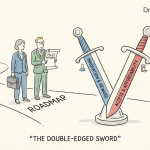
The patent cliff dynamic has a specific interaction with AI-assisted discovery that is worth examining separately. When a blockbuster drug approaches loss of exclusivity, the incumbent brand manufacturer has two strategic levers: lifecycle management (filing new patents on formulations, dosing regimens, or manufacturing processes to extend effective exclusivity) and pipeline replacement (launching a successor molecule before revenues erode).
AI tools make the pipeline replacement lever faster and cheaper to pull. If GPT-Rosalind can compress early-stage discovery timelines by 30-50% — even in the most optimistic reading of current evidence — that changes the math on whether a company can file a successor molecule with patentable differentiation before its flagship drug loses exclusivity.
At the same time, AI tools make the generic and biosimilar development side of the equation easier too. Generic manufacturers and biosimilar developers use their own analytical workflows to identify patent vulnerabilities, design around existing claims, and time ANDA filings to maximize their exclusivity window under Paragraph IV certifications. A capable AI model trained on patent data and biosynthesis literature could improve generic developer workflows just as much as it improves innovator workflows.
The net competitive effect depends on who adopts the technology first and most effectively — not on the technology itself.
Lifecycle Management in the GPT-Rosalind Context
The pharmaceutical industry’s use of ‘evergreening’ — filing secondary patents on formulations, dosing schedules, metabolites, or delivery mechanisms to extend effective market exclusivity beyond the compound patent’s expiration — is both a standard business practice and a subject of ongoing regulatory and legislative scrutiny. Companies sometimes file new ‘follow-on’ patents on formulations, methods, or polymorphs to extend protection — a practice criticized as ‘evergreening’ or creating ‘patent thickets.’
A model capable of systematically identifying novel formulation combinations or new indications for existing compounds could be used to generate the scientific basis for additional patent filings. Whether those filings represent genuine innovation or merely incremental refinements designed to delay generic entry is a legal and policy question that regulators are increasingly scrutinizing.
The FTC has signaled continued attention to Orange Book listing practices. Boehringer Ingelheim is accused of using a raft of patents covering inhaler devices, not the active drug, to block generics for its respiratory products Combivent Respimat and Spiriva Respimat. In 2024, a federal court removed five device patents from Teva’s Orange Book listing for the asthma inhaler ProAir HFA, because they did not cover the drug itself.
AI tools that generate large numbers of patentable variations on an existing molecule could accelerate the kind of patent thicket building that has attracted regulatory attention. Companies using GPT-Rosalind for lifecycle management purposes should expect that strategy to face the same legal and regulatory scrutiny as any other secondary patent filing — potentially more scrutiny, given heightened attention to how AI is being used to shape market outcomes.
Part V: The Market Reaction and What It Reveals
Recursion, Schrödinger, IQVIA: Who Felt the Pressure
The market reaction to GPT-Rosalind’s launch was immediate and directional. After the news about the model, shares of several drug discovery companies dropped. Recursion Pharmaceuticals and Schrödinger each lost more than 5% of their value, IQVIA Holdings fell by up to 3.2%, and Charles River Laboratories dropped by 2.6%.
Those four companies are in four different business segments. Recursion and Schrödinger are AI-native drug discovery platforms. IQVIA is a data analytics and contract research organization. Charles River is a preclinical CRO. The fact that all four sold off on the same news reveals something about how investors interpreted the GPT-Rosalind announcement.
The narrative running through those moves is straightforward: if OpenAI can provide general-purpose biological reasoning at competitive cost, the specialized moat of companies whose value proposition is ‘we do AI for drug discovery better than a general-purpose AI’ becomes easier to challenge. That narrative is probably too simple, but it is not entirely wrong.
Recursion’s value proposition rests on its proprietary biological dataset — millions of cellular imaging experiments that no language model was trained on and cannot replicate through text-based reasoning. That asset does not disappear because GPT-Rosalind exists. But if a GPT-Rosalind-powered workflow can handle evidence synthesis, hypothesis generation, and experimental design, some of the analytical tasks Recursion charges for become cheaper to replicate.
Schrödinger’s position is more defensible. Its physics-based molecular simulation platform — Glide, FEP+, and the broader Maestro suite — is grounded in computational chemistry that language models cannot replicate. Text prediction is not quantum mechanics. A model can suggest structural modifications; it cannot do the free-energy perturbation calculations that estimate binding affinity with physics-based accuracy. Schrödinger’s core product is not a language model; the market’s 5% sell-off likely overweighted the competitive threat.
IQVIA’s exposure is more interesting. As the dominant data analytics company in life sciences, IQVIA provides the analytical infrastructure that many pharma companies rely on for competitive intelligence, patient segmentation, and outcomes research. If GPT-Rosalind and models like it allow pharma companies to run more of that analysis in-house, IQVIA’s outsourcing rationale weakens. The sell-off may be partially correct here, though IQVIA’s proprietary data assets (prescriber data, longitudinal claims data, global clinical trial data) are not things a language model can substitute for.
The Investment Signal: $2.51 Billion in 2026, $16.49 Billion by 2034
Precedence Research estimates that the drug industry’s investment in AI will reach $2.51 billion in 2026 and $16.49 billion by 2034. That is a roughly 6.5x increase over eight years — significant, but not unusual for a technology market in its early scaling phase.
The more relevant near-term figure is the adoption breadth. 81% of organizations report using AI across development programs, and approximately 30% of new drug discoveries use AI as of 2025 — an increase of roughly 400% versus 2020.
The jump from ‘using AI somewhere in development programs’ to ‘AI-led discovery with clinical validation’ is where the industry’s credibility claim faces its hardest test. Failed AI programmes from 2025 included multiple deprioritised candidates, shelved drugs after Phase II and compounds showing no efficacy signal. One CEO’s assessment: ‘AI has really let us all down in the last decade when it comes to drug discovery — we’ve just seen failure after failure,’ reflects industry frustration.
That quote — harsh as it is — represents a legitimate segment of industry opinion. The 80-90% Phase I success rate for AI-discovered drugs cited in some market analyses conflates ‘drugs discovered with AI involvement’ with ‘drugs discovered by AI-led programs.’ The former is a large and growing bucket; the latter remains small and the success rates at later stages are not yet meaningfully distinguishable from traditional drug programs.
GPT-Rosalind will be evaluated against this backdrop of skepticism. The benchmark scores matter less than the clinical outcomes from Amgen and Moderna’s workflows over the next two to four years.
Part VI: The Biosecurity Question OpenAI Cannot Avoid
Dual Use Is Not a PR Problem — It Is a Technical One
The launch carries significant dual-use caveats that OpenAI has addressed through its access model. Researchers have warned that AI models trained on biological data could be misused to help design dangerous pathogens.
This is not a hypothetical concern introduced by critics. It is a concern OpenAI itself acknowledged prominently in its own launch communications, and it is what explains the trusted-access program architecture.
The specific risk profile of a life sciences model is different from a general-purpose model. A capable biological reasoning system — one that can synthesize literature, design experimental protocols, and predict sequence-to-function relationships — can in principle be applied to pathogen enhancement as well as therapeutic development. The knowledge base required to design a better drug delivery mechanism and the knowledge base required to improve pathogen transmissibility overlap more than is comfortable.
OpenAI’s life sciences product lead Yunyun Wang said the goal of limiting the program is to maximize use while mitigating the potential for misuse. The system watches for signs of bioweapons concerns and triggers what the company calls ‘high-precision flags’ if certain thresholds are reached.
‘High-precision flags’ is a description of a technical control, not a full accounting of the safeguard architecture. The specifics of what triggers a flag, how those flags are reviewed, and what happens when they are triggered have not been publicly disclosed. That is appropriate for security reasons — publishing detailed evasion thresholds would be counterproductive — but it also means independent evaluation of the controls is not yet possible.
The trusted-access program’s gatekeeping function is the primary safeguard: access is being reserved for organizations working on improving human health outcomes, conducting legitimate life sciences research, and maintaining strong security and governance controls.
That criteria-based vetting works well for large, identifiable organizations — Amgen and Moderna are not biosecurity risks. The harder challenge arises as access expands and the vetting must scale. A trusted-access program that covers 20 enterprise partners is straightforward to maintain. One that covers 2,000 organizations of varying size, jurisdiction, and governance maturity is substantially harder.
The EU AI Act Complication
The biosecurity question has a regulatory dimension that will shape how GPT-Rosalind operates in European markets specifically.
AI regulation remains fragmented across global markets. In August 2024, the European Union’s EU AI Act entered into force and is being phased in. It outlines regulations for the development, market placement, implementation and use of artificial intelligence in the European Union.
AI systems used in high-risk applications — which the EU AI Act defines to include medical devices and life sciences applications — face mandatory conformity assessments, transparency obligations, and ongoing monitoring requirements. A model operating as GPT-Rosalind does, informing experimental design and hypothesis generation in drug development, sits in a regulatory gray zone between a general-purpose AI system (lower regulatory burden) and a medical device (higher burden).
OpenAI’s current trusted-access program is US-only. Expanding to European markets will require engaging with EU AI Act compliance in ways that may require structural changes to the access program, the model’s disclosure obligations, and the documentation requirements for organizations using the model in discovery workflows.
Pharmaceutical companies operating in both markets — which describes most large pharma companies — will need to manage two different compliance frameworks for what is, in principle, the same research workflow.
Part VII: The Workflow Reality — What Changes for Scientists
Evidence Synthesis: Where the Near-Term Value Is Concentrated
Among the four core capabilities OpenAI claims for GPT-Rosalind — evidence synthesis, hypothesis generation, experimental planning, and multi-step research task support — evidence synthesis is where the near-term productivity gain is most defensible and hardest to dispute.
The volume of published biomedical literature has grown to a scale that no individual researcher or even team can meaningfully track. PubMed indexes over 35 million citations and abstracts. The rate of publication in fields like oncology, genomics, and immunology has been accelerating for two decades. The practical result is that researchers routinely miss relevant prior art, fail to connect findings across subfields, and duplicate work that has already been done but is not easily findable through keyword search.
A model capable of reading, synthesizing, and reasoning about that corpus — not just retrieving documents but identifying connections, contradictions, and gaps — provides genuine value. The BixBench benchmark includes literature retrieval and synthesis tasks, and GPT-Rosalind’s strong performance there is credibly useful.
The patent literature is also part of this. A model capable of reading both scientific literature and patent claims — identifying where published research intersects with patented innovations and where gaps in coverage exist — can inform both R&D strategy and IP strategy simultaneously. This is a workflow that currently requires a combination of scientific and legal expertise that is expensive and slow to assemble. A well-integrated AI tool could at least accelerate the initial screening phase.
Hypothesis Generation: The Harder and More Interesting Problem
Hypothesis generation is where the claims are more ambitious and the evidence base is thinner.
The conventional criticism of language models as hypothesis generators is that they are sophisticated interpolators of existing knowledge — they can identify patterns in what has already been published and suggest variations on known themes, but they cannot reason about biology in ways that are genuinely novel relative to their training data.
That criticism has real force, but it misunderstands the bottleneck in most discovery programs. The problem is rarely that scientists lack the creativity to generate novel hypotheses. The problem is that the space of plausible hypotheses is enormous and scientists spend most of their time generating and discarding weak ones before landing on testable ones. A model that increases the proportion of generated hypotheses that are worth testing — even from 5% to 15% — represents a meaningful productivity gain without requiring genuine creativity in the strong sense.
GPT-Rosalind’s performance on the Dyno Therapeutics RNA sequence task suggests it can do this for at least one class of problem. The model’s best-of-ten submissions ranked above the 95th percentile of human experts — meaning that in a setting where the model generates ten candidate sequences and a human picks the best, the selected sequence outperforms most human-generated sequences. That is not the model being creative; it is the model being a better generator of candidates for human selection. That is useful.
Experimental Planning: The Institutional Friction Problem
Experimental planning is where GPT-Rosalind runs into an obstacle that has nothing to do with the model’s capabilities: institutional inertia.
A well-functioning discovery organization does not just need a good experimental plan — it needs a plan that can be executed with the instruments, reagents, personnel, and timeframes available in the lab. A model that suggests an optimal experimental design that requires equipment not owned by the institution, reagents on a six-month lead time, or expertise not present in the current team is producing a plan that cannot be executed as designed.
The Life Sciences Codex plugin addresses part of this by integrating with computational tools that can inform experimental planning — protein structure prediction via AlphaFold, sequence analysis pipelines, genomic databases. But the translation from digital experimental design to physical laboratory execution involves logistical constraints that are not well-represented in the data sources the plugin connects to.
Early adopter feedback on this — which will emerge from the Amgen, Moderna, and Allen Institute partnerships over the next 12-18 months — will be more revealing than any benchmark score.
Part VIII: The Competitive Landscape in Life Sciences AI
Google DeepMind: The Scientific Credibility Leader
Any honest assessment of GPT-Rosalind’s competitive positioning has to start by acknowledging that Google DeepMind is the most credible player in this space, measured by scientific validation.
AlphaFold2 and its successors solved one of biology’s most important and longest-standing unsolved problems. The Nobel Prize in Chemistry is not a benchmark score; it is recognition from the scientific community that the work produced a genuine advance in human knowledge. OpenAI is entering this field as a newcomer, and ‘high benchmark scores’ and ‘Nobel Prize for solving protein folding’ are not the same level of scientific credibility.
DeepMind’s advantage is in physics-grounded modeling of biological systems — work grounded in the actual quantum mechanical and thermodynamic reality of how molecules behave. Language models reason about biology using the representation of biology in text. The former approach is more likely to generalize to novel problems; the latter is more likely to interpolate within the space of documented knowledge.
The practical advantage OpenAI brings is the interface layer. ChatGPT, Codex, and the API represent a more accessible, more flexible workflow integration than most research infrastructure built around AlphaFold. A researcher who wants to use AlphaFold predictions as part of a broader workflow currently needs to integrate it manually. GPT-Rosalind’s Codex plugin, if it delivers on its integration claims, could make AlphaFold outputs available as one node in a multi-step reasoning workflow — which is genuinely useful even if the underlying prediction engine is Google’s, not OpenAI’s.
Anthropic: The Health and Science Expansion
Rival Anthropic has also expanded its AI tools for science and health care, including its frontier model, Mythos.
Anthropic’s approach to health and life sciences has been more gradual than OpenAI’s. Claude has been used in biomedical research contexts, and Anthropic has invested in capabilities relevant to scientific reasoning, but the company has not launched a life-sciences-specific model on GPT-Rosalind’s timeline.
Anthropic’s constitutional AI approach and its focus on safety-first development align well with the biosecurity concerns the life sciences context raises. A company whose core product philosophy emphasizes avoiding harmful outputs may be better positioned than OpenAI to build a trusted-access program that biotech and pharma CISOs are comfortable with — even if the underlying model capabilities are comparable.
Insilico Medicine, Recursion, and the AI-Native Biotechs
The AI-native biotech cohort — Insilico Medicine, Recursion Pharmaceuticals, Exscientia, Absci, AbSci, Generate Biomedicines, and others — entered this market on the premise that they could do AI-assisted drug discovery better than anyone else because they were purpose-built for it, with proprietary datasets, domain-specific architectures, and drug development expertise embedded in the organization.
GPT-Rosalind’s launch tests that premise. If a general-purpose model fine-tuned for biology can perform many of the same tasks as a specialized AI biotech platform at lower cost and with better workflow integration, the specialized platform’s moat narrows.
The credible counter-argument is data. Recursion’s phenomics dataset, Insilico’s generative chemistry platform trained on tens of millions of compounds, and Exscientia’s clinical-stage validation record are not things OpenAI has. A language model’s training data is fundamentally different from a proprietary multi-omics or high-content imaging dataset. The question is whether the missing proprietary data matters more than the reasoning capability differential — and the answer will differ by use case.
McKinsey’s recent analysis estimates that AI could unlock $60–110 billion per year in the pharma and medtech sectors by accelerating compound identification, trial design, regulatory submissions, and even marketing. That market is large enough that multiple platforms can occupy defensible positions simultaneously.
Part IX: What the Five-Year Trajectory Looks Like
The Clinical Validation Timeline
The most consequential question about GPT-Rosalind is not whether its benchmark scores are real or whether its workflow integrations are useful. It is whether, in five years, a drug that GPT-Rosalind played a material role in discovering will have cleared Phase III and reached patients.
AI-powered drug discovery is attracting more investment from pharmaceutical companies, academic institutions, and biotech startups. Over 200 AI-enabled drug approvals are expected between 2025 and 2030.
That number requires parsing. ‘AI-enabled drug approval’ can mean anything from ‘the chemistry team used an AI literature search tool once’ to ‘the compound was designed de novo by an AI generative model.’ The useful metric is not AI-enabled approvals broadly but approvals where AI contributed to the structural design or target identification of the molecule — and that remains a small and difficult-to-validate category.
The Amgen partnership is the most credible near-term test case. Amgen is a sophisticated pharmaceutical company with its own existing computational capabilities. Amgen’s head of AI and data said: ‘The life sciences field demands precision at every step. The questions are highly complex, the data highly unique, and the stakes are incredibly high.’ That is not a company that will use GPT-Rosalind naively. Amgen’s decision to become a launch partner suggests they see genuine capability in the model — not marketing-driven validation, but technical capability they believe can be integrated into their existing workflows.
If Amgen’s programs that incorporate GPT-Rosalind advance to IND filing faster than comparable programs that do not, that will be the meaningful metric. Not the benchmark scores; the IND filings.
The Specialization Wave
GPT-Rosalind’s launch — alongside GPT-5.4-Cyber, OpenAI’s parallel cybersecurity fine-tune — signals a broader strategic direction: domain-specific models for high-value professional workflows.
Domain-specific models might be AI’s next big phase. That observation from Axios captures the architectural shift accurately. The era of competing primarily on general-purpose reasoning benchmark performance is giving way to competing on who can deliver the most useful model for specific expert workflows.
For pharma, this means the next round of competition will be among models optimized for specific disease areas (oncology, CNS, rare diseases), specific modalities (small molecules, biologics, gene therapies, RNA therapeutics), and specific pipeline stages (target identification, lead optimization, clinical biomarker development). GPT-Rosalind is the first release in what OpenAI calls a ‘Life Sciences model series’ — the naming convention implies future models in the series.
OpenAI stated: ‘This is the first release in our Life Sciences model series, and we view it as the beginning of a long-term commitment to building AI that can accelerate scientific discovery in areas that matter deeply to society, from human health to broader biological research.’
The implication for pharma’s vendor strategy is that the landscape in 2028 will look substantially different from today. Companies that invest now in building the data infrastructure, workflow integrations, and human expertise to work effectively with AI discovery tools will compound those investments as the models improve. Companies that wait for the technology to ‘prove itself’ before engaging will face a capability gap that is harder to close with each passing product cycle.
Regulatory Adaptation Will Determine the Speed of Impact
Over 200 AI-enabled drug approvals are expected between 2025 and 2030, supported by FDA draft guidelines and EMA qualifications for AI-driven clinical trial technologies.
The regulatory framework for AI-assisted discovery is still developing. The FDA has issued draft guidance documents on AI in drug development, but the specific evidentiary standards for AI-generated hypotheses, AI-designed clinical trials, and AI-assisted regulatory submissions have not been finalized.
The validation burden is the crux of the issue. Drug regulators approve drugs based on evidence — evidence generated through controlled experiments designed to rule out confounders. AI systems that generate hypotheses or suggest experimental designs are contributing to the upstream inputs of that evidence chain. As long as the experimental execution and statistical analysis remain rigorous, the upstream contribution of AI should not, in principle, change the regulatory standard. The question is whether regulators will require additional documentation of AI’s role in the discovery process — and if so, what that documentation should contain.
The answer will vary by jurisdiction and will evolve as regulators accumulate experience with AI-assisted submissions. Companies that engage early with regulators about their AI workflows — through pre-IND meetings, voluntary pilot programs, and formal comment processes — will have more influence over how those standards develop than companies that engage only when required to.
Part X: The Practical Guide for Drug Developers
What to Evaluate Before Committing to the Trusted-Access Program
Organizations considering applying to GPT-Rosalind’s trusted-access program should ask four questions before committing resources to evaluation.
First: What is the specific bottleneck in your current discovery workflow? GPT-Rosalind’s performance evidence is strongest for literature synthesis, sequence-to-function prediction, and experimental protocol design. If your bottleneck is wet-lab throughput, regulatory writing, or clinical trial execution, this model will not address it.
Second: Do you have the data governance infrastructure to manage proprietary scientific data in a third-party AI system? OpenAI has implemented enterprise-grade security controls, but entrusting novel compound structures, unpublished biological data, and proprietary target hypotheses to an external model requires careful legal and compliance review. The same competitive intelligence that makes your pipeline valuable also makes it sensitive.
Third: Do you have the internal scientific expertise to evaluate the model’s outputs critically? A model that outperforms the 95th percentile of human experts on a specific RNA task still generates wrong answers. If your team lacks the domain expertise to identify those wrong answers, you are not using the tool safely.
Fourth: How does this interact with your existing IP documentation practices? The inventorship questions raised by AI-assisted discovery require that human decision-making be documented throughout the process. Organizations that cannot clearly articulate how their scientists are contributing to the conception of claimed inventions — not just selecting from AI outputs — are building IP vulnerability into their discovery process.
The IP Strategy Checklist for AI-Assisted Discovery
Patent strategy in the AI-assisted discovery context requires adding several steps that traditional discovery programs did not require.
Document the human contribution at every stage. When a scientist uses GPT-Rosalind to generate a list of candidate modifications and selects one, that selection decision — and the reasoning behind it — needs to be recorded in a lab notebook or equivalent system. The scientist’s evaluation of the AI’s output, their independent knowledge, and their judgment about which suggestion to pursue constitute their inventorship contribution.
File earlier. AI-assisted discovery can compress the timeline from hypothesis to testable compound. If your discovery timelines shorten, your patent filing windows should shift accordingly. Patents filed later in a development program than traditional timelines would suggest may sacrifice priority dates unnecessarily.
Consider the prior art implications of AI-generated content. If GPT-Rosalind’s training data included published literature describing similar structural modifications or the same compound class, any output it generates that mirrors that training data may face prior art challenges in prosecution. Patent attorneys should be involved in evaluating AI-generated compound suggestions before they are relied upon in IND-stage decisions.
Monitor competitor activity through patent database platforms. Tools like DrugPatentWatch, which track Orange Book listings, ANDA filings, patent term extensions, and biosimilar applications, provide the structured IP landscape data that GPT-Rosalind’s reasoning can then operate on. Combining structured patent data from specialized platforms with the analytical capabilities of a life sciences AI model is where real competitive intelligence advantage accrues.
Part XI: The Honest Assessment
What GPT-Rosalind Is, With Appropriate Calibration
GPT-Rosalind is a well-designed, meaningfully capable tool for specific early-stage drug discovery workflows. The benchmark evidence is credible, the third-party RNA evaluation is the most methodologically sound performance signal available, and the Codex plugin’s integration with 50-plus scientific databases addresses a real workflow fragmentation problem.
It is not a drug discovery machine. It cannot replace the experimental judgment of experienced biologists, chemists, or pharmacologists. It will not reduce the clinical attrition rate on its own. It will not resolve the challenge of discovering drugs for intractable targets — tau aggregation in Alzheimer’s, alpha-synuclein in Parkinson’s, KRAS until recently — where the biology itself resists the available chemical matter.
The realistic near-term impact is productivity at the front end of discovery: faster literature synthesis, better candidate filtering, more efficient experimental design in domains where sequence-to-function prediction is the key task. In gene therapy and RNA therapeutics — the domains most closely aligned with Dyno Therapeutics’ evaluation — the impact may be substantial faster. In small-molecule CNS drug discovery, where the blood-brain barrier, metabolic stability, and mechanism-of-action complexity create challenges that literature synthesis cannot resolve, the impact will be more modest. <blockquote> “By supporting evidence synthesis, hypothesis generation, experimental planning, and other multi-step research tasks, this model is designed to help researchers accelerate the early stages of discovery.” — OpenAI, GPT-Rosalind launch documentation, April 2026 </blockquote>
That framing — ‘accelerate the early stages of discovery’ — is the right scope of the claim. Organizations that evaluate GPT-Rosalind against that scope will get an accurate picture of its value. Organizations that evaluate it against ‘will this model find our next blockbuster’ will be disappointed and will have learned the wrong lesson.
The Structural Advantage That Compounds Over Time
The most compelling argument for investing in GPT-Rosalind early is not the current capability level — it is the trajectory. Models of this class improve with each generation, and domain-specific fine-tuning compounds those improvements for specific use cases.
A pharma company that builds workflow integrations, trains its scientists to use AI tools effectively, builds the data documentation practices that generate clean training data for future fine-tuning, and develops the institutional muscle memory to evaluate AI outputs critically — that company is positioned to benefit from each successive model generation, not just this one.
The organizational capability to use AI effectively is a form of infrastructure. Like any infrastructure investment, its value is not fully realized at the moment of initial investment but compounds as the organization builds on it. Companies that start building now are 18 months ahead of companies that start after the first clear clinical validation headline.
That compounding is where the real competitive moat lies — not in any single model’s benchmark score, but in the accumulated institutional capability to turn AI outputs into clinical-stage drug candidates.
Key Takeaways
GPT-Rosalind is OpenAI’s first domain-specific model, designed for biochemistry, genomics, and protein engineering, with access gated through a vetted trusted-access program. Its third-party validation by Dyno Therapeutics on unpublished RNA sequences is the most credible performance signal at launch.
The patent cliff bearing down on major pharma companies through 2030 — estimated at $230 billion in at-risk annual revenue — creates exactly the pipeline replacement pressure that makes AI-assisted discovery economically attractive. The urgency is real, not manufactured.
The inventorship question is unresolved. US patent law requires a human inventor. Companies using GPT-Rosalind in discovery workflows need to document human decision-making at every stage to support defensible inventorship claims.
Structured patent data platforms like DrugPatentWatch provide the IP landscape data — Orange Book listings, patent term extensions, exclusivity timelines, ANDA activity — that AI reasoning models need to provide useful competitive intelligence. The combination of structured patent data and AI reasoning is more powerful than either alone.
The market sell-off in Recursion, Schrödinger, IQVIA, and Charles River Laboratories on GPT-Rosalind’s launch day was directionally informative but overstated the competitive threat. Proprietary biological datasets, physics-based simulation, and longitudinal claims data are not substitutable by a language model.
Novo Nordisk’s enterprise-wide OpenAI partnership, announced two days before GPT-Rosalind’s launch, reveals the strategic logic: AI is being deployed not just in discovery but across manufacturing, supply chain, and commercial operations. This is organizational transformation, not just a new research tool.
The five-year impact of GPT-Rosalind depends almost entirely on clinical outcomes from the Amgen, Moderna, and Allen Institute programs over the next 24-36 months — not on benchmark scores. Watch the IND filings, not the press releases.
FAQ
Q1: How does the GPT-Rosalind trusted-access program work, and who qualifies?
GPT-Rosalind is available as a research preview to qualified enterprise customers in the United States. Organizations must apply through a qualification and safety review process that evaluates whether they are conducting legitimate scientific research with clear public health benefits, maintaining strong security and governance controls, and working toward improving human health outcomes. During the research preview phase, usage does not consume existing API credits. Access is provided through ChatGPT, Codex, and the OpenAI API. OpenAI has not published the specific disqualifying criteria, but the requirement that organizations demonstrate they are not pursuing dual-use biological applications is central to the program’s design.
Q2: Does GPT-Rosalind replace the need for bioinformaticians and computational chemists?
No. GPT-Rosalind is a reasoning tool that operates on scientific data, not a substitute for the scientific expertise required to generate, evaluate, and act on that reasoning. The model’s strongest performance is on tasks where it can generate candidates for human expert selection — as demonstrated by the Dyno Therapeutics RNA evaluation, where the best-of-ten approach ranked above the 95th percentile of human experts. That framing implies a human expert is still in the loop, selecting from AI-generated candidates. The model does not make final experimental decisions, assess regulatory feasibility, or navigate the organizational and logistical realities of drug development. It generates options; humans decide.
Q3: What are the specific IP risks of using GPT-Rosalind in drug discovery workflows?
Three distinct IP risks apply. First: inventorship. If a model’s specific output — a structural suggestion, a sequence modification, an experimental design — becomes the basis of a patented invention, the human who selected and acted on that output needs to be identifiable as the inventor. That requires robust documentation of human decision-making throughout the discovery process. Second: prior art. If GPT-Rosalind’s training data included published literature describing similar innovations, AI-generated suggestions that mirror that training data may generate prior art problems in patent prosecution. Third: trade secret leakage. Entering proprietary compound structures, unpublished target hypotheses, or confidential biological data into a third-party model interface requires careful legal review of OpenAI’s data handling terms, even with enterprise security controls in place.
Q4: How does GPT-Rosalind compare to Google DeepMind’s AlphaFold and related tools?
AlphaFold solves a specific, well-defined problem — protein structure prediction — using physics-grounded deep learning trained on structural biology data. GPT-Rosalind addresses a broader set of tasks — literature synthesis, hypothesis generation, experimental planning, sequence analysis — using language model reasoning trained on scientific text. The two are more complementary than competitive. AlphaFold provides accurate structural predictions that GPT-Rosalind can incorporate as inputs to downstream reasoning. A researcher using GPT-Rosalind to plan an experiment around a protein target would benefit from AlphaFold’s structural predictions as context for that planning. The GPT-Rosalind Life Sciences Codex plugin’s integration with protein structure databases is partly designed to enable exactly this kind of workflow combination. DeepMind’s core physics-based modeling capabilities are not replicated by a language model and are not in direct competition.
Q5: What does GPT-Rosalind mean for smaller biotechs without large computational biology teams?
This is where the model’s impact is potentially most democratizing. A large pharma company with 200 computational biologists can use GPT-Rosalind to increase each researcher’s throughput. A 15-person oncology biotech with no dedicated bioinformatics team can use GPT-Rosalind to run evidence synthesis, literature reviews, and preliminary experimental planning that would otherwise require hiring staff they cannot afford. The trusted-access program’s current US-only, enterprise-customer focus limits that democratization in the near term. But as access expands and pricing models adapt, the accessibility of foundational scientific reasoning capabilities to resource-constrained organizations represents a genuine shift in who can competitively participate in early-stage drug discovery. The caveat is that interpreting AI outputs still requires scientific judgment — GPT-Rosalind reduces the cost of analysis, but it does not replace the expertise needed to evaluate the results.
References
[1] Axios. (2026, April 16). OpenAI launches new AI model for life sciences research. https://www.axios.com/2026/04/16/openai-models-life-sciences-drugs
[2] MarkTechPost. (2026, April 16). OpenAI launches GPT-Rosalind: Its first life sciences AI model built to accelerate drug discovery and genomics research. https://www.marktechpost.com/2026/04/16/openai-launches-gpt-rosalind-life-sciences-ai/
[3] Manufacturing Chemist. (2026, April 17). OpenAI launches GPT-Rosalind to accelerate life sciences research and drug discovery workflows. https://manufacturingchemist.com/openai-launches-gpt-rosalind-to-accelerate-life-sciences
[4] Bloomberg. (2026, April 16). OpenAI takes on Google with new AI model aimed at drug discovery. https://www.bloomberg.com/news/articles/2026-04-16/openai-takes-on-google-with-new-ai-model-aimed-at-drug-discovery
[5] QZ.com / Quartz. (2026, April 17). OpenAI is launching a specialized AI model for drug discovery and life sciences research. https://qz.com/openai-gpt-rosalind-drug-discovery-life-sciences-041726
[6] BigGo Finance. (2026, April 16). OpenAI unveils GPT-Rosalind, a specialized AI model aimed at accelerating drug discovery. https://finance.biggo.com/news/cMTwl50Bh5an-7GhvwsK
[7] The Next Web. (2026, April 17). OpenAI launches GPT-Rosalind, a specialised AI model for drug discovery and life sciences research. https://thenextweb.com/news/openai-gpt-rosalind-life-sciences-drug-discovery-ai-model
[8] Pharmaphorum. (2026, April 17). OpenAI introduces GPT-Rosalind, its drug discovery AI. https://pharmaphorum.com/news/openai-introduces-gpt-rosalind-its-drug-discovery-ai
[9] All About AI. (2026, January). AI in drug development statistics 2026: The $60 billion reality vs. hype analysis. https://www.allaboutai.com/resources/ai-statistics/drug-development/
[10] Platform Executive. (2025, September 22). AI in drug discovery: Speeding up development and reducing costs (2025–2030). https://www.platformexecutive.com/insight/health-care-research/ai-in-drug-discovery/
[11] PharmiWeb. (2026, April 13). Artificial intelligence in drug discovery market: Trends, growth, and forecast. https://www.pharmiweb.com/press-release/2026-04-13/artificial-intelligence-in-drug-discovery-market-trends-growth-and-forecast
[12] Drug Target Review. (2026, April 14). AI in drug discovery: Predictions for 2026. https://www.drugtargetreview.com/ai-in-drug-discovery-predictions-for-2026/1865962.article
[13] AI Magicx. (2026). How AI is compressing 10-year drug discovery timelines to 18 months: The 2026 biotech revolution. https://www.aimagicx.com/blog/ai-drug-discovery-biotech-revolution-2026
[14] Desai, D., & Singh, H. (2025). AI-driven drug discovery: A comprehensive review. ACS Omega. https://pubs.acs.org/doi/10.1021/acsomega.5c00549
[15] IntuitionLabs. (2026). Drug patents expiring in 2026: A comprehensive guide. https://intuitionlabs.ai/articles/drug-patent-expirations-2026
[16] Drug Discovery News. (2026, February 24). Blockbuster drugs face a massive patent cliff in 2026. https://www.drugdiscoverynews.com/blockbuster-drugs-face-a-massive-patent-cliff-in-2026-17019
[17] DrugPatentWatch. (2025, December). Drug patent expiration: The complete strategic guide to loss of exclusivity, lifecycle management, and the $400 billion cliff. https://www.drugpatentwatch.com/blog/the-impact-of-drug-patent-expiration-financial-implications-lifecycle-strategies-and-market-transformations/
[18] GEN Genetic Engineering & Biotechnology News. (2025, November 25). Top 20 drugs heading for the patent cliff, 2026-2029. https://www.genengnews.com/topics/drug-discovery/top-20-drugs-heading-for-the-patent-cliff-2026-2029/
[19] CNBC. (2026, April 14). Novo Nordisk partners with OpenAI as AI drug discovery hopes mount. https://www.cnbc.com/2026/04/14/novo-nordisk-openai-ai-drug-discovery-healthcare-nvo.html
[20] IntuitionLabs. (2026, April). Novo Nordisk OpenAI partnership: Enterprise AI in pharma. https://intuitionlabs.ai/articles/novo-nordisk-openai-partnership-pharma-ai-strategy
[21] BioPharm International. (2026, April 14). Novo Nordisk partners with OpenAI for drug discovery. https://www.biopharminternational.com/view/novo-nordisk-partners-with-openai-for-drug-discovery
[22] TheStreet. (2026, April 15). Novo Nordisk partners with OpenAI to speed drug discovery. https://www.thestreet.com/health/novo-nordisk-partners-with-openai-to-speed-drug-discovery
[23] Novo Nordisk. (2026, April 14). Novo Nordisk and OpenAI partner to transform how medicines are discovered and delivered [Press release]. https://www.novonordisk.com/content/nncorp/global/en/news-and-media/news-and-ir-materials/news-details.html?id=916532
[24] StartupHub.ai. (2026, April 16). OpenAI unveils GPT-Rosalind for science. https://www.startuphub.ai/ai-news/artificial-intelligence/2026/openai-unveils-gpt-rosalind-for-science
[25] Roots Analysis. (2026). Global AI in drug discovery market size and trends 2035. https://www.rootsanalysis.com/reports/ai-based-drug-discovery-market.html
[26] DrugPatentWatch. (2025, December 9). A framework for multi-year pharmaceutical patent cliff impact modeling and strategic response. https://www.drugpatentwatch.com/blog/a-framework-for-multi-year-pharmaceutical-patent-cliff-impact-modeling-and-strategic-response/