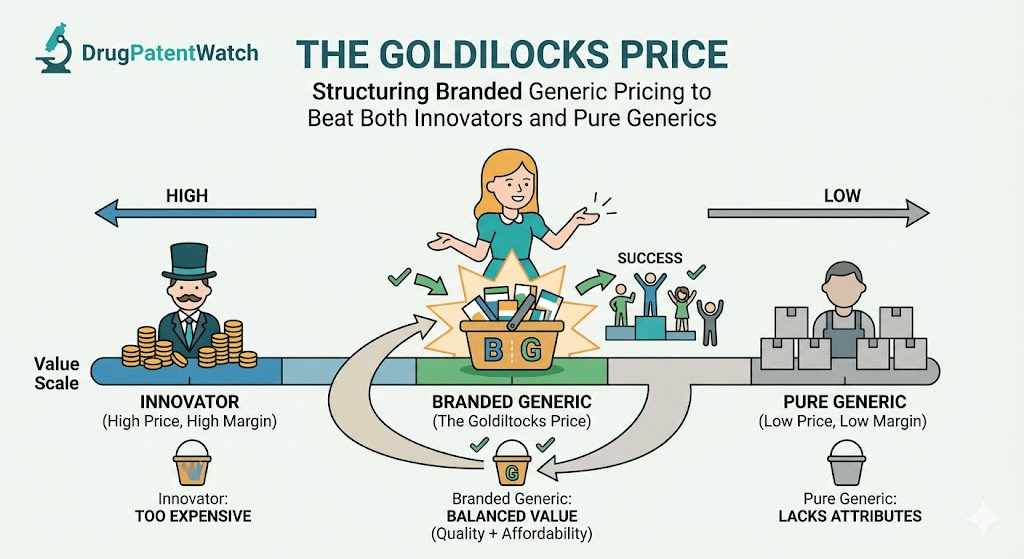
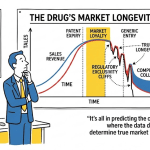
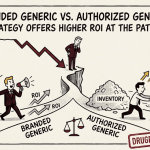
There is a narrow pricing band in pharmaceuticals where the math actually works. Price too high and payers route patients to cheap generics. Price too low and you destroy the brand equity that justified the investment in reformulation, regulatory work, or authorized-generic agreements in the first place. The companies that get this right build defensible revenue streams that outlast both the innovator’s patent exclusivity and the commodity price war below them.
This is the branded generic problem — and it is harder than it looks.
The term ‘branded generic’ covers a range of products: authorized generics licensed directly from originators, 505(b)(2) reformulations with their own regulatory exclusivities, generic molecules sold under a proprietary trade name in markets where physician preference still moves volume, and hybrid products that sit in specialty channels where price sensitivity behaves differently than in the retail pharmacy. Each of these requires a different pricing architecture, but all of them share the same fundamental constraint: you are selling a molecule the market knows is off-patent, and you need to charge more than the lowest bidder while still undercutting the originator enough to matter to formulary managers and prescribers.
This article works through the mechanics of that pricing problem in detail — how to set the number, how to defend it against payer pressure and generic erosion, what the litigation exposure looks like, and what the global picture tells us about where branded generics actually win and where they get obliterated.
What Is a Branded Generic? Definitions, Distinctions, and Market Reality
Before getting into pricing architecture, it is worth being precise about what ‘branded generic’ actually means, because the term gets used to describe at least four structurally different product types, each with different competitive dynamics.
Branded Generic vs. Generic: What’s the Actual Difference in Regulatory and Commercial Terms?
A generic drug, in the FDA’s framework, is approved via an Abbreviated New Drug Application (ANDA) under Section 505(j) of the Federal Food, Drug, and Cosmetic Act. The ANDA filer must demonstrate bioequivalence to the reference listed drug (RLD) and cannot make claims of clinical superiority. The product receives an AB rating in the Orange Book if bioequivalence is established, which enables automatic pharmacy substitution in most U.S. states.
A branded generic, depending on how it is structured, may or may not have an AB rating. If it is an authorized generic — a product that the originator licenses to a generic company, or sells directly under a different label, using the exact same formulation — it will typically share the originator’s NDA and carry an AB rating. If it is a 505(b)(2) product with a new formulation, extended release profile, or delivery system, it will have its own NDA and may or may not be substitutable at the pharmacy counter.
The commercial difference matters enormously. A product without an AB rating cannot be substituted by pharmacists without explicit prescriber direction. That changes the selling model entirely: you need the physician to write for your specific product, not just write the generic name. That is a more expensive commercial model, but it also means your price is harder to undercut at the point of dispensing.
Branded Generic vs. Innovator Brand: Price Gap, Perception Gap, and What Actually Drives Volume
The relationship between a branded generic and the originator brand it competes with is more complicated than a simple price discount. In the U.S. market, after a major molecule loses exclusivity, the originator brand typically retains somewhere between 5% and 25% of the original prescription volume — and that share comes disproportionately from patients who are insured with low copay obligations, from therapeutic categories where prescriber habit is strong, and from products where the originator has an effective patient assistance or copay card program running in parallel.
Branded generics fight for the middle: patients who are price-sensitive enough that the originator’s full WAC price creates access barriers, but who have payers or prescribers that value something beyond the lowest-cost generic. That ‘something’ varies by category. In branded generics for neurological disorders, it may be a reformulation that reduces pill burden or improves tolerability. In cardiovascular or diabetes, it may simply be a trusted trade name in a market where the prescriber has heard patient complaints about generic switching. In pediatric formulations, it may be a palatable liquid version of a molecule that only comes in adult tablets at the generic level.
Why ‘Authorized Generic’ Is Not the Same as ‘Branded Generic’ — And Why the Distinction Changes Your Pricing Model
Authorized generics (AGs) deserve their own category. When Pfizer launched Greenstone (its authorized generic subsidiary) or when AstraZeneca sold authorized generic versions of Crestor through the Watson/Actavis distribution channel, those products competed on price, not brand. The AG strategy is primarily a tool for the innovator to capture generic-price revenue during the 180-day exclusivity period when the first Paragraph IV ANDA filer has market exclusivity — and to suppress the first-filer’s revenue sufficiently to deter future challenges.
True branded generics are different. They carry a proprietary name, are marketed with some level of sales force or promotional activity, and are priced at a deliberate discount to the originator — typically between 20% and 60% depending on market and channel — but well above commodity generic prices. The pricing model requires ongoing brand investment, and the margin math only works if you can sustain enough volume at that mid-tier price to cover that investment.
The FDA’s Regulatory Pathway Taxonomy: How Filing Strategy Locks In Your Pricing Options
The FDA’s three primary NDA pathways — 505(b)(1) for full NDAs, 505(b)(2) for hybrid applications relying partly on existing data, and 505(j) for ANDAs — create materially different pricing environments. A 505(b)(2) filer can claim up to three years of data exclusivity for new clinical investigations that were essential to approval, or five years if the application covers a new chemical entity. That exclusivity window, while shorter than the patent terms protecting most innovator products, gives the branded generic filer a period during which no AB-rated substitutable generic can enter — and that window is where branded generic pricing power is highest.
The practical implication: if you are building a branded generic strategy on a 505(b)(2) platform, your pricing model during the exclusivity window can sit closer to 30-40% below the originator. Once that exclusivity expires and commodity ANDAs flood the market, you either defend with brand equity, channel relationships, and formulary position — or you compress your price again.
The Pricing Corridor: Where Branded Generics Must Live to Generate Sustainable Returns
The framing of a ‘corridor’ is not metaphorical. There are concrete ceiling and floor constraints that define the economically viable pricing range for a branded generic, and those constraints differ by channel, therapeutic category, and payer mix.
What Is the Goldilocks Zone for Branded Generic Pricing? A Quantitative Framework
The ceiling is set by payer behavior. Express Scripts, CVS Caremark, and OptumRx — the three largest pharmacy benefit managers in the U.S. — manage formularies that typically place branded drugs on Tier 3 and generics on Tier 1 or Tier 2. When a branded generic is priced above a threshold that the PBM classifies as ‘brand-like,’ it risks Tier 3 placement, which means patients pay brand-level copays and volume erodes. Most PBMs apply a WAC-based threshold: products priced above roughly 70-80% of the originator WAC are treated as brands for formulary purposes, regardless of their generic bioequivalence status.
The floor is set by commodity generic pricing dynamics. Once five or more ANDA filers are active on a molecule, the retail generic price collapses — typically to 15-30% of the originator WAC within 24 months of initial generic entry, and often much lower for high-volume primary care molecules. A branded generic priced at parity with these commodity generics is, commercially, just an expensive generic with a label. The brand investment does not recover.
The viable corridor, for most U.S. branded generics targeting retail pharmacy channels, runs from about 35% to 65% of originator WAC. Below 35%, you are in commodity generic territory and the brand premium does not pay for itself. Above 65%, you are at risk of being formulary-excluded or placed in a non-preferred tier that kills volume.
How to Calculate the Optimal Branded Generic Price Point: A Step-by-Step Approach
Getting to the right number requires working through four variables simultaneously.
First, map the originator WAC and the net price after rebates. The published WAC is not what payers actually pay. Large PBMs negotiate rebates that can bring the effective cost of an originator brand to 40-60% of WAC in competitive therapeutic categories. Your branded generic price needs to beat the originator’s net price, not just the sticker price, to generate Tier 2 placement — and even then, the PBM may prefer a commodity generic at Tier 1.
Second, establish the commodity generic floor. Pull the lowest available generic WAC from the FDA’s National Drug Code directory and corroborate it with pricing data from GoodRx, Medicaid drug rebate reporting, or commercial data sources. DrugPatentWatch provides patent expiration timelines and ANDA filer counts that let you project how many generic competitors will be active within your planning horizon — a critical input for forecasting how fast the commodity floor will drop.
Third, quantify your differentiation premium. If your branded generic is a 505(b)(2) product with a genuine formulation advantage — once-daily dosing versus twice-daily for the reference product, a liquid pediatric formulation, an abuse-deterrent delivery system — that advantage justifies a measurable price premium over commodity. Payers and P&T committees will evaluate the clinical or adherence data; you need to model the magnitude of that premium with actual payer feedback, not assumptions.
Fourth, run the gross-to-net waterfall. Your net revenue per unit after Medicaid rebates (which for branded generics classified as ‘innovator’ under OBRA ’90 can run to 23.1% base plus additional inflation penalties), PBM rebates, GPO fees, chargebacks, and patient copay card costs will typically land 30-50% below your WAC. The branded generic pricing decision must be made on net, not gross.
Price Elasticity in Branded Generics: What the Claims Data Actually Shows
IQVIA and Symphony Health have both published analyses showing that branded generic volume is significantly more price-elastic than originator brand volume, particularly in primary care categories. The patient population that stays on an originator brand at full price tends to have low cost-sharing obligations or strong physician inertia — neither of which applies to the branded generic buyer. Branded generic patients are more likely to be switching from the originator due to formulary pressure, cost concerns, or prescriber choice at the point of new prescription — and those patients are more likely to switch again if a lower-cost option appears on formulary.
The implication for pricing strategy: a 10% price reduction on a branded generic in a primary care category tends to generate a larger proportional volume increase than the same reduction on an originator brand. But the converse is equally true — a 10% price increase on a branded generic triggers sharper volume loss. This asymmetry argues for setting prices conservatively within the corridor rather than testing the ceiling.
When Pricing Too Low Destroys Branded Generic Profitability: The Race-to-the-Bottom Trap
Companies that launch branded generics at aggressive low prices to win formulary position often find they have created a margin trap. Once you establish a WAC at, say, 40% of originator, moving that price up in future years is structurally difficult. The branded generic’s price architecture gets locked into gross-to-net math that cannot recover the brand investment. Worse, if commodity generics drop further below you and PBMs reclassify your product, you get the worst of both worlds: higher-than-generic price without the brand premium volume that makes it work. The lesson from products like Allergan’s authorized generic of Namenda XR and generic-label versions of Vyvanse from specialty channels is that price discipline at launch matters more than chasing the first contract.
Market Sizing and the Competitive Landscape: Who Are the Major Branded Generic Players?
The branded generic market is not a single global market — it is a collection of structurally different regional markets that happen to share a product category. The U.S. market, India, China, and Western Europe each have their own payer dynamics, regulatory frameworks, and competitive structures that shape what pricing is possible.
Top Branded Generic Companies by Revenue, Portfolio Depth, and Geographic Reach
Teva Pharmaceutical, with roughly $15 billion in annual revenue, is the largest generic company in the world and runs a substantial branded generic portfolio alongside its commodity ANDA business. Its brand-name generics include Copaxone (glatiramer acetate), which held pricing power through reformulation from 20 mg daily to 40 mg three-times-weekly while the original formulation faced generic competition. Teva’s experience with Copaxone is one of the most-studied examples of defensive branded generic strategy in the U.S. market.
Viatris, formed from the 2020 merger of Mylan and Pfizer’s Upjohn division, carries a branded generics portfolio particularly strong in emerging markets. Upjohn’s established brands in Asia and Latin America — including branded versions of Lipitor (atorvastatin), Norvasc (amlodipine), and Celebrex (celecoxib) under the Pfizer brand in markets where those molecules are off-patent — represent a model where originator companies retain brand premiums in markets that never had the same commodity generic competition as the U.S.
Sun Pharmaceutical Industries, India’s largest pharma company, generates roughly 30% of its revenue from branded generics in India and other emerging markets. Its U.S. specialty branded portfolio, built through acquisitions including Ranbaxy and a string of dermatology-focused buys, includes 505(b)(2) products like Absorica (isotretinoin with enhanced bioavailability) and Winlevi (clascoterone) — products that carry real pricing premiums because of formulation differentiation, not just brand names on off-patent molecules.
Abbott Laboratories’ established pharmaceutical division, which now operates as AbbVie’s spin-out legacy in some markets and as Abbott’s EPD (established pharmaceutical division) in developing markets, is essentially a branded generic machine. Abbott EPD sells branded versions of off-patent molecules across 100+ markets with a particular emphasis on gastroenterology, women’s health, and metabolic disease — categories where brand trust remains a purchasing driver in markets with less developed pharmacy benefit management infrastructure.
Emerging Markets vs. Developed Markets: Where Branded Generics Dominate and Why
In the United States and Western Europe, branded generics face structured headwinds from PBM formulary management, mandatory generic substitution laws, and a payer infrastructure built explicitly to drive volume to the lowest-cost equivalent. In these markets, branded generics survive in niches: specialty products with genuine formulation differences, pediatric formulations, abuse-deterrent mechanisms, and categories where the cost of switching prescribers to generic names is high enough to sustain some volume.
In emerging markets — India, Brazil, Indonesia, Mexico, Southeast Asia — the dynamic is inverted. There is no PBM controlling formulary placement. Prescriptions are often written by brand name, not INN. Physicians build prescribing habits around specific brand names that they associate with reliable quality and known clinical outcomes, even if the underlying molecule is fully off-patent. In India, the branded generic market accounts for roughly 70-80% of total pharma sales by value — a figure that reflects both the absence of mandatory generic substitution and the physician-driven dispensing model where brand recognition directly drives prescribing choice.
The price premium that a branded generic commands in these markets can be striking. In India, a branded generic atorvastatin from a tier-1 company might be priced at 3-5 times the price of an unbranded generic equivalent, and that premium persists because the prescribing physician recommends it by name and the patient has no automatic substitution pathway.
Sun Pharma, Teva, Viatris, and Abbott: How Their Branded Generic Strategies Diverge
The four companies represent four distinct models. Teva has used its U.S. branded generic business primarily as a defensive tool — reformulating molecules it dominates before the original formulation goes generic, using the 505(b)(2) pathway to buy pricing exclusivity. Sun Pharma has built a specialty-branded U.S. strategy focused on dermatology and ophthalmology, where the combination of prescriber habit and limited generic substitution provides durable pricing power. Viatris is running a harvest model — extracting value from legacy branded generics in developing markets while managing U.S. and European portfolios for cash generation rather than growth. Abbott EPD is the purest branded generic machine: high-volume, emerging-market-focused, with a sales force that competes on physician relationships rather than PBM formulary strategy.
The Patent Cliff Strategy: Using Branded Generics to Extend Revenue Curves After LOE
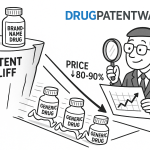
Loss of exclusivity (LOE) is the defining event in any branded drug’s lifecycle. For most molecules, the revenue inflection after LOE is steep: U.S. originator brand volume drops by 80-90% within the first 12-24 months as pharmacy substitution laws route prescriptions to commodity generics. The question for the originator is whether any branded generic strategy can materially change that curve.
How Innovator Companies Deploy Branded Generics at Loss of Exclusivity: The Defensive Playbook
The most direct defensive move is an authorized generic launched simultaneously with, or slightly ahead of, the first Paragraph IV filer’s entry. AstraZeneca, Pfizer, and Merck have all run variations of this play. The authorized generic captures generic-price volume while the originator brand retains whatever price-sensitive prescribing base it can. The authorized generic typically generates lower per-unit margin than the originator brand but captures market share that would otherwise go entirely to third-party generic filers.
A more aggressive play involves reformulating the molecule into a new dosage form, delivery mechanism, or fixed-dose combination and filing a 505(b)(2) NDA before the original patent expires. This creates a new patent term on the new formulation and, if done correctly, a period where the new formulated product is the only once-daily or once-weekly version available — which allows it to maintain pricing substantially above commodity generic levels even as the original formulation faces full generic competition.
Teva did this with Copaxone. The 20 mg daily formulation faced generic entry from Sandoz and Momenta in 2017, after years of litigation. By then, Teva had converted roughly 80% of its Copaxone patient base to the 40 mg three-times-weekly formulation, which had different patent protection and a formulation complexity that made ANDA bioequivalence demonstration more difficult. Teva maintained pricing power on the 40 mg formulation for years after the 20 mg version went fully generic — a play that added billions in revenue that the company would otherwise have lost.
Authorized Generics and Branded Generics at Patent Expiry: The Cannibalization Question
The cannibalization question is real and often underestimated. When an innovator launches an authorized generic or a branded generic version of its own molecule, it is competing with itself. The decision matrix is more complicated than it appears because the alternative is not a choice between originator brand and company-owned branded generic — it is a choice between company-owned branded generic and third-party generic erosion.
If the branded generic is launched before the first Paragraph IV filer enters, it captures volume at a price above the eventual commodity floor. If it is not launched, that volume goes to the Paragraph IV filer at commodity prices and the originator captures nothing. The cannibalization is thus better understood as a choice about who captures the margin on the volume that is leaving the originator brand: the company itself or a competitor.
The empirical record is reasonably clear. Companies that launch authorized generics before generic entry consistently capture more total molecule revenue over the 12-36 months post-LOE than companies that do not. The IMS/IQVIA dataset on molecule-level revenue post-LOE shows an average 12-15% revenue capture advantage for originators that pre-launch an authorized generic, though this advantage narrows significantly in categories with high ANDA filer counts where the commodity price collapse is fastest.
Case Study: AstraZeneca’s Nexium and the Branded Generic Playbook
Nexium (esomeprazole magnesium) lost its primary patent protection in May 2014. AstraZeneca’s response is instructive. The company launched an over-the-counter version of Nexium 20 mg in 2012, before the patent expiry, capturing the self-pay consumer segment. It also pursued authorized generic agreements and ran a copay card program to retain commercially insured patients on the brand as long as possible.
The result was that Nexium retained unusually high prescription volume for an originator brand post-LOE — roughly 20% of its peak Rx volume in some payer categories — because the OTC repositioning and brand recognition kept it relevant in a channel where generic substitution was not automatic. The OTC Nexium functioned as a de facto branded generic in the self-pay market, priced well above commodity omeprazole but below the prescription Nexium WAC.
What AstraZeneca demonstrated is that the branded generic strategy does not have to be launched after LOE. It can be built into the lifecycle planning years earlier, using regulatory pathway flexibility to create revenue-sustaining products before the cliff arrives.
What Happens to Branded Generic Pricing After the 180-Day Exclusivity Window Expires?
The 180-day exclusivity period granted to the first successful Paragraph IV ANDA filer under Hatch-Waxman is a critical pricing window. During those 180 days, the first-filer is the only generic on the market (absent an authorized generic). Prices during this period typically sit at 70-90% of the originator WAC for the first-filer generic — significantly above the commodity generic price that emerges later.
For a branded generic that is already on the market when the 180-day period ends, the entry of subsequent ANDAs creates an accelerated pricing problem. As the number of generic competitors increases, the commodity price floor drops rapidly. A branded generic priced at 50% of originator WAC during the 180-day period may face commodity generic competition at 20% of originator WAC within 18 months. At that point, the branded generic’s positioning shifts from ‘value alternative to the brand’ to ‘premium-priced generic’ — and the pricing defense has to rely on formulary relationships, physician habit, or genuine product differentiation rather than pure price.
Regulatory Pathways and FDA Exclusivity Structures That Drive Branded Generic Pricing Power
The regulatory pathway determines almost everything about a branded generic’s pricing durability. It sets the exclusivity timeline, defines substitutability, shapes the patent litigation exposure, and determines what clinical differentiation claims the company can make to justify a price premium.
ANDA vs. NDA: How the Filing Choice Creates Divergent Branded Generic Pricing Environments
An ANDA-approved generic has an AB rating if it demonstrates bioequivalence to the RLD. That AB rating means pharmacists can — and in most states must — substitute it for the brand when a prescription is written generically. An AB-rated branded generic is substitutable; its pricing power depends on whether payers and formulary managers treat it as a generic (Tier 1/2) or a brand (Tier 3). If they treat it as a Tier 2 preferred generic, the company captures generic-segment volume with better-than-commodity margins. If they treat it as a non-preferred generic or a brand, the volume goes to lower-priced competitors.
An NDA-approved 505(b)(2) branded generic is not substitutable unless a pharmacist receives explicit prescriber authorization. This creates a fundamentally different selling environment. The company must convince physicians to write for the specific product by name, which requires either clinical differentiation data or a sales force relationship. The payoff is that payer management is less of a direct pricing ceiling — a non-substitutable product cannot be automatically switched at the pharmacy, so formulary placement is less decisive. But it also means volume is harder to build, because the product cannot simply capture generic prescriptions written by INN at the pharmacy counter.
How 505(b)(2) Applications Create Branded Generic Pricing Advantages That Pure ANDAs Cannot Match
The 505(b)(2) pathway is the primary regulatory tool for generating defensible branded generic pricing power in the U.S. market. It allows a company to rely on the FDA’s prior findings of safety and effectiveness for an existing molecule while adding new clinical data for a new formulation, new indication, new route of administration, or new patient population.
The pricing advantages flow from several features of 505(b)(2) products. Data exclusivity — three years for new clinical investigations essential to approval, or five years for new chemical entities — blocks AB-rated substitutable generics during the exclusivity window. New patent claims on the reformulation, if they are robust, can extend that protection further. And the clinical data package allows the company to make differentiation claims that justify the price premium to payers and prescribers in ways that an ANDA product cannot.
Products like Zogenix’s Zohydro ER (extended-release hydrocodone), Shire’s Mydayis (triple-bead amphetamine), and Collegium’s Xtampza ER (abuse-deterrent oxycodone) all used 505(b)(2) applications to create branded generic-adjacent products with genuine pricing differentiation. These are not branded generics in the traditional sense — they are more accurately described as formulation-differentiated generics with NDA pricing power. But they illustrate the principle: the 505(b)(2) pathway allows pricing above the commodity generic floor for as long as the formulation differentiation justifies payer acceptance.
Orange Book Listings and Paragraph IV Patent Certifications: What Branded Generic Filers Must Know
Every NDA product’s patent and exclusivity information is listed in the FDA’s Approved Drug Products with Therapeutic Equivalence Evaluations — the Orange Book. When a branded generic company files a 505(b)(2) application referencing an innovator’s NDA, it must make a patent certification for each patent listed in the Orange Book against that NDA.
The four certifications under Hatch-Waxman are: Paragraph I (no patent listed), Paragraph II (patent expired), Paragraph III (patent will expire before approval is sought), and Paragraph IV (patent is invalid or not infringed). A Paragraph IV certification triggers a 45-day window during which the NDA holder can file a patent infringement suit, which in turn triggers an automatic 30-month stay of FDA approval. That stay — which runs from the NDA holder’s receipt of the Paragraph IV notice — is the primary litigation tool originators use to delay branded generic entry.
For a branded generic filer using the 505(b)(2) pathway, the Paragraph IV certification decision is a strategic choice with pricing implications. A Paragraph IV challenge against a strong patent portfolio invites litigation that may cost tens of millions of dollars and delay launch by two-plus years. But a successful Paragraph IV challenge on a weak Orange Book patent can clear the path to market years ahead of patent expiry — which means years of above-commodity pricing that would otherwise not exist. The commercial NPV calculation typically favors litigation when the patent is weak and the branded generic market opportunity is large enough.
Paragraph IV Challenges Against 505(b)(2) Filers: When the Branded Generic Becomes the Defendant
A peculiarity of the Hatch-Waxman framework is that 505(b)(2) filers are not always the challengers — they can also be the challenged party. When a branded generic company files a 505(b)(2) NDA that relies on the originator’s safety and efficacy data and certifies against Orange Book patents, the originator becomes the plaintiff. But a branded generic company that successfully establishes its own patent portfolio on a novel formulation can also face Paragraph IV challenges from ANDA filers who want to enter below it.
This second scenario — the branded generic as patent holder defending against ANDA challengers — is analytically identical to the innovator’s patent defense problem. The branded generic must evaluate each ANDA challenger, decide whether to sue within the 45-day window (triggering the 30-month stay), and manage the litigation portfolio across multiple filers. The key difference is that the branded generic’s patent estate is typically narrower and more vulnerable than a fully developed originator portfolio, making successful patent challenges more likely and the litigation investment harder to justify on weak claims.
How Prescribers, Pharmacists, and Patients Actually Choose: The Behavioral Drivers Behind Branded Generic Volume
Pricing models without behavioral grounding are incomplete. The actual volume a branded generic captures depends on how physicians write prescriptions, how pharmacists fill them, and how patients respond to cost-sharing at the pharmacy counter.
Brand Loyalty Among Prescribers: When Does It Survive Generic Entry?
Physician prescribing inertia is real and documented. Studies using prescription-level claims data consistently show that physicians who were active prescribers of an originator brand before LOE continue writing for that brand — or for branded alternatives in the same therapeutic space — at rates higher than would be predicted by pure price optimization. The mechanism is partly habit, partly uncertainty about generic equivalence (particularly in narrow therapeutic index drugs), and partly relationship-based (pharmaceutical sales forces targeting high-volume prescribers).
For branded generics, this behavioral pattern is a double-edged reality. High-inertia prescribers who were on the originator brand may not switch to a branded generic even at a 40% discount — they stay on the originator brand as long as copay cards or employer plan coverage makes it economically viable. But those same prescribers are also unlikely to switch to unbranded commodity generics, which means that if the originator brand eventually loses formulary placement entirely, the branded generic is the natural fallback — and the branded generic company that has been building prescriber relationships is better positioned to capture that volume than one that has not.
The categories where prescriber brand loyalty is strongest and most durable post-LOE include: narrow therapeutic index drugs (thyroid hormones, anticoagulants, certain anticonvulsants), psychotropics where patient response variability is perceived as high, and complex biologics or formulation products where prescribers have seen real-world outcomes differences. In these categories, a well-positioned branded generic can maintain pricing 50-60% above the commodity generic floor for years.
Pharmacy Substitution Laws and Branded Generic Shelf Positioning: State-by-State Dynamics
All 50 states allow pharmacist substitution of an AB-rated generic for a brand-name product, subject to prescriber authorization. But the details vary in ways that matter to branded generic volume. Some states require pharmacists to notify patients when a substitution is made. Others allow patients to request the brand without a prescriber override but require them to pay the cost differential. A handful of states have carve-outs for specific therapeutic categories or product types.
For a branded generic with an AB rating (i.e., an authorized generic or an ANDA-approved product), pharmacy substitution is the default. For a non-substitutable 505(b)(2) branded generic, the pharmacist cannot substitute without prescriber direction — but the prescriber can still call in a change or write the prescription generically if the therapeutic alternatives are discussed. Shelf positioning and pharmacy relationship programs become relevant tools: some branded generic companies run pharmacy-directed programs that make their product the first-presented option to the pharmacist or pharmacy technician when filling a prescription in a relevant category.
Patient Assistance Programs and Copay Cards as Branded Generic Competitive Tools
Copay assistance programs — cards, coupons, or patient assistance programs (PAPs) — have become central to branded drug retention, and branded generics are no exception. A branded generic priced at, say, $180 per month WAC might be positioned with a copay card that brings the patient’s out-of-pocket cost to $25-$30, which is competitive with the Tier 1 generic copay on many commercial plans. The economics work for the company if commercial plan volume is large enough to justify the copay card subsidy while Medicaid and Medicare Part D patients (for whom copay cards are generally prohibited under AMP rules) fill at standard rates.
The strategic value of copay cards for branded generics is that they buy time. They hold patient volume on the branded generic while the company builds prescriber relationships and formulary position, during a period where the commodity generic competition is most intense. The risk is that they create a volume base that is economically dependent on the subsidy: if the copay card program is pulled — due to cost, PBM restriction, or regulatory pressure — volume may collapse faster than it would have without the program in the first place.
Five Branded Generic Pricing Models That Work — and When to Use Each
There is no single correct branded generic pricing model. The right model depends on the therapeutic category, the regulatory pathway, the payer mix, and the competitive dynamics at launch. Here are the five models that have demonstrated success in the market.
The 20-30% Discount Model: Maintaining Premium Positioning Close to the Innovator
This model is appropriate when the branded generic has a genuine clinical or formulation differentiation from the commodity generic, the originator’s remaining market share is large, and the payer environment allows brand-tier pricing for differentiated products. Products using extended-release technology, abuse-deterrent formulations, or device-drug combinations can often sustain a 20-30% discount to the originator WAC because payers accept the differentiation value argument.
Teva’s Copaxone 40 mg ran this model effectively. It priced at approximately 20-25% below the 20 mg daily reference price on a per-treatment-day basis while positioning around adherence advantages of less-frequent injection. The strategy worked because the patient population (relapsing-remitting multiple sclerosis) is well-managed by specialty physicians who have strong brand loyalty and detailed knowledge of formulation differences, and because the biosimilar/generic competition for 40 mg took years to materialize in significant volume.
The 50% Discount Model: The True Middle Ground for Formulary Negotiation
A 50% discount to originator WAC is the most common opening position for branded generics in primary care categories seeking preferred formulary placement. It is below the PBM’s brand-tier threshold in most formulary structures, which allows Tier 2 classification and lower patient copays. It is above commodity generic pricing by enough to fund a commercial infrastructure.
The 50% model works in mid-competition environments — after the 180-day first-filer exclusivity period but before commodity generics have multiplied beyond five or six filers. It is the pricing model most often used by branded generics in chronic disease categories: branded versions of ACE inhibitors, statins, and oral diabetic agents in markets where prescriber brand recognition persists but cost pressure is moderate.
Price Parity With Pure Generics: When Branding Alone Drives the Decision
In some emerging markets and some specialty pharmacy channels, branded generics are priced at parity with commodity generics because the competitive dynamic is entirely about brand name recognition rather than price differential. The branded generic in this model is not charging a price premium — it is competing on quality perception, manufacturer reputation, supply chain reliability, and sales force relationships, all at the same price as unbranded alternatives.
This model is common in India’s retail pharmacy market, where a large branded generic company like Cipla or Dr. Reddy’s may price its branded atorvastatin at essentially the same level as unbranded equivalents while maintaining much higher volume through physician relationships and brand trust. The margin advantage comes not from price but from scale and manufacturing efficiency: the branded generic company produces millions of units at lower per-unit cost than smaller unbranded competitors, and the volume itself sustains the brand infrastructure.
Tiered Pricing by Channel: Hospital Formulary, Retail Pharmacy, and Specialty Pharmacy Pricing Logic
Hospital and retail pharmacy channels have structurally different pricing dynamics. Hospital formulary decisions are made at the P&T committee level, often driven by GPO (group purchasing organization) contracts that award exclusive or preferred status to a single supplier in a therapeutic category in exchange for deep volume-based discounts. Hospital-channel branded generic pricing often runs 40-60% below retail branded generic pricing to win formulary inclusion.
Specialty pharmacy channels — used for oncology, specialty biologics, and high-cost chronic disease products — have different dynamics again. Specialty pharmacy payer contracts often allow for higher per-unit pricing because the patient population is smaller, adherence management is more intensive, and the payer’s total cost per patient is dominated by the drug cost regardless of modest price differences. Branded generics in specialty pharmacy can often maintain pricing closer to the innovator brand than retail pharmacy products because the specialty channel’s economics support higher margins for the pharmacy and the manufacturer.
Formulary Positioning and Rebate Strategy: What a Branded Generic Must Offer PBMs to Win Tier 2
PBMs award Tier 2 preferred formulary placement in exchange for rebates and volume guarantees. A branded generic competing for Tier 2 placement in a category where commodity generics already hold Tier 1 must offer PBMs a rebate structure that makes the total cost of the branded generic on formulary roughly equivalent to — or better than — the administrative cost of managing the generic switching process.
In practical terms, this means branded generic rebates to major PBMs often run 30-40% of WAC in competitive primary care categories. After that rebate, the net price to the PBM is 60-70% of WAC, which must still be below the originator’s net price (after its own rebates) to win Tier 2 placement over the brand. This math is often quite tight, and in categories with strong originator rebate programs, branded generics may find that Tier 2 placement requires pricing concessions that eat the entire commercial margin.
PBM and Payer Dynamics: The Formulary Game That Determines Branded Generic Commercial Viability
No factor shapes branded generic commercial outcomes more decisively than payer and PBM strategy. The three major U.S. PBMs — Express Scripts (now Cigna/Evernorth), CVS Caremark, and OptumRx — collectively manage prescription benefits for over 200 million Americans. Their formulary decisions effectively set the distribution of volume across the innovator brand, branded generic, and commodity generic in any therapeutic category.
Formulary Tier Placement: What It Takes for a Branded Generic to Beat Both Innovator and Generic
Winning preferred formulary placement above the commodity generic — which is necessary for a branded generic’s pricing model to work — requires satisfying three conditions simultaneously. The branded generic’s net price must be below the originator’s net price. The branded generic must offer something clinically or administratively relevant to the payer’s membership (reduced pill burden, reduced toxicity, a validated adherence advantage, or a formulation that reduces downstream costs). The branded generic manufacturer must be willing and able to manage the rebate negotiation, contracting infrastructure, and data-sharing relationships that PBMs require for preferred placement.
The third requirement eliminates many smaller branded generic companies before the conversation about price even begins. PBMs have sophisticated rebate accounting systems, detailed WAC tracking, and compliance requirements for data submission that require a commercial infrastructure most small 505(b)(2) filers do not have. This is one reason why branded generic success in the U.S. is concentrated among mid-size to large companies with existing payer contracting functions.
How PBMs Price Out Branded Generics From Preferred Status: The Exclusion Mechanics
PBMs maintain ‘exclusion lists’ — formularies from which specific branded drugs are removed entirely — and branded generics can land on these lists if their price-value equation does not hold up. The mechanism is straightforward: if the PBM can route 90%+ of volume to a commodity generic at Tier 1 and the branded generic’s rebate offer is insufficient to justify Tier 2 placement, the branded generic simply gets excluded from the preferred formulary and patients who need it must pay full out-of-pocket or get prior authorization.
Express Scripts’ National Preferred Formulary has historically been aggressive about exclusions in categories where multiple generic competitors exist. In 2022 and 2023, ESI’s exclusion lists included numerous branded generics and 505(b)(2) reformulations in pain management, cardiovascular, and CNS categories where the commodity generic option was established and cheap. The volume impact on excluded products is severe: most studies show 40-70% volume decline within six months of formulary exclusion for products that relied on PBM coverage for commercial patient access.
Copay Cards and the New PBM Restrictions: How the Landscape Changed After 2020
PBMs have increasingly implemented ‘copay accumulator adjustment programs’ and ‘copay maximizer programs’ that change the economics of branded generic copay cards. Under these programs, copay card payments no longer count toward a patient’s deductible or out-of-pocket maximum — meaning that once the copay card runs out, the patient faces full cost-sharing, which often triggers switching to commodity generics.
This structural change has materially reduced the effectiveness of copay cards as branded generic retention tools in the commercial insurance market. Companies that built their branded generic commercial models around copay card-driven retention have had to recalibrate. The implication for pricing strategy is that branded generics need to secure formulary placement at a price that patients can actually afford without subsidy — which reinforces the importance of net pricing at or below the payer’s effective generic management threshold, rather than relying on copay card subsidies to paper over a fundamentally high WAC.
Manufacturing Cost Structure and Supply Chain: How Branded Generics Build Margin Durability
A branded generic’s price premium over commodity generics is only sustainable if the cost structure supports it. A company charging 2-3x the commodity generic price on a molecule must either have manufacturing cost advantages that generate adequate margin at that price, or genuine product differentiation that justifies the premium without relying purely on cost efficiency.
How Branded Generic Manufacturers Achieve Cost Parity With Pure Generics Despite Higher Overhead
The largest branded generic companies — Teva, Sun Pharma, Cipla, Dr. Reddy’s — achieve manufacturing cost structures comparable to commodity generic producers through scale, vertical integration of API manufacturing, and multi-product facility utilization. A Sun Pharma or Teva facility manufacturing 10 different oral solid dosage products amortizes facility overhead, quality systems costs, and regulatory compliance costs across a broad portfolio in ways that a specialty 505(b)(2) company manufacturing a single product cannot.
The cost structure of a typical branded generic in a primary care category, at scale, looks something like this: API cost at 15-25% of ex-factory price, formulation and manufacturing at 10-20%, quality and regulatory at 5-10%, commercial infrastructure (sales force, payer contracting, marketing) at 20-30%, and gross margin at 20-35%. That gross margin must cover SG&A, R&D for the next product, and a return on the regulatory investment that created the branded generic in the first place.
API Sourcing and Vertical Integration as Pricing Levers in Branded Generic Competition
Active pharmaceutical ingredient (API) cost is the most controllable variable in branded generic cost structure, and it is also the one most directly affected by competitive dynamics. Companies that have vertically integrated API manufacturing — either through wholly-owned API divisions or through long-term supply agreements with dedicated API producers — have significantly more pricing flexibility than companies that purchase API on the open market.
Sun Pharma’s acquisition of Ranbaxy in 2014 gave it substantially enhanced API vertical integration across several therapeutic categories. Dr. Reddy’s Laboratories has long maintained API manufacturing capabilities as a core competitive asset. Teva’s API division produces a significant share of the active ingredients for its own branded generic portfolio. When a molecule’s API price collapses — as happens routinely as off-patent molecules age — the vertically integrated company can maintain margin by capturing the API savings internally, while a company purchasing API externally is exposed to both market price fluctuation and supply disruption risk.
Quality Perception Gaps: When Manufacturing Origin Actually Changes Prescribing Behavior
Quality perception is a real commercial factor in branded generic pricing, particularly in markets where drug recalls and FDA warning letters have raised physician awareness of manufacturing quality variation. Between 2012 and 2020, FDA import alerts, warning letters, and consent decrees affected Indian and Chinese API and finished dose manufacturers including Sun Pharma’s Halol plant, Ranbaxy’s multiple facilities, and various Chinese API suppliers. These events created prescriber anxiety about generic quality that branded generic companies with FDA-inspected U.S. or European manufacturing facilities could exploit in their marketing.
The pricing effect of quality perception premiums is measurable but modest. Studies using prescription data following highly-publicized generic recalls have shown temporary volume shifts to branded alternatives at premium prices, but these shifts typically reverse within 12-18 months as the recall event fades from prescriber consciousness. The long-term pricing power from quality perception requires sustained prescriber education and is more effective in specialty categories with organized prescriber communities than in primary care where prescribing volume is too high for individual prescriber attention.
Litigation Risk: Paragraph IV Challenges and ANDA Litigation Strategy for Branded Generics
Patent litigation is not only a risk for innovator companies. Branded generics, particularly those built on 505(b)(2) platforms with proprietary formulation patents, face the same Hatch-Waxman litigation framework from below — with ANDA filers challenging the branded generic’s formulation patents just as ANDA filers challenge originator brand patents.
Are Branded Generics More or Less Vulnerable to Paragraph IV Patent Challenges Than Innovator Brands?
Branded generics built on 505(b)(2) applications are generally more vulnerable to successful Paragraph IV challenges than fully developed innovator brands for several reasons. The branded generic’s patent portfolio is typically narrower: it protects a specific formulation, delivery mechanism, or method of use rather than the core molecule, and formulation patents are statistically more likely to be found invalid or non-infringed than composition-of-matter patents. Courts have consistently shown more skepticism toward formulation patent claims that appear to be ‘evergreening’ — extending market exclusivity through minor formulation changes — than toward innovation patents protecting genuinely novel chemistry.
The data from the FDA’s Orange Book and litigation records compiled in resources like DrugPatentWatch shows that formulation patents, method-of-administration patents, and packaging patents — the types most common in 505(b)(2) branded generic portfolios — are challenged at high rates and invalidated or found non-infringed at rates of 50-70% in district court proceedings, which is meaningfully higher than the overall generic challenge success rate across all patent types.
DrugPatentWatch, which aggregates Orange Book listings, patent expiration data, and ANDA filing activity, is a useful starting resource for mapping the patent landscape around a branded generic target and estimating the litigation risk horizon before committing commercial investment. A branded generic company evaluating a new 505(b)(2) opportunity should use this type of data to identify how many ANDA filers are likely to target the new product’s patent estate and what the litigation history on comparable formulation patents suggests about litigation duration and outcome probability.
Settlement Patterns: How Branded Generic Companies Resolve ANDA Litigation Differently Than Originators
Innovator companies settling Paragraph IV litigation typically do so through ‘reverse payment’ or ‘pay-for-delay’ agreements under which the originator pays the challenging ANDA filer (in cash, authorized generic rights, or other value) to delay market entry. Since the FTC v. Actavis decision in 2013, these agreements have faced antitrust scrutiny when the payment is large and unexplained by litigation savings, and the FTC continues to monitor them.
Branded generic companies defending against Paragraph IV challenges have less financial flexibility to make reverse payments, because they typically do not have the revenue base to fund large settlements and because the antitrust scrutiny that applies to ‘large unexplained payments’ from an originator does not map identically onto a branded generic’s financial capacity. Branded generic companies are more likely to settle by granting an early authorized generic license to the ANDA challenger — allowing the challenger to enter the market before patent expiry but under the branded generic company’s label and at a negotiated price, which preserves the branded generic’s market position while resolving the litigation.
Case Study: Paragraph IV Litigation Against Sun Pharma’s Absorica and the Branded Generic Patent Defense
Sun Pharma’s Absorica (isotretinoin with enhanced bioavailability via LDMC formulation, approved 2012) faced multiple Paragraph IV ANDA filings targeting its formulation patents. The key patent, covering the lipid-based delivery system that allows Absorica to be taken without food (unlike standard isotretinoin, which requires a high-fat meal for optimal absorption), was challenged by several generic filers including Mylan and Amneal.
The District of Delaware litigation ran for several years, with Sun Pharma securing preliminary injunctions and settlements with some challengers while others continued to trial. The outcome illustrates a common pattern in branded generic patent defense: the initial formulation patent claim is strong enough to deter the fastest generic entries and secure injunctions, but over a 3-5 year period, the litigation attrition either invalidates the key claims or drives settlement terms that admit earlier-than-expected generic entry. Absorica LD, a subsequent 505(b)(2) product from Sun, extended the platform — a second-generation branded generic move that bought additional pricing runway.
Loss of Exclusivity Scenarios: How Fast Does Branded Generic Pricing Collapse After Patent Expiry?
The pricing durability of a branded generic after its own patent or exclusivity protection expires is one of the most commercially important questions in lifecycle planning. The dynamics here differ meaningfully from the innovator LOE pattern because branded generics start from a lower price and a weaker brand position.
Branded Generic Price Erosion After Exclusivity Loss: Rate, Timing, and Category Effects
When a 505(b)(2) branded generic’s data exclusivity expires and AB-rated ANDAs enter, the price erosion pattern follows the same curve as innovator brand erosion but from a lower starting point. The initial generic entrant — benefiting from 180-day exclusivity — typically prices at 70-90% of the branded generic WAC. That is a modest discount that does not immediately obliterate the branded generic’s volume, because patients with low copay exposure and prescribers with established habits do not switch immediately.
The problem arrives at months 7-18, when multiple ANDA filers are active and commodity pricing dynamics kick in. At that point, the branded generic’s price premium over the commodity floor may be 3-5x, which is too large for most formulary structures to accept without placing the branded generic in a non-preferred tier. Volume drops sharply, and the company must choose between repricing to stay in the formulary game (destroying margin) or accepting a niche position at premium pricing with sharply reduced volume.
Categories where branded generic pricing holds longest after generic entry include: dermatology products with physician-applied or complex compounding formulations (where the branded generic’s manufacturing quality and consistency are genuinely harder to replicate at ANDA-commodity pricing), specialty CNS products where physician habit is very strong, and pediatric formulations where the branded generic has a specific formulation (flavored liquid, dispersible tablet, specific pediatric dosing) that commodity ANDA generics have not replicated.
Therapeutic Category Effects: Where Branded Generics Hold Price and Volume Longest
The empirical literature on post-generic-entry price dynamics by therapeutic category — drawn from IMS/IQVIA longitudinal datasets — shows clear patterns. Branded generics in chronic CNS (epilepsy, Parkinson’s disease, psychiatric conditions) hold price better than branded generics in primary care cardiovascular and metabolic categories. The reasons are well-documented: narrow therapeutic index anxiety among prescribers and patients, payer caution about automatic substitution in categories with documented generic switching problems (particularly for antiepileptics), and a patient advocacy infrastructure that actively resists generic switching in these populations.
Branded generics in dermatology hold price well because of the combination of cosmetic and medical use (which shifts the payer mix toward cash-pay patients who are price-insensitive in a different way) and because the branded generic’s formulation (vehicle, concentration, delivery system) is often clinically relevant in ways that commodity generics cannot fully replicate.
‘Generic drugs account for 90% of dispensed prescriptions in the United States but only 18% of total drug spending.’ — Association for Accessible Medicines, Generic Drug & Biosimilar Access & Savings in the U.S. Report, 2022.
This spread — 90% of volume but 18% of spending — is precisely the space that branded generics are trying to occupy. They are not competing for the 90%/18% generic commodity business; they are competing for the share of that prescription volume that patients and payers will pay above commodity prices for, for any reason. That share is smaller but far more valuable per unit.
Forecasting Branded Generic Revenue Decay: A 5-Year Model Framework
A workable 5-year branded generic revenue model needs to incorporate four variables that standard revenue forecasting often underweights. First, the ANDA filing trajectory: how many filers are likely to enter in Year 1, Year 2, and Year 3 post-generic launch, and how does the commodity price floor evolve with each additional entrant? DrugPatentWatch’s ANDA pipeline data, combined with FDA paragraph certification history for comparable molecules, gives reasonable estimates for filer timing.
Second, the formulary renegotiation cycle: PBM formulary contracts typically run 12-24 months. A branded generic may hold its formulary position for the duration of an existing contract even after generic entry, then face renegotiation with a dramatically lower net price requirement or exclusion at the next cycle. Model this explicitly — the revenue cliff in Year 2 is often a formulary contract expiry, not just a pricing event.
Third, payer mix evolution: as the branded generic’s price premium over commodity generics grows, the payer mix shifts toward cash-pay, self-pay, and high-deductible plan patients who are the least price-sensitive (because they have already made a considered decision to pay the premium). This creates a ‘rump’ patient population that sustains above-commodity pricing for years, but at a fraction of peak volume. Model this tail explicitly; it is real revenue that generic-entry models often ignore.
Fourth, the managed care formulary tier cost-sharing evolution: as pharmacy benefit design shifts more cost to patients through higher deductibles and coinsurance (rather than flat copays), patient price sensitivity at the pharmacy counter increases. Branded generics on Tier 3 with 30% coinsurance face a different volume trajectory than they did when Tier 3 meant a flat $50 copay.
Emerging Markets: The Branded Generic Pricing Playbook for India, China, Brazil, and Southeast Asia
Emerging markets are where the branded generic business model is most powerful and most structurally durable. The absence of mandatory generic substitution, physician-driven prescribing, weaker PBM infrastructure, and population growth in the patient cohorts most relevant to chronic disease therapy all favor branded generics over commodity alternatives.
Why Branded Generics Command Premium Pricing in Emerging Economies: The Structural Explanation
The dominant explanation for branded generic pricing power in emerging markets is information asymmetry. Patients and physicians in markets with less developed drug quality oversight — and a historical record that includes counterfeit, substandard, or poorly manufactured generic products — rationally assign a quality premium to known brand names, even when those brand names belong to off-patent molecules from established generic manufacturers. This is not irrational brand loyalty; it is a reasonable response to genuine quality uncertainty.
The premium is not unlimited. In India, where NPPA (National Pharmaceutical Pricing Authority) regulates prices for essential medicines under the National List of Essential Medicines (NLEM), price caps on branded generics in regulated categories prevent the kind of unconstrained premium pricing that a pure brand strategy would produce. But even within regulated categories, the highest-priced brands in each product category command premiums at the ceiling of the regulated range, and in non-NLEM categories, premium branded generics trade at 3-10x the price of unbranded equivalents from smaller manufacturers.
India’s Branded Generic Market: NPPA Price Controls, Category Dynamics, and How Companies Navigate Regulation
India is the world’s largest branded generic market by unit volume and a critical case study in how regulated pricing interacts with branded generic strategy. NPPA regulates prices for NLEM molecules under the Drugs (Prices Control) Order, 2013 (DPCO 2013), using a market-based average pricing mechanism that calculates the ceiling price based on a simple average of all brand prices holding more than 1% market share, minus a standard 16% reduction.
The practical effect of this mechanism for branded generic pricing is nuanced. Major branded generics from established companies like Sun Pharma, Cipla, and Lupin tend to anchor the market average that sets the price ceiling — which means smaller, lower-priced players are often regulated out of the lowest-cost segment while the top-tier branded generics continue to capture premium prices within the regulated ceiling. The ceiling price is often higher than what smaller unbranded generics were charging, effectively protecting the branded generic tier from below rather than pressing it from above.
Non-NLEM products — specialty, newer molecules, biologics — face no price ceiling and are effectively governed by market competition. In these categories, Indian branded generics trade at the full physician-preference premium, and companies like Sun, Cipla, and Dr. Reddy’s invest heavily in medical detailing (direct physician promotion) to sustain that premium.
China’s Volume-Based Procurement (VBP) and Its Effect on Branded Generic Pricing: A Warning for Global Strategies
China’s centralized Volume-Based Procurement (VBP) program, launched in 2018 and expanded through multiple rounds since, represents the most aggressive formulary management system for generic pricing anywhere in the world, and it has essentially destroyed the branded generic pricing model for in-scope molecules in the hospital channel.
VBP works by having provincial coalitions purchase large volumes of specified off-patent molecules through competitive tender, awarding preferred hospital formulary status exclusively to the lowest or near-lowest bidding manufacturer. Price reductions in VBP tenders have averaged 50-60% from pre-tender prices, with some categories seeing 90%+ reductions. Multinational branded generics from Pfizer (Lipitor), AstraZeneca (Seloken), and others have lost hospital market share dramatically — in some cases dropping from 50%+ hospital market share to single digits within 18 months of VBP inclusion.
The China lesson for global branded generic strategy is stark: a regulatory procurement innovation can eliminate branded generic pricing power virtually overnight in hospital channels when the political will exists to do so. Companies that built their China revenue models on physician-preference branded generic premiums have had to pivot entirely to retail pharmacy channels (where VBP does not directly apply) and to therapeutic areas not yet included in VBP scope — a rapidly shrinking universe.
What This Means for Innovator Companies Considering Branded Generic Entry: A Decision Framework
For an innovator pharmaceutical company approaching LOE, the decision to launch a branded generic — whether an authorized generic, a reformulation, or a fixed-dose combination — is a capital allocation decision that requires honest assessment of the competitive landscape, the commercial infrastructure cost, and the opportunity cost relative to investing those resources in pipeline development.
Should Your Company Launch a Branded Generic? A Decision Framework Based on Market Conditions
The question has four decision nodes. First: does your molecule have characteristics that support branded generic price premiums post-LOE? Narrow therapeutic index, strong prescriber brand loyalty, complex formulation, or significant remaining patent life on a reformulation all argue for branded generic investment. A primary care molecule with no formulation complexity and a large ANDA filer population argues against it.
Second: do you have the commercial infrastructure to run a branded generic business? Branded generics require payer contracting, formulary management, some level of physician-directed promotion, and a gross-to-net management capability. Companies without existing generic or branded generic commercial functions will need to build or acquire these, which is a substantial investment that must be weighed against the revenue opportunity.
Third: what is the authorized generic opportunity during the 180-day exclusivity window? If the first Paragraph IV filer is likely to generate substantial 180-day exclusivity volume, launching an authorized generic during that window is a high-return, low-complexity play that does not require a full branded generic commercial infrastructure. The decision to pursue a full branded generic strategy beyond the authorized generic play should be evaluated separately.
Fourth: what is the cannibalization cost to your existing originator brand business? If the branded generic will primarily draw patients from your own originator brand (rather than from third-party generics), the incremental revenue from the branded generic is offset by originator brand revenue destruction. The net economic benefit depends on the price difference and whether the branded generic captures volume that would otherwise go to third-party competitors.
Cannibalization Risk: When a Branded Generic Launch Accelerates Your Own Brand’s Decline
The empirical record shows that innovator-launched branded generics do accelerate originator brand volume decline, but that they capture a larger fraction of the declining total market than the originator brand would retain without the branded generic. The net effect is typically positive for the company’s total revenue on the molecule, but it requires the company to accept a faster transition from originator brand pricing to branded generic pricing — and that transition may be difficult to manage if the sales force, patient programs, and payer relationships are built around the originator brand rather than the generic-price segment.
Novartis’s management of the Diovan (valsartan) LOE is instructive. Novartis did not run an authorized generic during the 180-day exclusivity period, choosing to protect Diovan brand revenues for as long as possible. The result was that generic volume went entirely to Teva and other third-party filers, and Diovan brand revenues collapsed rapidly. Post-LOE analysis suggested that a branded generic or authorized generic strategy would have captured substantial molecule revenue that instead went to competitors. The company’s subsequent approach to LOE management on other products reflected these lessons.
Using DrugPatentWatch and Competitive Intelligence Tools to Time a Branded Generic Launch
Competitive intelligence is not optional in branded generic strategy — it is the analytical foundation on which launch timing, pricing, and litigation decisions rest. The patent landscape around any major molecule is complex, with multiple patent types, multiple challenge histories, and multiple regulatory exclusivities that can each delay or accelerate generic entry.
How to Use Patent Expiration Data to Time a Branded Generic Launch for Maximum Commercial Return
The optimal launch window for a branded generic is the period between when the first commodity ANDA can enter and when the commodity price floor reaches the level that eliminates the branded generic’s pricing corridor. Identifying that window requires knowing three things with precision: when the relevant Orange Book patents expire (accounting for any patent term extensions under 35 U.S.C. § 156 for regulatory review delay), how many ANDA filers have submitted applications and what their litigation posture is, and what the regulatory exclusivity position is (both on the originator NDA and on any 505(b)(2) branded generics already filed).
DrugPatentWatch aggregates Orange Book patent data, FDA ANDA filing data, and litigation records in a format that allows rapid mapping of these three variables for any given molecule. Its patent expiration timelines, updated as new filings and court decisions alter the effective exclusivity, provide a working model of the competitive entry risk that is more current than static patent term analysis. A branded generic company evaluating a new target should use DrugPatentWatch’s data alongside FDA’s Orange Book search and PACER (Public Access to Court Electronic Records) litigation searches to build a complete picture before committing to a 505(b)(2) regulatory program.
Reading Orange Book Data to Spot Branded Generic Opportunities: A Practical Guide
The Orange Book lists four types of information relevant to branded generic timing: patent numbers and expiration dates, patent type codes (product, method, formulation), regulatory exclusivity codes, and therapeutic equivalence ratings. Each tells a different part of the story.
Patents coded as ‘U’ (method of use) or ‘F’ (formulation) are generally more vulnerable to successful Paragraph IV challenges than patents coded as ‘D’ (drug substance). A molecule protected primarily by method-of-use and formulation patents is a better branded generic target than one with strong composition-of-matter patents, because the challenge to the remaining patent estate is more likely to succeed.
Regulatory exclusivity codes tell you whether a new clinical investigation data package (typically three-year exclusivity) or a new chemical entity designation (five-year exclusivity) is protecting the reference product from ANDA filing. If that exclusivity is expired or expiring within 12-18 months, the ANDA filing window is open and the commodity generic timeline is calculable. If a 505(b)(2) branded generic has already been filed and approved, its own exclusivity (if any) is also listed and can be evaluated for how it affects the timing of competitive challenge.
The practical workflow for a branded generic opportunity analysis starts with Orange Book patent export for the target molecule, followed by analysis in DrugPatentWatch or equivalent to overlay ANDA filing history, then cross-referencing with PACER for active litigation. This three-source analysis takes roughly 8-16 hours of analyst time for a mid-complexity molecule and produces the input data for a defensible launch timing model.
Pricing Pressure and Supply Chain Risk: What Generic API Concentration Means for Branded Generic Margins
The supply chain risk in branded generic pricing is often understated. API for most off-patent molecules is manufactured in a concentrated set of facilities — predominantly in India and China — and supply disruptions, FDA import alerts, or geopolitical events can create API shortages that affect branded and commodity generics differently.
How API Concentration in India and China Creates Asymmetric Risk for Branded Generic Margins
When API supply tightens — due to a facility warning letter, a plant fire, or export controls — commodity generic prices tend to spike sharply before normalizing. Branded generic companies with long-term API supply contracts or in-house API manufacturing are less exposed to these spikes because their input cost is contractually fixed. This creates a temporary margin windfall for branded generics that have supply security: commodity generic prices rise to reflect the shortage, while the branded generic’s cost of goods is unchanged, expanding the branded generic’s margin temporarily.
Conversely, when API prices fall sharply — as happened with many primary care molecule APIs between 2015 and 2020 as Chinese and Indian manufacturing capacity expanded — the commodity generic price floor drops with it. This compresses the pricing corridor for branded generics because the lower commodity price means the branded generic’s price is a larger multiple of the floor, which makes payer rejection of the branded generic more likely.
How Branded Generic Companies Use Supply Chain as a Competitive Moat Against Pure Generics
Supply reliability is an underappreciated competitive advantage in branded generic competition. Large hospital systems and specialty pharmacy networks managing patients on chronic therapies place significant value on supply continuity — a disruption in supply of an anticonvulsant or oncology supportive care product has clinical consequences that justify paying a modest premium for a more reliable supplier. Branded generic companies that can credibly commit to supply continuity — through dedicated manufacturing lines, maintained inventory buffers, or diversified API sourcing — can use supply reliability as a pricing argument in hospital formulary negotiations that goes beyond pure unit cost comparison.
This argument is particularly effective in parenteral and specialty pharmaceutical categories, where supply disruptions have documented clinical impact and where hospital P&T committees have lived experience of shortage management. In primary care oral solid dosage products, the supply reliability argument is less powerful because the market has sufficient redundancy that supply disruption is unlikely to affect any individual patient’s treatment continuity.
What This Means for Specific Stakeholders: Payers, Patients, and Generic Manufacturers
What Branded Generic Pricing Dynamics Mean for Payers and Formulary Managers
For payers, branded generics present a formulary management challenge that is structurally different from both originator brands and commodity generics. The payer’s goal — maximize therapeutic value per dollar of pharmacy benefit spend — is best served by placing commodity generics at Tier 1 in most categories and managing branded drugs aggressively. Branded generics that cannot demonstrate value above the commodity generic level should not receive preferred placement; that value demonstration requires clinical data, real-world outcomes evidence, or formulary administrative savings arguments that most branded generics cannot credibly make.
The payers that handle branded generic management most effectively are those that maintain tight formulary discipline while creating a clear pathway for branded generics with genuine differentiation to earn preferred placement. This requires a P&T committee process that evaluates 505(b)(2) clinical data packages on their merits rather than treating all generics as therapeutically equivalent, and a contracting function that can negotiate net prices that reflect the differentiation value without rewarding marketing spend and copay card programs that artificially inflate volume.
What Branded Generic Pricing Strategy Means for Patients: Access, Adherence, and Cost Sharing
Patients benefit from branded generics primarily when the branded generic offers genuine clinical or access advantages over the commodity alternative at a price that their insurance plan accommodates. When branded generics are simply commodity molecules with trade names at higher prices — which is common — patients are worse off with branded generics than with commodity generics: they pay higher copays without clinical benefit.
The access argument for branded generics is strongest in markets without robust generic infrastructure, in therapeutic categories where quality variation is a documented clinical concern, and for patient populations who cannot be switched to commodity generics for documented clinical reasons. For the broad primary care population, the primary patient-facing benefit of branded generics is the copay card programs that reduce out-of-pocket cost — and as those programs are eroded by accumulator adjusters and payer restrictions, that benefit is diminishing.
The Competitive Intelligence Stack: Tools, Data Sources, and Analytical Frameworks
Beyond DrugPatentWatch: Building a Full Competitive Intelligence Stack for Branded Generic Decision-Making
DrugPatentWatch is a valuable first tool for branded generic competitive intelligence, providing structured access to Orange Book data, ANDA filing histories, and patent expiration timelines. But a complete competitive intelligence stack for branded generic strategy requires additional data sources across several dimensions.
For commercial forecasting, IQVIA’s MIDAS and NSP (National Sales Perspectives) datasets provide molecule-level prescription volume and revenue data that allows calibration of branded generic launch assumptions against historical analogues. Symphony Health’s PHAST and PatientSource datasets offer additional granularity on patient-level switching behavior and payer mix.
For patent litigation intelligence, Docket Alarm and PACER provide access to filed complaints, claim construction orders, summary judgment decisions, and settlement filings in Hatch-Waxman proceedings across the District of Delaware (the most common venue), the District of New Jersey, and other active patent litigation venues. Real-time docket monitoring is essential for any branded generic company managing an active Paragraph IV defense or prosecution.
For regulatory pipeline intelligence, FDA’s ANDA filing data (available through the Purple Book for biologics and the Orange Book for small molecules) combined with USPTO’s patent assignment and application data gives a picture of which filers are active, which molecules they are targeting, and which patent families they are challenging. This data, combined with DrugPatentWatch’s synthesis, allows a branded generic company to anticipate competitive entry timing with reasonable precision 18-24 months in advance.
How Analysts and Portfolio Managers Use Patent Data to Value Branded Generic Portfolios
Buy-side pharmaceutical analysts valuing a company with significant branded generic exposure — whether a Teva, Sun Pharma, or a mid-size specialty company — use a discounted cash flow framework that explicitly models the probability and timing of generic entry for each major product. The inputs include patent expiration dates (from Orange Book), litigation history and case status (from PACER), ANDA filer count (from FDA ANDA reports), and historical commodity price erosion curves for comparable molecules.
The standard industry model assigns a probability-weighted generic entry date for each product, then applies a revenue decay curve from that entry date based on category-specific historical erosion data. The variance around this model is significant — patent litigation outcomes are not predictable with high precision, and settlement timing can shift generic entry by years. But the framework provides a disciplined basis for comparing the value of branded generic portfolios across companies and for evaluating the risk-adjusted returns on new branded generic investment.
Key Takeaways
The branded generic pricing corridor — roughly 35% to 65% of originator WAC in U.S. primary care retail markets — is not a guideline but a structural constraint defined by PBM formulary management on the ceiling side and commodity generic pricing dynamics on the floor. Pricing outside this range requires either genuine formulation differentiation (to support premium pricing) or a non-standard channel strategy.
The 505(b)(2) regulatory pathway is the primary tool for generating defensible pricing in the U.S. branded generic market. Products approved via 505(b)(2) with data exclusivity and formulation-differentiated patents can maintain pricing above the commodity generic floor for the duration of that exclusivity. Companies investing in branded generics without a 505(b)(2) differentiation strategy are relying on brand equity that commodity payer management will eventually erode.
Emerging markets — particularly India — represent the most structurally durable branded generic pricing environments globally, but they are not immune to regulatory disruption. India’s NPPA price controls and China’s VBP program illustrate how quickly government procurement policy can restructure pricing power in markets that previously supported substantial branded generic premiums.
Authorized generics launched by originators during the 180-day first-filer exclusivity period are the highest-return, lowest-complexity branded generic play available to innovator companies approaching LOE. The decision to invest in a full branded generic strategy beyond the authorized generic window requires an honest assessment of commercial infrastructure cost, competitive patent position, and the cannibalization cost to the originator brand.
Patent litigation risk is asymmetric for branded generics: formulation and method-of-use patents — the most common patent types in 505(b)(2) portfolios — are challenged at high rates and invalidated more frequently than composition-of-matter patents. Branded generic companies must build their patent defense budgets and timeline assumptions around this reality, not around the more favorable litigation outcomes typical of originator composition-of-matter patents.
PBM copay accumulator programs have materially reduced the effectiveness of copay cards as branded generic retention tools. This structural change argues for setting branded generic pricing at a level that patients can tolerate without subsidy, rather than setting a high WAC and using copay cards to paper over the patient cost exposure.
Competitive intelligence — including patent expiration timelines from sources like DrugPatentWatch, ANDA filing data from FDA, and litigation monitoring from PACER — is the analytical foundation of defensible branded generic pricing decisions. Forecasts built without this data produce systematic errors in launch timing, litigation budgeting, and revenue decay modeling.
Supply chain vertical integration in API manufacturing is a pricing lever that large branded generic companies use to maintain margin stability through commodity API price cycles. Companies without API vertical integration face asymmetric margin risk in periods of API price decline, which is the typical long-term trend for aging off-patent molecules.
Q1: What price discount do branded generics typically carry relative to the originator brand at launch? In the U.S. retail pharmacy market, branded generics typically launch at 20-50% below the originator WAC, depending on the regulatory pathway and the competitive landscape. 505(b)(2) products with genuine formulation differentiation tend to launch at 20-35% below originator WAC, while 505(j) ANDA-based branded generics launching into a competitive generic environment often price at 40-60% below originator WAC to secure formulary placement. The net price after PBM rebates is typically 30-50% below the WAC discount, meaning the actual price received by the manufacturer is substantially lower than the sticker price suggests. Q2: Can an originator company’s authorized generic block a first Paragraph IV filer’s 180-day exclusivity? No. An authorized generic launched by the NDA holder does not prevent the first Paragraph IV filer from earning its 180-day marketing exclusivity. The first filer retains its 180-day exclusivity period and the authorized generic may compete during that period, but the exclusivity right itself is not extinguished. The practical effect is that the authorized generic competes with the first filer during the exclusivity period, which typically suppresses the first filer’s revenue and reduces the economic value of the exclusivity — a dynamic that has made some potential Paragraph IV challengers more cautious about the economics of their challenges. Q3: How does the FDA define a ‘branded generic’ for regulatory purposes? The FDA does not use the term ‘branded generic’ as a formal regulatory classification. Products sold under trade names that are approved via ANDA (505(j)) or 505(b)(2) NDAs are regulated according to their application pathway, not their commercial naming convention. The commercial term ‘branded generic’ is a market description, not a regulatory one. For formulary and pricing purposes, PBMs and insurers classify products based on whether they have an AB therapeutic equivalence rating, whether they are protected by data exclusivity, and whether their price resembles a brand or generic. Q4: What is the difference between a ‘branded generic’ and a ‘pseudo-generic’ in terms of pricing strategy? A pseudo-generic is a product marketed by an originator company or its affiliate at generic-comparable prices but under a different brand name, specifically to compete against third-party ANDA filers. The product may be manufactured on the same line as the originator brand and carry the same formulation. Pseudo-generics are typically priced below the originator brand but not necessarily at commodity generic levels — they may carry a slight premium that preserves brand perception while capturing generic-segment volume. The pricing strategy for a pseudo-generic differs from a true branded generic in that the pseudo-generic is designed primarily to defend market share rather than to independently justify a price premium. Q5: How do Medicaid best price rules affect branded generic pricing strategy? Medicaid best price rules require manufacturers to report the lowest price at which they sell a covered outpatient drug to any purchaser in the U.S. commercial market. This price sets the floor for Medicaid rebate calculations: the Medicaid rebate is the greater of 23.1% of AMP (for branded drugs classified as ‘innovator’) or the difference between AMP and best price. For a branded generic classified as an ‘innovator’ product under OBRA ’90, deep commercial discounts — including aggressive PBM rebates or institutional contract pricing — can trigger best price reporting obligations that dramatically increase the effective Medicaid rebate rate. This best price exposure is a concrete constraint on how aggressively a branded generic can discount in commercial channels without creating unbounded Medicaid liability. Q6: At what point does generic filer count make a branded generic commercially unviable in the U.S. market? Industry data consistently shows that commodity generic prices stabilize at 15-30% of originator WAC once five or more ANDA filers are actively competing. At that price level, a branded generic priced at 50% of originator WAC is approximately 2-3x the commodity generic price — a premium that most PBMs will not accommodate in a standard formulary without compelling differentiation data. As a rule of thumb, branded generics without genuine formulation differentiation become commercially marginal in U.S. retail pharmacy once three or more commodity ANDAs are actively on the market and PBMs have had time to respond with formulary restructuring (typically 12-24 months post-generic entry). Q7: How are branded generic prices set in India’s NLEM-regulated categories? India’s NPPA calculates a ceiling price for each NLEM molecule as the simple average of all brands holding more than 1% market share, reduced by a standard 16%. Manufacturers must not price above this ceiling in regulated categories. In practice, major branded generic companies tend to price at or near the ceiling — since the ceiling is set by a market average that their own pricing helped establish — while smaller manufacturers undercut. Non-NLEM molecules are unregulated and trade at the full physician-preference premium. Q8: What happens to branded generic pricing when the originator launches a patient assistance program post-LOE? Originator patient assistance programs (PAPs) and copay cards post-LOE are designed to retain price-sensitive patients on the originator brand by effectively matching or beating the branded generic’s out-of-pocket cost. When an originator launches an aggressive post-LOE PAP, it directly competes with the branded generic for the price-sensitive patient segment — the branded generic’s primary target. Branded generic companies typically respond by matching copay card offers, accelerating formulary contracting, and emphasizing clinical or supply differentiators that the originator brand (at its still-higher WAC) cannot match at the PBM level. Q9: Is there a meaningful difference in Paragraph IV litigation outcomes between innovator vs. branded generic defendants? Yes. Branded generic defendants in Paragraph IV litigation — particularly those defending 505(b)(2) formulation patents — face a meaningfully different litigation environment than originator brand defendants. The patent claims being defended (formulation, method of use, delivery technology) are more frequently invalidated than composition-of-matter claims. The financial resources available for sustained litigation are typically lower. And the commercial urgency to settle early is greater because the branded generic’s revenue base is smaller and a 30-month stay delay is proportionally more damaging to a smaller revenue stream. The net result is that ANDA challengers targeting branded generic formulation patents win more often and settle faster than challengers targeting innovator composition-of-matter patents. Q10: How should a branded generic company think about pricing in a market where the originator has already launched an authorized generic? An authorized generic in the market means two things for a branded generic competitor: first, the commodity generic price floor will arrive faster and lower than if the originator had not launched the AG (because the AG adds a well-capitalized, quality-established competitor to the commodity tier immediately); second, the originator’s authorized generic absorbs some of the volume that the branded generic would otherwise capture from prescribers who have originator-brand trust but are willing to accept a price discount. In this environment, a branded generic must position itself clearly above the AG on clinical differentiation grounds or must focus on channel segments where the AG is not active (specific specialty pharmacies, specific payer contracts, emerging market channels) rather than competing head-to-head with the originator’s own lower-cost version.
References
Association for Accessible Medicines. (2022). Generic drug & biosimilar access & savings in the U.S. report. Association for Accessible Medicines. https://accessiblemeds.org/resources/reports/2022-aam-access-savings-report
Berndt, E. R., & Aitken, M. (2011). Brand loyalty, generic entry and price competition in pharmaceuticals in the quarter century after the 1984 Waxman-Hatch legislation. International Journal of the Economics of Business, 18(2), 177–201. https://doi.org/10.1080/13571516.2011.584423
Caves, R. E., Whinston, M. D., & Hurwitz, M. A. (1991). Patent expiration, entry, and competition in the U.S. pharmaceutical industry. Brookings Papers on Economic Activity: Microeconomics, 1991, 1–48. https://doi.org/10.2307/2534793
Danzon, P. M., & Furukawa, M. F. (2011). Cross-national evidence on generic pharmaceuticals: Pharmacy vs. physician-driven markets. NBER Working Paper No. 17226. National Bureau of Economic Research. https://doi.org/10.3386/w17226
Federal Trade Commission. (2013). Pay-for-delay: How drug company pay-offs cost consumers billions. FTC. https://www.ftc.gov/reports/pay-delay-how-drug-company-pay-offs-cost-consumers-billions
Frank, R. G., & Salkever, D. S. (1997). Generic entry and the pricing of pharmaceuticals. Journal of Economics & Management Strategy, 6(1), 75–90. https://doi.org/10.1111/j.1430-9134.1997.00075.x
Grabowski, H. G., Long, G., Mortimer, R., & Boyo, A. (2014). Recent trends in brand-name and generic drug competition. Journal of Medical Economics, 17(3), 207–214. https://doi.org/10.3111/13696998.2014.884543
IQVIA Institute for Human Data Science. (2022). Medicine use and spending in the U.S.: A review of 2021 and outlook to 2026. IQVIA. https://www.iqvia.com/insights/the-iqvia-institute/reports/medicine-use-and-spending-in-the-us-a-review-of-2021-and-outlook-to-2026
Kesselheim, A. S., Misono, A. S., Lee, J. L., Stedman, M. R., Brookhart, M. A., Choudhry, N. K., & Shrank, W. H. (2008). Clinical equivalence of generic and brand-name drugs used in cardiovascular disease. JAMA, 300(21), 2514–2526. https://doi.org/10.1001/jama.2008.758
Mestre-Ferrandiz, J., Sussex, J., & Towse, A. (2012). The R&D cost of a new medicine. Office of Health Economics. https://www.ohe.org/publications/rd-cost-new-medicine
Olson, L. M., & Wendling, B. W. (2013). Estimating the innovation effects of new drug exclusivity periods. Bureau of Economics Working Paper. Federal Trade Commission. https://www.ftc.gov/reports/estimating-innovation-effects-new-drug-exclusivity-periods
Scott Morton, F. M. (1999). Entry decisions in the generic pharmaceutical industry. RAND Journal of Economics, 30(3), 421–440. https://doi.org/10.2307/2556057
Sood, N., Shih, T., Van Nuys, K., & Goldman, D. (2017). The flow of money through the pharmaceutical distribution system. USC Schaeffer Center for Health Policy & Economics. https://healthpolicy.usc.edu/research/the-flow-of-money-through-the-pharmaceutical-distribution-system/
U.S. Food and Drug Administration. (2023). Approved drug products with therapeutic equivalence evaluations (43rd ed.) [Orange Book]. FDA. https://www.accessdata.fda.gov/scripts/cder/ob/
U.S. Food and Drug Administration. (2023). Guidance for industry: Applications covered by Section 505(b)(2). FDA. https://www.fda.gov/regulatory-information/search-fda-guidance-documents/applications-covered-section-505b2
Verispan. (2006). Generic drug trends report. Verispan. (Cited via IMS Health successor datasets, IQVIA MIDAS, 2022 update.)
Wouters, O. J., McKee, M., & Luyten, J. (2020). Estimated research and development investment needed to bring a new medicine to market, 2009–2018. JAMA, 323(9), 844–853. https://doi.org/10.1001/jama.2020.1166
Zinnov Management Consulting. (2021). Global branded generics market: Trends and opportunities. Zinnov. https://zinnov.com/reports/global-branded-generics-market/