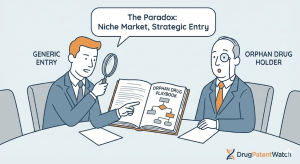
The global rare disease treatment market, a sector born from legislative incentives to address profound unmet needs, is on an explosive growth trajectory. Projections indicate a surge from $195.21 billion in 2024 to an astonishing $587.08 billion by 2034, expanding at a compound annual growth rate (CAGR) of 11.64%.1 This isn’t just growth; it’s a seismic expansion, creating what appears to be a landscape ripe with opportunity. Yet, beneath this glittering surface lies a deep and persistent paradox. This is a market where the traditional laws of pharmaceutical economics often break down. It’s a world where patent expiries and the loss of regulatory exclusivity—events that typically trigger a flood of low-cost generics and dramatic price reductions—frequently pass with a whisper, not a bang.
For the savvy business development, intellectual property (IP), and R&D teams in the generic and specialty pharmaceutical sectors, this presents the ultimate $587 billion question: How do you navigate this high-stakes, high-complexity environment to capture value? How do you turn the market’s inherent inefficiencies into a competitive advantage? The answer is not found in a conventional generic playbook. Success in the rare disease space demands a far more sophisticated and integrated strategy, one that masterfully blends aggressive legal maneuvering, deep regulatory science, and nuanced commercial execution. It requires understanding that you are not merely launching a molecule; you are challenging an entrenched, high-value monopoly that a brand manufacturer will defend with every tool at its disposal.
This report serves as that new playbook. We will deconstruct the unique market dynamics, regulatory frameworks, and economic hurdles that define the orphan drug landscape. At the heart of our analysis is a deep-dive case study into one of the most significant orphan drug patent cliffs to date: the battle for imatinib, Novartis’s revolutionary and multi-billion-dollar cancer therapy, Gleevec. By dissecting the strategy that allowed Sun Pharmaceuticals to successfully challenge the Gleevec monopoly, navigate the patent thicket, clear complex regulatory hurdles, and execute a masterful commercial launch, we will extract a replicable framework. This is a masterclass in turning data into dominance, providing your team with the actionable intelligence required to identify, vet, and successfully launch a generic drug for a rare disease, unlocking one of the most challenging but potentially rewarding opportunities in the modern pharmaceutical industry.
Understanding the Landscape: Why Orphan Drugs Are a Different Beast
Before diving into the tactical execution of a generic launch, it is imperative to grasp the fundamental strategic terrain. The orphan drug market does not operate by the same rules as the high-volume, primary care markets that have long been the bread and butter of the generics industry. It is a unique ecosystem shaped by specific legislation, distorted economic incentives, and profound patient and physician loyalties. To compete here, one must first understand the forces that make it a different kind of beast altogether.
The Regulatory Bedrock: The Orphan Drug Act and Its Double-Edged Sword
The entire modern rare disease market is built upon a single piece of landmark legislation: the Orphan Drug Act (ODA) of 1983 in the United States.2 Its passage was a direct response to a clear market failure. Pharmaceutical companies, driven by rational economic incentives, were not investing in treatments for diseases affecting small patient populations; the math simply didn’t work.3 The ODA was designed to rewrite that equation.
The Original Intent: Spurring Innovation Through Incentives
The Act created a powerful set of incentives to de-risk and reward R&D for conditions affecting fewer than 200,000 people in the U.S..2 For any company considering an orphan drug program, understanding these incentives is table stakes. They include:
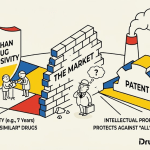
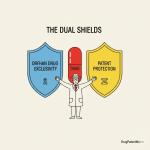
Orphan Drug Exclusivity (ODE): A seven-year period of marketing exclusivity for the approved orphan indication, granted by the FDA upon approval. This prevents the agency from approving another application for the same drug for the same rare disease indication.2
Tax Credits: A significant tax credit for qualified clinical testing expenses, originally 50% and later adjusted to 25%.2
Fee Waivers: Exemption from the substantial Prescription Drug User Fee Act (PDUFA) fees required for a New Drug Application (NDA) submission.6
Regulatory Support: Close coordination and guidance from the FDA throughout the development process, including formal protocol assistance.2
These incentives worked. In the decade prior to the Act, only 10 products for rare diseases were approved. Since its passage, the FDA has approved over 600 orphan drug indications from more than 450 distinct products, fundamentally altering the therapeutic landscape for millions of patients.6
The Unintended Consequences: A Pathway to Blockbuster Profits
While the ODA has been an undeniable success in stimulating innovation, its incentives have also created a new set of market dynamics that have drawn intense scrutiny. The Act has, in effect, become a highly effective strategy for generating blockbuster profits. The combination of pricing power and market protection has made the orphan drug space one of the most lucrative in the industry.
Consider the numbers. In 2023, the median annual treatment cost for an orphan drug at market entry was a staggering $218,872, compared to just $12,798 for a non-orphan drug.9 This pricing power has turned orphan drugs into commercial juggernauts. By 2017, seven of the top ten best-selling drugs in the world carried orphan indications.7 This has led to widespread accusations that the system is being “gamed,” with companies allegedly seeking narrow orphan designations for drugs that are subsequently used far more broadly in non-orphan populations, a practice sometimes called “salami slicing” or developing “partial orphans”.6
The Crucial Distinction: ODE vs. Patent Life
For a generic strategist, this is the single most important concept to master: Orphan Drug Exclusivity is a regulatory protection, not an intellectual property right, and it is fundamentally different from patent protection. The two run on separate clocks and protect different things. A patent can cover a compound, a formulation, a method of use, or a manufacturing process. ODE protects a specific drug for a specific orphan-designated use.
This distinction is not academic; it is the key that unlocks potential opportunities. An extensive analysis by the IQVIA Institute revealed a critical fact: Orphan Drug Exclusivity was in effect longer than patent protection for only 60 of the 503 drugs that have received orphan status.13 This means that in nearly 90% of cases, the primary barrier to generic competition is the traditional patent estate, not the seven-year ODE.
Furthermore, ODE is indication-specific. If a drug is approved for both a rare cancer (orphan indication) and rheumatoid arthritis (non-orphan indication), the seven-year exclusivity only blocks generics for the rare cancer indication. The FDA can and does approve generics with “carve-out” labels for the non-orphan indications once the relevant patents have expired.12
The very architecture of the ODA, designed to foster innovation, inadvertently creates the perfect targets for well-capitalized and strategically astute generic challengers. The incentives encourage the development of clinically vital drugs. The market exclusivity allows originators to establish premium, often exorbitant, pricing to recoup their investment from a small patient pool. This combination forges “orphan blockbusters,” drugs with annual revenues that can exceed $1 billion.14 These revenue streams are so valuable that brand manufacturers will erect formidable legal and commercial fortresses to defend them. Therefore, a generic entry is not a simple business transaction; it is a strategic confrontation, a high-stakes challenge to a highly profitable monopoly. The success of the ODA in creating value for innovators is precisely what creates the opportunity for generics.
The Economic Conundrum: Why Competition Stalls at the Starting Gate
If the primary barrier is often the patent, what happens when it expires? In a typical market, a wave of generic competitors would rush in, and prices would plummet. But in the orphan drug space, the starting gate often remains empty. This phenomenon, a “valley of death” for generic competition, is rooted in a challenging economic equation that deters all but the most determined players.
The data is stark. Just over half of all orphan drugs that are completely unprotected by patents or exclusivity face any generic competition at all.13 This market failure stems from two primary factors: a revenue hurdle and a cost barrier.
The Revenue Hurdle: The Small Market Problem
The defining characteristic of a rare disease is a small patient population. While some orphan drugs become blockbusters through high prices or expansion into other indications, many do not. The median annual spending on unprotected orphan drugs without competition was a mere $8.6 million.13 For many generic companies accustomed to billion-dollar primary care markets, this revenue potential is simply too low to warrant the investment and risk. Researchers in the Netherlands found that even when generic alternatives for orphan drugs do become available, it happens much later than for non-orphan drugs (14 years on average) and leads to only a limited price reduction of about one-third, a far cry from the 90% drops seen in competitive markets.15
The Cost Barrier: A High Price of Admission
Compounding the low revenue potential are the substantial and non-recoverable upfront costs of generic development. The Generic Drug User Fee Amendments (GDUFA) have transformed the financial calculus. A company must be prepared to invest heavily long before seeing a single dollar of revenue. Key GDUFA fees include 17:
ANDA Filing Fee: $321,920
Drug Master File (DMF) Fee: $95,084
Annual Program Fee (Large Company): $1,891,664
These fees act as a significant barrier to entry, particularly for niche products. A potential market of $8.6 million looks far less attractive when you must first subtract a seven-figure regulatory investment. This forces companies to be highly selective, prioritizing only those products with a high probability of success and a market size sufficient to generate a healthy return on that investment.
This economic landscape creates a powerful and self-perpetuating cycle that favors the brand manufacturer. When an orphan drug loses its last patent, potential generic competitors run their financial models. They see a small market, high regulatory costs, and potentially complex manufacturing or clinical requirements. The vast majority conclude that the risk-adjusted return on investment is negative and decline to enter the market. With no competitive pressure, the brand manufacturer has no incentive to lower its price. In fact, data shows that brand prices often continue to rise even after exclusivity loss.18 The drug remains largely unaffordable, access remains limited, and the brand enjoys a
de facto monopoly long after its legal protections have expired. This is a classic market failure, but it is also a strategic opening. For a company that can either operate on a different cost basis or, more plausibly, can identify and successfully target the small subset of “orphan blockbusters” where the economics do work, the rewards can be substantial. The key is knowing how to find and conquer those specific targets.
The Playbook for Success: A Deep-Dive Case Study of Generic Imatinib (Gleevec)
To move from theory to practice, we must examine a real-world example of a successful generic campaign against an entrenched orphan blockbuster. There is no better case study than the story of imatinib (Gleevec). This was not just another generic launch; it was a strategic masterclass that provides a detailed roadmap for navigating the legal, regulatory, and commercial challenges unique to the rare disease space. By deconstructing each phase of this campaign, we can extract the critical lessons that form the core of a winning playbook.
The Target: Deconstructing the Gleevec Monopoly
The first step in any successful campaign is choosing the right target. Gleevec was, in many ways, the perfect candidate—a confluence of immense clinical value, massive commercial success, and an aggressive pricing strategy that made it both a formidable opponent and an irresistible prize.
A Paradigm-Shifting Drug
Approved by the FDA in 2001, Gleevec was more than just a new drug; it was a revolution in cancer treatment.20 As a targeted therapy—a tyrosine kinase inhibitor—it specifically attacked the BCR-ABL protein that drives Chronic Myeloid Leukemia (CML).21 The impact was profound. Gleevec transformed CML from a virtual death sentence into a chronic, manageable condition. The five-year survival rate for CML patients soared from 31% in 1993 to over 70% by 2016, and now approaches 90%.22 This unparalleled clinical success built a deep well of loyalty and trust among oncologists and patients, a formidable “brand moat” that any generic would have to cross.
The Commercial Juggernaut
This clinical value translated into staggering commercial success for Novartis. Gleevec became one of the company’s biggest sellers, with global sales peaking at $4.7 billion in 2013.23 The U.S. market was particularly lucrative, accounting for $2.5 billion in sales in 2015 alone, the year before generic entry.24 From 2009 to 2019, Novartis collected nearly $14.8 billion in U.S. net revenue from the drug.19
An Aggressive Pricing Strategy
Novartis leveraged Gleevec’s life-saving efficacy and monopoly position to implement a relentless pricing strategy. Over its market life, the U.S. price of Gleevec was increased 22 times. A yearly course of treatment that cost just under $25,000 in 2003 ballooned to more than $123,000 by 2020—an increase of over 395%.19 The price hikes became particularly steep as the drug approached its primary patent expiration. Between 2010 and 2015, the price was raised 12 times, including a single-year jump of 20% in 2013.19 By 2015, a one-month supply of Gleevec in the U.S. cost over $10,000, while the average price in other developed countries was around $2,500.19
This combination of factors—unquestionable clinical importance, multi-billion-dollar annual sales, and a premium pricing strategy that pushed the boundaries of market tolerance—made Gleevec the quintessential “orphan blockbuster” target. The potential financial reward for a successful generic challenger was immense, justifying the significant legal, regulatory, and commercial risks involved in taking on one of the pharmaceutical industry’s most successful products.
Mapping the IP Battlefield: The Legal Chess Match Begins
With the target selected, the next phase of the campaign moved to the legal arena. The battle for Gleevec was a classic example of how brand manufacturers use layered IP strategies to extend market exclusivity and how a determined generic challenger can navigate this “patent thicket.”
Beyond the Compound Patent: The ‘Patent Thicket’ Strategy
The foundational U.S. Patent No. 5,521,184, covering the imatinib compound itself, was set to expire on July 4, 2015.23 In a straightforward scenario, this would have been the date the market opened to generics. However, Novartis had proactively built a defensive wall of secondary patents. The most significant of these was a patent issued in 2005 that claimed a specific crystalline polymorph of imatinib mesylate—the “beta-crystal” form—which was the actual form used in the final Gleevec tablets. This follow-on patent extended protection out to 2019, effectively creating a four-year extension of its monopoly.23 This is a common and powerful brand strategy: layering new patents on formulations, crystalline forms, or methods of use to delay competition long after the core compound patent has expired.
The Challenger’s Move: Sun Pharma’s Paragraph IV Filing
To enter the market before 2019, a generic manufacturer had to directly challenge the validity of this secondary patent. Sun Pharma, an Indian pharmaceutical giant, made the decisive first move. They filed an Abbreviated New Drug Application (ANDA) with a “Paragraph IV” certification.28 This is a formal declaration to the FDA that the generic company believes the brand’s patent is either invalid, unenforceable, or will not be infringed by the generic product.
This was a strategically critical decision for two reasons. First, it fired the starting gun on the legal battle. Under the Hatch-Waxman Act, a Paragraph IV filing is considered an act of patent infringement, giving the brand company 45 days to sue. If they do, it triggers an automatic 30-month stay on the FDA’s approval of the generic, giving the brand time to defend its patent in court.29 Second, and most importantly, by being the “first-to-file” a substantially complete ANDA with a Paragraph IV certification, Sun Pharma positioned itself to receive a highly valuable prize: 180 days of marketing exclusivity. During this six-month period, the FDA cannot approve any other generic versions of the drug, creating a lucrative duopoly between the brand and the first generic.28
The Critical Role of Patent Intelligence
A multi-million-dollar decision like a Paragraph IV filing is not made on a whim. It is the culmination of exhaustive intelligence gathering and analysis. This is precisely where a sophisticated biopharmaceutical intelligence platform like DrugPatentWatch becomes an indispensable strategic tool. Before committing to a costly development program and legal fight, a generic firm’s strategy team would use such a service to:
Map the Entire Patent Estate: Identify not just the main compound patent expiration date but also all related secondary patents, their expiration dates, and their international equivalents to build a complete picture of the IP landscape.31
Analyze Patent Strength: Scrutinize the prosecution history of the target patents. How did Novartis overcome the patent examiner’s initial rejections of the beta-crystal patent? What prior art was cited? This analysis helps identify potential weaknesses and avenues for a legal challenge.31
Track Litigation: Monitor all ongoing patent litigation related to the drug. Are other generic companies also challenging the patents? What arguments are they making? The outcomes of these cases provide crucial intelligence that can inform and refine a company’s own legal strategy.31
This deep, data-driven due diligence is the foundation upon which a viable business case and a robust legal strategy are built. It allows a company to move from speculation to a calculated, risk-assessed strategic initiative.
The Litigation and Settlement: A Strategic Détente
As expected, Novartis sued Sun Pharma for patent infringement, triggering the 30-month stay.29 The legal arguments centered on whether the beta-crystalline form was a non-obvious invention or simply an expected and routine discovery for a skilled pharmaceutical chemist.26 However, the case never reached a final verdict. Instead, the two companies reached a confidential settlement.
The terms of the settlement were a strategic victory for both sides. For Novartis, the primary goal was delay. The agreement stipulated that Sun Pharma would not launch its generic version until February 1, 2016—a full seven months after the original compound patent expired in July 2015.33 Given Gleevec’s U.S. sales of over $200 million per month, this delay protected an estimated $1.4 billion in additional revenue for Novartis. The cost of litigation was a small price to pay for this significant extension of their monopoly.
For Sun Pharma, the settlement provided certainty and de-risked their entire project. A protracted court battle could have taken years, with an outcome that was far from guaranteed. The settlement locked in a firm launch date and, crucially, preserved their valuable 180-day market exclusivity. This outcome reveals a fundamental truth about orphan blockbuster challenges: litigation is often a means to an end. The goal is not always to win in court but to create enough legal pressure and uncertainty to bring the brand manufacturer to the negotiating table and secure a predictable, profitable market entry.
Clearing the Regulatory Hurdle: The Science of Proving Sameness
While the legal battle raged, a parallel and equally critical campaign was being waged on the scientific and regulatory front. Securing FDA approval for a generic drug requires navigating the ANDA pathway, with the central task of demonstrating that the generic product is pharmaceutically equivalent and bioequivalent to the brand-name drug. For a complex, life-saving orphan drug like imatinib, this process presented unique challenges.
The ANDA Pathway and the Bioequivalence Challenge
The ANDA process allows a generic manufacturer to rely on the brand’s pre-clinical and clinical safety and efficacy data, dramatically reducing the time and cost of development.35 The cornerstone of an ANDA is the bioequivalence (BE) study, which demonstrates that the generic drug delivers the same amount of active ingredient into a person’s bloodstream over the same period of time as the brand drug.28
However, the FDA’s product-specific guidance for imatinib threw a curveball. Citing safety concerns associated with administering a 400 mg dose of a potent chemotherapy agent to healthy individuals, the agency recommended that the BE study be conducted in patients with CML who were already on a stable 400 mg daily dose of Gleevec.37 This was a significant departure from the norm, where BE studies are typically conducted in small cohorts of normal healthy volunteers.
This requirement immediately increased the complexity, cost, and timeline of the development program. Recruiting and managing a clinical trial in a specific, rare cancer patient population is logistically far more challenging than enrolling healthy subjects. It requires collaboration with oncology clinics, careful patient monitoring, and navigating complex ethical considerations. Interestingly, this stood in contrast to the European Medicines Agency (EMA), which later determined that a single 400 mg dose could be safely administered to healthy volunteers for BE studies, highlighting the global regulatory divergence that generic firms must navigate.37
Executing the Study and Proving Equivalence
The BE study for imatinib followed a standard scientific design, albeit in a non-standard population. It was typically structured as a multicenter, randomized, open-label, two-period, crossover study.38 In such a study, a group of stable CML patients would receive either the generic imatinib or brand Gleevec for a set period, followed by a “washout” period, and then would be “crossed over” to receive the other formulation. Blood samples are drawn at regular intervals to measure the plasma concentration of the drug over time.
From these concentration curves, key pharmacokinetic (PK) parameters are calculated, primarily:
Cmax: The maximum plasma concentration the drug reaches.
AUC (Area Under the Curve): The total exposure to the drug over a given time period.
To be deemed bioequivalent, the 90% confidence interval for the geometric mean ratio of the generic’s Cmax and AUC to the brand’s must fall entirely within the predefined range of 80.00% to 125.00%.38 Sun Pharma and subsequent generic manufacturers successfully conducted these studies, demonstrating to the FDA that their products were interchangeable with Gleevec.
The Unseen Challenge: API Sourcing and Manufacturing
A critical and often underappreciated aspect of any generic program is securing a reliable, high-quality source of the Active Pharmaceutical Ingredient (API). For a complex small molecule like imatinib, this is a major undertaking.39 The synthesis is multi-step and requires careful control to produce the correct beta-crystalline polymorph and minimize impurities, some of which could be potentially genotoxic.40
Generic manufacturers must either develop their own in-house synthesis process or partner with a specialized API contract manufacturing organization (CMO).42 This decision carries significant risk. The entire project hinges on the ability to consistently produce and scale up manufacturing of a cGMP-compliant API that precisely matches the brand’s specifications.43 Any failure in the API supply chain—whether in quality, consistency, or volume—can delay or completely derail a launch.
The regulatory pathway for a generic orphan drug is a gauntlet. It demands not only sophisticated regulatory expertise to interpret and execute against agency guidance but also the clinical operations capability to run studies in vulnerable patient populations and the technical prowess to master complex API chemistry and manufacturing. These are not trivial undertakings; they are substantial cost and risk factors that must be meticulously planned for and built into the initial project scope and budget from day one.
The Commercial Launch: Winning Hearts, Minds, and Prescriptions
On February 1, 2016, with legal settlements in place and FDA approval secured, Sun Pharma launched the first generic imatinib in the United States.30 This launch was far more than a logistical exercise of distributing a product; it was a brilliantly executed commercial strategy designed to overcome the significant psychological barriers to switching from a trusted, life-saving brand to a generic.
A Patient-Centric Strategy to Build Trust
Sun Pharma understood that in a field like oncology, where patient and physician anxiety is high, brand loyalty is a powerful force. Concerns about a generic’s efficacy or side effect profile, even if scientifically unfounded, are real and can prevent uptake.21 To counter this, Sun Pharma didn’t just sell a molecule; they sold a comprehensive support system designed to build confidence and remove every point of friction in the switching process.30
Key Elements of the Masterful Launch:
The Savings Card Program: This was the cornerstone of the strategy. Brand-name drugs often have co-pay assistance programs that make them affordable for commercially insured patients. Sun Pharma immediately neutralized this advantage by launching its own “Imatinib Mesylate Savings Card.” This program reduced patient out-of-pocket co-payments to as little as $10. Critically, it also offered an additional benefit of up to $700 for a 30-day supply to help offset high deductibles or co-insurance payments.30 This directly addressed the issue of financial toxicity and made the generic the unequivocally more affordable option for the patient.
Proactive Physician Engagement: Sun Pharma didn’t wait for doctors to discover their product. They proactively supplied their savings cards to over 4,500 oncologists across the country.49 This made it incredibly easy for a physician, at the point of care, to start a new patient on the generic or switch an existing patient, armed with a tool to ensure affordability.
Patient Hub and Dedicated Website: To mirror the support ecosystem that patients expect from a brand, Sun Pharma launched a dedicated patient website, www.imatinibrx.com. This site provided detailed product information, a list of approved indications, and answers to frequently asked questions. They also established a toll-free Hub service, staffed by trained healthcare professionals, where patients could call and discuss the medication.30 This provided the reassurance and human touch that is vital for patients managing a serious illness.
Patient Assistance Program (PAP): Recognizing that not all patients have commercial insurance, Sun Pharma also established a PAP. Through this program, qualifying patients who were uninsured or underinsured could receive the drug at no cost, ensuring that access was not limited by ability to pay.30
This multi-pronged approach demonstrates a profound understanding of the market. Patients with life-threatening rare diseases and their physicians are often hesitant to abandon a brand that has kept them alive. They fear that a generic, while chemically identical, might not perform the same. Sun Pharma’s strategy was designed to dismantle this “trust deficit.” The savings card removed the financial friction. The patient hub and website provided the informational and emotional support patients were accustomed to. The direct outreach to oncologists made prescribing the generic the path of least resistance. In essence, Sun Pharma replicated the entire ecosystem of support that Novartis had built around Gleevec. By doing so, they made the decision to switch to the generic an easy, low-risk, and financially beneficial choice for everyone involved. This is perhaps the most critical lesson from the entire case study: for complex and rare diseases, a successful generic launch requires competing on service, support, and trust—not just on price.
The Aftermath: Market Realities and Pricing Paradoxes
The impact of Sun Pharma’s well-executed launch was immediate and dramatic, yet the market’s evolution in the subsequent months and years revealed some surprising paradoxes that challenge conventional wisdom about generic competition.
The Impact on Novartis
The financial blow to Novartis was significant. In the first quarter following the February 2016 generic launch, Gleevec’s sales plummeted by 22%, falling from $1.07 billion in Q1 2015 to $834 million in Q1 2016.52 This rapid erosion of a blockbuster franchise underscored the power of a first generic entrant, even one challenging a deeply entrenched and trusted brand. It proved that the brand moat, while formidable, was not impenetrable.
The Unusual Pricing of a “Generic”
Herein lies one of the most fascinating aspects of the Gleevec case. Sun Pharma, armed with its 180-day exclusivity, did not launch with the deep discounts typically associated with generics. The standard model predicts price drops of 30-40% with the first generic, quickly falling to 70-90% as more competitors enter.17 This did not happen with imatinib.
Thanks to the duopoly created by the settlement and the first-to-file exclusivity, Sun Pharma had little incentive for a price war. They entered the market at a price point only slightly below the brand. One analysis pegged the annual cost of brand Gleevec at approximately $146,000 and Sun’s initial generic at $142,000—a discount of less than 3%.34 Another report from a U.S. House Oversight Committee investigation stated that the generic entered at a price just 6.4% lower than Gleevec’s.19 This was a strategic calculation to maximize revenue during the six-month exclusivity window.
Slow Price Erosion and Sustained High Costs
Even more surprising was the slow pace of price erosion after Sun Pharma’s exclusivity period ended and other generic manufacturers, such as Teva, Apotex, and Mylan, entered the market starting in August 2016.20 Two years after the initial generic launch, the market had not collapsed to commodity pricing. A 2017 analysis found that a month’s supply of brand Gleevec still cost about $9,000, while the average generic imatinib cost about $8,000.18 This stubbornly high pricing stood in stark contrast to the experience in other countries like Canada, where the price of generic imatinib quickly dropped to about $8,800 per year, a 77% discount from the brand’s Canadian price of $38,000.34
This “orphan blockbuster exception” to the rules of generic pricing stems from several factors. The first-to-file exclusivity creates an initial duopoly that sets a high price floor. Subsequently, the high technical barriers to entry—including the complex API synthesis and the requirement for clinical trials in patients—likely limited the total number of competitors who could successfully enter the market. With fewer players, the competitive pressure to slash prices was significantly reduced.
This outcome has profound strategic implications for any company modeling a generic orphan drug launch. The standard financial models, which assume a rapid price cliff, are not applicable here. The business case for challenging an orphan blockbuster must be built on a more conservative and nuanced price erosion curve. The potential for sustained higher pricing over a longer period significantly alters the ROI calculation, making these high-risk projects potentially even more profitable than they might first appear.
From Case Study to Strategy: Actionable Insights for Your Pipeline
The Gleevec saga is more than just a compelling story; it is a rich source of actionable intelligence. By distilling the key lessons from this case, we can construct a strategic framework for identifying, assessing, and executing on generic opportunities in the rare disease market. This is not a one-size-fits-all template but a disciplined process for de-risking entry and building a robust, data-driven business case.
De-Risking Your Entry: A Strategic Framework for Opportunity Assessment
Successfully navigating the generic orphan drug space requires a rigorous, multi-stage assessment process that moves from broad market screening to deep, asset-specific due diligence.
Step 1: Target Identification – Hunting for ‘Orphan Blockbusters’
The starting point is to screen the universe of orphan drugs for viable targets. This requires looking beyond simple patent expiry dates.
Utilize Intelligence Platforms: Employ comprehensive databases like DrugPatentWatch to systematically scan for orphan-designated products that are approaching loss of exclusivity.31 These platforms provide the foundational data on patents, regulatory status, and litigation that is essential for initial screening.
Filter by Revenue: The key lesson from the economic analysis is that most unprotected orphan drugs are not commercially viable targets for generics. The first and most important filter is revenue. Focus exclusively on “orphan blockbusters,” setting a high threshold for annual U.S. sales—for example, greater than $200 million or even $500 million. Only targets of this magnitude have the potential to generate a positive ROI after accounting for the extraordinary legal, regulatory, and commercial costs of entry.13
Step 2: IP Due Diligence – War-Gaming the Patent Thicket
Once a short-list of high-revenue targets is identified, the next step is an exhaustive IP analysis. Assume that the brand manufacturer will have erected a formidable patent thicket and that litigation is not a risk but a certainty—a necessary cost of doing business.
Deep-Dive Patent Analysis: Go beyond the Orange Book listing. Analyze the full prosecution history of all secondary patents. Were there strong objections from the patent examiner? What arguments did the brand use to overcome them? Are there weaknesses in the claims related to obviousness or anticipation? This forensic analysis is crucial for estimating the probability of a successful legal challenge.
Budget for Battle: Build a multi-million dollar legal budget into your financial model from day one. View this not as a contingent liability but as a planned R&D expense. The objective of the litigation may not be an outright court victory but to create the leverage necessary to negotiate a favorable settlement that provides a certain launch date, as Sun Pharma did with Novartis.
Step 3: Regulatory and Technical Pathway Mapping
Simultaneously with the IP assessment, the regulatory and technical feasibility must be vetted. A seemingly attractive target can be quickly disqualified by an insurmountable technical hurdle.
Define the BE Requirements: Obtain and scrutinize the FDA’s product-specific guidance. Will the BE study be required in healthy volunteers or a specific patient population? If it’s the latter, conduct a feasibility assessment. Are there enough patients? Are there clinical sites willing and able to conduct the study? What is the realistic timeline and cost?
Secure the Supply Chain: This is a critical go/no-go checkpoint. Investigate the API. Is the synthesis publicly known or a closely guarded trade secret? Are there multiple, reliable cGMP-compliant manufacturers of the API, or would you need to develop it in-house? A lack of a clear, scalable, and cost-effective path to securing the API can single-handedly kill a project.
Step 4: Commercial Viability Analysis – Modeling the New Reality
The final step is to integrate all of this information into a comprehensive commercial model that reflects the unique dynamics of the orphan drug market.
Adopt a High-Touch Launch Model: Do not use a standard, low-cost generic launch model. Budget for a sophisticated, patient-centric commercial strategy akin to Sun Pharma’s, including patient savings programs, physician outreach, and hub services.
Apply a Realistic Erosion Curve: This is the most critical financial assumption. Discard the standard “price cliff” model. Instead, use the Gleevec case as your guide. Model a scenario with a minimal discount during the 180-day exclusivity period, followed by a slow and gradual price erosion as a limited number of competitors (perhaps 2-4) enter the market over the subsequent 24-36 months.
Calculate the Risk-Adjusted ROI: Run the numbers. Does the project still generate a compelling return on investment after accounting for the high legal costs, complex clinical trials, and a more conservative revenue forecast? This final, data-driven analysis will provide the basis for a confident go/no-go decision.
Building the Business Case: Calculating ROI in a Niche Market
To present a compelling case to senior leadership, the financial analysis must be transparent, robust, and tailored to the realities of the orphan drug market. A side-by-side comparison can be a powerful tool to illustrate the strategic differences.
Financial Model Component
Standard Generic Model (e.g., Primary Care Drug)
‘Orphan Blockbuster’ Model (e.g., Imatinib)
Strategic Rationale for Difference
Upfront Legal Costs
Low to Moderate (Often no litigation)
Very High ($5M – $15M+)
Assumes a patent challenge and settlement negotiation is a required, budgeted project cost.
Clinical/Regulatory Costs
Moderate (Standard BE study in healthy volunteers)
High to Very High (BE study in patients, complex API)
Reflects the increased complexity and cost of patient-based trials and specialized manufacturing.
Commercial Launch Costs
Low (Primarily trade relations and pricing)
High (Patient support hub, savings cards, physician outreach)
Acknowledges the need to compete on trust and service, not just price, to overcome brand loyalty.
Price at Launch (vs. Brand)
40-60% Discount
5-15% Discount
Based on the duopoly pricing power afforded by 180-day exclusivity for the first-to-file generic.
Price Erosion (Year 2-3)
Rapid decline to >90% discount
Slow decline to 30-50% discount
Reflects the limited number of competitors due to high technical and regulatory barriers to entry.
Peak Market Share
High (Can approach 90-95%)
Moderate (60-75%)
Accounts for persistent brand loyalty (“dispense as written”) and a more fragmented market.
Risk-Adjusted NPV
Dependent on volume and speed of price drop
Dependent on sustained higher pricing and market share
The entire business case hinges on a different set of value drivers than a traditional generic.
This framework transforms the decision-making process from a gut-feel assessment into a disciplined, quantitative analysis. It forces a realistic appraisal of the unique costs and risks involved, while also capturing the unique revenue potential offered by a less competitive market with slower price erosion. It is this level of strategic financial modeling that separates the successful players from those who are deterred by the apparent complexity of the orphan drug space.
The Future of Generic Orphan Drugs: New Frontiers and Lingering Challenges
The successful challenge to the Gleevec monopoly was a landmark event, but it is not the end of the story. It is, rather, a prologue to a new and evolving chapter in the generic and specialty pharmaceutical industry. The strategic principles un-earthed in this case study will become increasingly relevant as the market matures and new waves of opportunity—and challenges—emerge.
The Next Frontier: Biosimilars for Rare Diseases
While the Gleevec case centered on a small molecule, the next major frontier for generic competition lies in biologics. A significant and growing portion of the rare disease treatment market is dominated by biologic drugs, from monoclonal antibodies to enzyme replacement therapies.1 As these complex products begin to lose patent protection, the opportunity for biosimilar developers will be immense.
However, the barriers to entry for biosimilars are an order of magnitude higher than for small-molecule generics. The development process is far more complex and expensive, requiring extensive analytical characterization, clinical trials to demonstrate no clinically meaningful differences, and sophisticated manufacturing capabilities. The regulatory pathway via the 351(k) application is more arduous and costly than an ANDA.
Despite these hurdles, the strategic lessons from the imatinib case remain directly applicable, and arguably, are even more critical. Success in the orphan biosimilar space will require:
Even Greater Legal Tenacity: Brand biologics are protected by dense patent thickets and the 12-year reference product exclusivity, making the legal and regulatory strategy even more complex.55
Deep Scientific and Manufacturing Expertise: The ability to reverse-engineer and reliably manufacture a complex protein is a rare and valuable capability.
A Highly Sophisticated Commercial Approach: Physician and patient confidence in the interchangeability of biosimilars is still developing. A successful launch will demand an even more robust program of education, support, and real-world evidence generation to drive adoption.
The Evolving Policy Horizon
The orphan drug market exists because of a specific policy framework, and that framework is under constant scrutiny. The high prices of orphan drugs and the debate over the “gaming” of the ODA are prominent topics in healthcare policy discussions in both the U.S. and Europe.6 Generic and specialty companies must remain vigilant and monitor the policy landscape for potential changes that could impact the strategic calculus.
Proposals such as mandatory price reductions after exclusivity loss, even in the absence of competition, have been floated in Europe.15 Changes to the criteria for orphan designation or the duration of exclusivity in the U.S. could also alter the incentive structure. A proactive government affairs and policy monitoring function is no longer a “nice to have” but an essential component of a long-term strategy in this space.
Conclusion: A High-Risk, High-Reward Arena
The journey to successfully launch a generic drug for a rare disease is not for the faint of heart. It is a capital-intensive, legally perilous, and scientifically demanding endeavor. The barriers to entry are deliberately high, and the incumbent brand manufacturers are among the most powerful and well-defended companies in the world.
However, as the imatinib case study so clearly demonstrates, for the well-prepared, strategically disciplined, and relentlessly determined company, the rewards are commensurate with the risks. This is not a market that can be approached with a conventional generic mindset. Success is not born from being the lowest-cost producer but from being the smartest strategic player. It requires a holistic approach that seamlessly integrates legal, regulatory, technical, and commercial expertise from the very first day of target assessment.
The orphan drug paradox—a multi-hundred-billion-dollar market with startlingly little competition—is not an unsolvable riddle. It is a strategic challenge waiting for the right players to unlock it. By learning the lessons of the past and applying a rigorous, data-driven framework, companies can navigate this complex landscape to deliver immense value to patients and the healthcare system, while simultaneously building a highly profitable and sustainable business for the future.
Key Takeaways
The Orphan Drug Market is a Paradox of High Growth and Low Competition: The market is projected to reach nearly $587 billion by 2034, yet many orphan drugs face no generic competition even after patents and exclusivities expire due to significant economic and technical barriers.
Focus on ‘Orphan Blockbusters’: The only economically viable targets for generic entry are high-revenue “orphan blockbusters” (typically with >$200M in annual sales). The small market size of most orphan drugs cannot justify the high upfront costs of development and litigation.
Patent Thickets, Not Orphan Exclusivity, Are the Primary Barrier: In nearly 90% of cases, the brand’s patent estate, particularly secondary patents on formulations and polymorphs, is the main obstacle to generic entry, not the 7-year Orphan Drug Exclusivity (ODE).
Litigation is a Strategic Tool for Negotiation: A Paragraph IV patent challenge is a necessary cost of entry. The primary goal is often not to win in court but to create leverage to negotiate a settlement that provides a certain and profitable market entry date.
Regulatory and Technical Hurdles Are Significant: The ANDA pathway for orphan drugs can be more complex, often requiring bioequivalence studies in patient populations and mastery of difficult API synthesis and manufacturing, which must be factored into the project plan.
Compete on Trust and Support, Not Just Price: For life-threatening rare diseases, brand loyalty is strong. A successful generic launch requires a comprehensive, patient-centric commercial strategy—including savings programs and support hubs—to build confidence and remove friction for patients and physicians.
Financial Models Must Reflect a New Reality: The traditional “price cliff” model does not apply. Due to first-to-file exclusivity and high barriers to entry for subsequent competitors, generic orphan drugs can maintain higher prices for longer. Financial forecasts must be built on a slower, more conservative price erosion curve.
Frequently Asked Questions (FAQ)
1. How can our company realistically budget for the legal costs of a Paragraph IV challenge against a major pharmaceutical company?
Budgeting for a Paragraph IV challenge requires a phased and realistic approach. Initial estimates should assume the process will go through discovery, expert reports, and potentially a district court trial, with a baseline budget of $5 million to $15 million. However, it’s crucial to view this as a strategic investment, not just a legal expense. The key is to work with experienced Hatch-Waxman litigators to “war-game” the case early. They can assess the strength of your invalidity or non-infringement arguments and provide a probability-weighted assessment of outcomes, including the likelihood of an early settlement. The budget should also include provisions for potential appeals. Ultimately, the legal spend should be benchmarked against the potential revenue protected by the brand for each month of delay, as this is how the innovator will view it, making a settlement that secures an early, certain launch date a financially sound objective.
2. Our expertise is in small-molecule generics. What are the top 3 strategic adjustments we need to make to even consider entering the orphan biosimilar space?
Moving from small molecules to orphan biosimilars is a quantum leap in complexity. The top three strategic adjustments are:
Massive Capital Investment & Long-Term Horizon: Biosimilar development costs can be 50-100 times that of a simple generic ($100M-$250M vs. $1M-$5M). Your financial planning must shift from short-term, high-volume projects to long-term (7-10 year), high-value investments.
Acquisition or Deep Partnership for Technical Expertise: Mastering cell line development, upstream/downstream processing, and large-scale analytical characterization is a fundamentally different skill set. Unless you plan a decade-long internal build-out, the only viable path is to acquire a company with this expertise or form a deep, strategic partnership with an experienced biosimilar CDMO.
Building a Clinical and Medical Affairs Team: Unlike generics, biosimilars require comparative clinical trials. You will need to build an internal or outsourced capability in clinical operations, medical affairs, and pharmacovigilance to run these trials, engage with key opinion leaders, and educate payers and providers on the science of biosimilarity.
3. The Gleevec case showed very slow price erosion. Is this the new normal for all generic orphan drugs, or was it an anomaly?
The slow price erosion seen with imatinib is likely to be the norm for orphan blockbusters but not necessarily for all generic orphan drugs. The dynamic is driven by the balance of market size and barriers to entry. For a product like Gleevec, the multi-billion-dollar market was attractive enough to entice several challengers. However, the high technical and regulatory barriers (patient-based BE studies, complex API) limited the number of successful entrants. This created an oligopoly rather than a fully commoditized market, allowing for more stable, higher pricing. For a smaller orphan drug with, say, $100 million in annual sales, the barriers to entry might be just as high, but the smaller prize may only attract one or two generic players, if any. In that scenario, you could see a duopoly with very high prices persist for years. The key takeaway is that price erosion is inversely correlated with the number of competitors, and for orphan drugs, that number is likely to remain small.
4. How does the indication-specific nature of Orphan Drug Exclusivity (ODE) create tangible opportunities for a generic company?
This is a frequently overlooked but powerful strategic angle. Many blockbuster drugs, often called “pipeline-in-a-product,” have multiple indications, some of which are orphan-designated and some of which are not. For example, a drug might have ODE for a rare form of lymphoma but also be approved for the much larger market of rheumatoid arthritis (RA). The ODE only blocks generic entry for the lymphoma indication. A generic company can file an ANDA for the RA indication and launch as soon as the patents expire, even if the ODE is still in effect. The FDA will approve the generic with a “carved-out” label that omits the protected orphan indication. This allows the generic to capture the high-volume, non-orphan market years earlier than might be apparent from a superficial look at the drug’s regulatory status. Platforms like DrugPatentWatch are critical for dissecting a drug’s full profile to identify these valuable “carve-out” opportunities.
5. Beyond patient assistance programs, what innovative commercial strategies can a generic company use to build trust and compete with a beloved orphan brand?
While financial assistance is crucial, trust is built on more than just cost savings. Three innovative strategies can be highly effective:
Generating and Disseminating Real-World Evidence (RWE): Partner with academic institutions or healthcare data firms to conduct post-launch observational studies on your generic. Publishing data that shows equivalent outcomes and safety profiles in a real-world patient population provides powerful reassurance to skeptical clinicians and can be a cornerstone of your medical affairs strategy.
Building a “Generic Key Opinion Leader” Network: Identify and cultivate relationships with influential physicians and pharmacists who are strong advocates for appropriate generic substitution. Empowering them with data and educational materials can create a network of trusted peers who can champion your product and educate their colleagues, creating a more powerful message than direct-to-physician marketing.
Engaging Directly with Patient Advocacy Groups (PAGs): Go beyond simply providing funding. Engage with PAGs early and transparently. Offer to provide educational materials about bioequivalence, listen to their community’s concerns, and partner with them on access initiatives. A PAG that understands and trusts your product can become your most powerful ally in communicating its value to the patient community.
Innovation and the Orphan Drug Act, 1983-2009: Regulatory and Clinical Characteristics of Approved Orphan Drugs – Rare Diseases and Orphan Products – NCBI, accessed August 18, 2025, https://www.ncbi.nlm.nih.gov/books/NBK56187/
Failure of a non-authorized copy product to maintain response achieved with imatinib in a patient with chronic phase chronic myeloid leukemia: a case report – PMC – PubMed Central, accessed August 18, 2025, https://pmc.ncbi.nlm.nih.gov/articles/PMC2726486/
Changing the cost of care for chronic myeloid leukemia: the availability of generic imatinib in the USA and the EU – PMC – PubMed Central, accessed August 18, 2025, https://pmc.ncbi.nlm.nih.gov/articles/PMC4598066/
A Multi-centric Bioequivalence Trial in Ph+ Chronic Myeloid Leukemia Patients to Assess Bioequivalence and Safety Evaluation of Generic Imatinib Mesylate 400 mg Tablets, accessed August 18, 2025, https://pmc.ncbi.nlm.nih.gov/articles/PMC4946363/
Efficacy and safety of generic imatinib after switching from original imatinib in patients treated for chronic myeloid leukemia in the United States – PMC, accessed August 18, 2025, https://pmc.ncbi.nlm.nih.gov/articles/PMC6825993/
Generic Substitution of Orphan Drugs for the Treatment of Rare Diseases: Exploring the Potential Challenges – PubMed, accessed August 18, 2025, https://pubmed.ncbi.nlm.nih.gov/29464665/
Rare Disease Drugs: FDA Has Steps Underway to Strengthen Coordination of Activities Supporting Drug Development – GAO, accessed August 18, 2025, https://www.gao.gov/products/gao-25-106774
Rare Diseases: Although Limited, Available Evidence Suggests Medical and Other Costs Can Be Substantial – GAO, accessed August 18, 2025, https://www.gao.gov/products/gao-22-104235