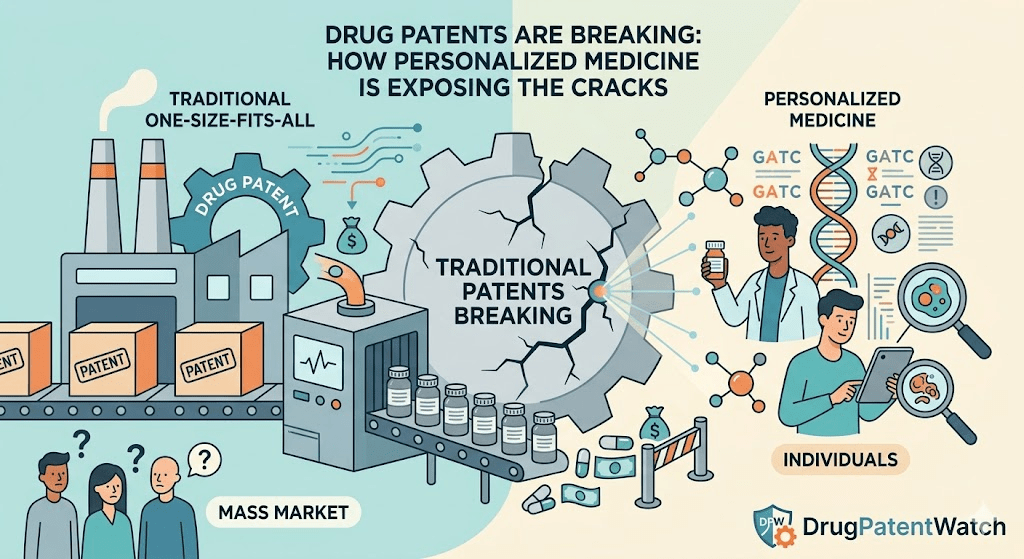
The pharmaceutical patent system was designed for a different drug. A small molecule, synthesized in a lab, dosed the same way to millions of patients who all had the same diagnosis on paper. A single composition-of-matter patent gave you 20 years of monopoly, a Hatch-Waxman Orange Book listing gave you up to 30 months of litigation-triggered delay against generics, and a predictable loss-of-exclusivity date let your finance team model revenue decline to two decimal places.
That model is structurally misaligned with how drugs are now discovered, approved, and prescribed. Personalized medicine, meaning therapies selected, dosed, and sometimes manufactured for individual patients based on their genetic profile, tumor mutation landscape, or molecular biomarker status, does not fit cleanly into patent law built for a mass-market pill. The legal scaffolding that protected Lipitor does not protect a CAR-T cell therapy assembled from a patient’s own T-cells. The patent on a biomarker correlation that lets you identify the 12% of NSCLC patients who respond to your drug may be unenforceable under Mayo v. Prometheus. The foundational CRISPR patent you need to clear before Phase I is still the subject of a dispute that returned to the Patent Trial and Appeal Board as recently as March 2026.
This article dissects the specific mechanisms by which personalized medicine strains, circumvents, or renders inadequate the traditional patent protections that pharma companies rely on. It covers the legal rulings, the commercial consequences, the alternative protection strategies that companies are actually deploying, and the timeline over which these dynamics will reshape the sector’s IP landscape. The analysis draws on real litigation, real drug approvals, real patent numbers, and real commercial outcomes.
“The global personalized medicine market was valued at approximately $654 billion in 2025 and is projected to reach $1.4 trillion by 2035, growing at a compound annual rate above 7.8%. Oncology and companion diagnostics account for a disproportionate share of near-term value creation.” — Future Market Insights / Precedence Research, 2025–2026
A $654 billion market operating under a patent framework designed for blockbusters is a structural problem that IP teams, deal lawyers, and pharma investors need to understand in operational, not theoretical, terms. What follows is that understanding.
The Traditional Drug Patent Model: How It Was Designed to Work
What a Composition-of-Matter Patent Actually Protects
A composition-of-matter patent, filed under 35 U.S.C. § 101, protects the chemical compound itself. For a small molecule drug like atorvastatin (Lipitor), Warner-Lambert’s U.S. Patent No. 4,681,893 covered the molecular structure. Any generic manufacturer trying to sell atorvastatin had to wait for that patent to expire, period. There was no route around the molecule. The patient population that benefited from Lipitor was not segmented by genetic marker; anyone with elevated LDL was a candidate.
This architecture suited blockbuster economics precisely. You sold the same pill to the broadest possible patient population. The patent’s strength came from its breadth. Generic erosion was inevitable after expiry, but during the protection window, the manufacturer had near-complete pricing power over a mass market.
How Hatch-Waxman Built a Litigation Ecosystem Around Small Molecules
The Drug Price Competition and Patent Term Restoration Act of 1984, universally called Hatch-Waxman, created the Abbreviated New Drug Application (ANDA) pathway for generics and the Orange Book listing system for drug patents. When a generic manufacturer files an ANDA with a Paragraph IV certification asserting that a listed patent is invalid or will not be infringed, that filing automatically triggers a 30-month stay of FDA approval if the brand company sues within 45 days. The first generic filer gets 180 days of market exclusivity. This system produced a trillion-dollar litigation industry around challenges to drug patents, and it works elegantly for small molecules.
The problem is that Hatch-Waxman was written before the human genome was sequenced. It was written before anyone understood that the same drug, in the same dose, could produce opposite outcomes in patients with different genetic variants of CYP2D6. It was certainly written before companion diagnostics existed as a regulatory concept.
How the 20-Year Patent Clock Was Calibrated for Mass-Market Timelines
A pharmaceutical patent typically files several years before Phase I begins. By the time a drug reaches market, 8 to 12 years of patent life have been consumed by development. Patent term restoration under 35 U.S.C. § 156 restores up to five years of that lost time, subject to a cap. The result is an average effective market exclusivity period of roughly 12 to 14 years for a small molecule drug from first approval. That window was calibrated against the economics of developing a drug for a large, undifferentiated patient population.
A personalized medicine product approved for patients with EGFR exon 19 deletions in NSCLC may serve a patient population that is an order of magnitude smaller than a first-line hypertension drug. The development costs may be comparable. The patent clock is identical. The commercial math is fundamentally different, and the legal tools designed to extend that clock, such as secondary patents on formulation, dosing regimens, and manufacturing processes, face entirely new validity challenges in the personalized medicine context.
Orange Book Listings and the Problem of Biomarker-Selected Populations
The Orange Book lists patents that cover the approved drug product or an approved method of using it. For a targeted therapy approved specifically for patients with a particular mutation, the method-of-use patent tied to that biomarker selection may be the most commercially important piece of IP in the portfolio. It is also the piece most vulnerable to attack under post-Mayo subject matter eligibility doctrine. If that method-of-use claim is invalidated, a generic manufacturer can potentially market an “AB-rated” generic without the diagnostic component while physicians use off-label prescribing to reach mutation-positive patients anyway.
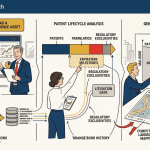
This dynamic is not theoretical. It has already produced litigation strategy in targeted oncology. Tracking these exposures requires the kind of granular patent-by-patent mapping that tools like DrugPatentWatch provide, cross-referencing Orange Book entries against patent prosecution histories and litigation records to identify which claims have been tested and which remain untested.
Mayo v. Prometheus: The Case That Restructured Personalized Medicine IP
What the Supreme Court Actually Decided in 2012
The facts of Mayo Collaborative Services v. Prometheus Laboratories (566 U.S. 66, 2012) were narrow but the doctrine was sweeping. Prometheus held patents on methods of optimizing thiopurine dosing for autoimmune diseases. The method involved administering the drug to a patient, measuring a specific thiopurine metabolite in the patient’s blood, and then adjusting the dose based on whether the measured level fell above or below defined thresholds. Mayo Clinic developed its own test using different metabolite thresholds and Prometheus sued for infringement.
The Supreme Court unanimously held that the claims were patent-ineligible under § 101 because they were directed to a law of nature, specifically the correlation between metabolite levels and therapeutic efficacy, without adding anything “inventive” beyond the conventional step of measuring the metabolite. The administering and determining steps were routine. The “wherein” clauses that described the correlation were natural phenomena. Together they did not constitute patentable subject matter.
The Court explicitly acknowledged the argument that this ruling would discourage investment in personalized medicine research. It acknowledged and rejected it. The majority held that allowing patents on natural correlations would “inhibit the development of more refined treatment recommendations” by locking up the underlying biological relationship itself.
Section 101 Rejection Rates Before and After Mayo: The Empirical Record
The empirical impact on patent prosecution was documented by researchers at the University of Denver. A 2016 study by Bernard Chao and Amy Mapes analyzed USPTO actions on personalized medicine patent applications in Art Unit 1634. Before Mayo, 15.9% of office actions in the sample included a Section 101 rejection. After Mayo, that figure rose to 86.4%. A separate GenomeWeb analysis of nearly 86,000 USPTO actions on approximately 39,000 personalized medicine patent applications found that following Mayo, the USPTO rejected approximately 1,460 personalized medicine applications on Section 101 grounds, compared to approximately 780 rejections before the decision, and that only 430 of the post-Mayo rejected applications ultimately overcame those rejections and were granted.
Those numbers describe a profound shift in the prosecutability of diagnostic method claims. A company that could routinely obtain claims protecting a biomarker-drug correlation pre-2012 found itself facing routine rejection of the same claim structure post-2012. The downstream effect on investment incentives was exactly what the industry warned about: patent counsel at biotech companies began advising clients that biomarker correlations were unprotectable regardless of the clinical investment required to identify them.
What Prometheus Means for Companion Diagnostic Patent Strategy
The Prometheus doctrine puts a specific category of personalized medicine IP at permanent risk: claims directed to detecting a biomarker and using the result to make a treatment decision. This is, structurally, what companion diagnostic method patents do. A CDx patent that claims a method of (1) testing a patient sample for a genetic alteration, (2) receiving a result indicating the presence or absence of that alteration, and (3) administering a drug to patients with the alteration, reads directly onto the Prometheus framework. The correlation between mutation presence and drug responsiveness is a natural phenomenon. The administering step is conventional clinical practice. Getting that claim through the USPTO, let alone surviving a validity challenge in litigation, requires adding meaningful technical specificity that goes beyond the correlation itself.
Companies have adapted. The response has been to draft claims around specific analytical methods, proprietary platform chemistry, novel assay architectures, and the specific technical implementation of detecting a given biomarker, rather than the clinical inference drawn from the result. This is a defensible strategy but it protects a narrower object. It protects the diagnostic platform, not the underlying clinical insight. A competitor who develops a different analytical method to detect the same mutation retains freedom to operate, even if the clinical use case is identical.
The Myriad Genetics Ruling and Its Companion Effect on Genomic IP
The following year, in Association for Molecular Pathology v. Myriad Genetics (569 U.S. 576, 2013), the Supreme Court held that naturally occurring DNA sequences cannot be patented, invalidating Myriad’s composition-of-matter claims on the BRCA1 and BRCA2 gene sequences themselves. Myriad had used those sequence patents to maintain a near-monopoly on hereditary breast and ovarian cancer testing since the mid-1990s. The decision immediately opened BRCA testing to competition, and laboratory-developed test volume for BRCA expanded rapidly as Quest Diagnostics, LabCorp, and others entered the market.
The Court did preserve patent protection for complementary DNA (cDNA), which is synthetically produced and does not exist naturally, on the reasoning that a human-made molecule can be patentable subject matter even when derived from a natural sequence. But for personalized medicine companies whose core innovation consists of identifying clinically relevant genomic variants in naturally occurring human DNA, the cDNA carve-out provides limited commercial protection. The specific alteration in a tumor suppressor gene that predicts drug response is not a synthesized molecule; it is a natural variant you are detecting.
Together, Mayo and Myriad established the two pillars of what is now called the “natural phenomenon” exclusion in biomedical patent law: you cannot patent a naturally occurring genetic sequence, and you cannot patent a correlation between a biological measurement and a clinical outcome without adding an inventive concept beyond that correlation. Personalized medicine sits precisely at the intersection of both exclusions.
Companion Diagnostics: The Patent Layer Traditional Drug IP Ignores
What Is a Companion Diagnostic and Why Does It Change Patent Economics?
A companion diagnostic (CDx) is an in vitro diagnostic device whose approval is tied to a specific therapeutic product. The FDA’s CDx framework, formalized in its 2014 guidance document, requires that when a drug’s safe or effective use depends on patient selection by a diagnostic test, that test must be developed and approved concurrently with the drug. The practical effect is that the drug’s label specifies that it should only be administered to patients who test positive for the relevant biomarker using an FDA-approved CDx.
The commercial consequence is that the CDx controls patient access to the drug. A physician who wants to prescribe a targeted therapy cannot do so without running the approved test first. The company that holds the CDx approval controls a mandatory chokepoint in the prescription pathway. That chokepoint has IP value that is often separate from, and in some cases larger than, the IP value of the drug itself, because it is not subject to the same Mayo-driven vulnerability that afflicts biomarker correlation claims in drug method-of-use patents.
Foundation Medicine’s FoundationOne CDx: One Test, 20-Plus Approved Indications
Foundation Medicine’s FoundationOne CDx, a 324-gene comprehensive genomic profiling panel, received its first FDA approval in 2017. It has since accumulated more than 20 FDA-approved companion diagnostic indications across multiple cancer types and drug products. By November 2024, the liquid biopsy variant, FoundationOne Liquid CDx, held more than 19 approved CDx indications in non-small cell lung cancer alone, after the FDA approved its use as a companion diagnostic for tepotinib (Tepmetko), EMD Serono’s METex14-targeted therapy.
This “one platform, many drugs” model represents a structural competitive advantage that standard drug patents cannot replicate. Foundation Medicine, a wholly owned subsidiary of Roche, has built an IP and regulatory moat around the CDx function itself. Each new therapeutic product that partners with FoundationOne CDx for patient selection adds another approved indication to the platform and deepens the integration between the Roche therapeutic portfolio and the Foundation Medicine diagnostic infrastructure. Competing diagnostic manufacturers face the challenge of not just matching the analytical performance of FoundationOne CDx, but navigating the regulatory and co-development relationships that produce CDx approvals. The barriers are not primarily patent barriers; they are regulatory, data, and partnership barriers.
Why CDx IP Outlasts Drug Patents in the Loss-of-Exclusivity Calculus
When a targeted therapy’s composition-of-matter patent expires, a generic manufacturer can produce the small molecule. But the generic label will specify the same biomarker selection requirement as the branded product’s label. If the FDA-approved CDx for that biomarker test is controlled by a third party under a long-term commercial agreement, the generic entrant must either partner with that CDx provider on pricing or develop and seek approval for a new CDx, which takes years and eight-figure development budgets. The diagnostic IP wall does not fall with the drug patent.
In this structure, the CDx developer captures a durable stream of economics from the drug’s market even after LOE. Every prescription, generic or branded, requires the test. FoundationOne CDx’s per-test pricing (typically in the range of $3,500 to $5,800 for comprehensive genomic profiling in oncology) is not subject to Hatch-Waxman erosion. There is no ANDA pathway for a comprehensive genomic profiling test.
Trastuzumab (Herceptin) and HercepTest: The Archetype of CDx Commercial Lock-In
The HER2-trastuzumab pairing established the commercial template in 1998. Genentech’s trastuzumab (Herceptin) was approved specifically for HER2-overexpressing metastatic breast cancer, co-approved with Dako’s HercepTest immunohistochemistry assay. The clinical trial H0648g demonstrated that trastuzumab added to chemotherapy significantly improved overall survival, but only in patients whose tumors overexpressed HER2. The HercepTest was required to identify those patients.
The HER2 testing market, which expanded to include fluorescence in situ hybridization (FISH) assays and later next-generation sequencing panels, has been economically durable for decades. Trastuzumab’s composition-of-matter patents have long since faced biosimilar competition; multiple trastuzumab biosimilars are now approved and marketed. The HER2 testing ecosystem, however, continues to generate revenue across the breast cancer, gastric cancer, and other indications as subsequent HER2-targeted therapies created new CDx opportunities. The diagnostic business survived the biologic’s patent cliff.
How Pharma-Diagnostics Alliances Are Replacing Patent Moats
Danaher’s May 2025 strategic partnership with AstraZeneca to scale precision medicine through AI-powered diagnostics and computational pathology illustrates the current direction. Rather than relying on patent protection for a drug-biomarker correlation, which may be unenforceable after Mayo, companies are building contractual and regulatory integration between therapeutic and diagnostic assets. The partnership structure creates a CDx development pipeline tied to AstraZeneca’s oncology portfolio, with Danaher’s platform providing the analytical infrastructure.
Similarly, Illumina’s September 2025 partnerships with global pharmaceutical companies to develop companion diagnostics enabling comprehensive genomic profiling follow this logic. These are not patent licensing deals; they are co-development and co-approval arrangements that produce regulatory exclusivity (the CDx approval label) rather than patent exclusivity. The protection period is tied to the FDA-approved indication status, not a patent expiry date on a calendar.
The CRISPR Patent Thicket: Why Gene Therapy Has No Clean Freedom to Operate
Broad Institute vs. UC Berkeley: A Patent War Still Running in 2026
The dispute between the Broad Institute of MIT and Harvard and the University of California, Berkeley over CRISPR-Cas9 patents in eukaryotic cells began in 2012 and, as of March 26, 2026, has not concluded. On that date, the Patent Trial and Appeal Board again issued a decision confirming Broad’s patents were properly issued in the second interference proceeding involving CRISPR-Cas9 systems for use in eukaryotic cells. The Federal Circuit had remanded the earlier PTAB decision in May 2025, directing re-evaluation of the priority question. The PTAB’s March 2026 decision again found in Broad’s favor. CVC (UC Berkeley, the University of Vienna, and Emmanuelle Charpentier) retains appeal options.
What is at stake commercially is not academic priority. Whoever holds the dominant CRISPR patents controls licensing terms for every gene therapy developed using that platform. Editas Medicine, the primary licensee of Broad’s human therapeutics CRISPR patents, had a market capitalization hovering around $400 million by mid-2024, a figure that tracks the perceived value of its licensed IP position rather than its pipeline progress alone. When the EPO revoked the first Broad CRISPR patent granted in Europe in January 2020, Editas stock lost approximately 17% of its value, equivalent to about $250 million, in a single session.
How CRISPR Licensing Costs Affect Gene Therapy Development Budgets
The CRISPR base editing patent landscape now involves more than 1,700 filed patents from hundreds of institutions, companies, and individual researchers. New patent families on CRISPR variants are published at roughly 100 per month. The licensing costs arising from this thicket have been estimated at up to 30% of R&D budgets for companies entering the gene editing space. For a clinical-stage gene therapy company whose burn rate is already high, pre-clinical licensing negotiations with Broad, UC Berkeley, or both for foundational CRISPR IP add overhead that has no analog in small-molecule development.
In traditional pharmaceutical development, you typically need freedom to operate on the molecule you are developing. In gene therapy development using CRISPR, you need to clear foundational platform IP before you can run a Phase I trial, regardless of what disease you are targeting or what gene you are editing. The platform IP belongs to academic institutions whose licensing objectives are not purely commercial. Broad’s “inclusive innovation” model includes non-exclusive licenses for tool development and willingness to join patent pools, but commercial therapeutics require a specific negotiation. That negotiation precedes any clinical work.
The Personalized CRISPR Therapy Problem: One Patient, One Treatment, One Patent Problem
In May 2025, researchers at Children’s Hospital of Philadelphia reported a successful treatment for a rare genetic disorder in a nine-month-old patient using personalized CRISPR gene editing therapy designed specifically for that patient’s mutation. This is the leading edge of what gene therapy will become: treatments designed for individual patients, manufactured to specification, and administered once. The economics are structurally different from any drug class that the patent system has ever had to accommodate.
The patent question for such a treatment is genuinely novel. The treating physicians and researchers are not manufacturing a product for a patient population; they are manufacturing a single therapeutic intervention for a single patient. The inventive concept, if patentable at all, resides in the design methodology and the editing approach, not in a molecule that will be sold to millions of patients. A composition-of-matter patent on a specific guide RNA sequence optimized for one patient’s unique mutation is commercially meaningless. What is commercially valuable, and potentially protectable, is the platform and process by which such guides are designed and manufactured. The patent strategy therefore has to protect the factory, not the output.
Freedom-to-Operate Analysis in Gene Editing: The Pre-Phase I Due Diligence Gap
In small-molecule development, freedom-to-operate (FTO) analysis typically occurs before IND filing and covers composition-of-matter patents on the drug candidate and close analogs. In gene editing, FTO analysis must address foundational CRISPR delivery IP (including patents held by Feng Zhang, David Liu, and others on specific editing modalities), guide RNA design patents, viral vector delivery patents (primarily owned by Penn Medicine, Nationwide Children’s Hospital, and commercial licensors), and manufacturing process patents held by CDMOs. The layering of foundational, modality, delivery, and manufacturing IP means that by the time a gene therapy company reaches Phase I, it may have entered three to seven separate licensing agreements with academic institutions and technology transfer offices, all of which preceded any revenue and most of which preceded any evidence of clinical benefit.
DrugPatentWatch’s patent landscape analysis tools are particularly useful here for mapping this thicket structure, allowing IP teams to identify which patents cover the specific editing system, delivery vector, and indication they are pursuing before committing clinical resources.
What the CRISPR Battle Means for Personalized Oncology Patent Strategy
CAR-T cell therapies are the immediate commercial context. Both Novartis’s Kymriah (tisagenlecleucel) and Gilead/Kite’s Yescarta (axicabtagene ciloleucel), the two first-approved CAR-T products, use a patient’s own T-cells, harvested, engineered outside the body, and re-infused. They are personalized by definition; no two patient products are identical. Neither uses CRISPR in its manufacturing process. But next-generation CAR-T platforms under development do use CRISPR to knock out specific genes in the T-cells before engineering, creating better persistence and reduced exhaustion. Those programs need CRISPR FTO.
The interaction between CRISPR platform IP and CAR-T manufacturing IP creates a layered protection problem that has no parallel in the era of blockbuster small molecules. The drug patent model anticipated one patent per drug. Gene therapy product development now requires negotiating IP from multiple academic and institutional holders before a single patient is enrolled.
AI-Assisted Drug Discovery: Who Owns the Patent When an Algorithm Found the Molecule?
The DABUS Cases and the Human Inventor Requirement
Stephen Thaler’s DABUS AI system filed patent applications in multiple jurisdictions listing the AI itself as the sole inventor. The Federal Circuit affirmed in August 2022 that under 35 U.S.C. § 100(f), “inventors” must be natural persons. The UK Supreme Court reached the same conclusion in October 2023. The EPO’s decisions J 8/20 and J 9/20 held the same. The international consensus is clear: an AI system cannot be a legal inventor.
But that consensus resolves the easy case. The difficult case is not the AI that independently generates a drug candidate; it is the AI-assisted discovery platform where the molecule would not have been found without the algorithm but where human scientists made meaningful decisions throughout the process. Insilico Medicine, which uses AI for target identification and molecular generation, filed INDs for AI-assisted candidates and has argued that its scientists’ contributions to the design process satisfy the human inventorship requirement. Whether the contribution was “significant” under the now-revised USPTO standard is a fact-specific analysis that will vary by program.
USPTO’s November 2025 Revised AI Inventorship Guidance
In November 2025, the USPTO rescinded its February 2024 Inventorship Guidance and replaced it with revised guidance reaffirming that only natural persons can be inventors. The revision eliminated the 2024 guidance’s reliance on the Pannu factors for AI-assisted inventions and clarified that AI tools, whether generative, analytical, or model-based, are treated as laboratory equipment. They may assist in creating inventions; they cannot conceive them. A human inventor must have made a significant contribution to at least one claim for the application to be valid.
This is the current framework, and it creates a documentation obligation that traditional drug discovery programs never faced. For AI-driven drug discovery, IP teams now need to capture contemporaneous evidence of the specific human intellectual contributions at each stage: target selection, molecular generation filtering, lead optimization decisions, and the rationale for advancing specific candidates. A 2025 Deloitte survey found that 78% of pharmaceutical companies had implemented formal inventorship audit protocols for AI-assisted projects in direct response to the regulatory developments following the DABUS rulings.
Non-Obviousness Doctrine and AI-Generated Molecules: The Enablement Risk
AI-discovered molecules create a further prosecution problem beyond inventorship: they may be unpatentable not because of who invented them, but because the training data used to generate them might constitute prior art that makes the resulting molecule obvious to a person of ordinary skill in the art, especially when that “person” is now presumed to have access to the same AI tools. If the AI generates molecules by pattern-matching against known chemical space, and if the training corpus includes all published chemistry, then a defendant in patent litigation can argue that any molecule the AI produced was obvious to a skilled chemist using the same dataset.
This argument has not been fully litigated. But the USPTO’s July 2024 guidance acknowledged that AI-derived biomarkers in a method of treatment patent may face subject matter eligibility rejection, adding another layer of vulnerability on top of the Mayo-derived risk already applicable to biomarker correlation claims. The confluence of non-obviousness risk and subject matter eligibility risk means that many AI-discovered drug molecules will face patent prosecution challenges that did not exist for molecules discovered by traditional medicinal chemistry.
What This Means for Pharma IP Strategy: The Documentation Imperative
The practical response is detailed laboratory notebook documentation that captures human decision-making throughout AI-assisted discovery. For each AI output that is advanced into development, the IP team needs a record showing that a human inventor reviewed the AI’s output, made a non-trivial selection judgment, and contributed to the specific claim language. The output of an AI generative chemistry model is not itself patentable. The molecule that a scientist selected from that output and then validated through further experimental work, where the scientist’s specific experimental design and data interpretation contributed to the characterization of the molecule, may be patentable.
This is a harder standard than traditional drug discovery required, and it comes with legal risk. If a patent is granted for an AI-assisted molecule and the inventorship documentation is later found to be deficient, the patent is invalid for incorrect inventorship under 35 U.S.C. § 256. Litigation opponents facing a blocking patent have every incentive to challenge inventorship documentation aggressively.
Why Personalized Medicine Makes Blockbuster Patent Economics Unworkable
The Patient Population Math: Targeted Therapies vs. Mass-Market Drugs
A first-line hypertension treatment has an addressable patient population in the hundreds of millions globally. A targeted NSCLC therapy approved for patients with EGFR exon 20 insertions, like Johnson & Johnson’s Rybrevant (amivantamab), addresses a subset of a subset: roughly 2% of all NSCLC patients carry exon 20 insertion mutations, in a cancer type that accounts for approximately 85% of all lung cancers. Globally, that population is substantial in absolute terms, perhaps 50,000 to 70,000 new patients annually, but it is a fraction of the hundreds of millions a Lipitor could address.
The patent system does not adjust exclusivity periods for patient population size. A targeted therapy for 50,000 patients gets the same 20-year patent term as an antihypertensive for 500 million patients. The result is that the per-patient revenue required to recoup development costs is higher for personalized therapies. That revenue concentration creates a pricing dynamic that draws regulatory and payer scrutiny, accelerating the pressure for price controls that further compress the effective return within the patent window.
How Accelerated Approval Pathways Shorten the Effective Commercial Window
The FDA’s accelerated approval pathway, which allows approval based on a surrogate endpoint reasonably likely to predict clinical benefit, is disproportionately used for personalized oncology drugs. Drugs approved on accelerated approval receive full approval only after confirmatory trial data are submitted. The commercial window begins at accelerated approval, not confirmatory approval. But the competitive landscape accelerates too: other targeted therapies for adjacent patient populations, combination regimens, and follow-on biomarker-identified populations may enter the market while the index drug is still completing its confirmatory trial.
For the patent on the therapeutic compound, accelerated approval does not extend exclusivity. Patent term runs from the filing date regardless of the approval pathway. A drug that files its patent in year one, enters Phase I in year four, and receives accelerated approval in year eight has only about twelve years of effective patent exclusivity remaining, assuming patent term restoration to the maximum. If a confirmatory trial takes three more years to complete, and if the first biosimilar or generic challenge begins at year fifteen, the commercial window is narrower than the headline figure suggests.
Tumor Mutational Burden, MSI-H, and Tumor-Agnostic Approvals: The Patent Problem of Mechanism-Based Population Definition
Keytruda (pembrolizumab) became the first drug approved by the FDA based on a tumor-agnostic biomarker, microsatellite instability-high (MSI-H) or mismatch repair deficient (dMMR) status, rather than a specific cancer type, in 2017. The approval covered any solid tumor with MSI-H or dMMR status, across all histologies and anatomic sites. This approval structure represents the furthest extension of personalized medicine’s patient selection logic: the drug is prescribed not to a cancer type but to a molecular profile that can occur across cancer types.
The patent consequences are distinctive. A method-of-use patent claiming treatment of “MSI-H solid tumors” is broader in cancer-type coverage than any prior oncology use patent but narrower in patient population terms than any unselected indication. The biomarker selection criterion (MSI-H status) is itself a natural phenomenon that Prometheus and Myriad make difficult to patent as a method claim. The commercial protection for Keytruda’s tumor-agnostic indication rests primarily on the underlying antibody composition-of-matter patents covering pembrolizumab as a PD-1 inhibitor, not on method-of-use claims specific to the MSI-H population.
Keytruda’s Patent Cliff: What Happens to a Personalized Blockbuster After LOE?
Keytruda generated more than $29 billion in 2024 sales, making it the best-selling drug in the world. Its core composition-of-matter patents are expected to lose exclusivity in 2028. Multiple biosimilar manufacturers are already in development for pembrolizumab biosimilars. The biologic nature of the molecule means biosimilar competition will be slower and less complete than small-molecule generic competition; biologic drugs typically see 30 to 50% revenue retention in the years immediately following biosimilar entry, compared to near-complete erosion for small molecules.
But Keytruda’s multiple biomarker-selected indications create a specific problem for biosimilar developers. A biosimilar of pembrolizumab can be marketed for any indication for which reference product approval exists. But each indication specifies an approved CDx for patient selection. If the CDx agreements are exclusive to Merck, or if competing diagnostics have not received approval for specific indications, biosimilar manufacturers face a patient-access bottleneck even after the biologics patent cliff. The CDx layer provides post-LOE commercial protection that no drug patent can provide.
Alternative IP Strategies: What Actually Protects Personalized Medicine Products
Trade Secrets and Manufacturing Know-How: The Undisclosed Moat
For cell therapies and gene therapies, the manufacturing process itself is frequently the hardest-to-replicate competitive advantage. The lentiviral vector production process, the T-cell activation protocol, the cryopreservation parameters, and the quality control assays that ensure potency and safety are all complex, multi-step manufacturing processes that are documented only within the manufacturer’s SOPs and batch records. Unlike a chemical synthesis route, which can often be reverse-engineered from the product, a cell therapy manufacturing process is effectively opaque once the product leaves the facility.
Trade secret protection under the Defend Trade Secrets Act (DTSA) does not expire. It is available for manufacturing know-how that a company chooses not to patent, and unlike patent protection, it does not require public disclosure of the protected information. The tradeoff is enforcement: you cannot sue a competitor for independently developing the same process. You can only sue for misappropriation. For manufacturing processes that are genuinely complex and require years of operational experience to execute at commercial scale, independent development is sufficiently difficult that trade secret protection is commercially meaningful.
Orphan Drug Designation: Seven-Year Exclusivity That Supplements Patent Protection
The Orphan Drug Act grants seven years of market exclusivity upon FDA approval for drugs treating diseases affecting fewer than 200,000 people in the United States. Many personalized medicine products, particularly those approved for specific biomarker-defined rare disease populations or rare cancer types, qualify for orphan designation. Orphan exclusivity runs independently of patent protection and cannot be challenged through ANDA litigation. A drug with orphan designation that also holds composition-of-matter patents can layer the two exclusivities to extend effective market protection beyond what either provides alone.
For gene therapies and cell therapies treating rare genetic disorders, orphan designation is nearly universal. Spark Therapeutics’ Luxturna (voretigene neparvovec) for RPE65 mutation-associated retinal dystrophy, Novartis’s Zolgensma (onasemnogene abeparvovec) for spinal muscular atrophy type 1, and bluebird bio’s Zynteglo (betibeglogene autotemcel) for transfusion-dependent beta-thalassemia all received orphan designation. These designations provide IP-independent protection that is particularly valuable for products targeting ultra-rare populations where the commercial math of patent-only protection is unfavorable.
FDA Regulatory Exclusivity: How Breakthrough Therapy and Fast Track Designations Affect IP Strategy
Biological products approved under the biologics license application (BLA) pathway receive 12 years of data exclusivity under the Biologics Price Competition and Innovation Act (BPCIA), during which no biosimilar can receive FDA approval. This exclusivity is automatic and runs from the date of approval, regardless of patent status. For personalized biologics, including monoclonal antibodies, bispecifics, and ADCs, the 12-year data exclusivity period is the most commercially reliable protection available, because it cannot be challenged through patent litigation.
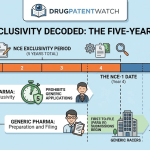
New Chemical Entity (NCE) exclusivity provides five years of data exclusivity for small-molecule drugs not previously approved by the FDA, plus a four-year period before which an ANDA with a Paragraph IV certification cannot be filed (reduced to four-plus-one under specific circumstances). For first-in-class small-molecule targeted therapies that represent genuinely new molecular entities, NCE exclusivity combined with the 30-month Hatch-Waxman stay creates a meaningful litigation-leveraged exclusivity window even for companies whose method-of-use patents are vulnerable to Mayo challenges.
Pediatric Exclusivity, Rare Pediatric Disease Priority Review Vouchers, and Personalized Medicine
Pediatric exclusivity extends all existing patent protection and exclusivity by six months upon completion of FDA-requested pediatric studies. This six-month extension applies to every Orange Book patent and every existing exclusivity period. For a drug with three Orange Book patents and NCE exclusivity, pediatric exclusivity extends all of them simultaneously. For a targeted therapy whose patient population includes pediatric patients with the relevant mutation, pediatric studies may be scientifically required or at least scientifically reasonable, making the six-month extension an obtainable commercial asset.
Rare Pediatric Disease Priority Review Vouchers (PRVs) provide a saleable asset: the right to receive priority review on a future NDA or BLA application, reducing FDA review time by approximately four months. PRVs have traded in secondary markets for amounts ranging from $100 million to over $350 million. A gene therapy or personalized oncology program targeting a rare pediatric indication may qualify for a PRV even if the eventual commercial market is small, making the voucher itself a material component of the program’s financial model.
Secondary Patents in Personalized Medicine: Formulation, Dosing, and Combination Claims
Traditional pharmaceutical life cycle management relies heavily on secondary patents: formulation patents covering the specific tablet architecture, dosing regimen patents covering the approved administration schedule, and combination patents covering the drug with a co-administered agent. These secondary patents are routinely challenged by generic manufacturers as obvious extensions of the primary composition-of-matter patent.
In personalized medicine, secondary patent strategy looks different. A biomarker-based dosing optimization patent, for example one that claims adjusting a drug’s dose based on pharmacogenomic testing for CYP2D6 status, runs directly into the Mayo framework. A combination patent claiming a targeted therapy plus its approved CDx as a package is of uncertain scope when the CDx is approved separately and manufactured by a different company. The most defensible secondary patents in personalized medicine tend to be process patents covering the manufacturing method for complex biologics or cell therapies, where the inventive concept is in the production method rather than the biomarker correlation.
Personalized Medicine Patent Litigation Landscape: What Cases Are Shaping Strategy Now
Athena Diagnostics v. Mayo Collaborative Services (Federal Circuit 2019): The Diagnostic Patent Uncertainty Peak
The Federal Circuit’s 2019 en banc decision in Athena Diagnostics v. Mayo Collaborative Services (915 F.3d 743) produced seven separate opinions from twelve judges considering the same case, a near-unanimous agreement that the claims were patent-ineligible under Mayo combined with widespread disagreement about whether Mayo itself was rightly decided. The case involved a method for diagnosing neurological disorders by detecting antibodies to MuSK protein using a labeled MuSK antigen. The Federal Circuit held the claims patent-ineligible because the antibody-disease correlation was a natural phenomenon and the antibody labeling step was conventional.
The decision illustrated the structural impossibility of the current doctrine for diagnostic developers. The method was genuinely inventive in the technical sense; it required development of the specific labeled antigen and the specific assay conditions. But the correlation it detected was a natural relationship. The court’s majority accepted that Mayo‘s logic required invalidation while expressing discomfort with that conclusion. The patent law community broadly read Athena as a signal that diagnostic method patent protection had reached its lowest practical point under existing doctrine, and that Congressional or Supreme Court intervention was the only path to change.
Prometheus Laboratories v. Roxane Laboratories: How Branded Pharma Litigates Biomarker-Method Patents Defensively
The strategic response to Prometheus/Athena doctrine in branded pharmaceutical litigation has been to draft and assert method-of-treatment patents that combine biomarker selection with specific technical steps that go beyond the conventional, framing them as specific improvements to treatment administration rather than as natural correlation claims. In some cases, brand companies have succeeded in getting courts to differentiate their claims from the Mayo pattern by pointing to technical specificity in the assay or the administration protocol. In others, courts have applied Mayo broadly and invalidated the claims.
The strategic lesson is that biomarker method patents filed post-2012 need to be drafted with maximum technical specificity from day one, not added during prosecution or in response to a 101 rejection. Claim language drafted to describe the clinical inference (“wherein a result above X indicates Y”) is structurally vulnerable regardless of how inventive the underlying clinical insight was. Claim language drafted to describe the specific technical steps of a novel assay architecture, where the correlation is a consequence of the technical novelty rather than its central claim, has a materially better survival profile in both prosecution and litigation.
ANDA Litigation Strategy for Targeted Therapies: How Paragraph IV Challenges Work Differently in Precision Oncology
A generic manufacturer filing a Paragraph IV ANDA certification against a targeted therapy faces a different litigation calculus than a generic manufacturer challenging a blockbuster antihypertensive. The targeted therapy’s Orange Book patent list may include composition-of-matter patents on the active ingredient, formulation patents, and method-of-use patents tied to biomarker-selected populations. The generic’s ANDA can certify against each patent differently: Paragraph III certification (meaning the generic agrees not to launch until the patent expires) for patents it cannot challenge successfully, and Paragraph IV (invalidity or non-infringement) for patents it believes are vulnerable.
For a targeted oncology drug, the method-of-use patent covering treatment of the biomarker-selected population is frequently the most commercially important listed patent and the most vulnerable to post-Mayo invalidity arguments. Generic manufacturers can challenge it under Section 101 in ANDA litigation, arguing that the biomarker-treatment correlation is a natural phenomenon. If successful, the generic can market a product for all patients regardless of biomarker status (under the general NSCLC indication, for example) while physicians use the biomarker information to guide off-label prescribing. The CDx requirement effectively enforces the patient selection in clinical practice even when the method-of-use patent is invalid.
Inter Partes Review and Post-Grant Proceedings: How the PTAB Affects Personalized Medicine Patents
The America Invents Act (AIA) created Inter Partes Review (IPR) and Post-Grant Review (PGR) proceedings at the PTAB, allowing challenges to patent validity on grounds of anticipation and obviousness without the cost and delay of district court litigation. The PTAB has developed a reputation for invalidating pharmaceutical patents at higher rates than district courts, which generic manufacturers and biosimilar developers exploit routinely.
For personalized medicine patents, IPR and PGR proceedings have been used against formulation and dosing regimen patents that secondary-patent strategies rely upon. Method-of-use patents covering biomarker-selected populations are more likely to face Section 101 challenges in district court than IPR (since IPR can only address § 102 and § 103, not § 101). But combination patents and dosing patents face substantial PTAB risk. A branded company defending a personalized therapy against generic entry must prepare for simultaneous PTAB proceedings and district court litigation, each running on different procedural tracks and timelines.
Global Patent Strategy for Personalized Medicine: Jurisdiction-by-Jurisdiction Divergence
European Patent Office Approach: Article 53 Exclusions and Diagnostic Methods
The European Patent Convention excludes diagnostic methods practiced on the human body from patent protection under Article 53(c). However, the EPO has interpreted this exclusion narrowly. A diagnostic method claim that includes technical steps performed on a sample removed from the body, such as in vitro analysis of blood or tissue, is generally patentable in Europe because the exclusion applies specifically to methods practiced on the living human body in a clinical setting. This creates a meaningful difference from the U.S. Mayo doctrine: in vitro diagnostic methods that would be vulnerable to § 101 challenge in the U.S. may be patentable in Europe, provided the claim is structured to cover the analytical steps on the removed sample rather than the clinical inference drawn from the result.
For personalized medicine IP prosecution, this jurisdictional difference matters significantly. A companion diagnostic method patent rejected under § 101 in the U.S. for claiming a natural phenomenon may be grantable in Europe as an in vitro method with sufficient technical character. Prosecution strategy for CDx methods should be developed with both jurisdictions in mind from the initial filing, using claim sets that are optimized for the specific patentability standards of each major market.
China’s Personalized Medicine Patent Landscape: A Rapidly Developing Jurisdiction
China’s National Medical Products Administration (NMPA) has expanded its precision medicine regulatory infrastructure significantly since 2020. The China National Intellectual Property Administration (CNIPA) handles pharmaceutical patent prosecution under rules that, following China’s 2021 Patent Law amendment, brought greater alignment with international standards. Diagnostic method patents in China face a different exclusion framework from the U.S. and EU; methods of diagnosis for the purpose of surgery or therapy are excluded from patentability, but in vitro diagnostic methods that do not directly result in a diagnosis are generally protectable.
For personalized medicine companies with global portfolios, China represents both an opportunity and a compliance complexity. The country’s genomic data governance rules, particularly the 2023 Human Genetic Resources Administration Regulations, restrict the export of genetic data from Chinese patients, affecting how multinational CDx developers can use Chinese clinical data for regulatory submissions outside China. The interaction between patent protection strategy and genomic data governance is a distinctly personalized medicine problem that traditional drug IP strategy did not need to address.
How Personalized Medicine IP Strategy Differs in Japan, South Korea, and Key Emerging Markets
Japan’s pharmaceutical patent system allows second medical use patents claiming new therapeutic applications of known compounds, with the Japan Patent Office generally willing to examine biomarker-based method of use claims on their scientific merits without the U.S.-style natural phenomenon exclusion. South Korea similarly permits second medical use claims and has been developing its companion diagnostic regulatory infrastructure in parallel with its pharmaceutical precision medicine strategy. The South Korean personalized medicine market was valued at approximately $24.9 billion in 2024, growing at nearly 8.7% annually.
For companies filing internationally on personalized medicine innovations, the Patent Cooperation Treaty (PCT) route allows deferral of national phase entry with a single international application. Strategic management of PCT prosecution, including timing national phase entries to preserve prosecution flexibility in jurisdictions with different patentability standards, is a material component of personalized medicine IP strategy that small-molecule strategies rarely required at the same level of geographic complexity.
The Pharmacogenomics Patent Problem: When a Patient’s Genome Determines the Drug’s Effectiveness
CYP2D6, CYP2C19, and the Limits of Patenting Genetic Dosing Adjustments
Pharmacogenomics, the study of how an individual’s genetic variants affect their response to drugs, creates a specific category of personalized medicine IP problem. CYP2D6 metabolizes approximately 25% of all commonly used drugs. Patients with poor metabolizer status (nonfunctional CYP2D6 alleles) accumulate drug plasma concentrations that can reach toxic levels at standard doses. Ultra-rapid metabolizers have the opposite problem: standard doses may produce inadequate therapeutic concentrations. The clinical insight that CYP2D6 status should inform codeine dosing, tramadol dosing, tamoxifen dosing, and dozens of other drugs is well-established.
A patent claiming a method of dosing any of these drugs based on CYP2D6 testing reads directly onto Mayo: the correlation between CYP2D6 genotype and metabolizer status is a natural phenomenon; the dosing adjustment based on that status is the conventional clinical response. Under current U.S. doctrine, that claim is almost certainly unpatentable. The actual innovation in pharmacogenomics, the clinical validation work, the development of reference databases, the integration of testing into prescribing workflows, produces real commercial value but does not easily translate into enforceable patent protection.
FDA’s Table of Pharmacogenomic Biomarkers in Drug Labeling: How Label-Based Protection Substitutes for Patents
The FDA maintains a public table of pharmacogenomic biomarkers whose clinical relevance is documented in FDA-approved drug labeling. As of 2025, this table lists over 300 drug-biomarker pairs across a range of therapeutic areas. For drugs whose labels include a pharmacogenomic recommendation, whether advisory or required, the label itself serves as a form of clinical guidance that shapes prescribing behavior even without patent protection on the underlying correlation.
A drug company that invests in pharmacogenomic research to characterize its drug’s interaction with CYP2D6 or other metabolizing enzymes benefits from having that information included in the FDA-approved label, even if the underlying biomarker correlation cannot be patented. The label creates a de facto standard of care that influences clinical practice and potentially supports the company’s CDx partnership strategy if the dosing adjustment requires a companion test. Label-based protection is not patent protection, but in pharmacogenomics, where the primary IP challenge is the Mayo doctrine, it may be the most reliable commercial protection available.
HLA Typing and Drug Safety: How Genetic Biomarkers Became Mandatory, Not Optional
The requirement to test for HLA-B*57:01 before prescribing abacavir (Ziagen/Epzicom/Trizivir) is one of the most direct regulatory embodiments of the personalized medicine model in a non-oncology context. HLA-B*57:01-positive patients have a high risk of hypersensitivity reaction to abacavir. The FDA-required HLA typing before abacavir initiation is not optional; it is embedded in the label as a precaution that must be followed. The commercial consequence is that every abacavir prescription generates a HLA-B*57:01 testing event.
The patent on the HLA-B*57:01 abacavir association, to the extent it ever existed, was a correlation patent subject to natural phenomenon challenges. The commercial protection for the testing requirement comes from the FDA label, not from a patent. The diagnostic company performing HLA typing does not need a patent on the HLA-abacavir correlation to generate revenue from testing. The label requirement is the commercial driver, and the label is a regulatory asset, not a patent asset.
The Biosimilar Dimension: How Personalized Biologics Create Unique LOE Dynamics
Why Biologic Patent Cliffs Are Structurally Different from Small-Molecule Cliffs
Between 2025 and 2030, drugs collectively generating over $200 billion in annual revenue will lose market exclusivity, in what the industry considers the most concentrated patent cliff in pharmaceutical history. Keytruda ($29+ billion in 2024 sales), Opdivo (nivolumab), and Eliquis (apixaban) anchor that window. For the biologics among them, Keytruda and Opdivo, the competitive dynamics after LOE are fundamentally different from what happens to a small molecule.
Biosimilar development for a monoclonal antibody requires significant analytical characterization work to demonstrate similarity to the reference biologic, clinical immunogenicity studies, and often additional safety data, producing a development cost in the hundreds of millions of dollars compared to tens of millions for a small-molecule generic ANDA. Biosimilar market penetration typically reaches 30 to 50% market share within two to three years of launch, compared to small-molecule generics that can capture 80 to 90% within one year. Brand companies retain meaningful revenue for longer after biosimilar entry, but the absolute dollar amounts at stake are far larger.
BPCIA Patent Dance: How the Biologics Litigation Framework Differs from Hatch-Waxman
The Biologics Price Competition and Innovation Act (BPCIA) patent litigation framework requires a “patent dance” information exchange between the biosimilar applicant and the reference product sponsor before litigation begins. The biosimilar applicant provides its abbreviated biologics license application to the reference product sponsor, which then identifies patents it wishes to assert. The parties negotiate which patents to litigate in the immediate patent dance and which to hold for later. The process is more complex and time-consuming than Hatch-Waxman ANDA litigation.
For personalized biologics like PD-1 inhibitors approved across multiple biomarker-selected indications, the BPCIA patent dance must address method-of-use patents tied to each approved indication. A reference product sponsor can assert a different set of patents for different biosimilar indications, using the complexity of the patent landscape to delay biosimilar entry on specific indications even when earlier indications have cleared litigation. This tactic is particularly relevant for drugs like pembrolizumab, which has over 40 FDA-approved indications across multiple tumor types and biomarker criteria.
Next-Generation Antibody Technologies and Patent Differentiation: Bispecifics, ADCs, and the Personalized Biology of Cancer
Antibody-drug conjugates (ADCs) and bispecific antibodies represent the current leading edge of targeted oncology biologics. An ADC like AstraZeneca’s Enhertu (trastuzumab deruxtecan) pairs a HER2-targeting antibody with a topoisomerase inhibitor payload, delivering the cytotoxic agent specifically to HER2-expressing cancer cells. The patent landscape for an ADC includes composition-of-matter patents on the antibody, patents on the linker chemistry, patents on the cytotoxic payload, and method-of-use patents covering HER2-selected patient populations.
The multi-component nature of ADCs creates a layered patent structure that provides more effective protection than a simple composition patent, because each component layer must be separately cleared by a biosimilar or generic developer. The linker chemistry patents and payload patents often include additional patent families with different expiry dates, extending the effective exclusivity window through portfolio depth rather than through any single foundational patent. This strategy has become standard in ADC development and represents an adaptation to the limitations of single-patent protection in personalized medicine.
What This Means for Generic Manufacturers, Payers, and Patients
What This Means for Generic and Biosimilar Developers
For generic and biosimilar developers, the personalized medicine patent landscape creates asymmetric opportunities. The most vulnerable patents in a targeted therapy’s portfolio are the biomarker method-of-use claims, which carry Section 101 risk, and secondary formulation patents that can be challenged as obvious. The most durable protections are regulatory exclusivities (BPCIA’s 12 years, orphan drug’s 7 years), the CDx infrastructure tied to the drug, and biologic manufacturing complexity.
Generic and biosimilar strategy needs to account for CDx relationships before, not after, launch. A biosimilar of a targeted therapy that lacks a CDx partnership may find that prescribers default to the branded product because the branded product’s CDx relationship facilitates patient identification in ways the biosimilar cannot replicate. The commercial entry strategy for biosimilars in personalized medicine must include a diagnostic access component.
What This Means for Payers and Formulary Strategy
Payers managing oncology drug budgets under personalized medicine face a distinct problem: the diagnostic requirement means the drug cost and the diagnostic cost must both be covered for the treatment to be deployed. CDx reimbursement coverage decisions, made by Medicare and commercial payers separately from drug coverage decisions, affect patient access to biomarker-guided therapies. When a targeted therapy’s CDx is not covered, access is restricted to patients who can pay out-of-pocket for the test, which creates equity problems and reduces the effective addressable market for the drug.
Formulary strategy for personalized therapies increasingly involves evaluation of the total cost of the biomarker-test-drug pathway, not just the drug cost. Payers negotiating rebate arrangements with drug manufacturers have begun structuring outcomes-based contracts tied to biomarker response data, in which the manufacturer provides higher rebates for patients who do not respond as predicted by the CDx. These contracts depend on the accuracy and completeness of CDx data, creating a commercial incentive for CDx developers to improve analytical performance that patent protection alone would not have provided.
What This Means for Rare Disease Patients
The structural mismatch between traditional patent economics and personalized medicine is most acute for patients with rare genetic disorders. The cost of gene therapy products reflects both the development investment amortized over tiny patient populations and the absence of generic competition within the exclusivity window. Zolgensma, approved for SMA Type 1 patients, launched at approximately $2.1 million per treatment in 2019. That price reflects genuine commercial logic: a one-time curative treatment for a fatal disease in a population of a few thousand patients annually. But it also exposes the limits of the patent exclusivity model as the primary mechanism for recovering development investment in ultra-personalized medicine.
Alternative financial models, including government development partnerships, subscription pricing arrangements with national health systems, and outcomes-based annuity structures, are emerging precisely because the traditional patent-exclusivity-then-generic-competition model does not function for products where the patient population is too small to support meaningful generic entry economics. The patent system was designed to incentivize investment by promising monopoly profits. For a one-time treatment with a $2 million price point for a few hundred patients, the monopoly is real but the profits are structurally uncertain, and generic entry, when it eventually comes, serves a patient population that may have already been treated to completion by the branded product.
Tracking the Personalized Medicine Patent Landscape: Tools and Intelligence Sources
How to Use DrugPatentWatch for Precision Medicine IP Analysis
DrugPatentWatch provides patent-by-patent tracking of drug product patents, Orange Book listings, FDA exclusivity status, and litigation history. For personalized medicine analysis, the most commercially relevant data points are the method-of-use patent expiry dates, which determine when Paragraph IV challenges become viable; the CDx approval history, which affects post-LOE diagnostic access; and the patent prosecution history, which indicates whether method claims survived Section 101 examination or were amended during prosecution in ways that might affect their enforceability.
For pharma IP teams tracking competitor pipelines in targeted oncology, DrugPatentWatch’s ability to cross-reference FDA approval databases with patent assignee data and litigation histories provides a systematic view of where specific patent families are in their commercial lifecycle. Identifying which biomarker method-of-use patents have been challenged and which have not helps prioritize the legal risk analysis for a portfolio of targeted therapies facing LOE decisions in the 2026-2030 window.
Patent Landscape Maps in Gene Editing: What the CRISPR Thicket Looks Like in Data
The density of CRISPR patent filings, over 1,700 patents and patent applications from hundreds of institutions, means that any company developing a gene editing therapeutic needs a systematic FTO analysis rather than a targeted search. Patent landscape mapping tools, including those used by law firms in FTO work, typically organize CRISPR patents by editing modality (Cas9, Cas12a, base editing, prime editing), delivery vector (lentiviral, AAV, lipid nanoparticle, ex vivo electroporation), and target gene or disease indication. The output is a map of which institutional holders cover which technical areas, allowing development teams to identify FTO gaps before they commit clinical resources.
The utility of this analysis is real and immediate: as noted earlier, the CRISPR patent thicket has driven licensing costs to as much as 30% of R&D budgets for some gene editing companies. Identifying in pre-IND analysis which patent families require licensing, which can be designed around, and which remain uncertain because they are still in active PTAB or Federal Circuit proceedings, allows companies to structure their clinical development strategy with IP risk factored in from the beginning.
The Legislative Horizon: Will Congress Fix the Personalized Medicine Patent Problem?
Legislative Proposals to Reform Section 101 After Mayo and Myriad: Where They Stand
Congressional efforts to reform Section 101 to restore patent eligibility for diagnostic methods have been recurring since 2019. The Patent Eligibility Restoration Act, introduced in both the House and Senate in various forms, would have replaced the Mayo–Alice framework with a statutory test that does not categorically exclude diagnostic methods based on natural phenomenon reasoning. As of early 2026, no § 101 reform legislation has been enacted.
The political economy of reform is complicated. The biotech and pharmaceutical industry wants broader patent protection for diagnostics to restore investment incentives. Patient advocacy groups and academic medical centers worry that broader diagnostic patents would recreate the Myriad BRCA testing monopoly dynamic. Health economists note that the current structure, where diagnostic correlations cannot be patented, has increased access to diagnostic testing. No consensus has formed around a legislative solution, and the existing legal framework under Mayo and Myriad will remain operative for the foreseeable future.
The IRA Price Negotiation Interaction: How Drug Pricing Policy Compounds the Patent Problem
The Inflation Reduction Act’s drug price negotiation provisions, which allow Medicare to negotiate prices for high-expenditure drugs beginning with small molecules in 2026 and biologics in 2028, interact with personalized medicine patent economics in specific ways. A targeted therapy selected for IRA price negotiation will face government price-setting during its patent exclusivity window, reducing the premium pricing that justifies the development investment for small patient populations. Eliquis and Januvia are among the first drugs subject to negotiated prices in 2026.
For future targeted oncology drugs in development now, the IRA creates uncertainty about the effective exclusivity value. A company developing a targeted therapy for a biomarker-defined cancer population must now model IRA negotiation scenarios as part of its expected revenue forecast, on top of the existing uncertainty about CDx patentability and CRISPR FTO costs. The combined effect is to compress the commercial upside of targeted therapy development in ways that may, over time, affect research investment decisions at the portfolio level.
What Personalized Medicine Needs from Patent Law: A Structural Diagnosis
The mismatch between personalized medicine and traditional patent doctrine is not a bug in the current system; it is an intended feature operating in an unintended context. The Mayo exclusion was designed to prevent monopolization of natural phenomena that would block scientific progress. Applied to genuinely inventive CDx development, it has the collateral effect of preventing protection for the clinical insights that justify the diagnostic investment. The Hatch-Waxman framework was designed to accelerate generic entry while preserving innovation incentives for large patient populations. Applied to targeted therapies, the 30-month stay and 180-day exclusivity system provides the same litigation leverage regardless of population size.
What personalized medicine actually needs from patent law is either a restored and bounded diagnostic method patentability standard that protects specific analytical innovations without preempting the underlying biological phenomenon, or a legislatively created exclusivity framework that is calibrated to patient population size and development cost rather than a fixed 20-year clock. Neither reform is imminent. In the meantime, companies are adapting through the combination of trade secrets, CDx regulatory relationships, BPCIA data exclusivity, orphan drug designation, and layered secondary patent portfolios described above.
Personalized Medicine Patent Obsolescence: A Sector-by-Sector Scorecard
Oncology: Where the Mismatch Is Most Acute and Most Profitable
Oncology is both the sector where personalized medicine has advanced most rapidly and the sector where patent protection is most structurally strained. Targeted therapies now account for the majority of oncology drug approvals. Mayo‘s impact on biomarker method patents falls hardest here. CDx IP is most commercially developed here. CRISPR-based CAR-T programs are in clinical development here. The oncology sector is effectively a real-time experiment in what pharmaceutical IP looks like when the traditional framework is under maximum structural pressure.
Rare Disease and Gene Therapy: Where Patent-Independent Protection Dominates
In gene therapy and rare disease, the primary commercial protection comes from orphan drug exclusivity, BPCIA data exclusivity for biologic products, and manufacturing complexity. The patent portfolio plays a secondary role to regulatory exclusivity and know-how protection. This is already the de facto operating model for companies like Spark Therapeutics (now Roche), bluebird bio, and Sarepta Therapeutics in its Elevidys franchise.
Pharmacogenomics and Drug Safety Biomarkers: Where Label Protection Has Replaced Patent Strategy
For pharmacogenomic applications outside oncology, including CYP variant dosing adjustments, HLA-based safety testing, and psychiatric pharmacogenomics, FDA label-based protection has largely replaced patent strategy as the primary commercial anchor. The label creates market behavior that patent protection would have created, but through regulatory compulsion rather than legal exclusion. Companies in this space compete on analytical accuracy, test turnaround time, clinical decision support integration, and payer coverage, not on patent assertions.
Liquid Biopsy and ctDNA Testing: A Fast-Moving Platform With Complex IP Dynamics
Liquid biopsy, the detection of circulating tumor DNA (ctDNA), cell-free DNA (cfDNA), or circulating tumor cells (CTCs) from a blood sample, is among the fastest-growing segments in precision oncology diagnostics. Guardant Health, Foundation Medicine, Grail, and others hold overlapping patent portfolios covering sequencing methods, bioinformatics algorithms, and clinical utility claims for ctDNA analysis. The Mayo doctrine affects claims directed to detecting specific mutations in ctDNA and inferring cancer status. But the technical complexity of low-frequency variant detection in a background of abundant normal DNA, requiring highly specific library preparation methods, error-correction algorithms, and proprietary bioinformatics pipelines, creates defensible technical patents around the analytical platform.
The FDA’s regulatory framework for liquid biopsy CDx, including the approval of Guardant360 CDx for osimertinib patient selection in EGFR-mutant NSCLC, provides CDx-based commercial protection for the leading platforms in this space, independent of the patentability of the underlying biological correlations being detected.
Key Takeaways
The traditional composition-of-matter patent model, built for mass-market small molecules with large patient populations, does not translate cleanly to personalized medicine products whose market is defined by biomarker selection.
The Supreme Court’s Mayo v. Prometheus (2012) and Myriad Genetics (2013) decisions stripped patentability from diagnostic method claims based on natural phenomena and natural DNA sequences, creating a structural IP gap for companion diagnostic developers. Section 101 rejection rates for personalized medicine patent applications rose from 15.9% to 86.4% following Mayo.
Companion diagnostic IP, grounded in FDA-approved CDx indications rather than patent exclusivity, provides durable commercial protection that survives a drug’s patent cliff. Foundation Medicine’s FoundationOne CDx holds more than 20 approved CDx indications, creating a patient-access gatekeeping position that standard drug patents cannot replicate.
The CRISPR patent thicket, driven primarily by the ongoing Broad Institute vs. UC Berkeley dispute that returned to the PTAB as recently as March 2026, imposes licensing costs estimated at up to 30% of R&D budgets for gene editing companies and forces FTO negotiations before any clinical work begins.
AI-assisted drug discovery creates inventorship documentation obligations that traditional discovery never required. The USPTO’s November 2025 revised guidance reaffirms that only natural persons can be inventors; companies must maintain contemporaneous records of human contribution to AI-assisted inventive steps.
Alternative protection strategies, including BPCIA 12-year data exclusivity, orphan drug 7-year exclusivity, trade secret protection for manufacturing know-how, and pediatric exclusivity extensions, collectively replace the patent monopoly function for many personalized medicine products.
The 2025-2030 patent cliff, representing over $200 billion in annual revenue exposure, intersects with the personalized medicine transition. Keytruda’s 2028 LOE will test the CDx and biosimilar dynamics of a personalized blockbuster at scale.
Legislative reform of Section 101 to restore diagnostic method patentability has not advanced despite repeated Congressional proposals. Companies should plan their IP strategy around the existing legal framework.
Personalized medicine’s commercial protection ultimately rests on a portfolio of overlapping mechanisms: regulatory exclusivity, CDx control, manufacturing complexity, trade secrets, and secondary patents, rather than any single foundational patent. Companies that plan around one mechanism face vulnerability. Companies that build the full portfolio have durable commercial positions.
Frequently Asked Questions
FAQ 1: Can biomarker-based method-of-use patents still be obtained after Mayo v. Prometheus?
Yes, but with significant limitations. Claims that do no more than detect a biomarker and apply the resulting correlation to a treatment decision are patent-ineligible under Mayo‘s natural phenomenon exclusion. Claims that include specific technical steps tied to a novel analytical method, a specific assay architecture, or a treatment modality not previously used for the condition, where the inventive concept resides in the technical implementation rather than the biological correlation itself, have better survival odds in prosecution and litigation. Post-2012 prosecution strategy must anticipate Section 101 examination and build technical specificity into the claims from the initial filing.
FAQ 2: What protection does a companion diagnostic approval provide that a patent does not?
FDA approval of a companion diagnostic for a specific drug-biomarker indication creates a de facto patient access requirement: the drug’s label specifies that the approved CDx must be used to identify eligible patients. This requirement is not subject to Hatch-Waxman challenge, PTAB IPR proceedings, or Section 101 invalidity. A generic manufacturer that enters the market after a drug’s patent expiry still needs physicians to use the approved CDx to identify patients, which preserves the CDx developer’s commercial position. CDx approval is regulatory exclusivity over a clinical pathway rather than legal exclusivity over a molecule.
FAQ 3: How does BPCIA data exclusivity interact with personalized biologic patent protection?
BPCIA grants 12 years of data exclusivity from the date of original biologic approval. No biosimilar application can be approved by the FDA until 12 years have elapsed, regardless of patent status. This exclusivity runs in parallel with patent protection but operates independently. A personalized biologic whose core composition-of-matter patent has been challenged and invalidated still retains BPCIA data exclusivity. Conversely, if the data exclusivity period expires but valid patents remain, biosimilar entry is still blocked. For commercial planning purposes, the operative market exclusivity is the later of the data exclusivity and patent expiry dates.
FAQ 4: What is freedom-to-operate analysis in CRISPR gene therapy and why does it precede IND filing?
Freedom-to-operate (FTO) analysis determines whether a company can develop and commercialize a product without infringing valid third-party patents. In CRISPR gene therapy, FTO must address foundational Cas9 editing patents (primarily Broad Institute and UC Berkeley/CVC), guide RNA design patents, delivery vector patents (AAV serotype patents, lipid nanoparticle patents), and target gene or disease-specific patents. Because foundational CRISPR patents are owned by academic institutions that require licensing for commercial therapeutic use, FTO analysis in gene editing is substantially a licensing negotiation process, not just a patent review. Companies routinely complete this analysis before filing their IND because the licensing costs and timelines are material to clinical development planning.
FAQ 5: Does orphan drug exclusivity protect personalized medicine products better than patents?
For products targeting rare diseases or rare biomarker-defined populations qualifying for orphan designation (fewer than 200,000 U.S. patients), orphan drug exclusivity provides seven years of market protection that cannot be challenged through ANDA Paragraph IV litigation. Unlike patent protection, orphan exclusivity is not subject to invalidity proceedings or obviousness arguments. It can be defeated only if a subsequent manufacturer demonstrates clinical superiority. For gene therapies and cell therapies targeting rare genetic disorders, orphan exclusivity is frequently more reliable than patent protection alone, because the manufacturing complexity makes the clinical superiority standard effectively very high.
FAQ 6: How does AI-assisted drug discovery affect non-obviousness determinations in patent prosecution?
A compound generated by an AI system trained on published chemical databases may face obviousness challenges if the examiner or a litigation opponent argues that the compound was predictable from the training data. The non-obviousness standard under 35 U.S.C. § 103 asks whether the claimed invention would have been obvious to a person of ordinary skill in the art at the time of the invention. If AI tools are now standard in medicinal chemistry, the person of ordinary skill is presumed to have access to the same AI-assisted design capabilities. This raises the bar for demonstrating that an AI-generated molecule was non-obvious. Companies can address this through experimental data demonstrating unexpected properties of the molecule, which is the same strategy used to rebut obviousness in traditional drug discovery, but the documentation burden is higher because the predictive power of the AI platform must be accounted for.
FAQ 7: What happens to CDx commercial rights when a drug goes off-patent?
The CDx does not go “off-patent” when the associated drug loses exclusivity. The CDx may have its own patent protection for the analytical platform, but more importantly, the CDx’s commercial value rests on its FDA-approved indication status, its clinical integration in treatment algorithms, and its payer coverage relationships, none of which are tied to the drug’s patent status. As the drug’s market transitions from branded to generic or biosimilar competition, every prescription for the biomarker-eligible population, whether branded or generic, requires the approved CDx. The CDx developer’s economics may actually improve post-LOE if generic entry increases overall prescription volume for the drug and therefore increases CDx test demand.
FAQ 8: How does tumor-agnostic drug approval change the scope of method-of-use patent claims?
A tumor-agnostic approval, like Keytruda’s approval for MSI-H solid tumors or larotrectinib (Vitrakvi) for NTRK fusion-positive solid tumors, creates a method-of-use claim that covers all cancer histologies sharing a specific molecular feature rather than a specific cancer type. This is broader in cancer-type coverage but the biomarker requirement creates the natural phenomenon vulnerability under Mayo. A claim to “treating a patient with a solid tumor characterized by NTRK fusion with [drug]” depends on the NTRK fusion status being a natural phenomenon whose presence predicts drug response. The commercial protection for tumor-agnostic drugs therefore rests heavily on composition-of-matter patents and BPCIA data exclusivity rather than method-of-use claims.
FAQ 9: What is the commercial impact of the IRA price negotiation framework on personalized medicine investment decisions?
The IRA allows Medicare to negotiate prices for drugs that have been on the market for a specified period (9 years for small molecules, 13 years for biologics) and that account for significant Medicare expenditure. For targeted oncology drugs with smaller biomarker-selected patient populations but high per-patient costs, IRA negotiation creates pricing pressure during the patent exclusivity window. This compresses the effective return-on-investment window for personalized medicine development. The interaction between the IRA’s negotiation timeline and BPCIA’s 12-year data exclusivity means that a biologic can face price negotiation while still under regulatory exclusivity. Companies developing targeted biologics for significant Medicare populations now model IRA negotiation scenarios as a core part of their development decision framework.
FAQ 10: What does ‘loss of exclusivity’ mean differently for a personalized medicine product versus a traditional blockbuster?
For a traditional blockbuster small molecule, LOE means the end of composition-of-matter patent protection, generic ANDA filing, and rapid price erosion to 10 to 20% of branded price within 12 months. Revenue effectively disappears. For a personalized medicine product, LOE is more layered. Composition-of-matter patent expiry may occur at a different time than BPCIA data exclusivity expiry. The CDx infrastructure does not lose exclusivity when the drug does. Biosimilar entry is slower and less complete than generic entry. Orphan exclusivity may extend protection on specific indications. The revenue erosion curve is shallower and more protracted, but the starting point is higher because of price concentration in small patient populations. The post-LOE commercial trajectory for a personalized biologic looks more like Humira after adalimumab biosimilar entry, which retained substantial revenue for years after first biosimilar launch, than like Lipitor after atorvastatin generic entry, which lost most of its revenue within a year.
Sources
Chao, B. & Mapes, A. (2016). A Study of USPTO Art Unit 1634 Personalized Medicine Applications. Referenced in Chien (2025), Journal of Empirical Legal Studies.
Chien, C. (2025). Molecular Diagnostic Patenting After Mayo v. Prometheus: An Empirical Analysis. Journal of Empirical Legal Studies, 22(1). https://doi.org/10.1111/jels.12409
DrugPatentWatch. (2026, March 31). Personalized Medicine Patent Strategy: The Complete IP Playbook for Pharma and Biotech. https://www.drugpatentwatch.com/blog/patents-for-personalized-medicine-challenges-and-opportunities/
DrugPatentWatch. (2026, March 10). The Patent Cliff Playbook: Pharmaceutical IP Valuation, Generic Entry Timing, and Biosimilar Strategy. https://www.drugpatentwatch.com/blog/patent-expirations-seizing-opportunities-in-the-generic-drug-market/
DrugPatentWatch. (2026, March 24). Who Owns the AI-Discovered Drug? The Patent Ownership Guide Pharma IP Teams Need Now. https://www.drugpatentwatch.com/blog/ai-meets-drug-discovery-but-who-gets-the-patent/
Broad Institute. (2026, March 26). Statements and Background on CRISPR Patent Process. https://www.broadinstitute.org/crispr/journalists-statement-and-background-crispr-patent-process
Foundation Medicine. (2024, November 18). U.S. FDA Approves FoundationOne Liquid CDx as a Companion Diagnostic for TEPMETKO. https://www.foundationmedicine.com/press-release/fda-approval-foundationone-liquid-cdx-tepmetko
Foundation Medicine. (2024, October 11). U.S. FDA Approves FoundationOne Liquid CDx as a Companion Diagnostic for Itovebi. https://www.foundationmedicine.com/press-release/fda-approval-foundationone-liquid-cdx-itovebi
MedDeviceGuide. (2026, March 28). Companion Diagnostics (CDx): Regulatory Pathways, Development, and Market Access. https://meddeviceguide.com/blog/companion-diagnostics-cdx-regulatory-guide
Mayo Collaborative Services v. Prometheus Laboratories, Inc., 566 U.S. 66 (2012).
Association for Molecular Pathology v. Myriad Genetics, Inc., 569 U.S. 576 (2013).
Athena Diagnostics, Inc. v. Mayo Collaborative Services, LLC, 915 F.3d 743 (Fed. Cir. 2019) (en banc).
PMC/NIH. (2012). Medical Process Patents Declared Invalid: The Prometheus case restricts patent protection and the growth of personalized medicine. PLOS Medicine. https://pmc.ncbi.nlm.nih.gov/articles/PMC3411232/
Precedence Research / BioSpace. (2025). Personalized Medicine Market Size to Increase USD 1,315.43 Billion by 2034. https://www.biospace.com/press-releases/personalized-medicine-market-size-to-increase-usd-1-315-43-billion-by-2034
Future Market Insights. (2026). Personalized Medicine Market Size, Share & Forecast to 2036. https://www.futuremarketinsights.com/reports/personalized-medicine-market
Grand View Research. (2025). Personalized Medicine Market Size, Industry Report 2033. https://www.grandviewresearch.com/industry-analysis/personalized-medicine-market
Labiotech. (2022). CRISPR: One Patent to Rule Them All. https://www.labiotech.eu/in-depth/crispr-patent-dispute-licensing/
PMC/NIH. (2021). Prospect Patents and CRISPR; Rivalry and Ethical Licensing in a Semi-Commons Environment. https://pmc.ncbi.nlm.nih.gov/articles/PMC8545401/
PatentSnap/Eureka. (2025, October 10). What Are the Patent Challenges Surrounding CRISPR Base Editing? https://eureka.patsnap.com/report-patent-challenges-surrounding-crispr-base-editing
BioSpace. (2024, July 22). Ongoing CRISPR Patent Dispute Complicates Licensing but Hasn’t Deterred Gene-Editing Investment. https://www.biospace.com/business/ongoing-crispr-patent-dispute-complicates-licensing-but-hasnt-deterred-gene-editing-investment
Wang, J. (2025). Navigating the USPTO’s AI Inventorship Guidance in AI-Driven Drug Discovery. Journal of Law and the Biosciences, 12(2), lsaf014. https://doi.org/10.1093/jlb/lsaf014
USPTO. (2025, November 28). Revised Inventorship Guidance for AI-Assisted Inventions. Federal Register. https://www.federalregister.gov/documents/2025/11/28/2025-21457/revised-inventorship-guidance-for-ai-assisted-inventions
Morgan Lewis. (2025, December 3). USPTO Issues Revised Inventorship Guidance for AI-Assisted Inventions. https://www.morganlewis.com/pubs/2025/12/uspto-issues-revised-inventorship-guidance-for-ai-assisted-inventions
Brownstein. (2026, January 20). USPTO Issues Revised Inventorship Guidance for AI-Assisted Inventions: What It Means for Patent Strategy. https://www.bhfs.com/insight/uspto-issues-revised-inventorship-guidance-for-ai-assisted-inventions-what-it-means-for-patent-strategy/
Finnegan. Navigating the Future: Ensuring Patentability for AI-Assisted Innovations in the Pharmaceutical and Chemical Space. https://www.finnegan.com/en/insights/articles/navigating-the-future-ensuring-patentability-for-ai-assisted-innovations-in-the-pharmaceutical-and-chemical-space.html
Drug Discovery News. (2026, February 24). Blockbuster Drugs Face a Massive Patent Cliff in 2026. https://www.drugdiscoverynews.com/blockbuster-drugs-face-a-massive-patent-cliff-in-2026-17019
Rouse. (2024). Quick Guide: IP Protection for Personalised Medicine. https://rouse.com/insights/news/2024/quick-guide-ip-protection-for-personalised-medicine
Talencio. (2025). Personalized Medicine and Genomics: Trends, Challenges, and Strategic Opportunities. https://talencio.com/personalized-medicine-and-genomics-trends-challenges-and-strategic-opportunities/
DrugPatentWatch. (2026, February 25). Beyond the Drug Patent Cliff: How Procurement Can Drive Immediate Savings with Generics and Biosimilars. https://www.drugpatentwatch.com/blog/beyond-the-drug-patent-cliff-how-procurement-can-drive-immediate-savings-with-generics-and-biosimilars/