Chapter 1: The $575 Billion System No One Fully Understands
The United States spends roughly $575 billion per year on prescription drugs, about 14% of total national health expenditure, and more per capita than any other country on the planet. That number is enormous. What is more surprising is that almost no one in the system, not the payer, not the pharmacy, not the manufacturer, has complete visibility into how that money moves.
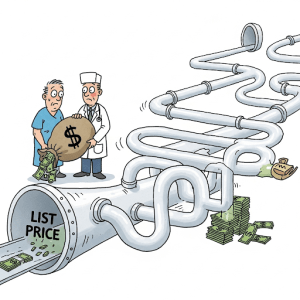
Drug pricing in the U.S. is not a formula. It is a layered sequence of strategic decisions, private negotiations, and contractual arrangements that begin at a manufacturer’s commercial planning table and end, months later, in a rebate reconciliation spreadsheet inside a pharmacy benefit manager’s back office. The patient paying at the register is typically the least informed party in the entire chain.
That opacity is not accidental. Every participant in the supply chain benefits, in some way, from the complexity. Manufacturers use high list prices to create negotiating leverage. PBMs use confidential rebate agreements to demonstrate value to plan sponsors. Wholesalers and pharmacies operate under contracts that are rarely disclosed. The result is a system where the same pill can carry five different prices simultaneously, none of which is what any single party actually pays.
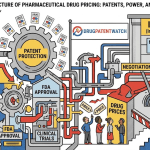
This pillar page tears all of that apart. It covers the complete lifecycle of a drug’s price from initial WAC-setting through patent strategy, PBM negotiations, government intervention under the Inflation Reduction Act, and the downstream consequences for patients, pharmacies, and the capital markets. Where the original drug pricing literature has offered overviews, this piece offers mechanics.
Key Takeaways: Chapter 1
The $575 billion figure obscures more than it reveals. The more useful framework is to understand that the U.S. has no single drug price for any product; it has a list price, a net price, a government ceiling price, a Medicaid rebate-adjusted price, and a 340B ceiling price, all existing simultaneously and governed by different statutes and contracts. Every chapter below adds one more layer of that architecture.
Chapter 2: How Manufacturers Set the Launch Price (WAC)
The Wholesale Acquisition Cost: What It Is and What It Is Not
The Wholesale Acquisition Cost (WAC) is the manufacturer’s official list price, the price at which drugs are invoiced to wholesalers before any contractual discounts, rebates, or government-mandated concessions are applied. The Centers for Medicare & Medicaid Services uses the WAC as the starting point for several reimbursement calculations. Medicaid’s best price rule, which requires manufacturers to offer Medicaid the lowest price available to any commercial customer, also flows from the WAC as an anchor.
What the WAC is not: a reflection of the drug’s actual transaction price. In a heavily rebated therapeutic category like diabetes, immunology, or oncology, the manufacturer’s realized net price can run 40% to 60% below the WAC. The gap between WAC and net price, called the gross-to-net bubble, has widened every year for the last decade and now averages approximately $0.46 in rebates and concessions per dollar of list price across branded products.
The WAC is set once, at launch. Subsequent increases, which historically ran 6% to 10% annually for brand-name drugs before the IRA’s inflation rebate mechanism created a penalty for excessive hikes, are announced to the trade and published in compendia like Medi-Span and Red Book. This published price then cascades through the system: pharmacy reimbursement benchmarks, patient cost-sharing calculations (especially for those in high-deductible plans whose coinsurance is pegged to WAC), and government program pricing all tie back to it.
The R&D Justification: A Political Tool, Not a Pricing Formula
The pharmaceutical industry consistently frames high launch prices around R&D investment. The numbers are real. The industry collectively spent over $102 billion on R&D in 2022. A RAND Corporation analysis of 38 recently approved drugs found a median capitalized development cost of $708 million, with a mean of $1.3 billion, the latter figure skewed by a handful of exceptionally expensive late-stage failures incorporated into the capitalized cost calculation. For gene therapies and cell therapies, the per-approval cost is substantially higher.
The problem with this framing, as a 2022 study in JAMA Internal Medicine documented, is that no statistically significant correlation exists between a specific drug’s R&D expenditure and its launch price. Drugs that cost relatively little to develop can launch at premium prices; drugs that consumed enormous development budgets can launch at modest prices if the competitive environment demands it. The R&D cost argument explains why the industry needs high prices in aggregate. It does not explain why any individual drug is priced where it is.
What actually drives a specific drug’s WAC is a combination of four inputs: the drug’s clinical differentiation in its target indication, the competitive intensity of the market it is entering, the anticipated payer mix and rebate requirements for formulary access, and the manufacturer’s model of the net price needed to hit internal return thresholds. These last two factors are doing most of the work.
‘What the Market Will Bear’: Modeling the Commercial Case
A manufacturer’s commercial team models the launch price through a structured scenario analysis. The key inputs are: the indication’s prevalence and growth trajectory, the proportion of patients on commercial insurance versus Medicare/Medicaid/340B, the rebate percentage likely required by the three major PBMs to achieve Tier 2 preferred formulary status (typically 40% to 65% of WAC in competitive categories), and the resulting net price required to cover fully burdened cost of goods plus a target return on invested capital.
The WAC is then reverse-engineered from the desired net price. If the commercial team needs $25,000 per year in net revenue per patient, and the anticipated blended rebate is 50%, the WAC must be set at $50,000 per year or higher to yield that net figure after rebates. This is why the WAC is more accurately described as a strategic anchor for downstream negotiations than as a price in the conventional sense.
A first-in-class drug entering an unmet need with no formulary alternatives has almost unlimited pricing power at launch, and the WAC can be set close to a pure value-based calculation. A fifth entrant in a crowded market may need a WAC only marginally above competitors’, relying on a very high rebate offer to win preferred placement. The mechanics are the same; the inputs are different.
IP Valuation at Launch: The Orphan Drug Premium
One underappreciated pricing input is the specific IP asset configuration a drug carries at launch. A product that enters the market with a composition-of-matter patent (the broadest possible coverage, covering the active molecule itself), an orphan drug designation (conferring seven years of market exclusivity from approval, separate from and stackable on patent protection), and a new chemical entity (NCE) exclusivity designation from FDA (five years for small molecules, 12 years for biologics under the Biologics Price Competition and Innovation Act) has a markedly different risk-adjusted pricing calculus than one carrying only secondary formulation patents.
Institutional analysts and biotech investors use a drug’s IP asset portfolio as a direct input into DCF models. A robust composition-of-matter patent with no credible Paragraph IV challenge in the Orange Book translates into a longer projected period of uncontested revenue, which justifies a lower risk-adjusted discount rate on future cash flows. A drug protected only by formulation or method-of-use patents faces near-term generic entry risk that compresses the net present value of the launch price decision.
The strategic implication: IP quality at launch is a core pricing input, not just a legal consideration. Manufacturers who can demonstrate to investors a strong, defensible patent portfolio are rewarded with higher price-to-earnings multiples because the market is effectively assigning a premium to the expected duration of pricing power.
For institutional investors analyzing a pre-launch biotech or a major pharma company’s pipeline:
The key question is not ‘what is the WAC?’ but ‘what is the expected net price trajectory over the exclusivity window, and what is the quality of the IP protecting that window?’ A $150,000 WAC on a drug with strong composition-of-matter coverage and a clean Orange Book is a more valuable commercial position than the same WAC on a drug protected only by a pediatric exclusivity extension. Analysts should model net price, not list price, and haircut aggressively for rebate inflation in competitive categories. The IRA’s Maximum Fair Price mechanism (covered in Chapter 6) now adds a hard ceiling to this modeling exercise for Medicare-heavy products after year 7 (small molecules) or year 11 (biologics).
Chapter 3: The Gross-to-Net Bubble: Following the Money Through the Supply Chain
A Precise Glossary of the Five Key Price Points
Before tracing the money, the terminology requires precision. These five price points govern the entire financial architecture of the U.S. drug distribution system.
The Wholesale Acquisition Cost (WAC) is the manufacturer’s published list price to the wholesale channel, before any deductions. It is the bedrock reference price for most downstream calculations. The Average Manufacturer Price (AMP) represents the weighted average price paid to manufacturers by wholesalers and retail pharmacies, after factoring in volume discounts and other concessions. AMP is the basis for Medicaid rebate calculations: the statutory Medicaid rebate for branded drugs is the greater of 23.1% of AMP or the difference between AMP and the best price available to any commercial customer. Because AMP sits below WAC, and best price can sit well below WAC, manufacturers in competitive categories can face effective Medicaid rebates of 50% to 70% or more.
The Average Wholesale Price (AWP) is an archaic benchmark, roughly WAC plus a standard 20% markup, that survives in legacy reimbursement contracts for some public and private payers and in some pharmacy reimbursement formulas. It is not an average of anything wholesalers actually pay. The Net Price is the manufacturer’s actual realized revenue per unit after all rebates, chargebacks, administrative fees, government program discounts, and 340B pricing are applied. This is the number that determines a drug’s P&L contribution and its true financial attractiveness. The Maximum Fair Price (MFP) is a new price point created by the Inflation Reduction Act; it is the government-negotiated ceiling price at which Medicare will reimburse a selected drug, effective beginning with the first cohort of 10 drugs on January 1, 2026.
The Physical and Financial Flow: A Step-by-Step Map
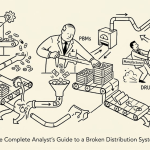
The movement of a branded prescription drug from manufacturer to patient involves at least eight distinct transactions, each with its own pricing logic.
The manufacturer ships product to one of the three major wholesalers, McKesson, Cencora (formerly AmerisourceBergen), or Cardinal Health, at a price based on WAC minus a small prompt-pay or volume discount. Those three wholesalers collectively handle approximately 85% to 90% of the U.S. pharmaceutical distribution volume. The wholesaler then distributes to retail, specialty, mail-order, and hospital pharmacies, adding a small margin, typically 2% to 4% of WAC, for logistics and distribution services.
When the patient fills the prescription, the pharmacy submits an electronic claim to the PBM. The PBM adjudicates the claim in real time, applies the plan’s cost-sharing structure (copay or coinsurance), and authorizes the dispensing. The pharmacy collects the patient’s portion and receives reimbursement from the PBM based on a network contract formula, typically expressed as WAC minus a specified percentage plus a dispensing fee. That dispensing fee for generic drugs is often in the range of $1 to $3; for specialty branded drugs, the formula is more complex and negotiated.
Here is where the financial architecture diverges from physical reality. The PBM bills the health plan on a different, typically higher, formula than the one it uses to reimburse the pharmacy. The gap between what the PBM bills the health plan and what it pays the pharmacy is ‘spread,’ the PBM’s margin on the transaction. For generic drugs, this spread can be enormous. A 2025 FTC report found spreads on specialty generic drugs ranging from several hundred to several thousand percent above acquisition cost.
Separately, and typically on a quarterly or semi-annual basis, the manufacturer pays retrospective rebates to the PBM. These rebates are calculated on the total volume of the drug dispensed to the health plan’s members during the period, multiplied by the rebate percentage specified in the manufacturer-PBM contract, applied to WAC. The PBM then passes a portion of these rebates to the health plan sponsor, retaining a share as compensation and profit. The percentage retained by the PBM versus passed to the plan sponsor varies widely and is rarely disclosed.
The net effect of this architecture is the gross-to-net bubble: the manufacturer’s WAC bears almost no relationship to what anyone actually pays or receives. A USC Schaeffer Center analysis found that intermediaries in aggregate captured roughly $41 in gross revenue for every $100 spent at the pharmacy counter, matching the manufacturer’s share. The production cost of the drug itself accounted for only $17 of that $100.
Spread Pricing: The FTC’s Findings in Detail
The Federal Trade Commission’s second interim staff report on PBMs, released in January 2025, provided the most granular public accounting of spread pricing yet available. The three largest PBMs, CVS Caremark, Express Scripts (Cigna), and OptumRx (UnitedHealth Group), collectively generated $7.3 billion in revenue from specialty generic drug markups between 2017 and 2022, on drugs with an estimated acquisition cost base of roughly $7.9 billion. That is a near-100% average markup across the category.
The FTC analysis identified specific therapeutic categories where markups were most severe: immunosuppressants used by transplant patients, antiretrovirals for HIV, and oral chemotherapy agents. These are drugs where patients have no meaningful therapeutic alternatives, making them captive to whatever the PBM charges. The commission’s Chair stated that the Big Three routinely marked up these drugs by hundreds or thousands of percent, calling for the agency to act to stop any illegal conduct. Litigation from this investigation is ongoing as of early 2026.
The 340B Program: A Parallel Pricing Channel
One pricing channel the gross-to-net analysis often misses is the 340B Drug Pricing Program. Created by Congress in 1992, 340B requires manufacturers to sell covered outpatient drugs to eligible ‘covered entities’, including federally qualified health centers, disproportionate share hospitals, and Ryan White HIV/AIDS clinics, at prices no higher than the 340B ceiling price. That ceiling is calculated as AMP minus the applicable Medicaid unit rebate amount, which for branded drugs generally places 340B prices 25% to 50% below WAC.
The 340B program has become one of the most commercially significant and contested pricing channels in pharma. As of 2024, approximately 50,000 covered entity sites participated in the program, and 340B drug purchases exceeded $50 billion annually. The controversy: covered entities can purchase at 340B prices and then dispense to patients covered by commercial insurance or Medicare Part B, generating revenue based on the higher commercial reimbursement rate. The difference between what they paid (340B price) and what they are reimbursed (commercial rate) can be substantial. For hospitals, this margin has become a major revenue source that cross-subsidizes clinical services for low-income patients, which is the program’s stated intent. Manufacturers argue the program has grown far beyond that intent and that the revenue generated by large health systems using 340B does not consistently flow to the vulnerable patients the program was designed to serve.
For IP teams and analysts, the 340B program is a pricing floor that must be modeled for any specialty drug with significant hospital outpatient or clinic-based administration, particularly in oncology and HIV. The WAC-to-340B discount, combined with Medicaid rebates and IRA Maximum Fair Price obligations, creates a multi-channel net price matrix that must be fully mapped before a launch price decision is finalized.
Key Takeaways: Chapter 3
The gross-to-net bubble is the defining structural feature of U.S. drug economics. Net prices are materially below list prices for almost every branded product, and the gap has widened every year. Patients in high-deductible plans, whose cost-sharing is calculated as a percentage of WAC rather than net price, are bearing a disproportionate share of the inflated list price while the rebates that narrow the gap flow to PBMs and plan sponsors. The FTC’s ongoing enforcement action against spread pricing on specialty generics is the most significant threat to the current PBM revenue model in the agency’s history.
Chapter 4: PBMs: How the Middlemen Became the Market
Origins, Scale, and the Three-Firm Concentration Problem
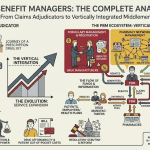
PBMs were originally administrative processors: companies that handled prescription drug claims on behalf of insurance plans that lacked the operational capability to do so themselves. That function, by the 1990s, had evolved into formulary management. By the 2010s, following a wave of consolidation and vertical integration, the three largest PBMs had become the dominant architects of drug access for more than 289 million Americans.
CVS Caremark, Express Scripts, and OptumRx collectively adjudicate roughly 80% of all U.S. prescription claims. Each is now embedded within a vertically integrated healthcare conglomerate. CVS Caremark sits inside CVS Health alongside Aetna and the nation’s largest retail pharmacy chain. Express Scripts is owned by Cigna. OptumRx is the pharmacy services arm of Optum, which is the healthcare services subsidiary of UnitedHealth Group, the largest U.S. health insurer by revenue. These are not middlemen in any traditional sense. They are industrial-scale intermediaries with captive patient populations, owned insurance subsidiaries, and proprietary mail-order and specialty pharmacy networks.
The concentration is not incidental. The Big Three’s dominance means that a manufacturer who cannot secure preferred formulary status with even one of them faces a material exclusion from a significant portion of the commercially insured market. This gives PBMs pricing power over manufacturers that approaches monopsony in competitive therapeutic categories.
Formulary Architecture: How Tier Placement Drives Volume
A PBM’s formulary is a tiered list of covered drugs, with patient cost-sharing increasing at each tier. Tier 1 typically covers generic drugs at the lowest copay; Tier 2 covers preferred branded drugs at a moderate copay; Tier 3 covers non-preferred brands at a higher copay; Tier 4 or higher (specialty tiers) covers high-cost injectable biologics and specialty drugs, often at coinsurance rates of 20% to 33% of the drug’s list price, which can translate to thousands of dollars per fill.
The PBM sets formulary tier placement through a Pharmacy & Therapeutics (P&T) committee process that, in theory, is driven by clinical evidence. In practice, the tier assignment for drugs in competitive therapeutic categories is heavily influenced by the size of the manufacturer’s rebate offer. A manufacturer who offers a higher rebate percentage wins preferred tier placement; a manufacturer who offers less may find its drug on a non-preferred tier or excluded entirely. This is not speculation. Congressional investigations and the FTC’s 2024-2025 reports have documented cases where a less clinically differentiated drug with a higher list price, and therefore a larger absolute rebate, was preferred over a more effective competitor on the basis of that financial arrangement.
The clinical and patient consequence is concrete. A patient whose prescribed drug is on a non-preferred tier faces either higher out-of-pocket costs, which can trigger cost-related non-adherence, or an administrative prior authorization hurdle requiring the physician to document why the preferred (but financially superior for the PBM) alternative is clinically inappropriate. These administrative barriers add costs across the entire system.
The Rebate Incentive Inversion: Why PBMs Can Favor High-Price Drugs
The fundamental perversity in the rebate system is arithmetic. Because rebates are calculated as a percentage of WAC, a manufacturer with a $200,000/year biologic offering a 30% rebate generates $60,000 per patient per year in rebate income for the PBM. A biosimilar competing product priced at $120,000/year, even if it offers a 40% rebate, generates only $48,000 per patient per year. The PBM earns more from the branded product, even though the branded product costs the health system more, provided the rebate percentage in the manufacturer’s contract is not structured to overcome the absolute dollar gap.
This phenomenon is known as the ‘rebate wall.’ The American Diabetes Association has named it as a key driver of high insulin prices. The insulin market is the most-studied example: manufacturers consistently raised insulin WAC prices for decades, which in turn increased the absolute dollar value of rebates, which incentivized PBMs to maintain preferred formulary status for the highest-priced products, which enabled further price increases. Net prices to manufacturers did not rise at the same rate, but the gross-to-net bubble expanded, and patients whose cost-sharing tied to WAC saw their out-of-pocket costs increase year after year.
Vertical Integration and Patient Steering: The Data
The FTC’s analysis of PBM-affiliated specialty pharmacy market share documented a structural shift that should alarm any policymaker concerned with market competition. In 2016, PBM-affiliated specialty pharmacies captured 54% of specialty drug dispensing revenue. By 2023, that figure had risen to 68%. The FTC staff found that PBMs direct patients more aggressively to their affiliated pharmacies for the highest-margin products, in some cases through plan designs that limit network access to affiliated sites, or through administrative processes that make it harder for patients to fill specialty prescriptions at independent pharmacies.
The financial logic is straightforward. A vertically integrated PBM-insurer-pharmacy conglomerate captures profit at every node: the insurance premium, the PBM administrative fee and spread, the specialty pharmacy dispensing margin, and the rebate retained from the manufacturer. On a specialty drug with a $100,000 annual WAC, a fully integrated CVS Health or UnitedHealth entity can extract value through Aetna/UnitedHealthcare (premium), CVS Caremark/OptumRx (PBM fee and spread), CVS Specialty/OptumRx Specialty (dispensing margin), and a portion of the rebate retained at the PBM level. Independent pharmacies and non-affiliated PBMs cannot replicate this capture structure.
IP Valuation Implication for Specialty Drugs: The PBM Factor
For IP teams valuing a specialty biologic or rare disease drug, PBM dynamics are a material input into IP asset valuation. A drug that faces a ‘rebate wall’ from the Big Three due to an entrenched competitor’s market position has a structurally lower expected net price than a drug entering a category with no established preferred product. This is a first-order consideration in orphan drug IP valuation, where small patient populations mean that formulary exclusion can effectively cut addressable market by 20% to 30%.
Conversely, a first-to-market specialty drug entering an indication with no existing formulary competition has maximum leverage to extract a favorable preferred status at launch, commanding a high WAC with moderate rebates, yielding a strong net price. The IP asset, in this scenario, is not just the patent protecting the molecule. It includes the market exclusivity position on the formulary, which functions as a commercial monopoly independent of patent status.
Key Takeaways: Chapter 4
PBM reform is no longer hypothetical. The FTC has documented practices that generate billions in excess revenue from markups on lifesaving drugs, bipartisan legislative coalitions in both chambers have advanced reform bills that include spread pricing bans and rebate pass-through mandates, and multiple states have enacted PBM transparency and prohibition statutes. The Big Three’s business models face structural regulatory risk over the 2025 to 2030 window. For portfolio managers with positions in CVS Health, Cigna, or UnitedHealth Group, the legislative scenario for PBM reform is now a core risk factor, not a tail risk.
Chapter 5: Patents, Exclusivity, and the Art of the Extension
The Patent-Exclusivity Stack: Four Overlapping Protections
A fully protected branded drug in the U.S. does not rely on a single patent. It sits under a stack of overlapping legal protections, each with a different term and originating from a different statute. Understanding the stack is essential for generic and biosimilar manufacturers assessing entry timing, and for brand-side IP teams tasked with lifecycle management.
The four primary protection layers are: composition-of-matter patents (covering the active molecule, typically 20 years from filing date, often granted 3 to 5 years before FDA approval); formulation and method-of-use patents (secondary patents covering specific drug formulations, dosing regimens, or clinical indications, filed in waves during and after clinical development); FDA-granted market exclusivity (including 5-year NCE exclusivity for new chemical entities, 3-year clinical investigation exclusivity for approved labeling changes based on new clinical studies, 7-year orphan drug exclusivity, and 12-year reference product exclusivity for biologics); and pediatric exclusivity (a 6-month extension of existing patent and exclusivity periods granted by FDA in exchange for conducting pediatric trials under the Best Pharmaceuticals for Children Act).
The critical distinction between patents and FDA exclusivities is often confused even by sophisticated analysts. A patent grants the right to exclude others from making, using, or selling the patented invention. FDA exclusivity prohibits the agency from approving a competing ANDA or biosimilar application for the exclusivity period, regardless of patent status. A generic company can obtain a court ruling invalidating every patent on a drug and still be blocked from marketing by an unexpired FDA exclusivity. Both layers must be cleared.
The Hatch-Waxman Architecture: How Generic Entry Is Structured
The Drug Price Competition and Patent Term Restoration Act of 1984, the Hatch-Waxman Act, created the modern generic drug entry system. Its core mechanism, the Abbreviated New Drug Application (ANDA), allows a generic manufacturer to reference the brand’s original clinical safety and efficacy data rather than conducting independent trials, provided the generic demonstrates pharmaceutical equivalence (same active ingredient, same dosage form, same route of administration, same strength) and bioequivalence (similar rate and extent of absorption).
The Hatch-Waxman Act’s Orange Book patent listing and certification system is the operational interface between patent law and generic entry. A brand manufacturer must list all patents in the Orange Book that claim the approved drug or its approved use. A generic applicant must certify with respect to each listed patent. The Paragraph IV certification, asserting that the listed patents are invalid or will not be infringed by the generic product, triggers an automatic 30-month stay of FDA approval if the brand manufacturer sues for infringement within 45 days of receiving notice. This stay is a powerful defensive tool: even if the brand company eventually loses the litigation, it has bought approximately 2.5 years of continued market exclusivity.
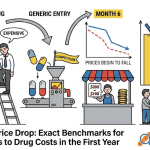
The first generic applicant to file a Paragraph IV ANDA earns 180-day market exclusivity from the date of commercial marketing. During those six months, no other generic can enter the market, allowing the first filer to price its product at a modest discount to the brand (typically 10% to 30%) rather than the 80% to 90% discount that prevails once full generic competition arrives. The financial value of first-to-file status in a major market can exceed $500 million.
Evergreening: A Technology Roadmap of Tactics
‘Evergreening’ is the collective term for strategies that extend a brand drug’s effective market exclusivity beyond its primary patent term. These are not illegal; courts and regulators have repeatedly found that obtaining additional patents on improvements is within the letter of patent law. The question, from a policy perspective, is whether the system allows companies to maintain monopoly pricing on medicines through a sequence of minor modifications rather than meaningful innovation.
The tactical toolkit for evergreening is broader than most analyses acknowledge. Product hopping involves reformulating a drug before the primary patent expires, obtaining new patents on the reformulation, aggressively switching prescribing patterns to the new version, and in some cases withdrawing the old version from the market. Patients and physicians are effectively forced to use the patent-protected formulation. Warner Chilcott’s switch of Doryx (doxycycline) from tablets to scored tablets, and then to differently dosed capsules, to avoid generic substitution has been litigated as anticompetitive.
Polymorph patents cover different crystalline forms of the same active ingredient, which can differ in bioavailability or stability. A manufacturer can obtain patents on multiple polymorphs of the same molecule, each with its own 20-year term from filing. Metabolite patents cover the active metabolite of a prodrug, a compound the body converts into the actual therapeutic agent. If a generic manufacturer formulates the parent prodrug, the brand company may argue that the parent’s conversion to the metabolite in the body infringes the metabolite patent. Dosage form patents cover specific tablet strengths, extended-release matrices, transdermal patches, or prefilled syringes. Method-of-treatment patents cover the clinical use of the drug in a specific patient population, such as a specific biomarker-defined subgroup, regardless of whether the generic product itself is patented.
The most sophisticated evergreening structures layer these tactics over time, filing new secondary patents in waves as the primary patent matures. The result is a patent thicket: a dense web of overlapping IP that a generic or biosimilar manufacturer must either design around, license, or challenge one by one in litigation.
AbbVie’s Humira: IP Valuation of a Patent Thicket
Humira (adalimumab) is the most thoroughly documented patent thicket in pharmaceutical history. AbbVie and its predecessor Abbott Laboratories filed over 247 patent applications in the U.S. covering Humira, resulting in more than 130 granted patents. Critically, 89% of those applications were filed after Humira received FDA approval in 2002. The primary patent expired in 2016. Biosimilar competition in the U.S. did not begin until January 2023. AbbVie maintained its U.S. monopoly for seven additional years through the thicket.
The financial magnitude of that seven-year extension is quantifiable. In 2020 alone, Humira generated $16 billion in U.S. net revenue for AbbVie. AbbVie raised the drug’s U.S. list price 27 times between launch in 2003 and 2021, reaching approximately $77,000 per patient per year, a 470% increase. The I-MAK (Initiative for Medicines, Access and Knowledge) has estimated that the delay in U.S. biosimilar entry cost the American healthcare system more than $19 billion in forgone savings between 2018 (when European biosimilar entry occurred) and 2023. The European market, where Humira’s core protection expired in 2018 without a comparable thicket, saw AbbVie’s international sales fall sharply as biosimilar competitors entered.
For IP teams, the Humira case establishes a quantitative benchmark: the value of a well-constructed patent thicket around a blockbuster biologic is measured in the tens of billions of dollars. The IP asset is not the molecule. The IP asset is the thicket itself, and its value is a function of how long it delays competition. AbbVie allocated roughly $200 million per year in legal and patent prosecution costs during Humira’s peak exclusivity period; the return on that legal spending, calculated against the $19 billion in extended U.S. exclusivity, represents one of the highest ROI activities in the company’s history.
Biosimilar Interchangeability: A Separate and Higher Bar
For biologics, the Biologics Price Competition and Innovation Act (BPCIA), passed as part of the Affordable Care Act in 2010, created an abbreviated approval pathway for biosimilars analogous to the Hatch-Waxman ANDA pathway for small molecules. A biosimilar must demonstrate no clinically meaningful differences from the reference product in terms of safety, purity, and potency. Biosimilar interchangeability, a separate and higher regulatory designation, requires additional switching studies demonstrating that alternating between the biosimilar and the reference product does not produce a clinically meaningful change in any patient. An interchangeable biosimilar can be substituted by a pharmacist without physician notification in most states, the equivalent of automatic generic substitution.
As of early 2026, only a handful of biosimilars have achieved the interchangeability designation from FDA. The clinical and regulatory burden of the interchangeability studies is one obstacle; the commercial incentive for biosimilar manufacturers is a second. Because formulary substitution by PBMs, rather than pharmacist-level substitution at the counter, drives most biosimilar uptake in practice, the interchangeability designation is often commercially secondary to securing PBM formulary preference. The ‘rebate wall’ dynamic discussed in Chapter 4 is the primary structural barrier to biosimilar adoption, not the regulatory pathway.
Paragraph IV Strategy: The Generic Challenger’s Playbook
For generic and biosimilar manufacturers, the decision to file a Paragraph IV ANDA is the most consequential strategic choice in the development timeline. It is also the most data-intensive. A thorough pre-filing analysis must cover the full Orange Book patent landscape (identifying every listed patent, its expiration date, its claim scope, and its prior art exposure), the litigation history for each patent (has it been challenged before? What was the outcome?), the compound’s structure-activity relationship (is there a legitimate non-infringement position?), and the commercial prize (what is the first-to-file exclusivity period worth in net present value?).
Patent intelligence platforms, specifically those that compile Orange Book listings, PTAB proceedings, district court dockets, inter partes review petitions, and FDA exclusivity data in a single searchable environment, have become the operational core of any serious generic development strategy. A generic manufacturer entering a $2 billion market with a first-to-file Paragraph IV strategy can invest $50 million in litigation and still generate a return well above 10x if the challenge succeeds. The data needed to make that $50 million bet rationally is patent-specific claim mapping, litigation risk scoring, and competitive filing intelligence on whether other generic manufacturers have already filed and are further along in the 180-day race.
Investment Strategy: IP Maturity as a Valuation Input
For investors in brand-name pharma, the quality and maturity of a product’s IP stack should be a line-item in any DCF model. An ‘IP haircut’ should be applied to net cash flow projections for any drug within five years of its last valid patent expiration, reflecting the probability and timing of first generic entry. For biologics, this haircut must account not only for the BPCIA pathway but for the ‘rebate wall’ dynamics that slow biosimilar penetration even after regulatory approval.
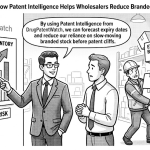
For generic and biosimilar manufacturers, IP intelligence spending is a capital allocation decision with quantifiable expected returns. Firms that maintain systematic patent surveillance and litigation tracking across their target therapeutic categories can identify first-to-file opportunities earlier, prepare better-quality invalidity arguments, and avoid wasted ANDA filings on targets already dominated by other challengers.
Key Takeaways: Chapter 5
The patent system’s core bargain, a temporary monopoly in exchange for public disclosure, is functioning approximately as designed for breakthrough innovations. For mature drugs protected primarily by secondary patents, the system has been systematically used to extend monopoly pricing well beyond what Congress intended with the Hatch-Waxman Act. The Humira thicket is the most extreme example, but dozens of branded drugs in every major therapeutic category follow similar layered-exclusivity strategies. Patent thicket construction is a quantifiable IP asset whose financial value can be modeled with the same rigor as clinical trial outcomes.
Chapter 6: The Inflation Reduction Act: What Actually Changed
Before the IRA: The Non-Interference Clause
From 2003, when Congress enacted the Medicare Prescription Drug, Improvement, and Modernization Act (MMA) and created Medicare Part D, through 2022, federal law explicitly prohibited CMS from negotiating drug prices directly with manufacturers. This ‘non-interference clause’ was the cornerstone of the market-based pricing system. The VA, the DoD, and Medicaid could all negotiate or mandate discounts. Medicare Part D, which spent more than $200 billion annually on prescription drugs by 2022, could not.
The non-interference clause produced the anomaly documented in Chapter 7: the federal government, as the single largest payer for prescription drugs, had less pricing leverage than almost any private health plan. PBMs negotiating on behalf of Medicare Part D plan sponsors could obtain rebates, but those rebates were structured within the constraints of a program design that limited competition and insulated manufacturers from the full force of consolidated purchasing power.
The IRA’s Negotiation Mechanism: Structure and Scope
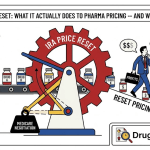
The Inflation Reduction Act of 2022 terminated the non-interference clause for a defined subset of drugs. The Medicare Drug Price Negotiation Program, administered by CMS, gives the Secretary of HHS authority to negotiate a Maximum Fair Price (MFP) for a growing list of high-expenditure Medicare drugs that lack generic or biosimilar competition.
The selection criteria are specific. A drug must be a ‘single-source’ product, meaning no generic or biosimilar is available. For small-molecule drugs, the drug must have been on the market for at least seven years since initial FDA approval with no generic entry. For biologics, the minimum market life threshold is eleven years. CMS ranks eligible drugs by their total Medicare net spending, without rebates, and selects the highest-spending products for negotiation each year: 10 Part D drugs for 2026 prices, 15 additional drugs in 2027, 15 more in 2028, and up to 20 annually thereafter, with Part B drugs (physician-administered biologics) added to the eligible pool beginning in 2028.
The negotiation process runs approximately 12 months. CMS initiates by sending a data request to the manufacturer, who must provide R&D cost documentation, revenue data, patent information, and clinical evidence on comparative effectiveness. CMS then develops an ‘initial offer’ based on a statutory formula that incorporates the drug’s therapeutic benefit, the presence of alternative treatments, and evidence-based price comparisons. The manufacturer can counter, and a formal negotiation period follows. If no agreement is reached, CMS can impose a final price; manufacturers who refuse to honor the MFP face an excise tax beginning at 65% of gross revenues from U.S. sales of the drug and escalating to 95% if non-compliance continues. No manufacturer has opted out since the program began.
The first 10 drugs negotiated under the IRA, for 2026 pricing, include Eliquis (apixaban, BMS/Pfizer), Jardiance (empagliflozin, Boehringer Ingelheim/Eli Lilly), Xarelto (rivaroxaban, J&J/Bayer), Januvia (sitagliptin, Merck), Enbrel (etanercept, Pfizer/Amgen), Imbruvica (ibrutinib, AbbVie/J&J), Entresto (sacubitril/valsartan, Novartis), Fiasp/NovoLog insulin products (Novo Nordisk), Stelara (ustekinumab, J&J), and Farxiga (dapagliflozin, AstraZeneca). The negotiated MFPs for these drugs represent discounts of approximately 38% to 79% from their current list prices. Specific negotiated prices are subject to disclosure requirements under the IRA, representing the first time Medicare drug prices have been publicly announced.
The Inflation Rebate Mechanism: A Hard Brake on Annual Price Increases
The second major pricing provision of the IRA receives less attention than the negotiation program but may have a broader near-term market impact. The inflation rebate mechanism requires manufacturers to pay a rebate to Medicare if they increase the WAC of a Part B or Part D drug faster than the rate of CPI-U in any 12-month period. The rebate amount is the difference between the actual price increase and the CPI-U rate, multiplied by total Medicare volume.
This mechanism is not a price cap; it does not prohibit price increases above inflation. It makes them costly. For a drug with $3 billion in annual Medicare sales, a 6% price increase in a year when CPI-U runs 3% triggers a 3% rebate on all Medicare volume, roughly $90 million. Before the IRA, that same $90 million in additional revenue from the price hike had no corresponding penalty. Since 2022, the inflation rebate mechanism has effectively changed the real-options math on annual list price increases for high-volume Medicare drugs.
The ‘Pill Penalty’: Small-Molecule vs. Biologic Asymmetry
The IRA’s most structurally consequential design feature, from a long-run R&D investment perspective, is the differential market life threshold for negotiation eligibility: 7 years for small-molecule drugs, 11 years for biologics. This four-year gap, now widely called the ‘pill penalty’ by industry, creates a meaningfully different expected revenue profile for the two modalities.
The financial consequence is concrete. For a drug that launches at year zero and generates peak annual net revenue of $2 billion, the small-molecule modality loses pricing autonomy at year 7; the biologic retains it until year 11. Assuming a 20% annualized revenue reduction from MFP negotiation and a discount rate of 10%, the NPV of that four-year pricing autonomy extension is roughly $1.5 billion to $2 billion per drug. Multiply this across a pipeline, and the modality choice becomes a capital allocation decision with material NPV implications.
Venture capital allocation data supports this concern. PhRMA has reported a measurable decline in early-stage small-molecule development funding since the IRA’s passage, while biologic-focused biotech funding has remained robust. If this trend persists, the clinical consequence could include reduced investment in oral therapies for conditions where patient convenience is critical, such as heart failure, psychiatric disorders, and certain oncology indications.
The ‘pill penalty’ has also altered multi-indication development strategy. For a drug applicable to both a rare, high-need orphan population and a larger mainstream indication, the optimal commercial sequence under the IRA may be to launch for the larger indication first, to maximize the high-revenue pre-negotiation window. Launching for the orphan indication first starts the 7-year clock without capturing the large-indication revenue that justifies development costs. This creates a structural disincentive to prioritize rare disease patients at launch, a tension between the IRA’s affordability goals and access goals for underserved patient populations.
Investment Strategy: Modeling the IRA Impact
For pharma portfolio managers, three specific adjustments to standard DCF models are required post-IRA:
First, for any Part D or Part B drug with more than $500 million in annual Medicare revenue and fewer than 7 years (small molecules) or 11 years (biologics) of market life, model a negotiated MFP beginning in the year of eligibility. CBO estimated that negotiated prices will average approximately 25% below current net prices at the time of selection, though early round data suggests the range is 38% to 79% below list price. The appropriate discount to apply to net price will depend on the specific drug’s therapeutic alternatives and Medicare patient share.
Second, for any drug with a track record of annual price increases, model the inflation rebate cost as a direct offset to revenue growth. The pre-IRA strategy of 6% to 8% annual list price increases on established brands is no longer economically rational for high-volume Medicare products.
Third, for pipeline assets in pre-launch development, apply a modality risk adjustment. Small-molecule programs targeting primary Medicare populations should have a shorter projected high-revenue exclusivity window than the primary patent life would suggest, reflecting the 7-year negotiation eligibility threshold.
Key Takeaways: Chapter 6
The IRA is the most consequential structural intervention in U.S. drug pricing since the Medicaid Drug Rebate Program was enacted in 1990. It has not eliminated market-based pricing; the vast majority of commercially insured patients remain in a pre-IRA pricing environment. But for the Medicare channel, which represents 30% to 50% of total revenue for most major branded drugs, the pricing calculus has fundamentally changed. The 7/11-year threshold asymmetry is the single most important design feature for R&D and portfolio strategy teams to model. The ‘pill penalty’ is not a legislative oversight; it was a deliberate policy choice that will reshape modality investment for a decade.
Chapter 7: The American Anomaly: U.S. Prices vs. the World
The Price Gap: Updated Data for 2022-2026
The ASPE’s 2024 international price comparison report, analyzing 2022 data across 33 OECD countries, found that overall U.S. drug prices were 278% of the weighted average in peer nations. For brand-name drugs specifically, U.S. prices ran at 422% of the international average. Even after applying a generous imputed rebate to U.S. prices, the net price in the U.S. for branded drugs remained more than 300% above international levels.
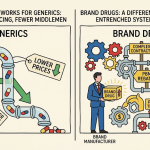
For generics, the picture inverts. Unbranded U.S. generics priced at approximately 67% of the international average, a function of the highly competitive ANDA market where dozens of manufacturers compete on price within months of generic entry. The U.S. does generics well and does branded drugs at a premium unlike anywhere else in the developed world.
A Commonwealth Fund analysis of the 10 IRA-selected drugs found that their average U.S. list price was roughly three times higher than the comparable list price in peer countries including Australia, Canada, France, Germany, Japan, Switzerland, and the UK. More striking: for several of the selected drugs, the U.S. estimated net price after rebates exceeded the gross list price in almost every comparison country. Payers in those countries pay less before any discounts than Americans pay after all discounts.
Why the Gap Exists: Structural Differences
The U.S. price premium over peer nations is not primarily a function of higher pharmaceutical industry profitability in the U.S. relative to what those same companies earn globally. It is a function of how each country’s payer system is structured to negotiate.
Most OECD nations deploy Health Technology Assessment (HTA) as the gatekeeping mechanism for pricing and reimbursement. The UK’s National Institute for Health and Care Excellence (NICE), Germany’s Federal Joint Committee (G-BA) under AMNOG, France’s Haute Autorité de Santé (HAS), and Canada’s Canadian Drug Agency (CDA-AMC) all conduct comparative clinical effectiveness reviews and, in several cases, formal cost-effectiveness analyses before setting a reimbursement price. A drug that NICE deems insufficiently cost-effective at the manufacturer’s requested price can be excluded from NHS coverage entirely, which creates real leverage for price reduction. The threat of exclusion in a market with a single national payer is a credible one; unlike in the U.S., there is no channel to circumvent.
The U.S. has no equivalent federal HTA body. The Institute for Clinical and Economic Review (ICER) conducts independent cost-effectiveness analyses and publishes ‘evidence-based price benchmarks,’ but ICER’s analyses carry no statutory authority. PBMs and health plans may reference ICER reports internally; manufacturers are under no obligation to price at ICER benchmarks. The result is a country with the world’s most sophisticated biomedical R&D infrastructure and no formal mechanism for linking drug prices to the value those drugs deliver.
The Free-Rider Argument: What the Data Actually Shows
The claim that the U.S. subsidizes global pharmaceutical R&D through high prices has genuine empirical support and equally genuine empirical limits. On the support side: the U.S. market does account for the majority of global branded pharmaceutical revenue for most major products. AstraZeneca’s Pascal Soriot has noted in multiple forums that U.S. revenues represent the financial underpinning of a global R&D model. Without the U.S. premium, the argument goes, the total pool of capital available for high-risk drug discovery would shrink.
The empirical limit: the relationship between U.S. premium pricing and R&D investment is not linear. Industry data shows that from 2009 to 2018, the 18 largest pharmaceutical companies spent 14% more on stock buybacks and dividends than on R&D, a figure documented by the Institute for New Economic Thinking. Price reductions in the U.S. would not necessarily translate dollar-for-dollar into R&D cuts; they would more likely reduce financial returns to shareholders and compress executive compensation first. The innovation incentive argument is real, but the magnitude of the effect is far smaller than industry lobby groups claim.
The policy implication of the free-rider argument is a justification for international reference pricing (IRP): if other countries are not paying their proportionate share of global R&D costs, the U.S. could link its prices to a weighted average of prices in peer nations, compelling other governments to raise their prices (or accept reduced access) to fund their fair share. The current Trump administration’s Most-Favored-Nation executive order, announced in 2025, is a variant of this approach. It attempts to set U.S. prices at the lowest price available to any other high-income country for certain Medicare drugs. As of March 2026, IRP through formal statute has not been enacted, and the MFN order faces ongoing legal challenges.
Key Takeaways: Chapter 7
The U.S. price premium over peer nations is structural, durable, and rooted in the absence of a centralized HTA-informed negotiation system. The IRA’s negotiation program is the first step toward closing this gap for Medicare drugs, but it covers a small subset of products and leaves the commercial market entirely untouched. For global manufacturers, the U.S. premium is the financial engine of the enterprise; any serious effort to bring U.S. prices in line with international levels would require a complete redesign of how pharmaceutical innovation is financed globally, not just a domestic pricing regulation.
Chapter 8: The Human and Economic Fallout
Cost-Related Non-Adherence: Scale and Consequences
The most immediate consequence of high drug prices is cost-related non-adherence. Approximately one in three American adults reports having not taken medications as prescribed because of cost, according to consistent survey data from the Kaiser Family Foundation and the Commonwealth Fund. Patients on high-deductible health plans, which have become the dominant commercial insurance design over the past decade, are particularly exposed: their coinsurance obligations frequently apply to the full WAC of a specialty drug, with no benefit from the substantial rebates negotiated further upstream.
Non-adherence is not a uniform phenomenon. Patients with chronic conditions requiring daily oral medications, particularly for cardiovascular disease, diabetes, and psychiatric disorders, are the most likely to ration. Patients on specialty injectable biologics often face high single-fill coinsurance payments that lead to full prescription abandonment rather than dose skipping. The clinical consequences of both patterns are well-documented: patients who skip antihypertensives have higher rates of stroke and myocardial infarction; patients who abandon immunosuppressive therapy after organ transplant face rejection episodes; patients who ration insulin face diabetic ketoacidosis and long-term complications.
The economic paradox is that non-adherence generates net costs for the healthcare system that substantially exceed the out-of-pocket savings to the patient. An avoided $400 monthly prescription that results in a $35,000 hospitalization does not represent a net saving; it represents a cost transfer from the pharmacy benefit to the medical benefit, with the total system cost dramatically higher. Studies consistently estimate that prescription non-adherence accounts for $100 billion to $300 billion in avoidable annual healthcare costs in the U.S.
Manufacturers have created patient assistance programs (PAPs) and copay assistance programs in response to cost-related non-adherence, particularly for high-priced branded products. Copay cards, available for commercially insured patients only, cap a patient’s out-of-pocket cost at the pharmacy for a specified number of fills or dollar amount. A patient taking a $10,000/month specialty drug might pay only $25 per fill with a manufacturer copay card; the manufacturer absorbs the difference.
These programs do not reduce the drug’s WAC or the cost to the insurer. They insulate commercially insured patients from the out-of-pocket cost while the full list price continues to flow through the reimbursement system. Critics note that copay assistance programs effectively undermine PBM step-therapy and formulary tier structures: if a patient faces no cost difference between a Tier 2 preferred drug and a Tier 3 non-preferred drug at the counter (because a manufacturer copay card covers both), the PBM’s tool for steering toward preferred products breaks down. Several PBMs have implemented ‘copay accumulator adjustment’ programs, which allow PBM-administered health plans not to count manufacturer copay card payments toward a patient’s deductible or out-of-pocket maximum, reinstating the cost-sharing exposure that the manufacturer’s card was designed to eliminate. This practice has been the subject of litigation and state-level legislative action.
Independent Pharmacies: The Financial Pressure in Detail
The competitive and financial position of U.S. independent pharmacies has deteriorated consistently since the mid-2010s, driven by PBM reimbursement dynamics described in Chapter 4. The National Community Pharmacists Association’s 2024 survey found that 99% of independent pharmacy owners had experienced reduced PBM reimbursements in the prior year, and 32% reported they were considering closing within 12 months.
The mechanics of the pressure are specific. PBMs calculate pharmacy reimbursement using a formula typically expressed as a percentage below MAC (Maximum Allowable Cost), a PBM-set price list for generic drugs. The MAC is set by each PBM independently and is not publicly disclosed. If a PBM reduces its MAC for a high-dispensing generic, pharmacies that have already committed to inventory at a higher acquisition cost fill the prescription at a loss. The pharmacy has no recourse; the MAC update is made unilaterally by the PBM.
Direct and Indirect Remuneration (DIR) fees compound this problem. DIR fees are retroactive adjustments applied by PBMs to pharmacy reimbursement, based on performance metrics including medication adherence rates in the pharmacy’s patient population, generic dispensing rate, and medication reconciliation documentation. The fees are applied months after the prescription is filled, making prospective financial planning nearly impossible for small pharmacies. A pharmacy that filled 10,000 prescriptions in Q1 under the assumption it would receive $X in reimbursement may find, in Q3, that $20,000 to $50,000 in DIR clawbacks has been applied. CMS partially addressed this issue by requiring that DIR fees be reflected at the point of sale in Medicare Part D beginning in January 2024, rather than applied retroactively. However, analogous fees in commercial PBM contracts remain largely unregulated.
Between 2013 and 2022, approximately 10% of independent retail pharmacies in rural America closed permanently. The areas hardest hit are those with the highest baseline rates of chronic disease and the fewest alternative pharmacy access points, creating pharmacy deserts in rural and low-income urban communities.
Key Takeaways: Chapter 8
Cost-related non-adherence and independent pharmacy closures are not side effects of the U.S. drug pricing system. They are structural outputs of a system designed around manufacturer revenue maximization and PBM margin extraction, with inadequate mechanisms to protect patient access. The macroeconomic cost of non-adherence dwarfs the individual savings from skipping medications. Policy interventions that reduce patient out-of-pocket cost at the point of sale, without simply transferring costs to premiums, are the most direct lever for improving adherence and reducing downstream healthcare expenditure.
Chapter 9: Value-Based Pricing: Theory, Practice, and the Sovaldi Problem
The Value-Based Pricing Framework
Value-based pricing (VBP) in pharmaceuticals attempts to link a drug’s price to the health outcomes it generates, rather than to its cost of production, R&D investment, or competitive market positioning. The theoretical basis is straightforward: a drug that cures a previously incurable disease has a different value proposition than one that marginally improves a biomarker endpoint compared to an existing standard of care, and their prices should reflect that difference.
The most common operationalization of VBP is the cost-per-QALY (quality-adjusted life year) framework used by NICE in the UK and by ICER in the U.S. A QALY represents one year of life lived in perfect health; it weights life years by the patient’s health state, such that a year lived with a severe chronic disease counts as a fraction of a full QALY. A drug’s cost-effectiveness is then expressed as cost per QALY gained compared to the current standard of care. NICE uses a threshold of approximately 20,000 to 30,000 British pounds per QALY as a guide for reimbursement decisions; therapies above the threshold require additional clinical justification or a manufacturer price reduction to qualify for NHS coverage.
ICER uses a similar framework but does not have binding authority. ICER’s ‘cost-effectiveness price benchmark’ for a new drug is the price at which the drug would be considered cost-effective at $100,000 to $150,000 per QALY, a threshold range derived from economic studies of willingness-to-pay in the U.S. healthcare context. ICER analyses have repeatedly found that the U.S. launch prices for major drugs, particularly in oncology and rare diseases, far exceed these benchmarks. ICER’s January 2026 analysis of a recently approved KRAS-targeted small-molecule oncology drug found that its $27,000/month list price was cost-effective only at doses generating response rates above 40%; the drug’s clinical trial response rate was 32%.
Outcomes-Based Contracts: The Operational Reality
Outcomes-based contracts (OBCs), in which a manufacturer’s price or rebate is tied to real-world patient outcomes, have been piloted in the U.S. since the mid-2010s. The theoretical appeal is obvious: align the manufacturer’s financial incentive with the drug’s actual performance in the real world, rather than the clinical trial setting. The commercial reality has been more complicated.
The largest operational barriers to OBCs are data infrastructure and legal constraints. Defining, measuring, and attributing clinical outcomes in real-world patient populations requires longitudinal patient-level claims data linked to clinical records, infrastructure that most payers and manufacturers do not have and that HIPAA complicates. Medicaid’s ‘best price’ rule creates a separate legal obstacle: if a manufacturer offers a rebate to one health plan that is contingent on poor outcomes (i.e., the manufacturer pays more when the drug fails to work), CMS might interpret the base price before the outcome-based rebate as the ‘best price’ for Medicaid purposes, applying it nationwide and eliminating the drug’s Medicaid profitability. CMS issued guidance in 2017 and updated it subsequently to provide more flexibility for OBCs, but legal ambiguity remains.
Despite the obstacles, selected large-scale OBCs have been executed. Novartis negotiated an outcomes-based arrangement for Entresto (sacubitril/valsartan) with several large U.S. health systems and insurers, tying rebates to hospitalization reduction in heart failure patients. Spark Therapeutics (Roche) structured a gene therapy payment model for Luxturna (voretigene neparvovec), a one-time treatment for a rare inherited retinal disease priced at $425,000 per eye, that included money-back guarantees tied to long-term vision preservation outcomes. These are high-profile cases; the majority of pharmaceutical commercial arrangements remain volume-based.
Sovaldi: The Value-Based Pricing Cautionary Case
Gilead Sciences launched Sovaldi (sofosbuvir) in December 2013 at $84,000 per 12-week treatment course, $1,000 per pill. Sovaldi is a direct-acting antiviral that, combined with companion agents, produces sustained virologic response (functional cure) rates of 90% or above in most Hepatitis C genotypes. It was genuinely transformative: previous interferon-based HCV regimens achieved cure rates of 40% to 60%, required 24 to 48 weeks of treatment, and caused severe side effects including depression, anemia, and flu-like symptoms that led to high treatment discontinuation rates.
Gilead’s pricing argument was explicitly value-based. The company commissioned health-economic analyses showing that a $84,000 treatment course was cost-effective compared to the long-term cost of untreated HCV, which includes decades of monitoring, antiviral management, management of cirrhosis and liver failure, and ultimately liver transplantation at $300,000 or more. From a lifetime cost perspective, paying $84,000 once to cure a patient who might otherwise spend $500,000 to $800,000 on lifetime HCV management costs the system less, not more.
The argument was analytically sound and commercially catastrophic as a public relations strategy. Medicaid programs, the VA, state prison systems, and private insurers faced the prospect of treating an estimated 3.5 million Americans with active HCV infection, at $84,000 per course, for a total treatment cost potentially exceeding $290 billion. No payer, public or private, had modeled that budget exposure, and access restrictions were implemented across every major payer class almost immediately. The U.S. Senate Finance Committee launched an investigation that concluded Gilead had set the price primarily to maximize revenue and to anchor the market for its follow-on HCV drugs, Harvoni and Epclusa, rather than on a strict cost-effectiveness calculation.
The Sovaldi case illustrates a fundamental tension in pharmaceutical pricing that no VBP framework has yet resolved: a price can be ‘cost-effective’ from a health economic perspective and simultaneously unaffordable from a payer budget perspective. Health economic models operate at the per-patient level; payer budgets operate at the population level. A drug that is cost-effective for each individual patient can be unaffordable if the entire eligible population is treated simultaneously. This distinction between cost-effectiveness and budget impact is the central unsolved problem in U.S. pharmaceutical pricing policy.
Key Takeaways: Chapter 9
Value-based pricing is the correct conceptual framework for pharmaceutical pricing but has proven extraordinarily difficult to implement at scale in the U.S. The Sovaldi case demonstrated that even a drug with a compelling value-based argument can trigger payer backlash severe enough to restrict access for the patients who need it. The path toward VBP in the U.S. requires simultaneous progress on data infrastructure for real-world outcomes measurement, regulatory clarity on how OBCs interact with Medicaid best price rules, and a policy framework that can bridge the gap between individual cost-effectiveness and population-level budget affordability.
Chapter 10: Investment Strategy: What the System Means for Your Portfolio
Brand-Name Pharma: The Post-IRA Valuation Recalibration
Pre-IRA valuation models for brand-name drugs in Medicare-heavy therapeutic categories require material revision. The standard approach of discounting future cash flows over the full patent exclusivity period, treating the terminal patent expiration as the primary revenue cliff, understates IRA-related revenue reduction risk.
Analysts should now model a two-cliff structure for eligible drugs: the IRA negotiation cliff at year 7 (small molecules) or year 11 (biologics), and the patent expiration cliff at the date of last valid patent expiration or first credible generic entry, whichever comes first. The IRA cliff is not a cliff to zero; negotiated MFPs represent an average 25% to 50% reduction from pre-negotiation net prices based on the first round of negotiations, not an elimination of revenue. But the directional effect on DCF valuations is significant, particularly for drugs that derive more than 40% of their revenues from the Medicare channel.
The inflation rebate mechanism also deserves explicit modeling. For any brand drug with a history of annual WAC increases above CPI-U and a Medicare revenue base above $500 million, the annual ‘inflation penalty cost’ should be explicitly subtracted from revenue growth projections. The pre-IRA strategy of 6% to 8% annual list price increases is now negative-NPV for Medicare-heavy products once the rebate cost is included.
Generic and Biosimilar Manufacturers: The Patent Intelligence Competitive Advantage
The competitive advantage in generic drug development is not chemistry. It is IP intelligence combined with litigation risk assessment. The first generic manufacturer to file a successful Paragraph IV ANDA on a $2 billion product earns 180-day market exclusivity worth potentially $300 million to $700 million in net present value. The second filer earns a fraction of that; the tenth earns commodity-level margins from day one.
The ROI on patent intelligence spending in this context is measurable. A generic manufacturer that identifies a credible invalidity argument on a brand product’s primary patent 18 months before competing generic filers, uses that intelligence to execute a first-to-file ANDA, and prevails in Paragraph IV litigation earns returns that can exceed $10 for every $1 invested in the IP analysis. Platforms and services that aggregate Orange Book data, PTAB proceedings, district court litigation outcomes, FDA exclusivity expirations, and competitive ANDA filing intelligence provide the raw material for this analysis.
For biosimilar manufacturers, the calculus is analogous but the barriers are higher. The patent thicket dynamic documented in the Humira case means that litigation costs for a biosimilar entrant challenging a major biologic can exceed $100 million before a single patient has been treated. The ‘rebate wall’ adds a commercial hurdle: even a successful biosimilar entrant may fail to convert patients if the incumbent brand’s formulary position is defended by a rebate offer the biosimilar cannot match. The commercial strategy for a successful biosimilar launch must integrate IP clearance, formulary contracting, and interchangeability strategy simultaneously.
PBM-Exposed Healthcare Conglomerates: The Reform Risk Assessment
For portfolio managers with positions in CVS Health, Cigna, or UnitedHealth Group, the PBM reform risk is now a five-year core scenario, not a tail risk. The legislative and regulatory elements are converging. The FTC’s enforcement investigation is ongoing. Multiple state-level PBM reform laws are in effect, including spread pricing prohibitions in Medicaid managed care in Ohio, Kentucky, and several other states. Federal legislation to ban spread pricing in commercial plans, delink rebates from list prices, and mandate rebate pass-through has passed committee in both chambers with bipartisan support.
The financial exposure from a federal spread pricing ban and rebate delinking varies by entity. For OptumRx, which operates within UnitedHealth Group’s broader diversified revenue base, a 30% to 40% reduction in PBM-specific EBITDA (a plausible estimate under a comprehensive reform scenario) would reduce total UnitedHealth Group operating income by approximately 8% to 12%, a significant but survivable impact. For Cigna, where Express Scripts represents a larger proportion of total revenue and EBITDA, the exposure is proportionally higher. The vertically integrated insurance-PBM-pharmacy model does not disappear under reform; it is restructured, with the PBM profit center compressed and insurance and pharmacy margins potentially expanding if the overall system becomes more transparent and administratively efficient.
Chapter 11: Key Takeaways by Segment
For Pharmaceutical IP Teams
The WAC is a strategic instrument, not a price. It is set to anchor downstream negotiations and should be modeled as the ceiling of a rebate negotiation, not the floor of a revenue calculation. The IP asset portfolio at launch, specifically the composition-of-matter coverage, orphan designations, and FDA exclusivity types stacked over the molecule, is the primary determinant of pricing autonomy duration and should be valued as a discrete financial asset in product line P&L models. Evergreening is a legitimate IP strategy with quantifiable financial returns, but the patent thicket model faces increasing legal scrutiny, with the FTC and DOJ both active on pharmaceutical patent abuse.
For Portfolio Managers and Institutional Investors
The IRA has created a permanent structural break in how Medicare drug revenue is modeled. Two-cliff models (IRA negotiation cliff plus patent expiration cliff) should replace single-cliff models for all Medicare-heavy branded products. PBM reform is a credible, bipartisan, near-term legislative risk for vertically integrated healthcare conglomerates. Generic and biosimilar manufacturers who invest systematically in patent intelligence have a quantifiable and durable competitive advantage in first-to-file strategy. International reference pricing is a plausible medium-term policy outcome that would require a complete reset of global revenue modeling for major pharma companies.
For R&D Leads and Pipeline Decision-Makers
The ‘pill penalty’ in the IRA is the most consequential pipeline-shaping policy decision of the 2020s. Small-molecule programs targeting primary Medicare populations face a shorter pre-negotiation window than biologic programs, which changes the expected NPV of development investment. Multi-indication programs should explicitly model the IRA clock-starting implications of the first approval. Rare disease and orphan programs retain strong pricing protection through orphan exclusivity but face 340B pricing exposure once patient populations are diagnosed and treated through covered entity settings. The value-based pricing trend in payer contracting requires commercial teams to build real-world outcomes measurement infrastructure during clinical development, not after launch.
Chapter 12: FAQ: The Questions Analysts Actually Ask
How does the 340B program interact with the gross-to-net bubble?
The 340B program creates a third pricing channel that operates outside the standard WAC-to-net-price negotiation. Covered entities purchase at 340B prices (roughly 25% to 50% below WAC for branded drugs) and then seek commercial or Medicare reimbursement at rates based on WAC or AWP. The spread between acquisition cost and reimbursement is the 340B ‘margin,’ which covered entities are intended to use to fund services for low-income patients. Because 340B prices are set by a statutory formula (AMP minus unit rebate amount) rather than by commercial negotiation, they are effectively independent of the PBM rebate dynamics that govern the commercial channel. For manufacturers, 340B creates a pricing floor that reduces blended net price in proportion to the share of drug volume flowing through covered entities. In high-volume specialty settings, particularly oncology clinics and HIV centers, 340B volume can represent 20% to 40% of total drug purchases, making it a material input into commercial pricing decisions.
If the rebate system were eliminated, what would happen to net prices?
The honest answer is uncertain, and the direction of the uncertainty differs depending on the competitive structure of the affected market. In highly competitive categories with multiple therapeutic alternatives (insulins, statins, proton pump inhibitors), eliminating the rebate system and replacing it with transparent flat service fees for PBMs would likely see manufacturers lower list prices toward their current net prices, since their motivation for high WACs (generating large rebates to win formulary preference) would be eliminated. Net prices might stay flat or decline modestly, and patient cost-sharing would decrease materially since coinsurance would be calculated on a lower list price. In categories with monopoly or near-monopoly brand products, manufacturers might retain high list prices absent the formulary competition that currently drives rebates; the effect on net prices would depend on whether the replacement regulatory framework included other pricing constraints.
What does ‘biosimilar interchangeability’ actually confer commercially?
An FDA interchangeability designation allows a pharmacist to substitute a biosimilar for the reference biologic without physician authorization in most states, the regulatory analog to automatic generic substitution under state pharmacy practice laws. The commercial significance of this designation is more modest than commonly assumed. Unlike with small-molecule generics, where automatic substitution can shift 80% to 90% of volume to the generic within 30 to 90 days of launch, biologic substitution is constrained by prescriber inertia, patient preference for established therapies, and most importantly by PBM formulary architecture. A PBM can achieve similar or greater biosimilar adoption rates through formulary management, preferring the biosimilar on a lower tier than the reference product, without relying on pharmacist-level interchangeability substitution. Interchangeability is commercially useful in retail pharmacy settings for subcutaneous self-administered biologics; it is commercially secondary for infused biologics administered in clinic or hospital settings where formulary policy rather than individual pharmacist decisions drives utilization.
How does the ‘pay-for-delay’ settlement model work, and is it still legal?
Pay-for-delay settlements, also called reverse-payment settlements, occur when a brand manufacturer and a Paragraph IV generic challenger resolve patent litigation by having the brand pay the generic company (in cash, authorized generic licenses, or co-promotion deals) in exchange for the generic agreeing to delay its market entry for a specified period. The Supreme Court’s 2013 decision in FTC v. Actavis held that these agreements are not presumptively illegal but are subject to antitrust scrutiny under a ‘rule of reason’ analysis. The FTC has continued to bring cases against specific pay-for-delay arrangements it considers anticompetitive, and several state attorneys general have filed parallel state-law challenges. The FTC’s 2021 Annual Drug Competition Report documented 17 reverse-payment settlements in fiscal year 2020. The practice persists but carries material antitrust litigation risk, and the financial structure of settlements has become more sophisticated, with in-kind payments and authorized generic arrangements replacing direct cash payments in many cases.
How should companies think about launch price decisions in the context of international reference pricing risk?
International reference pricing as a formal U.S. statute does not exist as of March 2026, but the IRA’s Maximum Fair Price negotiation process does permit CMS to consider prices in other countries as one of several factors in determining the MFP. For manufacturers with global footprints, the directional pressure is toward a narrowing of the U.S./international price gap over time, either through U.S. price reduction mechanisms (IRA, IRP legislation) or through international price increases driven by HTA reform in markets that have historically paid low prices. The most defensible commercial strategy involves launching at prices that can be sustained globally without arbitrage, structuring ex-U.S. launch sequences to avoid triggering reference pricing mechanisms in countries that use other markets as benchmarks, and building launch timing models that account for the IRA negotiation clock from day one of U.S. approval.
Sources and Methodology
Data in this analysis draws from the following primary sources: the ASPE’s 2024 International Prescription Drug Price Comparisons report (2022 data), the FTC’s Second Interim Staff Report on Pharmacy Benefit Managers (January 2025), the CBO’s analysis of the Inflation Reduction Act’s effect on drug prices and innovation, the USC Schaeffer Center’s ‘Flow of Money Through the Pharmaceutical Distribution System,’ the I-MAK’s ‘Overpatented, Overpriced’ report on Humira, the U.S. Senate Finance Committee’s investigation into Gilead’s HCV pricing, the Commonwealth Fund’s ‘How Prices for the First 10 Drugs in Medicare Negotiations Compare Internationally’ (2024), and IQVIA’s ‘Understanding the Use of Medicines in the U.S. 2025.’ Patent data is drawn from the FDA Orange Book and USPTO records as available through public databases.
This pillar page is intended as a reference document for pharmaceutical industry professionals, institutional investors, and policy analysts. Nothing in this article constitutes legal, investment, or regulatory advice. Readers should consult qualified professionals before acting on any information presented here.