Count the days in any calendar quarter. January through March totals 90. April through June totals 91. July through September totals 92. Yet regardless of which quarter it is, the prescription bottle contains exactly 90 tablets. That two-day discrepancy is not a rounding error. It is a structural signal, a number chosen by commerce rather than by the calendar, that exposes the entire financial architecture of American drug distribution.
This piece is not primarily about patient convenience or pharmacy workflow. It is about what that 90-day number does to patent cliff trajectories, biosimilar interchangeability adoption rates, PBM rebate wall construction, and post-exclusivity revenue decay modeling. The 90-day supply has become one of the most underappreciated variables in pharmaceutical IP strategy, and analysts who fail to account for it in their loss-of-exclusivity (LOE) models routinely miscalibrate the velocity of generic erosion in the first 12 to 18 months post-patent expiry.
The source article published by DrugPatentWatch asks why a ‘3-month supply doesn’t add up.’ This analysis answers a harder question: who benefits from the arithmetic, by how much, and what does that mean for anyone managing a pharma patent portfolio or modeling a biosimilar market entry.
Part I: How 90 Became the Number
The Industrialization of the Prescription
Before the mid-20th century, the concept of a standardized dispensing quantity was essentially absent. Apothecaries compounded medicines from raw materials based on the prescriber’s written instructions, a practice with documented roots going back to 6th century BC. The earliest recorded precursor to the modern prescription was a physician’s written directive instructing the dispenser to ‘take thou’ (Rx) specified ingredients and prepare a formulation in an exact quantity. That quantity was tailored to the patient, the condition, and the available materials.
The 1951 Durham-Humphrey Amendment to the Federal Food, Drug and Cosmetic Act formalized the distinction between over-the-counter drugs and ‘legend’ drugs requiring a valid prescription. The amendment effectively ended the pharmacist’s dual role as compounder and prescriber. The profession’s center of gravity shifted toward dispensing pre-manufactured products, and with that shift came the need for standardized dispensing units that could be processed by third-party payers at industrial scale.
Health insurance proliferation in the 1950s and 1960s drove the emergence of the 30-day supply as the natural billing unit, synchronized with monthly premium cycles. The 90-day supply followed as a quarterly extension, adopted not because physicians determined it was the optimal clinical duration for chronic disease management, but because payers needed a manageable set of units against which to adjudicate claims for tens of millions of members. The standardization was administrative before it was clinical.
Key Takeaways: Part I
The 90-day dispensing standard originated from the billing and claims processing requirements of third-party payers, not from clinical trial evidence establishing 90 days as the optimal treatment interval for any therapeutic class. No single federal law mandates a 90-day supply for non-controlled medications. The standard persists because the most powerful financial actors in drug distribution have built their revenue models around it, and because regulatory fragmentation has created no countervailing force.
The DEA’s Controlled Substance Pivot: Regulatory Codification of 90 Days
The most direct federal intervention in supply duration came from the DEA’s 2007 regulatory amendment allowing physicians to issue what amounts to a 90-day supply of Schedule II controlled substances, specifically through up to three separate 30-day prescriptions written during a single office visit, each bearing a ‘do not fill before’ date. Before this change, patients with chronic conditions requiring Schedule II medications, including those with ADHD or chronic pain, faced a mandatory monthly return visit.
The American Medical Association and the American Psychiatric Association pushed for this change over several years, arguing that the monthly visit requirement imposed disproportionate hardship on stable, chronically ill patients without producing meaningful safety gains. Critics countered that the change increased diversion risk by expanding the quantity of controlled substances that could enter a household at any one time. The DEA settled on the three-prescription mechanism as a structural compromise: it preserved monthly dispensing as the default while eliminating the obligatory office visit.
What matters for IP strategy purposes is this: the DEA rule formally embedded the 90-day concept into federal controlled-substance policy for a specific, high-sensitivity drug class. It created a regulatory precedent that the industry subsequently invoked to normalize 90-day dispensing across non-controlled maintenance medications as well.
State-Level Fragmentation: The Regulatory Gap That Empowers PBMs
The regulatory picture for non-controlled substances is a patchwork. While many states default to federal baselines, others impose their own dispensing limits. A 2012 analysis found that most states restricted Medicaid dispensing to 34 days, with only 13 states permitting up to a 90-day supply for selected medications. On the permissive end, at least six states, including Idaho, Illinois, Iowa, Maine, South Carolina, and Wyoming, now allow prescription durations exceeding 12 months for non-controlled drugs.
This fragmentation matters because it has created a regulatory vacuum at the national level. In the absence of a uniform federal standard for non-controlled medications, the operational preferences of the largest claims processors have become the effective rule. PBMs that administer benefits for self-insured employers spanning multiple states need a single, workable standard. They chose 90 days, and because they control reimbursement flows, that choice has the practical force of regulation without requiring a single vote in Congress.
The CARES Act of 2020 created a temporary exception. It required Medicare Part D plans to provide up to a 90-day supply of covered drugs to any enrollee who requested one. Before the Act, Kaiser Family Foundation analysis of 2020 plan data showed that roughly three-quarters of Part D enrollees were in plans that covered 90-day generic supplies, but only about half were in plans doing the same for brand-name drugs. For specialty-tier drugs, extended supply coverage was available to just 4% of enrollees. The CARES Act converted what had been a contractually negotiated benefit into a mandated right, at least temporarily, revealing how thoroughly payer discretion had governed the standard’s application.
Part II: The PBM Revenue Architecture Behind the Standard
The Three-Company Market and Its Financial Scale
Three entities, CVS Caremark (CVS Health), Express Scripts (Cigna), and Optum Rx (UnitedHealth Group), process approximately 80% of all U.S. prescription claims. Their combined PBM-segment revenue in 2023 reached roughly $473.5 billion. That concentration of market power is the structural fact underlying every other dynamic in this analysis.
PBM revenue flows from four primary mechanisms. The first is spread pricing, where the PBM charges a health plan a set price for a dispensed drug but reimburses the pharmacy a lower amount, retaining the difference. This is most prevalent in generic drug transactions and has drawn extensive scrutiny from state Medicaid programs. The second is per-member-per-month administrative fees charged to plan sponsors. The third, and most financially consequential, is the rebate system. PBMs demand rebates from brand-name manufacturers in exchange for formulary placement, typically expressed as a percentage of the Wholesale Acquisition Cost (WAC). In 2023, the total gross-to-net reduction for brand-name drugs reached approximately $334 billion, the gap between aggregate WAC and aggregate net manufacturer revenues after all rebates were paid.
The fourth, less discussed but directly relevant to this analysis, is the capture of dispensing economics through vertically integrated mail-order pharmacies. CVS Caremark owns CVS Specialty and CVS Mail Service. Express Scripts owns Express Scripts Pharmacy. Optum Rx owns CenterWell Pharmacy (formerly Humana Pharmacy). Each of these mail-order operations is structurally optimized around 90-day fills, and each generates dispensing revenue that flows back to the parent PBM conglomerate.
How PBMs Engineer the 90-Day Preference
PBMs promote 90-day supplies through two mechanisms: financial incentives and plan design restrictions.
On the incentive side, a PBM will offer a patient a 90-day supply for the equivalent of two monthly co-pays, but only through the PBM’s affiliated mail-order pharmacy. The same deal is explicitly unavailable at independent community pharmacies within the network. This is patient steering, and while it looks like a cost-saving benefit, it functions as a mandatory channel migration. The patient who takes the deal moves their chronic medication fills to the PBM’s own dispensing arm, generating margin at the mail-order level rather than distributing it to community pharmacies.
On the plan design side, PBMs embed mandatory mail-order provisions into benefit contracts after a patient has filled two or three 30-day fills of a maintenance medication. At that point, the plan simply stops covering retail fills. The 90-day mail-order fill becomes mandatory, not optional.
The financial incentive structure for retail pharmacies reinforces this dynamic in a different way. PBMs use Proportion of Days Covered (PDC) as the primary metric for evaluating pharmacy adherence performance and tie that metric to Direct and Indirect Remuneration (DIR) fees assessed 90 to 120 days after a prescription is filled. A pharmacy that generates low PDC scores faces retroactive fee clawbacks, sometimes large enough to convert a nominally profitable fill into a net loss. A single 90-day fill produces a PDC contribution of roughly 25% (90 out of 365 days). To reach the 80% adherence threshold, a patient needs to refill only two additional times over the course of the year. A patient on 30-day fills needs at least ten fills to reach the same threshold. The math alone makes retail pharmacies financially motivated to push patients toward 90-day supplies, even though each switch cuts their per-patient dispensing fee revenue by two-thirds.
Investment Strategy: Reading PBM Behavior as a Signal
For analysts tracking formulary management and rebate dynamics, the relationship between 90-day fill prevalence and LOE trajectory is investable. When a blockbuster brand approaches patent expiry, the proportion of its patient population on mail-order 90-day fills is a direct measure of the brand’s insulation from rapid generic substitution. A drug where 60% of days-on-therapy comes through PBM-owned mail-order channels at 90-day intervals will experience significantly slower initial generic erosion than one where 70% of fills are 30-day retail transactions. The former population has a natural 90-day lag before each refill decision point, and at each point, the PBM’s formulary design can actively steer them back to the brand, particularly if the manufacturer is offering a deep rebate in exchange for continued preferred status.
This is not theoretical. AbbVie’s Humira defense against biosimilars that began entering the U.S. market in 2023, after its core compound patent on adalimumab expired, relied heavily on this mechanism. AbbVie’s patent thicket across more than 160 patents spanning formulation, dosing device, and manufacturing process extended market exclusivity to a degree that no small-molecule brand could replicate. But the rebate wall, sustained at depth precisely because AbbVie could offer PBMs discounts on a $20-billion-per-year revenue base, was the financial instrument that kept biosimilar market penetration well below expectations in year one. The 90-day mail-order fill dynamic was a core operational feature of that wall.
The Gross-to-Net Bubble: What $334 Billion Tells IP Teams
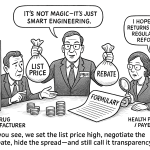
The gross-to-net bubble is the aggregate financial consequence of a system built on WAC-percentage rebates. Because PBM rebates are typically calculated as a percentage of list price, manufacturers and PBMs share a structural incentive to inflate WAC rather than reduce it. A higher list price means a larger absolute rebate payment on the same percentage, which satisfies the PBM’s demand for visible cost savings while obscuring the actual net transaction price from patients, plan sponsors, and the market.
For IP strategy purposes, this dynamic directly determines the defensibility of a branded drug at the patent cliff. A brand with a large WAC-net spread has more room to offer deeper rebates as biosimilar or generic competition intensifies. It can effectively outbid the entrant on net price even while maintaining a nominally high list price. The cost is margin erosion, but the benefit is sustained formulary exclusivity and continued 90-day mail-order volume. Brands with thin gross-to-net spread have less capacity for this defense and will typically see faster market share erosion regardless of dispensing channel dynamics.
The IRA’s price negotiation provisions, which for the first time allow Medicare to negotiate directly on a small number of high-cost drugs, will compress net prices on the negotiated products. For drugs selected for negotiation, the gross-to-net bubble will deflate, reducing the rebate capacity that brands use to sustain formulary exclusivity. This IRA effect will selectively weaken the rebate wall defense for negotiated drugs while leaving the mechanism intact for the much larger population of drugs outside the negotiation scope.
Key Takeaways: Part II
PBMs use 90-day dispensing as an operational lever to drive volume through vertically integrated mail-order pharmacies, reduce their claims processing costs, and sustain the DIR fee system that converts adherence metrics into pharmacy network margin. The gross-to-net bubble, which reached $334 billion in 2023, funds the rebate walls that branded manufacturers use to slow post-exclusivity erosion. The prevalence of 90-day mail-order fills in a drug’s patient population is a direct input variable for post-LOE revenue decay modeling, not a background feature.
Part III: IP Valuation and the 90-Day Standard as a Patent Lifecycle Asset
Why Dispensing Dynamics Belong in IP Valuation Models
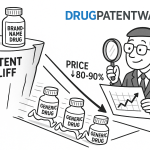
Standard discounted cash flow models for pharmaceutical IP assign patent value based on residual exclusivity period, revenue run rate, gross margin, and probability of successful Paragraph IV challenge. Most models discount cash flows by a patent cliff probability factor that assumes relatively rapid market share erosion after first generic entry, typically 60 to 80% volume erosion within 12 months, based on historical small-molecule generic dynamics. That assumption is frequently wrong, and dispensing dynamics are a primary reason.
When a drug’s maintenance patient population is predominantly on 90-day mail-order fills, the behavioral economics of refill decision-making slow the substitution rate. Each 90-day interval is a potential switch point, but at the point of refill, the PBM’s formulary is the primary decision driver, not the patient or even the physician. If the brand remains on the preferred tier, supported by rebates, most patients in automated refill programs never experience an active choice between brand and generic at the pharmacy counter. They simply continue receiving the branded drug by mail. The pharmacist has no opportunity to substitute, because the prescription was adjudicated by the PBM against the formulary before the dispense occurred.
This mechanism explains Humira’s anomalously slow biosimilar uptake in 2023. AbbVie reported U.S. Humira net revenues of $14.4 billion for the full year 2023, down from $21.2 billion in 2022 but still representing a substantially smaller initial erosion than most analyst models had projected. Biosimilar adalimumab, across multiple entrants including Amjevita (Amgen), Hadlima (Samsung Bioepis/Organon), Hyrimoz (Novartis/Sandoz), and others, collectively held a U.S. market share well below what analogous small-molecule generic dynamics would have predicted. The mail-order 90-day fill mechanism, combined with AbbVie’s rebate commitments, was the operative barrier.
IP Valuation Framework: The Dispensing Adjustment Factor
For IP teams conducting internal valuations of pipeline or acquired assets, incorporating a Dispensing Adjustment Factor (DAF) into the post-LOE revenue decay curve produces materially more accurate cash flow projections. The DAF is a function of four inputs.
The first input is the 90-day mail-order fill penetration rate, specifically the percentage of the drug’s total days-on-therapy generated through PBM-affiliated mail-order channels at 90-day intervals. Data sources for this include IQVIA channel-level prescription data, Symphony Health, and, for Medicare Part D populations, CMS’s Part D drug event files.
The second input is the rebate commitment capacity, or the maximum percentage-of-WAC rebate the manufacturer can sustain while maintaining positive net operating margin on the drug. This sets the ceiling on the rebate wall’s height and duration.
The third input is biosimilar interchangeability designation status for biologics, or the likelihood and timing of AB-rated generic designation for small molecules. Biosimilars without interchangeability designation cannot be substituted at the pharmacy counter without prescriber authorization, which substantially limits the generic manufacturer’s ability to convert mail-order patients regardless of net price.
The fourth input is the formulary tier assignment probability under each major PBM, conditional on the competitor’s entry price. A generic entering at 80% of WAC can typically undercut the brand’s rebate offer to a PBM. A biosimilar entering at 40% of WAC with high rebates may still struggle to displace a brand that has embedded its pricing into multiyear PBM contract structures.
The interaction of these four variables determines the slope of the revenue decay curve in months 1 through 24 post-LOE. For drugs with high 90-day mail-order penetration, strong rebate capacity, and biosimilar competitors lacking interchangeability, a modest initial decay slope of 5 to 15% market share loss in year one is a reasonable base case. For drugs with predominantly 30-day retail fills, immediate generic substitution at the counter, and no rebate wall capacity, the standard 60 to 80% year-one erosion assumption applies.
The Patent Thicket in Biologic IP: A Technology Roadmap
For biologics specifically, the IP valuation picture requires understanding the full scope of the patent estate, not just the primary compound patent. AbbVie’s approach to Humira provides the canonical technology roadmap for biologic evergreening. The strategy operates across several layers of IP, each independently protectable and separately expiring.
The compound patent on adalimumab, the active molecule, was the initial fortress. Its expiration in the U.S. in 2016 (with pediatric exclusivity extending to 2017 for some indications) opened the legal pathway for biosimilar filers. But the compound patent was only the first layer.
The formulation patent layer covers specific buffer compositions, excipient concentrations, and pH ranges in the drug product. AbbVie developed a citrate-free formulation of Humira that reduced injection site pain, obtained new formulation patents on that product, and then used those patents as the basis for product conversion. By the time biosimilar entrants arrived with formulations that replicated the original citrate-containing product, a substantial portion of the brand’s patient base had been migrated to the citrate-free formulation, requiring biosimilar entrants to also develop and patent their own citrate-free versions.
The device and delivery patent layer covers the autoinjector, prefilled syringe design, and associated safety features. These patents are independent of the molecule and the formulation, and they expire on their own schedule, often extending well beyond the compound patent cliff. A biosimilar that is interchangeable at the molecular and formulation level but uses a device that falls within the brand’s device patents faces infringement risk at the point of physical delivery.
The manufacturing process patent layer covers cell culture conditions, purification sequences, and glycosylation control methods. These are frequently the most technically dense and legally durable patents in the estate, because they are difficult to design around without risking product comparability issues that could delay regulatory approval.
For IP valuation purposes, the combined effect of these layers is that the ‘patent cliff’ for a biologic is not a single date but a staggered profile of revenue-protecting IP expirations spread across several years. Each layer contributes a quantifiable present value to the asset’s total IP-based value, and the magnitude of that contribution depends in part on how many patients remain on 90-day mail-order fills at each patent expiration, since those patients are the least likely to be converted to a biosimilar by any counterparty other than the PBM.
Key Takeaways: Part III
Standard LOE decay models systematically underestimate branded drug revenue persistence when they fail to account for 90-day mail-order fill penetration. The Dispensing Adjustment Factor is a quantifiable correction to the decay curve. Biologic IP estates are not single-cliff structures but multi-layer patent profiles, each independently expiring, with formulation, device, and process patents extending economic exclusivity well beyond the compound patent expiration. Humira’s post-2023 revenue performance is the clearest empirical validation of this model.
Part IV: The Clinical and Operational Fault Lines
The Pharmacy Economics Crisis
The financial model of the U.S. community pharmacy is built on the professional dispensing fee paid for each prescription filled. A 90-day fill generates one fee. Three sequential 30-day fills generate three. For any pharmacy converting a patient from monthly to quarterly fills, the revenue implication is a 67% reduction in dispensing fee income for that prescription line, with no offset in the cost of dispensing, which is largely fixed per fill event regardless of days supply.
This economics problem does not occur in isolation. PBMs simultaneously compress the drug ingredient cost reimbursement rate through low Maximum Allowable Cost (MAC) schedules for generics and through narrow network contracting that requires pharmacies to accept below-cost reimbursement on certain high-volume products to maintain network access. The DIR fee mechanism then retroactively recaptures margin based on adherence and quality metrics assessed 90 to 120 days after the dispensing event, leaving pharmacies unable to determine their actual net margin on any individual fill at the time of dispensing.
The cumulative effect has been severe. In Minnesota, 61% of independently owned pharmacies closed between 2013 and the mid-2020s, with below-cost PBM reimbursement cited as the primary cause. The same dynamic is playing out in rural markets across the country, where a single independent pharmacy often represents the only physical medication access point for a large geographic area. The closure of that pharmacy due to PBM-driven margin compression creates a medication access void that no mail-order solution adequately fills, particularly for patients who cannot reliably manage a 90-day medication inventory, who have cognitive impairments, or who require same-day controlled substance dispensing that mail-order cannot provide.
The Psychiatry Safety Problem
The conflict between the financial incentives of the 90-day system and clinical safety is most acute in psychiatry. Psychiatrists routinely prescribe limited quantities of medications with high lethality in overdose, specifically as a safety intervention for patients assessed as being at elevated suicide risk. This practice, known as means restriction, has a substantial evidence base. Studies document a positive association between the number of tablets available in a medication bottle and the quantity consumed in intentional overdose attempts. Antidepressants were associated with 16 to 17% of fatalities in a 2020 study of over 421,000 intentional overdose events.
A prescribing psychiatrist who writes a 30-day prescription with no refills for a newly hospitalized patient with a history of suicidal ideation is executing a clinical safety protocol, not making an administrative error. When a PBM plan design or state pharmacy board rule permits a pharmacist to convert that prescription to a 90-day supply, or when an insurer’s prior authorization protocol denies a 30-day fill and requires 90-day dispensing for cost reasons, the financial preference of the payer directly overrides a clinical decision made with specific knowledge of that patient’s risk status.
Pharmacists operating in retail chains typically do not have access to the patient’s psychiatric history, suicide risk assessment, or treatment plan. They are making a formulaic operational decision based on plan parameters, not a clinical one based on patient-specific data. Some state laws, including provisions in West Virginia’s pharmacy code, explicitly allow pharmacists to convert a prescription authorizing refills into a single supply of equivalent total quantity without prescriber notification. The clinical safety implications of this provision in the psychiatric context are deeply concerning to the American Association for Suicidology and the American Psychiatric Association.
The APA has published a factsheet specifically addressing the 90-day prescribing issue in psychiatry, calling for PBM and insurer policies to include an exception pathway that allows prescribers to specify a dispensing quantity limit as a clinical safety measure. As of mid-2025, no major PBM has publicly adopted such a pathway as a standard plan design feature.
Administrative Burden Quantification
A 2022 cross-sectional survey estimated that primary care physicians and their practice teams spend a median of 4.0 hours per week on drug utilization management tasks, including prior authorizations, formulary exception requests, and refill authorizations. The calculated cost associated with this time burden, including nurse and administrative staff time, exceeded $75,000 per physician per year. A separate survey found that pharmacists spend nearly twice as much time on administrative tasks as on direct patient care.
Physician administrative burden from uncoordinated refill management is real and measurable. The AMA has documented practices where a patient on six chronic medications fills each prescription on a different day across a 30-day cycle, generating 12 distinct patient interactions with the pharmacy annually per medication, or 72 total pharmacy interactions per year for a six-drug regimen. Med sync programs that align all fills to a single pickup date reduce this to four annual visits, which is a genuine operational improvement with documented adherence benefits.
The interaction between med sync adoption and the 90-day supply mechanics is financially complex. A pharmacy that implements appointment-based med sync converts its workflow from reactive to proactive and typically improves PDC scores, which reduces DIR fee exposure. A health-system pharmacy study found 97.8% adherence rates (PDC at or above 80%) in a med sync program versus 70.3% in a control population. But med sync for 90-day fills consolidates revenue further, meaning the operational benefit comes at an even steeper per-patient annual fee income reduction than 30-day sync programs.
Key Takeaways: Part IV
Pharmacy margin compression from 90-day fills is not offset by operational efficiency gains, and the combination of spread pricing, MAC-level generic reimbursement, and DIR fee clawbacks has created an existential economic threat for independent community pharmacies. The psychiatric safety conflict between means restriction prescribing practices and 90-day dispensing mandates is unresolved and represents a patient safety gap with measurable mortality implications. Administrative burden from uncoordinated refill management is quantifiable at over $75,000 per physician annually and is the most defensible clinical argument for structured 90-day synchronization programs.
Part V: Dispensing Dynamics and Post-Exclusivity Revenue Modeling
The Patent Cliff: Scale and Composition of the 2025 to 2030 Wave
BCG and IQVIA projections published in 2024 and 2025 place the aggregate revenue at risk from patent expirations between 2025 and 2030 at approximately $236 billion to $400 billion in annual branded revenue, depending on the methodology and scope of drugs included. This range includes both small-molecule oral drugs and biologics, though the biologic component is growing as a share of the total.
The critical distinction for dispensing dynamics analysis is between small-molecule oral drugs, which face substitution via AB-rated generics subject to mandatory substitution in most states at the retail counter, and biologics, which face substitution via biosimilars subject to voluntary substitution only where the FDA has granted an interchangeability designation and where state substitution laws permit it. The 90-day mail-order fill dynamic plays differently in each category.
For small-molecule drugs, once an AB-rated generic enters the market and a pharmacy dispenses a 90-day supply, the substitution has occurred. The PBM’s mail-order pharmacy is typically the first to convert to generic fills once the generic receives favorable formulary placement, because the mail-order operation is directly controlled by the PBM and its formulary decisions are executed without the prescriber or patient interaction that retail substitution requires. In this context, high mail-order 90-day fill prevalence can actually accelerate generic adoption in the first 90 days post-LOE, if the PBM decides the generic is the preferred product. Whether the PBM makes that decision depends entirely on whether the brand manufacturer’s rebate offer exceeds the generic’s WAC discount on a net-cost basis, which is where the rebate wall strategy enters.
For biologics, the interchangeability designation is the gating factor. FDA has granted interchangeability to a growing number of biosimilar products, most notably Cyltezo (adalimumab-adbm, Boehringer Ingelheim), which received an interchangeability designation that permits pharmacist-level substitution. But most biosimilars in the U.S. market as of 2025 lack interchangeability designation, which means substitution requires prescriber authorization, which creates a structural barrier to mass conversion through mail-order channels regardless of PBM formulary preferences.
The Authorized Generic Gambit: Timing Relative to Dispensing Cycles
The authorized generic (AG) strategy, in which a brand manufacturer or its licensee launches a generic version of its own product at the moment of first generic entry, has a specific relationship to dispensing cycle timing that is rarely modeled explicitly.
When Pfizer launched an authorized generic of Lipitor (atorvastatin) through a partnership with Watson Pharmaceuticals at the December 2011 patent expiration, the AG entered the market alongside the first independent generic. The AG captured a significant share of the generic market volume, particularly in the retail channel, because it was launched at scale with a full distribution network. The 90-day mail-order fill population was most amenable to AG adoption, because mail-order pharmacies can switch dispensing to the AG programmatically across their entire patient population at a single point in time, without requiring individual pharmacy counter-level substitution decisions.
For any drug with high mail-order 90-day fill penetration, the timing of the AG launch relative to refill cycles is a quantifiable strategic variable. An AG launched at LOE that is loaded into mail-order formularies before the first 90-day refill cycle post-LOE can convert the entire mail-order patient population in a single dispensing event. An AG launched 30 days post-LOE misses the first refill cycle for patients whose fill date falls in the first month and may not convert them until the second cycle, 90 days after LOE.
Product Hopping: The 90-Day Stickiness Problem
Product hopping, where a brand manufacturer introduces a reformulated product (extended-release, fixed-dose combination, new delivery device) and migrates patients before the original formulation’s patent expiry, runs into a specific friction created by 90-day dispensing. A patient who received a 90-day fill of the original formulation has no refill decision point for three months. If the product hop conversion campaign is launched during that window, the patient cannot convert without discarding the remaining supply of the original product, which most patients are unwilling to do.
This dynamic means that product hop execution timelines must be calibrated against the dispensing cycle. A manufacturer planning a conversion from an immediate-release to an extended-release formulation of a drug with high 90-day mail-order penetration needs to initiate prescriber education and PBM formulary migration at least six months before the original formulation’s LOE, to ensure that the conversion has completed before the last 90-day fills of the original product are dispensed.
Failure to account for this timeline, specifically launching the conversion campaign too close to LOE, can result in a substantial portion of the patient population being locked into a 90-day supply of the original formulation precisely at the moment when generic competition for that formulation enters the market. This is the ‘stickiness problem’ of product hopping in high-mail-order markets: the feature that protects a brand from generic erosion can also trap patients in the older product at the worst possible time.
Investment Strategy: Post-LOE Model Calibration
For institutional investors building pharmaceutical equity models, the following inputs should be incorporated into post-LOE revenue modeling for any drug with greater than 40% of days-on-therapy in mail-order channels.
The mail-order 90-day fill penetration rate should be sourced from IQVIA NSP channel data and used to adjust the initial-phase erosion slope. Base erosion assumptions derived from historical small-molecule averages overstate the year-one revenue decline for drugs with high mail-order penetration and active rebate walls.
The biosimilar or generic interchangeability status determines whether formulary preference alone drives conversion (interchangeable) or whether prescriber action is required (non-interchangeable), which is a more friction-intensive and slower substitution pathway.
The PBM rebate commitment estimate, which can be inferred from net price disclosures in manufacturer earnings calls and from IQVIA net price data, sets the ceiling on how long the brand can sustain preferred formulary position post-LOE. A brand offering PBMs a 60% WAC rebate in year three post-LOE is likely burning margin faster than sustainable, signaling an imminent formulary position loss. When that loss occurs, the accumulated 90-day mail-order patient population will convert rapidly, creating a delayed but steep erosion cliff rather than the gradual decay that characterized the initial post-LOE period.
Key Takeaways: Part V
High mail-order 90-day fill penetration creates a delayed but real conversion barrier that standard LOE models do not capture. Authorized generic timing must be calibrated against the dispensing cycle to maximize initial market share capture. Product hop campaigns need six-plus months of runway relative to LOE to avoid the 90-day stickiness problem. Post-LOE revenue decay follows a two-phase profile for drugs with active rebate walls: a modest initial slope followed by a steeper cliff when the rebate commitment becomes unsustainable.
Part VI: Technology Roadmap for Real-Time Adherence Disruption
The Information-Poor Model and Its Vulnerabilities
The entire architecture of the 90-day dispensing standard, including PBM rebate dynamics, DIR fee systems, and PDC-based quality metrics, rests on an information-poor foundation. Prescription refill data is a proxy measure for adherence, not a direct measure. A patient who picks up a 90-day fill at a mail-order pharmacy and then stops taking the medication on day 30 due to side effects will have a PDC of 100% for that interval (a full supply was dispensed) but an actual adherence rate of 33%.
This gap between proxy adherence and actual adherence is the primary vulnerability in the current system, and it is the point of entry for health technology platforms that generate real-time behavioral data.
Smart Adherence Technology: Current Capabilities and Adoption Trajectory
AdhereTech’s wireless smart pill bottles use cellular connectivity to transmit time-stamped data on bottle opening events, providing a near-real-time signal for dose-taking behavior. Altruix’s Medherent platform is an in-home automated dispensing device that issues reminder alerts, dispenses the correct dose on schedule, and reports missed doses to designated caregivers or clinical staff. These systems generate the first granular dataset on actual patient medication-taking behavior at population scale.
The current adoption trajectory for smart adherence technology is primarily in specialty pharmaceutical programs, where the high drug cost and limited patient population make the per-patient economics of the technology tractable. A patient taking a $10,000-per-month biologic on a specialty adherence program is an economically rational candidate for a $50-per-month smart bottle. The same economics do not yet work for a generic statin at $10 per 90-day fill.
The adoption roadmap for smart adherence technology has five stages.
Stage one, which has already occurred, is proof-of-concept deployment in specialty populations with high drug cost and high payer willingness to invest in adherence programs, primarily oncology, rare disease, and immunology.
Stage two, currently underway, is integration of real-time adherence data into specialty PBM programs and outcomes-based contract frameworks, where manufacturers pay rebates tied to patient outcomes rather than to units dispensed. Several outcomes-based contracts between manufacturers and payers already use adherence data as a component of the performance measurement.
Stage three, projected for the late 2020s, is the expansion of smart adherence monitoring into primary care maintenance medications for conditions where non-adherence drives high hospitalization rates, principally heart failure, diabetes, and chronic obstructive pulmonary disease. This phase requires cost reduction in the monitoring hardware to below $10 per patient-year, which is achievable through passive sensor integration into standard packaging.
Stage four is integration of real-time adherence data into PBM DIR fee calculations, replacing PDC with a direct adherence measurement. This transition would fundamentally restructure the incentive alignment between PBMs, pharmacies, and plan sponsors. A pharmacy whose patients are actually taking their medications would no longer be penalized because of a proxy metric that fails to distinguish a compliant patient from one who picks up refills but does not take them.
Stage five is the potential replacement of refill-based billing units (30-day, 90-day supplies) with consumption-based billing, where the payer reimburses for documented doses taken rather than doses dispensed. This model exists in some outcomes-based contract structures today and, if extended to mainstream pharmacy benefit design, would eliminate the structural incentive for 90-day dispensing entirely. The 90-day supply would become irrelevant as a billing unit if the financial settlement were based on adherence events rather than dispensing events.
Platform Integration: CoverMyMeds, Veradigm, and the Data Infrastructure Layer
The middleware layer connecting prescribers, pharmacies, PBMs, and payers is undergoing consolidation and capability expansion. CoverMyMeds (acquired by McKesson) has become a dominant platform for electronic prior authorization, handling approximately 23 million prior authorizations annually. Veradigm (formerly Allscripts) provides electronic health record-integrated prescribing data and patient support program infrastructure.
These platforms create the technical substrate for a transition from dispensing-cycle-based adherence management to real-time patient engagement. As electronic prescribing data, EHR medication records, and smart adherence sensor data are integrated within these platforms, the 30-day or 90-day dispensing interval becomes a less relevant operational unit. The patient’s actual adherence state is knowable between refills, and interventions (pharmacist outreach, dose reminder escalation, clinical alert to the prescriber) can be triggered by the real behavior data rather than by the approach of a refill date.
For PBMs, this creates a strategic dilemma. Their current competitive advantage rests on their position as the claims processor and data aggregator in a system where refill data is the primary adherence signal. As real-time adherence data becomes accessible through platforms that do not require PBM intermediation, the informational basis for PBM market power erodes. PBMs can adapt by acquiring or building real-time adherence data capabilities and repackaging them as premium patient management services, but this requires a business model shift from transactional claims processing to longitudinal patient engagement, a fundamentally different operating model.
Key Takeaways: Part VI
The 90-day dispensing standard and the PBM incentive structures built around it rest on prescription refill data as a proxy for actual adherence. Smart adherence technology generates direct behavioral data that makes this proxy obsolete. The adoption roadmap spans five stages from current specialty-population deployment to eventual consumption-based billing, with the late 2020s as the projected inflection point for primary care expansion. Platform consolidation around CoverMyMeds and Veradigm is building the technical substrate for this transition.
Part VII: Biosimilar Interchangeability and the Mail-Order Moat
The Interchangeability Designation: Regulatory Mechanics
FDA’s biological product interchangeability designation is the critical regulatory threshold for biosimilar adoption in the 90-day mail-order context. A biosimilar that has received interchangeability designation has demonstrated, through switching studies, that alternating between the reference product and the biosimilar produces no greater risk in terms of safety or diminished efficacy than using only the reference product. This designation permits pharmacists to substitute the biosimilar for the reference product without prescriber authorization, subject to state law.
As of mid-2025, interchangeability designations have been granted to Cyltezo (adalimumab-adbm), Hadlima (adalimumab-bwwd) in the interchangeable category under Biologics Price Competition and Innovation Act (BPCIA) pathway, and several insulin products including Semglee (insulin glargine-yfgn) and Rezvoglar (insulin glargine-aglr). The number of interchangeable biosimilars remains small relative to the total biosimilar market, meaning that for most currently marketed biologics facing biosimilar competition, pharmacist-level substitution is not yet available.
This gap between regulatory approval and interchangeability designation is the legal foundation of the mail-order moat. A mail-order PBM pharmacy cannot substitute a non-interchangeable biosimilar for a branded biologic without prescriber authorization, even if the plan sponsor’s formulary lists the biosimilar as the preferred product. This requires either physician-initiated conversion (a friction-intensive process dependent on EHR alerting and physician compliance) or new prescription issuance by the prescriber, which requires an active clinical encounter.
In a population of patients on 90-day mail-order fills, the intersection of non-interchangeability and 90-day dispensing creates a substantial conversion barrier. At each 90-day refill point, the mail-order pharmacy must either dispense the brand (if the formulary still covers it) or generate a prior authorization or prescriber outreach to convert to the biosimilar. Many PBMs do not invest aggressively in prescriber outreach for this conversion because, if the brand manufacturer is offering a large rebate, the plan’s net cost for the brand may actually be lower than the list price of the biosimilar.
The Rebate Wall in Biologics: AbbVie and the Humira Precedent
AbbVie’s Humira generated approximately $14.4 billion in U.S. net revenues in 2023, the year multiple biosimilar competitors launched. This was a contraction from $21.2 billion in 2022, but the magnitude of year-one biosimilar penetration was far below consensus analyst estimates at the time of biosimilar entry. Amgen, which launched Amjevita at a 55% WAC discount in January 2023, captured less than 5% of U.S. adalimumab market share by mid-year.
The primary mechanism was the rebate wall. AbbVie offered PBMs rebates that produced a net cost for Humira below the net cost of the biosimilars, accounting for the biosimilars’ own WAC discounts and rebate offers. The math worked for AbbVie because the absolute dollar value of a percentage-of-WAC rebate on a $6,900-per-month drug (the approximate monthly Humira WAC prior to biosimilar entry) vastly exceeds the discount that a biosimilar entrant, with its lower WAC, can offer. The biosimilar manufacturer cannot match the brand’s absolute rebate dollar on a relative basis when the brand’s WAC is five to ten times the biosimilar’s planned net price.
The 90-day mail-order mechanism reinforced the rebate wall by ensuring that the vast majority of Humira patients in PBM mail-order programs continued to receive branded adalimumab at each 90-day refill cycle, with no pharmacist-level substitution opportunity. The combination of non-interchangeable biosimilar status, 90-day mail-order fill penetration, and AbbVie’s rebate capacity produced an initial erosion slope that any biologic manufacturer planning a post-LOE defense should study as the baseline achievable outcome.
Strategic Implications for Biosimilar Market Entry
Biosimilar manufacturers entering the market against a brand with high 90-day mail-order penetration and an active rebate wall should calibrate their market entry strategy around the specific characteristics of the PBM formulary negotiation cycle.
Major PBM formularies are typically set on an annual calendar, with the primary formulary review period occurring in the fourth quarter for the following plan year. A biosimilar that enters the market in January of a given year has the opportunity to negotiate for preferred formulary placement for the following calendar year, but will face 12 months of operating at non-preferred or excluded status if the brand’s rebate wall is effective. A biosimilar that times its market entry to coincide with the formulary review period, and that arrives with clinical data and a price offer ready for the Q4 negotiation cycle, is better positioned to secure preferred placement at first opportunity.
The interchangeability application timeline is a separate strategic lever. A biosimilar manufacturer that files for interchangeability simultaneously with its initial biosimilar approval application, rather than sequentially, compresses the time to pharmacist-substitution eligibility. The switching study data required for interchangeability can be generated during the standard Phase III biosimilar development program with additional study design elements, adding incremental cost but not proportionally extending the development timeline.
Key Takeaways: Part VII
Biosimilar interchangeability designation is the legal prerequisite for pharmacist-level substitution, and its absence in most currently approved biosimilars is the regulatory mechanism that sustains the mail-order moat. AbbVie’s $14.4 billion 2023 U.S. Humira revenue, achieved in the face of multiple biosimilar entrants, demonstrates the quantified value of the combined rebate wall and 90-day mail-order barrier. Biosimilar market entry strategy must account for the annual PBM formulary cycle and the interchangeability application timeline as independent, investable strategic variables.
Part VIII: Regulatory Trajectory and the PBM Reform Cycle
The FTC Investigation and Its Market Implications
The Federal Trade Commission released its interim staff report on PBM practices in July 2024, documenting the mechanisms by which CVS Caremark, Express Scripts, and Optum Rx had structured their formulary management, spread pricing, and vertical integration in ways the FTC staff characterized as anticompetitive and harmful to patients. The report documented specific instances of patient steering toward affiliated mail-order pharmacies using contract provisions that prohibited independent pharmacies from offering equivalent 90-day supply pricing.
The FTC report does not by itself produce regulatory change. It establishes a factual record and signals enforcement posture. The practical implications for PBM business models depend on whether the FTC, Congress, or state legislatures act on the documented practices. The current trajectory at the federal level includes the Pharmacy Benefit Manager Reform Act and the Protecting Patients Against PBM Abuses Act, both of which include provisions targeting spread pricing transparency, DIR fee reform, and mandatory pass-through of rebates to plan sponsors and beneficiaries at the point of sale.
The DIR fee reform is the most directly relevant provision for the 90-day dispensing dynamic. If DIR fees are banned or restructured to prohibit retroactive clawbacks, the financial incentive for retail pharmacies to push patients toward 90-day supplies to improve PDC scores is substantially reduced. This could, over time, shift patient preference back toward 30-day supplies in contexts where clinical flexibility is the priority, loosening the grip of the 90-day standard on the therapeutic population.
State-Level PBM Regulation: The Patchwork Thickens
Forty-plus states have enacted some form of PBM regulation since 2017, ranging from spread pricing bans in Medicaid (Arkansas was the first in 2017) to mandatory pass-through requirements to pharmacy audit reform. The NASHP’s prescription drug pricing transparency tracker documents this state-level activity in real time.
The most aggressive state-level intervention relevant to the 90-day dynamic is the pharmacy non-discrimination provision, which prohibits PBMs from offering patients lower co-pays for mail-order fills than for retail fills of the same drug in the same quantity. Texas, Arkansas, and several other states have enacted versions of this provision. Where it is enforced, it removes the primary financial incentive for patients to switch to PBM mail-order pharmacies, and with it, a significant mechanism for capturing 90-day fill volume in the PBM-controlled channel.
The IRA’s Structural Effects on the Rebate System
The Inflation Reduction Act’s drug price negotiation provisions, which for Medicare Part D selected drugs will produce a government-negotiated Maximum Fair Price (MFP) binding on manufacturers and PBMs, will compress the gross-to-net bubble for negotiated products. The first ten drugs selected for negotiation, with negotiated prices taking effect in 2026, include Eliquis (apixaban, Bristol-Myers Squibb/Pfizer), Jardiance (empagliflozin, Boehringer Ingelheim/Eli Lilly), and Xarelto (rivaroxaban, Janssen), among others.
For these drugs, the MFP replaces the WAC-minus-rebate net price calculation with a fixed government-determined price. Because the MFP is set below current net prices, the absolute dollar value of the rebate the manufacturer can offer PBMs is eliminated, since the government has already claimed that discount through the negotiation process. This structurally removes the rebate wall for negotiated drugs in the Medicare Part D population.
The market implications are significant. For negotiated drugs with high 90-day mail-order penetration in Medicare Part D, the removal of the rebate wall creates conditions for rapid biosimilar or generic substitution at the first 90-day refill cycle after the MFP takes effect in January 2026. PBMs, no longer receiving a manufacturer rebate on the negotiated drug, have no financial incentive to maintain it on the preferred formulary tier. The most cost-effective generic or biosimilar becomes the preferred product by default. This is the IRA mechanism by which the 90-day dispensing standard transitions from a brand-protection tool to a generic-acceleration tool for negotiated drugs.
Key Takeaways: Part VIII
The FTC’s 2024 staff report has created a political and legal foundation for PBM regulatory reform, with DIR fee restructuring as the most consequential provision for the 90-day dispensing dynamic. State-level pharmacy non-discrimination provisions are dismantling the co-pay differential that drives patient steering to mail-order channels. The IRA’s Maximum Fair Price mechanism eliminates rebate wall capacity for negotiated drugs in Medicare Part D, converting the 90-day dispensing standard from a brand-protection mechanism to a generic-adoption accelerator for that drug class.
Investment Strategy Framework for Analysts
The 90-Day Variable as an Investment Signal
For pharmaceutical equity analysts, the 90-day dispensing dynamic generates several actionable signals when properly calibrated.
The first signal is the mail-order penetration rate as a revenue persistence indicator. For any drug approaching LOE, a mail-order penetration rate above 50% of days-on-therapy, sourced from IQVIA channel data, is a positive revenue persistence signal when the brand manufacturer has demonstrated rebate wall capacity. It warrants a flatter initial LOE decay assumption in the revenue model, typically 10 to 25% market share loss in year one versus the standard 50 to 70% assumption.
The second signal is the biosimilar interchangeability application status as a market entry timing indicator for short-side positions. A biosimilar competitor filing simultaneously for approval and interchangeability, with switching study data already in its application, compresses the timeline to pharmacist-level substitution by 12 to 24 months versus a sequential filing strategy. This signal warrants a more aggressive revenue erosion assumption for the reference product starting in year two post-LOE.
The third signal is PBM vertical integration exposure as a risk factor for independent pharmacy stocks and as a tailwind for PBM parent company stocks. The continued enclosure of the 90-day fill market within PBM-owned mail-order channels is a predictable growth vector for CVS Health, Cigna, and UnitedHealth Group PBM segments, barring regulatory intervention. The legislative pipeline for PBM reform is the countervailing risk, and position sizing should reflect the probability-weighted outcome of current reform legislation.
The fourth signal is IRA formulary disruption for negotiated drugs. The transition to MFP pricing for the first cohort of negotiated drugs in 2026 creates a predictable formulary restructuring event. PBMs will reprice these drugs to MFP and remove manufacturer rebate commitments from their formulary management calculus. For drugs in the first negotiation cohort with high 90-day mail-order penetration and existing biosimilar or generic competition, 2026 represents a step-change increase in generic adoption velocity. This creates a short opportunity in the brand revenue model and a long opportunity in the relevant generic or biosimilar manufacturer.
Due Diligence Checklist for IP-Heavy Pharma M&A
For M&A teams evaluating the acquisition of a pharma asset or company where IP value is the primary driver, the following due diligence items relate directly to the dispensing dynamics analysis in this report.
Confirm the target drug’s dispensing channel split (mail-order versus retail, 30-day versus 90-day) using IQVIA NSP data. A drug with 60%+ mail-order penetration has a materially different post-LOE revenue profile than one with predominantly retail dispensing. Confirm whether the primary patents protecting the asset are compound patents (most vulnerable to LOE), formulation patents (moderately defensible), delivery device patents (independently defensible), or manufacturing process patents (most technically defensible). For biologics, confirm the interchangeability application status of any known biosimilar competitors. Confirm the gross-to-net spread for the drug, sourced from IQVIA net price data or manufacturer disclosures, as a direct measure of rebate wall capacity. Confirm whether any of the drug’s indications fall within the IRA’s negotiation scope or are likely candidates for future negotiation cycles based on Medicare Part D spend data.
These five confirmations, combined with a standard patent term and exclusivity analysis, produce a materially more accurate valuation of the IP asset than a model built solely on patent expiration dates and historical erosion curves.
1. Why does the 90-day standard persist when a true calendar quarter averages 91.25 days?
Because it was never a calendrical unit. It is an administrative and billing unit. The 90-day supply emerged from the need for standardized claims processing and has been perpetuated by the financial incentives of the PBM and payer systems built around it. The two-day gap has no clinical significance; its significance is entirely financial.
2. What is the most accurate source for mail-order penetration data at the drug level?
IQVIA’s National Sales Perspective (NSP) dataset provides channel-level prescription dispensing data by drug, including the mail/specialty, retail, and long-term care splits. Symphony Health’s Integrated Dataverse is an alternative with similar coverage. CMS Part D drug event files provide Medicare-specific channel data with a lag.
3. How does the Paragraph IV Certification process interact with 90-day dispensing dynamics?
A Paragraph IV filing certifies that the ANDA applicant believes the listed patent(s) are invalid or will not be infringed. The 30-month stay triggered by the brand’s infringement suit determines the earliest possible generic market entry date. The dispensing dynamic enters the analysis after that date: once the generic enters, the rate at which patients convert depends on channel (mail-order versus retail), formulary status, and whether the PBM is running a rebate wall. High mail-order penetration slows retail counter-level substitution regardless of the legal outcome.
4. Can a PBM legally mandate mail-order dispensing for a specific drug class?
PBMs can require mail-order dispensing for maintenance medications as a plan design condition, meaning patients who do not use the mail-order channel pay higher cost-sharing or receive no coverage for that medication class. This is legal at the federal level. Approximately 15 states have enacted or are considering pharmacy access or non-discrimination provisions that limit the ability to mandate mail-order use or require that retail pharmacies be reimbursed at rates equivalent to mail-order rates for the same supply quantity.
5. How does the Inflation Reduction Act’s inflation penalty provision interact with the 90-day rebate system?
The IRA’s inflation penalty requires manufacturers to pay rebates to CMS when their drug prices increase faster than the rate of inflation in Medicare Part B and Part D. This penalty applies to the brand’s list price (WAC), not to the net price after existing rebates. It creates an additional financial pressure on manufacturers to limit WAC increases, which in turn compresses the absolute dollar value of the percentage-of-WAC rebates they can offer PBMs. For drugs already operating near the rebate wall capacity limit, the inflation penalty may accelerate the timeline to rebate wall collapse.
6. What is the clinical evidence base for 90-day versus 30-day supply adherence differences?
A 2020 American Heart Association study of over 350,000 post-MI patients found statistically significant adherence advantages for 90-day fills across statin, beta-blocker, ACE inhibitor/ARB, and P2Y12 inhibitor classes. Statin adherence was 83.1% in the 90-day group versus 75.3% in the 30-day group; P2Y12 adherence was 78.5% versus 66.6%. A 2012 CMS analysis of Medicaid beneficiaries found 20% higher adherence and 23% higher persistency for 90-day fills. The evidence is consistent across therapeutic classes for stable, chronic-disease maintenance medications, with the notable exceptions of psychiatric medications in high-risk populations and any drug where dose titration is ongoing.
7. What is the FTC’s current enforcement posture toward PBM patient steering?
The FTC’s July 2024 interim staff report documented specific patient steering practices, including contractual provisions that prevented network pharmacies from offering 90-day supply pricing equivalent to what PBM mail-order pharmacies offered. The FTC has authority to challenge these practices as anticompetitive under Section 5 of the FTC Act. The current enforcement action landscape involves ongoing litigation between the FTC and several pharmacy chains regarding PBM contracting practices. No consent order specifically targeting mail-order steering has been finalized as of the publication of this analysis.
8. How does medication synchronization affect a pharmacy’s DIR fee exposure?
Med sync directly improves PDC scores by eliminating gaps in supply between refills, which is the most common cause of PDC reduction. Pharmacies with robust med sync programs consistently report PDC scores above the 80% threshold that determines DIR fee tier placement under most PBM contracts. The operational cost of implementing med sync, primarily the labor required for proactive patient outreach and prescription preparation, is typically offset by the reduction in DIR fee clawbacks within 12 to 18 months. For independent pharmacies with thin margins, this ROI timeline requires upfront capital commitment that many cannot sustain.
9. Does the CARES Act provision requiring Medicare Part D 90-day supply access remain in effect?
The CARES Act provision requiring Part D plans to provide up to a 90-day supply upon beneficiary request was initially a temporary pandemic-era measure. CMS has incorporated this requirement into ongoing Part D regulations, and it has been reflected in Part D plan bidding requirements for subsequent years. As of 2025, Medicare Part D plans are required to accommodate 90-day supply requests from enrollees for covered drugs.
10. What is the clinical risk threshold for large-supply dispensing in psychiatric medications?
No single threshold applies across all psychiatric medications, but the psychiatric literature consistently identifies antidepressants, mood stabilizers, antipsychotics, and sedative-hypnotics as the primary categories of concern for lethal overdose in intentional self-harm. The 2021 Psychiatric Services paper on intentional overdose prevention specifically flagged the trend of insurers and PBMs converting 30-day prescriptions to 90-day supplies for these drug classes without prescriber notification as a patient safety risk. The APA’s official position is that any insurer or PBM policy that overrides a prescriber’s quantity limitation for a psychiatric medication must include a clinical review pathway that accounts for the prescriber’s safety-based rationale.
11. How will GLP-1 receptor agonist market dynamics interact with 90-day dispensing in the near term?
GLP-1 drugs including semaglutide (Ozempic, Wegovy, Novo Nordisk) and tirzepatide (Mounjaro, Zepbound, Eli Lilly) are currently among the highest-revenue pharmaceutical products globally. They are administered as weekly injectables via autoinjector pen, dispensed predominantly through specialty pharmacies and mail-order channels at 28-day or 84-day supply quantities (aligning with the 4-week and 12-week pen formats, not the standard 30 or 90-day oral tablet convention). Semaglutide’s base patents begin expiring in the late 2020s in most jurisdictions, with U.S. patent coverage extending through multiple device and formulation patents into the early 2030s. The mail-order dominant dispensing pattern for GLP-1 drugs, combined with the multi-layer IP estate structure, creates a Humira-comparable scenario for the LOE analysis. The dispensing channel mechanics will be a primary variable in modeling the post-exclusivity revenue decay for these drugs when generic and biosimilar competition arrives.
12. What does the 90-day dispensing standard mean for orphan drug and rare disease asset valuations?
Orphan and rare disease drugs are dispensed primarily through specialty pharmacies at supply intervals determined by product-specific dosing regimens, REMS requirements, and cold-chain logistics rather than by the 30 or 90-day standard. Patient populations in these categories are typically small, managed through restricted distribution programs, and subject to ongoing clinical monitoring that makes the 90-day standard largely inapplicable. IP valuation for orphan drug assets relies more heavily on orphan drug exclusivity (seven years for small molecules under the Orphan Drug Act), biological exclusivity (12 years under BPCIA), and patient registry-based market size estimates than on dispensing channel dynamics.
Stakeholder Decision Matrix
The following table synthesizes the interests, financial incentives, clinical concerns, and strategic positions of the eight primary stakeholders in the 90-day dispensing ecosystem. It is designed for use by IP teams and institutional analysts mapping the competitive and regulatory landscape around any drug approaching LOE.
Stakeholder
Core Financial Incentive
Clinical Position
90-Day Supply Stance
Key Strategic Consideration
Patient
Minimize co-pay per dose; maximize convenience
Prefers continuity for stable conditions; risks waste and safety concerns for new or high-risk medications
Conditional support; acceptance depends on cost structure and clinical context
Affordability and access override clinical optimization for many patients
Supports pharmacist-level substitution (requires interchangeability for biologics)
Preferred outcome is mandatory generic substitution at refill points; opposed to rebate walls
Interchangeability filing timeline and PBM formulary cycle timing are the primary market entry levers
Regulatory Agency (FDA/DEA/CMS)
Ensure drug safety and efficacy; manage controlled substance diversion; contain Medicare spend
FDA: product quality and safety; DEA: diversion prevention; CMS: access and cost
Fragmented: DEA codified 90-day for Schedule II; CMS mandated 90-day in Part D via CARES Act; FDA largely neutral
IRA negotiation authority is the most significant new regulatory lever affecting the dispensing economics
Sources and Data Provenance
All financial figures in this analysis draw from publicly available sources including manufacturer earnings releases, CMS Part D drug event data, IQVIA market data, FTC staff reports, and peer-reviewed literature cited in the original DrugPatentWatch source analysis. Figures for AbbVie Humira revenues are drawn from AbbVie’s 2022 and 2023 annual reports. The $334 billion gross-to-net figure is from Drug Channels Institute’s July 2024 analysis. The $236 billion to $400 billion patent cliff range represents the spread across BCG (2025) and IQVIA (2024) projections using different drug inclusion criteria. Patent expiry dates referenced for specific molecules can be verified via the FDA Orange Book and DrugPatentWatch’s patent expiration database.