The full playbook of drug patent lifecycle management — and what it costs everyone else
Drug companies spend roughly $2.23 billion, on average, to bring a single new drug to market [1]. That figure comes from a 2024 analysis that updates years of Tufts Center estimates. The money goes into preclinical research, multi-phase clinical trials, manufacturing validation, and regulatory submissions — a process that routinely consumes a decade or more before the FDA issues a single approval letter.
The legal protection meant to justify that investment is a 20-year patent, filed early in the discovery phase. But here is the problem: because those years start ticking from the day of filing, not the day of approval, the actual time a company spends selling a drug under exclusivity is far shorter. By the time clinical trials finish, the FDA reviews the application, and manufacturing sites clear inspection, the remaining patent life is typically 10 to 12 years — sometimes less [2]. When that clock runs out, generic manufacturers can copy the molecule, bioequivalence studies replace the need for full clinical trials, and prices can drop 80 to 90 percent within 12 months [3].
That math — a decade of selling at monopoly prices, then a near-vertical price cliff — has produced one of the most consequential legal and strategic arms races in modern business. Pharmaceutical companies have developed, refined, and occasionally weaponized a set of tools to extend effective market exclusivity well beyond the nominal patent term. Some of those tools involve genuine scientific innovation. Others involve filing secondary patents on packaging materials and then suing generics into a multi-year delay. Most occupy the contested middle ground.
This article takes each major strategy apart, examines the real case data, traces the legal battles, and explains how intelligence platforms like DrugPatentWatch give analysts, investors, and rival manufacturers the visibility to plan around — or through — these defenses.
Part One: The Patent Clock and Why It Runs Faster Than You Think
The 20-Year Illusion
The statutory patent term in the United States is 20 years from the earliest filing date, a standard set by the WTO’s Agreement on Trade-Related Aspects of Intellectual Property Rights (TRIPS) and implemented through the U.S. Patent Act [4]. That sounds generous. In pharmaceuticals, it almost never plays out that way.
The timeline works against innovation-phase filers from the start. A company identifies a promising compound, files a composition-of-matter patent to lock in the molecule, and begins the multi-year process of demonstrating safety and efficacy. The FDA’s review process alone — not counting the clinical trials — averages 10 to 15 months for standard reviews and slightly faster for priority reviews [5]. Total development time from preclinical discovery to approval runs 10 to 15 years [6]. Stack that against a 20-year patent, and the math leaves companies with an effective commercial window that averages 12 to 14 years under the most favorable circumstances, and often shorter [7].
Pfizer’s atorvastatin (Lipitor) illustrates the gap precisely. Pfizer filed the patent in 1990, the FDA approved the drug in 1996, and the patent expired in 2011 — leaving 15 years of market exclusivity, which was comparatively long [8]. AstraZeneca’s omeprazole (Prilosec) followed a tighter arc; by the time generic competition arrived in 2001, AstraZeneca had launched its successor molecule esomeprazole (Nexium) to capture prescribers before they migrated to generics.
The effective shortening of the patent term was actually recognized in 1984, when Congress passed the Drug Price Competition and Patent Term Restoration Act — almost universally called the Hatch-Waxman Act. The law created a mechanism for brand-name companies to petition for restoration of patent time lost during FDA regulatory review, with a cap of five additional years and a ceiling that ensures the extended patent cannot cover more than 14 years of post-approval exclusivity [9]. Hatch-Waxman also created the Abbreviated New Drug Application (ANDA) pathway, allowing generics to substitute bioequivalence data for full clinical trials. That was the tradeoff: faster generic entry in exchange for statutory restoration of some patent time.
The compromise worked better than critics predicted and worse than proponents promised. Generic penetration rates rose sharply after 1984. But brand companies also became expert at layering protection beyond the core active-ingredient patent — and the tools they use to do that are the real subject of this analysis.
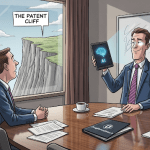
The Patent Cliff: What Happens When It All Runs Out
When a blockbuster drug loses exclusivity, the revenue destruction is fast and deep. Generic manufacturers file ANDAs months before expiration, stage production runs, and launch on day one with pricing at a fraction of the branded price. Within the first year of generic entry, the originator typically loses 80 to 90 percent of volume in the affected market [3]. The branded product retains a loyal subset of patients — brand loyalists, patients on specific managed care plans that still favor the branded version — but the economics transform completely.
The scale of this destruction drove pharma’s strategic response. EvaluatePharma tracked over $35 billion in branded pharmaceutical revenue exposed to generic competition in 2012 alone, a year the industry labeled its “patent cliff” — a compression of major expirations across multiple franchises simultaneously [10]. That figure understates the full cost, since it measures revenue lost, not the revenue that companies were still generating in years prior that drove their pre-cliff valuations.
The cliff is not going away. Approximately 35 branded drugs are expected to lose patent protection and market exclusivity in Q2 2026, with total projected branded sales for these drugs in 2025 of around $8.4 billion, concentrated in oncology, cardiovascular, and immunology sectors. Humira’s remaining U.S. protections expire June 30, 2026. Eliquis and Xarelto share similar expiration timelines. Each of those drugs represents billions in annual revenue that will face direct generic or biosimilar competition shortly after.
Understanding those timelines — specifically, which patents protect which indications, which have been challenged, and which remain bulletproof — is precisely what data platforms like DrugPatentWatch exist to provide. The platform’s patent expiration tracking, Orange Book cross-referencing, and litigation alerts give analysts the ability to map the full exclusivity picture for any drug, not just the headline patent date.
Part Two: Statutory Extensions — The Legal Tools Written Into the System
Patent Term Restoration Under Hatch-Waxman
The first category of patent extension is fully congressionally sanctioned. Under 35 U.S.C. § 156, the owner of a patent covering a human drug product can petition the USPTO to restore patent term equal to half the time spent in clinical trials plus the full time spent in FDA regulatory review, subject to a five-year cap and the 14-year post-approval ceiling [11].
The mechanism is straightforward in theory and moderately complex in execution. The company files a patent term extension (PTE) application with the USPTO within 60 days of FDA approval, certifying the length of the regulatory review period and the clinical testing period. The USPTO calculates the extension, checks the caps, and issues a certificate that extends the patent — but only for the specific approved product and, critically, only for the approved indication [12].
The practical effect of PTE varies considerably across drugs. A drug that cleared FDA review quickly and had an expedited clinical program may receive a modest one- or two-year extension. A drug that faced a lengthy review, required additional studies after the initial filing, or navigated a complete response letter from the FDA may receive the full five years. For a blockbuster generating $3 billion annually, the difference between a one-year and a five-year extension is $12 billion in protected revenue — a gap that makes the PTE petition one of the highest-ROI regulatory filings in the industry.
Brand companies manage PTE applications with considerable care. The 60-day filing window is hard — missing it forfeits the extension entirely. The selection of which patent to extend matters because only one patent per approved product can receive a PTE, and the chosen patent must cover the approved product. Companies typically extend the composition-of-matter patent on the active ingredient, since that patent would otherwise block all generic versions. But when the composition patent is already near the end of its term or is vulnerable to challenge, companies sometimes extend a method-of-use or formulation patent instead — a choice that can become important in subsequent litigation.
Data Exclusivity: A Parallel Shield
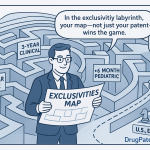
Separate from patent extension, the FDA grants data exclusivity periods that block the FDA — not infringers — from approving ANDA applications based on the brand’s safety and efficacy data. For new chemical entities (drugs with active ingredients never before approved), the exclusivity period is five years. For new formulations, new indications, or other changes to previously approved drugs, it is three years. The FDA cannot approve an ANDA or 505(b)(2) application until those periods expire, regardless of patent status [13].
Data exclusivity and patent protection can overlap, run in parallel, or cover different time windows. A new chemical entity might have a five-year data exclusivity period plus a patent that expires ten years later. In that case, patent expiration is the binding constraint. But a company that gains approval for a new formulation of a drug approaching its primary patent cliff can use three-year data exclusivity to create an additional delay for ANDAs that reference the new formulation — a tactic that meshes tightly with the secondary patenting strategies described below.
Orphan Drug Exclusivity: Seven Years for Rare Diseases
The Orphan Drug Act of 1983 grants seven years of market exclusivity to drugs approved for rare diseases, defined as conditions affecting fewer than 200,000 Americans [14]. Orphan exclusivity is not a patent — it’s a market exclusivity that prevents FDA approval of a competitor’s application for the same drug and same indication. A company can have both patent protection and orphan exclusivity, and both run concurrently, but seven years of orphan exclusivity is substantial.
The system was designed with genuine public health intent: rare disease research is inherently less profitable, since the patient population is small by definition, and without exclusivity incentives, drug companies would rationally deprioritize these conditions. The incentive worked. The FDA approved more orphan drugs in the decade after the Act than in all previous years combined.
The system has also been used in ways that arguably strain its original purpose. Vertex Pharmaceuticals’ Kalydeco (ivacaftor), approved in 2012 for a cystic fibrosis mutation affecting fewer than 2,000 U.S. patients, carried a price of roughly $300,000 per year at launch and has been cited as an example of orphan pricing dynamics that extend well beyond cost recovery [15]. Novartis’s Gleevec (imatinib) used sequential approvals across multiple rare cancer indications to stack exclusivity periods. Each new indication involved genuine science — real efficacy in real patients — but the structure of orphan law means each approval resets the strategic clock in ways that were not fully contemplated in 1983.
The pattern of off-label use approved as separate orphan indications has prompted ongoing policy debate. The bipartisan concern is not that companies are doing anything illegal — they are not — but that the incentive structure has drifted from its original target. The average annual cost of an orphan drug in the U.S. reached $257,000 in 2023, roughly four times the cost of a non-orphan specialty drug [16].
Pediatric Exclusivity: Six Months From a Study
The Best Pharmaceuticals for Children Act (BPCA) creates a six-month exclusivity extension for any drug for which the manufacturer conducts pediatric studies at FDA’s written request [17]. The six months attaches to all of the drug’s existing patents and exclusivities, extending every one of them simultaneously — a structure that makes the pediatric exclusivity extension disproportionately valuable for drugs with multiple stacked protections.
The financial calculus is straightforward and often decisive. For a drug generating $4 billion in annual U.S. sales, six months of exclusivity is worth approximately $2 billion in protected revenue. The cost of pediatric clinical trials — which typically involve a few hundred patients, run 12 to 18 months, and require specialized dosing formulations and age-appropriate analysis — is rarely more than $50 to $100 million. The return is extraordinary.
Eli Lilly’s Prozac (fluoxetine) received pediatric exclusivity after completing pediatric trials, adding a half-year extension that generated hundreds of millions in protected revenue before generics entered [18]. Critics note that the pediatric exclusivity applies even if the study results are negative or do not lead to a pediatric labeling change — the extension is granted for conducting the study, not for proving the drug works differently in children. The FDA defends this design on the grounds that the information gained is valuable regardless of outcome, and that companies would conduct no studies at all if the extension depended on favorable results.
Part Three: Secondary Patents and the Evergreening Playbook
What Evergreening Actually Is
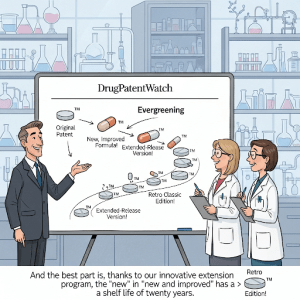
The term ‘evergreening’ refers to a family of practices through which pharmaceutical companies obtain secondary patents — patents covering incremental modifications, new formulations, delivery systems, or methods of use rather than the original active ingredient — with the effect of extending effective market exclusivity beyond the life of the core composition-of-matter patent [19]. The word appears nowhere in the patent statute. It was coined by critics and is rejected as pejorative by the industry.
The debate about whether evergreening constitutes genuine innovation or strategic obstruction is real, persistent, and often poorly framed. The honest answer is that it varies by case. A new extended-release formulation that genuinely reduces dosing frequency and improves patient adherence is a real improvement. A patent on a specific crystal polymorph of an active ingredient, filed the year before the original patent expires, with no demonstrated clinical advantage over the original crystalline form, is harder to defend. Both are legal. Neither is always the same thing.
On average, there are 143 patents filed and 69 patents granted on each of the nation’s 12 top-selling drugs, with 56 percent filed post-FDA approval — many for minor product modifications. That density of post-approval patenting is the statistical footprint of systematic lifecycle management. Whether it represents innovation, obstruction, or both depends on which specific patents you examine and what clinical utility they deliver. <blockquote> ‘Secondary patents are more likely to be the subject of litigation, and when generic companies challenge either the validity of the patent or its application to the particular drug through the full litigation process, the generic wins most of the time.’ — Yale Law & Policy Review, 2024 [20] </blockquote>
That finding cuts against the usual narrative. Secondary patents are not just offensive weapons; they are often vulnerable, and generics that push litigation to a verdict frequently prevail. The real deterrent value is not the strength of any individual patent but the cost and duration of the litigation required to invalidate it.
Formulation Patents: The Most Common Extension
The most widely used secondary patenting strategy involves filing patents on new formulations of an existing drug: extended-release versions, new salt forms, new polymorphs, co-crystals, prodrugs, or modified delivery systems. One of the most common and effective secondary patenting strategies involves developing a new formulation of an existing drug. These new versions often provide tangible benefits to patients and can be compelling enough for doctors to prescribe them over the original, soon-to-be-generic version.
AstraZeneca’s switch from omeprazole (Prilosec) to esomeprazole (Nexium) is the canonical case. Omeprazole is a racemic mixture of two mirror-image forms (enantiomers) of the same molecule. Esomeprazole is the S-enantiomer alone. AstraZeneca patented the isolated S-form, conducted clinical trials showing modest but real improvements in some endpoints, received FDA approval, and launched Nexium in 2001 — the same year Prilosec’s patent expired. The price of Nexium was set well above the cost of generic omeprazole, and marketing resources that had promoted Prilosec were redirected to Nexium with the explicit goal of moving prescribers before generics could capture market share [21].
The criticism of this approach is blunt: the therapeutic advantage of esomeprazole over generic omeprazole is modest at best, and comparative effectiveness research has consistently suggested that patients switching from brand Prilosec to generic omeprazole lose nothing clinically. What they gain is substantial savings, and what AstraZeneca gained from Nexium was several additional years of branded revenue from a molecule whose underlying chemistry was not meaningfully novel.
Eli Lilly used a structurally similar approach with Prozac and Sarafem. Eli Lilly used the enantiomer method to extend patent protection on Prozac (fluoxetine), by filing a patent for R-fluoxetine, a non-superimposable mirror image formulation known as an enantiomer, then marketing it as Sarafem for premenstrual dysphoric disorder.
Purdue Pharma’s abuse-deterrent reformulation of OxyContin is a different case with a different ethical valence. The new formulation — designed to make the drug harder to crush and snort — addressed a genuine and documented public health problem. The abuse-deterrent patents extended exclusivity, but the product itself was arguably a meaningful improvement. The same technical strategy, applied to a different context, produced a different ethical outcome.
Product Hopping: Discontinuing the Original
A variant of the formulation strategy called product hopping takes the concept a step further. The brand company does not merely launch a new version — it actively discontinues the original product or withdraws it from the market, forcing patients and prescribers to transition to the new version before the generic can launch.
The mechanics create a specific problem for generics. When a generic files an ANDA, it references a specific listed drug — the reference listed drug (RLD) — and demonstrates bioequivalence to that product. If the RLD has been withdrawn from the market and replaced with a new formulation that the generic has not yet filed against, the generic cannot automatically substitute at the pharmacy. Prescribers who receive brand marketing for the new formulation write prescriptions for that formulation, and the generic is left with approval for a drug no longer being prescribed.
Drug companies use ‘product hopping’ to strategically discontinue a brand-name drug before generic entry and switch patients to a new, reformulated, patent-protected version of the drug.
Courts have been skeptical of hard product hopping — where the discontinuation is timed specifically to thwart generic substitution. The Second Circuit’s ruling in New York v. Actavis (2014) affirmed that product hopping can, under certain conditions, constitute illegal monopoly maintenance under Section 2 of the Sherman Act. The court found that Actavis’s withdrawal of Alzheimer’s drug Namenda IR and substitution of Namenda XR, combined with the timing of the transition, was designed to prevent generic competition rather than to improve patient care. Whether any specific product hop crosses that line is now a fact-intensive legal inquiry, and companies tread more carefully than they did before 2014.
Method-of-Use Patents: Patenting the Indication
The drug molecule itself may be patent-free, but the specific method of using it — treating a particular disease, at a particular dose, via a particular regimen — can receive independent patent protection under U.S. law. These method-of-use patents create a different kind of exclusivity that coexists awkwardly with generic substitution.
The awkwardness stems from the FDA’s ‘skinny label’ provision. Under Section viii of Hatch-Waxman, a generic can carve the patented use out of its label, launch for the unpatented indications, and avoid infringement of the method-of-use patent. In theory, this gives patients access to a cheaper generic for the unpatented uses while the brand retains exclusivity for the patented indication.
In practice, the skinny label has become legally treacherous. The safe harbor has been severely compromised by recent court rulings, most notably GlaxoSmithKline LLC v. Teva Pharmaceuticals USA, Inc., where the court found that even though Teva used a skinny label, its marketing materials, press releases, and the general knowledge it relied upon constituted ‘induced infringement’ of GSK’s method-of-use patent.
The GSK v. Teva ruling — which went through multiple rounds of appeals and generated significant legal commentary — effectively means that generic manufacturers must monitor not just their labels but every communication about their products. A press release noting that a drug is a ‘generic equivalent’ to a branded product can be used as evidence that the generic intends for the drug to be used for all branded indications, including patented ones. The chilling effect on skinny-label filings has been real.
Allergan’s Botox is perhaps the most successful example of method-of-use patent strategy applied affirmatively rather than defensively. The botulinum toxin molecule is not novel in any strong sense. Allergan’s intellectual property lives in specific approved uses — cosmetic wrinkles, migraines, hyperhidrosis, overactive bladder, and cervical dystonia — each backed by clinical trial data and protected by its own method-of-use patent. The cumulative effect is a franchise that has proven remarkably durable because each patent covers a different clinical application rather than a single vulnerable composition [22].
Combination Products: Two Molecules, One New Patent
Combining two existing drugs into a single fixed-dose combination product — or combining a drug with a delivery device — can generate new patentable IP even when neither component is novel. The combination itself, if it provides a clinical benefit over co-administration of the individual components, may be novel and non-obvious. The delivery system, if it is designed specifically for the combination, may generate device patents.
AstraZeneca’s Symbicort combines budesonide (a corticosteroid) and formoterol (a long-acting beta-agonist) in a single inhaler. Both molecules had existing use; the combination had not been commercially developed in that form. The resulting product has its own patent protection, its own pricing structure, and its own position in the market that is distinct from either component [23].
Gilead Sciences built its HIV franchise partly on this principle. Truvada, which combines tenofovir and emtricitabine, became the backbone of HIV treatment protocols and the basis for Gilead’s pre-exposure prophylaxis (PrEP) franchise. The combination patent protected Truvada even after components became available separately. Gilead’s subsequent development of Descovy — a reformulation using a different tenofovir prodrug with a better renal safety profile — generated a new patent cycle on top of the existing franchise [24].
Combination products are particularly effective because they create a dual barrier. The drug-drug combination patent protects against generic combination products. If a prescriber prefers the combination to individual components, the branded version retains value even when generics of the components are available.
Part Four: Patent Thickets — Volume as Strategy
What a Patent Thicket Looks Like From the Inside
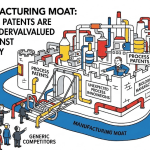
A patent thicket is a dense, overlapping network of patents covering multiple aspects of a single drug product. The concept is not unique to pharmaceuticals — semiconductor companies have used overlapping patent portfolios for decades — but the pharmaceutical version has distinctive features because of the Orange Book listing mechanism and the 30-month stay provision of Hatch-Waxman.
The strategic value of a patent thicket lies not in the individual strength of any single patent, but in its cumulative deterrent effect. A generic competitor must navigate a legal minefield, potentially challenging numerous patents simultaneously.
Each listed Orange Book patent that a generic challenger certifies against under Paragraph IV triggers a separate potential lawsuit. Each lawsuit, if filed within 45 days, initiates a 30-month automatic stay on FDA approval of the ANDA — meaning the generic cannot launch even if it would ultimately win. A thicket with 20 listed patents and a brand company willing to sue on all of them creates a litigation timeline that can extend many years beyond the original patent expiration, with the generic bearing substantial legal costs throughout.
The strategy is amplified by the asymmetry in litigation costs. Brand companies have ongoing legal teams, established relationships with patent litigation firms, and litigation budgets that are a small fraction of the revenue at stake. Generic companies, even large ones, face substantial per-patent litigation costs and may decide that challenging a thick portfolio is economically irrational even when they believe they would win on most patents.
Humira: The Textbook Case
Humira (adalimumab) was approved by the FDA in 2002 for rheumatoid arthritis. In the period following its first patent until 2022, AbbVie received 130 patents related to Humira, ranging from changes in formulation, dosing, manufacturing, and delivery mechanisms.
The Humira patent portfolio kept biosimilar competition out of the U.S. market until 2023, nearly two decades after the original approval. AbbVie used this strategy for its blockbuster drug Humira, helping the company to maintain a monopoly for 20 years and earn $200 billion in revenue.
Biosimilar manufacturers — Amgen, Sandoz, Pfizer, and others — had biosimilar adalimumab products approved years before they launched commercially in the U.S. They launched in Europe substantially earlier, where AbbVie’s patent position was weaker. The delay in U.S. biosimilar entry was not primarily about the FDA approval process but about the legal exposure created by AbbVie’s patent fortress and the settlements AbbVie reached with biosimilar manufacturers, each of which included a delayed-entry date in exchange for a license to AbbVie’s intellectual property.
AbbVie’s defense is that the patents were real: each covered genuine innovations in formulation, concentration, and delivery that improved patient outcomes. The high-concentration formulation that reduced injection volume was clinically meaningful to patients. The citrate-free formulation reduced injection site pain. These were not trivial modifications by any fair technical assessment.
The policy critique is different from the technical one. Even if each individual patent in Humira’s thicket was legitimately granted, the cumulative effect of 130 patents stacked across two decades of marketing exclusivity — combined with settlement agreements that coordinated the entry dates of all biosimilar competitors — produced a market outcome that looks less like the patent system’s intended incentive structure and more like a managed market. The Senate Finance Committee investigation in 2021 focused precisely on that gap between legal compliance and policy intent [25].
The FTC’s 2024-2025 Response
The regulatory environment for patent thickets shifted materially in 2024 and 2025. The FTC spent much of 2024 and 2025 dismantling the device-patent tactic specifically. The Commission sent warning letters to Teva, GSK, and AstraZeneca, among others, challenging over 300 listings as improper.
The specific tactic under fire was the listing of drug-device combination patents — patents covering inhaler devices, auto-injectors, and similar delivery systems — in the Orange Book in ways that triggered the 30-month stay when challenged. The FTC’s position was that device patents do not qualify for Orange Book listing because they cover the device rather than the drug itself or a method of using the drug, and that listing them was an improper manipulation of the Hatch-Waxman litigation stay mechanism.
In December 2025, Teva requested removal of more than 200 such listings covering asthma, diabetes, and COPD products — a significant capitulation that effectively ended the device-patent Orange Book strategy as a viable long-term play.
The enforcement campaign did not immediately open affected markets to generic competition — generic manufacturers still need to file ANDAs, demonstrate bioequivalence, and clear any remaining valid patents. But it removed the 30-month automatic stay as a litigation weapon for device-specific patents, accelerating the timeline for generic entry on a large number of products.
This enforcement trend signals a shift in the regulatory environment. The agency’s success in forcing Teva to delist device patents in 2025 sets a precedent. We can expect further mass delistings, which will remove the 30-month stay protection for many drug-device combinations.
Part Five: Pay-for-Delay — Buying Time With Cash
The Mechanics of Reverse Payment Settlements
Pay-for-delay agreements — formally called reverse payment settlements — are arrangements in which the patent holder pays the generic challenger to delay entering the market. The payment runs in the direction opposite to what you would expect in a standard licensing deal: instead of the generic paying the brand for the right to use its IP, the brand pays the generic to wait.
The economic logic is clear once you understand the value at stake. If a brand drug generates $3 billion annually and a generic challenger has a reasonable chance of winning the patent litigation and entering the market, the expected litigation outcome for the brand is substantial market-share erosion plus some probability of losing. The brand can calculate what it would cost to simply pay the generic to wait three years — and if that cost is less than the expected value of three additional years of exclusivity, the settlement is rational. The generic, which would otherwise spend years in litigation with uncertain outcome, receives cash and a guaranteed entry date. Both sides win relative to their alternatives.
What they both gain comes at the expense of patients and payers who continue paying monopoly prices during the delay period.
FTC v. Actavis: The Legal Turn
The legal status of pay-for-delay settlements was uncertain for years, with different federal circuits taking different views. The Supreme Court resolved the circuit split in Federal Trade Commission v. Actavis, Inc. (2013), ruling five-to-three that reverse payment settlements can violate antitrust law and must be analyzed under the ‘rule of reason’ standard [26]. The Court rejected the patent scope test that lower courts had applied — the idea that any settlement within the potential scope of the patent is automatically lawful — and held that the size of the payment is itself relevant evidence of anticompetitive harm.
Actavis did not ban reverse payment settlements. It made them legally risky. Companies can still settle patent litigation, and many settlements include value transfers from brand to generic that are structured to avoid the explicit ‘cash payment for delay’ framing condemned in Actavis — non-cash agreements, authorized generic licenses, side agreements on unrelated products, and co-promotion deals. These ‘no-cash’ or ‘complex’ settlements have been the subject of ongoing FTC scrutiny and academic debate about whether they replicate the anticompetitive dynamics of the cash deals they replaced.
Cephalon and Teva: The $1.2 Billion Lesson
The Cephalon-Teva pay-for-delay case centered on modafinil (Provigil), a wakefulness-promoting drug approved for narcolepsy. Cephalon paid Teva and three other generic manufacturers a combined $300 million to delay their generic launches until 2012, six years after they could have entered under normal Paragraph IV litigation timelines. The FTC alleged that Cephalon used the settlements to extend an effective monopoly it would likely have lost in court — internal documents suggested Cephalon’s lawyers had assessed the relevant patent as weak.
The case ultimately settled for $1.2 billion in 2015, one of the largest antitrust settlements in pharmaceutical history [27]. The settlement came after years of litigation and covered claims from both the FTC and a class of private plaintiffs. Teva, which had acquired Cephalon in 2011, paid the bulk of the settlement despite not being the original architect of the pay-for-delay arrangement.
The case illustrated two durable lessons. First, the value of monopoly pricing is large enough that companies will pay substantial sums for delay even at the risk of regulatory exposure. Second, internal documents matter enormously in antitrust litigation: the Cephalon case turned partly on internal assessments that acknowledged patent weakness while the company publicly defended the patent’s strength.
Part Six: International Patent Strategies
Filing Global Portfolios
A drug patent strategy that stops at the U.S. border leaves enormous value on the table. For any drug with meaningful international markets, the portfolio strategy extends across every jurisdiction where the product is sold — and the strength of that protection varies significantly by country.
TRIPS standardized the 20-year patent term globally among WTO members, but implementation details, compulsory licensing provisions, and enforcement mechanisms vary substantially. The European Union’s Supplementary Protection Certificate (SPC) mechanism allows brand companies to extend protection for up to five additional years in member states, compensating for regulatory review time similarly to U.S. patent term restoration [28]. Japan, Canada, and Australia have analogous mechanisms.
The EU has proposed changes to its pharmaceutical IP framework that could substantially alter the SPC landscape. Proposals under active discussion in 2024-2025 would reduce baseline data exclusivity, add conditions to exclusivity extensions, and potentially cap orphan market exclusivity at 9 years with conditional extensions rather than the current baseline of 10 years [11]. These proposals have generated significant lobbying from the pharmaceutical industry and counter-lobbying from payers and patient access advocates.
India and the Compulsory License Debate
A patent grants its owner the right to exclude others from making, using, or selling the patented invention for a specified period. Under the WTO’s Agreement on Trade-Related Aspects of Intellectual Property Rights (TRIPS), this statutory term is standardized at 20 years from the patent application’s earliest filing date. But TRIPS also includes provisions for compulsory licensing — allowing governments to authorize domestic production of patented drugs without the patent holder’s consent in certain circumstances, particularly public health emergencies.
India operationalized this provision through Section 3(d) of its Patent Act, which prohibits granting patents on new forms of known substances unless they demonstrate ‘enhanced efficacy’ — a provision specifically designed to prevent evergreening. Novartis challenged this provision after India rejected its patent application for the beta-crystalline form of imatinib (Gleevec), the form marketed commercially, arguing that it was simply a new form of a previously known compound without enhanced efficacy.
The Indian Supreme Court upheld Section 3(d) in 2013, ruling against Novartis and validating India’s right to apply a heightened efficacy standard for secondary patents [29]. The decision kept imatinib accessible to Indian patients at generic prices that were a small fraction of the U.S. price. It also established that TRIPS-compliant national patent laws can legitimately set higher innovation thresholds than the U.S. or European standard — a precedent that has influenced pharmaceutical patent policy in other developing countries.
The commercial significance of India’s position goes beyond any single case. India is the world’s largest producer of generic pharmaceuticals by volume. Its patent standards affect which molecules remain available for generic production globally, since Indian manufacturers supply generics to markets worldwide.
Patent Linkage Internationally
The U.S. Orange Book system — which links FDA drug approval to patent listings and creates the 30-month stay mechanism — has been replicated to varying degrees in other countries as part of trade agreements. Canada adopted a version of patent linkage in its pharmaceutical regulations; Korea has a similar system. But many countries, including most of the EU, do not use patent linkage, meaning generic approval in those markets does not depend on resolving patent disputes with brand companies. A generic can receive marketing authorization while patent litigation is ongoing, and the commercial question of whether the generic can actually be sold depends on whether the brand obtains an injunction.
This difference in legal architecture means that the 30-month stay mechanism — which is both the mechanism enabling and the mechanism distorted by patent thicket strategies in the U.S. — does not exist in most other major markets. The patent battles in the EU are fought injunction by injunction rather than through an automatic administrative delay. Companies calibrate their strategy to the specific legal architecture of each market, which is one reason patent portfolio filings look different in the U.S. than in Europe for the same drug.
Part Seven: Biologics and Biosimilar Strategy
Why Biologics Play by Different Rules
Biologics — drugs derived from living cells, including monoclonal antibodies, recombinant proteins, and gene therapies — are not merely complicated molecules. They are the expressed output of biological systems: cell lines, fermentation processes, purification cascades, and formulation steps that collectively determine the product’s clinical characteristics. Two companies using the same target and the same general approach can produce biosimilars — products that are highly similar but not identical to the reference biologic — but they cannot produce exact copies in the way that small-molecule generic manufacturers can simply replicate a known chemical structure.
This inherent complexity gives biologics a built-in competitive barrier that small molecules lack. FDA approval of a biosimilar under the Biologics Price Competition and Innovation Act (BPCIA) requires demonstrating that the product is highly similar to the reference biologic with no clinically meaningful differences in safety, purity, or potency — a demonstration that involves extensive analytical characterization, animal studies, and clinical pharmacology studies that are substantially more demanding than the bioequivalence studies required for small-molecule ANDAs [30]. The cost of developing a biosimilar is correspondingly higher, typically $100 million to $250 million, compared to $1 to $5 million for a small-molecule generic.
The higher development cost, combined with slower market adoption, changes the economics of biosimilar competition. For biosimilars, prices drop 30-40 percent initially, and it takes 3-5 years to reach 75 percent market share because they are harder to make and require more testing. Compare that to small-molecule generics, where prices drop 80-90 percent within 12 months and generics capture over 90 percent of the market within two years.
The BPCIA ‘Patent Dance’
The BPCIA established a formal information-exchange process for biosimilar litigation — colloquially called the patent dance — in which the biosimilar applicant and the reference product sponsor exchange information about the biosimilar product and the reference biologic’s patents, then negotiate which patents will be litigated before launch and which will be reserved for post-launch litigation.
The patent dance was designed to front-load patent disputes so they would be resolved before the biosimilar reaches the market, reducing commercial uncertainty. In practice, it has produced complex strategic behavior on both sides. Reference product sponsors have sometimes used the dance to obtain information about the biosimilar’s manufacturing process that can inform their litigation strategy. Biosimilar applicants have sometimes declined to participate fully in the dance, accepting the legal consequences in exchange for limiting information disclosure.
Amgen’s Enbrel (etanercept) maintained its market position through a combination of patent filings, the manufacturing complexity inherent in the product, and litigation-driven delays. Pfizer’s biosimilar etanercept received FDA approval and launched in the U.S. market, but Amgen had negotiated a settlement with Pfizer that included a delayed-entry date, limiting commercial competition [31]. The settlement was challenged by the FTC as a pay-for-delay arrangement in the biosimilar context — a novel application of the post-Actavis framework that the agency argued should apply equally to biologics.
Biobetters: The Biologics Version of Reformulation
Biobetters are next-generation biologics designed to improve on the reference product — different glycosylation profiles, half-life extensions, alternative dosing regimens, reduced immunogenicity. They are not biosimilars; they require full clinical development and approval as new biologics. But they serve a similar lifecycle management function to reformulations in the small-molecule world: they create a new, patented product that the brand company can migrate prescribers to as biosimilar competition arrives for the original biologic.
Sanofi’s transition from Lantus (insulin glargine, 100 units/mL) to Toujeo (insulin glargine, 300 units/mL) followed this logic. Toujeo’s higher concentration allows a smaller injection volume for the same dose, which provides a real clinical benefit — less subcutaneous volume per injection — while generating new patents that Sanofi can defend even as biosimilar competition arrives for the original Lantus concentration [32]. Biosimilar manufacturers who developed products to match Lantus’s concentration profile found themselves competing against an original product that had migrated prescribers to a concentration they had not yet matched.
Part Eight: Litigation as Lifecycle Management
Paragraph IV Certifications and the 30-Month Stay
The Hatch-Waxman litigation process begins when a generic manufacturer files a Paragraph IV certification — a statement in its ANDA that one or more Orange Book patents are invalid, unenforceable, or will not be infringed by the generic product. The brand company has 45 days to respond with a patent infringement suit. If it sues, the 30-month stay begins automatically, blocking FDA approval of the ANDA until either the stay expires or the litigation resolves — whichever comes first.
Statistics from 2024 show a clear advantage for innovators in resolved court cases. Innovator companies prevailed on the issues 20% of the time, whereas generic companies prevailed in only 2% of cases — but this data excludes the large number of cases that are settled. The settlement rate is high — most Paragraph IV cases settle rather than going to trial — which means the win-loss statistics in litigated cases reflect a selected sample of cases where both sides believed trial was their best option.
The FDA received 127 ANDAs targeting 2025 expirations in 2024 alone — a 27 percent jump from the year before. That surge in filings reflects sophisticated tracking of the patent expiration timeline and confidence that the Orange Book listings for many of these drugs are either thin or challengeable.
That increase in ANDA filing volume is partly attributable to better analytical tools. Generic manufacturers now use patent intelligence platforms like DrugPatentWatch to identify drugs approaching expiration, assess the strength and breadth of the Orange Book patent portfolio, monitor litigation history for each listed patent, and time their ANDA filings to maximize the probability of first-filer 180-day exclusivity. The 180-day exclusivity period available to the first Paragraph IV filer creates a substantial incentive for generics to challenge patents aggressively — and a corresponding incentive for brand companies to ensure their patent portfolios are too dense to challenge cheaply.
Inter Partes Review: A Faster Path to Patent Invalidity
The America Invents Act (2011) created the Patent Trial and Appeal Board (PTAB) and the inter partes review (IPR) process, which allows any party to petition the USPTO to review the validity of a patent on the basis of prior art [33]. IPR is faster and substantially cheaper than district court patent litigation — a full IPR typically concludes in 18 months with legal costs measured in the hundreds of thousands rather than millions of dollars. And when generic companies take IPR challenges to completion, they win more often than not.
Generic manufacturers have used IPR strategically to challenge secondary patents that they believe are invalid on prior art grounds, clearing the way for ANDA filings without the full burden of Paragraph IV district court litigation. Brand companies have responded by lobbying for changes to the PTAB system — the PREVAIL Act proposed in 2025 would require challengers to demonstrate legal standing, limit the number of petitions that can be filed against a single patent, and raise the evidentiary standard for initiating review [11]. The proposed reforms are framed by their sponsors as preventing ‘patent abuse’ by deep-pocketed challengers; critics argue they would make it harder to clear invalid secondary patents, particularly for pharmaceutical products.
Citizens Petitions: Regulatory Process as Delay Mechanism
Citizen petitions allow any interested party to petition the FDA regarding a pending or future regulatory action. Brand companies file citizen petitions in the months before a generic ANDA is expected to receive approval, asking the FDA to require additional safety data, formulation testing, or manufacturing information from the generic applicant. The FDA is required to respond before taking final action on the ANDA, and while the average response time has decreased under recent FDA guidance, the process can add months to the generic approval timeline.
The FTC’s 2024-2025 enforcement campaign against this practice was among the most aggressive regulatory interventions in pharmaceutical patent policy in the post-Actavis period. The Commission has characterized certain citizen petitions — particularly those filed immediately before expected ANDA approval with no plausible purpose other than delay — as potential antitrust violations. Several companies have received warning letters regarding their citizen petition practices, and at least one enforcement action has been opened on this basis.
The FDA itself has reduced the leverage of citizen petitions somewhat by implementing faster review timelines and issuing guidance that it will expedite responses to petitions that appear to be filed primarily for delay purposes. But the tool remains in use because even a four- to six-month delay on an ANDA approval represents tens or hundreds of millions in protected branded revenue.
Part Nine: How Patent Intelligence Gives You the Edge
The Information Asymmetry Problem
Every strategy described in this article depends on information: knowing what patents are filed, when they expire, what claims they make, which ones have been challenged, what the outcomes were, and what secondary patents might be vulnerable. For most of pharmaceutical history, that information was scattered across the USPTO database, the FDA’s Orange Book, federal court records, and thousands of legal filings — accessible in theory but practically opaque for anyone without a dedicated legal team.
The information asymmetry was large and systematically favored brand companies, which employed patent counsel who maintained living maps of their own portfolios and competitors’. Generic manufacturers and biosimilar developers had to invest significantly in intelligence-gathering just to understand what they were filing against. Investors and financial analysts had even less visibility, relying on brand company disclosures — which highlighted patent protection without always clarifying which patents were vulnerable or had been challenged.
That asymmetry has narrowed substantially with the emergence of pharmaceutical patent intelligence platforms. DrugPatentWatch aggregates Orange Book listings, USPTO patent data, PTAB proceedings, federal court litigation records, and FDA exclusivity status into a single searchable database, updated continuously. A generic manufacturer scouting for ANDA opportunities can identify drugs approaching primary patent expiration, assess the density of the secondary patent portfolio, review litigation history for each listed patent, and estimate the first reasonable commercial entry date — all in a single analysis session rather than through weeks of manual research across multiple government databases.
For investment analysts, the same data supports a different question: which branded drugs face earlier-than-expected generic competition, and which are more protected than the consensus model assumes? The patent expiration date on which an equity model is built can be wrong by years when secondary patents or exclusivity stacking is not fully accounted for. DrugPatentWatch’s expiration tracking and litigation monitoring provide the granular detail needed to build more accurate revenue curves for branded pharmaceuticals.
Reading the Orange Book as a Competitive Map
The FDA’s Orange Book — formally titled Approved Drug Products with Therapeutic Equivalence Evaluations — lists all patents and exclusivities that brand companies have declared as applicable to each approved drug product. It is, in effect, a publicly maintained map of the defensive perimeter around every drug in the U.S. market.
Reading that map requires several layers of analysis. The raw list of patents tells you what is claimed; it does not tell you which patents are strong, which have been challenged, or which might be vulnerable to the kind of IPR challenge that overturned a patent in 18 months. The Orange Book does not distinguish between a composition-of-matter patent with 15 years remaining and a process patent that has already been invalidated in a different proceeding. All patents appear with equal weight in the listing.
Layering litigation data on top of the Orange Book listing converts a list of claims into an actual risk map. A patent that has been upheld in Hatch-Waxman litigation against three separate Paragraph IV challengers is demonstrably stronger than a patent that has never been challenged. A patent that was invalidated by PTAB but is under Federal Circuit appeal is legally uncertain. A patent whose claims were narrowed in prosecution and then narrowed further by a district court claim construction ruling may not actually cover the generic formulation in question.
This analysis — cross-referencing Orange Book listings with PTAB proceedings, district court decisions, claim construction records, and settlement histories — is precisely the kind of structured intelligence that DrugPatentWatch organizes and makes searchable. A strategic planner at a generic manufacturer can use the platform to build a litigation risk profile for any drug before filing the ANDA, identifying which patents are likely to be asserted, which are most vulnerable to invalidity challenges, and what the expected litigation timeline looks like.
Tracking Biosimilar Entry Timelines
The biosimilar patent dance generates a specific kind of public record — patent lists exchanged between biosimilar applicants and reference product sponsors — that is partially disclosed through court filings and BPCIA litigation records. Tracking those records allows biosimilar manufacturers and investors to assess where biosimilar entry is imminent, where it is stalled in litigation, and where settlements have established specific commercial entry dates.
For biologics with complex patent portfolios — Humira being the archetypal case — the biosimilar timeline is not a single expiration date but a sequence of events: the resolution of different patents, the terms of different settlement agreements with different biosimilar manufacturers, the interchangeability designations that affect pharmacy-level substitution. DrugPatentWatch’s biologic tracking maps these timelines, including the settlement-negotiated entry dates that are disclosed in FTC filings, giving analysts a clearer picture of when effective competition will arrive for each biologic franchise.
Part Ten: Regulatory Reform and Where the System Is Going
The Legislative Response
Federal policymakers have considered several reforms with bipartisan support: clarifying patent standards to avoid ‘overpatenting’ of brand-name drugs, restricting evergreening and product hopping, improving transparency and public engagement in the USPTO process, and restricting the use of reverse payment settlements.
The policy reform conversation has intensified across the post-2020 period as drug pricing became a central political issue on both sides of the aisle. The Inflation Reduction Act of 2022, while primarily known for its Medicare drug price negotiation provisions, also addressed patent-related issues: it required the Department of Health and Human Services to study pharmaceutical patent practices as part of its broader mandate on drug pricing. The FTC’s subsequent enforcement campaigns on Orange Book listings and citizen petitions represent executive branch action in the absence of comprehensive legislative reform.
Comprehensive patent reform for pharmaceuticals faces a structural political challenge. The brand industry argues — with genuine evidence to support the claim — that reduced exclusivity periods will reduce investment in drug discovery and ultimately reduce the pipeline of new medicines. The generic and payer industries argue — also with genuine evidence — that extended monopoly periods cost the health care system hundreds of billions of dollars and harm patient access. Both claims can be true simultaneously, which makes legislative compromise that addresses both concerns without eliminating either difficult to achieve.
The post-Chevron regulatory environment adds a new layer of complexity. The Supreme Court’s 2024 decision in Loper Bright Enterprises v. Raimondo, which overturned the long-standing Chevron deference doctrine, means that courts will now have more power to substitute their own judgment for that of agencies like the FDA and the USPTO when interpreting the complex provisions of the FD&C Act and the Patent Act. Regulatory interpretations that have anchored the Hatch-Waxman framework for decades may now be subject to judicial challenge in ways that the agencies and the industry have not previously faced.
The Closing of the ‘Forever Monopoly’
The combination of aggressive antitrust enforcement targeting device patents and citizen petitions, judicial scrutiny of ‘skinny labels,’ and potential legislative caps on patent assertions suggests that the era of the ‘forever monopoly’ is closing.
That closing does not mean patent extension strategies are disappearing. It means the strategies are becoming more legally constrained, more expensive to execute, and more likely to face regulatory challenge. Companies are adapting. Device-patent Orange Book listings are being delisted. Pay-for-delay settlements are being structured as non-cash arrangements to reduce FTC exposure. Product hopping is being pursued more carefully after New York v. Actavis. IPR petitions are forcing brand companies to defend secondary patents they previously expected to hold through commercial deterrence alone.
The net effect — if enforcement continues at its 2024-2025 intensity — is that effective exclusivity periods for drugs relying heavily on secondary patents and litigation delay may shorten by two to four years on average. That is not a trivial shift. For a drug generating $5 billion annually, two additional years of generic competition at prices 80 percent below the branded level represents roughly $8 billion in value transferred from the brand company to patients and payers.
Whether that transfer undermines investment incentives for new drug discovery is genuinely uncertain. The relationship between patent protection duration and R&D investment is not linear, and the most productive pharmaceutical R&D has tended to come from companies with strong first-mover advantages in novel biology — not primarily from companies whose competitive moats depend on secondary patents.
The AI and Data Layer
One underappreciated dimension of the patent extension game is how much the competitive landscape has changed as a function of data availability and analytical capability. Twenty years ago, a generic manufacturer’s patent analysis of a target drug required manual review of paper filings, library searches of scientific literature, and expensive outside counsel engagement. That process took months and cost significantly.
Today, a senior analyst at a generic company or a hedge fund running a pharma book can pull a comprehensive patent landscape analysis in hours using platforms like DrugPatentWatch combined with AI-assisted literature review tools. The same technology that allows brand companies to identify and file secondary patents faster also allows generic manufacturers to map and challenge those patents faster. The arms race is not just between legal strategies — it is between intelligence capabilities.
The practical implication is that the information asymmetry that historically favored brand companies is eroding. Generic manufacturers can now identify weak secondary patents before filing ANDAs and target them with IPR petitions proactively. Investors can build patent expiration models with unprecedented granularity. Payers can identify drugs approaching loss of exclusivity and pre-negotiate formulary positions with biosimilar or generic manufacturers.
The pharmaceutical patent system is not going to become simple. It was designed to balance competing interests in a complex technological and commercial environment, and the strategies described in this article are rational responses to the incentive structure that design created. But the balance of informational power within that system is shifting, and the shift favors those who can process, analyze, and act on patent data faster than their competitors.
Part Eleven: A Framework for Evaluating Any Drug’s Patent Position
The Four-Layer Analysis
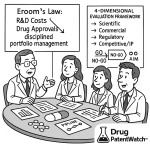
When a company, investor, or policy analyst wants to understand the real exclusivity position of a pharmaceutical product, the correct framework has four distinct layers that must be analyzed separately and then integrated.
The first layer is the composition-of-matter patent — the core patent on the active ingredient itself. This patent’s expiration date, adjusted for any patent term extension granted under Hatch-Waxman, determines the earliest date at which a generic could theoretically launch without infringing the most fundamental intellectual property protection. For small molecules, this is usually the binding constraint until it expires. For biologics, the equivalent is the composition-of-matter patent on the biological molecule.
The second layer covers secondary patents: formulation, method of use, dosage form, delivery system, and process patents listed in the Orange Book. Each one needs individual assessment — claim scope, prosecution history, litigation record, and remaining term. A secondary patent expiring two years after the composition patent, if it covers the specific formulation being generically developed, extends the effective exclusivity in a way the simple composition expiration date does not capture.
The third layer is regulatory exclusivity: data exclusivity, orphan drug exclusivity, and pediatric exclusivity. These run on separate tracks from patents and can extend exclusivity beyond all patent protections or provide a floor when patents are challenged successfully.
The fourth layer is litigation posture: are there pending Paragraph IV challenges? What patents have been asserted? What is the 30-month stay status? Have any settlements established commercial entry dates? The litigation posture determines when commercial entry is actually likely, which can differ significantly from the earliest theoretical entry date implied by the patent analysis.
Only after all four layers are analyzed can you build a realistic model of when generic or biosimilar competition will arrive, and at what intensity. For the drugs that matter most — the blockbusters generating billions in annual revenue — the gap between the simple patent expiration date and the real competitive entry date can be five years or more. That gap is where billions in value live, and it is where the patent extension strategies described in this article play out.
Using DrugPatentWatch in Practice
DrugPatentWatch structures exactly this kind of multi-layer analysis. The platform’s Orange Book integration shows all listed patents for any approved drug product alongside their expiration dates, adjusted for PTE where applicable. Litigation monitoring captures active Paragraph IV certifications, pending PTAB proceedings, and federal court decisions. Exclusivity tracking shows the status of all FDA-granted exclusivities, including their expiration dates. First-filer monitoring identifies which generic manufacturers have filed ANDAs and whether any have 180-day exclusivity pending.
For a generic company evaluating whether to file an ANDA on a drug approaching primary patent expiration, the platform provides the data needed to assess whether secondary patents create real barriers, what litigation the company should expect, and whether any current Paragraph IV challengers have established a head start on 180-day exclusivity. For an investor building a revenue model for a branded pharmaceutical company, it provides the patent expiration dates and litigation status needed to stress-test the consensus LOE assumptions. For a payer or pharmacy benefit manager planning formulary transitions, it provides the realistic timeline for when lower-cost alternatives will actually be available.
The competitive intelligence value of the platform scales with the complexity of the patent position being analyzed. For a simple small-molecule drug with a single composition patent and no secondary patents, the relevant data is straightforward. For a drug like Humira, with over 100 patents, multiple biosimilar applicants, and a series of settlement-negotiated entry dates, the integration of all relevant data into a coherent timeline requires exactly the kind of structured aggregation that the platform provides.
The Ethics of Extension: Accountability in a System Built on Incentives
Drug patent extension strategies exist because they are rational responses to a real incentive structure. A company that invested $2.23 billion in drug development, accepted a decade of risk, and finally achieved FDA approval faces a 10-to-12-year commercial window before generic competition destroys its revenue base. Strategies that extend that window are not irrational; they are the logical output of a system designed to reward successful development.
The ethical critique is not that extension strategies exist but that some of them extract value without providing commensurate benefits to patients — that the costs of extended monopoly pricing are real and large while the clinical benefits of many secondary patents are marginal or nonexistent. That critique is supported by the data: a 2018 study published in the Journal of Law and the Biosciences found that 78 percent of drugs associated with new patents between 2005 and 2015 were existing drugs, not new ones. The patent system was designed to reward novel invention. When the majority of new pharmaceutical patents cover existing drugs — most of them post-approval secondary filings — the system’s incentive-alignment is worth examining.
The accountability mechanism in the current system is enforcement: antitrust law targeting pay-for-delay and product hopping, PTAB review targeting invalid secondary patents, FTC challenges targeting improper Orange Book listings, and the ongoing political pressure that can produce legislative reform. Each of those mechanisms has real bite — the Teva delistings in December 2025, the Cephalon $1.2 billion settlement, the New York v. Actavis product hopping precedent. But they are reactive rather than structural. They catch abuses after the fact rather than preventing the accumulation of weak secondary patents in the first place.
The structural alternative — higher patent quality standards at the USPTO, enhanced coordination between FDA and USPTO, or legislative caps on secondary patents — faces the political challenge of industry opposition and the economic challenge that it is genuinely difficult to distinguish innovation-driven secondary patents from rent-seeking ones at the time of filing. Hindsight makes the distinction easier than real-time review does.
What the current system produces is a continuous arms race, with brand companies developing new extension strategies as old ones are foreclosed and regulators and courts closing each strategy with a lag of years. That race is expensive, absorbs significant legal and regulatory resources, and imposes costs on patients and payers that compound over time. It also produces, on occasion, genuinely improved products — formulations that actually work better, indications that actually help previously underserved patients, combinations that actually simplify treatment. The challenge is that the system cannot reliably distinguish the two in advance, and the incentive structure rewards both equally.
Key Takeaways
A drug’s effective commercial exclusivity is consistently shorter than its nominal 20-year patent term. Development timelines consume 10 to 15 years of that term, leaving an average market window of 12 to 14 years.
Patent term restoration under Hatch-Waxman, data exclusivity, orphan drug designation, and pediatric exclusivity are statutory mechanisms that extend protection beyond the primary patent — each with specific requirements and caps.
Evergreening — filing secondary patents on formulations, enantiomers, delivery systems, and new indications — is legal, widespread, and the subject of ongoing regulatory and judicial challenge. Whether any given instance constitutes genuine innovation or rent-seeking depends on the specific patent claims and clinical evidence.
Patent thickets create cumulative deterrent effects that often matter more than any individual patent’s validity. AbbVie’s 130+ Humira patents kept biosimilar competition out of the U.S. market for nearly two decades.
The FTC’s 2024-2025 enforcement campaign against Orange Book device-patent listings — which forced Teva to delist over 200 patents in December 2025 — marks a meaningful shift in the regulatory environment that generic manufacturers should account for in their strategic planning.
Pay-for-delay settlements remain legally risky post-Actavis (2013). Non-cash structures designed to replicate their economics are under increasing FTC scrutiny.
International patent strategy requires jurisdiction-specific analysis. India’s Section 3(d) standard, the EU’s SPC mechanism, and TRIPS compulsory licensing provisions create a materially different legal landscape outside the U.S.
Biologics carry inherent manufacturing complexity that slows biosimilar competition beyond the patent barriers alone. Biosimilar prices drop 30 to 40 percent versus 80 to 90 percent for small-molecule generics, and market-share capture takes three to five years rather than one.
Multi-layer patent analysis — covering composition patents, secondary patents, regulatory exclusivities, and litigation posture — is the only reliable way to determine when actual generic or biosimilar competition will arrive. DrugPatentWatch structures this analysis across all four layers.
The information asymmetry that historically favored brand companies is narrowing as patent intelligence platforms make comprehensive landscape analysis accessible to generic manufacturers, investors, and payers.
FAQ
Q1: How does a company decide which patent to extend under Hatch-Waxman’s patent term restoration mechanism?
A: The patent term restoration (PTR) application goes to one patent per approved product. Companies typically extend the composition-of-matter patent on the active ingredient, since that patent blocks all generic versions of the molecule. The strategic calculus changes when the composition patent is expiring soon anyway — leaving little room for the extension to add meaningful value — or when that patent is perceived as litigation-vulnerable. In those cases, companies sometimes extend a formulation or method-of-use patent that offers broader coverage over the commercial product. The PTR selection decision is made by patent counsel in close consultation with commercial teams who can model the revenue impact of different extension scenarios.
Q2: What is the difference between a patent thicket and a patent fortress, and does the distinction matter legally?
A: The terms are often used interchangeably, but there is a meaningful distinction. A patent thicket typically describes an accumulation of patents around a single product — often filed by multiple companies whose IP intersects around a technology — that creates a blocking problem for anyone trying to commercialize in the space. In pharmaceuticals, the thicket is usually the creation of a single company filing multiple secondary patents around its own drug. A patent fortress implies a more deliberate strategic architecture: not just accumulation but layered design intended to make the product impenetrable. The legal significance is primarily in antitrust analysis. Courts and regulators ask whether the patent portfolio was assembled to protect genuine IP or to illegally extend a monopoly — a question that requires examining the intent and commercial effect of the patent accumulation strategy, not just the number of patents.
Q3: Why do pay-for-delay settlements still happen if the Supreme Court ruled against them in Actavis?
A: Actavis established a rule-of-reason standard, not a per se prohibition. Cash payments from brand to generic to delay entry are not automatically illegal — they are analyzed based on their anticompetitive effects and procompetitive justifications. Moreover, non-cash settlements — authorized generic agreements, side deals, value transfers structured as something other than cash-for-delay — exist in a legally more ambiguous space. Brand and generic companies continue to settle Paragraph IV litigation routinely, because both sides often rationally prefer a certain outcome over litigation risk. What has changed is that large cash payments accompanied by market delay provisions now generate serious antitrust exposure, which has shifted settlement structures toward more complex arrangements that are harder to characterize as pure delay purchases.
Q4: Can a generic manufacturer file an ANDA for a drug that is protected by orphan drug exclusivity if it targets a different indication?
A: Yes, with an important nuance. Orphan drug exclusivity blocks the FDA from approving the same drug for the same orphan indication. It does not block approval of the same drug for a different indication, nor does it block a generic from obtaining approval based on the non-orphan uses. So a generic manufacturer can file an ANDA for a drug with orphan exclusivity, obtain approval for the non-protected indications (using a carve-out label approach), and potentially launch commercially. Whether the launch is commercially viable depends on whether the non-orphan indications represent a meaningful patient population and whether prescribers are willing to use the generic for off-label uses that happen to overlap with the orphan indication.
Q5: How should investors adjust pharmaceutical revenue models to account for secondary patent complexity?
A: The standard approach — using the first patent expiration date as the loss-of-exclusivity (LOE) date — systematically underestimates branded revenue duration for drugs with strong secondary patent portfolios and overestimates duration for drugs whose secondary patents are weak or already under challenge. The more accurate approach models four scenarios: (1) secondary patents hold and generics enter at their expiration; (2) secondary patents are challenged and invalidated, pulling forward LOE by two to four years; (3) pay-for-delay or other settlement establishes a specific commercial entry date; (4) regulatory exclusivity provides a floor that outlasts all patent protections. Assigning probabilities to each scenario and weighting the revenue impact produces a distribution of LOE outcomes rather than a single point estimate — a more honest reflection of the actual uncertainty in pharmaceutical patent timelines.
References
[1] Wouters, O. J., McKee, M., & Luyten, J. (2020). Estimated research and development investment needed to bring a new medicine to market, 2009-2018. JAMA, 323(9), 844-853. https://doi.org/10.1001/jama.2020.1166
[2] DiMasi, J. A., Grabowski, H. G., & Hansen, R. W. (2016). Innovation in the pharmaceutical industry: New estimates of R&D costs. Journal of Health Economics, 47, 20-33. https://doi.org/10.1016/j.jhealeco.2016.01.012
[3] IMS Health / IQVIA. (2019). Medicine use and spending in the U.S.: A review of 2018 and outlook to 2023. IQVIA Institute for Human Data Science.
[4] World Trade Organization. (1994). Agreement on Trade-Related Aspects of Intellectual Property Rights (TRIPS). WTO. https://www.wto.org/english/tratop_e/trips_e/trips_e.htm
[5] U.S. Food and Drug Administration. (2024). Novel drug approvals for 2023. FDA. https://www.fda.gov/drugs/new-drugs-fda-cders-new-molecular-entities-and-new-therapeutic-biological-products/novel-drug-approvals-2023
[6] Congressional Budget Office. (2021). Research and development in the pharmaceutical industry. CBO. https://www.cbo.gov/publication/57126
[7] DrugPatentWatch. (2025, July 23). Optimizing your drug patent strategy: A comprehensive guide for pharmaceutical companies. https://www.drugpatentwatch.com/blog/optimizing-your-drug-patent-strategy-a-comprehensive-guide-for-pharmaceutical-companies/
[9] U.S. Congress. (1984). Drug Price Competition and Patent Term Restoration Act of 1984 (Public Law 98-417). 35 U.S.C. § 156.
[10] EvaluatePharma. (2013). World preview 2013, outlook to 2018. EvaluatePharma Ltd.
[11] DrugPatentWatch. (2025, July). Optimizing your drug patent strategy: EU regulatory developments 2024-2025. https://www.drugpatentwatch.com/blog/optimizing-your-drug-patent-strategy-a-comprehensive-guide-for-pharmaceutical-companies/
[12] U.S. Patent and Trademark Office. (2024, October). Understanding the statute on patent term extension. IPWatchdog. https://ipwatchdog.com/2024/10/28/understanding-statute-patent-term-extension/id=182598/
[13] U.S. Food and Drug Administration. (2023). Exclusivity determinations for new chemical entities and new clinical investigations. FDA. https://www.fda.gov
[14] U.S. Congress. (1983). Orphan Drug Act (Public Law 97-414). 21 U.S.C. § 360bb.
[15] Kesselheim, A. S., Avorn, J., & Sarpatwari, A. (2016). The high cost of prescription drugs in the United States. JAMA, 316(8), 858-871. https://doi.org/10.1001/jama.2016.11237
[16] IQVIA Institute for Human Data Science. (2023). Global trends in R&D 2023. IQVIA.
[17] U.S. Congress. (2002). Best Pharmaceuticals for Children Act (Public Law 107-109). 21 U.S.C. § 505A.
[18] Carrier, M. A. (2021). Innovation for the 21st century: Harnessing the power of intellectual property and antitrust law. Rutgers Law Review.
[19] Feldman, R. (2018). May your drug price be evergreen. Journal of Law and the Biosciences, 5(3), 590-647. https://doi.org/10.1093/jlb/lsy022
[20] Yale Law & Policy Review. (2024). Patent term extensions and the last man standing. https://yalelawandpolicy.org/patent-term-extensions-and-last-man-standing
[21] Kesselheim, A. S., Wang, B., & Avorn, J. (2013). Defining ‘innovativeness’ in drug development: A systematic review. Clinical Pharmacology & Therapeutics, 94(3), 336-348. https://doi.org/10.1038/clpt.2013.115
[23] AstraZeneca plc. (2006). Symbicort prescribing information and patent information. AstraZeneca.
[24] Gilead Sciences. (2015). Descovy (emtricitabine and tenofovir alafenamide) prescribing information. Gilead Sciences, Inc.
[25] U.S. Senate Committee on Finance. (2021). Drug pricing investigation: AbbVie. U.S. Senate. https://www.finance.senate.gov/drug-pricing-investigation
[26] Federal Trade Commission v. Actavis, Inc., 570 U.S. 136 (2013).
[27] Federal Trade Commission. (2015). FTC announces $1.2 billion settlement resolving charges that Cephalon engaged in illegal ‘pay-for-delay’ deals. FTC press release.
[28] European Parliament and Council. (2004). Regulation (EC) No 469/2009 of the European Parliament and of the Council concerning the supplementary protection certificate for medicinal products. Official Journal of the European Union.
[29] Novartis AG v. Union of India & Others, Civil Appeal Nos. 2706-2716 of 2013, Supreme Court of India.
[30] U.S. Congress. (2010). Biologics Price Competition and Innovation Act of 2009 (as enacted in Public Law 111-148). 42 U.S.C. § 262.
[31] Amgen Inc. (2022). Enbrel (etanercept) patent and biosimilar litigation status. Amgen investor relations.
[32] Sanofi. (2015). Toujeo (insulin glargine injection, U-300) prescribing information and clinical rationale. Sanofi-Aventis U.S. LLC.
[33] U.S. Congress. (2011). Leahy-Smith America Invents Act (Public Law 112-29). 35 U.S.C. §§ 311-319.