1. Why Drug Patent Portfolio Management Determines Who Wins — and Who Exits {#1}
Pharmaceutical R&D is one of the most capital-destructive endeavors in commercial science. The average cost to bring a single new molecular entity to FDA approval exceeds $2.6 billion when you account for the cost of failures, and timelines routinely run 12 to 15 years from IND filing to NDA approval. Patents are the only mechanism that makes those economics viable.
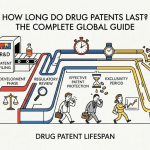
A 20-year patent term — running from the priority filing date, not the approval date — gives innovators the market exclusivity window they need to price above commodity. But that window is shorter than it looks on paper. A compound filed at pre-IND stage may consume seven to ten years of patent life before first commercial sale. The effective commercial exclusivity period for most small-molecule drugs sits between seven and twelve years, depending on the therapeutic area and FDA review clock.
That compression is why drug patent portfolio management is not a legal housekeeping function. It is the central commercial strategy.
Biopharmaceutical companies invest more than $12 million per patent issued by the USPTO — more than any other industry sector. The sales-per-patent ratio, by contrast, lands in the middle of the industrial distribution. The reason is structural: drug development failure rates mean the majority of patents filed during a program’s life never attach to a commercial product. A single blockbuster drug must generate revenues large enough to absorb not just its own R&D cost, but the accumulated cost of all the programs that failed before it. Patent exclusivity is the pricing umbrella that makes that arithmetic work.
The companies that treat IP as a reactive legal function — filing patents after R&D has made its decisions — consistently underperform those where patent strategy is integrated into target selection, compound series prioritization, clinical design, and regulatory sequencing. Portfolio managers who understand what their IP team does can ask sharper questions: not ‘do we have a patent?’ but ‘what is the breadth of our composition-of-matter claim?’, ‘have we filed continuations to cover the metabolites?’, ‘what is the Orange Book listing strategy for this formulation?’
This pillar page provides the technical depth to answer those questions.
Key Takeaways:
Effective commercial exclusivity for most small molecules is 7-12 years, not 20.
The $2.6 billion average cost-per-approval demands pricing power that only patent protection provides.
IP strategy integrated into R&D from target identification outperforms reactive patent filing.
Patent portfolio quality — breadth of claims, layering, and jurisdictional coverage — matters more than patent count.
2. The IP Asset Valuation Framework Every Portfolio Manager Needs {#2}
2.1 How to Value a Drug Patent Portfolio
Pharmaceutical IP valuation is not a uniform exercise. The value of a patent depends on: the breadth of its claims, its remaining term, the probability it survives a validity challenge, the size of the addressable market it protects, and the litigation history in its therapeutic class. A composition-of-matter patent on a drug with $5 billion in annual U.S. sales and four years of remaining term is worth more than a process patent on a drug generating $200 million globally, even if the process patent has 15 years left.
Four valuation methodologies dominate pharmaceutical IP practice:
The income approach — specifically discounted cash flow (DCF) analysis — is the most widely used for commercial-stage assets. It projects patent-protected cash flows, discounts at a rate reflecting technical and commercial risk, and subtracts the NPV of post-LOE revenues, which will collapse toward generic pricing. The delta between those two figures is the patent premium, i.e., what the patent is worth.
The market approach benchmarks against comparable licensing transactions or M&A deals. Royalty rates in pharma licensing vary sharply by asset stage and therapeutic area: early-stage oncology licenses may carry 5-8% royalty rates on net sales, while commercial-stage cardiovascular drugs in mature markets may settle closer to 3-5%. The 25% rule of thumb — where the licensee pays 25% of expected profits as a royalty — is widely cited but empirically unreliable; courts have rejected it as a standalone methodology in patent damage calculations.
The cost approach estimates what it would cost to recreate the underlying IP through independent R&D, useful for early-stage assets where no commercial benchmark exists. For platform technologies with multiple downstream applications, this approach often undervalues the asset significantly.
Option pricing models, particularly Black-Scholes adaptations, apply where a patent’s value depends on future decisions — whether to continue development, expand into new indications, or out-license. This methodology is common in biotech valuation where the pipeline consists of staged options rather than predictable cash flows.
2.2 IP Valuation in M&A Due Diligence
In pharmaceutical M&A, IP portfolio quality is frequently the primary driver of acquisition premium. When AbbVie acquired Allergan in 2020 for $63 billion, a substantial portion of that valuation rested on the patent architecture around Botox — a franchise whose composition-of-matter protection had expired but whose brand, clinical data exclusivity, and method-of-use patents sustained pricing power. The deal price reflected not just current revenues but the defensibility of future exclusivity.
Due diligence for pharma acquisitions must assess: whether Orange Book-listed patents accurately reflect the product’s composition and formulation, what Paragraph IV filings have been made against those patents, whether any inter partes review petitions are pending at PTAB, the jurisdictional coverage of key patents across the EU (including SPC status), Japan, China, and emerging markets, and whether the seller has filed continuation applications that could extend the portfolio’s effective term.
Gaps in any of those areas translate directly into reduced exclusivity periods, which compress the DCF valuation.
2.3 IP as Collateral in Debt Financing
Pharma IP portfolios increasingly serve as collateral in royalty monetization and structured debt transactions. Royalty Pharma, the largest publicly traded royalty acquirer in the sector, has built a portfolio exceeding $20 billion in projected royalties by purchasing royalty streams from academic institutions, small biotechs, and large pharma companies that prefer upfront capital. These transactions price the royalty stream based on the same DCF logic — patent term, claim breadth, litigation risk, and market size all feed the discount rate.
For smaller biotech companies without commercial revenues, IP-secured credit facilities allow them to monetize future royalties today, using patent protection as the loan’s collateral base. The collateral value erodes as the patent term shortens, which creates refinancing risk that treasury and IP teams must manage jointly.
Key Takeaways:
Patent valuation requires matching methodology to asset stage: DCF for commercial products, options pricing for pipeline.
In M&A, patent portfolio defensibility drives premium — not just the existence of patents but their breadth, Orange Book listing status, and litigation exposure.
Royalty monetization treats patents as financial instruments; claim breadth and remaining term directly determine lending capacity.
Investment Strategy: For institutional investors, the most useful signal from an IP portfolio review is not whether a company has patents, but whether those patents face active Paragraph IV challenges and whether the claim structure is narrow enough to be designed around. A drug with broad composition-of-matter claims and no Paragraph IV filers is worth materially more, on a risk-adjusted basis, than one with multiple ANDA filers even if both show identical current revenues.
3. Building a Layered Patent Portfolio: From Composition-of-Matter to Device Claims {#3}
3.1 The Patent Stack Architecture
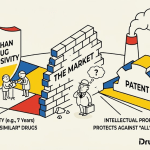
A single drug, commercially successful, generates multiple overlapping layers of IP protection filed across the development timeline. IP strategists call this construction a ‘patent stack’ or ‘patent fortress.’ Its purpose is to make market entry by any competitor — branded or generic — economically and legally prohibitive, even after the foundational composition-of-matter patent expires.
The layers work as follows:
Composition-of-matter (COM) patents protect the chemical structure of the active pharmaceutical ingredient. These are the foundational patents — the ones that block the generic from copying the molecule at all. They typically issue during preclinical or early Phase I development and consume the most patent term. When a COM patent expires, the rest of the stack must carry the load.
Formulation patents protect specific pharmaceutical preparations: particle size distributions, salt forms, polymorphic crystal structures, co-crystals, extended-release mechanisms, and delivery vehicles. These are strategically filed after Phase II or Phase III data identifies the commercially optimized formulation. Because they are filed later than the COM patent, they carry longer remaining commercial life. A drug whose COM patent expires in 2026 but whose extended-release formulation patent runs to 2031 still has five years of formulation-specific exclusivity — provided generic manufacturers cannot design around it or challenge its validity.
Method-of-use patents claim the therapeutic application — a specific indication, a specific patient population, a specific biomarker-defined subgroup. These have become increasingly important in oncology, where companion diagnostics define prescribable patient populations. A method-of-use patent covering BRCA-mutated ovarian cancer, for example, may have independent value from the COM patent on the underlying PARP inhibitor.
Process patents on manufacturing methods are underutilized in most small-molecule portfolios but are strategically important in biologics, where the manufacturing process is inseparable from the product’s characteristics. Fermentation conditions, purification sequences, and specific excipient combinations may all be patentable if they produce measurable differences in product quality or yield.
Dosage regimen patents cover specific dose schedules and titration protocols. Courts have been inconsistent in how they treat these claims — some jurisdictions require clear therapeutic differentiation from obvious dosing adjustments — but where valid, they provide an additional layer of challenge for generics that must either copy the regimen or design around it.
Device and delivery system patents cover auto-injectors, pre-filled syringes, inhaler mechanisms, and transdermal patches. These often have independent commercial value and can prevent biosimilar or generic manufacturers from using the same delivery system even if the underlying compound is off-patent.
3.2 Strategic Filing Timelines by Development Phase
The timing of each patent type should map to clinical development milestones, not be driven by administrative convenience:
During preclinical and Phase I: File the COM patent and any immediate salt form variants. File provisional applications for synthesis routes with novel steps. Establish priority dates for the core molecule, but do not disclose clinical data that has not yet been generated — premature disclosure can limit claim scope.
During Phase II: File formulation patents once the clinical team has selected the optimized dose form and delivery route. File polymorph patents if the compound displays multiple crystal forms with distinct stability or bioavailability profiles. Begin freedom-to-operate (FTO) analysis for the commercial formulation and proposed manufacturing process.
During Phase III: File method-of-use patents for each indication under study. If Phase III data reveals a patient subgroup with superior response — a predictive biomarker, an age band, a genetic variant — file that subgroup claim. File dosage regimen patents for the Phase III dosing protocol if it is not obvious from prior art.
Post-approval: File Orange Book patent listings for all eligible patents within 30 days of NDA approval. Begin monitoring for Paragraph IV certifications. File continuation applications to pursue dependent claims that were not pursued in the original application.
3.3 International Filing Strategy
Filing a patent in the U.S. secures exclusivity in the world’s single largest pharmaceutical market. But markets outside the U.S. — the EU27, Japan, China, Brazil, India — collectively represent more than 50% of global pharmaceutical revenues. A patent that is not enforced outside the U.S. is a portfolio with a large hole in it.
The Patent Cooperation Treaty (PCT) system provides a cost-efficient path to international filing: a single PCT application establishes priority in over 150 countries and gives the applicant 30 months from the priority date to make national phase entry decisions. That 30-month window is valuable — it allows the applicant to review Phase II data, assess market potential in individual countries, and select jurisdictions strategically rather than filing everywhere upfront.
In the EU, Supplementary Protection Certificates (SPCs) are the mechanism for extending patent term to compensate for regulatory review time. SPCs can add up to five years of exclusivity beyond the base patent, granted on a country-by-country basis within the EU (they are not granted centrally by the EPO). The EU is actively revising its SPC regulation, and proposed changes to the EU pharmaceutical legislative framework will affect how regulatory exclusivity interacts with patent monopolies — IP teams must model their European exclusivity period under both the current and proposed regulatory regimes.
In India, Section 3(d) of the Patents Act sets a substantially higher bar for secondary patent grants, requiring enhanced therapeutic efficacy for any new form of a known substance. Formulation and polymorph patents that would be straightforward to obtain in the U.S. or EU routinely fail the Section 3(d) standard. China has moved toward stronger patent protection following TRIPS compliance reforms, but enforcement quality remains variable by region and court. Brazil’s ANVISA requires concurrent patent examination for pharmaceutical patents, adding procedural complexity and delay.
Key Takeaways:
A patent stack filing across COM, formulation, method-of-use, process, dosage regimen, and device layers extends effective exclusivity well beyond the COM patent expiration date.
Filing timelines should be driven by clinical development milestones, not administrative calendar management.
International filing through PCT with selective national phase entry optimizes cost against market value.
EU SPC strategy is a distinct discipline from U.S. patent term extension and requires jurisdiction-by-jurisdiction modeling.
4. Patent Landscape Analysis: Reading the Competitive Map {#4}
4.1 What a Patent Landscape Actually Tells You
A patent landscape analysis aggregates all patents within a defined technological or therapeutic scope, maps them by applicant, filing date, claim type, jurisdictional coverage, and legal status, and produces a picture of where the IP is concentrated, who controls it, and where the white space lies.
For R&D planning purposes, a landscape analysis answers five questions: Who else is working in this space? Where is the technology heading based on filing trends? What is already claimed that we cannot enter without a license or design-around? Where are the enforceable gaps — unprotected chemical series, unexplored formulation approaches, unpatented patient subgroups? And which competitor patents are most vulnerable to invalidity arguments based on prior art?
For business development purposes, a landscape analysis identifies licensing targets — companies with foundational platform patents that any entrant in the space will need to license — and surfaces potential acquirees whose patent portfolios fill a strategic gap in your own.
The analysis process begins with scope definition: therapeutic target, mechanism of action, chemical class, disease indication, or some combination. Scope that is too narrow misses relevant prior art; scope that is too broad produces a dataset too large to be actionable. An experienced landscape analyst will iterate on scope based on what the first search pass returns.
Data retrieval covers the major patent offices — USPTO, EPO, JPO, CNIPA — plus WIPO’s PATENTSCOPE for PCT applications. For pharmaceutical landscapes, SciFinder and Reaxys add chemical structure search capabilities that keyword-based patent databases cannot replicate. Citation analysis within the landscape identifies which foundational patents are heavily cited by later filers, a signal of both technological centrality and high-value IP.
Data normalization is non-trivial: the same company may appear under dozens of name variations across jurisdictions, and patent family deduplication is necessary to avoid overcounting. Tools like Derwent Innovation, PatSnap, and AcclaimIP (Anaqua) handle this normalization systematically.
4.2 White Space Analysis and Repurposing Opportunities
White space analysis identifies areas within a therapeutic or technological domain where no issued patents exist, where patents have expired, or where claims are sufficiently narrow that a new entrant can develop adjacent technology without infringement risk.
White spaces arise for several reasons: a therapeutic mechanism that was understood but considered non-viable until new clinical data changed the risk calculus; a patient subgroup that prior developers did not identify; a delivery technology that was not available when the original patents were filed; or a geographic market that the original patentee chose not to pursue.
Drug repurposing is the white space opportunity with the fastest path to clinical value. When landscape analysis identifies that an approved drug’s composition-of-matter patent will expire while new indications remain clinically and commercially viable, the opportunity to file method-of-use patents for those new indications becomes strategically important. Allergan’s expansion of Botox from cosmetic use into migraine prevention, chronic headache, and hyperhidrosis represents exactly this dynamic: each new indication backed by a new method-of-use patent, each patent extending the effective commercial life of the franchise.
Pregabalin’s history is instructive in a different way. Warner-Lambert held composition-of-matter patents on pregabalin and method-of-use patents for epilepsy. Later, new method-of-use patents for neuropathic pain were added. Generic manufacturers, when the COM patent expired, argued that they could enter the market for epilepsy without infringing the neuropathic pain method-of-use patent. The resulting litigation across multiple European jurisdictions — with varying outcomes — illustrates the complexity of enforcing method-of-use patents against generic manufacturers who sell the compound with a ‘skinny label’ that omits the patented indication.
Key Takeaways:
Patent landscape analysis answers competitive, R&D, and business development questions simultaneously.
White space analysis requires normalized, deduplicated patent data to be actionable.
Drug repurposing generates new method-of-use patents and extends effective exclusivity, but enforcement against skinny-label generics requires jurisdiction-by-jurisdiction legal strategy.
Investment Strategy: For analysts building LOE (loss of exclusivity) models, patent landscape analysis reveals whether the incoming generic threat is limited to the COM patent or whether the generic also faces formulation, method-of-use, or device patents that will require separate challenges. A product with only one Orange Book-listed patent that expires in 18 months presents a very different risk profile than one with seven listed patents whose expirations stagger over a decade.
5. Lifecycle Management: The Full Evergreening Toolkit {#5}
5.1 What Evergreening Actually Is (and What It Is Not)
Evergreening is the collective term for strategies that extend a drug’s commercial exclusivity beyond its initial patent term without introducing a new active compound. The term carries negative connotations in policy circles, but the underlying strategies are legal, widely practiced, and financially significant for companies facing patent cliffs.
Evergreening strategies are not all equivalent in their commercial value or in the strength of their IP protection. Some — like the development of a genuinely superior extended-release formulation with demonstrated clinical advantages — offer real therapeutic benefit and durable IP. Others — like a trivial salt form change with no pharmacological differentiation — are more vulnerable to challenge and generate less goodwill with regulators and payers.
5.2 Formulation Evergreening: Extended-Release, Salt Forms, and Polymorphs
Extended-release (ER) formulations are the most commercially successful evergreening strategy. The mechanism is straightforward: as the immediate-release (IR) formulation approaches patent expiration, the manufacturer develops an ER version with an improved pharmacokinetic profile — smoother plasma concentration curves, less frequent dosing, reduced peak-related side effects — and obtains a new formulation patent. AstraZeneca’s transition from Prilosec (omeprazole IR) to Nexium (esomeprazole, the S-enantiomer) is a well-documented example: Nexium’s sales at peak exceeded $5 billion annually, substantially mitigating the revenue loss from Prilosec’s LOE.
Salt form patents protect specific acid-base salt combinations of the active molecule. Different salts can exhibit different solubility profiles, stability characteristics, and manufacturing behavior, generating patentable distinctions. Polymorph patents cover specific crystalline structures of the compound — two polymorphs of the same molecule can have different melting points, hygroscopicity, and dissolution rates, all of which affect pharmaceutical performance. Sanofi’s polymorph patent strategy on clopidogrel (Plavix) extended market exclusivity in some jurisdictions even after the base COM patent expired, though it was successfully challenged in others.
Co-crystals — non-covalent combinations of the API with a co-former molecule — represent a newer frontier in formulation patent strategy, with a growing body of case law defining their patentability boundaries.
5.3 Combination Therapies and New Indication Filing
Fixed-dose combination (FDC) products combine two previously separate drugs into a single formulation. Even when both components are off-patent individually, the specific combination may be patentable if it produces a therapeutic effect not obvious from the individual agents. Gilead’s HIV portfolio illustrates the strategy: Truvada combined emtricitabine and tenofovir, both of which had independent IP protection; the combination tablet generated new formulation and method-of-use patents while dramatically improving patient adherence.
New indication patents require genuine clinical development: the manufacturer must run clinical trials demonstrating safety and efficacy in the new indication, file an NDA supplement, and obtain regulatory approval for the new label. The patent claims the method of treating the new condition using the compound. Because these patents are filed after the initial approval, they often carry more remaining term than the original COM patent.
The regulatory and legal interaction between new indication patents and skinny-label generic entry is a live area of litigation. In the U.S., the Caraco decision established that generic manufacturers can use the patent carve-out process to seek amendments to use codes in the Orange Book, narrowing the scope of listed method-of-use patents. More recent litigation around Vanda Pharmaceuticals and its method-of-use patents for tradipitant illustrates that courts remain divided on where the boundary falls between a patentable new method of use and an obvious clinical extension.
5.4 Pediatric Exclusivity: Six Months of Commercially Significant Protection
The FDA grants six months of additional exclusivity to manufacturers who conduct and submit qualifying pediatric studies, regardless of whether those studies demonstrate efficacy in children. That extension applies to all Orange Book-listed patents on the product, not just those for which pediatric data was sought. For a blockbuster drug generating $3 billion in annual U.S. sales, six months of additional exclusivity is worth roughly $1.5 billion in revenue — more than enough to justify the clinical investment in pediatric studies.
Eli Lilly’s experience with fluoxetine (Prozac) demonstrated this dynamic clearly. The pediatric exclusivity extension kept generic competition at bay for an additional six months, generating hundreds of millions in incremental revenue during a period when the base compound patent had already expired.
5.5 Orphan Drug Exclusivity: Seven Years of Non-Patent Protection
Drugs designated for rare diseases (affecting fewer than 200,000 U.S. patients) receive seven years of orphan drug exclusivity (ODE) from the FDA and ten years from the EMA. ODE operates independently of patent protection and blocks FDA from approving a competing product for the same indication during the exclusivity period. For diseases with small patient populations but high unmet need and premium pricing, ODE can be worth more than an additional patent.
The strategic interaction between ODE and patent protection is important: a drug with both a COM patent expiring in year 10 and ODE expiring in year 15 is protected by ODE for five years after its base patent expires. If a new indication can be developed that also qualifies for orphan designation, a second ODE grant resets the clock.
5.6 The Patent Thicket: Humira as the Definitive Case Study
AbbVie’s Humira (adalimumab) holds the most extensively documented patent thicket in pharmaceutical history. As of its biosimilar entry date in the U.S. — January 2023, nearly 20 years after the drug’s 2003 launch — AbbVie had amassed over 250 patents covering the molecule, manufacturing processes, formulations, dosing regimens, devices, and methods of use. That portfolio delayed U.S. biosimilar entry by approximately seven years relative to European biosimilar market entry in 2018.
The financial consequence of that delay was substantial: Humira generated approximately $21 billion in U.S. revenues in 2022 alone. The cost of building and litigating that patent thicket — while enormous in absolute terms — was a fraction of the revenue it protected.
The policy and legal response has been proportionate. The FTC has published detailed analyses of pharmaceutical patent thickets, Congressional investigations have targeted the practice, and proposed legislation would limit secondary patent listings in the Orange Book to formulations that are actually approved for sale. The IRA’s drug price negotiation provisions create additional pressure on long-exclusivity assets by subjecting small-molecule drugs to negotiation nine years after approval and biologics 13 years after approval, partially nullifying the financial value of late-filed secondary patents.
Key Takeaways:
Extended-release formulation patents are the most commercially durable evergreening strategy.
Fixed-dose combination patents require genuine therapeutic rationale to survive Paragraph IV challenges.
Pediatric exclusivity adds six months to all listed patents and is worth $1.5 billion for a $3 billion drug.
Orphan drug exclusivity stacks onto patent protection and can extend effective exclusivity years past COM patent expiration.
Humira’s 250-patent thicket is the industry benchmark — and the regulatory flashpoint.
6. IP Valuation as a Core Asset: Case Studies by Drug and Company {#6}
6.1 Humira (Adalimumab) — AbbVie
At peak, Humira generated $21.2 billion in global revenues (2022). The IP architecture underpinning that revenue stream comprised composition-of-matter patents on adalimumab’s antibody sequence, manufacturing process patents covering cell culture conditions and purification steps, formulation patents on the high-concentration citrate-free subcutaneous formulation, device patents on the SureClick auto-injector, and method-of-use patents spanning rheumatoid arthritis, psoriatic arthritis, ankylosing spondylitis, Crohn’s disease, ulcerative colitis, plaque psoriasis, uveitis, and hidradenitis suppurativa.
The IP valuation at peak exclusivity — before meaningful U.S. biosimilar competition — reflected the full DCF of those cash flows discounted at a rate that embedded extremely low generic entry probability given the thicket’s breadth. Post-2023, as biosimilars including those from Amgen, Samsung Bioepis, and Coherus entered the U.S. market, the relevant IP valuation question shifted: how much residual brand premium can Humira sustain, and over what duration?
AbbVie’s management of the post-LOE transition — launching Skyrizi and Rinvoq as successor immunology assets — represents a portfolio-level IP strategy, not just a product-level one. The R&D investment in those successors was partly financed by Humira’s long exclusivity period.
IP Valuation Summary — Humira:
Peak market exclusivity value (U.S.): estimated $80-100 billion NPV at 2015
Patent thicket size: 250+ patents
U.S. biosimilar entry: January 2023
EU biosimilar entry: October 2018
Thicket-driven U.S. exclusivity extension: approximately 7 years vs. EU
6.2 Keytruda (Pembrolizumab) — Merck
Keytruda became the world’s best-selling drug in 2023 by revenues, generating approximately $25 billion globally. Its IP architecture reflects the PD-1 inhibitor class’s competitive patent landscape, where Merck, Bristol Myers Squibb (Opdivo), and Roche each hold foundational patents that interact in complex ways.
Merck’s composition-of-matter patents on pembrolizumab’s antibody sequence are foundational, but the commercial moat around Keytruda depends heavily on method-of-use patents spanning over 30 approved indications — from first-line non-small cell lung cancer to MSI-H solid tumors regardless of tissue of origin. The MSI-H/dMMR tumor-agnostic approval is particularly important: it is the first tumor-agnostic approval in oncology history, and the method-of-use patent claiming that application has independent commercial value.
For IP valuators, Keytruda’s key questions are: when does the foundational COM patent expire (the primary U.S. COM patent expires around 2028), how many of the 30+ indication-specific method-of-use patents are valid and infringed by any biosimilar entrant, and how does the Paragraph IV litigation landscape look for each listed patent?
Investment Strategy: Merck’s stock performance post-2028 will depend in part on the biosimilar entry timeline for pembrolizumab. Investors should track Paragraph IV filings against Keytruda’s Orange Book patents from 2026 onward, and monitor whether any biosimilar filer has mounted a credible IPR challenge to the foundational COM claims at PTAB.
6.3 Eliquis (Apixaban) — BMS/Pfizer
Eliquis is jointly owned and commercialized by Bristol Myers Squibb and Pfizer. Its composition-of-matter patent — the ‘208 patent — was scheduled to expire in 2022, but BMS and Pfizer successfully defended it against Paragraph IV challenges in litigation that extended effective exclusivity. A pediatric exclusivity extension added six months. Method-of-use patents for specific cardiovascular indications were also Orange Book-listed and challenged.
The Eliquis litigation, resolved in a settlement with generic manufacturers that allowed entry in April 2028, represents a case study in how settlement timing determines the commercial value of the IP estate. The settlement date — negotiated, not litigated — is the critical variable that IP teams and investors should track, because the settlement date determines when revenues collapse toward generic pricing.
6.4 PLIVA and Azithromycin — The Licensing Value Extraction Model
PLIVA, a Croatian pharmaceutical company, synthesized azithromycin and patented it internationally. Rather than building out its own global commercial infrastructure, PLIVA licensed the compound to Pfizer in 1986. Pfizer commercialized it as Zithromax, generating blockbuster revenues. PLIVA received annual royalties that funded its expansion into a significant regional pharmaceutical manufacturer.
The PLIVA-Pfizer transaction is the canonical illustration of licensing as a capital efficiency mechanism. A company with strong IP but limited commercial infrastructure can extract maximum value from its patents by licensing to a party with the marketing reach to realize that value globally.
Key Takeaways:
Humira’s patent thicket generated approximately 7 additional years of U.S. exclusivity relative to Europe, worth hundreds of billions in cumulative revenue.
Keytruda’s method-of-use patent covering MSI-H/dMMR tumors regardless of tissue of origin is a distinct, high-value IP asset beyond the COM patent.
Settlement timing in Paragraph IV litigation — not the trial outcome — often determines the actual LOE date and thus the commercial value of the IP estate.
Licensing to a commercial partner with global reach can generate more value than in-house commercialization for IP-rich, infrastructure-light companies.
7. Paragraph IV Filings, PTAB, and the Litigation Playbook {#7}
7.1 The Paragraph IV Certification Mechanism
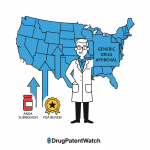
The Hatch-Waxman Act of 1984 created the abbreviated new drug application (ANDA) pathway for generic manufacturers and embedded within it a patent challenge mechanism: the Paragraph IV certification. A generic manufacturer files an ANDA with a Paragraph IV certification asserting that each Orange Book-listed patent is either invalid, unenforceable, or will not be infringed by the proposed generic product.
Filing a Paragraph IV certification is a legal act of infringement per the statute — it gives the patent holder standing to sue immediately without waiting for the generic to launch. The innovator has 45 days from receipt of the Paragraph IV notice letter to file a patent infringement lawsuit. Filing that lawsuit within 45 days triggers a 30-month FDA approval stay — the ANDA cannot be approved for 30 months, or until the court rules the patent invalid or not infringed, whichever comes first.
The first ANDA filer with a Paragraph IV certification earns 180 days of generic market exclusivity if it wins the litigation or if the innovator fails to sue within 45 days. That 180-day exclusivity period is enormously valuable for the first-filing generic: it is the only period during which there is one generic competitor rather than many, and the generic can price aggressively while still capturing substantial margin. The commercial value of first-mover generic exclusivity on a blockbuster drug can exceed $500 million.
7.2 Orange Book Listing Strategy: What Gets Listed and Why It Matters
The Orange Book (FDA’s Approved Drug Products with Therapeutic Equivalence Evaluations) is the critical interface between patent protection and generic market entry. A patent must be listed in the Orange Book to generate Paragraph IV challenges — and therefore to trigger the 30-month stay that delays generic entry.
FDA regulations specify which patents are listable: composition-of-matter patents on the approved drug substance, formulation patents on the approved dosage form, and method-of-use patents claiming an FDA-approved use. Process patents, manufacturing patents, and metabolite patents are generally not listable. The scope of what is properly listable has been actively litigated, and recent FTC enforcement has targeted improper Orange Book listings — specifically, device patents listed for drug products and manufacturing patents listed as if they were composition patents — because each improperly listed patent generates an additional 30-month stay that delays generic entry without legal justification.
Orange Book listing strategy requires a legal-commercial judgment call: listing more patents generates more potential 30-month stays and more litigation leverage, but improperly listed patents can be challenged and delisted, exposing the innovator to antitrust risk. Post-FTC enforcement in 2023-2024, IP teams should conduct a systematic audit of their Orange Book listings against the current FDA guidance on listability.
7.3 PTAB Inter Partes Review: The Generic’s Weapon of Choice
The America Invents Act of 2011 created the Patent Trial and Appeal Board (PTAB) and with it inter partes review (IPR), a post-grant challenge mechanism that has become generic manufacturers’ preferred tool for invalidating pharmaceutical patents. IPR petitions must be filed within one year of service of an infringement complaint, can be filed on novelty (anticipation) and obviousness grounds only, and are decided by a panel of three administrative patent judges rather than a district court judge.
The statistics are significant: PTAB institutes IPR in approximately 60-70% of petitions that meet the threshold, and of instituted IPRs, petitioners succeed in having at least some claims cancelled in the majority of cases. The institution rate and success rate vary by technology area — pharmaceutical patents in the small-molecule space face higher challenge rates than those in biologics, partly because chemical prior art is more accessible and obviousness arguments are more tractable.
IPR is faster and substantially cheaper than district court litigation: IPR trials complete in 12 months from institution, compared to the 2-4 year timeline typical in district court. For generic manufacturers, IPR operates as a cost-effective tool to invalidate secondary patents that might otherwise require expensive district court battles.
The innovator response to IPR has evolved. Sovereign immunity arguments — claiming that state entity patent ownership transfers immunity from IPR — were foreclosed by the Supreme Court in Regents of the University of Minnesota v. LSI Corp. Patent owners have had more success challenging IPR institution on constitutional grounds (Oil States was decided against this position at the Supreme Court, but the issue has not entirely disappeared), and on procedural grounds targeting the petition’s claim charts and prior art combinations.
7.4 Predictive Analytics in Litigation Strategy
Machine learning models trained on historical patent litigation outcomes — covering initial filing, claim construction orders, summary judgment rulings, and trial verdicts — can predict case outcomes with 75-85% accuracy based on textual analysis of the initial pleadings and early procedural events. These tools are not yet making litigation decisions, but they inform them: they help patent holders assess whether a challenged patent is defensible enough to litigate aggressively or whether settlement is the value-maximizing path.
For generic manufacturers, predictive litigation analytics inform ANDA filing strategy: which patents are most vulnerable to invalidity arguments, which courts and judges have historically been receptive to particular obviousness theories, and what claim construction positions are most likely to succeed in a given district.
Market value is the strongest single predictor of patent challenge: high-revenue drugs attract more Paragraph IV challenges. The therapeutic area matters too — cardiovascular drugs and diabetes drugs face higher challenge rates than orphan drugs, partly because the commercial stakes justify the investment in generic drug development programs.
Key Takeaways:
Paragraph IV certification triggers the 30-month FDA approval stay that is the central leverage point in small-molecule patent litigation.
First-filing generic exclusivity (180 days) can be worth over $500 million for blockbuster drugs.
PTAB IPR is faster, cheaper, and statistically more favorable to petitioners than district court, making it the generic manufacturer’s preferred challenge tool.
Predictive litigation analytics can inform both defensive (innovator) and offensive (generic) litigation strategy.
Investment Strategy: Monitor Paragraph IV notification receipt dates as a leading indicator of LOE timing. Innovators that receive Paragraph IV challenges and immediately file suit start the 30-month clock; those that fail to sue within 45 days lose the stay. Tracking court dockets for patent infringement suits in the wake of ANDA filings gives institutional investors a rough timeline for generic entry risk.
8. Licensing, Cross-Licensing, and Partnership Structures {#8}
8.1 The Licensing Transaction Framework
Pharmaceutical licensing transactions take several structural forms, each appropriate to a different strategic context:
Exclusive licenses grant one licensee the rights to use the IP in a defined field of use and territory, excluding all others including (typically) the licensor itself. These are standard for commercial-stage assets where the licensee needs market exclusivity to justify its development and commercialization investment. Exclusive licenses in pharma typically include milestone payments triggered by clinical and regulatory events, royalties on net sales, and minimum annual royalties that prevent the licensee from warehousing the asset without commercializing it.
Non-exclusive licenses grant rights to multiple parties simultaneously. These are common for platform technologies where the licensor has broader reach by licensing to many users than by restricting to one, and where the licensee does not require market exclusivity for the technology to be commercially valuable. Research tool licenses — covering assays, cell lines, or computational platforms used in drug discovery — are typically non-exclusive.
Cross-licensing allows two companies to license patents to each other. This is particularly useful in technology areas where each party holds foundational patents that the other needs, and where litigation over those overlapping rights would be mutually destructive. The biopharmaceutical space is full of overlapping foundational platform patents — particularly in antibody engineering, gene editing (CRISPR), and RNA therapeutics — where cross-licensing is the commercially efficient resolution to patent thicket problems between innovators.
Sublicensing is the right to license a licensed technology to a third party. Academic institutions that license foundational research to small biotechs typically require sublicensing rights to pass through to any acquirer or partner, ensuring the institution continues to receive economic benefit even if the biotech is acquired or out-licenses the technology to a large pharma company.
8.2 Royalty Rate Benchmarks and Value Sharing
Royalty rates in pharmaceutical licensing are not standardized but follow patterns by development stage and therapeutic area. Early-stage (pre-IND) assets in oncology typically carry royalty rates of 5-8% on future net sales, reflecting the high probability that the program will fail before generating any revenue. Commercial-stage licensing transactions — where the asset has FDA approval and a revenue track record — warrant rates of 8-15% or higher, depending on the remaining patent term, the competitiveness of the therapeutic area, and the licensee’s commercial scale.
The 25% rule — where the licensee pays 25% of its expected profit from the product as a royalty — is widely taught but judicially unreliable. The Federal Circuit, in Uniloc USA, Inc. v. Microsoft Corp., rejected the 25% rule as an independent methodology for calculating reasonable royalties in patent damages proceedings. Royalty negotiations should be grounded in comparable license transactions (the ‘comparable licenses’ approach endorsed by the Georgia-Pacific factors), the value attributable to the specific patent claims at issue, and the incremental profits the licensee will earn from using the IP.
8.3 Authorized Generics and Their Strategic Logic
An authorized generic (AG) is a product sold by a brand manufacturer — or its authorized partner — that is identical to the brand product but sold under the generic label at a generic price. Launching an AG is not a licensing transaction in the traditional sense, but it functions as one strategically.
When a first-filing generic manufacturer wins its Paragraph IV challenge and receives 180 days of generic market exclusivity, it expects to capture a large share of prescriptions during that exclusivity period. An AG launched by the brand manufacturer during the same period competes directly with the first-filer, splitting the 180-day exclusivity revenue. This reduces the first-filer’s profit from the exclusivity period, which in turn reduces the incentive for other generic manufacturers to invest in Paragraph IV challenges against future brand drugs.
Brand manufacturers use AG launches as a defensive commercial strategy: they reduce the revenue loss during the generic entry period while also deterring future Paragraph IV challenges by making those challenges less profitable.
Key Takeaways:
Exclusive licensing structures in commercial-stage pharma require milestone, royalty, and minimum annual royalty provisions to prevent asset warehousing.
The 25% royalty rule is legally rejected as a standalone damages methodology; comparable license analysis is the appropriate framework.
Authorized generics split the 180-day first-filer exclusivity revenue, functioning as a deterrent to future Paragraph IV challenges.
9. AI and Machine Learning in Patent Portfolio Management {#9}
9.1 AI in Prior Art Search and Patent Drafting
Prior art search has historically been the most time-consuming element of patent application prosecution. A thorough prior art search must cover granted patents, published patent applications, scientific literature, conference proceedings, product manuals, and any other public disclosure that predates the claimed invention. For pharmaceutical compounds, that search must extend to chemical databases — chemical prior art can anticipate a patent claim even if the compound was never patented but only described in a synthesis paper.
AI-powered prior art search tools — including platforms built on large language models fine-tuned on patent corpora — can scan hundreds of millions of documents and return ranked results in hours rather than weeks. These tools identify not just textually similar documents but semantically related prior art: a paper describing the synthesis of a structurally related compound may anticipate a patent claim even without identical keyword matches.
In patent drafting, AI assists by generating alternative claim language, identifying claim language that has been construed narrowly in prior litigation, suggesting dependent claims that provide fallback positions if independent claims are challenged, and generating examples that support broad claim scope. AI-generated examples can substantially strengthen a patent’s written description requirement — a foundational requirement for patentability under 35 U.S.C. § 112 — by populating an application with the kind of working examples across a broad chemical space that historically required extensive laboratory work.
The inventorship question is legally unresolved but practically important. U.S. patent law requires that inventors be natural persons who contributed to the conception of the claimed invention. An invention whose conception is attributable entirely to an AI system — where the human role was limited to operating the system and recognizing its output — may be unpatentable. The Federal Circuit’s decision in Thaler v. Vidal (2022) held that AI cannot be named as an inventor. Companies using AI in drug discovery must maintain records documenting the human contribution at each stage of the inventive process, both to support valid inventorship and to defend that inventorship in IPR proceedings.
9.2 Predictive Analytics for Patent Prosecution and Portfolio Management
Machine learning models trained on USPTO examination history can predict, with meaningful accuracy, the likelihood that a given application will issue, the likely prosecution timeline, and which claim elements are most likely to face rejection. These predictions inform resource allocation: whether to invest in continued prosecution of a borderline application, whether to file a continuation with narrower claims, or whether to abandon and redirect the filing budget.
Portfolio management AI tools map the interactions between a company’s patents and those of competitors, identifying freedom-to-operate risks for new product development programs, cross-licensing opportunities where each party holds blocking patents, and white spaces in competitor portfolios that represent acquisition or in-licensing targets.
In drug discovery, AI platforms from companies including Recursion Pharmaceuticals, Insilico Medicine, and Exscientia have reduced the time from target identification to clinical candidate nomination from 3-5 years to 12-24 months in some programs. Faster drug discovery compresses the timeline to IND filing, which compresses the timeline to patent filing, which means more effective patent term remaining at the time of commercial launch. This is the ‘AI multiplier’ on IP strategy: faster R&D directly increases the effective market exclusivity period.
9.3 Revenue Forecasting Models Incorporating Patent Data
AI-driven revenue forecasting models that incorporate patent expiration data, Paragraph IV filing history, litigation outcomes, and regulatory exclusivity timelines have demonstrated meaningfully higher accuracy in predicting drug launch revenues than traditional sell-side analyst consensus models, particularly for products in their first 18-24 months post-launch where historical analogs are limited.
These models matter for two reasons: they allow commercial teams to optimize launch pricing and market access strategies, and they allow finance teams to build more accurate LOE provisions into their long-range plans. The Inflation Reduction Act’s drug pricing negotiation provisions complicate the revenue forecasting problem by introducing a price negotiation event at year nine (small molecules) or year thirteen (biologics) post-approval, a variable that pre-IRA forecasting models did not capture.
Key Takeaways:
AI prior art search compresses weeks of manual search into hours and catches semantically related prior art that keyword searches miss.
Inventorship documentation must demonstrate human conception at each AI-assisted step in the discovery process to support valid patent applications.
Faster AI-driven drug discovery directly increases effective commercial patent life by shortening the pre-filing development timeline.
AI revenue forecasting models incorporating patent and regulatory exclusivity data outperform traditional analyst consensus, particularly for launch-stage products.
10. Databases, Analytics Platforms, and Decision Tools {#10}
10.1 Primary Patent Databases
The foundational patent databases — USPTO’s patent full-text database, the EPO’s Espacenet, and WIPO’s PATENTSCOPE — provide direct access to issued patents and published applications globally. Each has strengths: USPTO is authoritative for U.S. prosecution history; Espacenet provides English machine translations of non-English patents; PATENTSCOPE captures PCT applications before national phase entry.
For chemical structure search — essential for pharmaceutical prior art — these databases are inadequate. SciFinder (CAS) and Reaxys (Elsevier) provide chemical structure and substructure search against both patent and non-patent literature, covering millions of compounds. STN provides batch chemical similarity search at industrial scale.
10.2 Specialized Pharmaceutical IP Platforms
DrugPatentWatch aggregates pharmaceutical patent data with commercial regulatory data: Orange Book listings, ANDA filings, Paragraph IV certifications, litigation history, patent expirations, and clinical trial linkages. Its value is in connecting patent data to commercial context — not just ‘this patent expires in 2031’ but ‘this patent has been challenged by four ANDA filers, and one has reached settlement for entry in 2029.’ The platform provides expiration alerts and supports scenario modeling for LOE timing.
IPD Analytics provides drug lifecycle analysis by teams that include former Federal Circuit clerks, patent attorneys, PhD scientists, and financial forecasters. Its market impact forecasts model the commercial consequences of patent litigation outcomes, regulatory decisions, and generic entry timing with a quantitative rigor that pure patent databases cannot provide. For institutional investors, IPD Analytics is the closest to an investable signal that pharmaceutical patent data produces.
Anaqua’s AcclaimIP searches over 150 million patent documents from more than 100 countries with AI-assisted classification and portfolio mapping tools. Its annuity decision reporting automates the go/no-go decision on patent maintenance fees — an administrative function that nonetheless has real financial consequence at scale. Abandoning patents that have become commercially irrelevant before their term expires saves maintenance fees; maintaining commercially important patents through their full term is a prerequisite for the exclusivity they protect.
Derwent Innovation (Clarivate) has historically been the standard tool for large pharmaceutical company patent analytics. Its Derwent World Patents Index provides enhanced indexing and abstracts for pharmaceutical patents going back decades, supporting long-horizon prior art searches and patent family tracking.
PatSnap integrates patent data with scientific literature, clinical trial registrations, and regulatory filings in a unified analytics environment. Its Innovation Intelligence module applies ML classification to identify which competitor patents are most likely to generate future litigation risk.
10.3 Freedom-to-Operate Analysis: The Required Pre-Launch Assessment
Freedom-to-operate (FTO) analysis is a structured legal assessment of whether a proposed product or manufacturing process can be commercialized without infringing valid, enforceable third-party patents. FTO analysis is required at multiple stages: before committing to a specific drug target or chemical series, before initiating Phase III, and before commercial launch.
FTO analysis is jurisdiction-specific. A product may be free to operate in the U.S. but infringe a European patent, or vice versa. The analysis requires identifying all potentially relevant patents in each target market, assessing the scope of their claims through claim construction, evaluating the strength of the claims against available prior art, and assessing the likelihood that the patent holder would sue and prevail.
FTO analysis does not guarantee non-infringement. It assesses risk, not certainty. A thorough FTO performed by experienced patent counsel, supported by the analytics platforms described above, allows a company to enter the market with eyes open about its patent risk profile and to design its product and manufacturing process to minimize that risk.
Key Takeaways:
Chemical structure search databases (SciFinder, Reaxys) are prerequisites for pharmaceutical prior art analysis that keyword patent databases cannot replace.
DrugPatentWatch and IPD Analytics connect patent data to commercial context; the former for operational tracking, the latter for investment-grade LOE modeling.
FTO analysis is a required pre-commercialization step in every jurisdiction where the product will be sold.
11. Investment Strategy: How Institutional Investors Read Patent Data {#11}
11.1 Patent Expiration as the Core LOE Signal
For institutional investors in pharmaceutical and biotech equities, patent expiration data is not background noise — it is the primary driver of long-range revenue modeling. When a drug’s primary composition-of-matter patent expires, revenues in affected markets typically fall 60-80% within 12 months of generic entry, as generic pricing pressure compresses net price and pharmacy substitution erodes brand volume simultaneously.
The timing of that collapse is the key variable, and it is not always the COM patent expiration date. Settlement agreements between innovators and generic manufacturers frequently set commercial generic entry dates before the patent expiration date. Orange Book-listed secondary patents may delay generic entry past the COM expiration. Authorized generic launches by the brand manufacturer may pre-empt some generic volume even during the 180-day first-filer exclusivity period.
Building a rigorous LOE model requires tracking: the expiration dates of all Orange Book-listed patents, the status of Paragraph IV challenges against each, the litigation timeline and any settlement disclosures (which must be submitted to the FTC under the Hatch-Waxman Act), and the regulatory exclusivity periods that operate independently of patent protection.
11.2 Reading the PTAB Docket for Investment Signals
PTAB filings are public records. An IPR petition filed against a blockbuster drug’s primary formulation patent is a material event for the drug’s revenue outlook — but it is not automatically disclosed by the patent holder to investors through standard earnings reporting channels. Sophisticated investors monitor PTAB’s docket actively, track institution decisions, and model the commercial impact of successful patent invalidation.
An IPR that is instituted signals that PTAB found at least a reasonable likelihood that the challenged claims are unpatentable. An IPR that results in cancellation of claims removes those claims from the Orange Book-listed patent, reducing the innovator’s litigation leverage in subsequent Paragraph IV disputes. An IPR outcome that survives without claim cancellation strengthens the patent’s presumption of validity and its commercial value.
11.3 Pipeline Patent Filings as Early-Stage R&D Signals
Patent applications for novel chemical series, new biological targets, and new therapeutic mechanisms are filed during the early stages of pharmaceutical R&D — years before clinical trials begin, let alone before market approval. For investors in pharmaceutical and biotech stocks, monitoring a company’s patent filings provides a forward-looking window into its R&D pipeline that financial statements and press releases do not.
The 18-month publication lag on patent applications (between filing and public disclosure) means that recently published applications reflect filing decisions made 18 months ago. For early-stage programs, this publication provides the first public evidence that a company is pursuing a specific target or mechanism. Companies with sophisticated IP intelligence capabilities can identify competitor R&D directions from published applications and adjust their own R&D resource allocation accordingly.
Key Takeaways:
LOE modeling must track settlement agreements and secondary patent expirations, not just the COM patent date, to accurately forecast revenue timing.
PTAB institution and outcome decisions are material events for innovator revenue outlooks and should be monitored on the public docket.
Patent application publications provide a 18-month lagged but genuine window into competitor R&D directions.
Investment Strategy: Build an expiration calendar tracking all Orange Book-listed patents for positions in your pharmaceutical portfolio, cross-referenced against ANDA filings and Paragraph IV litigation status. Overweight positions in drugs where the primary COM patent is intact, secondary patents have not faced credible Paragraph IV challenges, and regulatory exclusivity extends past the COM expiration. Underweight or hedge positions in drugs where multiple Paragraph IV filers have reached settlement for near-term entry, regardless of the nominal patent expiration date.
12. Regulatory Exclusivity Stacking: The Global Jurisdictional Map {#12}
12.1 U.S. Regulatory Exclusivities
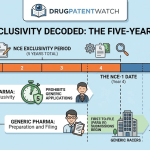
New Chemical Entity (NCE) exclusivity grants five years of data exclusivity from the date of first FDA approval for a drug containing a new active ingredient. During this period, the FDA cannot accept an ANDA that relies on the innovator’s clinical data. After NCE exclusivity expires, a generic manufacturer can file an ANDA — but must still challenge any Orange Book-listed patents through the Paragraph IV process.
Data exclusivity (three years) applies to NDAs for new conditions of approval, new formulations, or new routes of administration that required new clinical investigations to support approval. This is narrower than NCE exclusivity but nonetheless blocks ANDA approval during the exclusivity period.
New Biologic exclusivity grants 12 years of reference product exclusivity from the date of first approval for a licensed biological product under the BPCIA. During the first four years, the FDA cannot even accept a 351(k) biosimilar application (the biosimilar analog of an ANDA). No generic equivalent can enter the market for 12 years, regardless of patent status.
Pediatric exclusivity, as discussed above, adds six months to all existing patent and regulatory exclusivity periods for the drug.
Orphan drug exclusivity grants seven years from the date of approval for a drug or biological product designated for a rare disease. ODE blocks FDA from approving a ‘same drug’ for the same indication for seven years. Multiple ODE grants for different orphan indications can stack, and ODE can extend protection past COM patent expiration.
12.2 European Regulatory Exclusivities
The EU system grants eight years of data protection from the date of EU marketing authorization for new medicinal products. During this period, no generic can use the innovator’s clinical data to support its own application. A further two years of market protection (during which a generic may complete its regulatory process but cannot market) follows the eight-year data protection period. An additional one year of market protection is available if a new therapeutic indication with significant clinical benefit is approved during the data protection period. The total 8+2+1 formula can extend effective EU exclusivity to 11 years from first approval.
SPCs compensate for time spent in regulatory review before marketing authorization. An SPC can extend a patent’s protection by up to five years, with a maximum total patent protection period (patent term plus SPC) of 15 years from first EU marketing authorization. SPCs are granted nationally in each EU member state based on a centrally issued marketing authorization. The EU is reforming its SPC regulation; proposals under discussion include unitary SPCs valid across all EU member states and a manufacturing waiver that would allow generic manufacturers to produce for export outside the EU during the SPC period.
Orphan medicinal product designation grants 10 years of market exclusivity in the EU, blocking the EMA from accepting applications for similar medicinal products for the same indication.
12.3 Japan, China, and Emerging Markets
Japan grants data exclusivity for eight years from the date of approval, with patent term extensions averaging two years for pharmaceutical patents that lost term during regulatory review. Japan’s patent system is technically comparable to the U.S. and EU, with well-functioning enforcement mechanisms.
China’s pharmaceutical patent system has strengthened materially since TRIPS implementation and subsequent domestic reforms. Data exclusivity in China runs six years from the date of NDA approval, and patent linkage provisions — modeled loosely on Hatch-Waxman — were introduced in 2021. Patent term extension for pharmaceuticals was also introduced, offering compensation of up to five years for regulatory review time.
India’s Section 3(d) requires that any new form of a known substance — including new salts, esters, polymorphs, metabolites, and combinations — demonstrate significantly enhanced efficacy relative to the known substance to qualify for patent protection. This provision effectively blocks most secondary pharmaceutical patents that would be routinely granted in the U.S. or EU, making India a systematically weaker patent market for evergreened pharmaceutical products.
Brazil’s patent system includes a pre-grant opposition mechanism for pharmaceutical patents, and ANVISA (the Brazilian health regulatory agency) plays a role in pharmaceutical patent examination that does not exist in other major markets. Both mechanisms create additional delay and uncertainty for international pharmaceutical patent holders seeking protection in Brazil.
Key Takeaways:
Regulatory exclusivities in the U.S., EU, and Japan stack with patent protection and can extend effective market exclusivity years past COM patent expiration.
EU SPC reform, if enacted, could materially change the European exclusivity landscape for biologics and small molecules.
India’s Section 3(d) systematically blocks secondary pharmaceutical patents, making the Indian patent portfolio strategy fundamentally different from those in Western markets.
China’s patent linkage and patent term extension systems, introduced in 2021, have strengthened IP protection but enforcement quality varies.
13. Biosimilars and the Biologic Patent Architecture {#13}
13.1 How Biologic Patents Differ from Small-Molecule Patents
Biologic drugs — antibodies, fusion proteins, enzymes, cell and gene therapies — present a categorically different patent landscape from small molecules. The molecule itself is not synthesized through a defined chemical process; it is expressed by living cells through a manufacturing process that is part of the product’s identity. Two biologics with identical amino acid sequences produced by different manufacturing processes may have different glycosylation patterns, aggregate profiles, and immunogenicity — characteristics that can affect clinical safety and efficacy.
This means that manufacturing process patents are foundational to biologic IP protection in a way that has no direct analog in small-molecule pharmaceuticals. AbbVie’s Humira patent thicket includes dozens of manufacturing patents that cover specific cell culture conditions, purification steps, and formulation parameters for adalimumab production. A biosimilar manufacturer that copies the amino acid sequence but uses a different manufacturing process may or may not infringe those process patents, depending on the specific claims and the specific process employed.
13.2 The BPCIA Patent Dance
The Biologics Price Competition and Innovation Act (BPCIA) created the regulatory pathway for biosimilar approval and embedded a structured patent resolution process — colloquially called the ‘patent dance’ — that is both more complex and less litigated than the Hatch-Waxman Paragraph IV process.
The patent dance requires the biosimilar applicant to share its 351(k) application with the reference product sponsor within 20 days of FDA acceptance. The sponsor then has 60 days to identify patents it believes would be infringed. The parties exchange patent lists and engage in a structured negotiation to determine which patents will be litigated in an immediate Phase I lawsuit. After the Phase I lawsuit, the biosimilar applicant must provide 180 days notice of its commercial launch date, triggering a second round of patent disputes over any patents not included in Phase I.
Participation in the patent dance is not technically mandatory under the BPCIA — the Supreme Court held in Sandoz Inc. v. Amgen Inc. (2017) that failure to share the 351(k) application triggers the reference product sponsor’s right to immediate suit under state law, but does not automatically mandate the dance. In practice, most biosimilar applicants participate because the alternative — immediate state law infringement suits — is worse.
Regeneron’s litigation strategy around Eylea (aflibercept) illustrates how reference product sponsors use the patent dance: Regeneron asserted 72 patents against biosimilar filers. Courts granted preliminary injunctions based on formulation patents even as method-of-use and other formulation patents were invalidated or disclaimed. The biosimilar entry timeline for Eylea was materially delayed by the breadth of the patent assertion, even though many individual patents did not survive challenge.
13.3 Biosimilar Interchangeability: The Last IP Frontier
FDA’s interchangeability designation — which allows pharmacists to substitute a biosimilar for the reference biologic without prescriber intervention, the same way generic substitution works for small molecules — requires the biosimilar manufacturer to demonstrate that switching between the reference product and the biosimilar produces the same clinical result as remaining on the reference product. This is a higher standard than biosimilarity alone.
Interchangeability designation removes the reference product sponsor’s most durable commercial advantage: prescriber inertia and formulary preference for the branded biologic. Once a biosimilar achieves interchangeability status, pharmacy-level substitution erodes brand volume rapidly, replicating the generic substitution dynamic for small molecules.
As of early 2026, FDA has granted interchangeability designations to several biosimilars, including Semglee (insulin glargine, interchangeable with Lantus) and multiple adalimumab biosimilars interchangeable with Humira. The commercial consequences of interchangeability designation will become clearer as more biosimilars achieve the designation and as PBM formulary decisions incorporate substitution policies.
Key Takeaways:
Biologic manufacturing process patents are foundational IP protection with no direct small-molecule analog.
The BPCIA patent dance is more complex than the Paragraph IV process, with structured information exchange requirements and a two-phase litigation timeline.
Biosimilar interchangeability designation — not biosimilarity approval — is the threshold that triggers pharmacy-level substitution and rapid brand volume erosion.
14. Strategic Recommendations for IP Teams and Portfolio Managers {#14}
14.1 For Innovator IP Teams
Conduct an annual portfolio audit that maps each patent to the commercial product it protects, verifies its Orange Book listing status, assesses its vulnerability to IPR challenge based on prior art identified in landscape analysis, and calculates its contribution to effective market exclusivity. Patents that no longer protect commercial value and face high invalidity risk should be abandoned to redirect maintenance fee budget toward stronger assets.
Integrate IP strategy into Phase II clinical design. The patient population and dosing regimen selected for Phase II defines the scope of potential method-of-use and dosage regimen patents. A Phase II designed with stratified biomarker-defined subgroups generates patent claims on those subgroups; a Phase II that ignores biomarker stratification forgoes that layer of IP protection.
File continuation applications systematically to pursue dependent claim coverage that was deferred during original prosecution. Continuation applications are low-cost relative to new applications and can produce claims that are both more specific (and therefore easier to validate) and more strategically targeted to block likely generic design-arounds.
Track competitor Paragraph IV certifications across your therapeutic area, even for competitors’ drugs. The invalidity arguments made in those proceedings may reveal prior art that could affect your own portfolio, or may establish claim construction positions that affect your FTO in adjacent development programs.
14.2 For Portfolio Managers and Business Development
Quantify IP runway for each asset in the portfolio using a consistent methodology: map all Orange Book-listed patents and their expirations, note any pending Paragraph IV challenges and their settlement status, layer regulatory exclusivities on top of the patent map, and calculate the probability-weighted effective exclusivity date. This is the number that drives commercial planning, not the nominal patent expiration date.
In licensing negotiations, require IP representations and warranties that are specific: the licensor should warrant that no Paragraph IV certifications have been received and not disclosed, that no IPR petitions are pending, and that the Orange Book-listed patents accurately reflect the licensed formulation and indication. Vague IP reps that do not cover PTAB proceedings or Paragraph IV status are inadequate for commercial-stage pharmaceutical transactions.
For assets approaching LOE, model the authorized generic strategy explicitly. In many cases, an AG launch by the brand or its partner generates more total margin during the generic entry period than a brand-only strategy, because the AG captures some of the generic volume that would otherwise go exclusively to first-filer generics.
14.3 For Institutional Investors
Build patent intelligence into pharmaceutical equity research as a primary input, not a footnote. The key variables are: effective exclusivity date (not nominal patent expiration), Paragraph IV filing status for all Orange Book-listed patents, PTAB IPR petition docket for the company’s key assets, and regulatory exclusivity periods by jurisdiction.
Invest in access to DrugPatentWatch, IPD Analytics, and comparable platforms that translate patent data into commercial LOE forecasts. The cost of these platforms is negligible relative to the alpha available from correctly modeling generic entry timing, which is often mispriced by sell-side consensus for two to four years in advance of the actual LOE date.
Monitor legislative and regulatory developments that could shorten effective exclusivity periods: IRA drug price negotiation provisions, proposed restrictions on Orange Book listing practices, and potential PTAB reform legislation. These are macro-level IP risks that affect entire therapeutic classes and cannot be managed at the individual asset level.
Key Takeaways:
Annual patent portfolio audits that map patents to commercial products and assess invalidity risk are the foundation of proactive IP management.
Paragraph IV certification status, not nominal patent expiration, is the correct LOE input for commercial planning.
Institutional investors should build patent intelligence into their pharma equity analysis as a primary, not supplementary, input.
IRA drug price negotiation provisions, proposed Orange Book reforms, and PTAB policy changes are macro IP risks requiring portfolio-level hedging.
Summary: The Drug Patent Portfolio Management Checklist
For IP teams, portfolio managers, and investors who want to move immediately from reading to action, the following represents the operational checklist derived from this analysis:
Portfolio Architecture: Audit the patent stack for each commercial drug against the patent types described in Section 3. Identify which layers are missing and whether the development timeline allows for new filings. Verify that all eligible patents are properly listed in the Orange Book within 30 days of NDA approval, and audit existing listings for FTC-listability compliance.
Landscape and Competitive Intelligence: Run a patent landscape analysis for each therapeutic area where you have commercial or pipeline assets. Update it annually. Flag any competitor patent filings in your space that could affect your FTO or represent a design-around risk for your own product.
Lifecycle Management: Map your LOE calendar five years forward, including both patent expirations and regulatory exclusivity end dates. Identify which assets have lifecycle management opportunities — ER formulation, new indication, pediatric study, combination product — that could extend exclusivity. Evaluate the litigation risk of each lifecycle management patent before relying on it in your commercial plan.
Litigation Readiness: For each Orange Book-listed patent, have a pre-prepared litigation response plan: outside counsel on standby, prior art clearance performed, validity opinion updated within the last 12 months, and a settlement value model ready. The 45-day window to file an infringement lawsuit after a Paragraph IV notice is not enough time to start litigation preparation.
Technology and Data: Deploy at minimum DrugPatentWatch for operational patent tracking, one AI-assisted prior art search tool for prosecution and FTO, and a litigation analytics platform for assessing invalidity risk and predicting PTAB outcomes. Integrate patent expiration data directly into financial planning models so LOE assumptions are updated continuously rather than at annual plan cycles.
This analysis draws on public patent filings, regulatory data, court records, and industry financial disclosures. It does not constitute legal advice. Patent strategy decisions require qualified legal counsel with pharmaceutical IP expertise.