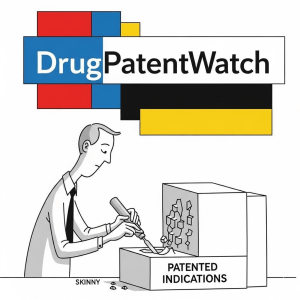
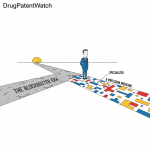
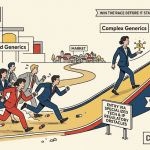
In the complex ecosystem of pharmaceutical intellectual property, few topics are as fraught with strategic tension as “skinny labeling.” For IP and R&D professionals, as well as the legal and investment communities that support them, this is more than just a regulatory term; it is a critical battleground where two foundational policy goals collide.1 On one side, the desire to encourage groundbreaking research and development by protecting the financial investment of pioneering drug companies. On the other, the imperative to foster timely generic competition, thereby making life-saving medications more affordable and accessible for patients.3 This inherent conflict, codified within the landmark Hatch-Waxman Act of 1984, has been a source of both innovation and contention for decades.
For a long time, the rules of this engagement seemed relatively settled. Skinny labeling emerged as a commonplace, reliable strategy for generic manufacturers to enter the market.3 However, a series of recent, high-profile legal rulings has shaken this fragile equilibrium. These decisions have not merely refined the existing legal framework; they have fundamentally reshaped the strategic calculus for every player in the industry, from the largest multinational pharmaceutical corporations to the most agile biotech startups. The once-clear path has become more perilous, and the stakes—measured in billions of dollars and years of market exclusivity—have never been higher. This report will move beyond the theoretical to provide a data-driven, practical guide to navigating this new, more volatile landscape, offering a clear-eyed analysis of the risks and opportunities that lie ahead.
The Anatomy of a Skinny Label: The Hatch-Waxman Foundation
At its core, skinny labeling is a direct result of the Abbreviated New Drug Application (ANDA) pathway established by the Hatch-Waxman Act.1 The ANDA process allows a generic manufacturer to gain approval by demonstrating that its product is bioequivalent to a brand-name drug, bypassing the need for expensive and time-consuming clinical trials on safety and efficacy.1
To navigate the complex web of patents that can protect a brand-name drug, an ANDA applicant must choose one of several “certifications”.1 The most common and most litigious is the Paragraph IV certification, which asserts that the brand’s patents are either invalid or will not be infringed.1 However, a different pathway exists specifically for drugs with multiple indications, where some uses are no longer patented but others remain under patent protection. This is where the Section viii certification comes into play.1
A generic company filing a Section viii certification states to the FDA that it will not market its drug for any of the patented uses.1 To make this a reality, the generic must submit a “skinny label” that meticulously “carves out” all references to the patented indications.3 This strategy is a direct statutory countermeasure to “evergreening”—a practice where innovators extend a product’s life by adding new, narrow use patents, which can effectively block generic entry even after the original compound patent expires.3
The FDA’s role in this process is explicitly “ministerial”.1 The agency relies on “use codes” provided by brand manufacturers in the Orange Book to identify which indications are patent-protected.1 This system is not without its challenges, as brand companies have been known to submit overly broad use codes, which can be legally challenged by generics.1 Once a generic is approved, it is deemed therapeutically equivalent to the brand, meaning that in most states, a pharmacist can automatically substitute it for the brand-name version, regardless of the skinny label.3 This creates a fundamental tension: from the innovator’s perspective, the carve-out is often “illusory,” as the generic product can still be used by prescribing physicians for the patented indication, setting the stage for future litigation.1 The prevalence of this strategy before the legal landscape shifted is evident in the data; from 2015 to 2019, approximately half of all new generic prescriptions for brand-name drugs with use patents entered the market with a skinny label.3
Navigating the Legal Gauntlet: Landmark Precedents and Induced Infringement
The Legal Nexus: Induced Infringement and the Skinny Label
The core legal risk for a generic manufacturer employing a skinny label strategy is a claim of induced patent infringement. The legal standard for this offense is clear, but its application is often ambiguous. To prove inducement, an innovator must demonstrate two things 8: first, that a third party (most often a prescribing physician) has directly infringed the patent by using the drug for the patented indication; and second, that the generic manufacturer knowingly encouraged or promoted that infringing use.9
The generic drug’s label is a primary piece of evidence in this analysis, but the courts have made it clear that it is not the only one.8 The ambiguity lies in proving the generic company’s “intent” to encourage infringement. While a generic company knows its product is likely to be used for the patented indication—due to the practice of automatic substitution—this knowledge alone is not sufficient to meet the legal standard.11 As a result, the legal inquiry has evolved to a broader “totality of the circumstances” test, where courts will scrutinize all of a generic company’s public-facing materials, including press releases, websites, and sales literature, to infer a knowing and active intent to induce infringement.8 This shift from a label-centric analysis to a broader review of market conduct has profoundly altered the risk profile of skinny labeling.
Case Study: GlaxoSmithKline v. Teva – The Seismic Shift
The most influential case in recent skinny labeling history is undoubtedly GlaxoSmithKline v. Teva, a protracted legal battle over Teva’s generic version of carvedilol, a beta-blocker marketed by GSK as Coreg.2 After the expiration of the original compound patent, Teva launched its generic with a skinny label that carved out GSK’s patented indication for treating congestive heart failure (CHF) while retaining the unpatented uses for hypertension and left ventricular dysfunction.2
GSK sued for induced infringement, and a jury initially ruled in its favor, awarding $235 million in damages.8 While a district court judge overturned the verdict, the Federal Circuit, in a landmark 2021 ruling, reversed that decision and reinstated the jury’s award.2 The court found that Teva’s broader market conduct, beyond the skinny label itself, was sufficient to prove inducement.8 This included the use of the term “AB-rated equivalents” in promotional materials and press releases that suggested the generic was a full substitute for Coreg, even for the patented CHF indication.2
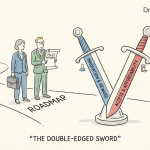
This decision sent a shockwave through the generic drug industry. It established, in no uncertain terms, that a skinny label is not an automatic safe harbor.13 The court’s ruling served as a powerful reminder that “intent” to induce infringement can be inferred from a generic company’s entire post-marketing conduct, forcing companies to ensure that their “fat marketing” doesn’t undermine their “skinny label” strategy.9 For generic manufacturers, the case immediately created a “chilling effect,” as the risk of a massive, nine-figure damages award for seemingly routine marketing practices made the traditional skinny label launch a far more hazardous proposition.2 The Supreme Court’s subsequent denial of Teva’s petition for review cemented the Federal Circuit’s ruling as the prevailing legal standard.2
Case Study: Amarin v. Hikma – The Totality Doctrine Expands
The principles of the GSK v. Teva ruling were further solidified in the 2024 Federal Circuit decision in Amarin v. Hikma.9 Amarin, the maker of the fish-oil-derived drug Vascepa, sued Hikma over its generic version, which used a skinny label to carve out Amarin’s patented cardiovascular indication.10 While the district court initially dismissed the case, the Federal Circuit reversed, finding that Hikma’s public statements were sufficient to plausibly support a claim of induced infringement.10
Specifically, the court pointed to Hikma’s website, which promoted its product as a “generic version of Vascepa®” for a broad therapeutic category that encompassed both the patented and unpatented indications.9 This decision reinforced that the legal analysis for induced infringement extends far beyond the label and can include a company’s website, press releases, and other public statements.9 The case has created a new layer of risk for generic companies, suggesting that even a truthful, commonplace description of a product as a “generic version” could be used as evidence of inducement.10 The legal challenge continues, with Hikma petitioning the Supreme Court to hear the case, a move supported by powerful amici curiae who argue the ruling “effectively nullifies” the skinny labeling pathway.10
Case Study: Lundbeck v. Lupin (Trintellix) – A Glimmer of Hope?
While the legal landscape has grown more treacherous for generics, the Federal Circuit’s December 2023 decision in Lundbeck v. Lupin provides a crucial counter-narrative and a roadmap for a successful skinny label strategy.14 The case involved Lupin’s generic version of the antidepressant Trintellix, where the company successfully carved out two patented indications for sexual dysfunction and cognitive impairment.11
The Federal Circuit upheld the district court’s non-infringement finding, distinguishing the case from the Glaxo ruling.14 The court noted that in
Lundbeck, the brand’s inducement case “relied solely on Defendants’ proposed ANDA labels” and did not present any evidence of “advertising or promotional materials that encouraged infringement”.14 The court emphasized that a finding of inducement would be inconsistent with the intent of the Hatch-Waxman Act, which was designed to allow for the sale of drugs for unpatented uses, even if some off-label use for patented indications occurs.11 This case clarifies the line drawn by the Federal Circuit.14 A skinny label can still be a viable strategy and provide a shield against induced infringement liability, but only if the generic company’s post-marketing conduct is equally “skinny.” The key takeaway is that the combination of a “skinny label” and “fat marketing” is what creates legal liability.
Business Strategy in a New Era: A Playbook for Innovators and Generic Competitors
The Generic Playbook: Mitigating Risk and Maximizing ROI
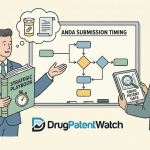
For generic manufacturers, the era of relying on a skinny label alone is over. The GSK and Amarin decisions have fundamentally changed the risk-reward calculation for a Section viii launch. A successful skinny label strategy in this new environment requires meticulous execution and cross-functional collaboration between legal, regulatory, and commercial teams. The first step is a granular analysis of a brand’s patent estate and FDA-listed use codes to determine the viability of a “carve-out” and assess the potential for litigation.15 A simple patent expiration date is no longer a reliable guide; a company must perform a detailed, use-code-level analysis to forecast a drug’s true Loss of Exclusivity (LOE) date.15
Next, generic companies must conduct a comprehensive legal review of all public-facing materials, not just the drug’s label.9 Every press release, website, product catalog, and sales presentation must be scrutinized to ensure that no language could be construed as encouraging the use of the drug for a patented indication.8 The stakes are significant; a potential multi-million-dollar damages award must be weighed against the immense value of a potential 180-day exclusivity period for a first-to-file generic.15 This increased legal risk has a direct, tangible financial impact, forcing an increase in legal and compliance spending that can erode the ROI of a skinny label launch.3 This is a primary reason why the rate of skinny label approvals has declined so dramatically since 2021.3
The Innovator’s Playbook: Protecting Your Patent Portfolio
For brand-name pharmaceutical innovators, the recent court decisions offer new opportunities to protect their intellectual property. The legal principles established in GSK and Amarin have re-empowered innovators, providing a stronger legal basis to protect their valuable method-of-use patents and potentially extend their market exclusivity.16
Innovators must now move beyond simply listing patents in the Orange Book. A more aggressive strategy involves vigilant competitive monitoring of generic companies’ post-marketing conduct.9 Innovators must collect and catalog evidence of a generic’s “fat” marketing, including press releases, websites, and marketing materials, to build a strong induced infringement case.9 This approach transforms the generic’s own public statements into evidence of their intent to infringe, creating a powerful legal argument that can protect a blockbuster drug for years to come.
The Power of Data: Turning Patent Intelligence into Advantage
In this new, complex environment, the ability to turn raw patent data into strategic intelligence is no longer a luxury—it is a competitive necessity. Relying on simple patent expiration dates is a recipe for strategic failure.15 The real value lies in a granular, use-code-level analysis that can accurately forecast a drug’s true Loss of Exclusivity (LOE) date.15
Commercial intelligence platforms like DrugPatentWatch are indispensable tools for this analysis. These platforms aggregate and structure vast amounts of data from the FDA’s Orange Book, court dockets, and clinical trial registries, providing a holistic view of a drug’s patent estate.15 For generic companies, this data is essential for assessing the viability of a skinny label launch and identifying potential vulnerabilities in a brand’s use codes.15 For innovators, it is the key to identifying litigation targets and building a robust defense against generic challenges. The legal uncertainty created by the
GSK and Amarin decisions makes this data analysis even more critical. The risk of a multi-million-dollar lawsuit is now a quantifiable variable that must be factored into the LOE timeline, transforming a qualitative legal judgment into a quantitative risk analysis.
The Broader Landscape: Financial Impact, Public Policy, and the Future
Quantifying the Impact: The Cost-Benefit Analysis
The legal and strategic shifts in skinny labeling have a tangible, documented impact on the market and on public health. Generic competition is a primary driver of lower drug costs, with prices often falling by 80% or more following market entry.4 This has led to massive savings for the healthcare system, with an estimated $1.67 trillion saved over a recent decade.3 Skinny labeling is a significant contributor to these savings, allowing for the timely market entry of lower-cost alternatives. One study estimated that competition from skinny-label generics saved Medicare Part D nearly $14.6 billion between 2015 and 2020.18 The same analysis found that the introduction of skinny-label generics led to a median of 2.5 years of earlier generic competition.18
However, the legal uncertainty created by the GSK v. Teva ruling appears to have had a documented “chilling effect” on the industry. A recent analysis of first generic approvals from 2021 to 2023 shows a sharp decline in the use of the skinny label pathway.4 This is a powerful, quantifiable signal that the courts’ decisions are actively shaping market behavior.
Year
Total Susceptible Brand Drugs
Skinny Label Generic Approvals (%)
2021
9
56% (5 approvals)
2022
7
43% (3 approvals)
2023
5
20% (1 approval)
Total (2021-2023)
21
43% (9 approvals)
The data above provides clear evidence of this trend.3 While 43% of susceptible generic entrants used a skinny label overall from 2021 to 2023, the proportion declined annually, from 56% in 2021 to a mere 20% in 2023.4 This creates a negative feedback loop: increased legal risk leads to fewer generic launches, which extends brand monopolies and results in prolonged periods of higher drug prices.4 This directly undermines the public policy goal of the Hatch-Waxman Act and has a tangible economic cost for patients and the healthcare system.
“A decline in the frequency of skinny labeled generic prescriptions will extend brand-name monopoly periods and lead to prolonged periods of higher priced drugs.” (A.C. Egilman et al., Journal of Managed Care & Specialty Pharmacy, 2025) 4
Political and Legislative Pushback: The “Skinny Labels, Big Savings Act”
The judicial decisions have not been met with universal acceptance, leading to a political and legislative pushback. In late 2024, a bipartisan group of senators introduced the “Skinny Labels, Big Savings Act” (S 5573), a bill that seeks to protect generic and biosimilar manufacturers from induced infringement liability.17 The bill’s proponents argue it will lower drug prices by shielding manufacturers from expensive, time-consuming lawsuits and ensuring faster patient access to affordable medications.19
However, this proposed legislation is not without its critics. Legal experts have argued that the bill is a “solution in search of a problem,” contending that the existing legal framework is already stable and balanced.16 These critics argue that the bill would “upset the rights of innovators” by eliminating their ability to seek redress for patent infringement in cases where a generic’s marketing goes beyond a truly “skinny” label.17 The debate over the bill reflects the core policy schism that defines the skinny labeling landscape: is the current legal framework broken and in need of legislative repair, or is it a balanced system that correctly holds generics accountable for their market conduct? The outcome of this legislative push, and the fate of Hikma’s Supreme Court petition, will redefine the rules of engagement for both innovators and generic competitors for the foreseeable future.10
Key Takeaways and Conclusion
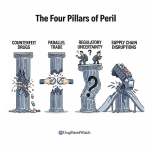
The strategic calculus around skinny labeling has fundamentally changed. The era of the “illusory” skinny label, where a generic could rely on a label carve-out as a de facto safe harbor, has come to an end. The recent legal precedents have established that a successful skinny label strategy requires more than just a “skinny” label; it demands equally “skinny” post-marketing conduct. The risk of induced infringement liability, once considered remote for a Section viii launch, is now a quantifiable and significant threat, with a documented “chilling effect” on generic market entry.
For generic companies, navigating this new landscape means elevating risk mitigation to a core business imperative, requiring a level of cross-functional collaboration and meticulous compliance that was previously unnecessary. For innovators, the decisions have provided a more robust legal basis to protect their method-of-use patents and extend their market exclusivity. Ultimately, in this new environment, the ability to turn granular patent data into actionable competitive intelligence is the key differentiator for all industry players. Those who understand the nuances of the law and leverage data platforms to forecast risk will be best positioned to thrive in the new era of skinny labeling.
Frequently Asked Questions
Q: Does the GSK v. Teva ruling apply to all drugs, or only those with method-of-use patents?
A: The GSK v. Teva ruling and its subsequent reinforcement in Amarin v. Hikma are primarily relevant to drugs protected by method-of-use patents. These are patents that cover a specific clinical application of a drug, such as treating a particular disease or administering the drug to a specific patient group. Skinny labeling is a strategy specifically designed to navigate this type of patent, allowing a generic to market the drug for its other, off-patent indications. When a drug’s active ingredient is still protected by a compound patent, a generic cannot enter the market at all, making the skinny labeling strategy inapplicable.
Q: What is the difference between a Paragraph IV certification and a Section viii carve-out, and when would a generic company choose one over the other?
A: Both Paragraph IV and Section viii are certifications filed as part of a generic’s ANDA. A Paragraph IV certification is an assertion that a brand-name drug’s patents are either invalid or will not be infringed by the generic’s launch. This is a direct challenge to the patent and can trigger a 30-month stay of FDA approval, leading to expensive and time-consuming litigation. A Section viii certification is different; it’s a statement that the generic will not market its drug for any of the patented uses, specifically by “carving out” those indications from its label. A generic company chooses this pathway when the compound patent has expired but method-of-use patents remain, as it allows them to launch a product without directly challenging the validity of the remaining patents. This pathway does not trigger a 30-month stay, meaning it can be much faster.
Q: How do recent legislative efforts, like the “Skinny Labels, Big Savings Act,” aim to resolve the legal uncertainty created by the courts?
A: The “Skinny Labels, Big Savings Act” (S 5573) is a bipartisan bill that aims to provide legal protections for generic and biosimilar manufacturers who use skinny labels. If passed, it would amend federal patent law to explicitly state that it is not an act of infringement to submit an ANDA with a skinny label, to promote a drug with an FDA-approved skinny label, or to describe it as a generic equivalent. The bill is a direct response to the legal uncertainty created by the GSK v. Teva ruling, which held that a skinny label alone does not shield a company from induced infringement liability. The legislation seeks to restore the original congressional intent of the Hatch-Waxman Act by providing a clear legal safe harbor for generic companies using a skinny label strategy.
Q: Beyond a drug’s label, what specific promotional activities or public statements could be used as evidence of induced infringement in a lawsuit?
A: As demonstrated by the GSK v. Teva and Amarin v. Hikma cases, a broad range of public-facing materials and activities can be used to prove a generic company’s intent to induce infringement. This includes, but is not limited to: press releases about tentative or final FDA approval; a company’s corporate website; sales presentations and product catalogs; and the use of terms like “AB-rated equivalents” or describing the product as a “generic version” of the brand-name drug without specifying the specific, non-patented indications. Essentially, any communication that encourages a physician or patient to use the generic for the patented indication can be used as evidence against the generic manufacturer.
Q: Can patent data, like that found on DrugPatentWatch, really predict the viability of a skinny label strategy? How so?
A: Yes, data platforms can provide critical insights that allow for a more nuanced prediction of a skinny label’s viability. The key is to move beyond a simple patent expiration date. A platform can analyze a drug’s entire patent portfolio and, most importantly, the specific, granular use codes listed in the Orange Book. By cross-referencing this data with clinical trial registries, a company can identify which indications are still under patent protection and whether a viable, off-patent indication exists that is commercially significant enough to justify a skinny label launch. This data-driven analysis allows a company to assess the risk and reward of a Section viii filing and to craft a marketing and labeling strategy that is carefully tailored to avoid the specific language and claims that have led to induced infringement liability in the past.