1. The $2.8 Trillion Arithmetic: Market Structure and Strategic Stakes
The global pharmaceutical market reached approximately $1.6 trillion in 2024 and is on a trajectory to exceed $2.8 trillion by 2033, compounding at a rate of roughly 6% to 7% annually. The U.S. market alone, valued at over $634 billion in 2024, is projected to cross $883 billion by 2030. These are not abstract figures. They represent the aggregate of millions of prescription decisions, hundreds of thousands of patent filings, and billions spent on clinical programs that mostly fail.
What drives this growth is not a single mechanism. The aging global population increases per-capita demand for chronic disease therapies, particularly in cardiovascular disease, metabolic disorders, oncology, and neurology. The rising prevalence of autoimmune conditions expands the addressable market for immunology assets. Simultaneously, the biologics sector, now accounting for roughly 35% of total pharmaceutical revenue, is growing at double the rate of small-molecule therapeutics. Within oncology, precision medicine and companion diagnostic pairings are compressing development timelines while expanding per-patient revenue dramatically.
The structural tension embedded in this market is precise: a small number of branded drugs generate the majority of revenue, a large number of generic drugs account for the majority of prescriptions, and a narrow corridor of biological innovators is defining the next decade of IP exclusivity battles.
Key Takeaways: Market Structure
The $2.8 trillion figure is a ceiling, not a guaranteed outcome. Regulatory headwinds, price negotiation provisions under the Inflation Reduction Act, and the looming patent cliff on biologics between 2025 and 2030 will determine how much of that projected growth materializes. Companies whose pipeline exposure is concentrated in IRA-eligible small molecules facing Medicare price negotiation should discount their forward revenue projections accordingly. The opportunity is real; so is the compression.
Investment Strategy: Macro Positioning
Analysts pricing branded innovators should account for the divergence between list price and net price. The average branded drug’s net price, after rebates to PBMs and Medicaid best-price adjustments, is 40% to 60% below the published WAC. This spread is widening. For generic companies, the operational premium has shifted from being first-to-market to sustaining manufacturing quality through FDA scrutiny. Companies with a track record of zero Warning Letters command a valuation premium that is frequently underappreciated in sell-side models.
2. Branded vs. Generic: Two Business Models, One Ecosystem
The distinction between branded and generic drugs is taught as a chemistry question. In practice, it is a business model question, a legal strategy question, and an IP question simultaneously.
A generic drug is a pharmaceutical product containing the same active pharmaceutical ingredient (API), at the same dosage strength, in the same dosage form, and via the same route of administration as the originator Reference Listed Drug (RLD). The FDA requires bioequivalence, not clinical equivalence in a new trial. The generic applicant relies on the FDA’s prior determination that the RLD is safe and effective. That reliance is the entire economic engine of the generic model.
The therapeutic equivalence code in the Orange Book, specifically the ‘AB’ designation, is the operational linchpin. Without an ‘AB’ rating, a generic cannot be automatically substituted for the brand at the pharmacy level under most state substitution laws. This single code determines whether the generic can capture volume from the brand or must be prescribed and dispensed separately.
Inactive ingredients can and do differ between a brand and its generic. Fillers, binders, disintegrants, and coatings are not required to be identical, provided the applicant demonstrates they do not affect drug performance. This matters clinically in narrow therapeutic index drugs, and it matters commercially because it is an avenue through which branded companies attempt to raise substitution concerns without a legitimate scientific basis.
The Economic Mechanics of Price Divergence
The average capitalized cost to develop a new branded drug, accounting for the cost of failures across the full portfolio, sits between $944 million and $2.8 billion depending on therapeutic area, development stage entry point, and discount rate assumptions. Phase III oncology trials alone frequently cost $300 million to $600 million. Brand companies price their products to recover these costs within the effective exclusivity window, typically 10 to 12 years post-launch for a first-cycle drug.
Generic manufacturers enter after that exclusivity window closes and carry none of the clinical development cost. Their primary investment is the ANDA preparation and any required bioequivalence studies, typically in the range of $1 million to $5 million per product, plus the legal cost of any patent litigation. Their pricing strategy reflects a volume-over-margin model: enter at a meaningful discount to the brand, build market share rapidly, and manage margin erosion as additional generic entrants arrive.
The price erosion curve for generics is steep and well-documented. With one generic entrant, prices settle at roughly 40% to 60% of the brand’s WAC. With four or more entrants, prices can drop to 10% to 20% of WAC. This dynamic creates a narrow and time-sensitive window for the first-to-market generic, and it is the core rationale behind the 180-day exclusivity mechanism embedded in Hatch-Waxman.
In the U.S., generics now account for over 90% of prescriptions filled but only roughly 25% of total prescription drug spending by dollar value. That asymmetry tells the whole story: the branded sector captures an extraordinary share of pharmaceutical revenue despite minimal prescription volume. This is the commercial moat that patent protection builds.
Key Takeaways: Branded vs. Generic
The branded model is a high-variance bet on clinical and commercial success over a 10 to 15-year horizon. The generic model is a lower-variance, margin-constrained, operationally intensive business where first-mover advantage is decisive. Portfolio companies that blend both models, as many large-cap generic firms now do through specialty branded divisions, can smooth the revenue variance of each. The strategic tension in a hybrid model is resource allocation: aggressive litigation to advance generic entry dates pulls capital away from branded pipeline investment, and vice versa.
3. IP Valuation as a Core Pharmaceutical Asset
Patent portfolios in pharmaceuticals are not legal overhead. They are the primary source of enterprise value for innovative drug companies, and understanding how to value them is a prerequisite for any serious portfolio analysis or M&A due diligence.
The Components of a Drug’s IP Estate
A commercially significant drug rarely has a single patent. It has a layered structure of overlapping intellectual property that, collectively, defines the effective exclusivity runway. These layers typically include:
The compound patent covers the chemical structure of the active ingredient. This is the foundational patent, typically filed earliest and providing the broadest protection. It expires first among the patent stack but grants the clearest exclusivity. For a drug approved in 2015 with a compound patent filed in 2000, the nominal patent life at approval was already 15 years old.
Formulation patents cover the specific dosage form, excipient composition, or delivery system. These are frequently filed later in the development cycle and extend the IP runway beyond the compound patent. AbbVie’s Humira (adalimumab) illustrates this architecture clearly: the compound patent expired in the U.S. in 2016, but a constellation of over 130 additional patents on formulations, manufacturing processes, and methods of use extended effective exclusivity until 2023, delaying biosimilar entry by seven years.
Method-of-use patents cover the clinical indication, dosing regimen, or patient population for which the drug is approved. These can be particularly durable if the approved indication is narrow and specifically claimed.
Metabolite and polymorph patents cover alternative chemical forms of the active ingredient, including salts, hydrates, and different crystalline polymorphs. These are a frequent target of generic Paragraph IV challenges because they can be designed around with a different solid-state form.
Manufacturing process patents cover the synthetic route or biological production method. For small molecules, these can be designed around. For biologics, manufacturing IS the product, and process patents carry far more commercial weight.
Quantifying IP Value: Methods and Applications
Three primary methodologies apply to pharmaceutical IP valuation:
The income approach estimates the net present value of future cash flows attributable to the IP asset, discounted for risk. For a drug under commercial exclusivity, this maps directly to the revenue stream protected by the patent estate, less the counterfactual cash flows the company would earn post-patent expiry. This method is most reliable for marketed drugs with established revenue trajectories and clear patent expiry dates.
The market approach uses transaction comparables. Licensing deal databases, including Medius, Pharmaventures, and DrugPatentWatch’s own transaction analytics, provide royalty rates and upfront payment data for assets at comparable development stages, therapeutic areas, and exclusivity profiles. The challenge with this method is that pharma deals are highly heterogeneous: a 6% royalty rate in one transaction may reflect substantially different risk-sharing than the same rate in another.
The cost approach estimates the reproduction cost of the IP, i.e., what it would cost to recreate the patent portfolio from scratch. This is methodologically straightforward but commercially limited: it measures effort, not value.
IP Valuation in Practice: The Keytruda Model
Merck’s pembrolizumab (Keytruda) generated $25 billion in 2023 revenue, making it the world’s best-selling drug. Its IP estate illustrates the relationship between patent architecture and asset valuation. The primary antibody patents on pembrolizumab expire in the late 2020s. However, Merck has layered method-of-use patents across dozens of approved oncology indications, manufacturing process patents on the production cell line, and combination therapy patents that extend effective competitive protection well into the 2030s for key indications. The IP estate, in isolation, represents a multi-decade earnings bridge. Any rNPV model for Keytruda biosimilar entry must incorporate indication-by-indication patent expiry analysis, not a single cliff date.
Key Takeaways: IP Valuation
IP valuation is not a single calculation. It requires a patent-by-patent audit of the estate, a legal opinion on vulnerability to Paragraph IV challenge, and a probabilistic model of litigation outcomes. Analysts who use a single patent expiry date to forecast generic entry will systematically underestimate brand exclusivity duration for drugs with dense secondary patent portfolios. The correct analytical approach models each patent independently, assigns a probability of survival through litigation, and weights the exclusivity scenarios accordingly.
Investment Strategy: IP-Centric Analysis
For institutional investors analyzing branded pharma, the IP estate is the primary determinant of the out-year revenue trajectory. A drug with a compound patent expiring in 2027 but 15 valid secondary patents that have each survived prior Paragraph IV challenges is a substantially different investment than one with a single patent expiring the same year. DrugPatentWatch and Derwent Innovation both provide patent prosecution history and Orange Book listing data that enable this granular analysis. Build it into your models.
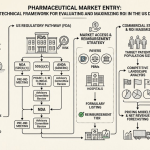
4. FDA Regulatory Pathways: A Technical Dissection
Choosing a regulatory pathway is the first financial commitment a drug development program makes. It determines the required data package, the development timeline, the probable cost, and the exclusivity period available upon approval. All downstream commercial projections rest on this choice.
The 505(b)(1) NDA: Full Innovation, Full Risk
The 505(b)(1) New Drug Application covers New Chemical Entities (NCEs) and requires a complete, standalone safety and efficacy dossier. Every preclinical study, every Phase I pharmacokinetic study, every Phase II proof-of-concept trial, and every Phase III pivotal trial must be conducted and owned by the applicant. No reliance on prior FDA findings or published literature is permitted.
The timeline from IND filing to NDA approval for a 505(b)(1) compound runs 10 to 15 years, with the clinical phase accounting for 6 to 8 years on average. Total capitalized cost, including the cost of failures in the program, is in the range of $1.5 billion to $2.8 billion depending on therapeutic area. Oncology programs are at the high end. Dermatology and ophthalmology programs tend toward the lower range.
Upon approval of an NCE, the FDA grants five years of New Chemical Entity exclusivity during which no ANDA or 505(b)(2) NDA that relies on the brand’s safety and efficacy data can be approved. A Paragraph IV challenge ANDA can be filed after four years, but only after a four-year waiting period from the NDA approval date.
Three-year clinical investigation exclusivity applies where the approval required new clinical studies but the active ingredient is not new. Common examples include new indications, new dosage forms, and new combinations. This three-year period protects the specific condition of use, not the compound itself, a distinction that matters enormously when planning generic or 505(b)(2) entry strategies.
Pediatric exclusivity adds six additional months to all existing patents and exclusivities when the sponsor conducts FDA-requested pediatric studies and submits a Written Request. Six months does not sound like much, but on a drug generating $5 billion annually, it is $2.5 billion in additional exclusivity-protected revenue.
The 505(j) ANDA: Bioequivalence as the Barrier
The ANDA pathway, codified through the Hatch-Waxman Act, requires the generic applicant to demonstrate bioequivalence to the RLD through pharmacokinetic studies, typically in 24 to 36 healthy volunteers under fasting and fed conditions. The FDA’s bioequivalence standard requires that the 90% confidence interval for the ratio of the geometric means of Cmax and AUC fall within 80% to 125%.
For complex drugs, narrow therapeutic index (NTI) drugs, locally acting drugs, and drug-device combinations, the bioequivalence standard is more demanding. NTI drugs such as warfarin, cyclosporine, and levothyroxine require a tightened confidence interval of 90% to 111.11%. Complex inhalation products like tiotropium and fluticasone/salmeterol require device characterization, particle size distribution matching, and often both in vitro and in vivo studies. These more stringent requirements increase both the development cost and the regulatory timeline for ANDAs in these categories, reducing the number of generic entrants and moderating price erosion.
The development cost for a standard small-molecule ANDA is in the $1 million to $5 million range. A complex product ANDA, covering modified-release formulations, sterile injectables, or locally acting drugs, can run $15 million to $50 million. These economics directly influence which generic manufacturers pursue which drugs: the complex product space filters out smaller players and creates a more competitive-but-less-crowded market for those with the technical capability.
The 505(b)(2) NDA: The Hybrid’s Commercial Logic
The 505(b)(2) pathway allows an applicant to rely on published literature or on the FDA’s finding that an already-approved drug is safe and effective, without needing the right of reference to the original sponsor’s data. The applicant then provides bridging studies sufficient to connect the existing data to the new product being developed.
The commercial logic is compelling. A company developing an extended-release formulation of an approved immediate-release drug can rely on the decades of safety data for the active ingredient, conduct comparatively small bridging PK and efficacy studies, and gain approval with three-year exclusivity on the new formulation. The development cost is a fraction of a full 505(b)(1) NDA, the timeline is typically 5 to 8 years, and the resulting product is a branded pharmaceutical with its own regulatory exclusivity period.
Approved 505(b)(2) candidates include new indications for old molecules, new dosage forms, pediatric formulations from adult-approved drugs, topical reformulations of systemic agents, fixed-dose combinations of two or more approved components, and Rx-to-OTC switches. AstraZeneca’s Brilinta (ticagrelor), approved at a different dose for secondary prevention, used 505(b)(2) mechanisms within its life cycle management strategy. Salix Pharmaceuticals built a substantial specialty GI franchise largely through 505(b)(2) products targeting GI indications with reformulated agents.
The 505(b)(2) pathway is also the primary FDA route for most drug-device combination products, including prefilled autoinjectors, transdermal drug delivery systems, and inhalation devices where the formulation is novel but the active ingredient is not new.
Key Takeaways: FDA Pathways
The 505(b)(2) pathway is systematically underutilized by companies operating primarily in the generic space. Many molecules currently in their fifth or sixth year of generic commoditization have unrecognized 505(b)(2) opportunities, either through new indications, pediatric formulations, or novel delivery systems. The analytical task is to screen approved drugs for under-developed formulation space and overlapping clinical indications.
Investment Strategy: Pathway-Driven Valuation
For investors evaluating a 505(b)(2) pipeline, the key metrics are: time from bridging study initiation to NDA submission (typically 2 to 4 years), the magnitude of clinical differentiation, and the probability that payers will reimburse at a premium versus mandating substitution to the commodity generic. Products approved on 505(b)(2) that lack clear clinical differentiation over the commodity generic are at high risk of payer step-edit requirements that functionally eliminate their pricing power.
5. The EMA Framework: Centralised, Decentralised, and Mutual Recognition
For companies with EU ambitions, understanding the EMA’s procedural architecture is not optional. The EU, with 27 member states and a total pharmaceutical market approaching $250 billion annually, requires a distinct regulatory strategy from the U.S.
The Centralised Procedure: Single Application, 27 Markets
The Centralised Procedure (CP) is mandatory for medicinal products derived from biotechnology processes, drugs for HIV/AIDS, cancer, diabetes, and neurodegenerative diseases, orphan medicines, and advanced-therapy medicinal products (ATMPs). A single Marketing Authorization Application (MAA) submitted to the EMA is assessed by the Committee for Medicinal Products for Human Use (CHMP), which includes scientific representatives from all EU member states. A positive CHMP opinion leads to a European Commission decision granting a marketing authorization valid across all EU and EEA countries.
The standard procedure runs 210 days of assessment time, with clock stops for applicant response periods that can extend the total calendar time to 12 to 18 months. Data exclusivity under the EU 8+2+1 system grants eight years of data protection (during which no generic can reference the originator’s data), two additional years of market protection, and a further one year if a new indication is approved in the first eight years.
This 10- to 11-year protection period is directly analogous to the U.S. NCE exclusivity combined with pediatric exclusivity, though the mechanisms differ. EU biosimilar guidance requires comparative quality, non-clinical, and clinical studies to establish biosimilarity to the EU-authorized reference medicine, with the specific data package varying by product class.
The Decentralised and Mutual Recognition Procedures
Generic pharmaceutical companies primarily use the Decentralised Procedure (DCP) or Mutual Recognition Procedure (MRP) to gain approval across multiple EU member states. The DCP is used when a drug has not yet been authorized in any EU country, with one chosen Reference Member State leading the scientific assessment. The MRP builds on an existing national authorization in one member state, which is then recognized by additional countries.
Both procedures are slower than the centralised pathway for a single market, but they allow strategic geographic sequencing. A company may first gain approval in Germany as the RMS, leveraging the BfArM’s scientific credibility, then extend recognition to France, Italy, Spain, and the UK as Concerned Member States. This sequencing can be timed to align with commercial launch planning and pricing negotiations in each country.
The pricing negotiation step, critically, is conducted at the national level even for centrally authorized drugs. A positive CHMP opinion grants the legal right to sell the product in the EU; it does not guarantee reimbursement. Each member state’s health technology assessment body, including the Haute Autorite de Sante in France, the Gemeinsamer Bundesausschuss in Germany, and NICE in the UK, independently evaluates the drug’s comparative clinical benefit and determines whether it will be reimbursed and at what price. This national negotiation step adds 6 to 24 months to commercialization timelines and can result in dramatically different price points across EU countries.
Key Takeaways: EMA Strategy
Companies launching high-value biologics should pursue the CP in parallel with U.S. NDA submission wherever possible. The combined regulatory review timelines frequently overlap, allowing for near-simultaneous U.S. and EU launch. For small-molecule generics, the DCP is cost-effective and permits geographic prioritization based on market size. Germany, France, Italy, and Spain collectively represent roughly 65% of EU generic market value and should anchor the initial DCP filing.
6. The Hatch-Waxman Architecture: Strategic Levers, Not Just Law
The Hatch-Waxman Act of 1984, formally the Drug Price Competition and Patent Term Restoration Act, created the legal infrastructure for the modern U.S. pharmaceutical market. Its effects have been unambiguous and quantifiable: generic drugs accounted for 19% of prescriptions in 1984 and account for over 90% today.
The Act’s genius is that it simultaneously incentivized both parties. Brand manufacturers won Patent Term Restoration and formalized legal standing to challenge generic entry. Generic manufacturers won the ANDA pathway, the 180-day exclusivity prize, and the ability to file Paragraph IV challenges before patent expiry. Neither side won unconditionally. Both sides received tools to compete.
Patent Term Restoration (PTE): The Innovator’s Recapture Mechanism
PTE allows a brand company to extend a single patent covering an approved drug by up to five years, compensating for time lost during FDA review and clinical trials. The maximum effective patent term post-approval is capped at 14 years, and only one patent per product can receive PTE. The calculation is based on the regulatory review period (from IND filing to NDA approval), reduced by 50% of the clinical testing period, and is applied to the original patent issue date, a rule recently confirmed by the Federal Circuit in cases involving reissued patents.
The strategic application of PTE requires careful selection of which patent to extend. Choosing the compound patent protects the broadest claim, but if that patent is vulnerable to an invalidity challenge, protecting a formulation or method-of-use patent with PTE may provide more durable exclusivity. This decision should involve both regulatory counsel and patent litigation counsel in parallel, not sequentially.
The 180-Day Exclusivity: The First-Filer’s Commercial Prize
The 180-day exclusivity period is awarded to the first generic applicant to file a substantially complete ANDA containing a Paragraph IV certification against at least one Orange Book-listed patent for the RLD. This is the central commercial incentive of the entire Hatch-Waxman system and the reason generic companies spend tens of millions of dollars litigating patent challenges they could otherwise avoid.
The mechanics are precise. The 180-day period is triggered by either the first commercial marketing of the drug by the generic company, or by a court decision finding that the challenged patent is invalid or not infringed. Once triggered, no other ANDA for the same drug can receive final FDA approval for 180 days. The first-to-file generic typically enters the market at 60% to 80% of the brand’s WAC, capturing significant margin before subsequent generics compress prices further.
The economics are compelling. A brand drug generating $1 billion annually will generate approximately $500 million in generic revenue during the 180-day period, of which a single first-filer with no competing generics captures the majority. On a drug generating $3 billion annually, the prize is proportionally larger. This is why generic companies with the legal and technical resources to sustain Paragraph IV litigation are valued at a premium to those who do not challenge patents.
The forfeiture mechanism, added by the Medicare Modernization Act of 2003, prevents first-filers from sitting on their exclusivity. Forfeiture is triggered if the generic company fails to market the drug within 75 days of the earlier of a final court decision or tentative approval, among other circumstances. This mechanism was designed to prevent brand companies from paying generic companies not to launch (reverse payment settlements), a practice addressed separately by the FTC v. Actavis Supreme Court decision of 2013, which held such agreements presumptively anticompetitive.
The 30-Month Stay: The Brand’s Procedural Shield
When a brand company receives a Paragraph IV notice letter and files a patent infringement suit within 45 days, an automatic 30-month stay on FDA final approval of the generic ANDA takes effect. This stay is the brand’s most reliable defensive tool and is the primary reason brand companies maintain dense Orange Book patent listings: each listed patent can generate a separate 30-month stay, though courts and FDA have placed limits on stays from patents listed after the ANDA filing date.
The 30-month period is not a guarantee of continued exclusivity. If the generic company wins at trial before the stay expires, the stay lifts. If the brand and generic settle, the stay terms are part of the settlement agreement. The brand company’s goal during the stay is either to win the litigation outright or, if that outcome is uncertain, to advance its life cycle management strategy sufficiently to blunt the commercial impact of generic entry.
Key Takeaways: Hatch-Waxman Mechanics
Every ANDA filing decision should begin with a systematic mapping of the brand’s Orange Book patents, their expiry dates, their litigation history, and their vulnerability to anticipation or obviousness arguments. The 180-day prize justifies substantial legal investment only when the commercial opportunity is large enough. A $100 million annual revenue drug, generating roughly $50 million in 180-day exclusive sales, may not justify $30 million in litigation costs. A $2 billion drug generates a different calculus.
7. Patent Intelligence: Reading the Orange Book Like a Professional
The FDA’s Orange Book is a public database, freely searchable, and widely misread. Using it correctly requires understanding not just how to navigate its interface but how to interpret the data it contains and, critically, how to identify what it does not contain.
Orange Book Structure: Patents and Exclusivities Are Different
The single most common error in Orange Book analysis is conflating patents and exclusivities. These are different legal protections listed in different sections of the Orange Book with different implications.
Patent listings are voluntary submissions by the NDA holder. The FDA does not verify whether listed patents are valid, enforceable, or actually claim the drug product as required by statute. This creates the well-documented phenomenon of over-listing: brand companies sometimes list patents that do not clearly cover the approved product in order to generate additional 30-month stays. The FDA’s regulatory reform efforts have tightened listing requirements over time, but the incentive to over-list persists.
Regulatory exclusivities are granted by the FDA directly and are separately tracked. NCE five-year exclusivity, three-year clinical investigation exclusivity, Orphan Drug exclusivity, Pediatric exclusivity, and the GAIN Act’s five-year exclusivity for qualified infectious disease products (QIDPs) are all listed separately. Unlike patents, these exclusivities cannot be challenged through litigation. They are administrative protections that run their course regardless of the patent landscape.
Navigating an Orange Book Entry: A Professional Workflow
A complete Orange Book analysis for a generic target requires working through the following steps systematically:
Begin with the RLD identification. The Orange Book lists approved drug products grouped by active ingredient, dosage form, and route of administration. The RLD is the innovator product against which bioequivalence must be established. In cases where the RLD is discontinued, a Reference Standard (RS) may be designated, and RLD substitution requests create additional complexity.
Review the therapeutic equivalence codes for all listed products. An ‘AB’ code means the product has been evaluated and found therapeutically equivalent to the RLD, allowing automatic substitution in most states. ‘BX’ codes indicate insufficient evidence for therapeutic equivalence. Other ‘B’ codes (‘BC,’ ‘BD,’ ‘BE,’ ‘BN,’ ‘BP,’ ‘BR,’ ‘BS,’ ‘BT’) indicate products not considered therapeutically equivalent for various reasons. Any product without an ‘AB’ code cannot be auto-substituted, which materially affects its commercial viability.
Audit every listed patent. For each patent, note the expiry date, the patent type (compound, formulation, method-of-use), and whether any patent term extension (PTE) or patent term adjustment (PTA) has been granted. PTA, distinct from PTE, compensates for USPTO prosecution delays and can add months or years to a patent’s term. Both must be tracked.
Assess regulatory exclusivities separately. Identify the type of exclusivity, its expiry date, and whether it runs concurrently with or independently from the patent protection. A drug may have an expired compound patent but an active five-year NCE exclusivity that blocks ANDA final approval regardless.
Cross-reference against ANDA filings and litigation status. The FDA’s ANDA filing database and court PACER records reveal which competitors have already filed ANDAs, which have filed Paragraph IV certifications, and what the current litigation status is. A drug that appears to have an attractive generic opportunity based on Orange Book data alone may already have ten ANDAs pending, eliminating the first-filer exclusivity prize.
Beyond the Orange Book: Commercial Intelligence Platforms
Platforms like DrugPatentWatch aggregate Orange Book data with USPTO prosecution history, litigation records, ANDA filing data, clinical trial registries, and global patent databases into a unified intelligence layer. This aggregation matters because no single data source provides a complete competitive picture.
DrugPatentWatch’s patent expiration analysis, for example, identifies the ‘true’ exclusivity cliff for a drug, accounting for all listed patents, all exclusivities, and historical litigation success rates for similar patent types, rather than simply reporting the earliest patent expiry date. This distinction frequently changes the timing assumptions in a generic launch plan by two to four years.
For branded strategists conducting competitive surveillance, these platforms enable patent citation analysis across competitor portfolios, early identification of competitor ANDA filings before litigation becomes public, and tracking of life cycle management patents as they are filed and published. All of this information is available through public sources; the value of the platform is in curation speed and analytical depth.
Key Takeaways: Patent Intelligence
The Orange Book is a starting point, not an ending point. A generic opportunity assessment that relies solely on the Orange Book’s patent expiry dates will consistently misestimate the actual generic entry date. Complete intelligence requires cross-referencing ANDA filings, patent prosecution history, litigation status, and regulatory exclusivities simultaneously. Build this multi-source workflow into every generic opportunity screen.
8. The Paragraph IV Playbook: Mechanics, Litigation, and Economics
The Paragraph IV certification is the generic industry’s primary offensive weapon against brand exclusivity. Understanding its mechanics, legal arguments, and economics is essential for both generic companies contemplating a challenge and brand companies preparing a defense.
The Decision to Challenge: A Pre-Filing Economic Analysis
Before filing a Paragraph IV certification, a generic company should complete a rigorous pre-filing economic analysis. The key variables are:
The annual revenue of the brand drug, net of rebates and returns, measured over the past three years. This is the revenue pool from which the 180-day exclusivity period will carve out the generic’s return. A drug with declining sales due to off-label competition or therapeutic substitution is a weaker target than one with stable or growing revenue.
The litigation cost estimate, including outside counsel fees for a patent case that runs 24 to 36 months from notice letter to trial, plus the cost of expert witnesses in chemistry, pharmacology, clinical medicine, and patent law. Complex multi-patent cases involving five or more Orange Book patents can run $20 million to $40 million in total litigation costs.
The probability of patent invalidity, estimated by a patent validity opinion from experienced Paragraph IV litigation counsel. The historical success rate for generic Paragraph IV challengers at trial is approximately 70% to 76%, though this varies significantly by patent type. Method-of-use patents tend to be easier to invalidate than compound patents. Secondary patents on polymorphs and metabolites have mixed records.
The number of co-petitioners and competitive ANDA filers. The 180-day exclusivity is awarded per drug, not per patent. If multiple generic companies file Paragraph IV certifications on the same day, they share the 180-day period. This reduces the commercial value of the prize. An assessment of the competitive landscape, using DrugPatentWatch’s ANDA filing tracker, should be conducted before any large-scale litigation investment.
The Paragraph IV Notice Letter: Drafting for Litigation
After the FDA acknowledges a substantially complete Paragraph IV ANDA, the applicant has 20 calendar days to send a notice letter to both the NDA holder and each patent holder. This is not a formality. The notice letter’s detailed statement constitutes the first legal argument in what will almost certainly become litigation.
The detailed statement must address each claim of each challenged patent on a claim-by-claim basis, providing the factual and legal basis for the invalidity or non-infringement assertion. For an invalidity argument based on anticipation, the statement must identify the specific prior art reference and explain, element by element, how it discloses every limitation of the claimed invention. For a non-infringement argument, it must identify the specific claim elements that the generic product does not satisfy.
Drafting errors in notice letters can have lasting consequences. A notice letter that fails to provide adequate notice of specific invalidity theories may be used by the brand in later litigation to argue that certain defenses were not preserved. Conversely, a notice letter that is too specific can reveal the entirety of the generic’s litigation strategy before the brand has filed suit. Experienced Paragraph IV counsel navigates this tension by being precise on the theories advanced while preserving flexibility on the evidence to be introduced.
The Litigation Phase: Legal Arguments and Courtroom Dynamics
The most common invalidity arguments in Paragraph IV litigation are anticipation under 35 U.S.C. Section 102 and obviousness under 35 U.S.C. Section 103.
Anticipation requires showing that a single prior art reference discloses every element of the challenged claim. In the pharmaceutical context, this typically means showing that an earlier publication, patent, or conference presentation disclosed the specific compound or formulation at issue. Anticipation arguments are legally clean but factually demanding: every element of the claim must be found in a single reference.
Obviousness is the more common and more complex argument. It requires showing that a person of ordinary skill in the art, at the time of the invention, would have been motivated to combine multiple prior art references and would have had a reasonable expectation of success in arriving at the claimed compound or formulation. Secondary considerations, including long-felt unmet need, commercial success, and the failure of others, cut against an obviousness finding and are heavily litigated by brand defendants.
Non-infringement arguments typically take one of two forms: literal non-infringement, arguing the generic product does not fall within the scope of the claim language, or non-infringement under the doctrine of equivalents. Designing around a patent, modifying the generic formulation to avoid a specific claim limitation, is often attempted in parallel with litigation as a risk mitigation strategy. If the design-around is successful and the litigation is not, the company still has a path to market.
The ‘product hopping’ counter-strategy by brand companies, sometimes called reformulation-based evergreening, introduces a new formulation with its own patent protection shortly before the existing product faces generic entry. Abbott’s shift from Depakote (divalproex sodium) to Depakote ER exemplifies this. By the time generics launched on the immediate-release formulation, prescribing had already shifted to the extended-release version with a fresh patent estate. The FTC has expressed concern about this practice, and some courts have applied antitrust scrutiny to it, but it remains a live tool.
Key Takeaways: Paragraph IV Strategy
The 180-day exclusivity prize drives aggressive patent challenging across the industry. For a generic company, the decision to challenge should be an explicit economic analysis, not a reflex. The fact that a patent exists does not mean challenging it is commercially rational. Sizing the economic opportunity, estimating the litigation cost, and stress-testing the patent validity opinion with multiple counsel perspectives are all prerequisites to a sound Paragraph IV decision.
9. Evergreening: The Full Technology Roadmap
Evergreening refers to the collection of strategies by which branded pharmaceutical companies extend their effective market exclusivity beyond the expiration of the original compound patent. It is neither a monolithic strategy nor a universally applicable one. It is a spectrum of legitimate IP and regulatory tools, some of which represent genuine patient-oriented innovation and some of which represent rent-seeking behavior the FTC and courts scrutinize carefully.
The Evergreening Toolkit: Eight Strategies in Sequence
Polymorph and Salt Form Patents. A single API can exist in multiple crystalline polymorphs or salt forms, each with distinct solubility, stability, and bioavailability profiles. Filing composition patents on alternative solid-state forms after the original compound patent generates a secondary layer of protection. Nexium (esomeprazole magnesium) is the canonical example: AstraZeneca shifted prescribing from the racemic mixture Prilosec (omeprazole) to the S-enantiomer Nexium as Prilosec faced generic competition, relying on a separate patent estate for the enantiomer.
Extended-Release Formulations. Developing an extended-release version of an immediate-release drug generates three-year clinical investigation exclusivity and new formulation patents. The commercial rationale extends beyond exclusivity: once-daily dosing improves patient adherence, reduces peak plasma concentration-related adverse effects, and provides a clinically justified basis for a new branded product. Concerta (methylphenidate ER) and OxyContin (oxycodone ER) were both developed in part through this mechanism.
New Indication Filings. Approving a drug for a new clinical indication generates three years of exclusivity for the new indication and creates new method-of-use patents. If the new indication is an orphan disease, it generates seven years of orphan exclusivity regardless of existing patent protection. Thalidomide, originally approved as a sedative in the 1960s, was reapproved in the U.S. for erythema nodosum leprosum in 1998 and multiple myeloma in 2006, generating fresh exclusivity periods on each occasion.
Pediatric Exclusivity Harvesting. Conducting FDA-requested pediatric studies adds six months to all existing patents and exclusivities. On a $5 billion drug, six months is worth $2.5 billion in protected revenue. The Pediatric Research Equity Act requires pediatric studies for certain drugs, but even voluntary Written Request studies generate the six-month bonus. This is one of the highest ROI regulatory investments a brand company can make.
Fixed-Dose Combination Products. Combining two approved drugs into a single tablet or device generates a combination product requiring a 505(b)(2) NDA or 505(b)(1) for novel combinations. Genvoya (elvitegravir/cobicistat/emtricitabine/tenofovir alafenamide) by Gilead, approved for HIV, combined four established antiretrovirals into a single daily tablet with a new tenofovir prodrug, generating fresh patent protection and a clinically superior product that shifted prescribing from the older Stribild formulation before generic Stribild entry.
Over-the-Counter Switches. Switching a prescription drug to OTC status through a 505(b)(2) application generates three-year exclusivity for the OTC use and expands the addressable market. Prilosec OTC (omeprazole 20 mg), launched after the Rx compound patent expired, captured consumer market share that generic Rx omeprazole could not reach by definition.
Abuse-Deterrent Formulations. The FDA has provided guidance on approving and labeling abuse-deterrent formulations of opioids and other controlled substances. Purdue Pharma’s reformulated OxyContin (oxycodone ER with abuse-deterrent properties, approved 2010) generated new formulation patents and, controversially, prompted a citizen petition that led FDA to recommend withdrawal of the original formulation from the market, blocking AB-rated generic substitution for the original tablet. Courts and Congress have reviewed this practice, and subsequent FDA guidance has made this strategy more difficult to execute.
Patent Prosecution Strategy: Continuation Applications. Continuing patent applications, filed as continuations or continuations-in-part of the original application, can maintain a pending patent family for years after the original patent issues. As clinical data accumulates, new patent claims can be drafted to cover the compound’s specific clinical profile, safety characteristics, or dosing regimen. This strategy extends the ‘shadow’ of the patent estate over the product long after the original composition claims expire.
The Regulatory Limits of Evergreening
The FTC monitors brand life cycle management strategies for potential antitrust violations, particularly around product hopping, citizen petition misuse, and reverse payment settlements. The AbbVie Humira patent litigation, which generated settlements granting biosimilar manufacturers entry dates substantially before the nominal patent expiry, was resolved at least in part due to FTC scrutiny. Companies executing aggressive evergreening strategies should have antitrust counsel involved in strategy design, not just patent counsel.
Key Takeaways: Evergreening
Evergreening is not a single action; it is a planned sequence of regulatory and IP investments made over the drug’s commercial lifetime. The optimal strategy depends on the drug’s mechanism, its clinical profile across potential new indications, the feasibility of formulation innovation, and the patient population demographics (which determine pediatric exclusivity eligibility). Companies that plan life cycle management at NDA submission rather than five years post-approval capture substantially more exclusivity value.
10. Biosimilar Development: The Technical and Regulatory Roadmap
The biosimilar market is the most consequential competitive dynamic in pharmaceutical strategy over the 2025 to 2035 timeframe. Roughly $300 billion in biologic drug revenue globally will face biosimilar competition during this period, with Humira (adalimumab), Eylea (aflibercept), Stelara (ustekinumab), Keytruda (pembrolizumab), and Opdivo (nivolumab) among the assets facing biosimilar entry.
Developing a biosimilar is not analogous to developing a small-molecule generic. A biologic drug is a large, complex protein molecule produced in living cells. The manufacturing process determines the product. Two batches produced in different cell lines, at different facilities, or with different fermentation parameters will differ in their glycosylation patterns, charge variants, and aggregate profiles even if they contain identical amino acid sequences. The FDA’s regulatory framework for biosimilars, under the Biologics Price Competition and Innovation Act (BPCIA, 2010), reflects this complexity.
The BPCIA Regulatory Framework
The BPCIA created two approval pathways for follow-on biologics. A biosimilar application must demonstrate that the product is highly similar to the reference product, notwithstanding minor differences in clinically inactive components, and that there are no clinically meaningful differences in safety, purity, and potency. An interchangeable biosimilar must meet a higher standard: it must produce the same clinical result as the reference product in any given patient, and for products administered more than once, alternating or switching between the biosimilar and the reference product must not result in greater safety risks than using the reference product alone.
Interchangeability is commercially significant because it enables automatic substitution at the pharmacy level, the same mechanism that drives generic penetration. Without interchangeability designation, a biosimilar can be prescribed but not automatically substituted. Gaining interchangeability designation requires switching studies demonstrating equivalence across multiple product transitions. As of 2025, several biosimilars have achieved interchangeability, including Cyltezo (adalimumab-adbm, interchangeable with Humira) and Semglee (insulin glargine-yfgn, interchangeable with Lantus).
The Biosimilar Development Timeline: Stage-by-Stage
The full biosimilar development program runs 8 to 12 years from program initiation to approval and costs $100 million to $300 million, compared to $1 million to $5 million for a small-molecule ANDA. This cost differential directly limits the number of companies capable of entering the biosimilar space and explains why biosimilar price erosion is more modest than small-molecule generic price erosion.
Stage 1: Reference Product Characterization (Years 1 to 2). The program begins with extensive analytical characterization of the reference biologic, purchased from multiple national markets over multiple lot numbers. Primary structure (amino acid sequence), higher-order structure (secondary, tertiary, quaternary), post-translational modifications (glycosylation, pegylation), charge variants, aggregate content, and biological activity (receptor binding, cell-based functional assays) are all characterized using a battery of orthogonal analytical methods.
Stage 2: Cell Line Development and Process Optimization (Years 2 to 4). The biosimilar manufacturer develops an appropriate expression system, typically Chinese Hamster Ovary (CHO) cells for most monoclonal antibodies, and optimizes the fermentation and purification process to produce a protein with an analytical profile as close as possible to the reference product. This is the most technically demanding phase, because cell culture conditions, media composition, pH, temperature, and dissolved oxygen levels all affect the glycosylation pattern of the resulting protein.
Stage 3: Analytical Similarity Package (Year 3 to 4). The FDA’s stepwise totality-of-evidence approach requires a comprehensive analytical similarity assessment comparing the biosimilar to the reference product across all quality attributes. This package includes head-to-head comparison of structural attributes, functional attributes, and impurity profiles. A strong analytical similarity package reduces the clinical data burden by supporting a finding that the biosimilar is highly similar at the molecular level.
Stage 4: Nonclinical Studies (Year 4). Comparative pharmacokinetic and pharmacodynamic studies in animals, plus in vitro receptor binding and functional studies, bridge the analytical characterization to the clinical development phase. The FDA has reduced nonclinical requirements over time as the analytical and clinical programs have become more sophisticated.
Stage 5: Clinical Development (Years 4 to 7). Clinical development for a biosimilar typically includes a comparative PK study in healthy subjects or patients (to establish exposure equivalence), and at least one comparative efficacy and safety study in a sensitive clinical population. The clinical indication selected for the comparative study is usually the most sensitive one, allowing extrapolation of biosimilarity to other indications. This extrapolation principle, well-established in FDA and EMA biosimilar guidance, allows approval across multiple indications without individual clinical trials for each.
Stage 6: Regulatory Filing and Review (Years 7 to 9). The BLA for a biosimilar is a complex submission covering analytical, nonclinical, and clinical data packages, plus a complete manufacturing section demonstrating GMP compliance. FDA review typically runs 12 to 18 months for biosimilars, comparable to novel biologics.
Stage 7: Patent Dance and Market Entry (Years 9 to 12). The BPCIA’s ‘patent dance’ is the procedural framework governing IP exchange between biosimilar applicants and reference product sponsors. It requires the biosimilar applicant to share the BLA with the reference product sponsor, who then provides a list of patents it believes could be infringed. The parties then engage in a multi-stage exchange of patent lists and infringement contentions before litigation commences.
Biosimilar Market Dynamics: Price Erosion and Formulary Positioning
Biosimilar price erosion follows a different curve than small-molecule generic erosion. With two or three biosimilar entrants for a reference biologic, price discounts to WAC average 30% to 50%. This is substantially less than the 70% to 90% discount for small-molecule generics with comparable numbers of entrants, reflecting the higher cost structure of biosimilar manufacturing and the greater prescriber inertia for biologics.
Prescriber inertia is a real commercial barrier. Physicians treating stable biologic patients have a rational preference for avoiding product transitions in the absence of clear clinical benefit. Biosimilar adoption is driven primarily by formulary positioning (payer-driven substitution) and new patient starts, not by transition of stable existing patients. The commercial strategy for a biosimilar launch therefore concentrates on securing formulary access at parity with or in preference to the reference product, which requires aggressive contracting with PBMs and GPOs.
Key Takeaways: Biosimilars
The biosimilar market is not a repeat of the small-molecule generic playbook. The development cost structure is two orders of magnitude higher, the price erosion trajectory is less aggressive, and the commercial penetration depends heavily on formulary positioning rather than price alone. Companies entering the biosimilar space without integrated commercial infrastructure, deep payer relationships, and competitive manufacturing cost structures will struggle to generate adequate returns.
Analysts valuing biosimilar programs should use a product-specific price erosion model rather than applying generic price erosion assumptions. For adalimumab biosimilars, for example, the U.S. market has seen approximately 10 approved biosimilars but modest average selling price erosion due to aggressive rebate contracting by AbbVie, which maintained formulary position for Humira by offering large rebates that biosimilar manufacturers could not match on their cost structures. The lesson: revenue share for a biosimilar entrant depends not just on price but on net revenue after rebates, which requires modeling the entire formulary contracting environment.
11. Identifying Unmet Medical Needs: A Systematic Framework
The entire value proposition of the branded pharmaceutical sector rests on addressing conditions where available treatments are inadequate. An unmet medical need, as defined by the FDA, is a condition whose existing treatment options do not adequately address the disease burden. The commercial case for investing in a new branded drug requires not just identifying such a need, but quantifying its magnitude, validating its significance to payers, and mapping it to a tractable biological target.
The Need Identification and Definition Phase
A well-structured need statement has three components: a clearly defined patient population, a specific therapeutic shortcoming in the current standard of care, and a measurable desired outcome. ‘Cancer patients need better treatments’ is not a need statement. ‘Patients with KRAS G12C-mutant non-small cell lung cancer who have progressed on platinum-based chemotherapy have no approved targeted therapy, and their median overall survival is less than 12 months’ is a need statement. It is specific, population-delimited, and maps directly to a target indication.
The difference in precision matters commercially. A precisely defined need statement determines the clinical trial design, the patient eligibility criteria, the primary endpoint, and the regulatory strategy. It is also the foundation for the market sizing exercise: you cannot build a credible patient forecast without knowing exactly which patients your drug is intended for.
Need Prioritization: Disease Burden, Population Size, and Technology Gap
Not every identified unmet need represents an investable opportunity. Prioritization requires simultaneous assessment of four dimensions:
Disease severity. The FDA provides expedited review designations, including Breakthrough Therapy designation, Fast Track designation, Accelerated Approval, and Priority Review, to drugs addressing serious or life-threatening conditions. These designations reduce development timelines and increase the regulatory probability of success for truly differentiated agents. Breakthrough Therapy designation in particular has been associated with shorter development timelines and higher approval rates.
Patient population size. Rare diseases, defined as affecting fewer than 200,000 people in the U.S., qualify for Orphan Drug designation, which grants seven years of market exclusivity, fee waivers, and an enhanced R&D tax credit of 25% of qualified clinical testing expenses. The combination of small patient populations, premium pricing, and enhanced exclusivity has made the orphan drug space exceptionally attractive commercially. Over 50% of new drug approvals in recent years have carried orphan indications.
Availability and limitations of existing alternatives. A condition with no approved treatment offers a clean commercial runway. A condition with several approved treatments requires a drug that is demonstrably superior in efficacy, tolerability, convenience, or patient-relevant outcomes to justify premium pricing and formulary access. Payers in both the U.S. and Europe are increasingly demanding evidence of comparative clinical benefit against the best available standard of care, not just superiority to placebo.
Technology tractability. A biological target with validated human genetics (i.e., natural human genetic variants in the target gene that phenocopy the desired therapeutic effect) is a substantially de-risked opportunity compared to a target identified only through in vitro or animal model data. Human genetic validation of a target, through mendelian randomization studies, genome-wide association studies, or rare variant analysis, has been associated with a two- to threefold improvement in clinical success rates.
Stakeholder Validation: The Payer Perspective
The most common reason a clinically successful drug fails commercially is that payers do not view the clinical benefit as sufficient to justify the price. Conducting early payer advisory research, before Phase III trial design is locked, allows companies to align endpoint selection with payer value frameworks. A trial powered for a surrogate endpoint like progression-free survival in an oncology indication may satisfy FDA approval standards but fail to provide the overall survival data or quality-of-life evidence that payers require for formulary access.
Early engagement with the Institute for Clinical and Economic Review (ICER) in the U.S. or health technology assessment bodies in Germany (G-BA), France (HAS), and the UK (NICE) is increasingly standard practice for drugs targeting premium markets. Understanding the QALY threshold and cost-effectiveness benchmarks that govern reimbursement decisions in these markets should shape clinical trial design, not just commercial strategy.
Key Takeaways: Unmet Medical Need
The most commercially durable branded drugs are those that address a precisely defined unmet need with overwhelming clinical evidence of benefit. Vague needs generate vulnerable commercial positions. Precision in patient selection, endpoint design, and evidence generation is both a regulatory and commercial imperative.
12. The Evaluation Framework: Market Sizing, Segmentation, and rNPV
Once an opportunity is identified, systematic evaluation determines whether it justifies investment. This framework applies to both generic opportunities (evaluating the commercial potential of a Paragraph IV challenge) and branded opportunities (evaluating a pipeline asset or in-licensing target).
Market Sizing: TAM, SAM, and SOM
The TAM, SAM, SOM framework is standard but frequently applied carelessly. The relevant errors to avoid are:
Over-reliance on published market research reports for TAM estimation. Third-party market reports frequently overestimate market size by applying optimistic penetration assumptions or by using revenue forecasts from company investor presentations. Independent TAM estimation from first-principles epidemiology (disease prevalence multiplied by the proportion eligible for treatment multiplied by the expected annual treatment cost) is more reliable.
Conflating SAM with SOM. The Serviceable Addressable Market is the portion of TAM your product can reach given its indication, label restrictions, and geographic footprint. The SOM is your realistic capture of the SAM given competitive positioning and commercial execution. A drug approved for second-line metastatic breast cancer with a 30% response rate in a companion diagnostic-defined population has a SAM that is a small fraction of the total breast cancer market and a SOM that depends on its positioning relative to the five other approved second-line agents.
Bottom-up patient-based modeling is consistently more accurate than top-down percentage-of-market approaches for specialty and rare disease drugs. Build your forecast from patient counts, treatment rates, market share curves by line of therapy, and price, then validate against the top-down market figure.
Patient Segmentation: Moving Beyond Demographics
Modern pharmaceutical patient segmentation operates across clinical, behavioral, attitudinal, and socioeconomic dimensions simultaneously. For specialty drugs, the clinical segmentation is the most actionable: disease stage, biomarker status, prior treatment history, and comorbidity profile define the addressable patient at a treatment decision level, not just at a disease prevalence level.
For rare diseases, patient registry data provides the most granular segmentation available. Registries such as NORD’s database, Orphanet in Europe, and disease-specific patient organization registries provide prevalence, geographic distribution, current treatment patterns, and time-to-diagnosis data that no published epidemiology study matches in specificity.
Behavioral segmentation matters for adherence modeling. A drug requiring weekly subcutaneous injections will have materially different adherence and persistence curves than an oral once-daily tablet treating the same condition, affecting the net revenue per treated patient over the product’s commercial lifecycle. Patient support programs, adherence interventions, and digital health tools can shift these curves, but their quantitative impact must be modeled against their cost.
Risk-Adjusted Net Present Value: Building the Model Correctly
The risk-adjusted NPV (rNPV) is the standard valuation methodology for drug development projects. Its construction requires six components:
Revenue projection. Build this from patient counts, market share ramp assumptions, pricing (net of discounts and rebates), and loss of exclusivity assumptions. For branded drugs, model both the exclusivity-protected period at full margin and the post-LOE period with generic price erosion. For generics, model the 180-day period separately from the steady-state generic market.
Cost projection. Include direct development costs (clinical, regulatory, CMC), manufacturing costs (COGS), and commercial costs (SG&A, medical affairs). Biotech and specialty pharma companies frequently underestimate SG&A: a specialty drug launch for a drug treating a physician-concentrated rare disease requires a smaller sales force than a primary care drug but a more expensive medical affairs and patient services infrastructure.
Timeline assumptions. Model the expected timeline at each development phase, including the probability-weighted delay associated with a clinical hold, safety signal, or regulatory request for additional data. Regulatory approval timelines under PDUFA have compressed for Priority Review drugs but remain variable for standard review.
Probability of success. Apply historical phase transition success rates, adjusted for the specific program’s characteristics. Therapeutic area matters enormously: oncology drugs succeed at higher rates from Phase I than CNS drugs. Programs with human genetic validation of the target have higher success rates than those without. Programs with Breakthrough Therapy designation succeed at significantly higher rates from Phase II to approval than programs on the standard review pathway.
Discount rate. The discount rate reflects both the time value of money and the project risk. For early-stage programs, 12% to 15% is a typical industry assumption. For late-stage programs with robust Phase III data in hand, 8% to 10% is more appropriate. The rNPV calculation already applies explicit probability of success at each stage, so the discount rate should not double-count development risk.
Terminal value and lifecycle extension. A drug with potential life cycle management extensions (new indications, new formulations, pediatric programs) has a longer effective revenue tail than its initial LOE date implies. Model the probability-weighted contribution of each LCM opportunity separately and add them to the base rNPV.
A positive rNPV at a reasonable discount rate is a necessary but not sufficient condition for a go decision. The capital allocation competition within a portfolio, the strategic fit of the asset with the company’s commercial infrastructure, and the opportunity cost of capital committed to the program all factor into the final investment decision.
Key Takeaways: Evaluation Framework
Rigorous rNPV modeling requires explicit probability of success assumptions at each phase, not just at approval. Programs that arrive at a positive rNPV only by applying optimistic success probabilities or aggressive pricing assumptions warrant specific scenario analysis to stress-test the downside. Build a three-scenario model (base, upside, stress) for every asset above $100 million in projected rNPV.
13. Competitive Intelligence and Pipeline Analysis
Competitive intelligence in pharmaceuticals is not a passive monitoring function. It is an active analytical process that determines whether your development program will face a crowded market at launch and informs timeline decisions, indication sequencing, and partnership strategy.
Structuring a Competitive Landscape Assessment
A complete competitive landscape for a drug in development covers three concentric rings of competition:
Approved therapies in the target indication. For each approved drug, characterize its mechanism of action, clinical trial data supporting approval, label restrictions, safety profile, pricing, and current market share. This establishes the current standard of care against which your asset’s clinical positioning will be measured.
Assets in late-stage development (Phase II/III). These represent the most immediate competitive threat because they may launch before or simultaneously with your drug. Clinical trial databases (ClinicalTrials.gov, EU Clinical Trials Register) provide trial design, primary endpoints, estimated enrollment completion, and estimated primary completion dates. Cross-reference these with company pipeline disclosures and conference presentations to track data readout timelines.
Early-stage pipeline assets (Phase I and preclinical). These are the medium-term competitive landscape. A Phase I asset in your target mechanism will not launch for 8 to 10 years, but its sponsor may in-license or be acquired, compressing timelines. Tracking early-stage competition by mechanism of action identifies potential areas of crowding or scientific validation.
Mechanism-of-Action Analysis
A mechanism-of-action audit identifies whether your drug’s target and mechanism have been independently validated by competitors, which reduces your scientific risk, or whether you are alone in a mechanism, which reduces near-term competition but also lacks the external validation that payers and clinicians find reassuring.
Multiple companies developing drugs against the same target in the same indication creates a mechanism-class effect that can work for or against you. If a competitor’s drug in the same mechanism class fails in Phase III due to safety issues, your program faces heightened scrutiny even if the safety issue is compound-specific rather than mechanism-specific. Conversely, if a competitor’s drug is approved first and demonstrates clinical proof-of-concept, it validates your mechanism and can accelerate prescriber adoption of your drug at launch.
Key Takeaways: Competitive Intelligence
The most damaging competitive intelligence failure is missing a late-stage competitor that reaches market before you. ClinicalTrials.gov monitoring, supplemented by conference abstract tracking and company pipeline disclosure analysis, should flag any Phase III program in your indication at least 24 months before its projected data readout. This lead time is required to adjust your Phase III design, commercial strategy, or indication prioritization.
14. Pricing, Reimbursement, and Health Technology Assessment
A drug without reimbursement is commercially inert, regardless of its clinical profile. Market access strategy must be built in parallel with clinical development, not as a post-approval exercise.
The U.S. Reimbursement Architecture
The U.S. reimbursement system lacks a central pricing authority. Instead, a multi-payer network of commercial insurers, government programs (Medicare Part B for physician-administered biologics, Medicare Part D for oral drugs), and Medicaid programs each independently manage formularies and negotiates pricing through intermediaries.
Pharmacy Benefit Managers (PBMs), including Express Scripts, CVS Caremark, and OptumRx, collectively manage pharmacy benefits for over 270 million Americans. PBMs construct formularies that determine drug tier placement (and therefore patient cost-sharing), negotiate manufacturer rebates in exchange for formulary access, and apply step-edit requirements that mandate prior failure on cheaper alternatives before a new drug is covered. For a specialty drug launching into a class with an established cheaper generic option, the step-edit requirement can materially delay and reduce revenue ramp.
The Inflation Reduction Act of 2022 introduced Medicare drug price negotiation for a defined set of high-expenditure single-source drugs. The first wave covered small molecules at nine years post-approval and biologics at 13 years. The commercial impact of negotiation on drug valuations is subject to ongoing litigation, but the structural direction is clear: net Medicare revenue for affected drugs will be lower than pre-IRA projections assumed.
Health Technology Assessment in Europe
Germany’s Gemeinsamer Bundesausschuss (G-BA) and its AMNOG (Arzneimittelmarktmarktneuordnungsgesetz) process is the most financially consequential HTA system in Europe for pharmaceutical manufacturers. Under AMNOG, every newly approved drug in Germany must demonstrate an ‘added benefit’ over the appropriate comparator within three months of market entry. The G-BA assessment uses a four-level benefit scale (major, considerable, minor, non-quantifiable) that directly determines the price negotiation outcome. A ‘no additional benefit’ finding eliminates the company’s ability to set a premium price and triggers automatic reference pricing to the cheapest available comparator.
The G-BA assessment has become a de facto clinical development quality filter. Companies entering Germany must have comparative clinical data, not just placebo-controlled data, with an endpoint package that the G-BA considers patient-relevant. Overall survival, functional capacity, and patient-reported outcomes carry more weight than progression-free survival or biomarker endpoints alone.
NICE in the UK uses a cost-per-QALY framework with a threshold of £20,000 to £30,000 per quality-adjusted life year for standard medicines and up to £100,000 for highly specialized technologies. Drugs that fail the NICE threshold can access the Cancer Drugs Fund for oncology assets or the Highly Specialised Technologies pathway for ultra-rare diseases.
Key Takeaways: Pricing and Reimbursement
Every clinical development program targeting a marketed indication should have a payer advisory board providing input on clinical trial design before Phase III initiation. The endpoints that satisfy FDA approval standards and the endpoints that satisfy G-BA or NICE value frameworks are not always identical. Designing a trial that satisfies both is possible but requires early alignment with regulatory and market access teams.
15. Build, Buy, or Partner: Deal Structures and In-Licensing
The decision to develop an asset internally, acquire it, or in-license it is one of the most consequential resource allocation decisions in pharmaceutical strategy.
In-Licensing Deal Architecture
In-licensing agreements transfer development and commercialization rights from the licensor to the licensee in exchange for a financial package. The standard structure includes an upfront payment, a series of development and regulatory milestone payments, and sales-based royalties.
Upfront payments in 2024 pharma deals ranged from low-single-digit millions for early preclinical assets to several hundred million dollars for Phase III-ready compounds. The upfront size reflects the competition for the asset, the scientific validation of the target, and the financial condition of both parties.
Development milestones are contingent payments triggered by specific events: IND filing, Phase I completion, Phase II data readout, NDA/BLA submission, and regulatory approval in specified markets. Milestone payment schedules are a key risk-sharing mechanism: the licensor receives additional value as risk is retired, and the licensee limits its upfront capital commitment.
Royalty rates on net sales vary by therapeutic area and development stage of the licensed asset. Phase I assets typically generate 8% to 12% royalty rates. Phase III assets command 12% to 20%. Rights to biologics in oncology, where market revenue is largest, tend to carry royalties toward the high end of these ranges.
Key commercial rights provisions in any in-licensing agreement include the exclusivity of the license (exclusive vs. non-exclusive), geographic scope, field of use restrictions, sublicensing rights, and co-promotion rights. Control over development decisions, including the right to select clinical endpoints, decide on indication sequencing, and manage regulatory strategy, is frequently a heavily negotiated term.
Key Takeaways: Deal Structuring
The risk-sharing architecture of a licensing deal should reflect the biological and regulatory risk remaining in the program. A deal that front-loads payment for an early asset gives the licensee limited recourse if the asset fails; heavy backloading of milestones preserves capital but requires the licensor to trust the licensee’s development capability and commitment. Experienced deal teams model multiple deal structures against an rNPV framework to identify the structure that maximizes expected value for both parties under a range of clinical scenarios.
16. Due Diligence and Freedom-to-Operate
Due diligence failure is the most common and most expensive mistake in pharmaceutical M&A. Its costs are typically not visible at signing: they surface 24 to 36 months later when a Phase III trial fails due to a data issue that should have been identified in the clinical review, or when a third-party patent emerges that blocks commercialization.
IP Diligence: The Highest-Stakes Component
Patent due diligence for a pharmaceutical acquisition covers chain of title verification, patent claim scope analysis, prosecution history review, and third-party opposition or IPR (Inter Partes Review) risk assessment. Chain of title verification confirms that all assignments from inventors to the current patent holder were properly executed and recorded. Gaps in the assignment chain create legal uncertainty about ownership and, in litigation, can be exploited by defendants or adverse claimants.
Prosecution history estoppel, the principle that claim amendments made during patent prosecution limit the scope of the patent’s claims in later litigation, is assessed by reviewing the complete file wrapper for each patent. A patent whose claims were substantially narrowed during examination to avoid prior art is a weaker patent than its face text implies, and that narrowing will be used against the brand in any infringement case.
IPR petitions at the Patent Trial and Appeal Board (PTAB) represent an additional validity risk layer. The PTAB has an institution rate of approximately 65% for petitions it accepts, and instituted petitions result in at least partial invalidity of claims at a high frequency. Any patent with a pending or recently decided IPR is a material due diligence risk.
Freedom-to-Operate: A Separate and Equally Critical Analysis
FTO analysis identifies patents held by third parties that could be infringed by the manufacture, use, sale, or import of the target product. This is distinct from the target company’s own patent estate and must be conducted independently.
A standard FTO search covers issued patents and published patent applications in all commercially relevant jurisdictions. Given that pharmaceutical supply chains are global, relevant jurisdictions include the U.S., EU (particularly Germany, France, Italy, Spain, and the UK), Japan, and key manufacturing countries including India and China. Each potentially blocking patent must be reviewed by patent counsel for a claim-by-claim infringement analysis.
FTO opinions are formal legal documents that should be requested from external patent counsel, not generated internally. They provide a documented risk assessment that supports the due diligence record and, if commercially reasonable reliance is established, can support a willful infringement defense if litigation arises post-commercialization.
Key Takeaways: Due Diligence
Every major pharmaceutical acquisition should have a separate IP diligence workstream running parallel to the clinical and commercial diligence workstreams. IP issues found post-signing are expensive to resolve. IP issues found during due diligence are negotiating points. The cost of thorough IP diligence is always less than the cost of discovering an IP problem after the check has cleared.
17. API Sourcing and Supply Chain Risk
Active pharmaceutical ingredient supply concentration is one of the most underappreciated operational risks in the pharmaceutical industry. Over 60% of APIs used in U.S. drugs are manufactured in India or China, with no redundant domestic source. A single quality control failure at a major Hyderabad or Zhejiang API plant can cascade into a shortage affecting millions of patients.
Supply Chain Mapping and Dual-Sourcing Strategy
Every commercial pharmaceutical program should complete a supply chain map extending from the most upstream raw material to the finished drug product before commercial launch. This map identifies single-source dependencies at the API level, the reagent level, and the packaging level.
Dual-sourcing the API from suppliers in different geographic regions is the standard mitigation strategy for commercially significant drugs. The cost premium of maintaining a secondary qualified supplier, including the analytical validation and regulatory filing costs, is modest relative to the revenue at risk from a supply disruption. FDA’s drug shortage database documents hundreds of drugs that experienced shortages traceable to single-source API dependency.
The China API concentration risk gained increased regulatory and commercial attention after COVID-19 supply chain disruptions in 2020 and 2021. Federal investment in domestic API manufacturing, through the BARDA advanced manufacturing partnership and IDA Section 800 provisions, has partially addressed the concentration risk for a limited number of critical drugs. For commercially launched products, the prudent strategy is geographic diversification of the API supply base without waiting for regulatory mandates.
Key Takeaways: Supply Chain
Supply chain diligence should be conducted before NDA submission, not after. Regulatory filing and commercial qualification of a secondary API supplier requires 18 to 36 months under normal circumstances. A post-approval drug shortage is a commercial and reputational disaster that is far harder to recover from than the investment required to prevent it.
18. Personalized Medicine, Precision Oncology, and Niche Markets
The shift from population-level drug development to biomarker-defined precision medicine is the most consequential structural change in pharmaceutical commercial strategy over the past 15 years.
Companion Diagnostics and Commercial Architecture
A companion diagnostic (CDx) co-developed with a targeted therapy creates a co-dependency that defines the commercial architecture. Approval of the drug is contingent on the availability of the CDx, and vice versa. This creates both regulatory complexity and commercial leverage.
The regulatory complexity is significant: the CDx must be approved by the FDA’s Center for Devices and Radiological Health (CDRH) simultaneously with the drug approved by CDER or CBER. This parallel review track requires co-development agreements between the pharma company and the diagnostic manufacturer, aligned clinical trial design, and coordinated regulatory submissions. FDA has issued guidance on CDx co-development that specifies the analytical validation requirements and the clinical evidence needed to support labeling claims for the CDx.
The commercial leverage is equally significant: a drug requiring a companion diagnostic has a structurally narrower patient population, which increases the defensibility of premium pricing. A drug approved for all-comer NSCLC faces pricing pressure from a broad patient population where payers have multiple substitutable options. A drug approved for EGFR-mutant NSCLC, requiring a validated EGFR mutation test for prescribing, has a defined, smaller population for which there may be no equivalent alternative, justifying a price premium that reflects the clinical precision.
Orphan Drug Strategy: Regulatory Economics of Rarity
Drugs designated as orphan products under the Orphan Drug Act receive seven years of marketing exclusivity post-approval, a 25% tax credit on qualified clinical testing expenses (applicable to for-profit companies), and FDA fee waivers during the NDA/BLA review. The combination makes the orphan drug pathway one of the highest-ROI drug development strategies for companies with the biological insight to identify tractable rare disease targets.
The orphan market has evolved substantially. In 2000, fewer than 100 orphan drugs were approved. By 2024, over 650 orphan drugs had been approved, and the FDA received several hundred orphan designation requests annually. The competitive intensity in the orphan space has increased, particularly in lysosomal storage disorders, hemoglobinopathies, and rare oncology indications where multiple companies are developing drugs against the same targets.
The seven-year orphan exclusivity period is not absolute. The FDA can approve a competing drug for the same orphan indication if the second applicant demonstrates clinical superiority to the approved orphan drug, either through greater efficacy, greater safety, or a major contribution to patient care. This clinical superiority pathway is well-defined but demanding, requiring head-to-head comparative data in most cases.
Key Takeaways: Personalized Medicine
Precision medicine does not replace the traditional drug development logic; it concentrates it. A drug with a well-validated predictive biomarker, a clear mechanism of action, and a defined patient population has lower clinical development risk than an all-comer drug, even if the addressable market is smaller. The per-patient revenue premium for a precision drug frequently more than compensates for the smaller patient population from a revenue generation standpoint.
19. AI and Computational Drug Discovery: Where the Hype Ends and the ROI Begins
Artificial intelligence in drug discovery has generated more venture capital investment and more breathless conference presentations than any technology in the industry’s history. It has also produced real results. The question for a pharma strategist is how to separate the genuine operational improvements from the marketing.
Where AI Has Demonstrated Measurable Impact
Target identification and prioritization. Large language models trained on biomedical literature, combined with knowledge graph representations of protein-protein interaction networks, have demonstrated the ability to identify novel disease-relevant targets that human literature review would miss or prioritize later. Insilico Medicine’s INS018-055, a potential idiopathic pulmonary fibrosis drug designed using generative AI for target identification and molecular design, entered Phase II clinical trials in 2023. This represents the first AI-natively designed drug to reach late-stage clinical development, though its ultimate approval probability remains an open empirical question.
Protein structure prediction. AlphaFold2, released by DeepMind in 2021, and its successors have largely solved the protein structure prediction problem for single proteins. The available structural information for pharmaceutical targets has expanded dramatically as a result. Knowing the three-dimensional structure of a target protein is a prerequisite for structure-based drug design; AI has compressed the time to reach that starting point from months to hours.
Molecular property prediction and generative design. Machine learning models trained on large chemical databases can predict molecular properties including solubility, membrane permeability, metabolic stability, hERG channel binding, and CYP enzyme inhibition with high accuracy. These predictions allow chemists to filter virtual compound libraries and optimize lead molecules in silico before synthesizing them, reducing the number of wet-lab iterations required.
Clinical trial optimization. AI-driven patient selection algorithms, using electronic health record data and clinical trial eligibility criteria, can identify eligible patients faster and more accurately than manual site-based recruitment. This has been shown to reduce enrollment timelines in oncology trials. AI-based dropout prediction models can identify patients at high risk of dropping out of a trial, allowing proactive retention interventions.
Where AI Has Not Yet Delivered
Phase III clinical success rates have not measurably improved since the widespread adoption of AI in early discovery. The problem is that most Phase III failures are attributable to insufficient efficacy in the broadly defined patient population, adverse safety events, or market access failures, none of which early-phase AI tools directly address. The computational bottleneck in drug discovery is not the identification of interesting molecules; it is the prediction of clinical benefit in humans from data generated in cells and animals, and that biological translation challenge remains largely unsolved.
Key Takeaways: AI in Pharma
AI is a genuine productivity tool at the early discovery phase. It accelerates compound design, target identification, and some clinical operations. It does not fundamentally change the probability of clinical success in Phase II or Phase III. Investors valuing companies on the premise that AI platforms will generate dramatically higher success rates throughout the clinical pipeline should examine the evidence carefully before pricing that assumption into their models.
20. Investment Strategy Summary for Analysts and Portfolio Managers
The following frameworks synthesize the analytical content of this guide into actionable investment criteria.
Branded Innovator Valuation: The IP Runway Model
The primary determinant of a branded drug’s enterprise value is the length and defensibility of its effective exclusivity runway. Build patent-by-patent exclusivity models, weighted by litigation success probability, rather than using the earliest patent expiry date. Drugs with dense secondary patent portfolios, active life cycle management pipelines, and demonstrated ability to defend Orange Book-listed patents in litigation command a duration premium that discounted cash flow models will underestimate if patent exposure is modeled as a single cliff.
The IRA negotiation risk applies to drugs generating high Medicare Part D revenue with market entry dates before 2035. Quantify the revenue exposed to negotiation in your base case and discount it by the expected negotiated price reduction (currently estimated at 25% to 60% of list price depending on time post-approval and therapeutic class).
Generic Company Valuation: The Pipeline Quality Screen
Generic company valuation is driven by the quality of the ANDA pipeline: the number of first-to-file Paragraph IV opportunities, the revenue size of the target drugs, the probability of litigation success, and the company’s manufacturing quality track record. A company with three first-to-file opportunities on drugs generating $500 million, $800 million, and $1.2 billion annually in branded revenue is worth a substantially different multiple than a company with twenty ANDAs on $50 million to $100 million drugs with multiple co-filers.
Warning Letter exposure is a valuation discount factor. An FDA Warning Letter on a manufacturing facility triggers ANDA approval delays and can suspend ongoing 180-day exclusivity periods. Companies with recent Warning Letter histories trade at a discount that reflects both the remediation cost and the revenue deferral from affected products.
Biosimilar Pipeline Valuation: The Net Revenue Stress Test
Biosimilar revenue models must account for the aggressive rebate contracting that reference product sponsors deploy to defend formulary position. For adalimumab biosimilars, AbbVie’s rebate-based formulary defense drove the gap between list price and net revenue per unit to a level that made it commercially difficult for biosimilar entrants to generate adequate returns without achieving very high market share. Stress-test every biosimilar revenue forecast with a scenario where the reference product maintains formulary parity through rebating at a level the biosimilar cannot match on its manufacturing cost structure.
Interchangeability designation is a commercial catalyst for pharmacy-level substitution. Biosimilar programs with interchangeability-capable designs (i.e., switching studies included in the development plan) should carry a commercial premium in the valuation model relative to programs without it.
Cross-Sector Opportunity: The 505(b)(2) Pipeline
The 505(b)(2) pipeline is the most systematically underanalyzed segment of the pharmaceutical investment landscape. It offers branded product economics with generic-comparable development costs. Screening currently approved drugs for unexercised 505(b)(2) opportunities, including new formulations, new indications, and pediatric programs, will consistently surface assets that the commodity generic market has made invisible but that the specialty branded market would value at a significant premium.
This report is intended for informational and analytical purposes. It does not constitute legal, regulatory, or investment advice. Patent and regulatory strategies should be developed with qualified legal and regulatory counsel. Financial projections should be validated against current market data.
Data referenced throughout this report is sourced from the FDA Orange Book, USPTO records, DrugPatentWatch, published clinical and economic literature, and publicly available company disclosures.