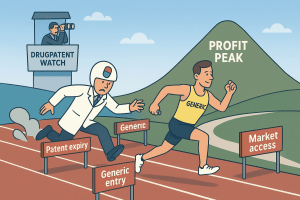
Welcome to the most complex chess game in the business world. Determining the optimal price for a generic medicine launch isn’t a simple calculation; it’s the culmination of a multi-year strategic campaign, a high-wire act that balances legal audacity, scientific precision, manufacturing excellence, and commercial savvy. Get it right, and you capture a significant slice of a multi-billion-dollar market. Get it wrong, and you become a cautionary tale in an industry with no tolerance for error.
As a pharmaceutical strategy analyst, I’ve spent my career advising companies on how to navigate this gauntlet. We operate at the intersection of patent law, health economics, and commercial strategy, turning the chaos of market entry into a coherent, actionable playbook. This report is that playbook. It is designed for you—the senior business professional, the portfolio manager, the market access leader—to provide a comprehensive framework for turning patent data into a decisive competitive advantage.
We will deconstruct this process piece by piece, moving from the foundational legal frameworks that govern market entry to the granular details of cost modeling and the sophisticated strategies required to navigate a marketplace dominated by powerful intermediaries. This is not just about finding a price; it’s about architecting a victory.
The $3 Trillion Question: Why Generic Pricing is the Industry’s Most Complex Chess Game
To understand generic pricing, one must first appreciate the central paradox of the generic market. This is a sector that now accounts for over 90% of all prescriptions dispensed in the United States, a staggering volume that underscores its role as the bedrock of the healthcare system.1 Yet, this same volume represents only about 18% of the nation’s total prescription drug spending.3 This vast chasm between volume and value creates the ferocious price pressure and razor-thin margins that define the industry.5
The global generic drugs market is a behemoth, projected to expand from approximately $491.35 billion in 2024 to a staggering $816.75 billion by 2034.2 This explosive growth is not speculative; it is fueled by a predictable and recurring phenomenon known as the “patent cliff.” In the coming years, blockbuster branded drugs with combined annual sales exceeding $200 billion are set to lose their market exclusivity, creating a massive transfer of value from innovator companies to generic competitors.4 These are not just numbers on a spreadsheet; they represent the immense stakes for which we are playing.
This is why we often describe the process as a game of three-dimensional chess. You are not simply playing against other generic manufacturers. Your strategy must simultaneously account for the defensive maneuvers of the incumbent brand company, the stringent and ever-evolving demands of regulators like the FDA, and the opaque, often counter-intuitive incentives of powerful market intermediaries, namely Pharmacy Benefit Managers (PBMs).
Furthermore, the sheer scale of the cost savings delivered by generics—an estimated $3.1 trillion over the last decade in the U.S. alone—has transformed the industry from a mere commercial enterprise into a cornerstone of national healthcare policy.4 When generics work as intended, they are lauded by politicians and patients alike for making medicines affordable.7 However, when prices for older generics spike or a “first generic” launches at a price perceived as too high, it can trigger public outrage, congressional hearings, and unwanted regulatory scrutiny.9
This political dimension adds a critical layer of complexity. A pricing strategy that appears optimal from a purely economic standpoint—for instance, maximizing revenue during a period of limited competition—might attract negative attention that creates long-term political and reputational risk. Therefore, the truly optimal price is not just about maximizing the net present value of a single product. It is a delicate balance between short-term profitability and the long-term sustainability of your business in a highly visible and politically sensitive arena. Your pricing decisions are not made in a commercial vacuum; they are made in the public square.
Deconstructing the Value Proposition: The Bifurcation of the Generic Market
The strategic landscape of the generic market is undergoing a fundamental schism. It is bifurcating into two distinct and increasingly divergent business models, and the pricing strategy you can deploy is almost entirely dictated by which path you choose.4
The first is the “Volume Operations” model. This is the traditional generic market for simple, small-molecule oral solids. Success in this arena is a brutal game of operational efficiency and scale. The products are commodities, and the only sustainable competitive advantage is having the lowest possible cost of goods. Pricing is reactive, aggressive, and relentlessly driven downward by intense competition.
The second, and increasingly important, model is the “Science & Technology” model. This segment is focused on complex generics and biosimilars.4 These are products that are difficult to develop, manufacture, and characterize, such as sterile injectables, long-acting formulations, drug-device combinations, and large-molecule biologics.1 The high scientific and technical barriers to entry naturally limit the number of competitors, creating a more stable and less price-sensitive market. Here, pricing strategies can incorporate elements of value, reflecting the significant investment and technical prowess required to bring the product to market.
This bifurcation is not merely a matter of portfolio diversification; it is an existential response to the hyper-commoditization that defines the simple generics space. The relentless “race to the bottom” on price for molecules like atorvastatin or metformin has eroded margins to the point of unsustainability for all but the largest and most efficient global manufacturers.3 This has led to market exits and, paradoxically, drug shortages for some of the oldest and most essential medicines.14
Therefore, the strategic decision of what to launch is the most important pricing decision a company makes. A firm’s investment in the R&D capabilities needed to tackle complexity is now a primary driver of its long-term pricing power.13 The rise of complex generics and the burgeoning biosimilar market 15 represents a strategic flight from the commoditization death spiral. The optimal price for a complex generic is not calculated as a simple discount off the brand; it is a more nuanced reflection of the higher development costs, the limited competitive set, the reduced risk of rapid price erosion, and the greater value delivered to the healthcare system.
The Regulatory Rulebook: Mastering the High-Stakes Game of Market Entry
Before a single pricing model can be built, a generic company must first win the right to compete. This right is governed by a complex and often contentious set of laws and regulations, primarily the landmark Drug Price Competition and Patent Term Restoration Act of 1984, more commonly known as the Hatch-Waxman Act. Understanding this rulebook is not a task for the legal department alone; it is the foundation of your entire commercial strategy.
The Hatch-Waxman Act: The Magna Carta of the Generic Industry
It is impossible to overstate the impact of the Hatch-Waxman Act.1 Prior to its passage in 1984, the generic drug industry was nascent and faced insurmountable regulatory and legal hurdles. Generic manufacturers were often required to conduct their own expensive and duplicative clinical trials to prove safety and effectiveness.1 The result? In 1984, generic drugs accounted for a mere 19% of prescriptions in the U.S..1
Hatch-Waxman brilliantly resolved a core tension between innovation and access. It created a streamlined pathway for generic drug approval while also providing incentives for innovator companies to continue their high-risk R&D. The Act laid the foundation for the modern generic industry, which today accounts for over 90% of all prescriptions filled in the U.S., driving massive cost savings for the healthcare system.1
The core mechanism of the Act is the Abbreviated New Drug Application (ANDA).1 This pathway allows a generic manufacturer to gain FDA approval without repeating costly clinical trials. Instead of proving safety and efficacy from scratch, the generic firm must simply demonstrate that its product is
bioequivalent to the innovator’s drug, which is referred to as the Reference Listed Drug (RLD).22 Bioequivalence means the generic drug delivers the same amount of the active ingredient into a patient’s bloodstream over the same period of time as the brand-name drug.23
The Act also created the “Approved Drug Products with Therapeutic Equivalence Evaluations,” the publication commonly known as the Orange Book.1 This publicly available database lists all FDA-approved drugs, their patents, and their therapeutic equivalence ratings, serving as the official guide for pharmacists and the strategic map for generic challengers.
The Golden Ticket: Unpacking the 180-Day First-to-File (FTF) Exclusivity
While the ANDA pathway opened the door to competition, Hatch-Waxman included a powerful incentive to ensure that competition would be vigorous, even in the face of daunting patent litigation. This incentive is the “brass ring” of the generic world: a 180-day period of marketing exclusivity awarded to the first generic company to challenge a brand’s patent.19
During this six-month period, the FDA is barred from approving any subsequent ANDAs for the same drug. This creates a highly lucrative, temporary duopoly (or, in some cases, a market with just a few players) consisting of the brand drug and the first-to-file (FTF) generic.21 This exclusivity can be worth hundreds of millions of dollars for a blockbuster drug, providing the financial reward necessary to justify the immense cost and risk of patent litigation.19
The Paragraph IV Challenge: A Calculated Act of Infringement
The key to unlocking this golden ticket is the patent certification process. When submitting an ANDA, a generic firm must make a certification for each patent listed in the Orange Book for the brand-name drug.21 There are four types of certifications, but the one that matters for exclusivity is the
Paragraph IV (P-IV) certification.19
A P-IV certification is a bold declaration: the generic company asserts that the brand’s listed patent is either invalid, unenforceable, or will not be infringed by the marketing of the proposed generic drug.19 Under the law, this filing is considered a technical or “artificial” act of patent infringement, which gives the brand company the right to sue the generic challenger immediately, even before the generic product is on the market.5
This is the start of the legal chess match. The generic firm must notify the brand company of its P-IV filing. The brand then has a 45-day window to file a patent infringement lawsuit.21 If a suit is filed within this window, the FDA is automatically prohibited from granting final approval to the generic’s ANDA for a period of 30 months, or until the patent litigation is resolved in court, whichever comes first.18 This 30-month stay is a significant hurdle, a built-in delay designed to give the brand time to defend its intellectual property. For the generic company, the millions of dollars spent on this litigation are a calculated, and often necessary, investment to gain access to the market and the potential 180-day exclusivity prize.23
Triggering Exclusivity: The Race to Market vs. The Court Decision
The strategic complexity of the 180-day exclusivity deepens when we consider how the clock is started. This is a critical and often misunderstood nuance. The 180-day period is triggered by one of two events 21:
First Commercial Marketing: The date on which the first-to-file generic applicant begins to commercially market its drug.
A “Court Decision”: The date of a court decision finding the challenged patent to be invalid, unenforceable, or not infringed.
This dual-trigger mechanism creates a significant strategic risk for the FTF applicant. The “court decision” trigger, as interpreted by the courts, refers to a decision from a district court, not necessarily a final, non-appealable judgment from a higher court.21 This has profound implications. A district court ruling in the generic’s favor can start the 180-day exclusivity clock ticking
even before the FDA has granted final approval for the ANDA.21 It is entirely possible for a company to “win” the patent case at the district level, only to see its entire 180-day exclusivity period burn away while it waits for the FDA to complete its review.
The situation is even more perilous if the ANDA is approved and the company decides to launch its product based on the district court victory. If that decision is later reversed on appeal, the generic company can be liable for catastrophic treble damages for willful patent infringement.21 This transforms the launch decision from a simple commercial calculation into a high-stakes legal and financial gamble. The FTF company must conduct a sophisticated risk analysis: What is the probability of losing the appeal? How much of the 180-day period is likely to remain after we secure final FDA approval? Is the potential profit from an “at-risk” launch worth the potentially business-ending liability? This legal uncertainty means the “optimal” price during the exclusivity period is not a fixed number but a risk-adjusted one. A more risk-averse company might choose to price more conservatively or even wait for the appeal to conclude, sacrificing a portion of its exclusivity in exchange for legal certainty.
The Brand’s Counter-Play: The Rise of the Authorized Generic (AG)
Just as generic companies have developed sophisticated strategies to challenge patents, brand companies have devised powerful counter-maneuvers to defend their revenue streams. The most effective of these is the Authorized Generic (AG).25
An AG is the brand-name drug product, manufactured by the brand company (or a licensee), but marketed without the brand name on its label at a generic price.26 Because an AG is technically the same approved drug, it is marketed under the brand’s original New Drug Application (NDA), not a new ANDA.25 This is a crucial distinction. The 180-day exclusivity granted to an FTF generic only blocks the FDA from approving other
ANDAs.28 It does not, and cannot, prevent the brand company from selling its own product under a different label.25
How AGs Dilute the First-Mover Advantage
The launch of an AG during the 180-day exclusivity period is a strategic masterstroke by the brand company. It shatters the profitable duopoly that the FTF generic was counting on, turning it into a three-player market (Brand vs. FTF Generic vs. Authorized Generic). The economic impact is severe.
Competition from authorized generics during the 180-day marketing exclusivity period has led to lower retail and wholesale drug prices. During this time, competition by an authorized generic is associated with retail prices that are four-to-eight percent lower, and wholesale prices that are 7 to 14 percent lower, than those without an authorized generic. 29
While this provides a modest benefit to consumers, it is devastating for the FTF challenger. A landmark 2011 report by the Federal Trade Commission (FTC) quantified the damage: the presence of a competing AG reduces the FTF generic’s revenues by a staggering 40% to 52% during the exclusivity period.29 This can slash hundreds of millions of dollars from the expected return on investment, fundamentally altering the economics of a patent challenge.
“Pay-for-Delay” and No-AG Agreements: The FTC’s Watchful Eye
The power of the AG extends beyond its actual market presence. The mere threat of launching an AG has become a formidable bargaining chip for brand companies in settlement negotiations with generic challengers. This has led to a practice the FTC has aggressively pursued: “pay-for-delay” agreements, also known as reverse payment settlements.
In these deals, the brand company effectively pays the generic firm to delay its market entry. This payment can take many forms, but one of the most common and insidious is a promise by the brand company not to launch a competing AG in exchange for the generic’s agreement to postpone its launch.29 The FTC has called this a “double whammy for consumers.” First, patients are denied access to a lower-cost generic for a longer period. Second, when the generic finally does launch, it faces no competition from an AG, resulting in higher prices than would otherwise exist.29
For a generic pricing strategist, this dynamic is critical. Your freedom-to-operate (FTO) analysis must now include an assessment of the brand’s history and likelihood of launching an AG. If the brand is known for this tactic, the expected value of a successful P-IV challenge must be discounted by roughly 50%. This financial haircut might render a challenge against a smaller drug economically unviable. Conversely, it might make a settlement that includes a “no-AG” clause a more attractive and predictable path to market than fighting through years of costly litigation with an uncertain outcome. This strategic choice, made years before launch, directly shapes the competitive landscape and your ultimate pricing power.
The Pre-Launch Blueprint: A Four-Pillar Framework for Market Analysis
With a firm grasp of the regulatory game, the next phase is to build a comprehensive pre-launch blueprint. This is not a simple market research exercise; it is a rigorous, data-driven analysis built on four strategic pillars. This framework is designed to move from a high-level understanding of the market to a granular, quantitative forecast of a specific product’s potential.
Pillar 1: Comprehensive Market Sizing and Forecasting
The first pillar is about quantifying the prize. It’s not enough to know a patent is expiring; you must build a robust model of the market value you are targeting. This begins at the macro level and funnels down to the specific drug.
Analyzing the “Forecast Delta” from Market Research
A top-down analysis of the generic drug market involves synthesizing projections from multiple leading market research firms. You will quickly notice that these forecasts vary. For instance, one firm might project a compound annual growth rate (CAGR) of 5.04%, while another projects a more aggressive 8.5%.4 This variance should not be seen as a data flaw, but as a critical strategic indicator of the fundamental uncertainties shaping the industry.4
A sophisticated approach uses this “forecast delta” to its advantage. By modeling best-case, worst-case, and most-likely scenarios based on the range of published forecasts, a company can stress-test its investment thesis. This creates a more resilient return on investment (ROI) model that accounts for macroeconomic uncertainty, rather than relying on a single, potentially flawed, point estimate.
Identifying and Quantifying the Target “Patent Cliff” Opportunity
The next step is to move from the macro market to the specific molecule. This requires a bottom-up forecast built on granular data for the brand-name drug you intend to challenge. Key data points to gather and analyze include:
Brand Sales: Historical and current annual sales revenue for the RLD.
Prescription Volume: The number of prescriptions written and dispensed.
Patient Population: The size of the addressable patient population for the drug’s approved indications.
Growth Trends: Is the market for this therapeutic class growing, shrinking, or stable?
A powerful real-world example of this analysis is the impending patent expiry of the blockbuster weight-loss drug semaglutide in India. Analysts are not just noting the patent date; they are actively forecasting the market impact. They predict an immediate price crash of up to 80% upon generic entry, which will in turn trigger a massive spike in adoption.30 They are quantifying the potential market expansion, from roughly Rs 700 crore today to Rs 8,000-10,000 crore by the end of the decade, and estimating the number of patients who will adopt the therapy.30 This is the level of detail required to build a compelling business case for a generic launch.
Pillar 2: Granular Competitor Intelligence
This pillar is arguably the most critical for pricing. The number of competitors that enter a market is the single most powerful determinant of price erosion.3 Your analysis must be a forward-looking intelligence operation, not a backward-looking snapshot of the current market.
Mapping the Competitive Pipeline with Tools like DrugPatentWatch
To win this intelligence race, you must go beyond public announcements and press releases. This is where specialized business intelligence platforms become indispensable. A service like DrugPatentWatch provides a fully integrated database that allows a company to monitor the competitive pipeline in real time.32
With such a tool, you can track the critical leading indicators of future competition 32:
ANDA Filings: See which companies have submitted applications to the FDA for your target drug.
Paragraph IV Challenges: Identify exactly who is challenging the brand’s patents, a clear signal of intent to launch at the earliest possible date.32
Litigation Status: Monitor the progress of patent lawsuits to anticipate early generic entry or potential settlements.34
Tentative Approvals: Know which competitors have received a “tentative approval” from the FDA, meaning they are ready to launch as soon as patent and exclusivity barriers are cleared.
This proactive monitoring serves as an early warning system, allowing you to forecast how crowded a market will become at 6, 12, and 24 months post-launch. Furthermore, advanced competitive intelligence involves analyzing patent filings themselves to reveal competitor R&D strategies, including formulation techniques and even “stealth programs” that have not been publicly disclosed.35
Differentiating Between Simple, Complex, and Biosimilar Competition
As we’ve established, not all competition is created equal. Your analysis must differentiate between the types of competitors you will face. A competitor with a long track record of successfully developing and launching complex sterile injectables is a far more formidable opponent in that space than a company that primarily deals in simple oral solids.4
The emerging biosimilar market adds another layer of complexity. Here, competitive dynamics are shaped by factors like interchangeability status (whether a pharmacist can substitute the biosimilar for the brand without a new prescription) and, increasingly, strategic partnerships with PBMs.38 The recent launch of Humira biosimilars demonstrated that a biosimilar’s market success can be almost entirely dictated by which PBM decides to place it on a preferred formulary tier.38 Your competitive analysis for a biosimilar must therefore map not just other manufacturers, but also the intricate web of payer and PBM relationships.
Pillar 3: Deconstructing the Brand’s Position
The third pillar involves a deep forensic analysis of the incumbent you are seeking to displace. You must understand the brand’s strategy as well as you understand your own.
Reverse-Engineering the Brand’s Pricing and Reimbursement Strategy
The brand’s price sets the ceiling from which your initial discount will be calculated. However, the brand’s list price, or Wholesale Acquisition Cost (WAC), is often a fiction. The real price is the net price after all rebates and discounts are paid to PBMs and payers. Your analysis must seek to uncover this net price by examining formulary data, rebate trends in the therapeutic class, and any available market intelligence. You must also understand the brand’s historical relationships with the major PBMs, as these relationships can create significant inertia that is difficult for a new generic to overcome. In some international markets, this analysis may also need to account for government-led pricing schemes like international reference pricing (IRP).41
Assessing Brand Loyalty and Prescriber/Patient Habits
Even in the face of a significantly cheaper generic alternative, brand loyalty can be surprisingly sticky.3 Some physicians may be slow to change their prescribing habits, and some patients may be anxious about switching from a medication they know and trust. Focus group research shows that while most patients are very favorable toward generics, their primary concern is efficacy, and they rely heavily on the guidance of their doctors and pharmacists.47
This insight is critical. It tells you that your launch strategy cannot rely on price alone. It must be accompanied by a targeted education and marketing campaign aimed at building trust and confidence among healthcare professionals. They are your most important messengers in overcoming any residual brand loyalty or patient anxiety.47
Pillar 4: Modeling the Inevitable Price Erosion Curve
This final pillar is the quantitative heart of your pre-launch analysis. It synthesizes the intelligence gathered in the previous three pillars to build a predictive model of how your price will decay over time. This price erosion curve is the single most important input for your financial modeling.
The relationship between the number of generic competitors and the resulting price reduction is one of the most consistent and well-documented phenomena in the pharmaceutical industry. By synthesizing data from multiple authoritative sources, including the FDA and the Department of Health and Human Services (HHS), we can construct a powerful forecasting tool.
Table 1: The Generic Price Erosion Curve
Number of Generic Competitors
Average Price Reduction vs. Brand Price (%)
Key Data Sources
1 Competitor
39%
FDA, ASPE (AMP Data) 23
2 Competitors
54%
FDA, ASPE (AMP Data) 2
3 Competitors
61%
FDA, ASPE (AMP Data) 23
4 Competitors
79%
FDA, ASPE (AMP Data) 4
5 Competitors
~85%
Industry Analysis 3
6+ Competitors
>95%
FDA 19
10+ Competitors
>95%
ASPE 8
This table is far more than a descriptive summary of historical data; it is a critical predictive tool. The strategic process is as follows:
Forecast Competition: Using the competitor intelligence gathered in Pillar 2 (e.g., from DrugPatentWatch), you estimate the likely number of generic entrants at key time points post-launch (e.g., 6 months, 12 months, 24 months, 36 months).
Project Price Points: You then apply the price reduction percentages from the table to your brand price ceiling to project the likely market price at each of those future time points.
Build a Dynamic Financial Model: This projected price erosion curve becomes the central input for a dynamic revenue forecast. By combining this with your market share projections and cost-of-goods model, you can calculate the Net Present Value (NPV) and Internal Rate of Return (IRR) for the entire launch opportunity.
This process transforms a series of qualitative assessments (“competition looks high,” “the market is large”) into a single, hard, quantitative financial metric. The NPV of the project becomes the ultimate arbiter, the data-driven foundation upon which the final “go/no-go” investment decision is made. It is the culmination of the entire pre-launch blueprint.
The Cost of Goods: Building a Bottom-Up Financial Model
While the pre-launch analysis provides a “top-down” view of the market opportunity, a successful pricing strategy must also be built from the “bottom-up.” You must have an unshakable understanding of your own cost structure. This cost floor determines your ability to compete and survive in the hyper-competitive later stages of a generic’s life cycle.
The Core Advantage: Escaping the Multi-Billion Dollar R&D Burden
The fundamental cost advantage of a generic drug is what it doesn’t have to pay for. Innovator companies embark on a perilous, decade-long, multi-billion-dollar journey of novel drug discovery and development.23 The generic manufacturer is spared this odyssey.
As established by Hatch-Waxman, a generic firm can rely on the brand company’s original safety and efficacy findings.1 The development cost for a generic drug is therefore a mere fraction of the innovator’s investment, typically ranging from just $2 million to $10 million.23 This isn’t just a quantitative difference; it’s a qualitative shift in the entire business model, enabling the potential for massive price reductions. The scientific shortcut to market is the requirement to prove bioequivalence, not reinvent the clinical wheel.23
Anatomy of Production Costs (COGS): From API to Packaging
While the avoidance of R&D spending creates the potential for affordability, the actual price of a generic is ultimately grounded in the tangible costs of its physical creation. A granular understanding of your Cost of Goods Sold (COGS) is non-negotiable.
Table 2: Generic Drug Cost of Goods Sold (COGS) Breakdown
Cost Component
Typical % of COGS
Key Drivers & Volatility
Active Pharmaceutical Ingredient (API)
50-52%
High Volatility. Driven by chemical synthesis complexity, raw material costs (often tied to commodities like petroleum), geopolitical stability of origin (India/China), and supplier scale. 51
Excipients & Formulation
5-10%
Medium Volatility. Driven by the complexity of the formulation (especially for modified-release), cost of patented excipients, and the need for patent workarounds. 51
Direct Labor
10-15%
Medium Volatility. Driven by local labor rates, process complexity, and the level of automation in the manufacturing facility. 51
Manufacturing Overhead
10-20%
Low-Medium Volatility. Includes utilities (energy, water, specialized HVAC), depreciation of equipment, and routine facility maintenance. 51
Quality & Regulatory
10-25%
Low Volatility (but high impact). Includes costs of the quality control lab, extensive testing, validation studies, and maintaining documentation for regulatory compliance (cGMP). 51
This breakdown provides a critical bottom-up perspective that complements the top-down market analysis. It highlights where cost-control efforts will have the most significant impact and provides the “floor price” below which the product becomes unprofitable. This is essential for navigating the later phases of the price erosion curve, where the winner is often the company with the lowest marginal cost of production.
Active Pharmaceutical Ingredient (API): The Volatile Heart of the Cost Structure
The API is the therapeutic core of the drug and, without question, the single largest and most volatile component of your production cost.23 Its price is a complex function of chemistry, economics, and geopolitics. The heavy reliance of the U.S. market on API sourced from India and China creates significant supply chain fragility and exposes manufacturers to risks from trade disputes, shipping disruptions, and the internal politics of supplier nations.14 A robust API sourcing strategy, often involving qualifying multiple suppliers in different geographic regions, is a critical component of risk mitigation and cost management.
Manufacturing, Quality, and the Shift to Continuous Manufacturing (CM)
The costs of running a state-of-the-art, Good Manufacturing Practices (GMP)-compliant facility are substantial and non-negotiable.23 However, a paradigm shift in manufacturing technology is poised to fundamentally rewrite the cost equation:
Continuous Manufacturing (CM).
Unlike traditional batch processing, where production occurs in discrete steps, CM operates as an integrated, uninterrupted flow. The economic advantages are profound. A company implementing CM can achieve 53:
Facility Cost Reductions: 30-50%
Labor Cost Reductions: 25-40%
Quality Control Cost Reductions: 30-50%
Reduced Equipment Footprint: Up to 70%
This is not an incremental improvement; it is a revolutionary change that fundamentally redefines the “cost floor.” A company with advanced CM capabilities can sustain profitability at price points that would drive a traditional batch manufacturer out of business. In the hyper-competitive “Volume Operations” segment, where price wars are inevitable, the company with the lowest production cost wins. Therefore, a strategic investment in CM is not just a manufacturing decision; it is a long-term competitive weapon for pricing and market domination. Any firm considering entry into a crowded generic market must now ask a critical question: “Can our batch-based cost structure truly compete with a future rival leveraging the efficiencies of continuous manufacturing?”
The Tollbooths to Market: Factoring in GDUFA Fees and Litigation Costs
Finally, the bottom-up model must account for the significant, fixed “tollbooth” costs required to gain market access. Under the Generic Drug User Fee Amendments (GDUFA), manufacturers must pay substantial fees to the FDA to fund the review process. These can include ANDA filing fees, Drug Master File fees for the API, and annual facility fees that can run into the hundreds of thousands of dollars.3
Added to this is the multi-million dollar cost of Paragraph IV patent litigation.23 These are not variable costs; they are significant, upfront investments that must be made to enter the game. A complete financial model must amortize these fixed costs over the expected sales volume of the drug to determine the true, all-in cost basis for the product.
The Strategic Pricing Framework: From Launch Price to Long-Term Profitability
With a comprehensive market analysis (top-down) and a detailed cost model (bottom-up) in hand, you can now construct a dynamic pricing strategy. Optimal pricing is not a single number set at launch; it is a phased approach that must adapt to the rapidly changing competitive dynamics of the generic life cycle.
Phase 1 Pricing: The Limited Competition Window (First 180 Days)
This is the most lucrative period of a generic’s life, especially for the first-to-file entrant enjoying 180-day exclusivity. The pricing strategy in this phase is not about cost-plus; it is about “value capture.”
The “Value Capture” Model: Pricing Relative to the Brand
During the exclusivity window, pricing is set “top-down,” benchmarked as a discount off the brand’s price. The first generic typically launches at a price 15% to 30% below the brand’s Wholesale Acquisition Cost (WAC).5 The goal is to maximize revenue and profit in this protected environment, recouping the significant upfront costs of R&D and litigation before the floodgates of multi-competitor entry open.49 A price that is too low leaves money on the table, while a price that is too close to the brand may slow market conversion.
The First-Mover Advantage: Quantifying the Financial Impact
Being first to market is paramount. The data is unequivocal: the initial generic entrant secures a commanding and enduring market share. Studies have shown the first entrant enjoys an 80% market share advantage over the second entrant and a staggering 225% advantage over the third.49
Real-world examples vividly illustrate this power. When the first generic version of the cholesterol medication atorvastatin (Lipitor) launched, it rapidly captured over 70% of the genericized market.49 Teva’s generic version of Viagra, launched with an aggressive pricing strategy, seized 70% of the market within a year.49 This dominance is not fleeting; it can persist for at least three years, and in some cases, up to ten.49 This is due to the “stickiness” of prescribing habits, pharmacy stocking preferences, and patient familiarity, which create high switching costs for later entrants.49
Phase 2 Pricing: The Hyper-Competitive Marketplace
The moment the 180-day exclusivity period expires (or was never available), the strategic imperative pivots dramatically. The game is no longer about value capture; it is about “market share retention” in the face of rapid and severe price erosion.5
Shifting to Market-Based and Cost-Plus Models
As the second, third, and fourth competitors enter, pricing becomes highly reactive and aggressive. This is the “race to the bottom” that defines the commoditized generic market. Your pricing is now dictated by two forces: what your competitors are charging (market-based pricing) and the absolute floor of your own production costs (cost-plus pricing).3 You must be prepared to match or undercut competitor prices to defend your volume, and your ability to do so profitably is determined entirely by your cost structure.
Navigating the “Race to the Bottom” without Sacrificing the Business
This phase is fraught with peril. Unsustainable price wars can drive margins so low that production becomes unprofitable, leading to market exits by smaller firms.3 This consolidation, in turn, can lead to drug shortages, which have become a chronic and worsening problem, particularly for older, sterile injectable generics.6 The average drug shortage now lasts for more than three years.6
The key to survival and long-term success in this environment is having the most efficient cost structure in the industry. This links directly back to the importance of manufacturing excellence and strategic investments in technologies like Continuous Manufacturing. The company with the lowest marginal cost of production is the one that can withstand the pricing pressure the longest, capturing market share from less efficient rivals and ultimately dominating the high-volume, post-exclusivity market.
The PBM Labyrinth: Navigating Rebates, Formularies, and Spread Pricing
Perhaps the most complex and least understood aspect of U.S. drug pricing is the role of Pharmacy Benefit Managers (PBMs). These powerful intermediaries sit between drug manufacturers, health plans, and pharmacies, and their business practices can profoundly, and often perversely, influence the optimal pricing strategy for a generic drug.9 The three largest PBMs—CVS Caremark, Express Scripts, and OptumRx—control nearly 80% of all prescriptions in the United States, giving them immense market power.9
How PBMs Distort the Relationship Between List Price and Net Price
One would assume that for a generic drug, the lowest possible list price is always the best strategy. In the opaque world of PBMs, this assumption is dangerously naive. PBMs employ several practices that can create a perverse incentive for a higher generic list price.
The most prominent of these is “spread pricing.” In this model, a PBM reimburses a pharmacy one price for dispensing a generic drug but charges its client (the health plan or employer) a higher price for the same drug. The PBM then pockets the difference, or “spread”.9 This spread is a primary profit center for PBMs on generic drugs. An audit in Ohio, for example, found the average spread on generic prescriptions in its Medicaid program was 31.4%, costing taxpayers over $200 million in a single year.59
This business model creates a bizarre incentive. If a generic manufacturer launches a drug with a very low list price, there is very little room for the PBM to create a profitable spread. The PBM, therefore, has little financial incentive to place that low-list-price generic on its formulary. To gain market access, a generic manufacturer may be forced to set a strategically inflated list price (WAC) and then offer a deep rebate back to the PBM. This creates the artificial “spread” that the PBM needs to make a profit, even if the final net price to the manufacturer is the same.
This means the “optimal” price for a generic in the U.S. market is often two prices: a low net price that ensures profitability for the manufacturer, and a higher list price that satisfies the business model of the PBM controlling access to the market. This is a non-obvious and deeply counter-intuitive reality that must be mastered.
Strategies for Securing Favorable Formulary Placement
Given this landscape, a successful launch requires a sophisticated payer and PBM engagement plan.5 Simply offering the lowest price is not enough. You must understand the formulary design of each major payer. Formularies are tiered lists of covered drugs, with drugs in lower tiers having lower patient co-payments.64 Generic drugs are typically placed on Tier 1, the lowest-cost tier.64
However, due to the rebate dynamics, PBMs have at times been caught placing a high-rebate brand drug on a preferred tier while putting its lower-cost generic competitor on a higher, more expensive tier, steering patients away from the most cost-effective option.9 Your engagement strategy must therefore articulate a comprehensive value proposition that goes beyond unit price, potentially including strategic rebates, patient support programs, or guarantees of supply chain reliability to secure that coveted Tier 1 position.
A Glimpse of the Future? International Reference Pricing (IRP) Models
No discussion of pharmaceutical pricing is complete without considering the potential impact of International Reference Pricing (IRP), a policy tool used by the vast majority of other developed countries to control drug costs.41 While not yet implemented in a systematic way in the U.S., various proposals have been advanced that would tie U.S. drug prices to a benchmark derived from prices in other high-income nations.42
These models generally fall into two categories: setting direct price caps based on an international average, or using the international price as a key negotiation factor in programs like Medicare.41 The debate is fierce. Proponents see it as a straightforward way to lower U.S. prices, which are often three times higher than in other countries.10 Opponents, including many industry executives, argue it would import foreign price controls, stifle innovation, and reduce U.S. investment in R&D by forcing the rest of the world to pay its fair share.43
While the debate primarily centers on brand-name drugs, the implementation of IRP would have profound and potentially unintended consequences for the generic market. A generic’s launch price is benchmarked as a discount from the brand’s price. If IRP forces the brand price ceiling significantly lower, it directly compresses the potential profit margin for all generic players. This is especially critical for the FTF entrant, whose entire business case for undertaking a multi-million-dollar patent challenge is based on the expected value of the 180-day exclusivity period. If that potential reward is drastically reduced, it could make P-IV challenges on many drugs economically unviable. This could paradoxically lead to less generic competition over time, delaying patient access to lower-cost medicines—the exact opposite of the policy’s intent.
Real-World Case Studies: Lessons from the Trenches
Theory and frameworks are essential, but the truest lessons are learned from the battlefield. By examining the real-world launches of some of the industry’s most significant drugs, we can see these strategic principles in action.
Lipitor (Atorvastatin): The Archetypal Blockbuster Generic Launch
The patent expiration of Pfizer’s Lipitor, once the world’s best-selling drug with peak sales of over $12 billion, is the archetypal case study of a blockbuster generic launch.5 It encapsulates nearly every strategic element we have discussed.
The launch was preceded by intense legal battles, with Pfizer defending its patents and generic firms like Ranbaxy challenging them to secure the coveted FTF position.68 When the first generics finally launched, the market dynamics played out exactly as predicted. The initial entrants, Ranbaxy and Watson Pharmaceuticals, priced their products at a significant discount to the brand, and the market rapidly converted.69
Pfizer, however, did not go quietly. It deployed a sophisticated brand defense strategy, most notably the “Lipitor-For-You” program.69 This program offered privately insured patients a co-pay card that reduced their out-of-pocket cost for
branded Lipitor to as low as $4 a month, often less than the co-pay for the new generic.69 Pfizer also offered deep rebates to PBMs and health plans, effectively making the net cost of the brand cheaper than the generic during the initial 180-day exclusivity period.69 This was a brilliant, if controversial, tactic to minimize market share erosion and maximize revenue from the brand’s long tail.
Despite these defensive maneuvers, the ultimate outcome was a massive win for the healthcare system. The availability of generic atorvastatin was projected to save the system $4.7 billion annually by 2014, demonstrating the immense power of generic competition to drive down costs.70 The Lipitor case remains the canonical example of the entire generic life cycle: the patent cliff, the FTF race, aggressive brand defense, and ultimately, enormous societal savings.
Gleevec (Imatinib): When High Generic Launch Prices Delay Savings
If Lipitor is the textbook example of how the system should work, the generic launch of Novartis’s cancer drug Gleevec is a cautionary tale of how it can be manipulated. Gleevec was a revolutionary treatment for chronic myeloid leukemia (CML), but its price had steadily climbed over the years, reaching over $123,000 for a yearly course by the time its primary patent was set to expire.71
The generic launch was fraught with strategies that delayed and diluted the expected cost savings. First, Novartis struck a “pay-for-delay” settlement with the first-to-file generic challenger, Sun Pharmaceuticals, which postponed the generic’s market entry by six months, from July 2015 to February 2016.11
Second, when Sun Pharma finally launched its generic imatinib, the pricing was a shock to the market. Instead of the deep discounts typically seen with generic entry, the initial price was only modestly below the brand’s price.11 One report noted the generic launched at a price just 6.4% lower than Gleevec’s price at the time.71 Novartis executives reportedly hailed this high generic price as “good news”.71
This combination of a delayed launch and a high initial generic price created a “duo-poly” market that lasted for an additional six months, effectively extending the period of high prices for a full year past the original patent expiration. Experts estimate that these strategies cost payers an additional $700 million in that one-year period alone.71 The Gleevec case serves as a stark reminder that the promise of generic savings is not automatic. It can be subverted by legal settlements and strategic launch pricing that prioritize corporate profits over public health benefits.
Humira (Adalimumab): A Modern Biosimilar Case Study on PBM Power
The recent launch of biosimilars for AbbVie’s Humira, the best-selling drug in history, is perhaps the most important case study for understanding the modern U.S. pharmaceutical market. It is a masterclass in the immense and decisive power of PBMs.
By early 2023, multiple biosimilar versions of Humira were launched in the U.S. market. Conventional wisdom suggested this would trigger a competitive price war and rapid market conversion. Instead, almost nothing happened. Despite the availability of lower-cost alternatives, Humira retained over 97% of its market volume through the first year of competition.38 Biosimilar uptake was abysmal, accounting for less than 2% of the market.39
Why? The answer lies in the PBM business model. The major PBMs had little incentive to switch patients to the new biosimilars. Humira’s massive sales volume gave AbbVie enormous leverage to negotiate portfolio-level rebates with PBMs. These rebates, tied to Humira’s high list price, were likely more profitable for the PBMs than the savings offered by the lower-priced biosimilars.39 The PBMs simply kept Humira on their preferred formulary tiers and effectively blocked access to its competitors.
The market dynamic only began to shift when the PBMs themselves decided to enter the game. In a landmark move, CVS Caremark, through its new subsidiary Cordavis, struck a co-promotion deal with Sandoz for its Hyrimoz biosimilar.38 CVS then removed brand-name Humira from many of its major formularies and replaced it with its own co-branded version of Hyrimoz. Unsurprisingly, Hyrimoz’s market share skyrocketed, capturing 14% of all adalimumab claims within a month of the change.38
The Humira case demonstrates a new reality for generic and biosimilar pricing. In today’s highly consolidated payer landscape, the success of a new entrant may depend less on its price and more on its ability to forge a strategic partnership with a major PBM. The power has shifted from the manufacturer to the intermediary. A winning launch strategy must now be as much about channel management and payer partnerships as it is about science, law, or manufacturing cost.
Conclusion: Synthesizing a Winning, Dynamic Pricing Strategy
Determining the optimal price for a generic medicine is not a static calculation but a dynamic, multi-faceted strategic endeavor. It is a journey that begins years before launch with the selection of a target molecule and culminates in a relentless post-launch battle for market share and profitability. As we have seen, success hinges on the masterful integration of legal acumen, scientific ingenuity, operational excellence, and sophisticated commercial strategy.
The playbook for a winning launch requires a company to:
Master the Regulatory Game: A deep, strategic understanding of the Hatch-Waxman Act, particularly the high-stakes game of the Paragraph IV challenge and the 180-day exclusivity, is the price of admission. This includes anticipating and modeling the impact of brand defense tactics like the launch of an Authorized Generic.
Conduct Rigorous Market Analysis: The four-pillar framework—market sizing, competitor intelligence, brand deconstruction, and price erosion modeling—is essential for building a data-driven business case. Leveraging powerful tools like DrugPatentWatch to map the competitive pipeline is no longer a luxury but a necessity.
Build a Bottom-Up Cost Model: An unassailable understanding of your own cost of goods sold, from volatile API sourcing to the game-changing efficiencies of Continuous Manufacturing, determines your ability to survive and thrive in a commoditized market.
Execute a Phased Pricing Strategy: The approach must be dynamic, shifting from a “value capture” model during the limited-competition window to an aggressive “market share retention” model in the hyper-competitive phase.
Navigate the PBM Labyrinth: In the modern U.S. market, this may be the most critical pillar. Success requires a sophisticated channel strategy that acknowledges the counter-intuitive incentives of PBMs and recognizes that a partnership may be more valuable than a price point.
The generic industry is at a crossroads. The traditional model of competing on simple molecules is facing a crisis of sustainability. The future belongs to those companies that can navigate increasing complexity—in the products they develop, the supply chains they manage, and the commercial arrangements they forge. In this new era, the ultimate competitive advantage will belong to those who can most effectively transform data from every corner of the industry—patent, regulatory, clinical, and commercial—into a single, coherent, and winning strategy.
Key Takeaways
Pricing is the End of a Long Strategic Chain: The optimal price is not a standalone number. It is the outcome of years of strategic decisions regarding target selection, legal challenges (Paragraph IV), and R&D investment (simple vs. complex generics).
180-Day Exclusivity is a High-Risk, High-Reward Prize: While potentially worth hundreds of millions, the value of first-to-file exclusivity is diluted by the threat of Authorized Generics (which can cut revenues by ~50%) and legal risks that can cause the exclusivity clock to run out before you can even launch.
The Number of Competitors is the Strongest Predictor of Price: Your most critical pre-launch task is to accurately forecast the number of competitors who will enter the market over time. Use tools like DrugPatentWatch to track ANDA filings and litigation to build a robust price erosion model. A market with one generic sees a ~39% price drop; a market with six or more sees a >95% drop.
Know Your Cost Floor, and Lower It: In the hyper-competitive phase, the lowest-cost producer wins. A granular understanding of your COGS is essential. Investing in technologies like Continuous Manufacturing can provide a decisive cost advantage, allowing you to remain profitable when others cannot.
Master the PBM Game: In the U.S., PBMs control market access. Their business models (e.g., spread pricing) can create perverse incentives for higher generic list prices. A successful launch requires a sophisticated payer strategy that may involve strategic partnerships, as demonstrated by the Humira biosimilar case.
The Market is Bifurcating: The generic industry is splitting into a high-volume, low-margin commodity business (simple generics) and a high-value, technology-driven business (complex generics and biosimilars). Your company’s R&D capabilities will determine which game you can play and what pricing strategies are available to you.
Frequently Asked Questions (FAQ)
1. Is it ever optimal to price a “first generic” with 180-day exclusivity at a very deep discount (e.g., 70-80% off the brand) to rapidly capture the entire market?
While tempting in theory, this is generally not an optimal strategy. The 180-day exclusivity period is the primary opportunity for the first-filer to recoup its substantial investment in R&D and high-risk patent litigation. Pricing at a modest 15-30% discount to the brand is typically sufficient to drive rapid market conversion from payers and pharmacies eager for savings, while still maximizing revenue in the limited-competition window. An excessively deep discount would leave significant money on the table. Furthermore, it could set a price expectation in the market that is difficult to raise later and would dramatically accelerate the “race to the bottom” once other competitors enter after 180 days. The goal is to balance market share capture with profit maximization during this unique, protected period.
2. How does the potential for an “at-risk” launch (launching after a district court win but before an appeal is resolved) affect the pricing calculation?
An “at-risk” launch introduces a massive variable into the pricing equation: the risk of treble damages if the appeal is lost. This requires a sophisticated risk-adjusted NPV calculation. The company must estimate the probability of the appeal being overturned and multiply that by the potential damages (three times the brand’s lost profits). This potential liability, which could be catastrophic, must be weighed against the expected profits from launching early. This often leads to a more conservative pricing strategy during the at-risk period to limit the potential damages calculation. Some companies may even choose to forgo the at-risk launch entirely, waiting for legal certainty at the expense of a portion of their exclusivity period. The “optimal” price in this scenario is heavily influenced by the company’s risk tolerance and the strength of its legal case.
3. With the rise of direct-to-consumer platforms like Mark Cuban’s Cost Plus Drugs, should our pricing strategy bypass PBMs altogether?
Direct-to-consumer (DTC) models are a fascinating and disruptive force, particularly for patients paying with cash.47 However, for a major generic launch, bypassing PBMs entirely is not a viable primary strategy. The vast majority of prescriptions in the U.S. are paid for through insurance plans managed by PBMs. Gaining access to these large patient populations requires securing a position on PBM formularies. A more realistic strategy is a bifurcated approach: engage with PBMs to access the insured market while simultaneously exploring partnerships with cash-based DTC platforms to capture a different segment of the market and build brand goodwill. The DTC channel can serve as a valuable secondary market and a public relations tool, but it cannot replace the volume controlled by the major PBMs.
4. If our company is based outside the U.S., how should we approach pricing in markets that use International Reference Pricing (IRP)?
Pricing in IRP markets requires a carefully sequenced global launch strategy. Because countries reference each other’s prices, the price you set in your first launch country can create a ceiling or floor for subsequent launches across the globe.45 The strategy often involves launching first in countries with higher price tolerance and less restrictive IRP rules, and then sequencing launches into countries that reference those initial prices. You must have a deep understanding of each country’s specific IRP “basket” (which countries they reference), the calculation method (e.g., average of the three lowest), and the timing of their price revisions.46 A mistake in one country can trigger a cascade of mandatory price cuts across an entire region. This requires a centralized global market access team that can model these complex interdependencies and optimize the launch sequence for maximum global revenue.
5. For a complex generic with high development costs, can we use a value-based pricing strategy similar to a branded drug?
While a complex generic offers more pricing power than a simple commodity, a full value-based pricing strategy is challenging. The core premise of a generic is that it is bioequivalent to an existing product, so you cannot claim superior clinical value. However, you can employ a “value-informed” or “cost-plus-value” strategy. The price should be benchmarked against the brand, but the discount can be smaller than for a simple generic. Your value proposition to payers would highlight factors beyond the molecule itself: the high R&D investment required, the technical barriers that ensure limited competition (and therefore more stable pricing), the potential for improved patient convenience (e.g., a long-acting injectable vs. a daily pill), and the reliability of your supply chain. The price reflects not just the cost of the pill, but the value of having a reliable, high-quality, and less-competed alternative to the brand.
International reference pricing of pharmaceuticals in the United States: Implications for potentially curative treatments – PMC, accessed August 9, 2025, https://pmc.ncbi.nlm.nih.gov/articles/PMC10373031/
Estimated costs of production and potential prices for the WHO Essential Medicines List, accessed August 9, 2025, https://gh.bmj.com/content/3/1/e000571