The Affordability Paradox: Why Thin Margins Are a Systemic Risk
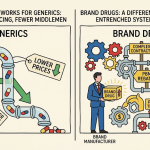
Generic drugs filled 91% of all U.S. prescriptions in 2022, yet accounted for only 26% of total drug spend. Medicare alone saved an estimated $90 billion that year through generic substitution. The math looks clean from the outside. From inside a generic manufacturer’s P&L, it is considerably less comfortable.
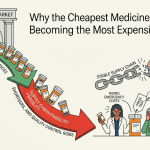
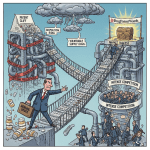
The margin compression that makes generics cheap for payers is the same force that makes the business structurally fragile. Manufacturers operate on pretax margins that routinely fall below 10%, and for high-volume commodity generics, below 5%. That thinness is not just a commercial problem; it is a public health variable. When margins drop far enough, manufacturers exit. When manufacturers exit, markets consolidate. When markets consolidate, the price discipline that payers depend on disappears.
This is the affordability paradox: the policy mechanisms that maximize short-term generic savings — aggressive formulary substitution, multi-source competitive bidding, relentless MAC (Maximum Allowable Cost) pressure — simultaneously erode the conditions necessary for a stable, multi-supplier market. It is a structural tension that no single pricing strategy resolves, and understanding it is prerequisite to any serious analytical work on generic pricing.
For pharma IP teams and portfolio managers, the paradox has a direct operational consequence: pricing decisions cannot be assessed at the SKU level alone. They must be evaluated across the full portfolio, factoring in cross-subsidization capacity, API supply security, and regulatory exposure. Firms that treat each product as an isolated P&L center will consistently misprice their competitive position.
Key Takeaways: Affordability Paradox
Generic drugs represent 91% of U.S. prescription volume at 26% of cost, creating the structural conditions for persistent margin compression.
Aggressive payer pricing pressure is not exogenous to generic drug shortages — it is a direct contributing cause.
Portfolio-level margin analysis, not SKU-level costing, is the correct analytical framework for generic pricing strategy.
Economic Architecture of the Generic Market
Supply, Demand, and the Pharmaceutical Elasticity Differential
Classical supply-demand mechanics apply to generic drugs, but with distortions significant enough to require a sector-specific analytical model. The most operationally relevant distortion is the split between patient-level demand elasticity and manufacturer-level price elasticity.
Patients prescribed a chronic medication like metformin or lisinopril are largely price-insensitive at the point of prescribing — they need the drug, and the prescribing decision is made by a physician. That gives the market a veneer of inelastic demand. But the actual purchasing decision in a multi-source generic market runs through pharmacy benefit managers (PBMs), group purchasing organizations (GPOs), and institutional formulary committees, all of whom are acutely price-sensitive. For a specific manufacturer’s version of a commodity generic, demand is highly elastic: a 2% price increase above the prevailing MAC rate produces near-zero reimbursement and near-zero volume.
This creates a two-layer demand structure: inelastic at the therapeutic class level, highly elastic at the manufacturer level. Generic firms that confuse the two will consistently over-price into volume collapse, or under-price into margin destruction.
Price elasticity also varies by product complexity. Simple oral solid generics (tablets, capsules) with five or more approved ANDAs operate at peak elasticity. Complex generics — extended-release formulations, injectables, inhalers, topicals, transdermals — have fewer approved competitors and correspondingly more pricing latitude. Biosimilars, which face a separate regulatory pathway under the Biologics Price Competition and Innovation Act (BPCIA), exhibit different elasticity profiles again, particularly where biosimilar interchangeability designation is absent and physician-level substitution resistance is high.
Market Concentration: The Oligopoly Problem
The generic drug market is frequently described as ‘highly competitive.’ The concentration data complicates that framing. Over 50% of generic drugs have at most two manufacturers. Roughly 40% have a single supplier. Five companies collectively control more than 60% of U.S. generic market volume by prescription share.
This is not a competitive market in the classical sense. It is a series of overlapping oligopolies, each defined by a specific molecule-form-strength combination. A manufacturer holding one of two approved ANDAs for a niche oral solid is effectively a duopolist for that product, with pricing power that has no analog in standard competitive market theory.
The concentration is partly structural (manufacturing complexity, regulatory cost, API sourcing), partly the result of a two-decade wave of M&A that consolidated mid-tier generic companies into a smaller set of large platform generics. Teva, Viatris, Sun Pharma, Hikma, and Amneal together cover a disproportionate share of the ANDA portfolio in the U.S. market. The FTC and DOJ have scrutinized price-coordination behavior among generic manufacturers; the ongoing generic drug price-fixing litigation (in re Generic Pharmaceuticals Pricing Antitrust Litigation) has implicated more than 20 companies across hundreds of products.
For portfolio managers, concentration data is a direct input into pricing durability assessments. A product with two approved ANDAs and no pending Paragraph IV filings is a materially different asset than one with seven approved generics and three tentative approvals pending.
Competitive Entry and the Price Erosion Curve
The quantitative relationship between competitor count and price erosion is well-documented in FDA and HHS ASPE data. The specific benchmarks:
Number of Approved Generic Manufacturers
Approximate Average Manufacturer Price (AMP) Relative to Brand
1 (authorized generic or first filer)
75-90% of brand WAC
2
~46% of brand WAC
3-5
20-40% of brand WAC
6+
5-25% of brand WAC
10+
5-10% of brand WAC
These are averages. High-volume commodity generics (atorvastatin, omeprazole, amlodipine) compress faster and deeper. Low-volume, complex, or niche generics hold higher price floors even with multiple competitors.
The practical implication for a generic manufacturer entering a market with three existing competitors is that the sustainable AMP target is roughly 20-40% of brand WAC. Entering at 70% of brand WAC is commercially indefensible unless the firm holds the authorized generic license or a first-filer 180-day exclusivity.
Cost Structure Deep Dive: API Sourcing as a Strategic Asset
The Generic Cost Advantage and Its Limits
Generic manufacturers avoid the primary clinical development costs that brand-name companies absorb. New Chemical Entity (NCE) development runs $1.5 to $2.6 billion on a capitalized basis through approval, according to DiMasi et al. and other cost-of-development studies. Generic development bypasses Phase I, II, and III clinical trials entirely; the ANDA pathway requires bioequivalence demonstration, which typically costs $2 to $10 million depending on formulation complexity, with complex generics (e.g., complex inhalation products, complex injectables) pushing toward the upper end.
But the cost structure of generics is not simply ‘brand minus R&D.’ Manufacturing, quality, regulatory, and API procurement costs are substantial, and they determine whether a product is commercially viable at prevailing market prices.
Manufacturing cost drivers by dosage form:
Oral solid (tablet/capsule): Lowest unit manufacturing cost, typically $0.01-$0.10 per unit at scale. High automation potential. Strong economies of scale above ~100 million unit annual volumes.
Sterile injectable (vial, prefilled syringe): Significantly more capital-intensive. Requires CGMP-compliant aseptic manufacturing, dedicated cleanroom infrastructure, and rigorous endotoxin and sterility testing. Per-unit costs 5-20x higher than oral solids at equivalent volumes. This cost structure explains why injectable shortages are disproportionately common — market prices compress toward levels that do not support the required quality infrastructure.
Complex inhalation (MDI, DPI): High regulatory hurdle (requires device characterization, human factors studies, in vitro and in vivo data), high formulation development cost, and device-specific manufacturing. Fewer ANDA approvals per molecule, higher sustainable price floor.
Transdermal and topical: Moderate manufacturing complexity, but formulation science is proprietary in ways that generate productive IP disputes and delay generic entry.
API Sourcing: Concentration Risk and Its Pricing Consequences
Over 70% of APIs for U.S. generic drugs come from overseas manufacturers, predominantly from India and China. The Indian API sector (centered in Hyderabad and Ahmedabad) supplies an estimated 40% of generic APIs consumed in U.S. dosage forms. Chinese API manufacturers supply a further 20-30%, with particularly heavy concentration in antibiotic precursors, vitamins, and certain cardiovascular APIs.
This concentration is a pricing variable, not just a supply chain risk metric. When Chinese fermentation capacity faced COVID-19-related shutdowns in 2020, azithromycin API prices spiked 40-60% in a matter of weeks. When Indian API plants receive FDA Warning Letters and face import alerts — a recurring event, given the FDA’s inspectional focus on data integrity at Indian facilities — the cost effect cascades through the finished dosage manufacturer’s P&L within one to two quarters.
Tariff risk adds a further dimension. The Trump administration’s April 2025 tariff actions created a direct cost exposure for generic manufacturers dependent on Chinese API imports. For products with wafer-thin margins and no domestic API alternative, even a 10-15% API cost increase can flip a product from marginally profitable to unprofitable, triggering exit decisions that reduce market competition.
Generic firms with vertically integrated API capabilities — Sun Pharma, Teva (to a degree), Dr. Reddy’s, and Aurobindo — have a structural cost advantage over pure finished-dosage manufacturers dependent on external API procurement. That vertical integration is an IP asset in the sense that proprietary synthesis routes, scale efficiencies, and exclusive supply agreements create barriers that are difficult to replicate and contribute directly to enterprise value.
IP Valuation Note: API Synthesis IP. Proprietary API manufacturing processes, particularly for complex synthesis routes or novel polymorphic forms, can be patented independently of the drug compound itself. A generic manufacturer with a patented process for producing a high-demand API at 30% below market cost holds an asset that has computable value: it generates above-market margins on every unit sold, and it depresses the returns available to competitors using alternative synthesis routes. Standard IP valuation methodologies (income approach, relief-from-royalty) apply directly to this category of asset.
Key Takeaways: Cost Structure
Generic development cost runs $2-10 million per ANDA, but the cost profile varies dramatically by dosage form complexity — injectables and inhalers are 5-20x more capital-intensive per unit than oral solids.
API sourcing concentration (70%+ overseas) is a direct P&L variable, not merely a supply chain risk; tariff events and plant import alerts translate to near-term cost spikes.
Vertically integrated API capabilities represent quantifiable IP value and should be included in generic company asset appraisals.
IP Valuation and the Patent Estate as a Pricing Lever
Patents as Pricing Infrastructure
A pharmaceutical patent is not simply a legal document. It is pricing infrastructure. During the 20-year term from filing (extended by Patent Term Extensions under 35 U.S.C. § 156 for regulatory delay, and by Pediatric Exclusivity under FDAMC), the patent holder operates without direct generic competition on the patented claims. That exclusivity translates directly into pricing power: brand-name drugs hold WAC prices that are, on average, 10-30x the post-LOE (Loss of Exclusivity) generic price.
From the perspective of the generic entrant, the patent estate is the primary barrier to market access. Understanding the structure, scope, and vulnerability of that estate is the foundational analytical task in generic business development.
The Orange Book as a Patent Landscape Tool
The FDA’s Orange Book (Approved Drug Products with Therapeutic Equivalence Evaluations) lists all patents that a NDA holder has certified as covering a drug product or a method of using it. Every listed patent is a potential litigation target for a Paragraph IV certification filer. The Orange Book entry thus defines the scope of the IP landscape that a generic entrant must navigate.
The strategic content of Orange Book patent listings has grown substantially over time, partly due to deliberate brand-side portfolio strategies designed to maximize the number of litigation targets a generic filer must address. A single branded drug may list 10-20 Orange Book patents across compound, formulation, dosage form, method of use, and metabolite claims. Each listed patent triggers a potential 30-month stay of ANDA approval upon the brand’s filing of a patent infringement suit.
IP Valuation Note: Orange Book Patent Portfolio Value. The commercial value of a listed Orange Book patent portfolio can be estimated via the ‘freedom to operate’ cost it imposes on potential generic entrants. A brand with ten Orange Book-listed patents, each capable of triggering an independent 30-month stay, has created a litigation gauntlet that a generic filer must survive before achieving approval. The expected cost to a generic filer — litigation spend, time delay, opportunity cost of delayed revenue — can be calculated, and that calculation implicitly quantifies the defensive value of the brand’s patent portfolio. IP teams at brand companies should run this calculation on their own portfolios. IP teams at generic companies should run it before committing to a Paragraph IV filing.
Hatch-Waxman Mechanics: The 180-Day Exclusivity as a Pricing Event
The 180-day first-filer exclusivity under 21 U.S.C. § 355(j)(5)(B)(iv) is the most commercially significant regulatory mechanism in the generic drug market. The first ANDA filer to submit a substantially complete application with a Paragraph IV certification against each Orange Book-listed patent earns a 180-day period during which FDA cannot approve a subsequent ANDA for the same product.
The commercial value of the 180-day exclusivity is directly proportional to the brand’s annual revenue and the likely post-LOE price erosion. For a brand with $2 billion in annual U.S. sales, a first-filer holding 180-day exclusivity can expect, on historical patterns, to capture 70-90% of brand prescription volume at 70-80% of brand WAC during the exclusivity window — a revenue opportunity in the range of $700 million to $1.4 billion over six months, depending on competitive dynamics and whether the brand launches an authorized generic (which it can do during the 180-day period, as that does not trigger the exclusivity).
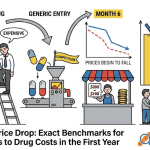
Post-exclusivity, prices erode quickly as subsequent ANDAs receive approval and launch. The revenue curve typically shows a steep decline in months 7-18 post-LOE, with price finding a floor (5-15% of brand WAC) once six or more generics are active.
For investment analysts and portfolio managers, the 180-day exclusivity is the primary driver of generic company earnings spikes. Companies with a pipeline of pending first-filer applications hold contingent assets that should be modeled with probability-weighted revenue scenarios incorporating: probability of first-filer status survival, estimated litigation outcome probability, brand’s authorized generic likelihood, and time to additional ANDA approvals.
Paragraph IV Certification: Litigation as Strategy
A Paragraph IV certification is a legal assertion by a generic filer that the Orange Book-listed patent(s) are either invalid, unenforceable, or will not be infringed by the generic product. Filing a Paragraph IV certification initiates a complex legal process: the brand has 45 days to file a patent infringement suit, which triggers an automatic 30-month stay of ANDA approval.
Paragraph IV litigation is the primary mechanism through which the patent term is challenged. It is also expensive: litigation costs for a multi-patent Paragraph IV case routinely exceed $5-15 million per side over the full course of proceedings. That cost is a barrier to entry that differentially disadvantages smaller generic companies, contributing to the concentration dynamic described earlier.
The litigation outcomes have meaningful pricing implications. A successful invalidity finding removes the patent as a barrier, accelerating generic entry. An infringement finding (with no invalidity) delays entry to patent expiry. A settlement — the ‘reverse payment’ or ‘pay-for-delay’ scenario — is increasingly subject to antitrust scrutiny following FTC v. Actavis (2013), which held that reverse payment settlements can violate antitrust law and are subject to rule-of-reason analysis.
IP Valuation Note: Paragraph IV Portfolio. A generic company’s portfolio of pending Paragraph IV certifications is a contingent IP asset with computable expected value. The relevant inputs are: probability of first-filer status, probability of favorable litigation outcome (or settlement), projected 180-day exclusivity revenue, and probability of authorized generic competition. DCF models built on these inputs are standard at firms like Goldman Sachs’ healthcare team and boutique pharma investment banks. Generic companies that have not built this valuation architecture internally are leaving analytical clarity on the table.
The Evergreening Roadmap: Tactics, Timelines, and Regulatory Risk
What Evergreening Is, Precisely
‘Evergreening’ is the term applied to the strategic extension of a drug product’s market exclusivity beyond the original compound patent term through the layering of additional patents on secondary product characteristics. The term is used critically — it implies that the incremental innovation protected by the additional patents is insufficient to justify the extended exclusivity period. Whether a specific evergreening tactic constitutes ‘legitimate incremental innovation’ or ‘exploiting legal loopholes’ is a substantive question in patent law and policy, but the commercial intent is unambiguous: to extend the period during which generic entry can be contested.
The major evergreening mechanisms in order of regulatory vulnerability:
Formulation patents. New dosage forms (e.g., extended-release, once-daily formulation of a twice-daily compound) can receive independent patents. These are commercially legitimate in many cases — extended-release versions of drugs like metformin or oxycodone offer real clinical benefits. But the patent term on the formulation can extend well past the compound patent, and the Orange Book listing creates a Paragraph IV litigation target that delays approval of the immediate-release generic’s equivalent.
Metabolite and active moiety patents. Some companies have patented the active metabolite of an existing compound, claiming the metabolite as a novel entity. This tactic has significant regulatory and litigation risk — metabolite patents have historically been vulnerable on obviousness and written description grounds.
Polymorph patents. A drug compound exists in multiple crystalline forms (polymorphs), each with distinct physical properties. Patent claims to a specific polymorph or to a low-contamination version of the compound can block generic entry if the generic manufacturer’s API uses the same polymorph. Polymorph patents are a significant battleground in Indian generic-brand litigation, where the 2013 Novartis v. Union of India decision (denying a patent for imatinib’s beta-crystalline form under Section 3(d) of India’s Patents Act) remains the most prominent judicial pushback on this tactic.
Method of use patents. Patents claiming new indications, dosing regimens, or patient populations for an existing compound are a standard lifecycle management tool. They do not prevent a generic from launching for the original, non-patented indication, but they create label carving constraints (‘skinny labeling’) that can limit generic market penetration.
Pediatric exclusivity. Conducting FDA-requested pediatric studies earns six months of additional exclusivity appended to any existing patent or regulatory exclusivity period. For high-revenue drugs, six months of additional exclusivity can be worth hundreds of millions of dollars. It is not ‘evergreening’ in the pejorative sense — the pediatric data has clinical value — but it functions as a pricing extension mechanism.
Technology Roadmap: A Brand-Side Lifecycle Management Sequence
A well-executed brand-side lifecycle management program follows a structured sequence:
Phase 1 (Pre-Launch to Year 5): Establish the compound patent estate. File composition-of-matter claims, key formulation claims, process patents, and method-of-use patents. Ensure Orange Book listing for all patents with a reasonable nexus to the approved product.
Phase 2 (Years 3-7): Develop and patent the next-generation formulation (extended-release, abuse-deterrent, combination product). File NDA for the new formulation. Begin market education to shift prescribing toward the new formulation before generic entry on the original compound.
Phase 3 (Years 6-10): Execute pediatric study program for FDAc-requested indications. File for six months of pediatric exclusivity. Explore additional method-of-use patents for new indications under active clinical development.
Phase 4 (Years 8-12): Assess polymorph and salt-form patent landscape. File additional composition patents where defensible. Engage authorized generic strategy: negotiate an authorized generic agreement with a generic partner to participate in the generic market post-LOE while earning royalties that offset revenue loss.
Phase 5 (Post-LOE): Manage the authorized generic and biosimilar (if applicable) competitive landscape. Retain premium pricing for a branded segment (typically 15-25% of original prescription volume for heavily marketed brands) while conceding the generic segment.
IP Valuation Note: Lifecycle Management IP. The projected value of a lifecycle management patent estate can be modeled as the net present value of incremental revenue generated by delayed generic entry relative to the counterfactual of no evergreening IP. For a $3 billion/year brand, each year of delayed generic entry at an 80% revenue retention assumption is worth approximately $2.4 billion in gross revenue. Discounting at an appropriate WACC and netting out lifecycle management program costs gives the expected value of the IP program.
Regulatory and Antitrust Risk
Evergreening strategies face two categories of legal risk. Patent validity challenges through Paragraph IV litigation are the primary mechanism by which generics contest secondary patents. The PTAB (Patent Trial and Appeal Board) inter partes review (IPR) process, established under the America Invents Act (2011), provides an additional, faster, and cheaper route for generic companies to challenge patent validity. IPR petitions have a success rate (full or partial invalidity finding) of approximately 60-70% for petitions that survive institution, making them a powerful tool for attacking weaker secondary patents.
Antitrust risk centers on reverse payment settlements. Since Actavis (2013), agreements in which a brand pays a generic to delay market entry are subject to rule-of-reason antitrust analysis. The FTC has prioritized these cases; recent enforcement actions have targeted settlements that involve non-cash consideration (supply agreements, licensing deals, co-promotion arrangements) as indirect reverse payments.
Key Takeaways: Evergreening
Evergreening tactics — formulation patents, polymorph patents, method-of-use patents, pediatric exclusivity — extend effective market exclusivity beyond the compound patent term and create direct, computable IP value.
Each year of delayed generic entry on a billion-dollar brand is worth approximately $700 million to $2.4 billion in protected revenue, making lifecycle management IP one of the highest-ROI investment categories in pharmaceutical strategy.
IPR petitions at the PTAB have a 60-70% partial or full invalidity success rate, giving generic entrants a cost-effective tool to attack secondary patents.
Post-Actavis, reverse payment settlements face mandatory rule-of-reason antitrust scrutiny. Non-cash consideration arrangements are not safe harbors.
Strategic Pricing Models: Entry, Sustenance, and Portfolio Optimization
The Six Pricing Logics and When Each Applies
Generic drug manufacturers deploy multiple pricing models, and the right choice depends on molecule characteristics, competitive dynamics, supply position, and portfolio context. No single model applies universally.
Cost-plus pricing is the analytical baseline, not the strategic recommendation. Calculate total landed cost per unit (API, manufacturing, quality, regulatory, packaging, distribution, sales), apply a target margin, and set price. The problem is that cost-plus ignores the market entirely. If the prevailing AMP for a product is $0.12 per tablet and a manufacturer’s cost-plus price is $0.20, the product is commercially dead regardless of the margin arithmetic. Cost-plus is most useful as a floor calculation — a minimum price below which a product should not be sold without an explicit portfolio cross-subsidization rationale.
Market-based pricing is the operational reality for most commodity generics. The price is set at, just below, or at the prevailing MAC level — the rate at which PBMs reimburse pharmacies for a specific generic. MAC rates are set by PBMs using proprietary methodologies and are updated weekly or monthly. A generic manufacturer that prices above the MAC receives minimal reimbursement and effectively zero dispensed volume at retail pharmacies. Pricing at MAC captures volume but constrains margin to whatever is left after cogs and distribution.
Penetration pricing sets the launch price deliberately below the prevailing market price to capture volume rapidly, with the expectation that scale economies or formulary lock-in will justify the below-market price. The Netherlands’ quarterly generic drug auctions are an extreme version of penetration-based competitive bidding: omeprazole and simvastatin reached prices as low as 2% of originator WAC through repeated auction cycles. The commercial calculus works only if the manufacturer has a manufacturing cost structure low enough that 2% of brand WAC still covers cogs with a contribution margin.
Loss leader pricing treats a specific product as intentionally below-cost, with losses subsidized by higher-margin products elsewhere in the portfolio. The strategic objective is contract capture — securing a full-portfolio supply agreement with a hospital GPO, a PBM preferred-tier slot, or a specialty pharmacy exclusive arrangement. The trade-off requires a portfolio with sufficient high-margin products to absorb the loss. Manufacturers with 50-100 product portfolios can deploy this tactic more aggressively than those with 10-15 SKUs.
Tiered pricing adjusts price based on buyer segment, geography, or competition level. The Pan-Canadian Pharmaceutical Alliance’s tiered framework prices generics at 75-85% of brand WAC with one to two competitors, stepping down to 50% at three to four competitors, and to 25-35% with five or more. This is a regulator-imposed tier structure, but manufacturers can implement internal tier logic for commercial market segments (retail pharmacy, hospital, government/VA, long-term care) that differ in purchasing power and competitive intensity.
Value-based pricing has limited direct application to standard ANDAs, which are by definition bioequivalent to the reference listed drug (RLD) and offer no differential clinical value. The relevant domain is complex generics and biosimilars where product characteristics (device design, delivery system, interchangeability designation) create defensible differentiation. An interchangeable biosimilar — one designated by FDA as substitutable at the pharmacy level without prescriber intervention — commands a different commercial discussion than a non-interchangeable biosimilar that requires prescriber opt-in. That interchangeability designation is an IP-adjacent asset with direct pricing implications.
Portfolio Architecture and Cross-Subsidization Logic
The commercial viability of a generic manufacturer’s pricing strategy depends as much on portfolio architecture as on individual product decisions. A 100-product ANDA portfolio almost certainly contains:
A small number (5-15%) of high-margin products: first-filer exclusivity holders, sole-source generics, complex generics with limited competition.
A large core (50-70%) of moderate-margin products: established multi-source generics where the manufacturer holds a durable market position but faces ongoing pricing pressure.
A tail (15-30%) of low-margin or marginally profitable products: commodity generics maintained for portfolio completeness, GPO contract compliance, or strategic reasons.
Effective portfolio management requires explicit margin waterfall analysis: which products fund which, and at what point does a tail product become a drag that justifies discontinuation. Discontinuation decisions carry real costs — FDA notification requirements, customer transition planning, short-term reputational effects — but maintaining loss-making products to preserve a veneer of portfolio completeness is a value-destroying strategy.
Investment Strategy Note: When evaluating generic company acquisitions or public company positions, analysts should request (or model from public data) portfolio-level margin distribution rather than aggregate EBITDA. A company with 20% EBITDA margin derived from two first-filer exclusivities expiring within 18 months is a materially different investment from a company with the same EBITDA margin distributed across a 100-product, multi-segment portfolio. The IP pipeline supporting the forward exclusivity schedule is the primary value driver for most generic companies.
Competitive Pricing and the 180-Day Exclusivity Window
Pre-Launch Pricing Strategy During 180-Day Exclusivity
The 180-day first-filer exclusivity is a temporary monopoly with a defined endpoint. Pricing strategy during this window must balance two competing objectives: maximizing revenue capture during the exclusivity period, and positioning the product for the multi-competitor landscape that follows.
The standard first-filer pricing approach is to launch at 70-80% of brand WAC. This captures a large share of the price-sensitive buyer segment (PBMs, Medicaid managed care) while leaving sufficient margin to be commercially viable. A more aggressive posture — launching at 85-90% of brand WAC — captures more revenue per unit but risks triggering authorized generic competition from the brand or accelerated payer formulary maneuvering.
If the brand launches an authorized generic simultaneously (which is legally permissible during the 180-day first-filer exclusivity for brand-initiated AGs), the market bifurcates. The first-filer and the authorized generic compete directly, typically driving prices to 50-65% of brand WAC within weeks. This dynamic is common for high-value brands with large generics programs; brand companies routinely negotiate authorized generic deals with second-tier generic firms to dilute the first-filer’s exclusivity value.
The commercial response from a first-filer facing authorized generic competition is to compete on volume, not price. Securing formulary placements and GPO preferred-tier positions before the authorized generic launches — often through pre-launch pricing commitments — is the standard defensive tactic.
Post-Exclusivity Pricing: Managing the Erosion Curve
Once the 180-day exclusivity expires and subsequent ANDAs receive approval, prices erode along a fairly predictable curve. The tactical question is how to position within the competitive set.
Being the low-price competitor in a multi-source market buys volume but not necessarily profitability. MAC-based markets rapidly standardize around the lowest quoted price. The more defensible position is to hold a price within 5-10% of the market low while competing on supply reliability, order fill rates, and customer service. Large hospital GPOs and specialty pharmacies will pay a modest premium for a manufacturer with a documented track record of zero back-orders and full order fulfillment, particularly for injectables and other shortage-prone dosage forms.
This ‘reliability premium’ is a genuine, if modest, pricing lever. It is most accessible to manufacturers with vertically integrated supply chains, adequate safety stock, and multiple manufacturing sites for critical products.
Penetration Pricing, Loss Leader Mechanics, and Formulary Strategy
Formulary Placement as the Real Pricing Target
In the U.S. market, the proximate target of generic pricing strategy is rarely the patient. It is the formulary decision-maker: the PBM’s pharmacy and therapeutics committee, the health plan’s formulary team, or the GPO’s contract administrator. These institutional buyers determine whether a generic product receives preferred-tier formulary status (and thus high dispensed volume) or non-preferred/excluded status (near-zero commercial volume despite regulatory approval).
Penetration pricing, in the generic context, is primarily a formulary placement tactic. A manufacturer that offers a new generic at 15-20% below the prevailing MAC has a strong case for preferred-tier placement. The PBM gains incremental savings it can pass through to plan sponsors (or retain as spread, depending on the contract structure). The generic manufacturer gains volume that justifies the reduced per-unit margin.
The risk is MAC pressure. Once a manufacturer establishes a low price, PBMs update MACs to reflect it. If competing manufacturers follow, the new low price becomes the market floor, eliminating the manufacturer’s pricing differentiation. The penetration advantage is therefore transient: it buys formulary placement, but maintaining that placement requires sustained operational efficiency, not sustained below-market pricing.
Loss Leader Mechanics in GPO Contracting
Hospital group purchasing organizations operate through portfolio contracting: a GPO negotiates a comprehensive agreement covering hundreds of generic products with a single manufacturer, typically in exchange for preferred-supplier status and formulary inclusion. The economic logic for the manufacturer is that losing money on two or three high-volume commodity generics is acceptable if it unlocks preferred-supplier access for 30-40 additional products with healthier margins.
This works only if the manufacturer’s portfolio is wide enough and margin-differentiated enough to support the cross-subsidization. A manufacturer with a 20-product portfolio attempting a loss leader strategy against a GPO offering portfolio contracts for 80 products is structurally disadvantaged.
The GPO contracting dynamic also explains why generic manufacturers invest in building broad ANDA portfolios even for products with marginal standalone economics: portfolio breadth is the prerequisite for the loss leader strategy that unlocks high-volume institutional contracts.
Tiered and Value-Based Pricing for Complex Generics and Biosimilars
Complex Generics: A Distinct Pricing Category
The FDA’s Complex Drug Substances and Products program covers products that require more extensive scientific information to support an ANDA than a standard oral solid. This includes: complex formulations (liposomal, nanoparticle, microsphere), complex routes of administration (inhalation, topical, transdermal, injectable), complex active ingredients (peptides, oligonucleotides, fermentation-derived products), and complex drug-device combinations.
Complex generics have higher development costs ($10-50 million or more for complex inhalers and injectables), longer ANDA development timelines (5-8 years from project initiation to approval for some categories), and fewer approved competitors. The result is a pricing environment that supports margins 3-5x higher than commodity oral solids.
The pricing strategy for complex generics more closely resembles the brand-name market than the commodity generic market: the number of competitors is small enough (often 2-5) that tiered or differentiated pricing is feasible, and product quality and supply reliability carry more weight in formulary decisions. IP protection (manufacturing process patents, device patents, formulation patents) plays a larger role in sustaining pricing than in commodity categories.
Biosimilar Pricing: The Interchangeability Variable
Biosimilars occupy a distinct commercial space. Approved under the BPCIA pathway rather than Hatch-Waxman, they reference a biologic rather than a small-molecule RLD. The clinical data requirements are more extensive than for small-molecule generics (totality-of-evidence standard, including clinical pharmacokinetic and pharmacodynamic studies), and manufacturing complexity is orders of magnitude higher.
Biosimilar pricing has not followed the same steep erosion curve as small-molecule generics. U.S. biosimilars have historically launched at 15-30% discount to the reference biologic’s WAC, far less than the 70-80% discounts common for commodity generics. Several structural factors explain this:
The buy-and-bill dynamic in physician-administered biologics (adalimumab, etanercept, bevacizumab) creates physician margin incentives tied to the spread between acquisition cost and the ASP-based Medicare reimbursement. Physicians and infusion centers may prefer higher-WAC products if the ASP-based reimbursement formula generates better margins, even if the biosimilar is cheaper at acquisition.
Formulary access for biologic and biosimilar products is managed differently from small-molecule generics. Interchangeability designation — which FDA grants when a manufacturer demonstrates that switching between the reference biologic and the biosimilar will not produce a greater safety or efficacy risk than using the reference product alone — enables pharmacy-level substitution without prescriber authorization. Non-interchangeable biosimilars require prescriber opt-in for substitution, which creates a significant market access barrier.
IP Valuation Note: Biosimilar Development Program Value. A biosimilar development program in late-stage clinical development (Phase III similarity studies complete, BLA under review) is a contingent asset whose value can be approximated using a rNPV framework. Key inputs: probability of approval, probability of interchangeability designation (if pursued), projected launch price (15-30% below reference biologic WAC), projected market share trajectory (10-25% of reference biologic volume over three years in competitive biosimilar markets), and WACC. For a reference biologic with $5 billion in U.S. annual sales, a biosimilar with interchangeability designation and 20% market share at 20% below reference WAC has a rNPV in the range of $800 million to $1.2 billion at 10% discount rate — enough to justify the $150-300 million development program cost.
Tiered Global Pricing: Implementation Mechanics
Tiered pricing across geographies — setting lower prices in low-income markets while retaining higher prices in high-income markets — is the standard model for access-oriented pricing programs. The operational risk is parallel trade: lower-priced product from a reference country is imported into a higher-priced market, undermining the pricing structure.
Manufacturers manage this risk through differential packaging (different tablet counts, different label languages, lot number traceability to specific market allocations), contractual distribution restrictions, and supply quantity management (allocating sufficient volume to cover legitimate local demand without creating surplus for diversion). These controls are imperfect but substantially reduce parallel trade leakage.
The EU’s single market and free movement of goods principles create specific parallel trade exposure for European manufacturers. A product priced at 40% of German WAC in Romania is legally importable into Germany if the importer repackages it per EU parallel import rules. Brand companies managing this risk typically use country-specific pricing bands narrow enough to reduce the arbitrage opportunity.
Global Reimbursement Mechanisms: ERP, IRP, Tendering, and Pooled Procurement
External Reference Pricing: Design, Distortions, and Strategic Response
External reference pricing (ERP) sets a maximum reimbursable price for a drug product based on the prices paid for the same product in a defined basket of reference countries. Over 120 countries use some form of ERP. The specific design varies substantially: basket composition (anywhere from 3 to 30+ countries), price metric (lowest, median, or weighted average), update frequency (quarterly to annually), and scope (patented drugs only, or including off-patent and generic products).
The strategic response from manufacturers — brand and generic — is to manage the sequence of country launches to control what price data is available in reference baskets when high-income markets set their prices. Launching first in lower-priced reference countries creates data that depresses reimbursement in high-income markets. The result is systematic delay in launches in low-income reference countries, as manufacturers prefer to establish high-income country prices before low-income country prices enter reference baskets.
For generic manufacturers, ERP has different implications than for brands. In ERP regimes that apply to off-patent products, the reference price creates a ceiling on what governments will reimburse, which is typically already below the generic market price in high-income markets. ERP for generics is most significant in middle-income markets where the government is the primary payer and the reference basket includes prices from lower-income neighbors.
Investment Strategy Note: When a generic company reports significant revenue from middle-income markets (Turkey, Brazil, Southeast Asia), understanding the ERP regime in each market is essential to projecting pricing durability. ERP revisions — particularly when a reference basket country experiences significant local currency depreciation — can trigger mandatory price reductions within 6-12 months.
Internal Reference Pricing: Therapeutic Equivalence and Substitution Policy
Internal reference pricing (IRP) sets a common reimbursement level for a group of therapeutically interchangeable products within a national market. Products priced above the reference are reimbursed only at the reference level, leaving patients to pay the difference out-of-pocket. Products priced at or below the reference receive full reimbursement.
IRP creates strong incentives for generic manufacturers to price at or below the reference, and for brand manufacturers to either match the reference price or accept significant volume loss to the price-at-reference generic alternatives. Germany’s reference pricing system (Festbetrag) is the oldest and most extensively studied IRP system, having been introduced in 1989. German off-patent drug prices are typically 30-70% below U.S. prices for the same molecules, in part because IRP creates powerful competition between substitutable products.
The administrative challenge is defining therapeutic substitutability accurately. IRP works cleanly when products within the reference group are genuinely interchangeable (identical active ingredient, dosage form, and strength). It becomes contested when the reference group includes products with clinically meaningful differences — for example, different extended-release formulations with different pharmacokinetic profiles, or different delivery devices for inhaled therapies.
Government Tendering: Price Discovery Through Competitive Bidding
Government tendering procedures purchase pharmaceutical products through competitive price bidding, typically for defined contract periods (6-12 months for most European tender programs, longer for some low-income country government procurement). The winner-takes-most structure of many tender programs creates an environment of extreme price competition, particularly for multi-source off-patent products.
The Netherlands’ pharmaceutical tendering system, one of the most extreme examples, has produced prices for high-volume generics that represent 2-5% of originator WAC. The system achieves dramatic cost savings for the Dutch healthcare system, but it has created documented supply reliability problems: the winning manufacturer, having committed to supply at an extremely low price, faces margin pressure that disincentivizes safety stock investment. When supply disruptions occur, the system’s single-winner design means there is no backup supplier at a pre-agreed price.
Tender design for generic drugs must balance price minimization against supply security. Systems that split contracts between the two or three lowest bidders, or that require minimum quality ratings and financial viability assessments, achieve a better balance. The WHO’s Model Quality Assurance System for procurement agencies recommends a multi-supplier model for essential medicines precisely because single-supplier tender designs create unacceptable supply concentration risk.
Pooled Procurement: Monopsony as Policy Tool
Pooled procurement aggregates demand across multiple buyers — hospital systems within a country, or health ministries across countries — to create buyer-side market power. The savings are well-documented: centralized public procurement generates average price reductions of 15% compared to decentralized procurement in low- and middle-income country settings. For high-value specialty products procured in small volumes by individual countries, pooled procurement can generate savings of 50-75% relative to individual country negotiations.
The African Pooled Procurement Mechanism (APPM) and the Pan American Health Organization’s Strategic Fund are the most institutionally developed examples of multi-country pooled procurement. The PAHO Strategic Fund covers 42 essential products including ARVs, vaccines, and diagnostics; its ARV prices are consistently 30-60% below prices paid by non-participating countries with comparable procurement volumes.
For generic manufacturers, participation in large pooled procurement programs carries specific commercial logic: low per-unit prices, but high and predictable volume, with multi-year contracts that enable manufacturing planning and API procurement at scale. The volume predictability may justify dedicated manufacturing capacity that lowers per-unit costs enough to make the low tender price viable. This is particularly relevant for ARVs, where global procurement programs account for a dominant share of total global volume.
Regulatory Landscape: Hatch-Waxman, GDUFA, and the IRA’s Chilling Effect
FDA Generic Drug Program: Approval Backlogs and GDUFA Economics
The Generic Drug User Fee Amendments (GDUFA), first enacted in 2012 and reauthorized in 2017 and 2022, established a user fee program under which generic manufacturers pay fees in exchange for defined FDA review timeline commitments. GDUFA II (FY2018-FY2022) committed FDA to reviewing 90% of original ANDAs within 12 months of receipt.
The GDUFA framework has materially reduced FDA’s ANDA backlog. Before GDUFA, backlogs exceeded 4,000 applications and average review times exceeded 3-4 years. GDUFA enabled FDA to hire additional reviewers and implement process improvements. By 2022, original ANDA approval times had dropped to a median of approximately 11-14 months for applications with no deficiencies.
The fee structure under GDUFA creates a cost that disproportionately affects small generic companies. GDUFA III (FY2023-FY2027) program fees for a facility making finished dosage forms run approximately $400,000-$500,000 annually per domestic site, with additional ANDA application fees. For a small manufacturer with one or two active ANDAs, these fees represent a material overhead cost. The fee structure is a contributing factor in the exit of smaller generic manufacturers from the U.S. market, reducing competition for the products they previously supplied.
The Inflation Reduction Act: Generic Market Implications
The Inflation Reduction Act (IRA) of 2022 introduced Medicare’s authority to directly negotiate drug prices, beginning with 10 drugs for 2026. The list of negotiable drugs is selected from products with the highest Medicare Part B and D expenditures that lack generic or biosimilar competition after a defined period (9 years for small molecules, 13 years for biologics). Negotiated prices apply to Medicare claims, not to commercial market purchases.
The IRA creates a specific regulatory distortion with implications for the generic market: because small-molecule drugs become eligible for price negotiation at 9 years post-approval (compared to 13 years for biologics), the legislation creates a differential incentive favoring biologic development over small-molecule drug development. Several generic industry trade groups and policy analysts have argued that IRA’s differential treatment will also affect the lifecycle management calculus for small molecules: if a branded small molecule will face mandatory price negotiation at 9 years, the economic incentive to invest in lifecycle management extensions (which extend the exclusivity period but do not delay the 9-year negotiation eligibility clock) changes.
For generic manufacturers specifically, IRA’s negotiated price provisions affect a cohort of drugs that, by definition, lack generic or biosimilar competition — meaning the direct impact on existing multi-source generic products is limited. The more significant effect may be indirect: if IRA accelerates the shift toward biologic drug development by brand companies, the future pipeline of small-molecule drugs available for generic development may shrink.
The IRA’s Medicare Part D out-of-pocket cap ($2,000 starting 2025) reduces patient cost-sharing burden at the pharmacy, which may modestly increase generic adherence for patients previously rationing doses due to cost.
Key Takeaways: Regulatory Landscape
GDUFA fee structures disadvantage small generic manufacturers, contributing to market concentration. Larger manufacturers can amortize fees across wider ANDA portfolios.
The IRA’s 9-year vs. 13-year eligibility differential for small-molecule vs. biologic price negotiation creates a drug development incentive distortion that may narrow the future pipeline of small-molecule generics.
IRA’s impact on existing multi-source generic products is limited; its more significant generic market effect is indirect, through altered brand-side development incentives.
Supply Chain Fragility: API Concentration as a Pricing and Risk Variable
The Concentration Problem in Numbers
As of 2024, approximately 70-75% of APIs used in U.S. generic finished dosage forms are manufactured outside the United States. India and China together supply an estimated 60% of the global API volume consumed by generic drug manufacturers. For specific therapeutic categories, concentration is even higher: approximately 90% of U.S. antibiotic APIs, by volume, originate from Chinese manufacturers.
FDA facility data (updated in 2021) showed that 89% of registered API manufacturing facilities supplying the U.S. market were located abroad, with India the single largest country by facility count. An FDA import alert on a major Indian API facility — issued when inspection findings reveal data integrity failures, CGMP deviations, or sterility control problems — can immediately interrupt supply for the finished dosage manufacturers dependent on that facility’s output.
Drug shortages in the U.S. hit a record 323 in Q1 2024, according to the University of Utah Drug Information Service. Injectable products account for a disproportionate share: they have high manufacturing complexity, low per-unit prices (supporting thin margins), and concentrated API supply from a small number of specialized manufacturers. The economic logic of the shortage market is perverse: in shortage conditions, prices should rise to attract additional supply. But long-term supply contracts, PBM reimbursement structures, and formulary inertia prevent rapid price adjustment, so shortages persist even when the economics nominally favor new entrant supply.
Diversification and Reshoring Economics
API sourcing diversification — adding a second or third approved API supplier from a different geography — reduces concentration risk but increases cost. A domestic U.S. API supplier for a compound currently sourced from India will typically quote 30-60% higher API costs due to higher labor and facility overhead. For a generic product already at a 5-8% operating margin, a 40% API cost increase is not absorbable without a price increase that the market will not support.
Reshoring strategies work commercially only when: (a) the API manufacturing process is highly automated and capital-intensive enough to neutralize the U.S. labor cost disadvantage, (b) the government provides subsidies or purchase commitments that de-risk the investment, or (c) the product is in a shortage category where the market will support a modest premium for supply reliability.
The 2022 CHIPS and Science Act’s pharmaceutical manufacturing provisions and the Department of Defense’s pharmaceutical manufacturing investment program represent early government attempts to subsidize domestic API and finished dose manufacturing for essential medicines. The economic case requires more substantial, sustained support than has been committed to date.
Advanced Manufacturing and Its Pricing Impact
Continuous manufacturing — replacing batch manufacturing with a continuous flow process — offers potential cost reductions of 10-30% for applicable dosage forms (primarily oral solids) through reduced cycle times, lower inventory requirements, and improved process control. Johnson & Johnson’s Janssen division and Eli Lilly have implemented continuous manufacturing for specific products; generic manufacturers including Lonza and Patheon have invested in continuous manufacturing capacity.
The pricing implication of continuous manufacturing is indirect: lower per-unit manufacturing cost creates more margin headroom at prevailing market prices, or enables more aggressive pricing in competitive tender situations. For a commodity generic at 5% operating margin, a 15% manufacturing cost reduction translates to approximately 0.75-1.0 percentage points of additional margin — meaningful at scale but not transformative on its own.
Investment Strategy Note: Generic companies with credible continuous manufacturing programs and documented unit cost advantages should trade at a premium to peers with traditional batch manufacturing infrastructure, assuming equivalent ANDA portfolio quality. The cost advantage is durable (continuous manufacturing is capital-intensive and hard to replicate quickly) and directly translates to either margin improvement or competitive pricing capacity.
Market Intelligence Infrastructure: AI, LOE Forecasting, and Patent Databases
The LOE Opportunity Identification Process
Identifying commercially viable generic development targets requires integrating multiple data streams: patent expiration timelines, Orange Book patent listings, PTAB IPR proceedings, FDA ANDA filing activity, Paragraph IV litigation dockets, historical LOE price erosion curves by therapeutic category, and market size estimates. This is a data science problem as much as a pharmaceutical strategy problem.
The standard analytic workflow for LOE opportunity identification:
Step 1: Scan Orange Book for patents with expiration dates 3-7 years out. Flag products with compound patent expirations where the majority of Orange Book-listed patents expire within a 2-year window of the compound patent (suggesting a cleaner LOE event).
Step 2: Screen for total addressable market. Reference brand’s IMS/IQVIA dollar sales data to identify products with U.S. annual sales above $100 million (the minimum threshold for a commercially viable ANDA investment for most mid-tier manufacturers).
Step 3: Assess competitive ANDA landscape. Check FDA’s Paragraph IV ANDA database for pending first-filer certifications and pending tentative approvals. Products with multiple pending first-filer applications indicate high competition; products with no pending ANDAs may represent overlooked opportunities or may have technical barriers suppressing interest.
Step 4: Apply LOE erosion model. Using historical price erosion data categorized by therapeutic category, dosage form, and competitor count, project the AMP trajectory for the target product over 3-5 years post-LOE. Model multiple competitor count scenarios.
Step 5: Calculate rNPV. Apply development cost estimates (ANDA development, bioequivalence study, regulatory fees), probability of approval and first-filer status, projected revenue trajectory, and WACC to generate a risk-adjusted NPV for the development program.
AI Applications in Generic Pricing Analytics
Machine learning models are increasingly deployed for specific components of the generic pricing workflow:
LOE price erosion prediction: Gradient boosting models trained on historical LOE datasets (product characteristics, competitor count progression, therapeutic category, payer mix) predict post-LOE price trajectories with substantially better accuracy than linear historical averages. The key features are: time-since-LOE, concurrent competitor ANDA approvals, product complexity score, and therapeutic category elasticity coefficient.
MAC rate forecasting: NLP-based scraping and analysis of PBM MAC update announcements, combined with manufacturer WAC data and ANDA approval events, can anticipate MAC rate changes 2-4 weeks before formal publication, giving manufacturers who monitor this intelligence a short but commercially useful pricing window.
API price monitoring: Continuous scraping of commodity API price indices (Alibaba, ECHEMI, SpecialChem), Indian export data from the Directorate General of Foreign Trade, and FDA import alert feeds feeds a near-real-time API cost model that updates manufacturing cost estimates automatically.
Tender outcome prediction: For manufacturers active in European or low-income country government tender markets, models trained on historical tender outcomes (price, competitor bids, contract duration) improve tender bid calibration.
Patent Intelligence Platforms
Platforms like DrugPatentWatch provide integrated access to FDA Orange Book patent listings, ANDA filing activity, Paragraph IV certification status, PTAB IPR proceedings, litigation dockets, and historical market data. This consolidates data that would otherwise require access to FDA databases, PACER (federal court records), USPTO databases, and commercial data vendors.
The specific commercial value for generic IP teams is in: (a) early identification of vulnerable patents (those with pending IPR challenges or adverse claim construction rulings), (b) real-time monitoring of competitor ANDA activity for a target product, and (c) historical Paragraph IV litigation outcome data by technology category to calibrate win-probability estimates for a planned challenge.
For brand-side IP teams, the same platforms identify potential generic challenges early, enabling pre-emptive litigation strategy, authorized generic planning, and lifecycle management timing decisions.
Ethical and Antitrust Constraints on Pricing Latitude
Price Gouging: Legal and Reputational Boundaries
The Daraprim incident — in which Turing Pharmaceuticals raised the price of a 62-year-old antiparasitic from $13.50 to $750 per tablet in 2015 — is the defining case study in the regulatory and reputational risk of opportunistic generic drug pricing. The drug had no patent protection. Turing’s pricing rationale was pure market power: sole-source status in a small market with no viable substitute.
The congressional and FTC response to Daraprim and similar cases (Shkreli’s Cerecor, Nostrum Laboratories’ nitrofurantoin price increases) has been sustained. Multiple states have enacted drug price gouging statutes that define actionable price increases above defined thresholds (typically 50-100% increases for essential medicines). Maryland’s law, struck down on Commerce Clause grounds in 2018, prompted more carefully drafted state legislation. California’s drug pricing transparency law (SB 17) requires manufacturers to provide 60-day advance notice of price increases above 16%.
At the federal level, the FTC’s drug pricing authority has expanded through executive action and proposed rulemaking. The FTC has opened investigations into generic drug pricing practices, with particular focus on price coordination in concentrated market segments — the context for the ongoing generic pharmaceutical price-fixing litigation.
For generic manufacturers, the operational implication is straightforward: opportunistic price increases on essential medicines without a documented cost justification or supply shortage rationale carry material legal and reputational risk. The risk-adjusted return on aggressive pricing in concentrated markets must account for FTC investigation costs, state AG litigation, congressional testimony exposure, and the reputational effects on the full product portfolio.
Antitrust Constraints: Per-Se Prohibitions and Rule of Reason
Generic drug pricing is not exempt from antitrust law. The DOJ and FTC have brought criminal and civil price-fixing cases against generic pharmaceutical companies in recent years, with the DOJ’s ongoing multidistrict litigation the largest in the history of pharmaceutical antitrust enforcement. The allegations center on industry-wide price coordination for commodity generic products — a category that, by economic theory, should be highly competitive.
Beyond price coordination, reverse payment settlements (as noted in the Paragraph IV section) remain an active antitrust target. FTC v. Actavis established the rule-of-reason standard, but the enforcement priority has not diminished. The FTC’s most recent approach scrutinizes non-cash consideration in settlements — supply agreements, licensing fees, co-promotion arrangements — as potential indirect payments to delay generic entry.
For generic manufacturers operating in markets with two or three competitors, the antitrust boundary between parallel pricing (legal) and coordinated pricing (potentially illegal) requires careful legal analysis. Pricing decisions made with reference to a competitor’s known price, without direct coordination, can be legally defensible as rational oligopolistic behavior. Pricing decisions made through any form of communication with a competitor — regardless of formality — are per se illegal if they amount to price-fixing.
Investment Strategy: Where the Pricing Alpha Lives
Generic pharmaceutical investment returns are not distributed uniformly. They concentrate in specific product categories, company positions, and market structures. Understanding the pricing mechanics described throughout this article clarifies where the alpha is and how it can be captured.
Category 1: First-filer exclusivity pipeline. A generic company with a credible first-filer position on a branded drug with $1-5 billion in U.S. annual sales, backed by strong litigation counsel and a well-validated ANDA, holds a contingent asset worth several hundred million to over a billion dollars in rNPV. The key analytical questions: What is the probability the Paragraph IV certification survives litigation? Is the brand likely to launch an authorized generic? What is the time-to-market? Companies with a pipeline of 5-10 first-filer positions have a portfolio of call options on future exclusivity windows. Teva, Mylan (now Viatris), and Sun Pharma have historically built meaningful enterprise value through first-filer programs.
Category 2: Sole-source generics in shortage-prone categories. A manufacturer holding the only FDA-approved ANDA for a sterile injectable in an established shortage category has pricing latitude unavailable in competitive markets. The ceiling is not antitrust-free — the FTC monitors single-source generic pricing — but the market reality of no substitute permits above-market pricing without triggering MAC-based volume loss.
Category 3: Complex generics with high development barriers. Products requiring $20-50 million in ANDA development investment, FDA product-specific guidance compliance, and 5-8 year development timelines have fewer approved competitors. The pricing multiple over commodity generic margins reflects the barrier to entry. Companies with approved ANDAs for complex inhalers, complex injectables, or complex topicals hold assets with durable pricing power.
Category 4: Vertically integrated API producers with exclusive supply positions. A manufacturer that produces its own API and holds a proprietary synthesis process has a structural cost advantage that translates to pricing flexibility or margin enhancement relative to API-dependent competitors. This advantage is particularly valuable in categories where API supply concentration creates periodic cost spikes for non-integrated competitors.
Category 5: Biosimilar developers with interchangeability programs. Biosimilars targeting reference biologics with $5-15 billion in U.S. annual sales, where the biosimilar developer is pursuing interchangeability designation, hold development programs with substantial rNPV. The interchangeability designation enables pharmacy-level automatic substitution — a commercial mechanism with no direct analog in the small-molecule generic market — and represents the largest near-term market access catalyst in the biosimilar space.
Key Takeaways by Section
Pricing Economics
The 91%/26% volume-to-spend ratio in U.S. generic prescriptions is not a stable equilibrium; it requires sustained margin compression that creates systemic supply chain fragility.
Generic market concentration (40% of molecules with a single manufacturer, 50%+ with two or fewer) means that ‘competitive market’ assumptions are invalid for a substantial share of generic products.
IP and Patent Strategy
Orange Book-listed patent portfolios have computable defensive value, calculable from the litigation cost they impose on generic entrants.
The 180-day first-filer exclusivity is the single highest-value regulatory mechanism in the generic market. For a $3 billion brand, the rNPV of a credible first-filer position exceeds $500 million.
Evergreening through secondary patents (formulation, polymorph, method-of-use, pediatric exclusivity) has well-defined IP valuation mechanics: expected value equals incremental revenue from delayed LOE, discounted at WACC, net of lifecycle management program costs.
Pricing Models
Cost-plus pricing is a floor calculation, not a strategy. Market-based pricing dominates in commodity multi-source markets.
Portfolio architecture determines cross-subsidization capacity. A manufacturer without high-margin products cannot sustain a loss leader strategy.
Complex generics and biosimilars support tiered, differentiated, and elements of value-based pricing that commodity oral solids cannot.
Regulatory and Global Reimbursement
ERP and IRP systems create mandatory price ceilings in non-U.S. markets that interact with global launch sequencing decisions.
Tendering systems that award single-supplier contracts achieve maximum price compression but create supply concentration risk. Multi-supplier tender designs are more resilient.
IRA’s 9-year small-molecule negotiation eligibility may shift branded R&D toward biologics, narrowing the future small-molecule generic pipeline.
Supply Chain
API sourcing concentration is a direct P&L variable. Tariff events, FDA import alerts, and geopolitical disruptions translate to near-term cost increases that compound already thin margins.
Q1 2024 drug shortages hit a record 323. Injectable products account for a disproportionate share, reflecting the intersection of high manufacturing complexity, low prices, and concentrated supply.
Investment
Alpha concentrates in first-filer positions, sole-source shortage categories, complex generics, vertically integrated API producers, and biosimilar developers with interchangeability programs.
Aggregate EBITDA margin is an insufficient investment screen for generic companies; margin distribution across the portfolio, and the IP pipeline supporting forward exclusivity events, are the primary value drivers.
FAQ
Q: How does Paragraph IV certification interact with 180-day exclusivity when multiple filers are involved?
A: When two or more generic manufacturers file substantially complete ANDAs with Paragraph IV certifications on the same day — ‘co-first-filers’ — all co-filers share the 180-day exclusivity. This distributes the exclusivity revenue among more parties, reducing the per-filer commercial value. Co-filers typically race to secure formulary placements before each other’s launch, driving early price competition within the exclusivity window.
Q: Can a biosimilar receive both interchangeability designation and a period of regulatory exclusivity?
A: Yes. Under the BPCIA, the first biosimilar approved for a reference product receives 12 months of exclusivity (if the reference product’s 12-year data exclusivity has expired). Separately, the first interchangeable biosimilar approved for a reference product receives a period of exclusivity during which no other interchangeable biosimilar for the same product can be approved. The two exclusivities are distinct and can overlap. Interchangeability exclusivity periods range from 12 to 42 months depending on when the interchangeability designation is granted relative to the original biosimilar approval.
Q: What is the standard FTC threshold for reviewing generic company mergers?
A: Mergers above the Hart-Scott-Rodino (HSR) filing threshold (currently approximately $119 million in transaction value) require pre-merger notification. The FTC’s focus in generic pharmaceutical mergers is on products where both parties have approved ANDAs, particularly in markets with two or three total competitors. The standard remedy is divestiture of one of the overlapping ANDAs to a suitable acquirer. FTC has required divestitures in substantially every major generic company acquisition over the past decade that involved significant ANDA overlaps in concentrated markets.
Q: How do PBM MAC rates get set, and can manufacturers influence them?
A: MACs are set by PBMs using proprietary methodologies that reference wholesale acquisition cost (WAC), NADAC (National Average Drug Acquisition Cost, published by CMS), direct contract prices, and competitive market prices. The methodology is generally opaque and varies by PBM. Manufacturers cannot directly set MAC rates, but they influence them by adjusting WAC (which feeds into reference calculations) and by negotiating directly with PBMs on preferred-tier formulary status in exchange for pricing commitments. CMS’s NADAC survey provides a publicly available reference point that many state Medicaid programs use as a MAC ceiling.
Q: What is the difference between an authorized generic and a first-filer generic from a pricing standpoint?
A: An authorized generic is a product that the brand manufacturer markets under the RLD’s NDA approval (not a separate ANDA), typically through a licensing agreement with a generic partner. The authorized generic does not consume the first-filer’s 180-day exclusivity period. During the exclusivity window, the first-filer competes against the authorized generic, typically driving prices down to 50-70% of brand WAC faster than a sole-exclusivity scenario. After the 180-day period, the authorized generic continues to compete with subsequent ANDA-approved generics, often retaining a premium position (5-10% above the lowest-priced generic) based on brand recognition and supply reliability.
This analysis is intended for pharma/biotech IP teams, portfolio managers, R&D leads, and institutional investors. It does not constitute legal or financial advice. Patent-specific questions should be directed to qualified patent counsel. Investment-specific questions should be addressed with licensed financial advisors.
Data sourced from FDA, HHS ASPE, CMS, NBER, PubMed Central, WHO, and published academic literature.