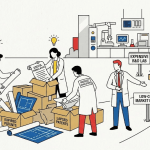
Why Formulation Patents Are the Most Undervalued Asset in Pharma IP
The pharmaceutical industry spent roughly $260 billion on R&D globally in 2023, according to IQVIA estimates. A substantial fraction of that capital goes toward one of the most legally peculiar obligations in commerce: mandatory public disclosure. Every patent filed is a sworn, detailed account of how an invention works, published for the world to read. Pharma IP teams spend years constructing barriers from these disclosures. A smaller number of teams spend equal energy reading through them.
That asymmetry is where the opportunity lies.
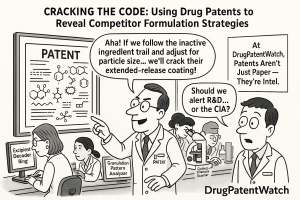
Most pharma professionals treat a patent as a countdown clock. The primary question they ask is ‘when does it expire?’ That is the wrong question, or at least not the first one. The better question is ‘what problem did this patent admit it was trying to solve?’ Because every formulation patent is, at its core, a public confession. It confesses that the active pharmaceutical ingredient (API) had a weakness, that simple prior approaches failed, and that a specific technical solution emerged from the wreckage of experiments that didn’t work. The claims define what is protected. The background and examples document what was broken.
Formulation patents occupy a specific structural position in the IP stack. They are not composition-of-matter patents, which protect the molecule itself and represent the broadest, most commercially critical IP a pharma company holds. Formulation patents protect the delivery system: the combination of API with excipients, processing steps, and dosage form architecture that converts a promising compound into a drug product patients can actually take. Because they are filed after the core composition patent, they are often overlooked as secondary assets. That view is wrong on two counts.
First, formulation patents routinely extend commercial exclusivity by a decade or more after the original composition patent expires. Second, they contain a density of technical disclosure that composition patents cannot match, because the formulation work comes later in development, when far more is known about the molecule’s behavior. The formulation patent describes a molecule that has already been through toxicology, early clinical work, and likely a failed first-generation delivery attempt. It is, in effect, a post-mortem of the drug’s physical chemistry problems, written by the scientists who solved them.
Reading that document carefully is one of the highest-return activities available to a pharma competitive intelligence function.
Patent filings are mandatory technical disclosures, not just legal barriers. Every formulation patent identifies the API’s inherent physicochemical weaknesses in its Background section. Formulation patents routinely extend market exclusivity by eight to twelve years beyond the composition-of-matter patent expiration. The Examples section is the closest publicly available equivalent to a competitor’s internal lab notebook. A company’s sequence of formulation patent filings, mapped over time, reveals its full lifecycle management strategy before any product announcement.
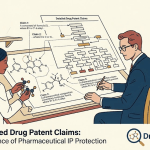
The Anatomy of a Drug Patent: Section-by-Section Intelligence Extraction
A patent document follows a rigid structure imposed by patent offices worldwide. Understanding which section contains which type of intelligence determines how efficiently you can extract actionable data from it.
The Abstract
At two hundred to three hundred words, the abstract is a regulatory summary, not an intelligence source. It gives you the classification, the assignee, and a general description of the subject matter. Use it to decide whether a document is worth reading further, then move on.
The Background of the Invention
This section is where the intelligence begins. Patent law requires inventors to describe the state of the art prior to their invention. For formulation patents, that means documenting what was already tried and why it failed. The Background is an admission against interest: it catalogues the problems the inventors could not initially solve.
When a formulation patent background cites poor aqueous solubility, you know the API belongs to the BCS Class II or IV category, where solubility is the rate-limiting step for absorption. When it describes chemical instability, you know the molecule degrades under specific conditions, whether oxidative, hydrolytic, photolytic, or thermal, and the type of degradation it describes tells you which chemical functionality is at risk. When it references bitter taste or patient compliance problems in earlier formulations, you know a pediatric or geriatric indication is in play, and that taste masking became a formulation priority.
The Background section hands you the problem statement, free of charge, before you have run a single experiment.
The Detailed Description of the Invention
This is the technical core, and it runs from dozens to hundreds of pages in complex formulation patents. Patent law requires the description to teach a ‘person having ordinary skill in the art’ (PHOSITA) how to practice the invention. That PHOSITA standard is calibrated to a trained pharmaceutical scientist, not a layperson. The Detailed Description must therefore contain enough specificity that a competent formulator could replicate the work.
Within this section you will find complete lists of candidate excipients organized by function, concentration ranges expressed as weight-by-weight or weight-by-volume percentages, processing parameters including mixing times, granulation endpoint criteria, drying temperatures, and spray-drying inlet/outlet conditions, and analytical methods used to evaluate the formulation’s performance. For biologics, this section describes buffer selection rationale, pH optimization data, concentration-dependent viscosity measurements, and aggregation screening results across excipient matrices.
Every specification within the Detailed Description reflects a decision made for a reason. Excipients are not chosen arbitrarily. Concentration ranges are not estimated. Processing conditions reflect equipment-specific optimization. Reading this section with the question ‘why was this parameter chosen?’ generates more intelligence than reading it as a technical recipe.
The Claims
Claims define the legal scope of protection, not the technical content of the invention. Independent claims (those that reference no other claim) define the broadest protection the inventor seeks. Dependent claims narrow the scope by adding additional limitations and tend to reflect the specific embodiments the inventor considers most important.
For competitive intelligence purposes, claims answer two questions. First, what does the innovator consider novel and non-obvious enough to protect? If the independent claim covers only the combination of API with a specific polymer class, but a dependent claim adds a specific pH range, that pH range is likely the critical stabilizing condition. Second, where is the design-around space? Every limitation in a claim is also a potential exit ramp for a competitor. The word ‘comprising’ in claim language is open-ended; ‘consisting of’ is closed. That distinction is commercially meaningful and routinely misread by non-attorneys.
One additional practice worth noting: examine the prosecution history, or file wrapper, for each patent you analyze seriously. The prosecution history contains the examiner’s rejections and the applicant’s responses. Applicants routinely narrow their claims during prosecution to overcome prior art rejections, and the arguments they make in doing so further define the scope of protection in ways the final claim language alone does not convey. File wrappers are publicly available through the USPTO’s Patent Center and equivalent databases at EPO and WIPO.
The Examples and Embodiments
This section is the equivalent of a competitor’s lab notebook, selectively edited and written in scientific paper style. Every example in a patent represents actual experimental work. The data shown is real data. When the patent presents dissolution profiles, stability assay results, or pharmacokinetic parameters from animal studies, those numbers came from someone’s bench.
Analysts who focus exclusively on claims and miss the examples section are discarding the most operationally useful intelligence in the document. Examples reveal the optimal operating conditions within the broader ranges claimed, they identify the formulation the inventor considered most successful (typically the one with the most stability data or the highest bioavailability), and they expose the failure modes of earlier attempts through comparative examples.
The commercial formulation can usually be identified by matching excipients and concentrations from the most-preferred example against the product’s prescribing information, which lists all excipients present in the approved formulation. This cross-reference narrows the field from twenty potential examples to one.
Patent Portfolio Architecture: Composition, Formulation, Method, and Process
No drug of commercial significance is protected by a single patent. Innovator companies build patent portfolios that layer multiple intellectual property rights around a product, each layer extending protection along a different dimension. Understanding the architecture of that portfolio is prerequisite to understanding the competitive dynamics around any branded drug.
Composition of Matter Patents
The composition-of-matter patent covers the API itself, its pharmaceutically acceptable salts, polymorphs, and in some cases its prodrugs and active metabolites. This patent is filed earliest, carries the broadest scope, and represents the highest-value IP asset in a drug’s portfolio. Its 20-year term from filing date runs concurrent with clinical development, which typically consumes 10 to 14 years, leaving 6 to 10 years of post-approval exclusivity before expiry. Patent Term Extension (PTE) under 35 U.S.C. § 156 can restore up to five years of that consumed time, subject to a maximum post-approval exclusivity of 14 years.
From a formulation intelligence standpoint, composition-of-matter patents provide early physicochemical data on the API. The initial filing often includes solubility measurements, partition coefficient data (LogP or LogD), pKa values, and preliminary stability assessments. This data predates any serious formulation development, so it reflects the raw, unoptimized molecule. Comparing the physicochemical profile described in the composition patent to the excipient choices made in later formulation patents reveals the specific problems that emerged as development progressed.
Formulation Patents
Formulation patents protect the drug product rather than the drug substance. They are filed later in the development timeline, sometimes overlapping with Phase 2 or Phase 3 clinical trials, and their 20-year clock starts from a filing date that may be a decade after the composition patent. This architecture is the mechanism by which branded drugs maintain market exclusivity years after the API becomes technically public domain.
A single product may carry multiple formulation patents covering different aspects: the solid dispersion platform used to solubilize the API, the coating system that provides controlled release, the pH-adjusting excipient that prevents degradation in acidic gastric fluid, and the taste-masking approach in a pediatric liquid. Each covers a distinct inventive element. Together, they create the patent thicket that generic developers must navigate.
Method-of-Use Patents
Method-of-use patents protect a specific therapeutic application of a drug, not its physical composition. They can extend commercial exclusivity for indications discovered after the composition patent was filed, and they frequently require new formulations. A drug initially dosed three times daily for one indication, then studied for a different indication at a once-daily dose, generates both a new method-of-use patent and likely a new formulation patent for the extended-release version. These filings are among the most reliable leading indicators of a company’s indication expansion strategy.
Process Patents
Process patents protect manufacturing methods. A novel continuous manufacturing process for tablet production, a proprietary lyophilization cycle for a biologic, a particle engineering technique that produces a specific morphology of API crystals: all of these can be patented independently of the final product composition. For competitors planning commercial-scale manufacturing, process patents can block access to the most cost-efficient production routes even after product patents expire.
IP Valuation: What Each Patent Layer Is Actually Worth
Quantifying the Value of Formulation Patent Protection
Patent protection translates directly into pricing power and revenue duration. A composition-of-matter patent expiring today on a drug with $3 billion in annual U.S. sales does not mean $3 billion in revenue disappears tomorrow. Generic entry typically erodes branded revenue by 80 to 90 percent within 12 months. The presence of a valid formulation patent blocking generic bioequivalent formulations extends that branded revenue period.
The commercial value of a formulation patent is therefore calculable, at least in rough terms. If a formulation patent extends exclusivity by three years for a drug generating $2 billion annually in the U.S., and if generic erosion would otherwise reduce that to $200 million over the same period, the formulation patent is protecting approximately $5.4 billion in cumulative revenue (the difference between $6 billion with exclusivity and $600 million without it, discounted to present value). This calculation is an oversimplification that ignores pricing dynamics, payer pressure, and biosimilar-specific factors, but it gives IP teams a defensible framework for prioritizing which patents to strengthen, defend, or challenge.
Royalty Rate Benchmarking
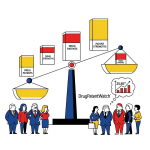
When formulation patents are licensed rather than litigated, royalty rates reflect this value hierarchy. Industry benchmarks from IPSCIO and other licensing databases suggest that composition-of-matter patents for blockbuster drugs typically command running royalties of 8 to 15 percent of net sales. Formulation patents, which depend on the composition patent for their commercial relevance, generally license at 2 to 6 percent of net sales. The differential reflects the relative breadth of protection: a formulation patent that can be designed around is worth less than one where the inventive step is genuinely narrow and technically necessary.
In litigation settlements, the structure is different. Authorized generic agreements, which allow a generic manufacturer to launch with the brand’s own product before the patent expires, typically give the brand company 50 percent or more of the generic profits, reflecting the cost of the litigation risk the brand accepts.
Portfolio Valuation for M&A and Business Development
For portfolio managers and business development teams evaluating acquisition targets, the patent landscape for a drug asset determines its terminal value. A compound with a composition-of-matter patent expiring in two years but a cluster of formulation patents extending through year eight has a fundamentally different risk profile than one whose entire IP stack expires simultaneously.
Proper IP valuation requires mapping not just the patents themselves but their litigation history, the strength of prior art challenges already mounted, and the commercial geography of coverage. A U.S. patent expiring in year seven that has no equivalent in Europe or Japan does not protect the asset globally. A patent that survived a Paragraph IV challenge carries a validity presumption that has been tested in court; one that has never been challenged carries an unknown risk of invalidity.
Investment Strategy: When evaluating a pharma asset’s revenue durability, map the full formulation patent portfolio against the composition-of-matter expiry. Assets where formulation patents extend exclusivity by more than five years deserve a premium in DCF models. Assets where the only protection is an aging composition patent, with no formulation IP filed in the last decade, signal a management team not actively investing in lifecycle management. That absence is a red flag for revenue longevity, not just a neutral data point.
Decoding Formulation Strategy from Patent Text
The Diagnostic Method: Problem-First Reading
Effective patent analysis is not linear reading. It is diagnostic reading. The analyst works backward from the solution (the claims and preferred examples) to the problem (the Background), then forward again to understand why specific technical choices were made. This approach generates hypotheses about the API’s behavior that can be validated against publicly available physicochemical data, peer-reviewed literature, and regulatory documents including FDA review packages, which are published through FOIA requests and voluntarily released approval packages.
The most productive question to ask at each step is not ‘what did they do?’ but ‘why was the alternative inadequate?’ When a patent describes moving from a micronized API formulation to an amorphous solid dispersion (ASD), the shift is not arbitrary. Micronization failed, either because the particle size reduction did not achieve adequate dissolution enhancement, or because the micronized material was physically unstable, or because it caused manufacturing problems due to poor flow properties. The ASD approach was chosen specifically because it solubilizes the drug in a polymer matrix at the molecular level, bypassing the crystalline energy barrier entirely. Understanding that logic allows a generic developer to predict what specifications the ASD must meet and what failure modes to avoid.
Constructing the Competitor’s Quality Target Product Profile
Regulatory submissions for generic drugs require a Quality Target Product Profile (QTPP), which defines the desired design criteria for the generic product. Competent ANDA filers begin constructing their QTPP by reading the innovator’s formulation patents carefully. The innovator’s disclosed data defines the target. Their dissolution profile data, whether published in the patent or in FDA dissolution database records, sets the in vitro specification the generic must meet to demonstrate bioequivalence. Their stability data, presented in the patent examples, defines the degradation profile the generic must not exceed. Their particle size distributions, rheological data for semi-solid forms, and osmolality targets for injectables collectively define the envelope within which a bioequivalent product must fall.
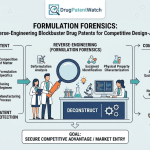
This approach transforms the generic development process from hypothesis-driven formulation screening into targeted reverse engineering with a publicly disclosed reference target.
Excipient Selection as Diagnostic Intelligence
Functional Excipient Classes and What Their Presence Signals
Excipients are not passive ingredients. Every excipient class has a function, and its inclusion in a patent is direct evidence that the function was needed. The analyst’s task is to read the excipient list as a list of problems the API presented, not a list of ingredients the formulator preferred.
Solubility-enhancing excipients appear when the API has poor aqueous solubility. The BCS (Biopharmaceutical Classification System) places roughly 70 percent of new molecular entities in Class II (low solubility, high permeability) or Class IV (low solubility, low permeability). Excipients in this category include non-ionic surfactants such as poloxamers (Pluronic F68, Pluronic F127), vitamin E TPGS, and d-alpha-tocopheryl polyethylene glycol succinate. When these appear, the API could not achieve therapeutic plasma concentrations through conventional tablet or capsule formulation. The patent will often specify the concentration of the surfactant and may include comparative dissolution data showing the improvement over a non-surfactant control. That dissolution data, extracted and plotted, gives the analyst a quantitative picture of the solubility gap the innovator was trying to close.
When the patent describes amorphous solid dispersion (ASD) technology with polymers such as HPMC-AS (hydroxypropyl methylcellulose acetate succinate), PVP-VA (polyvinylpyrrolidone vinyl acetate), Eudragit L100-55, or Soluplus, the solubility problem was severe enough that a conventional surfactant approach was insufficient. ASD technology converts the crystalline API to its amorphous form, locked in a polymer matrix. The amorphous form has no crystal lattice energy to overcome during dissolution, substantially increasing apparent solubility. But it is thermodynamically unstable. The polymer’s primary function in an ASD is to prevent recrystallization, which would negate the solubility advantage. The ratio of API to polymer in the ASD is critical: too little polymer and the drug recrystallizes; too much and the tablet becomes too large to swallow or the drug loading is commercially unacceptable. Patents that describe this ratio optimization are disclosing the exact thermodynamic stability boundary of their system.
Cyclodextrins, particularly sulfobutyl ether-beta-cyclodextrin (Captisol) and hydroxypropyl-beta-cyclodextrin (HPBCD), signal a different class of solubility strategy. Cyclodextrins form inclusion complexes with lipophilic drug molecules, inserting the hydrophobic drug into their hydrophilic cavity. They are used particularly in injectable formulations where organic solvents are not an option and ASD cannot be used. The Captisol platform, developed by Ligand Pharmaceuticals, has been licensed for multiple commercial injectable products including voriconazole (Vfend IV) and carfilzomib (Kyprolis IV). A patent disclosing cyclodextrin use at specific molar ratios of drug to cyclodextrin reveals a formulator navigating both solubility and safety constraints simultaneously.
Antioxidants appear when the API undergoes oxidative degradation. Butylated hydroxytoluene (BHT), butylated hydroxyanisole (BHA), ascorbic acid, sodium metabisulfite, and propyl gallate each protect against oxidation through different mechanisms. Their presence in a formulation patent is a specific signal that the API contains an oxidation-sensitive chemical moiety, most commonly a phenol, an amine, a thiol, or a conjugated diene. The choice between antioxidants is itself informative: water-soluble antioxidants such as ascorbic acid protect aqueous-phase formulations; lipid-soluble antioxidants such as BHT or BHA protect oil-based or soft-gel formulations. An injectable formulation using sodium metabisulfite signals a formulator worried about oxidation in the aqueous phase, and the patent data on peroxide levels or drug-related impurity growth under oxidative stress conditions quantifies exactly how serious the problem is.
Chelating agents such as edetate disodium (EDTA) appear when metal-catalyzed oxidation is a specific concern. Trace metals, particularly iron and copper, catalyze free-radical chain oxidation reactions. EDTA sequesters these metals, removing them from the reaction pathway. The presence of EDTA in an injectable formulation tells the analyst that the API’s oxidation is metal-catalyzed, which has implications for both formulation design and manufacturing: the equipment contact surfaces, the water quality specifications, and the container-closure system all become critical control points.
Controlled-release polymers appear when the therapeutic strategy requires extended drug exposure. Hydrophilic matrix-forming polymers such as HPMC (hydroxypropyl methylcellulose) and polyethylene oxide (PEO) create a gel barrier around the tablet core that controls drug diffusion out of the matrix. The viscosity grade of the HPMC selected is a direct variable in controlling release rate: higher viscosity grades (e.g., HPMC K100M versus HPMC K15M) form denser gels and slow release further. A patent that presents release profile data across multiple HPMC viscosity grades is disclosing the precise control parameters for the controlled-release mechanism. Ethylcellulose and Eudragit RS/RL, which are insoluble polymers used in membrane-coated systems, reveal a reservoir-based release mechanism rather than a matrix mechanism. The distinction matters for generic development: matrix and membrane systems require different manufacturing equipment and process controls.
Concentration Ranges and the ‘Sweet Spot’ Signal
The concentration ranges in a patent’s Detailed Description are not arbitrary. They reflect the outcome of systematic formulation optimization, typically a design of experiments (DoE) study where multiple variables are varied simultaneously and the optimal region is identified statistically. The patent’s disclosed ‘preferred’ range is almost always the center of the statistically defined design space, with the outer bounds set at the edge of acceptable performance.
When a patent describes a surfactant present at ‘1% to 10% by weight, preferably 2% to 5%,’ the preferred range identifies the zone where dissolution enhancement is adequate without exceeding solubility, causing phase separation, or creating stability problems. The 10% upper bound exists because above that concentration, a specific failure mode occurs. That failure mode, whether it is phase separation on storage, an unacceptable increase in degradation rate, or poor compression behavior during tableting, is often described in the Background or in comparative examples. Reading the concentration range alongside those failure mode descriptions reveals the full design constraints the formulator was working within.
Ratios between co-excipients carry similar intelligence. In a biologic formulation, the ratio of a non-ionic surfactant such as polysorbate 80 to the protein concentration is a critical stability variable. Too little surfactant and the protein adsorbs to container-closure surfaces or forms interfacial aggregates at the air-water interface during agitation and shipping. Too much and the surfactant degrades (polysorbate esters undergo hydrolysis) at a rate that produces problematic fatty acid particles during shelf life. The specific surfactant concentration disclosed in a biologics formulation patent reflects the sponsor’s optimization across this competing constraint set.
Key Takeaways: Excipient Intelligence
Each functional excipient class signals a specific API weakness. Solubility enhancers indicate BCS Class II or IV compounds. Antioxidants reveal oxidation-sensitive chemical moieties. Cyclodextrins in injectables signal a formulator constrained by both solubility and safety requirements. The preferred concentration range within a disclosed broader range identifies the center of the formulator’s design space. Co-excipient ratios in biologic formulations reflect optimization across competing degradation pathways.
Advanced Drug Delivery Systems: Reading the Technology Roadmap
Lipid Nanoparticles
Lipid nanoparticle (LNP) technology rose to widespread attention through the mRNA COVID-19 vaccines developed by Pfizer/BioNTech and Moderna, but the underlying science predates that application by two decades. LNPs are now the principal enabling platform for nucleic acid therapeutics including mRNA vaccines, siRNA therapeutics (Alnylam’s Onpattro was the first FDA-approved siRNA product), and emerging mRNA-based protein replacement therapies.
LNP formulation patents are among the most technically dense in the pharmaceutical field. The key variables are the identity and mole fraction of four lipid components: an ionizable cationic lipid, a helper lipid (typically phosphatidylcholine or DOPE), cholesterol, and a PEGylated lipid. The ionizable lipid is the critical enabling component: it is protonated at the endosomal pH (approximately 5.5) after cellular uptake, disrupting the endosomal membrane and releasing the nucleic acid cargo into the cytoplasm, while remaining uncharged at physiological pH (7.4) to reduce systemic toxicity. Patent claims covering specific ionizable lipid structures and their molar ratios in the LNP are the commercially central IP in this space.
Analysts evaluating companies in the mRNA therapeutics space should map the ionizable lipid patent landscape before assessing any pipeline asset. Moderna’s SM-102 lipid (used in Spikevax), BioNTech’s ALC-0315 lipid (used in Comirnaty, supplied by Acuitas Therapeutics under license), and Alnylam’s DLin-MC3-DMA lipid (used in Onpattro) are each protected by distinct patent families. Any company developing an LNP-based therapeutic must either license from these patent estates, develop a non-infringing ionizable lipid, or challenge the validity of the relevant claims. The formulation patent landscape in this technology area is as commercially significant as the nucleic acid sequence patents on the therapeutic payload itself.
Investment Strategy: In LNP therapeutics, the delivery IP and the payload IP have roughly equivalent commercial significance. An mRNA therapeutic whose payload sequence is unprotected but whose LNP formulation is covered by a strong Acuitas or Alnylam patent requires a licensing arrangement that can meaningfully alter the deal economics. Investors should assess LNP IP alongside sequence IP in any nucleic acid therapeutics asset valuation.
Polymeric Nanoparticles and Micellar Systems
Polymeric nanoparticle formulations use biodegradable polymers such as PLGA (poly lactic-co-glycolic acid), PLA (polylactic acid), or albumin matrices to encapsulate poorly soluble drugs for oncology applications. Abraxane (nab-paclitaxel), developed by Abraxis BioScience and now marketed by Bristol Myers Squibb, used albumin nanoparticles to eliminate the Cremophor EL solvent required by the original Taxol formulation, reducing hypersensitivity reactions. The formulation patents covering the nab technology contributed substantially to Abraxane’s commercial longevity beyond the paclitaxel composition patent expiry.
Polymeric micelle systems use amphiphilic block copolymers that self-assemble in aqueous media to form core-shell nanostructures, with the hydrophobic drug sequestered in the hydrophobic core. Genexol-PM, a Cremophor-free paclitaxel polymeric micelle product developed by Samyang Biopharmaceuticals, is approved in South Korea and several other markets. Patents in this space describe the polymer composition, the drug loading efficiency (typically expressed as weight percent of drug per weight of total formulation), the particle size distribution (with targets typically in the 20 to 200 nm range to exploit the EPR effect in tumor vasculature), and in vivo biodistribution and efficacy data.
Abuse-Deterrent Formulations
Abuse-deterrent formulations (ADFs) represent a distinct class of formulation patent with a regulatory as well as commercial dimension. FDA has issued specific guidance on ADF development and requires NDAs for extended-release opioids to evaluate abuse-deterrent properties. An approved ADF designation supports a favorable label statement that can be used in formulary negotiations with payers.
ADF patents typically describe one of several mechanisms: physical barriers that resist crushing or cutting (using high-strength polymers such as polyethylene oxide at high molecular weight), chemical deterrents that produce aversive effects upon manipulation (incorporation of naltrexone or naloxone that is released only when the tablet is crushed), viscosity-forming agents that convert the crushed product to a thick gel upon dissolution in small volumes of aqueous solvent (preventing intravenous injection), and sequestered antagonists in capsule beads that are released only when the capsule is tampered with.
Purdue Pharma’s OxyContin reformulation in 2010, which introduced a polyethylene oxide-based crush-resistant tablet, is the prototype commercial ADF. The reformulation was protected by multiple formulation patents and supported by FDA’s determination that the original immediate-release oxycodone formulation was less safe than the reformulated version, effectively preventing generic entry of the original formulation. The patent strategy here intersected directly with regulatory strategy in a way that illustrates how formulation IP and regulatory intelligence must be read together.
Transdermal Drug Delivery
Transdermal patches offer continuous drug delivery that bypasses first-pass hepatic metabolism, avoids gastrointestinal irritation, and can maintain steady-state plasma concentrations that are difficult to achieve with oral dosing. Formulation patents for transdermal systems describe the adhesive matrix (pressure-sensitive adhesives such as acrylic polymers or silicone-based systems), penetration enhancers (fatty acids such as oleic acid, terpenes, alcohols), drug loading per unit area, and flux rate through excised skin in in vitro permeation studies.
The Scope of a transdermal patent’s claims often determines whether a generic patch manufacturer must use the identical adhesive system or can substitute an alternative. The release liner material, the backing film, and the adhesive matrix composition can each be separately claimed. Some transdermal patent portfolios also include device patents covering the reservoir design or the rate-controlling membrane, adding further layers of IP protection.
Stability and Shelf-Life Intelligence
Reading Stability Data in Patent Examples
Stability data presented in patent examples is among the most operationally specific information in the public domain. ICH Q1A(R2) defines the standard conditions for accelerated stability testing: 40°C and 75% relative humidity for solid dosage forms intended for long-term storage at 25°C; 25°C and 60% RH for Zone IVb climates (tropical markets). Refrigerated products (2 to 8°C) are stressed at 25°C and 60% RH for accelerated testing.
When a patent presents stability data showing total impurity growth under these conditions, that data reveals several things simultaneously. The magnitude of impurity growth quantifies the severity of the chemical instability. The identity of the degradants, if the patent discloses them, reveals the specific degradation pathways active in the formulation. The difference in stability between comparative examples with and without specific excipients quantifies the protective effect of those excipients.
A hypothetical oral tablet patent might show that a formulation with 0.05% BHT produces 0.3% total impurities after six months at 40°C/75% RH, while the same formulation without BHT shows 2.8% total impurities at the same timepoint. That comparison tells the analyst that the API undergoes significant oxidative degradation in the absence of antioxidant protection, and that the specific antioxidant concentration is sufficient to reduce degradation by roughly 90 percent. A generic developer targeting this product must achieve a comparable stability specification, whether by using BHT at a similar concentration or by demonstrating equivalence with an alternative antioxidant approach.
Lyophilization and Reconstituted Stability
Lyophilized (freeze-dried) products present a distinct stability challenge that formulation patents document in detail. The lyophilization process subjects the drug substance to freezing, primary drying (sublimation of ice under vacuum), and secondary drying (desorption of bound water). Each stage creates physical stress for protein-based drugs: the freezing step concentrates solutes and can cause protein unfolding at the ice-water interface; the drying step removes the hydration shell that maintains protein structure in solution.
Cryoprotectants such as sucrose, trehalose, and mannitol stabilize proteins during lyophilization by replacing the water molecules that normally form hydrogen bonds with the protein surface, preserving the protein structure in the amorphous glassy state of the lyophilized cake. Lyoprotectants serve the same function upon reconstitution. Patents for lyophilized biologics specify the identity and concentration of these excipients precisely, because the stability of the protein in the dried state is highly sensitive to the glass transition temperature (Tg’) of the lyophilized cake, which depends on excipient composition.
A patent disclosing that a biologic required lyophilization rather than a liquid formulation is a commercial signal as well as a scientific one. Lyophilized products require cold-chain distribution and reconstitution by healthcare providers before administration. If a biosimilar developer can develop a stable liquid formulation of the same biologic, bypassing lyophilization, they may offer a commercially differentiated product with manufacturing cost advantages. The innovator’s formulation patent, by documenting why lyophilization was necessary, also implicitly defines the stability challenge that a liquid formulation would have to overcome.
The Biologics Formulation Patent: A Category Apart
Why Biologic Formulation IP Is Structurally Different
Small-molecule drug formulation patents cover the combination of a well-characterized chemical entity with excipients. The API is a defined compound whose physical and chemical properties can be measured precisely. Biologic formulation patents cover the combination of a complex macromolecule, typically a protein of 150 kilodaltons or more for a monoclonal antibody, with excipients designed to prevent a diverse set of physical and chemical degradation modes. The complexity of the biologic substrate creates correspondingly greater complexity in the IP landscape.
Monoclonal antibodies (mAbs), the dominant biologic drug class by revenue, are subject to multiple simultaneous degradation pathways. Aggregation occurs when proteins unfold or interact intermolecularly to form dimers, oligomers, or larger particulate species. Chemical modifications include deamidation (conversion of asparagine to aspartate or isoaspartate), oxidation of methionine or tryptophan residues, glycation of lysine residues, and disulfide scrambling. Fragmentation occurs through peptide bond hydrolysis under acidic or basic conditions. Each pathway has different dependencies on pH, temperature, ionic strength, and excipient composition. A biologic formulation patent describes the multivariate optimization that identified conditions minimizing the combined rate of all these degradation modes simultaneously.
The High-Concentration Subcutaneous Formulation Challenge
The commercial trend in biologics is toward self-administration via subcutaneous (SC) injection, replacing intravenous infusion in clinical settings. SC injections are limited to volumes of approximately 1.5 to 2.0 mL per injection site, which means that a drug dosed at 200 mg SC must be formulated at concentrations above 100 mg/mL. At these concentrations, mAb solutions behave as concentrated, semi-ordered polymer solutions rather than ideal dilute solutions. Viscosity increases sharply with concentration (often non-linearly), and aggregation rates accelerate due to proximity-driven protein-protein interactions.
Formulation patents for high-concentration SC injectables document the specific excipient combinations that manage viscosity and aggregation simultaneously. Arginine hydrochloride is the most widely studied viscosity-reducing agent for concentrated mAb solutions: it disrupts electrostatic and hydrophobic protein-protein interactions that drive viscosity. Histidine buffer is preferred over phosphate for many mAb formulations because it has lower conductivity, reducing viscosity-driving ionic interactions. Sucrose or trehalose at 5 to 10% w/v provides colligative stabilization against both aggregation and freeze-thaw stress. The specific combinations and concentrations in these patents define the formulation design space that biosimilar developers must navigate.
Biosimilar Formulation Strategy Under the BPCIA
Under the Biologics Price Competition and Innovation Act (BPCIA), a biosimilar applicant files a 351(k) BLA demonstrating biosimilarity to a reference product (RP). The BPCIA’s ‘patent dance’ requires the biosimilar applicant to provide its application and manufacturing process information to the RP sponsor, triggering a multi-stage exchange of patent lists and infringement contentions. Formulation patents are typically included in the RP sponsor’s list of patents it may assert against the biosimilar product.
Biosimilar developers who have analyzed the innovator’s formulation patents before filing their 351(k) application are positioned to respond to the patent dance with a pre-developed formulation design-around or a pre-researched invalidity position. Those who have not done this analysis face the patent dance with no prepared response. Given that the patent dance process moves on a compressed statutory timeline, advance formulation patent analysis is operationally critical.
The key question for biosimilar formulation is whether the sponsor’s target formulation infringes the RP’s formulation patents. A biosimilar does not need to use an identical formulation to the RP; it needs to demonstrate biosimilarity at the drug substance level and meet its own safety and efficacy requirements. The formulation can differ, as long as the differences do not affect biosimilarity assessment. This creates a design-around opportunity that is both scientific and regulatory: a non-infringing formulation that maintains biosimilarity is both commercially and legally superior.
Investment Strategy: In biosimilar pipeline valuation, the formulation IP landscape deserves co-equal analysis with the composition-of-matter patent expiry date. A biosimilar program where the developer has filed patents on its own novel formulation is more defensible than one relying on the RP’s disclosed formulation. Developer-originated formulation IP creates both a design-around shield and a licensable asset.
Evergreening: Full Lifecycle Technology Roadmap
Defining Evergreening and Its Commercial Logic
Evergreening is the practice of filing successive patent applications covering different aspects of a drug product’s formulation, delivery mechanism, indication, or manufacturing process, sequenced to extend commercial exclusivity beyond the expiration of the primary composition-of-matter patent. It is legal, practiced universally by innovator pharma companies, and consistently criticized by generic companies, payers, and health economists.
The commercial logic is straightforward. A blockbuster drug with $4 billion in annual U.S. revenue, facing composition patent expiry, loses approximately $3.4 billion in annual revenue within 24 months of generic entry. A valid formulation patent extending exclusivity by four years represents roughly $13.6 billion in protected revenue (undiscounted), less the litigation cost of defending the patent. R&D investment in formulation lifecycle management generates returns that exceed most late-stage clinical development programs.
The Technology Roadmap: How Evergreening Actually Unfolds
The lifecycle of a major chronic disease drug typically follows a predictable IP development path. Below is a representative roadmap derived from publicly available patent data for a composite of major CNS, cardiovascular, and metabolic drug franchises.
Year 0 to 2 (Preclinical and Phase 1): The composition-of-matter patent is filed, typically claiming the API, its pharmaceutically acceptable salts (hydrochloride, mesylate, tosylate, succinate, maleate), and key polymorphic forms. The initial patent application may include early-stage formulation data as illustrative examples, but the primary focus is the molecule itself. At this stage, the physicochemical profile is being characterized: solubility across pH, permeability in Caco-2 cells, metabolic stability in human liver microsomes, and CYP enzyme inhibition/induction profile. These data points, many of which appear in the patent’s Detailed Description, define the formulation challenges that will occupy the next decade.
Year 3 to 5 (Phase 2 to 3): Formulation development is active. The first-generation formulation, typically an immediate-release (IR) solid oral dosage form, is patent-protected if it incorporates any non-obvious excipient combination or processing innovation. If the API required an ASD platform to achieve therapeutic bioavailability, the ASD patent is filed during this period. If the API is a salt form chosen for stability or solubility reasons, salt patents may be filed separately. Method-of-manufacture patents covering spray-drying or hot-melt extrusion processes used to produce the ASD are filed concurrently or shortly after.
Year 6 to 8 (Post-approval, First Lifecycle Phase): With the first-generation product approved and generating revenue, the lifecycle management program accelerates. A once-daily controlled-release formulation is developed, typically using a matrix or reservoir system. The controlled-release formulation patent files. A pediatric formulation, driven by FDA’s pediatric exclusivity provisions under the Best Pharmaceuticals for Children Act (BPCA), is developed concurrently, generating a six-month exclusivity extension as a regulatory reward and a pediatric formulation patent as IP protection.
Year 9 to 12 (Second Lifecycle Phase): The franchise strategy addresses patient sub-populations and route-of-administration alternatives. A subcutaneous injectable depot formulation is developed for patients who cannot tolerate oral therapy or where sustained plasma concentrations require parenteral delivery. The depot patent, covering the polymer matrix (typically PLGA microspheres or an in-situ forming implant) and its release kinetics, files. A fixed-dose combination product with a complementary drug in the same therapeutic class is developed, generating a new set of composition and formulation patents for the combination product.
Year 13 to 16 (Terminal Lifecycle Phase): The composition-of-matter patent expires or is within its final years. The franchise is now sustained primarily by formulation, method-of-use, and process patents. A next-generation drug-device combination product, such as an auto-injector or a digital health-enabled inhaler with adherence tracking, is developed. The device patents extend IP protection into the medical device domain, governed by a different regulatory framework (510(k) or PMA rather than NDA/BLA) and a different patent examination culture.
By mapping a competitor’s patent filings across this timeline, the analyst can identify which lifecycle phase the competitor’s franchise is currently in, where the next filing is likely to occur, and where gaps in the portfolio leave the franchise vulnerable to generic or biosimilar entry.
Key Takeaways: Evergreening Intelligence
Evergreening extends commercial exclusivity through successive IP layers, each filed at a different stage of product development. The full lifecycle roadmap typically spans 16 to 20 years from first composition patent filing to last formulation patent expiry. Each new patent type signals a specific strategic priority: ASD patents signal a solubility crisis, controlled-release patents signal a compliance or lifecycle management initiative, pediatric patents signal a BPCA strategy. Reading the sequence of filings identifies where in the lifecycle the competitor currently sits and what the next move is likely to be.
Strategic Applications for Generic and 505(b)(2) Developers
The Design-Around Framework
Designing around a patent requires understanding its claims precisely enough to know what is not claimed. The process is a combination of legal claim analysis and scientific formulation strategy, and it requires both a patent attorney and a formulation scientist working in parallel.
The scientific side of a design-around starts with the same diagnostic reading described above. If the innovator’s independent claim covers a formulation comprising an API, HPMC-AS as the ASD polymer, and poloxamer 407 as a solubilizing surfactant, the design-around must use either a different ASD polymer or no ASD at all. The question is whether the alternative polymer can achieve equivalent dissolution performance without infringing the claim. The innovator’s own patent data guides that question: the patent’s dissolution profiles define the target, and the innovator’s comparative examples documenting failed alternatives may have excluded some options while leaving others untested.
Successful design-arounds in recent history illustrate this approach. Generic manufacturers challenging Pfizer’s atorvastatin (Lipitor) formulation patents in the early 2000s faced claims covering specific crystal forms (polymorphs) and granulation processes. The Paragraph IV challengers were able to demonstrate that alternative crystalline forms were equally effective and that wet granulation could be replaced by dry granulation processes not covered by the claims, generating non-infringing formulations that achieved bioequivalence and cleared the Paragraph IV hurdle.
Paragraph IV Certification Strategy
The Hatch-Waxman Act’s Paragraph IV certification mechanism allows an ANDA filer to challenge an Orange Book-listed patent as invalid, unenforceable, or non-infringed. A successful Paragraph IV challenge, whether through litigation or settlement, can allow generic entry before patent expiry and confers 180 days of shared generic exclusivity on the first successful challenger. For a blockbuster drug, 180-day exclusivity can generate generic revenues of $500 million or more, making Paragraph IV litigation one of the highest-return IP strategies available to generic manufacturers.
Building a Paragraph IV case begins with patent analysis of the type described in this article. Potential invalidity arguments include anticipation by prior art (the claimed formulation was previously disclosed in a scientific publication, an earlier patent, or a regulatory document), obviousness (the combination of known excipients to solve a known problem was obvious to a PHOSITA at the time of filing), and lack of enablement or written description. The prosecution history review often identifies claim narrowing during examination that can be used to argue prosecution history estoppel against infringement under the doctrine of equivalents.
Patent attorneys specializing in Hatch-Waxman litigation typically work alongside formulation scientists who can execute laboratory experiments demonstrating that the generic formulation does not fall within the patent’s claims. The formulation analysis described above supports both the invalidity and non-infringement prongs of the Paragraph IV strategy.
505(b)(2) Applications and the Expired Patent Opportunity
The 505(b)(2) NDA pathway allows an applicant to rely on FDA’s prior findings of safety and efficacy for a reference listed drug while developing a product that differs from that reference in formulation, route of administration, dosage form, strength, or indication. This pathway is particularly relevant for first-generation expired patents.
When a drug’s first-generation formulation patent expires but later-generation patents protect the currently marketed product, the expired patent becomes a public-domain technical recipe. A 505(b)(2) applicant can use the teachings of the expired patent as a starting point for developing a modified formulation that can be referenced to the innovator’s clinical data. This approach allows market entry without defeating the newer patents, by developing a product that is different enough to not infringe them while still bioequivalent enough to reference the innovator’s safety and efficacy database.
Investment Strategy: For 505(b)(2) program portfolio construction, prioritize targets where the first-generation formulation patent has expired but the currently marketed formulation has commercial weaknesses (inconvenient dosing frequency, poor tolerability, high pill burden) that a reformulated product could address. The expired patent provides technical grounding; the market weakness provides commercial justification; the 505(b)(2) pathway provides regulatory efficiency.
Strategic Applications for Innovator Companies
Competitive Benchmarking Through Patent Landscape Analysis
Patent landscape analysis for innovator companies differs from that used by generic developers in its orientation. Generic developers focus on specific drug targets. Innovator companies map broader technology areas, drug classes, and competitor pipelines to identify where others are going and where the undiscovered territory lies.
A systematic competitive benchmarking program covers at minimum the top five to eight companies in each therapeutic area of interest, with quarterly monitoring of new filings by assignee. New formulation patent applications from competitors typically appear in the USPTO’s published application database 18 months after filing, providing a roughly 18-month leading indicator of where competitors are directing development resources.
When a competitor files multiple formulation patent applications for the same API, each attempting different solubilization approaches in sequence, the pattern is visible and interpretable. An initial ASD patent followed by a lipid-based drug delivery system (LBDDS) patent followed by a co-crystal patent suggests that the ASD and LBDDS approaches either failed to achieve adequate bioavailability or had manufacturing scalability problems. The co-crystal approach, which modifies the crystal packing of the API without converting it to amorphous form, represents a different stability-solubility balance. A competitor observing this filing sequence can infer both the API’s classification and the development team’s assessment of each platform’s limitations.
White Space Identification
White space analysis maps the existing patent landscape to identify unclaimed technology areas where novel formulation IP can be generated. The methodology combines classification-based patent searching (using CPC codes for specific dosage form types), assignee analysis (who is active in this space and where their portfolios are thin), and technology trend analysis (what approaches are increasing in patent filing frequency, suggesting emerging rather than mature technology areas).
A white space finding might reveal that all current oral formulations of drugs in a specific protease inhibitor class use lipid-based systems, leaving matrix-based controlled-release approaches unpatented. If the API’s physicochemical profile supports a matrix system and the clinical rationale for controlled release is defensible, this white space represents both a patentable formulation opportunity and a commercially differentiated product.
White space analysis is not just about novelty. A formulation approach must also be clinically meaningful, commercially viable, and manufacturable at scale. Many white spaces exist because they represent areas where the technical approach is currently impractical, not because no one has thought of them. Distinguishing genuinely accessible white space from technically infeasible white space requires formulation expertise alongside IP expertise.
Freedom to Operate: The Due Diligence Non-Negotiable
Defining FTO and Its Scope
A Freedom to Operate (FTO) analysis determines whether a proposed product, in its specific form, can be made, used, and sold without infringing any valid, in-force patent claim in the jurisdiction of interest. FTO is not a binary answer. It is a risk assessment, and a well-executed FTO analysis quantifies that risk across multiple dimensions: the number of potentially blocking patents, the breadth of their claims, the likelihood that each claim would be found valid and infringed in litigation, and the availability of design-around alternatives.
FTO analysis for a generic or biosimilar formulation begins with identifying all Orange Book or Purple Book-listed patents for the reference drug, all non-listed formulation and process patents that might be asserted, and any pending applications that could mature into patents during the development timeline. The analysis must be current: patents file and prosecute on a rolling basis, and an FTO performed two years before a product launch may miss patents that issued in the interim.
The Consequence of Incomplete FTO
Incomplete FTO has a documented commercial cost. The case of Apotex v. Sanofi-Synthelabo (clopidogrel / Plavix) illustrates the risk. Apotex obtained a favorable district court ruling on its Paragraph IV challenge and launched its generic clopidogrel product, only to have that ruling reversed on appeal. Apotex was required to pay damages based on the at-risk launch volume, resulting in a settlement of approximately $500 million. The at-risk launch decision reflected confidence in the invalidity analysis, but the appeal outcome demonstrated that invalidity findings at the district court level are regularly reversed. A more comprehensive FTO would not necessarily have changed the launch decision, but it would have quantified the appeal reversal risk more explicitly.
Tools, Databases, and AI-Driven Patent Analytics
Professional Patent Databases
Free tools, including Google Patents, the USPTO’s Patent Public Search, and Espacenet, provide access to individual patent documents and support basic keyword searching. They are adequate for retrieving a specific patent by number or conducting a preliminary search on a defined topic. They are not adequate for systematic landscape analysis, assignee monitoring, or cross-jurisdictional family analysis.
Professional platforms, including Derwent Innovation (Clarivate), PatBase (Minesoft), Orbit Intelligence (Questel), and CAS SciFinder, provide global coverage with machine translation of non-English documents, patent family grouping, advanced Boolean and semantic search, and analytics tools for trend visualization. CAS SciFinder’s chemical structure search functionality is particularly relevant for pharmaceutical applications: it allows retrieval of patents by exact structure, substructure, or Markush structure search, which is essential for identifying all patents covering a specific chemical class of excipients or APIs.
Pharmaceutical-Specific Platforms
DrugPatentWatch provides pharmaceutical-specific structured data linking drugs to their patents, including patent type classification, estimated expiration dates incorporating patent term adjustments and extensions, and Paragraph IV filing records. This removes the manual assembly step required when using general patent databases and allows analysts to move directly to substantive analysis of a curated patent list.
The FDA’s Orange Book (Approved Drug Products with Therapeutic Equivalence Evaluations) lists patents that the NDA holder has certified to FDA as covering the drug product or method of use. Orange Book patents are the specific patents a generic ANDA filer must address in its Paragraph IV certification. However, Orange Book listing is not complete: process patents and patents covering features not required for FDA approval are not listed, and these unlisted patents can still be asserted. A complete FTO analysis supplements Orange Book review with broader patent database searching.
AI-Driven Text Mining
Natural language processing (NLP) models trained on patent text can automate extraction of specific data elements from large patent corpora. Applied to pharmaceutical formulation patents, NLP models can extract excipient identities and concentration ranges from the Detailed Description, API:polymer ratios from Examples, stability data from tables and figures, and dissolution profiles from experimental results sections. The output of such an analysis across, for example, all formulation patents in the HPMC-AS ASD space published in the last decade, is a structured database of formulation data that took months of human analyst time to assemble manually.
The limitation of current NLP approaches is precision on highly technical, context-dependent language. Patent text uses specialized chemical nomenclature, trademarked excipient names alongside generic names for the same material, and nested conditional claims that require legal expertise to parse correctly. NLP extraction tools work best when their output is validated by a subject-matter expert, not treated as a standalone intelligence product.
Large language models (LLMs) represent an emerging layer on top of structured patent databases. When grounded in actual patent documents (through retrieval-augmented generation or direct document processing), LLMs can support higher-level synthesis tasks: summarizing the formulation strategy across a competitor’s entire portfolio, identifying inconsistencies between claim scope and disclosed data that might indicate invalidity arguments, or generating a structured comparison of multiple competitors’ approaches to the same formulation challenge. These applications are productive when the LLM’s outputs are validated against the source documents, and when the analyst understands the model’s tendency to generate plausible-sounding but factually incorrect statements about specific technical parameters.
Legal and Regulatory Framework
The Hatch-Waxman Act: Structure and Strategic Implications
The Drug Price Competition and Patent Term Restoration Act of 1984 (Hatch-Waxman) created the current U.S. framework for generic drug approval and patent litigation. Its core provisions include the ANDA pathway, which allows generic applicants to rely on the innovator’s clinical data without repeating clinical trials; the Paragraph IV certification mechanism, described above; the 30-month stay of ANDA approval that a brand company can obtain by suing within 45 days of receiving a Paragraph IV notice; and the 180-day exclusivity period for the first Paragraph IV challenger.
The 30-month stay is the instrument that gives innovator companies time to litigate Paragraph IV cases before a generic can enter the market. During those 30 months, the innovator’s formulation is protected regardless of the litigation outcome. This creates an incentive structure where even weak Paragraph IV suits have value: filing a suit triggers the 30-month stay, extending exclusivity for 30 months regardless of whether the innovator ultimately wins. Generic companies have challenged the availability of the 30-month stay for patents listed in the Orange Book after the NDA was submitted, arguing that late-listed patents should not qualify for the stay. Court outcomes on this point have been mixed.
Patent Term Extension under 35 U.S.C. § 156 restores up to five years of patent term lost during FDA regulatory review, subject to a maximum of 14 years of post-approval exclusivity for the extended patent. Only one patent per drug product can receive PTE, and the applicant must elect which patent to extend. This election decision, which the NDA holder makes at the time of drug approval, has long-term IP consequences. Extending the composition-of-matter patent provides broader protection for the longer period. Extending a formulation patent provides narrower protection but may be the better choice if the composition patent’s remaining term is already substantial.
BPCIA: The Patent Dance and 12-Year Exclusivity
The Biologics Price Competition and Innovation Act of 2010 created the 351(k) biosimilar approval pathway and established 12 years of exclusivity for reference biologic products from the date of first licensure, irrespective of patent status. This exclusivity period is longer than any Hatch-Waxman patent extension and operates independently of the patent landscape. No biosimilar can be approved earlier than 12 years after the reference product’s first license date, and no biosimilar can be marketed earlier than 12 years, regardless of how the patent dance resolves.
The patent dance itself is a structured information exchange that has been criticized as too slow and too costly, but it remains the mechanism through which biosimilar applicants and RP sponsors establish their patent dispute agenda. Formulation patents are central to the patent dance: they are among the patents the RP sponsor lists in its initial disclosure, and the biosimilar applicant’s response, disclosing its proposed formulation, determines whether an infringement dispute arises.
Doctrine of Equivalents and the Design-Around Risk
The doctrine of equivalents prevents competitors from making trivial changes to avoid literal infringement. Under Warner-Jenkinson Co. v. Hilton Davis Chemical Co. (1997) and Festo Corp. v. Shoketsu Kinzoku Kogyo Kabushiki Co. (2002), a product that performs substantially the same function, in substantially the same way, to achieve substantially the same result as a claimed invention may infringe under the doctrine of equivalents even if it does not literally infringe the claim language.
For formulation design-arounds, the doctrine of equivalents risk is real. Replacing sucrose with trehalose in a biologic formulation involves excipients that perform the same function (cryoprotection), in a similar way (hydrogen bonding to the protein surface), to achieve the same result (maintenance of protein structure during lyophilization). Whether a court would find this substitution equivalent depends on the specific claim language, the prosecution history (if the applicant argued that sucrose was uniquely effective, that argument would estop them from asserting equivalence), and the expert testimony on the differences between the two excipients. The formulation analyst’s job is to document the scientific distinctions between the design-around and the claimed invention clearly enough that the patent attorney can mount a credible non-equivalence argument.
Investment Strategy for Analysts
This section consolidates the investment-relevant implications of patent formulation analysis for portfolio managers and institutional investors evaluating pharma and biotech assets.
The most reliable indicator of a pharma franchise’s revenue durability is not the headline composition-of-matter patent expiry date. It is the density and validity of the formulation patent portfolio surrounding the product. A franchise with five independently valid formulation patents, each covering a distinct and commercially necessary aspect of the product’s design, has a materially different revenue risk profile than one with a single formulation patent that has already been challenged in Paragraph IV litigation.
When evaluating a pharma company’s pipeline, map each late-stage asset’s IP lifecycle position against the evergreening roadmap described in the Lifecycle Technology Roadmap section above. Assets that are in the early formulation development phase, with no filed formulation patents, represent pipeline risk as well as clinical risk: if the development program fails to generate robust formulation IP, the product may face generic competition much sooner than a naively constructed DCF model would suggest.
Biosimilar developers represent a distinct investment case. The relevant IP question is not whether the reference product’s composition patent has expired, but whether the biosimilar developer has a validated, non-infringing formulation and a clear path through the patent dance. Biosimilar programs that have already filed formulation patents on their own novel formulations are materially more defensible than those relying on disclosed reference-product formulations. The former signals an IP-sophisticated development team; the latter signals a team that may face last-minute formulation redesign upon receiving the RP sponsor’s initial patent list.
For M&A analysis, IP due diligence must extend to formulation patents specifically. Acquirers who focus exclusively on composition-of-matter patents and clinical data risk significantly underestimating both the revenue durability of the target’s portfolio and the IP complexity of integration. Formulation patents often contain manufacturing process requirements that constrain the acquirer’s supply chain options for years after the acquisition closes.
Royalty-bearing licensing arrangements for platform technologies, including ASD polymers, LNP lipid systems, and cyclodextrin complexation agents, represent a recurring cost line that should be modeled explicitly in asset valuations. Captisol (Ligand Pharmaceuticals) royalties, Soluplus sublicensing terms, and Acuitas LNP licensing arrangements are not always visible in public disclosures but can materially affect product margins.
Frequently Asked Questions
How do I identify which patent example is the commercial formulation?
Cross-reference the excipient list from the drug’s FDA prescribing information (PI) or EMA Summary of Product Characteristics (SmPC) against the examples in the formulation patent. Both documents list excipients present in the approved product. Matching the PI excipient list to a specific patent example identifies the commercial formulation with high confidence. For products where the PI has been updated to remove or add excipients over time (a common occurrence with branded products undergoing manufacturing changes), review each version of the PI in FDA’s Drugs@FDA database.
A target drug’s key formulation patent does not expire for seven years. Is it worth analyzing now?
Yes, and the earlier the better. Generic ANDA development timelines, from formulation screening through bioequivalence studies and ANDA submission, routinely run three to five years. Paragraph IV litigation timelines add another two to three years. An analyst who starts formulation patent analysis seven years before expiry is already working on a compressed timeline if the goal is Day 1 market entry upon patent expiration.
Our company cannot afford patent counsel for every analysis. What can R&D do internally?
R&D teams can execute high-value first-pass analysis without legal expertise by focusing on the scientific content: extract all excipients from the Detailed Description and Examples sections, classify them by function, construct a hypothesis about the API’s physicochemical challenges, and identify the preferred example likely corresponding to the commercial formulation. Replicate the preferred example in your lab at bench scale to characterize the formulation’s performance. This scientific foundation allows subsequent engagement with patent counsel to focus on the specific design-around questions that matter, making legal advice more efficient and targeted.
How do I know if a design-around formulation is at risk under the doctrine of equivalents?
The prosecution history is the starting point. If the applicant argued during prosecution that their specific excipient was uniquely effective or that alternatives were not equivalent, that argument creates prosecution history estoppel that limits the scope of the doctrine of equivalents for that claim. Read the file wrapper before committing to a design-around, and have patent counsel assess the estoppel risk explicitly.
A competitor is filing formulation patents on a drug I cannot identify from the patent text alone. How do I figure out what they are targeting?
Triangulate from multiple sources. The physicochemical properties of the model compounds used in the patent’s examples (molecular weight, LogP, solubility classification) may match a known compound in the competitor’s pipeline. The inventors named on the patent can be cross-referenced against the competitor’s published research team and conference presentations. The competitor’s clinical trial registry filings at ClinicalTrials.gov may show a new study for an existing drug using a different dosage form, linking the formulation patent to a specific lifecycle management program.
What role do polymorph patents play in formulation patent strategy?
Polymorph patents protect specific crystalline forms of an API. Different polymorphs can have different solubility, dissolution rate, bioavailability, stability, and processability profiles. An innovator who discovers that a specific polymorph provides superior dissolution characteristics can patent that form and require all generic manufacturers to use a specific, potentially inferior polymorph, limiting their ability to match the brand’s bioavailability profile. Astra Zeneca’s omeprazole (Prilosec) polymorph litigation is a classic example: AZ held patents on specific crystalline forms that complicated generic development efforts. When analyzing a formulation patent portfolio, polymorph patents should be mapped alongside amorphous solid dispersion patents, as the two technologies address the same solubility problem through different mechanisms.
References and Further Reading
Williams, H.D., Trevaskis, N.L., Charman, S.A., et al. (2013). Strategies to address low drug solubility in discovery and development. Pharmacological Reviews, 65(1), 315-499.
ICH Q1A(R2): Stability Testing of New Drug Substances and Products. International Council for Harmonisation, 2003.
ICH Q8(R2): Pharmaceutical Development. International Council for Harmonisation, 2009.
Loftsson, T., Brewster, M.E. (2010). Pharmaceutical applications of cyclodextrins: basic science and product development. Journal of Pharmacy and Pharmacology, 62(11), 1607-1621.
Mah, C., Bhangale, Y.S. (2022). Viscosity reduction of concentrated monoclonal antibody solutions. Journal of Pharmaceutical Sciences, 111(1), 56-67.
U.S. Food and Drug Administration. Orange Book: Approved Drug Products with Therapeutic Equivalence Evaluations. Published annually, updated monthly.
Biologics Price Competition and Innovation Act of 2009, 42 U.S.C. § 262.
35 U.S.C. § 156 (Patent Term Extension).
Warner-Jenkinson Co. v. Hilton Davis Chemical Co., 520 U.S. 17 (1997).
Festo Corp. v. Shoketsu Kinzoku Kogyo Kabushiki Co., 535 U.S. 722 (2002).
This analysis is intended for pharmaceutical professionals, IP specialists, and institutional investors. It does not constitute legal advice. Patent analysis for commercial decision-making should be conducted in consultation with qualified patent counsel.