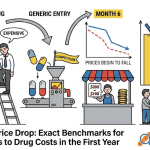
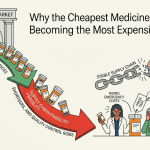
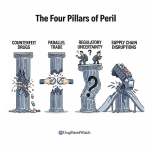
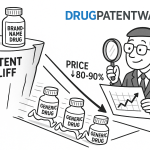
The U.S. generic drug market saves $445 billion a year. It also fails, systematically and predictably, to keep the most essential medicines on hospital shelves. This is a detailed account of why — and what it costs.
Part I: Anatomy of a Crisis — The Landscape of Generic Drug Shortages
Section 1: The Paradox of the Modern Generic Market
What the Generic System Was Built to Do
The Hatch-Waxman Act of 1984 — formally, the Drug Price Competition and Patent Term Restoration Act — created two interlocking mechanisms that define today’s pharmaceutical market. On one side, it extended patent term restoration for brand-name drugs to compensate for time lost during FDA review. On the other, it opened the Abbreviated New Drug Application (ANDA) pathway, allowing generic manufacturers to prove bioequivalence rather than repeat full clinical trials. The result was designed to be a bargain: temporary monopoly profits for innovators, followed by rapid price competition once exclusivity expired.
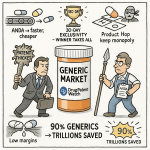
The system has worked, by the cost metric. Generic drugs now account for nearly 90% of all U.S. prescriptions filled. Over the past decade, their use has saved an estimated $3.1 trillion, with $445 billion in documented savings in 2023 alone. By that measure, Hatch-Waxman is one of the most successful pieces of healthcare legislation in American history.
The measure it failed on is reliability. The same competitive dynamics that drive generic prices toward zero have made the supply of essential medicines chronically unstable. That failure is the subject of this analysis.
How ANDA Approval Works — and Why It Does Not Guarantee Launch
To gain FDA approval, a generic manufacturer submits an ANDA demonstrating that its product contains the same active ingredient, strength, dosage form, and route of administration as the reference listed drug (RLD). It must conduct bioequivalence studies showing that its formulation performs comparably in the body, within the FDA’s accepted variability range. The manufacturing facility — whether domestic or foreign — must satisfy Current Good Manufacturing Practice (CGMP) standards and pass FDA inspection.
None of this guarantees the drug ever reaches pharmacy shelves. ANDA approval grants legal permission to sell a product. Whether a company actually manufactures and distributes that product is a pure business decision, made on the basis of projected revenue and margin. In a market where sterile injectables routinely price at under $1.00 per unit, that commercial calculus increasingly comes back negative.
The Terminology Stack
Four product categories are critical to understanding shortage dynamics:
A standard generic drug shares the same active ingredient, strength, dosage form, and route of administration as the branded reference product but may differ in inactive ingredients and appearance. It enters the market under a non-proprietary name. An authorized generic, by contrast, is produced under the original brand company’s NDA and is chemically identical to the branded product, including inactive ingredients and physical appearance. Brand companies often launch authorized generics immediately upon patent expiry to compete with first-wave Paragraph IV challengers and capture the 180-day exclusivity period awarded to the first Paragraph IV filer.
A branded generic is a generic product sold under a proprietary trade name owned by the generic manufacturer — a positioning strategy used to reduce pure price competition in crowded therapeutic categories. And a biosimilar is the biologic equivalent: not an exact copy of a complex large-molecule drug, but one that has demonstrated no clinically meaningful differences in safety, purity, and potency compared to the reference biologic.
This analysis focuses on traditional generic drugs, which represent the vast majority of shortage events, but the economic logic applies across categories.
Key Takeaways — Section 1
The Hatch-Waxman ANDA pathway created affordable generics but structurally decoupled FDA approval from commercial launch.
Generic drugs account for 90% of U.S. prescriptions and $445B in annual savings, but those savings have come at the cost of market fragility.
‘Generic,’ ‘authorized generic,’ ‘branded generic,’ and ‘biosimilar’ are legally and commercially distinct categories with different shortage risk profiles.
The core failure is not scientific or regulatory — it is economic. A market optimized entirely for the lowest price has no mechanism to reward supply reliability.
Section 2: Quantifying the Shortage Epidemic
The Data Are Unambiguous
Drug shortage data, drawn from HHS, ASHP, USP, and IQVIA, tells a consistent and worsening story. Between 2018 and 2023, 258 unique active pharmaceutical ingredients (APIs) entered national shortage status in the U.S. Those 258 molecules map to 1,961 unique prescription drug products, identifiable by National Drug Code (NDC). Generic drugs drove the overwhelming majority: 1,391 new generic drug shortages began during that period, compared with 600 brand drug shortages. That is not proportionality — it is a structural vulnerability specific to the generic market.
IQVIA’s June 2023 analysis of the then-active shortage list found that 84% of the 132 molecules in active shortage were generics. The American Society of Health-System Pharmacists (ASHP) reported a record 323 active drug shortages in Q1 2024, surpassing the prior decade-high of 320 in 2014. USP data shows a steady climb from 82 shortages tracked in December 2014 to 125 by December 2023.
Duration: The More Alarming Metric
Frequency is bad. Duration is catastrophic. The average drug shortage now runs 1,202 days — more than three years — a figure that has increased by roughly a full year since 2020. By the end of 2023, 27 ongoing shortages had persisted for more than five years. Six had been in shortage for over a decade. A GAO report published in 2024 confirmed that while the rate of new shortage events has modestly declined since the COVID-19 pandemic, the duration of existing shortages is rising, worsening the aggregate burden.
Three years of shortage is not a supply chain disruption. It is a permanent market failure dressed up in the language of a temporary problem.
Injectable Products: The Structural Weak Point
More than half (53%) of all new drug shortages involve generic sterile injectables. These are the workhorse drugs of hospital care — chemotherapy agents, vasopressors, anesthetics, antibiotics, electrolyte solutions. Sterile injectable manufacturing is genuinely harder and more capital-intensive than solid oral drug production. Aseptic processing requires specialized cleanroom environments, fill-finish equipment with tight sterility validation requirements, and rigorous quality control infrastructure. That complexity, layered onto prices that average nearly 8.5 times lower than non-shortage injectables, produces a market segment that is economically toxic.
IQVIA found that 56% of all molecules in shortage price at under $1.00 per unit. HHS data shows the median shortage duration for injectable products is 4.6 years — compared to 1.6 years for oral solid dosage forms and 2.2 years for topicals. The long duration reflects a hard physical reality: replacing capacity for a sterile injectable product requires facility construction, equipment qualification, process validation, FDA inspection, and approval — a 24-to-48-month timeline under the best conditions.
Therapeutic Areas Under Siege
Analgesics and anesthetics, anti-infectives, and cardiovascular drugs collectively account for 42% of all ongoing shortages as of early 2024. Oncology represents one of the most clinically severe shortage categories, with cisplatin and carboplatin — the backbone of treatment protocols for bladder, testicular, ovarian, lung, and cervical cancer — experiencing extended, life-disrupting shortages beginning in 2023. The anti-infective category has seen critical shortages of amoxicillin and penicillin formulations, creating downstream pressure toward broader-spectrum antibiotics that contribute to antimicrobial resistance. Epinephrine, the first-line treatment for anaphylaxis and cardiac arrest, has been intermittently short for years. The shortage list maintained by ASHP in real time includes even 0.9% sodium chloride injection (normal saline) and 5% dextrose bags — the most basic substrates of IV therapy.
Drugs classified as ‘essential medicines’ by the federal government account for roughly one-third of all products entering shortage. Their median shortage duration is 4.0 years, compared to 2.3 years for non-essential products. The most medically critical drugs face the longest, most persistent supply failures.
Table 1: U.S. Drug Shortage Trends, 2018–2024
Metric
2018–2023 Cumulative
End of 2023
Q1 2024
Unique API molecules entering shortage
258
34 new in 2023
—
Unique NDC products affected
1,961
—
—
New shortages: generic vs. brand
Generic: 1,391 / Brand: 600
84% of active shortages are generic
—
Active shortages (ASHP)
—
~125 (USP)
323 (decade high)
Avg. shortage duration (injectables)
4.6 years (median)
1,202 days (~3.3 yrs)
—
Avg. shortage duration (oral)
1.6 years (median)
—
—
Molecules priced under $1.00/unit
56% of those in shortage
—
—
Essential medicines in shortage
~33% of total; median 4.0 yr duration
—
—
Sources: HHS ASPE, USP Medicine Supply Map, IQVIA Institute, ASHP Drug Shortages List.
Key Takeaways — Section 2
323 active drug shortages in Q1 2024 is a decade-high record. The trend is worsening, not stabilizing.
Generic sterile injectables account for 53% of new shortages and face a median shortage duration of 4.6 years.
84% of molecules in active shortage are generics. This is a generic-market structural failure, not a broad pharmaceutical supply chain problem.
Essential medicines face longer shortages (4.0 years median) than non-essential drugs. The system disproportionately fails the most critical products.
Six drugs have been in shortage for over a decade — a fact that should disqualify any ‘temporary disruption’ framing of this problem.
Section 3: IP Valuation in a Zero-Margin Market — Why Drug Patents Stop Mattering When the Price Hits Zero
The IP Paradox of Shortage Drugs
In brand-name pharmaceutical strategy, intellectual property — particularly the patent estate and regulatory exclusivity stack — is the primary determinant of asset value. A molecule’s net present value (NPV) is built on the years of market exclusivity it commands, whether through composition-of-matter patents, method-of-use patents, formulation patents, or pediatric exclusivity extensions. The IP valuation frameworks used by pharma BD teams, royalty rate negotiators, and litigation counsel all depend on a positive profit margin existing behind the exclusivity wall.
Generic drug markets invert this model entirely. Once a drug loses patent exclusivity and generic competition enters, the IP value of the product collapses by design. But the shortage crisis reveals a further, more troubling inversion: for many off-patent drugs, the absence of any remaining IP — and the absence of any monopoly rent — is precisely what makes them dangerous to produce. There is nothing protecting the revenue stream. No Paragraph IV challenge can restore it. No supplemental NDA (sNDA) for a new indication can extend it. The product has been fully commoditized, and in that commoditization lies its fragility.
Cisplatin and Carboplatin: Case Study in Residual IP Value
Cisplatin (cis-diamminedichloroplatinum(II)) has been off patent for decades. Its original method-of-use patents and formulation patents long since expired. By 2023, the active commercial IP estate for cisplatin was effectively zero — no Orange Book-listed patents, no Paragraph IV litigation risk, no data exclusivity. The molecule was fully open to generic competition, and multiple manufacturers had FDA-approved ANDAs on file.
That open market structure did not protect supply. In 2023, cisplatin entered a severe, nationally declared shortage after the FDA identified critical CGMP deficiencies at Intas Pharmaceuticals’ Ahmedabad facility in India, which supplied an estimated 50% or more of the U.S. market for the drug. With no residual IP creating a price floor, no contract terms requiring volume commitments, and no mechanism for hospitals to pre-pay for manufacturing capacity, there was nothing holding supply in place when the primary manufacturer failed inspection.
Carboplatin, the second-generation platinum compound also used across multiple tumor types, entered simultaneous shortage, creating what oncologists described as an unprecedented dual-agent crisis affecting treatment protocols for bladder cancer, testicular cancer, ovarian cancer, and small-cell lung cancer. The two drugs together represent the backbone of an estimated 500,000 chemotherapy courses per year in the United States.
From an IP standpoint, both drugs have residual chemical process patents in emerging market jurisdictions, but none with commercial relevance in the U.S. market. The IP landscape is essentially flat. For analysts valuing companies with significant exposure to these products, the relevant metric is not patent runway but CGMP compliance history, facility audit records, and supply contract structure — none of which are publicly disclosed under current FDA transparency rules.
Norepinephrine: The Mortality Math Behind a $0.50 Vial
Norepinephrine bitartrate injection — the primary vasopressor for septic shock management — had an average wholesale price in the range of $0.50 to $3.00 per vial at the time of the 2011 shortage, depending on concentration and vial size. It had no remaining IP protection. It had no branded competitor. It was, by every market definition, a pure commodity.
The 2011 shortage produced a landmark study published in Critical Care Medicine that found the norepinephrine shortage was associated with a 3.7 percentage point increase in in-hospital mortality for septic shock patients. In a disease with a baseline mortality rate of 25-30%, a 3.7 percentage point increase translates to thousands of excess deaths attributable to the unavailability of a drug that cost less than a cup of coffee per vial.
For IP and portfolio teams at companies with generic injectable exposure, the norepinephrine case quantifies what ‘shortage risk’ actually means in actuarial terms: not a revenue miss, but a body count that creates regulatory, reputational, and litigation exposure.
Furosemide: The Dosing Error Liability That Comes with Substitution
Furosemide injection (the loop diuretic used in congestive heart failure, renal failure, and hypertensive emergencies) has been on ASHP’s shortage list intermittently for years. It has no remaining IP protection. Its most dangerous shortage consequence is not the unavailability of furosemide per se — it is the forced substitution with bumetanide, which is approximately 40 times more potent on a milligram basis. The Institute for Safe Medication Practices (ISMP) has documented multiple cases where clinicians unfamiliar with the dosing ratio administered a bumetanide dose equivalent to 40 times the intended furosemide dose, producing severe adverse events.
From a legal risk standpoint, furosemide shortage creates a products liability and medical malpractice liability vector that is materially different from simply running out of a drug. Hospitals and health systems carrying generic injectable portfolios should model not just the procurement cost of secondary-market sourcing, but the downstream legal exposure from substitution-driven medication errors.
Amoxicillin and Penicillin: The Antimicrobial Resistance Amplification Risk
Amoxicillin shortages — which occurred in 2022 and 2023, partly driven by a post-COVID surge in pediatric respiratory illness — force prescribers toward broader-spectrum alternatives: azithromycin, third-generation cephalosporins, or fluoroquinolones. None of these have the narrow-spectrum precision of amoxicillin for standard community-acquired bacterial infections. The public health cost is accelerated antimicrobial resistance (AMR) — a consequence that no IP framework currently captures or prices. The WHO has listed AMR as one of the ten leading global public health threats. Drug shortages of narrow-spectrum antibiotics are among the most direct drivers of the prescribing pattern shifts that accelerate resistance development.
Key Takeaways — Section 3
Shortage-prone drugs have flat IP landscapes: expired composition-of-matter patents, no Orange Book listings, no ongoing Paragraph IV litigation. IP protection is not driving supply failure — its absence is.
The cisplatin/carboplatin crisis shows that a fragmented ANDA holder base with no supply contracts provides no protection against a single-facility CGMP failure.
The norepinephrine mortality study puts a concrete number on the human cost: 3.7 percentage points of excess in-hospital septic shock mortality from a shortage of a $0.50 vial.
Furosemide shortages create a substitution-driven medication error liability vector (bumetanide’s 40:1 potency ratio) that health system risk managers should treat as a discrete legal exposure category.
Amoxicillin shortages accelerate AMR via prescribing pattern shifts — a systemic cost not captured by any current pricing or procurement model.
Investment Strategy Note: Companies with generic injectable portfolios should be evaluated not on patent runway (which is zero) but on CGMP compliance history, FDA Warning Letter and consent decree exposure, customer contract structure (volume commitments vs. spot pricing), and facility diversification. IQVIA ANDA data, FDA inspection databases (FOIA), and USP’s Medicine Supply Map are the primary due diligence tools. A company holding market share in shortage-prone injectable categories without multi-site manufacturing capacity is carrying undisclosed tail risk.
Part II: The Root Causes — A Market Engineered for Fragility
Section 4: The Economics of the Race to the Bottom
When Price Signals Break
In a functional commodity market, price is the primary mechanism for coordinating supply and demand. When supply tightens, prices rise, signaling to existing producers to increase output and to potential entrants that a profitable opportunity exists. That mechanism is substantially disabled in the U.S. generic drug market.
Prices for many essential generics have been driven so low — through competitive bidding processes run by Group Purchasing Organizations and consolidated wholesaler consortia — that they approach or fall below the marginal cost of production. USP’s 2023 analysis found that the average wholesale acquisition cost of sterile injectable medicines in shortage was nearly 8.5 times lower than those not in shortage. IQVIA reported that 56% of all molecules in shortage price under $1.00 per unit. At these prices, the financial incentive to produce is absent. When a shortage occurs and actual demand materially exceeds supply, there is no market mechanism that quickly directs new capacity to fill the gap. Prices are either contractually locked or de facto constrained by reimbursement policy. The shortage simply persists.
The Product Discontinuation Cascade
Faced with negative or zero margins on a product, the rational corporate response is to exit. Product discontinuations rose 40% between 2022 and 2023, from approximately 100 discontinued products to 140 — the highest rate since 2019. Over half of discontinued solid oral medications had a price below $4.00. Since 2010, there have been over 3,000 generic product discontinuations. Each discontinuation narrows the supplier base for that drug. As the supplier base narrows, market concentration rises, and the probability that any single manufacturing failure tips the entire market into shortage increases.
A 2024 American Progress analysis found that more than 40% of all generics now have only a single active producer. A single-source market for a critical drug is not a supply chain — it is a single point of failure. The FDA’s shortage database confirms the predictable outcome: the most concentrated markets produce the most severe and prolonged shortages.
The Quality Disinvestment Trap
The alternative to market exit is cost reduction. In a manufacturing business, cost reduction under extreme price pressure means: deferred facility upgrades, reduced quality control staffing, extended equipment cycles beyond validated lifetimes, and minimized redundant manufacturing capacity. Each of these choices reduces the probability of passing a rigorous FDA CGMP inspection. When an inspection finds deficiencies significant enough to require a Warning Letter or a consent decree, the facility must slow or halt production during remediation. If that facility holds a 30-50% share of U.S. supply for a given drug — as the Intas cisplatin facility did — its regulatory action instantly produces a national shortage.
The market structure does not just fail to reward quality investment; it actively eliminates firms that make quality investments. A manufacturer with a state-of-the-art facility, real-time release testing, and fully redundant production lines will carry a cost structure of perhaps $1.50/vial. Its competitor with aging equipment, no redundancy, and minimal quality investment carries a cost structure of $0.90/vial. The GPO awards the contract to the lower bidder. The higher-cost producer, which is also the more reliable producer, loses market share and eventually exits. This is not a market failure in the colloquial sense. It is the market working exactly as designed, selecting for the cheapest producer rather than the most reliable one.
Key Takeaways — Section 4
The average price of shortage-prone sterile injectables is 8.5 times lower than non-shortage drugs. Price collapse is the primary precursor to shortage.
Product discontinuations rose 40% YoY in 2023. 3,000+ generic products have been discontinued since 2010.
40%+ of all generics have a single manufacturer. Single-source markets convert any manufacturing disruption into a national shortage.
The competitive selection mechanism systematically favors low-cost, low-quality producers over high-cost, reliable ones — the opposite of what supply resilience requires.
Section 5: The ANDA Launch Gap — A Technology and Market Roadmap
The Launch Gap: 37% of Approved Generics Never Reach Patients
Between 2013 and early 2024, 37% of all FDA-approved generic drugs had not been commercially launched. For drugs already in active shortage, the numbers are more extreme: 62% of shortage drugs have at least one FDA-approved generic alternative. Of those, 84% have at least one approved-but-unlaunched generic, and 21% have no launched approved generics at all. Injectables are the worst category: 75% of drug shortages involve an unlaunched injectable generic.
This is the most damning data point in the entire shortage literature. A company that has spent three-to-five years and millions of dollars navigating the ANDA process — bioequivalence studies, chemistry, manufacturing and controls (CMC) documentation, facility inspection, patent certification under Paragraph IV if applicable — then decides not to enter the market. The only economically coherent explanation is that projected commercial returns are negative. The firm modeled the market, looked at the GPO-controlled price, estimated the likely market share in a four-to-six supplier competitive environment, and concluded that the business case does not close.
The launch gap is the most precise possible measure of how broken the generic market’s economics are. The FDA has done its job. The manufacturer has done its job. The patient is still waiting.
The ANDA-to-Launch Pipeline: A Process Roadmap
Understanding where and why generic drugs stall requires mapping the full ANDA-to-launch process. The pipeline has seven distinct stages, each with specific timelines, failure points, and cost drivers:
Stage 1: Target Identification and Commercial Assessment (Months 1-6). The generic manufacturer evaluates the molecule: patent expiry timeline, current market value, projected number of future ANDA filers, likely market-entry price, GPO contract structure, and required manufacturing investment. This is where most launch gap decisions actually originate. If the commercial model fails at this stage, no ANDA is filed. If it passes — perhaps because the molecule appeared more attractive several years earlier when the filing decision was made — the company may reach FDA approval only to discover the market has deteriorated.
Stage 2: API Sourcing and Drug Master File (DMF) Filing (Months 3-12). The manufacturer selects an API supplier and ensures the supplier has a Type II DMF on file with the FDA. For injectable products, this often means qualifying an API manufacturer in India or China, with the associated geopolitical and quality control risks discussed in Section 8. API qualification alone can take 12-18 months for complex molecules.
Stage 3: Formulation Development and Bioequivalence Studies (Months 6-24). The generic manufacturer develops its formulation, conducts in vitro dissolution studies (for oral solid doses) or in vivo bioequivalence studies, and generates the complete CMC package. For injectable formulations requiring specialized delivery systems — liposomal, nanoparticle, or extended-release — this stage is considerably more complex and expensive than for standard solution injectables.
Stage 4: ANDA Filing and FDA Review (Months 18-48 post-filing). ANDA review time has improved significantly since the Generic Drug User Fee Amendments (GDUFA) — priority ANDAs now carry a 10-month target review time, standard ANDAs 12 months — but complete response letters (CRLs) requiring additional data can extend review by 12-24 months. Patent certification strategy matters here: a Paragraph IV filing, challenging an unexpired Orange Book patent, creates a 30-month stay of approval while patent litigation proceeds.
Stage 5: Pre-Approval Inspection (PAI) (Concurrent with review). The FDA must inspect the manufacturing facility before approving the ANDA. For foreign facilities, inspection scheduling delays can add 6-18 months to the timeline, and a CGMP deficiency finding at PAI results in a Complete Response Letter that restarts the clock.
Stage 6: Commercial Launch Decision (Post-approval). Once approval is granted, the manufacturer makes a fresh commercial assessment. At this point, actual market conditions may differ substantially from projections made 3-5 years earlier at Stage 1. If three additional ANDA approvals have been granted since the commercial assessment, the projected market share and price may have collapsed. This is the specific mechanism producing the 37% unlaunched ANDA rate.
Stage 7: Post-Launch Manufacturing Scale-Up and Distribution. Even after a launch decision is made, scaling from validation batch quantities to commercial production volumes requires process validation at scale, stability data generation, and distribution network establishment. For sterile injectables, this stage alone can take 6-12 months.
The total timeline from target identification to commercial supply is 4-8 years for a standard injectable generic under favorable conditions. During that period, the commercial landscape can shift dramatically enough to convert a positive business case into a negative one.
The Investment Implication of the Launch Gap
For investors and analysts, the launch gap data is actionable. A company that holds a large number of approved-but-unlaunched ANDAs is not necessarily sitting on option value — it may be sitting on a portfolio of approved products it has already concluded are commercially nonviable. The critical distinction is between ANDAs held for strategic optionality (waiting for a competitor to exit before re-entering) and ANDAs that are effectively abandoned. IQVIA’s ANDA tracking database and the FDA’s Drugs@FDA database can be used to identify which molecules have high unlaunched ANDA counts and cross-reference with current shortage status — a screen that identifies both shortage risk and potential re-entry opportunity.
Key Takeaways — Section 5
37% of all FDA-approved generics have never been commercially launched. For shortage drugs, 84% have at least one unlaunched approved generic.
The ANDA-to-launch pipeline spans 4-8 years. Market conditions at launch frequently do not match conditions at ANDA filing, producing the launch gap.
The launch gap is the definitive proof of market failure: drugs approved, ready to manufacture, and not launched because the economics are negative.
The Paragraph IV certification pathway creates litigation risk that further discourages launch in markets with residual brand-patent exposure.
For investors, a large unlaunched ANDA portfolio is not automatically an asset. Commercial viability must be assessed at current market prices, not historical projections.
Section 6: GPO and Wholesaler Oligopsony — The Buyer-Side Problem
The Concentration Numbers
The structure of the U.S. generic drug purchasing market is not a secret, but its implications are rarely discussed with the precision they deserve. Three hospital-sector GPOs — Vizient, Premier, and HealthTrust — control purchasing decisions for approximately 90% of all generic medicines acquired by U.S. hospitals and clinics. Three wholesaler-pharmacy consortia control a comparable 90% of the retail pharmacy channel. The result is an oligopsony: over 200 generic drug manufacturers competing for the business of fewer than a dozen dominant buyers.
In a seller’s oligopoly — the structure characterizing branded pharmaceutical markets — a few powerful firms can maintain prices above competitive levels. The policy response to seller oligopolies is antitrust enforcement and price controls. In a buyer’s oligopsony, the power asymmetry runs the other direction. A few buyers can drive prices below sustainable levels for all sellers. The policy response to buyer oligopsonies is different and less well-developed. This structural distinction explains why the generic market is simultaneously highly concentrated and characterized by ruinously low prices — a combination that confuses analysts accustomed to the brand market framework.
GPO Contracting Mechanics: How ‘Winner-Take-All’ Destroys Resilience
GPOs aggregate the purchasing volume of hundreds or thousands of member hospitals and use that aggregated volume as leverage in negotiations with generic manufacturers. The standard contracting model is a ‘dual-source’ or ‘sole-source’ award: the GPO designates one or two manufacturers as primary suppliers for a given drug category and negotiates the lowest possible price in exchange for the promise of concentrated purchasing volume.
For the winning manufacturer, the contract provides revenue certainty for the contract term — typically one to three years. But the contract award is almost entirely price-driven. Reliability, CGMP compliance history, facility quality ratings, and supply chain redundancy are not standard contracting criteria. A manufacturer that proposes a slightly higher price in exchange for a guaranteed reliability floor — multiple production sites, buffer stock commitments, quality investment covenants — will lose the bid to a competitor offering a lower price with no such commitments.
GPOs are funded primarily through administrative fees paid by manufacturers awarded contracts. These fees are typically calculated as a percentage of sales. This creates a structural conflict: the GPO’s revenue is maximized when sales volume and, to some degree, price are higher. The current administrative fee model does not align GPO financial incentives with ensuring supply reliability or selecting the most resilient manufacturer.
The Anti-Kickback Statute Safe Harbor: A Policy-Created Distortion
Federal law generally prohibits payments by pharmaceutical manufacturers to entities in the purchasing chain — a rule designed to prevent kickbacks that would steer purchasing toward higher-priced products regardless of clinical merit. However, the Anti-Kickback Statute includes a specific regulatory safe harbor that exempts GPO administrative fees from this prohibition, provided the fees are disclosed and within certain limits.
This safe harbor has allowed GPO administrative fees to become a substantial revenue stream with structural incentives that do not necessarily align with the interests of hospital members or patients. The FTC and HHS 2024 Request for Information (RFI) explicitly targeted this safe harbor, asking whether it creates market distortions that contribute to shortages by incentivizing contracting practices that favor high-volume, low-price suppliers over reliable, quality-certified ones.
The Association for Accessible Medicines (AAM), the generic industry’s primary trade organization, submitted formal comments to the FTC/HHS RFI fully supporting investigation of what it characterized as ‘excessive consolidation of intermediary participants’ and ‘anti-competitive contract terms.’ The fact that the generic industry is actively inviting antitrust scrutiny of its own customers signals how severe the economic pressure has become.
The FTC/HHS RFI: What It Covers and What Comes Next
The February 2024 joint RFI from the FTC and HHS requested public comment on: the extent of market concentration among GPOs and wholesalers; whether their contracting practices discourage new suppliers from entering shortage-prone markets; the impact of the administrative fee model on purchasing decisions; whether the Anti-Kickback safe harbor should be revised; and the differential impact of current practices on smaller, rural, and safety-net hospitals.
FTC Chair Lina Khan characterized the inquiry as targeting ‘opaque drug middlemen’ as drivers of critical shortages. The comment period closed in early 2024, and as of this writing the FTC has not published findings or enforcement actions arising from the RFI. The investigation’s outcome will directly shape the legislative proposals discussed in Section 11.
Key Takeaways — Section 6
Three GPOs control 90% of hospital generic drug purchasing. Three wholesaler-pharmacy consortia control ~90% of the retail channel. This is a textbook oligopsony.
GPO contracting is almost entirely price-driven. Reliability, CGMP history, and facility quality are not standard contract criteria.
The Anti-Kickback Statute safe harbor for GPO administrative fees may create financial incentives misaligned with supply resilience.
The FTC/HHS joint RFI is the first formal federal acknowledgment that buyer-side market concentration is a primary driver of generic drug shortages.
The AAM supporting FTC investigation of GPO practices is the clearest possible signal from the generic industry that buyer-side power concentration is the dominant commercial problem it faces.
Investment Strategy Note: GPO contract concentration creates binary revenue risk for generic injectable manufacturers. A company holding a Vizient or Premier primary-source contract for a shortage-prone injectable has apparent revenue stability — until it loses the next contract cycle. Analysts should model contract renewal rates, the track record of contract awards by GPO, and the degree to which any given manufacturer’s revenue is concentrated in GPO-awarded business versus diversified channels. A manufacturer with 60%+ revenue from a single GPO contract for a three-year term is carrying contract cliff risk equivalent to a brand-name drug facing first generic entry at patent expiry.
Section 7: How Federal Policy Locks In Unsustainable Prices
The Medicaid Inflation Rebate Trap
The Medicaid Drug Rebate Program requires manufacturers to pay back to states any price increase above the rate of inflation, calculated from a baseline period. This policy is well-designed for its primary target: high-priced brand-name drugs where manufacturers have pricing power and can absorb rebate obligations. For generic drugs, it functions as a price ceiling.
A generic manufacturer facing rising input costs — API price inflation from India or China, energy costs, labor costs, environmental compliance costs — cannot simply pass those costs through to the buyer. Any price increase above inflation triggers a rebate obligation that can rapidly convert a modest price recovery into a net loss on the transaction. For drugs that were priced at near-marginal cost before 2013, with a Medicaid baseline set in 2014 (by which point prices had already been driven down by GPO competition), the inflation penalty applies from an already-extreme low-water mark. There is no practical mechanism to raise prices enough to cover genuine cost increases without incurring penalties that offset the increase.
The policy outcome is predictable: manufacturers for whom generic drug production is marginally profitable make the rational decision to discontinue, reducing the supplier base and increasing shortage risk.
Medicare Part B: The ASP Lag Problem
For drugs administered in outpatient clinic settings — including many oncology injectable products — Medicare Part B reimburses at the Average Sales Price (ASP) plus a percentage add-on. The ASP is calculated with a two-quarter lag: the ASP used for Q3 reimbursement is based on Q1 sales data. This lag means that if a manufacturer raises its price in Q1, providers will not receive the higher reimbursement rate until Q3. During the two intervening quarters, providers who administer the drug at the new, higher acquisition cost and the old, lower reimbursement rate effectively lose money on every administration.
The rational provider response is to switch to a lower-priced alternative until reimbursement catches up. This mechanism punishes any manufacturer that attempts to be the first to raise prices, creating a coordination failure: each individual manufacturer fears being the first mover who loses market share during the ASP lag period, so no manufacturer moves first, prices remain at unsustainable levels, and the market continues its slow deterioration.
Medicare Part A: The DRG Bundling Incentive
For drugs administered during inpatient hospital stays, Medicare pays a bundled Diagnosis-Related Group (DRG) rate that covers all care associated with a given admission, including drugs. Hospitals receive the same DRG payment regardless of which specific generic drug they use to treat the condition. This creates a strong financial incentive to use the absolute lowest-cost generic available: every dollar saved on drug acquisition in an inpatient setting flows directly to hospital margin, rather than being reimbursed separately.
DRG bundling was designed to control total care costs and create incentives for efficiency. For generic drugs, it creates a pure price minimization incentive that reinforces GPO pressure toward the lowest bidder, with no consideration of supply reliability or quality.
The 340B Drug Pricing Program: An Escalating Debate
The 340B program requires manufacturers to provide outpatient drugs to federally qualified health centers, rural referral centers, and other safety-net providers at a ceiling price approximately 25-50% below the average manufacturer price (AMP). The program is explicitly designed to allow safety-net providers to stretch limited resources for underserved patient populations, and its value to those institutions is not contested.
The controversy is about its impact on generic drug market economics. For a generic injectable already priced at $0.80/vial, a 340B discount that brings the ceiling price to $0.40-$0.60/vial represents a mandatory revenue reduction that can push a marginally viable product into unprofitable territory. The concern is not theoretical — the program’s ‘penny price’ mechanism, which applies when a drug’s price rises faster than inflation from an already-low base, can result in mandatory pricing at nominal amounts.
Whether 340B is a material contributor to generic drug shortages remains empirically contested. A 2023 study in JAMA Internal Medicine found no significant difference in generic prescribing patterns between 340B-eligible and non-340B prescribers in Medicare Part D, suggesting the program does not create a clinically meaningful incentive to favor high-priced branded alternatives over generics. However, that finding does not address the manufacturer-side economics of mandatory discounting on low-margin products. The inclusion of 340B carve-out provisions in the Drug Shortage Prevention and Mitigation Act discussion draft indicates that Congressional staff view 340B as part of the economic problem, even if the academic literature remains unsettled.
Key Takeaways — Section 7
The Medicaid inflation rebate mechanism creates a de facto price ceiling on generic drugs that prevents rational price recovery when input costs rise.
The Medicare ASP two-quarter lag penalizes first-mover price increases, producing a coordination failure that keeps prices at unsustainable levels.
DRG bundling creates a pure price minimization incentive for inpatient generic drug purchasing that reinforces GPO-driven race-to-the-bottom dynamics.
The 340B penny-price mechanism can push already-marginal generic products into mandatory near-zero pricing territory.
Federal reimbursement policies collectively create a one-way ratchet: generic prices can fall easily, but structural and regulatory barriers make rational price recovery nearly impossible.
Section 8: The Brittle Global Supply Chain — API Concentration and Manufacturing Failure
API Geographic Concentration: The Single-Point-of-Failure Problem
As of 2021, India held 48% of all active API Drug Master Files (Type II DMFs) on file with the FDA. China held 13%. The United States held 10%. Europe’s share of new API filings had declined sharply. Two countries — India and China — effectively control the raw material supply for the majority of U.S. generic drug production, and the concentration is growing over time, not shrinking.
The FDA’s Drug Master File system provides the clearest available data on API sourcing. A Type II DMF covers the API manufacturing process, and its acceptance by the FDA is a prerequisite for the generic drug using that API to receive ANDA approval. The database, which is publicly accessible in summary form, reveals the degree to which U.S. pharmaceutical supply depends on manufacturing operations that the FDA can inspect but not directly regulate, in countries whose domestic policies and physical environments can disrupt supply with no notice.
U.S.-China trade tensions, supply weaponization risk, quality control concerns
United States
10%
Limited domestic capacity, higher cost structure
Europe
7% (new filings)
Declining share, external raw material dependency
Rest of World
22%
Country-specific political and logistical risk
Source: USP Medicine Supply Map, 2021.
The COVID-19 pandemic provided a real-world stress test of this structure. Lockdowns in key Indian and Chinese manufacturing regions caused immediate supply chain disruptions for APIs and finished drug products. The experience validated risk assessments that had previously been dismissed as theoretical. It did not, however, produce a systematic restructuring of the API supply base. The economic incentives to source from lower-cost Asian manufacturers remain intact.
CGMP Enforcement as an Inadvertent Shortage Trigger
FDA Warning Letters and 483 inspection observations are public record, but the supply chain implications of enforcement actions at foreign facilities are not fully appreciated by non-specialist analysts. When the FDA finds significant CGMP deficiencies at a manufacturing plant — a contaminated cleanroom, inadequate data integrity controls, failures in sterility assurance — it has several escalating enforcement tools: a Form 483 observation, a Warning Letter (which creates an Import Alert that blocks product from the facility from entering the U.S.), a consent decree requiring judicial oversight of the facility’s remediation, and in extreme cases, facility seizure.
The problem is that a Warning Letter to a facility producing 40-50% of U.S. supply for a given drug is both a necessary public health protection and an immediate shortage trigger. The FDA cannot accept substandard drugs from a compromised facility, but it also cannot quickly direct replacement supply to the U.S. market. The cisplatin shortage is the clearest recent example: a single enforcement action at Intas Pharmaceuticals’ Ahmedabad plant — necessary from a quality standpoint — produced a national oncology drug crisis affecting hundreds of thousands of patients.
The ‘Just-in-Time’ Trap at the Hospital Level
Hospital systems adopted ‘just-in-time’ (JIT) inventory management for pharmaceuticals during the 1990s and 2000s, following manufacturing industry models that dramatically reduced carrying costs and warehouse requirements. Under a JIT model, hospitals maintain two to seven days of supply for most drugs and rely on daily or twice-weekly distributor deliveries to replenish stock. There is no buffer.
JIT inventory is optimized for a world of reliable supply. In a world of chronic generic drug shortages, it eliminates the last absorptive capacity at the point of care. When a manufacturing disruption occurs upstream, the shortage reaches the hospital bedside within days rather than weeks. COVID-19 demonstrated this with PPE and essential drugs in Spring 2020: the lean supply chain that had generated years of cost savings produced an immediate, system-wide stockout when demand spiked and upstream supply was disrupted simultaneously.
The shift from JIT to ‘just-in-case’ (JIC) inventory for critical drugs — maintaining a 30-to-90-day buffer for the highest-risk injectable products — is operationally and financially significant. Vizient estimates that meaningful buffer stock programs would cost U.S. health systems hundreds of millions in carrying costs annually. But that cost compares favorably to the $894 million in annual shortage management labor costs the current JIT model already imposes.
Key Takeaways — Section 8
India (48%) and China (13%) account for 61% of active API DMFs. This is a supply chain concentrated far beyond acceptable risk levels for a national healthcare system.
FDA enforcement actions at high-concentration API or finished drug facilities are both necessary and shortage-triggering. The cisplatin/Intas case is the template for this failure mode.
JIT inventory at the hospital level eliminates the final buffer against upstream disruption. The cost savings from JIT are now exceeded by the shortage management labor costs it enables.
Onshoring alone does not solve the shortage problem. A domestic facility subject to GPO price pressure and Medicaid rebate constraints will face the same economic fragility as a foreign one.
Part III: The Human and Financial Toll
Section 9: Patient Harm — From Treatment Delay to Excess Mortality
The Spectrum of Clinical Harm
A comprehensive scoping review in PLOS One examined the published literature on drug shortage impacts and found that shortages predominantly produce adverse clinical, economic, and humanistic outcomes. The clinical harm spectrum runs from treatment delay and therapeutic substitution at the less severe end, through increased medication error rates in the middle, to preventable patient deaths at the extreme.
Treatment delays and cancellations are the most common immediate consequence. Chemotherapy courses are postponed or restructured when cisplatin or carboplatin is unavailable, compressing or altering treatment timelines in ways that may affect disease control. Elective surgeries requiring heparin, protamine, or specific anesthetic agents are deferred. Organ transplants are postponed when immunosuppressive agents are short. Each delay carries its own clinical risk: cancer that progresses during a chemotherapy gap, a deteriorating cardiac patient awaiting a deferred procedure.
Therapeutic substitution — forcing clinicians to use second- or third-line alternatives when first-line drugs are unavailable — carries compounded risks. The alternative may be less effective for the specific indication. It may have a less favorable toxicity profile. The clinical team may have less experience with dosing, monitoring, and managing adverse effects. And the transition creates administrative work that consumes time and introduces error opportunities.
The furosemide/bumetanide substitution error, described in Section 3, is the most well-documented specific substitution risk. But the general phenomenon of error amplification during shortages is pervasive: ISMP has documented dozens of cases where clinicians unfamiliar with an alternative drug’s concentration, packaging, or dosing conventions made errors ranging from minor to fatal.
The mortality evidence is now robust. The norepinephrine shortage mortality study — 3.7 percentage points of excess in-hospital death for septic shock patients — is the most cited, but subsequent research has confirmed the pattern across multiple drug categories. Of 16 published studies examining mortality outcomes during shortages, 10 reported increases.
Health Equity: The Distribution Problem
Drug shortage burden is not distributed equally. Large academic medical centers and well-resourced health systems have dedicated shortage management teams, larger procurement departments, greater leverage with alternative suppliers, and financial capacity to absorb the premium costs of secondary-market sourcing. Smaller community hospitals, critical access hospitals, and safety-net institutions have none of these advantages.
When supply is allocated by distributors during a shortage, allocation formulas are typically based on historical purchasing volume. Smaller hospitals that have historically purchased smaller quantities receive smaller allocations — not because their patients are less sick, but because their purchasing history is smaller. Rural hospitals may have fewer alternative suppliers in geographic reach. Federally Qualified Health Centers may lack the pharmacy staff to actively manage substitution protocols.
The result is a tiered shortage: the same shortage that produces manageable disruption at a major academic center produces critical supply failure at a rural critical access hospital. Patients in underserved communities — who already face higher rates of the chronic conditions that depend on shortage-prone drugs — bear a disproportionate share of the clinical harm.
Key Takeaways — Section 9
Drug shortages produce a spectrum of patient harm: treatment delays, forced substitution, medication errors, adverse events, and excess mortality.
The norepinephrine mortality data is the starkest quantification: 3.7 percentage point excess mortality from a shortage of a sub-$1.00 vasopressor vial.
Medication error rates increase during shortages due to clinician unfamiliarity with substitute drugs — the furosemide/bumetanide 40:1 potency ratio is the paradigm case.
Shortage burden distributes inequitably: large systems weather shortages more effectively than small, rural, or safety-net institutions, compounding existing health disparities.
Section 10: The Hidden Costs to Health Systems
$894 Million Annually — and Rising
In 2024, Vizient published what is the most comprehensive financial quantification of drug shortage costs to U.S. hospitals to date. The findings:
U.S. hospitals spend $894 million annually on labor costs related to drug shortage management — a 150% increase from $359 million in 2019.
Staff hours devoted to shortage management reached 20.2 million annually in 2024, up from 8.6 million in 2019.
Sourcing drugs from secondary (non-contracted) distributors costs hospitals, on average, 214% more than their primary contracted distributors.
41% of facilities surveyed reported outpatient infusion disruptions attributable to drug shortages.
The labor cost number deserves contextualizing. $894 million in pharmacist and pharmacy technician time is being consumed not by clinical pharmacy activities — medication reconciliation, pharmacokinetic dosing, adverse event monitoring, formulary management — but by supply chain logistics: tracking inventory, calling suppliers, updating EHR substitution protocols, training nursing staff on alternatives, and managing allocation decisions. This is not just a financial cost. It is an opportunity cost measured in the clinical pharmacy services that are not being delivered.
The 150% increase from 2019 to 2024 is not explained by a 150% increase in the number of active shortages over that period. The shortages have grown by roughly 40-50% in number. The cost has grown by 150% because each shortage now lasts longer, affects more product types, requires more complex substitution management, and involves more secondary sourcing at higher prices.
Gray Market Premium Pricing: 300% to 3,000% Markups
When a hospital’s primary contracted supplier cannot fulfill an order, the purchasing department turns to secondary distributors — a loosely regulated category sometimes called the ‘gray market.’ These distributors acquire drugs (often from other hospitals that have overstock, or from international sources) and resell them at market-clearing prices during shortage conditions. Survey data from hospital pharmacists consistently documents markups of 300-500% above the contracted price; reported markups as high as 3,000% have been documented for specific products during acute shortage peaks.
Vizient’s 2024 analysis reported an average 214% premium for drugs sourced from secondary distributors. For a hospital with $50 million in annual generic injectable spend, a shortage event forcing 20% of that spend to secondary markets at 214% premium adds approximately $21 million in unbudgeted drug acquisition costs per year. At the system level, these unbudgeted premium costs aggregate to hundreds of millions of dollars annually across U.S. health systems, money that is absorbed by hospitals with no mechanism for insurance recovery or supplier recourse.
The gray market also introduces counterfeit and substandard drug risk. Secondary distributors with weak supply chain controls may acquire products whose provenance is unclear, including products that have been improperly stored or that have been fraudulently labeled. This places an additional verification burden on hospital pharmacy departments already stretched by shortage management work.
Table 3: Financial and Labor Impact of Drug Shortages on U.S. Hospitals
Metric
Value
Source / Year
Annual shortage management labor cost
$894M (150% increase since 2019)
Vizient, 2024
Annual staff hours on shortage management
20.2 million hours
Vizient, 2024
Average cost premium: secondary vs. primary distributor
214% more
Vizient, 2024
Reported gray-market markups (pharmacist surveys)
300%-3,000%+
ASHP/Pharmacist surveys, 2015-2023
Outpatient infusion disruptions reported
41% of surveyed facilities
Vizient, 2024
Key Takeaways — Section 10
$894 million per year in labor costs alone — a 150% increase in five years — is the financial cost of shortage management to U.S. hospitals, before accounting for gray-market drug price premiums.
Gray-market secondary distribution charges a 214% average premium. During acute shortage peaks, markups exceeding 3,000% have been documented.
Pharmacist labor diverted to shortage logistics is clinical capacity lost. The $894 million is not an administrative cost — it is clinical pharmacy time that patients do not receive.
41% of facilities report outpatient infusion disruptions from shortages. This translates directly to delayed oncology, rheumatology, and infectious disease treatment for ambulatory patients.
Part IV: Pathways to a Resilient Supply Chain
Section 11: Legislative Reform — The Drug Shortage Prevention and Mitigation Act
The Senate Finance Committee’s Proposal
The Drug Shortage Prevention and Mitigation Act, a discussion draft released by the Senate Finance Committee in 2024, is the most substantively detailed federal legislative proposal on generic drug supply resilience to date. It directly targets the core market failures rather than layering additional reporting requirements on top of a broken system. Its three primary mechanisms:
First, a Medicare Drug Shortage Prevention and Mitigation Program — a voluntary, incentive-based program for hospitals, GPOs, and wholesalers. Participating entities would commit to entering long-term contracts (minimum three-year terms) with generic manufacturers that include volume guarantees and stable, predictable pricing. In exchange, participating hospitals and GPOs would receive quarterly Medicare incentive payments. The program is designed to create a funded, demand-side signal for supply reliability — making it financially rational, for the first time, for hospitals and GPOs to pay a premium for a manufacturer’s demonstrated commitment to consistent supply.
Second, targeted Medicaid inflation rebate reform that would suspend or adjust the rebate obligation for identified shortage-prone or low-cost generic drugs, relieving the policy-driven price ceiling that currently traps manufacturers at economically unsustainable price points.
Third, a 340B carve-out provision: entities participating in the Medicare incentive program would forgo 340B discounts for the specific drug categories covered by their long-term reliability contracts. This is a targeted, market-specific intervention — not a broad 340B reform — but it reflects Congressional acknowledgment that 340B’s mandatory discounting exacerbates the economic pressure on the most vulnerable generic products.
What the Legislation Does Not Fix
The Brookings Institution’s 2024 analysis of shortage policy options offers a measured assessment of the Act’s limitations. Transparency initiatives, including proposed public reporting of FDA’s Quality Management Maturity (QMM) ratings for manufacturing facilities, are likely insufficient on their own. If hospitals and GPOs face no financial incentive to choose a higher-QMM-rated manufacturer at a modestly higher price, they will continue to default to the lowest bid regardless of quality scores. Transparency without corresponding purchasing incentives changes disclosure without changing behavior.
The GAO’s 2024 report identified a structural federal governance failure that no single piece of legislation can quickly repair: HHS has no formal, department-wide mechanism for coordinating its drug shortage response. CMS, which sets reimbursement policy, operates independently of FDA, which monitors manufacturing quality and shortage status. The result is that CMS policies (Medicaid rebates, ASP rules, DRG bundling) can directly undermine FDA shortage mitigation efforts without any coordination mechanism to reconcile the conflict. The GAO found that the one senior coordinator position focused on supply chain resilience was slated for elimination in 2025 due to expiring funding — eliminating the single coordination function that existed.
The CARES Act Foundation
The 2020 Coronavirus Aid, Relief, and Economic Security Act gave the FDA expanded authority to require manufacturers to submit advance notification of anticipated supply interruptions and to maintain formal risk management plans identifying potential supply disruption risks and mitigation strategies. CARES Act implementation has been partial and uneven, but it provides the regulatory foundation on which new legislative authorities can build. Mandatory risk management plans, if rigorously enforced, would require manufacturers to identify single-source API dependencies and single-facility manufacturing risks — exactly the vulnerabilities that produce the shortage events cataloged in Section 8.
Key Takeaways — Section 11
The Drug Shortage Prevention and Mitigation Act creates a Medicare-funded demand-side incentive for long-term, volume-committed purchasing contracts — the first federal mechanism to make reliability financially rewarding.
Medicaid rebate reform and 340B carve-outs in the draft legislation address the specific policy mechanisms that create price ceilings on shortage-prone products.
Transparency (QMM public reporting) without purchasing incentive reform is insufficient. Disclosure changes behavior only when linked to financial consequences.
HHS lacks a coordinated department-wide shortage response mechanism. This governance gap is an independent failure that must be addressed alongside market reforms.
Investment Strategy Note: Passage of the Drug Shortage Prevention and Mitigation Act would materially change the economics for manufacturers of shortage-prone sterile injectables. Companies that have invested in multi-site manufacturing, rigorous quality systems, and supply reliability infrastructure would gain a price premium that the current GPO contracting model denies them. The primary beneficiaries would be manufacturers with high QMM ratings, diversified facility footprints, and the operational capacity to enter long-term volume commitments. Teva, Pfizer’s Hospira unit, Fresenius Kabi, Hikma, and Baxter are among the largest sterile injectable generic manufacturers with the scale to participate in such a program. Smaller manufacturers with single-site production and thin quality infrastructure would not benefit.
Section 12: Civica Rx, Angels for Change, and the Non-Profit Manufacturing Model
Civica Rx: Restructuring the Market from Within
Civica Rx, founded in 2018 by a consortium of major U.S. health systems including Intermountain Health, Mayo Clinic, and Providence, is the most significant structural innovation in the U.S. generic drug market in decades. Its model is a direct inversion of the GPO contracting pathology: instead of awarding contracts to the lowest bidder in a competitive auction, Civica offers manufacturers stable, long-term contracts with guaranteed purchase volumes and fair, transparent pricing.
The manufacturer’s side of the Civica model: guaranteed volume eliminates the revenue uncertainty that discourages quality investment and manufacturing scale-up. A manufacturer that knows it will sell a fixed volume of a given injectable at a fixed price over three to five years can make facility investments, staff appropriately, and build redundant capacity with confidence in the return. Fair pricing — above the GPO spot market floor but below brand prices — provides the margin necessary to fund quality systems.
The hospital member’s side: member health systems commit to purchasing Civica products as first-line suppliers for covered drug categories, accepting a price that may be modestly above the GPO spot-market floor in exchange for supply reliability. The implicit bargain is paying a small premium to avoid the much larger costs of shortage management, secondary market sourcing at 214% premiums, and the clinical consequences of unavailability.
Civica has expanded its model to include manufacturing. The non-profit is building its own sterile injectable manufacturing facility in Petersburg, Virginia, funded by philanthropic capital and member commitments. The facility, when operational, will give Civica direct control over a portion of its supply, eliminating reliance on contract manufacturers for its highest-priority drug categories.
The Civica model is not a complete solution — it covers a subset of essential medicines and serves a subset of U.S. hospitals. But as a proof of concept demonstrating that stable, fair-price contracting combined with guaranteed volume is commercially viable for both manufacturers and health systems, it is the most important domestic experiment in shortage prevention currently running.
Angels for Change: Predictive Prevention at the Pediatric Level
Angels for Change operates on a different axis: not reforming the contracting structure for existing supply, but funding proactive manufacturing of shortage-prone drugs before shortages occur. The organization uses predictive analytics to identify pediatric drugs at elevated risk of shortage — based on supplier concentration, price levels, CGMP history, and demand trend data — and provides grants to FDA-registered 503B outsourcing facilities to manufacture buffer stocks of those drugs in advance.
The 503B outsourcing facility designation, created by the Drug Quality and Security Act of 2013, allows compounding pharmacies that register with the FDA and comply with CGMP requirements to produce drugs in large batches for hospital distribution without patient-specific prescriptions. This provides a regulatory pathway for manufacturing buffer stock outside the standard commercial ANDA framework.
A 90-day Angels for Change pilot program provided over 140,000 essential medicine treatments to pediatric hospitals during an active shortage period. The model demonstrates that predictive intervention — manufacturing supply before the shortage fully materializes — is both logistically feasible and clinically impactful.
The 503B Infrastructure: An Underutilized Policy Asset
The 503B outsourcing facility network represents an underappreciated domestic manufacturing resource. As of 2024, the FDA lists approximately 80 registered 503B outsourcing facilities in the United States. Their aggregate sterile injectable production capacity is modest compared to commercial manufacturers, but they operate under FDA CGMP oversight and can be mobilized relatively quickly to address acute shortages of specific products.
Federal policy has not systematically integrated 503B facilities into shortage response planning. The CARES Act FDA authorities do not explicitly designate 503B facilities as shortage response assets, and there is no federal program to pre-position 503B capacity for rapid deployment during shortage events. Building this infrastructure into a formal National Essential Medicines Reserve program — akin to the Strategic National Stockpile but focused on production capacity rather than static inventory — would substantially reduce the response time for acute shortage events.
Key Takeaways — Section 12
Civica Rx demonstrates that long-term, fair-price, volume-committed contracting is commercially viable. It is the operational proof that the GPO model’s assumptions are wrong.
Angels for Change demonstrates that predictive prevention — manufacturing buffer stock before shortage onset — is feasible using 503B outsourcing facilities.
The 503B outsourcing facility network (approximately 80 FDA-registered facilities) is an underutilized domestic production asset with no formal integration into federal shortage response plans.
Neither Civica nor Angels for Change is a system-wide solution at current scale. Federal support — regulatory facilitation, procurement commitments, capital — is required to scale these models.
Section 13: Technology Roadmap for Sterile Injectable Manufacturing
Why Injectables Are Harder and What It Takes to Fix the Supply Base
Sterile injectable manufacturing is categorically more complex than solid oral dose manufacturing, and understanding the specific technology requirements helps explain both why the shortage problem is concentrated in injectables and what investment is required to fix it.
Current State of Sterile Injectable Technology
The dominant technology for producing sterile injectables at commercial scale is aseptic fill-finish processing in a cleanroom environment classified to ISO 5 (Class 100) standards. Product is prepared as a bulk solution or suspension, then filled into vials, ampoules, or syringes under positive-pressure laminar airflow conditions that prevent environmental contamination. The equipment — isolators or restricted access barrier systems (RABS) — controls the sterile boundary between the product and the filling environment.
Current U.S. generic injectable manufacturing infrastructure has three core problems. Much of it is old: the capital investment cycle for cleanroom construction and validation is 15-20 years, and facilities built in the 1990s and early 2000s are reaching the end of their economically viable life. It is fragmented: ownership is distributed across dozens of manufacturers, none of whom has sufficient scale to drive meaningful capital cost reduction through automation. And it is under-invested: a decade of GPO-driven price compression has left manufacturers unable to generate the capital to fund modernization.
The Path to a Resilient Manufacturing Base: Technology Stages
A technology roadmap for sterile injectable supply chain resilience involves five distinct investment stages, each with specific timelines and capital requirements:
Stage 1 (0-2 years): Immediate quality remediation. For facilities with outstanding FDA 483 observations or Warning Letters, the first priority is completing remediation work — cleanroom upgrades, data integrity systems, qualified person (QP) appointments, and quality management system (QMS) overhaul. Estimated capital requirement: $5-50 million per facility, depending on the extent of deficiencies.
Stage 2 (1-3 years): Automation and closed-system fill-finish. Replacing manual aseptic filling lines with robotic isolator technology reduces human contamination risk, improves sterility assurance, and increases throughput. Robotic fill-finish systems from suppliers including Steriline, Syntegon (formerly Bosch), and IMA have achieved commercial adoption in the biologics sector and are increasingly applied to generic injectables. Capital requirement: $15-40 million per line.
Stage 3 (2-5 years): Single-use technology (SUT) adoption. Single-use processing systems — disposable bioreactors, tubing, filters, and containers — eliminate the time and cost of cleaning validation for product changeovers, reducing the per-batch cost for manufacturers producing multiple products on the same line. SUT is standard in biologics manufacturing and is expanding into small-molecule injectable production. Capital requirement: incremental, primarily operational cost shift.
Stage 4 (3-7 years): Continuous manufacturing adoption. Batch manufacturing is the current standard for injectables. Continuous manufacturing — in which raw materials are continuously fed into the process and product continuously emerges — reduces batch failure risk, lowers cycle time, and decreases the capital cost per unit of output. FDA has actively encouraged continuous manufacturing adoption across all drug categories. Capital requirement for initial continuous manufacturing line: $30-80 million.
Stage 5 (5-10 years): Distributed domestic manufacturing network. The long-term supply chain resilience goal is a network of smaller, geographically distributed domestic manufacturing facilities producing essential injectables, rather than the current model of large-scale, concentrated foreign production. Modular manufacturing facilities — designed to produce a limited range of essential injectables using standardized, validated processes — could be deployed domestically at 5-10 sites, creating geographic and operational redundancy. This is the most capital-intensive stage (potentially $500 million to $1 billion across a full network) but the one with the highest strategic value.
The Investment Gap
The Civica manufacturing facility in Petersburg, Virginia, represents a $200 million commitment to build a modern, purpose-built sterile injectable facility. That is one facility. The FDA’s 2023 internal analysis of the cisplatin shortage identified the need for at least three to four additional domestic production sites for high-priority injectable molecules to provide meaningful supply redundancy. The total capital investment required to build a genuinely resilient domestic sterile injectable manufacturing base — across the 50-100 highest-shortage-risk molecules — runs to several billion dollars.
No single generic manufacturer has the capital to fund this at scale from operating cash flow given current generic drug prices. The funding mechanism has to come from outside the current commercial market structure: federal capital investment (analogous to the CHIPS Act for semiconductors), long-term government procurement contracts that provide revenue certainty for new facility investment, or Civica-style philanthropic/non-profit capital.
Key Takeaways — Section 13
Sterile injectable manufacturing complexity (aseptic processing, cleanroom infrastructure, rigorous quality requirements) explains both the concentration of shortages in this category and the long duration of those shortages.
Five technology stages define the roadmap from the current fragile state to a resilient domestic supply base: quality remediation, automation, SUT adoption, continuous manufacturing, and distributed domestic manufacturing networks.
The total capital investment to build meaningful sterile injectable supply resilience across 50-100 critical molecules runs to several billion dollars — beyond the capacity of commercial generic manufacturers at current price levels.
The CHIPS Act precedent — federal capital and procurement commitments for a strategic industry — is the most relevant policy model for thinking about pharmaceutical manufacturing investment at the required scale.
Investment Strategy Note: The technology roadmap defines where capital will flow if legislative reform aligns incentives. Beneficiaries of a long-term federal sterile injectable manufacturing investment program would include: equipment suppliers (Syntegon, IMA, Steriline, Sartorius for SUT); contract development and manufacturing organizations (CDMOs) with sterile injectable capacity (Catalent Pharma Solutions, Thermo Fisher’s Patheon, Recipharm, Samsung Biologics for the biologic end); and generic manufacturers with existing FDA-inspected domestic or near-shore injectable facilities. CDMO stocks are the cleanest way to gain exposure to capacity expansion in sterile injectables without taking on the specific molecule-level commercial risk facing generic manufacturers.
Section 14: International Comparisons — What Canada and Germany Do Differently
Canada: 40% Less Likely to Turn Supply Chain Problems Into Shortages
A 2024 study published in JAMA quantified a striking difference: for drugs with the same reported supply chain disruption, Canada was 40% less likely to experience a meaningful national shortage than the United States. The divergence is not attributable to different manufacturing bases — both countries draw from the same globalized API and finished drug supply chain. The divergence is attributable to policy and regulatory posture.
Health Canada’s approach to shortage management is more proactive than the FDA’s. It actively monitors supply levels, directly solicits public reports of shortages from pharmacists and healthcare providers, and works collaboratively with provincial health systems, manufacturers, and distributors to anticipate and prevent shortages before they fully develop. The FDA’s model is more reactive: it receives mandatory manufacturer notifications of anticipated supply interruptions (required under CARES Act authorities) and maintains a public shortage database, but its primary enforcement tools activate after a shortage is already occurring.
Canada has also used its public procurement role more actively during shortage periods. The federal and provincial governments can use competitive bidding processes to secure essential medicine supplies, contract with international manufacturers in trusted regulatory jurisdictions for emergency imports, and coordinate allocation across provinces. The U.S. federal government has very limited direct procurement authority for generic drugs — it purchases for the Veterans Administration and the federal stockpile but has no mechanism to intervene in the commercial generic market during a shortage.
Germany: Same Number of Shortage Events, 2.5x Shorter Duration
A 2024 comparative analysis of U.S. and German drug shortages from 2016 to 2023 found that U.S. shortages lasted an average of 23.5 months, compared to 9.2 months in Germany. The U.S. duration was 2.5 times longer. For epinephrine specifically, a shortage that lasted over eight years in the U.S. lasted only five months in Germany.
The difference in duration reflects the U.S. market’s structural inability to respond to price signals and regulatory inability to import quickly. Germany and the broader EU have a more flexible mechanism for importing drugs from trusted non-EU regulatory authorities when domestic or EU supply is disrupted. The EU Medicines Agencies Network maintained import facilitation infrastructure that allowed Germany to quickly source epinephrine from suppliers in other well-regulated markets.
The U.S. mechanism for emergency import — the FDA’s temporary importation authority — exists but has been used sparingly and with significant administrative delay. The FDA took nine months to authorize the import of a European-formulation penicillin during the 2023 shortage, despite the availability of an approved, well-characterized product from a trusted European manufacturer. For two-thirds of U.S. generic sterile injectable shortages, an approved version of the same drug exists in another well-regulated market. The regulatory pathway to use that supply is present but administratively constrained.
The Structural Lesson
The international comparison delivers a clear verdict on the debate between ‘global supply chain fragility’ and ‘domestic market failure’ as the primary driver of U.S. shortages. Canada and Germany operate within the same global API supply base. They import finished drugs and APIs from India and China in similar proportions. They are exposed to the same geopolitical and natural disaster risks. Yet they experience fewer shortages and, critically, recover from them far more quickly.
The difference is domestic: the U.S. purchasing system’s pure price minimization, the U.S. reimbursement system’s price rigidity, and the U.S. regulatory system’s administrative constraints on importation collectively produce a market that is slower to prevent, slower to respond to, and slower to recover from supply disruptions than its peer nations. Onshoring manufacturing addresses one dimension of this problem. It does not address the purchasing economics, reimbursement rigidity, or importation facilitation that explain most of the performance gap.
Key Takeaways — Section 14
Canada is 40% less likely to turn a supply chain disruption into a national shortage, using the same global manufacturing base. The difference is proactive regulatory posture and public procurement flexibility.
U.S. shortages last 2.5 times longer than German shortages (23.5 months vs. 9.2 months average). The primary driver of this duration gap is U.S. market price rigidity and slow emergency importation.
Two-thirds of U.S. generic injectable shortages have an approved equivalent available in another well-regulated market. The nine-month delay in importing European penicillin during a 2023 shortage exemplifies how administrative constraints compound the market-structure problem.
Onshoring is necessary but insufficient. Domestic market structure reform and importation facilitation are at least as important as manufacturing geography.
Section 15: Investment Strategy for Portfolio Managers and Institutional Analysts
Framing the Investment Landscape
The generic drug shortage crisis creates a complex investment landscape. It is simultaneously a systemic market failure, a policy reform opportunity, a capital deployment problem, and a litigation/regulatory risk vector. For portfolio managers with pharmaceutical exposure, the following frameworks are relevant:
Short-Term Risk Screening: Exposure to Shortage-Prone Molecules
For generic manufacturers with significant sterile injectable revenue, the primary near-term risk is CGMP enforcement action at a key manufacturing facility. The FDA’s OAI (Official Action Indicated) rate in foreign facility inspections has been elevated since COVID disrupted the FDA’s foreign inspection cadence. Companies with large revenue concentration in single-facility injectable production in India — particularly in Ahmedabad and Hyderabad, which have the highest density of FDA-inspected API and formulation facilities — carry measurable enforcement risk.
Relevant data sources for risk assessment:
FDA Establishment Inspection Report (EIR) FOIA releases for specific facilities
FDA Warning Letter database (publicly accessible, searchable by firm name)
FDA Import Alert database (indicates products from a facility blocked from U.S. import)
IQVIA ANDA database (tracks approved-but-unlaunched ANDAs by manufacturer)
USP Medicine Supply Map (API geographic concentration data)
ASHP Drug Shortages List (real-time shortage status)
If the Drug Shortage Prevention and Mitigation Act passes in a form close to the Senate Finance discussion draft, it creates a direct financial benefit for manufacturers with the infrastructure to participate in Medicare’s long-term contract incentive program. Qualification criteria would likely include multi-site production capacity, demonstrated QMM rating, and the operational capacity to commit to volume guarantees. Manufacturers who have already made these investments — Fresenius Kabi, Pfizer/Hospira, Hikma, Baxter, Sandoz — are best positioned to benefit from a payment differential for reliability.
The 503B CDMO sector — companies like Avella Specialty Pharmacy (now integrated into specialty pharmacy networks), PharMEDium (Baxter), and independents like US WorldMeds — could gain from federal integration into shortage response planning. Any federal program that designates 503B facilities as buffer manufacturing resources and provides advance purchase commitments would benefit this sector.
Long-Term Capital Allocation: The CHIPS Act Analogy
The most structurally impactful investment scenario — and the one that creates the largest addressable market for new capital — is a federal commitment to domestic sterile injectable manufacturing capacity analogous to the CHIPS and Science Act for semiconductors. The CHIPS Act allocated $52 billion for domestic semiconductor manufacturing, recognizing that supply chain concentration in a strategic industry creates unacceptable national security risk. The same logic applies to essential pharmaceutical manufacturing.
Beneficiaries of a hypothetical pharma CHIPS program would include: construction and validation firms specializing in pharmaceutical GMP facilities (IPS, Jacobs Engineering, CRB); automated fill-finish equipment suppliers (Syntegon, IMA, Steriline, Colanar); CDMO operators with domestic sterile injectable capacity (Catalent, Thermo Fisher/Patheon, Emergent BioSolutions); and raw material suppliers for sterile injectable production (glass vial manufacturers including Gerresheimer and Nipro, elastomeric closure suppliers including West Pharmaceutical Services and Datwyler).
Generic manufacturers and hospital systems should model litigation exposure from shortage-driven adverse events. The substitution error pathway — furosemide replaced with bumetanide at incorrect dosing, or cisplatin substituted with carboplatin at incorrect dose conversion — creates a specific litigation theory: manufacturer failure to maintain adequate supply caused a hospital to use a substitute drug, which caused a dosing error, which caused patient harm. Several plaintiff firms have filed cases on this theory. The legal standard is unsettled, but the exposure is real for manufacturers and health systems that cannot document reasonable shortage management protocols.
Key Takeaways — Section 15
Near-term CGMP enforcement risk is the primary investor threat for single-facility injectable manufacturers. FDA Warning Letters and Import Alerts to key Indian facilities are the leading indicator.
Legislative reform passage creates a tiered opportunity: manufacturers with multi-site production and high QMM ratings gain a price premium the current GPO model denies them.
The CHIPS Act analogy defines the maximum-impact investment scenario: federal capital and procurement commitments for domestic sterile injectable manufacturing.
CDMO operators with FDA-inspected domestic sterile injectable capacity are the cleanest equity exposure to capacity investment without molecule-level commercial risk.
Shortage-driven substitution error litigation is an emerging liability vector for both manufacturers and health systems that should be incorporated into risk management frameworks.
Section 16: Strategic Recommendations
The Integrated Path Forward
The generic drug shortage crisis is not solvable by any single intervention. The systemic failures described in this analysis are interconnected: economic race-to-the-bottom, GPO oligopsony power, federal reimbursement price rigidity, API geographic concentration, JIT inventory fragility, and the ANDA launch gap all interact and reinforce each other. Fixing one without addressing the others produces partial, temporary improvement.
A durable resolution requires six simultaneous interventions, pursued in parallel rather than sequentially:
1. Create a Funded Demand-Side Incentive for Reliability
Congress should pass and fund the Medicare Drug Shortage Prevention and Mitigation Program in its current form. The financial incentive for hospitals and GPOs to enter long-term, volume-committed contracts with reliable manufacturers is the mechanism that can break the GPO-driven race to the bottom without requiring price controls or market mandates. The program should be sized to cover the top 100 highest-shortage-risk injectable molecules, as identified by HHS ASPE shortage data and USP Medicine Supply Map analysis.
2. Fix the Reimbursement Mechanisms That Create Price Floors
Congress and CMS should enact targeted Medicaid inflation rebate adjustments for shortage-prone generics, modify the Medicare ASP lag for essential injectables, and review DRG bundling incentives for high-shortage-risk drug categories. These reforms are technically complex but represent the most direct mechanism to restore a functional price signal in the generic injectable market.
3. Restructure GPO Contracting Standards Through Antitrust and Safe Harbor Reform
The FTC should complete its joint inquiry with HHS and publish specific findings on whether current GPO contracting practices are anti-competitive. The Anti-Kickback Statute safe harbor for GPO administrative fees should be conditioned on contracting practices that incorporate reliability and quality criteria alongside price. GPO contracts for shortage-prone injectables should be required to include minimum term lengths, multi-sourcing provisions for sole-source drugs, and quality management criteria.
4. Scale Civica Rx and the Non-Profit Manufacturing Model
Federal support for Civica Rx — through advance purchase commitments, regulatory facilitation, and capital access — would allow the model to expand from a subset of essential medicines to a comprehensive coverage of the top shortage-risk drugs. A statutory designation of Civica as the federal government’s preferred procurement partner for shortage-prone essential injectables would provide the revenue certainty needed to fund additional manufacturing capacity.
5. Build a National Essential Medicines Buffer Stock Program
The federal government should establish a program analogous to the Strategic National Stockpile but focused on active manufacturing capacity rather than static inventory. This would involve: federal contracts with multiple domestic manufacturers for surge capacity; a standing buffer stock of 90 days of supply for the top 50 highest-shortage-risk injectable molecules; and formal integration of 503B outsourcing facilities as rapid-response manufacturing resources. Funding should come from the same national security rationale that funds the Strategic Petroleum Reserve and CHIPS Act — essential supply chain resilience as a public good.
6. Establish Coordinated Federal Shortage Governance
HHS must create, fund, and empower a permanent Drug Supply Chain Resilience Office with authority to coordinate the actions of FDA, CMS, HRSA, and the Strategic National Stockpile. The GAO’s finding that the sole existing coordination position was being eliminated due to funding expiration is a governance failure that must be reversed. This office should publish an annual National Drug Supply Resilience Report — a public accounting of shortage risk by molecule, therapeutic category, and supply chain vulnerability — as the factual basis for policy prioritization.
Final Assessment
Every element of the failure described in this analysis was foreseeable. The race to the bottom was the logical outcome of optimizing a market for minimum price with no quality or reliability floor. The GPO oligopsony was the predictable result of unchecked buyer consolidation. The ANDA launch gap was the inevitable consequence of approving drugs into a market too unprofitable to enter. The 3.7-percentage-point mortality increase from a norepinephrine shortage was the human arithmetic of building a healthcare system on a supply chain with no buffer.
The United States is spending $894 million per year in hospital labor costs managing a market failure it has the policy tools to fix. Canada fixed it with proactive regulation. Germany fixed it with importation flexibility and market design. Neither required public ownership of manufacturing or abandonment of the generic competition model.
The policy instruments exist. The evidence base is overwhelming. What has been absent is the political will to tell GPOs, hospitals, and federal agencies with misaligned incentives that the current arrangement is not acceptable — and to fund an alternative that is.
Sources: HHS ASPE Analysis of Drug Shortages 2018-2023; USP Medicine Supply Map; IQVIA Institute Report on Drug Shortages 2023; ASHP Drug Shortages List; GAO-25-107110; Vizient Drug Shortage Report 2024; FTC/HHS Joint RFI February 2024; JAMA Comparative Study U.S./Canada Shortages 2024; Critical Care Medicine norepinephrine shortage mortality study; Senate Finance Committee Drug Shortage Prevention and Mitigation Act Discussion Draft; American Progress industrial policy report; Brookings Institution drug shortage policy guide; Angels for Change pilot program data; PLOS One scoping review of medication shortage patient outcomes.