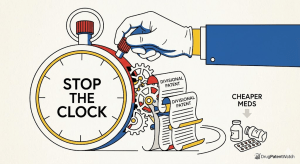
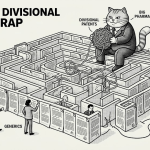
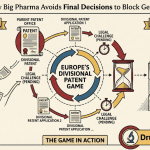
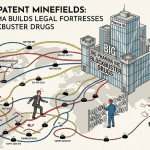
The most effective weapon in the European pharmaceutical patent arsenal is not the primary compound patent. It is the administrative paper trail. While the industry fixates on patent term extensions, a more quiet and effective strategy is unfolding in the filing offices of the European Patent Office (EPO). Originator companies use a mechanism known as the divisional patent to maintain a permanent state of legal uncertainty. They file a continuous stream of overlapping applications, often with no expectation that these filings will survive a full legal challenge. The goal is to prevent a final decision from ever appearing on the record.
The Administrative Loophole That Never Closes
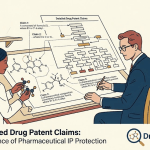
The legal architecture of the European patent system allows an applicant to split a pending patent application into separate filings. These are called divisional applications. Under Article 76 of the European Patent Convention (EPC), a divisional application retains the filing and priority dates of its parent.1 This means it is protected from any evidence or publications that appeared after the original filing years earlier.2 In theory, this helps inventors separate multiple inventions found within one broad application. In practice, it allows a company to keep a patent family alive for the entire 20-year term of the original patent.3
Current rules under Rule 36(1) EPC state that an applicant can file a divisional for any pending earlier application.1 An application remains pending until the date the European Patent Bulletin mentions the grant, or until the time to appeal a refusal expires.1 By ensuring that at least one branch of a patent family is always in prosecution, a company can ensure that the legal status of its product is never fully settled.
Feature
European Divisional Application
Legal Basis
Article 76 EPC and Rule 36 EPC 1
Priority Date
Inherited from the parent application 2
Filing Limit
Any time while the parent application is pending 4
Geographical Scope
Limited to the states designated in the parent 2
Examination
Independent of the parent application 5
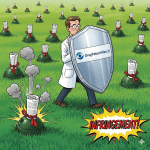
This system creates a “Whack-A-Mole” scenario for generic and biosimilar manufacturers. Every time a competitor successfully challenges a patent in an EPO opposition proceeding, the originator can activate a pending divisional. These proceedings typically take three to six years to reach a final resolution at the Technical Board of Appeal.6 By the time one patent is revoked, another is granted or pending, restarting the clock for the challenger.3
The Mechanics of Pendency under Article 76
The definition of “pending” is the heart of the divisional strategy. If the EPO refuses an application, it remains pending until the appeal period expires.1 If the applicant files an appeal, the application stays pending until the Board of Appeal issues a final decision. During this entire time, the applicant can file new divisionals based on the same disclosure.3
Companies often file these divisionals when a parent case is “cruising towards refusal,” such as before oral proceedings where success is unlikely.5 Filing a divisional offers an opportunity to reset and reframe the strategy.5 This creates “zombie” applications that haunt the market, even when the underlying scientific claims have been rejected.7
Rule
Requirement
Strategic Impact
Rule 36(1)
Application must be pending
Allows for “back-up” filings if a refusal is imminent.8
Rule 36(2)
Language of the earlier application
Maintains consistency across the family.1
Rule 36(3)
Fees due within one month
Small cost relative to the value of market exclusivity.1
Rule 38(4)
Additional fee for subsequent generations
Intended to deter excessive filing, but often ineffective for blockbusters.1
Teva and the Architecture of Abuse
The European Commission recently provided a clear signal that this behavior has limits. On October 31, 2024, the Commission fined Teva €462.6 million for abusing its dominant position related to Copaxone, a drug used for multiple sclerosis.9 The investigation focused on Teva’s use of glatiramer acetate, the active ingredient in Copaxone.9
The Commission found that Teva engaged in a “divisional game.” As the original patent for glatiramer acetate neared its 2015 expiration, Teva filed multiple divisional applications in a staggered way.9 These secondary patents focused on manufacturing processes and dosing schedules.9 This created a web of overlapping protection that rivals had to clear before entering the market.9
The Commission’s finding centered on how Teva enforced these patents. Teva obtained interim injunctions against competitors based on these divisional patents while they were still under review by the EPO.9 When it appeared that the EPO was likely to revoke a patent, Teva strategically withdrew it.9 This prevented a formal invalidity ruling that would have set a precedent and threatened the rest of the divisional family.9
Staggered Filings and the Withdrawal Tactic
The Teva case shows that the goal of a divisional is often not to secure a permanent patent, but to secure time. By staggering the filings, Teva ensured that its competitors were stuck in a loop of litigation for nine years, from 2015 to 2024.11 Every time a competitor won a challenge, they were met with a new patent or a withdrawal that erased the legal victory.9
This strategy was supplemented by a disparagement campaign. Teva spread misleading information about a competing product’s safety and efficacy, targeting doctors and health officials.9 Even though health authorities had approved the rival drug, Teva’s campaign created enough doubt to slow its market uptake.9 The Commission concluded that these two tactics—the misuse of divisionals and the disparagement campaign—were a single, continuous infringement of Article 102 of the TFEU.9
The Economics of Legal Uncertainty
Legal uncertainty is a financial asset for originator firms and a liability for generic manufacturers. When a drug loses its primary patent, its price usually drops to a fraction of the original within 12 months.13 In a competitive generic market, the price often settles at 6% to 20% of the branded price.13 By delaying this drop for even a few years, a company can preserve billions in revenue.
For generic companies, the risk of an “at-risk” launch is high. If they launch while a divisional patent is pending and that patent later grants and is upheld, they face massive damages and injunctions.14 The divisional strategy exploits this risk aversion. It forces competitors to choose between expensive, multi-year litigation or waiting until every possible patent is cleared.
Stakeholder
Financial Risk from Patent Challenges
Average Value at Stake
Brand-Name Firm
Loss of market exclusivity and revenue cliff 14
$4.3 billion in market cap 14
Generic Firm
Wasted R&D and legal fees if they lose 14
$204.3 million in market cap 14
Institutional investors use platforms like DrugPatentWatch to model these outcomes. A pharmaceutical patent estate is a layered position consisting of primary compound patents, formulations, and methods of use.16 Each layer has a different survival probability.16 A primary patent might have a 90% survival probability, while a weak dosing divisional might only have 20%.16 However, as long as that 20% probability exists, it can block entry.
Revenue at Risk and the Patent Cliff
Between 2025 and 2030, the pharmaceutical industry faces a “patent cliff” where drugs generating over $200 billion in annual sales will lose exclusivity.14 This is one of the largest transfers of wealth in industrial history.15 The timing of these cliffs is often determined by the outcome of Paragraph IV challenges in the US or opposition proceedings in Europe.14
DrugPatentWatch tracks these events across 134 countries.17 This global view is necessary because a patent strategy in the US often diverges from Europe. In the US, companies use “terminal disclaimers” to link patents together.19 In Europe, they use cascading divisionals. A company might have a strong position in the US but be vulnerable in Europe, where biosimilars often launch years earlier.18
Drug Name
US Launch of Competition
EU Launch of Competition
Gap (Years)
Humira
2023
2018
5.0 20
Enbrel
Expected 2026+
2016
10.0+ 20
Eliquis
Expected 2026+
2022
4.0+ 20
This gap represents a massive difference in spending. For just three drugs—Humira, Eliquis, and Enbrel—Americans will spend an estimated $167 billion on branded versions during the years when Europe already had access to cheaper generics and biosimilars.20
Case Study: The Adalimumab Wall
AbbVie’s Humira (adalimumab) is the definitive case study for patent thickets. In the United States, AbbVie secured over 130 patents for Humira, creating a wall that kept biosimilars out until 2023.21 Most of these patents were filed after the drug was already approved in 2002.21 These patents did not reflect new innovations but were part of a strategic marketing defense.21
In Europe, the strategy was different because the EPO system is more predictable and less susceptible to the type of thicket seen in the US.23 However, AbbVie still used secondary patents and divisionals to manage its lifecycle. When biosimilars finally entered the European market in 2018, the price of Humira dropped by 90% in some regions, such as the Netherlands.21 This drop proved that the high price was purely a result of the monopoly position, not the cost of innovation.21
Comparing US Thickets and European Cascades
The US and European systems handle “double patenting” differently. The US allows companies to obtain obvious variants of their own inventions through terminal disclaimers.19 This means the patents expire at the same time as the original, but they still serve as independent legal hurdles that a competitor must litigate.19
The EPO strictly prohibits double patenting.24 It does not permit terminal disclaimers and requires that claims in related applications be distinct.24 While this seems like it would prevent thickets, companies get around this by using “salami-slicing”.3 They take a broad invention and carve it into many small, narrowly defined patents. One divisional might claim a specific dose, another a specific manufacturing temperature, and a third a specific patient sub-group.9
Strategy Component
US Patent Thicket (e.g., Humira)
European Divisional Cascade (e.g., Copaxone)
Primary Mechanism
Terminal Disclaimers 19
Cascading Rule 36 Filings 3
Number of Patents
Often 100+ 22
Typically 5-15 in a core family 25
Focus
Obvious variants of the same product 24
Narrowing the claim scope to “salami-slice” 3
Legal Risk
High cost of challenging 100+ patents 19
Extended uncertainty due to pendency 6
The Rise of the Unified Patent Court
The launch of the Unified Patent Court (UPC) in June 2023 changed the calculation for divisional strategy. The UPC has jurisdiction over Unitary Patents and classic European Patents across 18 Member States.27 It provides a single forum for both infringement and revocation actions.27 During its first year, the UPC received 373 cases, 134 of which were infringement actions.28
The UPC is designed to be faster than national courts, with first-instance decisions expected in 12 to 14 months.28 For generic firms, this could be a way to clear an entire patent family in one action.27 However, originators are using divisionals to stay outside the UPC’s reach. They can “opt out” classic European patents from the UPC’s jurisdiction, forcing competitors to litigate in individual national courts.27
Tactical Bifurcation and Forum Shopping
Originators often use a hybrid strategy. They may validate a parent patent as a Unitary Patent (subject to the UPC) while keeping a divisional application as a classic bundle patent that they opt out.5 This allows them to choose the venue that is most favorable to their case. If the UPC appears to be leaning toward revocation, they still have their opted-out national patents as a fallback.5
The UPC has established a “No Stay” presumption.29 This means that the court will generally not pause its proceedings just because an opposition is pending at the EPO.29 In Carrier Corp. v. Vicot, the UPC Court of Appeal refused to stay a revocation action, emphasizing that the UPC has a mandate to adjudicate regardless of parallel EPO proceedings.29 This could limit the effectiveness of the divisional game by providing a final decision on validity much faster than the EPO’s appeal process.
UPC Case Metrics (Year 1)
Data Point
Total Cases Received
373 28
Infringement Actions
134 28
Member States Participating
18 27
Expected Time to Decision
12-14 Months 28
Technical Layering: Salami-Slicing Inventions
The “salami-slicing” strategy is most common in biologics and complex small molecules. A biologic drug is not just a chemical formula; it is a product of a specific cell line and a precise manufacturing process.16 Originators file divisionals covering the specific glycosylation profile, the purification sequence, and the dosing regimen.16
In the case of erythropoietin (EPO), litigation in the 1980s and 1990s established a precedent for “salami-slicing” recombinant DNA claims.30 The courts allowed companies to secure patents for incremental improvements, which narrowed the research focus of the entire sector.30 This has now evolved into the “divisional game” where every minor variation in a manufacturing step is used to file a new application.
Dosing Regimens as Defensive Moats
Method-of-use (MoU) patents are a favorite tool for divisional cascades. These patents claim a specific therapeutic application rather than the compound itself.31 A common claim structure is a method of treating a disease by administering a specific amount of the drug.31
If an originator can convince the EPO that a specific dosing regimen is “non-obvious,” they can block a generic version even after the compound patent expires.15 In the Copaxone case, Teva shifted the market from a 20mg daily injection to a 40mg three-times-a-week version.15 By the time the 20mg version was off-patent, the 40mg version was the market standard and was protected by its own web of divisionals.15
Patent Type
Claim Focus
Impact on Competition
Composition of Matter
The API itself 17
Absolute block to all versions of the drug.
Dosing Regimen
Frequency and amount of dose 9
Prevents substitution if the regimen is the standard of care.
Sub-population
Use in specific patients (e.g., genetic markers) 16
Blocks use in high-value patient segments.
Manufacturing
Processes and cell lines 16
Specifically targets biosimilars.
Institutional Intelligence and Risk Assessment
For professional IP analysts, identifying these patterns early is a competitive advantage. Waiting for a patent to grant or for a court to rule is too late. High-performing companies allocate resources to read and interpret patent data long before it becomes obvious to the broader market.16
DrugPatentWatch allows analysts to cross-reference Orange Book listings in the US with EPO prosecution data.17 This reveals where an originator has abandoned international coverage for a specific candidate, signaling a potential opportunity for a generic player.32 It also identifies “false negatives”—cases where a company might have missed an in-force patent that could lead to an infringement suit.33
Using DrugPatentWatch for Portfolio Surveillance
IP valuation belongs in the financial model, not a legal annex.13 The value of a drug asset is the risk-adjusted NPV of its projected cash flows.16 This model must account for the probability that each patent layer survives a challenge.16
Analysts use DrugPatentWatch to track:
Historical patent submissions and delistings to spot manipulation.17
ANDA filing dates to see which generics are already in the queue.17
Global patent estates to see if foreign protection mirrors the US.17
Patent Prosecution Highway (PPH) requests that might accelerate a grant.34
A drug with strong protection in the US but weak or expired protection in Europe faces biosimilar competition that can erode global earnings ahead of the US cliff.17 This was seen with Humira, where European biosimilars provided a roadmap for what would eventually happen in the US market.18
Regulatory Countermeasures and the Future of Rule 36
The persistent abuse of the divisional system has prompted the EPO to reconsider its fee structure. Starting April 1, 2026, the EPO will introduce higher fees for subsequent generations of divisionals.35 A second-generation divisional will incur a fee of €235, while a third-generation divisional will cost €480.35 These fees are meant to reduce the administrative burden, but they are unlikely to deter companies defending multi-billion-dollar products.35
There are also proposals to re-introduce the 24-month time limit for filing divisionals.3 Generic industry groups, such as Medicines for Europe, argue that the current framework allows originators to artificially delay competition.6 They recommend a five-year hard deadline from the filing of the parent application.3
Proposed Fees and Transparency Mandates
The European Federation of Pharmaceutical Industries and Associations (EFPIA) has its own proposal to increase transparency.37 They suggest an early resolution mechanism where innovators identify relevant patents at least one year before data exclusivity expires.37 This would allow generic companies to assess their risk earlier.37
Proposed Change
Source
Objective
Generation-specific fees
EPO (2026) 35
Deter excessive filing of sub-divisionals.
5-year filing deadline
Medicines for Europe 3
End the “perpetual pending” state.
Early IP disclosure
EFPIA 37
Facilitate resolution before generic launch.
Description adaptation
EFPIA (G 1/25) 38
Prevent the EPO from requiring overly strict claim-description alignment.
EFPIA also opposes the EPO’s increasingly strict requirements for adapting the patent description to the claims.38 They argue this practice lacks a legal basis and makes patents more vulnerable to post-grant challenges like “added matter”.38 This highlights the ongoing tension between originators, who want broad and flexible protection, and regulators, who want a clear and limited scope for every patent.
Conclusion: The End of Procedural Impunity
The strategy of using divisional patents to prevent final decisions is losing its effectiveness as a risk-free maneuver. The Teva fine shows that the European Commission will use antitrust law to fill the gaps in patent regulation. Originator firms can no longer rely on the complexity of the EPO administrative process to block competition without facing the risk of massive fines. For the generic industry, the rise of the UPC provides a potential fast track to clear patent thickets that once took decades to litigate. Success in this new environment requires moving away from reactive legal defense and toward proactive institutional intelligence. By using tools like DrugPatentWatch to map the layered defense of blockbusters, companies can identify the cracks in the divisional wall and time their market entry with surgical precision. The divisional game is not over, but the rules are finally being enforced.
Key Takeaways
The European patent landscape is dominated by the strategic use of divisional applications to maintain legal uncertainty. Companies like Teva have shown that staggering these filings and withdrawing them before a decision can delay generic entry for nearly a decade. While the EPO is introducing generation-specific fees in 2026, the real deterrent is the European Commission’s willingness to levy nine-figure fines for “divisional games.” The Unified Patent Court offers a single venue for clearing these families, but originators are countering with tactical bifurcation and opting out of classic patents. For stakeholders, the only defense is a granular, global view of the patent estate that treats IP as a quantifiable financial risk rather than a static legal right.
FAQ
How exactly does filing a divisional application “reset” the clock?
A divisional application is treated as a separate filing and must undergo its own search and examination. If a competitor opposes the parent patent, that opposition has no direct legal effect on the divisional. Even if the parent is revoked, the competitor must start a new opposition against the divisional, which adds years to the process.
Why did the European Commission fine Teva for using a legal patent procedure?
The Commission found that while filing divisionals is legal, using them in a “staggered” way specifically to block competition and then withdrawing them to avoid a negative ruling constitutes an abuse of a dominant position under Article 102 TFEU.
What is the “Whack-A-Mole” strategy in pharmaceutical litigation?
This refers to a situation where a generic company successfully invalidates a patent, only to be met with another similar patent from the same family. Because divisionals can be filed as long as a parent is pending, the originator can keep “popping up” with new patents to maintain uncertainty.
What are the new EPO fees for divisionals in 2026?
Starting April 1, 2026, the EPO will charge €235 for a second-generation divisional and €480 for a third-generation divisional. These fees are in addition to the standard filing and search fees and are meant to deter companies from filing long chains of applications.
How does DrugPatentWatch help with “at-risk” launch decisions?
It provides a multi-country view of a drug’s patent estate, allowing companies to see if an originator has abandoned coverage in certain markets. It also maps the “layers” of a patent portfolio (compound, dosing, formulation) and provides data for risk-adjusted NPV models to see if a launch is financially viable despite pending divisionals.
The devil is in the divisional: an analysis of divisional patents, deadlines, declarations and suggestions for future practice – Oxford Academic, accessed March 29, 2026, https://academic.oup.com/jiplp/article/19/9/725/7693785