Generics fill 90%+ of U.S. prescriptions but account for less than 18% of total drug spend.
$408 billion in system-wide savings in 2022 alone; $2.9 trillion over the prior decade.
The global generic drug market will grow from roughly $450-515B today to $700-925B by the early 2030s (blended CAGR: 5-8%).
A single Paragraph IV first-to-file (FTF) win on a blockbuster can generate more EBITDA than three years of standard generic launches.
IP valuation, not manufacturing cost alone, now determines which companies survive the next price-erosion cycle.
Part I: The Market Paradox and Its Structural Drivers
The Affordability Paradox: Why the Generic Model Is Broken for Most Players
The generic drug industry is, by any measure, one of the most consequential cost-containment mechanisms in modern healthcare. Generics now account for more than 90% of all U.S. prescriptions filled, yet they represent less than 18% of total prescription drug spending. The cumulative savings to the U.S. healthcare system exceeded $2.9 trillion over the decade ending in 2022, with $408 billion saved in 2022 alone. These are not marginal efficiencies. They are structural transfers of value from manufacturers to payers, providers, and patients.
That transfer is the problem for anyone trying to build a profitable generic business.
The forces that create societal value are the same forces that systematically destroy manufacturer margins. Intense, legally mandated, and algorithmically amplified competition drives prices to a fraction of brand levels within months of market entry. The traditional model, centered on being the lowest-cost producer of a simple oral solid, no longer guarantees survival. For many companies, it guarantees a race to the bottom.
The companies that will dominate the 2025-2030 window are not the ones producing the most volume. They are the ones that have learned to architect profitability across three dimensions simultaneously: strategic IP positioning, operational excellence, and portfolio design that exploits market structure rather than fighting it.
This guide provides the complete technical and strategic framework to do exactly that.
Key Takeaways: The Affordability Paradox
High prescription volume and low price are features of the system, not bugs. Any strategy that ignores this structural reality will fail.
The correct response is not cost reduction alone. It is moving into product categories where competition is structurally limited.
IP valuation, regulatory speed, and manufacturing complexity are the three moats that matter.
Global Market Sizing: Where the Growth Actually Lives
The global generic drug market sits at roughly $450-515B in the mid-2020s and is forecast to reach $700-925B by the early 2030s across a range of analyst projections. The consensus CAGR runs from 5% to 8%, depending on whether biosimilars are included in the count and what assumptions are made about price erosion rates in key geographies. Table 1 synthesizes the major forecasts.
Table 1: Synthesized Global Generic Drug Market Forecasts (2024-2034)
Research Firm
Base Year & Value (USD B)
Forecast Year & Value (USD B)
CAGR (%)
Custom Market Insights
2024: $491.35
2034: $926.54
6.55%
Precedence Research
2024: $445.62
2034: $728.64
5.04%
Mordor Intelligence
2025: $431.10
2030: $530.32
4.23%
Towards Healthcare
2024: $487.21
2034: $816.75
5.30%
Vision Research Reports
2025: $515.07
2033: $775.61
5.25%
Synthesized Consensus
2024/25: ~$450-515
Early 2030s: ~$700-925
~5%-8%
Note: Discrepancies arise from the inclusion or exclusion of biosimilars, different price erosion assumptions, and varying timelines for major patent cliff events.
These headline numbers are less useful than the sub-market data. The real strategic picture looks like this:
Sterile injectables commanded 61.5% of market revenue in 2024 despite being a fraction of total unit volume. Inhalable products are projected to grow at a 9.9% CAGR through 2030. Oncology generics are expanding at 9.2% annually, driven by the expiry of high-value biologic cancer treatments. The oncology biosimilar segment alone is projected to surpass $25 billion by 2029. Simple oral solid-dose tablets, the historical core of the generic business, face the most severe price compression and the most competition.
The geographic picture is equally granular. North America remains the single largest market but is maturing. Asia-Pacific is the fastest-growing region, with India, China, and Southeast Asian markets driving demand through rising healthcare expenditure and government generic promotion policies. Latin America and the Middle East offer significant but underserved growth corridors.
Between 2025 and 2030, branded drugs generating over $236 billion in annual sales will lose market exclusivity. That patent cliff is the single largest predictable value-transfer event in the industry. The companies positioned to capture it are those with the right portfolio, the right regulatory machinery, and the right IP intelligence infrastructure in place today.
Key Takeaways: Market Sizing
The market is growing, but growth is concentrated in complex, high-barrier categories.
Oral solid generics face the most severe competitive pressure and the lowest margin preservation.
Injectables, inhalables, and oncology biosimilars are where the structural profit opportunity sits.
The $236B patent cliff through 2030 is a predictable revenue event. The companies that prepare for it now will capture disproportionate value.
Investment Strategy: Market Sizing
Portfolio managers should weight generic and biosimilar exposure toward companies with declared pipelines in sterile injectables, complex inhalables, and oncology biologics. Revenue concentration in simple oral solids is a negative signal for margin durability. The patent cliff through 2030 creates a time-bound window; companies with strong first-to-file pipeline positions against expiring blockbusters are best positioned for outsized short-term returns.
Price Erosion Mechanics: Quantifying the Commoditization Curve
Price erosion in the generic market is not random. It follows a steep, predictable, and well-documented curve that can be modeled before a single ANDA is filed. This predictability is both a warning and a tool.
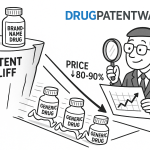
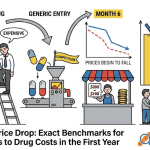
The moment the first generic enters a market, the price drops 30-39% versus brand. A second entrant drives the cumulative reduction to approximately 54%. Three to five competitors push prices down 50-80% from brand levels. Ten or more competitors produce reductions of 70-95%, at which point the market is a commodity and profitability exists only for the absolute cost leader operating at maximum scale.
Table 2: Generic Price Erosion vs. Number of Market Entrants
Number of Generic Competitors
Approximate Price Reduction vs. Brand
Strategic Phase
1
30% – 39%
First-mover profit window
2
~54%
Strong but declining margins
3-5
50% – 80%
Rapid commoditization begins
6-10
60% – 95%
Only cost leaders survive profitably
10+
70% – 95%
Commodity; margin near zero for most
The pharmacy benefit manager (PBM) and group purchasing organization (GPO) infrastructure accelerates this curve. These intermediaries are structurally designed to extract the maximum competitive discount. When three therapeutically equivalent generics exist on a formulary, a PBM can conduct a reverse auction among the three manufacturers and award preferred formulary position to the lowest bidder. The price compression is not a market accident. It is an engineered outcome.
The practical implication for strategy teams: the price erosion curve is a forecasting tool, not just a post-hoc observation. By combining patent intelligence data, ANDA filing counts from the FDA Orange Book, and a calibrated erosion model, a company can generate a realistic, risk-adjusted net present value for any proposed product before committing a dollar to development. A product with 12 expected filers has a different financial profile than one with two expected filers, regardless of the absolute brand revenue. That distinction, made rigorously at the investment decision stage, is what separates profitable generic portfolios from high-volume, low-margin ones.
Key Takeaways: Price Erosion
Price erosion is predictable and models well. Treat it as an input to go/no-go investment decisions, not a surprise outcome.
PBMs and GPOs are structural amplifiers of erosion. Any financial model that does not account for their leverage is optimistic by design.
First-to-file status delays the erosion clock by 180 days. That window is worth modeling precisely for any high-revenue product.
Part II: Portfolio Strategy and IP Architecture
Portfolio Architecture: Engineering a Profitable Product Mix
The product portfolio is the most important strategic asset a generic company controls. The decisions made about which products to develop, which to acquire, and which to exit determine long-term profitability more than any single operational or regulatory choice.
The error most companies make is treating portfolio management as a reactive exercise, responding to patent expirations as they appear on the horizon. A proactive, structured approach to portfolio design treats the product mix as a financial instrument, balanced for risk, margin durability, and competitive moat.
A well-designed generic portfolio has at least four distinct layers, each with different risk and margin characteristics:
The first layer is high-risk, high-return Paragraph IV FTF challenges against large patent estates, typically four to six products at any given time. These require significant legal budget and a tolerance for 30-month litigation stays, but the 180-day exclusivity reward can generate more cash flow in six months than a commoditized oral solid generates in five years.
The second layer is complex generics with structural barriers to competition: sterile injectables, transdermal patches, metered-dose inhalers, long-acting injectables, and complex drug-device combinations. These products typically see two to five market entrants rather than ten-plus, and margins stabilize at a higher floor.
The third layer is biosimilars, targeting biologics with expiring reference product exclusivity (RPE). This requires a fundamentally different development infrastructure, discussed in detail in Part IV, but the competitive density in approved biosimilar markets remains low relative to small-molecule generics.
The fourth layer is a core base of efficient commodity oral solids where the company has a demonstrable, sustainable cost advantage through scale, vertical API integration, or advanced manufacturing. This layer generates predictable cash flow but should not absorb capital disproportionate to its margin contribution.
The Pareto principle applies rigorously to generic portfolios. In most portfolios, 20% of products generate 80% or more of the profit. The remaining 80% of the catalog, the long tail of low-volume, high-SKU complexity, undifferentiated generics, consumes inventory carrying costs, quality system bandwidth, regulatory maintenance burden, and management attention at a rate that far exceeds its revenue contribution. Systematic tail rationalization, with clear decision criteria for divestiture or discontinuation, frees resources for higher-value investment.
IP Valuation as a Core Portfolio Asset
Every product in a generic portfolio carries an embedded IP valuation that affects both its regulatory pathway and its financial profile. Understanding this valuation is not optional for portfolio managers, R&D leads, or business development teams evaluating licensing or acquisition targets.
For a brand-name drug, the IP estate typically consists of multiple overlapping layers: a composition-of-matter patent covering the active ingredient, formulation patents covering specific dosage forms or delivery mechanisms, method-of-use patents covering particular indications, and process patents covering the manufacturing route. The expiration dates of these patents, tracked in the FDA’s Orange Book and supplementary registries, define the earliest legal market entry date for a generic. But the commercial entry date may be earlier if those patents are successfully challenged under Paragraph IV.
The IP valuation of a generic pipeline asset is a function of four variables: the size of the brand revenue being targeted, the vulnerability of the IP estate to legal challenge, the number of expected ANDA filers, and the probability and timing of first-cycle regulatory approval. DrugPatentWatch and similar patent intelligence platforms aggregate and analyze these variables, allowing companies to assign a quantitative value to each pipeline candidate before committing development resources.
For a biosimilar candidate, the IP calculation is more complex. The reference product’s IP estate includes not only patents listed in the Purple Book but also patents identified through the Biologics Price Competition and Innovation Act (BPCIA) ‘patent dance’ process. A biosimilar applicant who engages in the patent dance exchanges manufacturing information with the reference product sponsor, receives a list of patents the sponsor believes are infringed, and then negotiates which patents to litigate. Companies that have developed deep competency in navigating this process hold a substantial competitive advantage over those approaching their first biosimilar filing.
Key Takeaways: Portfolio Architecture
A portfolio of purely commoditized oral solids is a declining asset. Its margin trajectory is predetermined by the erosion curve.
IP valuation must be quantified at the investment decision stage, not discovered after launch.
The optimal portfolio is balanced across the four layers described above, with capital allocation weighted toward complexity and defensibility.
Tail rationalization is not a one-time project. It is a recurring discipline that requires clear, pre-agreed exit criteria.
Investment Strategy: Portfolio Architecture
When evaluating generic companies for investment, examine the declared pipeline for the ratio of complex products and FTF Paragraph IV challenges relative to total pipeline count. A company with 80 products in development, of which 75 are undifferentiated oral solids targeting crowded markets, has a different risk profile than a company with 30 products, of which 15 are complex or FTF positions. Revenue concentration from 180-day exclusivity wins signals R&D productivity and legal capability. Also examine the age and revenue contribution of the existing commercial portfolio; a large tail of low-margin commodities signals a portfolio rationalization need that will either consume capital or require write-downs.
Paragraph IV Strategy: First-to-File Mechanics and the 180-Day Prize
The 180-day exclusivity period granted to the first generic ANDA applicant to file a Paragraph IV certification is the most powerful profit mechanism in the generic industry. It is also the least understood by analysts outside the sector.
The statutory framework originates with the Drug Price Competition and Patent Term Restoration Act of 1984, commonly called Hatch-Waxman. Section 505(j) of the Federal Food, Drug, and Cosmetic Act allows a generic applicant to certify one of four things about each patent listed in the Orange Book for the reference listed drug (RLD):
Paragraph I: The patent information has not been filed.
Paragraph II: The patent has expired.
Paragraph III: The patent will expire before commercial marketing begins.
Paragraph IV: The patent is invalid, unenforceable, or will not be infringed by the proposed generic product.
A Paragraph IV (P-IV) certification is a legal declaration of non-infringement or invalidity. Filing one triggers a mandatory notice to the patent holder, which in turn typically triggers a patent infringement lawsuit. Once sued, the FDA cannot grant final approval to the ANDA for 30 months, unless the litigation resolves earlier. This 30-month stay is the primary mechanism through which brand companies delay generic entry. Legal costs for defending a P-IV challenge run $5-10 million per case and can exceed $50 million for complex biologics litigation.
The company that submits the first substantially complete ANDA containing a P-IV certification for a given drug becomes the FTF applicant and is eligible for 180-day exclusivity. During those 180 days, the FDA cannot grant final approval to any subsequent ANDA applicants for the same drug. The FTF applicant operates in a market with, at most, the branded product as competition and captures prices reflecting this limited competition.
The financial reward is substantial. For a branded drug generating $2 billion in annual U.S. sales, the 180-day exclusivity window at a conservative 50% market share and 50% of brand price represents roughly $250 million in net revenue for one generic company over six months. For drugs with larger sales or where the FTF filer achieves higher share, the numbers are proportionally larger.
Exclusivity begins to run on the earlier of the date the first applicant commercially markets its drug, or the date of a final court decision finding the challenged patents invalid or not infringed. The MMA (Medicare Modernization Act of 2003) added forfeiture provisions, under which an FTF applicant can lose its exclusivity if it fails to commercially market within certain timeframes. These forfeiture conditions require careful tracking, particularly in complex litigation scenarios involving multiple P-IV filers.
Companies that make P-IV litigation a core business strategy invest heavily in patent analytics infrastructure, specialized pharmaceutical patent litigation teams, and the organizational capacity to manage dozens of concurrent cases. Teva, Viatris (formerly Mylan/Upjohn), and the larger Indian generic companies with U.S. subsidiaries, such as Sun Pharma and Aurobindo, have built their American market positions substantially on the back of P-IV wins. For mid-tier players, a more selective approach to P-IV challenges, targeting three to five high-probability cases simultaneously rather than spreading litigation budget thinly, generates better risk-adjusted returns.
Key Takeaways: Paragraph IV Strategy
The 180-day FTF exclusivity is the most valuable single IP outcome in generic drug strategy.
P-IV litigation is an investment, not just a legal expense. Model expected exclusivity revenue against litigation cost and probability of success.
Forfeiture provisions require active tracking. Failure to monitor can result in loss of exclusivity even after winning the underlying litigation.
FTF eligibility requires being first to file a substantially complete ANDA with a P-IV certification. Patent intelligence to identify vulnerable IP estates before competitors is the primary competitive input.
Investment Strategy: Paragraph IV
A disclosed P-IV litigation pipeline is one of the most informative signals in a generic company’s public filings. Examine the number of pending cases, the brand revenue at stake for each, the stage of litigation, and the historical win rate. Companies with strong P-IV track records and large pending cases against blockbusters with near-term patent expirations represent asymmetric upside opportunities. Model the 180-day exclusivity revenue as an option: probability-weighted, time-discounted, and net of litigation cost and manufacturing scale-up investment.
Evergreening Tactics: How Branded Companies Defend, and How Generics Attack
Brand pharmaceutical companies extend the commercial life of their products through a cluster of legal and regulatory strategies collectively called evergreening. Understanding these tactics in detail is necessary for any generic company that intends to prosecute P-IV challenges or assess the true patent cliff date for a target product.
The primary evergreening tools are:
Patent Thicketing involves filing multiple patents at different stages of a drug’s development, covering not just the molecule but its salts, polymorphs, metabolites, enantiomers, formulations, dosing regimens, and manufacturing processes. A brand company that begins with a composition-of-matter patent expiring in Year X can supplement it with a polymer coating patent expiring in Year X+3, a controlled-release formulation patent expiring in Year X+6, and a method-of-use patent covering a specific dosing schedule expiring in Year X+9. Each patent is individually listed in the Orange Book if it meets the listing criteria, requiring the generic company to either design around each one or challenge each under Paragraph IV, multiplying litigation cost and complexity.
The most high-profile evergreening case in recent years involves AbbVie’s adalimumab (Humira). Before biosimilar entry, AbbVie had accumulated over 130 patents on the drug, covering everything from the antibody sequence to the injection device to the citrate-free formulation. The biosimilar companies that entered the market had to navigate a ‘thicket’ of these patents, negotiating settlements and licenses rather than litigating every patent individually. The result was a delayed U.S. market entry despite Humira’s reference product exclusivity expiring years earlier in Europe.
Authorized Generics are generic versions of a brand drug that the innovator company licenses to a generic manufacturer, or markets itself under a different label, before or during the FTF generic’s 180-day exclusivity period. Critically, an authorized generic does not consume the FTF applicant’s exclusivity but competes directly with it during that window. A brand company that launches an authorized generic effectively cuts the FTF applicant’s market share during the most profitable phase of the generic’s commercial life. The FTF applicant’s financial model must account for the probability and timing of authorized generic entry.
Citizen Petitions are submissions to the FDA that request the agency take specific regulatory actions, often requiring additional safety data or imposing stricter standards that a generic applicant has not yet met. Brand companies have used citizen petitions to delay ANDA approvals by raising questions about bioequivalence methodology, reference standards, or risk evaluation and mitigation strategies (REMS). The FDA’s Safe Drugs Act provisions and subsequent guidance have constrained the most egregious delays, requiring the agency to deny petitions that are filed primarily to delay generic competition. But the tactic remains in use, and generic companies must be prepared for it in their regulatory timelines.
Pediatric Exclusivity Stacking is the practice of securing a six-month pediatric exclusivity extension under the Best Pharmaceuticals for Children Act by conducting FDA-requested pediatric studies. This six-month extension attaches to all unexpired patent terms and non-patent exclusivities on the drug, effectively extending each by six months. For a drug with multiple overlapping evergreened patents, the cumulative effect of stacking pediatric exclusivity onto each can extend effective market protection by years.
Generic companies attacking an evergreened product need a structured IP deconstruction process. This begins with a complete Orange Book patent list audit and an independent validity assessment of each listed patent. The assessment should consider: prior art that may invalidate the patent’s claimed novelty, obviousness arguments based on the state of the art at the filing date, and infringement analysis based on the proposed generic’s formulation and manufacturing process. Where a patent is strong, design-around strategies, such as reformulating to avoid the claimed delivery mechanism or using an alternative synthesis route, may enable ANDA filing under Paragraph III rather than requiring P-IV litigation.
Key Takeaways: Evergreening
Patent thicketing is the rule, not the exception, for high-revenue branded drugs. A brand drug with $1B+ in annual sales almost certainly has multiple layers of IP protection that must be individually assessed.
Authorized generics can cut FTF exclusivity revenue by 30-50%. Any FTF financial model must assign a probability to authorized generic launch and adjust expected revenue accordingly.
Citizen petitions add six to twelve months to ANDA review timelines in contested cases. Build this risk into regulatory milestone schedules.
IP deconstruction, patent-by-patent validity and infringement analysis, is a prerequisite for committing to a P-IV challenge against a complex brand IP estate.
Part III: The Regulatory Engine
The ANDA Playbook: Turning Regulatory Speed Into Competitive Advantage
The Abbreviated New Drug Application process, established by Hatch-Waxman, allows generic manufacturers to reference the safety and efficacy data in the original NDA rather than repeating clinical trials. The applicant must demonstrate that its product is therapeutically equivalent to the Reference Listed Drug (RLD), meaning it has the same active ingredient, dosage form, strength, and route of administration, and delivers the active ingredient to the bloodstream at the same rate and extent as the brand, as measured by bioequivalence (BE) studies.
The bioequivalence standard requires that the 90% confidence interval for the ratio of the generic’s pharmacokinetic parameters to the brand’s falls within 80-125%. Despite this apparently wide range, measured differences in practice are typically very small. An analysis of approved ANDAs found an average bioequivalence ratio difference of approximately 3.5%, confirming that approved generics are, in practice, nearly identical in their pharmacokinetic behavior.
The GDUFA framework, first passed in 2012 and reauthorized multiple times, transformed the ANDA review timeline by creating a fee-for-service model. In exchange for user fees, the FDA committed to specific review cycle performance goals. Under GDUFA III goals covering fiscal years 2023-2027, the FDA targets review and action on 90% of standard ANDAs within 10 months of submission, and 90% of priority ANDAs within 8 months. Priority designations are available for first generics, drugs in shortage, and products with limited competition.
The GDUFA fee structure creates a structural cost filter. As of recent fee schedules, the ANDA filing fee, the Drug Master File (DMF) fee for each referenced API DMF, the program fee for each approved application, and the facility fee for each manufacturing site assessed collectively represent a multi-million dollar commitment per product. For a low-revenue product with expected annual sales under $10 million, the fee burden alone can make the economics non-viable. This means GDUFA fees function as an implicit portfolio rationalization tool, discouraging low-value ANDA filings and concentrating activity on higher-value targets.
First-cycle approval, the ability to receive FDA approval without requiring a second complete review cycle to resolve deficiencies, is the core operational metric for regulatory performance. Each additional review cycle typically adds six to twelve months to the approval timeline. For an FTF generic product, a six-month delay in achieving approval represents lost exclusivity revenue that cannot be recovered. The leading causes of ANDA deficiencies are not bioequivalence failures, which are relatively rare. They are Chemistry, Manufacturing, and Controls (CMC) deficiencies, such as inadequate stability data, poorly characterized impurity profiles, or manufacturing process descriptions that do not align with facility inspection findings.
The most effective pre-submission tool available to generic applicants is the Pre-ANDA Meeting program, which allows direct dialogue with FDA reviewers before an application is submitted. A Pre-ANDA meeting on a complex product can identify potential CMC issues, clarify bioequivalence methodology, and align on the appropriate reference standard, before any review fees are committed. Controlled Correspondence is a lighter-weight mechanism for written clarification of specific regulatory questions and is appropriate for more routine issues that do not require a meeting.
Manufacturing facility inspection readiness is a frequently underestimated driver of approval timing. An ANDA that is scientifically and technically complete can still be blocked by a failed manufacturing inspection, either of the applicant’s own facility or of an API supplier’s facility. FDA inspection findings at a manufacturing site referenced in an ANDA can result in an Approval Letter that is withheld until the facility achieves compliance, effectively negating the benefit of a high-quality submission. The companies that achieve the highest first-cycle approval rates maintain continuous inspection readiness, treating cGMP compliance as a standing operational standard rather than a pre-submission sprint.
Key Takeaways: ANDA Strategy
First-cycle approval is the single most important regulatory metric. Every additional cycle costs six to twelve months at the most profitable point in the product’s commercial life.
CMC deficiencies, not bioequivalence failures, are the leading cause of ANDA rejection cycles. Quality of the chemistry, manufacturing, and controls package drives approval speed more than anything else.
Pre-ANDA meetings de-risk complex submissions. The cost of the meeting is trivial relative to the cost of a deficiency cycle.
Facility inspection readiness is non-negotiable. An ANDA held at an inspection deficiency is equivalent to no ANDA.
Investment Strategy: Regulatory
Examine a company’s historical ANDA approval rate and average approval cycle count. Companies with above-industry-average first-cycle approval rates have a demonstrable regulatory capability that creates competitive advantage in time-sensitive FTF launches. Also examine facility inspection history through FDA’s publicly available inspection records. A Warning Letter or Import Alert affecting a key manufacturing site can ground a product launch with no warning in the financial calendar.
Global Regulatory Harmonization: The Multi-Market Opportunity and Its Cost
For generic companies operating beyond the U.S. market, the regulatory complexity multiplies substantially. The European Medicines Agency (EMA), Health Canada, Japan’s PMDA, and Australia’s TGA each maintain their own data requirements, review timelines, and inspection standards. A development program designed exclusively for U.S. FDA submission may generate data that satisfies only a portion of what other agencies require, necessitating duplicate studies and staggered market entries.
The International Council for Harmonisation (ICH) provides the primary framework for aligning technical requirements across major regulatory jurisdictions. ICH guidelines covering quality (Q-series), safety (S-series), and efficacy (E-series) form the basis for submission requirements in most major markets. However, ICH adherence is voluntary and uneven across agencies, and substantive differences remain in areas such as bioequivalence standards for complex formulations, impurity qualification thresholds, and the specific data required to support a manufacturing site.
The FDA’s Generic Drug Cluster initiative, a forum for multilateral information sharing among regulators from the U.S., EU, Canada, Australia, and Singapore, has produced meaningful alignment on some scientific questions. Where Cluster members have reached consensus on bioequivalence methodology for a specific complex product type, applicants can design a single study that satisfies multiple agencies, compressing the cost and timeline of multi-jurisdictional approval.
A pragmatic global regulatory strategy sequences submissions based on anticipated approval timing, market size, and the degree of regulatory agency alignment with the FDA review. For most products, the U.S. FDA submission is first, with the European application following on a parallel or slightly staggered track, using the EU’s Decentralised Procedure or Mutual Recognition Procedure to achieve approval across multiple member states simultaneously. In markets where the regulatory pathway is explicitly tied to FDA approval, such as some Gulf Cooperation Council countries and several African regulatory frameworks, U.S. approval essentially functions as a registration shortcut.
Part IV: Operational Excellence
API Sourcing, DMFs, and Supply Chain Resilience
The Active Pharmaceutical Ingredient is the most critical input in generic drug manufacturing. Its quality, consistency, and reliable availability directly determine the quality, batch-to-batch uniformity, and commercial continuity of the finished product. API sourcing is not a procurement function. It is a risk management function.
The global API supply chain is both efficient and fragile. India produces an estimated 62% of APIs consumed by the U.S. generic market. China accounts for approximately 22%, and Italy contributes meaningfully as the primary European source for several sterile injectable APIs. The U.S. domestic API manufacturing base covers roughly 14% of what the country’s generic drug market requires. This geographic concentration creates single points of failure at a systems level. A regulatory shutdown of a major Indian API facility, a port disruption, a geopolitical event affecting trade routes, or a quality recall can cascade into drug shortages even when dozens of generic finished-product manufacturers are fully operational.
The RAPS-cited 2023 analysis of U.S. generic drug supply chains found that for many high-demand generic drugs, a single API supplier was providing the active ingredient to multiple finished-product manufacturers. Supplier redundancy at the API level is structurally absent for a significant fraction of the generic market.
A best-practice API sourcing strategy operates on three principles. The first is regulatory rigor: every API supplier must be registered with the FDA and hold a current, clean inspection history. Any API facility that has received a Warning Letter, is on an Import Alert, or has unresolved 483 observations materially increases the risk of finished-product ANDA hold. Verification of supplier inspection status is not a one-time qualification step. It is a continuous monitoring obligation.
The second principle is financial due diligence. API suppliers, particularly those operating at thin margins in competitive generic markets, carry meaningful financial distress risk. A supplier that discontinues operations, enters bankruptcy, or is acquired creates a supply continuity problem that can take twelve to twenty-four months to resolve through requalification of an alternative. Annual financial assessment of key API suppliers, with contingency sourcing identified for critical materials, is a minimum standard.
The third principle is proactive DMF management. A Type II Drug Master File, the FDA submission through which an API manufacturer provides the agency with confidential manufacturing process and quality data, is the contractual and regulatory backbone of the API sourcing relationship. The GDUFA framework introduced a completeness assessment requirement for Type II DMFs before they can be referenced in a new ANDA. An API supplier whose DMF has not received an acceptable completeness assessment creates a potential blocking issue for the generic applicant’s ANDA review. Generic companies should audit the DMF status of every planned API source before committing to an ANDA filing, and should include DMF maintenance obligations in their Quality Agreements with suppliers.
The Quality Agreement between a generic manufacturer and its API supplier should specify the supplier’s obligations for change control notification (including process changes, equipment changes, and facility changes that could affect API characteristics), deviation investigation timelines, specification maintenance, stability testing schedules, and audit access rights. A supplier-initiated process change that is not communicated to the generic manufacturer can invalidate an existing ANDA or create a regulatory filing obligation for the finished-product manufacturer. Without a binding change control obligation in the Quality Agreement, the generic company has no contractual protection against this risk.
Key Takeaways: API Sourcing
Geographic concentration of global API supply in India and China is a structural risk, not a transient one.
Continuous FDA inspection monitoring of API suppliers is a non-negotiable operational standard. Qualification is not a one-time gate.
DMF completeness assessment status must be verified before ANDA filing commitment. An unassessed DMF creates a blocking issue.
Quality Agreements must include binding change control notification obligations. Undisclosed API process changes are a major source of ANDA compliance risk.
Quality by Design (QbD): Building Quality In From Day One
Quality by Design is a development and manufacturing philosophy centered on the principle that product quality is an output of process design, not post-process testing. The FDA formally endorsed QbD through ICH Q8, Q9, Q10, and Q11 guidelines, and modern ANDA submissions are expected to reflect QbD principles in their Chemistry, Manufacturing, and Controls sections. For a generic manufacturer, QbD is not regulatory compliance overhead. It is the foundation of a commercially differentiated manufacturing system.
The QbD framework begins with the Quality Target Product Profile (QTPP), a prospective definition of the desired quality characteristics of the finished product. For a generic oral solid, the QTPP encompasses attributes like dissolution profile, content uniformity, stability, and the physical characteristics that affect in-vivo performance. The QTPP is derived from the product’s clinical requirements and is the benchmark against which all subsequent development decisions are evaluated.
From the QTPP, the development team identifies Critical Quality Attributes (CQAs), those physical, chemical, biological, or microbiological properties that must be within defined limits to ensure the product delivers the required clinical performance. For an extended-release tablet, dissolution rate at each of the specified time points is a CQA. Content uniformity is almost universally a CQA for solid-dose forms. Identifying CQAs correctly is the difference between a development program that is efficient and predictable and one that generates repeated post-approval surprises.
The most demanding intellectual work in QbD is the analysis of Critical Material Attributes (CMAs) and Critical Process Parameters (CPPs). CMAs are the properties of raw materials, API and excipients, that have a proven causal relationship with one or more CQAs. Particle size distribution of an API that is poorly soluble is a CMA if it demonstrably affects dissolution rate, which is a CQA. A surfactant’s HLB value may be a CMA if it affects the dissolution behavior of a BCS Class II compound. CPPs are the process variables, such as granulator impeller speed, drying temperature, compression force, or coating spray rate, whose variation within anticipated ranges affects CQAs.
The relationship between CMAs and CPPs on one hand and CQAs on the other defines the Design Space. The Design Space is the multidimensional boundary within which a manufacturer can operate without affecting product quality. A process operating within its Design Space is legally considered to be operating under the validated conditions of the approved application. A change within the Design Space does not require a Prior Approval Supplement (PAS) or even a Changes Being Effected (CBE) filing. This regulatory flexibility has direct commercial value. When an excipient lot arrives with a slightly different moisture content than typical, a manufacturer with a well-defined Design Space can adjust a drying parameter within its established range rather than risking a batch failure or filing a regulatory supplement.
Design of Experiments (DoE) is the statistical methodology most commonly used to map the Design Space efficiently. Rather than testing process parameters one at a time, a DoE approach simultaneously varies multiple factors across a structured set of experiments, generating a mathematical model of how interactions between parameters affect each CQA. A well-executed DoE for a complex formulation might involve twelve to twenty-four experimental runs rather than the hundreds that would be required by a one-factor-at-a-time approach.
The business case for QbD investment is straightforward: a single commercial batch failure in a mid-scale injectable operation costs $250,000 to $500,000 in direct write-off, plus the indirect cost of the regulatory deviation investigation, out-of-specification (OOS) investigation, manufacturing downtime, and customer service impact. A failed batch on a high-demand product during a supply-constrained market can generate a drug shortage notification obligation and permanent customer relationship damage. QbD reduces batch failure rates by building a thorough understanding of the factors that cause them.
Key Takeaways: QbD
The Design Space provides operational flexibility that has direct regulatory and commercial value. It is worth the upfront investment to define it rigorously.
DoE is the efficient path to Design Space definition. One-factor-at-a-time experimentation is both slower and statistically inferior.
QbD submissions are more likely to achieve first-cycle ANDA approval because they provide the mechanistic process understanding that FDA reviewers expect for complex products.
Batch failure cost prevention alone, at $250,000-$500,000 per avoided failure, justifies QbD investment for any moderate- to high-volume product.
Process Analytical Technology (PAT): Real-Time Manufacturing Intelligence
Process Analytical Technology is the set of in-line, on-line, or at-line measurement systems that generate real-time data about the state of a manufacturing process. Where QbD defines what the process should achieve and the boundaries within which it can safely operate, PAT provides the continuous sensory data that confirms it is actually doing so.
The FDA’s 2004 PAT Guidance defines it as ‘a system for designing, analyzing, and controlling manufacturing through timely measurements of critical quality and performance attributes of raw and in-process materials and processes, with the goal of ensuring final product quality.’ The key word is ‘timely.’ Traditional pharmaceutical quality control is retrospective: samples are taken, sent to a laboratory, analyzed, and results returned hours or days later. By that point, the manufacturing process has moved far beyond the sampled state, and any out-of-specification result triggers an OOS investigation and potential batch rejection of product that has already been made.
PAT shifts the control point from the end of the process to the process itself. Near-Infrared (NIR) Spectroscopy is the most widely deployed PAT tool in pharmaceutical manufacturing. NIR probes can be inserted into blenders, granulators, fluid bed processors, and tablet presses to measure chemical composition, blend uniformity, moisture content, polymorphic form, and API concentration in real-time. Raman spectroscopy offers complementary chemical selectivity and is particularly useful for distinguishing API polymorphic forms and for monitoring coating processes. Acoustic emission sensors detect particle breakage during milling. Focused Beam Reflectance Measurement (FBRM) monitors particle size distributions in wet granulation and crystallization.
The chemometric models that interpret PAT data are as important as the sensors themselves. A NIR spectrum contains thousands of data points across the near-infrared wavelength range. Translating these spectra into a quantitative prediction of blend uniformity or tablet content requires a Partial Least Squares (PLS) or Principal Component Regression (PCR) model calibrated against a reference dataset of samples with known compositions. Model development, calibration, and validation are specialized skills that require both spectroscopic expertise and pharmaceutical domain knowledge. The quality of the chemometric model determines the reliability of the PAT measurement.
The commercially transformative PAT application is Real-Time Release Testing (RTRT). In a traditional manufacturing and testing workflow, a finished product batch cannot be released to distribution until all specified in-process and release tests are completed in the QC laboratory. This can take two to four weeks. RTRT substitutes parametric release based on continuous in-process measurement for some or all of the traditional end-product tests. If the PAT data confirms that dissolution rate, content uniformity, and moisture content remained within specifications throughout the manufacturing run, the QC laboratory testing for those attributes becomes redundant, and the batch can be released as soon as manufacturing is complete. For a high-demand generic facing supply constraints, cutting two to four weeks from the batch release timeline has direct revenue impact.
PAT also enables continuous manufacturing, a paradigm shift from the traditional batch model where each unit operation is performed sequentially on a discrete batch of material. In a continuous manufacturing train, the API and excipients feed continuously into a granulator, which feeds into a fluid bed dryer, which feeds into a tablet press, which feeds into a coating pan, in an uninterrupted flow. PAT sensors at each unit operation transition provide the real-time data needed to confirm that the continuously moving material meets the quality specifications before it progresses to the next step. FDA has actively supported continuous manufacturing adoption through dedicated guidance documents, and several major generic manufacturers have received ANDA approvals for continuously manufactured products.
Key Takeaways: PAT
PAT shifts quality control from retrospective to real-time. This reduces batch failure risk and accelerates batch release.
RTRT can compress batch release timelines from two to four weeks to as little as hours, creating direct commercial advantage during product launches.
Chemometric model quality is the rate-limiting factor in PAT implementation. Invest in model development as seriously as in sensor hardware.
Continuous manufacturing requires PAT as its control system. The two technologies are mutually enabling.
Lean Six Sigma in Pharma: Driving the Culture of Continuous Improvement
Lean Manufacturing and Six Sigma originated in the automotive and electronics industries, where process variability is measured in parts per million and supply chain velocity determines market position. Pharmaceutical manufacturing adopted these methodologies substantially later than other industries, largely because the high cost and regulatory burden of revalidating approved processes created cultural resistance to process change. That resistance has eroded as the pressures of price erosion and cost reduction have made operational inefficiency commercially untenable.
The practical application of Lean in pharmaceutical manufacturing targets seven categories of waste: overproduction, waiting, transportation, over-processing, excess inventory, unnecessary motion, and defects. In a typical pharmaceutical facility, the largest waste categories are waiting and excess inventory. Product spends far more time sitting in work-in-progress queues than it spends being actively processed. A batch that takes eighteen hours to manufacture may spend sixty hours waiting between unit operations due to equipment scheduling, laboratory testing delays, or approval bottlenecks. Lean’s Value Stream Mapping (VSM) tool makes this waste visible by tracing the flow of material and information from raw material receipt to finished product release and quantifying the time and cost of each waiting period.
The specific Lean tools that deliver the highest return in pharmaceutical operations are:
Value Stream Mapping, which identifies and quantifies the gap between value-added time (time spent actually processing material) and total elapsed time. In well-documented pharmaceutical case studies, value-added time as a percentage of total elapsed time frequently runs below 10%, meaning 90% or more of the time a batch exists in the facility is spent waiting rather than being processed. VSM-guided improvement programs have achieved cycle time reductions of 40-60% in pharmaceutical operations.
5S (Sort, Set in Order, Shine, Standardize, Sustain) creates a baseline of workplace organization and visual management that is a prerequisite for stable, consistent process performance. A disorganized manufacturing environment is a source of errors and variability.
Single-Minute Exchange of Die (SMED), adapted from automotive stamping operations, applies to pharmaceutical equipment changeover. Reducing the time to clean and changeover a tablet press or capsule filler between products directly increases manufacturing capacity by increasing the available run time.
Six Sigma provides the statistical framework for identifying and eliminating the root causes of process variability. The DMAIC (Define, Measure, Analyze, Improve, Control) problem-solving structure is the primary vehicle. In a pharmaceutical context, DMAIC projects typically target recurring OOS results, high batch rejection rates for a specific product, or chronic equipment downtime. The statistical tools used in the Analyze and Improve phases, including regression analysis, hypothesis testing, and multivariate analysis, quantify the relationship between process inputs and quality outcomes, identifying the specific variables that drive defects.
The highest leverage application of Lean Six Sigma in generic manufacturing is not post-approval process improvement but pre-approval process development. Using DMAIC and DoE methodologies during the development phase, before the process is locked by validation, allows a manufacturer to optimize the process to a higher sigma level and achieve a deeper process understanding than would be possible through traditional development approaches. The result is a QbD-aligned CMC section in the ANDA that demonstrates a level of process control and scientific understanding that reduces the probability of deficiency cycles and accelerates approval.
Key Takeaways: Lean Six Sigma
Value-added time as a percentage of total cycle time is typically well below 20% in pharmaceutical operations. The opportunity for cycle time reduction is substantial.
Six Sigma applied during development, not just post-approval, aligns with QbD expectations and accelerates regulatory approval.
SMED-driven changeover reduction directly increases equipment capacity without capital expenditure.
Part V: Complex Products and Next-Generation Capabilities
Complex Generics and Biosimilars: The Value Chain Migration
Moving from commodity oral solids to complex generics or biosimilars is not an incremental business change. It is a transformation of the company’s scientific identity, regulatory posture, and commercial capability. The financial logic for making that transition is compelling. The operational and strategic logic of how to do it successfully is considerably more nuanced.
Complex Generic Formulation Technology Roadmap
The complex generic category spans a wide range of dosage form technologies, each with its own development challenges and regulatory pathway requirements:
Sterile injectables require aseptic manufacturing infrastructure, either traditional fill-finish lines operating in ISO 5 cleanroom environments or, for certain products, terminal sterilization capability. The FDA’s guidance on product-specific bioequivalence recommendations for complex drug products defines the study design, in-vitro characterization requirements, and, for some products, clinical endpoint bioequivalence studies required in lieu of pharmacokinetic studies. The regulatory complexity and capital cost of sterile manufacturing create a natural competitive filter.
Transdermal drug delivery systems (TDDS) require demonstration of membrane-controlled or matrix-controlled drug release through specialized in-vitro permeation testing (IVPT) studies. The FDA’s 505(j) science-based bioequivalence recommendations for specific transdermal products detail the required study designs. Formulation development requires expertise in pressure-sensitive adhesive chemistry, drug-polymer compatibility, and stability of the laminate structure.
Inhalation products, metered-dose inhalers (MDIs) and dry powder inhalers (DPIs), represent one of the most technically demanding complex generic categories. The FDA’s guidance for generic inhalation products requires demonstrating both pharmaceutical equivalence (device dimensions, formulation composition) and in-vitro performance equivalence (cascade impactor aerodynamic particle size distribution). Pharmacokinetic and clinical endpoint studies may also be required. The device engineering and aerosol formulation development capabilities required for MDI and DPI generics are held by a relatively small number of companies globally.
Long-acting injectables (LAIs) for psychiatric indications represent an important growth segment. Products like paliperidone palmitate (Invega Sustenna/Trinza) and risperidone (Risperdal Consta) deliver months of therapeutic benefit from a single injection. Generic LAI development requires mastery of particle size engineering, suspension formulation for injectables, and the specialized bioequivalence methodology applicable to extended-release parenteral products.
Biosimilar Development: The Complete IP and Regulatory Pathway
A biosimilar is defined under the Biologics Price Competition and Innovation Act (BPCIA) as a biologic product that is ‘highly similar’ to the reference product, with ‘no clinically meaningful differences’ in safety, purity, or potency. The BPCIA created a 12-year period of reference product exclusivity (RPE) from the date of reference product approval, during which the FDA cannot approve a biosimilar application. The RPE is separate from and additional to any patent protection on the reference product.
The regulatory pathway for biosimilar approval under 351(k) of the Public Health Service Act requires a ‘totality of the evidence’ demonstration of biosimilarity. The data package begins with extensive analytical characterization comparing the biosimilar to the reference product across structure (primary, secondary, tertiary), biological activity, immunochemical properties, purity, and heterogeneity. Where analytical similarity is established, the clinical data package may be reduced compared to what would be required for a standalone biologic.
The ‘interchangeability’ designation, available under the BPCIA but distinct from simple biosimilar approval, requires additional data demonstrating that the risk of alternating between the reference product and the biosimilar in terms of immunogenicity and clinical outcomes is not greater than the risk of using the reference product without alternation. An interchangeable biosimilar can be substituted for the reference product by a pharmacist without prescriber intervention, a designation with significant commercial implications for market penetration. As of 2025, a handful of biosimilars have achieved interchangeable status, and the data requirements have been clarified through FDA guidance and the first interchangeable approvals.
The BPCIA’s ‘patent dance’ is the formal pre-litigation information exchange process that biosimilar applicants must navigate. Upon acceptance of a biosimilar application, the applicant provides the reference product sponsor with a copy of the application. The sponsor then identifies patents it believes are infringed by the biosimilar. The parties negotiate a list of patents to litigate in a consolidated first patent action. Remaining patents are subject to a later-filed second action. Companies with experienced BPCIA litigation teams manage this process as a structured project, maintaining strict timelines and preserving their litigation options at each step.
Biosimilar savings in the U.S. reached $9.4 billion in 2022, driven primarily by the first wave of adalimumab, bevacizumab, and trastuzumab biosimilars. As additional blockbuster biologics clear their RPE windows through 2030, the savings figure is projected to grow substantially, with some industry projections suggesting cumulative biosimilar savings exceeding $100 billion over the next decade.
Key Takeaways: Complex Generics and Biosimilars
Complex generics have natural competitive barriers that preserve margins. Specific technical capability in sterile filling, inhaler device engineering, or LAI formulation is a strategic moat.
Biosimilar development requires a fundamentally different organizational capability than small-molecule generic development. The analytical chemistry, regulatory strategy, and commercial infrastructure are all distinct.
Interchangeability designation is the highest-value commercial outcome for a biosimilar. The incremental clinical data investment to achieve it should be modeled against the expected increase in market penetration.
The BPCIA patent dance requires specialized legal and regulatory management. It is not equivalent to Hatch-Waxman Paragraph IV litigation.
Investment Strategy: Complex Generics and Biosimilars
Biosimilar pipeline disclosures are among the highest-value signals in generic company filings. Examine declared biosimilar programs for: the reference product’s U.S. brand revenue, the RPE expiration date, the state of the patent dance, whether the company has declared interchangeability intent, and the competitive pipeline disclosed by other filers. Companies with first-mover biosimilar positions against large biologics with near-term RPE expiration represent opportunities analogous to FTF P-IV positions in small-molecule generics, but with substantially higher development investment and longer time horizons.
Pharma 4.0 and Digital Twins: The Smart Factory Blueprint
Pharma 4.0 applies the principles of Industry 4.0, the integration of cyber-physical systems, IIoT, and advanced data analytics, to pharmaceutical manufacturing. For generic manufacturers operating under intense cost pressure, the smart factory is not a technology aspiration. It is a cost structure and quality system competitive advantage.
The operational technology (OT) layer on a modern pharmaceutical production floor generates massive amounts of data: equipment sensor readings, process parameter logs, environmental monitoring records, batch records, and equipment maintenance histories. Traditionally, this data was siloed within individual systems, inaccessible for cross-functional analysis, and retained primarily for regulatory compliance rather than operational intelligence. The foundational Pharma 4.0 move is OT/IT convergence: connecting plant-floor systems to enterprise platforms via modern communication protocols such as OPC-UA and MQTT, creating a unified, queryable data environment.
Digital twins are the most sophisticated application of this connected data infrastructure. A digital twin is a virtual, physics-based or data-driven model of a physical manufacturing process or facility that is continuously updated with real-time operational data. It is not a static simulation. It is a dynamic representation of the current state of a physical system, capable of predicting future states based on current inputs.
In pharmaceutical process development, a digital twin of a granulation and tableting line can be used to simulate thousands of production scenarios, varying API particle size, excipient lot moisture content, granulator impeller speed, and compression force, to identify the combination of settings that maximizes yield and minimizes within-batch variability. This simulation work, done before physical manufacturing begins, compresses process development timelines and reduces the number of laboratory and pilot-scale batches required. GSK has publicly described using digital twin technology to reduce vaccine manufacturing process development timelines by months. Pfizer has applied similar approaches to oral solid process scale-up.
Predictive maintenance is a high-ROI application of Pharma 4.0 analytics. By analyzing real-time data from equipment sensors, vibration sensors, temperature sensors, current draw monitors, and pressure transducers, machine learning models can identify patterns that precede equipment failure. A centrifugal pump that is developing bearing wear will exhibit a characteristic vibration signature weeks before the bearing fails catastrophically. Identifying that signature and scheduling preventive maintenance during a planned shutdown prevents the unplanned downtime event, which in a continuous manufacturing context can result in material losses representing entire batch equivalents.
Robotic Process Automation (RPA) addresses the administrative and documentation burden that consumes significant non-value-added time in pharmaceutical operations. Batch record review, deviation report drafting, regulatory submission preparation, and supplier documentation management are all candidates for partial or full automation through RPA. Freeing qualified pharmaceutical professionals from routine documentation tasks to focus on exception management and high-judgment activities improves both productivity and quality system performance.
The digital thread concept ties all of these applications together: a continuous, traceable flow of data and decisions from drug discovery and development through clinical manufacture, technology transfer, commercial production, and post-market surveillance. A complete digital thread enables true end-to-end product understanding, linking the analytical characterization of a development batch to the commercial manufacturing conditions of every subsequent lot. This traceability is both a quality system asset and a regulatory asset, supporting the process validation lifecycle management approach described in FDA’s Process Validation guidance.
Key Takeaways: Pharma 4.0
OT/IT convergence is the prerequisite for any advanced analytics application. Without unified data infrastructure, digital twins and predictive maintenance cannot function.
Digital twins reduce process development cost and timeline by enabling simulation before physical manufacture.
Predictive maintenance ROI is highly favorable when calculated against the cost of unplanned equipment downtime in continuous or high-volume batch manufacturing.
RPA applied to pharmaceutical documentation has both efficiency and quality system benefits.
Green Manufacturing: Sustainability as a Cost Reduction Strategy
Pharmaceutical manufacturing is among the most resource-intensive industrial activities in the economy. The synthesis of small-molecule APIs typically requires large volumes of organic solvents, high-pressure or high-temperature reactions, and significant energy inputs. The environmental footprint of pharmaceutical manufacturing has attracted regulatory attention and investor scrutiny in the form of ESG (Environmental, Social, and Governance) assessment frameworks. But the business case for green manufacturing rests less on ESG compliance than on the direct financial benefits of reducing waste, energy, and materials.
Green chemistry, formalized through the twelve principles articulated by Paul Anastas and John Warner, provides a framework for designing chemical processes that minimize hazardous substance generation. The principles most directly relevant to generic API manufacturing are: atom economy (designing reactions to maximize the fraction of starting material incorporated into the final product), catalysis (using catalytic rather than stoichiometric reagents to reduce waste), and prevention (eliminating waste at the design stage rather than treating it after generation).
Biocatalysis, the use of enzymes or whole microorganisms as reaction catalysts, has moved from academic curiosity to industrial process technology over the past twenty years. Enzymatic reactions typically run at ambient temperature and pressure, in aqueous or low-solvent media, with high selectivity that eliminates the need for costly separation steps. Codexis, a leading biocatalysis engineering company, has developed proprietary enzyme variants for several pharmaceutical synthesis steps that have replaced traditional chemical routes requiring hazardous reagents and generating significant waste. For generic API manufacturers looking to redesign existing synthesis routes, biocatalysis offers both environmental and cost advantages.
The solvent factor is central to pharmaceutical manufacturing sustainability. Organic solvents account for the majority of the mass-based waste generated in pharmaceutical synthesis, often representing 85-95% of the total mass of materials used in a synthesis process. Solvent recycling programs, combined with the systematic substitution of higher-hazard solvents (such as dichloromethane, DMF, and THF) with lower-hazard alternatives (such as ethanol, ethyl acetate, and CPME), can reduce both raw material cost and waste disposal cost substantially. The CHEM21 solvent selection guide and the ACS Green Chemistry Institute Pharmaceutical Roundtable solvent sustainability tables provide standardized frameworks for making these substitution decisions.
Continuous manufacturing, already discussed in the context of PAT, is inherently more sustainable than batch manufacturing. A continuous process uses less equipment, requires less cleaning solvent between batches, operates at higher steady-state efficiency, and generates less in-process waste than the equivalent batch process. The energy consumption per unit of product is typically lower in continuous operations. The capital cost of a continuous manufacturing train is also generally lower than the equivalent batch infrastructure, despite the higher process control sophistication required.
Water use and wastewater treatment represent significant cost and environmental impact for pharmaceutical manufacturers, particularly those operating API synthesis facilities. Water stewardship programs, including closed-loop cooling water systems, water recycling in aqueous reaction steps, and advanced wastewater treatment, reduce both water purchase cost and effluent treatment cost.
The financial model for green manufacturing investment should quantify: reduction in solvent purchase cost, reduction in hazardous waste disposal cost, reduction in energy cost, reduction in water purchase and treatment cost, and reduction in regulatory compliance cost related to environmental permits. For most pharmaceutical operations, these savings justify the investment in process redesign, equipment modification, and training on a straightforward ROI basis, independent of any ESG reporting benefit.
Key Takeaways: Green Manufacturing
Green manufacturing reduces direct operational costs through lower solvent, energy, and waste disposal expenditures. The environmental benefit and the financial benefit are aligned, not in tension.
Biocatalysis is a mature industrial technology for pharmaceutical synthesis. Its application to generic API routes warrants systematic evaluation.
Continuous manufacturing is the most comprehensive green manufacturing strategy, combining energy efficiency, waste reduction, and capital productivity.
Solvent substitution guided by standardized selection frameworks (CHEM21, ACS GCI) provides a structured, evidence-based path to sustainability improvement.
Part VI: Supply Chain and Commercial Strategy
Supply Chain Serialization and the Data Dividend
The Drug Supply Chain Security Act (DSCSA), enacted in 2013 with a phased implementation timeline extending through 2025 and beyond, requires a unique serial number on every saleable unit of every prescription drug sold in the U.S. The EU’s Falsified Medicines Directive (FMD) imposes similar requirements in Europe. Every transaction in the pharmaceutical supply chain, from manufacturer to distributor to pharmacy, must be accompanied by a transaction history that traces the product’s serial number through each custody change.
The anti-counterfeiting rationale for serialization is widely understood. The strategic data dividend of serialization is less often discussed but equally important. Serialization creates, for the first time in the industry’s history, a nearly complete record of the physical movement of individual product units through the supply chain. When aggregated, anonymized, and analyzed, this data provides a real-time picture of inventory levels at each point in the distribution network, the velocity at which product is moving from distributor to pharmacy, and the geographic distribution of demand.
This data has direct value for demand forecasting and production planning. Generic manufacturers have historically operated with significant uncertainty about actual patient-level demand, relying instead on wholesale ordering patterns that reflect distributor inventory management behavior as much as true end-market demand. The ‘bullwhip effect,’ in which small fluctuations in end-market demand are amplified into large swings in manufacturer production orders, is a persistent source of both over-production waste and supply shortage. Serialization data, properly integrated into demand planning systems, provides a more accurate and less distorted signal of actual market demand, allowing manufacturers to plan production more precisely and reduce inventory carrying costs.
Serialization also enables rapid response to product recalls. A product lot that is recalled for quality reasons can be located in the supply chain by serial number within hours rather than the weeks required under manual track-and-trace. The ability to execute a rapid, targeted recall reduces both the regulatory exposure associated with slow recall execution and the financial cost of a broad, market-wide recall that removes product unnecessarily.
The wholesale distribution infrastructure in the U.S. generic market is highly concentrated. McKesson, Cardinal Health, and AmerisourceBergen collectively distribute the large majority of prescription drug volume, providing a logistical infrastructure that smaller manufacturers cannot replicate independently. These distributors offer sophisticated inventory management services to their pharmacy customers, including automatic substitution systems that switch between equivalent generic products based on contract pricing and availability. Understanding how these systems work and how to position a generic product favorably within them is a commercial strategy requirement, not just a logistics question.
Cold chain management for complex injectables and biosimilars adds a further layer of operational complexity and cost. Products that require refrigeration at 2-8 degrees Celsius or ultra-cold storage at -20 or -80 degrees Celsius require specialized packaging, temperature-monitoring devices, and validated cold chain logistics networks. A temperature excursion at any point in the cold chain can compromise product potency or safety, making the entire unit unusable. The cost of cold chain logistics for a biosimilar can represent five to ten percent of the product’s landed cost.
Key Takeaways: Supply Chain
Serialization data is a demand forecasting asset that most manufacturers have not yet fully exploited. Integrating serial number track-and-trace data into demand planning systems improves production forecast accuracy.
The wholesale distribution oligopoly (McKesson, Cardinal, AmerisourceBergen) controls market access for most generic manufacturers. Contract terms and formulary positioning within distributor systems have a direct impact on market share.
Cold chain operational capability is a non-negotiable prerequisite for commercial viability in injectables and biosimilars. It is also a competitive differentiator that few generic manufacturers have built at scale.
Part VII: Strategic Synthesis
Investment Strategy for Portfolio Managers and Analysts
Generic pharmaceutical companies occupy a distinct and often misunderstood position in healthcare equity portfolios. They are not innovator companies, so they do not carry the binary clinical trial risk that characterizes small-cap biotech. But they are not consumer staples either; their revenue streams are highly sensitive to regulatory timing, patent litigation outcomes, and competitive market entry dynamics. The correct analytical framework blends the IP-focused analysis appropriate for specialty pharma with the operational and cost-structure analysis appropriate for industrial manufacturing.
The following metrics and signals provide the most reliable indicators of a generic company’s strategic quality and financial trajectory:
First, examine the 180-day exclusivity pipeline. A company with multiple disclosed P-IV FTF positions against branded drugs with near-term patent expirations, combined with a history of winning P-IV litigation, has the highest-quality near-term revenue catalyst in the sector. Model each FTF position as a probability-weighted option on six months of near-monopoly revenue, net of litigation cost and manufacturing scale-up investment.
Second, evaluate manufacturing quality system health. FDA Warning Letters, Import Alerts, and unresolved 483 observations affecting manufacturing facilities are leading indicators of potential ANDA approval delays and product launch disruptions. A Warning Letter affecting a key manufacturing site can ground an entire product pipeline with no advance notice in the financial calendar. Review FDA inspection records at facilities.drugpatentwatch.com and the FDA’s EIR database as a routine component of due diligence.
Third, assess the biosimilar pipeline for originator revenue targeting and RPE timeline. A declared biosimilar program against a reference product with $3B in annual U.S. sales and an RPE expiring within two years is a qualitatively different asset than a biosimilar targeting a $300M product with five years of RPE remaining. Weight the biosimilar pipeline by expected revenue at stake and time to commercialization.
Fourth, examine portfolio complexity mix. A company whose commercial revenue is more than 70% concentrated in oral solid generics faces structural margin compression risk from the price erosion dynamics described earlier. A company with growing revenue contribution from sterile injectables, complex topicals, or biosimilars has a more defensible margin profile.
Fifth, evaluate manufacturing technology investment as a proxy for operational efficiency trajectory. Capital allocation toward PAT implementation, continuous manufacturing, and digital twin technology signals management’s commitment to cost structure improvement. These investments typically generate three-to-five-year payback periods with high internal rates of return in high-volume manufacturing contexts.
Sixth, consider API supply chain concentration. A company that sources more than 60% of its commercial product API volume from a single geographic region, particularly if that region is subject to trade policy uncertainty, carries a supply disruption risk that should be discounted into valuation.
FAQ: Strategic Decision Frameworks
Q: Our company competes primarily on cost in oral solid generics. Is that model viable for the next five years?
For the very largest players with true scale-based cost advantages and modern, highly automated manufacturing, the model remains viable but with declining margin profiles. For companies without that scale, the answer is no. The price erosion curve is not slowing, and PBM and GPO contracting practices continue to amplify competitive pricing pressure. The practical path forward is to use cash flow from the existing oral solid base to fund the capability build required to compete in complex generics. The transition takes three to five years minimum and requires deliberate investment in technical talent, specialized manufacturing infrastructure, and regulatory expertise. Companies that delay beginning that transition are compounding the problem.
Q: We want to pursue Paragraph IV FTF challenges but have limited legal budget. How do we prioritize?
Prioritization should be based on three factors in sequence: first, the vulnerability of the target IP estate to invalidity or non-infringement arguments; second, the branded revenue at stake and its expected growth through the patent expiry date; and third, the competitive P-IV filing landscape, specifically how many other companies are likely to file and whether shared exclusivity will materially reduce the financial value of the FTF position. A $500M drug with two expected P-IV filers and a weak patent is a better target than a $2B drug with fifteen expected filers and a strong patent. Patent intelligence services that aggregate Orange Book data, litigation records, and ANDA filing histories are essential to making this prioritization rigorously rather than reactively.
Q: How do we make the business case for QbD and PAT investment to our CFO?
The financial model should be built on three categories of quantified benefit. First, avoided batch failure cost: document the historical cost per batch failure event (including write-off, investigation labor, regulatory deviation cost, and customer service impact) and multiply by the expected reduction in failure rate from a QbD/PAT implementation. Second, regulatory approval acceleration: quantify the revenue impact of a six-month faster ANDA approval for key pipeline products, particularly FTF positions. Third, operational throughput: model the capacity increase from reduced batch release cycle time under RTRT and the reduction in QC laboratory cost. For a facility manufacturing ten to fifteen batches per month, these three benefit categories typically generate an NPV that justifies a substantial PAT infrastructure investment.
Q: We are evaluating a biosimilar acquisition. What due diligence is specific to this category?
Beyond the standard financial and legal review, biosimilar acquisitions require deep analysis of six areas: the analytical characterization data package and its scientific quality; the status of the patent dance, including what patents are in the first action and the litigation risk for each; the manufacturing facility qualification and its history with FDA and EMA; the interchangeability strategy and the additional clinical data it would require; the reference product’s U.S. market structure, particularly whether PBMs have established preferred formulary positions with a competing biosimilar; and the post-approval commercial strategy for HCP education and patient support programs.
References
Association for Accessible Medicines. 2023 U.S. Generic & Biosimilar Medicines Savings Report. accessiblemeds.org, 2023.
U.S. Department of Health & Human Services, ASPE. Analysis of New Generic Markets: Effect of Market Entry on Generic Drug Prices. January 2025.
Custom Market Insights. Generic Drug Market Size, Share, Growth, Trends, and Forecast 2024-2034. custommarketinsights.com.
Precedence Research. Generic Drugs Market Size, Share, and Trends 2025 to 2034. precedenceresearch.com, June 2025.