The pharmacy counter is one of the most consequential decision points in American healthcare. A prescription that a physician deemed essential can become, in a matter of seconds, an impossible choice between medicine and rent. That moment—repeated more than 4 billion times annually across U.S. pharmacies—is where the economics of drug development collide with the human cost of illness. And for over 90% of those prescriptions, the answer to that collision carries a small, often unnoticed label: “generic.”
The generic drug industry is neither glamorous nor well understood. It generates few blockbuster headlines, attracts little investor enthusiasm compared to cutting-edge biologics, and occupies a reputational space somewhere between ‘commodity supplier’ and ‘cheap substitute.’ That framing is wrong, and the degree to which it is wrong matters enormously to anyone who works in, invests in, or depends on the pharmaceutical system.
In 2023, generic and biosimilar drugs saved the U.S. healthcare system $445 billion—a record [1]. Over the past decade, that number accumulates to $3.1 trillion [2]. These are not accounting abstractions. They represent the financial headroom that allows employers to keep offering health benefits, insurers to cover the next generation of $300,000 cancer therapies, and Medicare to stay functionally solvent while covering an aging population. The generic market is the economic fulcrum on which the entire pharmaceutical pricing model balances.
Yet the system is under mounting strain. A persistent trust deficit keeps millions of patients needlessly choosing expensive brand-name drugs they struggle to afford. A supply chain optimized relentlessly for low cost has become chronically fragile, producing a decade-high 301 active drug shortages per quarter in 2023 [3]. The Inflation Reduction Act (IRA) has introduced direct government price-setting that may, paradoxically, hollow out the competitive market it is designed to protect. And the scientific frontier is moving rapidly toward complex biologics that demand capabilities most generic manufacturers do not yet possess.
What follows is a systematic examination of how the generic drug market actually works—its regulatory architecture, its economic mechanics, its legal battlegrounds, its structural vulnerabilities, and the strategic shifts required to compete in its next phase. Whether you are managing a generic portfolio, defending a brand against patent challengers, pricing drugs for a payer, or simply trying to understand why medicine costs what it does, the mechanics covered here are central to your work.
Part I: The Science of Sameness
What a Generic Drug Actually Is
The word “generic” obscures more than it reveals. In common usage it implies ‘lesser’—store-brand cereal, no-name batteries, the option you choose when the real thing costs too much. Applied to pharmaceuticals, the connotation is clinically dangerous and economically costly. An FDA-approved generic drug is not a lesser version of its brand-name counterpart. Under U.S. law, it must be the therapeutic equivalent of it.
The FDA’s definition is precise: a generic drug is ‘a medication created to be the same as an already marketed brand-name drug in dosage form, safety, strength, route of administration, quality, performance characteristics, and intended use’ [4]. Each element of that definition represents a specific regulatory standard the generic manufacturer must satisfy before a single tablet reaches a pharmacy shelf.
The active pharmaceutical ingredient (API)—the chemical compound that produces the therapeutic effect—must be identical to the brand-name drug’s API. Not similar. Not comparable. Identical. A generic version of atorvastatin contains the same atorvastatin as Pfizer’s Lipitor. A generic of metformin contains the same metformin as Glucophage. The molecule that does the clinical work is, in every approved case, the same molecule [5].
What can differ is the inactive ingredients: the fillers, binders, colorings, and coatings that give a tablet its physical form. Generic manufacturers are permitted to use different excipients, subject to the critical constraint that those differences cannot alter the drug’s performance, safety, or effectiveness in any clinically meaningful way [6]. The FDA reviews and approves these differences. If they affect how the drug behaves in the body, the generic does not get approved.
Appearance can also differ. U.S. trademark law protects the distinctive shape, color, and scoring of brand-name tablets—these constitute ‘trade dress.’ A blue diamond-shaped pill is a Pfizer trademark, not a pharmacological specification. Generics must look different from the brand to avoid infringement, but the FDA confirms that these cosmetic distinctions have no effect on clinical function [7].
The manufacturing standards governing generics are identical to those applied to brand-name drugs. Both must comply with the FDA’s Current Good Manufacturing Practices (cGMP). FDA inspectors visit both types of facilities. The same quality standards that govern a Pfizer plant in North Carolina apply to a Sun Pharmaceutical facility in India [8].
Bioequivalence: The Scientific Linchpin
The concept that makes the generic regulatory pathway work—and that unlocks trillions in savings without repeating billions in clinical research—is bioequivalence. It is the single most important scientific concept in the generic drug industry, and understanding it precisely is essential to understanding why the FDA can approve a generic without requiring new clinical trials.
Bioequivalence means that the generic medicine delivers the same amount of active ingredient to the bloodstream, at the same rate, as the brand-name medicine [9]. The official regulatory formulation is that bioequivalence is ‘the absence of a significant difference in the rate and extent to which the active ingredient becomes available at the site of drug action when administered at the same molar dose under similar conditions’ [10].
The practical test works as follows. A generic company conducts a pharmacokinetic study—typically in 24 to 36 healthy adult volunteers [11]. Participants receive either the generic or the brand-name drug, then blood is drawn at regular intervals to measure active ingredient concentration. After a washout period, they receive the other version. Scientists then analyze two pharmacokinetic parameters:
Cmax: the maximum concentration of the drug reached in the bloodstream, which measures the rate of absorption.
AUC (Area Under the Curve): the total drug exposure over time, calculated from a graph of concentration versus time, which measures the extent of absorption [12].
For FDA approval, both Cmax and AUC for the generic product must fall within a statistically defined range of the brand’s values. The FDA has determined that acceptable variation within this range produces no clinically meaningful difference in patient outcomes [13].
This is not a shortcut or an approximation. It is a scientifically valid substitution of one measurement (pharmacokinetic equivalence, which can be measured in a small study) for another (clinical efficacy, which the brand already proved in large trials). The FDA’s logic is straightforward: if the generic delivers the same drug exposure as the brand, and the brand’s clinical trials proved that specific drug exposure produces the desired therapeutic effect, then the generic will produce the same therapeutic effect. You do not need to repeat the Phase III trial.
The economic implication of this substitution is staggering. A new brand-name drug costs between $43.4 million and $4.2 billion to develop [14]. A generic, because it relies on the brand’s existing safety and efficacy data and requires only bioequivalence studies rather than full clinical programs, typically costs a few million dollars to develop [15]. That cost differential—of one to three orders of magnitude—is what allows generic manufacturers to enter the market at prices averaging 80 to 85% below the brand [16].
The Abbreviated New Drug Application: Regulatory Architecture of Affordability
The regulatory vehicle that operationalizes bioequivalence is the Abbreviated New Drug Application (ANDA). The ‘abbreviated’ modifier is significant: it refers to the fact that the ANDA does not require new preclinical or clinical data to establish safety and efficacy [17]. Instead, the applicant relies on the FDA’s prior finding that the reference listed drug (RLD)—the brand-name drug—is safe and effective [18].
The ANDA submission must demonstrate the following:
Pharmaceutical equivalence: same active ingredient, dosage form, strength, and route of administration as the RLD [19].
Bioequivalence: pharmacokinetic data proving equivalent drug delivery [20].
Manufacturing compliance: a comprehensive description of the production process, quality control systems, and stability testing, with cGMP compliance verified by FDA facility inspection [21].
Labeling equivalence: the generic’s labeling must match the FDA-approved labeling for the RLD, with narrow exceptions [22].
Patent certification: a declaration of the generic manufacturer’s position on every patent the brand company has listed in the FDA’s Orange Book [23].
Federal law mandates a 180-day review period for the FDA, but actual time to approval frequently runs much longer—often around 30 months—depending on the drug’s complexity and the completeness of the submission [24].
The following table captures the key clinical and commercial differences between brand-name and generic drugs, making explicit what regulatory equivalence means in practice:
Feature
Brand-Name Drug
Generic Drug
Active Ingredient
Sets the standard
Must be identical
Bioequivalence
The reference against which generics are measured
Must demonstrate equivalence
Dosage Form and Strength
Identical
Identical
Route of Administration
Identical
Identical
Safety and Efficacy
Proven through full clinical program
Proven via bioequivalence; relies on brand’s existing data
Manufacturing Standards
cGMP-compliant
cGMP-compliant; same FDA oversight
Appearance
Often trademark-protected
May differ cosmetically; no clinical effect
Average Cost to Develop
$43.4M–$4.2B
Typically a few million dollars
Typical Market Price vs. Brand
100% (baseline)
15–20% of brand price
Part II: The Economics of Generic Competition
The 90/13 Rule
The central economic fact of the U.S. pharmaceutical market is what practitioners sometimes call the 90/13 rule: generic drugs account for over 90% of all prescriptions filled in the United States, yet they represent only 13.1% of total prescription drug spending [25].
That ratio deserves to sit with you for a moment. More than nine in ten prescriptions dispensed in American pharmacies carry a generic label. Those prescriptions consume barely one dollar in eight of what the country spends on drugs. The remaining 87% of spending covers less than one in ten prescriptions—the on-patent, brand-name products.
This is not an accident or an anomaly. It is the intended outcome of a regulatory system designed to use market competition as the primary mechanism for controlling drug costs after patent expiration. The savings generated by that 90% of prescriptions—concentrated into the 87% of spending headroom—are what allow the healthcare system to afford the prices of innovative drugs at all. Without generic competition absorbing the vast majority of prescription volume at low cost, the brand-name pricing model would be economically unsustainable for payers, employers, and government programs.
The 2023 savings figure of $445 billion breaks down meaningfully by payer [26]:
Medicare saved $137 billion from generics and biosimilars, averaging $2,672 per beneficiary.
Commercial health plans saved $206 billion—money that flows back to employers and their workers rather than disappearing into drug company revenues.
By therapeutic area, the savings reach into every major disease category [27]:
Cardiovascular disease: $118.1 billion
Mental health conditions: $76.4 billion
Diabetes management: $61 billion
Cancer therapies: $25.5 billion
Generic drugs are not a niche solution for minor ailments. They are the financial backbone of treatment for the most prevalent and costly chronic diseases in the country.
How Competition Drives Price Down
The mechanism producing these savings is straightforward market competition, but its speed and severity distinguish it from most markets. When a brand-name drug loses patent protection, generic manufacturers—who have typically been preparing their applications for years—can enter the market. The price effect is immediate and dramatic.
Research from Lumanity found that the average manufacturer price (AMP) falls by 39% with the entry of a single generic competitor [28]. That is the opening move. As subsequent competitors receive FDA approval and enter the market, the price continues to fall:
Two generic competitors: average price reduction of 54% [29]
Four competitors: average price reduction of 73%–79% [30]
Six or more competitors: price reductions exceeding 95% relative to the pre-generic brand price [31]
This price trajectory is so predictable that it can be modeled in advance—and it is. Every major payer, every formulary manager, and every generic manufacturer’s commercial team works from detailed models of where prices will land as a market matures. For business strategy, the table below translates this academic data into a framework for portfolio decisions:
Number of Generic Competitors
Average Price Reduction vs. Brand
1
30%–39%
2
~54%
4
~75%
6+
>95%
The data makes two things clear. First, the financial prize for being the first generic into a market is substantial—the price reduction at one competitor is half what it becomes at four. Second, once a market has six or more competitors, the economics for latecomers can become unviable, creating a structural incentive for market consolidation and, in some cases, supply chain fragility.
The Global Players
The global generic drug market exceeds $400 billion in annual value and is projected to surpass $600 billion by the early 2030s [32]. The dominant players as of 2024 include Sandoz (now independent after its spin-off from Novartis), Teva Pharmaceutical Industries, Sun Pharmaceutical Industries, and Viatris (formed by the Mylan-Pfizer Upjohn merger) [33]. Other significant competitors include Fresenius Kabi, Cipla, Lupin, and Dr. Reddy’s Laboratories.
A defining feature of the industry is the prominence of Indian firms. Companies based in India have become the primary manufacturers of finished generic drugs globally, operating the largest number of FDA-approved manufacturing plants outside the United States [34]. India supplies approximately 47% of U.S. generic drug needs by volume [35]—a concentration with geopolitical implications we examine in Part V.
Part III: The Hatch-Waxman Framework and Its Strategic Implications
The 1984 Grand Compromise
The modern generic drug market was not built by market forces alone. It was engineered by Congress. The Drug Price Competition and Patent Term Restoration Act of 1984—universally called the Hatch-Waxman Act—created the regulatory and legal architecture that governs brand-generic competition to this day. Understanding it is not optional for anyone operating in the pharmaceutical sector.
Before 1984, generic manufacturers faced an insurmountable barrier: they had to conduct their own full clinical trials to demonstrate safety and efficacy, even for drugs whose brand versions had been on the market for decades. This made generic development economically impossible for most molecules, leaving drug prices high long after patents expired.
The Hatch-Waxman Act resolved this by engineering a deliberate trade: it gave the generic industry the ANDA pathway—the ability to rely on the brand’s clinical data and get to market via bioequivalence—while giving innovator companies patent term restoration of up to five years to compensate for the time lost during the FDA review process [36].
This was not a compromise that helped one side at the other’s expense. It created a system of productive conflict designed to deliver both innovation and affordability. Innovation was preserved through the period of market exclusivity before generic entry. Affordability was guaranteed to follow, because the ANDA pathway made generic entry economically viable once that exclusivity ended.
The law’s genius was its recognition that both goals serve the public interest and that the two do not have to conflict permanently. They can be sequenced.
The Paragraph IV Gambit
Within the Hatch-Waxman framework, one provision sits above all others in its capacity to generate conflict, risk, and reward: the Paragraph IV certification. It is the engine that drives pharmaceutical patent litigation in the United States, and it has produced some of the most commercially consequential legal battles in modern business history.
When a generic company files an ANDA, it must address every patent the brand-name manufacturer has listed in the FDA’s Orange Book—the official publication of approved drug products with therapeutic equivalence evaluations. For each listed patent, the ANDA filer must make one of four certifications [37]:
Paragraph I: The patent information has not been filed.
Paragraph II: The patent has already expired.
Paragraph III: The patent has not expired, and the generic company will wait for expiration before launching.
Paragraph IV (PIV): The patent is invalid, unenforceable, or will not be infringed by the proposed generic product.
A Paragraph I or II filing is straightforward. A Paragraph III filing is a passive acceptance of the status quo. A PIV certification is a direct challenge—the generic company declaring that it believes the brand’s patent either does not hold or does not apply, and that it intends to launch before the patent expires.
Under U.S. law, filing a PIV certification constitutes an ‘artificial act of patent infringement’ [38]. This allows the brand company to immediately sue the generic applicant, even though no product has yet reached the market. The lawsuit triggers a mandatory 30-month stay of FDA approval for the generic’s ANDA—meaning the FDA generally cannot grant final approval for up to 30 months from the date the brand received the notification of the PIV filing [39].
For the brand company, the 30-month stay is a guaranteed period of continued monopoly revenue while litigation proceeds. For the generic company, it is a legal and financial gauntlet that must be run before the prize can be collected.
The 180-Day Exclusivity Prize
The Hatch-Waxman Act created a powerful incentive for generic companies to take on the risk of PIV challenges: the first applicant to file a substantially complete ANDA containing a PIV certification is eligible for 180 days of marketing exclusivity [40]. During this period, the FDA cannot approve any other ANDA for the same drug that also includes a PIV certification.
The commercial value of this exclusivity is substantial. In a mature generic market with six or more competitors, prices fall by 95% or more relative to the brand. During the 180-day exclusivity window, the first-filer faces no such competition. It operates in a temporary duopoly with the brand-name drug. Instead of pricing at a 90% discount, the first generic can price at 15–25% below the brand, capturing significant market share while maintaining margins far above what will exist once exclusivity expires [41].
For a drug with annual brand-name sales of $2 billion, a successful first-filer can generate hundreds of millions in profit during those six months alone. This prize is what drives the frantic ‘race to file’—the rush among generic manufacturers to submit complete PIV filings on the earliest possible date, often the first day legally permitted. For blockbuster drugs, the FDA regularly receives multiple PIV filings on the same day, with all early filers potentially sharing the exclusivity period.
Preparing for this race requires years of advance work: formulation development, bioequivalence studies, patent analysis, regulatory document preparation, and often early-stage patent litigation strategy. Platforms like DrugPatentWatch allow generic companies to monitor the precise patent landscape for any given drug—tracking Orange Book listings, PIV challenge histories, litigation outcomes, and competitor ANDA filings—so they can identify the most promising first-filer targets and time their submissions strategically [42].
Part IV: The Patent Cliff
Anatomy of a Revenue Freefall
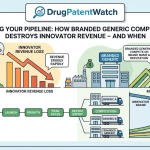
The ‘patent cliff’ describes the rapid, severe decline in a drug’s revenue when its key patents expire and generic competition enters. The term captures the visual reality of what happens to a brand-name drug’s sales chart: a plateau of multi-billion-dollar annual revenue followed by a near-vertical drop.
A ‘blockbuster’ drug—defined as one with annual sales exceeding $1 billion—can account for a substantial fraction of a pharmaceutical company’s total revenue. When a single product represents 20, 30, or even 40% of sales, its loss of exclusivity is not just a product event; it is a company-defining crisis.
The cliff is predictable by definition. Patents are public documents with known expiration dates. Generic manufacturers can—and do—begin preparing ANDA submissions years before those dates arrive. Investors model the revenue impact before the generic even files. The surprise is never the date; it is the speed and scale of the decline. The price erosion that follows generic entry can be so rapid that a drug generating $21 billion one year might generate less than $9 billion two years later.
Case Study: Humira—The Largest Cliff to Date
AbbVie’s Humira (adalimumab), the anti-inflammatory biologic, became the best-selling drug in pharmaceutical history. AbbVie extended its monopoly through a patent portfolio of over 250 patents—a strategy critics called a ‘patent thicket’—delaying U.S. biosimilar competition for years beyond the expiration of the core patents [43]. When U.S. biosimilar competition finally arrived in 2023, the financial impact was decisive:
2022 global sales (peak): $21.24 billion [44]
2023 global sales: $14.04 billion
2024 global sales: $8.99 billion [45]
In two years, AbbVie lost more than $12 billion in annual Humira revenue. The company’s defensive strategy—which had been in development for years—involved pivoting aggressively to next-generation immunology drugs Skyrizi and Rinvoq. In 2024, those two products generated a combined $17.7 billion, effectively replacing the Humira revenue [46]. This is what successful lifecycle management looks like in practice: not avoiding the cliff, but building the next plateau before you reach the edge.
Case Study: Lipitor—The Textbook Cliff
Pfizer’s Lipitor (atorvastatin) was the first drug in history to surpass $10 billion in annual sales. Its patent expiration in November 2011 produced what analysts still reference as the benchmark patent cliff event.
At its 2006 peak, Lipitor generated $12.9 billion in annual sales [47]. When generic atorvastatin entered the market in 2011, competition was immediate and intense. Within a single year, Pfizer’s Lipitor sales fell by roughly two-thirds. Unlike the more managed transition seen in some recent cases, the Lipitor cliff was nearly vertical—a function of how many generic manufacturers were ready to enter simultaneously and how commoditized atorvastatin quickly became.
Case Study: Keytruda—The Next Great Precipice
Merck’s Keytruda (pembrolizumab), the cancer immunotherapy, is currently the world’s best-selling drug. In 2024, it generated over $29 billion in global sales [48]. Its key patents are set to expire in 2028, and the race to develop Keytruda biosimilars is already well underway across multiple companies. <blockquote> ‘Keytruda’s 2028 patent expiration represents the single largest revenue cliff in pharmaceutical history by peak annual sales—potentially dwarfing even Humira’s decline. Merck faces losing exclusivity on a product generating more revenue than the entire pharmaceutical industries of many countries.’ <br><br> — Based on annual sales data reported by Merck and tracked by DrugPatentWatch </blockquote>
Merck’s primary defensive strategy is developing a subcutaneous formulation of Keytruda—an under-the-skin injection that would be more convenient than the current intravenous infusion. If approved, this new delivery format would carry its own patent protection, allowing Merck to convert a meaningful portion of patients to a patent-protected version before the original IV formulation faces biosimilar competition [49]. Whether this transition occurs fast enough to materially flatten the cliff remains the defining strategic question for Merck over the next three years.
The following table summarizes the patent cliff data for several major drugs:
Drug (Brand)
Manufacturer
Peak Annual Sales
U.S. Expiry Year
Status
Humira (adalimumab)
AbbVie
$21.2B (2022)
2023
Lost exclusivity; sales fallen ~58%
Lipitor (atorvastatin)
Pfizer
$12.9B (2006)
2011
Lost exclusivity; near-complete erosion
Remicade (infliximab)
Johnson & Johnson
~$7.0B (2016)
2018
Biosimilar competition ongoing
Keytruda (pembrolizumab)
Merck
>$29.0B (2024)
2028
Pre-cliff; biosimilar development underway
Intelligence as a Competitive Weapon
The patent cliff is predictable precisely because the underlying data—patent filings, expiration dates, Orange Book listings, ANDA submissions, litigation outcomes—is public. What differs among companies is their ability to synthesize that data into actionable strategy before competitors do.
DrugPatentWatch provides pharmaceutical professionals with a comprehensive database covering patent expiration timelines, Paragraph IV challenge histories, tentative FDA approvals, clinical trial data, and global patent statuses across more than 130 countries [50]. For a generic manufacturer, this intelligence answers the questions that determine portfolio construction: Which drugs will lose exclusivity in the next five years? Who else is filing? What is the litigation track record of the brand’s legal team? Is there a first-filer opportunity, or has the race already been run?
For branded manufacturers, the same intelligence operates in the opposite direction—alerting them to which competitors are most likely to file PIV challenges against their products, providing lead time to prepare legal responses, and informing decisions about lifecycle management investments. The companies that use patent intelligence proactively—treating the expiration calendar as a strategic map rather than a calendar of unfortunate events—consistently outperform those that respond reactively.
Part V: Anti-Competitive Tactics and the FTC’s Response
Pay-for-Delay: The Reverse Payment Problem
The Hatch-Waxman Act was designed to generate productive conflict between brand and generic manufacturers. The brand holds a patent; the generic challenges it; the court decides which drugs are available and when. In theory, this is a clean competitive mechanism. In practice, it created an incentive for a different kind of resolution: one where both sides win at the expense of patients.
A ‘pay-for-delay’ settlement, also called a reverse payment, works as follows. A generic company files a PIV certification and is sued by the brand company. Both face genuine risk: the brand could lose its patent monopoly, the generic could be barred from market entry. Instead of letting the court decide, the companies settle. The brand pays the generic a substantial sum—often hundreds of millions of dollars—and the generic agrees to drop its patent challenge and delay its launch until a specified date.
This is called a ‘reverse payment’ because the logical direction of money in patent litigation runs from the alleged infringer to the patent holder. Here, the patent holder pays the alleged infringer. That reversal is the red flag for antitrust regulators, because the only plausible explanation for a patent holder paying the challenger to stay out of the market is that the challenger has a credible chance of winning—meaning the patent itself may not be as strong as the brand claims.
The harm to consumers is direct. By eliminating the first-filer from the market, pay-for-delay agreements often block all subsequent generic competition as well, since other filers cannot launch until 180 days after the first filer does. The Federal Trade Commission has estimated these arrangements cost American consumers and taxpayers $3.5 billion in higher drug costs annually [51].
FTC v. Actavis: The Supreme Court Changes the Rules
For years, many courts applied a ‘scope of the patent’ test to reverse payments: as long as the settlement did not delay generic entry beyond the patent’s actual expiration date, it was legal. This gave brand companies wide latitude.
The Supreme Court’s 2013 decision in FTC v. Actavis, Inc. ended that era. The case involved AndroGel, a testosterone gel manufactured by Solvay Pharmaceuticals. Solvay had paid several generic manufacturers—including Actavis—tens of millions of dollars to settle patent litigation and delay generic entry for approximately nine years [52].
The Court rejected the ‘scope of the patent’ defense. In a 5-3 ruling, it held that large, unexplained reverse payments are not immune from antitrust scrutiny and can constitute unlawful restraints of trade [53]. The Court instructed lower courts to analyze these deals under a ‘rule of reason’ framework: weighing anti-competitive harms against any legitimate pro-competitive justifications. A large payment from a brand to a generic challenger is itself evidence that the payment buys something—the withdrawal of what may be a winning patent challenge.
The Actavis decision fundamentally altered the legal risk calculation for pay-for-delay deals. Overt large cash payments became significantly more dangerous. The FTC pursued a series of enforcement actions in the wake of the decision, including:
Endo Pharmaceuticals and Impax Laboratories: The FTC charged that Endo paid Impax over $112 million to delay the generic version of Opana ER, the extended-release opioid painkiller. A Fifth Circuit ruling upheld the FTC’s finding that the deal was illegal [54].
Cephalon: The FTC alleged that Cephalon paid more than $200 million to four generic companies to delay competition for its narcolepsy drug Provigil. The case settled with Cephalon agreeing to relinquish $1.2 billion [55].
Merck and Glenmark: In litigation over the cholesterol drug Zetia, the companies reached settlements worth a combined $600 million with plaintiffs on the eve of trial—an outcome that underlines the litigation risk created by the Actavis framework [56].
The Evolving Toolkit of Delay
The Actavis decision curtailed the most blatant forms of pay-for-delay, but the underlying incentive—preserving brand monopoly revenue—did not disappear. The tactics evolved.
No-authorized-generic (no-AG) agreements have become one of the most valuable forms of non-cash ‘payment.’ An authorized generic (AG) is a product the brand company itself manufactures and sells as a generic, often launching simultaneously with a first-filer’s generic during the 180-day exclusivity period. An AG sharply reduces the first-filer’s profits by creating competition within the exclusivity window. A brand company’s promise not to launch an AG—in exchange for the generic company settling on favorable terms—is worth enormous money to the generic company and is now a standard target of antitrust scrutiny [57].
Product hopping involves a brand manufacturer making a minor reformulation change—switching from a tablet to a capsule, or changing from twice-daily to once-daily dosing—and then withdrawing the original version from the market before generic entry. Generics approved for the original formulation find themselves with no market to serve. Patients have been ‘hopped’ to the new, patent-protected version [58].
REMS abuse is a more subtle tactic. Risk Evaluation and Mitigation Strategies (REMS) are FDA-mandated safety programs for drugs with serious risks. Some brand companies have refused to sell samples of their drugs to generic manufacturers under the pretext of REMS restrictions, even when those restrictions do not legally bar sample sales. Without samples, a generic company cannot conduct bioequivalence studies, so it cannot file an ANDA [59].
The pattern across all these tactics is consistent: they deploy regulatory mechanisms designed for legitimate purposes—safety programs, trademark protection, authorized distribution—as tools for competitive exclusion. For compliance officers and antitrust lawyers, identifying where the line falls between legitimate business conduct and unlawful market allocation remains one of the most active and consequential areas of pharmaceutical law.
Part VI: The Trust Deficit
Why Patients and Doctors Still Hesitate
The FDA’s equivalence standards are rigorous. The clinical evidence base for generic drug effectiveness is enormous. The cost savings are documented and irrefutable. And yet a substantial minority of American patients—and a surprising proportion of physicians—approach generic drugs with skepticism that the data does not support.
A 2024 survey found that while 84% of Americans believe generic medications are as effective as brand-name options, 62% say they trust brand-name medications more, and 60% admit they prefer the brand but choose the generic only because of lower price [60]. The distinction between intellectual acceptance and emotional trust is stark. Knowing that generics are equivalent and trusting them are not the same cognitive state. Branding, marketing, years of advertising, and the psychological heuristic that ‘higher price means higher quality’ create a trust gap that pharmacological equivalence data alone cannot close.
The trust gap extends to healthcare providers. A systematic review of 52 studies found that 28.7% of physicians view generic drugs as less effective than branded equivalents, and 24.4% believe generics cause more side effects [61]. These are not marginal opinions from uninformed practitioners. They represent nearly a quarter to a third of the doctors responsible for prescribing decisions. Every prescription written for a brand-name drug when an equivalent generic is available represents a direct cost to the patient and the system—a cost driven entirely by perception rather than clinical evidence.
The Human Cost of Unaffordability
The trust deficit has a quantifiable human consequence because patients who unnecessarily choose brand-name drugs face higher out-of-pocket costs, which drives cost-related non-adherence. Survey data from the Kaiser Family Foundation shows that approximately 30% of American adults report not taking a prescribed medication as directed because of cost in any given year [62]. The specific behaviors include not filling a prescription at all (21%), skipping or cutting doses (12%), or substituting an over-the-counter product instead (21%) [63].
These are not minor deviations from an ideal treatment plan. Uncontrolled hypertension, poorly managed diabetes, and undertreated depression all generate downstream costs that far exceed the price of the medication that was not taken. One study projected that cost-related non-adherence adds $17.7 billion annually to Medicare spending through avoidable medical complications [64]. A separate analysis estimated that inadequate medication access could contribute to 1.1 million premature deaths among Medicare patients over the next decade [65].
A physician speaking to a patient about cost cuts to the core of the problem: ‘The biggest obstacle to compliance besides side effects is cost. You know if they can’t afford it, they won’t take it. And they may not tell you unless you ask them’ [66]. Generics are the most direct available tool for resolving this equation, but their effectiveness depends entirely on physicians prescribing them and patients trusting them enough to take them as directed.
Closing the trust deficit is therefore not a public relations challenge for the generic industry. It is a public health imperative. The companies that invest proactively in physician education, patient communication, and transparent quality disclosure will not just improve their own commercial outcomes—they will deliver measurable health benefits to the patients they serve.
Part VII: The Supply Chain Crisis
When Efficiency Becomes Fragility
The generic drug industry has been remarkably successful at one goal: minimizing the cost of production. Decades of competitive pressure, consolidated purchasing through Group Purchasing Organizations (GPOs), and the offshoring of manufacturing to low-cost regions have produced a global supply chain that is extraordinarily efficient and extraordinarily fragile.
The fragility manifests as drug shortages. The FDA defines a shortage as a period when demand or projected demand for a drug within the United States exceeds its supply [67]. In 2023, active drug shortages reached a decade-high of 301 per quarter [68]. These are not shortages of exotic specialty drugs—the most affected category is older, sterile injectable generics: products used in hospitals, surgical suites, and emergency care settings, where substituting an alternative drug is complex, time-sensitive, and potentially dangerous.
From 2018 to 2023, generic drug shortages began more than twice as frequently as brand drug shortages [69]. Injectable drugs made up half of all shortages and lasted significantly longer—a median duration of 4.6 years, compared to 1.6 years for oral drugs [70]. These are chronic, multi-year disruptions to the supply of essential medicines, not temporary blips.
The FDA identifies the single most common cause of drug shortages as manufacturing and quality problems [71]. When a facility fails an inspection, contaminates a batch, or issues a recall, it can halt production for months. Other contributing causes include unexpected demand surges, manufacturer discontinuations, and raw material supply delays. Any of these can cascade into shortages when there is no redundant production capacity to absorb the disruption.
The Economic Paradox at the Root of the Problem
A basic rule of market economics holds that shortages trigger price increases, which attract new supply and resolve the shortage over time. The generic drug market frequently fails to follow this logic, and the reason reveals a structural flaw in how the market is organized.
The relentless price competition that makes generics so affordable strips margins to the point where investment in manufacturing quality and resilience becomes financially untenable. When a company earns a few cents per vial on a sterile injectable, there is no profit from which to fund facility upgrades, redundant production lines, or robust quality management systems. The market rewards the lowest-cost producer, which typically means the producer willing to sacrifice the most resilience for efficiency.
The result is a market failure: the pursuit of the lowest possible production cost has stripped the redundancy and capacity buffer out of the supply chain. When one manufacturer’s facility goes offline, the remaining producers—typically operating at or near full capacity and earning similarly thin margins—cannot quickly ramp up to fill the gap. Building new sterile injectable capacity takes years and hundreds of millions in capital investment that the prevailing price environment cannot support.
This dynamic is compounded by the consolidation of purchasing power. Large GPOs and Pharmacy Benefit Managers (PBMs) control enormous volumes of purchasing and extract prices that leave individual manufacturers with almost no financial cushion [72]. The industry’s economics have been optimized for short-term efficiency at the direct expense of long-term reliability.
The resolution to this problem requires a conceptual shift from ‘what is the lowest price we can achieve’ to ‘what is the right price to ensure reliable supply of essential medicines over the long term.’ A price that is slightly higher than the current commodity floor—but sufficient to fund quality investments, maintain redundant capacity, and attract new entrants when one manufacturer fails—would ultimately cost the healthcare system less than the current cycle of rock-bottom prices punctuated by expensive, dangerous, multi-year shortages.
The India-China Nexus
The fragility of the generic supply chain is dramatically amplified by its geographic concentration. Over several decades, manufacturing of both finished generic drugs and their upstream chemical inputs has consolidated in two countries: India and China.
India has earned the designation of ‘Pharmacy of the World’ through a combination of chemistry expertise, engineering capability, and cost efficiency. Indian companies operate the largest number of FDA-approved manufacturing plants outside the United States and supply approximately 47% of U.S. generic drug needs by volume [73]. This is an extraordinary concentration of essential pharmaceutical production in a single country.
India’s manufacturing capacity depends critically on China. China dominates the global production of active pharmaceutical ingredients (APIs) and the key starting materials (KSMs) used to synthesize them. Approximately 70% of the APIs used by Indian pharmaceutical manufacturers are sourced from Chinese suppliers [74].
The supply chain architecture therefore looks like this: China produces the chemical building blocks; India transforms them into finished drugs; those drugs are shipped to the United States and other markets. A significant disruption anywhere in this chain—a Chinese factory closure, a geopolitical conflict, a pandemic-level demand shock—cascades rapidly through all three stages. The COVID-19 pandemic provided a preview of this vulnerability in 2020, when supply disruptions in China triggered production slowdowns in India, which produced shortages in U.S. hospitals within weeks.
Re-shoring pharmaceutical manufacturing to the United States or to allied nations is a straightforward policy prescription with a very complex execution problem. The low-cost environment that made offshoring attractive has also atrophied domestic manufacturing capabilities. Rebuilding them requires multi-decade investment, policy support, and—critically—a willingness to pay somewhat more for drugs produced in geographically secure supply chains. That trade-off is increasingly being framed not as a commercial decision but as a matter of national security.
Part VIII: The IRA and the New Regulatory Landscape
What the Inflation Reduction Act Actually Does
The Inflation Reduction Act of 2022 introduced the most significant structural change to U.S. pharmaceutical pricing since the Hatch-Waxman Act itself. For the first time, the federal government has authority to directly negotiate the price of select high-cost drugs with their manufacturers, producing what the law calls a ‘Maximum Fair Price’ (MFP) for each negotiated product [75].
The mechanics are important. The negotiation program targets single-source, brand-name drugs and biologics that lack generic or biosimilar competition. The eligibility timelines distinguish by drug type: small-molecule drugs (primarily pills and capsules) become eligible seven years after initial FDA approval; biologic drugs become eligible after 11 years [76]. The government selects the highest-spend drugs in Medicare for negotiation each year—beginning with 10 Part D drugs for 2026, expanding to 15 Part D drugs in 2027, and broadening further to include Part B drugs in subsequent years [77].
The law imposes steep financial penalties on manufacturers who refuse to negotiate, effectively making participation mandatory for any company wishing to continue participating in Medicare [78].
How the IRA Disrupts Generic Incentives
The IRA does not regulate generic drugs directly. But its effects on the generic market may be among its most consequential and least examined consequences.
The logic of the Hatch-Waxman Act depends on the brand-name drug maintaining a high price during exclusivity, which makes generic competition—with its lower price—valuable to payers and attractive to manufacturers. The higher the brand price, the larger the market the generic captures by offering a discount.
The IRA’s negotiation program targets the highest-spending drugs in Medicare—precisely the drugs that would be the most attractive generic or biosimilar targets. By setting a government-determined Maximum Fair Price before generic or biosimilar competition can even enter the market, the IRA reduces the value of the prize that makes generic development and PIV litigation economically rational [79].
If the MFP for a targeted drug is already set at a significant discount to the market price, a generic or biosimilar manufacturer competing against that reduced price has far less financial headroom. The 180-day exclusivity period—which derives its value from the gap between brand price and generic price—becomes less profitable. The return-on-investment calculation for challenging the patent, completing bioequivalence studies, and running litigation against a brand company’s legal team may no longer support the investment [80].
This could produce several effects:
Fewer generic and biosimilar manufacturers investing in products subject to MFP negotiation.
Reduced competition in those markets, meaning price erosion never reaches the 90%+ level that fully competitive generic markets achieve.
A shift of generic investment toward products not selected for negotiation—potentially leaving negotiated products with less long-term competition than intended.
The IRA may win the battle of negotiating lower prices on a select list of drugs each year while losing the longer-term war by weakening the competitive dynamic that has historically lowered prices on all off-patent drugs automatically. Policymakers and industry strategists are only beginning to model the full implications.
The Pill Penalty
The IRA’s differential treatment of small molecules and biologics has produced what the industry calls the ‘pill penalty.’ Small-molecule drugs become eligible for negotiation after 7 years of FDA approval; biologics face the same threshold after 11 years. That four-year difference is substantial in pharmaceutical development economics [81].
For an innovator company choosing between investing in a small-molecule drug or a biologic, the IRA creates a clear bias toward the biologic: four more years of unencumbered market access before the government can negotiate the price down. This financial incentive, at the margin, will redirect some R&D investment away from small-molecule drugs.
The downstream consequence for generics is direct: fewer new small-molecule drugs in the brand pipeline means fewer future generic opportunities. The traditional pipeline of branded pills that has supplied the generic industry with new markets for decades may begin to thin, replaced by more complex biologics whose biosimilar versions are far more expensive and difficult to develop.
For generic manufacturers, the IRA’s pill penalty is not just a policy concern—it is a medium-term strategic threat to their core business model. Adapting requires either moving up the value chain toward complex generics and biosimilars, or focusing on the portion of the small-molecule market that the IRA’s negotiation program will not reach.
Part IX: The Next Frontier
Complex Generics: Moving Up the Value Chain
The traditional generic business—simple oral solid dosage forms like tablets and capsules—is mature, commoditized, and increasingly unable to generate sustainable margins for most manufacturers. The strategic shift that the industry’s most successful players are making is a move up the value chain toward complex generics: products that are harder to develop, harder to manufacture, and therefore face far less competition.
The FDA defines complex generics as products with one or more of the following features: complex active ingredients (such as peptides or mixtures), complex formulations (such as liposomes, extended-release systems, or emulsions), complex routes of administration (such as inhalers, transdermal patches, or long-acting injectables), or complex drug-device combinations (such as auto-injector pens) [82].
These characteristics create substantial scientific and regulatory barriers that most simple generic manufacturers cannot overcome. A company that can demonstrate bioequivalence for a transdermal fentanyl patch—which requires proving equivalent drug delivery through the skin over three days—faces an entirely different level of technical challenge than a company filing an ANDA for a generic amoxicillin capsule. The result is that complex brand-name drugs are far less likely to have a generic competitor than simple drugs, maintaining higher prices long after their active ingredient patents expire [83].
The FDA has made complex generic development a strategic priority. Through the Generic Drug User Fee Amendments (GDUFA) program, the agency has created a Pre-ANDA Program providing early development assistance, issues Product-Specific Guidances (PSGs) outlining its scientific expectations for specific complex products, and supports the Center for Research on Complex Generics (CRCG) to develop the underlying science needed to evaluate these products [84].
Since 2018, the FDA has approved more than 100 complex generics annually, including first-of-their-kind generics for products like emergency glucagon and injectable iron preparations [85]. For generic manufacturers with the scientific capability to compete in this space, these products offer defensible market positions, longer periods of limited competition, and margins that are not immediately eroded to commodity levels.
Biosimilars: The Science and Business of ‘Highly Similar’
Biosimilars are to biologic drugs what generics are to small-molecule drugs—but the comparison understates the complexity involved. Biologics are large, intricate molecules produced in living cell systems. Because living systems are inherently variable, it is scientifically impossible to produce an exact chemical copy of a biologic. A biosimilar is therefore defined not as identical to the original product (the reference product) but as ‘highly similar’ to it, with no clinically meaningful differences in safety, purity, or potency [86].
The regulatory pathway for biosimilar approval is substantially more demanding than the ANDA pathway for conventional generics. A biosimilar manufacturer must provide comprehensive analytical data demonstrating molecular-level similarity to the reference product, and must demonstrate—often with targeted clinical studies—that no clinically meaningful differences exist between their product and the reference in terms of efficacy and safety [87]. This is not a bioequivalence study with 24 healthy volunteers; it is a full scientific program that can cost hundreds of millions of dollars.
An even higher regulatory bar is ‘interchangeability.’ An FDA-designated interchangeable biosimilar can be substituted for the reference product at the pharmacy level without physician intervention—the same automatic substitution that applies to conventional generics in most states [88]. Achieving this designation requires additional ‘switching studies’ proving that alternating between the biosimilar and reference product is as safe as using either product continuously.
The market opportunity in biosimilars is substantial. In 2023, biosimilars generated $12.4 billion in savings for the U.S. healthcare system [89]—a number that will grow significantly as biosimilars for Humira, and eventually Keytruda, mature in the market. But the barriers are formidable:
Patent thickets: Brand biologic manufacturers protect their products with dense patent portfolios covering the molecule, manufacturing processes, formulations, and methods of use. Fighting through these requires prolonged, expensive litigation.
Market uptake challenges: Physicians who have treated patients successfully with a brand biologic for years are often reluctant to switch to a biosimilar, even after regulatory approval. This reluctance slows market penetration and reduces the commercial return on biosimilar development investment.
PBM and payer dynamics: The rebate systems that PBMs negotiate with brand biologic manufacturers can create perverse incentives that favor a high-priced, high-rebate brand over a lower-priced biosimilar, further complicating biosimilar commercialization [90].
Successfully competing in the biosimilar market requires capabilities that most traditional generic manufacturers do not possess: advanced biomanufacturing infrastructure, deep expertise in protein characterization, and a sophisticated commercial strategy for navigating the payer and prescriber landscape.
Part X: Manufacturing Technology and the Road Ahead
Continuous Manufacturing: The Efficiency Revolution
Pharmaceutical manufacturing has operated largely on batch processing for decades: raw materials are combined, processed, tested, and advanced through a series of discrete steps, with quality testing performed between stages. The resulting process is slow, labor-intensive, and highly dependent on human handling at multiple points of potential error.
Continuous manufacturing (CM) replaces this stop-start sequence with an uninterrupted flow: raw materials enter one end of an integrated, closed system, and finished product emerges at the other. In-process analytical technology (PAT) monitors quality in real time throughout production rather than waiting for batch-end testing [91].
The advantages of CM for pharmaceutical production are significant:
Speed: A process requiring weeks via batch manufacturing can potentially be completed in hours or days via CM.
Quality: Reduced human handling and real-time quality monitoring diminish the risk of contamination, human error, and batch-to-batch variability.
Footprint: CM equipment is typically far smaller than batch processing equivalents, with facility footprints potentially reduced by up to 70%, directly cutting capital and operational costs [92].
Agility: CM systems can respond more nimbly to demand shifts, a capability that is directly relevant to preventing drug shortages.
The FDA has been an active advocate for CM adoption, recognizing it as a tool to address the manufacturing quality problems that drive shortages and recalls [93]. The agency’s Emerging Technology Team (ETT) works directly with manufacturers to facilitate the transition.
Despite these advantages and regulatory support, no generic drug has yet been approved using CM technology [94]. The barriers are real. The upfront capital investment for a CM line—sensors, controls, and integration—is substantial, difficult to justify on the thin margins of a commodity generic. The high-volume, high-mix production model typical of generic plants, where a single line runs 20 or 30 different products in a year, creates frequent changeovers that undermine CM’s efficiency advantage [95].
The generic manufacturers that can solve this economic problem—either through scale, government support, or focusing CM lines on their highest-volume products—will gain a meaningful manufacturing quality advantage over competitors still reliant on aging batch processes. That advantage will matter increasingly as the FDA’s scrutiny of manufacturing quality intensifies in response to the shortage crisis.
AI, Nanotechnology, and 3D Printing
Beyond continuous manufacturing, three emerging technologies are reshaping the longer-term development landscape for complex generics and biosimilars.
Artificial intelligence and machine learning are beginning to accelerate generic drug formulation. ML algorithms can analyze large datasets to predict how different combinations of excipients will affect a drug’s pharmacokinetic properties, reducing the number of laboratory experiments needed to achieve bioequivalence [96]. For complex generics where formulation is the primary scientific challenge, this predictive capability can meaningfully compress development timelines.
Nanotechnology offers new approaches to drug delivery for complex generics. Nanoparticle-based formulations can improve the solubility of poorly water-soluble APIs—a common barrier to developing generic versions of innovative drugs. Liposomal delivery systems, which encapsulate APIs in lipid-based nano-scale structures, can enhance bioavailability and enable targeted delivery to specific tissues, making generic versions of complex specialty drugs scientifically achievable [97].
Three-dimensional printing of pharmaceuticals remains early-stage but holds potential for highly personalized generic dosing—tablets with precisely customized drug release profiles printed on demand. The regulatory framework for pharmaceutical 3D printing is still developing, and widespread clinical use remains years away, but the FDA approved the first 3D-printed drug in 2015, and research investment in the field is growing [98].
Each of these technologies raises the scientific and capital requirements for competitive generic development. This is not a drawback—it is the mechanism by which the industry transitions from commodity manufacturing to knowledge-intensive production. The companies that lead this transition will be better positioned to sustain margins, attract capital, and deliver the reliable supply that the healthcare system increasingly demands.
Key Takeaways
Generics are the financial infrastructure of the pharmaceutical system. The 90/13 rule—generics account for over 90% of prescriptions but only 13.1% of costs—reveals that generic competition is what makes the entire drug pricing model sustainable. The $445 billion in 2023 U.S. savings, and $3.1 trillion over the past decade, are not a bonus; they are what allows the system to afford innovation.
The ANDA pathway is engineering, not just regulation. The Hatch-Waxman Act’s grand compromise—ANDA approval via bioequivalence in exchange for patent term restoration for brands—created the market architecture for both innovation and affordability. Understanding its mechanics, especially the Paragraph IV certification and 180-day exclusivity, is foundational for any pharmaceutical strategist.
The patent cliff is predictable and plannable. Patent expiration dates, Orange Book listings, ANDA filings, and litigation histories are all public data. Platforms like DrugPatentWatch integrate this information into actionable intelligence, enabling both offensive (generic entry) and defensive (lifecycle management) strategies to be executed years before the cliff arrives.
The ‘race to the bottom’ on price has made the supply chain brittle. Chronic drug shortages—301 active per quarter in 2023, with sterile injectables most affected—are not random failures. They are the predictable consequence of a market that has optimized for minimum cost at the expense of manufacturing quality and supply redundancy. Resolving this requires rethinking what ‘right price’ means for essential generic medicines.
The Inflation Reduction Act changes the generic development calculus. By imposing government price setting on the highest-spending Medicare drugs before generic competition arrives, the IRA reduces the financial incentive for generic and biosimilar development for those products. The long-term effect on competition and pricing is still emerging, but portfolio strategies must now account for IRA eligibility as a risk factor.
The future of the generic industry is complex, not simple. Sustainable margins and growth now require moving into complex generics—inhalers, transdermal patches, long-acting injectables, drug-device combinations—and biosimilars. These products demand higher scientific investment but offer more defensible competitive positions than commoditized oral solid dosage forms.
Trust is a business problem, not just a public health problem. The fact that 62% of Americans trust brand-name drugs more than generics, despite FDA equivalence standards, represents a direct cost to patients and the healthcare system. Generic manufacturers that invest in building trust with prescribers and patients—through physician education, transparent quality communication, and pharmacist engagement—will capture both commercial and public health value.
Frequently Asked Questions
Q1: If bioequivalence only requires 24–36 healthy volunteers, is that a large enough sample to catch safety differences that might only appear in specific patient populations—elderly patients, those with kidney disease, or those on multiple medications?
The healthy volunteer sample is intentional and appropriate for its specific scientific purpose: measuring pharmacokinetic parameters (Cmax and AUC) in a controlled environment. Clinical safety across diverse populations is established by the brand-name drug’s extensive Phase III trials, which enroll thousands of patients across demographics. Because the generic relies on the brand’s existing safety and efficacy data—not its own—the question of whether the generic is safe in elderly or renally impaired patients is already answered: the brand established that, and the generic delivers the same active ingredient at the same exposure level. The FDA does require labeling to match the brand’s, including all population-specific warnings and dose adjustments the brand’s clinical program identified. The only question the bioequivalence study must answer is whether the generic delivers equivalent drug exposure, and for that purpose, a controlled sample of healthy volunteers is the right scientific tool.
Q2: What is the strategic difference between being the first generic filer versus the second, and when does being second actually make commercial sense?
The first filer gets the 180-day exclusivity prize: six months of market access with only the brand as competition, enabling pricing at 15–25% below the brand rather than 80%+ below it. For a drug with $3 billion in annual brand sales, that window can generate several hundred million dollars in profit for a single generic manufacturer. Being second means entering after exclusivity expires, into an immediately competitive market with multiple generics and rapid price erosion. Second-filer economics are sometimes viable if: (a) the first filer launches but then faces manufacturing problems, creating a supply opportunity; (b) the drug is complex enough that first-filer manufacturing challenges are likely; or (c) the market is large enough that even a commoditized share is financially meaningful. For most blockbuster drugs, however, the first-filer race is the only commercially rational race to run.
Q3: Generic companies invest heavily in Paragraph IV litigation. What is the actual win rate, and how should companies calibrate their litigation investment?
The empirical record on PIV litigation outcomes is mixed and drug-specific. Historically, generic challengers have prevailed in roughly 75–80% of patent cases that go to judgment—a high win rate reflecting the fact that many pharmaceutical patents challenged by generics are weaker than they appear. However, most PIV cases settle before judgment, making win rate data difficult to aggregate precisely. The correct framework for calibrating litigation investment is not win rate alone but expected value: the probability of winning the patent case, multiplied by the commercial value of the 180-day exclusivity period if won, minus the cost of litigation and the risk of a 30-month delay. For a drug with $5 billion in peak brand sales, even a 30–40% probability of winning can produce a positive expected value for litigation investment. DrugPatentWatch’s litigation history database allows companies to assess brand manufacturers’ historical litigation behavior—how aggressively they sue, how often they settle, what their litigation cost trajectory looks like—which is directly relevant to this calculation.
Q4: How does the India-China supply chain concentration affect the generic purchasing strategy for a large hospital system or health system pharmacy?
A hospital pharmacy purchasing team should treat API sourcing geography as a supply risk factor, not just a price variable. When evaluating competing generic bids for critical drugs—particularly sterile injectables—asking suppliers to disclose their API sourcing countries and their contingency plans for API supply disruption is legitimate due diligence, not regulatory overreach. Health systems that have moved toward dual-sourcing critical drugs from suppliers with different geographic supply chains have experienced fewer shortage impacts. The ASHP shortage database and FDA shortage communications provide early warning for drugs at risk; integrating those alerts into formulary management decisions—rather than responding reactively when a shortage materializes—gives health systems meaningful lead time to adjust. The practical challenge is that many generic suppliers treat API sourcing as proprietary information. Advocating for supply chain transparency requirements through GPO contract terms is a longer-term but potentially significant lever.
Q5: What is the most underestimated opportunity in the generic pharmaceutical market right now?
The most underestimated opportunity is the reformulation and regulatory exclusivity strategy for complex generics already approved in other markets. The FDA’s 505(b)(2) pathway—a hybrid between a full NDA and an ANDA—allows manufacturers to file for a new formulation, route of administration, or dosage strength of an already-approved drug, relying on existing safety data while generating new data only for the novel element. Successful 505(b)(2) products can receive 3–5 years of market exclusivity, substantially more valuable than the 180-day generic exclusivity, and with far fewer competitors. Manufacturers with the formulation expertise to identify products where a clinically meaningful delivery improvement (better patient adherence, reduced injection frequency, improved bioavailability) can be demonstrated have a pathway to build defensible, margin-sustaining product positions that look nothing like the commodity generics market most investors associate with the industry.
References
[1] Association for Accessible Medicines. (2024). 2023 U.S. Generic and Biosimilar Medicines Savings Report. https://accessiblemeds.org/savings-report
[2] Association for Accessible Medicines. (2025). 2024 U.S. Generic & Biosimilar Medicines Savings Report. https://accessiblemeds.org
[3] U.S. Department of Health and Human Services. (2024). Drug shortages in the United States, 2018–2023: Causes, impacts, and potential solutions. https://aspe.hhs.gov/reports/drug-shortages
[4] U.S. Food and Drug Administration. (2023). Generic drugs: Questions and answers. https://www.fda.gov/drugs/frequently-asked-questions-popular-topics/generic-drugs-questions-answers
[5] U.S. Food and Drug Administration. (2023). Generic drug facts. https://www.fda.gov/drugs/generic-drugs/generic-drug-facts
[6] Pfizer. (2025). 7 FAQs about generic drugs. https://www.pfizer.com/news/articles/generic_drugs_faqs
[7] U.S. Food and Drug Administration. (2023). Generic drug facts. https://www.fda.gov/drugs/generic-drugs/generic-drug-facts
[8] U.S. Food and Drug Administration. (2022). Inspection of pharmaceutical manufacturing facilities. https://www.fda.gov/drugs/pharmaceutical-quality-resources/inspection-pharmaceutical-manufacturing-facilities
[9] U.S. Food and Drug Administration. (2023). Generic drugs: Questions and answers. https://www.fda.gov/drugs/frequently-asked-questions-popular-topics/generic-drugs-questions-answers
[10] Raines, K. W. A primer on generic drugs and bioequivalence. U.S. Food and Drug Administration. https://www.fda.gov
[11] U.S. Food and Drug Administration. (2003). Guidance for industry: Bioavailability and bioequivalence studies for orally administered drug products. https://www.fda.gov/media/70956/download
[12] U.S. Food and Drug Administration. (2003). Guidance for industry: Bioavailability and bioequivalence studies for orally administered drug products. https://www.fda.gov/media/70956/download
[13] U.S. Food and Drug Administration. (2023). Generic drugs: Questions and answers. https://www.fda.gov
[14] DiMasi, J. A., Grabowski, H. G., & Hansen, R. W. (2016). Innovation in the pharmaceutical industry: New estimates of R&D costs. Journal of Health Economics, 47, 20–33. https://doi.org/10.1016/j.jhealeco.2016.01.012
[15] Chandra, A., & Garthwaite, C. (2024). The economics of generic drugs. Journal of Economic Perspectives, 38(1). https://doi.org/10.1257/jep.38.1.xx
[16] Nguyen, T., et al. (2021). Generic drugs, competition, and drug prices. ASPE Issue Brief. https://aspe.hhs.gov/sites/default/files/private/pdf/265086/generic-drug-competition.pdf
[17] UPM Pharmaceuticals. What is an ANDA (Abbreviated New Drug Application)? https://www.upm-inc.com/anda-guide
[18] U.S. Food and Drug Administration. (2023). Abbreviated new drug application (ANDA). https://www.fda.gov/drugs/types-applications/abbreviated-new-drug-application-anda
[19] U.S. Food and Drug Administration. (2023). Abbreviated new drug application (ANDA). https://www.fda.gov/drugs/types-applications/abbreviated-new-drug-application-anda
[20] U.S. Food and Drug Administration. (2003). Guidance for industry: Bioavailability and bioequivalence studies for orally administered drug products. https://www.fda.gov/media/70956/download
[21] U.S. Food and Drug Administration. (2023). Current good manufacturing practice (CGMP) regulations. https://www.fda.gov/drugs/pharmaceutical-quality-resources/current-good-manufacturing-practice-cgmp-regulations
[22] U.S. Food and Drug Administration. (2023). Labeling requirements for generic drugs. https://www.fda.gov
[23] U.S. Food and Drug Administration. (2023). Paragraph IV patent certifications. https://www.fda.gov/drugs/abbreviated-new-drug-application-anda/paragraph-iv-patent-certifications
[24] The FDA Group. (2024). A comprehensive guide to abbreviated new drug applications (ANDA). https://www.thefdalawblog.com
[25] Association for Accessible Medicines. (2024). Generic drug prices vs. brand drug prices. https://accessiblemeds.org
[26] Association for Accessible Medicines. (2024). 2023 U.S. Generic and Biosimilar Medicines Savings Report. https://accessiblemeds.org/savings-report
[27] Association for Accessible Medicines. (2024). 2023 U.S. Generic and Biosimilar Medicines Savings Report. https://accessiblemeds.org/savings-report
[28] Lumanity. (2025). Potential impact of the IRA on the generic drug market. https://lumanity.com/insights/
[29] Nguyen, T., et al. (2021). Generic drugs, competition, and drug prices. ASPE Issue Brief. https://aspe.hhs.gov
[30] Nguyen, T., et al. (2021). Generic drugs, competition, and drug prices. ASPE Issue Brief. https://aspe.hhs.gov
[31] Grabowski, H. G., & Kyle, M. K. (2016). The patent cliff and the market for biologics. Pharmaceuticals, 9(2). https://doi.org/10.3390/ph9020033
[32] IMARC Group. (2024). Generic drugs market: Global industry trends, share, size, growth, opportunity and forecast 2025–2033. https://www.imarcgroup.com
[33] PharmaShots. (2024). Top 20 generic pharma companies of 2024. https://pharmashots.com
[34] PharmaNOW. (2024). India and China’s pharma supply chain dominance. https://pharmanow.org
[35] Makkah Newspaper. (2024). India vs. China in the global pharmaceutical industry race. As cited in DrugPatentWatch. (2025). The global generic drug market: Trends, opportunities, and challenges.
[36] Grabowski, H. G., Long, G., & Mortimer, R. (2014). Recent trends in brand-name and generic drug competition. Journal of Medical Economics, 17(3). https://doi.org/10.3111/13696998.2014.894908
[37] U.S. Food and Drug Administration. (2023). Paragraph IV patent certifications. https://www.fda.gov/drugs/abbreviated-new-drug-application-anda/paragraph-iv-patent-certifications
[38] Minesoft. (2022). Paragraph IV filings: How generic drugs are taking on Big Pharma. https://minesoft.com
[39] U.S. Food and Drug Administration. (2023). Paragraph IV patent certifications. https://www.fda.gov
[40] Kesselheim, A. S., et al. (2020). The 180-day exclusivity for generic drugs: A historical and policy review. Yale Journal of Health Policy, Law, and Ethics, 20(1).
[41] Carrier, M. A., et al. (2019). Pay-for-delay: How drug company pay-offs cost consumers billions. Hastings Law Journal, 71(1).
[42] DrugPatentWatch. About DrugPatentWatch. https://www.drugpatentwatch.com
[43] Grabowski, H. G., & Kyle, M. K. (2016). The patent cliff and the market for biologics. Pharmaceuticals, 9(2).
[46] Armstrong, A. (2025, January). 5 pharma powerhouses facing massive patent cliffs, and what they’re doing about it. BioSpace. https://www.biospace.com
[47] Loffredo, J. (2011). Drug patent expirations and the ‘patent cliff.’ U.S. Pharmacist, 36(6).
[49] Samorodnitsky, D. (2025, February). Just how steep is the drug patent cliff? BioSpace. https://www.biospace.com
[50] DrugPatentWatch. About DrugPatentWatch. https://www.drugpatentwatch.com
[51] Federal Trade Commission. (2010). Pay-for-delay: How drug company pay-offs cost consumers billions. https://www.ftc.gov/reports/pay-delay-how-drug-company-pay-offs-cost-consumers-billions-federal-trade-commission-staff
[52] FTC v. Actavis, Inc., 570 U.S. 136 (2013).
[53] FTC v. Actavis, Inc., 570 U.S. 136 (2013).
[54] Carrier, M. A., & Shadowen, H. (2022). The cost of pay-for-delay. UC Law SF Journal, 73(2).
[55] Federal Trade Commission. (2015). Cephalon pay-for-delay case. https://www.ftc.gov/legal-library/browse/cases-proceedings/061-0182-cephalon-inc
[56] Edgeworth Economics. (2023). Merck and Glenmark settle on the eve of a rare pay-for-delay trial. https://www.edgewortheconomics.com
[57] Latham & Watkins. (2020). Antitrust treatment of acceleration provisions in Hatch-Waxman settlements. https://www.lw.com
[58] Federal Trade Commission. (2012). Product hopping: A new form of pharmaceutical anti-competitive conduct. https://www.ftc.gov
[59] U.S. Food and Drug Administration. (2014). Citizen petition: REMS and the sharing of drug samples with generic applicants. https://www.fda.gov
[60] Tebra. (2024). Generic vs. name-brand medications: What do Americans prefer? https://www.tebra.com
[61] Colgan, S., et al. (2015). Generic medicines: What do the general public and healthcare professionals think? BMJ Open, 5(12). https://doi.org/10.1136/bmjopen-2015-009188
[62] Kirzinger, A., et al. (2024). KFF Health Tracking Poll May 2024: Public opinion on prescription drugs and their prices. Kaiser Family Foundation. https://www.kff.org
[63] Kirzinger, A., et al. (2024). KFF Health Tracking Poll May 2024: Public opinion on prescription drugs and their prices. Kaiser Family Foundation. https://www.kff.org
[64] Council for Informed Drug Spending Analysis. (2021). The consequences of high drug prices and cost-sharing for seniors. https://www.cifdsa.org
[65] Council for Informed Drug Spending Analysis. (2021). The consequences of high drug prices and cost-sharing for seniors. https://www.cifdsa.org
[66] As cited in: Arnold Ventures. (2023). Drug costs and their impact on care. https://www.arnoldventures.org
[67] U.S. Food and Drug Administration. (2023). Drug shortages. https://www.fda.gov/drugs/drug-safety-and-availability/drug-shortages
[68] U.S. Department of Health and Human Services. (2024). Drug shortages in the United States, 2018–2023. https://aspe.hhs.gov
[69] U.S. Department of Health and Human Services. (2024). Drug shortages in the United States, 2018–2023. https://aspe.hhs.gov
[70] U.S. Department of Health and Human Services. (2024). Drug shortages in the United States, 2018–2023. https://aspe.hhs.gov
[71] U.S. Food and Drug Administration. (2023). Drug shortages: Root causes and potential solutions. https://www.fda.gov/media/131130/download
[72] Association for Accessible Medicines. (2023). Drug shortages in the United States: A problem of market failure. https://accessiblemeds.org
[73] PharmaNOW. (2024). India and China’s pharma supply chain dominance. https://pharmanow.org
[74] Wosinska, M., & Zhou, C. (2023). U.S. drug supply chain exposure to China. Brookings Institution. https://www.brookings.edu
[75] Cubanski, J., et al. (2025). FAQs about the Inflation Reduction Act’s Medicare drug price negotiation program. Kaiser Family Foundation. https://www.kff.org
[76] Koma, W., et al. (2022). Explaining the prescription drug provisions in the Inflation Reduction Act. Kaiser Family Foundation. https://www.kff.org
[77] Cubanski, J., et al. (2025). FAQs about the Inflation Reduction Act’s Medicare drug price negotiation program. Kaiser Family Foundation. https://www.kff.org
[78] Koma, W., et al. (2022). Explaining the prescription drug provisions in the Inflation Reduction Act. Kaiser Family Foundation. https://www.kff.org
[79] Lumanity. (2025). Potential impact of the IRA on the generic drug market. https://lumanity.com
[80] Lumanity. (2025). Potential impact of the IRA on the generic drug market. https://lumanity.com
[81] Parquette, A. (2025). The future of generics. University of Wisconsin-Madison School of Pharmacy. https://pharmacy.wisc.edu
[82] U.S. Food and Drug Administration. (2021). Generic drugs in the 21st century. https://www.fda.gov/media/144629/download
[83] Sreedevi, A., et al. (2024). The evolving frontier of complex generics. Journal of Applied Pharmaceutical Science, 14(4). https://doi.org/10.7324/JAPS.2024.14404
[84] U.S. Food and Drug Administration. (2021). Generic drugs in the 21st century. https://www.fda.gov/media/144629/download
[85] U.S. Food and Drug Administration. (2023). Office of Generic Drugs 2022 annual report. https://www.fda.gov/media/167271/download
[86] U.S. Food and Drug Administration. (2021). What are biosimilar and interchangeable biosimilar products? https://www.fda.gov/drugs/biosimilars/biosimilar-and-interchangeable-products
[87] U.S. Food and Drug Administration. (2021). What are biosimilar and interchangeable biosimilar products? https://www.fda.gov/drugs/biosimilars/biosimilar-and-interchangeable-products
[88] U.S. Food and Drug Administration. (2021). What are biosimilar and interchangeable biosimilar products? https://www.fda.gov/drugs/biosimilars/biosimilar-and-interchangeable-products
[89] Association for Accessible Medicines. (2024). 2023 U.S. Generic and Biosimilar Medicines Savings Report. https://accessiblemeds.org/savings-report
[90] DrugPatentWatch. (2025). Top 5 challenges faced by biosimilars. https://www.drugpatentwatch.com/blog/
[91] Mookuparambil, N. (2019). Continuous manufacturing in pharma: FDA perspective. Food and Drug Law Institute. https://www.fdli.org
[92] Wosinska, M., & Zhou, C. (2024). Technology options for increasing resilience in the supply of generic prescription drugs. Brookings Institution. https://www.brookings.edu
[93] U.S. Food and Drug Administration. (2019). Statement on FDA’s work to advance drug manufacturing technology: Continuous manufacturing. https://www.fda.gov/news-events/press-announcements
[94] Wosinska, M., & Zhou, C. (2024). Technology options for increasing resilience in the supply of generic prescription drugs. Brookings Institution. https://www.brookings.edu
[95] Drug Development & Delivery. (2019). Continuous manufacturing in pharmaceuticals: Implications for the generics market. Drug Development & Delivery, 19(5).
[96] Pardhe, P. M., et al. (2024). Bibliometric analysis of generic and complex generic research. Saudi Pharmaceutical Journal, 32(2).
[97] Sreedevi, A., et al. (2024). The evolving frontier of complex generics. Journal of Applied Pharmaceutical Science, 14(4).
[98] U.S. Food and Drug Administration. (2016). Technical considerations for additive manufactured devices: Draft guidance for industry. https://www.fda.gov/media/97633/download