1. The Market in Numbers: What the Patent Cliff Actually Means for Generic Opportunity
Scale, Growth, and the Savings Paradox
The global generic drug market sits between $450 billion and $500 billion in current value, with a CAGR of 5-8% and a consensus projection above $700 billion by the early 2030s. In the U.S., generics fill more than 90% of all prescriptions while consuming only 13-18% of total prescription drug spending. That ratio produced $445 billion in system-wide savings in 2023 and an estimated $3.1 trillion over the preceding decade.
Those numbers make generics look like a safe, high-volume business. The operational reality is the opposite. Intense price competition, the primary mechanism that generates savings for payers, simultaneously compresses margins to near-zero for manufacturers. Every product decision in this sector is a high-stakes trade-off between revenue potential and commoditization risk. The Japanese market offers a clear case study: a government-mandated push for generic uptake produced a quality control crisis and supply chain failures when margin pressure forced manufacturers to cut corners on raw material sourcing and in-process testing.
The 2025-2030 Patent Cliff: Mapping the Opportunity Pool
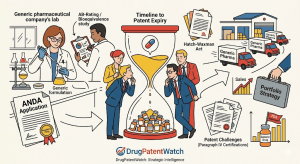
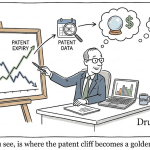
Between 2025 and 2030, patent protection expires on drugs generating between $217 billion and $400 billion in annual sales. The list includes pembrolizumab (Keytruda, Merck), apixaban (Eliquis, Bristol Myers Squibb/Pfizer), and several other blockbusters with combined revenues exceeding $50 billion per year. For generic manufacturers with the right IP intelligence and technical capabilities, this wave is the largest single commercial opportunity in the history of off-patent pharmaceuticals.
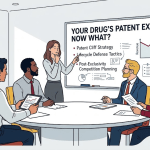
The catch: a meaningful share of that value sits behind complex patent estates, regulatory exclusivities, and biological manufacturing barriers that require years of anticipatory investment to breach. Portfolio managers who treat the cliff as a simple calendar event, plan a filing date around primary patent expiry and then execute, will underperform. Those who map the full legal and technical obstacle course two to five years in advance will capture disproportionate share.
Key Takeaways: Market Context
The $700B+ generic market generates savings through competition, but that same competition destroys margin. Survival requires defensible positioning, not volume alone.
The 2025-2030 patent cliff is historically large but disproportionately weighted toward biologics, which require biosimilar pathways, not standard ANDAs.
Japan’s quality crisis is the cautionary model for what happens when pricing pressure outpaces quality system investment.
Beyond Peak Sales: Building a Realistic Addressable Market
The brand drug’s peak annual revenue is the starting point for commercial analysis, not the answer. A portfolio manager who builds an ANDA business case off a $2 billion brand’s peak sales without adjusting for therapeutic area dynamics, route of administration, product complexity, geographic concentration, and competitive entry timing will consistently overestimate returns.
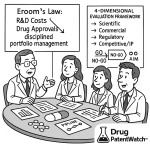
Commercial assessment requires a multi-dimensional market map built on four variables that interact in ways a headline number obscures entirely.
Therapeutic area matters because it determines competitive intensity and the nature of the end customer. Cardiovascular oral solids are largely saturated; a new filer in that space enters a commoditized market with 10-plus competitors and sub-10% gross margins. Oncology injectables are a different environment, where complexity, specialized distribution, and a smaller prescriber base create structurally higher barriers and more durable pricing.
Route of administration creates a pronounced bifurcation in revenue quality. Oral solids, roughly two-thirds of generic revenue by volume, have the lowest manufacturing barriers and therefore the most brutal price erosion. Injectables, inhalables, and transdermal systems require specialized facilities, process validation, and in some cases device engineering that limits the number of credible filers. A company with a sterile fill-finish suite and validated aseptic process will face fewer competitors in a long-acting injectable than in a tablet, even at equivalent market size.
Drug complexity determines development cost, timeline, and the shape of the competitive curve. Simple generics developed via standard pharmacokinetic bioequivalence studies cost $2-10 million and attract many filers. Complex generics covering locally acting products, modified-release systems, fixed-dose combinations, and drug-device combinations cost $10-50 million or more and attract a fraction of the field. Biosimilars, as detailed in Section 11, require $100-250 million in development expenditure and typically face two to five competitors at launch, if any.
Geography is the final variable. North America commands over a third of global generic revenue by value. Asia-Pacific grows fastest, driven by healthcare infrastructure investment in India, China, Southeast Asia, and Australia. But market access rules, pricing mechanisms, and local regulatory requirements differ enough across jurisdictions that a product optimized for FDA approval may require substantial additional development work, stability studies, and labeling modifications to compete in the EMA or PMDA environments.
IP Valuation as a Commercial Asset
Every drug included in a generic development pipeline carries an embedded IP valuation. The commercial model must account for the economic value of the patent estate protecting the brand, because that estate determines how long exclusivity persists, what legal costs a challenger must absorb, and what the realistic launch timeline looks like on a probability-weighted basis.
A drug with a single composition-of-matter patent expiring in 2026 and no secondary filings has a different IP valuation than a drug with the same primary expiry but twenty-two secondary patents covering polymorphs, extended-release formulations, device designs, and method-of-use claims extending effective exclusivity to 2034. The second scenario requires a Paragraph IV campaign against multiple patents, potentially triggering multiple 30-month stays and multi-year litigation. The development cost model for that product needs to carry $20-50 million in anticipated legal fees on top of the ANDA development costs.
IP valuation tools, including Orange Book mining, patent prosecution history analysis, and litigation outcome databases, are not a legal team’s problem. They are a portfolio team’s problem, because the legal cost structure directly determines the financial return on the entire project.
Key Takeaways: Commercial Calculus
Headline brand revenue is a starting point. Realistic revenue modeling requires adjustments for TA dynamics, RoA complexity, competitive filer count, and geographic scope.
The IP estate protecting a brand drug is a direct input to development cost modeling, not a separate legal concern.
Oral solid generics favor high-volume, low-cost manufacturers. Injectables and complex products favor companies with specialized facilities and deep regulatory expertise.
3. The Price Erosion Curve: The One Law Every Portfolio Manager Must Know
Price as a Function of Competitor Count
Price erosion in generic markets is not gradual or unpredictable. It follows a consistent, empirically documented pattern that correlates directly with the number of competitors in the market. The FDA’s own competitive data, confirmed by HHS and academic studies, establishes the following reference points:
Number of Generic Competitors
Approximate Price Reduction vs. Brand
1 (first generic, during 180-day exclusivity)
30-39%
2
50-54%
3-5
60-79%
6-10+
80-95%
This is the fundamental law of generic economics. The implications are not subtle. A company entering a market as the sixth filer, against a brand priced at $100 per unit, is selling at $5-20 per unit. Any product with a cost of goods above $3 is already economically marginal. The entire architecture of Hatch-Waxman strategy, from Paragraph IV filings to the 180-day exclusivity race, exists to avoid this position.
Modeling the Erosion Timeline
The erosion curve is not instantaneous. The transition from first-generic pricing (30-39% discount) to full commoditization (80-95% discount) typically takes 12-36 months, depending on the drug’s therapeutic class, prescriber concentration, and the speed at which additional ANDAs receive final approval. For rare or specialty products with few prescribers and high clinical inertia, the curve is shallower. For primary care drugs with high prescription volume and no differentiation, commoditization is faster.
The practical implication for portfolio modeling is that entry timing, measured in months relative to the first generic launch, determines not just share but average realized price over the product’s commercial life. A company that enters six months after the first generic at 30% market share can still generate attractive returns. A company that enters 24 months after the first generic, when the market has four to seven competitors and prices have dropped 70%, is likely below its fully loaded cost basis.
Investment Strategy Note: When evaluating a generic company’s pipeline, price erosion timing is the highest-leverage assumption in the financial model. A two-year delay in launch, due to ANDA backlog at FDA, a 30-month stay triggered by Paragraph IV litigation, or an API supply disruption, can transform a high-return product into a money-losing one. Discount any projected launch date by at least 12-18 months and stress-test returns at the 80th percentile of competitive intensity.
4. Payer Dynamics and Formulary Risk
PBMs and the Formulary Gatekeeping Problem
Price erosion from manufacturer competition is the better-understood risk. Formulary risk from PBMs is less visible but equally capable of suppressing generic uptake and wrecking a product’s revenue model.
Pharmacy Benefit Managers negotiate prices and manage formularies on behalf of insurance plans. Their revenue model depends heavily on rebates from brand manufacturers: a manufacturer pays the PBM to secure preferred formulary placement, which increases brand volume, which increases the rebate pool. The economic logic pushes PBMs toward high-list-price brands that offer large rebates, rather than low-net-price generics that offer none. This creates documented instances where a generic with a net cost to the system 80% below the brand is placed on a higher co-pay tier than the brand drug, because the brand’s rebate compensates the plan at the beneficiary expense.
Medicare Part D analysis shows this pattern increasing in frequency. Some plan beneficiaries pay more in out-of-pocket costs for a generic than the cash price available through discount programs like GoodRx. This delinkage between the generic’s list price and the patient’s actual cost artificially depresses prescription volume and slows market penetration, particularly in the initial launch phase when physician prescribing behavior is still adapting.
International Reference Pricing and Tiered Frameworks
Outside the U.S., government mechanisms formalize what PBMs do by incentive. European reference pricing sets a single reimbursement level for interchangeable products, forcing all manufacturers below that threshold or requiring patients to pay the difference. Canada’s pan-Canadian framework is tiered by entry order: the first generic reimburses at 85% of brand price, the second at 50%, and the third and subsequent entrants at 25-35%. These frameworks are predictable, but they eliminate any pricing discretion and accelerate the commoditization timeline.
For multi-market generic programs, the payer landscape must be modeled by jurisdiction. A product that generates acceptable returns in the U.S. at first-generic pricing may be economically marginal in Canada from launch day and completely unviable in Germany under the AMNOG reference price calculation.
Key Takeaways: Payer Dynamics
PBM formulary design can suppress generic uptake even for the lowest-cost product. Model this risk explicitly, particularly for high-volume primary care drugs where brand rebates are largest.
International tiered pricing systems compress margins further and faster than U.S. market dynamics. Multi-market programs need jurisdiction-specific revenue models.
Discount card penetration (GoodRx and equivalents) is a leading indicator of PBM-induced formulary distortion. High discount card usage for a generic suggests the formulary placement is suppressing insurance-covered volume.
5. The Patent Estate: Why the Expiry Date Is Irrelevant
The Patent Thicket: Architecture and Intent
The single most common mistake in generic opportunity assessment is treating the primary patent expiry date as the market entry date. Brand manufacturers have built systematic, multi-layer IP portfolios specifically designed to prevent this assumption from being correct.
The strategic tool is the ‘patent thicket’: a dense, overlapping network of secondary patents filed after the original composition-of-matter patent, covering every incremental modification to the drug or its delivery. The thicket is not accidental. It is a deliberate investment in IP infrastructure, typically managed by the brand’s IP team in coordination with regulatory affairs, that can extend effective market exclusivity by five to fifteen years beyond the primary patent.
Secondary patents cover polymorph forms of the API, extended-release and modified-release formulations, specific particle size distributions that affect bioavailability, device designs for inhaled and injectable products, and method-of-use claims for new indications. Each individual secondary patent may be narrower and more vulnerable to challenge than the primary composition-of-matter patent. But the aggregate effect of ten or twenty such patents, each capable of triggering a 30-month stay if challenged, is to make litigation prohibitively expensive and time-consuming for all but the best-capitalized generic filers.
Evergreening: A Detailed Technology Roadmap
Understanding how brand companies build the thicket requires mapping the standard evergreening playbook.
The first and most common tactic is formulation switching. The brand files an NDA for a modified-release version of an immediate-release drug before the original patent expires, patents the new formulation, and then actively migrates prescribers and patients to the modified version. By the time the original immediate-release product’s patent expires, prescription volume has shifted to the new formulation, and the generic of the old version captures a shrinking market. AstraZeneca’s switch from omeprazole (Prilosec) to esomeprazole (Nexium) is the canonical example: a single-enantiomer switch supported by new patents that extended effective exclusivity by years.
The second tactic is polymorph patenting. Active pharmaceutical ingredients exist in multiple crystalline forms, each with different physical properties. A brand company can patent a specific polymorph that is easier to manufacture, more stable, or better-absorbed, then defend that patent against a generic filer who uses the same polymorph. Challenging a polymorph patent requires expensive solid-state chemistry analysis and often expert testimony on the predictability of the form’s properties at the time of filing.
The third tactic is device and delivery system patents. Drugs delivered via auto-injector, inhaler, or pen device are covered by patents on the device mechanics, not just the drug. Advair (fluticasone/salmeterol) maintained its market exclusivity years beyond what a simple patent analysis would suggest because the Diskus inhaler was covered by a separate and extensive device patent portfolio. Any generic challenger needed to demonstrate bioequivalence not only of the drug but equivalent performance of its own device, which required either licensing the device design or engineering a non-infringing alternative.
The fourth tactic is pediatric study manipulation. Under the Best Pharmaceuticals for Children Act, a brand company that conducts FDA-requested pediatric studies earns six additional months of exclusivity applied to all existing patents and exclusivities. This is not a large extension per patent, but it applies to the entire patent stack simultaneously, delaying every pending ANDA for the same period.
Counter-Strategy: Full Patent Estate Analysis
For a generic team assessing a target, the required deliverable is a complete IP landscape map, not a primary patent expiry date. That map must include every patent in the FDA Orange Book for the reference listed drug, every patent in the brand company’s prosecution history related to the molecule or formulation, the filing and publication dates for each patent (to assess obviousness and prior art arguments), any Inter Partes Review (IPR) proceedings already filed at the USPTO, and the litigation history including the brand’s win rate in previous Paragraph IV disputes.
The output of this analysis is a probability-weighted effective market entry date, not a calendar date. A drug with a primary patent expiring in 2026 but a secondary formulation patent expiring in 2031 and a device patent expiring in 2029 has an expected market entry date of 2029-2031 on an unlitigated basis. If a Paragraph IV challenge against the secondary patents succeeds, that date moves earlier. If it fails, it does not.
Investment Strategy Note: For institutional investors evaluating a generic company’s pipeline, ask specifically for the probability-weighted effective entry dates, not nominal expiry dates. A pipeline that shows ten products with primary patents expiring in 2026-2028 may actually have a weighted average market entry of 2029-2032 once secondary patent estates are accounted for. This distinction significantly affects the near-term revenue ramp.
6. Hatch-Waxman Mechanics: ANDA, Orange Book, and the 30-Month Stay
The Abbreviated New Drug Application Pathway
The Drug Price Competition and Patent Term Restoration Act of 1984 (Hatch-Waxman) created the Abbreviated New Drug Application (ANDA), which allows a generic manufacturer to obtain FDA approval by demonstrating bioequivalence to a reference listed drug (RLD) without conducting independent efficacy trials. The applicant relies on the innovator’s clinical data, which the law treats as the evidentiary foundation for the generic approval.
Hatch-Waxman also created the Orange Book (formally, ‘Approved Drug Products with Therapeutic Equivalence Evaluations’), the FDA’s registry of approved drugs and the patents their sponsors have listed as covering them. Every ANDA filer must certify its position on each Orange Book patent. There are four certification types: Paragraph I (patent is expired), Paragraph II (drug is not patented), Paragraph III (the applicant will wait for patent expiry), and Paragraph IV (the patent is invalid, unenforceable, or will not be infringed). Paragraph IV is the only route to pre-expiry market entry, and it is the central mechanism of all competitive generic strategy.
The 30-Month Stay: Brand’s Most Powerful Defensive Weapon
A Paragraph IV certification triggers a mandatory notification to the brand company and patent holder, which then has 45 days to file an infringement lawsuit. If it does, the FDA cannot grant final approval to the ANDA for 30 months, regardless of whether the generic’s arguments have any merit. This automatic stay is the most powerful tool in the brand’s defensive arsenal. It provides 30 months of continued monopoly revenue to fund litigation, negotiate settlements, and potentially file additional patents that can extend the stay.
For a blockbuster drug generating $2-5 billion in annual revenue, 30 months of protected sales is worth $5-12 billion. This asymmetry, the brand company risks losing future exclusivity while the generic company risks $20-50 million in litigation costs, creates the incentive structure for pay-for-delay settlements (reverse payments), where the brand compensates the generic to withdraw its challenge and agree to a later market entry date. The FTC’s 2013 win in FTC v. Actavis established that reverse payment settlements are subject to antitrust scrutiny, but they continue under various structures.
Key Takeaways: Hatch-Waxman Mechanics
The ANDA pathway eliminates the need for independent clinical trials but does not eliminate the legal burden of patent certification.
The 30-month stay is the brand’s primary delay mechanism. A generic team must budget both the litigation cost and the revenue loss from delayed launch into any Paragraph IV strategy.
Orange Book patent listings are self-reported by brand companies and are not independently validated by the FDA. Some listed patents are legally vulnerable precisely because the brand overstated their coverage to secure the listing.
7. Paragraph IV Strategy: IP Valuation, Litigation ROI, and Authorized Generic Risk
The Decision to Challenge: A Litigation ROI Framework
Filing a Paragraph IV certification is not a legal decision. It is a capital allocation decision with a binary outcome: the court finds the patent invalid or not infringed, and the generic gains early market entry, or the court upholds the patent, and the generic must wait for expiry. The financial model must price both scenarios.
Litigation ROI for a Paragraph IV challenge requires four inputs: the expected revenue during the 180-day exclusivity period (if first-to-file), the probability of a favorable outcome, the total litigation cost (legal fees typically $10-30 million per case, potentially more for complex portfolios), and the cost of the 30-month delay if the brand files suit and wins.
Historical data shows generic challengers prevail approximately 76% of the time in final adjudicated Paragraph IV cases. This win rate looks favorable, but it is misleading as a simple probability input. Not all cases are adjudicated; many settle, often on terms that reflect the brand company’s leverage. The 76% figure applies to cases that reach decision, which disproportionately include patents the generic side believed were weakest at the outset.
For an IP team building a challenge strategy, the more useful question is: what is the probability that this specific patent portfolio can be invalidated or designed around, given the prior art, prosecution history, and analogous litigation outcomes? That question requires a patent-by-patent analysis, not an industry average.
Authorized Generics: The Brand’s Nuclear Option
The most financially damaging risk to a first-filer’s 180-day exclusivity is the authorized generic (AG). An AG is a product the brand company sells under the original NDA, either directly or through a licensing agreement with a generic partner. Because it uses the brand’s NDA, it does not require a separate FDA approval and does not count as a generic for purposes of 180-day exclusivity blocking. The brand can launch an AG the day a first-filer begins commercial marketing, converting a duopoly (first-filer and brand) into a three-competitor market during the most valuable period of the product’s generic life.
FTC analysis estimates AG competition reduces first-filer revenues by 40-52% during the 180-day period. The revenue impact compounds over time because the AG establishes a distribution footprint and pricing relationship with pharmacies and PBMs that persists after exclusivity ends.
Brand companies use the AG threat as a negotiating tool in settlement discussions. A first-filer deciding whether to litigate to judgment or accept a settlement must evaluate whether a settlement that prohibits AG launch offers better risk-adjusted economics than winning in court but facing AG competition during exclusivity.
Investment Strategy Note: When a generic company announces a first-to-file Paragraph IV, determine whether the brand has a history of AG launches and whether the settlement structure (if any) includes an AG carve-out. A 180-day exclusivity period with AG competition is worth approximately half of one without. Revise revenue projections accordingly.
8. 180-Day Exclusivity: Anatomy of the Golden Ticket
The Economics of First-to-File
The 180-day marketing exclusivity period granted to the first substantially complete ANDA filer with a Paragraph IV certification is the highest-value individual prize in generic pharmaceuticals. During this window, only two products are legally available: the brand and the first generic. The absence of additional generic competition allows the first-filer to price at a smaller discount to brand (typically 15-30%) while capturing substantial prescription volume from cost-conscious pharmacies, PBMs, and payers.
For a drug with $2 billion in annual brand sales, a first-filer capturing 80% market share at a 25% discount to brand generates approximately $1.2 billion in annualized revenue during the exclusivity period. At typical generic gross margins of 40-60% on a first-to-market complex product, the contribution from six months of exclusivity alone can exceed $240-360 million. This is the capital that funds litigation, pipeline investment, and manufacturing scale-up.
Research on first-mover advantage in generics shows the initial entrant captures an 80% market share advantage over the second entrant and a 225% advantage over the third, and that advantage persists for three or more years beyond the exclusivity period. This persistence reflects real commercial stickiness: pharmacies build their inventory around the first-filer, PBMs establish preferred contracts, and prescriber habits form around the first product dispensed.
First-to-File Qualification: The ‘Substantially Complete’ ANDA Requirement
The right to 180-day exclusivity goes to the first filer of a ‘substantially complete’ ANDA. In practice, this means the ANDA must be complete enough for the FDA to file it, which requires acceptable bioequivalence data, a complete chemistry, manufacturing, and controls (CMC) section, and a valid Paragraph IV certification. An incomplete ANDA that is later completed and refiled does not receive first-filer status relative to a complete ANDA filed later by a competitor.
This creates strong operational pressure to file early, even before all data are fully optimized. Some companies file an ANDA with a small-scale bioequivalence study and upgrade their manufacturing process during the review period. The tradeoff is the risk of a Complete Response Letter (CRL) from FDA requiring additional data, which can delay final approval and complicate the launch timeline.
Key Takeaways: 180-Day Exclusivity
180-day exclusivity is the economic engine of aggressive generic strategy. The entire litigation investment is justified primarily by the revenue generated in this window.
AG competition during the exclusivity period cuts first-filer revenue by approximately half. Any litigation settlement or financial model that ignores this risk is unreliable.
First-mover commercial advantages persist three or more years beyond the exclusivity period. The value of being first extends well past the formal exclusivity window.
9. Regulatory Exclusivity Blockades: The Non-Patent Barriers
Exclusivities That Block ANDA Acceptance or Approval
Patent expiry is necessary but not sufficient for generic market entry. Four categories of regulatory exclusivity, granted by FDA independent of the patent system, can block generic approval even after every relevant patent has expired or been invalidated.
New Chemical Entity (NCE) Exclusivity grants five years of protection to drugs containing a previously unapproved active moiety. During the first four years, the FDA will not even accept an ANDA for filing. In the fifth year, an ANDA with a Paragraph IV certification can be filed, but approval is still blocked until the five-year period ends. For any drug approved with NCE exclusivity, the practical effect is that competitive generics cannot reach patients until at least five years post-brand approval.
Biologic Exclusivity provides 12 years of market exclusivity to new biologic products under the Biologics Price Competition and Innovation Act (BPCIA). No biosimilar can receive FDA approval for 12 years from the reference product’s approval date. This is the primary structural reason why the biosimilar market has developed more slowly than the small-molecule generics market despite enormous financial incentives. A biologic approved in 2015 cannot face biosimilar competition until 2027 at the earliest.
Orphan Drug Exclusivity (ODE) grants seven years of exclusivity to drugs approved for rare diseases (fewer than 200,000 U.S. patients). ODE blocks generic or biosimilar approval for the same drug in the same indication. ODE can be awarded to a drug that already has market exclusivity under NCE or biologic provisions, effectively layering the protections. Portfolio analysis of a drug with ODE must assess both the legal barrier and the commercial question: does the orphan indication generate sufficient volume to justify generic development even after ODE expires?
Pediatric Exclusivity adds six months to all existing patent terms and other exclusivities following the completion of FDA-requested pediatric studies. This is a ‘tack-on’ exclusivity, not a standalone barrier, but it applies universally across all Orange Book patents and exclusivities simultaneously. A six-month extension on a drug with multiple overlapping patents and an ODE means six additional months of exclusivity on the entire stack.
The Full Exclusivity Checklist
Any generic feasibility assessment must screen all four exclusivity categories before any financial modeling begins. Missing a seven-year ODE when the primary patent expires in 2025 transforms an apparent near-term opportunity into a 2032 launch at the earliest. This is not a theoretical risk. IQVIA data shows that the median annual spending on expired orphan drugs with no generic competition was $8.6 million, suggesting the market size itself sometimes fails to attract a developer even after all protections lapse.
Investment Strategy Note: When evaluating a generic pipeline company’s lead products, run the FDA’s Exclusivity Database alongside the Orange Book analysis. A pipeline that looks attractive based on patent expiry dates alone may have a materially different weighted average exclusivity expiry, particularly for companies that focused development on specialty and rare disease targets in recent years.
10. Technical Feasibility: Simple Generics, Complex Generics, and Biosimilars
The Strategic Choice of Product Complexity
Generic development exists on a spectrum from oral solid tablets with well-understood pharmacokinetics to large-molecule biologics produced in mammalian cell culture. Where a company positions on that spectrum is not a product-by-product choice; it is a company-defining strategic commitment that determines the required capital base, manufacturing infrastructure, scientific talent, and risk tolerance.
The spectrum has three broad segments that require distinct operating models.
Simple Generics are primarily oral solid dosage forms, tablets and capsules with small-molecule APIs and straightforward pharmacokinetics. Development cost is $2-10 million. Timeline from ANDA submission to final approval, on an unencumbered basis, is 2-4 years. Regulatory approval requires a standard pharmacokinetic bioequivalence study in 24-36 healthy subjects. The competitive field is large: 10 or more ANDA filers is common for high-revenue oral solid targets. Margins are thin and declining. The operational model requires high-throughput manufacturing, aggressive API sourcing, and cost-per-tablet targets measured in fractions of cents. Companies that win in simple generics win through scale and procurement leverage, not scientific differentiation.
Complex Generics cover a range of difficult-to-develop products. Non-biological complex drugs (NBCDs), long-acting injectables, transdermal systems, drug-device combinations (metered-dose inhalers, auto-injectors), locally acting products (topical creams, ophthalmic drops, nasal sprays), and fixed-dose combinations all fall in this category. Development costs run $10-50 million or more. Timeline is 3-6 years. The regulatory pathway is often less defined, requiring product-specific guidance or novel bioequivalence methodology. Competition is structurally lower, pricing is more durable, and margins are meaningfully better than simple generics. Companies that win here require specialized formulation science, analytical capabilities, and in many cases device engineering.
Biosimilars are the highest-barrier, highest-capital segment. Development of a biosimilar requires a complete analytical comparability exercise demonstrating high structural and functional similarity to the reference biologic, preclinical pharmacology studies, and in most cases clinical pharmacokinetic and efficacy trials. Total development expenditure is $100-250 million per molecule. Timeline from program start to potential approval is 5-9 years. The number of credible global developers with the bioreactor capacity, analytical infrastructure, and clinical trial capabilities to pursue this pathway is small. At launch, a biosimilar typically faces 2-5 competitors globally, not 10-15. Price erosion is real but slower and less severe than in small-molecule generics.
Metric
Simple Generic
Complex Generic
Biosimilar
Development Cost
$2M-$10M
$10M-$50M+
$100M-$250M+
Development Timeline
2-4 years
3-6 years
5-9 years
Key Regulatory Hurdle
Standard PK bioequivalence
Advanced BE methods, device testing
Analytical comparability, clinical trials
Competitive Intensity at Launch
Very high (10+ filers typical)
Moderate to low
Low (2-5 competitors globally)
Margin Profile
Low, severe erosion
Moderate, slower erosion
High, more durable pricing
This framework is the basis for honest capability self-assessment. A company without a sterile bioreactor, a protein characterization laboratory, and clinical development infrastructure cannot pursue a biosimilar program, regardless of the market opportunity. Announcing biosimilar development without those capabilities is not a strategic pivot; it is a capital destruction exercise.
11. Bioequivalence Science: Where the Development Cost Lives
Standard Bioequivalence: The Pharmacokinetic Study
FDA defines bioequivalence as the absence of a significant difference in the rate and extent to which the active ingredient becomes available at the site of drug action. For orally administered small-molecule drugs that are absorbed into systemic circulation, this is tested through a standard pharmacokinetic study: 24-36 healthy subjects receive both the generic and reference product in a crossover design, blood is sampled at multiple time points, and the area under the plasma concentration-time curve (AUC) and peak concentration (Cmax) are compared. The generic must demonstrate that its 90% confidence intervals for AUC and Cmax fall within the 80.00-125.00% range of the reference.
This is straightforward for most oral solid products. Development of the bioequivalence study itself is not where costs concentrate for simple generics; it is the formulation development and scale-up that drives the budget.
Complex Bioequivalence: Where the Science Gets Expensive
For locally acting drugs, the standard systemic PK approach does not apply. A topical corticosteroid applied to skin is not intended to reach measurable systemic concentrations. Demonstrating bioequivalence requires showing equivalent drug concentration at the site of action (the skin), not in blood. The FDA has spent over a decade developing methods for this problem. Dermal pharmacokinetic studies using open-flow microperfusion and confocal Raman spectroscopy allow measurement of drug concentration in the skin layers, but these techniques are specialized, expensive, and not yet universally accepted for all topical product types. For many topical generics, comparative clinical endpoint studies in large patient populations (300-600 subjects) remain the required approach, adding $5-15 million and 18-24 months to development timelines.
Nasal sprays and metered-dose inhalers require in vitro cascade impaction studies to characterize the aerosol particle size distribution, device actuation force testing, and sometimes clinical pharmacokinetic studies with modified assay sensitivity to detect low systemic concentrations. The FDA’s product-specific guidances for respiratory products are detailed and prescriptive, and sponsors who do not follow them precisely face Complete Response Letters that reset development timelines by 12-18 months.
Fixed-dose combinations (FDCs) present a different challenge: the combined formulation may alter the individual components’ absorption in ways that make equivalence to separate co-administration of mono-products difficult to demonstrate. FDA guidance requires a bioequivalence study comparing the FDC generic to the combination of individual reference products, which is straightforward if the components do not interact. If absorption interactions exist, additional formulation work and study designs are required.
Biosimilar comparability exercises go beyond bioequivalence entirely. The foundation is analytical characterization: primary structure (peptide mapping, disulfide bond mapping), higher-order structure (circular dichroism, hydrogen-deuterium exchange mass spectrometry), glycosylation profiling, binding affinity assays, and functional cell-based assays must all demonstrate high similarity to the reference product. Differences found in analytical characterization must be assessed for clinical relevance. If a glycosylation difference is identified, the sponsor must demonstrate through preclinical and potentially clinical data that the difference does not affect safety or efficacy.
12. API Supply Chain: Geopolitical Risk, Cost Structure, and Resilience
Concentration Risk in Global API Manufacturing
The global API supply chain has concentrated dramatically over 30 years. China and India supply approximately 80% of the APIs and pharmaceutical intermediates used in global generic drug manufacturing. Within India, which supplies roughly 50% of the generics used in the U.S. by volume, approximately 70% of bulk drug raw materials are sourced from China. This creates a layered concentration risk: a disruption in Chinese API output affects Indian manufacturing, which affects U.S. drug availability, through a supply chain that is not visible to the prescriber or patient at the pharmacy counter.
The COVID-19 pandemic demonstrated the fragility of this structure. Export restrictions and factory shutdowns in China in early 2020 created immediate API shortages in India, which then propagated into U.S. drug shortage events across multiple therapeutic categories. The FDA’s drug shortage database shows hundreds of active shortage events at any given time, with API supply disruptions cited as a primary cause in a substantial fraction.
Geopolitical and Tariff Risk
Current U.S.-China trade tensions, including existing pharmaceutical tariff proposals under Section 301 and potential new import controls, create ongoing uncertainty for API sourcing. A tariff applied to Chinese APIs and intermediates would increase input costs for both U.S. generic manufacturers and their Indian suppliers who depend on Chinese raw materials. The cost increase would flow directly to the cost of goods sold for finished generics, compressing already thin margins further.
Indian API manufacturers face their own geopolitical risk exposure: U.S. tariff proposals directed at Indian pharmaceutical exports, which were discussed in the context of trade negotiations in 2024-2025, could increase import costs for finished dose forms manufactured in India, affecting the competitive cost position of Indian-origin generics in the U.S. market.
Building Supply Chain Resilience: A Practical Framework
Single-source API dependency is not a manageable operational risk for any in-market generic product; it is an existential one. A supply interruption from a sole-source API manufacturer triggers a drug shortage event, which damages commercial relationships and can result in regulatory action or contract termination from hospital and PBM customers who require supply continuity guarantees.
A resilient API sourcing strategy requires qualification of at least two independent API suppliers for any product with meaningful revenue. For high-revenue or medically essential products, three qualified suppliers with staggered geographic and ownership structures is the appropriate target. Supplier qualification for a generic API is a substantial exercise: it requires chemistry, manufacturing, and controls data review, on-site audit, and often a bioequivalence bridging study to confirm the new source does not alter the finished product’s pharmacokinetic profile.
The cost of supply chain resilience, approximately $500K-$2M per additional supplier qualification for a complex product, is real and must be built into the product P&L from the start. Companies that treat it as a future capital expense often find themselves unable to fund it after launch when margin pressure intensifies.
Investment Strategy Note: In due diligence on a generic manufacturer, request the API supplier matrix for the top ten revenue products. Single-sourced APIs in high-revenue products represent unpriced operational risk. Any product where the sole API supplier is in a single country, particularly one with elevated geopolitical risk, should be flagged for probability-weighted scenario analysis on supply disruption impact.
13. Strategic Synthesis: First-to-File vs. Follower Models
Defining the Business Model Before Picking Products
Product selection in generics is downstream of business model selection. A company must first answer what kind of generic competitor it intends to be, because the answer determines what kind of opportunities it can credibly pursue, what capital it needs, and what operational capabilities it must build.
The first-mover model centers on Paragraph IV patent challenges to gain 180-day exclusivity on high-revenue products. It requires a strong IP litigation function, an ANDA filing capability that can move quickly on newly identified targets, a clinical research organization relationship for bioequivalence studies, and capital to fund $10-30 million in legal costs per case. This is the model that generates the highest margin products and the highest-profile wins, but it also concentrates risk in a small number of high-stakes outcomes. A first-mover company with two active Paragraph IV cases that both lose has a severe near-term revenue problem.
The follower model avoids litigation entirely. Products are selected on the basis of patent expiry and regulatory clearance, filed with standard ANDA packages, and launched into markets where the legal risk has already been resolved by earlier entrants. The model requires extreme cost discipline and manufacturing efficiency, because the products entered are already in a competitive field with eroded pricing. This model is viable for companies with automated, high-throughput manufacturing and an API procurement function capable of extracting maximum volume discounts.
A hybrid model, pursued by most of the largest generic companies, maintains a Paragraph IV litigation portfolio targeting a few high-value blockbusters while also sustaining a large base of follow-on generics that provide consistent, lower-margin revenue. The litigation pipeline generates the high-return products; the follow-on portfolio provides operating cash flow between exclusivity events.
Portfolio Concentration and Diversification
A portfolio concentrated in two or three high-value first-filer products is highly profitable during exclusivity windows and highly volatile afterward. Market data shows that a typical first-generic product loses 60-70% of its revenue within 18 months of exclusivity ending. A company whose P&L depends on one or two such products faces a revenue cliff of its own every time exclusivity expires.
A diversified portfolio distributes this volatility across many products with different exclusivity timelines, therapeutic areas, and competitive dynamics. Diversification also provides resilience against single-product development failures, regulatory rejections, and supply chain disruptions. The cost is complexity: managing 200 ANDA products requires a different operational infrastructure than managing 20.
14. Competitive Intelligence Infrastructure
What Real-Time Intelligence Changes
The lag between a public event, an ANDA filing, a court ruling, an Orange Book patent listing, an FDA complete response letter, and a portfolio manager’s awareness of that event historically ran weeks to months. A competitor who knew about a new Paragraph IV filing one week before you did had meaningful time to assess their own filing position, accelerate their bioequivalence study, or reallocate litigation resources to a product where they could be first.
Real-time patent and regulatory intelligence platforms collapse that lag. DrugPatentWatch, the FDA’s ANDA filing database, the Patent Trial and Appeal Board’s IPR docket, and PACER (federal court records) together form the data infrastructure for competitive intelligence in generics. A team with integrative access to these sources can track every new ANDA filing, every Paragraph IV notification, every inter partes review petition, and every consent judgment or settlement in near-real-time.
The specific intelligence uses are:
Monitoring the full patent estate for target drugs, including newly issued secondary patents that could change the entry timeline. Tracking competitive ANDA filings and their Paragraph IV certifications to determine whether a target is already subject to first-filer challenge. Analyzing litigation dockets to identify which brand companies are most aggressive in filing suit (and therefore most likely to trigger 30-month stays), which helps price the litigation risk in a Paragraph IV strategy. Reviewing historical consent judgments and settlement structures to identify industry norms for pay-for-delay terms by therapeutic class and company pair.
This intelligence function is not a research supplement to portfolio management; it is portfolio management’s primary data source. A company making product selection decisions without integrative patent and regulatory intelligence is operating with a material information disadvantage relative to competitors who have it.
15. Portfolio Case Studies: Teva, Viatris, Sandoz
Teva Pharmaceuticals: The ‘Pivot to Growth’ and IP Valuation as Anchor
Teva is the world’s largest generic drug company by prescription volume. Its strategic challenge for the past decade has been the same one facing all large generics: the simple-generics business that built Teva’s scale is being destroyed by price erosion, while the high-value complex generics and biosimilar markets require scientific capabilities and capital investment that Teva spent years not prioritizing.
CEO Richard Francis’s ‘Pivot to Growth’ strategy, articulated in detail at Teva’s 2025 investor day, addresses this directly. The strategy has four stated pillars: delivering on innovative growth through Austedo (deutetrabenazine, approved for tardive dyskinesia and Huntington’s disease chorea) and Ajovy (fremanezumab, a CGRP-receptor antagonist for migraine prevention), advancing innovation in the pipeline, sustaining the generics business as a stable revenue base, and focusing capital allocation on the highest-value opportunities.
The IP valuation dimension here is critical. Austedo’s composition-of-matter patent, combined with its NDA-related exclusivities and the complexity of deuterated chemistry that makes generic development more difficult, gives it a durable IP position that generates substantially higher margins than any commodity generic. Teva’s value is increasingly concentrated in a small number of differentiated products where IP protection is strong, rather than distributed across hundreds of oral solid generics where it is weak. The generics segment now functions as the cash engine that funds innovation investment, not the growth engine itself. Teva targets doubling biosimilar revenues by 2027, with a pipeline that includes biosimilars for adalimumab, natalizumab, and other high-revenue biologics.
Viatris: Scale as IP Strategy
Viatris, formed in 2020 through the merger of Mylan and Pfizer’s Upjohn division, has a portfolio of over 1,400 approved molecules sold in 165 countries. At that scale, IP strategy operates differently. Viatris can deploy multiple ANDAs simultaneously across different jurisdictions and therapeutic classes, using geographic diversification to smooth out the volatility of any single product’s patent and competitive dynamics.
The company’s pipeline explicitly targets the 505(b)(2) pathway alongside standard ANDAs. The 505(b)(2) pathway allows approval of a modified version of an existing drug based on a combination of new data and reliance on the FDA’s prior findings for the reference product. This pathway can result in new NDA exclusivities for the modified product, giving Viatris a temporary branded position in markets it would otherwise enter only as a commoditized generic. This is a form of evergreening applied to the generic company’s own portfolio strategy, using regulatory creativity to create IP value where raw patent strength does not exist.
Sandoz: Pure-Play Biosimilar Positioning and the $300 Billion Bet
Sandoz’s spin-off from Novartis in October 2023 created the world’s largest standalone generics and biosimilars company. The strategic thesis is straightforward: the upcoming wave of biologic patent expirations represents a $300 billion market opportunity over the next decade, and Sandoz’s existing biologics manufacturing infrastructure, built over years within Novartis, gives it a durable manufacturing cost advantage over most potential entrants.
Sandoz has 28 biosimilars in its pipeline as of 2024, with a stated ambition to achieve biosimilar market leadership in the U.S. Its July 2025 signing of a non-binding term sheet to acquire Just-Evotec Biologics’ manufacturing capabilities in Toulouse, France, is consistent with the strategy of building bioreactor capacity ahead of demand. CEO Richard Saynor’s public statements describe a deliberate effort to secure manufacturing scale and in-house protein engineering capabilities before the biosimilar wave peaks in the late 2020s.
The IP valuation context for biosimilar development is distinct from small-molecule generics. Biosimilars do not launch against a patent; they launch against a 12-year biologic exclusivity, a large and aggressive reference product manufacturer, and a complex interchangeability designation process at the FDA. The ‘IP moat’ for a biosimilar company is its manufacturing process know-how, which is proprietary and not disclosed in the public BPCIA application. Process trade secrets, rather than filed patents, are the primary IP asset in biosimilar development.
Key Takeaways: Strategic Case Studies
Teva’s ‘Pivot to Growth’ is a live case study in repositioning a commoditized generics business around differentiated IP. The generics segment funds the transition; innovation generates the margin.
Viatris uses geographic scale and the 505(b)(2) pathway to extract IP-like value from a primarily generic portfolio.
Sandoz’s biosimilar strategy treats manufacturing process know-how as the primary IP asset, rather than filed patents, because biologic manufacturing complexity is itself the barrier to entry.
16. Forward Factors: IRA Price Negotiation, AI in Generics, Biosimilar Wave
The Inflation Reduction Act: Compressing the Prize Before Generics Arrive
The Inflation Reduction Act’s Medicare drug price negotiation provision, under which the Centers for Medicare and Medicaid Services can negotiate directly with manufacturers for certain high-spend Part D drugs, introduces a new variable into generic development economics. Historically, the ‘prize’ a generic company was racing toward was a brand drug’s full market price. The negotiated price could be substantially lower, shrinking the market value before generic entry occurs.
For drugs selected for negotiation, the negotiated price takes effect at the same time or before generic competition could realistically emerge for the same product. The commercial impact depends on the magnitude of the price reduction (CMS has achieved discounts of 38-79% in the first negotiation cycle) and the proportion of the brand’s sales that come through Medicare Part D. For drugs where Medicare represents 60-70% of volume, a large negotiated price reduction could materially compress the generic opportunity.
Portfolio managers must now run a scenario analysis on any high-revenue target drug: what is the probability it will be selected for negotiation in the next 2-4 years, what magnitude of price reduction is plausible, and how does that affect the NPV of the generic program? This is not a marginal adjustment; for some products, IRA negotiation risk could reduce the projected generic revenue opportunity by 20-40%.
AI and Machine Learning in Generic Development
AI applications in generic development are past the hype phase and into early commercial deployment. The specific areas with demonstrated value are:
Formulation development: machine learning models trained on physicochemical property data and formulation outcomes can significantly narrow the experimental design space for new generic products, reducing the number of prototype batches required and accelerating development timelines.
Bioequivalence prediction: physiologically-based pharmacokinetic (PBPK) modeling, augmented by machine learning, can predict the likely bioequivalence outcome for a complex formulation before human studies are conducted. For products where BE failure is expensive (long-acting injectables, complex topicals), this predictive capability directly reduces development risk and cost.
Patent landscape analysis: natural language processing tools can analyze the full prosecution history and claim language of large patent portfolios faster and more comprehensively than manual review. This accelerates the patent estate analysis that is foundational to Paragraph IV strategy.
ANDA backlog management: FDA’s Office of Generic Drugs has accumulated a large backlog of pending ANDAs. AI-based tools that help applicants identify the most common deficiency patterns in their therapeutic area can improve first-cycle approval rates and reduce the average time from submission to approval.
The Biosimilar Wave: Timeline and Market Access Reality
The biologic patent cliff is real but its translation into biosimilar market penetration is not automatic. Reference product manufacturers have developed a multi-tactic playbook for delaying biosimilar uptake that mirrors the evergreening strategy in small-molecule markets: contracting strategies that lock up PBM formulary placement in exchange for rebates, patient support programs that reduce the brand’s effective net price and remove cost-based switching motivation, interchangeability designation ambiguity that prevents automatic substitution at the pharmacy level, and litigation under the BPCIA’s ‘patent dance’ provision that delays launch through serial patent disputes.
Biosimilar interchangeability designation, which allows pharmacists to substitute a biosimilar for the reference product without prescriber intervention (analogous to automatic substitution for small-molecule generics), requires additional clinical data demonstrating that patients can switch between the products without increased safety or reduced efficacy risk. As of 2025, only a small fraction of approved biosimilars carry interchangeability designation. Without it, biosimilar adoption requires active prescriber and payer intervention, which is slower and less complete than automatic substitution.
For biosimilar developers, formulary placement strategy is therefore as important as regulatory approval strategy. A biosimilar approved without interchangeability designation entering a market where the reference product has exclusive contracts with the top three PBMs will face severely limited initial uptake, regardless of its price advantage. Building payer relationships and contracting capabilities in parallel with clinical development is not optional; it is part of the development program.
17. Investment Strategy Appendix
This section consolidates investment due diligence questions and financial modeling guidance for institutional investors evaluating generic and biosimilar pharmaceutical companies.
Due Diligence: Portfolio Quality Assessment
The primary question is not how many products are in the pipeline, but what the probability-weighted NPV of those products is, after accounting for patent estate analysis, exclusivity timelines, competitive filer counts, and development risk. Ask for this calculation from management and compare it to your own independently constructed model.
Specific line items to verify or stress-test:
Patent estate expiry dates vs. effective market entry dates, with probability weightings for Paragraph IV success rates applied to any litigated product. Confirmation that no target product carries NCE, biologic, orphan, or pediatric exclusivity that management has not factored into the launch timeline. Authorized generic risk assessment for any product in the Paragraph IV pipeline. API supplier diversity: how many qualified suppliers exist for the top ten revenue products, and what geographic concentration risk exists. ANDA approval rate from FDA on a first-cycle basis: companies with high first-cycle approval rates have superior CMC and regulatory functions that reduce development risk and timeline.
Valuation Framework for IP-Intensive Generic Companies
Generic company valuation is primarily a discounted cash flow exercise applied to the pipeline’s probability-weighted product NPVs. The key modeling choices are:
The risk-adjusted launch date (not the nominal patent expiry date) for each product. The competitive price scenario at launch, based on the anticipated number of ANDA filers and their expected approval timing. The revenue decay curve post-exclusivity or post-launch, using the price erosion model from Section 3 calibrated to the specific product’s therapeutic area and competitive dynamics. The development cost and legal cost per product, including any anticipated Paragraph IV litigation expense. API cost structure and any supply chain resilience investment required.
For biosimilar pipeline companies, the valuation requires additional inputs: clinical trial success probability (which is higher than for novel drug development but not trivial), manufacturing scale-up cost and timeline, and a market access model that includes an interchangeability designation scenario and a non-interchangeable scenario, because these produce meaningfully different revenue trajectories.
Risk Factors That Are Systematically Underpriced
Patent estate completeness risk: most generic pipeline analyses rely on Orange Book listings. Secondary patents in the brand company’s portfolio that are not yet listed, or that cover intermediates rather than the finished drug, are often missed and can delay market entry.
IRA negotiation selection risk: high-spend Medicare Part D drugs in therapeutic categories with limited competition are more likely to be selected for negotiation. This risk is not yet consistently priced into generic company valuations for drugs in those categories.
FDA backlog risk: ANDA review timelines vary by applicant history and product complexity. A company with a history of manufacturing deficiencies or CMC-related CRLs faces systematically longer approval timelines, which delays revenue realization and increases carrying cost.
API single-source risk: as discussed in Section 12, a supply disruption for a sole-source API can halt production of an in-market product for 6-18 months. This risk is underpriced because it is not visible in standard due diligence unless the API supplier matrix is specifically requested.
18. Key Takeaways by Segment
Commercial Calculus
The brand’s peak revenue is an upper bound, not a forecast. Realistic generic revenue modeling requires adjustments for therapeutic area dynamics, route of administration complexity, payer formulary behavior, competitive filer count, and geographic scope. IP valuation of the brand’s patent estate is a direct cost input to the generic development budget.
Patent Estate and Evergreening
The primary patent expiry date is the starting point of analysis, not the market entry date. A complete patent estate analysis covering all secondary patents, prosecution history, and analogous litigation outcomes is required to generate a probability-weighted effective entry date. Evergreening tactics, including formulation switching, polymorph patenting, and device patents, routinely extend effective exclusivity by 5-15 years beyond the primary patent.
Hatch-Waxman and Paragraph IV
The 30-month stay is the brand’s most powerful delay mechanism. A Paragraph IV decision is a capital allocation decision requiring full litigation ROI modeling under both favorable and unfavorable court outcomes, with explicit adjustment for authorized generic risk. The 180-day exclusivity period is the primary financial rationale for all aggressive litigation investment.
Technical Feasibility
Company capability must match product complexity. Simple generics require operational excellence and cost discipline. Complex generics require specialized formulation science and regulatory expertise. Biosimilars require biologic manufacturing infrastructure, protein characterization capabilities, and clinical development capacity. A company pursuing a strategy it does not have the infrastructure to execute is a capital risk, not a growth opportunity.
API Supply Chain
Single-source API dependency is an existential operational risk. Geographic concentration in China and India creates geopolitical and regulatory risk that is not visible at the finished-product level but propagates through the entire supply chain under stress. Supply chain resilience is a product P&L cost, not a capital budget discretionary item.
Forward Factors
IRA price negotiation risk must be incorporated into the NPV model for any high-spend Medicare Part D target drug. Biosimilar market penetration is not automatic: interchangeability designation, payer contracting, and reference product defensive strategies all materially affect the revenue ramp. AI tools are reducing development cost and risk in formulation, bioequivalence prediction, and patent analysis, and companies that adopt them systematically will have a structural efficiency advantage over those that do not.
This guide is intended for informational purposes for pharmaceutical and investment professionals. It does not constitute legal, regulatory, or investment advice. Patent and regulatory situations are product-specific and jurisdiction-specific; all strategic decisions require qualified legal and regulatory counsel.