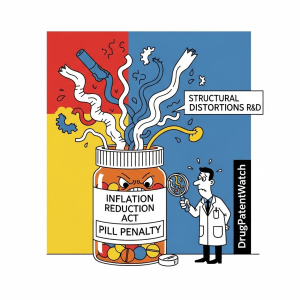
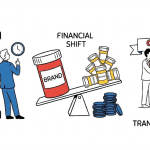
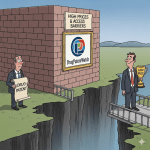
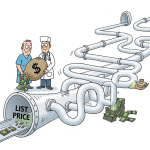
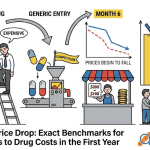
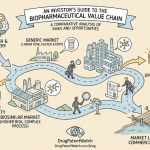
The enactment of the Inflation Reduction Act (IRA) of 2022 represents a paradigmatic shift in the United States biopharmaceutical landscape, introducing the first federal mechanism for direct drug price negotiation in the history of the Medicare program. While the legislation’s primary objective was to curtail federal spending and alleviate the out-of-pocket financial burden on seniors, the specific structure of the Drug Price Negotiation Program (DPNP) has introduced a profound economic disparity between two primary therapeutic modalities: small molecule drugs and biological products. This disparity, widely categorized within the industry as the “pill penalty,” differentiates the period of market pricing allowed for chemically synthesized drugs versus those derived from living tissues. Under the current statutory framework, small molecule drugs—typically oral solids like tablets and capsules—are eligible for price setting by the Centers for Medicare & Medicaid Services (CMS) just seven years after their initial Food and Drug Administration (FDA) approval, with the resulting “maximum fair price” (MFP) taking effect in year nine. In contrast, large molecule biologics are granted an eleven-year window before selection, with the negotiated price implemented in year thirteen.1 This four-year gap has fundamentally reconfigured the risk-return profile of drug development, creating a structural disincentive for the development of oral therapies that has begun to ripple through venture capital allocation, pipeline prioritization, and long-term pricing strategies.3
The Statutory Architecture of the Negotiation Program and the Origin of the Modality Gap
The mechanical trigger for the pill penalty lies in the bifurcated timelines established by the IRA for price “negotiation,” which many industry observers characterize as a de facto price-setting mechanism rather than a traditional market negotiation. The legislation targets “high-spending, single-source drugs” that lack generic or biosimilar competition and have been on the market for a specified duration. The distinction between small molecules and biologics is codified through the reliance on the underlying FDA approval pathways: the New Drug Application (NDA) for small molecules and the Biologics License Application (BLA) for large molecules.2 The “9- vs. 13-year” distinction refers to the point at which the government-mandated price takes effect, but the selection process itself begins even earlier, at year seven and year eleven, respectively.5
The policy rationale behind this four-year discrepancy remains a subject of intense debate among healthcare economists and policymakers. Some analysts suggest the longer window for biologics was intended to reflect the historically higher manufacturing complexity and the longer development timelines associated with large molecules.2 Others point to the political influence of the biologics industry or a misunderstanding of the existing patent landscape.5 Historically, small molecule drugs reached generic entry at a median of 12.6 years post-approval, while biologics faced biosimilar competition at a median of 20.3 years.7 By setting the small molecule negotiation date at year nine, the IRA effectively moves the revenue “cliff” forward by several years, capturing the asset just as it typically reaches its commercial peak.6
Structural Comparison of Negotiated Price Implementation Timelines
Feature
Small Molecule Drugs (NDA)
Biological Products (BLA)
Selection Eligibility
7 Years Post-Approval
11 Years Post-Approval
Price Implementation (MFP)
9 Years Post-Approval
13 Years Post-Approval
Initial Price Ceiling (9-12 yrs)
75% of Non-FAMP
N/A
Initial Price Ceiling (13-16 yrs)
65% of Non-FAMP
65% of Non-FAMP
Initial Price Ceiling (>16 yrs)
40% of Non-FAMP
40% of Non-FAMP
Exemption Basis
Generic Competition
Biosimilar Competition
The implementation of these timelines signifies a departure from the historical reliance on patent life and regulatory data exclusivity as the primary determinants of a drug’s commercial lifecycle. Under the IRA, the “negotiation date” acts as a new, sovereign-level loss of exclusivity (LOE) milestone that operates independently of the underlying intellectual property.8 For many small molecule blockbusters, the government-mandated price reduction will occur while the drug is still protected by multiple valid patents, effectively stripping away the most profitable years of the asset’s lifecycle and forcing manufacturers to recoup their multi-billion dollar R&D investments within a significantly narrower window.8
Economic Erosion of Small Molecule Net Present Value
The financial impact of the pill penalty is best quantified through the erosion of Net Present Value (NPV), the primary metric used by biopharmaceutical firms to justify capital allocation for high-risk research projects. Bringing a single new drug to market is estimated to cost between $2.23 billion and $2.5 billion, accounting for the high rate of clinical failure.8 Because pharmaceutical revenue is typically back-loaded—with peak sales occurring late in the lifecycle after years of market expansion and provider adoption—truncating the final years of market-based pricing has a disproportionate impact on the overall valuation of the asset.8
Research conducted by RA Capital and other financial modeling experts suggests that the price-setting provisions of the IRA reduce the risk-adjusted NPV of a drug by approximately 40% at the time of launch.8 This “valuation haircut” is more severe for small molecules because the ninth year of a drug’s lifecycle is the period when most brands are maximizing their margins and extending their reach into secondary indications. For a hypothetical blockbuster with a weighted average cost of capital (WACC) of 11%, the loss of peak-year revenue in years 10 through 13 significantly reduces the terminal value of the project. This forced devaluation makes many early-stage small molecule projects “uninvestable” from the perspective of venture capital and internal R&D committees.8
The maximum fair price is not a single fixed discount but a percentage of the non-federal average manufacturer price (non-FAMP), with the ceiling becoming progressively more aggressive the longer a drug has been on the market.6 For the first ten drugs selected for negotiation in 2023, the resulting MFPs—scheduled to take effect in January 2026—represented reductions of 38% to 79% off the 2023 list prices.13
Medicare Spend and Patient Volume for the Initial Negotiation Cohort (Cycle 1)
Drug Name
Primary Indication
Molecule Type
Medicare Part D Spend (2022)
Eliquis
Blood Clots
Small Molecule
$16.5 Billion
Jardiance
Diabetes / Heart Failure
Small Molecule
$7.1 Billion
Xarelto
Blood Clots
Small Molecule
$6.0 Billion
Januvia
Diabetes
Small Molecule
$4.1 Billion
Farxiga
Diabetes / CKD
Small Molecule
$3.3 Billion
Entresto
Heart Failure
Small Molecule
$2.9 Billion
Enbrel
Rheumatoid Arthritis
Biologic
$2.8 Billion
Imbruvica
Blood Cancers
Small Molecule
$2.7 Billion
Stelara
Crohn’s Disease / Psoriasis
Biologic
$2.6 Billion
Fiasp / Novolog
Diabetes (Insulin)
Biologic
$2.6 Billion
The concentration of small molecules in the first round of negotiations—comprising 7 of the 10 selected drugs—sent a powerful signal to the investment community.2 For blockbuster drugs like Eliquis, which saw its spending double between 2018 and 2022, the imposition of an MFP at year nine effectively terminates the high-margin phase of the lifecycle, forcing the manufacturer to find massive revenue replacements earlier than anticipated.8 This sovereign risk is now being modeled as a permanent discount on all pharmaceutical assets targeting Medicare-prevalent conditions.8
Capital Flight and the Transformation of Biotech Investment Trends
The most immediate and quantifiable consequence of the pill penalty has been the redirection of capital away from small molecule development and toward biological therapies. Since the introduction of the legislative framework for the IRA in September 2021, funding for small molecule drug development has plummeted by an estimated 70%.1 This capital flight is particularly acute among smaller, early-stage biotechnology firms that lack the diversified portfolios of “Big Pharma” to weather the compressed revenue windows.
Venture capital firms, which serve as the primary engine for early-stage innovation, have responded to the modality gap with strategic divestment. Survey data indicates that 75% of venture capital firms have planned or already begun to shift their investment focus toward biologics to take advantage of the 13-year market-pricing window.1 In the first seven months of 2024 alone, biologics received 10 times more funding than small molecules, despite the latter accounting for 90% of all prescriptions and offering significant advantages in terms of patient convenience and lower manufacturing costs.4
Decline in Aggregate Small Molecule Investment Post-IRA
Investor Segment
Median Investment Size Change
Small Molecule Funding Change
Firms Valued < $2B
-68% in Small Molecules
-70% Total Funding
Medicare-Aged Targeting Assets
-74% in Median Size
-35% Early-Stage Pipeline
Oncology-Focused Biotechs
-45% in Trial Initiations
-45% Post-Approval R&D
This shift in funding is not merely an academic concern; it has direct implications for the future of the drug pipeline. Small biotechnology companies (defined as those with $500 million or less in revenue) are historically responsible for 55% of all first-in-class small molecule drugs.2 As these companies face a “funding desert” for oral therapies, the pipeline for the next generation of treatments for heart disease, diabetes, and neurodegenerative disorders is beginning to contract.3 Estimates from the University of Chicago suggest that the pill penalty could result in 188 fewer small molecule drug advances over the next 20 years, including 79 entirely new drugs that will never reach the market.16
Reshaping the R&D Pipeline: Clinical Trials and Post-Approval Innovation
The pill penalty has distorted the clinical development process, particularly in the realm of post-approval research. Historically, the FDA approval of a new drug was the beginning, not the end, of its clinical journey. Manufacturers would often launch a drug for a small, initial indication and then sequentially expand into broader populations or different diseases as clinical data matured. This “pipeline-in-a-product” strategy allowed for the efficient exploration of a drug’s full therapeutic potential over its decade-plus of market exclusivity.8
Under the IRA, the negotiation clock for an active moiety begins ticking on the date of its very first approval, regardless of the patient population or therapeutic area. This creates a massive disincentive for sequential expansion. For small molecules, a manufacturer who launches for a niche orphan indication effectively starts the nine-year countdown for the entire molecule. By the time they have the data to file for a larger indication—which often takes seven years or more—the drug may already be subject to Medicare price setting, making it impossible to recoup the costs of the additional clinical trials.19
Impact on Post-Approval Oncology Trials
In the therapeutic area of oncology, where 68% of industry-funded trials occur after the initial approval, the impact has been stark.21 A longitudinal study of post-approval oncology trials from 2014 to 2024 found a significant decline in activity following the passage of the IRA.
Molecule Type
Monthly Trial Average Change (Post-IRA)
Statistical Significance
Small Molecules
-45.3%
P <.01
Biologics
-32.5%
P <.01
Additional SM Drop
-4.5 Trials/Month
P <.01 (DiD)
The data confirms that the shorter negotiation timeline for small molecules disproportionately disincentivizes research into subsequent indications. Approximately 46% of follow-on indications for small molecule oncology drugs are approved seven or more years after the first approval—the exact point at which the DPNP eligibility begins.21 As a result, companies are increasingly deprioritizing precision oncology programs for small molecules where the projected NPV is less than $1 billion.17 The strategy of “one orphan indication per drug” is becoming the new industry default to avoid triggering the negotiation countdown for a larger, commercially essential asset.17
Pricing Strategy Adaptations: Launch Prices and Inflation Rebates
The compressed commercial lifespan of small molecules is driving a fundamental shift in drug pricing strategy. With the terminal value of an asset curtailed by the year-nine negotiation cliff, manufacturers are under immense pressure to accelerate value realization in the early years of the product’s life. This has led to two primary strategic adaptations: higher initial launch prices and the pursuit of “indication stacking”.11
The Surge in Launch Prices
Since companies can no longer rely on steady price increases over a 15-year period to recoup R&D costs, they are increasingly front-loading the revenue profile by setting higher initial list prices. The median net launch price for new drugs increased by 51% between 2022 and 2024, after accounting for inflation and discounts.22 This trend is further complicated by the “Medicare Prescription Drug Inflation Rebate Program,” which penalizes manufacturers if they increase prices faster than the rate of inflation (CPI-U).23
The combination of the nine-year negotiation cliff and the inflation rebate cap creates a narrow corridor for pricing. Manufacturers are incentivized to set a high “Wholesale Acquisition Cost” (WAC) at launch to establish a baseline that can sustain the asset through the nine-year window without needing significant subsequent increases. In 2024 and early 2025, several notable medications took aggressive price increases, with one product seeing a 1,200% increase in June 2025.25 However, the median price increase has stabilized around 4.0% as manufacturers attempt to avoid inflation penalties while maximizing early revenue.25
Strategic Shift: Indication Stacking vs. Sequential Expansion
The traditional sequential expansion model is being replaced by “indication stacking,” where manufacturers attempt to launch a drug for multiple indications simultaneously or in very rapid succession.
Strategy Component
Traditional (Sequential)
New (Indication Stacking)
Launch Focus
Niche / Small Indication first
Multiple large indications simultaneously
R&D Cost
Spread over 10-15 years
Heavily front-loaded
Risk Profile
Incremental; de-risked over time
High risk; “all-in” on early trials
Lifecycle Goal
Maximize market duration
Maximize early revenue velocity
While indication stacking may speed up the availability of new treatments for multiple diseases, it significantly increases the upfront cost and risk of the development process. This higher barrier to entry favors large pharmaceutical companies with deep pockets and further disadvantages the smaller biotech firms that have historically been the source of breakthrough small molecules.11
Market Contagion and the Devaluation of the Therapeutic Class
The impact of the pill penalty extends beyond the specific drugs selected for negotiation. The existence of a government-mandated “maximum fair price” creates a “negotiation contagion” effect that spreads to other drugs within the same therapeutic class.
When CMS establishes an MFP for a market leader—such as Eliquis in the anticoagulant class or Ozempic in the GLP-1 class—it creates a new pricing floor for the entire category. Pharmacy Benefit Managers (PBMs) and commercial insurers use the Medicare price as a benchmark for their own negotiations. To maintain formulary positioning, manufacturers of competing drugs (even those not yet selected for negotiation) are often forced to offer deeper rebates and discounts to match the Medicare net price.8
Revenue Erosion in Competitive Therapeutic Classes
Drug Category
Representative Negotiated Drug
Potential Contagion Impact
SGLT2 Inhibitors
Jardiance / Farxiga
Universal class-wide price erosion
Oral Anticoagulants
Eliquis / Xarelto
Commercial benchmark for all DOACs
Blood Glucose Management
Januvia
Pressure on newer DPP-4 and GLP-1 therapies
BTK Inhibitors (Oncology)
Imbruvica
Pricing cap on follow-on molecules like Calquence
This contagion effect effectively acts as a class-wide price control, reducing the lifetime value of even those molecules that managed to avoid direct selection by CMS. For small molecules, this class-wide devaluation begins as early as year nine of the class leader’s lifecycle, further compressing the ROI for any late-entry innovator.8
The “Biosimilar Paradox” and Generic Market Destabilization
The pill penalty also threatens the long-term viability of the generic and biosimilar markets. Historically, the “patent cliff” provided a predictable point at which competition would enter, leading to a 90% reduction in price and a transfer of value from the innovator to the patient and taxpayer.9
Under the IRA, the Medicare “negotiation” occurs years before the traditional patent cliff. This has two critical consequences for the generic industry. First, it “pre-shrinks” the profit pool. A generic manufacturer calculates its ROI based on the brand’s price at the time of launch. If the brand’s price has already been negotiated down by 50-70% by the government in year nine, the margins for a generic launching in year twelve are significantly reduced. This may discourage generic manufacturers from investing in the development of complex generics or pursuing expensive Paragraph IV patent challenges.8
Second, for biologics, the “Biosimilar Paradox” emerges. Biosimilars thrive by offering a discount to the high-priced brand. If the brand biologic is selected for negotiation in year thirteen and its price is capped at 40-60% of its peak, the “spread” available for the biosimilar to undercut the brand vanishes. This could lead to a situation where biosimilars are unable to enter the market because they cannot achieve a sustainable price point, effectively leaving the brand-name manufacturer with a permanent, albeit lower-priced, monopoly.26
Defensive Innovation: Subcutaneous Shifts and the Active Moiety Trap
To protect their portfolios from the pill penalty, manufacturers are increasingly turning to “defensive innovation” strategies. One of the most prominent examples is the attempt to transition patients from an older, intravenous (IV) formulation of a biologic to a newer, subcutaneous (SC) formulation protected by more recent patents.6
For example, Merck is aggressively developing a subcutaneous version of Keytruda, its blockbuster immunotherapy. By transitioning the patient population to the SC version before the primary IV formulation faces negotiation in year thirteen, the company hopes to maintain its pricing power and extend its market exclusivity.6
However, the IRA’s “Active Moiety” interpretation creates a significant hurdle for this strategy. CMS has stated that it will treat all products with the same active ingredient or moiety as a single drug for negotiation purposes.20 This means that even if a manufacturer launches a “new and improved” formulation with its own FDA approval and separate patents, it could still have its price set immediately at launch if the original molecule has already met the negotiation timeline. This “moiety trap” discourages innovators from exploring delivery enhancements that could improve patient adherence or safety.19
Clinical and Public Health Implications: Injectables vs. Oral Pills
The shift in R&D focus toward biologics has profound implications for public health and health equity. Small molecules are typically oral solids, which can be taken at home, stored at room temperature, and require no medical supervision for administration. Biologics, however, are often complex proteins that require refrigeration and must be administered via injection or infusion, often in a clinical setting.17
As the pill penalty disincentivizes the development of oral therapies, the healthcare system may become increasingly reliant on “specialized administration” drugs. This shift imposes hidden costs on patients and the system, including the time and expense of travel to infusion centers and the higher copays often associated with physician-administered Part B drugs. Furthermore, small molecules are uniquely capable of crossing the blood-brain barrier, making them essential for treating the very diseases—such as Alzheimer’s and Parkinson’s—that impact the Medicare population the most.2 By favoring biologics, the IRA may be inadvertently steering the industry away from the therapeutic tools most needed to address the looming neurodegeneration crisis.
Legislative and Policy Remedies: The EPIC Act and Beyond
The growing body of evidence regarding the pill penalty’s impact on R&D has prompted a search for legislative and administrative fixes. The most prominent proposal is the “Ensuring Pathways to Innovative Cures” (EPIC) Act (H.R. 1492), first introduced in 2024 and reintroduced in March 2025.1
The EPIC Act aims to eliminate the modality disparity by granting small molecule drugs the same 13-year market-pricing window currently enjoyed by biologics. Proponents argue that this equalization would restore the incentive for companies to choose drug formulations based on scientific merit and patient need rather than economic survival.2 Modeling suggests that this shift would restore 21% of the projected loss in FDA approvals for the Medicare population over the next decade.3
Other proposed reforms include:
The Orphan Cures Act: Which would expand the orphan drug exclusion to allow a drug to maintain its negotiation exemption even if it is approved for more than one rare disease.13
The MINI Act: A more targeted approach that would move the negotiation timeline to 11 years only for small molecule drugs that are genetically targeted (precision medicine).5
Active Moiety Reform: Clarifying the CMS interpretation to ensure that truly innovative new formulations or fixed-dose combinations are not unfairly captured by the negotiation clock of an older molecule.27
Case Studies: Real-World Impacts on Asset Prioritization
The impact of the IRA is no longer theoretical; it is visible in the earnings calls and strategic restructurings of major pharmaceutical firms. While failure to meet clinical endpoints remains the primary driver of program terminations, a new “strategic threshold” has emerged, where assets are evaluated against their potential “Medicare exposure.”
Bristol Myers Squibb (BMS) and the Eliquis Cliff
BMS, the co-manufacturer of Eliquis, has been forced to navigate the convergence of the pill penalty and a looming patent cliff. Eliquis, which generated over $16 billion in Medicare spending in 2022, was selected for the first round of negotiations.8 The resulting MFP is scheduled to take effect in 2026, just a year before the company anticipates significant generic entry in major ex-U.S. markets. In response, BMS has launched a productivity initiative to save $1 billion and is aggressively prioritizing its “growth portfolio,” including drugs like Opdualag and Breyanzi, while deprioritizing several mid-stage oncology and immune disorder candidates that did not meet the higher ROI thresholds mandated by the post-IRA environment.14
Alnylam and the Stargardt Disease Suspension
In October 2022, shortly after the IRA’s passage, Alnylam Pharmaceuticals suspended the development of vutrisiran for Stargardt disease, a rare genetic eye disorder. The company explicitly cited the need to “evaluate the impact of the Inflation Reduction Act” on its business model.31 This served as an early warning of the “orphan drug penalty,” where expanding a drug’s label to include a second rare disease could trigger negotiation for the entire molecule, destroying the asset’s economic viability.
The Eli Lilly R&D Cancellation
Eliilly reported that the IRA was a key factor in its decision to end investments in a specific small molecule program in late 2022.31 The company has since shifted its focus toward its massive GLP-1 biologic pipeline (Mounjaro and Zepbound), reflecting the broader industry trend of moving capital toward large molecule therapies that offer a longer period of market-based pricing.
Conclusion: The Long-Term Trajectory of the Pill Penalty
The Inflation Reduction Act’s drug price negotiation program has undeniably achieved its short-term goal of reducing the net price of several blockbuster medications and lowering out-of-pocket costs for millions of Medicare beneficiaries. However, the structural implementation of the pill penalty has introduced an artificial and counterproductive bias into the pharmaceutical ecosystem. By compressing the commercial lifecycle of small molecules to just nine years, the policy has triggered a massive redirection of innovation capital away from oral therapies and toward more complex, injectable biologics.
The consequences of this shift—ranging from reduced investment in neurodegeneration and precision oncology to the potential destabilization of the generic market—will likely take a decade to manifest fully. The decline in early-stage small molecule funding by nearly 70% suggests a future where the drug pipeline is less diverse, more expensive, and less convenient for the patients who need it most.
Ultimately, the sustainability of the U.S. biopharmaceutical innovation model depends on a regulatory environment that remains modality-neutral. Scientific development should be driven by the biological requirements of the disease being treated, not by an arbitrary legislative clock. As the full impact of the DPNP becomes clear, the pressure on Congress to enact legislative remedies like the EPIC Act will likely grow, as the “pill penalty” is increasingly seen not just as a financial headwind for the industry, but as a long-term threat to public health. The industry’s strategic pivot toward biologics and indication stacking is a rational response to a distorted incentive structure; until those distortions are addressed, the “pill penalty” will continue to reshape the map of human health in the 21st century.
Maximizing Pharmaceutical Patent Longevity: A Mechanistic and Strategic Guide to IP Term Extension and Lifecycle Fortification – DrugPatentWatch – Transform Data into Market Domination, accessed February 8, 2026, https://www.drugpatentwatch.com/blog/how-long-do-drug-patents-last/