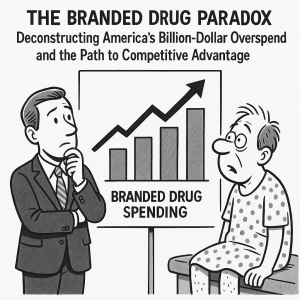
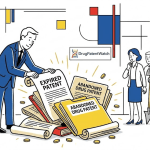
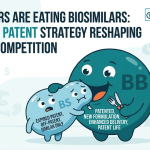
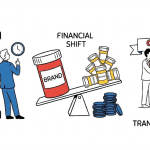
The U.S. pharmaceutical market runs on a structural contradiction that no other developed-nation drug market replicates at the same scale. Generic drugs fill roughly 80% to 90% of all prescriptions dispensed in the country. Yet brand-name drugs consume approximately 80% of total prescription drug expenditure. That single statistic, two eighties pulling in opposite directions, defines the commercial architecture of American healthcare better than any regulatory filing or earnings call.
Understanding why that arithmetic holds requires going one level deeper. The Congressional Budget Office tracked Medicare Part D prescription data from 2009 through 2018. Over that decade, the average net price of a generic prescription fell from $22 to $17 as generic share climbed from 72% of prescriptions to 90%. During the same period, the average net price of a brand-name prescription more than doubled, rising from $149 to $353. The gains from generic substitution were real, but the price inflation in the branded segment outran them at every checkpoint.
By 2021, total inflation-adjusted U.S. prescription drug spending reached $603 billion, representing 18% of all national healthcare expenditures. That figure is not an aberration. It is the predictable output of a system built around three interlocking forces: government-granted patent monopolies that are actively extended through legal strategy, a supply chain populated by intermediaries whose revenue models depend on high list prices, and a payer structure that, until very recently, could not marshal the countervailing purchasing power needed to push back.
This pillar page treats all three forces in full technical detail. The audience here, pharma IP teams, R&D leads, portfolio managers, and institutional investors, does not need a primer on why drug prices are high. The audience needs a precise map of the mechanisms, the IP valuation math behind specific asset classes, and the strategic implications of a regulatory environment that shifted materially in 2022 and will continue shifting through the rest of the decade.
Key Takeaways: The 80/80 Paradox
The core market distortion is a price-volume inversion with no equilibrating mechanism under current law. Generic volume cannot compress branded pricing because branded and generic drugs do not compete for the same prescription slot while a compound remains under exclusivity. The only check on branded pricing during the monopoly window is payer refusal, which requires formulary leverage that most payers lack against a clinically differentiated molecule. The IRA’s negotiation program introduces a new constraint, but it applies narrowly and on a delayed timeline discussed in section 14.
The Global Price Chasm: Why U.S. Branded Drug Prices Stand Alone
The price gap between the United States and other high-income nations is not a rounding error. A 2022 HHS analysis found that overall drug prices in the U.S. ran 2.78 times higher than in comparable countries. For brand-name drugs specifically, even after stripping out confidential rebates from the U.S. side of the ledger, the ratio held at 3.22. RAND Corporation research across 32 nations put the brand-name multiple at 3.44. A 2021 GAO analysis of 20 selected branded drugs found U.S. retail prices two to four times those of Australia, Canada, and France, with an explicit note that the real gap was likely larger because the GAO compared U.S. net prices against publicly available gross prices in comparator countries, where confidential discounts were not visible.
The structural explanation is not mysterious. Countries like France, Germany, and Australia operate with national health technology assessment (HTA) bodies, such as France’s HAS, Germany’s IQWiG, and the UK’s NICE, that conduct formal cost-effectiveness analyses and use those analyses to drive price negotiations. Their governments function as single payers or near-single payers, concentrating purchasing power into one counter-party who can credibly threaten non-coverage. The result is that drug prices in those markets reflect something closer to assessed clinical value relative to existing standards of care.
The U.S. has historically operated the inverse model: thousands of private insurance plans, self-insured employers, and multiple government programs negotiating separately, with the single largest purchaser, Medicare, legally prohibited from direct negotiation until the IRA. That legal prohibition was not an oversight. It was deliberate policy enacted as a condition of industry support for the Medicare Part D legislation in 2003. The consequence was a market where the statutory monopoly granted by patent law faced no effective counter-weight during the exclusivity window.
The price gap also compounds over time. Because U.S. list prices serve as the baseline for annual increases, and because annual increases in brand-name drug prices have averaged 5% to 10% above inflation over extended periods, the gap between the U.S. and comparator markets widens each year a branded product remains on-patent. By the time a drug reaches patent expiry and generic competition enters, U.S. net prices can be four to six times the price paid in Germany or Australia for the same molecule.
Key Takeaways: The Global Price Chasm
The price differential is structurally self-reinforcing. Annual WAC increases amplify an already large base, and PBM formulary incentives (discussed in section 8) reward manufacturers for maintaining high list prices rather than cutting them. HTA adoption in the U.S. remains fragmented: ICER conducts cost-effectiveness analyses but has no statutory pricing authority. The IRA negotiation program is the first federal mechanism to impose a price ceiling, but it applies only within Medicare and only after a drug clears an eligibility threshold measured in years of market exclusivity.
The Engine of Exclusivity: How Patent Strategy Became a Revenue Function
A pharmaceutical patent originates as a scientific filing. It becomes a revenue management tool by the time the drug reaches commercial scale. The 20-year term running from the filing date sounds generous until you account for the time consumed by clinical development and FDA review. A drug that files its core composition-of-matter patent in preclinical development and receives FDA approval eight to twelve years later may have only eight to twelve years of patent life remaining when it launches. That compression created the original economic rationale for premium pricing: recoup R&D costs in a compressed window.
What has changed over four decades is the degree to which pharmaceutical lifecycle management has shifted from scientific to legal activity. Secondary patents on formulations, dosing regimens, polymorphic forms, metabolites, method-of-use claims, and manufacturing processes are not inherently illegitimate. Some of them do reflect genuine improvement. Extended-release formulations can improve patient adherence, which has real clinical value. A new delivery system that reduces injection-site reactions is a real innovation. The question patent challengers and policymakers ask is how many of these secondary patents would hold up under adversarial scrutiny, and at what point the accumulation of secondary filings transitions from innovation protection to competition deterrence.
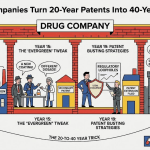
The I-MAK study of twelve top-selling drugs quantified that accumulation: an average of 125 patent applications and 71 granted patents per drug, with an attempted protection window of 38 years, nearly double the statutory 20-year term. That is not a finding about individual patents being fraudulent. It is a structural observation about a legal strategy that, when executed at scale, functions as a market access barrier regardless of the validity of any single claim.
The FDA’s Orange Book is the mechanism that gives secondary patents legal teeth in the U.S. Under Hatch-Waxman, a brand manufacturer lists its patents in the Orange Book. When a generic applicant files an Abbreviated New Drug Application (ANDA), they must certify their product does not infringe any listed patent, which typically means filing a Paragraph IV certification that the listed patents are invalid or not infringed. That certification triggers an automatic 30-month stay on FDA approval while the litigation proceeds, giving the brand manufacturer time, regardless of the ultimate outcome.
Key Takeaways: The Engine of Exclusivity
Every secondary patent filed in the Orange Book is a potential 30-month litigation stay, and every potential stay raises the expected cost and timeline for a generic entrant. The asymmetry of stakes, a brand protecting billions in annual revenue versus a generic spending tens of millions on development, creates structural pressure on generics to settle. Pay-for-delay settlements, where a brand pays a generic entrant to defer market entry, have cost the U.S. healthcare system an estimated $3.5 billion per year. The FTC has challenged these agreements with partial success, and the IRA’s penalties on late-stage brand price increases modestly reduce the financial incentive for such arrangements, but the basic Hatch-Waxman litigation dynamic remains intact.
AbbVie and Humira: IP Valuation of the Most Profitable Patent Fortress in Drug History
The Asset
Humira (adalimumab) is a fully human monoclonal antibody that inhibits tumor necrosis factor-alpha (TNF-alpha). FDA approved it in 2002 for rheumatoid arthritis, then expanded its label across plaque psoriasis, Crohn’s disease, ulcerative colitis, ankylosing spondylitis, juvenile idiopathic arthritis, and several additional inflammatory indications. At its commercial peak, Humira generated $20.7 billion in global net revenues in 2022, a figure that made it the best-selling pharmaceutical product in human history by cumulative sales. AbbVie’s market capitalization exceeded $200 billion during the height of Humira’s dominance, with the drug routinely accounting for more than 50% of total company revenue.
The IP Architecture
The core composition-of-matter patent for adalimumab was set to expire in 2016 in the United States. AbbVie did not accept that date as the true loss of exclusivity. The company filed 247 patent applications on Humira in the U.S. alone. Eighty-nine percent of those applications were filed after the drug reached the market. Forty-seven percent were filed after 2014, a full 12 years into the drug’s commercial life. AbbVie secured more than 130 granted U.S. patents covering the molecule, its formulations, manufacturing processes, dosing regimens, delivery devices (autoinjector design), and methods of treating specific indications.
The resulting patent thicket successfully held all biosimilar interchangeability competitors out of the U.S. market until 2023, five years after biosimilars entered Europe. By the time Hadlima, Hyrimoz, Cyltezo, and several other adalimumab biosimilars launched in the U.S., AbbVie had negotiated settlements with each biosimilar manufacturer, granting licenses with defined entry dates in exchange for the companies dropping Paragraph IV-equivalent challenges to the secondary patents. The terms of those settlements were confidential, but the structure gave AbbVie a period of managed competition rather than immediate, uncontrolled market entry.
IP Valuation Analysis
From an IP asset valuation perspective, the Humira patent estate functioned as a duration-extension instrument. Each year of U.S. exclusivity beyond 2016 was worth, at prevailing net prices, roughly $15 billion to $19 billion in revenue. At AbbVie’s operating margins on Humira, which ran above 50% on the drug itself, each additional year of monopoly preserved $7.5 billion to $9.5 billion in operating income. The cost to build and defend the patent thicket, including litigation expenses, settlement payments, and ongoing prosecution costs, was a fraction of that. I-MAK estimated the systemic cost to U.S. payers of the delayed biosimilar entry at over $14.4 billion. To AbbVie, the calculus was straightforwardly rational.
Between 2012 and 2018, AbbVie raised Humira’s U.S. list price from approximately $19,000 per year to $38,000, a near-doubling enabled by the absence of any competitive check. European prices, exposed to biosimilar competition from 2018, declined 60% to 80% in that same period. The transatlantic Humira price gap by 2022 was stark: U.S. net prices ran three to four times European net prices for the same molecule, same indication, same dosing. That divergence is a direct measure of what the patent thicket was worth commercially.
For biosimilar manufacturers, the Humira case established the tactical playbook for high-value biologics: expect a litigation-driven settlement structure, negotiate a defined entry date in exchange for dropping patent challenges, and model your commercial entry around a managed launch with the originator retaining significant formulary position in year one. Sandoz, Boehringer Ingelheim, Coherus, and Samsung Bioepis all followed variants of this path.
Investment Strategy: AbbVie Post-Humira
AbbVie entered the post-Humira era with a planned commercial transition to Skyrizi (risankizumab) and Rinvoq (upadacitinib). Skyrizi, an IL-23 inhibitor, and Rinvoq, a JAK1 inhibitor, both target overlapping indications with Humira while occupying distinct mechanism-of-action positions that complicate direct biosimilar substitution. AbbVie’s stated guidance has been that the combined Skyrizi and Rinvoq revenue ramp will exceed Humira’s peak revenue by 2027. Analysts tracking AbbVie’s IP filings should focus on whether the company deploys a similar secondary-patent stacking strategy for these two assets, their formulation patents, device patents, and method-of-use claims filed as the molecules move through additional indication approvals.
The Biologic Exclusivity Roadmap: A Tactical Playbook for 12-Year Protection Stacking
Biologics operate under a different regulatory exclusivity framework than small molecules, and the strategic implications are significant for any IP team managing a therapeutic protein, monoclonal antibody, or gene therapy asset.
The Biosimilar Price Competition (BPC) Act Baseline
The Biologics Price Competition and Innovation Act (BPCIA), passed as part of the Affordable Care Act in 2010, created the abbreviated pathway for biosimilar approval under Section 351(k) of the Public Health Service Act. The core exclusivity provisions grant the reference biologic manufacturer 12 years of data exclusivity from the date of the biologic’s first FDA approval. No biosimilar application relying on the originator’s clinical data can be approved until that 12-year window closes, regardless of the patent situation. A four-year prohibition on even filing a biosimilar application runs inside that window.
This 12-year period is legally distinct from patent protection and runs whether or not the originator holds any active patents. The practical effect is to guarantee at least 12 years of market exclusivity for any newly approved biologic, with patent protection potentially layering on top of that baseline.
The Exclusivity Stacking Architecture
A biologic IP team’s roadmap for extending protection beyond the 12-year BPCIA baseline typically involves six layers:
The first layer is the composition-of-matter patent on the biologic molecule itself. For a monoclonal antibody, this covers the specific amino acid sequence of the variable domains. These patents typically have filing dates near the start of clinical development and may expire before or concurrent with the 12-year data exclusivity period.
The second layer covers manufacturing process patents. Biologics are inherently complex to manufacture. Cell line selection, fermentation conditions, purification sequences, and glycosylation profiles are all patentable. A competitor manufacturing a biosimilar must develop their own distinct manufacturing process, and any overlap with patented originator processes creates litigation risk. Process patents can be filed throughout the drug’s commercial life as manufacturing optimizations are developed.
The third layer is formulation patents covering the excipient composition, pH, concentration, and buffer systems of the finished drug product. A competitor biosimilar may use the same active protein but must use a different formulation if originator formulation patents are in force, which can complicate device compatibility and stability data.
The fourth layer covers delivery device patents for injectable biologics using prefilled syringes, autoinjectors, or infusion devices. These patents protect the device mechanism independently of the biologic molecule itself.
The fifth layer consists of method-of-use patents covering specific dosing regimens, specific patient populations identified through post-marketing research, or specific combination therapies. As a biologic accumulates real-world evidence and label expansions, new method-of-use patents tied to those expansions extend the filing portfolio.
The sixth layer, applicable primarily to monoclonal antibodies, covers patents on binding epitopes, anti-idiotype antibody assays used in clinical biomarker work, and polymorph equivalents such as different glycoform distributions with distinct immunogenicity profiles.
The cumulative effect of executing all six layers across a blockbuster biologic is an IP estate that makes biosimilar interchangeability clearance legally expensive and uncertain for years beyond the BPCIA’s 12-year floor.
The Patent Dance
The BPCIA includes a unique pre-litigation mechanism, colloquially called the ‘patent dance,’ under which the biosimilar applicant and the reference product sponsor exchange information about the biosimilar’s manufacturing process and the originator’s patent portfolio. The statute sets out a detailed choreography: the biosimilar applicant discloses its application and manufacturing process to the originator, the originator identifies patents it believes are infringed, and the parties negotiate a list of patents to be litigated immediately. Remaining patents are reserved for later litigation once the biosimilar actually launches.
The ‘patent dance’ is optional for the biosimilar applicant. Several applicants have declined to participate, choosing instead to simply notify the originator of their FDA approval date and allow the originator to file suit if it chooses. Courts have confirmed this opt-out right. Biosimilar teams should evaluate whether participation accelerates or delays resolution of the patent estate based on the specific complexity of the originator’s portfolio.
Key Takeaways: Biologic Exclusivity Roadmap
The 12-year BPCIA data exclusivity period is a floor, not a ceiling. Originator companies that execute a full six-layer patent stacking strategy can realistically push effective market exclusivity to 15 to 20 years for a major biologic. Biosimilar teams entering these markets should budget for 3 to 5 years of litigation costs and settlement negotiations in addition to the $100 million to $200 million development costs typical of a large-molecule biosimilar program. The IRA’s biologic negotiation eligibility clock, which begins at 13 years post-approval, interacts directly with this strategy: an originator holding back biosimilar entry via patent thicket faces government price intervention shortly after the biosimilar finally enters. The financial model for that scenario needs to be built explicitly.
The Small-Molecule Evergreening Roadmap: From Core Compound to Multi-Decade Monopoly
Small-molecule evergreening follows a distinct tactical sequence from the biologic playbook, shaped by the Hatch-Waxman litigation framework and the Orange Book listing rules.
Step 1: The Core Composition-of-Matter Patent
Every evergreening campaign begins with the primary compound patent, which covers the active pharmaceutical ingredient (API) itself. This patent is typically filed during preclinical research, often before the compound’s clinical profile is fully known. Its strength, in litigation, depends on whether the claimed structure was truly novel and non-obvious at the time of filing.
Step 2: The Salt and Polymorph Portfolio
Before the core compound patent expires, manufacturers file patents on specific salt forms and polymorphic crystal structures that are used in the commercial formulation. A different salt of the same API (for example, switching from a free acid to a sodium salt) can improve solubility, bioavailability, or manufacturability, and those improvements are patentable. Different polymorphic forms of the same compound also differ in their physical properties and can carry separate patent protection. Generic filers must certify that their API does not infringe these salt and polymorph patents, which can require them to develop a different solid-state form, adding development complexity and litigation risk.
Step 3: Formulation and Extended-Release Patents
Modified-release formulations, whether extended-release, delayed-release, or pulsatile delivery designs, are the single most common evergreening mechanism for oral small molecules. An immediate-release product approaching patent expiry is reformulated as an extended-release capsule or tablet. The formulation patent covers the specific rate-controlling membrane, matrix composition, or multiparticulate design used to achieve the modified release profile. FDA approval of the extended-release formulation under a New Drug Application (NDA) also resets the eligibility clock for certain regulatory exclusivities.
Notably, manufacturers often conduct a switching campaign at this stage, aggressively promoting the extended-release version while discontinuing samples and rebate support for the immediate-release product. If prescribers shift to the extended-release before generic entry on the immediate-release form occurs, the commercial impact of the generic launch is muted.
Step 4: Method-of-Use Patents and Label Expansions
Method-of-use patents claim the therapeutic application of a compound to treat a specific disease in a specific patient population. Post-marketing clinical research that supports a new indication, a new patient subgroup defined by a biomarker, or a new combination regimen can generate patentable claims. Each new label expansion is an opportunity to file additional method-of-use patents. Critically, these patents are listed in the Orange Book separately from the compound and formulation patents, creating independent litigation tracks for generic challengers.
Step 5: Pediatric Exclusivity
The FDA’s Written Request process, under which manufacturers conduct pediatric studies at FDA’s request, rewards completion with six additional months of exclusivity attached to all existing patents and regulatory exclusivities. Pediatric exclusivity is not a patent; it is a statutory extension that adds six months to any existing protection. For a high-revenue product with compound, formulation, and method-of-use patents all still in force, six months of pediatric exclusivity can be worth hundreds of millions to billions of dollars in protected revenue.
Step 6: Product Hopping
Product hopping refers to the practice of transitioning patients from an older branded formulation to a newer formulation as generic entry on the older product approaches. The new formulation, often the extended-release version developed in Step 3, carries its own patent protection and may not be automatically substitutable by pharmacists for the generic of the original formulation, because they are technically different dosage forms. Combined with prescribing habit changes driven by manufacturer detailing, this transition can reduce the commercial impact of generic entry on the older formulation.
A fully executed evergreening campaign across all six steps can extend effective market exclusivity by five to ten years beyond the core compound patent expiry. Each step individually is legally defensible as a genuine product improvement. The aggregate effect of executing all steps simultaneously on a high-revenue asset is to push generic market entry far beyond the 20-year statutory patent term. Payers attempting to manage formulary costs should track loss-of-exclusivity dates not from the compound patent but from the latest-expiring secondary patent with active Orange Book listing, because that is the practical date of generic availability.
Paragraph IV Filings and the Hatch-Waxman War of Attrition
The Filing Mechanism
A Paragraph IV certification is the legal instrument a generic manufacturer uses to challenge a brand-name drug’s Orange Book patents. Under 21 U.S.C. 355(j)(2)(A)(vii)(IV), the ANDA applicant certifies that the listed patents are either invalid or will not be infringed by their generic product. Filing that certification constitutes an act of patent infringement per se, triggering the brand manufacturer’s right to sue within 45 days.
That lawsuit, once filed, triggers an automatic 30-month stay on FDA approval of the generic, regardless of the litigation’s merits. During those 30 months, the brand continues to sell without competition. If the brand wins the litigation, the generic entry is blocked until the relevant patents expire. If the generic wins, or if 30 months elapse without a final judgment, the FDA can act on the ANDA and approve the generic.
The First-Filer Exclusivity Incentive
To encourage the patent challenges that bring generics to market faster, Hatch-Waxman grants the first generic filer to submit a substantially complete ANDA with a Paragraph IV certification 180 days of market exclusivity. During that 180-day window, no other ANDA applicant can obtain final FDA approval. This creates a powerful financial incentive: a first-filing generic that wins its Paragraph IV litigation and launches can capture 80% to 90% of the original brand’s prescription volume at roughly 80% of the brand’s price before any other generic entrant arrives. After the 180-day period, subsequent generics enter and prices collapse, often reaching 15% to 20% of original brand levels within two years of multi-source competition.
The financial stakes of first-filer exclusivity can be massive. For a drug with $1 billion in annual brand sales, the 180-day window is potentially worth $400 million to $600 million in revenue to the first-filing generic manufacturer.
Pay-for-Delay: Reverse Payment Settlements
The most controversial Hatch-Waxman practice is the reverse payment settlement, commonly called pay-for-delay. In these agreements, the brand manufacturer pays the Paragraph IV challenger a cash sum, a license to sell an authorized generic, or some combination, in exchange for the generic manufacturer agreeing to delay market entry until an agreed-upon date, typically near or at the patent expiry date. From the brand’s perspective, the payment is rational: the net present value of extended exclusivity exceeds the settlement cost. From the generic’s perspective, the settlement provides certain revenue without litigation risk. From the payer’s perspective, the arrangement transfers value from healthcare consumers to pharmaceutical manufacturers.
The FTC has estimated that pay-for-delay settlements cost U.S. drug buyers $3.5 billion per year. The Supreme Court’s 2013 ruling in FTC v. Actavis held that these agreements can violate antitrust law and must be evaluated under a rule-of-reason analysis, but it did not ban them outright. Enforcement remains resource-constrained.
Investment Strategy: Paragraph IV
For generic manufacturers and their investors, the Paragraph IV pipeline represents a predictable source of above-market returns. First-filer exclusivity periods generate operating margins that can exceed 70% for a single product in a favorable litigation outcome. The key variables are the probability of success in litigation, which turns on the validity and infringement profile of the challenged patents, the expected settlement terms if litigation resolves without a final judgment, and the competitive dynamic among subsequent ANDA filers waiting for their shot after first-filer exclusivity expires.
The Middlemen Maze: PBMs, Rebate Walls, and Spread Pricing
What a PBM Actually Does
A Pharmacy Benefit Manager is a third-party administrator hired by health plans, self-insured employers, and government programs to manage their prescription drug benefit. The PBM’s core functions are negotiating drug prices and rebates from manufacturers, building and managing the drug formulary, processing pharmacy claims, and contracting with pharmacy networks. CVS Caremark, Express Scripts (Cigna), and Optum Rx (UnitedHealth) control roughly 80% of the market. All three are now vertically integrated with major health insurance carriers and, in CVS’s case, with a major retail pharmacy chain.
The theoretical value proposition of a PBM is straightforward: aggregate purchasing power to extract discounts from manufacturers and pass those savings to plan sponsors and patients. The practical reality involves conflicts of interest that can systematically push costs upward rather than downward.
How the Rebate System Inverts Incentives
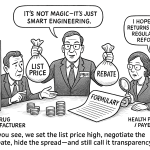
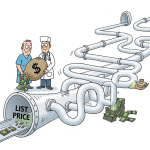
Drug manufacturer rebates to PBMs are calculated as a percentage of the drug’s Wholesale Acquisition Cost (WAC), the official list price. That percentage is negotiated between the manufacturer and the PBM as a condition of formulary placement on a preferred tier with lower patient cost-sharing. In 2023, total manufacturer rebates paid to PBMs for brand-name drugs reached an estimated $334 billion.
The perverse incentive embedded in percentage-based rebates is not difficult to see. A drug with a $1,000 WAC and a 40% rebate generates $400 per prescription in rebate revenue to the PBM. A competing drug with a $600 WAC and a 10% rebate generates $60. The net cost of the first drug ($600) and the second drug ($540) are nearly equivalent, but the rebate economics point the PBM toward the first drug, because formulary preference for the high-list-price product generates more rebate revenue, some portion of which the PBM retains rather than passing through to the plan sponsor.
This dynamic is the ‘rebate wall.’ It creates structural pressure on any manufacturer considering launching at a lower list price. If your product carries a lower WAC, PBMs may decline to place it on the preferred formulary tier, because the rebate it generates is smaller. The rational strategic response is to launch at a high WAC with a large rebate attached, maintaining the system’s incentives even if the net price is no lower. It is a coordination trap. No single manufacturer can unilaterally break out of it without risking formulary disadvantage.
For patients, the consequences are direct and concrete. Patient cost-sharing for drugs covered under co-insurance is calculated on the WAC, not the post-rebate net price. A patient with 20% co-insurance for a drug with a $1,000 WAC pays $200 out of pocket. The rebate that reduces the plan’s net cost to $600 does not flow to the patient at the point of sale. The patient effectively subsidizes the rebate negotiation through their co-pay.
Spread Pricing
Spread pricing operates primarily in the generic drug segment. In a spread pricing arrangement, the PBM charges the plan sponsor an amount for a generic prescription, then reimburses the dispensing pharmacy a lower amount, and retains the difference as margin. Because neither the plan sponsor nor the pharmacy knows what the other party is being charged, the spread is invisible to both. An analysis of the three largest PBMs found they generated approximately $1.4 billion in spread pricing revenue on 51 generic specialty drugs over five years, a sum that represents pure intermediary extraction rather than any value-added service.
Vertical Integration and Conflicts of Interest
The ownership structure of the major PBMs amplifies these incentives. CVS Caremark is co-owned with CVS Pharmacy and Aetna insurance. Express Scripts is owned by Cigna. Optum Rx is owned by UnitedHealth Group, which also owns Optum specialty pharmacy, United Healthcare insurance, and a growing network of physician practices and surgery centers. A PBM that designs formularies has a financial incentive to steer patients toward its own specialty pharmacy, its own retail locations, and its own mail-order services. That steering is not always in the patient’s clinical interest or in the plan sponsor’s cost interest.
PBM contracts are typically protected by confidentiality clauses that prevent plan sponsors from auditing the PBM’s actual drug acquisition costs, rebate retention, and spread margins. The information asymmetry is extreme. Employers paying tens of millions per year in drug benefit costs often have no meaningful ability to verify whether the PBM is passing through negotiated savings or retaining them.
Key Takeaways: PBMs and the Rebate System
Reforming the rebate system is both the highest-impact and most politically contested lever for reducing what payers and patients actually spend on brand-name drugs. Replacing percentage rebates with flat-fee PBM compensation removes the financial incentive to favor high-list-price products. Pass-through pricing models, under which rebates are fully returned to plan sponsors, eliminate PBM revenue from the spread between WAC and net cost. Both reforms face industry opposition, and federal rules that would have required rebate pass-through in Part D were proposed, finalized, and then delayed under successive administrations. State-level PBM reform laws are advancing in jurisdictions including Arkansas, California, and New York, but federal action is the only mechanism capable of restructuring incentives across the full commercial market.
Investment Strategy: PBM Reform
Investors in pharmacy benefit management companies face a medium-term structural risk from legislative and regulatory reform that narrows spread pricing and rebate retention. The three major integrated PBM-insurer-pharmacy holding companies have attempted to diversify their PBM revenue by building out value-based care and data analytics businesses, reducing dependence on formulary arbitrage. Investors should model scenarios in which federal pass-through rebate requirements are enacted, reducing PBM revenue by 15% to 25% and forcing a repricing of these assets.
The Insulin Trifecta: IP Valuation and Shadow Pricing at Eli Lilly, Sanofi, and Novo Nordisk
The Market Structure
The U.S. insulin market is controlled by three manufacturers: Eli Lilly (Humulin, Humalog, Basaglar), Sanofi (Lantus, Toujeo, Admelog), and Novo Nordisk (Novolog, Levemir, Tresiba, Ozempic). These three companies supply over 90% of the insulin used in the United States. The market has the structural characteristics of an oligopoly: few sellers, high barriers to entry from biologics manufacturing complexity and regulatory requirements, and a customer base with inelastic demand, because insulin-dependent diabetics have no therapeutic alternative.
Shadow Pricing
The pricing behavior of the insulin trifecta from the early 2000s through 2023 illustrates what economists call parallel pricing or shadow pricing, where competing oligopolists raise prices in near-simultaneous, near-equivalent increments without explicit coordination. Between 2002 and 2022, the list price of insulin rose by more than 300%. Humalog’s U.S. list price increased from $21 per vial in 1996 to over $275 by 2019. Lantus followed a comparable trajectory. The increases were not random. Analysis of pricing data from multiple research groups found that the three manufacturers consistently raised prices within a narrow time window of each other, typically within a few months, and in comparable percentage increments. The mechanism does not require a price-fixing agreement. Each manufacturer observes competitor pricing through public WAC data and rationally matches increases, knowing that any manufacturer who fails to increase prices simply gives up rebate revenue without gaining market share, because formulary position is determined by rebate percentage, not list price.
IP Valuation of the Insulin Portfolio
The insulin molecules themselves, recombinant human insulin and its analogs, are well off patent. What the three manufacturers protect is not the molecule but the surrounding IP architecture: proprietary formulations that determine the pharmacokinetic and pharmacodynamic profiles (onset, peak, duration) that distinguish rapid-acting, intermediate, and long-acting insulins; delivery device patents covering the proprietary pen injector systems (FlexPen, KwikPen, SoloStar, FlexTouch); concentration patents for U-200 and U-300 formulations; and manufacturing process patents for specific cell line and fermentation technologies.
For Sanofi, Lantus (insulin glargine) was for years the centerpiece of its diabetes franchise, generating over $7 billion in peak annual sales. Lantus’s composition-of-matter patent expired in 2015. Sanofi then launched Toujeo (glargine U-300), a higher-concentration formulation with a modestly flatter pharmacokinetic profile. Toujeo carries its own formulation and device patents, and Sanofi positioned it as a clinical upgrade on Lantus. The commercial strategy was to shift the prescribing base toward Toujeo before biosimilar glargine products (Basaglar from Lilly, Semglee from Mylan/Viatris) could capture market share on the original Lantus concentration. This is product hopping executed with clinical justification and deliberate marketing investment.
For Novo Nordisk, the insulin franchise has been partially superseded by the GLP-1 receptor agonist platform: semaglutide sold as Ozempic for type 2 diabetes and Wegovy for obesity management. Semaglutide’s core composition-of-matter patent runs to 2032 in the U.S., with formulation and device patents potentially extending effective exclusivity to the late 2030s. At Ozempic and Wegovy’s combined 2023 revenue run-rate of over $12 billion, the semaglutide IP estate is among the most commercially valuable pharmaceutical patent portfolios currently active.
The Price Reduction Response
In 2023, all three manufacturers announced list price reductions on specific insulin products in response to congressional pressure, the Inflation Reduction Act’s Medicare out-of-pocket cap, and political scrutiny from the Senate health committee’s investigation into insulin pricing. Eli Lilly cut Humalog’s list price by 70% and capped monthly out-of-pocket costs at $35. Sanofi cut Lantus and several analogs by 78%. Novo Nordisk cut several products by 75%. These reductions apply primarily to list prices; net prices after rebates were already substantially lower in the commercial market, meaning the real-world impact on total drug spending is more modest than the percentage reduction implies. However, the list price cuts do directly benefit patients paying co-insurance based on WAC and uninsured patients paying cash.
Investment Strategy: Insulin and GLP-1
The commercial center of gravity in diabetes and metabolic disease has shifted decisively toward GLP-1 receptor agonists. Insulin volumes face secular pressure as GLP-1 agents demonstrate A1c reductions that reduce or eliminate insulin dependence in many type 2 diabetes patients. Investors tracking Novo Nordisk and Eli Lilly (which has its own GLP-1 portfolio with tirzepatide, Mounjaro) should model the insulin-to-GLP-1 revenue transition timeline and assess the IP durability of the GLP-1 assets specifically. Sanofi, which exited the diabetes primary care market in 2023 to focus on immunology, has divested itself of the insulin price-pressure risk but also of the GLP-1 upside.
Biosimilar Interchangeability: The Science, the Law, and the Market Reality
What Biosimilar Interchangeability Means
FDA’s designation of a biosimilar product as ‘interchangeable’ with its reference biologic has a specific legal meaning that differs from generic substitution in the small-molecule context. An interchangeable biosimilar can be substituted by a pharmacist without the prescribing physician’s intervention, subject to state pharmacy board laws. An approved biosimilar without the interchangeability designation can be prescribed in place of the reference product by an informed prescriber, but pharmacist-level substitution requires state-specific rules and, in many states, prescriber authorization.
Achieving the interchangeability designation requires demonstrating, through switching studies, that alternating a patient between the biosimilar and the reference product presents no greater risk than continued use of the reference product alone. This standard is higher than simple biosimilarity, and it adds clinical development cost. FDA finalized its guidance on interchangeability in 2019. As of 2024, interchangeable designations have been granted to a growing list of biosimilars, including Semglee (insulin glargine) and several adalimumab biosimilars.
Why Market Uptake Lags Approval
Biosimilar approval, and even interchangeable designation, does not automatically translate into meaningful market share. The commercial barriers are distinct from the regulatory ones. PBM formulary decisions determine which products are preferred on plan formularies. Originator companies have responded to biosimilar interchangeability entry by offering rebates on the originator product that PBMs find difficult to refuse, keeping the originator on the preferred tier and relegating the biosimilar to a non-preferred position with higher patient cost-sharing. This ‘rebate moat’ strategy has been documented extensively in the adalimumab biosimilar market, where biosimilar penetration in the commercial segment ran below 5% in the first year of launch despite the availability of eight or more approved interchangeable products.
Government programs behave differently. Medicaid’s rebate structure limits originator ability to use rebate moats effectively, because the Best Price rule means any large commercial rebate offered to a PBM must be matched to Medicaid. Medicare’s competitive bidding dynamics in Part D and the IRA’s inflation rebate mechanism further reduce the originator’s ability to use large rebates as a market defense tool without consequences.
Key Takeaways: Biosimilar Interchangeability
The regulatory pathway for biosimilar interchangeability is clearer than it was five years ago. The commercial pathway remains obstructed by PBM formulary economics. The states that have passed laws requiring PBMs to cover at least one interchangeable biosimilar on the preferred tier for any biologic class are making incremental progress. Federal action requiring formulary parity for interchangeable biosimilars would be more decisive. Investors in biosimilar manufacturers should model conservative penetration curves in the commercial segment (10% to 25% share over three years post-launch) and more aggressive penetration in government programs (30% to 50% share over two years).
Direct-to-Consumer Advertising: Demand Engineering for Branded Products
The Scale of the Investment
The United States and New Zealand are the only two countries that permit direct-to-consumer advertising (DTCA) for prescription drugs. U.S. pharmaceutical DTCA spending reached $6.58 billion in 2020, making it one of the largest single-product-category advertising expenditures in the U.S. media market. This investment is not accidental. The return on DTCA is measurable. Research has estimated that each additional dollar of DTCA spending generated $4.20 in additional drug sales in the measured period. That 4.2x ROI on advertising spend compares favorably to almost any alternative use of capital in the industry.
The Demand Generation Mechanism
DTCA works primarily through patient-initiated physician conversations. Kaiser Family Foundation research found that 30% of American adults had spoken to their doctor about a specific drug they saw advertised. Of those who initiated the conversation, 44% received a prescription for the advertised drug. The pathway runs directly through the physician-patient relationship, bypassing the clinical evaluation that would otherwise drive formulary selection.
The critical commercial logic of DTCA is that it applies almost exclusively to on-patent branded drugs, because generic manufacturers do not advertise by brand, and biosimilar manufacturers lack the budget or commercial incentive to run comparable campaigns. DTCA therefore systematically tilts patient demand toward the most expensive options in any therapeutic class.
Research published in JAMA added a counterintuitive finding: pharmaceutical companies spent more on DTCA for drugs that demonstrated lower added clinical benefit compared to existing treatments. That elevated spending translated into higher sales for those drugs. The implication is clear: DTCA is most valuable as a commercial instrument precisely where clinical differentiation is weakest, because it generates demand through channels that bypass clinical assessment.
Generic Skepticism as a Demand-Side Barrier
A separate but related phenomenon sustains branded drug spending: the persistence of patient skepticism about generic drug quality. FDA’s bioequivalence standard for generic drug approval requires that the generic’s pharmacokinetic profile (Area Under the Curve and maximum plasma concentration) fall within 80% to 125% of the reference product’s profile, a range that clinical pharmacology literature supports as clinically equivalent for the vast majority of drugs in the vast majority of patients. Multiple large-scale meta-analyses in conditions from cardiovascular disease to epilepsy have confirmed the therapeutic equivalence of generic and brand-name drugs.
Despite this evidence, a 2018 JAMA Internal Medicine analysis estimated that between 2010 and 2012, patients and the healthcare system spent $73 billion on branded drugs when a therapeutically equivalent generic was available within the same drug class. The patient portion of that excess spending was $24.6 billion. A companion analysis calculated that switching to direct generic equivalents wherever available would save an additional $36 billion per year. These numbers represent the quantified cost of a perception gap, the dollars flowing to branded products not because of superior clinical performance but because of brand familiarity and anxiety about unfamiliar pill appearances.
Key Takeaways: DTCA and Generic Skepticism
DTCA is a legitimate business strategy for branded manufacturers, and the First Amendment constrains FDA’s ability to restrict it substantially. The policy lever most likely to attenuate DTCA’s influence is formulary design: step therapy requirements that establish generic alternatives as the required first treatment before brand-name drugs are covered, and prior authorization protocols that require documentation of generic failure before branded approval. These tools already exist in commercial and government formularies but are inconsistently applied. Payers who deploy them rigorously against DTCA-driven prescribing see measurable brand-to-generic substitution rates.
The Federal Pricing Schism: Medicare Part D vs. Medicaid vs. the VA
The most illuminating internal comparison in U.S. drug pricing is not between the U.S. and Europe. It is between Medicare Part D, Medicaid, and the Veterans Affairs system. These three programs buy drugs for overlapping patient populations with some overlapping conditions, under the same FDA regulatory framework, and the prices they pay for identical products differ by factors of two to four.
Medicare Part D: Fragmented Purchasing with Limited Leverage
Part D was designed around a market competition model. Private prescription drug plans compete for enrollees, negotiate independently with manufacturers, and hire PBMs to manage formularies and rebate negotiations. The federal government subsidizes premiums and covers catastrophic costs but, until the IRA, was legally prohibited from negotiating prices directly. The result is that Part D’s effective purchasing power is the aggregate of hundreds of competing private plans, none of which individually has the leverage of a unified national purchaser.
CBO data from 2021 put the average net price for a brand-name prescription in Medicare Part D at $343. For specialty drugs (defined broadly as drugs treating complex conditions like cancer, rheumatoid arthritis, and multiple sclerosis), the average net price was $4,293 per prescription. Those figures represent prices after the substantial rebates PBMs negotiate on Part D’s behalf. Before rebates, the prices are substantially higher.
Medicaid: Statutory Rebates as a Pricing Floor
Medicaid operates under the Medicaid Drug Rebate Program (MDRP), which is not a negotiation but a statute. Manufacturers who want their drugs covered in Medicaid, and no commercially viable branded drug can afford not to be, must offer the greater of 23.1% off the Average Manufacturer Price or the difference between the AMP and the manufacturer’s Best Price (the lowest price offered to any private commercial buyer in the U.S.).
The Best Price provision is architecturally significant. It creates a legal linkage between a manufacturer’s most favorable commercial discount and its Medicaid obligation. A manufacturer cannot offer a deep PBM rebate to gain preferred formulary position without that rebate becoming the Medicaid Best Price benchmark and triggering a corresponding Medicaid rebate.
The MDRP also includes an inflation penalty: any price increase above the rate of general CPI inflation triggers an additional rebate to Medicaid equal to the excess. This claws back real-dollar value from inflationary price hikes and directly disincentivizes the annual pricing behavior common in commercial markets.
The CBO’s comparison of the same basket of top-selling brand-name drugs across Part D and Medicaid found that Medicaid paid on average 34.4% of what Part D paid. For specialty drugs, Medicaid paid 44.0% of the Part D rate. For non-specialty brand-name drugs, Medicaid paid 26.0% of the Part D rate. Total rebates in Medicaid averaged 77% of retail price, versus 35% in Part D.
The VA: Federal Supply Schedule Pricing
The Department of Veterans Affairs operates under the Federal Supply Schedule (FSS), which requires manufacturers to offer VA prices at or below the lowest price offered to any commercial customer (similar to Medicaid’s Best Price but calculated differently and applied to the FSS statutory discount). VA prices are further reduced by an additional price cap tied to non-federal average manufacturer prices. The result is that VA pays prices between Medicaid levels and Part D levels, as the CBO data shows: $190 per prescription on average versus $118 in Medicaid and $343 in Part D.
The Policy Interpretation
Program
Average Brand Net Price (per Rx)
Specialty Drug Net Price
Brand Rebate as % of Retail
Medicare Part D
$343
$4,293
~35%
Veterans Affairs
$190
~$2,018
~45%
Medicaid
$118
$1,889
~77%
Source: CBO, ‘A Comparison of Brand-Name Drug Prices Among Selected Federal Programs,’ 2021
This table is a controlled experiment the U.S. government runs involuntarily on itself every day. The same FDA-approved products, sold by the same manufacturers, are priced at dramatically different levels depending entirely on the statutory and regulatory structure governing each program. The price of a drug, in other words, is not a fixed property of its clinical value. It is a function of the power structure facing the manufacturer at the point of negotiation.
Key Takeaways: The Federal Pricing Schism
The Medicaid-to-Part D price gap is the economic argument that drove the IRA’s negotiation program. If the federal government already extracts 77% rebates in Medicaid through statute, the logical policy question was why Medicare, the larger program, could not extract comparable discounts. The IRA’s answer is a direct negotiation mechanism, described in section 14, that applies Medicaid-like pressure selectively to the drugs that drive the most Medicare spending.
For any branded drug with significant Medicare volume, revenue models need to disaggregate Medicare Part D pricing, commercial pricing, and Medicaid pricing separately rather than using blended average net prices. As the IRA negotiation program applies to an increasing number of drugs each year, drugs with high Medicare revenue concentration face a specific IRA negotiation risk that drugs sold primarily in commercial markets do not. Accurate program-level revenue modeling is a prerequisite for any fair-value analysis of a pharmaceutical company’s branded drug pipeline.
Cost-Related Non-Adherence: Quantifying the Clinical and Economic Fallout
The Scale of the Problem
Kaiser Family Foundation polling found that nearly one in four Americans taking prescription drugs reports difficulty affording them. That figure translates into a set of measurable behaviors: delayed fills, halved doses, skipped doses, and outright abandonment of the pharmacy queue. The CDC has documented that non-adherence contributes to at least 100,000 preventable deaths per year in the United States. A specific CDC study tracking patients with chronic conditions including diabetes and cardiovascular disease found that patients who reported skipping medication due to cost had a 15% to 22% higher all-cause mortality rate than adherent patients.
The Economic Costs of Non-Adherence
The downstream costs of non-adherence are not merely clinical. When a patient with poorly controlled type 2 diabetes ends up in the emergency department with a hyperglycemic crisis, or a heart failure patient is hospitalized for a preventable decompensation, those encounters generate healthcare costs that often exceed the annual cost of the medication the patient could not afford. Research has calculated total annual costs attributable to medication non-adherence in the U.S. at $528.4 billion, encompassing avoidable hospitalizations, emergency visits, increased physician encounters, and lost productivity.
The arithmetic of non-adherence reveals a particularly counterproductive feature of the current system. The healthcare system saves the net drug cost when a patient does not fill a prescription. It then spends several multiples of that amount on the downstream clinical consequences of untreated or under-treated disease. The incentive misalignment is structural: the entity that benefits from the drug not being taken (the payer who avoids the dispensing cost) is typically different from the entity that absorbs the downstream clinical costs (the hospital system or, ultimately, CMS through Medicare and Medicaid).
The Insulin Crisis as a Quantified Example
A 2022 study found that more than 1.3 million American insulin users had rationed their supply in the past year because of cost. Fourteen percent of insulin users experienced catastrophic spending, defined as spending at least 40% of their post-subsistence income on insulin. The cost of a vial of human insulin to manufacture is estimated at $2 to $4. The U.S. list price before the 2023 manufacturer reductions exceeded $275 per vial. That gap represents the full weight of the exclusivity system, the PBM rebate architecture, and the fragmented payer structure operating simultaneously on a single therapeutic category.
Key Takeaways: Non-Adherence
Cost-related non-adherence is a quantifiable driver of excess healthcare spending that is systematically undercounted in drug cost analyses, because the avoidable hospitalizations and clinical complications are attributed to the disease rather than to drug unaffordability. Any cost-effectiveness analysis of branded drug pricing that excludes downstream non-adherence costs substantially understates the true social cost of high launch prices.
The Inflation Reduction Act: Mechanism, IRA Drug Negotiation Targets, and Strategic Implications
The Core Provisions
Signed in August 2022, the Inflation Reduction Act introduced three distinct mechanisms that reshape Medicare drug economics. They are the Medicare Drug Price Negotiation Program, manufacturer inflation rebates, and the Part D out-of-pocket redesign.
The Negotiation Program gives the Secretary of HHS direct authority to negotiate Maximum Fair Prices (MFPs) for high-expenditure drugs in Medicare Parts B and D that lack generic or biosimilar interchangeability competition. Selection criteria include high Medicare spending and the absence of competitive alternatives. Small-molecule drugs become eligible nine years after initial FDA approval. Biologics become eligible after 13 years. The negotiated prices take effect two years after selection.
The first ten drugs selected for negotiation in 2023 included Eliquis (apixaban), Jardiance (empagliflozin), Xarelto (rivaroxaban), Januvia (sitagliptin), Farxiga (dapagliflozin), Entresto (sacubitril/valsartan), Enbrel (etanercept), Imbruvica (ibrutinib), Stelara (ustekinumab), and Fiasp/NovoLog (insulin aspart). The negotiated MFPs for those drugs, to take effect in 2026, represent discounts ranging from approximately 25% to 79% off list price, according to CMS disclosures. Eliquis, with $16.5 billion in Medicare spending in 2022, received an MFP representing a 56% reduction off its list price.
The second set of drugs selected for negotiation in 2024 included 15 additional high-expenditure products. The program expands annually, reaching a maximum of 20 small-molecule drugs and 20 biologics per year once fully ramped. By 2030, a meaningful proportion of Medicare drug spending will be subject to negotiated MFPs.
The manufacturer inflation rebates require companies to pay Medicare a rebate equal to any price increase above CPI-U (general inflation) for their drugs. This provision is structurally identical to Medicaid’s inflation penalty and directly attacks the annual WAC increase practice that has characterized commercial brand pricing for decades. In the first year of implementation, HHS reported collecting over $1 billion in inflation rebates from manufacturers whose prices had exceeded inflation.
The Part D out-of-pocket redesign eliminates the infamous ‘donut hole’ and caps annual out-of-pocket spending for Medicare beneficiaries at $2,000 beginning in 2025. For patients on high-cost specialty drugs, this cap represents a potentially transformational change in affordability and, by extension, adherence. Manufacturers participate in a sharing arrangement that shifts more cost to them in the catastrophic phase, reducing the government’s share.
The IRA Negotiation Eligibility Timeline
The IRA’s eligibility clock creates a predictable future event for any new branded drug launched today. A small-molecule drug approved in 2024 becomes eligible for negotiation in 2033. A biologic approved in 2024 becomes eligible in 2037. That timeline is now a standard input for revenue forecasting models, research allocation decisions, and lifecycle management strategy.
The ‘pill penalty,’ as the industry has termed the nine-year versus thirteen-year asymmetry, creates an explicit regulatory incentive to develop biologics over small molecules for chronic conditions where both modalities are clinically feasible. Industry groups have advocated for extending the small-molecule eligibility window to 13 years to eliminate that asymmetry, arguing that it will shift R&D away from oral medications in favor of injectable biologics, which are more complex to manufacture and less convenient for patients. The policy debate on this provision continues as of early 2026.
How the Maximum Fair Price Is Calculated
The IRA specifies a statutory ceiling for negotiations based on the drug’s initial price and the number of years it has been on the market. The maximum ceiling, expressed as a percentage of non-federal average manufacturer price, ranges from 75% for drugs seven to eleven years post-approval down to 40% for drugs sixteen or more years post-approval. In practice, CMS has negotiated prices below those statutory ceilings by leveraging comparative clinical effectiveness data, alternative treatment cost benchmarks, and evidence of the drug’s R&D history.
Manufacturers who reject a negotiated price face an excise tax on Medicare sales that escalates to 95% of total drug revenues if they continue to refuse the MFP. That penalty structure means outright refusal is not commercially viable for any drug with substantial Medicare revenue. The practical negotiation dynamic is between the MFP CMS proposes and the price a manufacturer can defend through evidence of clinical value and R&D cost.
Industry Legal Challenges
Multiple pharmaceutical manufacturers filed lawsuits challenging the IRA negotiation program on First Amendment and due process grounds, arguing that the ‘negotiation’ is effectively compelled speech and that the excise tax penalty constitutes an unconstitutional taking. Bristol-Myers Squibb, Merck, Johnson & Johnson, AstraZeneca, and the Pharmaceutical Research and Manufacturers of America (PhRMA) all filed suits. Federal courts dismissed the majority of these challenges through 2024, and the program proceeded to implement the first round of MFPs on schedule.
Investment Strategy: The IRA’s Impact on Branded Drug Valuations
For institutional investors holding pharmaceutical equities, the IRA introduces a systematic revenue risk that is asset-specific and timing-dependent. The magnitude of the risk depends on the drug’s Medicare revenue concentration, its years remaining before IRA eligibility, and the gap between its current net price and the likely MFP. Drugs with high Medicare revenue share (above 40% of total revenue), limited commercial-channel volume, and no biosimilar interchangeability competition within 13 years face the largest IRA-related revenue compression.
Conversely, drugs sold primarily in commercial markets, or drugs for which biosimilar interchangeability competition will enter before IRA eligibility, face lower IRA risk because biosimilar entry preempts the negotiation clock. The optimal portfolio construction from a risk-mitigation standpoint includes a mix of assets with diversified payer channel exposure, near-term biosimilar interchangeability runway, and strong commercial evidence that supports above-MFP market pricing through non-Medicare channels.
Key Takeaways: The IRA
The IRA is not a comprehensive drug pricing reform. It applies only to Medicare, only to a subset of high-expenditure drugs, and only after a defined period of market exclusivity. Commercial market pricing, which represents roughly 40% to 50% of total branded drug revenue, remains entirely outside the IRA’s scope. State-level reforms, discussed in the next section, are the primary policy vector for commercial market price constraint.
State-Level Intervention: PDABs, PBM Reform Laws, and the Regulatory Patchwork
Prescription Drug Affordability Boards
Maryland established the first state Prescription Drug Affordability Board (PDAB) in 2019. Colorado, Oregon, Minnesota, and Washington followed with their own PDAB legislation. These boards are independent administrative agencies empowered to conduct cost-effectiveness reviews of high-cost drugs and, in states with the broadest PDAB authority, to set Upper Payment Limits (UPLs) that cap what state programs, and in some cases private payers, can pay for a drug.
The PDAB model draws directly on the HTA bodies common in Europe. Colorado’s PDAB, for example, can evaluate any drug with a list price above a defined threshold and recommend UPLs for drugs found to be unaffordable relative to their clinical benefit. Oregon’s PDAB conducts similar reviews with an explicit focus on drugs whose prices have increased substantially since launch.
Manufacturer legal challenges have argued that state UPLs are preempted by federal law, specifically ERISA’s preemption of state laws that ‘relate to’ employee benefit plans. Courts have not fully resolved these preemption questions, and the constitutionality of broad PDAB authority over commercial payers remains unsettled. The state programs most insulated from preemption challenges focus their UPL authority on state Medicaid and state employee benefit plans, which operate under state law rather than ERISA.
State PBM Reform Laws
State legislatures have passed laws targeting PBM practices at an accelerating pace since 2017. The National Academy for State Health Policy tracks these laws; as of 2025, more than 40 states have enacted some form of PBM regulation. The most common provisions include fiduciary duty requirements (requiring PBMs to act in the best interest of plan sponsors), spread pricing prohibitions in Medicaid managed care, drug cost transparency mandates requiring PBMs to disclose rebate amounts to plan sponsors, and pharmacy access protections preventing PBMs from steering patients exclusively to affiliated pharmacies.
The practical impact of state PBM laws is constrained by their jurisdictional scope. ERISA preempts state regulation of self-insured employer plans, which cover roughly 100 million Americans. State PBM laws therefore apply most directly to fully insured individual and small-group market plans, state employee plans, and Medicaid managed care programs. That is a meaningful segment of the insured population, but it excludes the majority of commercial drug spending.
Most-Favored-Nation Pricing Proposals
The Trump administration proposed a Most-Favored-Nation (MFN) rule in 2020 that would have required Medicare Part B to pay no more than the lowest price any other high-income country paid for selected drugs. That rule was challenged in court and never implemented. In 2025, the administration returned to the MFN concept through executive action, directing HHS to send letters to 17 pharmaceutical companies requesting they align U.S. prices with international reference prices. The legal authority for administrative MFN pricing without congressional action remains contested, but the political pressure it creates is real and influences manufacturer pricing discussions with CMS.
Key Takeaways: State-Level Policy
State-level drug pricing reform is most effective for Medicaid, state employee plans, and the fully insured small-group market. It cannot reach the self-insured employer market that covers the majority of working-age Americans with employer-sponsored insurance. Federal legislative action, whether an extension of IRA negotiation authority to commercial markets or federal PBM reform legislation, is the only mechanism that can structurally reform pricing dynamics for that population.
Investment Strategy for Analysts: Portfolio Positioning in the IRA Era
Framework for Branded Drug IP Valuation in 2025-2030
Valuing a branded pharmaceutical asset today requires modeling four distinct revenue phases rather than the traditional two-phase (exclusivity plus generic erosion) model.
Phase one is the launch period, from FDA approval to year five, when the drug establishes its market position, builds prescribing habit, and operates without IRA negotiation risk. Revenue in this phase is driven by label breadth, payer coverage, formulary position, and launch price. The IRA is not a constraint during this phase.
Phase two is the post-launch growth period, from year five to year nine for small molecules and year thirteen for biologics, when the drug is generating its peak revenues. Annual WAC increases are possible but face IRA inflation rebate constraints and increasing payer scrutiny. Lifecycle management activities, label expansions, new formulations, and indication-specific patient support programs, are critical to maximizing revenue in this phase before IRA eligibility.
Phase three is the IRA eligibility period, from year nine or thirteen until generic or biosimilar interchangeability entry. If the drug is among the highest-expenditure Medicare products, it faces CMS negotiation and an MFP that reduces Medicare revenue by 25% to 79%. Commercial revenue is unaffected by the MFP but may face parallel pressure from payers using the MFP as a benchmark in their own negotiations.
Phase four is the generic or biosimilar interchangeability erosion phase, beginning with competitive market entry and extending over three to five years until the branded product retains only a residual share of its peak volume.
Asset Classes with Elevated IRA Risk
Drugs with Medicare revenue concentration above 40%, limited therapeutic alternatives (no IRA eligibility exemption for generic competition), and biologics with biosimilar interchangeability entry forecasted beyond 2035 face the highest IRA-related valuation risk. Key therapeutic categories in this profile include anticoagulants, immunology biologics, SGLT2 inhibitors, and oncology small molecules with broad use in Medicare-age patients.
Asset Classes with Lower IRA Risk
Drugs sold primarily in commercial markets (pediatric conditions, reproductive medicine, working-age-population oncology), drugs with near-term biosimilar interchangeability competition that will erode revenue before IRA eligibility, and drugs in therapeutic areas with multiple competitive alternatives (which enable payer management without IRA intervention) carry lower IRA-specific risk.
Generic and Biosimilar Opportunity Mapping
The IRA interacts with generic and biosimilar market economics in a specific way: once a drug has a generic or biosimilar interchangeability competitor, it exits IRA negotiation eligibility. That exit from eligibility removes a major government constraint and allows the market to operate under normal competitive dynamics. For generic and biosimilar manufacturers, the IRA accelerates market interest in competitive alternatives to drugs that CMS is targeting, because CMS’s MFP announcements function as public signals of government pricing intent that validate payer interest in switching patients to lower-cost alternatives.
Companies with robust Paragraph IV pipelines and advanced biosimilar interchangeability programs targeting IRA-selected drugs are strategically positioned to capture market share in an environment where payers, under CMS signal, are more receptive to formulary switching than they would be in the absence of IRA pressure.
Frequently Asked Questions
Does the pharmaceutical industry’s R&D argument hold up under scrutiny?
The R&D justification for high U.S. drug prices is real in part but overstated in scope. The U.S. market does generate disproportionate global pharmaceutical profits, and those profits do fund R&D. What the argument omits is that a substantial portion of early-stage drug discovery is funded by the National Institutes of Health through federal grants, that industry R&D spending includes significant marketing and lifecycle management costs that are not scientifically productive, and that CBO modeling projects only a modest reduction in new drug approvals over 30 years from the IRA’s negotiation program. The policy debate is not about eliminating the profit motive but about calibrating it so that drugs remain accessible to the populations that funded their initial discovery.
If generics account for 90% of prescriptions, why is total drug spending still growing?
The answer is price elasticity asymmetry across the two market segments. Generic prices have been falling or flat in real terms for a decade. Brand-name launch prices have been increasing at 5% to 10% above inflation annually. A single specialty oncology drug launched at $150,000 per year per patient can generate more total spending than 10 million generic prescriptions at $10 each. The volume-to-spending ratio has become more extreme as specialty drug launches have proliferated, meaning that even a small increase in the number of patients on high-cost specialty products can overwhelm the savings from generic substitution.
How does a PBM end up increasing drug costs for patients while appearing to lower them for payers?
The mechanism is the separation between who receives the rebate and who pays the cost-sharing. Rebates flow from manufacturers to PBMs and then to plan sponsors in varying proportions. Patient cost-sharing at the pharmacy is calculated on the WAC, not on the post-rebate net price. A plan sponsor can receive a large rebate and use it to reduce premiums rather than to reduce patient out-of-pocket costs, which is not prohibited under current federal law. The patient with a 20% co-insurance clause pays a percentage of the inflated list price while the plan and PBM benefit from the rebate.
What specific drugs are in the second round of IRA negotiations?
CMS announced the second negotiation cohort of 15 drugs in August 2024, targeting drugs in Medicare Part D and Part B including semaglutide (Ozempic), Enbrel (etanercept), Stelara (ustekinumab) for the remaining negotiation period, several oncology small molecules including ibrutinib follow-ons, and drugs in cardiovascular and metabolic disease. The negotiated Maximum Fair Prices for the second cohort are expected to take effect in 2027. CMS publishes full drug-specific pricing data and negotiation rationale after each negotiation cycle.
Beyond patents, what other regulatory exclusivities protect brand-name drugs?
New Chemical Entity (NCE) exclusivity grants five years of data exclusivity from the date of initial FDA approval for drugs containing an active ingredient not previously approved. Orphan Drug Exclusivity (ODE) grants seven years for drugs treating rare diseases affecting fewer than 200,000 U.S. patients. Pediatric exclusivity, added as a six-month extension to existing patents and exclusivities when studies are completed under FDA Written Request, is potentially worth hundreds of millions of dollars for any high-revenue product. Qualified Infectious Disease Product (QIDP) designation adds five years to existing exclusivities for antibiotics and antifungals. New formulation exclusivity and new indication exclusivity provide three-year periods for NDA supplements. These exclusivities can stack on each other and on patent protection, creating total exclusivity periods that extend well beyond the core patent term.
How does the FDA’s Orange Book listing requirement create litigation leverage?
Any patent the brand manufacturer believes covers the approved drug product must be listed in the Orange Book within 30 days of patent issuance. An ANDA filer then must certify against each listed patent. The Paragraph IV certification triggers a 30-month litigation stay per challenged patent, provided the brand files suit within 45 days of receiving the certification notice. Multiple Orange Book patents therefore multiply the potential 30-month stays, though courts have ruled that stays are per-certification, not per-patent, limiting stacking. Manufacturers who list weak secondary patents in the Orange Book face the risk of ANDA filers successfully challenging those patents, removing them from the Orange Book and losing litigation-imposed delay protection on those claims.
Master Key Takeaways
The 80/80 market structure is the central organizing fact of U.S. pharmaceutical economics. Generics dominate by volume, branded drugs dominate by spending, and the gap between the two is widening as specialty drug launches proliferate. Understanding the drivers of that gap requires analyzing patent strategy, PBM incentive structures, payer fragmentation, and demand engineering as a unified system, not as separate phenomena.
Patent thickets and evergreening are legal strategies that function as market access barriers. The Humira patent estate, 247 applications and 130 granted patents, is the most documented example, but the same structural approach applies across high-revenue biologics and small molecules. IP teams building or challenging these estates need granular data on every patent’s status, claims, litigation history, and expiration to make sound decisions.
The PBM rebate system systematically inflates list prices by making high-WAC/high-rebate products financially more attractive to formulary designers than low-WAC/low-rebate products. This perverse incentive is not self-correcting within the current market structure. It requires either legislative reform of rebate pass-through rules or a shift to flat-fee PBM compensation models.
Federal program pricing data makes the policy argument plain: Medicaid pays 34% of what Part D pays for the same drugs. That gap is entirely attributable to statutory rebate architecture, not to clinical differences in the patient populations or the drugs themselves.
The IRA’s negotiation program is real, it is legally surviving court challenges, and its first-round MFPs confirm that CMS will negotiate aggressively. The program applies to Medicare only, covers a limited drug subset, and exempts commercial market pricing entirely. Its strategic significance is as much in the precedent it sets as in its immediate revenue impact.
Biosimilar interchangeability is the principal competitive check on biologic pricing in the absence of IRA negotiation. The commercial penetration of interchangeable biosimilars has been slower than the regulatory framework implies it should be, because PBM rebate moats have kept originator products on preferred formulary tiers. Formulary reform is the necessary complement to biosimilar interchangeability approval.
Cost-related non-adherence kills people. The CDC estimates 100,000 preventable deaths per year. The economic costs of non-adherence, emergency hospitalizations, disease progression, and lost productivity, run to $528 billion annually. Any analysis of drug pricing that counts only the drug cost without the downstream clinical cost of non-adherence is structurally incomplete.
The most important operational conclusion for pharma IP teams, portfolio managers, and R&D leads is that market intelligence is now a prerequisite for strategic decision-making at every stage of a drug’s lifecycle. Patent estate mapping, Orange Book monitoring, IRA negotiation eligibility modeling, and biosimilar pipeline tracking are not optional activities for well-resourced teams. They are the analytical foundation on which rational R&D investment, lifecycle management, market entry, and portfolio valuation decisions rest. Platforms that provide real-time, granular patent and exclusivity data convert what is otherwise an opaque and rapidly changing legal landscape into a navigable competitive map.
This is intended for informational purposes for pharmaceutical industry professionals and investors. It does not constitute legal, investment, or regulatory advice. Patent statuses, drug prices, and regulatory provisions are subject to change; verify specific data with current primary sources before making business decisions.
Primary data sources: CBO ‘A Comparison of Brand-Name Drug Prices Among Selected Federal Programs’ (2021); RAND ‘International Drug Price Comparison’ (2021); HHS ASPE ‘Trends in Prescription Drug Spending’ (2022); I-MAK ‘Overpatented, Overpriced’ series; CMS Medicare Drug Price Negotiation Program disclosures (2023-2024); FTC ‘Pay-for-Delay’ enforcement reports; Kaiser Family Foundation survey data; GAO drug pricing analyses (2020-2025).