A deep strategic analysis of Process Analytical Technology and Quality by Design as instruments of competitive differentiation, IP defense, cost reduction, and long-term portfolio insulation in a market defined by relentless price erosion.
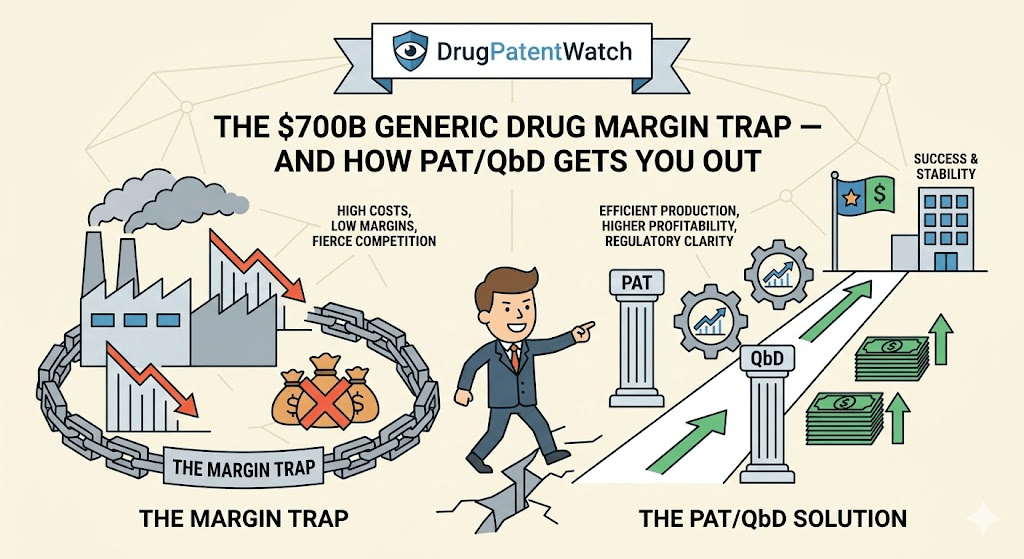
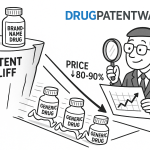
The global generic drug market is on track to exceed $700 billion by the early 2030s, growing at a 5-8% CAGR. That headline number obscures a structural problem: the economics of individual generic products are deteriorating in almost direct proportion to overall market expansion. A single generic competitor typically cuts brand revenue by 30-39%. Three to five entrants push prices down 60-70%. Ten or more can collapse pricing by 95%. The companies that survive this arithmetic are the ones that have stopped competing on price alone.
Why Generic Drug Price Erosion Is Structurally Permanent
Price pressure in the generic market is not a market inefficiency to be managed — it is the designed outcome of the Hatch-Waxman Act. The legislative bargain that gave brand-name companies market exclusivity in exchange for patent disclosure created a system where every exclusivity cliff is a scheduled commodity event. When Lipitor (atorvastatin) lost exclusivity in November 2011, Pfizer lost $10.7 billion in annual U.S. sales within 18 months. Plavix (clopidogrel, Bristol Myers Squibb and Sanofi) followed a similar trajectory. These are not outliers; they are the intended function of the system.
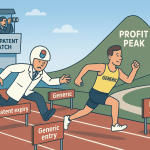
What Hatch-Waxman also created, however, was the Paragraph IV certification pathway, which allows a generic company to challenge a brand’s patent validity before loss of exclusivity occurs, potentially entering the market years early. A successful Paragraph IV challenge, combined with 180-day marketing exclusivity for the first approved generic filer, can generate hundreds of millions in revenue during a window when prices have not yet fully eroded. That first-mover premium is the central prize in generic pharmaceutical strategy, and it rewards companies with both legal precision and manufacturing sophistication.
What the 180-Day Exclusivity Window Actually Looks Like in Practice
The 180-day period of marketing exclusivity granted to the first successful Paragraph IV challenger is a finite and non-renewable asset. Once that window closes, subsequent generic entrants arrive and pricing converges toward commodity levels within quarters, not years. For biologics, the equivalent window under the Biologics Price Competition and Innovation Act (BPCIA) differs materially: biosimilar exclusivity operates on a 12-year reference product exclusivity clock for the originator, and biosimilar-specific exclusivity has been a persistent source of litigation between Congress, FDA, and brand manufacturers.
The financial model for a generic launch during 180-day exclusivity assumes a price discount of roughly 10-20% versus the brand, while subsequent entrants in year two may be selling at 40-60% below brand pricing. For high-volume primary care drugs, this window can still generate $500 million or more in gross revenue for a well-positioned generic company. For specialty drugs, the numbers can be considerably larger. The operational prerequisite — manufacturing readiness on day one of exclusivity — is where PAT and QbD move from theoretical benefit to financial necessity.
How Patent Thickets in Complex Generics Change the Competitive Calculus
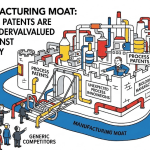
For small-molecule oral solid dosage (OSD) drugs, patent analysis often begins and ends with the primary composition-of-matter patent. For complex generics, injectables, inhalation products, and biologics, that framing is dangerously incomplete. Brand manufacturers file layered secondary patent portfolios covering formulation, delivery device, polymorph, method-of-use, and manufacturing process — what practitioners call a patent thicket.
AbbVie’s strategy around Humira (adalimumab) remains the most-cited example. By the time the core adalimumab composition-of-matter patent expired, AbbVie had assembled over 130 secondary patents covering formulation, dosing, and manufacturing. The result was that biosimilar entry into the U.S. market was delayed until 2023, even though the originator patent had been off-patent since 2016. Competitors including Sandoz, Amgen, and Pfizer had biosimilars approved years earlier but held back under settlement agreements that traded delayed entry for royalty-free commercialization rights post-2023.
Why AbbVie’s Humira Patent Strategy Created the Template Every Brand Company Now Follows
The Humira patent thicket was not unique in structure, but it was unprecedented in scale and success. The key mechanism: under U.S. patent law, a biosimilar applicant filing under the BPCIA must participate in a patent exchange process (the “patent dance”) that identifies all potentially relevant patents. AbbVie used this process to surface every secondary patent, forcing biosimilar developers to either litigate or settle. Nearly all settled. The result was a coordinated, multi-party exclusivity extension worth an estimated $40-50 billion in preserved U.S. revenue across 2016-2023.
The lesson for generic and biosimilar companies is that entry timing is not determined solely by the primary patent’s expiration date — it is determined by the full patent estate, the litigation posture of the brand holder, and the willingness of competitors to litigate rather than settle. For a generic company developing its own complex products, the same logic applies in reverse: building proprietary manufacturing processes that are documented, scientifically validated, and internally patented creates a defensible position that is genuinely difficult to replicate.
Formulation, device, and method-of-use patents; subcutaneous reformulation
Eliquis (apixaban)
BMS/Pfizer
$12.2B (2023)
2023 (compound); 2031 (formulation)
2031
Formulation patents; successful Paragraph IV defense vs. generics
Ozempic/Wegovy (semaglutide)
Novo Nordisk
$14.3B (2023 combined)
2032 core U.S.
2032-2040+ (device/formulation)
Device patents; dosing patents; manufacturing process complexity
Skyrizi (risankizumab)
AbbVie
$9B+ run rate (2024)
2035+
2035+
Biologic complexity; post-Humira replacement designed with long exclusivity runway
How Process Patents Function as a Secondary Defense Layer in Biologics
For biologic drugs and complex injectables, the manufacturing process is not merely an operational detail — it is part of the product’s identity. The FDA’s core principle for biologics, that “the process is the product,” means that even minor deviations in upstream cell culture conditions, purification steps, or formulation parameters can result in a product that is immunologically distinct from the reference. Brand manufacturers patent specific manufacturing steps precisely because those patents are difficult for biosimilar developers to design around without compromising product quality or regulatory equivalence.
A generic or biosimilar company that has implemented QbD and PAT is in a substantially stronger position when navigating this landscape. Their Critical Quality Attributes (CQAs) are formally defined, their Critical Process Parameters (CPPs) are documented, and the relationship between the two is captured in a design space submission. This body of evidence supports both regulatory approval and, in litigation, a demonstrable record that the generic company’s process is scientifically distinct from the brand’s patented manufacturing method.
What Quality by Design Actually Requires in a Generic Drug Development Program
QbD is frequently invoked and rarely executed with rigor. The formal framework originates in ICH Q8(R2) (Pharmaceutical Development), Q9 (Quality Risk Management), and Q10 (Pharmaceutical Quality System), with subsequent elaboration in the FDA’s 2011 process validation guidance and a series of EMA reflection papers. In practice, QbD-compliant development means defining the Target Product Profile (TPP) and Target Product Quality Profile (TQPP) before formulation work begins, then systematically characterizing the design space through risk assessment, DoE (Design of Experiments), and process characterization studies.
The central deliverable is a defined design space: a multidimensional range of process inputs and material attributes within which the product meets its specifications. Regulatory agencies including FDA and EMA treat operations within the approved design space as non-reportable changes, while deviations outside it trigger post-approval change supplements. For a generic company manufacturing at scale, this flexibility is a material cost reduction — the alternative is filing a Prior Approval Supplement (PAS) for every process adjustment, which can cost 12-18 months and hundreds of thousands in regulatory fees and lost production time.
How the FDA’s Process Validation Guidance (2011) Changed ANDA Filing Strategy
The FDA’s 2011 guidance on process validation shifted the compliance framework from traditional batch-to-batch confirmation to a continuous process verification model. Under this framework, a company must demonstrate that its manufacturing process is in a state of control throughout the product lifecycle — not just at launch. The implication for Abbreviated New Drug Application (ANDA) filers is that the quality data submitted in support of approval must be more mechanistically grounded than was required under the old validation model.
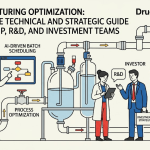
PAT enables this mechanistic grounding. Real-time in-process measurements of blend uniformity, particle size, moisture content, and polymorphic form provide the data backbone for continuous process verification. A PAT-enabled ANDA submission can include statistical process control (SPC) charts, multivariate models, and spectroscopic validation data that most ANDA filers cannot provide. This differentiation has practical consequences: FDA reviewers working under the Generic Drug User Fee Amendments (GDUFA) have limited review time and are more likely to issue Complete Response Letters (CRLs) to submissions that lack mechanistic process understanding.
EMA Requirements for QbD in Generic Drug Applications and What They Mean for U.S. Filers
The EMA’s approach to QbD in generic applications is codified through its Guideline on the Investigation of Bioequivalence and the broader pharmaceutical development guidelines aligned with ICH Q8-Q11. European regulators, particularly through the EMA’s Quality Working Party, have consistently pushed for design space documentation in complex product applications. For companies filing in both jurisdictions, the upfront investment in QbD and PAT pays a dual dividend: a single integrated development package can support both FDA ANDA and EMA Marketing Authorization Application (MAA) filings, reducing duplication and compressing development timelines.
The EMA has also been more explicit than FDA in requiring PAT implementation justification for continuous manufacturing submissions. AstraZeneca, Eli Lilly, and several contract development and manufacturing organizations (CDMOs) have published case studies documenting EMA feedback on PAT-enabled continuous manufacturing submissions, and the agency’s expectation is clear: if a company uses continuous manufacturing, PAT-based real-time release testing (RTRT) is expected to replace end-product testing in whole or in part.
PAT Technology Stack: What Tools Generate Defensible Process Data
Process Analytical Technology is a category, not a single instrument. The FDA’s 2004 PAT guidance defined it as “a system for designing, analyzing, and controlling manufacturing through timely measurements of critical quality and performance attributes of raw and in-process materials and processes.” The tools range from simple inline sensors to complex multivariate spectroscopic platforms, and selection should be driven by which Critical Quality Attributes carry the most regulatory and financial risk.
Near-Infrared Spectroscopy in Generic Drug Blend Uniformity Testing
NIR spectroscopy is the most widely deployed PAT tool in solid dosage manufacturing. Its primary application is blend endpoint determination — identifying the point at which active pharmaceutical ingredient (API) and excipients are sufficiently homogeneous to proceed to compression or encapsulation. Traditional blend uniformity testing requires pulling physical samples from multiple blender locations, sending them to an analytical laboratory, and waiting hours for HPLC results. A calibrated NIR probe mounted on a blender drum provides a real-time signal every few seconds, allowing operators to stop blending precisely when specifications are met rather than at an arbitrary time endpoint.
The regulatory validation requirements for NIR in blending are well-established through FDA guidance and ASTM E2589. A compliant NIR model requires a calibration set of at least 50-100 blends spanning the expected range of API concentration and blend variability, partial least squares (PLS) or principal component regression (PCR) modeling, and ongoing performance verification against offline reference samples. Companies including Pfizer’s API manufacturing sites, Teva, and several Sandoz manufacturing facilities have published on NIR implementation for blend monitoring, providing a regulatory precedent trail that new filers can cite.
Raman Spectroscopy Applications in Polymorphic Form Control for Complex APIs
Raman spectroscopy provides structural and polymorphic information that NIR cannot. For APIs with multiple crystalline forms — a situation that applies to roughly 80% of small-molecule drugs, according to published crystallography surveys — polymorphic form control is a critical quality attribute because different polymorphs have different solubility, bioavailability, and stability profiles. Ranitidine, carbamazepine, ritonavir, and chloramphenicol all have documented cases where polymorphic form variation caused commercial batch failures or clinical bioavailability discrepancies.
Inline Raman monitoring during API synthesis or wet granulation allows real-time confirmation that the desired polymorphic form is being produced and maintained. This is particularly relevant for generic companies targeting complex APIs where the reference listed drug (RLD) specifications include a defined polymorphic form. A Raman-based PAT strategy for polymorphic monitoring can also serve as the evidentiary foundation for a freedom-to-operate argument: if the brand’s process patent claims a specific crystallization method for producing a particular polymorph, a Raman-documented alternative crystallization route that reliably produces the same form provides a non-infringing pathway supported by continuous analytical data.
What Makes GLP-1 Manufacturing Difficult for Generic Entrants
Semaglutide, the active ingredient in Novo Nordisk’s Ozempic and Wegovy, is a 31-amino-acid GLP-1 receptor agonist with a C18 fatty diacid side chain attached via a linker. The manufacturing process involves solid-phase peptide synthesis (SPPS) for the peptide backbone, followed by fatty acid conjugation chemistry that requires controlled reaction conditions, multi-step purification by preparative HPLC, and lyophilization or specialized aqueous formulation. The final drug product is formulated in a pen injector device that itself carries device patents.
For a generic or follow-on manufacturer, every step in this sequence presents both a technical and IP challenge. Novo Nordisk’s patent estate around semaglutide includes composition-of-matter protection in multiple jurisdictions, process patents covering specific conjugation steps and purification methods, formulation patents covering the pH and excipient profile of the injectable solution, and device patents covering the FlexPen and FlexTouch auto-injectors. PAT implementation in GLP-1 manufacturing, particularly inline HPLC or mass spectrometry monitoring of conjugation purity, is not optional — it is the minimum standard required to demonstrate process control at the scale needed for regulatory approval, and it simultaneously provides the documented basis for claiming a distinct manufacturing pathway.
Key PAT Tools by Application
NIR Spectroscopy — Blend uniformity, moisture content, film coating thickness, API quantification in solid dosage
Raman Spectroscopy — Polymorphic form identification, API chemical identity, crystallization monitoring
Mid-Infrared (MIR) Spectroscopy — Bioreactor monitoring, protein concentration, glycosylation, metabolite tracking in biologics
Focused Beam Reflectance Measurement (FBRM) — Particle size distribution in crystallization, granulation
Process Mass Spectrometry — Headspace gas analysis in fermentation, continuous manufacturing off-gas monitoring
Ultrasound-Based Sensors — Slurry concentration, viscosity measurement in API manufacturing
Multivariate Data Analysis (MVDA) — Integration layer that converts raw spectral data into CPP and CQA relationships
The Financial Case for PAT: Where the Numbers Actually Come From
The ROI calculation for PAT varies significantly by product type, batch size, and manufacturing scale. For oral solid dosage products at commercial scale, the most extensively modeled scenario in published literature involves a combination of labor reduction in quality control, reduced batch rejection rates, and increased process throughput. A representative analysis from Process and Control Today estimated that a typical OSD facility running three to four product lines could realize approximately $380,000 in annual savings through PAT implementation, driven primarily by reductions in QC laboratory labor and a 50% reduction in process cycle time when combined with Lean manufacturing initiatives.
That figure is a floor, not a ceiling. For high-value complex generics — extended-release injectables, sterile ophthalmics, inhalation products — a single batch rejection at commercial scale can cost $500,000 to $1.5 million when factoring in API cost, contract manufacturing fees, out-of-specification investigation time, potential regulatory notification, and customer reallocation. If a PAT-enabled process reduces rejection rates by 70-80% (a figure consistent with published pharmaceutical industry case studies), the payback period on a $2-4 million PAT implementation is measured in months, not years.
Revenue at Risk from Drug Shortages: The Operational Cost of Poor Process Control
Drug shortages are not random — they disproportionately affect generic injectable products manufactured under complex sterile conditions, a product category where process variability, contamination events, and FDA warning letters converge. The FDA maintained an active shortage list of over 150 drugs through 2024, with sterile injectables accounting for the majority of entries. Each shortage event represents a direct revenue loss for the manufacturer, a procurement crisis for hospital systems, and a reputational event that affects future contract bidding.
Several large generic companies — including Pfizer’s Hospira unit, Fresenius Kabi, and Hikma Pharmaceuticals — have received FDA warning letters related to data integrity issues and process control failures at sterile manufacturing sites. The remediation costs associated with warning letters routinely exceed $100 million when factoring in facility upgrades, consent decree compliance, and lost contract revenue while the site is under scrutiny. A PAT-based continuous process verification program, properly implemented and documented, provides an audit trail that makes these events substantially less likely and, when they do occur, substantially easier to defend.
How Operating Margin Improvements Compound Over a Product Lifecycle
A 6% improvement in operating margin at an OSD facility may sound incremental, but it compounds materially over a product’s commercial life. Consider a generic product with $200 million in annual net revenue and a 15% base operating margin at a facility without PAT. A 6-percentage-point improvement to 21% adds $12 million in annual operating profit. Over a 10-year product lifecycle, that is $120 million in cumulative additional profit — more than enough to fund a second PAT implementation project and still deliver significant shareholder value. The compounding effect is amplified at higher revenue levels and for products with longer patent-free commercial windows.
The question isn’t whether PAT implementation has a positive ROI. The published evidence on that is unambiguous. The question is whether the management team has the organizational appetite to change how quality is done before a warning letter forces the conversation.Pharma manufacturing executive, as cited in Process and Control Today analysis
Paragraph IV Strategy and How Process Documentation Changes the Litigation Outcome
A Paragraph IV certification under Hatch-Waxman is a legally and commercially aggressive move. The certifying generic company asserts either that the listed patent is invalid, unenforceable, or will not be infringed by its proposed product. Filing triggers an automatic 30-month stay of ANDA approval while the brand company has the opportunity to sue for infringement. The litigation that follows is, at its core, a battle over technical evidence: does the generic company’s product or process infringe the brand’s patent claims?
For patents covering specific manufacturing processes — a formulation patent claiming a specific wet granulation method, a crystal engineering patent claiming a particular recrystallization process, or a biologic manufacturing patent covering a cell culture media composition — the generic company’s defense rests entirely on proving that its process is distinct. This is not a legal argument alone; it requires the technical record to support the legal claim.
How QbD Process Documentation Creates a Stronger Non-Infringement Defense
A generic company that has implemented QbD before initiating its Paragraph IV challenge has a structural advantage in the ensuing litigation. Its design space documentation captures the multidimensional parameter space in which its process operates, defined through DoE studies that are independent of and predated by the brand’s patented method. Its PAT data provides a continuous, timestamped record of process operation that can be used to demonstrate, on a batch-by-batch basis, that every commercial lot was produced within the independently developed design space rather than in accordance with the brand’s claimed process.
This evidentiary foundation is increasingly relevant as brand companies in complex product categories include process patents in their Paragraph IV litigation. In the apixaban (Eliquis) litigation, Bristol Myers Squibb and Pfizer asserted multiple formulation and process patents against generic filers including Aurobindo, Mylan, Zydus, and others. In the esomeprazole magnesium litigation, AstraZeneca asserted crystallization process patents. In both cases, the generic company’s ability to present a documented, scientifically coherent alternative process was central to the outcome.
Most Important Ongoing Patent Litigation for Generic Entrants to Monitor
Several high-stakes patent disputes are active across the U.S. district courts and Federal Circuit as of early 2026. Novo Nordisk’s semaglutide patent portfolio is under challenge from multiple generic filers, with litigation in the District of Delaware focused on both formulation and device patents. Eli Lilly’s tirzepatide (Mounjaro/Zepbound) compounds are beginning to attract Paragraph IV attention given the scale of GLP-1 market opportunity. AstraZeneca’s Farxiga (dapagliflozin) faces ongoing generic challenges despite the formulation patent extensions the company has asserted post-compound LOE.
For biosimilar developers, the adalimumab patent dance has largely concluded, but pembrolizumab (Keytruda) is now entering the window where early biosimilar development programs are underway. Merck has stated that core pembrolizumab patents extend to approximately 2028, with secondary formulation and method-of-use patents potentially extending protection further. Biosimilar developers at Celltrion, Samsung Bioepis, and Coherus are in various stages of development, and the litigation posture around the pembrolizumab patent estate will shape market timing for all of them.
Biosimilar Competition and the Manufacturing Complexity Moat
Biosimilar development is the most demanding intersection of manufacturing science, regulatory strategy, and IP litigation in the pharmaceutical industry. Unlike small-molecule generics, where chemical equivalence is demonstrable by synthesis and analytical characterization, biosimilarity must be established through a totality-of-evidence approach that encompasses structural characterization, functional assays, pharmacokinetic comparability, and in some cases clinical immunogenicity data. The manufacturing process for a biologic — cell line, culture conditions, purification train, formulation — directly determines the product’s critical quality attributes, which is why originator companies patent manufacturing processes aggressively.
Why Biosimilar Manufacturing Cost Reduction Depends on PAT Investment
Biologic manufacturing is fundamentally more expensive than small-molecule production. Stainless steel or single-use bioreactors at 1,000-20,000 liter scale, mammalian cell culture media at $200-400 per liter, protein A affinity chromatography resins, viral inactivation steps, and complex aseptic fill-and-finish operations combine to produce per-gram API costs that dwarf conventional pharmaceutical synthesis. For a biosimilar developer entering a market where the originator brand has two decades of manufacturing optimization, cost parity is a prerequisite for commercial viability, and it cannot be achieved without real-time process monitoring.
MIR spectroscopy in bioreactor monitoring, at-line osmolality sensors, inline turbidity probes, and Raman-based antibody titer monitoring collectively provide the process understanding that allows a biosimilar manufacturer to tighten its operating ranges, reduce variability, and prevent the batch failures that at $1-3 million per bioreactor run can destroy the economics of a biosimilar program entirely. Companies including Amgen Biosimilars, Pfizer’s biosimilar division, and Sandoz (spun off from Novartis in 2023 as an independent generic and biosimilar company) have all publicly discussed the role of continuous process verification and PAT in their biosimilar manufacturing economics.
How Sandoz Built a Biosimilar Manufacturing Moat Through Process Innovation
Sandoz, now operating independently after its 2023 separation from Novartis, has a manufacturing heritage that predates most of its biosimilar competitors. Its Kundl, Austria facility, which produces both small-molecule APIs and biologics, has been a reference site for PAT implementation in semi-solid and sterile dosage forms for over a decade. The company’s biosimilar portfolio, which includes adalimumab (Hyrimoz), etanercept, and filgrastim, was built on manufacturing processes designed to minimize batch-to-batch variability from the outset, a design choice that has made biosimilar interchangeability designations — requiring demonstration of pharmacokinetic and safety equivalence across multiple transitions between biosimilar and reference product — achievable without reformulation.
Biosimilar interchangeability is a commercial differentiator with direct formulary implications. An interchangeable biosimilar can be substituted for the reference product at the pharmacy level without physician intervention in most U.S. states, significantly expanding its accessible market relative to a non-interchangeable biosimilar. Hyrimoz received FDA interchangeability designation in 2023, partly supported by the manufacturing consistency data generated through Sandoz’s PAT-enabled process control infrastructure.
From Batch Manufacturing to Continuous Processing: The Strategic Endpoint
Continuous manufacturing is not a distant aspiration for the pharmaceutical industry — it is an active competitive frontier, with Vertex Pharmaceuticals, Eli Lilly, and Johnson & Johnson’s Janssen unit having received FDA approval for NDA or ANDA products manufactured on continuous platforms as of 2025. The FDA’s draft guidance on continuous manufacturing, published in 2019 and finalized in 2022, establishes the regulatory expectation that PAT-based real-time release testing will replace or substantially reduce end-product batch release testing for continuous manufacturing products.
For a generic company, the financial case for continuous manufacturing rests on four pillars: reduced facility footprint (continuous equipment runs at roughly 10-15% of the physical scale of equivalent batch capacity), reduced inventory and work-in-process, faster response to demand fluctuations, and improved product quality consistency. Eli Lilly’s Branchburg, New Jersey continuous manufacturing facility, which produces both small-molecule APIs and finished dosage forms, has been cited internally by Lilly executives as generating 20-30% cost reductions relative to comparable batch facilities. Vertex’s ivacaftor (Kalydeco) continuous manufacturing process received FDA approval in 2015, establishing a precedent that the regulatory pathway was viable for approved drugs.
What a PAT Implementation Roadmap Looks Like for a Generic Company Targeting Continuous Manufacturing
The path from batch manufacturing to continuous processing is not a direct upgrade — it requires an intermediate step of building process analytical capability within the existing batch environment. Before a continuous manufacturing system can be validated, a company must have demonstrated, in its batch operations, that it can measure the CQAs it intends to monitor in real time, that its PAT models are robust across a defined range of raw material variability, and that its manufacturing control system can respond automatically to out-of-trend signals without operator intervention.
A phased approach begins with a single unit operation — typically a blender or fluid bed dryer, where the ROI on NIR implementation is quickest to demonstrate — and builds PAT coverage across the manufacturing train over 18-36 months. The ISPE’s PAT Baseline Guide and the FDA’s process validation guidance both recommend this incremental model. By the time a company is ready to evaluate continuous manufacturing equipment vendors such as GEA, Bosch, or IMA, it should already have a validated multivariate data analysis platform, a trained PAT team, and a regulatory precedent in its ANDA submissions for real-time in-process testing. Without that foundation, a continuous manufacturing investment will fail validation, either technically or regulatorily, at substantial cost.
Understanding the patent landscape is the first step. DrugPatentWatch maps every listed patent, Paragraph IV filing, and exclusivity expiry for over 15,000 drug products.Start Free Trial
Which Drugs Face the Largest Revenue Cliff in 2026-2031
The patent cliff through 2031 represents one of the largest redistribution events in pharmaceutical history, with industry analysts estimating $250-300 billion in branded drug revenues transitioning to generic competition within the decade. The drugs listed below are not merely statistical — they represent the development pipeline that generic and biosimilar companies are building toward right now, and the manufacturing complexity of each product directly determines whether entry is plausible for a given competitor.
Drug (INN)
Brand Name
Company
Therapeutic Class
Approx. Annual Revenue
U.S. LOE Estimate
Generic/Biosimilar Complexity
Pembrolizumab
Keytruda
Merck
PD-1 checkpoint inhibitor
$25B+
2028 core
Very High — large mAb; manufacturing and CQA complexity; active patent dance proceedings
Apixaban
Eliquis
BMS/Pfizer
Oral anticoagulant (FXa inhibitor)
$12B+
2031 (formulation patents)
Moderate — small molecule but formulation patents contested; multiple Paragraph IV litigations resolved
Lenalidomide
Revlimid
BMS (acquired Celgene)
Immunomodulatory agent (IMiD)
$10.8B (2022)
2026 (volume-limited generics entered 2022)
Moderate to High — REMS program (risk of teratogenicity) creates distribution and manufacturing compliance overlay
Dupilumab
Dupixent
Regeneron/Sanofi
IL-4/IL-13 inhibitor (atopic dermatitis, asthma)
$13.5B
2031-2035 (complex patent estate)
Very High — biologic; SC pen device patents; indication expansion ongoing
Semaglutide
Ozempic / Wegovy
Novo Nordisk
GLP-1 receptor agonist
$14B+
2032 (core compound)
Very High — peptide conjugate; device patents; manufacturing process complexity (SPPS + conjugation)
Ustekinumab
Stelara
J&J
IL-12/IL-23 inhibitor
$10.9B (2022)
2023-2025 (biosimilar entries underway)
High — biosimilar interchangeability status differentiates entrants; Samsung Bioepis, Amgen, Teva in market
Revenue at Risk from Keytruda LOE: What Merck Is Doing About It
Merck’s pembrolizumab franchise generates more annual revenue than some mid-cap pharmaceutical companies generate in total. The core U.S. composition-of-matter patent expires around 2028, but Merck’s lifecycle strategy is more sophisticated than a simple patent filing. The company received FDA approval in 2023 for a subcutaneous formulation of pembrolizumab (MK-3475A), co-formulated with Halozyme’s ENHANZE drug delivery technology, which uses recombinant human hyaluronidase to enable rapid subcutaneous injection in place of the 30-minute intravenous infusion of the IV formulation. The subcutaneous formulation carries its own patent estate through Halozyme’s ENHANZE platform, potentially extending effective exclusivity into the 2030s.
For biosimilar developers targeting IV pembrolizumab, the 2028 LOE date is the operative planning horizon. For those also contemplating a subcutaneous biosimilar, the Halozyme IP estate adds a separate layer of complexity that most emerging-market biosimilar manufacturers are not equipped to navigate. This bifurcation — IV biosimilar versus subcutaneous lifecycle extension — mirrors the strategy AbbVie attempted with a citrate-free Humira formulation, which reduced injection site pain and generated a separate patent family that further complicated the biosimilar entry landscape.
What Investors Are Watching in Generic and Biosimilar Manufacturing
The investor case for generic pharmaceutical companies has evolved from a simple multiple-on-first-to-file story to a more nuanced assessment of manufacturing capability, product complexity mix, and regulatory track record. Wall Street analysts covering Teva, Sandoz, Hikma, Sun Pharma, and Viatris now routinely include manufacturing quality indicators in their coverage notes — specifically FDA warning letter exposure, consent decree history, and facility-level ANDA approval rates — alongside traditional revenue and EBITDA metrics.
How FDA Warning Letters Affect Generic Drug Company Valuations
An FDA warning letter to a manufacturing facility can trigger immediate and sustained financial consequences. The letter typically requires a written response within 15 business days, an independent third-party audit, and a remediation plan submitted to the FDA before new ANDA approvals from the affected site can proceed. In practice, this creates a site-level freeze on commercial launches that can last 18-36 months for complex facilities. During this period, competitors can capture market share in products the warning-letter company was planning to launch, representing a permanent competitive loss that is difficult to recover.
Teva Pharmaceuticals received warning letters for multiple manufacturing sites between 2016 and 2020, including facilities in Goa, India and Davie, Florida. The commercial impact was a delay in ANDA approvals during a period when the company’s financial position was already strained by the Allergan generics acquisition. Sun Pharma’s Halol facility in India received an import alert from FDA in 2014, effectively blocking new drug approvals from that site for over three years. Both cases demonstrated the asymmetric downside risk of poor manufacturing quality in a company that otherwise had strong pipeline depth.
How Biosimilar Launch Timing Works — and What Delays the Revenue Recognition
Biosimilar launch timing is rarely as simple as FDA approval followed by commercial entry. The most common delay mechanism is the BPCIA patent exchange process, which runs in parallel with FDA review. Under the statute, a biosimilar applicant must provide its biologics license application (BLA) and manufacturing information to the reference product sponsor within 20 days of FDA accepting the application. The sponsor then identifies patents it would reasonably assert and the two parties negotiate which patents will be litigated before launch — the first “patent dance.” A second round of litigation governs patents identified later in the process.
After patent litigation concludes or patents are designed around, the biosimilar applicant must provide 180 days’ notice before commercial launch under the BPCIA’s notice-of-commercial-marketing provision, validated by the U.S. Supreme Court’s Sandoz v. Amgen decision in 2017. This notice period, combined with potential preliminary injunction litigation, means that even a legally victorious biosimilar developer may face a 12-24 month gap between FDA approval and the first commercial sale. Investors modeling biosimilar revenue should account for this structural lag, particularly for high-value products like pembrolizumab and dupilumab where the originator will almost certainly litigate aggressively.
Common Investor Questions About Generic Drug Company Margins
Why do generic drug companies with strong pipelines still report deteriorating margins?
Pipeline depth does not offset price erosion in the base business. A generic company with 50 products in late-stage development is still subject to 50-70% price compression on its existing commercial products. Unless the new pipeline skews heavily toward complex products with fewer competitors and higher sustainable pricing, EBITDA margins will compress even as revenue grows.
Is the Sandoz spinoff from Novartis a sign of broader generic pharma consolidation?
It is a sign that large pharma companies view generic drug businesses as value-draining rather than value-creating within a diversified portfolio. Novartis’s thesis was that Sandoz as an independent company, focused purely on generics and biosimilars, would be more efficiently managed and valued by the market on its own merits. The same logic is visible in Pfizer’s sale of its Upjohn generics unit to Mylan (now Viatris) in 2020. Whether the spinoff model generates superior returns depends entirely on whether the independent company can shift its mix toward complex products faster than its margin base erodes.
How does PAT investment affect a generic company’s credit profile?
Positively, over a 3-5 year horizon, but the near-term capex intensity is a modest headwind to free cash flow. Rating agencies including Moody’s and S&P have incorporated manufacturing quality metrics into their pharmaceutical sector methodology, recognizing that warning letter exposure and consent decree history represent contingent liabilities that are difficult to quantify but material when realized. A company that can demonstrate PAT-enabled continuous process verification is likely to carry lower regulatory risk in a credit context, though this is rarely cited explicitly in ratings rationale.
Implementation Strategy: How to Build a PAT Program Without a Disruptive Overhaul
Most failed PAT implementations share a common structural flaw: they were conceived as technology projects rather than business transformation programs. Installing a NIR probe on a blender without building the multivariate calibration model, integrating the data into the batch record system, and training production operators to interpret and act on real-time signals produces a very expensive piece of equipment that generates no operational value. The technology is table stakes. The organizational capability to use it is the scarce resource.
How to Prioritize PAT Projects Using a Risk-Based ROI Framework
A structured prioritization process begins with a risk register of all process steps for products generating more than $10 million in annual net revenue. Each process step is scored across three dimensions: the probability of a batch failure or CQA excursion, the financial consequence if that failure occurs (API cost, contract penalties, customer reallocation), and the technical feasibility of deploying a PAT measurement at that step. High-probability, high-consequence steps with feasible PAT solutions are the first implementation candidates.
This analysis typically identifies fluid bed drying (moisture endpoint, particle size) and blending (blend uniformity, API concentration) as the highest-priority candidates in solid dosage manufacturing. In sterile manufacturing, fill-volume verification, headspace oxygen monitoring, and container closure integrity testing via laser-based methods rank highly. In biologic manufacturing, bioreactor glucose and metabolite monitoring and protein A step yield monitoring are primary targets. Building the PAT business case around these specific risk scenarios makes the financial justification concrete and defensible to capital allocation committees.
How to Build the Cross-Functional PAT Team That Actually Delivers Results
Effective PAT programs require a team composition that reflects the interdisciplinary nature of the work. The core team should include at minimum: an analytical scientist with spectroscopy expertise (NIR or Raman, depending on target applications), a process engineer with direct manufacturing experience for the targeted unit operations, a statistical modeler for DoE design and MVDA calibration work, a quality assurance representative with regulatory affairs perspective, and a data systems engineer who can integrate PAT instruments with the manufacturing execution system (MES) and electronic batch record (EBR).
Companies including GSK, Pfizer, and Eli Lilly have published organizational models for their PAT programs, and the consistent finding across published accounts is that the team structure matters more than the instrument selection. A well-constructed multidisciplinary team with a moderately capable instrument will outperform a poorly organized team with best-in-class equipment. The ISPE PAT Community of Practice and the International Journal of Pharmaceutics provide extensive published case studies on team models that have been validated through regulatory submissions.
How the FDA Could Affect the Timeline for PAT-Enabled ANDA Approvals
The FDA’s GDUFA program has materially accelerated standard ANDA review times — from a historical average of 36-48 months to a stated goal of 10 months for standard applications under GDUFA III. However, ANDAs that include novel manufacturing approaches, including PAT-based real-time release testing or continuous manufacturing, may be routed to the Office of Pharmaceutical Quality (OPQ) for additional review, which can extend timelines. The FDA’s Emerging Technology Program (ETP), which provides early engagement for companies implementing innovative manufacturing approaches, can mitigate this risk by resolving technical questions before the ANDA is filed rather than during review.
The ETP has hosted pre-submission meetings for PAT, continuous manufacturing, and real-time release testing applications, and companies including Vertex, Eli Lilly, and Janssen have used this pathway to reduce review uncertainty for their innovative manufacturing submissions. Generic companies targeting PAT-enabled ANDA filings should consider ETP engagement as a standard part of the regulatory strategy, not an optional extra. The investment in pre-submission alignment with FDA technical staff typically shortens review timelines and reduces the probability of a CRL related to manufacturing questions.
What Happens Financially After a Generic Drug’s Loss of Exclusivity
Loss of exclusivity (LOE) is an accounting event before it is a market event. Under U.S. GAAP, brand-name pharmaceutical companies are required to disclose material patent expiration dates and biosimilar entry timelines as risk factors, but the actual revenue impact depends on competitive dynamics that unfold over months and years, not instantaneously. In the 12 months following the first generic entry, branded revenue typically declines 50-70% in absolute terms, though the percentage varies by therapeutic class, patient switching behavior, and payer formulary decisions.
For payers — pharmacy benefit managers, hospital formulary committees, and CMS in the Medicare context — generic availability is a contracting event. PBMs will typically move an originator drug to a higher formulary tier immediately upon generic availability, redirecting prescription volume to the lower-cost generic. In some cases, the brand drug is removed from preferred status entirely and replaced with a generic-only formulary position. For drugs under Medicare Part D, the IRA’s drug price negotiation provisions now apply to certain high-expenditure drugs, further compressing brand revenues in the years approaching LOE.
Which Competitors Benefit Most After a Major Drug Loses Exclusivity
First-to-file generic companies with 180-day exclusivity capture the largest single share of revenue in the immediate post-LOE period. Their competitive window is narrow — 180 days — but the financial returns during that period are historically high, sometimes approaching 60-80% of the brand’s pre-LOE unit volume at pricing that is still 10-20% below brand. For specialty drugs with limited prescriber populations, early generic entry can be particularly lucrative because subsequent entrants may not be able to justify the commercial infrastructure required to compete in a small-market specialty category.
For drugs requiring complex manufacturing — injectables, transdermal systems, inhalation products — the number of viable generic entrants is structurally limited. Companies with existing sterile manufacturing capacity, ANDA portfolios for similar dosage forms, and established FDA inspection histories have a persistent advantage because the barriers to entry are high enough that the market may support only two to four generic competitors at sustainable pricing, rather than the dozen-plus that enter the market for simple oral tablets. Sun Pharma’s injectables strategy, Fresenius Kabi’s hospital injectable portfolio, and Hikma’s sterile manufacturing network are all built on this structural dynamic.
Investment Strategy: How Portfolio Managers Should Think About Generic Drug Sector Exposure
The generic pharmaceutical sector is not a monolithic asset class. The dispersion between a well-positioned complex generics company and a commodity OSD manufacturer is wider than the dispersion between large-cap branded pharma names. Investors allocating to the sector benefit from distinguishing between business models before making capital commitments.
Key Metrics for Evaluating Generic Drug Company Quality
The most predictive metrics for long-term generic company performance are not the headline EBITDA or revenue growth numbers — those are lagging indicators. Leading indicators include: the ratio of complex-to-simple products in the ANDA pipeline, the company’s FDA inspection history and current warning letter status, the number of First-to-File (FTF) positions in the ANDA portfolio, biosimilar pipeline depth and stage of development, manufacturing site geographic diversification, and the degree of API backward integration. A company with 70% of its pipeline in complex products, no active warning letters, five or more FTF positions, and internal API manufacturing for its highest-revenue products is in a structurally different competitive position than a company with the inverse profile.
PAT and QbD adoption is an increasingly useful proxy for manufacturing quality and regulatory risk. A company that can demonstrate, in its regulatory submissions and investor disclosures, that it has implemented PAT-based continuous process verification for its commercial manufacturing operations has made a capital commitment to quality infrastructure that is visible, auditable, and costly to reverse. This is not a guarantee against warning letters, but it materially reduces the probability of the data integrity and process control failures that trigger them.
Why Manufacturing Complexity Is Now an Explicit Value Driver in Pharma M&A
The acquisition of complex generics and biosimilar manufacturers has been consistently valued at higher multiples than commodity generics transactions over the 2018-2024 period. Pfizer’s $17 billion acquisition of Arena Pharmaceuticals in 2022, Abbvie’s biosimilar-related licensing transactions with Allergan, and Viatris’s complex generics asset monetization strategy all reflect a market consensus that manufacturing-intensive pharmaceutical assets carry structural defensibility worth paying for.
CDMOs with validated PAT capabilities — Lonza, Catalent (acquired by Novo Nordisk in 2024), Samsung Biologics, and WuXi Biologics — have commanded premium valuations relative to contract manufacturers without equivalent analytical capabilities. Novo Nordisk’s $16.5 billion acquisition of Catalent in 2024 was explicitly motivated by Catalent’s fill-and-finish manufacturing capacity for injectable GLP-1 products and its quality infrastructure, which included PAT-enabled continuous process monitoring at multiple sites. This is the clearest large-scale evidence that the market assigns real financial value to manufacturing quality systems of the type that PAT and QbD enable.
Summary
Key Takeaways for Strategy and Investment Teams
Price erosion in generic drugs is structurally permanent, not cyclical. With 10 or more generic competitors, pricing can fall 95% from brand levels. The only durable defense is competing in product categories where the number of viable entrants is structurally limited by manufacturing and regulatory complexity.
Patent thickets in complex generics and biologics extend effective exclusivity years beyond the compound patent expiry date. Humira’s 7-year biosimilar delay is the model brand companies are now systematically replicating. Generic entrants need process documentation that supports both regulatory approval and non-infringement arguments.
QbD-compliant submissions are qualitatively different from traditional ANDAs. The design space, DoE-derived parameter relationships, and PAT data collectively demonstrate mechanistic process understanding that FDA reviewers recognize and regulatorily reward with design space flexibility and reduced post-approval change burden.
PAT implementation produces quantifiable financial returns. OSD facilities can recover a $2-4 million investment in PAT instrumentation within 12-18 months through batch rejection reduction and QC labor savings alone. For complex injectables and biologics, the per-incident cost avoidance is larger still.
Continuous manufacturing is the long-term endpoint, not a niche technology. FDA has approved continuous manufacturing submissions for both NDA and ANDA products, and the agency’s GDUFA III review priorities explicitly encourage innovative manufacturing approaches. Companies that have not built PAT capability in their batch operations will not be credible candidates for continuous manufacturing approval.
Manufacturing quality is now a credit and equity valuation input. FDA warning letter exposure, consent decree history, and PAT adoption status are factors that both debt rating agencies and equity analysts are incorporating into sector coverage. A company’s manufacturing quality infrastructure is not separate from its financial profile — it is one of the best available predictors of near-term earnings risk.
Paragraph IV litigation outcomes depend on technical record quality. The generic company with a PAT-documented, QbD-designed manufacturing process has a structural evidentiary advantage over one that cannot produce a contemporaneous record of its process operation and parameter space.
Frequently Asked Questions
Common Investor and Pharma Executive Questions
How does a knowledge-rich QbD regulatory submission differ from a traditional ANDA, and why does the difference matter commercially?
A traditional ANDA demonstrates bioequivalence and manufacturing specification compliance. A QbD submission does that and also documents the causal relationships between input variables and output quality attributes, the design space within which the process can operate without regulatory notification, and the control strategy that ensures the process stays within that space. The commercial consequence is operational flexibility: operating outside a traditional ANDA’s specifications requires a supplement; operating within a QbD-defined design space does not. For a commercial manufacturer running 10-20 product batches per month, eliminating even one Prior Approval Supplement per year saves approximately $200,000-400,000 in regulatory costs and 12 months of process freeze time.
Can a generic company in a low-cost manufacturing region like India or China justify PAT investment given margin pressure?
The economic logic is more compelling in low-cost regions than outside them, not less. Indian and Chinese API manufacturers competing for U.S. and European ANDA approvals face the most intense FDA and EMA scrutiny of any manufacturing geography, based on historical inspection data. A PAT-enabled facility in Hyderabad or Ahmedabad is not just more efficient — it is more defensible against the data integrity observations that have triggered the most consequential warning letters issued to Indian generic manufacturers over the past decade. Sun Pharma’s documented commitment to QbD and Six Sigma is a direct organizational response to its Halol import alert experience. The investment is a risk management decision as much as an efficiency decision.
How does PAT implementation interact with biosimilar interchangeability applications?
Biosimilar interchangeability requires demonstration that the biosimilar can be expected to produce the same clinical result as the reference product in any given patient across multiple transitions, and that the risk of alternating or switching does not exceed the risk of maintaining the reference product. This is primarily an immunogenicity question, but the manufacturing consistency data that supports the interchangeability application must show that the biosimilar’s CQAs — including post-translational modifications, glycosylation profile, and aggregation level — are stable within a defined range across commercial-scale batches. PAT-enabled bioreactor monitoring and real-time CQA tracking provide exactly this consistency record. Sandoz’s Hyrimoz interchangeability designation in 2023 reflected manufacturing data of this type.
What is the regulatory risk of filing an ANDA with PAT-based real-time release testing in place of end-product testing?
Real-time release testing (RTRT) is explicitly supported under ICH Q8(R2) and FDA’s process validation guidance as an alternative to end-product testing when the analytical relationship between in-process measurements and final product attributes has been validated. The regulatory risk is not conceptual — FDA accepts RTRT in principle. The practical risk is in the validation package: the NIR or Raman calibration model must cover the full range of raw material variability, environmental conditions, and process perturbations the commercial process will encounter. Submissions that present RTRT based on laboratory-scale models extrapolated to commercial scale without commercial-scale validation data will receive CRLs. The FDA’s ETP engagement process exists specifically to address this type of methodological question before submission.
How should a generic company think about the make-or-buy decision for PAT capability?
The make-or-buy analysis hinges on the company’s commercial trajectory. A company with a defined pipeline of 10-15 complex generics scheduled for ANDA filing over five years has sufficient PAT utilization to justify internal capability building — the fixed cost is amortized across enough submissions to be competitive with CDMO pricing, and internal ownership of the analytical models provides IP defensibility that outsourced models do not. A company with two or three complex products in development and primary revenue from commodity OSD products is better served by a CDMO relationship with a partner that has existing PAT infrastructure. Lonza, Patheon (now part of Thermo Fisher), and multiple Recipharm sites offer PAT-enabled development services on a fee-for-service basis that allows smaller companies to access QbD capability without the fixed cost of internal instrument investment.
References
DrugPatentWatch. “A Strategic Framework for Comprehensive Generic Drug Market Analysis.” 2025.
DrugPatentWatch. “Architecting a Competitive Generic Drug Portfolio: A Strategic Framework for Sustainable Growth.” 2025.
DrugPatentWatch. “Mastering the Generic Gambit: A Comprehensive Playbook for a Generic Drug Launch Strategy.” 2025.
DrugPatentWatch. “Top 10 Challenges in Generic Drug Development.” 2025.
Salvavidas Pharma. “What Are Complex Generics? Challenges and Market Trends.” 2025.
PharmTech. “QbD and PAT: A Marriage Made in Heaven?” 2025.
Das, P. “QbD & PAT tools — Lifeline during the life cycle of Pharma Products.” Medium. 2025.
Drug Development & Delivery. “Quality-by-Design: The Good, The Bad, The Inevitable.” 2025.
Process and Control Today. “The PAT(h) to Highly Profitable Manufacturing: Process Analytical Technology.” 2025.
Optimal-Tech. “The PAT(h) to Highly Profitable Manufacturing.” 2025.
DrugPatentWatch. “Leveraging Drug Patent Data for Strategic Investment Decisions.” 2025.
Mettler Toledo. “What Is Quality by Design (QbD)?” 2025.
PharmaSource. “Quality by Design in Pharmaceutical Manufacturing.” 2025.
PMC. “Pharmaceutical Product Development: A Quality by Design Approach.” PMC4991121. 2016.
Recipharm. “The QbD Approach: Key Advantages in Clinical and Commercial Phases.” 2025.