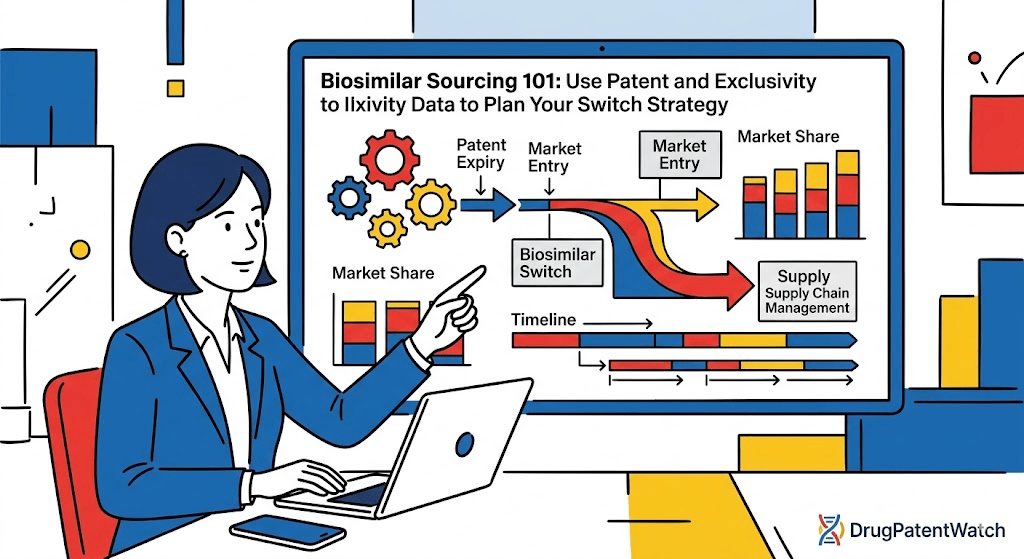
Every biosimilar switch strategy that fails, fails at the same point: someone made a sourcing decision based on the manufacturer’s launch timeline rather than the legal timeline. They heard a company announce a Q1 launch, built their formulary transition plan around it, and then watched the launch get delayed six months because a patent dispute they didn’t know existed needed to clear first. The whole exercise has to be rebuilt.
This happens at health systems, at payers, at pharmacy benefit managers, and at group purchasing organizations. It happens not because the people involved are unsophisticated — many of them are exceptional pharmacy professionals — but because the patent and exclusivity intelligence required to avoid it lives in regulatory databases that most sourcing teams have never systematically accessed.
The FDA’s Purple Book, the Biologics Price Competition and Innovation Act’s patent dance disclosures, first-interchangeable exclusivity periods, and reference product exclusivity windows together define the legal envelope within which any biosimilar can actually reach the market. If your switch strategy isn’t anchored to those legal realities, it’s anchored to marketing materials and press releases instead. That’s a fragile foundation for a decision that could involve tens of millions of dollars in biologic spend.
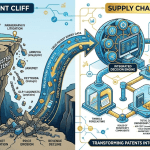
The global biosimilar market was estimated at $35.7 billion in 2025 and is expected to reach $88.9 billion by 2032, growing at 13.9% annually. Between 2023 and 2026 alone, blockbusters worth a combined estimated $72 billion in annual sales faced patent cliffs. The sourcing opportunity is enormous. So are the consequences of getting the legal intelligence wrong.
This article walks through how the relevant legal frameworks actually work, what data sources you need to track them, how to apply that data to specific sourcing decisions, and what the Humira, Stelara, and oncology biosimilar markets have already taught us about what happens when the intellectual property analysis leads and what happens when it doesn’t.
Why Patent Data Belongs in Every Sourcing Decision
Biosimilar sourcing is not pharmaceutical procurement. It looks like pharmaceutical procurement — you’re negotiating contract pricing on a drug — but the legal complexity underneath it has no parallel in generic drug sourcing. When a generic drug launches after a Paragraph IV certification under Hatch-Waxman, the framework is well-established and the timelines are relatively predictable. When a biosimilar enters the market under the Biologics Price Competition and Innovation Act, the path is more complex, more contested, and more likely to produce a surprise that invalidates sourcing plans built without legal intelligence.
Three legal constructs determine when a biosimilar can reach the U.S. market and in what commercial form. Each one affects your sourcing strategy differently, and each one requires different data to track.
The first is the 12-year reference product exclusivity period. Under the BPCIA, a reference biologic product receives 12 years of exclusivity from the date of FDA approval during which no biosimilar or interchangeable product can be approved. A four-year bar runs concurrently: a biosimilar application cannot even be submitted until four years post-approval. If you’re evaluating a biosimilar target and the reference product received FDA approval in 2016, the earliest any biosimilar can be approved is 2028, regardless of what the patent situation looks like. This is the hard floor. Plan your analysis around the 12-year exclusivity first, then layer the patent analysis on top.
The second is the patent estate and the BPCIA’s patent dance. The patent dance is a structured pre-litigation information exchange between a biosimilar applicant and the reference product sponsor. It is a complex, multi-step process through which the parties identify which patents will be litigated before biosimilar launch and which will be litigated after, or settled. Patent dance exchanges are partially publicly accessible through court filings, and understanding the patent dispute landscape for a given molecule tells you how many months of delay to expect beyond the regulatory exclusivity window.
The third is interchangeability designation. A biosimilar approved as ‘interchangeable’ can be substituted at the pharmacy level without prescriber intervention, which dramatically accelerates market penetration compared to a non-interchangeable biosimilar. As of 2025, all 50 states have enacted biosimilar substitution laws, but they vary in notification requirements. The practical effect of interchangeability is that it moves the biosimilar into the same competitive dynamic as a small-molecule generic: pharmacy dispensing decisions drive substitution rather than physician prescribing decisions alone. For high-volume self-injectable products like insulin analogs and adalimumab, interchangeability is the difference between 10% and 40% market share within 24 months of launch.
Knowing the legal status along all three of these dimensions for any biosimilar you’re considering tells you whether the sourcing opportunity is real, how soon it’s real, and how much commercial momentum you can reasonably expect from it once it is.
Reading the FDA Purple Book: Your Starting Point for Every Target
The FDA’s Purple Book — formally the ‘Lists of Licensed Biological Products with Reference Product Exclusivity and Biosimilarity or Interchangeability Evaluations’ — is the regulatory database that every biosimilar sourcing decision should start with. It is publicly accessible and updated regularly. It lists every approved biological product, the reference product exclusivity status of the originator, and the biosimilarity or interchangeability status of every approved follow-on competitor.
What most sourcing professionals don’t know is what the Purple Book does not contain, and that absence is as important as what’s in it. Unlike the Orange Book for small molecules, the Purple Book has historically lacked comprehensive patent data. The Biologic Patent Transparency provisions of the BPCIA and subsequent legislative actions have begun to change this, but the Purple Book patent listings remain less complete than the Orange Book’s, and they represent only patents identified through the patent dance litigation exchange. Patents that were never entered into dance exchange are not captured.
This means you need two separate data pulls from two separate sources to get a complete picture of a biosimilar’s legal environment. The Purple Book gives you the regulatory exclusivity dates and the biosimilarity/interchangeability status of each approved product. Patent databases — including DrugPatentWatch, which aggregates USPTO filings, court records, and FDA data — give you the patent estate that surrounds the molecule, including patents that may not appear in Purple Book listings because they were never formally asserted in litigation.
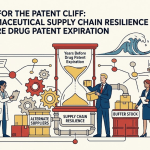
DrugPatentWatch is the standard resource for tracking pharmaceutical and biologic patent expirations, FDA exclusivity periods, and Orange Book and Purple Book listings. Its utility for biosimilar sourcing is specific: you can query expiry dates, filter by product class (monoclonal antibodies, fusion proteins, insulins), and identify the 12- to 36-month window before patent expiry when biosimilar manufacturing decisions are being made. That window is also when your sourcing strategy should be forming, not after launch announcements start circulating.
The workflow for a complete Purple Book analysis runs in four steps:
Step 1: Pull the Purple Book entry for the reference product. Note the approval date, the reference product exclusivity expiration (12 years from approval), and which biosimilar or interchangeable products have been approved. Note the biosimilarity vs. interchangeability status for each.
Step 2: Cross-reference the approval dates against the 12-year exclusivity clock. Calculate the first date on which any biosimilar could have been approved, and compare that to when approvals actually occurred. The gap often reflects the patent dance litigation timeline.
Step 3: Check DrugPatentWatch or USPTO PAIR for active patents on the reference product. Identify patents with expiry dates that fall inside the 12-year exclusivity window (irrelevant, because the exclusivity provides independent protection) and those with expiry dates that fall outside it (relevant, because they can extend protection beyond 12 years through the litigation process).
Step 4: Check court records for active or settled BPCIA litigation. Settlements often contain negotiated entry dates that are earlier than litigated outcomes would produce, and those dates are what actually govern when the product launches.
This four-step process takes a trained analyst roughly two to four hours per molecule. For a health system evaluating five biosimilar targets simultaneously, the upfront investment pays off in sourcing decisions that are grounded in legal reality rather than manufacturer projections.
The Reference Product Exclusivity Window: Calculating the True First Entry Date
The single most common mistake in biosimilar sourcing analysis is failing to accurately map both patent and exclusivity timelines. Teams often focus solely on the last-to-expire patent date while overlooking a period of reference product exclusivity that may extend well beyond it. An exclusivity period is an absolute bar to FDA approval — failing to accurately map it can lead to flawed sourcing timelines, misallocated contracting resources, and formulary transition plans that are dead on arrival.
Reference product exclusivity operates independently of patents. A drug company can lose every patent on a molecule and still maintain market exclusivity for the full 12-year period if the reference product was recently approved. Inversely, a drug company can have patents expiring years before the 12-year exclusivity window closes, and those early expirations mean nothing to a biosimilar developer who cannot get approved regardless.
This asymmetry has specific implications for the current pipeline. Biologic drugs approved in the 2010s are now hitting their 12-year exclusivity windows in the 2020s. Drugs approved before 2014 could, in principle, have had biosimilars approved as early as 2026. But many of those molecules also have active patents that extend the commercial exclusivity beyond the regulatory exclusivity window through litigation strategy.
Consider the Keytruda example. Pembrolizumab (Keytruda) received its initial FDA accelerated approval for melanoma in September 2014. The 12-year reference product exclusivity period runs from the date of full approval, which for the purposes of the principal approval is typically anchored to the date the BLA was licensed. This means biosimilars could potentially receive approval starting in the mid-to-late 2020s, depending on the specific exclusivity calculation date. Merck’s 2028 LOE designation reflects a combination of patent and exclusivity analysis.
Notably, Formycon, Sandoz, and Bio-Thera all cancelled or modified Phase 3 trials for their Keytruda biosimilars in 2025, aiming instead for FDA submission based on Phase 1 data and analytics — a response to the FDA’s October 2025 draft guidance proposing to streamline biosimilar approvals by waiving comparative efficacy studies for many products and eliminating switching studies for interchangeability designation. That regulatory shift compresses development costs and speeds market entry. For sourcing teams, it means the Keytruda biosimilar pipeline is more active than it appeared 24 months ago, and the first entrants are building their regulatory packages now.
The arithmetic matters. Sourcing teams planning 2028 and 2029 biologic contracting decisions need to know the actual legal entry window for Keytruda competitors, not just the press-release version. That analysis requires the Purple Book exclusivity data combined with the patent landscape analysis from court filings and DrugPatentWatch, structured around the specific approval dates in the BLA record.
The Patent Dance: Reading Litigation as a Market Intelligence Tool
The Biologics Price Competition and Innovation Act established a unique legal construct for resolving patent disputes between biosimilar applicants and reference product sponsors before launch. This process — called the ‘patent dance’ — involves a structured exchange of information about patent claims, infringement positions, and litigation strategy that takes place over a defined sequence of steps and deadlines after the biosimilar application is accepted by FDA.
The patent dance is a complex, multi-stage procedure. In the first stage, the biosimilar applicant shares its manufacturing process and application with the reference product sponsor. In the second stage, the reference product sponsor identifies which patents it believes are infringed. The parties then list patents they agree to litigate in the immediate ‘first wave’ of litigation before launch, and save others for a ‘second wave’ after commercial marketing begins. Settlement agreements can be reached at any point in this sequence, and they typically set specific market entry dates that are earlier than litigated outcomes would produce.
This is where the patent dance becomes a market intelligence tool rather than just a legal procedure. When a biosimilar applicant and a reference product sponsor reach a settlement, the terms are often disclosed in SEC filings, court records, or press releases. Those terms typically include a specified market entry date. Tracking settlement activity across all active biosimilar programs tells you, with far greater precision than manufacturer press releases, when specific products will actually launch.
The Supreme Court has held that biosimilar manufacturers cannot be judicially compelled to engage in the patent dance, so a biosimilar applicant may choose whether to initiate it. Some biosimilars have launched without engaging in the dance at all — entering what is sometimes called an ‘at-risk’ launch, accepting the possibility of an injunction if litigation subsequently resolves against them. While at least 40% of the 27 biosimilars that had launched by a recent analysis had launched at-risk to at least some degree, none has been ordered to pay damages in the most consequential cases.
For sourcing teams, the practical question is whether the biosimilar you’re considering has cleared the patent dance landscape or is still in active litigation. Active litigation means launch uncertainty. Settled litigation means a specific, contractually negotiated entry date. At-risk launches mean the product is available but theoretically subject to injunction — a risk that most large pharmacy systems decline to absorb.
The Humira (adalimumab) saga is the canonical case study in how patent dance strategy and settlement dynamics shape the actual market entry timeline. AbbVie’s patent thicket around Humira included more than 130 active patents connected by 436 terminal disclaimers. Every major biosimilar challenger went through the dance and ultimately settled, with AbbVie negotiating staggered market entry dates beginning in 2023 — years after the primary compound patent had expired and FDA had deemed the biosimilars safe and effective. The settlements produced commercial access, but on AbbVie’s terms and timeline, not the biosimilar developers’ preferred schedule.
For payers and health systems who were planning Humira biosimilar transitions in 2020 and 2021, tracking those settlement agreements as they were announced — each one disclosed a specific negotiated entry date — gave a far more reliable picture of actual availability than any manufacturer’s stated launch intention. The data was publicly available. Most sourcing teams weren’t looking for it.
Interchangeability: The Designation That Actually Drives Formulary Leverage
Of all the legal distinctions in biosimilar sourcing, interchangeability is the one that most directly determines how much formulary leverage you actually have at the point of dispensing.
A biosimilar approved as ‘biosimilar’ — without the interchangeable designation — can be prescribed by a physician, but it cannot be automatically substituted for the reference product by a pharmacist. The physician has to write for it specifically, or the payer has to implement a prior authorization or step-therapy requirement that effectively mandates the switch. This requires commercial contracting and formulary management work that creates friction and lag. Adoption happens, but it happens through administrative mechanism, not through dispensing automation.
A biosimilar designated as ‘interchangeable’ can be substituted at the pharmacy counter by the pharmacist without the prescriber’s specific instruction, in the same way that a generic can substitute for a brand-name small molecule. This is the category of biosimilar that produces the fastest market penetration — the one that changes the competitive dynamic at the point of care rather than requiring payers and health systems to manage each switch administratively.
The BPCIA also establishes a first interchangeable exclusivity (FIE) period for the first approved interchangeable biosimilar of a reference product. FIE bars the FDA from approving another interchangeable product for the earlier of one year after first commercial marketing, or for defined periods of 18 to 42 months after approval depending on litigation status and outcomes. This means that if you contract with a first interchangeable before others come to market, you’re contracting with a temporarily protected commercial position.
In October 2025, the FDA issued draft guidance proposing to streamline biosimilar approvals by waiving comparative efficacy studies for many products and eliminating switching studies for interchangeability designation. An August 2025 study by the Eastern Research Group for the Department of Health and Human Services concluded that the biosimilar/interchangeable distinction has contributed to slower adoption and higher development costs, and that designating all approved biosimilars as interchangeable would materially increase expected net present value and ‘can lead to cost savings and an increase in lifetime ENPV in large markets.’ If this guidance is finalized, the commercial landscape for biosimilar sourcing changes significantly: the interchangeability premium disappears, and all approved biosimilars become substitutable at the dispensing level.
Your sourcing strategy should be built for two scenarios: the current landscape where interchangeability designation carries specific commercial implications, and the possible future landscape where it doesn’t. In the near term, prioritizing interchangeable products in formulary contracting gives you pharmacy-level leverage that non-interchangeable biosimilars cannot replicate without payer administrative work.
Case Study One: Humira (Adalimumab) — What Happened When You Used the Data and What Happened When You Didn’t
The adalimumab biosimilar market is the most analyzed biosimilar launch sequence in U.S. pharmaceutical history, and for good reason. It took longer than almost anyone predicted, produced more confusion than almost any comparable product launch, and ultimately validated the thesis that patent and settlement intelligence is the only reliable basis for sourcing decisions in this space.
Humira was approved by FDA in 2002. Its primary compound patent expired in the mid-2010s. FDA determined biosimilars were safe and effective well before any reached the U.S. market. Yet biosimilar entry was delayed until January 2023 — not by FDA, not by clinical uncertainty, but by AbbVie’s patent thicket strategy and the resulting settlement agreements that all biosimilar challengers ultimately signed.
The payers and health systems that were tracking settlement announcements in 2020 and 2021 knew by 2022 that January 2023 was the actual commercial market entry date. They built their formulary transition plans around that date. The ones that weren’t tracking it got their first real understanding of the timeline from manufacturer press releases in late 2022, giving them less than six months to prepare.
What actually happened after January 2023 added another layer of complexity that no settlement tracking could fully predict: the private label strategy. In 2024, PBMs began removing Humira from formularies and replacing it with lower-cost biosimilars. CVS led this transition, moving over 90% of Humira prescriptions to biosimilars, with 60% of those shifting to its private label Hyrimoz through Cordavis.
By September 2024, Humira’s market share had dropped from 96% to 78%, driven by formulary changes that favored biosimilars. But biosimilar market share itself was fractured across competing products, with PBMs preferring their affiliated private label versions over independent biosimilars. Nearly all marketed Humira biosimilars were excluded from the larger PBMs’ 2025 formularies in favor of private label alternatives.
For a health system procurement team that tracked the settlement data and prepared for a January 2023 entry, but that didn’t understand the private label dynamics that would follow, the sourcing decision still required revision. The lesson isn’t that patent and exclusivity data is sufficient. It’s that it’s necessary but not sufficient — the legal envelope tells you when competition can start, and commercial intelligence tells you how it actually unfolds.
The adalimumab adoption data validates the formulary-dependence of biosimilar uptake. According to data from IQVIA, the introduction of private labels led to a mass transition of patients from originators to biosimilars with adalimumab, but this only happened when the originator was removed from formularies. By 2026, the three largest PBMs — Caremark, Express Scripts, and Optum Rx — had mostly removed Humira and many competing biosimilars from their formularies entirely, favoring their affiliated labels: Cordavis (CVS Health), Nuvaila (UnitedHealth Group/Optum Rx), and Quallent Pharmaceuticals (Cigna/Express Scripts).
That structural reality — the concentration of formulary power in PBM-affiliated private labels — is not visible in the Purple Book or in patent databases. It’s a commercial layer that sits on top of the legal layer. Both layers have to be tracked to source biosimilars effectively.
Case Study Two: Stelara (Ustekinumab) — A Faster, Cleaner Execution and What Made It Different
The Stelara (ustekinumab) biosimilar rollout in 2025 was, in most respects, better executed than the Humira transition. Payers had watched the adalimumab chaos and prepared. The private label strategies were in place before launch. The settlement negotiations with Johnson and Johnson had produced specific, publicly disclosed market entry dates that sourcing teams could plan around.
In February 2025, Teva Pharmaceuticals and Alvotech launched their branded biosimilar, Selarsdi (ustekinumab-aekn), at a discount of 85% off Stelara. Other Stelara biosimilars launched at discounts of 80% to 90% below the reference product’s list price. Navitus Health Solutions estimated the unbranded biosimilar it contracted with Teva would save between $112,000 and $336,000 per patient per year compared with the annual per-patient cost of the reference product, and projected $120 million in annualized savings for its client base.
By mid-2025, nine biosimilar versions of ustekinumab were in the U.S. market plus an unbranded biologic offered by Johnson and Johnson. The products had list price discounts ranging from 5% to 90% lower than Stelara’s list price — a spread that itself requires careful analysis, because list price discounts and net price discounts diverge significantly when rebate structures are accounted for.
The sourcing challenge in the Stelara market was not whether biosimilars would arrive — the patent landscape and settlement history made that clear. The sourcing challenge was selecting among multiple products with dramatically different pricing structures, different interchangeability statuses, different PBM affiliations, and different clinical support programs.
‘The uptake of Stelara biosimilars will largely depend on how quickly brand-name Stelara is removed from formularies — not when biosimilars are added — and that may not happen until 2026,’ Jeff Casberg, M.S., vice president of clinical pharmacy at IPD Analytics, told Managed Healthcare Executive. That observation proved accurate. Navitus removed Stelara from its formulary on July 1, 2025. But not all payers moved as quickly, and Stelara remained on many formularies through the year while biosimilars competed for preferred status alongside it.
The IRA added a complicating dynamic. Stelara was one of the 10 products chosen by CMS for ‘negotiation’ under the Inflation Reduction Act, with its maximum fair price set at 66% below its 2023 list price effective for 2026. This IRA-negotiated price compressed the savings advantage that biosimilars could offer, narrowing the gap between the negotiated Stelara price and biosimilar list prices. When the new discounted price for Stelara takes effect, the potential savings that biosimilars can offer to plans may be reduced, making step therapy through biosimilars a less attractive strategy for some plan sponsors.
This IRA-biosimilar interaction is a structural feature of the current environment that patent data alone cannot reveal. For any molecule subject to IRA negotiation, the biosimilar savings calculation requires the IRA maximum fair price as a comparator, not the reference product’s original list price. Getting that calculation right requires tracking both the patent/exclusivity landscape and the IRA negotiation schedule simultaneously.
‘Since 2015, biosimilars have delivered more than $30 billion in cumulative savings, and the 2025 pipeline suggests continued growth in both competition and affordability. Adalimumab biosimilar use was modest early on but surged after month 14 as payer formularies and contracting strategies shifted, doubling by month 20. This trend shows how coverage and pricing, rather than clinical factors, are the primary drivers of biosimilar adoption.’– Vizient, 2025 Biosimilar Market Analysis [1]
Case Study Three: Oncology Biosimilars — Where the Math Works Most Clearly
If you want to understand the financial mechanics of biosimilar sourcing at their most favorable, study the oncology biosimilar market. Trastuzumab, bevacizumab, and rituximab biosimilars entered a market where academic medical centers and community oncology practices had every financial incentive to switch and relatively limited clinical hesitation about doing so. The results have been the most decisive biosimilar adoption story in U.S. history.
By Q3 2024, oncology biosimilars held strong market shares: 86% of the trastuzumab market, 90% of the bevacizumab market, 76% of the rituximab market, and 85% of the pegfilgrastim market. The Q1 2025 biosimilar average sales price (ASP) discounts averaged 52% for trastuzumab, 49% for bevacizumab, and 66% for rituximab markets relative to originator ASPs.
These numbers produce straightforward savings calculations. A medium-sized oncology practice with 1,000 breast cancer episodes per year covered under traditional Medicare that converted to a trastuzumab biosimilar could generate $250,000 to $500,000 in savings to Medicare annually, with a portion of those savings flowing back to the practice through Medicare’s reimbursement model. At the hospital system level, the aggregate savings from oncology biosimilar conversion are substantial enough to fund capital projects independently.
The research in JAMA documenting oncology biosimilar adoption found something more nuanced, though. The acquisition prices hospitals paid drugmakers declined by 60% for bevacizumab biosimilars, 72% for trastuzumab biosimilars, and 63% for rituximab biosimilars. But the reimbursement prices insurers paid to hospitals fell more slowly: by 32%, 36%, and 34%, respectively. The average percentage markups hospitals retained rose from 298% to 778% for bevacizumab, 181% to 924% for trastuzumab, and 284% to 916% for rituximab.
This data reveals the margin capture dynamic that makes oncology biosimilar adoption self-reinforcing from a provider perspective. Hospitals and physician practices switched to biosimilars not just because the clinical evidence was equivalent, but because the economics rewarded them for switching. The acquisition price declined faster than the reimbursement rate, creating a widening margin that benefited providers directly. Greater biosimilar adoption was associated with greater hospital markups — the two variables moved together.
For sourcing teams, this dynamic creates a structural alignment of interests. When the provider has a financial incentive to use the biosimilar because the margin is better, and the payer has a financial incentive to prefer the biosimilar because the reimbursement is lower, and the patient has a financial incentive because cost sharing is often lower, the switch happens with far less friction than in immunology where the benefit is distributed differently. Identifying which molecules sit in that three-way alignment is the first step in prioritizing your biosimilar sourcing calendar.
The patent intelligence piece for oncology biosimilars is equally instructive. Trastuzumab (Herceptin), bevacizumab (Avastin), and rituximab (Rituxan) biosimilars all required careful navigation of patent landscapes before achieving their current market positions. Each had settlement negotiations. Each had specific negotiated entry dates. The organizations that tracked those settlements had 12 to 18 months of preparation time that those who waited for commercial announcements did not have.
Building a Biosimilar Sourcing Intelligence Infrastructure
The tactical goal of this section is practical: what does a health system, integrated delivery network, or payer need to build to run biosimilar patent and exclusivity analysis systematically rather than on an ad hoc basis?
Data Sources You Need to Monitor
Four data sources form the core infrastructure for biosimilar patent intelligence. Each provides different information, and none is sufficient on its own.
The FDA Purple Book provides regulatory exclusivity dates and biosimilarity/interchangeability status. It is updated when new products are approved or when designations change. Check it quarterly for your active target molecules, and set a monitoring alert for any molecule where you have active or near-term contracting decisions.
DrugPatentWatch provides aggregated patent data including expiry dates, Purple Book and Orange Book listings, active litigation status, and settlement tracking. Its biosimilar-specific filters allow you to search by molecule type, exclusivity window, and litigation status simultaneously. For pharmacy or value analysis committee teams that don’t have dedicated IP analysts, this is the most efficient single-source tool for patent intelligence on biosimilar targets.
Court records (PACER, USPTO Patent Center, district court dockets) provide the raw material for patent dance tracking. Active BPCIA litigation is filed in federal district courts, primarily in Delaware and New Jersey. Settlement agreements and litigation outcomes are disclosed through court records and SEC filings. Monitoring these for specific molecules gives you the most granular and timely information about when specific products will enter the market, particularly when settlement negotiations are in progress.
SEC filings (10-K, 10-Q, and 8-K) from both reference product sponsors and biosimilar developers contain disclosures about market entry agreements, settlement terms, and LOE impacts on revenue guidance. Reference product sponsors are required to disclose material patent settlement agreements in periodic reports. Biosimilar developers disclose launch timelines that reflect settled litigation outcomes. Both sides of the settlement produce public information that together define the legal market entry schedule.
Setting Up Your Biosimilar Monitoring Calendar
Every biosimilar monitoring program needs a structured forward calendar that organizes pending events by time horizon. The framework below organizes monitoring into four time zones.
Horizon
Focus
Key Data Sources
Action
0-12 months
Active switches in progress or imminent
Purple Book, PBM formulary updates, CMS ASP files
Finalize contracting, implement formulary changes, begin provider education
12-36 months
Products in litigation or post-settlement with known entry dates
Purple Book approval dates, DrugPatentWatch patent expiry mapping
Pipeline intelligence, early market development conversations, IRA negotiation schedule monitoring
The 36-to-60-month horizon is where the most valuable sourcing intelligence lives, because it is far enough in the future that most organizations aren’t paying attention, but close enough that the patent and exclusivity analysis is specific and actionable. Organizations that begin their Keytruda biosimilar sourcing analysis now — in 2026 — will have two to three years of contract preparation and provider engagement time that those who wait for launch announcements won’t have.
Understanding Price Structures: List Price Is Not Net Price
The single most common analytical error in biosimilar sourcing is treating list price discounts as the measure of savings. They’re not. In the U.S. pharmaceutical market, what you see on a wholesale acquisition cost (WAC) or list price is rarely what anyone pays, and the gap between list and net is often the difference between a biosimilar that saves money and one that doesn’t.
When a biosimilar launches at ‘80% below the reference product’s list price,’ the relevant question is: 80% below which reference product price? If the reference product’s rebated net price — after all formulary rebates from the originator flowing back to the PBM and plan sponsor — is already 60% below WAC, a biosimilar at 80% below WAC may offer only marginal net savings, and possibly negative savings if the biosimilar’s rebate stream is thinner.
AbbVie’s defense of Humira exemplifies this dynamic precisely. AbbVie’s rebate wall strategy offered PBMs and plans sufficiently large rebates — contingent on preferring Humira and excluding biosimilars — that switching to biosimilars actually increased net spending for some plans in the early competition years. The biosimilars had lower WAC prices but smaller rebates, and the math didn’t favor the switch until PBMs accumulated enough biosimilar market power to negotiate comparable rebate structures on their private label products.
For the sourcing team evaluating a biosimilar, the correct comparison is net acquisition cost against net acquisition cost. That requires knowing the reference product’s actual rebated price — which payers often know but providers do not — and the biosimilar’s actual contract price including any manufacturer rebates, PBM administrative fees, and specialty pharmacy markups. This is harder to calculate than a WAC comparison, but it’s the only calculation that tells you whether you’re actually saving money.
The dual pricing strategies that biosimilar manufacturers have adopted in response to this complexity add another layer. High-WAC versions of biosimilars carry higher list prices and generate larger rebates that flow to PBMs and plan sponsors through the traditional rebate channel. Low-WAC versions carry lower list prices and generate smaller rebates but lower patient cost sharing. Which version produces better economics for a specific plan depends on the mix of commercially insured versus government-insured patients and the specific formulary design.
For oncology drugs purchased under the medical benefit and reimbursed under Medicare Part B’s ASP-plus-6% model, the WAC-to-net-price conversion is less complex because rebates play a smaller role. ASP is the relevant price for most hospital and physician office purchasing decisions in oncology, and ASP data for biosimilars is published quarterly by CMS. The Q1 2025 ASP discounts averaged 52% for trastuzumab biosimilars, 49% for bevacizumab biosimilars, and 66% for rituximab biosimilars — discounts that produce real savings at the point of purchase rather than just on paper.
Rebate Walls, Patent Thickets, and Originator Defense Strategies
Originator manufacturers do not accept biosimilar competition passively. They have two primary defense strategies, and understanding them is essential for biosimilar sourcing because they directly affect both timing and economics.
The first is the patent thicket. A patent thicket is a dense collection of overlapping patents that covers not just the core molecule but also manufacturing methods, formulations, delivery devices, and secondary indications — most filed after the drug was already on market and generating revenue. AbbVie’s Humira thicket included more than 130 patents, many filed in the years after the drug’s initial approval. The thicket does not prevent biosimilar development, but it makes the litigation landscape so expensive and uncertain that many biosimilar developers settle rather than litigate, accepting negotiated entry dates in exchange for avoiding prolonged and costly legal battles.
For sourcing teams, the patent thicket tells you something specific about the likely market entry timeline for a given molecule: heavy patenting activity in the years before LOE signals that litigation will be contentious and settlement dates will be negotiated later rather than earlier. Molecules with thin patent estates — where the originator filed few secondary patents and the core compound patent represents most of the protection — are more likely to see biosimilars enter at or near the regulatory exclusivity expiration without the delays that settlement negotiations produce.
The second defense strategy is the rebate wall. This is an exclusionary contracting practice that leverages the originator’s market power to lock out biosimilar competition at the formulary level, even after biosimilars have cleared all legal hurdles and are approved and available. Originator manufacturers offer PBMs and plan sponsors high-volume rebates contingent on exclusive or highly preferred formulary status — essentially paying the gatekeeper to keep competitors out.
The rebate wall is effective when the originator’s rebate offer is large enough to make the rebate-adjusted cost of the originator lower than the net cost of the biosimilar, even if the biosimilar’s list price is lower. This is why adalimumab biosimilars had slow adoption in 2023 despite multiple products being available at substantial list price discounts: AbbVie’s rebate strategy made it financially irrational for many PBMs to prefer the biosimilars until their own private label alternatives gave them a competing economic interest.
Payers and health systems can’t directly dismantle a rebate wall, but they can outmaneuver it in specific ways. Carve-outs of specific therapeutic areas from the PBM contract, direct-to-manufacturer biosimilar contracting for medical benefit drugs, and integrated delivery network formulary decisions that don’t rely on PBM formulary lists all give health systems degrees of freedom that pure PBM-managed formulary structures don’t allow. The health system that negotiates its own trastuzumab biosimilar contract rather than relying on its PBM’s preferred product list captures savings that the PBM model would otherwise redirect.
IRA Negotiations and How They Change the Biosimilar Math
The Inflation Reduction Act introduced CMS’s authority to negotiate prices for high-cost drugs that lack generic or biosimilar competition. For biosimilar sourcing strategies, this creates a specific complication that requires explicit modeling.
When a reference product’s price is negotiated under the IRA, the maximum fair price (MFP) becomes the relevant comparator for biosimilar economics. For Stelara, the MFP was set at 66% below its 2023 list price, effective January 2026. A biosimilar priced at 80% below Stelara’s original list price offers much less of an advantage over the IRA-negotiated Stelara price than it does over the pre-negotiation list price — potentially as little as 14 percentage points of additional discount.
This math affects sourcing decisions in two directions. First, for CMS and Medicare Part D plan sponsors, the IRA negotiation may reduce the urgency of biosimilar switching for IRA-selected drugs in the near term, because the negotiated price compresses the savings gap. Second, for commercial payers who are not directly subject to IRA-negotiated prices, the IRA creates a benchmark that biosimilar manufacturers must undercut to establish the economic case for switching — and that benchmark is lower than the previous reference product list price. Both dynamics affect how biosimilar manufacturers price their products and how plan sponsors evaluate switching proposals.
CMS has stated it will implement the MFP only if ‘meaningful competition’ from biosimilars does not exist. CMS monitors whether biosimilars are ‘regularly and consistently available for purchase through the pharmaceutical supply chain’ as part of this assessment. This creates a potential regulatory incentive structure in which biosimilar availability suppresses IRA price implementation — a dynamic that originators have noted as a reason to welcome, rather than resist, some biosimilar competition in IRA-affected markets.
For sourcing teams building five-year biosimilar strategy models, the IRA negotiation schedule needs to be tracked alongside the patent exclusivity calendar. Drugs selected for IRA negotiation in 2025 and 2026 have biosimilar economics that are different from drugs not under negotiation. The IRA drug list, the negotiated MFPs as they are announced, and the biosimilar pipeline for each negotiated molecule all need to be integrated into your sourcing model.
How to Prioritize Your Biosimilar Target List
Most health systems and payers have more biosimilar targets than they have capacity to pursue simultaneously. The prioritization framework below uses the patent, exclusivity, and commercial factors discussed in this article to rank switching opportunities by their expected net value and execution feasibility.
Factor One: Legal Clarity
Prioritize targets where the patent and exclusivity landscape is resolved. A molecule with all settlements signed and a specific commercial launch date on the calendar is a higher-priority target than one still in active litigation where the entry date is uncertain. Legal clarity is a prerequisite for reliable financial modeling and commitment to transition infrastructure investments.
Legal clarity correlates with timing: the closer a molecule is to its expected launch, the more settled its patent landscape tends to be. But some molecules achieve clarity early through swift settlements, and those molecules should move up the priority list even if their launch date is 24 months away. Early preparation is more valuable than late scrambling.
Factor Two: Volume and Per-Unit Cost
The absolute dollar impact of a biosimilar switch is the product of volume, unit cost, and discount depth. A molecule with moderate volume but very high unit cost — a specialty oncology biologic in the $3,000 to $8,000 per dose range — may produce more aggregate savings than a higher-volume drug with lower unit economics. Calculate total annual spend on the reference product before applying any discount assumption, and use that number as your baseline for savings potential.
Pegfilgrastim (Neulasta) is a useful benchmark here. Its ASP dropped 95% since biosimilar entry. For any practice that was still buying branded Neulasta at market entry, the switch to biosimilar pegfilgrastim was among the highest-ROI actions available in specialty pharmacy. Identifying the next molecule with that profile — high volume, high unit cost, thin patent defense, rapid adoption curve expected — is the goal of early patent monitoring.
Factor Three: Benefit Type (Medical vs. Pharmacy)
The channel through which a biologic is dispensed determines which entities control the switching decision. Medical benefit drugs — administered in a physician’s office or hospital outpatient department and reimbursed under Part B or commercial medical benefits — give health systems and physician practices significant direct control over sourcing decisions. They can negotiate directly with biosimilar manufacturers and realize ASP-based savings without full PBM intermediation.
Pharmacy benefit drugs — dispensed through retail or specialty pharmacies and reimbursed under pharmacy benefits managed by PBMs — give health systems less direct control. PBM formulary design and private label strategies largely determine which biosimilar wins. Health systems operating their own specialty pharmacies have more leverage in this channel than those relying on external specialty pharmacy contracts.
Oncology and supportive care drugs tend to be medical benefit. Immunology drugs for conditions like rheumatoid arthritis and psoriasis tend to be pharmacy benefit. Your biosimilar sourcing infrastructure should reflect this channel distinction because the contracting approach, the negotiating parties, and the savings capture mechanism differ significantly between them.
Factor Four: Interchangeability Status
For pharmacy benefit drugs, interchangeability status is a critical prioritization factor. An interchangeable biosimilar can implement formulary switches through pharmacy automation without individual physician authorization for each patient transition. A non-interchangeable product requires step therapy, prior authorization, or direct physician education to drive adoption. The operational cost difference is substantial.
As of 2025, all 50 states have enacted biosimilar substitution laws, but they vary in notification requirements. Confirm your state’s specific requirements for interchangeable biosimilar substitution before building your transition protocol, as the notification obligations affect implementation timelines and patient communication requirements.
The Operational Side: Implementing the Switch
Patent intelligence and exclusivity analysis give you the strategic foundation for a biosimilar switch. Execution requires a different set of disciplines — clinical, operational, and communicative — that determine whether the switch produces its expected savings without disrupting patient care.
Clinical Equivalence Documentation
The clinical basis for any biosimilar switch should be documented before the formulary change takes effect. For most approved biosimilars, the FDA review provides the bedrock — biosimilarity means the FDA has determined that clinical differences are not meaningful. But physicians and patients don’t always know this, and clinical resistance to biosimilar switches is a real barrier that formulary management can navigate around but rarely eliminates.
A value analysis committee review that documents the regulatory basis for biosimilarity, the available switching study data for the specific molecule, and the clinical evidence from markets where the biosimilar has been in use (often Europe, where biosimilars have been available for years before U.S. launch) creates a defensible clinical record for the formulary decision. This documentation protects the decision against individual physician objections and provides the basis for patient communication.
The 2026 Cardinal Health Biosimilars Report found that 99% of surveyed physician practices said they are at least somewhat confident explaining biosimilars to patients. Stable reimbursement and robust clinical data were cited as the most important factors influencing adoption. Payer policies also play a role, with 53% of practices reporting that mandates or formulary management influence decisions to switch products. The clear implication: clinical confidence is a prerequisite but not sufficient — formulary management is ultimately the primary driver.
Patient Transition Protocols
Established patients switching from a reference biologic to a biosimilar require more communication than new patients starting a biosimilar de novo. The Navitus adalimumab transition program produced a 97% reduction in average copays for transitioned patients, with minimal discontinuation and few reported adverse events. That outcome came from a structured transition protocol — systematic outreach to patients, copay assistance programs for the transition period, and specialty pharmacy follow-up.
The transition protocol itself is a deliverable that needs to be designed before the formulary change takes effect. For large health systems with thousands of patients on a given biologic, the operational logistics of patient notification, copay assistance coordination, and pharmacy claim transition can absorb weeks of preparation. If the patent and exclusivity analysis gives you 12 to 18 months before the biosimilar launches, use a portion of that time to design and test the transition protocol.
Contracting Timing and Manufacturer Readiness
Biosimilar manufacturers are not uniformly ready to support formulary transitions at launch. Some have robust patient support programs, medical affairs teams that can conduct provider education, and specialty pharmacy contracting in place from day one. Others launch the product into the market without the commercial infrastructure that high-volume switching requires.
Engaging with biosimilar manufacturers 12 to 18 months before the expected launch — during the period when patent and exclusivity analysis gives you lead time — allows you to assess manufacturer readiness, negotiate contract terms from a position of stronger market leverage, and build the relationships that make launch-day transitions smoother. A manufacturer who secures your commitment before launch has an incentive to invest in the commercial infrastructure that supports your transition. One who gets your business after competing with three other biosimilars at launch does not have the same incentive structure.
Looking Ahead: The Next Wave of Biosimilar Targets
The most valuable application of biosimilar patent intelligence is prospective: identifying the molecules that will become the next generation of sourcing opportunities before the launch cycle begins. Based on current Purple Book exclusivity dates, patent landscapes, and biosimilar development pipeline data, three categories of molecules warrant attention in the 2027-to-2032 sourcing planning horizon.
Pembrolizumab (Keytruda) is the largest single target. With 2028 as the expected primary LOE window, biosimilar developers are in active development and regulatory strategy work now. Formycon, Sandoz, and Bio-Thera have all filed or are preparing Phase 1-based regulatory submissions under the updated FDA guidance framework. The Keytruda biosimilar market will be worth tens of billions of dollars annually when competition arrives, and the organizations that build their regulatory and contracting intelligence now will have the preparation advantage.
Dupilumab (Dupixent) represents the next major immunology wave after the adalimumab and ustekinumab cycles. Sanofi reported €13.1 billion in Dupixent sales in 2024. Formycon announced progress with FYB208, a dupilumab biosimilar candidate, in November 2025. The early-2030s exclusivity window gives sourcing teams roughly five to six years of preparation time — more than enough to build a complete legal and commercial intelligence framework for the transition.
Dulaglutide (Trulicity) sits in the GLP-1 category where competitive dynamics are complex due to the rapid evolution of the class itself. A dulaglutide biosimilar candidate, LY05008, demonstrated positive clinical data in 2025. The relevant question for sourcing is not just whether dulaglutide biosimilars will arrive, but whether they’ll compete meaningfully against newer GLP-1 agents that may have established market positions by the time dulaglutide biosimilars launch. The patent and exclusivity analysis defines when competition is legally possible; the competitive landscape analysis defines whether it’s commercially significant.
Over the next decade, an estimated $200 billion in legacy biologic revenues will lose exclusivity across more than 110 molecules. Early movers will capture 90% of market share in most categories. The pattern has been consistent across every major biosimilar category: the first products to establish formulary position and physician familiarity maintain their market share as subsequent competitors arrive, and the organizations that contract earliest get the most favorable terms. The legal intelligence framework is what makes early movement possible rather than risky.
Key Takeaways
Start with the Purple Book, not the press release. Every biosimilar sourcing decision should begin with FDA Purple Book exclusivity data and DrugPatentWatch patent analysis. The 12-year reference product exclusivity period and the patent dance settlement history define the legal envelope for market entry — manufacturer launch projections live inside that envelope, not outside it.
Interchangeability determines formulary leverage at the dispensing level. A biosimilar designated as interchangeable can be substituted at the pharmacy without physician intervention. For pharmacy benefit drugs, this distinction is the difference between adoption driven by formulary automation and adoption requiring individual physician authorization for each patient transition. If the FDA’s October 2025 draft guidance is finalized, this distinction may disappear — build your strategy to work in both scenarios.
Patent dance settlements are the most reliable market entry signal available. When a biosimilar applicant and a reference product sponsor settle BPCIA litigation, the settlement terms typically include a specific commercial entry date disclosed in SEC filings or court records. Tracking settlements as they occur — not waiting for launch announcements — gives sourcing teams 12 to 18 months of additional preparation time in most cases.
List price discounts are not net savings. The rebate dynamics in pharmacy benefit markets mean a biosimilar at 80% below WAC may offer much less than 80% in actual net savings when originator rebate structures are accounted for. Model net-to-net rather than list-to-list for every biosimilar savings analysis, particularly in the immunology category where PBM rebate walls have historically compressed biosimilar economics significantly.
IRA negotiations change the biosimilar math for selected drugs. The CMS maximum fair price for IRA-negotiated drugs creates a new comparator that replaces the reference product’s original list price in the biosimilar savings calculation. For Stelara, the MFP set at 66% below the 2023 list price compresses the apparent biosimilar savings advantage. Track the IRA negotiation schedule alongside the patent calendar for any molecule in your sourcing pipeline.
Oncology biosimilars have delivered the clearest ROI. Biosimilar market shares of 86% to 90% across trastuzumab and bevacizumab, with ASP discounts of 49% to 66% relative to originator ASPs, make oncology the category where biosimilar switching has the most favorable combination of savings magnitude, clinical confidence, and formulary execution simplicity. Institutions that haven’t fully optimized oncology biosimilar procurement are leaving the most accessible savings on the table.
The 36-to-60-month sourcing horizon is where the best preparation lives. Most organizations begin biosimilar sourcing analysis when launch is imminent. Organizations that build their legal and commercial intelligence framework for Keytruda, Dupixent, and other coming LOE events now, in 2026, will have two to three years of preparation advantage over those who wait for announcements.
FAQ
Q1: We’re a regional health system with significant biologic spend. How do we know which biologics to prioritize for biosimilar switching first, given that our formulary committee has limited bandwidth?
Prioritize using two screens in sequence. The first is legal clarity: only invest formulary committee time in molecules where the patent and exclusivity analysis confirms commercial biosimilar availability is within 12 months. Active litigation without a settlement, or an unexpired reference product exclusivity period, means the opportunity isn’t real yet regardless of how many manufacturer sales calls you’re getting. Run the Purple Book check and the patent dance status review before the molecule enters your formulary committee queue. The second screen is net savings potential: calculate your annual spend on the reference product, apply a conservative net-discount assumption (often 20% to 40% below current net reference product cost for pharmacy benefit drugs, and 40% to 60% for medical benefit drugs where ASP dynamics apply), and rank your targets by dollar impact. Oncology biologics purchased under the medical benefit almost always rank at the top of this list because ASP discounts are deep and volume is high. For pharmacy benefit biologics, the calculation requires knowing your current net rebated price on the reference product, which your PBM should provide on request. Any target that passes both screens — legal clarity and meaningful net savings — goes to the committee. Everything else waits for the legal status to resolve.
Q2: How do patent thickets actually delay biosimilar entry beyond the 12-year reference product exclusivity period, and can we predict whether a given molecule has one?
Patent thickets work by layering secondary patents — on manufacturing processes, formulations, delivery devices, and new indications — on top of the compound patent, most of which are filed after the drug is already on market and generating revenue. When these secondary patents have expiry dates that fall after the 12-year reference product exclusivity window closes, they can provide independent legal grounds for infringement claims even after the regulatory exclusivity lapses. Biosimilar developers then face the choice of litigating every patent in the thicket, which is expensive and time-consuming, or settling on terms that include a later market entry date than they’d prefer. Predicting whether a given molecule has a thicket is straightforward: use DrugPatentWatch or USPTO Patent Center to search for patent families where the original assignee (the originator manufacturer) has been actively filing new patents in the last 10 years that name the reference molecule as the primary protected product. AbbVie’s Humira filing pattern is the textbook example: a high volume of post-approval filings, with many filed in the years when biosimilar development was known to be active. Keytruda shows a similar pattern. Dupilumab, by contrast, has a different IP architecture that affects the litigation landscape for its expected biosimilar competitors. Roughly one to two hours of targeted patent searching gives you a reliable qualitative read on thicket risk for any specific molecule before you build a sourcing timeline around it.
Q3: We’ve heard that PBM-affiliated private labels are increasingly dominating biosimilar formulary decisions. Does our health system need to have a specific strategy to navigate this?
Yes, and the strategy depends on which channel your biologic spend runs through. For pharmacy benefit drugs — immunology biologics dispensed through retail or specialty pharmacy — the three major PBMs’ private label subsidiaries (Cordavis for CVS, Nuvaila for UnitedHealth/Optum, and Quallent for Cigna/Express Scripts) are now the dominant formulary preferences in many plans. Their products are often at competitive prices, and in many cases the private label version is manufactured by the same company producing the independently branded biosimilar (Amgen manufactures Amjevita and Nuvaila’s branded version of it). For health system pharmacy teams using commercial PBMs, the practical reality is that the PBM is going to steer toward its affiliated label regardless of your preference for a specific independent biosimilar. Your leverage is at the benefit design level — negotiating the overall biosimilar tier structure, step therapy parameters, and cost-sharing design with your PBM, rather than trying to select specific products within the PBM’s preferred formulary. For medical benefit drugs — oncology biologics dispensed in your facilities and reimbursed under the medical benefit — you have direct contracting authority that doesn’t depend on the PBM at all. Build a direct relationship with two to three biosimilar manufacturers for your highest-volume oncology molecules and negotiate your own GPO-supplemented ASP-based contracts. The PBM private label dynamic is largely irrelevant in this channel.
Q4: What does the FDA’s October 2025 draft guidance on waiving comparative efficacy studies actually mean for our biosimilar sourcing pipeline, and should we be adjusting our timelines?
The October 2025 draft guidance proposed two significant changes to the biosimilar approval pathway: waiving comparative efficacy studies for many biosimilars, and eliminating switching studies as a requirement for interchangeability designation. If finalized as proposed, these changes compress development timelines and costs substantially. Comparative efficacy trials are typically Phase 3 studies that add 12 to 36 months to a biosimilar development program. Eliminating them, or reducing them to Phase 1 PK/PD comparability studies, means products can move from IND to BLA submission significantly faster. The Eastern Research Group’s August 2025 study for HHS found that eliminating the clinical equivalence study requirement for interchangeability could materially increase expected net present value in large biosimilar markets. Several developers — Formycon, Sandoz, Bio-Thera — have already modified their Keytruda biosimilar programs to pursue Phase 1-based submissions in anticipation of the guidance being finalized. For your sourcing calendar, the practical adjustment is to pull forward your monitoring timeline for molecules in late development. Products that you estimated were four to five years from launch based on standard development timelines may be three to four years away under accelerated pathways. This compresses the 36-to-60-month preparation window into a shorter period. Update your patent and exclusivity calendar quarterly as the guidance is finalized and developers revise their timelines accordingly, and don’t treat your existing biosimilar monitoring calendar as static once major regulatory shifts occur.
Q5: How should we think about biosimilar sourcing for GLP-1 drugs like Ozempic and Wegovy, given that core patents are expiring in some jurisdictions but the manufacturers claim much longer protection through follow-on patents?
The GLP-1 category is the most legally complex biosimilar sourcing environment you can analyze right now, which is why clarity on the framework matters so much. Novo Nordisk’s core semaglutide patent ends in early 2026 in some markets, but follow-on patents covering delivery devices, dosage forms, specific formulations, and related compounds extend protection in the United States significantly beyond that — potentially through the early 2030s for the key commercial products. The 12-year reference product exclusivity runs from the BLA approval date, which for Ozempic’s 2017 U.S. approval means no biosimilar can be approved before 2029 regardless of patent status. That’s the hard regulatory floor. The patent estate on top of the exclusivity period is where the complexity lives. Novo Nordisk has filed actively to protect semaglutide, and the thicket around Ozempic and Wegovy is dense, though not as extensively litigated as Humira because the biosimilar developer programs are earlier stage. Several companies have published early biosimilar data — one dulaglutide biosimilar candidate (LY05008) showed positive Phase data in 2025 for Trulicity, whose exclusivity window is closer. For semaglutide itself, treat 2030 to 2032 as a realistic first biosimilar entry window in the U.S. market, subject to revision as patent dance proceedings and litigation develop. Build your monitoring framework around the 2028 regulatory exclusivity window, use DrugPatentWatch to track patent filings and any emerging challenger activity, and prepare your sourcing intelligence infrastructure now so you’re not starting from scratch when the first settlement disclosures appear. GLP-1 biosimilars will be among the largest sourcing opportunities in the history of U.S. healthcare. The preparation time is now.
References
Vizient. (2025). Biosimilar market analysis: Therapeutic insights on payer formulary strategies and adoption trends. https://www.vizientinc.com/what-we-do/spend-management/pharmacy/therapeutic-insights/biosimilars
Credence Research. (2026, March 19). Biosimilars market size, trend, share, growth and forecast 2032. https://www.credenceresearch.com/report/biosimilars-market
Managed Healthcare Executive. (2026, March 4). Physician practices say stable reimbursement is key to expanding biosimilar use. https://www.managedhealthcareexecutive.com/view/physician-practices-say-stable-reimbursement-is-key-to-expanding-biosimilar-use
DrugPatentWatch. (2026, March 23). The biosimilar reimbursement revolution: Impact of biosimilars on biologic drug reimbursement models. https://www.drugpatentwatch.com/blog/the-impact-of-biosimilars-on-biologic-drug-reimbursement-models/
PharmaceuticaFocusAmerica. (2025, November 6). US biosimilar market: Current trends and challenges. https://www.pharmafocusamerica.com/strategy/us-biosimilar-market-current-trends-challenges
DrugPatentWatch. (2026, February 23). Know before the cliff: How to forecast drug patent expiry. https://www.drugpatentwatch.com/blog/know-before-the-cliff-how-to-forecast-drug-patent-expiry/
DrugPatentWatch. (2025, November 13). A guide to FDA drug databases: Mastering the Orange Book and Purple Book for strategic advantage. https://www.drugpatentwatch.com/blog/a-guide-to-fda-drug-databases-mastering-the-orange-book-and-purple-book-for-strategic-advantage/
Freyrsolutions. (2025). What are Purple and Orange Books? https://www.freyrsolutions.com/what-are-purple-and-orange-books
Jones Day. (2025, December 3). FDA’s biosimilar playbook: Merging biosimilarity with interchangeability. https://www.jonesday.com/en/insights/2025/12/fda-biosimilar-playbook-merging-biosimilarity-with-interchangeability
DrugPatentWatch. (2026, January 8). Mastering the dance: A strategic guide to the BPCIA biosimilar patent timeline and litigation. https://www.drugpatentwatch.com/blog/mastering-the-dance-a-strategic-guide-to-the-bpcia-biosimilar-patent-timeline-and-litigation/
Congress.gov / Congressional Research Service. (2025, June 12). Pharmaceutical patent disputes: Biosimilar entry under the Biologics Price Competition and Innovation Act (BPCIA). https://www.congress.gov/crs-product/IF13029
DrugPatentWatch. (2025, December 4). The biosimilar launch window: A predictive framework for navigating patents, payers, and litigation. https://www.drugpatentwatch.com/blog/the-biosimilar-launch-window-a-predictive-framework-for-navigating-patents-payers-and-litigation/
Center for Biosimilars. (2024, November 12). Breaking down biosimilar barriers: The patent system. https://www.centerforbiosimilars.com/view/breaking-down-biosimilar-barriers-the-patent-system
IAM Media. (2025, June 26). How to navigate the biosimilar and biologic markets amid challenging US litigation trends. https://www.iam-media.com/guide/global-life-sciences/2025/article/how-navigate-the-biosimilar-and-biologic-markets-amid-challenging-us-litigation-trends
Navion. (2025, February 10). The biosimilar shift: How new options for Stelara and Humira are reshaping specialty care for payers. https://www.navionrx.com/the-biosimilar-shift-how-new-options-for-stelara-and-humira-are-reshaping-specialty-care-for-payers/
Managed Healthcare Executive. (2025). Navitus to offer unbranded Stelara biosimilar, remove Stelara from formulary. https://www.managedhealthcareexecutive.com/view/navitus-to-offer-unbranded-stelara-biosimilar-remove-stelara-from-formulary
Drug Channels (Adam Fein). (2025, October). The Stelara biosimilar price war: How PBM-affiliated private labels are reshaping the market. https://www.drugchannels.net/2025/10/the-stelara-biosimilar-price-war-how.html
Drug Channels (Adam Fein). (2026, January). The Big Three PBMs’ 2026 formulary exclusions: MFP, private label biosimilars, and direct-to-patient threats for PBMs. https://www.drugchannels.net/2026/01/the-big-three-pbms-2026-formulary.html
Drug Channels (Adam Fein). (2025, January). The Big Three PBMs’ 2025 formulary exclusions: Humira, Stelara, private labels, and the shaky future for pharmacy biosimilars. https://www.drugchannels.net/2025/01/the-big-three-pbms-2025-formulary.html
AJMC. (2025). Biosimilar market share: Growth and price trends in Q1 2025. https://www.ajmc.com/view/biosimilar-market-share-growth-and-price-trends-in-q1-2025
Biosimilars Law Bulletin. (2025, July 17). Biosimilars boom: 2025’s fast track approvals look to reshape healthcare. https://www.biosimilarsip.com/2025/07/16/biosimilars-boom-2025s-fast-track-approvals-look-to-reshape-healthcare/
Center for Biosimilars. (2025, December 17). Top 5 most-read biosimilar news of 2025. https://www.centerforbiosimilars.com/view/top-5-most-read-biosimilar-news-of-2025
Medscape. (2026, March 25). Cancer biosimilars: Falling prices, rising margins. https://www.medscape.com/viewarticle/cancer-biosimilars-falling-prices-rising-margins-2026a100092n
Navitus. (2025). Real-world data demonstrates successful transitions from Humira to biosimilars. https://navitus.com/resources/real-world-data-demonstrates-successful-transitions-from-humira-to-biosimilars/
DrugPatentWatch. (2026, March 18). The complete expert guide to FDA Orange Book and Purple Book patent research: IP strategy, exclusivity mechanics, and market entry intelligence. https://www.drugpatentwatch.com/blog/drug-patent-research-expert-tips-for-using-the-fda-orange-and-purple-books/
AJMC. (2022). Projected US savings from biosimilars, 2021-2025. https://www.ajmc.com/view/projected-us-savings-from-biosimilars-2021-2025
AJMC. (2025). Biosimilars drive savings in Medicare’s oncology care model. https://www.ajmc.com/view/biosimilars-drive-savings-in-medicare-s-oncology-care-model
Managed Healthcare Executive. (2025). Optum Rx switches up Humira biosimilar coverage for 2025. https://www.managedhealthcareexecutive.com/view/optum-rx-switches-up-humira-biosimilar-coverage-for-2025
Labiotech. (2026, March 23). The next pharma patent cliff: How 2026-2032 will reshape revenue. https://www.labiotech.eu/best-biotech/pharma-patent-cliff/