Section 1: The New Frontier – Deconstructing the Biosimilar Opportunity and Its Obstacles
To win the race, you must first understand the racetrack. The modern biosimilar landscape is defined by a unique interplay of scientific complexity, immense commercial value, and unprecedented legal hurdles. Unlike the straightforward path of small-molecule generics, the journey of a biosimilar is fraught with nuance. Understanding these nuances is the first step toward building a winning strategy.
The Biologic Revolution and the Rise of the Biosimilar
The story of the biosimilar begins with the fundamental nature of its reference product: the biologic. Whereas conventional drugs like aspirin are small, simple chemical compounds that can be synthesized and replicated perfectly, biologics are a different beast entirely.
Defining the Playing Field
A biologic is a large, complex molecule—often a protein—derived from living organisms such as animal cells, yeast, or bacteria.5 Think of a small-molecule drug as a simple bicycle, built from a few dozen standard parts. A biologic, in contrast, is like a commercial airliner, composed of millions of intricately interacting components. The biologic drug Remicade, for example, contains over 6,000 carbon atoms, while aspirin contains just nine. This immense complexity means that the manufacturing process itself is part of the product. Even with the same genetic blueprint, minor variations in cell lines, temperature, or purification methods can lead to subtle differences in the final molecule. It is scientifically impossible to create an exact, identical copy.6
Biosimilars vs. Generics: A Critical Distinction
This is where the crucial distinction between a “generic” and a “biosimilar” arises. A generic drug is chemically identical to its brand-name counterpart. A biosimilar, however, is a biological product that has been demonstrated to be “highly similar” to an already-approved reference biologic, with “no clinically meaningful differences” in terms of safety, purity, and potency.6
Regulatory bodies like the U.S. Food and Drug Administration (FDA) and the European Medicines Agency (EMA) do not expect a biosimilar to be identical. Instead, they require a “totality of evidence” approach.7 This involves a pyramid of data, starting with a massive foundation of analytical studies that exhaustively compare the structure and function of the biosimilar and the reference product. This is followed by non-clinical and targeted clinical studies designed not to re-establish efficacy from scratch, but to confirm that the high similarity observed in the lab translates to comparable clinical outcomes.8 This abbreviated pathway is what makes biosimilar development commercially viable, but it also sets a high scientific bar for entry.
Market Dynamics: The Cost-Savings Imperative
The reason this field is exploding with activity is simple: cost. Biologics are among the most expensive medicines in the world, with some treatments exceeding $250,000 per patient per year. In 2017 alone, the U.S. spent over $120 billion on these therapies. This has placed an immense strain on healthcare systems globally, creating a powerful incentive for the adoption of lower-cost alternatives.
Biosimilars are the answer to this pressure. By leveraging the originator’s foundational safety and efficacy data, biosimilar developers can bring their products to market at a significant discount. The impact is already staggering.
The Biosimilars Council estimates that biosimilars have generated $36 billion in savings for the U.S. health care system since 2015, including over $12.4 billion in 2023 alone.
This trend is only accelerating. The global biosimilar market is projected to experience explosive growth, rocketing to a value of $83.6 billion by 2029. This growth is not just a market trend; it’s a reflection of a fundamental need within global healthcare, a need that creates a powerful and sustained tailwind for any company that can successfully navigate the development process.
The Looming Patent Cliff: A Multi-Billion Dollar Battleground
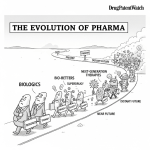
The catalyst for this market explosion is the ongoing and upcoming patent cliff for some of the best-selling drugs in history. We are in the midst of a seismic shift in pharmaceutical revenue streams, with an estimated $200 billion in annual revenue at risk for originator companies between now and 2030. This loss for originators is a direct opportunity for biosimilar developers.
Unlike the patent cliff of the early 2010s, which was dominated by small-molecule drugs facing swift replacement by low-cost generics, this new wave is almost entirely composed of complex biologics. This changes the dynamics significantly. The manufacturing challenges and the fact that biosimilars are not always automatically interchangeable can lead to a slower revenue decline for the originator product. However, it also creates a more prolonged and nuanced competitive window for multiple biosimilar players to enter and capture market share.
To grasp the scale of this opportunity, consider the top-tier biologics that are either recently off-patent or will be in the coming years. These are not just successful drugs; they are titans of the industry, each representing a multi-billion dollar market ripe for competition.
Table 1: The Next Wave of Opportunity: Top Biologics Facing Patent Expiry
Biologic (Brand Name)
Originator Company
2024 Sales (Approx.)
Primary U.S. Patent Expiry
Patent Thicket Complexity
Pembrolizumab (Keytruda)
Merck & Co.
$29.5 Billion
June 2028
High
Dupilumab (Dupixent)
Sanofi / Regeneron
$13 Billion
2031 (Est.)
Medium
Stelara (Ustekinumab)
Johnson & Johnson
(Significant)
2023
High
Eylea (Aflibercept)
Regeneron
(Significant)
2024
Medium-High
Adalimumab (Humira)
AbbVie
$9 Billion (post-expiry)
January 2023
Extreme
Opdivo (Nivolumab)
Bristol Myers Squibb
(Significant)
2028
High
Note: Sales figures and patent thicket complexity are based on compiled industry data and analysis.1 Thicket complexity is a qualitative assessment of the volume and strategic deployment of secondary patents.
This table does more than just list names and numbers; it frames the strategic challenge. The sheer size of the sales figures for drugs like Keytruda and Dupixent illustrates the immense value of a successful biosimilar entry. However, the “Patent Thicket Complexity” column serves as a critical warning. The path to market for a Keytruda biosimilar is not the same as for a Dupixent biosimilar. The former is protected by a formidable “patent wall” that Merck has been constructing for years. Simply knowing the 2028 expiry date is insufficient. A successful strategy requires a deep, granular understanding of the specific patents that constitute that wall and, most importantly, which of them are vulnerable to challenge. This is the core problem that only advanced analytics can solve.
The Primary Obstacle: Understanding and Navigating the Patent Thicket
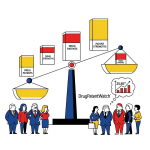
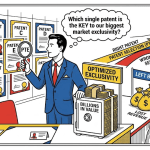
If the patent cliff is the opportunity, the patent thicket is the obstacle. It is the single greatest barrier to biosimilar competition and the primary reason why traditional, linear strategic planning is doomed to fail.
Anatomy of a Thicket
A patent thicket is a deliberate and strategic legal construct. It is a “dense web of overlapping intellectual property rights that a company must hack its way through in order to actually commercialize new technology”.2 Originator companies achieve this by filing dozens, or even hundreds, of “secondary” patents long after the core “primary” patent on the drug’s active molecule has been granted. These secondary patents don’t cover the drug itself, but every conceivable aspect surrounding it:
Specific formulations (e.g., a citrate-free version to reduce injection pain).
Methods of manufacturing (e.g., a new cell culture medium or purification step).
Methods of use (e.g., treating a new patient population or disease).
Dosage regimens (e.g., a new weekly vs. bi-weekly injection schedule).
Delivery devices (e.g., a new and improved autoinjector pen).
The archetypal example of this strategy is AbbVie’s Humira. The company built a legal fortress around its blockbuster drug by filing over 250 patent applications in the U.S., resulting in at least 132 granted patents. This strategy successfully delayed U.S. biosimilar competition for years after the primary patent expired in 2016, costing the healthcare system tens of billions of dollars.
The Asymmetrical Warfare of Litigation
The strategic genius of the patent thicket lies in how it exploits the economics of litigation. The goal is not necessarily to win in court on the merits of every single patent. The goal is to make the cost of challenging the portfolio prohibitively expensive for any would-be competitor.
This creates a state of “asymmetrical warfare.” To launch its product, a biosimilar developer must successfully challenge and invalidate every single patent the originator asserts from the thicket. The originator, by contrast, only needs one of those patents to be upheld by the courts to block market entry. With the cost of litigating a single patent running into the millions, facing a thicket of 100 patents becomes a financially impossible proposition for all but the largest and most determined challengers. This pressure often forces biosimilar companies into settlement agreements that delay their market entry, preserving the originator’s monopoly for longer.
Global Variations: Not All Thickets Are Created Equal
Crucially, you must understand that the patent thicket is largely a U.S. phenomenon, a direct product of its unique legal and regulatory environment. A global biosimilar strategy must account for these stark regional differences. The ability to build and defend a patent thicket varies dramatically across key jurisdictions, and your AI-driven analysis must be tuned to these specific legal realities.
Table 3: Navigating the Global IP Minefield: A Comparative Analysis of Patent Thicket Environments
Jurisdiction
Key Factors Enabling/Disabling Thickets
Strategic Implication for Biosimilar Developers
United States
Enabling: BPCIA “patent dance” with no limit on asserted patents; permissive USPTO standards for secondary patents; use of continuation applications & terminal disclaimers; high litigation costs; automatic 30-month stay for small molecules.2
Highest risk. Requires deep, AI-powered analysis to identify weak patents and predict litigation outcomes. FTO is extremely complex.
European Union
Disabling: Stricter “inventive step” requirements at the EPO; “Added Matter” doctrine (Art. 123(2) EPC) prevents expanding claims post-filing; structured Supplementary Protection Certificate (SPC) system for term extension.
Lower risk. Thickets are less dense and patents are generally stronger but narrower. FTO analysis is more manageable. A successful EU launch can fund a later U.S. challenge.
India
Disabling: Section 3(d) of the Patents Act requires secondary patents to show “enhancement of the known efficacy,” a very high bar that effectively blocks most evergreening strategies.
Lowest risk for thicket-based challenges. The primary barrier is often the strength of the core patent itself. Market access and pricing are the key strategic challenges.
China
Emerging/Enabling: Recently adopted a U.S.-style patent linkage system with a 9-month stay; established specialized IP courts with high damage awards; allows for Patent Term Extension.
Increasing risk. The legal infrastructure for thickets is now in place. Companies must monitor this evolving landscape closely. AI analysis will become critical here.
This comparative view is essential for global resource allocation. A target that looks impenetrable in the U.S. may be wide open in the EU or India. A successful biosimilar strategy often involves launching first in less litigious, more favorable jurisdictions to build revenue and experience before tackling the U.S. market.
The very nature of biologics—their inherent scientific complexity—is the root cause of the legal complexity we see in the patent landscape. The multiple steps in manufacturing, the subtle variations in formulation, and the diverse clinical applications all provide fertile ground for an originator to plant the seeds of a patent thicket.3 This connection is fundamental. It tells us that to untangle the legal problem, we must first understand the scientific one. The challenge is not just to read the law; it’s to read the science embedded within the patents. And for that, we need a new class of tools.
Section 2: The Digital Arsenal – Applying AI and ML to Pharmaceutical Patent Intelligence
The sheer scale and complexity of the modern patent landscape have rendered traditional methods of analysis obsolete. Manually sifting through hundreds of patents for a single drug, cross-referencing litigation records, and attempting to forecast market dynamics is a slow, exorbitantly expensive, and fundamentally reactive process.4 To win in this environment, you need to move from seeing the past to predicting the future. This is where Artificial Intelligence and Machine Learning come in.
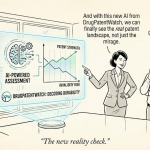
The global market for AI in pharmaceuticals is not just a niche trend; it’s a tidal wave of investment, projected to surge from $1.94 billion in 2025 to an astounding $16.49 billion by 2034.17 This explosive growth is a clear signal that the industry’s leaders view AI not as a novelty, but as a core component of future success. For biosimilar developers, it represents a paradigm shift from reactive data gathering to proactive, predictive intelligence.4 AI-powered systems can process and synthesize vast, unstructured datasets—from the dense legalese of patent claims to the nuanced language of clinical trial reports—to uncover hidden patterns, forecast outcomes, and guide strategic decisions with a clarity that was previously unimaginable.19
From Keywords to Cognition: The Evolution of Patent Analysis
Let’s be clear about the transformation we’re discussing.
The Old Way: The traditional approach to competitive intelligence and freedom-to-operate (FTO) analysis has been a linear and often siloed affair. It typically involves:
Business development teams using databases to scan for patent expiries.
Hiring expensive external law firms to conduct keyword-based patent searches.
Receiving a static FTO opinion that is often outdated by the time it’s delivered.
Making a high-stakes investment decision based on this limited, point-in-time snapshot.
This process is not only slow, taking years from initial scan to development decision, but it also struggles to handle the sheer volume and interconnectedness of data in the era of the patent thicket.4 It’s like trying to navigate a modern city using a hand-drawn map from the 19th century.
The New Way: AI introduces a dynamic, integrated, and predictive approach. It creates a “single source of truth” where data from patent offices, courts, regulatory agencies, and the market are continuously ingested and analyzed. This ecosystem moves your team from asking “What happened?” to asking “What will happen next?” and, most powerfully, “What should we do about it?”. As Lynne Chou O’Keefe, founder of Define Ventures, aptly puts it, “Pharma’s AI future will be defined in the next 12 to 24 months… What we’re seeing is a decisive acceleration to enterprise execution—with leaders embedding AI into core workflows to drive speed, efficacy, and real ROI”.
The Core Technologies: A Primer for the Pharma Strategist
To leverage these tools, you don’t need to be a data scientist, but you do need to understand the capabilities of your digital arsenal. The power of AI in this context comes from a suite of interconnected technologies.
Natural Language Processing (NLP): Reading Between the Lines of Patent Claims
At its heart, a patent is a text document. The challenge is that it’s written in a dense, highly specialized language. Natural Language Processing (NLP) is the branch of AI that gives computers the ability to read, understand, and extract meaning from human language.20 This is far more advanced than simple keyword searching.
Function: NLP models are trained on massive volumes of text, allowing them to grasp context, semantics, and the relationships between concepts. For patent analysis, this is revolutionary.
Application: The most critical application of NLP here is Named Entity Recognition (NER). An NER model can be trained specifically on pharmaceutical patents to automatically identify and extract crucial pieces of information, such as :
A 2025 study demonstrated the power of this approach, developing an NLP model that could identify text sections containing manufacturing data with a Cohen’s kappa score (a measure of agreement) higher than 90% and extract specific entities with an F1-score of 84.2%. This ability to automatically deconstruct the technical substance of a patent portfolio is the foundational layer for all subsequent analysis, from assessing manufacturing feasibility to identifying non-infringing design-around opportunities.
Predictive Analytics & Machine Learning: Forecasting the Future
If NLP allows us to understand the present state of a patent, Machine Learning (ML) allows us to predict its future. ML models, particularly supervised learning algorithms like Random Forest classifiers, are trained on vast historical datasets to learn the patterns that lead to specific outcomes.
Function: You feed the model a set of features (the inputs) and the known outcomes (the labels) from past events. The model learns the complex, non-linear relationships between them. Once trained, it can take a new set of features and predict the most likely outcome.
Application 1: Predicting Patent Strength and Litigation Vulnerability. This is one of the most powerful applications for biosimilar strategy. Imagine an ML model trained on every patent litigation case from the last 20 years. It can learn which patent characteristics are associated with a patent being invalidated in court. A study by Smolecule demonstrated this with remarkable success, developing a random forest model that could predict whether a patent would ultimately be listed in the FDA’s Orange Book with an Area Under the Curve (AUC) score—a measure of predictive accuracy—of up to 0.92 (where 1.0 is perfect prediction). The most predictive features for these models include:
The presence of a “terminal disclaimer” (a sign of a potential “obviousness-type double patenting” issue).
The number of related patents and applications in the family.
The number of non-patent literature citations.
The experience level of the inventors and attorneys. By applying such a model to a target’s patent thicket, you can generate a data-driven “vulnerability score” for each patent, transforming a high-stakes gamble into a calculated, risk-assessed decision.
Application 2: Forecasting Market Dynamics. Commercial success isn’t just about winning in court; it’s about winning in the market. AI algorithms are now standard tools for sales and demand forecasting. They analyze historical sales data, prescription trends, patient demographics, and competitor marketing activities to generate sophisticated forecasts of future demand. These forecasts are not just numbers; they are critical inputs for the risk-adjusted Net Present Value (rNPV) models that will ultimately determine which biosimilar projects get the green light.
Generative AI: The Emerging Frontier
While NLP and predictive ML are the established workhorses, Generative AI is the new thoroughbred entering the race. These models, famous for applications like ChatGPT, can create new content. In our context, this could mean:
Automated Summarization: Automatically generating concise summaries of lengthy and complex patent litigation filings or regulatory documents.
Hypothesis Generation: Proposing novel, non-infringing manufacturing processes or formulations by learning from the entire universe of public patent data. This moves AI from an analytical tool to a creative partner in R&D.
The Data Ecosystem: Fueling the AI Engine
An AI model is like a high-performance engine: its power is entirely dependent on the quality of the fuel it receives. A world-class AI strategy is impossible without a world-class data strategy. The “fuel” for our biosimilar targeting engine must be drawn from a wide and integrated range of sources 16:
Patent Databases: U.S. Patent and Trademark Office (USPTO), European Patent Office (EPO), Google Patents.
Regulatory Databases: The FDA’s Orange Book and Purple Book, EMA filings.
Litigation Records: Data from the Patent Trial and Appeal Board (PTAB), U.S. District Courts, and international courts.
Scientific Literature: PubMed, and other biomedical research databases.
Clinical Trial Registries: ClinicalTrials.gov.
Commercial and Market Data: Sales data, prescription data, and company financial reports.
The challenge is that this data is disparate, unstructured, and siloed. This is where specialized pharmaceutical intelligence platforms play an indispensable role. Services like DrugPatentWatch are not just databases; they are data integrators. They perform the critical work of aggregating information on patent expiry dates, litigation outcomes, regulatory exclusivities, and market sales, and then—most importantly—they connect these data points.4 This curated, structured, and interconnected data is the high-octane fuel required to train and run the powerful ML models we’ve discussed.
There is a powerful symbiosis at play here. The increasing sophistication of AI models creates a voracious appetite for high-quality, multi-domain data. This demand drives platforms like DrugPatentWatch to provide ever more comprehensive and integrated datasets. This, in turn, enables the development of even smarter AI tools. This virtuous cycle is rapidly accelerating the power of competitive intelligence. Your company’s ability to build, buy, or access this integrated data-and-AI ecosystem is no longer just an advantage; it is becoming a fundamental prerequisite for competing at the highest level.
Section 3: The AI-Driven Playbook – A Step-by-Step Framework for Identifying and De-Risking Biosimilar Targets
Strategy without execution is merely a dream. Now that we understand the landscape and the tools, it’s time to put them to work. The following four-stage framework provides a systematic, data-driven playbook for moving from a universe of potential opportunities to a shortlist of de-risked, high-value biosimilar targets. This is not a linear checklist but a dynamic funnel, where each stage uses AI to filter, prioritize, and enrich the candidates, ensuring that your most valuable resources—time, capital, and talent—are focused only on the assets with the highest probability of success.
Objective: To cast a wide, intelligent net across the entire biologics market to identify a preliminary “long-list” of commercially attractive targets.
AI Application: In this stage, AI acts as your 24/7 global market watchtower. We leverage AI-powered competitive intelligence (CI) platforms that continuously ingest and analyze a massive stream of public data.16 These platforms use NLP to scan financial news, investor earnings calls, press releases, and regulatory announcements, detecting subtle signals and emerging trends long before they become common knowledge.
The Process:
Automate Opportunity Identification: Configure your CI platform to automatically flag and monitor all biologic drugs that cross a significant commercial threshold, for example, annual global sales exceeding $1 billion. This ensures you are always focused on blockbuster opportunities.
Filter by Patent Expiry Window: Layer on a filter to narrow the list to biologics with primary composition of matter (API) patents set to expire within a strategic 5-to-10-year window. This timeframe provides a sufficient runway for development while ensuring the opportunity is not too far in the future. Platforms like DrugPatentWatch are invaluable here, providing structured, searchable data on patent expirations and regulatory exclusivities.28
Apply Market Forecasting Models: For the filtered list of drugs, employ AI-driven forecasting models. These algorithms analyze historical sales data, prescription velocity, and trends in specific therapeutic areas (e.g., oncology, immunology) to project future market size and growth potential.17 This step prioritizes targets in growing, durable markets over those in declining ones.
Output: A prioritized long-list of 10-20 high-potential biologic targets, ranked by a composite score of current market size, projected future growth, and optimal patent expiry timing. This list represents your initial pool of candidates for deeper investigation.
Stage 2: Patent Thicket Deconstruction & IP Risk Assessment
Objective: To move from a high-level view to a granular dissection of the intellectual property fortress surrounding each target. The goal is to create a detailed “IP risk map” that identifies both the key threats and the hidden vulnerabilities.
AI Application: This is the most computationally intensive and highest-value stage of the AI playbook.
Automated Patent Portfolio Aggregation: For each target on your long-list, use automated tools to search across global patent databases (USPTO, EPO, WIPO) and aggregate every single patent and patent application associated with the drug. This includes patents linked in regulatory filings (like the Orange Book) and those discovered through assignee and inventor searches.29 The result is a complete dossier of the originator’s IP.
Thicket Characterization with NLP: This is where the magic happens. Apply a custom-trained NLP model to the full text of every patent in the portfolio. The model performs two critical tasks:
Patent Classification: It automatically categorizes each patent by type: composition of matter, formulation, manufacturing process, method of use, delivery device, etc..23
Technology Clustering: It groups patents based on the specific technology they protect (e.g., clustering all patents related to a specific purification column or all patents related to a subcutaneous formulation). This reveals the key “battlefronts” within the thicket and shows where the originator has concentrated its IP defenses.
Predicting Patent Strength and Vulnerability: Next, you deploy a predictive ML model, such as a Random Forest or Gradient Boosting classifier, that has been trained on thousands of historical patent litigation and examination records.4 This model analyzes a host of features for each patent in the thicket to generate a “vulnerability score” from 0 to 1. Key input features include:
Presence of terminal disclaimers.
Number and type of claims (independent vs. dependent).
Forward and backward citation velocity.
The patent examiner’s historical allowance rate.
The number of office actions during prosecution.
Litigation Outcome Prediction: For the patents identified as both high-importance (e.g., covering the commercial manufacturing process) and high-vulnerability, you can deploy more advanced NLP-based models. These models analyze the specific language of the patent claims and compare it to the outcomes of prior court cases involving similar claim language and legal arguments, predicting the probability of success in a PTAB inter partes review (IPR) or District Court challenge.4
Output: A detailed IP Risk Profile for each target. This is not a simple list of patents. It is a dynamic dashboard that visualizes the entire patent thicket, color-codes each patent by its predicted vulnerability, and highlights the weakest links. This profile allows your legal and strategic teams to identify the most promising “cracks in the wall” and begin formulating a data-driven freedom-to-operate (FTO) strategy.
Objective: To determine whether a high-quality, “highly similar” biosimilar can be developed and manufactured at a commercial scale, efficiently, and, critically, without infringing on the originator’s valid process patents.
AI Application: Here, we bridge the gap between IP analysis and lab reality.
Automated Process Parameter Extraction: The structured data extracted by NLP models in Stage 2 provides the initial, critical input. These models pull out detailed manufacturing parameters directly from the text of the originator’s patents, including cell line types, expression systems, cell culture media components, purification steps and sequences, analytical methods, and formulation excipients.
Predictive Feasibility Modeling: This structured data is then fed into ML models that have been trained on your company’s internal manufacturing data as well as public data on biologic production. These models can predict key feasibility metrics for each target 34:
Development Complexity Score: A score based on the complexity of the protein’s structure (e.g., glycosylation patterns) and the intricacy of the known manufacturing process.
Predicted Cost of Goods (COGS): An estimate of the cost to produce the drug at scale.
Estimated Development Timeline: A prediction of the time required to achieve a stable, high-yield cell line and a validated manufacturing process.
Identifying “Manufacturing Leapfrogging” Opportunities: This is a crucial strategic step. By having a complete, AI-generated map of the originator’s patented manufacturing processes, your R&D team can more easily identify “white space.” The AI can highlight process steps that are not broadly patented or where the patents are weak. This allows your scientists to focus their efforts on developing novel, non-infringing process alternatives—effectively “leapfrogging” or designing around the originator’s IP. Given the complexity of biologics, there are often multiple manufacturing pathways to the same final product, and AI is the key to finding the most viable, unencumbered route.5
Output: A “Manufacturability Score” for each remaining target. This score quantifies the technical risk, the resource investment (time and money), and the potential for developing a non-infringing process. Targets with high technical complexity and a dense wall of strong manufacturing patents are down-ranked or eliminated.
Stage 4: Integrated Commercial Viability & Final Selection
Objective: To bring all the threads of analysis—commercial, IP, and technical—together into a single, comprehensive business case to select the top 1-3 biosimilar targets for full development.
AI Application: The capstone of this process is a sophisticated, dynamic, risk-adjusted Net Present Value (rNPV) model. This is not a simple spreadsheet; it’s an AI-augmented simulation engine.
The Process:
Integrate All Data Streams: The rNPV model is designed to accept the outputs from all previous stages as direct inputs:
Revenue Forecasts: From the market models in Stage 1.
Development Costs & Timelines: From the manufacturing feasibility models in Stage 3.34
Estimated Litigation Costs: Based on the number and strength of patents likely to be challenged, as determined in Stage 2.
Probability of Technical & Regulatory Success (PTRS): This is the key variable that AI transforms. Instead of using a generic industry average, the PTRS for each project is dynamically adjusted based on the specific data we’ve generated. A target with a high “Manufacturability Score” gets a higher probability of technical success. A target with a low “IP Risk Score” (i.e., a weak patent thicket) gets a higher probability of regulatory and launch success. While typical biosimilar success probabilities range from 65-75%, this AI-driven approach provides a far more granular and evidence-based adjustment for each specific candidate.
Run Simulations: With the integrated model, you can run thousands of Monte Carlo simulations to model uncertainty. What happens to the rNPV if we lose the court case on patent ‘X’? What if our market share is 15% instead of 25%? What if we can accelerate the development timeline by six months? This allows you to understand the full range of potential financial outcomes and identify the key drivers of value for each project.
Final Selection: The output is a rank-ordered list of biosimilar targets, each with a robust, data-backed business case and a clear understanding of its associated risks and opportunities. This enables your leadership team to make investment decisions with an unprecedented level of confidence.
To visualize this entire strategic workflow, we can map it out in a funnel.
Table 2: The AI-Powered Biosimilar Target Selection Funnel
Funnel Stage
Objective
Key AI/ML Tools
Data Inputs
Strategic Output
1. Landscape Scanning
Identify a long-list of commercially attractive targets.
AI-powered CI Platforms, NLP for news/filings, Market Forecasting Models.
Sales data, patent expiry data (e.g., from DrugPatentWatch), news, earnings calls.
Prioritized long-list of 10-20 blockbuster biologics.
2. IP Risk Assessment
Dissect patent thickets and quantify IP risk.
NLP (Patent Classification, NER), Predictive ML Classifiers (Random Forest).
Full patent portfolio text, litigation records, patent prosecution history.
Detailed IP Risk Profile & “Vulnerability Score” for each patent.
3. Technical Feasibility
Assess manufacturability and identify non-infringing process routes.
NLP (Process Extraction), Predictive ML Models (for complexity, cost, timeline).
Patent manufacturing data, internal process data, public CMC information.
“Manufacturability Score” & identification of “leapfrogging” opportunities.
4. Commercial Viability
Synthesize all data into a final business case and select top targets.
AI-Augmented rNPV Model, Monte Carlo Simulation Engines.
All outputs from Stages 1-3 (revenue, cost, risk, probability of success).
Final, rank-ordered list of 1-3 de-risked targets with full business cases.
This funnel is more than just a process; it’s a new way of thinking. It transforms target selection from a series of static, disconnected analyses into a single, dynamic, and continuously learning system. The true power lies in the feedback loops. For instance, if the technical analysis in Stage 3 identifies a highly viable, non-infringing manufacturing process, that information can be fed back into the IP risk model in Stage 2. The model can then downgrade the risk posed by the originator’s process patents, which in turn increases the Probability of Success in the rNPV model in Stage 4. This kind of iterative, dynamic optimization is simply impossible with traditional methods. It is the definitive advantage that an AI-driven strategy provides.
Section 4: The Human in the Loop – Navigating the Limitations and Ethical Frontiers of AI
To wield any powerful tool effectively, one must understand not only its strengths but also its limitations and risks. Adopting an AI-driven strategy in a highly regulated industry like pharmaceuticals is not a matter of simply “plugging in” an algorithm and trusting its output. The most successful organizations will be those that embrace AI’s power while implementing rigorous governance and maintaining human oversight. This section addresses the most critical challenges—the “black box” problem, the IP inventorship paradox, and data integrity—and provides a framework for responsible and defensible implementation.
The “Black Box” Dilemma: When AI Can’t Explain “Why”
The Problem: Many of the most powerful AI models, particularly in deep learning, operate as “black boxes.” While they can produce remarkably accurate predictions, their internal decision-making processes are often opaque and non-intuitive, even to the data scientists who build them.37 This presents a formidable challenge. How can you base a hundred-million-dollar investment decision on a recommendation you can’t fully understand? More importantly, how do you defend that decision to regulatory bodies like the FDA and EMA, which are built on principles of transparency, causality, and reproducibility?.37
The Solution: Explainable AI and the “Human-in-the-Loop”
The answer is not to abandon powerful models but to augment them with human expertise. The guiding principle must be that AI informs decisions; it does not make them.
Explainable AI (XAI): This is an emerging field of AI research focused on developing techniques that make model decisions more transparent. For example, a Random Forest model used to predict patent vulnerability can also output the “feature importance,” showing which characteristics (e.g., terminal disclaimers, citation count) most heavily influenced its prediction. This provides a “why” behind the “what.”
Human-in-the-Loop (HITL): This is the most critical component of a responsible AI strategy.20 AI-generated insights, predictions, and recommendations must be treated as a starting point for expert review, not a final answer. The “vulnerability score” for a patent is not a command to litigate; it is a signal to your IP counsel to investigate that patent more deeply. The AI’s proposed manufacturing process is not a blueprint; it is a set of hypotheses for your process chemists to test and validate in the lab.
As Sanofi’s CEO Paul Hudson described, his company uses AI recommendations as a “very sobering” input at the start of a decision-making process, precisely because the AI “doesn’t have a career at stake”. It provides an unbiased, data-driven perspective that must then be debated, contextualized, and ultimately acted upon by accountable human leaders. This collaborative model, where AI provides the scale and pattern recognition and humans provide the domain expertise and contextual judgment, is the gold standard for implementation.41
The IP Paradox: Can an AI-Discovered Drug Be Patented?
The Risk: This is a profound and rapidly emerging legal risk that strikes at the heart of pharmaceutical innovation. Patent law, across the globe, is predicated on the concept of a human inventor—an individual who contributes to the conception of the invention.37 Landmark legal challenges, known as the DABUS cases, have seen courts and patent offices from the U.S. to the U.K. and Europe unequivocally reject the idea that an AI system can be named as an inventor.
The Implication for Biosimilar Strategy: This isn’t just a problem for originator companies. It creates a novel and potent line of attack for biosimilar challengers. Imagine an originator’s key secondary patent—perhaps for a new formulation—was developed with significant AI assistance. A savvy biosimilar developer could mount a legal challenge arguing that the named human inventors did not make a “significant contribution” to the conception of the invention, and that the true “inventor” was the AI. If successful, this argument could invalidate the patent entirely, clearing a path to market.
Mitigation: Meticulous Documentation of Human Contribution
The only defense against this risk is meticulous, contemporaneous documentation. To secure and defend a patent for an AI-assisted invention, you must be able to prove the “significant contribution” of your human scientists. This means documenting every step of the human-AI interaction 37:
Prompt Design: Who designed the prompts or queries given to the AI? What was the scientific rationale behind them?
Data Curation: Who selected, cleaned, and structured the data used to train the AI model? This is a highly intellectual and creative act.
Output Interpretation and Selection: How did human scientists interpret the AI’s output? Why did they select one proposed molecule or process over thousands of others?
Refinement and Validation: How did human scientists take the AI’s raw output and modify, test, and validate it to arrive at the final invention?
This level of documentation is non-negotiable. It is the evidence that proves your scientists were not mere button-pushers but the true intellectual authors of the invention.
Garbage In, Garbage Out: The Critical Role of Data Quality and Bias
The Challenge: An AI model is a mirror that reflects the data it was trained on. If that data is flawed, the model’s predictions will be flawed. This is the principle of “garbage in, garbage out.” Relying on unvetted, poor-quality data from public sources without rigorous cleaning and validation can lead to models that are not just inaccurate, but dangerously misleading.
The Bias Problem: An even more insidious risk is data bias. If an AI model used to predict clinical trial success is trained primarily on data from a specific demographic group, its predictions may not be accurate or safe for other populations.39 This has profound ethical and commercial implications, potentially leading to the development of drugs that exacerbate health disparities.
The Solution: A Foundation of Data Governance
A robust data governance strategy is the bedrock of any responsible AI program. This is not just an IT function; it is a core strategic imperative. It must include:
Rigorous Data Vetting and Cleaning: Processes to ensure data is accurate, complete, and relevant.
Bias Audits: Actively testing datasets and model outputs for demographic, socioeconomic, or other forms of bias.
Diverse Data Sourcing: Making a conscious effort to acquire and integrate data from diverse populations and sources to ensure models are as representative and equitable as possible.
These risks—model opacity, IP inventorship, and data integrity—are not independent hurdles. They are deeply interconnected. The “black box” problem directly fuels the inventorship risk; if you cannot explain how your AI works, it becomes much harder for a human to claim a “significant contribution” to its output. Both of these issues amplify regulatory risk, as agencies are justifiably skeptical of opaque models that could be generating unpatentable or biased results.
This complex interplay of risks and solutions can be managed through a structured framework.
Table 4: The AI Risk Matrix: Balancing Innovation with IP and Regulatory Compliance
Risk Category
Detailed Risk Description
Mitigation Strategy
Essential Documentation
IP Inventorship
A patent could be invalidated if a court determines an AI, not a human, was the true “inventor.” This is a key emerging threat and a potential litigation strategy for competitors.37
Structure R&D workflows to ensure and document “significant human contribution” at all key stages of discovery and development. Use AI as a tool to augment human ingenuity, not replace it.
Detailed logs of human-AI interaction: prompt design records, data curation decisions, rationale for selecting AI outputs, and records of human-led modifications and validation experiments.
Model Opacity (“Black Box”)
Inability to explain the internal logic of a complex AI model undermines trust and creates a major hurdle for regulatory approval. Regulators (FDA/EMA) require transparency and reproducibility.37
Implement a “human-in-the-loop” (HITL) validation process. Utilize Explainable AI (XAI) techniques to interpret model behavior. Prioritize simpler, more transparent models where possible for regulatory submissions.
Model development and validation reports. Documentation of the HITL review process, including expert sign-offs. XAI outputs (e.g., feature importance charts) that explain key drivers of predictions.
Data Quality & Bias
Using incomplete, inaccurate, or unrepresentative training data leads to flawed and biased model predictions. This can result in poor strategic decisions and the development of drugs that are inequitable or ineffective for certain populations.38
Establish a robust data governance framework. Implement rigorous data cleaning, validation, and versioning protocols. Actively audit datasets and models for bias and source data from diverse populations.
Data governance policies and procedures. Data sourcing and cleaning logs. Bias audit reports. A clear description of the training dataset’s composition and limitations in all model documentation.
Ultimately, the current landscape is one of strategic ambiguity. The technology is advancing faster than the legal and regulatory frameworks that govern it.37 This creates both risk and opportunity. The companies that will win are not those that ignore these challenges, but those that confront them head-on. By developing rigorous internal governance, meticulous documentation practices, and a culture of human-centric validation, you do more than just mitigate your own risk. You build a defensible, transparent, and high-integrity operational model. This very documentation required to satisfy the FDA’s demand for credibility can become the same evidence used to defend an inventorship claim at the USPTO or, potentially, to challenge the validity of a competitor’s less diligently documented, AI-derived patent. In this new frontier, compliance and competitive advantage are two sides of the same coin.
Conclusion: Mastering the Data, Winning the Market
We have journeyed from the scientific complexities of biologics to the legal intricacies of patent thickets and through the powerful, predictive world of artificial intelligence. The central theme that emerges is undeniable: in the new era of biosimilar competition, victory belongs to those who can master the data. The old paradigms of relying on singular patent expiry dates or siloed legal opinions are no longer sufficient. The modern competitive landscape is a high-dimensional chessboard, and AI is the engine that allows you to see the entire board, calculate all possible moves, and anticipate your opponent’s strategy before they even make it.
The adoption of a sophisticated, AI-driven patent and market intelligence strategy is not an incremental improvement; it is a fundamental transformation. It is the difference between navigating a minefield with a map and navigating it with a real-time, ground-penetrating radar that not only shows you where the mines are but also tells you which ones are duds. This is not an optional upgrade. In a world where your competitors are leveraging these tools, failing to adapt is a choice to be outmaneuvered, out-planned, and ultimately, out-competed.
The playbook laid out in this report—from landscape scanning and thicket deconstruction to technical feasibility and integrated commercial analysis—is your blueprint for building this capability. It requires a commitment to investing in technology, fostering a culture of data-driven decision-making, and, most importantly, empowering your human experts to work in collaboration with these powerful new tools.
We must approach this transformation with a clear-eyed view of its challenges. The risks surrounding model transparency, IP inventorship, and data bias are real and significant. But as we have seen, these are not insurmountable barriers. They are engineering and governance problems that can be solved with diligent planning, meticulous documentation, and an unwavering commitment to keeping the human expert in the loop.
I urge you to view this evolution not as a cost center or a compliance burden, but as the most powerful strategic asset you can build. When wielded correctly, this fusion of human intellect and artificial intelligence will do more than just improve your bottom line. It will de-risk development, break down anticompetitive barriers, accelerate market entry, and ultimately fulfill the core mission of our industry: to deliver life-saving and life-changing medicines to patients more quickly, more safely, and more affordably. The algorithmic gold rush is here. The tools to succeed are now within your reach.
Key Takeaways
The Biosimilar Opportunity is Defined by Complexity: The current patent cliff, worth over $200 billion in revenue, involves complex biologic drugs. Their inherent scientific complexity is directly exploited by originators to create dense “patent thickets,” the primary barrier to competition.
AI Transforms Patent Analysis from Reactive to Predictive: Traditional patent analysis is too slow and expensive for the modern landscape. AI/ML allows companies to move beyond simply tracking expiries to predicting patent vulnerability, forecasting litigation outcomes, and quantifying IP risk.
A Four-Stage Funnel is the Strategic Playbook: A systematic, AI-driven process—(1) Landscape Scanning, (2) IP Risk Assessment, (3) Technical Feasibility, and (4) Commercial Viability—allows companies to efficiently filter and de-risk potential targets, focusing resources on the most promising assets.
The Data Ecosystem is the Engine: The power of AI models is dependent on high-quality, integrated data from diverse sources (patents, litigation, regulatory, market). Curated platforms like DrugPatentWatch provide the essential, structured fuel for these AI engines.
Human Oversight is Non-Negotiable: AI is a tool to augment, not replace, human expertise. To mitigate significant risks like the “black box” problem and the AI inventorship paradox, a “human-in-the-loop” approach, rigorous data governance, and meticulous documentation are critical for both regulatory compliance and defending IP.
Responsible AI Implementation is a Competitive Advantage: In the current environment of legal and regulatory ambiguity, companies that build robust internal governance and documentation practices not only mitigate their own risk but are also better positioned to challenge the patents of less diligent competitors.
Frequently Asked Questions (FAQ)
1. How can a mid-sized pharmaceutical company with a limited budget begin to implement such an AI-driven strategy?
A full-scale, in-house AI development program can be resource-intensive, but a mid-sized company can adopt a phased and strategic approach. Start by focusing on the highest-impact, lowest-cost entry points. Instead of building custom models from scratch, leverage commercial AI-powered competitive intelligence platforms and specialized databases like DrugPatentWatch. These platforms provide access to the crucial integrated data and pre-built analytical tools needed for Stage 1 (Landscape Scanning) and Stage 2 (IP Risk Assessment) at a fraction of the cost of an internal build. Focus your internal resources on building a small, cross-functional team of a data-savvy business strategist, an IP specialist, and an R&D lead. This team’s role is to use the commercial tools to identify a very shortlist of 2-3 top targets and then use the outputs to guide more traditional, focused spending on external legal opinions and initial lab work. The key is to use AI to make your limited resources smarter, not to replace them.
2. What is the most significant legal precedent a biosimilar developer should watch in the next 2-3 years regarding AI and patent law?
The most critical area to watch is the evolution of the “significant human contribution” standard for inventorship in AI-assisted inventions. While the DABUS cases established that an AI cannot be an inventor , the next wave of litigation will focus on the threshold of human input required to be a valid inventor. A key case to monitor would be the first major patent validity challenge where the defendant argues the patent is invalid because the claimed invention was “conceived” by an AI, and the named human inventors were merely operators. The outcome of such a case, likely in a U.S. District Court or at the PTAB, will set a crucial precedent. It will define the level of documentation and the nature of the creative input (e.g., prompt design, data curation, output selection) needed to defend an AI-assisted patent, making it a vital piece of intelligence for any company using AI in R&D.
3. You mentioned “manufacturing process leapfrogging.” How can AI specifically help identify these non-infringing process alternatives from patent data?
AI can accelerate “leapfrogging” in three key ways. First, NLP models create a comprehensive, structured map of the originator’s entire patented manufacturing landscape by extracting and clustering every claimed process step. This visualizes the “minefield” and shows where the originator’s IP is strongest. Second, by feeding this data into a generative AI model trained on the universe of public chemical engineering and bioprocessing literature, the AI can hypothesize alternative, non-patented pathways. For example, it might suggest a different type of chromatography resin or a novel buffer formulation that achieves the same purification goal through a scientifically distinct method. Third, predictive ML models can then rapidly assess the feasibility of these AI-generated hypotheses, estimating their likely yield, purity, and cost before a single experiment is run. This allows R&D teams to focus their lab work exclusively on the most promising, non-infringing process alternatives, dramatically accelerating the “design-around” process.
4. Given the “black box” problem, how do you build trust with regulatory agencies like the FDA when presenting AI-generated evidence?
Building trust with regulators in the face of the “black box” problem hinges on three pillars: transparency, validation, and early communication.
Transparency: While you may not be able to explain every neuron’s firing in a deep learning model, you must be transparent about the model’s architecture, the data it was trained on (including its limitations and potential biases), and your validation process. This is the core of the FDA’s proposed credibility framework.
Validation: The most powerful way to build trust is with robust validation. Show the agency that the model’s predictions hold up against real-world data. This can be done through retrospective validation (testing the model on historical data it hasn’t seen) and by showing how the AI-generated evidence is corroborated by traditional analytical or clinical data.
Early Communication: Engage with the FDA early and often through formal channels like BPD (Biosimilar Biological Product Development) meetings. Present your AI/ML strategy, your validation plan, and your data governance framework before you submit. This collaborative approach shows you are being proactive about the risks and allows the agency to provide feedback, reducing the risk of a major rejection during the formal review.
5. How do you quantify the ROI of investing in a comprehensive AI patent analysis platform versus traditional legal and consulting fees?
Quantifying the ROI involves comparing costs and, more importantly, valuing the reduction of risk and the acceleration of opportunity. A simplified ROI framework would look like this:
Cost Savings: Compare the annual subscription cost of an AI platform (e.g., $50,000 – $200,000) against the cost of commissioning multiple, one-off FTO analyses from a top law firm for several targets (which can easily exceed $500,000 – $1M+).
Risk Reduction (Value of Avoided Failure): This is the biggest value driver. Let’s say the average cost to develop a biosimilar is $150 million. If the AI-driven analysis helps you avoid pursuing just one target that would have failed late-stage due to an unforeseen patent issue, the platform has paid for itself 1000 times over. You can model this by assigning a probability to “catastrophic IP failure” with and without the AI platform and calculating the expected value of this risk mitigation.
Accelerated Revenue (Time-to-Market): Every month saved in the development and litigation timeline is a month of additional revenue. If a biosimilar is projected to generate $200 million in annual revenue, and the AI-driven strategy shaves six months off the path to market by identifying a clearer legal path, that represents $100 million in accelerated revenue. By combining direct cost savings with the massive, quantifiable value of de-risking development and accelerating revenue, the business case for investing in a robust AI intelligence platform becomes overwhelmingly positive.
Biosimilars in the Era of Artificial Intelligence—International Regulations and the Use in Oncological Treatments – PubMed Central, accessed August 8, 2025, https://pmc.ncbi.nlm.nih.gov/articles/PMC11279612/