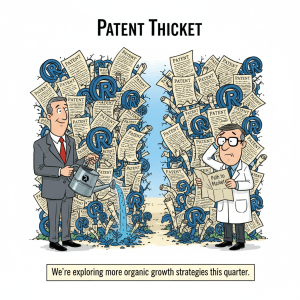
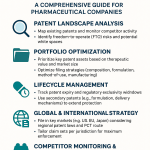
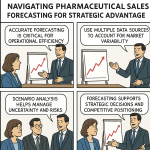
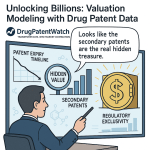
The pharmaceutical patent fortress is no longer just a legal concept. It is the primary financial architecture of the biopharmaceutical industry, the mechanism by which companies convert multi-billion-dollar R&D bets into durable revenue streams. This article is a comprehensive, technically dense reference designed for the IP counsel preparing a Paragraph IV response, the portfolio manager stress-testing a loss-of-exclusivity (LOE) model, the R&D lead evaluating a licensing term sheet, and the institutional investor pricing biosimilar entry risk into a valuation.
The core argument is straightforward: a single composition of matter patent is a starting position, not a strategy. The companies that generate the most durable shareholder value treat IP not as a legal overhead function but as a multi-disciplinary commercial weapon, built layer by layer from discovery through post-market lifecycle management, coordinated across U.S., EU, Chinese, and Indian jurisdictions, and integrated directly into M&A, commercial forecasting, and R&D prioritization decisions.
This article updates and substantially expands on the foundational framework published by DrugPatentWatch, adding IP valuation methodology, technology roadmaps for evergreening and biologic protection, litigation outcome data through 2024, AI inventorship guidance from the USPTO’s February 2024 ruling, and a full deconstruction of the 2025-2030 patent cliff.
Key Takeaways: Executive Summary
A single patent rarely protects a blockbuster drug. Effective market exclusivity requires layered portfolios of composition of matter, formulation, method of use, process, and polymorph patents.
The effective commercial life of most drugs is 7-10 years, not the 20-year statutory patent term. Lifecycle management strategies exist to close this gap.
Regulatory exclusivities (NCE, orphan, pediatric, biologic 12-year) function as a statutory backstop independent of patent validity and should be structured into every development program.
Between 2025 and 2030, an estimated $180-200 billion in annual brand revenue faces generic or biosimilar entry. The companies with the most defensible IP architecture will see the smallest revenue decay curves.
AI-generated drug candidates present a new category of patentability risk. The USPTO’s 2024 ‘Pannu factors’ guidance requires documented human inventive contribution at every step of AI-assisted discovery.
II. The ROI Imperative: What Patents Actually Protect
The Grand Bargain: Incentive Structure and Its Breaking Points
The patent system rests on a specific economic premise. Society grants a temporary monopoly in exchange for full public disclosure of a new invention. For pharmaceuticals, that bargain has a precise financial profile: the U.S. Congressional Budget Office calculates that fully capitalized drug development costs, accounting for the cost of capital and failed candidates, run from under $1 billion to more than $2 billion per approved drug. Analyses that incorporate the full pipeline attrition cost push that number toward $4 billion. These figures are not an industry talking point. They reflect a genuine market failure: chemical compounds are easy to copy, expensive to discover, and impossible to monetize without the protected revenue window that patents create.
Without that window, the incentive to invest disappears. Generic manufacturers can price at marginal cost of production, which for most small-molecule drugs amounts to pennies per pill. An innovator who spent 12 years and $2 billion developing a new oncology agent cannot compete with that price on day one of generic entry, nor should they be expected to. The patent system resolves this by granting a temporary exclusivity period during which the innovator can price at a premium, recoup development costs, fund the next pipeline, and attract the capital required to repeat the process.
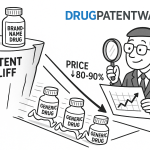
The political tension in this system is real and should not be minimized. Monopoly pricing restricts access. Upon patent expiration, prices typically drop 80-90% within 12 months as generic competition takes hold. That collapse in price is the system working as designed. The controversy is over whether the exclusivity period is being extended beyond what is necessary to incentivize genuine innovation, a question at the heart of every evergreening debate.
Quantifying the Stakes: R&D Investment and Revenue Dependency
The CBO documented that the pharmaceutical industry spent $83 billion on R&D in 2019, a tenfold increase in constant dollars from the 1980s. Merck, Pfizer, and Johnson & Johnson each reinvest 15-28% of total revenues into R&D, a ratio that dwarfs every other manufacturing sector including semiconductors, which tops out below 20% of net revenue.
These ratios have a direct implication for patent strategy: revenue from a protected product must finance not only its own development but the entire attrition-weighted cost of every failed candidate in the pipeline that preceded it. For every drug that reaches patients, an estimated five to ten candidates failed at some point in clinical development, each consuming capital without generating commercial return. The successful drug’s patent-protected revenue window must cover all of those losses.
This structure means that the quality, breadth, and defensibility of patent protection is not peripheral to commercial performance. It is the primary determinant. A drug whose composition of matter patent is invalidated in year three of its commercial life faces a revenue cliff that no pricing or market access strategy can fully offset.
The Effective Patent Life Paradox
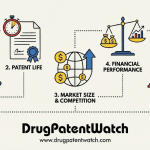
The statutory 20-year patent term begins at the filing date, not the approval date. By the time a drug completes preclinical development, three phases of clinical trials, and FDA regulatory review, 10-15 years of that term are gone. The effective commercial life, from FDA approval to the first patent expiration relevant to generic entry, typically runs 7-10 years.
That compressed window creates the economic logic for every lifecycle management tactic discussed in this article. Patent Term Extensions, regulatory exclusivities, secondary patent filings, formulation improvements, and biosimilar patent dance strategies are not, in isolation, anticompetitive maneuvers. They are direct responses to a structural feature of the pharmaceutical business model: the gap between nominal and effective patent protection.
The strategic question for any IP team is how to close as much of that gap as legally permissible, using every available tool in the right sequence.
IP Valuation: Pricing a Pharmaceutical Patent Portfolio
For portfolio managers, business development teams, and M&A analysts, understanding how to assign financial value to pharmaceutical IP is not optional. Patent portfolios are balance sheet assets, but their value is not captured by standard accounting. Three valuation methodologies dominate:
Income Approach (Discounted Cash Flow). This is the most widely used method for revenue-generating assets. The analyst projects the net present value of the revenue stream attributable specifically to patent-protected exclusivity, applying probability-weighted adjustments for litigation risk (Paragraph IV challenge probability, IPR institution rate), generic substitution rates post-LOE, and residual sales post-expiration. For a drug with strong Orange Book listings and no pending ANDA filings, this approach will assign high value. For a drug under active Para IV challenge, the valuation must discount for the probability that one or more key patents are invalidated before their stated expiration.
Market Approach (Comparable Transactions). This benchmarks against recent licensing deals, settlements, or M&A transactions involving comparable IP. Royalty rates in pharma licensing typically range from 3-10% of net sales for small molecules and 5-15% for biologics, depending on stage, therapeutic area, and IP strength. The FDA Orange Book listing count, the number of pending Para IV certifications, and the ratio of composition of matter to secondary patents all affect where a specific asset sits in that range.
Cost Approach (Replacement Cost). This estimates what it would cost to develop a non-infringing alternative that achieves comparable clinical outcomes. This is most relevant in FTO contexts and in valuing process patents, where the cost of designing around an existing synthesis route can be quantified.
For deals involving biosimilar reference products or platform technology licenses (e.g., antibody engineering, CRISPR delivery), a hybrid approach using income-based DCF with market-comparable royalty benchmarking provides the most defensible number. Analysts should use LOE probability models (available through DrugPatentWatch and Evaluate Pharma) to build scenario-weighted revenue curves, particularly for assets where Para IV litigation is pending.
Investment Strategy: ROI Imperative
Institutional investors modeling pharma valuations should treat the LOE date not as a fixed input but as a probability distribution. A drug with five Orange Book-listed patents, no pending ANDAs, and NCE exclusivity running through 2028 has a very different risk profile than a drug with 40 secondary patents under active Para IV challenge. The IP valuation framework above allows analysts to assign scenario-weighted LOE probabilities and integrate them into DCF models with greater precision than the generic ‘patent expiration date’ often used in sell-side models.
III. The Building Blocks: Patent Types, Strategic Roles, and IP Valuation
Composition of Matter Patents: The Foundation and Its Limits
A composition of matter patent claims the novel chemical or biological entity itself. It is the most powerful patent in any pharmaceutical portfolio because it covers the molecule regardless of formulation, indication, or manufacturing method. Any product containing the claimed molecule infringes, full stop. These are the hardest patents for a generic challenger to design around because the molecule is the product.
To obtain a composition of matter patent, the applicant must demonstrate novelty (no prior public disclosure of the compound), non-obviousness (the compound would not have been obvious to a person of ordinary skill in the art at the time of filing), and utility (a specific, substantial, and credible therapeutic use). Non-obviousness is the battleground in most pharmaceutical patent litigation. When a compound is a structural analog of a known drug, the challenger’s expert will argue it was a routine modification. The innovator’s expert will argue that the specific combination of potency, selectivity, and metabolic stability was unexpected.
Composition of matter patents are typically the first to be filed and the last to expire. They form the ceiling on which all subsequent portfolio layers are built. However, they are also the primary target of Paragraph IV challenges and IPR petitions, because invalidating the base patent eliminates the most powerful protection for the entire product.
IP Valuation for Composition of Matter Patents. A valid, unencumbered composition of matter patent on a blockbuster drug typically represents 60-75% of the total IP asset value of that product. For a drug generating $5 billion in annual U.S. revenue, with 8 years of remaining composition of matter exclusivity and no credible Para IV challenge, an income-approach valuation will assign $15-25 billion to that single patent, depending on discount rate and post-LOE revenue decay assumptions. When a Para IV certification is filed, that value must be discounted by the probability-weighted outcome of litigation, which for composition of matter patents the innovator defends at a rate of roughly 75-80% in court, though settlements obscure the full picture.
Method of Use Patents: Locking in New Indications
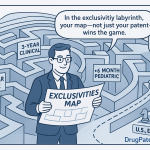
Method of use patents protect specific therapeutic applications of a known compound. They are the workhorses of lifecycle management because they can be filed long after the composition of matter patent and can generate new Orange Book listings, new regulatory exclusivities (3-year NCE for new clinical investigation), and new rounds of Para IV litigation.
Pfizer’s sildenafil (Viagra) is the canonical example. The compound patent was filed in 1991 and initially covered treatment of cardiovascular conditions. The erectile dysfunction indication was discovered during clinical development. Pfizer secured a method of use patent specifically for the treatment of erectile dysfunction, which became the product’s primary commercial application. That method of use patent generated billions in revenue from an indication not contemplated in the original composition of matter filing.
Method of use patents are also the primary tool for drug repurposing strategies. A company that discovers a new indication for a product already on the market can obtain a method of use patent, list it in the Orange Book, and force any ANDA filer for that indication to certify under Paragraph IV, triggering a fresh round of litigation and a new 30-month stay. Even if the composition of matter patent has expired, a valid method of use patent can independently block generic competition for that specific indication.
IP Valuation for Method of Use Patents. Method of use patents command lower individual valuations than composition of matter patents but are high-value because of their multiplicity. A drug with six listed method of use patents, each covering a different indication, creates six separate litigation triggers and six potential 30-month stays. The cumulative deterrent value is significant. Analysts valuing a product with multiple method of use listings should model each patent as a separate probabilistic LOE scenario and sum the probability-weighted revenue contributions.
Formulation and Delivery System Patents: The Extended-Release Defense
Formulation patents cover the specific composition of the final drug product, including excipients, coatings, particle size distributions, and the physical characteristics of the dosage form. Delivery system patents protect novel mechanisms of controlled release, targeted delivery, or bioavailability enhancement.
The strategic purpose of formulation patents is twofold: clinical differentiation and market exclusivity extension. An extended-release formulation that reduces dosing frequency from three times daily to once daily has genuine clinical value (improved adherence, reduced peak plasma concentration, lower adverse event rates in some cases). It also creates a new, separately patented product that can be listed in the Orange Book and used to trigger fresh litigation against any generic seeking to replicate the improved formulation.
AstraZeneca’s esomeprazole (Nexium) strategy is illustrative. When the composition of matter patent on omeprazole (Prilosec) approached expiration, AstraZeneca developed and patented esomeprazole, the S-enantiomer of omeprazole. The formulation included a specific magnesium salt and an enteric-coated pellet system. These formulation features were patented separately and listed in the Orange Book, creating a new product cycle after the original patent expired. Whether the clinical improvement over omeprazole justified a new product is the subject of ongoing debate, but the commercial logic was precise.
Technology Roadmap: Formulation Patent Sequencing. A well-executed formulation patent strategy follows a defined timeline:
Year 1-3 post-launch: File patents on the primary commercial formulation (specific salt form, particle size range, excipient combination).
Year 3-5 post-launch: Begin clinical studies on next-generation formulation (extended-release, combination product, novel delivery system). File provisional applications.
Year 5-7 post-launch: Obtain regulatory approval for improved formulation. List new patents in Orange Book. Seek 3-year new clinical investigation exclusivity.
Year 7-10 post-launch: Transition commercial and promotional emphasis to improved formulation. Phase out original formulation or maintain it at a price that makes the generic less attractive.
Year 10+: If feasible, seek FDA approval for a pediatric formulation. Liquid oral formulations for pediatric populations are notoriously difficult to develop and can command 6-month pediatric exclusivity attached to the new formulation’s patents.
IP Valuation for Formulation Patents. Individual formulation patents are typically valued using a market exclusivity premium method: the difference between expected revenue under exclusivity versus expected revenue under generic competition, discounted for litigation risk. For a blockbuster with $2 billion in annual U.S. sales and a formulation patent that adds 3 years of exclusivity against the next-generation product, the net present value of that formulation patent at a 10% discount rate is approximately $3-4 billion, minus litigation risk discount (typically 20-40% for secondary patents facing Para IV challenge).
Process Patents: Protecting the Manufacturing Edge
Process patents claim the method of producing a drug, not the drug itself. Their strategic role is primarily cost-based deterrence: a generic manufacturer may be able to synthesize the same API after the composition of matter patent expires, but if the most efficient synthesis route is protected, the competitor must develop an alternative route that may be less efficient, more expensive, or technically difficult. This creates a cost disadvantage that can, in some markets, make generic entry unprofitable.
Process patents are not listable in the Orange Book. They cannot trigger a 30-month stay under Hatch-Waxman. Their litigation value in the U.S. is therefore limited compared to composition of matter and formulation patents. However, in certain API manufacturing contexts, particularly for complex biologics or for drugs where chiral synthesis is involved, process patents carry significant strategic weight. They can be asserted in standard district court infringement proceedings and can support injunctions against imports under 35 U.S.C. § 271(g).
In jurisdictions without composition of matter protection (historically, some developing countries), process patents were the primary form of protection available to innovators. India’s 2005 patent law amendments changed this, providing full product patent protection for pharmaceutical compounds. But the legacy of process patent strategy in global IP planning remains relevant for manufacturing-based competitive defense.
IP Valuation for Process Patents. Process patents are most accurately valued using the cost approach: what would it cost a competitor to develop and validate an alternative manufacturing route? For a small molecule with a relatively straightforward synthesis, that cost might be $5-20 million, representing the upper bound of a process patent’s deterrent value. For a complex multi-step synthesis or a biologics manufacturing process with novel cell culture parameters, the replacement cost can run into the hundreds of millions, and the process patent’s value scales accordingly.
Polymorph Patents: The Crystalline Wildcard
Polymorph patents protect specific crystalline forms of an API. Most organic compounds can exist in multiple solid-state forms, each with distinct melting points, solubility profiles, and stability characteristics. The specific polymorph used in a commercial drug product affects its bioavailability, shelf life, and manufacturability. Discovering and patenting all commercially viable polymorphs of a molecule is a standard tactic in pharmaceutical IP strategy.
The legal status of polymorph patents is contested globally. In the U.S., a novel polymorph with unexpected therapeutic properties can be patented. In India, Section 3(d) of the Patents Act explicitly makes new polymorphs of known substances unpatentable unless they demonstrate enhanced therapeutic efficacy. This divergence makes polymorph patent strategy a jurisdiction-specific calculation.
For innovators, a comprehensive polymorph screening program should begin during Phase II clinical development, identifying all stable crystalline forms and filing patent applications on those with the best pharmaceutical properties. This creates a defensive ring around the commercial form and forces a generic developer to either use a less optimal form or challenge the polymorph patent.
Key Takeaways: Building Blocks
Composition of matter patents represent 60-75% of a product’s IP asset value and are the primary litigation target.
Method of use patents can be filed post-approval and create independent Orange Book listings and fresh Para IV litigation triggers for each indication.
Formulation patent sequencing requires a 10-year roadmap starting at launch, not at patent expiration.
Process patents provide manufacturing-cost deterrence rather than market exclusivity, and are not Orange Book listable.
Polymorph patent strategy must be tailored to jurisdiction. India’s Section 3(d) renders most polymorph patents unenforceable there.
IV. The U.S. Regulatory-Patent Interface
Hatch-Waxman: The Statute That Made Generics and Brand Fortresses Simultaneously
The Drug Price Competition and Patent Term Restoration Act of 1984, the Hatch-Waxman Act, is the foundational document of modern pharmaceutical patent strategy. It accomplished two things at once: it created the Abbreviated New Drug Application (ANDA) pathway that built the U.S. generic industry, and it created the Orange Book listing system, the 30-month stay, and the Paragraph IV challenge mechanism that gave innovators a structured way to defend their portfolios.
The ANDA pathway allows a generic manufacturer to gain FDA approval by demonstrating bioequivalence to an approved drug, without repeating the full clinical trial program. This dramatically lowered the cost of generic drug development and created the $300+ billion U.S. generic industry. But the trade-off was the certification system: every ANDA filer must address each patent listed in the Orange Book by certifying that the patent is expired (Paragraph I), has not been submitted (Paragraph II), will not expire before the proposed ANDA approval date (Paragraph III), or is invalid, unenforceable, or not infringed by the proposed product (Paragraph IV).
The Paragraph IV certification is the mechanism that drives most pharmaceutical patent litigation. It is defined by statute as an artificial act of infringement, giving the innovator standing to sue before any infringing product has been sold. Precisely because it is framed as infringement, the innovator can seek the 30-month stay, blocking FDA from granting final approval while litigation proceeds.
The 180-day first-filer exclusivity incentivizes this challenge. The first ANDA applicant to file a complete application with a Paragraph IV certification wins a 180-day period during which FDA cannot approve any subsequent ANDA for the same drug. That exclusivity is enormously valuable for the generic challenger, often worth hundreds of millions of dollars in a therapeutic area with limited competition. The incentive to challenge, and to challenge early, is built directly into the statute.
The Orange Book: Listing Strategy as Litigation Positioning
The Orange Book is more accurately described as a strategic tool than a regulatory database. An innovator’s decision about which patents to list, and in what order, shapes the litigation landscape for every potential generic challenger.
Only three categories of patents qualify for Orange Book listing: drug substance patents (covering the API itself), drug product patents (covering the formulation or composition of the final dosage form), and method of use patents for approved indications. Process patents, metabolite patents, intermediate patents, and packaging patents are explicitly excluded.
The key strategic implication is that listing a patent forces every ANDA filer to certify against it and, if they choose Paragraph IV, triggers potential 30-month stay protection. A drug with 12 Orange Book-listed patents creates 12 potential litigation triggers. A drug with 2 listed patents creates 2. The number of listed patents directly determines the legal surface area available for defense and, by extension, the deterrent cost imposed on would-be challengers.
However, incorrect or improper Orange Book listings carry risk. The FDA Reauthorization Act of 2022 created a process for generic applicants to challenge Orange Book listings they believe are improper. The FTC has also signaled heightened scrutiny of listings for combination products, where device components are sometimes listed in a manner that stretches the statutory boundaries. IP counsel should conduct annual Orange Book listing audits to confirm that all listed patents remain within the statutory categories and that any delisting obligations are satisfied promptly.
Patent Term Extension: Calculations, Caps, and Strategy
Patent Term Extension (PTE) compensates innovators for the time a patent’s commercial value was consumed by the FDA’s regulatory review process. The rules are precise and the stakes are high. A single PTE on a blockbuster drug can extend exclusivity for up to 5 years, representing billions in protected revenue.
Eligibility requirements are strict: only one patent per drug product can receive a PTE; the application must be submitted within 60 days of FDA approval; and the approval must be the first permitted commercial marketing of the product. The calculation methodology divides the regulatory review period into two components. The testing period covers time from the first IND (Investigational New Drug) submission to the NDA filing, but only half of this period counts toward the extension. The regulatory review period covers time from NDA submission to approval, counting fully.
The statutory caps impose a 5-year maximum extension and a 14-year maximum total remaining patent term from the approval date. These caps are critical planning parameters. A drug approved in year 15 of its composition of matter patent (with 5 years remaining) qualifies for a full 5-year PTE, extending exclusivity to 10 years post-approval. A drug approved in year 8 (with 12 years remaining) faces the 14-year post-approval cap, meaning the maximum effective PTE is 2 years.
The choice of which patent to extend is a strategic decision. The default is to extend the composition of matter patent, as it provides the broadest protection. But if the composition of matter patent’s remaining term already exceeds the 14-year post-approval cap, extending a narrower formulation patent may be more beneficial. IP counsel should model PTE scenarios for multiple patents beginning at the IND stage, so the optimal extension candidate is identified before the 60-day filing window opens.
Regulatory Exclusivities: The Backstop Against Litigation Risk
Regulatory exclusivities differ from patents in a critical way: they are not subject to validity challenges. A Para IV challenger can attack a patent at the PTAB or in district court, but they cannot challenge an NCE exclusivity or an orphan drug designation in those venues. These statutory protections run their full term regardless of patent litigation outcomes.
The five-year NCE exclusivity is granted to any drug containing an active moiety never before approved by the FDA. It prevents FDA from accepting an ANDA for four years and from approving one for five years. Combined with a 30-month stay, an NCE drug can realistically secure 6.5 years of market exclusivity even if its core patent is invalidated the day after approval.
The three-year new clinical investigation exclusivity applies to supplemental applications supported by new clinical studies. It is the mechanism by which a company can extend exclusivity for a new dosage form, a new indication, or a new combination product. It is narrower than NCE exclusivity, blocking only the specific change covered by the new clinical data, but it can be stacked with patent protection and used repeatedly across a product’s lifecycle.
Orphan drug exclusivity (7 years) is the most powerful single exclusivity in the regulatory toolkit. It attaches to the specific orphan disease indication and prevents any ‘same drug for the same indication’ approval for 7 years. For rare disease drugs with limited biosimilar competition pressure, this creates one of the most durable market protections available. Companies building rare disease franchises should evaluate orphan designation at the earliest possible stage, ideally before Phase II completion.
Pediatric exclusivity (6 months) is technically not a standalone period. It extends every other patent and exclusivity on the product by 6 months when FDA-requested pediatric studies are completed. For a drug with $3 billion in annual U.S. revenue, a 6-month pediatric extension is worth approximately $1.5 billion in protected sales. The cost of the required pediatric studies is typically $10-50 million. The ROI is self-evident.
Investment Strategy: Regulatory Exclusivities
Analysts building LOE models should always identify and separately track each exclusivity type by product, as they may expire at different times and block different categories of competition. A biologic with 12-year market exclusivity, 7-year orphan exclusivity, and a pediatric extension may have a composite exclusivity horizon that extends well beyond the nominal composition of matter patent expiration. The critical questions are: which exclusivity expires first, which generic or biosimilar applicants have already filed, and what is the 30-month stay status? Platforms like DrugPatentWatch integrate all of these data points into LOE probability timelines.
The BPCIA and the Patent Dance: Biologics Strategy
The Biologics Price Competition and Innovation Act (BPCIA) of 2009 created the abbreviated biologics license application (aBLA) pathway for biosimilars, with its own distinct patent exclusivity framework. The 12-year market exclusivity period for the reference biologic is the longest statutory market protection available to any drug category in the U.S.
The 12-year clock runs from the reference product’s initial approval date, not from any patent’s filing date. It is entirely independent of patent status. A biosimilar aBLA cannot be submitted until 4 years post-approval, and FDA cannot approve it until 12 years post-approval. This provides a guaranteed commercial window that no validity challenge can shorten.
The patent dance is the structured, multi-step information exchange process through which the biosimilar applicant and the reference product sponsor identify and litigate relevant patents. The biosimilar applicant provides its aBLA to the reference product sponsor. The reference product sponsor responds with a list of patents it contends could be infringed. The biosimilar applicant provides claim charts either admitting infringement or articulating invalidity and non-infringement arguments. Both parties negotiate a list of patents to litigate in a ‘first-wave’ lawsuit. Patents not included in the first wave can be litigated in a ‘second wave’ upon the biosimilar’s 180-day pre-commercial notice.
The Supreme Court’s ruling in Sandoz v. Amgen (2017) clarified that participation in the patent dance is optional. A biosimilar applicant can simply decline, at the cost of potentially broader and less predictable litigation. The strategic calculus depends on the specific patent landscape. If the reference product has a dense thicket with dozens of potentially relevant patents, participating in the dance allows the biosimilar applicant to define the field of battle and narrow the patents at issue. If the landscape is relatively clear, opting out may allow a faster path to market.
IP Valuation: BPCIA Assets. Reference product biologics have fundamentally different IP valuation profiles than small molecules. The 12-year market exclusivity reduces the weight of individual patent validity considerably. Even if all Orange Book-listed patents were simultaneously invalidated, the 12-year exclusivity runs independently. Analysts valuing biologic reference products should model the 12-year exclusivity floor as the baseline revenue guarantee, with patent protection representing additional premium above that floor.
Key Takeaways: U.S. Regulatory-Patent Interface
Paragraph IV certification is legally defined as patent infringement, allowing litigation before any generic product reaches market.
Orange Book listing strategy directly determines litigation exposure. Every listed patent is a potential 30-month stay trigger and a potential litigation front.
PTE calculations must begin at the IND stage. The 60-day filing window post-approval leaves no time for last-minute analysis.
Regulatory exclusivities are statutory backstops immune to validity challenge. Structuring development programs to qualify for NCE, orphan, and pediatric exclusivity is non-negotiable IP strategy.
The BPCIA’s 12-year biologic market exclusivity runs independently of patent validity. Patent dance participation is optional and should be decided based on the specific patent landscape.
V. Advanced Lifecycle Management: The Evergreening Technology Roadmap
Defining Evergreening: Between Legitimate Innovation and Market Manipulation
Evergreening is the practice of obtaining secondary patents on incremental modifications of an existing drug, with the primary effect of extending commercial exclusivity beyond the expiration of the original composition of matter patent. The term is pejorative, and deliberately so. Critics use it to describe a practice they argue prioritizes defensive patenting over genuine R&D. Defenders argue that the incremental innovations covered by these patents deliver real clinical value.
Both are partially right. An extended-release formulation that genuinely improves adherence and reduces adverse events is a legitimate clinical improvement worth patenting. An extended-release formulation developed primarily to create a new Orange Book listing and block generic entry, with negligible clinical differentiation, is the practice critics target. The legal system does not distinguish between these cases: both can be validly patented and both can trigger 30-month stays.
What matters strategically is that evergreening, in both its legitimate and aggressive forms, is legally permissible in the U.S. The AbbVie HUMIRA litigation established that accumulating a large number of validly obtained secondary patents does not itself constitute an antitrust violation. The strategic question is not whether to pursue secondary patents but how to build a secondary patent program that is defensible on validity grounds, capable of generating Orange Book listings, and capable of sustaining 30-month stay protection.
The Evergreening Technology Roadmap: A Stage-Gate Framework
A rigorous evergreening program follows a defined technology roadmap keyed to the drug’s lifecycle stages. The following framework applies to a small-molecule brand drug with initial FDA approval based on an immediate-release formulation.
Stage 1: Launch Year to Year 3 (Foundation Building)
File patents on the specific commercial salt form (if not covered by composition of matter filing), the specific polymorphic form used in the commercial product, the excipient composition of the approved formulation, the specific particle size range affecting dissolution and bioavailability, and any proprietary coating or granulation technology used in manufacture. All of these should be Orange Book-listed if they fall within the drug product or drug substance categories. Begin post-marketing clinical studies for new indications. File provisional applications on any formulation improvements developed during the early post-launch period.
Stage 2: Year 3 to Year 6 (Formulation Transition)
Execute controlled-release development program. The technical objective is to develop a formulation with a meaningfully different pharmacokinetic profile, specifically a reduced peak-to-trough ratio, extended duration of action, or improved tolerability at equivalent therapeutic doses. Conduct a head-to-head Phase III trial against the immediate-release formulation, generating data sufficient to support a clinical differentiation claim and a 3-year new clinical investigation exclusivity request. File patents covering the controlled-release mechanism, the specific polymer matrix or membrane system, the drug release kinetics specification, and the new dosage strength. List all qualifying patents in the Orange Book.
Stage 3: Year 6 to Year 10 (Franchise Transition)
Seek FDA approval for the controlled-release formulation under a supplemental NDA. Obtain 3-year new clinical investigation exclusivity. Transition commercial effort toward the controlled-release product. Evaluate combination product opportunities: is there a rational co-therapy for the primary indication? If so, a fixed-dose combination product creates a new NDA with its own Orange Book listings and its own exclusivity period. File pediatric development plan with FDA. Execute the pediatric studies required to qualify for 6-month pediatric exclusivity. This extends all existing patents and exclusivities on the controlled-release product by 6 months.
Stage 4: Year 10 to Year 14 (Post-Composition of Matter Patent Defense)
At this stage, the original composition of matter patent has expired or is in its terminal years. The strategy shifts to defending the controlled-release and combination product franchises through their own independent patent and exclusivity positions. Continue filing method of use patents for any new indications approved or in late-stage development. Monitor ANDA filings for the controlled-release formulation and be prepared to initiate Para IV litigation promptly.
Stage 5: Year 14+ (Authorized Generic and Settlement Strategy)
In the terminal phase of market exclusivity, consider launching an authorized generic (AG), a generic version of the brand product licensed and marketed by the innovator company itself. An authorized generic competes directly with the first-filer generic, diluting the 180-day exclusivity that would otherwise allow the generic to capture premium pricing during the exclusivity period. This is controversial but entirely legal. The AG strategy also provides a revenue stream post-LOE that preserves some commercial value while the brand franchise is maintained for patients who prefer it.
Key Takeaways: Lifecycle Management
Evergreening is legally permissible under current U.S. law. The strategic imperative is to ensure each secondary patent is valid and defensible on its individual merits.
A stage-gate evergreening roadmap starting at launch, not at composition of matter patent expiration, is the standard of sophisticated IP management.
The authorized generic strategy in the terminal exclusivity phase can significantly dilute first-filer generic pricing power and recover additional post-LOE revenue.
The combination product pathway (fixed-dose combinations) creates entirely new NDA filings, new Orange Book listings, and new regulatory exclusivity periods.
Investment Strategy: LCM and Evergreening
When modeling a brand drug’s revenue trajectory, analysts should not assume LOE occurs at composition of matter patent expiration. They should map every Orange Book-listed patent’s expiration date, every pending Para IV certification, every pending IPR, every active regulatory exclusivity, and any pending authorized generic launch date. The aggregate picture will often show that effective exclusivity extends 3-7 years beyond the nominal composition of matter patent expiration, depending on how aggressively the company has executed its LCM strategy.
VI. AbbVie’s HUMIRA: Full IP Valuation and Thicket Deconstruction
The HUMIRA Fortress: Building the World’s Most Valuable Patent Portfolio
HUMIRA (adalimumab) is the reference case for pharmaceutical patent strategy, for both admiring and critical analysis. Its patent portfolio is the most extensively documented in the industry, its commercial outcomes are publicly reported, and its antitrust litigation reached the federal appellate level, producing a precedent that reshaped the legal landscape.
AbbVie received FDA approval for adalimumab in January 2002 for rheumatoid arthritis. The primary patent on the antibody was set to expire in 2016. From 2002 through 2023, AbbVie built a portfolio that ultimately exceeded 130 granted U.S. patents and over 247 total U.S. patent applications. Of those applications, 89% were filed after the drug was already on the market. The company’s own projections in patent filings referenced protection extending through 2040, a full 38 years beyond the original approval.
The portfolio was not a random accumulation. It was architecturally organized into several distinct layers, each serving a specific defensive purpose.
Layer 1: Core Antibody Patents. The original composition of matter patents covering the adalimumab antibody itself, its specific amino acid sequences, and its antigen-binding characteristics. These were the foundation of the portfolio and the primary target of biosimilar patent dance litigation.
Layer 2: Formulation Patents. Patents covering the specific citrate-free formulation launched in 2018 as Humira Citrate-Free. This formulation reduced injection-site pain, a clinically meaningful improvement. The patents on this formulation were strategically critical because they created a new, differentiated product that biosimilars would need to match. Any biosimilar that used the older citrate-containing formulation was clinically differentiated from the current commercial standard of care. AbbVie invested in physician education to emphasize this difference.
Layer 3: Manufacturing Process Patents. Patents covering specific aspects of the monoclonal antibody manufacturing process, including cell culture conditions, purification steps, and quality control specifications. These process patents are not Orange Book listable for biologic products (the Orange Book is for small-molecule NDAs; biologics use a separate reference product listing system) but can be asserted in BPCIA litigation.
Layer 4: Method of Use Patents. Patents covering adalimumab’s additional approved indications beyond rheumatoid arthritis, including plaque psoriasis, Crohn’s disease, ulcerative colitis, ankylosing spondylitis, and juvenile idiopathic arthritis. Each indication generated its own method of use patent, each subject to independent litigation.
Layer 5: Dosing Regimen Patents. Patents covering specific dosing schedules, dose titration methods, and combination therapy protocols. These are highly litigated in the biosimilar context because biosimilar labels typically match the reference product’s approved dosing, raising infringement risk for any dosing regimen patent.
The Patent Dance in Practice: AbbVie’s Biosimilar Litigation Strategy
When Boehringer Ingelheim, Amgen, Samsung Bioepis, Sandoz, Pfizer, Mylan, and others filed aBLAs for adalimumab biosimilars, AbbVie did not engage in selective litigation. It initiated patent dance proceedings and then, in some cases, asserted more than 100 patents against a single biosimilar applicant in the first-wave litigation. The financial and legal burden imposed by defending against triple-digit patent assertions in parallel proceedings was, by design, designed to produce settlements rather than verdicts.
Every biosimilar challenger settled. No case went to a final merits decision on the HUMIRA patents. The settlements uniformly provided for delayed U.S. market entry, with biosimilars launching in the U.S. in 2023, seven years after the primary patent expired in 2016. Meanwhile, biosimilars had been available in Europe since 2018, five years earlier, because the European patent landscape for adalimumab was considerably thinner.
The U.S. price differential during the exclusivity extension period was dramatic. HUMIRA was priced at approximately $77,000 per patient annually in the U.S. versus $16,000 in Germany during the same period. The additional years of U.S. exclusivity generated an estimated $50-80 billion in cumulative U.S. revenue that would not have been achievable had biosimilars launched in 2016.
The Antitrust Precedent: Seventh Circuit’s Ruling and Its Implications
Plaintiffs in consolidated antitrust litigation argued that AbbVie’s accumulation of 130+ patents, asserting them in a way designed to deter entry regardless of individual patent merits, constituted an illegal monopoly under Sherman Act Section 2. The U.S. Court of Appeals for the Seventh Circuit rejected this argument in 2022, holding that legitimately obtained patents, even in large numbers, do not constitute antitrust liability absent fraud on the USPTO or sham litigation.
The critical limiting principle in the ruling was the phrase “absent fraud or sham litigation.” The court left open the possibility that a patent asserted without any genuine belief in its validity or infringement could constitute sham litigation subject to antitrust liability. AbbVie prevailed because its patents were validly obtained through proper USPTO process, and its litigation, even if primarily motivated by delay rather than merit, did not rise to the level of sham.
The practical implication for innovators is that the HUMIRA strategy, characterized by post-approval patent accumulation and volume-based litigation deterrence, is legally defensible under current antitrust doctrine. The limitation is the quality of the underlying patents. A thicket built on patents that are obviously invalid or were fraudulently obtained carries residual antitrust risk. One built on patents that meet the USPTO’s standards, even if contested, does not.
IP Valuation: The HUMIRA Portfolio
The HUMIRA patent portfolio represents arguably the highest-value pharmaceutical IP position ever assembled. Applying income-approach valuation methodology to the portfolio’s effect on U.S. revenues:
The composition of matter patent extension through litigation settlements (2016-2023) produced approximately $56 billion in additional U.S. revenues beyond what would have been achievable under competitive conditions. At peak biologic royalty rates (12-15%), the licensing value of the portfolio to a third party would have been approximately $6-8 billion annually during the peak exclusivity period. The full portfolio, valued as a going-concern IP asset in 2019 (at peak revenue), likely had a discounted cash flow value of $35-50 billion, reflecting the strength of the settlement-obtained exclusivity extension through 2023 and the uncertainty of post-2023 biologic interchangeability dynamics.
By 2025, eight biosimilars have entered the U.S. adalimumab market. The revenue trajectory for the HUMIRA reference product follows the typical biologic pattern: slower erosion than small-molecule generics, due to physician prescribing inertia, payer formulary dynamics, and the complexity of biosimilar interchangeability designations. Analysts should model adalimumab reference product revenues using a 40-60% market share retention in year 2-3 post-biosimilar entry, versus the 20-30% typical for small-molecule brands. The interchangeability designation is the critical variable: biosimilars without FDA interchangeability designation (the biologic equivalent of a ‘generic substitution permitted’ label) depend on active prescriber switching rather than pharmacist-level substitution.
VII. The Global Chessboard: Comparative IP Strategies
European Union: SPCs, 8+2+1, and the Unified Patent Court
The European Union is simultaneously one of the most valuable pharmaceutical markets and one of the most complex IP environments. Three systems operate in parallel: national patent protection, European Patent Office (EPO) patents (which are actually bundles of national patents requiring individual validation in each member state), and the new Unified Patent Court (UPC) system that launched in June 2023.
Supplementary Protection Certificates (SPCs) are the EU equivalent of U.S. Patent Term Extension. An SPC can extend the effective term of a medicinal product’s patent by up to five years, with an additional 6-month pediatric extension available, for a maximum SPC term of 5.5 years. The calculation method is different from U.S. PTE: the SPC term equals the period between the patent’s filing date and the date of first EU marketing authorization, minus five years. The resulting SPC duration cannot exceed five years. The SPC is granted by each individual EU member state and takes effect when the underlying patent expires.
The regulatory data protection framework in the EU uses what is commonly called the ‘8+2+1’ formula. Eight years of data exclusivity prevent a generic or biosimilar applicant from referencing the innovator’s preclinical and clinical data. Two additional years of market protection prevent launch even after generic approval. A one-year extension is available if the innovator obtains a new therapeutic indication with significant clinical benefit during the first eight years. The total potential protection is 11 years. This framework is independent of patent status and, like U.S. regulatory exclusivities, is not subject to validity challenges through the EPO or national courts.
The Unified Patent Court creates a new strategic dimension. The UPC jurisdiction covers most EU member states (22 as of 2025) with a single filing and a single litigation proceeding. The UPC can grant pan-European injunctions, providing enormous leverage for innovators in infringement cases. But the corresponding risk is central revocation: a single successful validity challenge at the UPC can invalidate a patent across all participating member states simultaneously. This risk profile is fundamentally different from the prior national court system, where an invalidation in Germany left protection intact in France, Italy, and elsewhere.
The pharmaceutical industry’s response to UPC risk has been conservative. The large majority of major pharmaceutical companies chose to ‘opt out’ their highest-value European patents from UPC jurisdiction during the seven-year transition period, retaining national court litigation as the venue for their most valuable assets. The opt-out can be withdrawn later. The strategic rationale is to preserve the geographic fragmentation of invalidity risk: if you believe your composition of matter patent is strong and any challenge will fail on the merits, the UPC’s efficiency and pan-European scope favor the innovator. If you have any doubt about a secondary patent’s validity, national court fragmentation limits downside.
IP Valuation: EU SPC as a Separate Asset Class. Each country’s SPC is a distinct legal instrument and a separately valued asset. For a blockbuster drug with strong EU sales, the five-year SPC in Germany alone (Europe’s largest pharmaceutical market) can be worth €1-3 billion in protected revenue, before discounting for litigation risk. Analysts valuing a European pharma asset should model each country’s SPC expiration date and the SPC litigation history in that jurisdiction.
China: Patent Linkage, Pro-Enforcement Courts, and PTE
China’s transformation into a pro-patent-enforcement jurisdiction is now complete. The specialized IP courts in Beijing, Shanghai, and Guangzhou consistently rule in favor of patent holders at rates that rival or exceed U.S. District Court outcomes. Foreign plaintiffs win approximately 80% of civil IP cases. Damage awards, once negligible, now reach into the hundreds of millions of yuan. The average litigation timeline in Chinese IP courts runs 12-18 months, faster than most U.S. district courts.
China’s patent linkage system, fully operational since 2021, mirrors the Hatch-Waxman framework in key respects. Pharmaceutical companies with approved drugs can list patents on a national drug administration platform. Generic applicants must provide a Type IV declaration (analogous to a Paragraph IV certification) when filing for approval, certifying that the listed patent is invalid, unenforceable, or not infringed. The patent holder has 45 days to initiate a lawsuit or an administrative action at the CNIPA. Upon timely filing, a 9-month stay of generic approval activates automatically.
The key differences from U.S. Hatch-Waxman are the 9-month stay duration (versus 30 months in the U.S.) and the 12-month first-challenger exclusivity (versus 180 days in the U.S., which paradoxically equates to roughly the same duration but provides a longer revenue-per-day advantage to the U.S. first filer). China’s patent linkage system also covers biosimilars, unlike Hatch-Waxman, which was designed for small molecules.
China’s Patent Term Compensation (PTC) system grants up to 5 years of additional patent term to compensate for regulatory review delays, with a cap of 14 years total post-approval term, precisely mirroring U.S. PTE structure. For innovators with significant Chinese market positions, this creates a framework where both the patent and the regulatory exclusivity systems are reasonably comparable to the U.S. framework, making China one of the most commercially predictable jurisdictions for IP planning.
The remaining challenge in China is evidence collection. Unlike the U.S. federal discovery system, Chinese civil litigation has no equivalent of pre-trial document production. Patent holders must independently gather evidence of infringement before filing, typically through notarized purchases, inspection of public records, and specialized investigative procedures. This limits the ability to investigate manufacturing process infringement, which is virtually invisible without factory access.
India: Section 3(d), Compulsory Licensing, and the Access Imperative
India’s pharmaceutical IP system is deliberately constructed to maximize domestic access to affordable medicines. This is not a bug in the system from India’s policy perspective; it is the stated objective of India’s 2005 patent law amendments, which were negotiated under significant public health pressure following the HIV/AIDS generic drug access campaigns of the early 2000s.
Section 3(d) of the Patents Act is the primary mechanism through which India limits evergreening. It renders unpatentable ‘the mere discovery of a new form of a known substance which does not result in the enhancement of the known efficacy of that substance.’ The Supreme Court of India, in Novartis AG v. Union of India (2013), definitively interpreted ‘efficacy’ to mean therapeutic efficacy, not just pharmacological properties. An improvement in bioavailability, stability, or solubility that does not translate into demonstrated clinical improvement in patients does not overcome a Section 3(d) rejection.
The practical effect is profound: approximately 50-70% of the secondary patents that would be granted in the U.S. or EU are rejected in India under Section 3(d). This makes India’s effective patent protection substantially shorter for most branded drugs and explains why Indian generic manufacturers can produce copies of products still under patent protection in Western markets.
Compulsory licensing adds a further layer of risk for innovators. Under Section 84 of the Patents Act, any person may apply to the Controller of Patents for a compulsory license after three years from a patent’s grant if: the patented invention is not available to the public at a reasonably affordable price, the public’s requirements have not been reasonably satisfied, or the invention is not worked in India. The single granted pharmaceutical compulsory license to date (Natco Pharma for sorafenib/Nexavar in 2012) was economically transformative for that specific product but has not produced a cascade of subsequent grants. The provisions remain a credible threat that shapes how innovators price and distribute products in India.
Strategy for India. Innovators operating in India should pursue composition of matter patents on novel molecular entities (where Section 3(d) is less of a barrier because the compound itself is genuinely new) and accept the limitations on secondary patents. For products with significant potential volume in India, early voluntary licensing to Indian generic manufacturers can generate royalty revenue while securing distribution access. For orphan or rare disease products where access genuinely requires affordability, pre-emptive tiered pricing strategies reduce the political pressure that compulsory licensing applications typically exploit.
The Patent Cooperation Treaty: Optimizing the Global Filing Strategy
The PCT system, administered by WIPO with over 150 member states, provides a procedural mechanism for initiating patent protection globally through a single filing. The applicant files one international application, which undergoes a unified international search. The PCT does not grant a world patent; no such instrument exists. It provides a standardized entry point that extends the national phase entry deadline to 30-31 months from the earliest priority date.
This 30-month window is the PCT’s primary strategic value. It allows a company to file in its home jurisdiction, obtain the international search report (which provides early validity feedback), gather additional clinical data, and make informed national phase entry decisions before incurring the full costs of translation, local counsel, and national filing fees in 30+ countries. For a drug candidate with uncertain commercial potential, this delayed commitment can save millions in premature filing costs in markets that ultimately turn out to be unimportant.
The national phase entry decisions should be driven by a commercial opportunity model that weights each market’s revenue potential, legal system quality, enforcement landscape, and generic competition risk. The standard filing strategy for a major pharmaceutical product includes the U.S., EU (through EPO), Japan, China, India, Brazil, South Korea, and Canada as the core jurisdictions, with a secondary tier of Australia, Mexico, Gulf Cooperation Council states, and Southeast Asian markets depending on the therapeutic area.
Key Takeaways: Global Strategy
EU SPCs are independently valued assets, with per-country SPC terms directly imputable to commercial revenue in each market.
China has transitioned to a pro-enforcement environment with fast, plaintiff-friendly IP courts. Foreign innovators should treat China as a top-tier enforcement venue.
India’s Section 3(d) blocks most secondary patent applications. Composition of matter patents on genuinely novel NCEs remain the viable strategy in India.
The PCT’s 30-month national phase window is a cost-management and strategic optionality tool, not just a procedural formality.
Investment Strategy: Geographic Arbitrage
Generic challengers routinely use EPO opposition proceedings to generate prior art records and claim construction rulings that can be cited as persuasive authority in U.S. district court litigation. An EPO central opposition that cancels a European patent on validity grounds, while not binding in the U.S., creates a publicly available technical record that a U.S. IPR petitioner can use to support an invalidity argument at the PTAB. Conversely, a successful U.S. patent invalidity ruling at the PTAB creates a public record with persuasive authority in some Asian jurisdictions. Sophisticated challengers sequence their global litigation strategy to build cumulative invalidity records across jurisdictions.
VIII. Litigation as Commercial Strategy
The Paragraph IV Gauntlet: An Innovator’s Response Playbook
Receipt of a Paragraph IV notice letter activates a 45-day decision window. Filing an infringement suit within that window triggers the 30-month stay. Missing it forfeits that stay permanently for the challenged patents, with no exception. The decision to file is almost always yes for any significant Orange Book-listed patent. The decision about which patents to assert, in which court, and with which claim construction theory requires careful pre-litigation preparation.
The District of Delaware and the District of New Jersey handle the large majority of ANDA litigation. Delaware is preferred because most pharmaceutical companies are incorporated there, establishing personal jurisdiction without dispute. Both jurisdictions have experienced patent judges familiar with pharmaceutical patent law and Markman hearing procedures. The Federal Circuit, which handles all patent law appeals, has developed a body of doctrine on pharmaceutical claim construction and obviousness that practitioners in these districts know well.
The Markman hearing, where the district court construes disputed patent claim terms, is often the most significant event in ANDA litigation. Claim construction determines the scope of the patent’s protection. A narrow construction may allow the generic’s proposed product to fall outside the claim’s scope, establishing non-infringement. A broad construction may capture the generic’s product but may also render the patent invalid over prior art. The innovator’s pre-litigation claim construction work, which should begin well before the Paragraph IV notice arrives, determines the strategic options available at the Markman stage.
PTAB as a Parallel Front: The IPR Threat and Response
Inter Partes Review at the PTAB is the single most important development in pharmaceutical patent litigation since the Hatch-Waxman Act. Generic and biosimilar challengers have a route to patent invalidity that is faster, cheaper, and procedurally easier than district court litigation.
The institutional rate for bio/pharma IPR petitions runs approximately 61-62%, somewhat lower than the cross-sector average because pharmaceutical patents tend to have more complete prosecution histories that survive prior art challenges. But once instituted, bio/pharma patents face approximately 65.6% rates of claim cancellation at final written decision. The 18-month statutory timeline from petition to final decision is often faster than the 30-month stay period in parallel district court litigation, meaning an IPR decision can issue before the Hatch-Waxman litigation concludes.
The strategic implication for innovators is that filing an ANDA lawsuit no longer simply triggers a 30-month stay. It also initiates a likely IPR petition, and the innovator must defend the challenged patent in two venues simultaneously, under different legal standards. The PTAB applies a ‘preponderance of evidence’ standard for invalidity with no presumption of validity. The district court applies a ‘clear and convincing evidence’ standard with a presumption of validity. A patent that survives district court challenge may still be cancelled at the PTAB.
Innovators can respond to IPR petitions by arguing that institution should be denied due to the parallel district court proceeding (a discretionary denial option under the PTAB’s precedential ‘Fintiv’ framework, recently modified by USPTO Director guidance), by filing detailed patent owner preliminary responses demonstrating the petition’s factual and legal weaknesses, and by seeking to narrow the claims at issue through a motion to amend. Patent owner success rates in IPR are low, but the Fintiv discretionary denial pathway has provided meaningful relief for innovators when the district court case is significantly advanced.
BPCIA Litigation Patterns: What the Data Shows
BPCIA litigation data through 2024 reveals a consistent structural pattern: cases that initially assert more than five patents almost never reach a final decision on the merits. They settle. This is not coincidental. It is the operational signature of the patent thicket strategy at work. The economics of multi-patent BPCIA litigation favor settlement because the litigation costs of defending against 50 or 100 patents, even if each individual patent is weak, are prohibitive for all but the largest biosimilar developers.
The cases that do reach final decisions typically involve two to five patents and produce meaningful precedent. Court decisions on biosimilar patent scope, claim construction for monoclonal antibody patents, and process patent applicability to biologic manufacturing have built a body of law that shapes how new BPCIA cases are litigated.
Biosimilar applicants with strong balance sheets and long-term strategic goals in a therapeutic area have an incentive to litigate rather than settle, because a favorable precedent on a key patent can benefit all subsequent biosimilar entrants, not just the original challenger. Smaller applicants with limited resources will almost always settle, accepting a delayed entry date in exchange for certainty.
Litigation Outcome Data: 2024 Summary
The 2024 Hatch-Waxman litigation data shows innovators prevailing on the merits in approximately 20% of resolved cases, with generic challengers prevailing in only 2% of cases. The remaining 78% of cases settled. This distribution requires careful interpretation. Settlement is not a neutral outcome; most settlements include a negotiated entry date that falls before the challenged patent’s expiration, representing a partial win for the challenger. The 20% innovator win rate in decided cases reflects the fact that the cases most likely to proceed to decision are those where the innovator has a strong position. Cases where the generic has a strong invalidity case are more likely to settle, often on terms favorable to the generic.
For the PTAB, FY24 data shows that across all technology sectors, approximately 68% of patents reaching a final written decision had all claims found unpatentable. The pharmaceutical sector’s institutional rate is lower (61-62%) but the cancellation rate for instituted pharma claims is comparable to the overall rate.
Key Takeaways: Litigation
The 45-day window post-Para IV notice is a hard deadline for triggering the 30-month stay. No exceptions.
IPR at the PTAB operates under a preponderance standard with no presumption of validity, making it structurally favorable to challengers.
BPCIA cases with more than five asserted patents virtually always settle, confirming that thicket volume, not individual patent merit, determines litigation outcomes.
68% of pharma patents that reach PTAB final written decision have all claims cancelled.
IX. Patent Analytics as Offensive Intelligence
Competitive Intelligence Through Patent Monitoring
Patent applications become public 18 months after their priority filing date. For competitive intelligence purposes, this is not a limitation; it is a feature. The 18-month publication lag creates a rolling window into competitors’ R&D pipelines, with specificity that clinical trial registries cannot match. A Phase I clinical trial registration tells you what a competitor is testing. A patent application tells you what specific molecular structures, formulation technologies, and manufacturing approaches they are protecting, often with claim language that reveals their development priorities in more detail than any analyst report.
A systematic patent monitoring program tracks competitor filings by applicant, by therapeutic area, by International Patent Classification (IPC) code, and by claim language. The goal is to identify R&D directions, emerging threats, and strategic priorities before they surface in public-facing communications. Companies that commit resources to a structured patent intelligence function consistently identify competitive threats 18-36 months earlier than companies relying on clinical trial registries and press releases alone.
Patent monitoring also enables early identification of M&A targets. A small biotech filing a dense cluster of patents on a novel mechanism of action in a high-value therapeutic area is a potential acquisition candidate. A large pharma company monitoring that activity can initiate BD discussions while the target is still pre-clinical, before competitive bidding inflates the acquisition price.
Freedom-to-Operate Analysis: Methodology and Willful Infringement Defense
A Freedom-to-Operate (FTO) analysis determines whether a proposed product or technology may infringe any valid, in-force patent held by a third party. It is the most consequential form of patent due diligence a company can conduct. The stakes are not merely commercial: a finding of willful infringement in the U.S. can trigger enhanced damages of up to three times the assessed amount under 35 U.S.C. § 284. A documented, diligent FTO analysis and a resulting opinion of counsel are the primary defenses against a willful infringement finding.
The FTO process has four stages. Scoping defines the product to be cleared (specific API, formulation, dosage form, manufacturing process, indication) and the markets in which it will be commercialized. Searching identifies all patents and patent applications that may be relevant using a combination of keyword, classification, and structural search methodologies. Analysis applies claim mapping to each identified patent: do the patent’s claims, as properly construed, cover the proposed product? Are those claims valid in light of prior art? Are the patents in force in the relevant jurisdictions? Reporting delivers a written, attorney-client privileged opinion that documents the search methodology, the claims analyzed, and the legal conclusions.
FTO analysis should be continuous, not one-time. New patents issue every week. A product that is FTO-clear at Phase II may face new patent obstacles by Phase III if competitors file blocking patents during that period. Large pharmaceutical companies maintain standing FTO monitoring programs that track new patent issuances against a list of active pipeline products on a monthly basis.
Patent Landscape Analysis: Mapping White Space and Technology Inflection Points
Patent landscape analysis is a broad survey of all patent activity in a defined technology space, designed to identify density patterns, technology inflection points, and competitive positioning. Unlike FTO analysis, which is product-specific, landscape analysis is technology-specific and serves strategic rather than legal purposes.
A well-executed landscape analysis answers questions that inform R&D investment allocation: which molecular targets are heavily protected versus open for development? Which formulation technologies are highly contested versus available for licensing? Which companies hold foundational positions in a new modality? Where are the ‘white spaces,’ defined as scientifically promising areas with limited existing patent coverage?
The practical output of a landscape analysis is a visual map of patent density by technology sub-segment, a list of key patent holders, an identification of white-space opportunities, and a competitive intensity score for each sub-segment. This output directly informs the go/no-go decisions for research programs and the prioritization of in-licensing targets.
For institutional investors, patent landscape data provides a due diligence input that goes beyond what standard sell-side coverage provides. A landscape analysis that identifies dense thickets around a company’s lead compound, or reveals that a competitor holds blocking patents on the company’s proposed manufacturing process, is investment-relevant information not typically available in equity research.
Investment Strategy: Patent Analytics
Portfolio managers with exposure to pharmaceutical equities should access integrated IP intelligence platforms that combine patent data, Orange Book listings, ANDA filing data, PTAB petition records, and litigation outcomes. DrugPatentWatch is the reference platform for this integrated view. The key analytical output is a probability-weighted LOE timeline for each holding in the portfolio, updated continuously as new Para IV certifications are filed, PTAB petitions are filed, and litigation milestones are reached.
X. Emerging Frontiers: AI, Cell and Gene Therapy, Digital Therapeutics
AI-Driven Drug Discovery: The Inventorship Crisis
Artificial intelligence is now a productive tool in every phase of drug discovery, from target identification through lead optimization and ADMET prediction. Schrödinger, Insilico Medicine, Recursion Pharmaceuticals, and dozens of others have platforms that can generate novel molecular structures with predicted binding affinities, selectivity profiles, and pharmacokinetic properties. The question is not whether AI can discover drug candidates. It can. The question is who, legally, invented them.
U.S. patent law, and the law of virtually every major jurisdiction, requires that inventors be natural persons. The USPTO’s February 2024 guidance explicitly reaffirmed that AI systems cannot be listed as inventors. The guidance applies the Pannu factors, a legal test originally designed for joint human inventorship, to determine whether a human has made a ‘significant contribution’ to an AI-assisted invention.
The Pannu factors require that a named inventor contribute to the conception of the claimed invention, not merely reduce it to practice. Applying this to AI-assisted discovery: a scientist who designs an AI model specifically to address a defined biological problem, selects and curates the training dataset to optimize for the relevant properties, critically evaluates the AI’s output and identifies which candidates are promising based on domain expertise, and then designs and executes the wet-lab validation experiments that confirm the AI’s predictions, has made a ‘significant contribution’ consistent with the Pannu factors.
A scientist who types a prompt into a general-purpose AI tool, receives a list of candidate molecules, and submits the list to the CRO for testing has likely not made the ‘significant contribution’ that the USPTO guidance requires. The line between these scenarios is not always sharp. The risk of a named inventor later being found not to have met the standard would render the patent unenforceable, a catastrophic outcome for any asset in the portfolio.
The practical response is documentation-centric. Companies using AI in discovery should implement invention disclosure processes that specifically capture human design decisions at every stage of AI tool use: what problem was the AI designed to solve, what data was selected and why, what human judgment was applied in interpreting outputs, and what experimental validation was performed and by whom. This record, maintained contemporaneously, is the foundation of any future inventorship defense.
The evolving obviousness standard is a related concern. As AI tools become more widely available and more capable, inventions routinely produced by AI may eventually be considered obvious to a person of ordinary skill who would have access to the same tools. The European Patent Office has already signaled concern about this trajectory. In therapeutic areas where AI-driven molecular generation is now routine, patent applications will need to demonstrate that the specific compound, or the specific combination of properties achieved, was unexpected and not routine even given AI assistance.
Cell and Gene Therapy IP: Platform Complexity and CRISPR Thickets
Cell and gene therapies are among the most complex IP landscapes in the pharmaceutical sector. The foundational biology draws on naturally occurring genetic material (raising Supreme Court-level patentability concerns under Mayo and Alice/Mayo frameworks), the delivery systems rely on viral vectors that are themselves complex biological inventions, and the manufacturing processes are multi-step, highly variable, and often developed through iterative proprietary optimization that is better protected as trade secret than patent.
CAR-T cell therapies illustrate the complexity. A CAR-T product involves at minimum a vector construct (the engineered gene), a viral delivery system (typically lentiviral or retroviral), cell culture and activation protocols, quality testing specifications, and a manufacturing process that begins with patient-specific lymphocyte apheresis. Each of these elements can be separately patented by separate entities. In practice, the CAR-T space has multiple overlapping foundational patents held by the University of Pennsylvania, St. Jude Children’s Research Hospital, the National Institutes of Health, and various commercial entities. The resulting licensing complexity, and the associated royalty stacking, is a structural cost burden on any new CAR-T developer.
CRISPR gene editing is the most contentious IP landscape in biotechnology. The dispute between the Broad Institute (owned by MIT and Harvard) and the University of California, Berkeley over ownership of fundamental CRISPR-Cas9 technology has generated years of interference proceedings and inter partes review, ultimately being resolved largely in favor of Broad for eukaryotic applications. The practical result is that any developer building a CRISPR-based therapeutic must navigate licensing obligations to at least the Broad Institute and potentially to other foundational patent holders, before even beginning product-specific IP development.
The trade secret strategy for cell and gene therapy manufacturing is particularly important. Manufacturing processes for these products are extraordinarily complex, highly proprietary, and often contain tacit knowledge accumulated through years of iterative optimization that cannot be fully reduced to a patent claim. A patent on a manufacturing process is publicly disclosed and creates freedom-to-operate risk (can a competitor find a non-infringing alternative?). A manufacturing trade secret is never disclosed and, if properly protected, has an indefinite protection period. The trade-off is that trade secrets are vulnerable to reverse engineering and employee departures. For processes where reverse engineering is genuinely difficult (as it often is for complex biologic manufacturing), the trade secret strategy provides superior protection.
Digital Therapeutics: Software Patents and Data Governance
Digital therapeutics (DTx) are FDA-regulated software interventions that treat or manage medical conditions. They generate patent applications that fall at the intersection of software patent law and pharmaceutical regulatory strategy, a particularly thorny space in U.S. law.
Software patent eligibility under 35 U.S.C. § 101, as interpreted through the Supreme Court’s Alice Corp. v. CLS Bank decision (2014), is governed by a two-step test: is the claim directed to an abstract idea? If so, does it contain an ‘inventive concept’ that transforms the abstract idea into patent-eligible subject matter? Applied to DTx, a claim directed simply to ‘delivering therapeutic content via software’ is likely abstract. A claim directed to a specific technical method of delivering personalized therapeutic interventions based on real-time biometric feedback using a novel data processing algorithm is more likely to survive an Alice challenge, but the prosecution history and claim drafting require significant expertise.
The data governance dimension of DTx IP is underappreciated. A successful DTx platform accumulates longitudinal patient behavioral, physiological, and treatment response data that becomes increasingly valuable as the dataset grows. This data is not patentable, but it creates a durable competitive advantage that is best protected through a combination of trade secret law, data use agreements, and regulatory strategy. FDA regulatory de novo clearance or 510(k) clearance creates a regulatory data protection period that prevents direct copying of the regulatory submission, even if the underlying algorithm can be replicated. HIPAA and GDPR compliance frameworks determine what the company can actually do with patient data commercially, directly affecting the monetization potential of the data asset.
XI. The 2025-2030 Patent Cliff: Assets at Risk and Mitigation Playbooks
Scale of the Cliff: Which Assets Are Exposed
The pharmaceutical industry’s 2025-2030 patent cliff is the most concentrated loss-of-exclusivity event in the industry’s history. Approximately $180-200 billion in annual branded drug revenue faces generic or biosimilar entry during this period. The drugs at the center of the cliff are among the most commercially successful products ever developed, which makes the revenue risk exposure per company enormous.
Merck’s pembrolizumab (Keytruda), the world’s highest-revenue drug with approximately $25 billion in annual sales, faces composition of matter patent expiration in 2028. Keytruda’s patent portfolio is substantial, with method of use patents covering its numerous approved indications, formulation patents on the IV formulation and (more recently) subcutaneous formulation, and combination therapy patents. But the PD-1 antibody space has multiple players, and the biosimilar development programs for pembrolizumab are already underway. The compound-specific 12-year biologic market exclusivity will soften the revenue cliff, but not eliminate it.
Bristol Myers Squibb and Pfizer’s apixaban (Eliquis), with approximately $12 billion in combined annual sales, faces patent expirations beginning in 2026-2027. Several ANDAs with Paragraph IV certifications have already been filed. The litigation is ongoing. The eventual entry date for generics will depend on the outcome of that litigation and any settlement terms.
Regeneron’s aflibercept (Eylea) has already seen biosimilar entry beginning in 2023 following patent expirations on the original formulation. The high-dose Eylea formulation (8 mg) has its own separate patent life extending into the late 2020s, providing Regeneron with a lifecycle management opportunity if physicians can be transitioned to the new formulation.
AstraZeneca’s osimertinib (Tagrisso) in oncology and dapagliflozin (Farxiga) in diabetes/heart failure face patent cliffs in the 2027-2028 timeframe. Both have robust secondary patent portfolios that will require generic challengers to navigate.
Mitigation Strategies: M&A, Pipeline Acceleration, and Biologic Conversion
Companies with significant 2025-2030 LOE exposure are executing four primary mitigation strategies.
M&A is the fastest way to replace expiring revenue with new exclusivity. Merck’s acquisition of Prometheus Biosciences for $10.8 billion in 2023, focused on the anti-TL1A antibody tulisokibart (PRA023) for inflammatory bowel disease, exemplifies this approach. AstraZeneca’s acquisition of Alexion Pharmaceuticals for $39 billion in 2020 diversified its portfolio into rare disease, an area characterized by orphan exclusivities and limited generic competition pressure. The BD&L market for late-stage assets with large potential market sizes and clean IP positions is correspondingly expensive, with valuations reflecting the competitive M&A environment.
Pipeline acceleration through internal R&D is the highest-risk mitigation strategy because of drug development attrition, but the highest-return for assets that succeed. Companies that built strong internal discovery capabilities in immuno-oncology, GLP-1 receptor agonists, and complement biology in the early 2010s are harvesting those investments now, with pipeline assets that can replace LOE revenue at comparable or higher peak sales potential.
Biologic conversion targets small-molecule drugs approaching LOE by developing biologic versions (biologized formulations or ADC conjugates) of the same active moiety. This does not literally convert the molecule but creates a related biologic product with its own 12-year market exclusivity. AstraZeneca’s use of antibody-drug conjugates (ADCs) in oncology, building on chemotherapy agents approaching LOE, is an example of this structural approach.
Price increase strategy, while not an IP strategy per se, is a commercial response to near-term LOE that should be modeled carefully. Many companies take aggressive price increases in the final two to three years before generic entry, front-loading revenue that would otherwise be eroded at LOE. The Inflation Reduction Act’s new Medicare drug price negotiation provisions, fully operational by 2026, constrain this strategy for the ten drugs subject to initial negotiation, but the broader universe of drugs not yet subject to negotiation retains pricing flexibility.
Investment Strategy: Patent Cliff Modeling
Analysts should build portfolio-level LOE models that assign probability-weighted entry dates to every major product facing generic or biosimilar exposure through 2030. The key variables are: composition of matter patent expiration, secondary patent expiration dates (tracking each separately), regulatory exclusivity expiration dates, number of ANDA/aBLA filers with Paragraph IV certifications, litigation status and outcome probabilities, authorized generic likelihood, and biologic interchangeability designation status. The output is a probability distribution of LOE dates with associated revenue decay curves under competitive and delayed-entry scenarios.
XII. Policy and Reform Horizon
Legislative Proposals and Their IP Implications
The HUMIRA precedent and the broader public health debate over drug pricing have generated a series of legislative proposals that would directly affect pharmaceutical IP strategy if enacted.
The PATIENT Act and similar proposals would limit the number of patents an innovator can assert in BPCIA litigation against a biosimilar challenger. If enacted, such legislation would cap the patent dance at a defined number of patents per wave, reducing the financial deterrent value of dense biologic patent thickets. This would fundamentally alter the strategic calculus for biologic LCM, making the quality of individual patents more important than portfolio volume.
USPTO reform proposals have targeted the IPR process, with some pharmaceutical industry proponents arguing for a presumption of validity at the PTAB (aligning PTAB procedure with district court procedure) and others arguing for expanded standing requirements that limit who can file an IPR petition. The Association for Accessible Medicines and payer advocacy groups argue for the opposite: expanded IPR access to accelerate generic entry.
The Inflation Reduction Act’s drug price negotiation provisions, while primarily a pricing policy, have indirect IP implications. The IRA designates small-molecule drugs for negotiation eligibility 9 years after approval and biologics at 13 years. This effectively creates a policy cliff at 9/13 years that is separate from but concurrent with the patent cliff. Companies whose drugs are selected for negotiation face mandatory Medicare price reductions that alter the revenue model precisely in the years when secondary patent litigation is most active.
Key Takeaways: Policy
Legislative proposals targeting BPCIA patent volume would, if enacted, shift biologic IP strategy from quantity to quality.
IRA price negotiation eligibility at 9/13 years creates a policy-driven revenue pressure that compounds the patent cliff for affected drugs.
IPR reform proposals are contested, with industry seeking higher validity standards and payers seeking expanded challenge access.
XIII. Conclusion: Building the ROI-Focused Fortress
Pharmaceutical patent strategy has outgrown the legal department. The IP team that operates as a patent filing function, reacting to development milestones and litigation notices, is a liability in the current environment. The IP function that operates as a commercial intelligence unit, integrated into R&D prioritization, M&A valuation, regulatory strategy, and commercial forecasting, is a source of durable competitive advantage.
The core principles distilled from this analysis are these:
A single patent is insufficient. The composition of matter patent is the foundation, not the strategy. Every major commercial product requires a multi-layered portfolio constructed on a 10-15 year roadmap that begins at launch, not at the first generic notice letter.
The U.S. regulatory-patent interface must be mastered from the inside. Orange Book listing decisions, PTE applications, NCE and orphan exclusivity structures, and BPCIA patent dance decisions are not administrative tasks. They are commercial decisions with multi-billion-dollar consequences.
Litigation is planned, not reactive. The 45-day Paragraph IV response window requires pre-litigation preparation, not emergency triage. PTAB IPR responses require standing institutional knowledge. BPCIA patent dance strategies require multi-year advance planning.
Global strategy requires geographic coordination. The EU SPC, China’s patent linkage system, India’s Section 3(d), and the new UPC all demand country-specific approaches combined into a coordinated global strategy. Actions in one jurisdiction are inputs to litigation and commercial decisions in others.
Patent data is commercial intelligence. The 18-month patent publication window is a predictive tool. FTO analysis is a financial risk management function. Patent landscape analysis is a strategic planning input. Companies that treat patent data as a legal record and nothing more are leaving competitive intelligence on the table.
Emerging technology IP requires hybrid strategy. AI inventorship requires rigorous documentation. Cell and gene therapy IP requires trade secret management alongside patent prosecution. Digital therapeutics require data governance frameworks that protect the most valuable asset: the patient data itself.
The companies that build the most durable competitive positions in the 2025-2035 decade will be those that treat IP as a revenue-generating function, fully integrated with the commercial and scientific organization, and staffed with professionals who speak both the language of patent law and the language of financial performance.
This article is intended for IP counsel, portfolio managers, R&D leads, and institutional investors. It does not constitute legal advice. Patent strategy decisions require qualified legal counsel familiar with the specific product, jurisdiction, and commercial context.
Data sources include the Congressional Budget Office, USPTO PTAB trial statistics (FY2024), Womble Bond Dickinson’s 2024 Hatch-Waxman Year in Review, BiologicsHQ BPCIA litigation data, Akin Gump IPR bio/pharma statistics, I-MAK HUMIRA patent analysis, and DrugPatentWatch integrated IP-regulatory intelligence platform.