Why the Patent Cliff Is the Pharmaceutical Industry’s Most Predictable Crisis — and the Generic Industry’s Biggest Opportunity
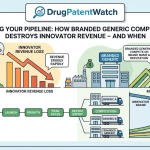
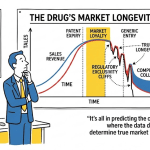
Every dollar of brand revenue protected by patent exclusivity is a dollar that will eventually be competed away. The patent cliff is not a tail risk. It is a scheduled event, disclosed in filings, traceable in the FDA’s Orange Book, and modeled with precision by every serious sell-side analyst covering the sector. The question is never whether the cliff arrives, but how prepared each side of the market — brand defenders and generic challengers — is when it does.
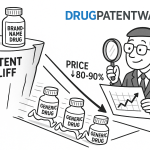
When Pfizer lost exclusivity on atorvastatin (Lipitor) in November 2011, the drug was generating more than $10 billion annually. Within 12 months, generics had captured over 80% of prescriptions at a fraction of the brand price. Ranbaxy — the first filer under Paragraph IV — captured the 180-day exclusivity window, generating hundreds of millions in that single period despite operating in a duopoly with only the brand as competition. That episode illustrates the full arc: a decade-long patent moat, a single challenge, litigation, settlement, and then a near-total market transfer at expiry.
The same mechanics will play out across the next wave of exclusivity losses. Merck’s Keytruda (pembrolizumab), which generated roughly $25 billion in 2024 revenue, has core composition-of-matter patents expiring in the late 2020s. Novo Nordisk’s semaglutide franchise — spanning Ozempic, Wegovy, and Rybelsus — faces a web of formulation and method-of-use patents whose durability is already being tested. Bristol Myers Squibb’s Eliquis (apixaban) generated over $12 billion in 2023, and its LOE timeline is a standing concern for analysts who track BMS’s pipeline replacement capacity.
How the Patent Cliff Differs Across Small Molecules and Biologics
The cliff’s financial profile varies sharply by drug class. For small-molecule oral drugs, generic entry typically captures 80–90% of prescription volume within 12 months. Price erosion is steep: a fully genericized market might settle at 5–15% of the brand price within two years. For branded biologics facing biosimilar entry, the dynamics are slower. Adalimumab (Humira) lost exclusivity in January 2023, and by late 2024, biosimilars had captured roughly 25–30% of the market — meaningful erosion, but far slower than small-molecule generics achieve. Physician prescribing inertia, formulary design, and rebate structures all slow biosimilar uptake in ways that have no analog in small-molecule generics.
Investor Alert
The revenue impact of a patent cliff is not linear. For most small-molecule oral drugs, the first 6–12 months post-LOE capture the vast majority of market-share loss. Brands that launch authorized generics on Day 1 can retain a larger share of total value, but only by directly cannibalizing the first generic filer’s exclusivity. Understanding the authorized-generic calculus is essential for accurately modeling post-LOE revenue for both brand and generic companies.
Key Patent Expiry Dates Investors Are Watching: 2026–2032
Volume-limited generic entry per settlement; full competition from 2026
ixekizumab
Taltz / Eli Lilly
~$2.8
2026–2027
Biosimilar development underway; smaller revenue base
bictegravir/FTC/TAF
Biktarvy / Gilead
~$12.0
2033+
Patent thicket; formulation and process patents extend protection
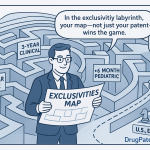
Revenue projections for any drug approaching loss of exclusivity must account for more than the core composition-of-matter patent. Formulation patents, pediatric exclusivity extensions, and method-of-use patents can add one to seven years of de facto protection even after the composition patent expires. The Hatch-Waxman architecture makes each layer of this protection its own strategic and legal question.
How Hatch-Waxman Actually Works — and Why Every Paragraph IV Filing Is a Strategic Declaration
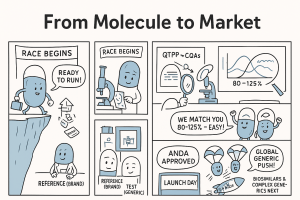
The Drug Price Competition and Patent Term Restoration Act of 1984 created the commercial infrastructure for the entire generic pharmaceutical industry. Before Hatch-Waxman, a generic company had to run its own full clinical trials to prove safety and efficacy — a requirement so prohibitive it effectively locked generics out of most markets until years after patent expiry. The Act introduced the Abbreviated New Drug Application (ANDA), letting generics rely on the FDA’s prior finding of safety for the innovator, and requiring only proof of pharmaceutical equivalence and bioequivalence.
The law’s second act was equally consequential: it gave generic companies the legal standing to challenge innovator patents before those patents expired. The Paragraph IV certification is the instrument of that challenge. When a generic company files a Paragraph IV certification, it is formally asserting — in a submission to the FDA — that the patent in question is either invalid, unenforceable, or would not be infringed by the proposed generic product. This assertion, once filed, triggers a precise legal sequence that the innovator must then navigate.
The Four Patent Certifications and What They Mean for Launch Timing
Certification
What the Filer Asserts
Likely Launch Timing
Litigation Risk
Paragraph I
No patents listed in Orange Book
Immediate upon approval
None
Paragraph II
All relevant patents expired
Immediate upon approval
None
Paragraph III
Will await patent expiry
On patent expiry date
None
Paragraph IV
Patent invalid, not infringed, or unenforceable
30-month stay resolves; or court ruling; or settlement
Near-certain lawsuit within 45 days
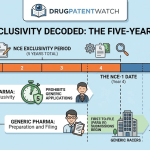
The 45-day window matters because it is the innovator’s trigger for the 30-month stay. If the brand company files suit within 45 days of receiving notice of the Paragraph IV certification, the FDA is legally barred from granting final ANDA approval for 30 months, or until the litigation resolves — whichever comes first. This stay is effectively a guaranteed 2.5-year delay built into any contested Paragraph IV challenge, unless the court rules on validity sooner.
Why Brand Companies Settle Paragraph IV Disputes — and What Settlements Actually Look Like
The majority of Paragraph IV challenges resolve through settlement rather than a full trial on the merits. The economics favor this outcome for both parties. An innovator facing a credible invalidity challenge has strong incentive to negotiate an authorized generic deal or a permitted entry date that protects a portion of their remaining exclusivity while avoiding the catastrophic outcome of an adverse trial judgment that invalidates the patent entirely. The generic challenger, meanwhile, gets certainty: a defined launch date, potentially accompanied by a supply agreement or royalty structure, without bearing further litigation cost.
Pay-for-delay arrangements — formally called reverse payment settlements — were common through the early 2010s, where brand companies made cash payments to generic challengers in exchange for later entry dates. The Supreme Court’s 2013 decision in FTC v. Actavis established that such arrangements could violate antitrust law and must survive a rule-of-reason analysis. Post-Actavis, settlements have evolved. Authorized generic deals, where the brand company licenses its own product to the first filer as part of the settlement, have become the dominant structure. The generic challenger gets revenue during the exclusivity window; the brand company retains some economic interest in the genericized product without making a direct cash payment that would draw FTC scrutiny.
Legal Angle
The “skinny label” strategy deserves attention. When a brand drug has multiple FDA-approved indications but only some are covered by method-of-use patents, a generic company can carve out the patent-protected indication from its label — a so-called Section viii carve-out. The FDA can approve the ANDA for the unprotected indications. The legal risk: if pharmacists routinely substitute the skinny-label generic for all indications including the protected one, the brand company may pursue induced infringement claims. GlaxoSmithKline v. Teva (decided by the Federal Circuit in 2021) put this risk in sharp focus and made skinny-label strategies considerably more complex for products with mixed indication profiles.
How Patent Thickets Work — and Which Drug Classes Use Them Most Aggressively
A patent thicket is a dense web of overlapping patents covering a single product across multiple dimensions: composition of matter, formulation, manufacturing process, method of use, metabolites, polymorphic forms, salt forms, dosing regimen, packaging. AbbVie’s Humira strategy is the textbook case. AbbVie filed over 130 patents on adalimumab after the original composition patent expired, with expiry dates staggered through the 2030s. This web delayed meaningful U.S. biosimilar entry until January 2023 despite biosimilars gaining approval in Europe years earlier. The settlement agreements AbbVie reached with Boehringer Ingelheim, Mylan, Amgen, and others locked each biosimilar manufacturer into a defined U.S. entry date that preserved AbbVie’s pricing power through 2022.
Biologics face a structurally different patent thicket problem than small molecules. Because the molecule itself — a large, complex protein — is extremely difficult to patent-protect indefinitely at the composition level, innovators build protection through device patents (the autoinjector), formulation patents (the specific protein concentration and stabilizer buffer), and manufacturing process patents. This means a biosimilar developer that successfully matches the biologic on all protein-level attributes may still face patent risk from device or formulation claims. Samsung Bioepis and Sandoz have each navigated this landscape on multiple biologics, with litigation records that now provide a roadmap for subsequent developers.
How Generic Companies Build a Development Portfolio — The Commercial, Technical, and Regulatory Triage
No generic company pursues every opportunity. Capital is finite, technical capacity is constrained, and the competitive landscape changes continuously. Portfolio construction is, at its core, a resource allocation problem with a legal overlay — you have to choose which cliffs to race toward, which patents to challenge, and which markets to enter at full scale versus as a marginal supplier.
What Commercial Viability Analysis Looks Like in Practice
The baseline assessment begins with the brand’s current and projected revenue, but revenue alone is insufficient. Teva, Sandoz, Hikma, Dr. Reddy’s, and Sun Pharma all conduct the same primary screen: market size times expected price at Day 1 generics launch times estimated market share. The critical differentiator is the competitive landscape forecast — specifically, how many ANDA filers are likely to be approved in the first wave.
A market with one or two expected entrants at Day 1 supports margin. A market with eight entrants at Day 1 is a volume business almost immediately. ANDA filing activity is partially observable: companies can track public litigation records, FDA databases, and agency communications to infer how many competitors have filed. This intelligence — systematically compiled through services that monitor ANDA filings and Paragraph IV certifications — drives meaningful differences in portfolio selection among the major generic houses.
Lifecycle management moves by the brand company must also be modeled explicitly. The most common defensive tactic is the authorized generic: the brand itself markets an ANDA-equivalent product, or licenses a third party to do so, under a different name and at a lower price. An authorized generic, because it is manufactured by the brand company, does not count against the first filer’s 180-day exclusivity. It competes directly during that window. The net result is that the 180-day period is a three-way competition — brand, first generic, and authorized generic — rather than the duopoly the statute intends. Brands including Pfizer, AstraZeneca, and Boehringer Ingelheim have used authorized generics selectively to blunt first-filer economics.
Why Technical Feasibility Screening Kills More Projects Than Patent Analysis
The failure mode that most frequently surprises investors in generic companies is not legal — it is scientific. A drug that looks commercially attractive from a patent analysis standpoint can be technically prohibitive to develop in a way that survives FDA scrutiny. Three categories of technical risk dominate:
First, API complexity. Highly potent active pharmaceutical ingredients, particularly those with narrow therapeutic windows (anticoagulants, immunosuppressants, thyroid hormones), require manufacturing controls that significantly expand development cost. The bioequivalence study for a narrow therapeutic index (NTI) drug like levothyroxine or warfarin requires tighter confidence intervals than the standard 80–125% window. FDA guidance requires NTI drugs to meet an 80–125% CI for both Cmax and AUC, but some agency positions effectively require the CI to be tighter in practice, increasing sample size requirements and study costs.
Second, complex formulation. An extended-release oral tablet using a matrix system protected by a formulation patent requires either a design-around that maintains equivalent in vitro and in vivo performance, or a Paragraph IV challenge to the formulation patent itself. Either path extends development timelines. Long-acting injectables (LAIs) — depot formulations using PLGA microspheres or similar polymer systems — are even more demanding. The FDA’s product-specific guidance for LAIs like risperidone microspheres (Risperdal Consta) and naltrexone microspheres (Vivitrol) runs to dozens of pages of specific testing requirements that took years to develop after the branded products launched.
Third, drug-device combinations. Products like tiotropium/olodaterol (Stiolto Respimat) or fluticasone/salmeterol (Advair Diskus) require the generic company to develop or license a device that produces equivalent aerosol performance to the innovator’s inhaler. The FDA’s “device equivalence” requirement for combination products has slowed generic entry into respiratory markets for more than a decade. Mylan’s Wixela Inhub, the first generic to Advair Diskus, was approved in 2019 — more than 15 years after Advair’s launch — partly because of the complexity of demonstrating device equivalence.
Freedom-to-Operate Analysis: The Strategic Weapon Most Teams Underinvest In
A freedom-to-operate (FTO) analysis is not just a legal checkbox — it is the strategic document that determines whether a generic company pursues a Paragraph IV certification, designs around the relevant patents, or waits for expiry. The analysis maps all patents with potential claims coverage against the proposed generic product, assesses the strength of those claims, evaluates prior art that could support an invalidity argument, and identifies formulation or manufacturing adjustments that would take the product outside the claims’ scope.
FTO analysis quality varies significantly across the industry. A shallow FTO that misses a process patent or a polymorphic form patent can lead to an ANDA approval followed by a post-approval infringement suit. Ranbaxy’s experience with atorvastatin provides a cautionary illustration: the company successfully challenged Pfizer’s primary composition patent, securing 180-day exclusivity, but later faced manufacturing quality issues that complicated its ability to capitalize fully on that hard-won position.
The Science Behind Generic Drug Development: Reverse Engineering, Formulation, and Quality by Design
When a generic development team receives a vial of the reference listed drug (RLD) and begins deformulation, they are working backward from a finished product to reconstruct the manufacturing logic that produced it — without access to the innovator’s process documentation, formulation rationale, or stability data. This reverse engineering exercise combines analytical chemistry, pharmaceutical science, and considerable inference.
What Deformulation Actually Involves — and Where It Can Go Wrong
Identifying the excipients in a tablet or capsule is relatively straightforward for conventional solid oral dosage forms. HPLC, mass spectrometry, and near-infrared spectroscopy can quantify most inactive ingredients to within a few percent. The harder problem is understanding the physical form of the API within the dosage form. Many APIs exist in multiple polymorphic forms — different crystal structures with different solubility, dissolution rate, and bioavailability profiles. A generic company that synthesizes the API in a polymorphic form different from the innovator’s may produce a product that fails bioequivalence, even with identical excipients, because the dissolution profile differs.
Ranitidine hydrochloride (Zantac) had two major polymorphic forms, and early generic manufacturers found that their synthesis routes produced varying polymorphic ratios. The physical form question became even more acute for ciprofloxacin HCl immediate-release tablets, where particle size distribution of the API affected dissolution, which in turn affected bioequivalence outcomes in a subset of patients — leading FDA to issue additional guidance on content of the ANDA specifically addressing this.
Quality by Design vs. Quality by Testing: Why the Distinction Matters for ANDA Review
The FDA’s embrace of Quality by Design (QbD) principles — formalized through ICH Q8(R2), Q9, and Q10 — changed the evidentiary standard for what a well-prepared ANDA looks like. A QbD submission defines the Quality Target Product Profile (QTPP) upfront, identifies Critical Quality Attributes (CQAs), traces those CQAs to Critical Material Attributes (CMAs) and Critical Process Parameters (CPPs), and uses a Design of Experiments (DoE) approach to characterize the design space within which the manufacturing process reliably delivers the QTPP.
From an ANDA review standpoint, a QbD-based Chemistry, Manufacturing, and Controls (CMC) section provides reviewers with a causal map — not just a list of specifications, but an explanation of why those specifications matter and how the manufacturing process ensures they are consistently met. This depth reduces the number of Information Requests (IRs) and Discipline Review Letters (DRLs) the FDA issues during review. Companies that submit QbD-based ANDAs consistently show lower Complete Response Letter rates on chemistry grounds compared to those submitting more traditional “quality by testing” CMC packages.
Process Validation and the Scale-Up Problem That Derails More ANDAs Than Patent Disputes
Validation failures at commercial scale are among the most financially damaging events in generic drug development. A company that has invested three to five years in development, conducted a successful bioequivalence study, and assembled a complete ANDA may discover, during commercial-scale validation batches, that the manufacturing process does not reproduce consistently at scale. High-shear wet granulation processes are particularly sensitive to scale: the granule size distribution produced in a 5 kg batch can differ substantially from that produced in a 500 kg batch, affecting tablet hardness, dissolution rate, and content uniformity.
These failures are recoverable but expensive. The company must identify root cause, modify the process, document the change in an ANDA amendment, and potentially run additional stability batches to confirm that the modified process produces a stable product. If the amendment is classified as a major amendment, the GDUFA clock resets to 10 months from submission of the amendment, adding close to a year to the timeline.
The Bioequivalence Hurdle: What the 80–125% CI Rule Actually Requires of Generic Developers
Bioequivalence is the scientific and legal standard that permits a pharmacist to substitute a generic for a branded drug without physician intervention. The FDA’s criterion — that the 90% confidence interval for both Cmax and AUC geometric mean ratios must fall within 80.00–125.00% — is more demanding than it is often described. The confidence interval reflects variability in both the test and reference products across subjects, not just a comparison of means. A generic that produces an average Cmax ratio of 1.02 can still fail BE if the inter-subject variability is high enough to push the CI boundary below 0.80 or above 1.25.
Study Design Choices That Determine Whether a BE Study Passes or Fails
Study design decisions made before a single subject is dosed largely determine whether the 90% CI falls within the acceptance range. Sample size is the primary lever: more subjects reduce the width of the confidence interval, making it easier to contain within 80–125%. FDA’s standard sample size for a two-period crossover study assumes a residual variability of around 20–25% for most drugs. When the reference drug’s pharmacokinetic parameters show higher between-period variability — common in drugs with food-effect sensitivity, highly variable pharmacokinetics, or formulation-sensitive absorption — the required sample size climbs steeply.
The FDA introduced scaled average bioequivalence (SABE) criteria for highly variable drugs (HVDs), defined as drugs where the intra-subject coefficient of variation for Cmax or AUC exceeds 30%. Under SABE, the acceptance limits widen proportionally to the reference drug’s within-subject variability, reducing the sample size burden. This matters commercially because SABE approval pathways made several previously difficult-to-genericize drugs accessible, adding new opportunities to the portfolio landscape.
Why Complex Generics Present a Different BE Problem Entirely
For locally-acting drugs — inhaled corticosteroids, topical dermatologics, ophthalmic solutions, nasal sprays — systemic plasma concentration is either too low to measure accurately or too poorly correlated with local drug action to serve as a valid BE proxy. The FDA has developed product-specific guidance for over 1,000 products, but the evidentiary requirements for complex dosage forms remain the most contested area of ANDA science.
Fluticasone propionate/salmeterol inhalation powder (generic to Advair Diskus) required, per FDA guidance, both an in vitro device characterization package (aerodynamic particle size distribution, delivered dose uniformity, device resistance testing) and pharmacokinetic and pharmacodynamic studies in patients. This two-part requirement — meeting both device equivalence and clinical endpoint benchmarks — is why only a handful of Advair generics reached the market despite the enormous commercial opportunity. Prasco, Mylan (now Viatris), and Hikma were among the first to navigate this pathway.
For topical dermatologics, the FDA’s current framework relies primarily on in vitro permeation testing (IVPT) using excised human skin in Franz diffusion cells, combined with rigorous formulation characterization covering pH, viscosity, rheology, particle size of suspended API, and globule size for emulsions. IVPT results are subject to significant variability from donor skin differences, and the FDA’s acceptance criteria for IVPT-based BE remain a subject of active guidance development. Companies that invest in establishing validated IVPT methodologies early in development tend to have a meaningful first-mover advantage when the agency finalizes product-specific guidance for a given topical product.
Dosage Form
Primary BE Approach
Key Technical Challenge
Typical Dev. Cost Range
Oral immediate-release tablet
Pharmacokinetic (Cmax, AUC)
NTI drugs; polymorphism
$1–3M
Oral modified-release tablet/capsule
Multi-dose PK study; food effect
Formulation design-around; in vitro dissolution correlation
Building the ANDA: How the eCTD Submission Maps to FDA Review Risk
An Abbreviated New Drug Application submitted in the eCTD format is a structured regulatory argument. Every section is read by a different type of reviewer — a chemist evaluates the CMC modules, a clinical pharmacologist reviews the BE data, a labeling reviewer cross-checks the proposed label against the current RLD label — and each reviewer makes an independent assessment of whether their domain of the application is adequate to support approval. A failure in any one domain produces a Complete Response Letter that stops the clock.
What FDA Reviewers Actually Focus on in the CMC Modules
Module 3 — Quality/CMC — is the most common source of ANDA deficiencies. The Office of Pharmaceutical Quality’s reviewers focus on four recurring problem areas. First, impurity specifications: if the proposed generic’s impurity profile includes any degradation product at a threshold above ICH Q3B limits that is not present in, or qualified by, the reference listed drug, the company must provide genotoxicity data or lower the limit. The emergence of nitrosamine impurity concerns beginning in 2018 (starting with valsartan) has created an entirely new category of CMC obligation: generic manufacturers must now assess every product for nitrosamine formation potential and provide risk assessment data in their ANDAs.
Second, dissolution method validation: for modified-release products, the in vitro dissolution method must be validated as discriminating — meaning it must be sensitive enough to detect formulation changes that would produce in vivo differences. Reviewers routinely ask for additional dissolution data at multiple pH values, or for biorelevant media, when the initial data do not adequately characterize the product’s dissolution behavior across the physiological range.
Third, analytical method validation: a single failed validation parameter — inadequate specificity for an active metabolite, insufficient linearity range for the assay method — can generate an IR or a DRL that adds months to the review. Fourth, process validation data: when validation batch data submitted with the ANDA show unexplained variability in a CQA across the three batches, reviewers flag this even if all results are within specification, because unexplained variability implies incomplete process understanding.
How the GDUFA Clock Works — and What Stops It
Generic Drug User Fee Amendments (GDUFA) established a formal performance metric framework with specific goal dates tied to different ANDA categories. A standard ANDA has a 10-month review goal from the date of filing. Priority ANDAs — those for products in shortage, products without approved generics, or products with public health significance — have shorter review goals. These goal dates create accountability but also create predictability: both the FDA and the filer can track progress against a defined timeline.
The clock stops for several reasons. A Refuse-to-Receive finding sends the application back before the clock formally starts. A major amendment — one that adds new studies or substantially revises the manufacturing process — resets the clock to 10 months from the amendment date. A mid-cycle request for information that requires new data generation triggers a clock extension. The net effect is that first-cycle approval within 10 months is the exception rather than the rule: industry data consistently show that a majority of ANDAs require at least one Complete Response Letter before reaching approval.
What Investors Are Watching in ANDA Timelines
GDUFA goal date versus actual approval date for high-value first-to-file candidates in a company’s disclosed pipeline
Number of CRLs received and the nature of the deficiency (CMC, BE, or labeling), which signals remediation timelines
Pre-Approval Inspection (PAI) outcomes for key manufacturing sites — a Form 483 with significant observations introduces 6–18 months of delay risk
Paragraph IV litigation status for contested first-to-file positions: court calendar, trial dates, and any summary judgment rulings
Authorized generic agreements by the brand, which can be disclosed in brand company SEC filings or inferred from settlement terms
ANDA approval counts per quarter as an indicator of organic pipeline progress, available through FDA’s public Generic Drugs Program database
Pre-Approval Inspections: The Final Gate — and Why Overseas Manufacturing Sites Are the Biggest Risk
The Pre-Approval Inspection (PAI) is the FDA’s on-site audit of the manufacturing facility listed in the ANDA. It serves two functions: verifying that the described manufacturing process is actually executable at the facility, and confirming that the facility operates in a state of cGMP compliance. A manufacturing site that the FDA has already inspected recently with no significant observations may be granted a waiver of a new PAI. A site that has never been inspected by the FDA, or one with a history of observations, will require a full inspection before the ANDA can receive final approval.
Data Integrity Findings and Their Impact on ANDA Approval Timelines
Data integrity has become the defining audit focus of FDA overseas inspections. Since 2013, the agency has issued more than 150 Warning Letters citing data integrity violations at generic drug manufacturing sites, predominantly in India and China — which together supply the majority of API and finished-dose generics consumed in the United States. Common findings include test-result manipulation, back-calculation of weights and assay results, deletion of out-of-specification (OOS) results before they appear in formal batch records, and undocumented analyst re-testing.
A Warning Letter citing data integrity effectively suspends all ANDA approvals for products manufactured at that site until the company submits a credible corrective action plan and a subsequent reinspection confirms the issues are resolved. For a company with multiple high-priority ANDAs manufactured at a site under Warning Letter, the revenue impact can be significant. Ranbaxy’s Toansa facility received an Import Alert in 2014 that affected approvals across multiple product families. Sun Pharma’s Halol facility faced a similar episode. Wockhardt’s Waluj plant was the subject of a 2013 Import Alert that took over a year to resolve.
How cGMP Compliance Affects M&A Valuations in the Generic Sector
Manufacturing quality is a material factor in generic company acquisition pricing. When Mylan acquired Meda in 2016, and when Teva acquired Allergan’s generic business, acquirers conducted extensive due diligence on manufacturing site inspection histories. Sites with unresolved FDA observations represent contingent liabilities: if the FDA issues a Warning Letter post-acquisition, the acquirer inherits the disruption. This creates a systematic valuation discount for generic companies with significant revenue concentration in manufacturing sites that have been flagged by the FDA or EMA.
Revenue at Risk: How Generic Entry Erodes Brand Sales — and How Brands Try to Slow It
The financial profile of a brand drug after loss of exclusivity follows a well-documented pattern. In the first three to six months after generic entry, generic products typically capture 50–60% of prescription volume. By month twelve, generic penetration typically exceeds 80% of prescriptions, with the brand retaining a fraction of its former volume at a modest premium among patients with formulary design or physician preference reasons to remain on the brand. By month 24, the brand may command only 5–15% of the market, concentrated in managed care accounts where formulary design maintains some brand presence through rebate arrangements.
Authorized Generics, Product-Line Extensions, and Other Brand Retention Strategies
Brands defend revenue through a range of strategies, some proactive and some reactive. Product-line extensions — moving patients to an extended-release formulation, a combination product, or a new delivery device before the original product loses exclusivity — are the most commercially valuable defense. AstraZeneca’s transition of esomeprazole (Nexium) patients to Nexium 24HR, and the launch of Nexium IV, helped preserve revenue streams orthogonal to the generic threat on the original capsule formulation. Abbott’s move from niacin immediate-release to Niaspan (extended-release) is another canonical case.
Authorized generics, discussed above in the context of Paragraph IV settlement dynamics, are the most common reactive strategy. By Day 1 of generic entry, many brand companies have a pre-positioned authorized generic ready to capture value from price-sensitive buyers who would otherwise shift entirely to the independent generic. The authorized generic typically prices at 10–20% below the brand, positioning it above the independent generic but capturing formulary preference at some managed care accounts.
What Happens Financially After Loss of Exclusivity for a Major Biologic
Biologic LOE dynamics differ from small-molecule LOE in ways that are commercially important for investors. The pace of biosimilar uptake is slower, the price discount at market entry is smaller, and the ultimate market share floor for the reference biologic is higher. AbbVie retained roughly 70–75% of adalimumab value through 2024, more than 18 months after the first biosimilar launched in the U.S. This reflects the structural barriers to biosimilar adoption: physician hesitation about non-medical switching, patient preference for familiar injection devices, and payer rebate structures that the reference biologic can use to maintain formulary position.
J&J’s Stelara (ustekinumab) began biosimilar erosion in late 2023. The pace of erosion for Stelara will be instructive for modeling Keytruda’s eventual biosimilar curve. Keytruda’s use across multiple cancer indications — many in patients on other complex regimens where oncologists are reluctant to switch — may produce an even slower erosion pattern than immunology biologics, where therapeutic alternatives are more numerous and patients are more stable.
The Biosimilar Frontier: Manufacturing Complexity, Interchangeability Designation, and the Economics of Biologic Entry
Developing a biosimilar is not a version of developing a generic drug at higher cost. It is a categorically different scientific problem. A small-molecule generic needs to demonstrate that it puts the same amount of the same active ingredient into the bloodstream at the same rate. A biosimilar needs to demonstrate that an enormously complex biological molecule — a protein with a specific three-dimensional structure, glycosylation pattern, and aggregation profile — is sufficiently similar to the reference biologic that there are no clinically meaningful differences in safety, purity, or potency.
Why the Process Is the Product in Biologics Manufacturing
The phrase “the process is the product” is foundational to biosimilar development. Unlike small molecules, which can be synthesized to atomic precision, biologics are produced in living cells — Chinese hamster ovary (CHO) cells, yeast, or bacteria — and the resulting protein’s quality attributes depend on the cell culture conditions, purification steps, and formulation. A minor change in fermentation pH, temperature, or nutrient feed can alter the glycosylation pattern of the protein, which in turn affects its pharmacokinetic profile and potentially its immunogenicity. Demonstrating that a biosimilar’s manufacturing process produces a molecule similar enough across all these dimensions to the reference biologic is the core scientific challenge.
Amgen’s biosimilar to adalimumab (Amjevita), Sandoz’s (Hyrimoz), and Samsung Bioepis’s (Hadlima) each required extensive analytical characterization packages — comparing hundreds of quality attributes between the biosimilar and multiple lots of Humira — before the clinical package could be designed. The analytical work typically takes two to three years and costs $30–60 million before a single patient is enrolled in a study.
What Biosimilar Interchangeability Designation Means for Market Access
In the United States, the FDA can designate a biosimilar as “interchangeable” if the manufacturer demonstrates that switching between the biosimilar and the reference biologic does not produce a greater safety or efficacy risk than continued use of the reference biologic. Interchangeability is important because it permits pharmacist-level substitution at the pharmacy counter — the same mechanism that operates for small-molecule generics — without requiring a physician to initiate the switch.
Viatris’s Semglee (insulin glargine) was the first designated interchangeable biosimilar in the U.S., approved in 2021. Boehringer Ingelheim’s Cyltezo (adalimumab) received interchangeable status shortly after. The commercial significance of interchangeability is substantial for drugs dispensed at retail pharmacies, where automatic substitution laws in most states allow pharmacists to switch to the interchangeable biosimilar. For hospital formulary drugs or specialty pharmacy-distributed products, interchangeability is less commercially critical, because the formulary committee already drives substitution.
GLP-1 Manufacturing Complexity as a Barrier to Generic and Biosimilar Entry
Semaglutide (Ozempic/Wegovy) is a GLP-1 receptor agonist that is a peptide — structurally simpler than a monoclonal antibody but considerably more complex to manufacture than a conventional small molecule. The FDA has not yet finalized its regulatory pathway classification for semaglutide generics, creating uncertainty about whether ANDA or 505(b)(2) NDA filings are the appropriate route. Novo Nordisk has built a substantial patent estate around semaglutide’s formulation, dosing regimen, and delivery device, with key patents staggered across a range of expiry dates.
The manufacturing barrier for GLP-1 peptides is real. Solid-phase peptide synthesis at commercial scale requires specialized equipment and process chemistry expertise that most conventional generic manufacturers do not have in-house. API suppliers in India and China are developing semaglutide synthesis capabilities, but the supply chain for commercial-scale production remains underdeveloped relative to the eventual market opportunity. This manufacturing moat provides Novo Nordisk and Eli Lilly (with tirzepatide) protection that extends beyond patent exclusivity in a practical sense.
API Sourcing Strategy: How Dependence on Indian and Chinese Suppliers Creates Supply Chain Risk
The global API market is heavily concentrated in India and China. The U.S. FDA estimates that approximately 87% of active pharmaceutical ingredient manufacturers supplying drugs to the U.S. market are located outside the United States, with a large proportion of those in these two countries. This concentration creates systemic fragility that the COVID-19 pandemic made impossible to ignore: when Chinese API manufacturers faced production shutdowns in early 2020, the consequences rippled through generic drug supply chains worldwide.
Drug Master Files and What They Mean for ANDA Quality Risk
An API supplier’s Drug Master File (DMF) is a confidential submission to the FDA that details the chemistry, manufacturing, and controls for the API. A generic company’s ANDA cross-references the supplier’s DMF, and the FDA reviews both documents together to assess whether the API will consistently meet the specifications required for the drug product. If the API supplier’s DMF has deficiencies — inadequate impurity characterization, incomplete process description, or a pending FDA audit finding — those deficiencies propagate directly to the ANDA review and can generate Information Requests or Complete Response Letters.
The nitrosamine impurity crisis that began in 2018 with valsartan API manufactured by Zhejiang Huahai Pharmaceuticals illustrates the systemic risk of DMF quality gaps. The contamination arose from a process change that introduced a nitrosamine-forming reaction pathway; the change was not reflected in updated DMF documentation. The resulting recalls affected over 20 manufacturers and prompted the FDA to issue sweeping new guidance requiring nitrosamine risk assessments across all ANDAs, adding a new CMC obligation that affected hundreds of active applications simultaneously.
The Make vs. Buy API Decision for Generic Portfolio Companies
Vertical integration into API manufacturing is a long-term strategic bet rather than a product-by-product optimization. Teva’s backward integration into API manufacturing for its controlled substance portfolio — particularly for opioids and complex molecules — gives it cost and supply security advantages that are difficult for asset-light generics to replicate. Dr. Reddy’s and Sun Pharma maintain API manufacturing subsidiaries that serve both internal and external customers. For complex APIs with limited supplier bases — highly potent oncology molecules, sterile injectables, controlled substances — in-house API capability can be the difference between a viable development program and a supply-constrained product launch.
Global Regulatory Divergence: How ANDA, MAA, and Other Pathways Differ in Ways That Affect Launch Strategy
A global generic launch is not a single regulatory exercise. Each major market has a distinct submission format, review timeline, data package requirement, and patent linkage regime. The absence of patent linkage in the EU — the EMA will grant marketing authorization for a generic regardless of whether the brand’s patents are still in force — means that launch timing in Europe is a purely legal and commercial decision, not a regulatory one. A generic company that has received EMA authorization may still face patent infringement suits in individual EU member states if it tries to launch before the relevant national patents expire.
Why the EU’s 8+2+1 Exclusivity Model Produces Different First-Filer Economics
The EU data exclusivity regime creates a different competitive dynamic than Hatch-Waxman. There is no 180-day first-filer exclusivity in Europe; the first generic to receive marketing authorization can launch whenever the eight years of data exclusivity and two years of market exclusivity have elapsed, but so can every other generic that subsequently receives authorization. This means the first-mover advantage in Europe is measured in weeks, not months, and is driven by commercial execution — how quickly the company can secure formulary placement, tender contracts, and distribution agreements — rather than a regulatory exclusivity period.
Japan’s PMDA has historically required bioequivalence studies conducted in Japanese subjects for all new generic applications, reflecting a view that ethnic pharmacokinetic differences warranted domestic clinical data. This requirement significantly increased the cost and time of Japan entry for non-Japanese generic companies. Recent harmonization efforts under ICH E5 have reduced this barrier for some drug classes, but Japan remains among the more complex individual regulatory markets for global generic strategy.
Value-Added Medicines and 505(b)(2): How Generic Companies Escape Commodity Competition
The 505(b)(2) pathway is the strategic escape valve from commodity generic competition. Under this pathway — a hybrid between an ANDA and a full NDA — a company can reference the FDA’s prior finding of safety and efficacy for an approved drug while submitting new data to support a new dosage form, new strength, new route of administration, or new combination. The result is a product that is not technically a generic (it does not have an ANDA) but that leverages existing safety data to reduce the clinical development burden dramatically compared to a de novo NDA.
Extended-release reformulations of immediate-release drugs are the most commercially important 505(b)(2) application. Noven Pharmaceuticals built its business largely on transdermal drug delivery reformulations. Ironshore’s extended-release methylphenidate (Jornay PM) used the 505(b)(2) pathway to bring a genuinely differentiated ADHD product to market based on an established active ingredient. Paratek’s omadacycline (Nuzyra) followed a related logic in antibiotics. The financial profile of a 505(b)(2) product is fundamentally different from a standard generic: it can be patent-protected in its own right, priced at a significant premium, and marketed to physicians rather than sold primarily through managed care formulary negotiations.
Evergreening Strategies and When the FDA Pushes Back
Evergreening — extending a brand drug’s market exclusivity through incremental reformulations, new delivery devices, or new indications — is well-documented and widely practiced. The FDA has at various points pushed back against what it views as tactical uses of the exclusivity system. Pediatric exclusivity, which adds six months of market protection as a reward for conducting pediatric studies, has generated controversy when brand companies conducted those studies on drugs primarily used in adults, with the pediatric use being marginal or speculative. The FDA’s pediatric study completion database shows hundreds of cases where the six-month extension was granted on studies of limited clinical significance.
Citizen petitions are a related tactic. A brand company or its allies may file a citizen petition with the FDA requesting that the agency impose additional requirements on generic ANDA applicants — for example, requesting enhanced bioequivalence standards for a complex drug or a specific new testing requirement. The FDA is required to respond to citizen petitions but is not required to grant them. Data from the Tufts Center for the Study of Drug Development suggests that a large majority of citizen petitions filed in the year before a generic entry are ultimately denied, but the timing of the filing — and the FDA’s response timeline — can provide months of additional de facto protection.
Common Investor Questions About Generic Drug Companies
How do you model a generic company’s earnings when multiple ANDAs are in the pipeline at different approval stages?
The core challenge is probability-weighting the approval timeline for each program, accounting for remaining CRL risk, PAI risk, and litigation outcomes for Paragraph IV certifications. The revenue model should assign each ANDA a probability-adjusted Day 1 launch date and an expected Day 1 market share based on the number of anticipated competitors. For products with 180-day exclusivity, the model must include an authorized generic scenario and probability-weight the authorized generic’s competitive impact on the first filer’s revenue. Sensitivity analysis around the GDUFA goal date for high-value programs is standard practice.
What does an “at-risk launch” mean for a generic company’s financial exposure?
An at-risk launch is a decision to begin commercial distribution of a generic product while patent litigation is still pending — before the district court has ruled on validity or infringement. The upside is capturing the market without waiting for full litigation resolution; the downside is that if the generic company subsequently loses the patent case, it can be liable for all profits generated during the at-risk period, plus potentially enhanced damages if the court finds willful infringement. At-risk launch decisions are most common when the patent invalidity case is strong and the litigation timeline would otherwise delay entry by years. They require board-level approval and are disclosed in SEC filings.
How does a first-to-file lose its 180-day exclusivity?
The Medicare Modernization Act of 2003 created several conditions under which the 180-day exclusivity period is forfeited. Failure to market within 75 days of FDA approval (or certain court judgments), withdrawal of the ANDA, failure to obtain tentative approval within 30 months of filing, and antitrust-related settlement agreements can all trigger forfeiture. In practice, forfeiture from failure to market is the most commercially significant: a first filer that is blocked from launch by ongoing litigation, or that makes a commercial decision not to launch, risks forfeiting the exclusivity to subsequent applicants who are ready to market.
Why is the European generic market structurally less profitable than the U.S. market for first-filers?
The absence of 180-day exclusivity in Europe means no regulatory protection for the first generic. Entry is, in principle, simultaneous for all approved generics once the data exclusivity period ends. In practice, the first company to achieve marketing authorization and distribute through local country channels gains weeks or months of market exclusivity through commercial execution, but this is far shorter and less valuable than the U.S. six-month window. European generic pricing is also typically set through tendering or reference pricing at the national level, which rapidly compresses margins to near-commodity levels once multiple competitors are present.
What distinguishes a generic “complex product” from a conventional generic under FDA’s framework?
The FDA defines complex generics to include complex active ingredients (proteins, peptides, polymeric substances), complex formulations (liposomes, emulsions, microsphere injectables), complex routes of delivery (inhaled, ophthalmic, transdermal), complex drug-device combinations, and drugs where BE is difficult to establish. Each complex generic pathway requires product-specific FDA guidance, and the development cost and timeline are substantially higher than for conventional oral solid dosage forms. The competitive advantage for a company that successfully develops a complex generic is correspondingly larger — fewer competitors means better pricing and longer-lasting market share.
How does an FDA Warning Letter affect a generic company’s stock price?
Warning Letters for manufacturing violations at major production sites typically produce an immediate negative price reaction, the magnitude of which depends on the revenue concentration at the affected site. For companies that derive 20–30% of consolidated revenue from a site under Warning Letter, the market impact can be substantial. The more meaningful financial impact often develops over 12–24 months as ANDA approvals stall and product launches are delayed or cancelled. Resolution of a Warning Letter requires a reinspection, which typically occurs 12–18 months after the corrective action plan is submitted. Investors should track Establishment Inspection Reports (EIRs) and Import Alert status rather than relying solely on press releases from management.
Investment Strategy
Investment Strategy: How to Position Around the Generic Drug Cycle
The generic drug sector offers a range of investment theses, each with a different risk-return profile tied to the specific stage of the patent cliff and development cycle. The most aggressive positions are in companies with near-term first-filer Paragraph IV opportunities in large markets, where a single ANDA approval and successful launch can have a material earnings impact in the next two to four quarters. These positions carry litigation binary risk — a district court ruling against the generic on validity can wipe out the entire option value — but the expected value is positive when the invalidity case is strong and the product market is large.
More conservative positions are in companies with approved, diversified generic portfolios and strong manufacturing compliance records. These companies benefit from the steady cadence of standard ANDA approvals across a broad product set, the pricing stability of markets with limited competition, and the operating leverage of high-volume manufacturing at qualified facilities. Teva’s financial distress in 2017–2020 illustrated that even diversified generic portfolios carry risk when the company is over-leveraged and facing simultaneous pricing pressure across multiple product categories.
Biosimilar-focused positions represent the highest-conviction, longest-duration trades in the generic sector. The $25+ billion annual revenue profile of Keytruda, the $18 billion semaglutide franchise, and the $10+ billion-per-year biologics still in mid-exclusivity constitute the patent cliff of the 2030s. Companies building the manufacturing capability, analytical expertise, and regulatory track record to participate in that wave — Samsung Bioepis, Formycon, Coherus, and the biosimilar divisions of Sandoz and Viatris — are positioning for a market opportunity that dwarfs the small-molecule generic cycle of the prior two decades.
Key Variables to Monitor for Generic Sector Positioning
GDUFA annual report: FDA approval rates, review cycle length, and CRL frequency by drug type signal pipeline velocity across the industry
Orange Book patent expiry calendar for drugs in the $500M+ annual revenue range: the 36-month pipeline ahead of each LOE is the actionable development window
Paragraph IV litigation outcomes in the Federal Circuit and district courts, particularly for NTI drugs and complex generics where the legal question on obviousness is unsettled
FDA product-specific guidance releases for complex generics: each new guidance opens a de novo market opportunity for well-positioned developers
Import Alert issuances and Warning Letter resolution timelines for major Indian and Chinese manufacturing sites
Biosimilar interchangeability designations and state pharmacy substitution law updates, which affect the pace of retail-level biosimilar substitution
GLP-1 regulatory pathway clarification: FDA classification of semaglutide and tirzepatide generic pathways will determine the competitive landscape for the next decade
Key Takeaways
01
Portfolio Strategy Precedes Science
The most consequential decisions in generic development happen before any lab work begins. Patent analysis, competitive landscape forecasting, and commercial modeling determine whether a product can ever generate a return.
02
Paragraph IV Is a Financial Instrument
A Paragraph IV certification is a structured bet on patent invalidity or non-infringement, with a defined payoff (180-day exclusivity) and a defined downside (30-month stay, litigation cost). It requires legal, scientific, and commercial underwriting simultaneously.
03
Manufacturing Quality Is a Revenue Variable
A single Warning Letter at a major production site can delay dozens of ANDA approvals and materially impair multi-year earnings. cGMP compliance is not a back-office function; it is a core business risk that belongs in every investment model.
04
Biosimilars Are the Next Cliff
The biologics facing LOE through 2032 represent more revenue at risk than the small-molecule patent cliff of the 2010s. The companies building biosimilar manufacturing capability now are positioning for a decade-long market opportunity.
05
Complex Generics Command a Structural Premium
Inhalers, topicals, long-acting injectables, and drug-device combinations face fewer competitors and sustain higher margins than oral solid dosage forms. The investment in complex generic capability is a moat-building strategy, not a product-by-product decision.
06
The 80–125% CI Rule Is a Filter, Not a Guarantee
Meeting the bioequivalence standard is necessary but not sufficient for commercial success. BE study design failures, IVPT variability for complex topicals, and sampling errors at clinical sites all represent binary execution risks that can destroy multi-year development programs.
“The patent cliff is already priced in for everyone. The edge is in knowing which companies have the manufacturing quality, the litigation posture, and the formulation science to actually execute at the moment the cliff arrives — and which ones will stumble.”— Portfolio Manager, Healthcare-Focused Long/Short Fund
This analysis is produced for informational purposes for pharma IP professionals, investors, and strategy teams. Not investment advice. Sources: FDA Orange Book · FDA GDUFA Annual Reports · ICH Guidelines Q8–Q10 · Association for Accessible Medicines · Federal Circuit and District Court rulings. Patent and revenue data subject to change. Verify current expiry dates and litigation status via DrugPatentWatch or equivalent intelligence services.