The Crucible of Market Dominance: A Paradigm Shift
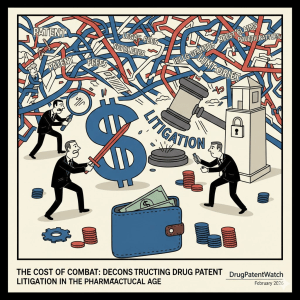
In pharmaceutical and biotechnology innovation patent litigation is not a mere legal formality; it is a multi-million-dollar crucible where market dominance is forged and fortunes are decided.1 For C-suite executives, general counsel, and IP strategists, the costs associated with these disputes are not just line items on a budget—they are formidable strategic challenges that can divert critical resources, spook investors, and derail the entire lifecycle of a blockbuster drug.1 In a landscape where the average cost of a single patent case soars into the millions, the fundamental question is no longer if an organization will face a patent challenge, but rather how it will manage the staggering financial and operational impact when it does.1
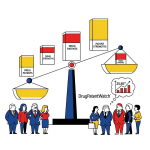
To navigate this complex battlefield successfully, a fundamental shift in perspective is required. The goal must be to move beyond a reactive, defensive posture that treats litigation as an uncontrollable expense. Instead, a proactive, business-centric approach that redefines the entire conversation is essential. Managing these costs is not about “pinching pennies” but about strategic capital allocation.1 It is about understanding that every dollar spent on a lawsuit is a dollar not spent on research and development (R&D).1 In the pharmaceutical chess game, the ability to afford, manage, and strategically deploy litigation is as powerful an asset as the patent itself.1 This report will demonstrate that every litigation dollar is a conscious, rational decision to protect a far greater investment.
The Foundational Economics of a Billion-Dollar Gamble
To truly understand the formidable costs of a patent war, one must first grasp the foundational economics that make it necessary. A patent is not just a legal document; it is the financial bedrock of the entire pharmaceutical industry.1 It is the sole mechanism that allows companies to recoup the monumental, high-risk investments required to bring a new medicine from a laboratory bench to a patient’s bedside.1
The journey to a marketable drug is a high-risk, high-reward marathon, not a sprint, typically taking 10 to 15 years from initial discovery to market approval.1 The average capitalized cost to develop a single new drug is a staggering $2.6 billion, a figure that, while debated, underscores a fundamental truth about the industry’s scale.1 It is crucial for business leaders to understand what this number truly represents. It is not a simple calculation of out-of-pocket expenses for a single successful drug.2 Instead, it is a sophisticated financial metric that accounts for two critical, often-overlooked factors.2 The first is the cost of failure. For every successful drug that receives FDA approval, thousands of promising compounds fail at some point during the arduous development process.1 Only about 12% of drugs that enter clinical trials ever make it to market.1 The billions of dollars spent on these failures are not simply written off; they are a necessary cost of discovery that must be financially carried by the few products that succeed.1 The second is the time value of money, or opportunity cost. During the decade-plus development period, the capital invested in a drug candidate is tied up and cannot be used for other ventures.1 This “time cost”—the expected returns that investors forego—is a very real economic expense that can account for nearly half of the total capitalized cost of a new drug.1 In this context, a patent’s 20-year term of market exclusivity is not a windfall; it is the essential period during which a company must generate the revenue necessary to cover the costs of its one success and its many failures, and to fund the next generation of research.1 Any threat to that patent—such as a challenge from a generic or biosimilar manufacturer—is a direct threat to billions of dollars in revenue.1 This is why a brand-name company will rationally spend millions on litigation to protect its market exclusivity.1
The high cost of litigation, while a logical and rational defense for incumbents, simultaneously erects a formidable barrier to entry for smaller, less-capitalized challengers.1 The median cost for a high-stakes case can be over $5 million, and for complex technologies, these costs can be even higher.2 These figures are prohibitively high for many smaller companies and startups, which do not have the deep pockets of a multinational pharmaceutical firm.1 The legal costs for an IP case can be a million dollars just to get to trial, compared to a few thousand for a personal injury case.3 This creates a “David vs. Goliath” scenario where the high cost of a rational defense for a large incumbent becomes an irrational and insurmountable barrier for a small generic or biosimilar entrant.1 A company can effectively “win” a legal battle not because their patent is fundamentally valid, but because the challenger simply cannot afford to see the fight through to the end.3 This dynamic doesn’t just affect the companies involved; it has significant public policy implications, potentially stifling the very competition that regulatory frameworks were designed to foster.1 This can delay the entry of lower-cost alternatives, keep drug prices artificially high, and reduce patient access to life-saving medicines.4
The Anatomy of a Patent Dispute: Deconstructing the Visible and Invisible Costs
To budget for and manage litigation, one must first deconstruct its true cost. This involves understanding the distinction between the visible, direct financial outlays that appear on a legal invoice and the invisible, but often more damaging, indirect costs that are reflected in lost opportunities and diminished innovation.1
The Visible Outlays: What Appears on the Invoice
Legal Fees: The Undisputed Cost Driver
Without question, legal fees are the single largest component of any litigation budget.1 These costs vary dramatically based on the complexity of the case, the reputation and location of the law firm, and the duration of the litigation.7 The hourly rates of skilled IP attorneys contribute significantly to these totals. For a pharmaceutical patent infringement case with more than $25 million at risk—a common scenario for a successful drug—the median cost through the end of discovery is $3.0 million, and the median total cost through trial and appeal is $5.5 million.2 For Hatch-Waxman (ANDA) litigation, that median rises to $5 million.9
The Discovery Beast: Managing the E-Discovery Deluge
The discovery phase is a notorious cost driver, often accounting for the bulk of a case’s expense.7 This phase involves the exchange of millions of pages of internal documents, emails, lab notebooks, and regulatory filings.1 The sheer volume of data, coupled with the need for a meticulous review for relevance and privilege, makes this a financially and operationally intensive process.7 While there is an upfront cost for advanced e-discovery technologies, they use algorithms and artificial intelligence to sort through data quickly, identifying relevant documents and significantly reducing the hours spent on manual review and the associated legal fees.7
Expert Witnesses: The Indispensable Cost of Technical Truth
In a pharmaceutical patent case, expert witnesses are not a luxury; they are an absolute necessity for explaining complex scientific and technical concepts to a judge or jury.1 Their fees can be substantial, often accounting for up to 20% of total patent litigation costs, reflecting their specialized knowledge and the value they bring to the case.8 To manage these costs, it is critical to use experts strategically, engaging them early to help shape the case and clearly defining their scope of work to prevent unnecessary hours and costs.7
The Invisible Costs: The Real Strategic Burden
These costs do not appear on a legal invoice but are reflected in lost opportunities, diminished innovation, and eroded shareholder value.1 The single most significant of these is opportunity cost.1 Every dollar and every hour diverted to a lawsuit is a dollar and an hour not spent on R&D, clinical development, or commercialization of the next breakthrough therapy.1 The financial resources are tied up, and the potential returns from other ventures are foregone.1 Furthermore, a patent lawsuit is not fought solely by outside lawyers. It pulls key internal resources—executives, researchers, and scientists—away from their core responsibilities to participate in depositions, document production, and trial preparation.1 This diversion of human capital has a tangible, often unquantified, impact on productivity, morale, and the pace of innovation within the company.
The disparity in litigation costs between the AIPLA’s general data and the specific pharma/biotech data highlights the unique complexity and value at stake in the life sciences sector. The general average cost of patent litigation is cited as $2.8 million 8, but for cases over $25 million, the median cost is over $4 million.1 For Hatch-Waxman (ANDA) litigation, that median rises to $5 million, and for Section 337 (ITC) cases, it can hit $8 million.9 This cost escalation is not arbitrary. It is a direct function of the technological complexity, the high financial stakes (often in the billions of dollars of revenue), and the unique regulatory frameworks that govern the industry.8 The source of these costs—extensive discovery and expert witnesses—is a direct result of the nature of the IP. Proving infringement or invalidity of a complex biological or chemical process requires deep technical expertise and a massive volume of data, which drives up legal and expert fees. This means that simply budgeting for the “average” case is a dangerous strategic blind spot for pharma and biotech leaders.2 They must budget for the worst-case scenario—a high-stakes, multi-patent, multi-jurisdictional legal battle—and understand that the true cost is not just a line item but a strategic burden on the entire organization’s capacity for innovation.
A Billion-Dollar Gambit: The Rationale for Fighting a Patent War
Why would a company willingly enter a legal battle that could cost millions, if not tens of millions, of dollars? The answer is a cold, calculated analysis of return on investment. Patent litigation is a rational defense of a company’s single most valuable asset: its intellectual property. The immense R&D costs are not for a single successful drug but for thousands of failures.1 The revenue from the few successful products must carry the financial burden of all the failures.1
A patent is the “moat” that protects the company’s “castle” of revenue.10 It is the mechanism that grants a temporary monopoly, allowing the company to set prices that recoup the amortized costs of R&D, the cost of capital, and the cost of failure.10 The value of this exclusivity is stark: drugs protected by strong patents generate 80-90% of their lifetime revenue during their exclusivity periods.12 Without this protection, the entire business model collapses.10 For a brand-name company, spending millions on litigation to protect a product that generates billions in revenue is not just logical; it is a fiduciary duty to shareholders.1 The cost of losing the exclusivity battle and seeing revenue decline by 80-90% post-generic entry far outweighs the cost of the legal fight itself.12
The Strategic Playbook: From Reactive Defense to Proactive Offense
In an era of intense competition and looming patent cliffs, a reactive approach to patent management is a recipe for disaster.12 The most successful companies view intellectual property as a central strategic discipline, proactively building an impenetrable fortress around their innovation and leveraging data to gain an early-mover advantage.12
Building the Fortress: Patent Thickets and Lifecycle Management
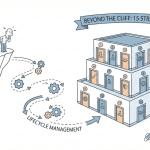
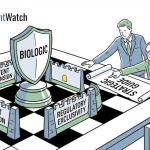
A core proactive strategy in pharmaceutical patent defense is the creation of a “patent thicket”—a dense, layered network of numerous, often overlapping, patents on a single drug.6 This strategic principle is clear: a multi-layered defense is crucial, extending well beyond merely patenting the active pharmaceutical ingredient (API).12 These patents cover everything from the drug’s core composition to its formulations, new uses, and manufacturing processes.6 This strategy is a powerful form of lifecycle management, especially when the original compound patent is nearing expiration.14 It demonstrates a sophisticated understanding that no single patent can withstand all challenges, and thus, a multi-pronged defense is essential for long-term market exclusivity and revenue generation.15
The Humira saga is a masterclass in this strategy. By filing over 247 patents in the U.S., AbbVie was able to extend its market exclusivity for six years beyond the main patent’s expiration, earning the company nearly $75 billion in additional U.S. sales and nearly $200 billion overall.16 This powerful example shows how patent defense is a critical component of corporate resilience and long-term survival.12
The Power of Intelligence: Leveraging Patent Data for Early Advantage
Patent filings represent one of the most valuable yet underutilized sources of competitive intelligence in the pharmaceutical industry.18 By systematically monitoring and analyzing these documents, companies can gain unprecedented insights into competitor R&D pipelines years before products reach the market.18
This strategic intelligence serves as an early warning system for competitive threats. By identifying new patent filings in your therapeutic areas of interest, your organization can detect emerging competitive products years before they enter clinical trials or receive regulatory approval.18 This allows companies to make informed decisions about their own R&D investments, assess freedom-to-operate constraints for pipeline products, and identify opportunities for patent challenges or invalidation.18 This is precisely the kind of strategic intelligence that a service like
DrugPatentWatch provides, helping firms make data-driven decisions that drive competitive advantage and transform how they position themselves in the market.1
The data embedded in patent filings can also be transformed into financial gold. Patent data is the primary input for sophisticated IP valuation models and patent-backed financing.10 The strength, breadth, and remaining lifespan of a patent are the key variables in any credible valuation, as they determine the period of high-margin revenue.10 This data allows companies to precisely quantify the economic value of their IP and use that value to secure non-dilutive capital for R&D and other business functions.10
The increasing assertiveness of patent thickets and the trend of listing more patents in the Orange Book and asserting more patents in Biologics Price Competition and Innovation Act (BPCIA) litigation is not just a defense mechanism; it’s a new form of offensive, strategic pressure that uses the high cost of litigation as a tactical weapon. The average number of patents asserted in BPCIA complaints has risen from 13 (2014-2019) to 24 (2020-2024), a trend that mirrors the practice of listing more patents in the Orange Book for small molecules.19 For a biosimilar manufacturer, this trend requires significantly more up-front work to evaluate and avoid patent infringement.19 The sheer number of patents to challenge, combined with the extraordinary cost and burden of litigation, can be a major disincentive to entering the market at all, especially when the required investment to develop a biosimilar is between $100 million and $250 million.1 This strategic use of a patent thicket means that even if a generic or biosimilar company successfully invalidates a few patents, there are dozens more to fight, delaying their entry and extending the brand’s monopoly. This shifts the cost and risk burden heavily onto the challenger, making the high cost of litigation a tactical weapon in itself.
Taming the Budget: A Guide to Cost Management and Control
While litigation costs can be immense, they are not entirely uncontrollable. A proactive, business-centric approach can help mitigate financial risk and ensure a clear return on investment.
Alternative Fee Arrangements: Breaking the Billable Hour Paradigm
The traditional billable hour model can lead to unpredictable and ballooning legal costs.1 Smart companies are moving to alternative fee arrangements (AFAs) to manage these expenses more effectively. These include capped fees, where the total fee will not exceed a pre-agreed maximum; fixed or flat fees for specific phases or the entire case; or even contingency fees, where the attorney’s payment depends on the case’s outcome, aligning their interests with the client’s.1 These arrangements align the interests of the client and the law firm, encouraging efficiency and predictability.
Proactive Budgeting and In-House Resource Management
A robust litigation budget should be a dynamic management tool, not a static document.1 It must be regularly reviewed against actual expenditures—monthly or even weekly in active phases—and continuously weighed against a dynamic cost-benefit analysis.1 Not every task requires a high-priced outside partner. Strategic use of in-house legal and technical resources can significantly reduce costs, particularly in the e-discovery phase.1 For example, proactive information governance can reduce the data review burden, and in-house teams can handle lower-level tasks that do not require a $1,200-per-hour partner.1
The following table synthesizes the median costs of pharmaceutical patent litigation based on the amount at risk, providing a crucial budgeting tool for IP strategists.
Amount at Risk
Median Cost Through Discovery & Claim Construction (USD)
Median Total Cost Through Trial & Appeal (USD)
Less than $1 Million
$300,000 – $400,000
$600,000 – $700,000
$1 Million – $10 Million
$600,000 – $1,000,000
$1,000,000 – $2,000,000
$10 Million – $25 Million
$1,225,000 – $1,500,000
$2,700,000 – $3,000,000
More than $25 Million
$2,375,000 – $3,000,000
$4,000,000 – $5,500,000
Hatch-Waxman (ANDA)
$3,000,000
$5,000,000
Case in Point: An Analysis of Major Drug Patent Disputes
The best way to understand the strategic and financial stakes of drug patent litigation is to examine real-world case studies. These battles illustrate how patents are used as both shields and swords.
The Humira Saga: A Masterclass in Extending a Monopoly
The Humira saga is a powerful example of intellectual property as a central corporate strategy. AbbVie’s meticulously built “patent thicket,” consisting of over 247 patents, allowed the company to protect its blockbuster drug, Humira.16 This strategy extended its U.S. market exclusivity for six years beyond the main patent’s expiration in 2016.17 This extension allowed AbbVie to earn an additional $75 billion in U.S. sales during that period, bolstering its share price and allowing it to pay billions of dollars in dividends to investors.17 The strategic settlement agreements with biosimilar manufacturers allowed AbbVie to manage the timing of competition, a powerful example of lifecycle management.20 The revenue generated from this extended monopoly also gave AbbVie the financial runway to launch successor products like Skyrizi and Rinvoq, which it believes will make up for the lost Humira revenue as it faces competition.17
When Litigation Becomes Leverage: The Gilead and ViiV Settlement
In a high-profile case over HIV drugs, Gilead agreed to pay ViiV Healthcare a $1.25 billion upfront payment, plus a 3% royalty on future U.S. sales of Biktarvy until the patent expires in 2027.21 This case highlights the immense value of intellectual property and the willingness of companies to pay staggering sums to resolve disputes and secure a global license and freedom-to-operate. The settlement resolved years of litigation, providing certainty and a clear path forward for both parties.21
The Lipitor Litigation: A Cautionary Antitrust Tale
Pfizer’s decade-long antitrust suit over Lipitor ended in a $93 million settlement with wholesale drug distributors.23 The company was accused of colluding with a generic manufacturer in a “pay-for-delay” settlement to slow the release of a cheaper generic version.23 This case illustrates the legal and financial risks of using patent settlements to stifle competition, a practice that the Federal Trade Commission (FTC) estimates costs consumers and taxpayers $3.5 billion in higher drug costs every year.25
The following table provides a quick, digestible summary of these major cases, making the high-level concepts concrete and memorable.
Case
Key Patents/Dispute
Financial Outcome
Strategic Takeaway
Humira Saga
“Patent thicket” of over 247 patents; dispute with biosimilar manufacturers.
Earned ~$75B in additional U.S. revenue from a 6-year extension of exclusivity.
A masterclass in lifecycle management; litigation as a strategic tool to delay entry and buy time for successor products.
Gilead vs. ViiV
Patent dispute over HIV drugs (Biktarvy/Dolutegravir).
$1.25B upfront payment + 3% royalty on U.S. sales.
Demonstrates the immense value of core patents and a company’s willingness to pay large sums to secure freedom-to-operate and resolve uncertainty.
Pfizer vs. Ranbaxy
“Pay-for-delay” antitrust settlement for Lipitor.
$93M settlement with drug distributors.
A cautionary tale on antitrust risks and the high financial cost of anti-competitive settlements.
The Future of Pharma IP Litigation: Evolving Landscapes
The battlefield is constantly changing, shaped by new technologies, new regulations, and new legal precedents. Staying ahead requires anticipating these shifts and building a strategy that is as agile as it is robust.
The Rise of Biosimilars: Litigation Under the BPCIA
The Biologics Price Competition and Innovation Act (BPCIA) of 2009 created a new, complex patent dispute resolution process for biologics, known as the “patent dance”.26 The investment needed to develop and market a biosimilar is significantly higher than for a generic small-molecule drug, ranging from $100 million to $250 million.1 This high cost, coupled with the legal uncertainty of a new regulatory framework, has created a unique and expensive litigation landscape.29 For brand companies, litigation for biologics is uniquely complex, with the number of patents asserted in litigation showing a clear upward trend from an average of 13 in 2014-2019 to 24 in 2020-2024.19 This landscape necessitates new strategies for both brand and biosimilar companies, as the stakes and costs are immense.
The disparity in strategic approach between small molecules and biologics is further illuminated by the fundamental differences in their development, patenting, and commercial lifecycles, as detailed in the following table.
Metric
Small Molecules
Biologics
Median Development Cost
~$2.1 Billion
~$3.0 Billion
Median Patents Filed per Drug
3
14
Median Time to Generic/Biosimilar Entry
12.6 Years
20.3 Years
Median Peak Annual Revenue
$0.5 Billion
$1.1 Billion
Source: Industry reports, including the Tufts Center for the Study of Drug Development.1
The Data-Driven Courtroom: AI and Analytics in Legal Strategy
Patent litigation analytics are no longer a novelty; they are an essential tool for shaping case strategy.30 Leveraging data from court records, patent filings, and legal databases provides a competitive edge by moving decision-making from intuition to empirical evidence.30 Firms can use analytics to predict litigation outcomes, assess the strengths and weaknesses of a case, and identify the most favorable jurisdictions and judges.30 This allows companies to make more informed decisions about which cases to pursue, which to settle, and for how much.32
The high-stakes nature of modern drug patent litigation, particularly for biologics, is not just about the patents themselves; it is about the convergence of complex legal, regulatory, and technological systems.6 A company’s R&D strategy influences the patents it files; its patent portfolio dictates its litigation strategy; and its legal outcomes directly impact its financial performance and ability to fund future R&D.13 The Biologics Act itself forces the coordination of regulatory and legal strategies to align with the FDA approval process.27 The era of intellectual property strategy being relegated to a “black box” legal department is over.14 The high cost and complexity of modern litigation necessitate a holistic, integrated approach where every decision, from the lab bench to the courtroom, is viewed through a lens of strategic advantage and return on investment.
“A well-constructed patent portfolio is like a chess game. Each patent is a piece on the board, strategically placed to defend your product and block competitors’ moves.” – Expert cited in “The Patent Playbook” 14
Key Takeaways
Drug patent litigation is a strategic investment, not an unavoidable expense. The costs are formidable, but they are a direct reflection of the immense value of the intellectual property at stake and the multi-billion-dollar R&D investments they protect. A reactive approach is a recipe for disaster; proactive, data-driven IP portfolio management is a strategic imperative for long-term survival and market dominance.
The true value of a patent lies not just in its legal protection but in the revenue it secures and the future innovation it funds. The high costs of litigation, particularly for complex technologies and biologics, create a formidable barrier to entry, but they can be managed with alternative fee arrangements, proactive budgeting, and the strategic use of in-house resources.
Ultimately, winning the patent war requires a holistic, integrated strategy that moves beyond the confines of the legal department. It demands that every function—from R&D to business development—views intellectual property as a central pillar of corporate strategy, leveraging patent data to gain an early-mover advantage and turning the high cost of combat into a competitive strength.
Frequently Asked Questions (FAQ)
Q: Why are pharmaceutical patent disputes so much more expensive than other types of litigation?
A: Pharmaceutical patent disputes are uniquely expensive due to the immense financial stakes and the inherent complexity of the technology.1 Unlike simple consumer product patents, drug patents involve intricate chemical formulations, complex biological processes, and regulatory filings that require extensive discovery and the use of highly specialized, high-cost expert witnesses.1 The potential damages at stake—often measured in billions of dollars—justify the significant legal expenditures required to protect the intellectual property.1
Q: What is a “patent thicket,” and why is it a controversial strategy?
A: A “patent thicket” refers to a portfolio of numerous, often overlapping, patents on a single drug.6 This strategy is designed to create a dense web of protection that deters generic or biosimilar competition.6 While a powerful tool for extending market exclusivity and recouping R&D costs, it is controversial because it can be used to delay the entry of lower-cost alternatives, keeping drug prices high and potentially stifling the very competition that regulatory frameworks were designed to foster.1
Q: How can a smaller biotech company compete against a large pharmaceutical company’s litigation budget?
A: For smaller companies, the high cost of litigation can be an insurmountable barrier, creating a “David vs. Goliath” scenario.1 However, they can level the playing field by leveraging strategic intelligence and data analytics to assess the weaknesses of a brand’s patent portfolio and identify favorable jurisdictions or judges.30 A smaller company can also mitigate risk by engaging in alternative dispute resolution methods like mediation or arbitration, which are often significantly more cost-effective than a full-blown trial.7
Q: How does a patent’s value connect to its effective market exclusivity?
A: A patent’s financial value is directly tied to the period of market exclusivity it grants.10 This period allows a company to generate the high-margin revenue necessary to recoup the massive investments in R&D and failure costs.1 While a patent is granted for 20 years from the date of filing, the effective market exclusivity is often much shorter due to the lengthy clinical trial and regulatory approval process.12 Therefore, strategies that extend this period, such as patent term adjustments and post-approval patents, are critical for maximizing a drug’s value.13
Q: What is the single most critical, actionable step a company can take to manage litigation costs?
A: The most critical step a company can take is to abandon a reactive mindset and adopt a proactive, data-driven approach to intellectual property.14 This involves building a robust, layered patent portfolio from the outset, using patent analytics as an early warning system for competitive threats, and integrating intellectual property strategy into every stage of the R&D and commercialization process.14 By anticipating and planning for litigation, a company can transform a potential financial crisis into a calculated strategic investment.1