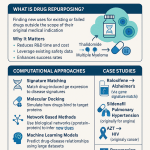
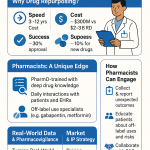
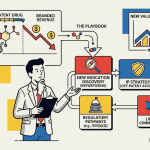
The economic reality of contemporary drug discovery suggests that the traditional model of pharmaceutical research is becoming an exercise in diminishing returns. While the development of a new chemical entity (NCE) requires an average investment of $2 billion to $3 billion and spans up to 17 years, the probability of a Phase I candidate reaching the market remains a dismal 11%.1 This structural inefficiency has catalyzed a shift toward a more pragmatic strategy. Organizations are increasingly turning to drug repurposing—the identification of new therapeutic indications for molecules that have already navigated the regulatory gauntlet. By leveraging established safety and pharmacokinetic data, developers can reduce timelines to as little as three years and costs to approximately $300 million, while nearly tripling the probability of success to 30%.2 However, the transition from a known molecule to a protected commercial asset is a complex legal exercise. Success depends on the ability to secure and enforce intellectual property in an environment where the molecule itself is already public knowledge. This report analyzes the mechanisms for turning patent data into a competitive advantage by navigating the specific hurdles of novelty, non-obviousness, and the evolving standards for induced infringement.
The Logic of the $300 Million Shortcut
The transition from de novo discovery to repositioning is driven by a fundamental reduction in biological risk. In a traditional discovery process, approximately 90% of candidates fail during clinical trials, frequently due to safety concerns or toxicity discovered only after significant capital has been deployed.1 Repurposed compounds have already navigated these early hurdles for their original indications. The attrition rate for these “de-risked” assets is significantly lower because the fundamental human safety data is already established. For an investor, the question is not whether the drug will kill the patient, but whether it will cure a different disease.
The financial advantages of this shortcut are quantified in the growth of the global market. Market data indicates the global drug repurposing market reached $35.3 billion in 2024 and is projected to exceed $51 billion by 2032.2 This growth is concentrated in areas of high unmet need, such as oncology and neurology, where complex disease biology often reveals secondary targets for existing drugs. The oncology segment, in particular, dominated the market in 2024 with a revenue of $12.3 billion, driven by an urgent need for effective and affordable treatments in the face of rising cancer diagnoses.5
Metric
De Novo Discovery (NCE)
Drug Repurposing
Average Cost to Approval
$2.0B – $3.0B
~$300M
Average Time to Market
10 – 17 Years
3 – 12 Years
Success Rate (Phase I to Approval)
~11%
~30%
Primary Risk Factor
Safety and Basic Toxicity
Efficacy in New Indication
Regulatory Pathway
505(b)(1)
505(b)(2)
1
The Novelty Paradox: Turning Old Molecules into New Assets
The primary challenge in drug repurposing is the identity inquiry. Because the drug compound is, by definition, prior art, the invention cannot reside in the molecule itself. Such a claim would fail the novelty requirement of 35 U.S.C. § 102.6 Instead, legal protection must be anchored in the “method of use” or a “purpose-limited product claim”.6 This creates a paradox where a company must prove that a known substance is being used in a way that is so fundamentally different that it qualifies as a new invention.
The novelty of a repurposed drug hinges on the discovery of a specific therapeutic application that was not previously disclosed to the public. To be granted a patent, this new use must satisfy the same four fundamental pillars of patentability as any other invention: it must be directed to eligible subject matter, possess utility, be novel, and be non-obvious.6 While subject matter and utility are typically straightforward for pharmaceutical inventions, novelty and non-obviousness represent the primary legal gauntlet.
Inherent Anticipation: The Invisible Legal Barrier
The doctrine of inherent anticipation represents a significant threat to repurposing efforts. This doctrine holds that even if a specific property or outcome of a claimed invention is not explicitly mentioned in a prior art reference, the patent can still be invalid for lack of novelty if that property is the natural and inevitable result of what is described in the prior art.8 A challenger does not need to find a scientific paper that explicitly states “Compound X treats Alzheimer’s.” Instead, they might find an older publication describing the chemical structure and synthesis of Compound X for a different purpose. If the challenger can prove through expert testimony and experimental data that administering Compound X as described in that old paper inherently results in the treatment of Alzheimer’s, the new patent can be invalidated.8
The core of the novelty inquiry is identity. Determining whether an identical inherent characteristic is responsible for both the old and new uses often requires a deep dive into the underlying science. While patent law does not formally require an inventor to disclose the mechanism of action, in the context of repurposing, understanding and elucidating the mechanism can become the dispositive factor in establishing novelty.6 If a researcher can show that a drug acts on a completely different biological pathway in the new indication, they have a stronger case for defending against an inherency rejection.
The Non-Obviousness Standard and the Shadow of KSR
Even if a use is novel, it must be non-obvious to a Person Having Ordinary Skill in the Art (PHOSITA). This requirement, codified in 35 U.S.C. § 103, is the most subjective and frequently litigated hurdle in pharmaceutical patenting.6 In the United States, this analysis is guided by the KSR v. Teleflex standard, which moved away from a rigid “teaching-suggestion-motivation” test in favor of a more flexible, common-sense approach.8 Under KSR, if a technique is known to improve one device or process, using it to improve a similar one in a predictable way is likely obvious.
For drug repurposing, this means that if the prior art suggests a drug’s known mechanism of action would logically lead to the new indication, the patent is vulnerable. To defend against obviousness rejections, innovators must demonstrate “secondary considerations” or “objective indicia of non-obviousness.” These include:
Teaching Away: The prior art suggested the drug would not work for the new use.6
Unexpected Results: The drug produced a clinical effect of a magnitude or nature that could not have been predicted from the prior art.6
Long-Felt Need: The invention solved a medical problem that had remained unsolved despite significant effort in the field.6
Failure of Others: Evidence that other skilled researchers tried and failed to solve the same problem.8
The 505(b)(2) Regulatory Engine
For business professionals, the U.S. Food and Drug Administration’s 505(b)(2) regulatory pathway is the engine of drug repurposing. This pathway allows a sponsor to rely, at least in part, on safety and efficacy data not conducted by the applicant, such as published literature or the FDA’s previous findings for a reference listed drug.10 This “hybrid” NDA is a strategic pivot that balances innovation with speed-to-market.
The 505(b)(2) route is specifically designed for modifications of existing drugs, including new indications, new dosage forms, new strengths, or new combination products.10 By referencing existing data, a company can skip the expensive preclinical phase and many early-stage safety trials, focusing instead on “bridging studies” that confirm the drug’s performance for the new use.10
Bridging Studies and the Efficiency of Known Safety
A 505(b)(2) program must still demonstrate safety and efficacy to the same standards as a traditional 505(b)(1) program. However, the size and scope of the clinical trials are typically much smaller. For example, a company wanting to create a nasal spray version of an approved oral medication can use the 505(b)(2) pathway to conduct bridging studies that confirm the safety and effectiveness of the new delivery method.10 This reduces development costs by hundreds of millions of dollars and can shave years off the approval timeline.
The efficiency of this pathway depends on early strategic planning. A lack of familiarity with the nuances of the 505(b)(2) process can result in the execution of unnecessary studies, leading to “bloated” development programs.11 The FDA has previously declared that certain studies submitted in 505(b)(2) applications were not required or even reviewed because the information was already established in the reference drug’s profile. Successful sponsors treat the pre-IND (Investigational New Drug) meeting as a critical “go/no-go” decision gate to confirm exactly which studies the FDA will require.13
Feature
505(b)(1) NDA
505(b)(2) NDA
505(j) ANDA (Generic)
Purpose
Entirely new drugs (NCE)
Modified existing drugs
Copies of approved drugs
Data Source
Full reports of original studies
Hybrid (Original + Existing)
Bioequivalence to RLD
Clinical Trials
Full preclinical/clinical
Reduced/Bridging studies
No new safety/efficacy trials
Exclusivity
5 Years (NCE)
3 Years (New clinical data)
180 Days (Para IV only)
Time to Market
~10–15 Years
~3–10 Years
~1–2 Years
10
Global Divergence: United States vs. Europe
Pharmaceutical IP teams must manage a fundamental divide between the U.S. and European approaches to patenting medical methods. While the U.S. allows direct protection for medical procedures, the European Patent Convention excludes “methods for treatment of the human or animal body by surgery or therapy” under Article 53(c) EPC.15 This exclusion is intended to protect the freedom of the medical practitioner to treat patients without fear of patent litigation.
To enable the protection of repurposed drugs, the EPC provides a “legal fiction” of novelty through purpose-limited product claims. Under Article 54(5) EPC, a known substance can be patented “for use” in a specific medical method.7 The novelty and inventive step are derived not from the substance itself, but from its specific new therapeutic application.
Purpose-Limited Claims in the European Court
The Unified Patent Court (UPC), which began operations in 2023, is already clarifying these principles. A 2025 decision from the Düsseldorf Local Division emphasized that for second medical use claims, the scope of protection is strictly limited to the purpose defined in the claim.7 The therapeutic effect is considered a functional feature of the claim, meaning that the patent must sufficiently and reproducibly disclose that effect throughout the entire scope of the invention.7
European practice also more frequently allows claims to novel dosage regimens, new routes of administration, or treatments for a novel patient subgroup.17 This flexibility is balanced by strict examination criteria at the EPO, which seek to screen out claims that simply reproduce the state of the art in different terms. This diligence is designed to remove impediments to the marketing of generic alternatives and biosimilars while still rewarding “true” therapeutic innovation.15
“In order for second medical use claims to be considered allowable, it is necessary for the specification as filed to include appropriate evidence, which may take the form of tenable instruction.” — European Patent Office Technical Board of Appeal15
China’s 2025 Regulatory Leap: Data Exclusivity Tiers
China has moved aggressively to align its regulatory framework with international practices. In 2025, the National Medical Products Administration (NMPA) released draft measures that formalize regulatory data protection, a move that provides a critical layer of security for repurposed assets in the world’s second-largest pharmaceutical market.18
These new measures establish a tiered system of data exclusivity:
Innovative Drugs: 6 years of data exclusivity for drugs not previously marketed in China or overseas.18
Improved/Modified New Drugs: 3 years of data exclusivity. This category is the primary home for repurposed drugs that involve new indications, new formulations, or new combinations.19
First-to-Market Generics: 3 years of exclusivity for those that successfully challenge an existing patent.19
A notable feature of the Chinese system is the “time difference” deduction. For drugs already approved overseas but not yet in China, the protection period is reduced by the time elapsed between the global approval and the China application.18 This policy is designed to compel global pharmaceutical companies to launch their newest therapies in China simultaneously with other major markets.
The Induced Infringement Crisis: Skinny Labeling
The most volatile front in the repurposing arena is the “skinny label” or Section viii carve-out. Under the Hatch-Waxman framework, a generic company can obtain FDA approval for a drug by carving out the indications that are still protected by “method of use” patents.20 For decades, this mechanism allowed generics to enter the market for off-patent uses (like hypertension) while leaving the brand-name drug with a monopoly on newer, patented uses (like heart failure).
However, the legal viability of this strategy has been called into question by the Federal Circuit’s decisions in GSK v. Teva and Amarin v. Hikma.20 The central question is whether a generic manufacturer can be held liable for “inducing” patent infringement if the market—including doctors, pharmacists, and insurance companies—uses the generic for the patented, carved-out indication anyway.
GSK v. Teva: When Marketing Trumps the Label
In the GSK v. Teva case, Teva launched a generic version of carvedilol with a label that omitted GSK’s patented heart failure indication. GSK argued that Teva nonetheless induced infringement through its marketing materials and press releases, which described the generic as “bioequivalent” or “therapeutically equivalent” to the brand-name drug, Coreg.20
The Federal Circuit reinstated a $235 million jury verdict against Teva, finding that even with a skinny label, external circumstantial evidence can satisfy the “specific intent” requirement for induced infringement.20 This ruling suggests that merely referencing an FDA-assigned “AB rating” in marketing materials could be sufficient to trigger liability if that rating leads physicians to believe the drugs are interchangeable for all uses, including the patented one.25
Hikma and the Supreme Court’s 2026 Outlook
The controversy has moved to the U.S. Supreme Court, which agreed in early 2026 to hear Hikma v. Amarin.24 Hikma argued that the Federal Circuit’s approach nullifies the Section viii carve-out provision by exposing generic manufacturers to “massive patent liability” for commonplace “generic version” statements.24
For business development teams, this decision will reset the balance of generic competition. If the Court rules against Hikma, generic manufacturers may need to adopt extremely restrictive communication practices, potentially abandoning the skinny-label pathway altogether for certain drugs.27 For brand-name innovators, a victory would strengthen the “method of use” patent as a primary defense against generic erosion, even after the main composition-of-matter patent has expired.
The Double Patenting Trap: Cellect and the PTA Crisis
A sophisticated threat to pharmaceutical patent families is Obviousness-Type Double Patenting (ODP). This judicial doctrine prevents a patentee from obtaining multiple patents on “patentably indistinct” variations of the same invention, which would effectively extend the patent term beyond the statutory limit.30
Historically, ODP was a manageable issue that could be resolved by filing a “terminal disclaimer,” which ties the term of a later patent to an earlier one. However, the Federal Circuit’s 2023 decision in In re Cellect transformed ODP from a procedural hurdle into a potential portfolio-killer.33
The PTA-Expiration Rule
The court held in Cellect that for a patent receiving Patent Term Adjustment (PTA)—extra days added due to USPTO administrative delays—the ODP analysis must be based on the expiration date after the PTA has been added.30 This means that if a “parent” patent expires later than a “child” patent solely because of a PTA award, the parent patent can be invalidated for ODP if its claims are not “patentably distinct” from the child patent.30
This creates a “trap” for large pharmaceutical families. Challengers are now incentivized to file reexaminations on expired or near-expired patents within a family to trigger ODP rejections against the most valuable patents that still have remaining PTA.30 Because a terminal disclaimer must be filed before the reference patent expires, many companies find it is too late to fix the problem by the time it is identified in litigation.33
Protecting the Anchor Patent: The Allergan Exception
The Federal Circuit provided a limited “safe harbor” in 2024 with its decision in Allergan USA Inc. v. MSN Laboratories. The court ruled that a “first-filed, first-issued, later-expiring” patent cannot be invalidated by a later-filed, later-issued “child” patent that happens to expire earlier.30 This protects the “anchor” patent of a family—the one that usually receives the most PTA—from being taken down by its own descendants. However, the protection is narrow, and the line between Cellect and Allergan is thin, requiring meticulous management of the filing and issuance sequence of every patent in a portfolio.30
Doctrine / Case
Legal Core
Impact on Pharma IP Strategy
Obviousness-Type Double Patenting (ODP)
Prevents “unjust timewise extension” of patents for similar inventions.
Requires common ownership and term alignment.
In re Cellect (2023)
ODP is analyzed based on the post-PTA expiration date.
PTA can make a patent vulnerable to its own family members.
Allergan v. MSN (2024)
First-filed/First-issued patents are immune to invalidation by later-filed children.
Crucial to ensure the most valuable patent issues first.
35 U.S.C. § 121 Safe Harbor
Divisional patents issued due to a restriction requirement are immune to ODP over the parent.
Maintaining “consonance” with restriction requirements is essential.
30
Competitive Intelligence and the Data-Driven Advantage
In the repurposed drug space, the quality of a Freedom-to-Operate (FTO) analysis determines the difference between a commercial breakthrough and a legal breakdown. For business professionals, FTO is not a scientist’s query (“Can we create this?”); it is a strategist’s query (“Can we bring this to market profitably?”).37
Effective FTO analysis requires the systematic fusion of patent filings and clinical trial data. This is where platforms like DrugPatentWatch move to the core of R&D strategy. By tracking patent expirations, litigation history, and regulatory exclusivities in real-time, DrugPatentWatch allows teams to spot “white spaces”—areas of the biological landscape that are characterized by a low density of patent activity or a complete absence of relevant prior art.38
Decoding the IP “Picket Fence”
Generic and repurposed drug developers must navigate a “picket fence” of secondary patents. These patents do not cover the drug itself but target peripheral features, including:
New Formulations: Such as stable liquid versions or extended-release tablets.41
Polymorphs and Salts: Specific crystalline forms that are claimed for their superior shelf-life or solubility.8
Manufacturing Processes: Minor improvements to the synthesis of the API that can block a generic entry if the original process is inefficient.9
Drug Delivery Devices: Patents on the injector or inhaler used to administer the drug.40
A rigorous FTO analysis must identify these potential barriers at the earliest possible stage—ideally as soon as the API and the target indication have been defined.37 Missing a single formulation patent for a specific drug-release mechanism can lead to lawsuits exceeding $100 million in damages or years of market delays.44
The Pricing Stalemate and the Tragedy of the Commons
Even with a strong patent and a clear regulatory path, many repurposed drugs fall victim to a market failure known as the “Tragedy of the Commons.” Because doctors prescribe drugs by name and pharmacies often dispense the lowest-cost version, it is difficult to enforce a new-use patent at the point of sale.45
If “Drug X” is available as a cheap generic for its original indication (hypertension), an insurance company or pharmacy has little incentive to pay a premium for a “repurposed” version of Drug X for a new indication (Alzheimer’s). This leads to massive “generic erosion” where the innovator who funded the clinical trials for the new use cannot capture the economic value of their discovery.45
Pull Funding Models as a Strategic Solution
Economists and policymakers are increasingly advocating for “pull funding” to address this gap. Unlike traditional research grants (“push funding”) which pay upfront for a proposal, pull funding pays for results.45 Under a pull mechanism, a developer would be rewarded only after (a) successfully demonstrating a new use for a drug and (b) achieving real-world adoption by patients.
Proposed rewards are significant—around $1 billion in future cash flows, or $350 million in present value.45 Organizations like the Centers for Medicare & Medicaid Services (CMS) are viewed as ideal anchor funders for these mechanisms because they have a direct financial incentive to reduce long-term healthcare costs through the introduction of affordable, repurposed therapies.
AI and Computational Architectures: The Discovery Engine of 2026
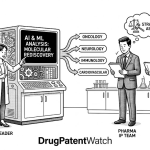
The methodology for finding new uses for old molecules has transitioned from serendipity to systematic, AI-driven architectures. Modern AI-driven approaches, such as the DeepDrug framework, utilize graph neural networks to model the interactions between genes, proteins, and molecules within heterogeneous biomedical networks.4
These systems can identify novel drug-disease associations by learning high-level representations from integrated genomic, proteomic, and clinical datasets. For example, AI models recently simultaneously evaluated multiple therapeutic targets to predict synergistic effects, identifying a five-drug combination for Alzheimer’s treatment by targeting neuroinflammation and mitochondrial dysfunction pathways.4
By 2026, the shift from “Generative AI” to “Agentic AI” has begun to redefine competitive intelligence. These agents can synthesize millions of disparate data points—from patent filing velocity to clinical trial enrollment competition—to provide specific “kill” metrics for internal R&D programs.47 This allows companies to fail fast and focus their capital on the few assets with the highest probability of clinical success and legal defensibility.
Key Takeaways
Risk Mitigation: Repurposing molecules with known safety profiles increases approval probability from 11% to 30% while reducing development costs by up to 85%.3
Patent Anchoring: Novelty must reside in the method of use or the purpose of the product. The active pharmaceutical ingredient (API) is always prior art.6
Inducement Risk: The GSK v. Teva decision has made generic bioequivalence statements a potential source of induced infringement liability, even when a “skinny label” is used.20
Double Patenting Alert: Patent Term Adjustment (PTA) can create ODP vulnerabilities. The Cellect ruling means that family members with different expiration dates must be managed as a single temporal unit.30
China’s 3-Year Window: The 2025 NMPA reforms provide a 3-year data exclusivity period for “improved new drugs,” a critical protection for the repurposing market in Asia.18
Strategic Intelligence: High-ROI R&D depends on identifying “white spaces” where high unmet medical need coincides with low patent density, using platforms like DrugPatentWatch.38
The Payer Hurdle: Scientific success does not guarantee commercial success. Pricing and reimbursement strategies must be architected to overcome generic erosion and off-label substitution.13
FAQ
How can a drug be considered “novel” if it has been on the market for twenty years? In patent law, “novelty” refers to the specific invention claimed. While the molecule is old, the method of treating a specific disease with that molecule can be legally new. The discovery must not have been “inherent” or previously disclosed in any public document, even if the drug was being used for a different purpose.6
What is the “First-Filed” exception in double patenting? Established in Allergan v. MSN, this exception protects the first patent that was filed and issued in a family. Even if that patent expires later than its “child” patents (due to PTA), it cannot be invalidated by them for obviousness-type double patenting. This prevents the “logic of ODP” from being used to cut off a term that was validly granted by Congress.30
Does the 505(b)(2) pathway allow for 5 years of exclusivity? Generally, no. The 5-year New Chemical Entity (NCE) exclusivity is reserved for drugs with active ingredients never before approved by the FDA. 505(b)(2) applications usually receive 3 years of exclusivity, and only if new clinical studies were essential for approval. However, they can still qualify for 7-year Orphan Drug exclusivity.10
Why are “skinny labels” currently a major risk for generic companies? The Federal Circuit has ruled that if a generic company markets its product as “equivalent” to a brand-name drug, a jury can find that it “induced” infringement of the brand’s patents—even if those specific indications were left off the generic’s label. This turns “bioequivalence,” a regulatory requirement, into “intent,” a legal liability.23
How does “Agentic AI” differ from previous discovery tools? Previous AI tools were largely generative or predictive. Agentic AI, as observed in 2026, can execute complex tasks autonomously, such as synthesizing millions of patent filings with real-time clinical trial enrollment data to calculate the exact probability of a competitor’s market launch.47