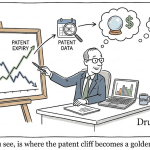
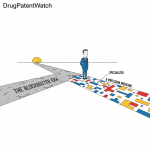
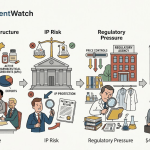
The global pharmaceutical industry is entering a period of wealth transfer that has no historical equivalent. Between 2025 and 2030, nearly 200 blockbuster drugs will lose their patent protection, putting a collective $400 billion in annual revenue at risk.1 This event, known as Patent Cliff 2.0, is three times larger than the wave of expirations that occurred in 2016.3 For companies that provide active pharmaceutical ingredients, manufacturing services, or delivery technologies, this shift represents a predictable pipeline of sales triggers.
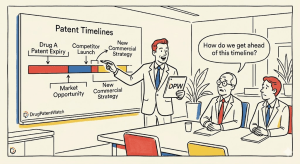
Success in this environment depends on moving business development activity 18 to 36 months upstream.4 Waiting for the news of a patent expiration means the contracts for the generic or biosimilar versions were signed years ago. Expert business development teams use real-time monitoring of Abbreviated New Drug Applications and Paragraph IV certifications to identify exactly when a brand manufacturer needs a defense strategy and when a generic challenger needs a manufacturing partner.
The Legal Engine of Market Disruption
The contemporary battlefield of pharmaceutical competition was built on the Drug Price Competition and Patent Term Restoration Act of 1984, commonly known as the Hatch-Waxman Act.5 This law created the balance between incentivizing drug innovation and allowing for earlier access to affordable medicine. It established the Abbreviated New Drug Application pathway, which allows generic manufacturers to rely on the safety and efficacy data of a brand-name drug if they can prove bioequivalence.5
The Mechanics of Abbreviated New Drug Applications
An Abbreviated New Drug Application allows a generic company to skip the $2.6 billion cost and decade-long timeline of clinical trials.6 Instead of proving a drug works, the applicant only has to prove their version is the same as the original. This is established through bioequivalence testing, where the generic firm shows that its product delivers the same amount of active ingredient into the patient’s bloodstream at the same rate as the reference drug.6
When a generic firm submits an Abbreviated New Drug Application, it must certify against every patent listed in the FDA’s “Orange Book” for the target drug.5 The Orange Book is the definitive registry of patents that the brand manufacturer claims cover the drug substance, the drug product, or the method of use.6
The Four Tiers of Patent Certification
A generic manufacturer chooses one of four certifications for each patent listed in the Orange Book. This choice dictates the timing and risk of their market entry.5
Certification Type
Legal Basis
Strategic Implication
Paragraph I
No patent information has been filed with the FDA.
Immediate approval is possible once scientific requirements are met.
Paragraph II
The patent listed in the Orange Book has already expired.
Removes legal barriers to immediate approval.
Paragraph III
The applicant will not launch until the patent expires on its stated date.
Allows for a predictable entry and at-risk inventory buildup.
Paragraph IV
The patent is invalid, unenforceable, or will not be infringed.
Initiates a direct legal challenge and potential 180-day exclusivity.
5
Paragraph IV Certifications as Sales Triggers
A Paragraph IV certification is not a passive declaration. It is an assertion that the brand’s intellectual property is legally deficient.5 Under 35 U.S.C. § 271(e)(2), the filing of an Abbreviated New Drug Application with a Paragraph IV certification is an “artificial act of infringement”.5 This legal construct gives the brand manufacturer standing to sue the generic applicant before any commercial harm has occurred.
For a business development professional, a Paragraph IV filing is the “ignition switch” for high-stakes activity.12 It identifies the generic companies that are most aggressive and most likely to need manufacturing capacity or active pharmaceutical ingredients for a launch.
The NCE-1 Milestone and the Four-Year Window
For drugs classified as New Chemical Entities, a generic manufacturer cannot submit an Abbreviated New Drug Application for five years after the original drug is approved.6 However, a critical loophole exists. If the application contains a Paragraph IV certification, the filing can occur exactly four years after approval. This date is known as “NCE-1”.12
The first company to submit a “substantially complete” application with a Paragraph IV certification on the NCE-1 date becomes eligible for 180 days of market exclusivity.9 This period is the most profitable window in the generic business model. During these six months, the FDA will not approve any other generic versions, creating a temporary duopoly between the brand and the first challenger.9
Economic Impact of the $400 Billion Vacuum
The scale of the current patent cliff is larger than anything the industry has seen before. Between 2025 and 2030, one-sixth of the entire industry’s annual revenue will lose patent protection.3 This exposure is an existential threat to the top ten pharmaceutical firms. Companies like Bristol Myers Squibb, Pfizer, and Regeneron have assets accounting for over 30% of their collective 2024 revenues at risk.1
Small Molecule Cliffs vs. Biologic Managed Slopes
The speed of revenue loss depends on the type of drug. Small-molecule drugs, which are usually oral solids like tablets or capsules, experience a sudden and catastrophic decline in revenue.1 Because of automatic substitution at the pharmacy level, a branded drug can lose 80% to 90% of its sales within the first year of generic entry.1
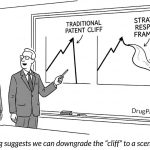
Biologics follow a “Managed Slope”.3 These large, complex molecules are harder to copy and often do not have “interchangeable” status, meaning they cannot be substituted without a doctor’s order. Patients who are stable on a biologic are “sticky,” leading to a slower erosion of market share. For example, Johnson & Johnson saw its sales for Stelara drop 41% in 2025 after losing exclusivity, which is steep but less than the 90% drops seen in small molecules.3
Price Erosion Dynamics
The severity of revenue loss correlates directly with the number of generic competitors that enter the market.9
Number of Generic Competitors
Price Reduction vs. Brand Price (%)
Market Dynamic
1 Generic
15% to 25%
Temporary Duopoly
3 Generics
20% to 50%
Margin Compression
10+ Generics
70% to 95%
Full Commoditization
1
Twelve months after generic entry, prices of oral medicines typically drop 66%.20 After two years, prices are often 74% lower than the original brand price.20 This rapid commoditization is why generic firms race for the 180-day exclusivity period, which allows them to capture up to 80% of the product’s lifetime profits in just six months.9
The Revenue Value of a Single Day
For blockbuster drugs, every day of market exclusivity is worth millions. A drug with $1 billion in annual sales loses approximately $2.7 million in daily value for every day generic entry is moved forward.19 This financial pressure drives the intense litigation surrounding Paragraph IV certifications. The high success rate of these challenges—which is 76% when settlements are included—demonstrates that the risk of litigation is often worth the payoff for generic firms.9
Business Development Strategy for Data Providers
Pharmaceutical supply vendors often treat loss of exclusivity as news rather than intelligence. The companies that win are those that use data to enter the conversation years before the patent expires.4 Data providers can offer real-time monitoring of Abbreviated New Drug Applications to identify these opportunities.
The Five Commercial Phases of Loss of Exclusivity
Revenue opportunities are tied to five specific decision-making windows.4
LOE Stage
Behavior
Vendor Opportunity
Phase 1: Lifecycle Defense (5–3 Years Pre-LOE)
Brand manufacturer shifts R&D to protect margins.
Reformulation contracts and stability studies.
Phase 2: Generic Positioning (3–2 Years Pre-LOE)
Challenger firms begin litigation and regulatory filings.
API supply agreements and litigation support.
Phase 3: Operational Ramp (12–18 Months Pre-LOE)
Generic firms finalize launch inventories and capacity.
Process validation and packaging procurement.
Phase 4: Launch Shock (0–12 Months Post-LOE)
Rapid market share shift and price competition.
High-volume API supply and managing surges.
Phase 5: Asset Review (12+ Months Post-LOE)
Brand firms divest mature assets or consolidate.
Plant acquisitions and specialty manufacturing.
4
The 24-Month Stability Wall
Many brand teams are late to defend their assets because they do not account for the “24-Month Stability Wall”.3 Defensive maneuvers like reformulation or packaging changes require two years. One year is needed to generate stability data to prove the new version is effective, and another year is needed for regulatory review and approval.3
If a team waits until 12 months before loss of exclusivity to start, they lack the data needed to launch a “shielded” version of the drug. Service providers can use DrugPatentWatch to identify drugs that are 36 months away from patent expiration and offer stability optimization services then.3
Triggers for Active Pharmaceutical Ingredient Suppliers
Suppliers of active pharmaceutical ingredients can use patent timelines to secure long-term contracts. The Paragraph IV settlement signal is a reliable trigger for capacity needs.4 When a generic firm reaches a settlement agreement with a brand firm, they are given a “date-certain” for entry.19 This public signal tells suppliers exactly when a generic firm will need commercial-scale batches.
The tech transfer initiation, which typically happens 18 to 24 months before launch, is another trigger. This represents a multi-year revenue relationship for validation support and process development.4
The FTC Crackdown on “Junk” Patent Listings
The environment for listing patents in the Orange Book is changing because of increased enforcement from the Federal Trade Commission.24 Under the leadership of Lina Khan, the agency is challenging what it calls “improper” patent listings that inhibit the generic drug market.24
Targeting Device and Combination Patents
The FTC crackdown focuses on patents for device components—like the plastic cap of an inhaler or the mechanical parts of a pen injector—that do not claim the drug substance or its method of use.24 The agency argues that these patents are “junk” because they do not meet the statutory requirements for inclusion in the Orange Book.24
In 2024 and 2025, the FTC challenged over 300 patent listings across 20 different companies, including AstraZeneca, Novo Nordisk, and GSK.24 The products targeted include asthma inhalers, epinephrine autoinjectors, and GLP-1 pens used for weight management and diabetes.24
The Legal Dispute Over “Drug Product” Definitions
A central legal dispute involves how the Hatch-Waxman Act defines a “drug product”.28 The FTC contends that drug products are limited to “finished dosage forms” like tablets or capsules that contain a drug substance. Branded manufacturers argue that robust patent listings are pro-competitive and that device components are essential to the drug’s delivery.27
This crackdown has already led some firms to delist patents voluntarily or cap out-of-pocket costs for their products.24 For generic firms, this shift removes the 30-month stay and accelerates their entry into the market.
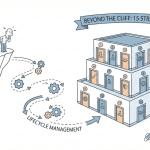
Lifecycle Management and the Subcutaneous Pivot
Innovator companies use strategic maneuvers to turn patent cliffs into manageable hills. The most common tactic is moving patients from an intravenous version of a drug to a subcutaneous version.3
Case Study: Merck and Keytruda
Merck is executing this with Keytruda, the world’s top-selling drug, which generated nearly $30 billion in 2024.3 The core patent on the intravenous version expires in 2028. Without a defense, Merck would lose 80% of that revenue.
Instead, Merck developed a subcutaneous version approved in late 2025.3 By migrating 40% of their patients to this new form, they preserve $12 billion in annual revenue. They spent $1 billion on this program, resulting in an ROI of over 1,000%.3 The patents on the subcutaneous delivery technology could protect that revenue until 2042.3
Strategic Repurposing and New Indications
Another defense is finding new therapeutic uses for existing drugs. This is often done through the 505(b)(2) pathway, which allows a company to rely on existing data for an approved drug while submitting new data for a different use.20
Pathway Type
Reliance on Prior Data
Relative Cost
Traditional NDA
None
Highest
505(b)(2) Application
Partial
Moderate
Generic ANDA
Complete
Lowest
20
Patenting a new indication or a modified-release formulation provides several additional years of exclusivity.8 These “secondary patents” are a key target for generic challengers because they are often easier to invalidate than the original chemical structure patent.19
Return on Investment for Patent Intelligence
Using patent data is not just about legal defense; it is a driver of market growth. Companies that monitor and utilize patent data are 61% more likely to experience significant market growth.30
Quantifiable Gains for Manufacturing Organizations
Contract manufacturing organizations quantify the ROI of patent tools through direct revenue correlation. One organization reported that a $50,000 investment in patent analytics directly contributed to winning two manufacturing contracts worth over $5 million—a 100x return on the tool’s cost.30
AI-powered patent analytics reduce manual analysis time by up to 80%, allowing teams to process more opportunities with fewer resources.30 This efficiency gain translates into a faster qualification process for prospects.
Reducing R&D Failures
Major pharmaceutical firms use patent data to accelerate their R&D outcomes. Pfizer achieved 40% faster target validation by using comprehensive patent data.31 Roche reported 25% fewer late-stage failures after integrating patent intelligence into their workflow.31 This is critical because the probability of success from Phase I to approval is less than 14%, and for oncology, it is only 3.4%.8
Technical Precision in Bioequivalence Testing
For a generic drug to be approved, it must demonstrate bioequivalence through pharmacokinetic testing.5 This involves measuring how the drug moves through the human body.
Cmax and Area Under the Curve
Two parameters are analyzed to determine if a generic is equivalent to the brand drug.10
Cmax: The maximum concentration of the drug observed in the blood. This measures the rate of absorption.
AUC: The total area under the drug concentration-time curve. This measures the total extent of absorption.
If these parameters fall within an acceptable range, the generic is deemed bioequivalent. Designing robust studies that meet FDA requirements is a primary challenge for generic manufacturers.10
Food Effect and Regulatory Loopholes
The FDA’s Product Specific Guidances recommend that applicants conduct bioequivalence studies under either fasting or fed conditions.32 For some drugs, the absorption changes significantly depending on whether the patient has eaten. Navigating these requirements and identifying which “Reference Listed Drug” to use for comparison is a critical part of the strategy.29
The Anatomy of a Patent Fortress
Innovator companies build layers of protection around their drugs to delay generic entry. This “patent thicket” consists of composition of matter patents and several types of secondary patents.2
Composition of Matter: The foundational patent covering the active pharmaceutical ingredient. This is the “gold standard” of IP.8
Formulation Patents: These protect the specific recipe or chemical stability of the final product.8
Method-of-Use Patents: These protect a drug’s use for treating a specific disease.8
Process Patents: These protect the specific method used to manufacture the compound.8
Secondary patents are often filed after the drug’s approval, providing an average of six to seven additional years of protection.34 While these patents are frequently challenged as being “obvious,” they still serve as a barrier that delays competition while the brand firm moves patients to newer products.
Valuation and the Risk-Adjusted Net Present Value
Sophisticated investors use a Risk-Adjusted Net Present Value formula to value clinical-stage assets.35 This formula separate technical risk from financial risk.
$$rNPV = \sum \frac{CF_t \times P(S)}{(1+r)^t}$$
In this formula, $CF_t$ is the projected cash flow, $P(S)$ is the probability of success, and $r$ is the discount rate.35 The valuation is highly sensitive to the date of generic entry. A five percent change in peak market share or a 12-month delay in launch can swing a drug’s valuation by hundreds of millions of dollars.35
Cost Distribution in Clinical Trials
The financial burden of drug development increases exponentially as an asset moves through the pipeline.35
Trial Phase
Average Total Cost (USD)
Cost per Patient (USD)
Phase I
$5.26 Million
$136,000
Phase II
$18.49 Million
$130,000
Phase III
$52.84 Million
$113,000
35
Phase III trials are the most expensive because they require large patient populations and long-term monitoring for safety. Because the patent clock starts ticking during the lab phase, every month a trial is delayed is a month of high-margin revenue lost forever.35
Likelihood of Approval by Therapeutic Area
The chance of a drug reaching the market varies significantly based on what it treats.8
Therapeutic Area
Overall Likelihood of Approval
Primary Bottleneck
Hematologic Oncology
12% to 15%
Phase III
Solid Tumor Oncology
< 10%
Phase II
CNS / Neurology
6% to 8%
Phase II and III
Infectious Disease
13% to 19%
Regulatory Review
35
Comparing Intelligence Platforms for Biopharma
To build an effective sales pipeline, business development teams need tools that synthesize litigation and regulatory data into actionable signals.
The Limitations of Manual Monitoring
The FDA publishes hundreds of guidance documents and approval decisions every year.36 Tracking these manually is a full-time job for multiple people. A missed publication can mean losing the opportunity to influence a regulation or being caught off guard by a safety communication.
Automated platforms provide a clear audit trail of what was published and when it was detected.36 This is essential for regulatory affairs teams that must demonstrate compliance with changing health authority rules.
Software Feature Comparison
Different tools excel in different areas of competitive intelligence.31
Feature
DrugPatentWatch
Patsnap
Cortellis
IQVIA
Patent Monitoring
Advanced
Advanced
Good
Limited
Pipeline Tracking
Extensive
Extensive
Extensive
Extensive
Deal Tracking
Good
Good
Good
Good
AI Search
Advanced
Advanced
Basic
Basic
31
Teams use DrugPatentWatch to query a specific drug and see a structured timeline of its exclusivity position.37 This data serves as a validation layer for their own internal parsing and helps them calculate effective dates for first generic entry.
Predicting Generic Launch Dates via Litigation Dockets
The actual date of a generic launch rarely matches the patent expiration date listed in the Orange Book.19 Court dockets provide the only real-time updates on settlement negotiations and trial outcomes.
The Economic Physics of Generic Entry
Generic entry causes an immediate and permanent revenue collapse for brand-name drugs.19 When a brand loses exclusivity, generic competitors typically capture 80% of the market volume within weeks. This represents a growth opportunity for generic firms but a systematic risk for brand equity holders.19
Predicting the exact launch date requires analyzing seven variables 19:
Patent composition and expiration schedule.
Number and identity of applicants who have filed certifications.
Litigation posture and jurisdiction.
Inter Partes Review activity.
Stage of the district court litigation.
Signals from settlement activity.
FDA approval status.
At-Risk Launch Decisions
Generic companies that do not reach a settlement sometimes choose to launch “at risk”.18 This means they launch their product after receiving FDA approval but before a final court decision on the patent. If they lose the lawsuit, they can be liable for massive damages.
One example is the overactive bladder drug mirabegron. While a case settled in 2020 for entry in 2024, the brand firm pursued four additional lawsuits on new patents.38 Two generic firms launched their products at-risk in 2024, facing the threat of hundreds of millions in damages if the brand firm won.38
Key Takeaways
The $400 billion patent cliff is a fundamental driver of pharmaceutical strategy. Organizations that use real-time monitoring of regulatory and legal signals can transform this risk into a competitive advantage.
Identify aggressive generic firms through Paragraph IV certifications on the NCE-1 date. This is the earliest predictable signal of a future patent cliff.
Target brand manufacturers 36 months before patent expiration. This allows them to beat the 24-month stability wall and execute a defense strategy.
Monitor the FTC crackdown on device patents. This regulatory shift is opening markets for inhalers and GLP-1 pens faster than previously expected.
Leverage the 505(b)(2) pathway for lower-cost drug development. This allows firms to rely on existing data while securing new patents for formulations or indications.
Focus on the subcutaneous pivot for biologics. Moving patients to more convenient delivery forms preserves revenue long after the original drug patents expire.
Use patent data to de-risk investments. Companies that integrate patent intelligence into their R&D workflow have 25% fewer late-stage failures.
FAQ
What is the difference between a “patent cliff” and a “managed slope”?
A patent cliff refers to the 80% to 90% revenue drop seen in small-molecule drugs due to automatic pharmacy substitution. A managed slope describes the slower market share loss of biologics, where patients are more reluctant to switch to biosimilars.
How does the NCE-1 date benefit generic firms?
The NCE-1 date allows a generic firm to submit its application one year earlier than the standard five-year exclusivity period. Being the first to file on this date makes them eligible for 180 days of market exclusivity.
Why is the FTC challenging patents for inhaler caps?
The FTC argues that device components do not claim the drug substance or its use and therefore should not be listed in the Orange Book. Removing these listings prevents brand firms from triggering the automatic 30-month stay of generic approval.
What is the “24-month stability wall” for suppliers?
This is the two-year lead time required to launch a new drug formulation. One year is needed for stability testing and one year is needed for regulatory approval. Suppliers must start 36 months pre-LOE to be successful.
How does patent monitoring improve R&D ROI?
It helps firms identify “white spaces” with low competition and detect potential patent infringement issues early. This early awareness prevents wasted development costs and directs resources toward more profitable opportunities.