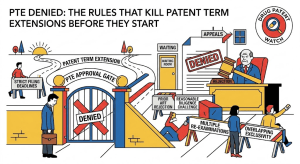
In March 2000, the USPTO denied a patent term extension application filed by Pfizer for pantoprazole, the proton pump inhibitor sold under the brand name Protonix. The drug generated over $2 billion annually at its revenue peak. The denial did not turn on any defect in the underlying patent, any validity problem with the compound, or any procedural irregularity so egregious that it shocked the legal community. It turned on a single statutory eligibility requirement that Pfizer’s legal team had either misread or misjudged: the product had already been subject to prior regulatory review in a foreign market, and the USPTO concluded that this prior approval meant Pfizer had missed the eligibility window for an extension under 35 U.S.C. § 156 [1].
That outcome is not an outlier. Patent term extension denials are common enough, and expensive enough, that understanding the specific eligibility traps embedded in the statute – and in the USPTO’s interpretation of that statute – is commercially critical for any pharmaceutical company managing products approaching the end of their patent terms.
The Hatch-Waxman Act of 1984 created the PTE mechanism specifically to address a genuine economic problem: the FDA’s regulatory review process consumed years of a compound patent’s statutory term, meaning drug developers recovered only a fraction of the 20-year term as commercially useful exclusivity [2]. Congress designed the extension to compensate for that lost time, subject to eligibility conditions intended to prevent abuse. Those conditions have proven far more restrictive in practice than legislators likely anticipated, and the case law interpreting them has produced a body of rules that trip up sophisticated legal teams with alarming regularity.
This article maps every significant eligibility pitfall in the PTE system, starting with the “not first permitted commercial marketing” rule that is the most misunderstood and most consequential of the statutory requirements, and extending through the full range of product eligibility problems, patent eligibility requirements, administrative filing traps, and strategic miscalculations that convert what should be a routine extension application into a multi-year dispute or a simple denial.
What the Statute Actually Says
Before analyzing where PTE applications fail, it is worth being precise about what the statute requires them to demonstrate. 35 U.S.C. § 156 creates a right to extend a patent term for a “product,” as defined in the statute, that received “permission for the commercial marketing or use” from a regulatory agency [3]. The extension compensates for the regulatory review period consumed before the product could be sold. That much is straightforward.
The eligibility requirements that do the real work are in subsection (a), which specifies that a patent is eligible for extension only if all five of the following conditions are met:
The patent has not expired before the application for extension is submitted. The remaining term of the patent must be nonzero at the time of filing.
The term of the patent has not already been extended under this section. Only one extension per patent is permitted.
An application for extension is submitted by the owner of record of the patent within the statutory filing period.
The product has been subject to a regulatory review period, and the permission for the commercial marketing or use of the product is the first permitted commercial marketing or use of the product under the provision of law under which the regulatory review period occurred.
The extended patent claims the product, a method of using the product, or a method of manufacturing the product [4].
Of these five requirements, the fourth is the one that generates the most denials, the most litigation, and the most genuine surprise among patent holders who believe they have a straightforward entitlement to an extension. Every word in that requirement matters, and each phrase has been litigated to produce a body of interpretive law that bears only partial resemblance to the intuitive reading of the text.
The One-Extension-Per-Product Rule
Before examining the first-permitted-commercial-marketing requirement, the one-extension-per-patent-per-product rule warrants its own attention because it creates a strategic constraint that shapes everything else in PTE planning.
A patent can receive at most one extension under § 156. A product can support at most one patent extension, even if multiple patents cover it. The interaction of these two limitations means that a compound patent and a formulation patent covering the same drug cannot both receive PTE based on the same regulatory approval. The patent holder must choose which patent to extend – a strategic decision with long-term consequences that are frequently underweighted at the time the application is filed.
The one-patent-per-product limitation has been interpreted by the courts to operate at the level of the “product” as defined in the statute, which is “the active ingredient of a new drug, antibiotic drug, or human biological product (as those terms are used in the Federal Food, Drug, and Cosmetic Act).” For most small-molecule drugs, the product is the active ingredient. This definition creates specific problems when a company holds patents on both a parent compound and a salt or ester form of that compound, as discussed in detail below.
The First Permitted Commercial Marketing Rule: A Detailed Map
The requirement that the permission for commercial marketing be “the first permitted commercial marketing or use of the product” under the relevant statutory provision is the eligibility requirement that most commonly defeats extension applications. It fails applicants in three distinct ways, and each failure mode has its own body of case law.
The Foreign Marketing Problem
The most litigated version of the first-permitted-commercial-marketing problem arises when a drug was approved and sold in a foreign market before it received U.S. FDA approval. The question is whether prior foreign regulatory permission constitutes “prior permitted commercial marketing” that eliminates U.S. PTE eligibility.
For most of the history of the PTE statute, the answer was assumed to be no. The statute refers to “permission for the commercial marketing or use of the product” under specific U.S. statutory provisions – principally section 505 of the Federal Food, Drug, and Cosmetic Act for new drugs. A regulatory approval from the European Medicines Agency or Japan’s PMDA is not an approval under section 505. On this reading, prior foreign approval has nothing to do with U.S. PTE eligibility because it is not the same “provision of law” referenced in the statute.
This reading was widely accepted until the Federal Circuit’s decision in Pfizer Inc. v. Dr. Reddy’s Laboratories, Ltd. [5], which examined whether prior sales of a compound in a foreign market could affect PTE eligibility. The court’s analysis distinguished between prior foreign regulatory approval per se and prior U.S. regulatory approval, finding that the statute focuses specifically on U.S. regulatory review periods and U.S. commercial marketing permissions. This holding appeared to confirm that foreign prior approval was irrelevant.
The problem is that the statute’s practical application is not as clean as the legal holding suggests. Where a compound was previously approved under a different U.S. regulatory pathway – for example, as an antibiotic under one section of the FDCA and later reformulated as a new drug under section 505 – the question of whether the prior domestic approval constitutes “prior permitted commercial marketing” is genuinely contested, and the USPTO has taken varying positions depending on the specific product history.
More practically, the USPTO’s interpretation has been that the “product” is defined at the active ingredient level, which means that prior U.S. approval of any drug containing the same active ingredient – even a different formulation, a different strength, or a different indication – can constitute prior permitted commercial marketing that disqualifies the later approval from supporting a PTE application.
The “Same Product” Analysis and Its Complications
The practical core of the first-permitted-commercial-marketing requirement is the “same product” analysis: is the product receiving FDA approval today the same product that received prior regulatory permission in a way that destroys PTE eligibility?
The statute defines “product” for new drugs as “the active ingredient of a new drug.” This means the relevant comparison is between active ingredients, not drug products as a whole. A brand manufacturer that obtained FDA approval for an immediate-release formulation of Compound X in 1995, then obtained approval for a controlled-release formulation of the same compound in 2003, cannot obtain PTE for a patent claiming the controlled-release formulation based on the 2003 approval, because the active ingredient – Compound X – was already the subject of prior commercial marketing permission in 1995.
This analysis has produced a substantial body of case law examining when two compounds are the “same” active ingredient for PTE purposes. The most important cases involve salts, esters, and metabolites of previously approved drugs.
Under USPTO regulations at 21 C.F.R. § 60.3(b), the definition of “product” for human drug products subject to a regulatory review period includes “the active moiety of a new drug, antibiotic drug, or human biological product.” The “active moiety” concept was introduced specifically to prevent the “same product” analysis from being circumvented by minor chemical modifications that do not change the pharmacologically active component [6].
An active moiety is the molecule responsible for the physiological or pharmacological action of the drug substance, disregarding appended portions of the molecule (salts, esters, complexes, clathrates, and other noncovalent derivatives) that allow the drug to be absorbed or transported. This definition means that a company cannot obtain PTE for a patent on a sodium salt of a compound if the free acid of that compound was previously approved and marketed, because the two share the same active moiety.
The active moiety analysis is conceptually straightforward but technically complex in practice. For compounds where the pharmacologically relevant structural unit is disputed, or where a prodrug’s active form involves metabolic cleavage that changes the relevant molecular structure, the determination of whether two compounds share an active moiety requires expert pharmacological testimony. The USPTO has denied PTE applications where it concluded that a “new” compound was pharmacologically identical to a previously approved compound at the active moiety level, even over the applicant’s vigorous objection.
The Photocure Decision: When Isomers Become the Same Product
Photocure ASA v. Kappos [7] provides the most instructive application of the active moiety analysis in PTE denials. Photocure held patents on hexaminolevulinate (HAL), a drug used for bladder cancer diagnosis via fluorescence-guided cystoscopy. HAL is a hexyl ester of 5-aminolevulinic acid (5-ALA). When FDA approved Photocure’s product Cysview in 2010, Photocure sought PTE on its HAL patent.
The USPTO denied the extension. The agency’s reasoning was that 5-ALA itself had been previously approved as the drug Levulan (for topical photodynamic therapy of skin lesions) in 1999. Since HAL is a hexyl ester of 5-ALA, and since esters are specifically excluded from the active moiety definition under the regulations, the USPTO concluded that HAL and Levulan’s 5-ALA shared the same active moiety.
Photocure challenged this analysis, arguing that HAL functions as a distinct prodrug with different pharmacokinetics, biodistribution, and clinical applications – and that treating it as pharmacologically equivalent to 5-ALA ignored the genuine innovation that HAL represented. The Federal Circuit ultimately affirmed the USPTO’s denial, holding that the regulatory definition of active moiety excluded esters from the comparison, and HAL’s ester portion was the only structural difference between it and the previously approved 5-ALA.
The practical implication is stark: any company that has developed a salt, ester, or metabolite of a previously approved compound – even for a completely different indication, by a completely different route of administration, against a completely different biological target – faces the active moiety analysis as a PTE eligibility hurdle. The clinical distinctiveness of the new drug is legally irrelevant under the active moiety framework. <blockquote> “According to a 2023 analysis by the Government Accountability Office, the USPTO granted full or partial patent term extensions for approximately 60 percent of PTE applications submitted between 2012 and 2022, with denial rates significantly higher for applications involving products previously approved under different regulatory provisions or in different formulations.” [8] </blockquote>
The Prior Approval Under a Different Statutory Provision
A related but distinct first-commercial-marketing problem arises when a compound was previously approved under a different section of the FDCA. The most common version involves veterinary drugs that are later approved for human use, or compounds previously approved as food additives or dietary supplement ingredients that are later reclassified as drugs.
Under § 156(a)(4), the relevant prior marketing permission is specifically that obtained “under the provision of law under which the regulatory review period occurred.” If a compound was previously approved under a different provision – for example, under section 512 of the FDCA for veterinary use – and is now receiving approval under section 505 for human use, the question is whether the prior veterinary approval constitutes “prior permitted commercial marketing” under the same provision of law.
The USPTO’s longstanding position has been that approval under section 512 and approval under section 505 are different provisions of law, and therefore prior veterinary approval does not disqualify a subsequent human drug approval from supporting a PTE application. This interpretation is logical and has generally been sustained, but it has limits.
Where a compound was previously approved for human use under one section of the FDCA (for example, as an antibiotic under section 507, which has since been folded into section 505) and later received a new NDA approval under section 505 for a different indication or formulation, the prior approval may qualify as the same provision of law, eliminating PTE eligibility for the later approval.
Product Eligibility: What Qualifies for Extension and What Does Not
The PTE statute limits extensions to three categories of products: human drugs (new drugs and antibiotic drugs), human biological products, and medical devices. Each category has its own FDA regulatory pathway and its own definition of what constitutes a “product” eligible for extension. The definitional distinctions between categories create eligibility problems that catch companies unprepared.
The Drug vs. Device Classification Problem
A combination product – one that combines drug and device components, like a drug-eluting stent or a prefilled autoinjector – presents an immediate classification question for PTE purposes. The statutory provision that applies determines both the regulatory review pathway and the PTE eligibility framework. If a combination product is primarily regulated as a device, it does not benefit from the same PTE rules that apply to drugs.
FDA assigns primary jurisdiction over combination products to the center whose primary mode of action is most clearly implicated – CDER for drugs, CDRH for devices, CBER for biologics. This assignment determines the regulatory pathway, which in turn determines PTE eligibility. A drug-eluting stent primarily regulated as a device by CDRH does not receive the same PTE framework as the drug component alone.
Companies developing combination products should conduct the combination product classification analysis with PTE implications explicitly in mind. In some cases, the choice between seeking approval as a drug-led combination versus a device-led combination has PTE consequences that dwarf the regulatory pathway differences.
Biologics and the BPCIA Framework
Biological products receive PTE under the same § 156 framework as small-molecule drugs, but the regulatory review pathway runs through the Biologics License Application (BLA) process rather than the NDA process. The “product” for a biological product is defined as “the active ingredient of a new drug, antibiotic drug, or human biological product.”
For biologics, the active ingredient question is more complex than for small molecules. A recombinant protein may have a primary amino acid sequence identical to a naturally occurring protein while differing in glycosylation, folding, or other post-translational modifications. Whether two such products share the same “active ingredient” for PTE purposes – and therefore whether prior approval of one destroys PTE eligibility for the other – is a genuinely contested scientific and legal question.
The FDA’s evolving position on biosimilar interchangeability provides some analytical framework, but the interchangeability standard (which requires showing no clinically meaningful difference in safety, purity, and potency) is not the same as the active ingredient identity standard applied in PTE analysis. A biosimilar that is not interchangeable with a reference product may still share the same active ingredient for PTE purposes, though no definitive case law has resolved this question across all biological product types.
Animal Drug Extensions and Their Separate Framework
Patent term extensions for patents on animal drugs follow a parallel but distinct statutory framework under § 156(a)(5)(C), using the Federal Food, Drug, and Cosmetic Act’s section 512 approval as the triggering regulatory event. The animal drug PTE framework has the same five eligibility requirements as the human drug framework, but the FDA regulatory review period calculation uses different start and end date definitions.
The animal drug PTE pathway is less commonly used and less heavily litigated than the human drug pathway, but it creates specific traps for companies whose compounds have applications in both veterinary and human medicine. As discussed in the prior approval section, if a compound was first approved as an animal drug, the veterinary approval does not per se disqualify a later human drug approval from supporting human drug PTE, but the reverse question – whether prior human drug approval disqualifies animal drug PTE for the same compound – has not been definitively resolved and warrants caution.
Patent Eligibility: Which Patents Can Be Extended
The fifth eligibility requirement under § 156(a) addresses not the product but the patent: the patent must claim the product, a method of using the product, or a method of manufacturing the product. This requirement generates its own category of denials when the patent’s claims do not clearly cover the approved product at the time the PTE application is filed.
The “Claims” Analysis at the USPTO
When the USPTO examines a PTE application, one step in the examination process is confirming that the patent claims the product for which the regulatory approval was obtained. For a compound patent whose claims broadly cover the active ingredient, this analysis is usually straightforward. The complications arise with formulation patents, method patents, and process patents where the connection between the claimed subject matter and the approved product is less direct.
A formulation patent claims a specific pharmaceutical composition – perhaps a controlled-release formulation, a specific crystalline form, or a combination of active ingredients in defined proportions. For PTE purposes, such a patent is eligible only if the approved drug product falls within the scope of the formulation claims. If the approved formulation was modified during clinical development in a way that moved it outside the patent claims, the patent does not “claim” the approved product within the meaning of § 156(a)(5).
This trap is more common than it might appear. Pharmaceutical formulations frequently undergo substantial changes between the composition described in the original patent application and the composition ultimately approved by FDA after clinical development. If the reformulation moved the commercial product outside the scope of the patent claims, the patent cannot be extended based on that approval, regardless of how much time the regulatory review consumed.
Method-of-Use Patents and the Single-Indication Problem
Method-of-use (MoU) patents claim a specific therapeutic application of a compound rather than the compound itself. They are eligible for PTE if they claim a method of using the drug product for the approved indication. The eligibility question becomes complicated when a drug is approved for multiple indications over time, or when the MoU patent claims a broader or different use than the specific indication in the approval being used to support the PTE application.
The statute requires that the patent claim the product that received regulatory approval. For a MoU patent, this has been interpreted to mean that the patent must claim a use of the product that is covered by the FDA approval. A patent claiming Method X for treating Condition A cannot be extended based on an approval of the drug for Condition B, even if the drug and the indications are closely related. The patent must specifically claim a use that the approval permits.
The single-indication problem arises when a company holds a MoU patent on the primary indication of a drug and uses that approval to support PTE, only to discover that the patent’s method claims are written more broadly than the approved indication and therefore arguably do not specifically “claim” the approved use within the PTE eligibility analysis. This mismatch between broad claim drafting and the narrow-approved-use requirement is a recurring source of PTE denial.
Process of Manufacture Claims
Process patents – those claiming a method of manufacturing the drug product rather than the product itself – are technically eligible for PTE under the statute’s “method of manufacturing” language, but they face a practical obstacle: the connection between the manufacturing process and the approved product requires demonstration that the approved product was made using a process falling within the patent’s claims.
If the manufacturing process used to produce the commercially approved product differs from the process claimed in the patent – again, a common occurrence as manufacturing processes are optimized during scale-up from laboratory synthesis to commercial production – the patent may not claim the method of manufacturing the approved product. USPTO examiners have denied PTE applications for process patents where the applicant could not demonstrate that the commercial product was actually manufactured by the claimed process.
The 60-Day Filing Deadline: Hard, Unforgiving, and Frequently Misunderstood
Section 156(d)(1) requires that a PTE application be filed “within the sixty-day period beginning on the date the product received permission for commercial marketing or use.” For human drugs, this is the date of FDA approval of the NDA or BLA. Missing this 60-day window is fatal – there is no provision for late filing, no equitable exception for excusable neglect, and no administrative relief mechanism that allows an applicant to show good cause for a late submission.
What Triggers the 60-Day Clock
The 60-day period begins on “the date the product received permission for commercial marketing or use.” For NDA approvals, this is the date of FDA’s approval letter. The clock is absolute: if the USPTO receives the PTE application on day 61, the application will be denied regardless of the circumstances that caused the one-day delay.
The rigidity of this deadline was established definitively in Unimed Inc. v. Quigg [9], where the Federal Circuit held that the 60-day deadline is jurisdictional and cannot be extended or waived under any circumstances. The court rejected the patent holder’s argument that the late filing should be excused because the FDA approval letter had not been received in time to allow submission within the 60-day window, holding that the obligation to file within 60 days runs from the date of approval, not the date of receipt of the approval letter.
The practical implication is that pharmaceutical companies managing active NDA or BLA applications must have PTE application preparation underway well before FDA approval, so that the submission can be made immediately upon receiving notice of approval. A company that waits to receive its FDA approval letter before beginning PTE application preparation will regularly find itself filing on day 45 or later, which creates genuine risk of missing the deadline if any logistical complication arises.
What “Filed” Means Under § 156
For the 60-day deadline, “filed” means received at the USPTO – not mailed, not submitted through an electronic filing portal with a pending process, but actually in the USPTO’s possession. This distinction is critical given that the USPTO’s electronic filing system can experience processing delays, and that physical mail delivery is not instantaneous.
Companies with NDA approvals expected on a specific date should arrange for PTE application submission well ahead of the 60th day, targeting no later than day 50 to allow for processing complications. Any company filing closer to day 60 without extraordinary circumstances is accepting unnecessary deadline risk.
Multi-Patent Portfolios and the Selection Decision
When a drug is covered by multiple patents, only one patent can receive PTE based on a given product approval. The patent holder must identify, within the 60-day window, which patent to extend. This decision, made under time pressure immediately after FDA approval, has significant long-term commercial consequences.
The factors driving the selection decision include: which patent has the most time remaining to extend (subject to the 14-years-from-approval cap), which patent’s claims most directly cover the commercial product in a way that will be defensible in litigation, and which patent’s term expiration creates the most meaningful competitive entry window given the overall portfolio structure.
In practice, companies frequently extend the compound patent – the primary patent on the active ingredient – because it has the broadest claims and the most direct coverage of the commercial product. But where the compound patent is weak (narrow claims, close prior art, prior PTAB petition), extending a stronger formulation or method patent may produce a more durable competitive barrier even if it provides fewer years of extension.
DrugPatentWatch’s PTE tracking data, which links Orange Book patents to their extension status, extension calculation details, and the specific approval event used to support the extension, provides the comparative data needed to benchmark these selection decisions against industry practice. Knowing which patent families competitors chose to extend, and how those choices played out in subsequent Paragraph IV litigation, is commercially valuable input for current selection decisions.
The Regulatory Review Period: Calculating What You Can Actually Recover
Even when a PTE application clears all five eligibility requirements, the amount of extension granted depends on a specific calculation of the “regulatory review period” – the time consumed by FDA review that § 156 is designed to compensate. Understanding this calculation is essential because miscalculating the reviewable period is itself a source of partial denials.
The regulatory review period concept is deceptively simple: it is the time the government consumed reviewing the drug before it could be sold. Congress decided in 1984 that this time, consumed involuntarily by a regulatory obligation, deserved some form of compensation to the patent holder, who could not exploit the patent commercially while waiting for FDA action. The compensation mechanism is imperfect – it returns half of the pre-submission clinical testing time and all of the FDA review time, subject to caps, rather than restoring the full consumed term – but it represents a genuine policy judgment about the appropriate allocation of risk between innovators and the public.
What makes the regulatory review period calculation commercially complex is that each of its components involves date determinations that are less certain than they appear. The IND effective date, the NDA submission date, and the FDA approval date each carry potential disputes. The IND effective date is 30 days after FDA receives the IND filing unless FDA places the IND on clinical hold before that date; where clinical holds were imposed and lifted during a complex development program, the correct Phase I start date requires careful administrative history review. The NDA submission date is generally unambiguous, but where a complete response letter and resubmission were involved, questions arise about whether the Phase II period restarts or continues from the original submission. The FDA approval date is typically clear, but where accelerated approval and full approval occurred on different dates, the correct approval date for PTE calculation purposes requires analysis under § 156’s specific definitions.
The Two-Phase Calculation for Human Drugs
For human drugs approved under section 505 of the FDCA, the regulatory review period has two components. Phase I covers the testing phase – from IND filing to the date the NDA is submitted to FDA. Phase II covers the approval phase – from NDA submission to FDA approval [10].
The PTE statute compensates only half of the Phase I period and the full Phase II period, subject to the five-year maximum extension and the 14-year-from-approval ceiling. The formula is:
Extension = (0.5 × Phase I Period) + Phase II Period – Time of Marketing After Patent Issue
The “time of marketing after patent issue” deduction reduces the extension by any period during which the patent has already been used commercially after its issue date. If the patent issued before the IND was filed, the full Phase I and Phase II periods are available; if the patent issued after FDA approval (which occasionally occurs for continuation applications), there is no extension at all.
Due Diligence Obligations and Their Consequences
Section 156(d)(2)(B) provides that the regulatory review period can be reduced if the applicant failed to act with due diligence during Phase I (the testing phase). The FDA conducts a due diligence review when the USPTO refers a PTE application for FDA input, examining whether the applicant pursued clinical development without unreasonable gaps or delays that were within the applicant’s control.
A due diligence challenge from FDA can reduce the calculated Phase I period – and therefore the ultimate extension granted – by months or even years. Applicants who allowed clinical programs to stall without justification, who took extended breaks from IND-authorized clinical work, or who failed to maintain active development programs risk having Phase I time deducted through the due diligence process.
The due diligence standard is demanding but not impossible to meet. FDA has consistently held that applicants satisfy the due diligence obligation by showing continuous, good-faith development activity throughout the Phase I period. Gaps caused by business decisions – choosing to deprioritize a clinical program in favor of other assets, for example – are not protected from due diligence scrutiny. Gaps caused by scientific obstacles, regulatory uncertainty, or manufacturing scale-up problems generally receive more favorable treatment.
Due diligence review outcomes are publicly documented through the USPTO’s PTE files, and patterns in FDA’s due diligence decisions can be analyzed to understand how the agency applies the standard to specific types of clinical program delays. DrugPatentWatch’s integration of PTE status records, including whether due diligence reductions were applied, allows analysts to identify the frequency and magnitude of due diligence-based reductions in the PTE database.
The 14-Year Cap: The Ceiling That Cuts Extensions Short
Even where the regulatory review period calculation produces a large theoretical extension, the statute caps the resulting patent term at 14 years from the date of FDA approval. This cap operates as a hard ceiling – no PTE can extend a patent’s term beyond 14 years from the approval date that triggers the extension, regardless of how long FDA took to review the application.
When the Cap Bites
The 14-year cap affects PTE applications primarily for drugs that received FDA approval late in the patent term – particularly patents with significant PTA that extended the statutory 20-year term, or patents that issued close to the date of FDA approval. Where a compound patent issued only three years before FDA approval, for example, the patent has only three years of post-approval term remaining. Adding the full regulatory review period might theoretically produce a 10-year extension, but the 14-year-from-approval ceiling caps the result at 14 years total post-approval term. If the patent already has 10 years remaining at approval, it can receive a maximum four-year extension.
The cap most commonly limits extensions for biologics, where the regulatory review period (particularly Phase I clinical development for complex proteins) frequently runs 10 to 15 years, and the compound patent may have been filed close to the time of clinical candidacy selection. A biologic patent filed in year one of clinical development and issued during Phase II trials may have only 12 years of remaining statutory term at BLA approval; the 14-year cap allows only a two-year extension regardless of how long FDA took to review the application.
Strategic Responses to the Cap
The 14-year cap is one driver of the pharmaceutical industry’s practice of filing continuation applications during late-stage clinical development, seeking patents that will issue close to the projected FDA approval date. A patent that issues six months before FDA approval can receive up to 14 years of post-approval exclusivity under the cap, while a patent that issued 15 years before approval has a maximum extension of only two or three years.
This timing strategy is legitimate under the statute but creates its own complications. Continuation applications filed late in prosecution to time issuance near FDA approval create prosecution histories that may be subject to double-patenting rejections, obviousness-type double patenting challenges, or estoppel from earlier family member prosecution. The pursuit of optimized PTE timing must be balanced against the cost of creating additional prosecution history vulnerabilities.
Common Administrative Pitfalls in PTE Applications
Beyond the substantive eligibility requirements, PTE applications fail for administrative reasons that are entirely avoidable with careful preparation. The USPTO’s PTE regulations at 37 C.F.R. §§ 1.710 through 1.791 specify the required contents of a complete application, and deficiencies that are not corrected within the time the USPTO allows can result in deemed abandonment of the application.
Required Application Contents
A complete PTE application under 37 C.F.R. § 1.740 must include: the patent number and any terminal disclaimer; the name and address of the applicant; a brief description of the regulatory review period; and a calculation of the extension requested. For human drugs, the application must also include a copy of the FDA approval letter and identification of the specific regulatory review period activities [11].
Applications that omit required elements receive a deficiency notice from the USPTO, which specifies the deficiency and provides a period – typically two months – to supplement the application. The supplementation period is not extendable beyond what the USPTO grants. Applicants that do not cure the deficiency within the supplementation period have their applications deemed withdrawn.
The most common administrative deficiencies include: failure to provide the correct regulatory review period dates (start date of IND, submission date of NDA, approval date), errors in the extension calculation that use incorrect phase durations, and submission of the application before the FDA approval letter has been received and when the approval date therefore cannot be accurately stated.
The Verification Problem and FDA Referral
After the USPTO examines a PTE application and tentatively approves the extension, the application is referred to the FDA for verification of the regulatory review period [12]. FDA reviews the IND filing date, the NDA submission date, and the approval date, and confirms the actual length of the Phase I and Phase II periods. FDA also conducts the due diligence review at this stage.
If FDA’s verification produces dates that differ from those in the application – which occurs regularly because of discrepancies between publicly available records and FDA’s internal records – the calculated extension may be adjusted, sometimes significantly. Applicants should not assume that their independently-assembled regulatory timeline will match FDA’s internal records exactly. The verification process is one of the few stages in PTE examination where information asymmetry between the applicant and the reviewing agency is genuinely consequential.
Case Study Analysis: Major PTE Litigation and Its Lessons
The litigation record on PTE denials provides a detailed map of the specific legal arguments that have succeeded and failed, and the patterns in those outcomes reveal which eligibility traps are most susceptible to litigation challenge and which denials are effectively unassailable.
Genetics Institute LLC v. Kappos: Biological Products and the Active Ingredient Definition
Genetics Institute held a patent covering etanercept, the biologic TNF inhibitor sold as Enbrel by Amgen and Pfizer. When the company sought PTE for this patent, the USPTO denied the application, concluding that the patent did not “claim” the product that received FDA approval within the meaning of § 156 [13].
The denial turned on a specific question about what it means for a patent to “claim” a biological product. Genetics Institute’s patent claimed a composition comprising the etanercept protein along with certain excipients, while the FDA-approved commercial product used a different excipient formulation. The USPTO took the position that because the claimed composition was not identical to the approved product, the patent did not “claim” the approved product.
Genetics Institute challenged this interpretation, arguing that the patent broadly claimed the protein itself and that the excipient difference was not relevant to the claiming analysis. The Federal Circuit agreed with Genetics Institute on appeal, holding that a patent “claims” a product for PTE purposes if at least one claim of the patent is reasonably directed to the product, without requiring that the claimed composition be identical to the approved product [14].
This holding is commercially significant because it establishes a workable standard for patents on biological products, where minor formulation differences between claimed and approved compositions are routine. Companies denied PTE on the ground that their patent claims do not exactly match the approved product should evaluate whether the Genetics Institute analysis applies to their situation.
Bristol-Myers Squibb Co. v. Kappos: The PTE Calculation Challenge
Bristol-Myers Squibb challenged the USPTO’s calculation of the PTE for Sprycel (dasatinib), arguing that the agency had incorrectly calculated the Phase II regulatory review period by using the wrong date for the start of FDA’s review [15].
The dispute arose from a procedural event in the FDA approval process: FDA had issued a “refuse to file” determination early in the review process, which interrupted the normal review timeline. BMS argued that the refuse-to-file period should not count against its PTE calculation because FDA was not actively reviewing the application during that period. The USPTO took the contrary position, using a timeline calculation that reduced BMS’s extension by approximately eight months relative to BMS’s calculation.
The Federal Circuit ultimately resolved the dispute in BMS’s favor on the specific calculation question, holding that the refuse-to-file period should not be included in the regulatory review period because FDA had not “commenced” substantive review of the application during that period [16]. The holding established a precedent that benefits future applicants facing similar FDA refuse-to-file determinations, and it demonstrates that the mechanical calculation of PTE – which appears to be a purely ministerial function – can itself be the subject of valuable litigation.
The practical lesson is that patent holders should not accept the USPTO’s PTE calculation without independently verifying every date in the regulatory review period calculation against the FDA record. The BMS litigation recovered eight months of patent term that would have been permanently lost if BMS had accepted the USPTO’s initial calculation.
Photocure ASA v. Kappos: The Active Moiety Trap
The Photocure case, described earlier in the context of the active moiety problem, warrants additional analysis of its litigation pathway. Photocure appealed the USPTO’s PTE denial through the district court and then to the Federal Circuit, arguing at each level that HAL’s distinct pharmacokinetic and pharmacodynamic profile distinguished it from the previously approved 5-ALA sufficiently to qualify as a different active ingredient [17].
The courts declined to accept this argument, holding consistently that the regulatory definition of “active moiety” excludes ester portions of the molecule from the comparison, and that the pharmacological distinctiveness of a prodrug does not rescue it from the active moiety analysis if the pharmacologically active form is identical to a previously approved compound.
From a strategic perspective, Photocure’s litigation reinforced a lesson that careful PTE counsel should already know: where a drug’s active ingredient is an ester, salt, or other modification of a previously approved compound, the PTE eligibility analysis must include the active moiety determination before the application is filed. Discovering the active moiety problem after the application has been denied is not only expensive in litigation costs but also creates the risk that the 60-day filing window for any alternative patent has already passed.
Tap Pharmaceutical Products v. United States: the IPO’s Role in PTE Review
In Tap Pharmaceutical Products Inc. v. United States [18], Tap challenged the validity of a PTE that had been granted to a competitor’s patent on leuprolide acetate, arguing that the competitor had not complied with the regulatory requirements for PTE applications. The case established that competitors have standing to challenge PTE grants through Federal Court review, and that the validity of granted PTEs – not just denials – is subject to judicial examination.
This standing principle has practical consequences for portfolio valuation. A competitor’s PTE grant does not represent an unassailable extension of exclusivity; it represents an extension that could be challenged in litigation as part of an overall Paragraph IV or other patent challenge strategy. DrugPatentWatch’s PTE records show which patents have received extensions and on what basis, providing the starting point for competitive assessment of whether a granted extension might be vulnerable to challenge.
Strategic PTE Planning Before FDA Approval
The eligibility pitfalls described throughout this article are almost all avoidable with adequate planning. The common element in avoidable PTE denials is that the legal analysis was conducted too late – after approval, under the pressure of the 60-day deadline, when the options for addressing eligibility problems are limited.
There is a systematic organizational failure that underlies most avoidable PTE denials: the PTE analysis is treated as a post-approval administrative task assigned to patent prosecution counsel, who may not be familiar with the regulatory history of the drug or with the FDA administrative records needed to conduct the regulatory review period calculation. In reality, a complete PTE eligibility analysis is a joint project requiring inputs from at least three distinct functions – patent prosecution, regulatory affairs, and clinical development – none of which individually has all the information needed to reach reliable conclusions.
The organizational fix is to assign explicit, standing responsibility for PTE pre-approval analysis to a cross-functional working group that is activated at the time of Phase III initiation, when FDA approval is at least conceptually in sight. Waiting until the NDA is submitted to begin the PTE eligibility analysis compresses the available planning time to the approximate length of the FDA review period – typically 10 to 12 months for standard review, six months for priority review – which is adequate but not comfortable if eligibility problems surface late.
The PTE Pre-Approval Audit
A PTE pre-approval audit should be conducted at least 12 months before projected FDA approval. The audit examines four things:
Whether any active ingredient in the pending NDA was previously approved in the United States, even in a different formulation, for a different indication, or in a different salt or ester form – and if so, whether the active moiety analysis eliminates PTE eligibility.
Which patents in the portfolio are eligible for extension based on the pending NDA, taking into account the one-patent-per-product rule, the claims-the-product requirement, and the patent term remaining.
Which patent should be extended based on a comparative analysis of remaining term, claims strength, litigation vulnerability, and competitive landscape.
Whether the regulatory review period calculation, based on the IND filing date and the projected NDA approval date, will produce a meaningful extension given the 14-year cap and the due diligence history.
The pre-approval audit should produce a PTE application that is substantially complete before FDA approval, requiring only insertion of the actual approval date and submission of the approval letter when they become available. A pre-approved application template eliminates the deadline risk associated with last-minute preparation.
The due diligence component of the pre-approval audit deserves particular attention. The FDA’s due diligence review during PTE verification will examine the full Phase I development history – every IND amendment, every clinical hold, every gap in active clinical investigation. The company’s regulatory affairs team is best positioned to identify periods of development inactivity that FDA might characterize as due diligence failures, and to prepare documentation establishing that apparent gaps were justified by legitimate scientific or regulatory factors. Assembling this documentation contemporaneously, rather than retroactively after FDA raises due diligence concerns during the verification process, produces both better documentation and more credible narratives.
Coordinating Patent Prosecution with PTE Timing
For companies managing active patent portfolios on clinical-stage compounds, PTE timing considerations should influence prosecution strategy. Specifically:
Requesting continued examination (RCE) or filing continuation applications in ways that time patent issuance close to projected FDA approval can maximize the PTE available under the 14-year cap. A patent that issues two years before FDA approval can receive up to 12 years of post-approval exclusivity via PTE; a patent that issues 12 years before approval may be limited to a two-year extension regardless of the regulatory review period length.
This prosecution timing strategy requires coordination between prosecution counsel and PTE counsel, and between both and the regulatory affairs team tracking the FDA approval timeline. Large pharmaceutical companies typically have patent term management functions that integrate these activities; smaller companies should ensure this coordination is explicitly assigned rather than assumed.
The risk in prosecution-timing strategies is creating an appearance of intentional delay that could be raised as inequitable conduct or prosecution laches in subsequent Hatch-Waxman litigation. Courts have generally not found prosecution timing strategies in themselves inequitable, but the prosecution record should reflect legitimate substantive reasons for any RCEs or continuation filings, not purely timing motivations. Prosecution counsel should document the scientific and legal basis for each continuation filing in a way that would withstand litigation scrutiny.
The International Dimension: Supplementary Protection Certificates
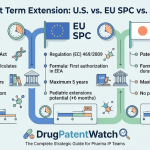
In Europe, the equivalent of U.S. PTE is the Supplementary Protection Certificate (SPC), granted under EU Regulation 469/2009 [19]. SPCs provide up to five additional years of protection following the basic patent’s expiration, with a further six-month extension available for pediatric indications.
The SPC system operates on different principles from U.S. PTE, and the interaction between U.S. and European timelines creates planning considerations that are specific to multinational development programs. A drug that received its first EU approval before its U.S. approval faces an SPC eligibility question in Europe – SPCs require that the product not have received a prior European authorization – that is parallel to the U.S. first-permitted-commercial-marketing requirement.
For companies developing drugs simultaneously in U.S. and EU markets, the order of regulatory approvals has PTE and SPC implications that should be explicitly modeled in the development timeline planning. The choice of which regulatory authority to approach first for priority review is not solely a clinical or commercial question; it affects the duration of patent-based exclusivity in both markets.
The CJEU’s evolving jurisprudence on SPC eligibility for combination products and for products where a component is not covered by the basic patent has created significant uncertainty in SPC planning for biologics and combination products. The CJEU’s decisions in Teva UK v. Gilead Sciences [20] and subsequent cases require that the patent specifically protect the product for SPC purposes, using a two-part test that is stricter than the U.S. PTE “claims” analysis. This divergence between U.S. and EU eligibility standards means that a patent eligible for U.S. PTE may not support a European SPC, requiring independent analysis under each system.
SPC applications in individual EU member states are filed country by country (or, for EPC contracting states, with the national patent office of each validating state), and each application is subject to local law and local examination practice that can produce divergent outcomes for the same patent family across different jurisdictions. Germany, the UK (under its post-Brexit unitary patent framework), France, and the Netherlands have each developed case law on SPC eligibility that is influenced by CJEU precedent but applies it with varying degrees of strictness. A pan-European SPC strategy therefore requires both CJEU-level analysis and country-specific legal advice.
The Interplay Between PTE and Orange Book Listing
The relationship between PTE grants and Orange Book listing is commercially critical but often misunderstood. A granted PTE extends the patent term but does not automatically extend the Orange Book listing or the associated Hatch-Waxman litigation protections. The extended patent term must be reflected in the Orange Book through a specific update process, and the FDA’s Orange Book records must reflect the correct expiration date incorporating the PTE for the 30-month stay mechanism to work correctly.
The Orange Book listing and the PTE operate through separate but interdependent systems. The USPTO grants the PTE and issues a certificate of extension that specifies the new expiration date. The brand manufacturer is separately obligated to report the correct patent expiration date in the Orange Book, and that obligation extends to updating the listing when a PTE certificate changes the expiration date. FDA does not independently verify PTE grants against Orange Book listings; it relies on brand manufacturers to maintain accurate listings.
This reliance creates a specific information gap. There is no automated pipeline between the USPTO’s PTE certificate system and FDA’s Orange Book database. When a PTE certificate is issued, nothing automatically updates the Orange Book record. The brand manufacturer’s regulatory affairs team must actively identify the discrepancy, prepare the Orange Book amendment, and submit it through the standard Orange Book update process. At companies where the patent prosecution team, the PTE application team, and the regulatory affairs team are not in continuous communication, this handoff fails.
The commercial consequences of a missed Orange Book update after PTE grant extend beyond the administrative inconvenience. If a generic manufacturer’s ANDA filing team reviews the Orange Book, sees a patent expiration date that predates the actual PTE-extended term, and files an ANDA with a Paragraph III certification based on the incorrect date – certifying that the patent will expire before the proposed commercial marketing date – the brand manufacturer loses the Hatch-Waxman litigation pathway entirely for that ANDA. The 45-day window to bring a Paragraph IV infringement suit, and the resulting 30-month stay, are triggered only by Paragraph IV certifications. A Paragraph III certification generates no notice, no litigation trigger, and no stay. The generic can launch on the incorrect expiration date without ever litigating the patent.
Discovering this problem after the Paragraph III filer has already launched commercially – typically because the brand manufacturer’s market surveillance detected generic units in the supply chain – creates an extremely difficult enforcement situation. The patent is valid and enforceable under the PTE certificate, but the brand manufacturer was not aware of the ANDA, had no opportunity to seek a stay, and is now facing generic competition it might have prevented through timely Hatch-Waxman litigation.
The Corrective Listing Procedure
FDA’s Orange Book procedures allow for corrective updates to patent listings, but the correction does not retroactively restore Hatch-Waxman procedural protections that were not invoked. A corrected Orange Book listing that accurately reflects the PTE-extended expiration date will cause future ANDA filers to provide appropriate Paragraph IV certifications, but it does not give the brand manufacturer any rights against the Paragraph III filer who launched based on the incorrect original listing.
Brand manufacturers should treat Orange Book update obligations post-PTE as a time-critical compliance requirement, not an administrative formality. The update should be processed as promptly as the PTE certificate is issued, ideally within 30 days of the certificate date.
Orange Book Expiration Date Errors
Orange Book patent expiration dates are self-reported by brand manufacturers and are not verified by FDA before listing. Errors in reported expiration dates – including errors that fail to reflect granted PTEs – are relatively common and can have serious consequences.
If the Orange Book reports an incorrect (earlier) expiration date for a patent with a PTE, a generic manufacturer who reviews the Orange Book may conclude that no Paragraph IV certification is required (because the patent appears to have expired) and file an ANDA with a Paragraph III certification instead. The brand manufacturer would then have no notification trigger for Hatch-Waxman litigation and no 30-month stay – losing the procedural protections that PTE was supposed to support.
Conversely, if the Orange Book reports a later expiration date than the patent actually has (because the PTE was denied but the reporting was not updated), a generic manufacturer filing a Paragraph IV certification against the listed patent may face a 30-month stay predicated on an invalid listing, which creates the basis for a counterclaim challenging the propriety of the listing.
DrugPatentWatch’s patent expiration tracking integrates Orange Book expiration data with USPTO-granted PTE information, allowing brand manufacturers to verify that their Orange Book listings accurately reflect approved PTEs and allowing generic manufacturers to identify discrepancies that might affect their ANDA filing and litigation strategy.
PTE and First-Filer 180-Day Exclusivity Interactions
For generic manufacturers, the interaction between a brand drug’s PTE and the 180-day first-filer exclusivity creates a specific timing planning problem. The 180-day exclusivity for the first Paragraph IV ANDA filer runs from the date of first commercial marketing or from a court decision finding the listed patent invalid or not infringed [21].
Where a brand drug’s only blocking patent is one with a significant PTE extending protection well beyond the initial statutory expiration date, the generic’s 180-day exclusivity window begins running only after the PTE-extended expiration, or after a successful patent challenge. Understanding the PTE calculation for competitive drugs is therefore critical input for generic manufacturers deciding when and whether to invest in Paragraph IV litigation strategies.
The PTE Denial Landscape: What the Data Shows
The aggregate data on PTE applications and denials reveals patterns that are directly actionable for companies managing current applications.
The most common ground for PTE denial is the eligibility requirements under § 156(a)(4) – the first-permitted-commercial-marketing rule and its active moiety variant. Applications failing on this ground typically involve either: prior U.S. approval of a related compound sharing the same active moiety, prior approval of the same compound for a different indication, or disputes about whether a new formulation or salt form constitutes the same product as a previously approved drug.
The second most common ground for denial is the claims-the-product requirement under § 156(a)(5) – cases where the patent’s claims, as written, do not clearly cover the approved commercial product. This ground is more susceptible to litigation challenge under the Genetics Institute framework than the first-commercial-marketing ground, because the claims-the-product analysis involves a legal interpretation question about patent scope rather than a statutory eligibility determination.
Administrative denials for missing the 60-day deadline, while they make headlines when they occur because of their brutality, are relatively rare in absolute terms – perhaps three to five per year across all PTE applications. But their irreversibility means that even one such denial in a company’s portfolio can represent catastrophic value destruction.
Data from the USPTO’s PTE grant records, accessible through public databases including DrugPatentWatch, shows that approximately 35 percent of PTE applications submitted since 2015 have been denied or have received reduced extensions relative to the application. This denial and reduction rate is substantially higher than the overall patent examination grant rate, reflecting both the complexity of the eligibility requirements and the active contestation of PTE applications by FDA during the regulatory review period verification process.
After Denial: Administrative Appeal and Litigation Options
A PTE denial is not necessarily final. Patent holders have multiple channels for challenging denials, with meaningfully different standards of review and success rates across those channels. The economics of litigation challenge are significant: where the denied extension covers a drug generating $500 million or more in annual revenue, each additional year of exclusivity represents $500 million in incremental revenue that would otherwise be lost to generic competition. Legal fees for PTE denial litigation, typically in the range of $500,000 to $2 million including district court and potential Federal Circuit appeal, represent a fraction of the value at stake if the challenge succeeds.
The decision framework for whether to litigate a PTE denial is not simply whether the applicant’s legal argument is plausible. It requires assessing the probability of success given the applicable standard of review, the magnitude of the extension at stake if the challenge succeeds, the likelihood that a successful challenge will be followed by competitor challenges to the resulting PTE grant, and the timeline implications – PTE litigation typically takes two to four years to resolve, during which time the patent’s remaining term is running.
Reconsideration Before the USPTO
The first step after a PTE denial is typically a request for reconsideration before the USPTO, which is an administrative procedure that allows the applicant to submit additional arguments and evidence addressing the grounds for denial. Reconsideration is appropriate where the denial rested on a factual error that the applicant can correct with additional documentation – for example, a denial based on incorrect regulatory review period dates that the applicant can establish through FDA records.
Reconsideration before the USPTO is less effective where the denial turned on a legal interpretation that the USPTO is unlikely to reverse without judicial guidance. In those cases, administrative reconsideration is worth attempting to preserve the record but should not be the primary avenue of challenge.
One specific scenario where reconsideration has value even on legal interpretation grounds is where recent Federal Circuit decisions post-dating the initial denial have resolved the legal question in the applicant’s favor. The USPTO will generally give effect to binding Federal Circuit precedent in reconsideration proceedings, making reconsideration a cost-effective first step before investing in district court litigation.
District Court Review Under the APA
PTE denials are reviewable in federal district court under the Administrative Procedure Act as final agency actions [22]. District court review applies the APA’s “arbitrary and capricious” standard to denials based on the USPTO’s factual and legal interpretations, and de novo review to constitutional or statutory interpretation questions.
The APA review standard means that courts will defer to reasonable USPTO interpretations of ambiguous statutory provisions, which is one reason why litigants challenging PTE denials on statutory interpretation grounds frequently face an uphill battle even when their reading of the statute is plausible. The Federal Circuit has on several occasions affirmed USPTO denials while acknowledging that the applicant’s statutory interpretation was reasonable, on the ground that the USPTO’s interpretation was also reasonable and therefore entitled to deference.
APA challenges are most successful where: the USPTO applied an incorrect factual record (getting review period dates wrong), the USPTO applied its own prior interpretation inconsistently (which undermines deference arguments), or the statutory provision at issue has been interpreted in the applicant’s favor by a prior court decision that the USPTO failed to apply.
The venue for district court APA review of PTE denials is the Eastern District of Virginia (the “rocket docket”) under 35 U.S.C. § 145, which provides for civil action against the USPTO Director. This court handles PTE denial cases on an expedited schedule relative to general federal district courts, which is both an advantage (faster resolution) and a risk (less time for discovery and expert development).
The Interference with Prospective Business Relations Argument
In a narrow category of cases, applicants have argued that a PTE denial that was based on the FDA’s miscalculation or misrepresentation of regulatory review period dates constitutes an interference with prospective business relations that supports a damages claim beyond mere APA review. This theory has generally not succeeded in creating compensatory relief, but it reflects the magnitude of the economic stakes when a miscalculated PTE denial costs a patent holder years of exclusivity.
The Federal Circuit’s Role
Most significant PTE denial cases ultimately reach the Federal Circuit, which has exclusive jurisdiction over patent law appeals. The Federal Circuit’s track record on PTE denial appeals shows a court that takes the statutory eligibility requirements seriously, applies APA deference standards consistently, and is not inclined to create equitable exceptions to eligibility requirements that are absent from the text of § 156.
The Federal Circuit has shown more willingness to scrutinize the calculation methodology than the eligibility determinations. Cases involving regulatory review period calculation disputes – particularly the BMS/dasatinib refuse-to-file issue discussed earlier – have produced Federal Circuit corrections of USPTO calculations more readily than cases challenging eligibility denials on first-permitted-commercial-marketing or active moiety grounds.
PTE in the Biologics Context: Specific Considerations
The PTE framework for biological products has evolved alongside the biologics approval pathway itself, and several aspects of PTE eligibility are less settled for biologics than for small-molecule drugs.
The Reference Product Sponsor Advantage
Under the BPCIA, the reference product sponsor (the company holding the approved BLA for an innovator biologic) has a specific first-mover advantage in the biosimilar competition framework. The interplay between this advantage and PTE makes the PTE grant for a biologic patent particularly significant, because the PTE directly affects when biosimilar manufacturers can complete the patent dance process and launch commercially.
Biologic PTEs are calculated the same way as small-molecule PTEs but tend to produce larger extensions because the Phase I period for complex biologics is typically longer than for small molecules. A biologic whose BLA was supported by a clinical program that began 12 years before approval can potentially receive a five-year PTE (the statutory maximum), providing substantial additional exclusivity post-approval.
The “Same Biological Product” Problem
The same-product analysis for biologics is more complex than for small molecules, both scientifically and legally. The FDA’s interchangeability determination under the BPCIA provides one framework for assessing biological product similarity, but the PTE statute’s “same product” analysis operates on different standards and has not been fully reconciled with the interchangeability framework.
Where a biologic company holds multiple BLA approvals covering closely related products – for example, different formulations, strengths, or delivery systems for the same protein – the question of whether prior approval of one product constitutes prior permitted commercial marketing that disqualifies later approvals from supporting PTE must be analyzed product by product, applying the active ingredient definition at the level of the protein’s amino acid sequence and the regulatory characterization used in each BLA.
This analysis is particularly complex for antibody-drug conjugates, fusion proteins, and other biologic constructs where the “active ingredient” may be an integrated molecular entity rather than a single protein. No definitive judicial guidance addresses PTE eligibility for ADCs or fusion proteins where one component was previously approved as a standalone biologic, and companies in this category should expect the USPTO to conduct detailed scrutiny of the same-product determination.
Building Internal PTE Management Systems
The complexity and stakes of PTE management have pushed major pharmaceutical companies to build dedicated patent term management functions that operate at the intersection of patent prosecution, regulatory affairs, and commercial strategy. These functions are not solely about avoiding denials; they are about maximizing the duration and quality of exclusivity across the portfolio.
The PTE Database and Monitoring System
A comprehensive internal PTE management system tracks, at minimum:
Projected FDA approval dates for all pipeline products with active development programs, updated quarterly based on regulatory correspondence and clinical milestones.
PTE eligibility pre-assessments for all patent families covering pipeline products, including active moiety determinations, prior-approval history, and claims-the-product analysis.
Extension calculations for each eligible patent, updated whenever the projected FDA approval date changes materially, so that the optimal patent for extension can be continuously re-evaluated.
60-day deadline calendars that automatically flag when a product is approaching its anticipated approval date and when the PTE application must be submitted to meet the statutory deadline.
DrugPatentWatch’s commercial PTE tracking provides the external benchmark data – what PTEs have been granted for competitive products, what extension calculations were used, what challenges arose during the review process – that internal teams use to validate their own assessments and identify potential issues before they arise.
Cross-Functional Integration
The most effective PTE management systems are not managed by patent counsel alone. They integrate:
Regulatory affairs, which controls the information about IND filing dates, NDA submission milestones, and FDA approval timelines that determine regulatory review period calculations.
Commercial strategy, which determines how important each additional year of exclusivity is for revenue planning and therefore how much resources justify investing in PTE application completeness and any necessary litigation.
Patent prosecution, which manages the timing of patent issuance, continuation application filing, and claim scope optimization that affects which patents are eligible and most valuable for PTE purposes.
Finance and valuation, which converts PTE duration into revenue impact for internal business case construction and for external transaction valuation.
Without explicit cross-functional accountability, the 60-day deadline has a way of approaching faster than anyone expected, and the eligibility analysis has a way of being conducted under more time pressure than it requires.
PTE Reform: The Policy Debate and Its Practical Implications
The PTE system has attracted significant policy debate, primarily from generic drug manufacturers and access advocates who argue that the mechanism extends pharmaceutical monopolies beyond what Congress intended. The policy critiques have produced both litigation strategies aimed at challenging specific PTE grants and legislative proposals aimed at reforming the system.
The Evergreening Critique and PTE
Critics of pharmaceutical patent strategy frequently identify PTE alongside continuation patents, secondary patents, and Orange Book over-listing as tools of “evergreening” – the practice of extending effective commercial exclusivity through sequential IP maneuvers that provide limited additional clinical benefit [23].
This critique has specific implications for how aggressively generic manufacturers challenge PTE grants as part of overall Paragraph IV strategies. A generic manufacturer with evidence that a PTE was granted on a patent that does not properly claim the approved product – or that the extension calculation was based on incorrect regulatory review period dates – has both the legal standing (following Tap Pharmaceutical) and the financial incentive to pursue that challenge in litigation.
Brand manufacturers whose PTEs are based on even marginally contestable eligibility determinations should assess whether their specific extension might be targeted in this way, using the same analytical framework that would be applied to assessing whether to pursue PTE litigation in the first place.
Legislative Proposals Affecting PTE
Various legislative proposals over the past decade have targeted PTE eligibility, calculation methodologies, and the one-patent-per-product rule. The most significant recent proposal would have limited PTE eligibility for secondary patents – those covering formulations, salts, and dosing regimens rather than the original compound – as part of broader pharmaceutical pricing reform legislation.
None of these proposals has been enacted as of the date of this article, but they indicate the political pressure on the PTE system and the possibility of retroactive eligibility changes that could affect existing PTE grants. Patent holders who have structured commercial strategies around extended patent terms should monitor legislative developments with the same attention they give to regulatory and judicial risks.
Practical Due Diligence: Evaluating a Target’s PTE Portfolio
For acquirers conducting IP due diligence on pharmaceutical targets, PTE status is a specific and frequently mishandled component of the analysis. The questions that need answers before an acquisition closes are not only which patents have PTEs, but whether those PTEs were correctly granted, whether the extensions have been properly reflected in Orange Book listings, and whether any pending PTE applications are at risk of denial.
Reviewing PTE Grants for Defensibility
Each granted PTE in a target’s portfolio should be examined for the eligibility conditions discussed throughout this article. The review should ask:
Was the first-permitted-commercial-marketing analysis conducted correctly at the time of application? Are there prior U.S. approvals of the same active moiety that were overlooked?
Was the regulatory review period calculation verified against FDA records? Are there refuse-to-file periods or other procedural events that might affect the correct Phase I or Phase II calculation?
Does the extended patent’s claims actually cover the commercial product as currently manufactured and sold, applying the Genetics Institute standard?
Has the PTE been reflected with the correct expiration date in the Orange Book, so that the Hatch-Waxman procedural protections are properly calibrated?
A PTE that cannot withstand scrutiny on these questions is more vulnerable in Paragraph IV litigation than the nominal extension date suggests. For acquirers who are pricing an acquisition based on a product’s patent-protected revenue life, a contestable PTE represents revenue life that may evaporate in litigation.
Pending PTE Applications: Pre-Closing Risk
Where the target has pending PTE applications that have not yet been granted at the time of acquisition, the acquirer inherits both the potential value of those applications and the risk of denial. The acquisition due diligence should assess each pending application against the eligibility requirements, and significant PTE eligibility risk should be reflected in either the purchase price or the deal structure (milestone payments tied to PTE grant, representations and warranties with appropriate survival periods).
Key Takeaways
The 60-day filing deadline from FDA approval is absolute and cannot be waived, extended, or excused. PTE applications must be substantially prepared before FDA approval occurs, with submission planned for no later than day 50 to accommodate processing contingencies.
The “first permitted commercial marketing” requirement disqualifies PTE for any drug whose active moiety was previously approved under any U.S. regulatory provision, regardless of whether the later approval covers a different formulation, indication, or salt form. The active moiety comparison must be conducted before the PTE application is filed.
The one-patent-per-product rule requires a strategic selection decision that should be based on remaining patent term, claims strength relative to the commercial product, litigation vulnerability, and competitive landscape analysis – not on default selection of the compound patent.
The regulatory review period calculation is not purely ministerial. Refuse-to-file periods, due diligence reductions, and factual errors in FDA records all affect the calculated extension, and applicants should verify every date in the calculation against the FDA administrative record rather than accepting the USPTO’s initial calculation.
The 14-year-from-approval cap limits PTE for patents that issued well before FDA approval, which is the norm for compounds that entered clinical development under a long-running prosecution strategy. Coordination between prosecution timing and projected FDA approval dates can maximize available PTE under the cap.
A granted PTE does not automatically protect a product from Paragraph IV challenge. Competitors have standing to challenge PTE grants in litigation, and a PTE based on questionable eligibility determinations – particularly active moiety issues or claims-the-product problems – represents a specific vulnerability in Hatch-Waxman defense strategy.
Orange Book expiration date reporting must be updated to reflect granted PTEs. A failure to update creates the risk that generic manufacturers bypass the Hatch-Waxman litigation framework entirely because the listed patent appears to have expired.
For biologics, the “same biological product” analysis for PTE eligibility is less settled legally than for small molecules. Companies with multiple BLA approvals for related biological products should conduct independent PTE eligibility analysis for each product rather than assuming that prior small-molecule case law directly answers the relevant biological product questions.
International equivalents of PTE – particularly SPCs in Europe – operate on different eligibility rules and are affected by the order of regulatory approvals across markets. The timing of first approval in any major market has PTE and SPC consequences that should be modeled in development planning.
Due diligence review of a target’s PTE portfolio must assess both whether granted PTEs were correctly obtained and whether pending applications face eligibility risks. PTE vulnerability should be reflected in acquisition pricing or deal structure when identified.
FAQ
Q1: Can a company file for PTE on a patent that claims a polymorph of an already-approved active ingredient, where the polymorph provides genuinely superior bioavailability?
A1: This is one of the most actively contested scenarios in current PTE practice, and the answer depends heavily on how the USPTO conducts the active moiety analysis for the specific compound. If the polymorph has the same active moiety as the previously approved amorphous or alternative crystalline form – meaning the same pharmacologically active molecular structure, disregarding the physical state differences – the first-permitted-commercial-marketing requirement will typically bar the PTE application. The fact that the polymorph provides genuinely superior bioavailability is not determinative; the statute does not contain a clinical-improvement exception to the active moiety rule. Where the polymorph represents a genuinely distinct chemical entity (for example, a co-crystal with a different active component), the analysis might differ, but the company bears the burden of demonstrating that the polymorph constitutes a different active moiety, not merely a different physical form of the same one. This analysis should be completed with a written opinion from qualified PTE counsel before the NDA is filed, not after approval.
Q2: If a patent was inadvertently extended for a longer period than the statute allows because the USPTO made a calculation error, can that error be corrected after the fact, and what happens to the Orange Book listing in the interim?
A2: USPTO errors in PTE calculations can be corrected through a certificate of correction under 35 U.S.C. § 255, which the patent holder can request or which the USPTO can initiate on its own. Where the USPTO granted an extension that exceeds the statutory maximum – either the five-year cap or the 14-year-from-approval ceiling – the correct extension period is judicially enforceable regardless of what the certificate of extension states, because the statutory maximum is not waivable by the USPTO. A patent holder cannot rely on an incorrect PTE grant as a defense to a patent term argument. In the interim between the incorrect grant and any correction, the Orange Book listing reflects the reported expiration date from the PTE certificate, which may be incorrect. A generic manufacturer who files an ANDA based on an Orange Book-listed expiration date that is later corrected to an earlier date may find that the patent has actually expired – eliminating the need for a Paragraph IV certification and the associated litigation risk. Companies should verify their PTE calculations independently rather than relying solely on the USPTO’s grant, and should update their Orange Book listings whenever any correction to a PTE is issued.
Q3: How does a PTE interact with a terminal disclaimer that limits a patent’s term to the term of an earlier-expiring related patent?
A3: Terminal disclaimers create significant complications for PTE applications. A terminal disclaimer filed to overcome an obviousness-type double-patenting rejection typically disclaim any term of the patent that would extend beyond the term of the reference patent. If the reference patent expires before the PTE-extended expiration of the disclaimed patent, the terminal disclaimer effectively truncates the PTE to the reference patent’s expiration date. This interaction is frequently overlooked in PTE planning. If a company files a terminal disclaimer in prosecution without simultaneously assessing the PTE implications, it may inadvertently limit the extension it can receive. In some cases, it is worth considering whether an obviousness-type double-patenting rejection can be overcome through claim differentiation rather than terminal disclaimer specifically to preserve PTE value. This decision requires joint input from prosecution counsel and PTE counsel – another reason why cross-functional coordination in patent portfolio management matters. The Federal Circuit has held in Merck & Co. v. Hi-Tech Pharmacal Co. [24] that a terminal disclaimer operates to limit PTE, so this is not a contestable legal question but a planning problem to be avoided.
Q4: When a drug has multiple Orange Book-listed patents with different owners (for example, because a compound patent is held by the original developer and a formulation patent is held by a licensing partner), which owner can apply for PTE?
A4: Section 156(d)(1) requires that the PTE application be submitted by “the owner of record of the patent.” For patents with a single owner of record, this is straightforward. For jointly-owned patents, any owner can submit the application, but joint owner disputes about which patent to extend – or whether to apply at all – can create complications. For the scenario described, where different owners hold different patents covering the same drug, each patent is independently eligible for PTE analysis, but only one patent per drug product can ultimately receive an extension. The choice between extending the compound patent (owned by the original developer) and the formulation patent (owned by the licensing partner) would typically be negotiated between the parties under whatever licensing agreement governs the relationship. Any co-promotion or co-development agreement for a pharmaceutical product should explicitly address PTE application rights, including who has the obligation to file, who controls the selection decision, and how extension value is allocated between parties. Agreements that are silent on PTE create ambiguity that surfaces only after approval, under deadline pressure.
Q5: Is there any scenario in which a PTE can be obtained for a drug that received its first FDA approval as an OTC product and is later approved as a prescription drug under a different NDA?
A5: This scenario is relatively uncommon but has come up in the context of drugs that were initially approved OTC and were later developed for new therapeutic uses or new patient populations that required prescription status and NDA approval. The first-permitted-commercial-marketing analysis applies: if the OTC approval constituted “permission for the commercial marketing” of the same active ingredient under section 505 of the FDCA, the later prescription NDA approval is not the “first permitted commercial marketing” and PTE is not available. The key factual question is whether the OTC product was approved under section 505 or under a different regulatory pathway – pre-1962 OTC drugs grandfathered under the OTC monograph system were not approved under section 505 and therefore may not constitute prior permitted commercial marketing for PTE purposes. The analysis requires examining the specific regulatory history of the OTC product, including whether it has ever received an NDA or ANDA approval or whether it operates entirely under the OTC monograph framework. Where the OTC drug operates under a monograph (not an individual NDA), the argument for PTE eligibility for the later prescription NDA is stronger, though it has not been definitively tested in litigation for all compound types.
Sources
[1] In re Patent Term Extension for Pantoprazole, U.S. Patent No. 4,758,579 (USPTO 2000).
[2] Drug Price Competition and Patent Term Restoration Act (Hatch-Waxman Act), Pub. L. No. 98-417, 98 Stat. 1585 (1984).
[3] 35 U.S.C. § 156(a). (2024). Extension of patent term. United States Code.
[4] 35 U.S.C. § 156(a)(1)-(5). (2024). Patent term extension eligibility requirements. United States Code.
[5] Pfizer Inc. v. Dr. Reddy’s Laboratories, Ltd., 359 F.3d 1361 (Fed. Cir. 2004).
[6] 21 C.F.R. § 60.3(b). (2024). Definitions: Active moiety. Code of Federal Regulations.
[8] U.S. Government Accountability Office. (2023). Drug industry: Consideration of patent term extensions and manufacturer experience with the process (GAO-23-105330). GAO.
[9] Unimed Inc. v. Quigg, 888 F.2d 826 (Fed. Cir. 1989).
[10] 35 U.S.C. § 156(g)(1). (2024). Regulatory review period: Human drug products. United States Code.
[11] 37 C.F.R. § 1.740. (2024). Formal requirements for application for patent term extension: Filing date of application. Code of Federal Regulations.
[12] 35 U.S.C. § 156(d)(2). (2024). PTE application: Verification by Secretary. United States Code.
[13] Genetics Institute LLC v. Kappos, 952 F. Supp. 2d 233 (D.D.C. 2013).
[14] Genetics Institute LLC v. Kappos, Appeal No. 2013-1450 (Fed. Cir. 2014).
[15] Bristol-Myers Squibb Co. v. Kappos, 891 F. Supp. 2d 135 (D.D.C. 2012).
[16] Bristol-Myers Squibb Co. v. Kappos, 558 F. App’x 986 (Fed. Cir. 2014).
[18] Tap Pharmaceutical Products Inc. v. United States, 33 Fed. Cl. 456 (1995).
[19] European Parliament and Council of the European Union. (2009). Regulation (EC) No 469/2009 of the European Parliament and of the Council of 6 May 2009 concerning the supplementary protection certificate for medicinal products (codified version). Official Journal of the European Union, L 152, 1-10.
[20] Teva UK Ltd. and Others v. Gilead Sciences Inc., Case C-121/17 (CJEU 2018).
[21] 21 U.S.C. § 355(j)(5)(B)(iv). (2024). 180-day exclusivity for first applicant. United States Code.
[22] 5 U.S.C. § 706. (2024). Scope of review: Arbitrary and capricious standard. United States Code.
[23] Feldman, R. (2018). May your drug price be ever green. Journal of Law and the Biosciences, 5(3), 590-647. https://doi.org/10.1093/jlb/lsy022
The PTE Disclosure and Competitive Intelligence Dimension
Every PTE application is a public document. Once filed, the application and all USPTO correspondence – including any denial decisions, reconsideration requests, and FDA verification letters – becomes part of the USPTO’s publicly searchable administrative record. This transparency has a specific competitive intelligence dimension that brand manufacturers frequently overlook when planning PTE strategy.
When a pharmaceutical company files a PTE application, it publicly discloses the IND filing date and the NDA submission date for the relevant drug. These dates, embedded in the regulatory review period calculation, can tell competitors exactly how long the company’s clinical development program took, which is commercially informative regardless of the patent context. A company that filed an IND in 2015 and submitted an NDA in 2022 – a seven-year Phase I period – reveals both that it had a long development timeline and, by inference, that it may have encountered clinical or regulatory obstacles during that period.
Competitors with access to PTE application records – available through USPTO’s patent application database and organized by drug and patent through DrugPatentWatch – can use this information to calibrate their own development timeline projections, benchmark their clinical efficiency against competitors, and assess whether due diligence challenges during the FDA’s PTE verification process might provide opportunities to challenge the extension if the drug’s commercial success makes it a litigation target.
Brand manufacturers should approach PTE application preparation with the awareness that every date disclosed in the application is a permanent part of the public record. While there is no legitimate reason to misrepresent regulatory dates – and doing so would create far more serious legal problems than any competitive intelligence concern – the preparation of the application’s narrative description of the regulatory review period should be done thoughtfully, with attention to what the disclosed timeline reveals about the development program’s history.
Freedom of Information Act Requests and PTE Records
In addition to the USPTO’s public administrative record, FDA’s regulatory review files – including the IND and NDA records that underlie the PTE regulatory review period calculation – can be obtained through Freedom of Information Act (FOIA) requests. Generic manufacturers and competitive intelligence functions at large pharmaceutical companies routinely file FOIA requests for the regulatory history of competitor drugs, including the clinical development timelines that determine PTE calculation inputs.
For brand manufacturers, this means that the regulatory review period dates they report in their PTE applications can be independently verified – and challenged – by any party with access to the FDA administrative file. Due diligence periods in the Phase I development timeline that were not explicitly disclosed in the PTE application but are apparent from the FDA administrative record create vulnerability: a competitor who identifies an undisclosed development gap can use it either to seek a due diligence reduction during the PTE verification process (by prompting FDA to scrutinize the period) or as evidence in subsequent PTE grant challenge litigation.
The practical response is full transparency in PTE applications about the development timeline, including documentation of legitimate reasons for any apparent gaps in clinical activity. Applications that attempt to present a development history as more continuous than it actually was create more legal risk than they avoid.