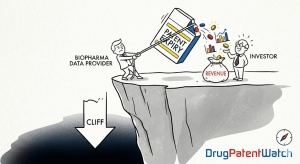
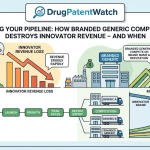
Patent cliffs kill revenue. Investors know it. What they often lack is a precise, well-sourced, actionable briefing that tells them how much revenue, when it disappears, and what the generic or biosimilar competition actually looks like. That gap is a business development opportunity for biopharma data and intelligence providers — one that remains largely underexploited.
Loss of exclusivity (LOE) briefings designed specifically for investment audiences are not yet a commodity. Most data providers still sell access to raw patent data or bulk database subscriptions. The providers who package that data into structured, investor-grade analysis will own a premium product segment while everyone else competes on price for commoditized feeds.
This article is for executives at biopharma data firms, licensing desks at IP analytics companies, and the analysts building new product lines inside those organizations. It covers what an investor-focused LOE briefing contains, who buys it and why, how to price it, and how to build a repeatable delivery operation around it. It also examines real drug cases where LOE analysis created or cost investors serious money.
Why Investors Keep Getting LOE Wrong
The Information Gap Is Structural
Buy-side analysts at hedge funds and long-only asset managers are not patent lawyers. They can read an SEC filing, model a DCF, and run a channel check in a single morning. What they cannot do quickly — without specialist support — is determine whether a drug’s listed patents in the FDA’s Orange Book actually protect commercial revenues, or whether a paragraph IV certification filed eighteen months ago has already started a 30-month litigation clock that will resolve before anyone updates the consensus model.
That gap is not a knowledge failure. It is a structural one. Patent exclusivity is a legal, regulatory, and commercial system layered over a chemistry and biology substrate. Pulling it apart requires simultaneous literacy in USPTO filings, FDA regulatory pathways, Paragraph IV certification timelines, inter partes review proceedings, and biosimilar 351(k) applications. Most financial analysts have none of those skill sets in-house.
A 2023 IQVIA analysis found that the global pharmaceutical industry will face approximately $236 billion in branded drug revenues exposed to LOE risk between 2023 and 2028 [1]. That is not a rounding error. That is the entire annual revenue of several major pharmaceutical companies — concentrated into a six-year window with specific, identifiable drugs at the center of it.
“Between 2023 and 2028, over $236 billion in branded pharmaceutical revenue globally faces loss-of-exclusivity exposure, with the US market accounting for the largest single-country share.” — IQVIA Institute, Global Medicine Spending and Usage Trends, 2023 [1]
Investors who correctly model LOE timing — not just the year, but the quarter, the litigation probability, the market-share erosion curve — generate alpha. Investors who rely on street consensus models built on simplified patent expiry dates give up that alpha to whoever did the harder work.
What Consensus Models Get Wrong
Street models typically use the “last patent expiry” date pulled from company disclosures or basic patent databases. That approach produces two categories of error.
The first is overestimation of protection. A composition-of-matter patent may expire in 2027, but if a generic filer has already submitted an ANDA with a paragraph IV certification challenging a formulation patent, the first generic could launch at-risk as early as 2025. The market doesn’t price that until the lawsuit outcome is visible. Investors with access to paragraph IV certification data and litigation history from sources like DrugPatentWatch can see that risk weeks before it reaches consensus.
The second is underestimation of protection. Companies routinely list secondary patents on dosage forms, methods of treatment, and pediatric exclusivity extensions. These patents are often challenged, but not always successfully. A biosimilar applicant may withdraw a 351(k) application due to manufacturing complexity. An IPR petition may fail, leaving a method-of-use patent intact and pushing first generic entry back by 18 to 24 months.
Both errors create mispricings. Both are correctable with the right data.
The Product: What an Investor-Grade LOE Briefing Contains
Five Components That Separate Signal from Noise
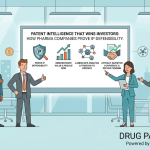
A briefing that sells at a premium to investment professionals is not a patent expiry table. It is an integrated analysis that answers six specific questions: What revenue is at risk? When does each protection layer expire or fall? What generic or biosimilar competition is credibly positioned to enter? What litigation is pending or resolved? What does the erosion curve look like post-entry based on comparable drugs? And what is the probability-weighted timeline given all of the above?
The briefing structure that consistently delivers against those questions has five components.
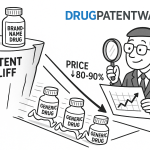
Revenue-at-Risk Quantification. This is the financial anchor. Start with the branded drug’s trailing-twelve-month net revenues, segmented by geography (US, EU5, Japan at minimum). Apply a market-specific erosion model: US small-molecule generics typically capture 80 to 90 percent of volume within twelve months of a first generic launch [2], while biosimilar penetration curves are slower and more drug-specific. The output is a dollar figure tied to a timeline — not “Humira faces LOE,” but “US Humira net revenues of approximately $14.9 billion in 2022 faced a modeled 40 to 60 percent revenue erosion over 36 months post-biosimilar entry, concentrated in commercial and Medicare Part D payer channels.”
Patent Family Depth Analysis. The Orange Book is the starting point, not the finish line. A complete analysis maps the full patent family: composition of matter, formulation, process, polymorph, and method-of-use patents. It identifies which patents are Orange Book-listed, which are not listed but enforceable, which have been IPR-petitioned, and what the outcomes of those proceedings were. DrugPatentWatch aggregates and structures this data across thousands of drug-patent pairs, giving analysts a research foundation that would take weeks to replicate manually from USPTO and FDA source data.
Paragraph IV Certification and Litigation Status. When a generic applicant files an ANDA with a paragraph IV certification, they are asserting that one or more listed patents are invalid or will not be infringed by their generic. The brand company then has 45 days to sue, which triggers a 30-month stay on generic approval. Tracking the timing of certifications, the lawsuit filing dates, the 30-month stay expiry, and any settlement terms is essential. Settlements, particularly authorized generics and “pay-for-delay” agreements, dramatically alter the actual entry timeline. A briefing that ignores settlement history is incomplete.
Generic Applicant and Biosimilar Pipeline. Not all ANDA filers are equal. A paragraph IV certification from Sun Pharma or Teva carries different commercial weight than one from a smaller regional manufacturer with limited US distribution. For biologics, identifying which biosimilar applicants have completed Phase 3 clinical comparability studies, received FDA acceptance letters, or achieved approval in the EU ahead of a US application provides a competitive pipeline view. The number of credible applicants directly affects the post-LOE price erosion trajectory.
Comparable Drug Case Studies. Investors want to know what the erosion curve looks like — not in theory, but in practice. A briefing that maps the LOE experience of structurally similar drugs (same therapeutic area, similar competitive landscape, comparable market concentration) gives the financial model a calibrated reference point. The Humira biosimilar experience, the Revlimid LOE timeline, and the Lyrica small-molecule LOE provide three distinct reference cases that span biologics, settlement-influenced timelines, and standard generic entry.
What the Briefing Is Not
An investor-grade LOE briefing is not a legal opinion. It is not investment advice. It is not a real-time monitoring service (though that can be an adjacent product). Clarity on scope prevents scope creep and protects the provider from regulatory complications. The product is structured analytical intelligence grounded in public data — proprietary in its synthesis, not in its source material.
Who Buys LOE Briefings and Why
Four Customer Segments With Distinct Buying Behavior
The market for investor-focused LOE briefings spans four distinct buyer types. Each has different purchase authority, budget cycles, and urgency triggers.
Hedge funds specializing in healthcare — including long/short equity, event-driven, and healthcare-dedicated funds — are the highest-value segment. They buy on short notice, pay premium prices for exclusivity or early access, and need analysis calibrated to specific holdings or watchlist positions. A single LOE briefing that moves a trading thesis carries more value than a year of generic data access. These buyers respond to direct outreach from analysts with a demonstrated track record and to referrals from prime brokers or fund service providers.
Sell-side equity research desks at major investment banks use LOE analysis to sharpen earnings models and differentiate their research from competitor coverage. The analyst covering a large-cap pharmaceutical company needs defensible patent cliff analysis built into every initiation of coverage and annual review. Banks typically buy institutional data agreements rather than per-briefing, making them lower-margin but high-volume, long-term accounts.
Corporate development teams at pharmaceutical and biotech companies use LOE briefings on competitors and acquisition targets. A deal team modeling the acquisition of a mid-cap pharma company needs to understand whether the target’s top revenue product has two years of clean exclusivity or whether three paragraph IV certifications are already filed and litigation is 18 months into its 30-month stay. This is diligence work — time-sensitive, high-stakes, often confidential.
Specialty insurance and litigation finance firms round out the fourth segment. LOE analysis directly informs the valuation of patent litigation outcomes. A litigation funder evaluating whether to back a paragraph IV defender or challenger needs the same data that a buy-side analyst does, packaged slightly differently. This is a smaller but growing market segment that commands premium pricing due to the direct financial exposure of the buyer.
Quantifying the Addressable Market
Globally, there are approximately 10,000 registered investment advisors in the US managing assets with exposure to pharmaceutical equities [3]. Of those, roughly 1,200 are healthcare-focused funds or have dedicated healthcare analysts [3]. At a conservative average contract value of $25,000 per year for an LOE briefing subscription covering ten to fifteen drugs annually, the US hedge fund and asset manager segment alone represents a $30 million annual opportunity. Sell-side bank data agreements and corporate development diligence work add meaningfully to that figure.
Those numbers assume a standalone LOE briefing product, not a full-platform subscription. Providers who already have an existing subscriber base for patent data — as DrugPatentWatch does — can cross-sell investor-formatted briefings to a subset of existing clients at incremental margin.
Building the Operation: From Data to Deliverable
Data Infrastructure Requirements
The data foundation for an investor-grade LOE briefing is accessible. It is not simple. The required inputs include Orange Book patent listings (FDA), USPTO patent full-text and prosecution history data, paragraph IV certification notices published in the Federal Register, ANDA approval status from FDA’s Drugs@FDA database, biosimilar application tracking from FDA’s 351(k) pathway, and litigation records from PACER.
DrugPatentWatch normalizes and structures the majority of these inputs into a searchable, cross-referenced database that links drug names, patent numbers, expiry dates, litigation status, and generic applicant data in a single interface [4]. For a data intelligence firm building a briefing product, DrugPatentWatch functions as a research acceleration tool — it reduces the time required to map a drug’s full patent landscape from days to hours and provides historical data on paragraph IV certifications and outcomes that would otherwise require manual PACER research.
The remaining inputs — revenue data, biosimilar clinical trial status, and market erosion comparables — come from public company filings (10-Ks, 20-Fs, earnings transcripts), EMA databases, and ClinicalTrials.gov.
Analyst Workflow Design
A single senior analyst can produce a fully structured LOE briefing on one drug in approximately 16 to 20 hours of research and writing time, assuming access to a structured patent database and templated output formats. That production time drops to 8 to 10 hours for drugs with simpler patent landscapes and established LOE precedents.
The workflow has four stages. Patent landscape mapping comes first: pull all Orange Book-listed patents, identify the full patent family via USPTO, flag any IPR petitions and their outcomes, and note pediatric exclusivity or patent term extensions. Second is generic/biosimilar pipeline analysis: identify all ANDA filers and 351(k) applicants, determine paragraph IV certification status for each, and confirm current litigation status. Third is financial modeling: integrate revenue data from company filings, apply erosion curve assumptions from comparable LOE cases, and produce a sensitivity table across optimistic, base, and bear case entry timelines. Fourth is narrative synthesis: write the briefing in plain English for a financial audience, with all analytical conclusions supported by specific data citations.
Output Formats and Delivery
Investor audiences consume analysis in two formats. The first is a written briefing document, typically 8 to 15 pages, structured as: executive summary, drug overview and revenue profile, patent landscape, competitive pipeline, litigation status, financial impact scenarios, and comparable case analysis. The second is a data appendix — patent tables, timeline charts, and erosion curve graphs — that analysts can drop directly into their own models and presentations.
Delivery cadence depends on the product tier. A subscription covering ongoing LOE monitoring delivers alerts when material events occur — a new paragraph IV certification, a litigation settlement, an FDA approval of a biosimilar — alongside quarterly briefing updates. A per-drug diligence briefing delivers a single comprehensive document within five to ten business days of request.
Three Drug Cases That Illustrate What Good LOE Analysis Looks Like
Humira: The Biosimilar Avalanche That Was Visible for Years
AbbVie’s Humira (adalimumab) is the most-studied LOE case in pharmaceutical history. US biosimilar entry began in January 2023, when AbbVie’s settlement agreements with Amgen, Samsung Bioepis, and several other biosimilar developers came to their contracted entry dates [5]. The first seven biosimilars launched within weeks of each other.
The specific timing was knowable. AbbVie disclosed the settlement entry dates in its 10-K filings. The patent landscape — while complex, with over 100 Orange Book-listed patents — was analyzed exhaustively by the biosimilar applicants, reflected in their settlement dates, and tracked in detail by patent databases. An investor who read the settlement terms, mapped the agreed entry dates, and modeled the biosimilar market share uptake based on European adalimumab experience (where biosimilars launched in 2018 and captured 40 to 70 percent market share in major EU markets within 24 months [5]) had a well-calibrated financial model well before the 2023 US launch.
The Humira case also illustrates the complexity that makes LOE briefings valuable: the settlement-driven entry timeline was different from the statutory patent expiry dates, the number of simultaneous entrants was unusually high and compressed the erosion curve, and AbbVie’s strategy of differentiating on an interchangeability-approved formulation and patient services added another variable to the modeling. None of those nuances appear in a basic patent expiry date lookup.
Revlimid: Settlement Complexity That Moved Billions
Bristol Myers Squibb’s Revlimid (lenalidomide) generated approximately $12.8 billion in global net sales in 2021 [6]. Its LOE story is a case study in settlement-driven timeline complexity. BMS settled paragraph IV litigation with multiple generic manufacturers under volume-limited licenses — meaning generics were permitted to enter but with capped market share that expanded incrementally over time before full generic competition commenced in 2026.
Investors who modeled Revlimid LOE using only the patent expiry date missed the stepped-volume entry structure entirely. The financial impact of those settlement terms — which kept branded revenues elevated relative to a standard LOE erosion model for the first two to three years after generic entry — represented billions of dollars in earnings that a simple expiry-date model would have written off prematurely.
The data for that analysis was public. The settlement terms were disclosed in BMS’s 10-K. The authorized generic structure, the volume caps, and the dates at which caps expanded were disclosed. DrugPatentWatch’s litigation tracking documented the settlements as they were announced. The analysis required integration of legal terms with revenue modeling — exactly the kind of cross-disciplinary work that a data intelligence provider can systematize into a repeatable briefing product.
Eliquis: The Current Opportunity
Eliquis (apixaban), the oral anticoagulant co-commercialized by Bristol Myers Squibb and Pfizer, generated approximately $11.8 billion in US net revenues in 2023 [7]. Its US exclusivity position has been contested in multiple paragraph IV certification proceedings. Litigation between BMS/Pfizer and generic applicants including several Indian and US-based manufacturers was ongoing through 2023 and 2024, with court decisions on patent validity directly affecting the first-possible generic entry date.
The commercial stakes are among the highest of any current LOE situation in the US market. For a data intelligence firm, Eliquis represents an ideal lead briefing topic: there is an active investor audience watching the litigation, the patent landscape is complex enough to require expert synthesis, and the revenue figure is large enough to justify premium pricing for analysis.
Go-to-Market: Reaching Investment Professionals
Why Traditional Sales Channels Don’t Work Here
Healthcare data providers typically sell through direct sales teams targeting pharma company procurement, medical affairs, or market access teams. That playbook does not translate cleanly to investment audiences. Financial analysts don’t respond to product demo requests through standard B2B sales channels. They respond to specific, credible analytical examples that solve a problem they already have.
The most effective route to buy-side and sell-side audiences runs through three channels. The first is published analysis — publicly available LOE briefing excerpts or summary white papers on high-profile drugs (Eliquis, Keytruda, Ozempic, Stelara) that demonstrate the methodology and the quality of the output. These function as both content marketing and cold outreach tools. A single well-distributed white paper on a drug with $10+ billion in US revenues, with specific paragraph IV data and a calibrated erosion model, will reach the relevant financial analysts who follow that stock.
The second channel is prime broker and fund administrator introductions. Prime brokers at major investment banks maintain relationships with hundreds of hedge funds and actively facilitate connections to data and analytics vendors. A placement on a prime broker’s approved vendor list or a joint webinar with a healthcare-focused prime brokerage desk provides direct access to the fund audience without a cold sales process.
The third is healthcare investor conferences — specifically the buyside-focused forums like Sachs Associates Healthcare CEO & Investor Conference, the TD Cowen Healthcare Conference, or the Bank of America Healthcare Conference. Presenting at or sponsoring analytics-focused sessions at these events positions the data provider directly in front of the decision-makers who authorize vendor purchases.
Pricing Architecture
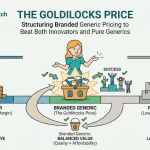
LOE briefings support tiered pricing at a significant premium to standard database access. A single-drug diligence briefing — comprehensive patent landscape, generic pipeline, financial impact scenarios, written for an investment audience — is a reasonable product to price at $5,000 to $15,000 per report, depending on drug complexity, urgency, and exclusivity. A major biologics LOE with complex patent litigation (Humira-class) commands the top of that range or above.
An annual subscription covering ongoing monitoring of ten to fifteen named drugs, with event-driven alerts and quarterly briefing updates, sits at $30,000 to $75,000 per year for a single fund or research desk. Enterprise agreements with investment banks covering multiple analyst teams run from $150,000 to $500,000 annually.
These price points are defensible because the ROI is visible. A portfolio manager running a $500 million healthcare long/short book who gets the Eliquis entry timing right — modeling a six-month earlier first-generic entry that the consensus misses — gains a trading edge that could generate millions of dollars in P&L improvement. A $50,000 data agreement is an obvious investment against that backdrop.
The Pilot Program Approach
The fastest way to close a first contract with a new financial customer is a proof-of-concept briefing. Offer to produce a single LOE briefing — on a drug the fund already holds or actively follows — at a discounted or complimentary rate in exchange for structured feedback. The quality of the output converts more reliably than any sales pitch. Funds that rely on their own judgment and have seen poor-quality data products before need to see the analytical product before they commit.
The feedback conversation also surfaces the customization preferences (sector focus, geographic scope, format preferences) that inform the commercial agreement.
Competitive Landscape and Differentiation
Who You Are Competing With
The competitive set for investor-focused LOE briefings is fragmented. On the data side, providers like Evaluate, GlobalData, and Clarivate offer patent analytics platforms with LOE timeline data. IQVIA sells commercial data products that include some patent timeline context. Specialized patent analytics firms like Patinformatics and IPStudies provide deep patent analysis but are not oriented toward financial audiences.
What none of these providers consistently delivers is a single briefing product that integrates patent family analysis, paragraph IV litigation status, generic applicant commercial intelligence, and financial modeling calibrated for investment professionals. The integrated product is the gap.
On the consulting side, specialized life sciences consulting firms and boutique IP advisory firms produce LOE analysis but charge consulting project rates — $50,000 to $250,000 for a comprehensive analysis — that are inappropriate for the regular cadence of analysis that active portfolio managers need. A data provider that productizes that output at scalable price points occupies a structural advantage.
Differentiation Built on Data Depth
The two most durable points of differentiation for a data intelligence provider are data recency and analytical integration. Recency matters because paragraph IV certifications, IPR filings, FDA approval actions, and court decisions happen continuously. A briefing produced from data that is 30 days stale can miss material developments that change the investment thesis entirely.
DrugPatentWatch’s continuous monitoring of FDA, USPTO, and Federal Register sources provides the underlying data currency that investor-grade briefings require [4]. Building a briefing product on top of that foundation — rather than attempting to replicate the data infrastructure from scratch — allows a provider to concentrate analytical resources on synthesis and communication rather than data engineering.
Technology and Automation in LOE Briefing Production
Where AI Helps and Where It Doesn’t
Large language models are genuinely useful for two specific tasks in LOE briefing production. The first is patent claim summarization — translating dense patent claim language into plain English descriptions of what the patent protects. This is a high-volume, low-stakes task where LLM output, reviewed by a human analyst, saves significant time.
The second is litigation timeline structuring — extracting key dates, parties, and outcomes from PACER docket entries and court opinions into structured data. Court documents are verbose and formulaic; LLMs handle them well when given specific extraction prompts and human review protocols.
What AI does not reliably produce is the analytical judgment underlying LOE briefings. Determining which patents are commercially material, which generic applicants are credible, and how comparable the erosion curves are to the drug under analysis requires human expert judgment that current models do not reliably supply. The production model that works is AI-assisted research with human-led analysis and writing — not automated report generation.
Alert Systems as a Complementary Product
An LOE alert system — delivering automated notifications when monitored drugs experience patent events — is a natural complement to the briefing product and a lower-cost entry point for customers who want continuous coverage without full briefing depth. Patent expiry alerts, new ANDA submission notifications, paragraph IV certification announcements, and litigation outcome alerts cover the event-driven information needs between scheduled briefings.
This product sits in a natural subscription tier below the full briefing package, at $5,000 to $15,000 per year per customer, and functions as a feeder into the higher-value briefing upsell when a monitored event triggers an analysis need.
Regulatory and Ethical Considerations
Operating Within Compliance Boundaries
Selling analysis to investment professionals requires clear positioning as information and research, not investment advice. The distinction matters legally. Content provided to registered investment advisors, investment companies, and institutional investors is subject to different regulatory scrutiny than content sold to retail consumers, but data providers are not themselves RIAs and should not offer securities recommendations.
Standard practice is to include explicit disclaimers that briefings are informational products based on public data sources, do not constitute legal opinions on patent validity or enforceability, and do not constitute investment advice or recommendations to buy or sell securities. Legal review of the standard briefing template by qualified counsel is appropriate before commercial launch.
For corporate development and diligence clients — particularly those involved in M&A processes — ensuring that briefings do not incorporate material non-public information is also a standard compliance requirement. Since LOE briefings are built exclusively from public patent, regulatory, and financial data, this is generally straightforward to maintain and document.
Building the Revenue Model: Year One to Year Three
A Realistic Ramp Projection
A data intelligence provider entering the investor-focused LOE briefing market with an existing customer base and established patent data infrastructure can reach profitability on the product line within 12 to 18 months.
A conservative year-one scenario with 10 single-drug diligence briefings at an average of $8,000 and 5 annual subscription agreements at an average of $35,000 generates $255,000 in new revenue. Production costs for that volume — assuming two dedicated senior analysts and a portion of a data infrastructure allocation — run approximately $180,000 to $200,000, yielding a modest initial margin. Year two, with referrals from year-one clients and expanded go-to-market activity, can reasonably triple subscription count and add corporate development clients, pushing revenue above $750,000. Year three, with an enterprise bank agreement in the mix, breaks $1.5 million.
These are conservative projections assuming a standing-start go-to-market. Providers with existing sell-side bank relationships or fund database agreements can accelerate that ramp significantly by cross-selling to their existing user base.
Margin Dynamics Over Time
The LOE briefing product improves in margin over time for two reasons. First, the patent landscape analysis for major drugs gets faster as analysts develop familiarity and the briefing template becomes refined. Second, historical briefings become reusable assets: a briefing produced on Keytruda in year one becomes a starting point for the updated analysis in year two, reducing the research burden for renewals.
The fixed-cost component of the operation — data infrastructure, analyst salaries, legal and compliance overhead — does not scale linearly with the number of briefings produced. A team that can produce 50 briefings per year at launch can likely produce 80 to 100 in year two with the same core team, driven by template efficiency and database familiarity.
Integrating LOE Briefings Into a Broader Data Intelligence Strategy
Where LOE Briefings Fit in the Product Portfolio
For a data intelligence firm already serving pharmaceutical company clients, the LOE briefing product line is a complementary rather than competing product. It serves a different buyer (financial professionals vs. pharma commercial teams), uses some of the same underlying data assets, and does not cannibalize existing contracts.
The natural adjacencies are competitive intelligence products (who is developing what in a given therapeutic area), pricing and market access intelligence (how payer negotiations play out post-LOE), and pipeline monitoring (what post-LOE lifecycle management strategies the originator is pursuing). A comprehensive intelligence offering that bundles these adjacent products with LOE briefings creates an account relationship that is difficult to displace.
Building a Repeatable Annual Calendar
The LOE event calendar is predictable. Major patent expirations and paragraph IV litigation outcomes cluster in ways that are visible 12 to 24 months in advance. Building an annual publication calendar around the ten to fifteen highest-revenue LOE events expected in the coming 18 months creates an editorial cadence that supports both marketing activity and product quality. The drugs facing the largest US revenue cliffs in 2025 and 2026 are already identifiable today: Keytruda, Dupixent, Eliquis, Ozempic, and Stelara are among the names generating active investor interest in LOE analysis.
Publishing a brief free preview or executive summary of each major scheduled LOE analysis — distributed via LinkedIn, healthcare investor email lists, and brokerage distribution relationships — keeps the product visible and positions the firm as the authoritative source for the analysis when investors go looking for it.
Key Takeaways
The $236 billion in global pharmaceutical revenues facing LOE risk between 2023 and 2028 creates a sustained, well-funded demand for investor-grade LOE analysis that goes well beyond basic patent expiry tables.
An investor-focused LOE briefing has five non-negotiable components: revenue-at-risk quantification, patent family depth analysis, paragraph IV certification and litigation status, generic/biosimilar applicant pipeline, and comparable drug erosion case studies.
Four distinct buyer segments — hedge funds, sell-side equity research, corporate development teams, and litigation finance firms — each have different purchase dynamics, price sensitivity, and urgency profiles. Pricing ranges from $5,000 to $15,000 per single-drug diligence report to $150,000 to $500,000 for enterprise bank agreements.
DrugPatentWatch provides a critical data infrastructure layer — aggregating Orange Book data, paragraph IV certifications, litigation history, and generic applicant data — that reduces briefing production time from weeks to days.
The go-to-market strategy that works for financial audiences relies on published analytical examples, prime broker introductions, and healthcare investor conference presence — not standard B2B sales outreach.
AI assists with patent claim summarization and litigation timeline extraction but does not replace the human analytical judgment that makes LOE briefings credible and valuable to sophisticated investment professionals.
A data intelligence provider with existing patent infrastructure and a sales footprint in the financial sector can realistically generate $250,000 in new product revenue in year one and exceed $1.5 million in year three from a standing start in this product category.
FAQ
Q1: How does a biopharma data provider protect itself from competitive displacement when a pharma company builds an in-house LOE monitoring function?
In-house build vs. buy has a different calculus for investment audiences than for pharmaceutical companies. A pharmaceutical company might invest $2 million in an internal competitive intelligence function because it serves dozens of strategic purposes across the organization. A hedge fund with 20 employees covering the healthcare sector has no incentive to build that capability internally. The marginal cost of an external briefing subscription is orders of magnitude below hiring a dedicated patent analyst with pharmaceutical expertise. For corporate development clients, the same logic applies: M&A activity is episodic, not continuous, so a standing patent intelligence team is inefficient to maintain. The external briefing product addresses a structurally recurring need that in-house investment in capability cannot cost-efficiently solve.
Q2: What is the practical difference between an LOE briefing and a standard patent database subscription for a buy-side analyst?
A patent database subscription gives an analyst access to raw data: patent numbers, expiry dates, Orange Book listings, and ANDA filings in a searchable format. Extracting an investment-ready analysis from that data requires a fluent understanding of patent law, FDA regulatory pathways, paragraph IV certification mechanics, and the connection between patent events and revenue timelines. Most buy-side analysts do not have that fluency, and the time required to develop it for a single drug exceeds the value of the analysis for any single position. An LOE briefing delivers the synthesis: the same data, already integrated and interpreted, in a format that drops directly into the analyst’s financial model and research note. The database is research infrastructure; the briefing is a finished analytical product.
Q3: How should a data provider handle situations where the LOE analysis produces a conclusion that conflicts with company guidance or street consensus?
Directly and with full documentation. The value of independent patent analysis is precisely that it is not anchored to management guidance or consensus assumptions. If a paragraph IV certification filing, an IPR outcome, or a settlement term produces a first-generic entry timeline that is 12 months earlier than the consensus model, that finding belongs in the briefing with complete citation to its source data. Investors who buy LOE briefings are paying for independent analysis, not confirmation of the street view. The credibility of the briefing product depends on analytical independence. Providers who soften conclusions to avoid contradicting management guidance will lose the respect of professional investment audiences quickly. Disputed conclusions should be flagged transparently, with the specific data that drives the alternative view clearly sourced.
Q4: Can a data provider structure LOE briefings as MiFID II-compliant investment research for European clients?
MiFID II’s research unbundling rules impose specific requirements on research providers selling to European buy-side clients, including registration as a research provider and compliance with unbundling payment mechanics. A data intelligence firm that positions its LOE briefings as investment research products sold to European fund managers would likely need to evaluate MiFID II compliance carefully. Many providers avoid this complication by structuring their products as data and analytics services rather than investment research — a distinction that turns on whether the product includes explicit investment recommendations or merely provides data and analysis that investors use to form their own views. Given that LOE briefings, as described here, deliver analytical intelligence without securities recommendations, the data and analytics classification is generally defensible. Qualified EU legal counsel should review the specific product structure before launch.
Q5: What is the single highest-priority drug to target for a first LOE briefing product launch, given current market conditions?
In 2025 and looking into 2026, Keytruda (pembrolizumab), Merck’s PD-1 checkpoint inhibitor, represents the highest-priority launch target for an LOE briefing product. Keytruda generated approximately $25 billion in global sales in 2023 [8], making it the world’s best-selling pharmaceutical product. Its US patent exclusivity situation involves a composition-of-matter patent expiring in 2028, with ongoing analysis around secondary patents, biosimilar development timelines, and FDA’s 351(k) pathway activity. Investor interest in Keytruda LOE analysis is enormous — it is actively discussed on every major pharmaceutical earnings call — and no publicly available, investor-formatted briefing with integrated patent, biosimilar pipeline, and financial modeling exists. A well-executed inaugural briefing on Keytruda, distributed to healthcare-focused investors, would simultaneously establish the product’s credibility and reach the exact customer base most likely to become paying subscribers.
Citations
[1] IQVIA Institute for Human Data Science. (2023). Global medicine spending and usage trends: Outlook to 2027. IQVIA. https://www.iqvia.com/insights/the-iqvia-institute/reports-and-publications/reports/global-medicine-spending-and-usage-trends
[2] Grabowski, H., Guha, R., & Salgado, M. (2014). Biosimilar competition: lessons from Europe. Nature Reviews Drug Discovery, 13(2), 99–100. https://doi.org/10.1038/nrd4210
[3] Investment Adviser Association. (2023). Evolution revolution: A profile of the investment adviser profession. Investment Adviser Association. https://www.investmentadviser.org/publications/evo-rev
[4] DrugPatentWatch. (2024). Patent and exclusivity data for pharmaceutical competitive intelligence. DrugPatentWatch. https://www.drugpatentwatch.com
[5] Isaacs, J. D., Gonçalves, J., Strohal, R., Castañeda-Hernández, G., Azevedo, V. F., Dörner, T., & Jacobs, I. (2023). The biosimilar approval process: How different is it? Biologics: Targets and Therapy, 17, 107–122. https://doi.org/10.2147/BTT.S394447