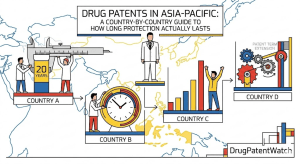
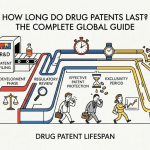
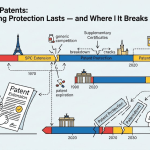
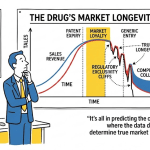
Ask a pharmaceutical executive how long a drug patent lasts in Asia-Pacific, and the answer you will hear most often is “twenty years.” That answer is technically accurate, procedurally incomplete, and commercially misleading in almost every market across the region.
The twenty-year statutory baseline applies in every major Asia-Pacific jurisdiction that is a member of the World Trade Organization and has implemented the Agreement on Trade-Related Aspects of Intellectual Property Rights (TRIPS) [1]. But the distance between a twenty-year statutory term and the actual period of market exclusivity that a pharmaceutical company can extract from a drug patent in Japan, China, Australia, South Korea, India, or any of the nine other significant markets in the region ranges from as few as eight years to as many as twenty-six, depending on which country you are in, when you filed, how long regulatory review took, what supplementary protections you applied for, and whether your patent survived the validity challenges that have been intensifying across the region since 2015.
This guide maps those variables for fourteen Asia-Pacific markets. It is written for IP counsel, business development executives, pharmaceutical portfolio managers, and deal-makers who need precise, operational answers rather than general principles. The data is drawn from national patent office records, regulatory agency databases, academic research, and industry sources including DrugPatentWatch, which tracks pharmaceutical patent and exclusivity status across international markets. <blockquote> “The Asia-Pacific pharmaceutical market is projected to reach $583 billion by 2028, growing at a compound annual rate of 6.8 percent from 2023. Patent expiration timing in China, Japan, South Korea, and Australia alone governs access decisions affecting more than 40 percent of that total market value.” [2] </blockquote>
A critical preliminary point: this guide covers pharmaceutical patents on drug substances, formulations, and methods of treatment. It addresses statutory patent terms, patent term extensions, regulatory data exclusivity, and the procedural realities that compress or extend effective protection in each jurisdiction. It does not cover plant variety protections, utility model rights, or trade secret protections, which interact with pharmaceutical IP in certain markets but operate under separate legal regimes.
Why Asia-Pacific Patent Duration Is More Complex Than Every Other Region
Europe has a Supplementary Protection Certificate system that applies uniformly across member states. The United States has Patent Term Extension under a single federal statute. Asia-Pacific has fourteen separate regulatory systems, eight distinct languages of legal proceedings, patent office examination timelines that vary by a factor of four between the fastest and slowest jurisdictions, and patent term extension regimes that range from among the most generous in the world (Japan) to effectively nonexistent (India).
The complexity is not merely academic. Pharmaceutical companies making launch decisions, generic manufacturers calculating first-to-file timing, and investors structuring asset-backed financing need to know the actual date of competitive entry in each specific market. A drug that loses patent protection in Japan in 2027 but retains data exclusivity in South Korea until 2029 and has no supplementary protection at all in China presents a three-country problem with three distinct timelines, three distinct challenge processes, and three distinct competitive entry dynamics.
Four structural factors create this complexity.
First, the development of domestic patent law in Asia-Pacific markets has not followed a uniform trajectory. Japan, Australia, and New Zealand had patent systems in place before TRIPS and adapted them through amendment. China built much of its modern pharmaceutical patent framework after 1993 and has substantially overhauled it twice since. India implemented TRIPS while simultaneously using TRIPS-permitted flexibilities to construct one of the most restrictive pharmaceutical patentability standards in the world. Newer economies like Vietnam, Indonesia, and the Philippines have patent systems that, in some respects, are still maturing.
Second, regulatory approval timelines across the region vary enormously. Patent term begins running from filing date, not from regulatory approval. A drug that takes eight years to receive regulatory approval in one market, versus four years in another, arrives at commercial launch with dramatically different remaining patent term even if both filings were simultaneous.
Third, patent term extension mechanisms – where they exist – are calibrated differently in every jurisdiction, with different maximum extension periods, different calculation methodologies, and different procedural requirements.
Fourth, data exclusivity, which protects clinical trial data from generic reliance independent of patent status, runs on its own clock and is calibrated differently in each jurisdiction. In some markets, data exclusivity effectively functions as the primary protection for innovator drugs because the patent system is less reliably enforced.
Japan: The Most Generous Extension Regime in the Region
Japan is, for pharmaceutical patent purposes, arguably the most favorable major market in Asia-Pacific for innovator companies. The statutory patent term runs twenty years from filing date under Article 67 of the Patent Act [3], but Japan’s patent term extension mechanism – available under Article 67-2 – can extend the term by up to five years to compensate for time spent in regulatory review by the Pharmaceuticals and Medical Devices Agency (PMDA).
Japan’s Patent Term Extension: How the Calculation Works
The extension period is calculated as the time between patent registration (not filing) and the date of regulatory approval, minus any delays attributable to the applicant. In practice, because PMDA review for new chemical entities typically runs twenty-four to thirty months, and sometimes longer for complex products, extensions of three to five years are common. Multiple patents covering the same drug product can each receive independent extensions, provided each covers a different aspect of the product (compound, formulation, manufacturing process) and each meets the eligibility criteria [4].
Japan’s Intellectual Property High Court has repeatedly upheld the right of multiple patent holders to receive separate extensions for the same drug, making it possible – and common – for innovator companies to stack independent extensions across a family of related patents covering a single product. This deliberate policy choice reflects Japan’s historical desire to attract pharmaceutical R&D investment, and it produces effective protection periods that can reach twenty-five to twenty-six years from original filing date for the best-protected products.
The PMDA approval process itself has become materially faster since Japan’s 2007 initiative to reduce the “drug lag” – the period between U.S./EU approval and Japanese approval that was historically three to five years. Current new drug approval timelines average approximately twelve to eighteen months from filing to approval for priority review products and twenty-four to thirty months for standard review [5]. This acceleration has two effects: extensions are somewhat shorter than they were a decade ago, and the Japanese launch timeline is closer to global launch, which increases the strategic value of the Japanese patent position.
Japan’s Data Exclusivity: Eight Years Standard
Japan grants data exclusivity for new chemical entities for eight years from the date of approval, preventing generic manufacturers from relying on the originator’s clinical trial data to support abbreviated applications during that period [6]. For drugs approved in Japan since 2007, this eight-year data exclusivity has functioned as a meaningful second layer of protection in cases where the compound patent has been successfully challenged.
A subtlety in Japanese practice that affects commercial timing: generic companies can file applications during the final year of data exclusivity (in the eighth year) for approval to take effect at exclusivity expiration, meaning generic competition can begin the day the data exclusivity ends. This “file-before-expiry” practice is well-established and means the practical exclusivity advantage of data protection is slightly less than eight full years.
Japan’s Post-Grant Opposition and Invalidation System
Japan’s patent opposition system was restructured in 2015 when the Patent Act was amended to reintroduce a post-grant opposition system (abandoned in 2004) alongside the existing inter partes invalidation trial system [7]. Third parties can file opposition within six months of patent publication, and the Japan Patent Office (JPO) conducts an examination of the opposition. Separately, invalidation trials can be filed at any time during the patent term and adjudicated before the JPO’s Trial and Appeal Board.
For pharmaceutical portfolio planning, the reintroduction of post-grant opposition means that compound patents for recently-approved drugs now face a structured challenge window in the first years after grant. Generic manufacturers have used this mechanism with increasing frequency since 2016. A patent that survives post-grant opposition with no claim amendments carries more commercial value than one that has been through opposition without challenge – both because opposition survival represents a form of quality validation and because it eliminates a clean legal avenue for near-term challenge.
Practical Effective Duration in Japan
For a new chemical entity with a strong patent position, the practical effective exclusivity period in Japan runs from regulatory approval to the end of the patent term extension. For a drug filed in year zero and approved after approximately five to six years of development, with a PMDA review of twenty-four months, and a full five-year extension, the total post-approval exclusivity approaches twelve to fifteen years. The actual number depends on specific filing dates and approval timelines, which DrugPatentWatch tracks for drugs with Japanese regulatory equivalents.
China: The 2021 Overhaul and Its Real-World Consequences
China’s pharmaceutical patent landscape changed more in 2021 than in the preceding twenty years. The fourth amendment to the Patent Law, which took effect on June 1, 2021, introduced three changes that directly affect how long drug patents last in practice [8].
The first is patent term compensation for unreasonable examination delays at the China National Intellectual Property Administration (CNIPA), providing up to five years of additional term where examination delays attributable to the patent office extended the period from filing to grant beyond four years.
The second is patent term extension for regulatory delays, allowing inventors to extend term by up to five years (with a maximum of fourteen years post-approval) to compensate for National Medical Products Administration (NMPA) review time. This mirrors the U.S. and European mechanisms and represents China’s most significant pro-innovator IP reform in two decades.
The third is a pharmaceutical linkage system – analogous to the U.S. Hatch-Waxman framework – that creates a structured process for generic applicants to challenge patent validity before receiving marketing approval.
Understanding China’s New Patent Term Extension Mechanism
China’s patent term extension under the 2021 amendments requires that the patent be granted, the drug be approved by NMPA, and the applicant submit an extension request within three months of NMPA approval [9]. The extension period is calculated as the time from the patent application date to the first commercial marketing approval date in any country, minus five years – a formula that specifically rewards earlier NMPA applications relative to global regulatory timelines.
The practical result is that drugs approved in China before or contemporaneously with U.S. or EU approval (increasingly common under China’s expedited review pathways for innovative drugs) can receive extensions approaching five years. Drugs approved in China several years after global launch receive smaller extensions or may not qualify at all if the domestic approval came more than fourteen years after the filing date.
NMPA’s new drug approval timeline has accelerated substantially since 2015 reforms, with priority review approval timelines now averaging approximately twelve months for drugs already approved in major reference jurisdictions [10]. This acceleration benefits both innovators (faster market access) and the term extension calculation (longer remaining protection at approval).
China’s Pharmaceutical Patent Linkage System
China’s linkage system, implemented through regulations issued jointly by NMPA and CNIPA, operates through a patent information registration and publication platform analogous to the U.S. Orange Book. When a generic manufacturer files an abbreviated marketing authorization application, it must make a declaration about each listed patent: that no patent claim is relevant to its product (Category I), that all relevant patents have expired or been invalidated (Category II), that it will not commercialize until patent expiry (Category III), or that relevant patents are invalid or will not be infringed (Category IV).
A Category IV declaration triggers a nine-month “open period” during which the originator can file patent infringement litigation in Chinese courts, and NMPA will typically not grant final approval of the generic application until the litigation is resolved or the nine-month period expires [11]. This mechanism, new to China in 2021, provides innovators a litigation window that did not previously exist and fundamentally changes the competitive entry timeline for generic manufacturers.
The system is still developing legally. Courts in Beijing, Shanghai, and Guangzhou – the three designated forums for pharmaceutical patent linkage cases – are building jurisprudence on claim construction, infringement standards, and procedural management. Early cases have taken twelve to thirty-six months to reach substantive decision, which means the nine-month open period itself functions more as a stay request mechanism than a definitive resolution pathway.
China’s Data Exclusivity: Six Years for New Chemical Entities
NMPA grants six years of data exclusivity for new chemical entities – defined as drugs containing an active substance not previously approved in China [12]. The six-year period begins from the date of Chinese marketing approval and prevents generic applicants from relying on originator clinical trial data to support abbreviated applications during that window.
In practice, the combination of the six-year data exclusivity and the new patent linkage system creates a multi-layer protection structure that did not exist before 2021. For drugs approved in China before or shortly after their patent filing dates, the compound patent term extension, the data exclusivity period, and the litigation rights under the linkage system can collectively produce effective exclusivity periods that approach fifteen to seventeen years from Chinese approval for the best-protected products.
What China’s Patent System Still Cannot Deliver
Despite the 2021 reforms, China’s patent system has structural features that continue to create risk for innovator pharmaceutical companies.
Patent examination quality at CNIPA, while improving, has historically been more variable than at JPO, KIPO, or IP Australia. Claims that would have been narrowed during prosecution in Japan or Australia sometimes issue broader in China, creating enforcement complications when those broad claims face validity challenges in Chinese courts.
Chinese courts apply damages standards in pharmaceutical patent cases that remain substantially lower than comparable U.S. cases even when infringement is found. This affects deterrence: a generic manufacturer calculating the economic risk of a patent challenge may assess Chinese litigation as lower-cost than comparable actions in Japan or Australia.
Compulsory licensing provisions remain available in China under conditions that include pharmaceutical supply emergencies and national health crises [13]. While no major pharmaceutical compulsory license has been formally granted in China under the Patent Law, the availability of the mechanism creates tail risk for high-revenue innovative drugs.
South Korea: Asia-Pacific’s Most Litigated Pharmaceutical Patent Market
South Korea has the most active pharmaceutical patent litigation environment in Asia-Pacific relative to market size. The combination of a sophisticated domestic generic industry, an aggressive generic regulatory pathway, and a patent linkage system modeled on Hatch-Waxman has produced a litigation intensity that rivals Japan and exceeds every other market in the region.
Korea’s Statutory Term and Extension Mechanism
The statutory patent term in South Korea is twenty years from filing date under Article 88 of the Patent Act [14]. Patent term extension is available under Article 89 for patented inventions requiring regulatory approval before commercial use, including pharmaceutical drugs. The extension covers the period of regulatory review and is capped at five years, with the additional limitation that the total remaining patent term after extension cannot exceed five years at the time of extension grant.
This second cap – on remaining term, not just on extension duration – is a subtle but commercially important limitation that the equivalent U.S. PTE provision does not contain. Under U.S. law, the 14-year post-approval cap is the operative constraint. Under Korean law, if a patent has fewer than five years of remaining term at the time the extension is granted, the extension can bring the total term up to the equivalent of five additional years from that grant date, but cannot exceed a total remaining term of five years. In practice, for drugs approved in Korea with more than five years of remaining patent term at approval, the mechanisms operate similarly to U.S. PTE.
The Korean Intellectual Property Office (KIPO) has a patent examination timeline for pharmaceutical patents that averages approximately sixteen to twenty-four months for initial examination, with total prosecution timelines (including examination, office action responses, and grant) running twenty-four to forty-eight months from filing [15].
Korea’s Patent Linkage System: The Most Hatch-Waxman-Like in the Region
South Korea implemented a pharmaceutical patent linkage system in 2015 as part of its Free Trade Agreement implementation obligations with the United States [16]. The system requires generic manufacturers filing abbreviated applications with the Ministry of Food and Drug Safety (MFDS) to notify patent holders, and creates a prohibition on MFDS approval of the generic application for a period of nine months while the patent holder decides whether to initiate litigation.
If the patent holder initiates invalidation or scope confirmation proceedings within the nine-month window, MFDS approval is further stayed for up to fifteen months from the original notification. This fifteen-month total stay is shorter than the Hatch-Waxman thirty-month stay in the United States, but the structure of rights and obligations is otherwise closely analogous.
The first generic filer who successfully challenges a listed patent receives nine months of exclusivity against other generic filers – directly mirroring the U.S. 180-day first-filer exclusivity, though the Korean period is somewhat longer. This incentive structure has produced exactly the outcome it was designed to create: aggressive early patent challenges by well-capitalized Korean generic manufacturers, particularly Hanmi Pharmaceutical, Boryung Pharmaceutical, and Yuhan Corporation, who have successfully invalidated patents on several major innovative drugs and captured first-filer exclusivity as a result.
Korea’s Data Exclusivity and Invalidity Record
Korean pharmaceutical law provides six years of data exclusivity for new chemical entities under the Pharmaceutical Affairs Act, with four years for new indications and new formulations [17]. Research on Korean pharmaceutical patent linkage cases since the 2015 implementation shows that patent holders have prevailed in approximately 45 to 55 percent of fully litigated challenges, with generic challengers succeeding at a higher rate against secondary patents (approximately 60 percent invalidity rate) than against compound patents (approximately 35 percent invalidity rate) [18].
Australia: The Most Transparent System With the Weakest Extensions
Australia has the most transparent and procedurally predictable pharmaceutical patent system in Asia-Pacific, and arguably the least generous to innovator companies in terms of actual effective exclusivity duration.
Australia’s Statutory Term and the Extension of Term Regime
The statutory patent term in Australia is twenty years from filing under the Patents Act 1990 [19]. An Extension of Term mechanism available under Chapter 6 of the Act allows patent holders to apply for up to five additional years of protection for pharmaceutical substances, capped at the point at which the total post-regulatory approval exclusivity reaches fifteen years.
The fifteen-year cap is the operative constraint for most major pharmaceutical products in Australia. For a drug approved by the Therapeutic Goods Administration (TGA) after six years of development and review, with ten or more years of patent term remaining at approval, the extension can bring total post-approval protection to fifteen years. For drugs with longer development timelines, the maximum fifteen-year post-approval cap limits the extension below the nominal five-year maximum.
The TGA’s approval timeline for standard new chemical entity applications averages approximately twelve to eighteen months from submission, which is relatively fast by regional standards and reflects TGA’s reliance on evaluation data from reference jurisdictions (primarily the U.S. FDA and EMA) under international work-sharing arrangements [20].
The Raising the Bar Reforms and Evergreening Jurisprudence
The Intellectual Property Laws Amendment (Raising the Bar) Act 2012 substantially tightened Australian patentability standards – particularly the enablement and written description requirements – bringing them closer to European and U.S. standards [21]. This reform reduced the ability of pharmaceutical companies to obtain incrementally-improved secondary patents through the Australian system using lower-threshold pre-2012 standards.
Formulation patents filed after 2012 face substantially stricter examination, and Australian patent revocation proceedings – conducted before the Federal Court or through re-examination by IP Australia – have produced higher invalidity rates for post-2012 pharmaceutical patents than the preceding cohort.
Australia’s Data Exclusivity and Compulsory Licensing
Australia grants five years of data exclusivity for new chemical entities under the Therapeutic Goods Act, which is shorter than the comparable periods in Japan (eight years), South Korea (six years), and China (six years) [22]. The five-year period means that data exclusivity cannot substitute for strong patent coverage in Australia the way it can in Japan. Australia’s Patents Act includes compulsory licensing provisions that have been invoked rarely, with the 2007 amendments adding a public interest ground that has not been used for pharmaceutical patents in modern practice [23].
India: Low Patent Duration, High Generic Throughput
India’s pharmaceutical patent environment is unlike any other major market in Asia-Pacific, and understanding it requires setting aside assumptions derived from North American or European experience.
India’s Implementation of TRIPS and Section 3(d)
India did not have product patents for pharmaceutical compounds between 1970 and 2005, operating under a process-patent-only regime that built the world’s largest generic pharmaceutical industry [24]. When India amended its Patents Act to implement TRIPS compliance in 2005, it introduced product patent protection for pharmaceuticals but simultaneously introduced Section 3(d), which prohibits patent protection for new forms of known substances unless the new form demonstrates “enhanced efficacy.”
Section 3(d) is the most consequential single provision in Asia-Pacific pharmaceutical patent law. It means that salts, esters, polymorphs, metabolites, crystal forms, anhydrates, hydrates, and other modified forms of a known pharmaceutical compound cannot be patented in India unless the applicant demonstrates that the new form produces enhanced therapeutic efficacy – not merely improved bioavailability, formulation ease, or stability [25].
The Supreme Court of India’s 2013 decision in Novartis AG v. Union of India [26] definitively interpreted Section 3(d) to deny patent protection for the beta-crystalline form of imatinib mesylate (Gleevec), ruling that the improved bioavailability demonstrated by Novartis did not constitute “enhanced efficacy” under the statute. This decision effectively barred a class of pharmaceutical patent claims – covering newer forms of known compounds – that are regularly granted and enforced in Japan, China, Australia, and South Korea.
The Practical Duration of Pharmaceutical Patents in India
For pharmaceutical compounds that do qualify for Indian patent protection (genuine new chemical entities not previously known to science), the statutory term is twenty years from filing under Section 53 of the Patents Act 1970 (as amended) [27]. India has no patent term extension for pharmaceutical products and no mechanism equivalent to U.S. PTE, European SPC, Japanese PTE, or Chinese patent term compensation. Once a patent expires, it expires.
The Indian Central Drugs Standard Control Organisation (CDSCO) approval process for new drugs has historically been slow – averaging thirty-six to sixty months from filing to approval for complex new chemical entities – which, combined with the absence of any extension mechanism, means that Indian pharmaceutical patents frequently expire with only twelve to fifteen years of effective commercial exploitation remaining.
CDSCO has accelerated its approval timelines under the 2020 New Drugs and Clinical Trials Rules and the “fast-track” approval pathways introduced since 2016 for drugs already approved by major reference authorities [28]. These reforms reduce the regulatory delay somewhat, but the absence of any term extension mechanism means that even a twelve-month approval timeline produces no more than twenty years of patent life from the filing date.
India’s Data Exclusivity and the Bayer Compulsory License
India has not implemented pharmaceutical data exclusivity despite TRIPS Article 39.3 obligations and pressure from trading partners in bilateral trade negotiations [29]. The absence of data exclusivity means that generic manufacturers in India can rely directly on originator clinical data to support their own regulatory submissions.
India granted its first pharmaceutical compulsory license in 2012, when the Controller General of Patents issued a compulsory license to Natco Pharma Ltd. for sorafenib (Nexavar, developed by Bayer) [30]. The Natco decision established that compulsory licenses can be granted on grounds including the “reasonable requirements of the public with respect to the patented invention are not satisfied” and the drug being “not available to the public at a reasonably affordable price.” This decision affects the pricing and access calculus for all innovative drugs launched in India, creating a tail risk that does not exist in Japan, Australia, or South Korea.
Taiwan has a patent and regulatory system that is more mature than its market size might suggest, reflecting decades of pharmaceutical development investment from both domestic companies and multinationals using Taiwan as an Asia-Pacific hub.
Taiwan’s Patent Term and Extension
The statutory term for pharmaceutical patents in Taiwan is twenty years from filing under Article 52 of the Patent Act [31]. Patent term extension is available under Article 53 for invention patents that required regulatory approval from the Taiwan Food and Drug Administration (TFDA) before commercial working. The extension covers the period of regulatory review, capped at five years, and is available once per approved drug.
TFDA’s approval timeline for new chemical entities averages approximately eighteen to twenty-four months from filing, which places the effective extension period for most products in the range of two to four years. Taiwan has maintained a relatively strict policy on which types of patents are eligible for extension – the extension right is available for patents on pharmaceutical substances per se and patents covering a specific approved therapeutic use, but not for manufacturing process patents [32].
Taiwan’s Pharmaceutical Patent Linkage System
Taiwan implemented a pharmaceutical patent linkage system in 2019, creating a structure analogous to the U.S. Orange Book in which approved drug products must have their covering patents registered with TFDA [33]. Generic applicants filing abbreviated applications must certify the status of listed patents, and patent holders have the right to file patent infringement actions that trigger a twelve-month stay of generic approval.
The twelve-month stay is notably shorter than comparable periods in Korea (fifteen months) and China (nine-month open period that routinely extends further), making Taiwan’s linkage system weaker from the innovator perspective. Taiwan grants five years of data exclusivity for new chemical entities under the Pharmaceutical Affairs Act, with three years available for new indications [34].
Singapore: The Regional IP Hub With Pragmatic Patent Law
Singapore positions itself explicitly as an intellectual property hub for the Asia-Pacific region, and its pharmaceutical patent system reflects deliberate policy choices designed to attract both innovative pharmaceutical companies and generic manufacturers.
Singapore’s Patent Term and Data Exclusivity
The statutory patent term in Singapore is twenty years from filing under the Patents Act [35]. Singapore does not have a pharmaceutical patent term extension mechanism. The Health Sciences Authority (HSA) approval timeline for new drugs averages approximately eighteen to twenty-four months through standard pathways and as few as six months through HSA’s abridged evaluation pathway for drugs already approved by major reference agencies [36].
Singapore grants five years of data exclusivity for new chemical entities under the Health Products Act, applicable from the date of HSA approval [37]. Singapore has no pharmaceutical patent linkage system equivalent to those in Korea, China, Taiwan, or Japan. Generic applications are processed independently of patent status, placing the burden on patent holders to monitor generic approvals and seek infringement injunctions through the courts if generic products are launched before patent expiry.
Singapore’s Role in RCEP Pharmaceutical IP
Singapore’s ratification of the Regional Comprehensive Economic Partnership (RCEP) Agreement in 2021, along with ASEAN members, Australia, New Zealand, China, Japan, and South Korea, has implications for pharmaceutical IP harmonization across the region [38]. RCEP does not require TRIPS-plus pharmaceutical protections (such as data exclusivity periods beyond the TRIPS minimum, or patent term extensions), unlike the CPTPP framework that some ASEAN members have also joined.
New Zealand: High Transparency, Modest Extensions
New Zealand’s pharmaceutical patent system is geographically close to Australia’s, administratively straightforward, and commercially important primarily for companies with significant Australasian distribution strategies.
New Zealand’s Patent Term and Data Exclusivity
New Zealand’s current pharmaceutical patent law is governed by the Patents Act 2013, which replaced the Patents Act 1953 [39]. The statutory term remains twenty years from the international filing date for PCT applications. New Zealand does not have a patent term extension mechanism for pharmaceuticals.
Medsafe approves new drugs through a pathway that typically takes twelve to eighteen months for standard applications and as few as six months for drugs assessed through Medsafe’s recognition pathway (allowing direct reliance on TGA decisions) [40]. New Zealand grants five years of data exclusivity for new active substances under the Medicines Act 1981, as amended [41], consistent with CPTPP obligations.
New Zealand has no pharmaceutical patent linkage system. The Pharmaceutical Management Agency (PHARMAC), New Zealand’s national medicine procurement agency, is a single-buyer monopsony that negotiates drug prices on behalf of the entire New Zealand population. PHARMAC’s tendering and sole-supply model means that competitive generic entry in New Zealand frequently occurs through a procurement process rather than through unilateral market entry, giving brand companies somewhat less predictive control over competitive entry timing than patent expiry dates alone would suggest.
Thailand: Compulsory Licensing as Policy Tool
Thailand has used pharmaceutical compulsory licensing as an explicit health policy instrument more than any other Asia-Pacific country, making it a distinct environment that pharmaceutical patent strategists must understand on its own terms.
Thailand’s Patent System and Compulsory Licensing History
The statutory patent term in Thailand is twenty years from filing under the Patent Act B.E. 2522 (1979), as amended [42]. Thailand has no pharmaceutical patent term extension mechanism and no data exclusivity regime meeting international standards. The Food and Drug Administration of Thailand approval timeline for new drugs typically runs thirty-six to sixty months from application for standard review.
Thailand issued government use licenses (a form of compulsory license) for three pharmaceutical products between 2006 and 2008: efavirenz (an HIV antiretroviral, licensed from Merck), lopinavir/ritonavir (Kaletra, licensed from Abbott/AbbVie), and clopidogrel (Plavix, licensed from Sanofi) [43]. The efavirenz license was the most controversial internationally, as it covered a patented HIV drug with a relatively young patent and was not limited to the severe emergency circumstances typically used to justify compulsory licensing under TRIPS Article 31.
Thailand has not issued new government use licenses for pharmaceutical patents since 2008, but the policy mechanism remains legally available. For pharmaceutical companies assessing Thai IP protection, the existence of an active compulsory licensing precedent affects risk-adjusted exclusivity calculations for high-price, high-impact drugs.
Indonesia: Large Market, Developing IP Infrastructure
Indonesia is Southeast Asia’s largest pharmaceutical market by population and a growing middle-class drug consumer, but its patent and regulatory infrastructure is significantly less mature than the other markets covered in this guide.
Indonesia’s Patent Term and Infrastructure Challenges
The statutory patent term in Indonesia is twenty years from filing under Law No. 13 of 2016 on Patents [44]. Indonesia has no pharmaceutical patent term extension mechanism and no data exclusivity regime for new chemical entities. The Badan Pengawas Obat dan Makanan (BPOM) approval timeline for new drugs averages thirty-six to sixty months, and the absence of any extension mechanism means that drugs reaching commercial launch in Indonesia typically have fewer than fifteen years of remaining patent life, often significantly fewer.
The Directorate General of Intellectual Property (DGIP) has faced capacity constraints that have produced examination backlogs, with total prosecution timelines from filing to grant sometimes exceeding five years for complex pharmaceutical applications. Indonesia’s Patent Law includes compulsory licensing provisions that have been invoked for pharmaceutical products, including a 2004 government license for antiretroviral HIV drugs [45].
Malaysia: ASEAN’s Emerging Pharmaceutical IP Reform Environment
Malaysia has been actively reforming its intellectual property framework since the mid-2010s, driven partly by trade negotiations and partly by domestic aspirations to develop a domestic innovative pharmaceutical industry.
Malaysia’s Patent Term and Data Exclusivity
The statutory patent term in Malaysia is twenty years from filing under the Patents Act 1983 [46]. Malaysia does not currently have a pharmaceutical patent term extension mechanism, though there have been policy discussions about introducing one as part of ongoing IP reform. The Drug Control Authority (DCA) within the Ministry of Health handles pharmaceutical approvals, with new drug approval timelines averaging twenty-four to thirty-six months for standard review.
Malaysia implemented five years of data exclusivity for pharmaceutical products under the Data Exclusivity Order 2011, following TRIPS requirements and commitments in bilateral trade framework discussions [47]. Malaysia does not have a pharmaceutical patent linkage system – generic applications are processed by the DCA independently of patent status, and patent holders must seek injunctive relief through the courts if infringing generic products are launched.
Philippines: Evolving IP Protections in a High-Growth Market
The Philippines underwent a fundamental transformation in its pharmaceutical patent law when it shifted to TRIPS-compliant product patent protection. The statutory patent term is twenty years from filing under the Intellectual Property Code (Republic Act 8293) [48]. The Intellectual Property Office of the Philippines (IPOPHL) conducts patent examination, with typical timelines for pharmaceutical applications running thirty-six to sixty months from filing to grant.
The Philippines has no pharmaceutical patent term extension mechanism and no formal pharmaceutical data exclusivity system meeting international standards, despite commitments in the Philippines’ IP laws to provide test data protection consistent with TRIPS Article 39.3 [49]. The Republic Act 9502 (Universally Accessible Cheaper and Quality Medicines Act of 2008) contains compulsory licensing provisions that have been discussed in the context of cancer drug access, though formal licenses have not been granted under this statute.
Vietnam: The Fastest-Developing Pharmaceutical Market With Immature IP
Vietnam’s pharmaceutical market is growing at rates that make it a strategic priority for both innovative and generic pharmaceutical companies, but its intellectual property infrastructure is earlier in development than any other market covered in this guide.
Vietnam’s Patent Term and Reform Trajectory
The statutory patent term in Vietnam is twenty years from filing under the Intellectual Property Law 2005, as amended by Law 07/2022/QH15 [50]. The National Office of Intellectual Property (NOIP) conducts patent examination, with pharmaceutical patent prosecution typically running three to five years from filing to grant. Vietnam has no pharmaceutical patent term extension and no fully functional data exclusivity system.
The Ministry of Health (MoH) approval process for new drugs has historically been among the slowest in Southeast Asia, averaging forty-eight to seventy-two months for complex innovative drug applications, though expedited pathways introduced since 2018 for drugs already approved by major reference authorities have reduced some approval timelines to twelve to twenty-four months [51].
Vietnam’s 2022 IP Law amendment represented the most significant reform of Vietnamese IP law in fifteen years. Among its provisions were changes intended to address TRIPS-plus obligations under the European Union-Vietnam Free Trade Agreement (EVFTA), including strengthened enforcement provisions and expanded protections for undisclosed test data [52]. Implementation of the test data protection provisions has been incomplete, and the effective data exclusivity period available in Vietnam remains unclear in practice.
How to Build an Asia-Pacific Patent Expiry Model
With the country-by-country framework established, the practical challenge for pharmaceutical IP managers is integrating this information into a working model that shows, for each marketed product, the actual date on which competitive entry becomes legally possible in each Asia-Pacific market.
Step 1: Establish the Filing Date Hierarchy
Every patent in a pharmaceutical portfolio traces back to a priority date – typically the date of the earliest patent application in any jurisdiction. For PCT applications, this is the international filing date. For national applications that claim priority under the Paris Convention, it is the earliest priority date.
The twenty-year statutory term runs from the filing date in jurisdictions that have implemented TRIPS Article 33. For PCT applications that entered national phase, the relevant filing date is typically the PCT international filing date. Confirm the operative filing date for every material patent in each target jurisdiction before any term calculation. DrugPatentWatch links drug product patent information to patent records across major international markets, allowing analysts to quickly identify the correct filing date for each country-specific patent or national phase entry.
Step 2: Calculate Unadjusted Statutory Expiry
For each patent in each jurisdiction, calculate the unadjusted statutory expiry date as: filing date plus 20 years. This produces the baseline before any extensions, adjustments, or additional protections are applied.
Step 3: Apply Patent Term Extension Where Available
Japan, China, South Korea, Australia, and Taiwan all have patent term extension mechanisms. For each jurisdiction with an extension mechanism, confirm whether the patent holder applied for and received an extension. Verify the calculation independently – national patent offices make errors in PTE calculations, and well-resourced generic manufacturers regularly challenge the calculation methodology. Apply the extended expiry date to the model with a probability haircut reflecting the litigation risk of successful challenge.
For China specifically, confirm whether the 2021 patent term compensation mechanism (for examination delays) also applies, in addition to the regulatory delay extension.
Step 4: Layer Data Exclusivity
For each product in each jurisdiction, identify the applicable data exclusivity period and its expiry date. Compare this to the patent expiry date (adjusted for any extensions).
The operative protection end date in each jurisdiction is the later of the patent expiry date and the data exclusivity expiry date. Flag any jurisdiction where data exclusivity expires before patent protection ends, as these jurisdictions will face generic regulatory submissions at data exclusivity expiry even though full market entry must await patent expiry. The filing activity that data exclusivity expiry triggers is a leading indicator of competitive intent worth monitoring proactively.
For each high-revenue market, assess the likelihood that the patent will face a validity challenge before statutory or extended expiry.
Japan: Check for pending post-grant opposition proceedings and any JPO invalidation trials.
China: Check for pending linkage system challenges under the NMPA-CNIPA platform.
South Korea: Check for pending patent invalidation actions under the MFDS linkage system.
Australia: Check for pending re-examination requests and any Federal Court revocation proceedings.
India: Check for pre-grant opposition proceedings (available under Section 25(1) of the Patents Act) and post-grant opposition proceedings.
DrugPatentWatch tracks challenge activities across international markets and provides the foundational data for this challenge risk assessment. For markets where challenge proceedings are not publicly captured in structured databases, manual searches of national patent office and court records are necessary.
Step 6: Produce the Cliff Schedule
The output of the model is a country-by-country cliff schedule showing, for each product, the earliest date on which generic regulatory submissions become possible in each market (data exclusivity expiry or patent expiry, whichever comes first); the earliest date on which competitive market entry is legally possible; and the probability-adjusted expected first-generic-entry date, accounting for challenge risk, ANDA-equivalent filing activity, and regulatory approval timelines.
This cliff schedule is the operationally actionable output that allows portfolio managers to make launch sequencing decisions, licensing decisions, and strategic patent prosecution decisions with clear visibility into the timeline in each market.
CPTPP, RCEP, and the Future of Asia-Pacific Patent Harmonization
Two major regional trade agreements are reshaping pharmaceutical patent duration in Asia-Pacific: the Comprehensive and Progressive Agreement for Trans-Pacific Partnership (CPTPP) and the Regional Comprehensive Economic Partnership (RCEP).
CPTPP: The TRIPS-Plus Framework
CPTPP entered into force for initial signatories in December 2018 and includes Australia, New Zealand, Japan, Singapore, Malaysia, and Vietnam among its Asia-Pacific members [53]. The agreement includes TRIPS-plus pharmaceutical IP provisions including five years of data exclusivity for new chemical entities and three years for new clinical information – mandatory standards for all members, which materially affected members like Vietnam and Malaysia where data exclusivity was previously absent or weak.
Critically, CPTPP suspended twelve intellectual property provisions that were included in the original Trans-Pacific Partnership text (which the United States negotiated but then withdrew from), including provisions that would have required patent term extensions for regulatory delays and pharmaceutical linkage systems. These suspended provisions remain dormant unless reactivated by future consensus of CPTPP parties.
The practical implication: CPTPP created a floor for data exclusivity across its member states but did not mandate patent term extensions or linkage systems for members that did not already have them. Singapore, Vietnam, and Malaysia remain markets without pharmaceutical patent term extension despite being CPTPP members.
RCEP: The Floor, Not the Ceiling
RCEP, covering fifteen countries including all ASEAN members plus China, Japan, South Korea, Australia, and New Zealand, entered into force in January 2022 [54]. Its pharmaceutical IP provisions require members to comply with TRIPS but do not require TRIPS-plus measures. RCEP explicitly allows members to take measures to protect public health and promote access to medicines.
For pharmaceutical companies, RCEP’s significance for patent duration is primarily that it does not add protections. Its establishment of investment dispute mechanisms and IP enforcement provisions may improve the practical enforcement of existing protections in markets like Vietnam and Indonesia where enforcement has been historically inconsistent.
India’s Absence and Its Implications
India is not a member of either CPTPP or RCEP (having withdrawn from RCEP negotiations in 2019), which leaves its pharmaceutical patent framework entirely outside the regional harmonization pressures that these agreements create for their members [55]. India’s continued absence from regional trade frameworks that include IP chapters means that its TRIPS-minimum-only pharmaceutical IP standards are unlikely to change through trade agreement pressure alone.
Strategic Implications for Portfolio Management
The country-by-country analysis above points to several strategic implications for pharmaceutical companies managing Asia-Pacific patent portfolios.
Filing Strategy: PCT Timing and National Phase Entry
For new drug applications targeting Asia-Pacific commercial launches, PCT filing timing is the single most consequential strategic decision for determining ultimate patent duration. Filing the PCT application as early as possible in the drug development process – ideally at the time of first patent filing in the home jurisdiction – maximizes the statutory term available in every country.
Early PCT filing has a cost: national phase entry fees in twelve to fifteen major Asia-Pacific jurisdictions add up to several hundred thousand dollars per patent family. But the cost of a single year of additional patent term in Japan or China, calculated against a drug generating $300 million or more annually in those markets, dwarfs the filing cost by orders of magnitude. The economics of early PCT filing for commercially promising compounds are essentially never in doubt.
Extension Applications: File on Time or Lose the Right Permanently
Given that Japan and China currently offer the most commercially significant patent term extension regimes in Asia-Pacific, and that both have specific procedural deadlines for extension applications (within three months of regulatory approval in each country), these applications should be integrated into the regulatory approval timeline management process rather than treated as a separate IP activity.
Missing these deadlines is an irreversible error – extensions cannot be pursued retroactively, and the commercial cost of a missed three-to-five-year extension in either market can be calculated precisely as lost revenue times probability of survival. Korea and Australia have similar deadline requirements that deserve the same operational discipline.
Challenge Preparedness: Korea and China Are the Highest-Risk Markets
Based on current patterns of pharmaceutical patent challenge activity, South Korea and China are the two markets in Asia-Pacific where well-funded generic manufacturers are most actively filing patent invalidation proceedings against innovative drug patents. Japan’s post-grant opposition mechanism is less frequently used, and Australia’s revocation proceedings are moderately active but less frequent than Korea or China.
For companies with significant revenue from drugs in their first five years of commercial launch in Korea or China, maintaining active monitoring of patent challenge proceedings – available through DrugPatentWatch’s international patent tracking and through national patent office databases – is operationally important. An undetected invalidation proceeding that runs to conclusion without the patent holder’s participation can result in default cancellation of claims.
India: Different Standards for Different Goals
India requires a distinct analytical framework from every other major Asia-Pacific market. For multinational companies, the operative questions about India are not how long the patent lasts, but whether the compound qualifies for patent protection at all under Section 3(d), and whether the commercial opportunity in the Indian market justifies the resource investment in defending whatever protection exists.
For drugs that do qualify for Indian patent protection, the twenty-year term with no extensions and no data exclusivity means the commercial exclusivity window is shorter than any other major market in the region. Pricing strategies for India are typically decoupled from global reference pricing precisely because the patent system cannot support the same exclusivity duration that justifies reference pricing in Japan, Korea, or Australia.
Using DrugPatentWatch for Asia-Pacific Portfolio Analysis
Structured data on pharmaceutical patent and exclusivity status is the foundation of any serious Asia-Pacific patent portfolio analysis. Manual searches of fourteen national patent office databases, regulatory agency records, and court systems produce results that are both slow and inconsistent.
DrugPatentWatch aggregates and structures pharmaceutical patent data including patent term information, regulatory exclusivity status, and ANDA-equivalent filing activity across major markets. For the Asia-Pacific region specifically, the platform’s utility is concentrated in the markets with the most structured data availability: Japan (which maintains a well-organized product-linked patent registry through the PMDA system), South Korea (which has implemented a formal linkage platform under MFDS), China (which has established its linkage registration platform under the 2021 reforms), and Australia (where TGA maintains publicly accessible patent status information linked to approved products).
For analysts building the integrated cliff schedules described in the previous section, DrugPatentWatch provides drug-specific patent listings linked to product approval records, enabling rapid identification of which patents cover which marketed products in each jurisdiction – without requiring manual cross-referencing of multiple national databases. It also provides expiry date information, including where patent term extensions have been granted, and tracks generic filing activity that provides leading indicators of competitive entry timelines.
The platform’s coverage is most complete for the higher-income, higher-infrastructure markets (Japan, Korea, Australia, China) and less complete for developing markets like Vietnam, Indonesia, the Philippines, and Thailand, where data availability is structurally more limited. For those markets, DrugPatentWatch data provides a useful starting point that should be supplemented with manual verification from national sources.
The Asia-Pacific IP Risk Matrix
Bringing the country-by-country analysis together, the following summarizes the key protection variables for each major market.
Japan has a statutory term of twenty years; patent term extension up to five years; data exclusivity for eight years; post-grant opposition and invalidation trial procedures; high-quality examination; moderate challenge rate; and the most favorable extension regime in the region.
China has a statutory term of twenty years; patent term extension up to five years (post-2021); examination delay compensation available; data exclusivity for six years; linkage system with nine-month open period; rapidly improving examination quality; and a high and increasing challenge rate.
South Korea has a statutory term of twenty years; patent term extension up to five years (with five-year remaining term cap); data exclusivity for six years; a Hatch-Waxman-style linkage system with nine-to-fifteen-month stay; and the highest litigation intensity in the region relative to market size.
Australia has a statutory term of twenty years; extension of term up to five years (capped at fifteen years post-approval); data exclusivity for five years; no linkage system; moderate challenge rate; and post-Raising the Bar strict examination standards.
India has a statutory term of twenty years; no patent term extension; no data exclusivity; Section 3(d) restriction on new forms of known substances; a compulsory licensing precedent; and the lowest effective exclusivity duration for most products.
Taiwan has a statutory term of twenty years; patent term extension up to five years (substance and therapeutic use patents only); data exclusivity for five years; linkage system with twelve-month stay; and a moderate challenge rate.
Singapore has a statutory term of twenty years; no patent term extension; data exclusivity for five years; no linkage system; fast regulatory approval; and effective positioning as a regional hub.
New Zealand has a statutory term of twenty years; no patent term extension; data exclusivity for five years (CPTPP-mandated); no linkage system; and PHARMAC procurement dynamics that affect competitive entry.
Thailand has a statutory term of twenty years; no patent term extension; no effective data exclusivity; a compulsory licensing precedent and active policy history; and slow regulatory approval.
Indonesia has a statutory term of twenty years; no patent term extension; no data exclusivity; slow prosecution and regulatory review; and a compulsory licensing framework available.
Malaysia has a statutory term of twenty years; no patent term extension; data exclusivity for five years; no linkage system; and an active IP reform trajectory.
Philippines has a statutory term of twenty years; no patent term extension; data exclusivity provisions in law but weak in practice; no linkage system; and slow prosecution and regulatory review.
Vietnam has a statutory term of twenty years; no patent term extension; data exclusivity framework in transition (CPTPP and EVFTA obligations); slow regulatory approval; and rapid market growth.
Key Takeaways
The twenty-year statutory patent term applies uniformly across Asia-Pacific TRIPS members, but it is the floor, not the ceiling, for markets with extension mechanisms – and well below the ceiling for markets with poor IP infrastructure or Section 3(d)-style restrictions.
Japan, China, South Korea, and Australia are the four markets where patent term extension is commercially meaningful and where the extended expiry date should be the operative baseline in any portfolio model. For drugs generating significant revenue in these markets, failing to file timely extension applications is a costly and irreversible error.
China’s 2021 Patent Law amendments represent the most significant pro-innovator reform in Asia-Pacific pharmaceutical IP in two decades. The term extension mechanism, linkage system, and examination delay compensation combine to create a substantially stronger exclusivity framework than existed before, though the judicial and administrative implementation continues to mature.
South Korea has the most active pharmaceutical patent challenge environment in the region relative to market size. Any company with Korean commercial exposure for innovative drugs should maintain active monitoring of KIPO and MFDS records and maintain challenge preparedness capabilities.
India requires a fundamentally different analytical framework. Section 3(d), the absence of term extension and data exclusivity, and the compulsory licensing precedent make India’s effective patent duration the shortest of any significant Asia-Pacific market. Commercial strategy in India is best decoupled from patent exclusivity assumptions that apply in other markets.
Data exclusivity provides meaningful secondary protection in Japan, China, Korea, Australia, Taiwan, Singapore, New Zealand, and Malaysia. In India, the Philippines, and (in practice) Vietnam and Indonesia, data exclusivity is either absent or unreliably enforced, making patent protection the sole practical exclusivity mechanism.
The CPTPP created a mandatory data exclusivity floor for its Asia-Pacific members that improved the protection environment in Vietnam and Malaysia. It did not create mandatory patent term extensions or linkage systems for markets that lack them.
PCT filing timing is the most consequential IP strategy decision for Asia-Pacific pharmaceutical portfolios. Filing as early as possible maximizes statutory term in every jurisdiction and should be integrated into drug development investment decisions, not treated as an administrative afterthought.
DrugPatentWatch provides structured pharmaceutical patent and exclusivity data across major Asia-Pacific markets, enabling the integrated cliff schedule analysis that portfolio managers need to make accurate competitive entry timeline projections.
No single metric – not filing date, not grant date, not regulatory approval date – fully determines effective exclusivity duration in any Asia-Pacific market. The accurate answer requires calculating statutory term, applying jurisdiction-specific extensions, layering data exclusivity, and applying probability-weighted challenge adjustments for each country separately.
FAQ
Q1: Does a patent filed through the PCT process automatically get the same expiry date across all Asia-Pacific countries?
A1: No. PCT filing preserves the right to seek patent protection in over 150 countries from a single application, but once the PCT application enters national phase in each country, it becomes a separate national patent governed by that country’s law. The twenty-year term runs from the same international filing date in all jurisdictions (for most TRIPS members), but patent term extensions – which are only available in Japan, China, South Korea, Australia, and Taiwan among the major Asia-Pacific markets – apply independently in each country based on that country’s regulatory approval date and extension calculation rules. A drug approved by PMDA two years after approval by the TGA will generate a different extension period in Japan than in Australia, even if both countries’ extensions start from the same base patent. The operative expiry date in each country requires a separate calculation, not a single unified answer.
Q2: How does China’s pharmaceutical patent linkage system compare to the U.S. Hatch-Waxman framework for purposes of a generic manufacturer’s entry strategy?
A2: The structural parallels are real – both systems require generic applicants to certify patent status, both allow patent holders to file litigation that delays generic approval, and both create financial incentives for early successful challenges. The practical differences are significant. China’s nine-month open period for initiating litigation is shorter than Hatch-Waxman’s 45-day trigger plus 30-month stay. China has no first-filer exclusivity reward equivalent to Hatch-Waxman’s 180-day generic exclusivity, which changes the competitive economics of who files first. Chinese courts are still developing pharmaceutical patent jurisprudence, creating more outcome uncertainty than U.S. district courts have for well-developed Hatch-Waxman case types. For a generic manufacturer calculating entry strategy, China’s linkage system creates a meaningful but shorter delay than the U.S. framework, and the absence of first-filer exclusivity rewards means the incentive structure for aggressive early challenge is different from the U.S. context.
Q3: If a drug has already been approved in the United States and the compound patent has ten years remaining, what is the maximum additional protection a company can realistically secure in Japan?
A3: Assuming the company filed a Japanese national phase application from the same PCT application as the U.S. patent – with the same filing date – the Japanese statutory term would also expire at the same time as the U.S. patent (twenty years from PCT filing date). On top of that, Japan’s patent term extension covers the PMDA review period. If PMDA takes twenty-four months to approve the drug after the company’s Japanese regulatory submission, the extension would be approximately twenty-four months, bringing the Japanese expiry date two years beyond the U.S. expiry date. The maximum five-year Japanese extension would apply if PMDA review takes five or more years from the Japanese submission date. For a drug with ten years of U.S. compound patent remaining, the practical maximum additional Japanese protection through PTE is five years, though the actual number depends entirely on how long PMDA review takes. Japanese data exclusivity (eight years from Japanese approval) runs concurrently, but for a drug with a strong ten-plus year compound patent position, data exclusivity is typically not the operative protection boundary.
Q4: How does South Korea’s “five-year remaining term” cap on patent term extensions affect valuation of drugs with patents close to expiry?
A4: The Korean cap creates a valuation asymmetry depending on where a patent sits in its remaining term when the extension is granted. For a drug approved in Korea when its compound patent has twelve years of statutory term remaining, the full five-year extension applies normally – the post-extension patent expires seventeen years after Korean approval (subject to other caps). For a drug approved in Korea when only three years of statutory term remains, the extension can bring the total remaining term up to five years from the date of extension grant, but not beyond. This cap is most commercially relevant for drugs with delayed Korean launches relative to their original patent filing date. Analysts should model this cap explicitly in any Korean patent term extension calculation for drugs with fewer than ten years of statutory term remaining at the time of Korean approval.
Q5: What is the practical impact of India’s Section 3(d) on a multinational company’s Asia-Pacific patent filing strategy?
A5: Section 3(d)’s primary practical impact is to make Indian patent protection for pharmaceutical formulations, salts, polymorphs, and related modifications of known compounds either unavailable or legally uncertain. For a multinational’s filing strategy, this means several things. First, continuation applications covering new salt forms or crystalline forms – which are commonly filed in Japan, China, Korea, and Australia to extend the protection envelope around a commercial formulation – have little or no value in India and should not be budgeted as Indian IP assets. Second, the company’s India-specific IP strategy needs to focus on genuine new chemical entity protection (if the drug is a novel compound) and on process patents for Indian manufacturing operations, rather than on the secondary patent portfolio strategies that are commercially effective in higher-income markets. Third, India should be modeled as a market with approximately twelve to fifteen years of effective commercial exclusivity from Indian launch for genuinely novel compounds (given no extension mechanism), with competitive generic entry from well-capitalized domestic manufacturers likely following patent expiry quickly given India’s generic manufacturing infrastructure. India’s IP environment does not justify the same IP investment-to-revenue ratios that apply in Japan, China, or Australia.
Sources
[1] World Trade Organization. (1994). Agreement on Trade-Related Aspects of Intellectual Property Rights (TRIPS). WTO.
[2] IQVIA Institute for Human Data Science. (2024). Asia-Pacific pharmaceuticals outlook 2028. IQVIA.
[3] Patent Act (Japan), Act No. 121 of 1959, as amended, Art. 67. Japan Patent Office.
[4] Ito, K., & Nagata, A. (2019). Patent term extension in Japan: Practice and strategy. Journal of Intellectual Property Law & Practice, 14(3), 198-207.
[5] Pharmaceuticals and Medical Devices Agency. (2023). PMDA annual report: New drug review timelines 2022. PMDA.
[6] Ministry of Health, Labour and Welfare (Japan). (2007). Re-examination period for new chemical entities. MHLW Pharmaceutical and Food Safety Bureau Notification.
[7] Japan Patent Office. (2015). Overview of the 2015 Patent Act amendments: Reintroduction of post-grant opposition. JPO.
[8] Standing Committee of the National People’s Congress. (2020). Patent Law of the People’s Republic of China (Fourth Amendment), effective June 1, 2021.
[9] China National Intellectual Property Administration. (2021). Implementing regulations on patent term extension for pharmaceutical products. CNIPA.
[10] National Medical Products Administration (China). (2023). Annual report on new drug approval timelines. NMPA.
[11] National Medical Products Administration & China National Intellectual Property Administration. (2021). Measures for implementation of early resolution mechanism for drug patent disputes. NMPA/CNIPA.
[12] Regulations for Implementation of the Drug Administration Law of the People’s Republic of China. (2019). Art. 34 (Data exclusivity provisions). State Council of China.
[13] Patent Law of the People’s Republic of China, Art. 49 (Compulsory licensing for public health emergencies).
[14] Patent Act of Korea, Act No. 950, as amended, Art. 88. Korean Intellectual Property Office.
[18] Kim, H., & Park, J. (2022). Pharmaceutical patent linkage in Korea: An empirical analysis of invalidation outcomes. Asian Journal of Law and Society, 9(2), 310-332.
[19] Patents Act 1990 (Australia), s. 67 (Standard patent term).
[20] Therapeutic Goods Administration. (2023). TGA approval timelines for new chemical entities: 2022 annual data. Department of Health, Australia.
[21] Intellectual Property Laws Amendment (Raising the Bar) Act 2012 (Australia), No. 35 of 2012.
[23] Patents Act 1990 (Australia), Part 3 of Chapter 17 (Compulsory licensing).
[24] Indian Patents Act 1970, as originally enacted (process-patent-only regime for pharmaceuticals).
[25] Patents (Amendment) Act 2005 (India), s. 3(d).
[26] Novartis AG v. Union of India, (2013) 6 SCC 1 (Supreme Court of India).
[27] Patents Act 1970 (India), as amended, s. 53 (Term of patent).
[28] New Drugs and Clinical Trials Rules 2019 (India). Ministry of Health and Family Welfare.
[29] Rajan, S., & Ramanna, A. (2017). Data exclusivity and TRIPS compliance in India. Journal of Intellectual Property Rights, 22(1), 12-24.
[30] Patent Office, Government of India. (2012). Order in the matter of compulsory license application: Natco Pharma Ltd. v. Bayer Corporation. Controller of Patents, India.
[31] Patent Act (Taiwan), Art. 52 (Patent term).
[32] Taiwan Intellectual Property Office. (2021). Guidelines on patent term extension for pharmaceutical substances. TIPO.
[33] Food and Drug Administration (Taiwan). (2019). Pharmaceutical patent linkage regulations under the Pharmaceutical Affairs Act. TFDA.
[39] Patents Act 2013 (New Zealand), s. 22 (Duration of patent).
[40] Medsafe (New Zealand). (2023). Medicine approval performance statistics 2022. Ministry of Health, New Zealand.
[41] Medicines Act 1981 (New Zealand), as amended, s. 23B (Data exclusivity for new active substances).
[42] Patent Act (Thailand), B.E. 2522 (1979), as amended by B.E. 2535 and B.E. 2542, s. 35 (Term of patent).
[43] Cotropia, C. A., & Fischer, J. M. (2010). Compulsory licensing under TRIPS and the Thai government use licenses. IDEA: The Intellectual Property Law Review, 50(2), 383-423.
[44] Law No. 13 of 2016 on Patents (Indonesia), Art. 22 (Term of invention patent).
[45] Government of Indonesia. (2004). Government Regulation No. 27 of 2004 on compulsory licensing of patents.
[46] Patents Act 1983 (Malaysia), s. 35 (Duration of patent).
[47] Intellectual Property Corporation of Malaysia. (2011). Data Exclusivity Order 2011. MyIPO.
[48] Intellectual Property Code of the Philippines (Republic Act 8293), s. 54 (Term of patent).
[49] Intellectual Property Code of the Philippines, s. 72.1 (Compulsory licensing provisions).
[50] Intellectual Property Law of Vietnam (Law No. 50/2005/QH11), as amended by Law No. 07/2022/QH15, Art. 93 (Duration of patent).
[51] Ministry of Health (Vietnam). (2023). Drug registration performance report 2022. Vietnam Drug Administration.
[52] European Union-Vietnam Free Trade Agreement. (2019). Chapter 12 (Intellectual property). European Commission.
[53] Comprehensive and Progressive Agreement for Trans-Pacific Partnership. (2018). Chapter 18 (Intellectual property). CPTPP.