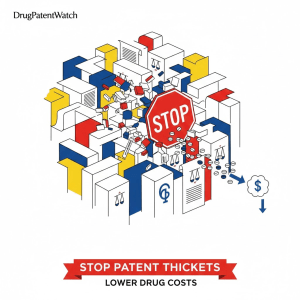
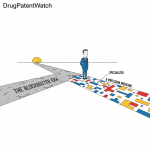
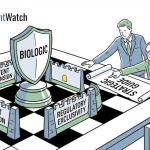
The pharmaceutical industry has moved away from the traditional model of innovation where a single patent protects a drug for 20 years before competition lowers prices. In the current landscape, manufacturers build dense, overlapping webs of intellectual property rights known as patent thickets. These thickets are a deliberate strategy to maintain monopolies long after the original chemistry of a drug has lost its novelty. Between 2025 and 2030, the global pharmaceutical sector faces a wave of patent expirations that puts an estimated $200 billion to $400 billion in branded revenue at risk.1 To protect these assets, companies use hundreds of secondary patents to create a litigation environment so complex that generic and biosimilar competitors are delayed for years or forced into restrictive settlements.
The financial consequences are immense for the American healthcare system. Anti-competitive tactics, including patent thicketing and product hopping, cost U.S. consumers over $40 billion in 2019 alone.3 This strategy exploits the legal and regulatory framework of the United States, creating a structural barrier to the lower prices that the patent system was originally intended to eventually provide. As blockbuster drugs like Humira and Keytruda generate tens of billions in annual revenue, the incentive to build these legal fortresses has never been stronger.
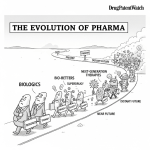
The evolution of the pharmaceutical monopoly
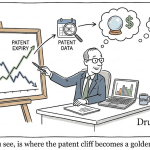
The classic understanding of a patent cliff suggests that a drug enjoys a period of protected revenue followed by a sharp drop as generics flood the market. This narrative is now a myth. The modern pharmaceutical lifecycle is managed through a systematic construction of a patent fortress that moves beyond reliance on a single composition of matter patent.1 This approach is driven by the reality that the effective patent life for most new drugs is significantly shorter than 20 years due to the length of the development process.
Effective patent life and the development deficit
Bringing a new drug to market is a slow and expensive process. On average, the development timeline spans 10 to 13 years.1 Because the patent term starts when the application is filed, the drug often has only 7 to 12 years of market exclusivity remaining by the time the Food and Drug Administration (FDA) grants approval.1 This compressed window creates a structural economic deficit. Companies must recoup research and development investments that average $2.6 billion per approved new molecular entity within this shortened period.1
Development Phase
Typical Duration
Remaining Patent Life (Est.)
Pre-clinical and Discovery
3-5 Years
15-17 Years
Clinical Trials (Phases I-III)
6-8 Years
9-11 Years
FDA Regulatory Review
1-2 Years
7-10 Years
Market Exclusivity
7-12 Years
0 Years
This economic imperative drives companies to seek every possible mechanism to extend their monopoly. If a company can add just one or two years to a multi-billion dollar revenue stream, the return on investment for the legal and administrative costs of filing secondary patents is incredibly high.5
Deconstructing the patent cliff myth
The idea that revenue drops to near zero as soon as a primary patent expires does not reflect current market entry dynamics. Innovator companies use thickets to ensure that even after the primary patent expires, dozens of other patents on dosages, formulations, and manufacturing processes remain in force. Generic manufacturers who wish to enter the market must certify that their product does not infringe any of these unexpired patents listed in the FDA’s Orange Book.1 This leads to sequential litigation that can delay competition for a decade or more.
Mechanics of the legal fortress
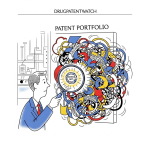
A patent thicket is not simply a large number of patents. It is a dense, overlapping web of intellectual property rights that a company must navigate to commercialize a technology.7 In the pharmaceutical sector, this involves accumulating hundreds of patents around a single blockbuster drug. The strategic objective is to create a litigation landscape so complex and costly that would-be competitors are deterred from even attempting to enter the market.7
The role of secondary patents in lifecycle management
While the primary patent covers the active ingredient of a drug, secondary patents cover peripheral features. These include manufacturing methods, new dosages, specific crystalline forms of the chemical, and methods of using the drug for different diseases.7 Many of these secondary patents are filed late in a drug’s lifecycle, often years after the drug was first approved by the FDA. Research on top-selling drugs shows that on average, 66% of patent applications were filed after the drug received FDA approval.9
Patent Category
Subject Matter
Strength vs. Exclusivity
Primary
Active pharmaceutical ingredient (API)
High strength; original discovery
Formulation
Coatings, delivery mechanisms, shelf life
Moderate; can be designed around
Method of Use
New indications (e.g., treating a new cancer)
Moderate; limits generic labeling
Manufacturing
Synthesis pathways, purification techniques
Low strength; used to block competitors
Device
Inhalers, auto-injectors, pre-filled syringes
High impact for biologics and combos
Secondary patents are often weaker than primary patents and are invalidated at higher rates in court. However, the sheer volume of patents makes it prohibitively expensive for a challenger to invalidate every single one. For a brand-name company, the strategy succeeds even if only one patent is upheld, as that single patent is enough to maintain the monopoly.7
Continuation patents as a blocking mechanism
Pharmaceutical firms use continuation patents to expand their thickets without disclosing new inventions. A continuation application shares the same technical disclosure as an earlier application but allows the applicant to seek different claims. This practice is used to create a minefield of patents that increase the transaction costs for competitors.10 Research indicates that the pharmaceutical industry litigates continuation patents at a much higher rate than high-technology industries, which is consistent with a strategy of blocking market entry rather than seeking cross-licensing.10
Terminal disclaimers and the creation of patent families
Terminal disclaimers are a legal tool used to overcome rejections for “obviousness-type double patenting.” This occurs when a company tries to patent an invention that is not “patentably distinct” from one of its existing patents. By filing a terminal disclaimer, the company agrees that the new patent will expire on the same day as the old one. While this prevents the company from extending the patent term, it allows them to build a thicket of related patents that all must be challenged individually by a generic competitor.11
Economic fallout of delayed competition
The systematic manipulation of the patent system imposes a staggering economic burden on patients, employers, and government payers. When patent thickets successfully delay generic entry, prices remain at monopoly levels for years after the intended 20-year term. This is not just a theoretical issue; it is a quantified drain on the American economy.
The 40 billion dollar annual surcharge
An analysis of anti-competitive tactics in the pharmaceutical industry found that patent abuse and other strategies cost U.S. consumers an additional $40.07 billion in 2019.3 These costs are driven by price increases on existing drugs and high launch prices for new medications, which companies set knowing they can maintain their monopolies for decades through thicketing.3
A separate study in JAMA Health Forum examined four top-selling drugs—Copaxone, Gleevec, Celebrex, and Lumigan—and found that patent thickets delayed generic entry by 7 to 13 months. This delay resulted in $3.5 billion in excess spending over just two years.13 This figure likely underestimates the total impact because the study excluded biologics, which are the most expensive drugs and often have the densest thickets.
Impact on commercial insurance and Medicare Part D
The excess spending from patent thickets is split between private and public payers. For the four drugs in the JAMA study, $1.9 billion of the excess cost was absorbed by commercial insurance, while $1.6 billion fell on Medicare Part D.14 These costs translate directly into higher premiums for workers and a heavier tax burden for citizens.
Drug Name
Excess Spending (Est.)
Exclusivity Extension
Glatiramer (Copaxone)
$1.7 Billion
13 Months
Imatinib (Gleevec)
$1.0 Billion
12+ Months
Celecoxib (Celebrex)
$726 Million
7 Months
Bimatoprost (Lumigan)
$67 Million
Unspecified
The study noted that most of the avoidable spending occurs in the first year after a delayed generic entry, when the brand-name drug still holds the majority of the market.14
Case Study: The Humira blueprint
AbbVie’s Humira is the definitive example of how a patent thicket can protect a multibillion-dollar revenue stream. Humira, used to treat autoimmune conditions like arthritis, became the world’s best-selling drug, generating over $200 billion in lifetime revenue.1 To protect this franchise, AbbVie built an impenetrable legal fortress.
132 patents and the 2023 cliff
AbbVie filed over 250 patent applications and secured at least 132 granted patents in the U.S..7 Remarkably, 89% of these patents were filed after the drug received its initial FDA approval in 2002.7 Peer-reviewed research found that approximately 80% of these patents were not patentably distinct and were held together by terminal disclaimers.7
This thicket achieved its strategic goal of delaying biosimilar competition. While biosimilars entered the European market in 2018, the U.S. thicket delayed entry until 2023. This five-year delay cost the U.S. healthcare system an estimated $80 billion to $100 billion.7 During those extra years of monopoly, Humira brought in more revenue than all 32 teams in the NFL combined.3
Global pricing disparities: US versus EU
The effectiveness of the Humira thicket in the U.S. compared to its failure in Europe highlights the differences in patent standards. The European Patent Office (EPO) has stricter rules on “inventive steps” and does not allow the same level of continuation patenting. Consequently, companies file far fewer patents in Europe to protect the same drugs.7
Drug Name
US Patents Granted
EU Patents Granted
US Revenue (2021)
Humira
132
~30
$17.3 Billion
Enbrel
127
28
$4.5 Billion
Stelara
50
10
$5.9 Billion
Imbruvica
98
24
$4.4 Billion
In the U.S., patients pay up to eight times more for identical medications compared to patients in other wealthy nations.15 This is partly because other countries engage in robust price negotiations and limit the filing of continuation patents.15
Case Study: Keytruda and the product hop
Merck’s Keytruda is currently the world’s top-selling drug, with 2024 sales approaching $30 billion.16 With its primary patents set to expire in 2028, Merck is executing a two-part strategy: building a patent thicket and performing a “product hop.”
Subcutaneous formulations as a defensive pivot
A product hop occurs when a company switches patients from an older version of a drug to a newer, patent-protected version just before the older version faces competition.6 Merck has developed a new version of Keytruda that can be injected under the skin in minutes, rather than requiring a 30-minute intravenous infusion.19
The FDA approved this subcutaneous version, called Keytruda Qlex, in September 2025.19 Merck expects to switch 30% to 40% of patients to the new formulation within 18 to 24 months.20 By moving patients to the new version, which is protected by recently filed patents, Merck can maintain its market share even after biosimilars for the original intravenous version enter the market in 2028.
Projected costs of the extended monopoly
Merck has built a wall of between 129 and 180 patent applications for Keytruda, resulting in over 100 granted patents.7 I-MAK estimates that this extended exclusivity will cost Americans at least $137 billion over the next decade.3
Metric
Keytruda (Pembrolizumab)
2024 Global Sales
$29.5 Billion
Projected Peak Sales (2026)
$32.7 Billion
Total Patent Applications
290+
Patents Granted
100+
Share of Merck Revenue
~50%
The revenue from the subcutaneous version is expected to dampen the impact of the 2028 patent expiry, transforming what would have been a sharp decline into a manageable revenue stream for Merck.19
Case Study: Revlimid and the litigation labyrinth
Bristol Myers Squibb’s Revlimid, used to treat multiple myeloma, shows how companies use litigation and settlements to control the market. Celgene (now part of BMS) filed over 200 patent applications for Revlimid.7
Settlements as a tool for market control
Instead of risking a court loss that could invalidate its patents, Celgene used its thicket to force generic competitors into settlements. These agreements limited the volume of generic Revlimid that competitors could sell until 2026.22 This created the illusion of competition while allowing the company to continue charging monopoly prices for most of the market. The price of Revlimid increased by 300% over 20 years, rising from $6,000 to $24,000 per month.23
The obesity gold rush: Ozempic and the semaglutide thicket
The rapid growth of GLP-1 drugs for diabetes and weight loss, such as Novo Nordisk’s Ozempic and Wegovy, has led to a massive new wave of patenting. These drugs are the latest targets for thicket strategies because of their unprecedented commercial potential.
Patenting the GLP-1 delivery system
Novo Nordisk has filed 320 patent applications for semaglutide, resulting in 154 granted patents.6 These patents cover not just the drug itself, but the auto-injector pens and the specific chemical formulations.6 I-MAK estimates that these patents could provide up to 49 years of monopoly protection if left unchallenged.6
Drug Product
Patent Applications
Patents Granted
Exclusivity Duration (Est.)
Ozempic
320
154
49.4 Years
Wegovy
320
154
49.4 Years
Rybelsus
320
154
49.4 Years
Mounjaro
New Analysis
TBD
TBD
The high cost of these medications is a significant driver of current healthcare spending. In 2024, semaglutide was the top-selling drug in the U.S., driving a 10.2% increase in overall pharmaceutical expenditures.24
Regulatory pushback and the FTC initiative
Federal regulators have begun to take aggressive action against the misuse of the patent system. The Federal Trade Commission (FTC) has specifically targeted “improper” patent listings in the Orange Book as a violation of antitrust law.
The Orange Book purge of 2024
The FTC sent warning letters to pharmaceutical companies in 2023, 2024, and 2025, demanding the removal of patents that do not meet statutory requirements.6 These patents often relate to delivery devices, such as inhalers or auto-injectors, which the FTC argues should not be used to block generic versions of the underlying medicine.
In December 2025, Teva Pharmaceuticals agreed to remove over 200 improper patent listings following pressure from the FTC.26 Other companies, including AstraZeneca and GSK, also withdrew listings for inhaler devices after the FTC’s challenges.25
Court rulings on improper device listings
The FTC’s initiative was supported by a December 2024 ruling from the U.S. Court of Appeals for the Federal Circuit. The court affirmed that Teva’s patents on inhaler dose counters were improperly listed in the Orange Book because they did not claim the drug itself or a method of using it.25 This ruling provides a legal foundation for further efforts to delist “junk” patents that are used to trigger 30-month stays on generic approval.27
Legislative remedies on the horizon
Congress is considering several bipartisan bills aimed at curbing patent abuse and lowering drug prices. These efforts focus on limiting the number of patents that can be used in litigation and preventing anti-competitive product hops.
S.150 and the limit on asserted patents
The Affordable Prescriptions for Patients Act (S. 150) is a key piece of legislation designed to address patent thickets. The bill would limit the number of patents a brand-name biologic manufacturer can assert in a patent infringement suit against a biosimilar competitor to 20.18 This would prevent companies from using hundreds of secondary patents to create a “legal minefield” for competitors.
Caps asserted patents at 20.
Targets patents filed more than 4 years after drug approval.
Excludes patents for manufacturing processes not used by the sponsor.
Limits the “patent dance” between brand and biosimilar companies.
The CBO estimates that S. 150 would reduce federal spending by $3 billion over ten years by speeding up the entry of lower-cost biosimilars.30
The role of the Inflation Reduction Act in altering incentives
The Inflation Reduction Act (IRA) allows Medicare to negotiate prices for top-selling drugs for the first time. The first ten negotiated prices will take effect in 2026, with discounts ranging from 38% to 79%.2 This program targets the “long tail” of profitability that manufacturers rely on.
Negotiated Drug (2026)
Price Discount (%)
Medicare Spending (2022)
Eliquis
38% – 79%
$16.4 Billion
Enbrel
38% – 79%
$2.8 Billion
Jardiance
38% – 79%
$7.0 Billion
Januvia
38% – 79%
$4.1 Billion
By setting price controls at year nine for small molecules and year thirteen for biologics, the government captures the most profitable years of a drug’s lifecycle, which may reduce the incentive to build extensive thickets for very long-term protection.2
ROI and the future of pharmaceutical innovation
The pharmaceutical industry argues that high profits are necessary to drive innovation. However, recent data suggests that the return on investment for R&D has been declining even as patent thicketing has increased.
Balancing social returns with private profit
Deloitte’s analysis found that the average projected ROI for R&D fell to a record low of 1.2% in 2022, though it bounced back to 5.9% in 2024.5 At the same time, the cost of developing a new drug has risen to $2.23 billion.5 This creates a tension between the need for corporate profit and the public need for affordable medicine.
Research on NIH investment shows that the public sector funds 99.4% of the drugs approved between 2010 and 2019.33 The NIH spent $1.44 billion per approval on research for products with novel targets.33 This suggests that the “social contract” of the patent system is currently imbalanced, as the public funds the underlying science while private companies capture the vast majority of the financial returns through thickets.
Metric
NIH Investment (Per Approval)
Industry Investment (Per Approval)
Basic/Applied Research
~$1.44 Billion
~$2.23 Billion
Failure Rates Included
Yes
Yes
Source of Funding
Taxpayers
Private Capital / Revenue
The current system rewards legal maneuvering more than scientific breakthroughs. Companies that spend years patenting subcutaneous injection methods for existing drugs are diverting resources from developing truly new therapies for unmet medical needs.23
Key Takeaways
Patent thickets represent a fundamental shift in the pharmaceutical business model, where legal and intellectual property strategies are as important as clinical research. By building dense walls of hundreds of secondary patents, manufacturers of blockbuster drugs like Humira and Keytruda can extend their monopolies for decades, costing the American healthcare system billions in excess spending. The effectiveness of these thickets is demonstrated by the stark pricing and competition disparities between the U.S. and Europe, where patent standards are more rigorous.
While regulatory bodies like the FTC have begun to challenge improper patent listings, and legislative efforts like S. 150 aim to cap the number of patents used in litigation, the financial incentives for thicketing remain high. The Inflation Reduction Act’s price negotiations will provide some relief for Medicare beneficiaries, but they do not address the root cause of the patent abuse that affects the entire market. For pharmaceutical companies, the transition from discovery-based revenue to lifecycle-managed revenue is a rational response to a system that prioritizes patent volume over innovative quality.
FAQ
What is the “patent dance” in the context of biologics?
The patent dance is a multi-step information exchange between a biosimilar applicant and a brand-name biologic manufacturer mandated by the Biologics Price Competition and Innovation Act (BPCIA). It is designed to resolve patent disputes before the biosimilar enters the market. Companies use this process to identify which of their hundreds of patents to assert, often resulting in lengthy litigation that delays market entry.
How does a terminal disclaimer affect the value of a patent portfolio?
A terminal disclaimer ties the expiration of a newer, “obvious” patent to an older one. While it allows a company to secure a patent it otherwise would not get, it also means that if the original patent is invalidated, the newer one may also be at risk. A proposed USPTO rule would have made this link even stronger, causing an entire family of patents to fail if one claim was invalidated, which is why the industry heavily opposed it.
Why are small-molecule drugs more vulnerable to the IRA than biologics?
The Inflation Reduction Act allows Medicare to negotiate prices for small-molecule drugs nine years after approval, while biologics are given thirteen years. This “biologic buffer” gives manufacturers of complex injectable drugs more time to recoup their investment and execute patent-extension strategies before government price controls significantly reduce their revenue.
What is the difference between a “hard switch” and a “soft switch” in product hopping?
A hard switch occurs when a company completely removes an older version of a drug from the market before a generic can launch, forcing patients to move to a new, patent-protected version. A soft switch is when the company keeps the old drug on the market but uses aggressive marketing and financial incentives to move the majority of patients to the new version, rendering the future generic market for the old drug commercially non-viable.
How do “continuation patents” contribute to the creation of a thicket?
Continuation patents allow a company to keep a patent application “alive” at the USPTO for years. They can wait to see what a competitor’s generic product looks like and then write new patent claims that specifically target that generic version. This creates a moving target for competitors, who may find themselves infringing a patent that didn’t even exist when they started developing their generic drug.
S. 150, Affordable Prescriptions for Patients Act of 2023 | Congressional Budget Office, accessed February 8, 2026, https://www.cbo.gov/publication/60412
Comparison of Research Spending on New Drug Approvals by the National Institutes of Health vs the Pharmaceutical Industry, 2010-2019 – PMC – NIH, accessed February 8, 2026, https://pmc.ncbi.nlm.nih.gov/articles/PMC10148199/