The $200 billion patent cliff bearing down on Big Pharma through 2030 is not primarily a manufacturing or regulatory problem. It is a failure of early-stage intelligence. Companies that invested heavily in crowded mechanisms, misjudged the durability of their IP, or moved too slowly on therapeutic adjacencies now face a revenue reckoning that no amount of late-stage M&A can fully solve. White space analysis is the discipline designed to prevent that outcome—before a molecule reaches Phase I, before a Paragraph IV challenge arrives on counsel’s desk, before a biosimilar applicant files its 351(k) with the FDA.
This is not an introduction to the concept. It is a working manual for pharma IP teams, biotech executives, portfolio managers, licensing directors, and hedge fund analysts who need to understand how the fusion of patent intelligence, clinical trial signals, real-world evidence, and AI-driven competitive surveillance translates into defensible pipeline decisions and protected revenue streams.
Why R&D Productivity Is Structurally Broken—and What White Space Analysis Actually Fixes
Eroom’s Law is not a slogan. It is an empirically documented phenomenon: the cost to bring one new drug to market, accounting for clinical failure rates, has doubled approximately every nine years since the 1950s. The fully capitalized cost per approved new molecular entity now exceeds $2.23 billion, per Deloitte’s 2024 analysis. PhRMA member companies invested a record $102.3 billion in R&D in 2021. The US approved 43 novel drugs that year—roughly the same annual output as a decade earlier.
The Deloitte data also contains a warning buried inside an apparently improving headline. The projected internal rate of return on pharma R&D climbed from a historic low of 1.2% in 2022 to 5.9% in 2024. Strip out GLP-1 therapies—Novo Nordisk’s semaglutide (Ozempic, Wegovy), Eli Lilly’s tirzepatide (Mounjaro, Zepbound), and their pipeline successors—and that return falls to 3.8%. The recovery is not structural. It is GLP-1-specific. For any company not already dominant in that class, the search for the next defensible high-return opportunity is the central strategic problem.
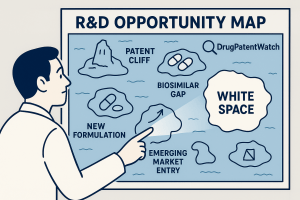
White space analysis addresses exactly that: the systematic identification of therapeutic and technological zones where significant unmet need exists, where the intellectual property landscape has navigable room, and where first-mover advantages are still available to capture. It does not guarantee clinical success. What it does is change the odds structurally, at the point where capital commitment is lowest and optionality is highest.
How the Patent Cliff Actually Works—and Which Revenue Is Most at Risk
Which Drugs Face the Largest Revenue Loss Through 2030
The $200 billion figure cited widely across sell-side research refers to the aggregate branded revenue exposed to loss of exclusivity between 2025 and 2030. The actual losses will exceed this figure once biosimilar price erosion is modeled at the molecule level rather than the portfolio level.
The highest-stakes loss of exclusivity events by asset class include:
AbbVie’s Humira (adalimumab) lost US composition of matter protection in January 2023. The biosimilar launch wave that followed—involving Amjevita (Amgen), Hadlima (Samsung Bioepis/Organon), Cyltezo (Boehringer Ingelheim), and at least seven additional entrants—is tracking toward the 79% revenue erosion trajectory that history predicts for major biologics post-loss of exclusivity. AbbVie’s strategic response, a multi-year biosimilar settlement strategy that delayed US competition by roughly nine years after European market opening, is the canonical case study in patent thicket construction and authorized settlement structure.
Bristol Myers Squibb’s Eliquis (apixaban) faces US patent expiry pressure from 2026 onward, with multiple generic manufacturers having filed Abbreviated New Drug Applications. The litigation outcome—specifically the fate of BMS and Pfizer’s formulation and method-of-use patents extending beyond the core composition of matter expiry—will determine whether branded revenue holds through 2026 or collapses earlier.
Merck’s Keytruda (pembrolizumab) has composition of matter patents expiring in the late 2020s to early 2030s. With annual revenues exceeding $25 billion and no single successor asset capable of replacing that volume, Merck’s pipeline diversification strategy—including the Prometheus Biosciences acquisition for TL1A in inflammatory bowel disease and continued expansion of pembrolizumab indications—is explicitly designed to transition revenue before the cliff arrives.
Johnson & Johnson’s Stelara (ustekinumab) lost US exclusivity in January 2025. Coherus, Amgen, and Samsung Bioepis have biosimilar approvals pending or granted. The Stelara loss of exclusivity timeline is approximately two years behind Humira’s and will test whether the biosimilar market has matured enough to capture market share faster than the Humira experience predicted.
Revenue at Risk by Therapeutic Class Through 2030
Drug
Active Ingredient
Company
US Patent / Exclusivity Expiry
Estimated Peak Annual Revenue
Primary Biosimilar/Generic Threat
Keytruda
Pembrolizumab
Merck
~2028 (CoM)
$25B+
Multiple biosimilar developers
Eliquis
Apixaban
BMS/Pfizer
2026 (litigation ongoing)
$12B+
Teva, Mylan, others
Stelara
Ustekinumab
J&J
January 2025
$10B+
Amgen, Coherus, Samsung Bioepis
Ozempic/Wegovy
Semaglutide
Novo Nordisk
2032 (core); formulation patents earlier
$22B+
Cipla, Sun Pharma, generic challengers
Dupixent
Dupilumab
Regeneron/Sanofi
2031+
$14B+
Biosimilar developers emerging
Skyrizi
Risankizumab
AbbVie
2033+
$11B+
Limited near-term threat
Opdivo
Nivolumab
BMS
~2028 (CoM)
$9B+
Biosimilar developers
What Happens Financially After Loss of Exclusivity
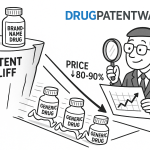
The transition from branded monopoly to competitive market does not follow a single pattern. Small molecules face rapid generic erosion—prices typically fall 80-90% within 12 months of multi-source generic entry, and branded unit share collapses to single digits. The branded product retains revenue only through patient assistance programs, loyal prescribers, and residual branded market segments.
Biologics follow a different arc. Biosimilar uptake has been slower than most models predicted in 2015, for reasons that reflect formulary structure, physician inertia, rebate mechanics, and payer contracting dynamics as much as clinical preference. Humira’s biosimilar penetration in the US, while accelerating, has been materially slower than what occurred in Europe, where single-payer systems switched formularies at launch. US biosimilar market share for adalimumab remained under 25% by unit volume through most of 2024, despite more than 10 approved competitors.
That pattern changes what loss of exclusivity means financially for biologics companies. Revenue erosion is real but protracted. For white space analysts, the implication is that a first-mover biosimilar is not guaranteed to capture more than 15-20% of the branded market in Year 1, making biosimilar financial projections extremely sensitive to assumptions about launch timing, formulary positioning, and patient-level switching rates.
What Pharmaceutical White Space Analysis Is—Defined Precisely
The Two-Lens Framework: Patent Landscape vs. Clinical Unmet Need
White space analysis, as applied in pharmaceutical R&D strategy, identifies zones where significant unmet medical need exists alongside a navigable intellectual property runway. Both conditions must hold. An area with deep unmet need but impenetrable patent thickets—early PD-1/PD-L1 oncology, for example—required either a disruptive technological approach or a willingness to fund years of patent litigation before commercial viability was established. An area with clean IP but no therapeutic need produces a scientific exercise with no payer value.
The patent lens maps what is legally protected and by whom. The clinical lens maps what patients, physicians, and healthcare systems actually need that current therapies do not deliver. True strategic white space sits at the intersection.
The FDA’s definition of unmet medical need extends beyond complete absence of treatment. It includes conditions where existing therapies have meaningful safety liabilities, where a definable patient subpopulation fails to respond to or cannot tolerate the standard of care, where a treatment requiring chronic infusion could be replaced by a subcutaneous or oral alternative, and where existing therapies manage symptoms without modifying the disease course. Each of these represents a commercial opportunity and, critically, a regulatory opportunity—FDA Breakthrough Therapy designation, Accelerated Approval, and Priority Review are all tied to demonstrated unmet need, each with implications for development timeline and competitive positioning.
The 2×2 That R&D Committees Should Use When Ranking Programs
High Patent Density
Low Patent Density
High Unmet Need
The Battleground: High reward, structurally risky, requires disruptive technology or litigation budget (early checkpoint inhibitor oncology; TNF-alpha biologics)
The True White Space: Prime target for capital allocation. First-mover IP advantage is available.
The R&D Trap: IP is available but the clinical and commercial case doesn’t exist. A science project, not a pipeline asset.
The most common failure mode for R&D committees is confusing the bottom-left quadrant with the top-right. A technically elegant program in a crowded, mature therapeutic area—a new COX-2 inhibitor, a fifth beta-blocker, another DPP-4 inhibitor in a market now dominated by GLP-1s—carries all the development cost of a white space bet with a fraction of the commercial upside.
How Patent Thickets Are Built—and How to Find the Gaps
Why Composition of Matter Patents Are the Most Valuable IP a Drug Company Holds
A composition of matter patent protects the active pharmaceutical ingredient itself. It is the broadest possible claim, covering the molecule regardless of formulation, dose, or indication. For a small molecule, composition of matter protection typically provides 20 years from the filing date, but the effective market exclusivity period—the time from first approval to loss of exclusivity—is typically 12-14 years, shortened by the years of clinical development that occur while the patent clock is running.
Biologics composition of matter protection is more complex. Because biologics are large, structurally heterogeneous molecules, a single composition of matter patent may not capture all therapeutically relevant forms of the protein. AbbVie’s Humira portfolio, with over 250 US patents filed across composition of matter, formulation, manufacturing process, method of use, and device categories, became the industry benchmark for layered IP construction. The purpose was not simply to extend protection—the core adalimumab patents expired in 2016 in the US—but to create a litigation cost and complexity that deterred biosimilar entry or made settlement on AbbVie’s terms economically rational for challengers.
How Evergreening Works in Biologics—and Where Courts Have Pushed Back
Evergreening refers to the strategic use of secondary patents to extend effective market protection beyond the original composition of matter expiry. The mechanisms include formulation patents (protecting extended-release, co-formulation, or device-delivered versions), method-of-use patents (protecting new indications), manufacturing process patents (covering specific fermentation or purification steps), and polymorph patents (covering specific crystalline forms).
Courts have not always validated these strategies. The Supreme Court’s 2023 decision in Amgen v. Sanofi (relating to antibody claims, not Humira specifically) limited the scope of functional antibody claims by requiring full enablement across the claimed scope. Patent claims that attempt to monopolize entire therapeutic targets rather than specific molecules are now more vulnerable to Section 112 challenges. This has direct implications for white space analysis: a patent thicket around a biologic target may look impenetrable in a landscape analysis but contain significant legal vulnerabilities that an FTO analysis would surface.
Freedom to Operate Analysis: What It Is and Why It’s Not Optional
Freedom to operate (FTO) analysis determines whether a planned commercial activity—manufacturing, using, selling a specific drug—can proceed without infringing valid third-party patents. It is distinct from patentability analysis, which asks whether an invention can be patented, and from white space analysis, which maps the overall opportunity terrain.
An FTO opinion should accompany any program that advances past preclinical development. The cost of a thorough FTO opinion is typically $50,000-$250,000 depending on the complexity of the IP landscape. The cost of discovering an FTO problem at Phase III—when $200-500 million in clinical investment is at stake—is an order of magnitude higher.
The key data sources for an FTO analysis are the Orange Book (for small molecules approved in the US), the Purple Book (for biologics), the USPTO patent database, PCT applications through WIPO’s PATENTSCOPE, and the EPO’s Espacenet. DrugPatentWatch integrates these sources with litigation history, Paragraph IV certification records, and patent expiry timelines into a single searchable platform—the practical advantage of which is measured in analyst weeks saved at the beginning of a due diligence or pipeline review process.
Paragraph IV Filings: The Earliest Commercial Signal in Generic Drug Development
What a Paragraph IV Certification Actually Means for Drug Valuation
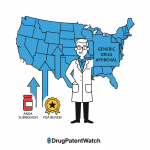
Under Hatch-Waxman, a generic manufacturer seeking approval for a drug covered by listed Orange Book patents must make one of four certifications. A Paragraph IV certification states that the listed patents are either invalid or will not be infringed by the generic product. Filing a Paragraph IV certification triggers a 45-day window during which the brand company can file suit, automatically imposing a 30-month stay of ANDA approval.
For investors and competitive intelligence teams, a Paragraph IV filing is not just a legal event. It is the earliest public signal that a generic manufacturer has assessed the patent landscape, concluded that a challenge is viable, and committed to the litigation cost. The first generic filer to receive FDA approval is entitled to 180 days of generic exclusivity—a period during which no other ANDA applicant can receive final approval, creating a duopoly between brand and first filer that can generate substantial margins before full generic competition erodes pricing.
Tracking Paragraph IV certification records—available in the FDA’s Orange Book and through platforms like DrugPatentWatch—gives commercial forecasters advance warning of revenue erosion timelines that would otherwise not appear in any public disclosure. A brand company’s 10-K may not acknowledge a specific patent challenge, but the Paragraph IV record makes it findable.
Which High-Revenue Drugs Have Active Paragraph IV Challenges
As of early 2026, active Paragraph IV litigation or settled challenges involve a range of high-revenue branded drugs, including:
Eliquis (apixaban): Multiple generic manufacturers have filed ANDAs with Paragraph IV certifications challenging BMS and Pfizer’s patents, specifically the formulation and method-of-use patents that extend beyond the core compound patent. Litigation outcomes will determine whether generic apixaban enters the US market in 2026 or later.
Entresto (sacubitril/valsartan): Novartis has faced Paragraph IV challenges on this heart failure combination drug. The fixed-dose combination IP strategy—which packages an off-patent ARB with a novel neprilysin inhibitor—is a model that other companies have studied for combination product lifecycle management.
Jardiance (empagliflozin): Boehringer Ingelheim and Lilly’s SGLT2 inhibitor, with annual revenues exceeding $8 billion, has drawn Paragraph IV filers targeting patents on empagliflozin itself and on its cardiovascular use indication. The EMPA-REG OUTCOME cardiovascular data, which gave Jardiance a rare heart failure mortality benefit, is protected under method-of-use patents filed after the original compound patent, a structure that is itself being challenged.
How Paragraph IV Litigation Changes Drug Valuation
A settled Paragraph IV case with an authorized generic arrangement does not end the revenue conversation—it restructures it. When a brand company grants the first filer an authorized generic agreement, it trades a period of exclusivity for a settlement that avoids trial risk. The financial model for the brand company must then account for an authorized generic eating into gross-to-net calculations during the 180-day exclusivity period.
For investors, this matters because the revenue trajectory post-settlement is highly specific to contract terms that are rarely disclosed in detail. A brand drug facing generic competition from two authorized generics and one independent generic has a very different 36-month revenue curve than one facing a single authorized generic followed by full multi-source competition.
Clinical Trial Data as Competitive Intelligence: Reading ClinicalTrials.gov for Pipeline Risk
How Study Status Changes on ClinicalTrials.gov Signal Competitor Moves
ClinicalTrials.gov, maintained by the NIH, is the largest public clinical trials registry in the world with over 500,000 registered studies. Most pharmaceutical strategists use it reactively—to verify what they already know. The higher-value use is prospective: monitoring status changes for competitor programs before press releases are issued.
A trial that moves from ‘Recruiting’ to ‘Active, not recruiting’ tells you enrollment is complete and results may be imminent. A status change to ‘Terminated’ or ‘Suspended’ mid-enrollment is a major competitive signal—it frequently indicates a safety finding, futility analysis, or strategic reprioritization that will not be announced with any detail until much later, if ever. A new Phase I registration for a mechanism where you have a Phase II asset changes your competitive timeline immediately.
The clinical endpoint selection within a ClinicalTrials.gov registration is its own intelligence source. A competitor choosing overall survival (OS) as their primary endpoint in an oncology trial is taking a longer, more expensive route to approval but is aiming for a cleaner, more commercially durable label claim than one selecting progression-free survival (PFS). A company filing a Phase III in diabetic kidney disease using estimated GFR decline as a primary endpoint—rather than a composite cardiovascular endpoint—is positioning for a nephrology-specialist label, not a broad cardiometabolic claim. These choices reveal commercial strategy before any data is reported.
What High Patent Density Plus Low Clinical Activity Actually Indicates
A field with many patents and few active trials is not necessarily overcrowded. It can mean one of three things, each with different strategic implications.
First, it may be a graveyard: a space where extensive IP was filed around a mechanism that subsequently failed in the clinic. Kinase inhibitors in cardiovascular disease, multiple mechanisms in Alzheimer’s prior to the approval of lecanemab and donanemab, and numerous oncology targets that showed preclinical promise but failed Phase II are examples. The patents exist; the clinical programs are dead. This terrain can be analytically misleading without the clinical overlay to confirm the failures.
Second, it may represent a trove of abandoned IP ripe for repurposing. A drug that failed in oncology may hold untested potential in an inflammatory or fibrotic indication where the mechanism is relevant but where no one has yet filed the clinical IND or the method-of-use patent.
Third, it may indicate that the primary composition of matter IP sits with an academic institution that has not yet licensed broadly. Multiple companies may be racing to establish clinical proof of concept before licensing terms are set—a dynamic particularly common in gene therapy and RNA therapeutic platforms.
The triangulation of patent density with clinical activity separates these scenarios and points toward the right response for each.
How GLP-1 Patent Wars Could Reshape Pharma Competition Through 2035
Semaglutide and Tirzepatide: The IP Architecture Protecting $50 Billion in Annual Revenue
Novo Nordisk’s semaglutide is protected by a composition of matter patent covering the GLP-1 receptor agonist peptide structure, with core protection through approximately 2032 in major markets. The company has filed additional patents on the injectable formulation used in Ozempic, the higher-dose formulation used in Wegovy, and the oral formulation used in Rybelsus—each a distinct patent family with a distinct expiry timeline.
Eli Lilly’s tirzepatide (Mounjaro, Zepbound) covers a dual GIP/GLP-1 receptor agonist, a mechanism distinction that is both clinically meaningful and strategically critical for IP purposes. The dual agonist design differentiates tirzepatide from semaglutide on a composition of matter basis, reducing the head-to-head blocking risk between the two largest players in the class.
Generic manufacturers have begun filing challenges to GLP-1 patents—Cipla and Sun Pharma have both disclosed ANDA activities targeting semaglutide—but the practical pathway to US generic entry is constrained by manufacturing complexity. Semaglutide is a 31-amino acid peptide produced through highly specialized peptide synthesis processes. The cost to build or qualify manufacturing capacity at scale represents a significant barrier that extends effective exclusivity beyond what the patent calendar alone would suggest.
What Makes GLP-1 Manufacturing Difficult for Generic Entrants
Peptide manufacturing for GLP-1 analogs requires solid-phase peptide synthesis (SPPS) capabilities at industrial scale, followed by purification and sterile fill-finish operations designed to meet the specific aggregation, deamidation, and oxidation control specifications that regulators require for injectable biologics. The capital cost for a new facility capable of producing semaglutide at commercial scale is estimated at $500 million to $1 billion, depending on configuration.
For a generic or biosimilar entrant, this capital requirement is not trivial. It changes the return calculation for a Paragraph IV challenge: the filer must be reasonably confident of winning the litigation and capturing meaningful market share to justify the manufacturing investment required before or alongside filing. This explains why generic GLP-1 competition is more likely to come from companies with existing peptide API infrastructure—Sun Pharma, Dr. Reddy’s, Biocon—than from generalist ANDA filers.
The FDA’s regulatory pathway for generic GLP-1 peptides adds another layer. The agency must determine whether these products require the 505(j) ANDA pathway or the 351(k) biosimilar pathway. That classification has not been formally settled for all GLP-1 analogs, creating regulatory uncertainty that delays generic development timelines independently of patent status.
Biosimilar Competition: How Launch Timing Works and Why It Matters to Investors
How Biosimilar Launch Timing Is Determined Under the BPCIA
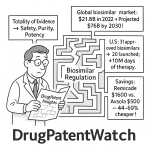
The Biologics Price Competition and Innovation Act (BPCIA) governs the abbreviated approval pathway for biosimilars in the US. The 351(k) pathway requires that biosimilar applicants demonstrate no clinically meaningful differences from the reference biologic in terms of safety, purity, and potency. An applicant seeking an interchangeability designation—the highest standard under BPCIA, allowing pharmacist-level substitution without prescriber intervention—must also demonstrate that switching between the reference product and the biosimilar does not produce greater risk than continuous use of the reference product.
The BPCIA’s “patent dance” provision—the formal information exchange process between biosimilar applicants and reference product sponsors—determines which patents are litigated before launch and which are subject to post-launch claims. The sequence and timing of this exchange directly affects biosimilar launch timelines and the negotiating posture of both parties.
A biosimilar applicant that follows the patent dance procedurally gains the ability to launch 12 years after the reference biologic’s first US approval (the statutory exclusivity period), assuming litigation does not produce an injunction. An applicant that bypasses the patent dance forfeits certain procedural rights but may, in some cases, accelerate its pathway to early launch.
Why Biosimilar Interchangeability Designation Matters for Market Share
Biosimilars with an FDA interchangeability designation can be substituted for the reference biologic at the pharmacy counter without a new prescription. In states with automatic substitution laws—currently over 40 US states have enacted such laws—an interchangeable biosimilar can capture patients on refill without physician action, significantly accelerating uptake compared to non-interchangeable biosimilars that require active prescriber substitution.
Cyltezo (adalimumab-adbm, Boehringer Ingelheim) was the first adalimumab biosimilar to receive an interchangeability designation, in October 2021. The commercial implication was immediate: formulary negotiations with pharmacy benefit managers were reoriented around the interchangeable designation as a key contracting criterion.
For white space analysts tracking biosimilar development programs, the interchangeability filing timeline—which requires a switching study protocol filed with FDA—is a distinct regulatory milestone that appears in the FDA’s public biosimilar development program disclosures and can be tracked as a leading indicator of competitive entry timing.
Drug Repurposing: How to Find New IP in Approved and Shelved Compounds
Which Approved Drugs Have the Most Repurposing Potential—and Who Has the IP
Drug repurposing starts with an approved or previously studied compound that has a known safety profile and a characterized mechanism of action. The IP strategy for repurposing turns on method-of-use patents: claims covering the specific therapeutic application of an existing compound in a new indication. Because the compound itself is known, the composition of matter claim is usually not available. The method-of-use patent provides a limited but real exclusivity window, particularly when combined with regulatory exclusivity—orphan drug exclusivity (seven years in the US), new indication exclusivity (three years for a supplemental NDA), or new chemical entity exclusivity if the active moiety can be argued as novel.
Sildenafil (Revatio) is the textbook example: a phosphodiesterase-5 inhibitor originally developed by Pfizer for angina, repurposed first for erectile dysfunction and then for pulmonary arterial hypertension, each repositioning event creating a new commercial franchise with distinct IP protection. Thalidomide (Thalomid), used by Celgene in multiple myeloma following its reintroduction under the REMS system, is a case where orphan drug exclusivity combined with a proprietary REMS program provided market protection even without composition of matter exclusivity.
GLP-1 receptors are already generating repurposing activity beyond obesity and type 2 diabetes. Novo Nordisk has filed clinical programs for semaglutide in metabolic-associated steatohepatitis (MASH), Alzheimer’s disease, and chronic kidney disease. Each new indication is protected by a method-of-use patent filing even as the original composition of matter clock runs. The MASH indication—where no approved therapy existed until Rezdiffra (resmetirom) received FDA approval in March 2024—represents the clearest white space intersection: high unmet need, emerging IP landscape, and an active race to establish clinical data and method-of-use claims.
How Patent Analysis Identifies Repurposing Opportunities Before Competitors Do
A systematic scan of method-of-use patent filings by academic institutions and small biotechs frequently identifies repurposing opportunities two to four years before the corresponding clinical trial appears in ClinicalTrials.gov. University of Toronto, Stanford Medicine, and Weill Cornell Medical College are among the academic institutions with active drug repurposing patent programs, often filing provisional applications covering new indications for off-patent drugs before clinical data is generated.
A company that identifies these academic filings early can license the IP before it is competitively bid, initiate proof-of-concept clinical work on a timeline that secures regulatory exclusivity, and build the method-of-use patent position around the licensed core.
The alternative—discovering the repurposing opportunity after a competitor has filed and initiated a Phase II—results in a fast-follower position that requires either a differentiated clinical design, a superior formulation, or a head-to-head trial to establish a distinct label claim.
M&A and Licensing: How White Space Intelligence Drives Deal Valuation
How Paragraph IV Litigation History Affects Acquisition Pricing
When a large pharma company acquires a small biotech, the patent portfolio of the target is subject to due diligence that extends well beyond counting patents. The acquirer’s IP team will examine:
The quality of the composition of matter claims—whether they are broad enough to cover the therapeutic entity and narrow enough to survive obviousness challenges. An antibody claim that covers all antibodies binding to a particular epitope will face enablement challenges post-Amgen v. Sanofi. A claim covering a specific variable region sequence is narrow but defensible.
The patent prosecution history—whether any claim amendments during prosecution represent prosecution history estoppel that limits the claims beyond their literal text. A patent claim narrowed during prosecution to overcome an examiner rejection cannot be recaptured through the doctrine of equivalents.
The citation landscape—whether the target’s core patents are heavily cited by subsequent filings from competitors, which indicates high technical relevance but also signals that others are actively working in the same space.
The Paragraph IV exposure—whether any of the target’s commercial-stage assets have received Paragraph IV certifications that could accelerate generic entry timelines.
Failures to adequately assess any of these dimensions have contributed to high-profile acquisition disappointments across the industry. AstraZeneca’s $39 billion acquisition of Alexion in 2021 was, in part, a bet on the patent-protected duration of eculizumab (Soliris) and the successor compound ravulizumab (Ultomiris). The durability of that protection—specifically, the strength of Alexion’s method-of-use and formulation patents in paroxysmal nocturnal hemoglobinuria and other complement-mediated diseases—was a central element of the valuation model.
What Makes a Biotech’s Patent Portfolio Strategically Attractive to Large Pharma
The most attractive acquisition targets for large pharma are not necessarily those with the most patents. They are companies whose core patents are foundational—broadly enabling rather than narrowly specific—and whose patent families extend across multiple therapeutic applications of the same platform.
Alnylam Pharmaceuticals’ RNA interference (RNAi) platform patents, covering delivery mechanisms (lipid nanoparticles, GalNAc conjugates) and gene silencing processes rather than specific drug sequences, represent the category: a platform patent portfolio that underpins multiple approved drugs (patisiran/Onpattro, givosiran/Givlaari, inclisiran/Leqvio licensed to Novartis) and a large pipeline. The IP is valuable not as a single asset but as infrastructure that determines who can compete in the space.
Contrast that with a biotech holding a single composition of matter patent on a specific antibody with one indication and no platform. The patent may be strong, but the IP moat is shallow—one failed Phase III trial or one competing mechanism showing superior clinical data erases most of the value.
AI and Machine Learning in White Space Analysis: What Actually Changes
How AI Changes the Legal Bar for ‘Non-Obviousness’ in Drug Patents
The standard for patentability includes a requirement that an invention be non-obvious—in the US, this means it would not have been obvious to a person having ordinary skill in the art (PHOSITA) at the time of filing, given all prior art. As AI models capable of de novo molecular design—Schrödinger’s FEP+ platform, Insilico Medicine’s Chemistry42, Exscientia’s AI drug discovery engine—become standard tools in medicinal chemistry, the legal definition of PHOSITA is shifting.
If a molecule predictably generated by a widely available AI model using known targets and public chemical databases is considered “obvious to try,” it may not be patentable. The USPTO has already issued guidance on AI-assisted inventions requiring a named human inventor who made a significant intellectual contribution to the claimed invention. The EPO has similarly rejected AI-only inventor designations in the DABUS cases (Thaler v. Vidal). But the substantive obviousness question—whether AI-predicted molecules are patentable—remains legally unsettled and is the subject of ongoing academic and practitioner debate.
The practical implication for white space strategy: companies that use AI purely to populate a chemistry space with predicted leads may find those leads difficult to patent. The IP value in AI-assisted drug discovery is increasingly concentrated in the data, training methodology, and biological validation work that goes beyond what a standard model could have predicted—not in the AI-predicted chemical structure itself.
Where AI Adds Real Value in Competitive Patent Surveillance
AI’s contribution to white space analysis is most concrete in automated patent landscaping. Natural language processing models can classify patent documents into technology clusters, identify emerging research themes from claim language before those themes appear in academic literature, and map citation networks across tens of thousands of documents in a fraction of the time required for manual review.
Predictive models trained on historical patent prosecution outcomes can estimate the probability that a pending application will be granted with broad claims, informing competitive FTO decisions. Models trained on clinical trial data can estimate failure probability at each phase transition, informing the question of whether a competitor’s clinical program is likely to reach approval or become a competitive dead end.
The human analyst role in this workflow shifts from data collection and classification—tasks AI handles—to interpretation, strategic framing, and the application of context that no model currently replicates. The value of knowing that a competitor’s newly filed patent covers a mechanism adjacent to your own is not contained in the patent document itself. It requires understanding the commercial intent behind the filing, the competitive landscape of the disease area, the regulatory climate for the target indication, and the strength of the competing clinical data. That is analytical judgment, not pattern matching.
Real-World Evidence as the Third Dimension of White Space Analysis
How RWE Identifies Hyper-Specific Patient Subpopulations That Clinical Trials Miss
Electronic health record datasets, insurance claims, and patient registries capture treatment patterns, discontinuation rates, adverse event frequencies, and outcome data across heterogeneous real-world populations that randomized controlled trials deliberately exclude. The white space that RWE reveals is not broad—it is precise.
A clinical trial in non-small cell lung cancer (NSCLC) may show that a PD-1 inhibitor produces a median overall survival of 16 months. RWE from Flatiron Health’s NSCLC database may show that patients with KRAS G12C mutations who progressed after first-line pembrolizumab-containing therapy have a median OS of 4 months on available second-line options, with no approved targeted agent until Sotorasib (Lumakras) entered the market in 2021. That specific patient population—post-immunotherapy KRAS G12C NSCLC—was a white space defined not by abstract market analysis but by outcomes data from actual patients treated in actual clinical settings.
The white space that RWE uncovers is more specific, more commercially bounded, and more defensible than what patent or trial data alone can identify. But it requires access to high-quality, longitudinally linked data—Flatiron Health (acquired by Roche), Optum, TriNetX, IQVIA’s real-world data assets—which carry both cost and data governance complexity.
Which Therapeutic Areas Have the Largest RWE-Identified Unmet Need Gaps
The largest gaps between what clinical trials measure and what real-world practice produces tend to cluster in areas with high patient heterogeneity, limited biomarker stratification, and rapidly evolving standards of care.
Oncology remains the richest source of RWE-defined white space, particularly in post-second-line settings where clinical trial populations are sparse. Heart failure with preserved ejection fraction (HFpEF)—for which sacubitril/valsartan shows limited benefit and SGLT2 inhibitors provide only modest effects—has a large and poorly served patient population identifiable through claims data. Resistant hypertension, defined as blood pressure above goal despite three guideline-recommended drug classes at optimal doses, affects an estimated 10-15% of the hypertensive population but has attracted limited clinical development attention relative to the population size.
Psychiatric conditions with high real-world discontinuation rates—schizophrenia, bipolar I disorder, treatment-resistant depression—represent RWE-defined white spaces where the clinical trial data shows efficacy but real-world adherence rates reveal that the tolerability or convenience gaps are large enough to justify a next-generation product strategy.
Key Patent Expiry Dates and Exclusivity Timelines to Track
Critical Loss of Exclusivity Events: 2025-2032
The following table covers the most commercially significant exclusivity transitions across the industry over the next seven years. These are the events that competitive intelligence teams, licensing departments, and investor relations functions should have modeled in detail.
Drug
Company
Active Ingredient
Primary Indication
Approximate US LOE
Estimated Annual Revenue Exposure
Stelara
J&J
Ustekinumab
Psoriasis, IBD
Jan 2025
~$10B
Eliquis
BMS/Pfizer
Apixaban
AF, VTE
2026 (litigation pending)
~$12B
Keytruda
Merck
Pembrolizumab
Multiple oncology
2028-2030
~$25B+
Opdivo
BMS
Nivolumab
Multiple oncology
~2028
~$9B
Entresto
Novartis
Sacubitril/valsartan
HFrEF
2025-2026
~$6B
Ozempic/Wegovy
Novo Nordisk
Semaglutide
T2D, obesity
2032 (core)
~$22B+
Dupixent
Regeneron/Sanofi
Dupilumab
AD, asthma, CRSwNP
2031+
~$14B
Xarelto
J&J/Bayer
Rivaroxaban
AF, VTE
2024 (already expired in some markets)
~$6B
Ibrance
Pfizer
Palbociclib
HR+ breast cancer
2023 (some); 2027 (US)
~$5B
How Regulatory Exclusivities Layer on Top of Patent Protection
Patent protection and regulatory exclusivity are distinct legal mechanisms. Both can protect a branded drug from generic or biosimilar competition, but they operate independently and can create or close competitive windows in ways that a patent-only analysis misses.
New Chemical Entity (NCE) exclusivity grants five years of protection from the date of first approval for drugs containing an active moiety never previously approved by the FDA. During this period, the FDA will not accept an ANDA for a generic version.
New Biologic exclusivity grants 12 years of data exclusivity for reference biologics—distinct from patent protection and not affected by patent expiry or challenge.
Pediatric exclusivity adds six months to any existing patent or regulatory exclusivity upon completion of a FDA-requested pediatric study—a mechanism companies use systematically to extend protection on high-revenue products.
Orphan Drug Exclusivity grants seven years of exclusivity for drugs approved for diseases affecting fewer than 200,000 US patients. Multiple rare disease drugs have used orphan designation to extend market exclusivity well beyond what would otherwise be available, including drugs like Spinraza (nusinersen, Biogen) in spinal muscular atrophy and Zolgensma (onasemnogene abeparvovec, Novartis) in SMA Type 1.
What Investors Are Watching: The Patent Intelligence Signals That Move Drug Company Valuations
Why Patent Filing Velocity Matters More Than Patent Count
Institutional investors and hedge funds running pharma equity strategies have increasingly integrated patent intelligence into their fundamental analysis. The number of patents a company holds is a poor proxy for IP value—a large portfolio of narrow, weak patents covering mature indications is less valuable than three foundational patents covering an emerging mechanism with strong clinical data behind it.
Patent filing velocity—the rate at which new applications are being filed in a specific therapeutic area or around a specific platform—is a more predictive signal. An accelerating filing rate around a particular target indicates active R&D investment. When combined with Phase I or Phase II ClinicalTrials.gov registrations in the same area, it suggests a company is building a defensible position in a space that may not yet be covered by sell-side analyst models.
McKinsey’s analysis of biotech first-time launchers found that companies entering indications with no existing approved competitors were 1.7 times more likely to exceed launch revenue expectations than those entering markets with three or more competitors. The corollary for investors: pre-launch, a pipeline asset in a true white space carries a higher probability-adjusted commercial value than the same asset in a crowded indication with established standard-of-care products.
How to Assess IP Cliff Risk in a Pharma Company’s Revenue Base
An IP cliff analysis for a specific company requires mapping each revenue-generating product to its relevant patent and exclusivity expiry dates, identifying which products face Paragraph IV challenges, assessing the likelihood that secondary patents would survive litigation and defer generic entry, and estimating the revenue trajectory post-loss of exclusivity based on comparable biosimilar or generic entry events in the same therapeutic class.
The output is a revenue-at-risk curve: a year-by-year projection of what percentage of current branded revenue will face competitive pressure. For a company with high IP cliff concentration in a single three-year window—as AbbVie faced with Humira, and as Merck faces with Keytruda—this curve shapes every capital allocation decision, from pipeline investment to business development spend to dividend policy.
BCG’s 2025 biopharma analysis found that companies generating 70% or more of their revenue from their top two therapeutic areas delivered materially higher total shareholder returns than more diversified firms. Focused IP portfolios, where the company has genuine expertise and IP depth in a defined set of disease areas, outperform broad portfolios where no single franchise is well enough protected to weather competitive erosion.
Common Investor Questions About Drug Patent Strategy
What is the difference between the patent expiry date and the loss of exclusivity date?
The patent expiry date is the legal termination date of a specific patent—20 years from the filing date for utility patents in the US, subject to patent term extension of up to five years under Hatch-Waxman for delays caused by FDA review. The loss of exclusivity (LOE) date is the date on which generic or biosimilar competition can actually enter the market, which is determined by the last expiring relevant patent, any regulatory exclusivity periods still running, and any Paragraph IV litigation outcomes that may impose stays or injunctions.
A drug whose core composition of matter patent expires in 2026 may not face generic competition until 2028 if pediatric exclusivity adds six months, a formulation patent survives litigation, and a 30-month stay is in effect from a timely-filed infringement suit. Conversely, a drug whose composition of matter patent expires in 2028 may face generic competition in 2026 if its Orange Book patents are successfully challenged in Paragraph IV litigation and the 30-month stay period expires before trial.
How do biosimilar settlement agreements affect revenue models?
Authorized biosimilar settlements—where the brand company grants the first Paragraph IV filer the right to launch an authorized generic, either independently or through the brand’s own affiliate, before the patent expiry date in exchange for dropping the patent challenge—alter the revenue model in two ways. They bring forward the date of generic revenue erosion, but they also give the brand company a financial participation in the generic revenue through royalties or profit sharing, partially offsetting the branded revenue decline. The net revenue impact depends on the specific terms, which are not publicly disclosed but can be inferred from the structure of the settlement filing and subsequent generic market behavior.
Investment Strategy: How to Use Patent and Clinical Intelligence in Portfolio Construction
Which Pipeline Programs Have the Strongest White Space IP Positioning
The most defensible pipeline positions, from a white space IP standpoint, combine a first-in-class mechanism targeting a clinically validated but underserved disease area, with composition of matter claims filed before competitors advanced to Phase II. Programs in this position as of 2025-2026 include:
Tarlatamab (Imdelltra, Amgen): A bispecific T-cell engager targeting DLL3 in small cell lung cancer (SCLC), where no targeted therapy had previously been approved. Amgen’s composition of matter and bispecific platform patents, combined with FDA accelerated approval in May 2024, establish a white space position in SCLC that competitors will need to differentiate clinically rather than challenge directly on IP grounds.
Imetelstat (Rytelo, Geron/J&J): A telomerase inhibitor approved by the FDA in June 2024 for lower-risk myelodysplastic syndromes (MDS), the first new mechanism approved in that indication in years. The telomerase inhibitor mechanism is covered by a distinctive patent family that competitors would need to design around entirely, rather than simply improving on a known pharmacological approach.
KarXT (Cobenfy, Bristol Myers Squibb, acquired via Karuna Therapeutics): A muscarinic acetylcholine receptor agonist/peripherally restricted antimuscarinic combination for schizophrenia, approved by the FDA in September 2024. The first new mechanism of action in schizophrenia in decades. Composition of matter patents on the combination and on xanomeline itself, with method-of-use patents covering the combination approach, create a defensible position BMS paid $14 billion to acquire.
How to Identify M&A Targets Using White Space Intelligence
The due diligence framework for identifying acquisition targets from a white space perspective involves four parallel assessments:
First, assess the strength and breadth of the target’s composition of matter patents. Are they narrow—covering a specific compound—or broad, covering a class of compounds or a therapeutic platform? Broad claims are more valuable but more legally vulnerable. Narrow claims are more defensible but offer less protection against fast-follower designs.
Second, assess the FTO risk. Does the target’s program face blocking patents held by third parties? An exciting clinical-stage asset with an FTO problem is a litigation risk, not just a commercial asset.
Third, assess the clinical-patent alignment. Do the company’s patent claims cover what the clinical program is actually developing, or does the clinical program extend beyond the current IP position into territory not yet protected?
Fourth, assess the pipeline depth behind the lead asset. A company with a single clinical-stage asset and no follow-on chemistry is an expensive single bet. A company with platform patents generating multiple programs has compounding IP value.
Key Takeaways
The $200+ billion patent cliff through 2030 is the structural backdrop for every pipeline and M&A decision in the industry over the next five years. Losing exclusivity on a blockbuster without a protected successor in late-stage development is not a licensing problem—it is a white space analysis failure that occurred seven to ten years earlier, when the signal was available and the capital was not yet committed.
The dual-lens model—patent landscape plus clinical unmet need—is the minimum analytical standard for evaluating any new R&D program or acquisition target. Applying either lens alone produces strategic blind spots that will eventually manifest as failed Phase III investments or commercially irrelevant launches.
Paragraph IV certification records, ClinicalTrials.gov status changes, method-of-use patent filings by academic institutions, and biosimilar 351(k) application timelines are all leading indicators that become trailing indicators only when organizations don’t know where to look.
AI in drug discovery does not change what white space analysis is. It changes the cost of doing it badly and raises the legal bar for patenting what AI predicts. The strategic premium is shifting toward the human judgment that frames the right questions, interprets the data in business context, and builds an IP position that survives the post-PHOSITA recalibration already underway in patent courts on both sides of the Atlantic.
Real-world evidence is not a supplement to white space analysis. It is a third data dimension that identifies the specific patient subpopulations where current therapies are most failing—and where the next generation of durable, well-protected therapies will find their commercial footing.
Frequently Asked Questions
What is white space analysis in pharmaceutical R&D?
White space analysis, in the pharmaceutical context, is a systematic methodology for identifying disease areas and therapeutic mechanisms where significant unmet medical need exists alongside a navigable intellectual property landscape. It requires integrating patent data (who has claimed what), clinical trial data (what is in development and at what stage), regulatory intelligence (what exclusivities protect existing products), and commercial data (what is the market size and payer interest) into a unified view of where defensible innovation opportunity exists.
How do patent thickets delay biosimilar entry?
A patent thicket is a dense network of overlapping patents—covering formulations, manufacturing processes, delivery devices, methods of use, and polymorphs—that a brand company files around a core composition of matter patent. Even after the composition of matter patent expires, a biosimilar developer may face dozens of secondary patents that can each be independently litigated. The cost and timeline of clearing a full patent thicket through litigation, licensing, or design-around can extend effective market exclusivity by years beyond the original patent expiry. AbbVie’s Humira patent estate, with over 250 US patents, is the most extensively documented example in the biologic sector.
What is the difference between Paragraph IV litigation and inter partes review?
A Paragraph IV certification is filed by an ANDA or 505(b)(2) applicant with the FDA, asserting that listed Orange Book patents are invalid or not infringed. The brand company can sue within 45 days, triggering a 30-month automatic stay of ANDA approval. Inter partes review (IPR) is an administrative challenge filed with the USPTO Patent Trial and Appeal Board (PTAB), asserting that a patent should not have been granted based on prior art. IPR is faster and less expensive than district court litigation, has a different evidentiary standard (preponderance of evidence vs. clear and convincing), and can be used by biosimilar developers, generic manufacturers, or any third party with standing. Both mechanisms are used routinely by generic and biosimilar applicants to challenge brand company IP.
How does FDA Breakthrough Therapy designation affect the white space calculus?
Breakthrough Therapy designation—granted to a drug that may offer substantial improvement over available therapy for a serious condition—provides FDA intensive guidance, rolling review, and priority review eligibility. For white space analysis, BTD is both a signal and a strategic tool. When a competitor receives BTD for a program in a space you are evaluating, it indicates FDA has seen compelling preliminary clinical evidence and is actively facilitating that program’s development. Your own development timeline must be recalibrated against the likelihood that the BTD recipient reaches approval first, which changes the commercial positioning question from first-to-market to best-differentiated-second.
How should a small biotech use white space analysis differently from large pharma?
A small biotech with a single platform or lead program uses white space analysis primarily as a validation and IP strategy tool: confirming that the target indication has high unmet need, that the IP landscape permits a defensible composition of matter position, and that the competitive dynamics don’t preclude a viable commercial path. The analysis also serves investor relations and business development purposes—demonstrating to potential partners or acquirers that the company has mapped the competitive terrain and chosen its position strategically. Large pharma uses the same analytical framework at portfolio scale, evaluating dozens of therapeutic areas and external assets simultaneously to guide capital allocation across a multi-billion-dollar R&D budget, identify acquisition targets before they become competitively bid, and manage lifecycle extension programs for commercial-stage assets facing loss of exclusivity.
What data sources provide the earliest warning of competitive moves in a therapeutic area?
The earliest reliable signals of competitor activity, in order of typical lead time, are: pending patent applications published 18 months post-filing (which reveal R&D intent before clinical programs are initiated), ClinicalTrials.gov IND registrations (which confirm that an investigational new drug application has been filed with FDA), Phase I trial registrations (which confirm first-in-human activity), followed by Paragraph IV ANDA filings, PDUFA date disclosures, and FDA approval decisions. Academic publication of in vitro and in vivo preclinical data can precede patent filing in some cases and represents the earliest public signal of a new mechanism’s therapeutic potential, though without the competitive attribution that a patent assignee field provides.