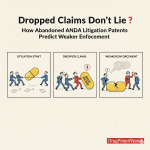
On June 4, 2026, the US Supreme Court voted 9-0 against Amarin Pharma. The Court held that Amarin did not plausibly allege that Hikma induced doctors to infringe a patent on a new use of Vascepa (icosapent ethyl). [1][2] The Court decided the case 139 days after it agreed to hear it on January 16, 2026 (our calculation). [3] The ruling changes how brand companies enforce patents on new uses of old drugs.
Those patents were already fragile. A published cohort study tracked small-molecule new molecular entities that FDA approved from July 1997 to May 2020. Of the 197 that had reached generic entry by May 2020, only 64 (32%) gained any new indication after approval. [4] Those 64 drugs earned 116 new-indication exclusivities. Of the 98 that were three-year exclusivities, only 13 ran past generic entry, and by an average of 85 days. [4]
This article explains how a new-use patent works, what protects it, and how it fails. It adds our own calculations from public approval dates and from the published cohort data. DrugPatentWatch (DPW) tracks Orange Book patents, exclusivity dates, and Paragraph IV challenges for these drugs. DPW data is a starting point. The primary documents decide the answer.
The Short Answer: A New-Use Patent Is Valid but Narrow
Yes, a company can patent a new use of a known drug. The use must be new, non-obvious, and patent-eligible. US courts have upheld method-of-treatment claims, patient-selection claims, and regimen claims that meet those tests. [5][6]
The harder question is value. A new-use patent protects the use, not the molecule. A generic company can remove the patented use from its label and sell the same molecule for the unpatented uses. The 2026 Supreme Court decision makes that route safer for generic companies. [1][7]
Legal tests: a prior study can anticipate a use that nobody had proven. In re Montgomery shows how. [8]
Regulatory protection: FDA gives three years for new clinical investigations, seven years for orphan uses, and six months for pediatric studies. [9]
Enforcement: the Orange Book use code, the section viii carve-out, and the inducement claim decide who wins. [10][1]
Timing: new-use exclusivities usually end before generic entry. Orphan exclusivities usually last past it. [4]
What Is Drug Repurposing, and How Does It Differ From Off-Label Use?
Drug repurposing means finding and gaining approval for a new indication of a drug that FDA already approved for another use. Off-label use means a doctor prescribes the drug outside its approved label. Repurposing creates a patentable and labelable event. Off-label use alone does not.
Definitions Used in This Article
Repurposing event: an approval for a new, distinct therapeutic indication. One recent study excludes population-only extensions, formulation changes, and line extensions in the same therapeutic domain. [11]
Use code: the short description that the NDA holder files with FDA to describe the approved method of use that a listed patent claims. In Caraco v. Novo Nordisk, the use code for Prandin covered all three approved uses, although the patent claimed only one. [10]
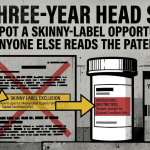
Skinny label: the label of a generic drug that omits the patented uses. A section viii statement lets a generic company launch for the unpatented uses. It avoids the brand notice and the 30-month stay. [7]
New-use patent: a patent that claims a method of using a known compound for a new purpose, a new dose, or a new patient group.
Why Do Companies Repurpose Existing Drugs?
Repurposing starts with a compound that has human safety data. A 2019 review in Nature Reviews Drug Discovery says this can lower development cost and shorten timelines. [12] The review does not give a single cost figure, and we do not supply one.
The dataset is large. A 2026 study in Communications Medicine counted 451 drugs that gained approval for a new use among FDA drugs approved from 1985 to 2024. [11] Oncology accounted for 160 of the 451 repurposed approvals (35.5%). Oncology accounted for 279 of 1,336 de novo approvals (about 20.8%). [11]
The same company often does the repurposing. Among the top 20 repurposing companies, 230 of 355 repurposed drugs (64.7%) came from drugs that the same company first marketed. [11] Another company usually takes longer. In-house repurposing averaged 6 years. Out-licensed repurposing averaged 9.1 years. [11]
The Five Findings That Matter
Each finding below stands alone. Calculated figures are marked as calculations. We did not take any calculated figure from a source.
Two of every three small-molecule drugs in the 1997-2020 cohort gained no new indication after approval. The count is 133 of 197 (67.5%). This is a calculation from the published counts. [4]
Three-year grants dominate new-indication exclusivity. Of 116 post-approval new-indication exclusivities, 98 (84%) lasted three years and 18 (16%) were seven-year orphan grants. [4]
Orphan exclusivities outlast generic entry far more often. In the cohort, 14 of 18 orphan exclusivities (78%) ran past generic entry, by about 4 years on average. For common conditions, 13 of 98 (13%) did so, by 85 days on average. The orphan overrun is about 17 times longer (calculation: 1,461 days divided by 85 days). [4]
The average repurposed approval arrives 7.2 years after the original approval across 451 drugs. [11] In our six-event case set, the mean gap is 6.9 years and the range is 5.5 to 7.9 years (calculation; see Table 2).
On June 4, 2026, the Supreme Court unanimously held that a skinny label, a ‘generic version’ description, and similar statements did not plausibly show active inducement. [1][13]
Methodology: How We Built the Calculations in This Article
What Data We Analyzed
We used two kinds of data. The first is published counts from two peer-reviewed cohort studies. [4][11] We reproduced their reported counts and computed percentages and ratios from them. We did not re-analyze their raw FDA files.
The second is a case set of six repurposing events. Each event has an original approval date and a repurposed approval date that we could verify in public sources. We read the dates from press reports, public drug-history pages, an FDA letter, and DPW’s Revatio page. [14][15][16][17][18][19][20][21]
How We Selected and Counted Records
An event qualifies if the drug gained approval for a clearly distinct therapeutic indication, or a distinct product for that use, after its original approval. The case set is not a random sample. We picked drugs where both dates were available and where the repurposing is well known. The case set therefore shows what a typical documented example looks like. It does not estimate a population average.
Tadalafil appears twice because Cialis gained two distinct indications from one original approval. We show statistics with all six events and with five events (one tadalafil row removed). We computed each gap as the number of days between the two dates, divided by 365.25.
Limits of the Analysis
Six events cannot support a population estimate. We compare them with the 451-drug average only as a plausibility check.
We could not retrieve FDA’s Drugs@FDA records directly in this session. Several dates come from secondary pages that report FDA actions.
The two cohort studies define repurposing differently. One counts new-indication exclusivities for small molecules. The other counts new distinct indications for small molecules and biologics. Their numbers are not additive. [4][11]
Court outcomes come from published decisions or from law-firm summaries of them. We name the source type for each case.
Can You Patent a New Use for an Old Drug? The Four Legal Tests
A new-use patent must pass three statutory tests: novelty, non-obviousness, and eligibility. Courts also ask whether the claim describes a real invention. The outcomes depend heavily on the prior art and on how the claim is written.
Is a New Use Novel Under 35 U.S.C. Section 102?
A new use is novel only if no earlier document disclosed the use, even by implication. The risk is inherent anticipation.
Inherent Anticipation in In re Montgomery (Fed. Cir. 2012)
The claims in In re Montgomery covered a method of treating or preventing stroke with a renin-angiotensin system inhibitor. Claim 45 named ramipril. [8] The Board rejected the claims as anticipated by prior studies, including the HOPE study. The Federal Circuit affirmed. [8]
Judge Dyk wrote the opinion, and Judge Prost joined. The court held that the prior art treated stroke-prone patients with ramipril, so the treatment effect was inherent. The reference needed to show only that the treatment was proposed, not that anyone had used it for stroke. [8] Judge Lourie dissented. He argued that inherency requires inevitability. [8]
Analysis: a published trial that gave the drug to the right patient group can anticipate a later claim to the outcome, even if the earlier authors did not study that outcome. A repurposing team should search trial registries and secondary analyses before it files.
Is a New Use Non-Obvious Under 35 U.S.C. Section 103?
A new use is non-obvious if a skilled person had no reason to try it and no reasonable expectation of success. The Supreme Court described the test as ‘an expansive and flexible approach’ in KSR v. Teleflex (2007). [22] Courts decide the question on the prior art for each regimen.
What the Federal Circuit Has Done With Dosing Regimens
The 2025 cases show a split by facts. In Janssen v. Mylan, the court affirmed that a patent on a missed-dose regimen for Invega Trinza (paliperidone palmitate) was not shown to be obvious. [23] The prior art required at least four months of stabilization on the one-month product before the three-month product. The patent used about one week. The court also affirmed that Mylan’s proposed labels would induce infringement. [23]
In ImmunoGen v. Stewart (2025), the court found a different dosing regimen obvious. [23] Vanda also lost on obviousness for its Hetlioz (tasimelteon) patents. The Federal Circuit affirmed on May 10, 2023. Vanda then asked the Supreme Court to decide whether obviousness needs a ‘predictable’ result or only a reasonable expectation of success. Vanda filed that petition (No. 23-768) on January 12, 2024. [24]
Is a Method of Treatment Eligible Under 35 U.S.C. Section 101?
Yes, if the claim applies a natural relationship in a specific treatment step. A claim that only recites the natural relationship fails.
Mayo v. Prometheus (2012)
The Supreme Court decided Mayo v. Prometheus unanimously on March 20, 2012. Justice Breyer wrote the opinion. The claims linked thiopurine metabolite levels to dose. The Court held them ineligible because the added steps were well-understood, routine, conventional activity. [25]
Vanda v. West-Ward (Fed. Cir. 2018)
On April 13, 2018, the Federal Circuit reached the opposite result for a treatment claim. US Patent No. 8,586,610 claims a method of treating schizophrenia with iloperidone. The prescriber first genotypes the patient for CYP2D6. Poor metabolizers receive 12 mg per day or less. Other patients receive more than 12 mg per day, up to 24 mg per day. [5]
The majority held that the claims were not directed to a natural law. It called them a new way to use a known drug for specific patients, with specific doses and a specific outcome. The claims end with a physical administering step. [5] A dissent argued that the claims applied a natural law in a routine and conventional way. [5]
What Types of Claims Protect a New Use of an Existing Drug?
The claim type decides how easily a generic company can avoid the patent. We group new-use claims into four types. This grouping is our own classification. It is not an industry standard.
Original Taxonomy: Four Types of New-Use Claims
Type 1: Method of Treating a New Indication
The claim covers using the drug to treat a new disease or condition. Amarin’s two patents on Vascepa’s cardiovascular-risk indication are an example. [3] A generic company can often leave the indication off its label. That is the section viii route.
Type 2: Dosing Regimen or Patient Selection
The claim covers a dose, schedule, or tested patient group. Vanda’s iloperidone genotype patent and Janssen’s missed-dose patent are examples. [5][23] A generic company has more trouble with this type because the dose usually appears in the label for every approved use. The Federal Circuit found that Mylan’s proposed labels would induce infringement of the Janssen patent. [23]
Type 3: Combination or Pretreatment Regimen
The claim covers giving a second agent before or with the drug. Eli Lilly’s US Patent 7,772,209 claims giving folic acid and vitamin B12 before pemetrexed disodium (Alimta). [6] The generics used a different salt, pemetrexed ditromethamine. The Federal Circuit affirmed infringement under the doctrine of equivalents on August 9, 2019. [6]
Type 4: New Product for the New Use
The claim or the approval covers a new strength, form, or route made for the new use. Finasteride 1 mg (Propecia, NDA 020788) was approved on December 19, 1997 for male pattern hair loss. Finasteride 5 mg (Proscar, NDA 020180) was approved on June 19, 1992 for benign prostatic hyperplasia. [20] Analysis: a generic company must match the strength of the product it copies. A new strength therefore gives the brand a separate product to protect.
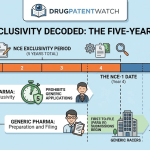
FDA exclusivity runs separately from patents. It starts on the approval date and needs no patent. FDA lists three periods that matter for new uses: three years for new clinical investigations, seven years for orphan drugs, and a six-month pediatric add-on. [9]
What Is Three-Year New Clinical Investigation Exclusivity?
It is a three-year bar on approval of a competing 505(b)(2) application or ANDA. It applies when an NDA or supplement contains new clinical investigations that are essential to approval and that the applicant conducted or sponsored. Bioavailability studies do not count. [26][27] For a supplement, the three years run from the approval of the supplement. [26]
What Qualifies Under 21 CFR 314.108
A new clinical investigation is a human study whose results FDA has not relied on to approve an earlier product for any indication. It must not duplicate an investigation that FDA already relied on. [26] The exclusivity covers only the change that the new studies support. It does not cover conditions that FDA approved earlier. [28] A generic company can therefore still win approval for the older indications.
What the March 2026 FDA Draft Guidance Says
FDA issued a draft question-and-answer guidance on three-year exclusivity in March 2026. Comments closed on May 4, 2026. [28] The draft says placebo-only studies typically do not count. It also says a study can qualify even if it used a similar or earlier version of the product with the same active moiety. For multi-arm studies, FDA decides case by case. It looks at whether the separate cohort has a sound scientific reason, studies a different population or product, and was prespecified in the protocol. [28] The draft is not final.
How Does Seven-Year Orphan Drug Exclusivity Work for a Repurposed Drug?
FDA lists orphan drug exclusivity at seven years. [9] A repurposed drug that wins an orphan indication gets that period for the new use. In the cohort study, 18 of the 116 new-indication exclusivities (16%) were orphan grants. [4]
Congress also changed Medicare price negotiation in the One Big Beautiful Bill Act, signed on July 4, 2025. A drug designated for one or more rare diseases is now excluded from the qualifying single source drug definition. The eligibility clock starts on the first day after approval on which the drug lacks an orphan designation. Seven years must pass for a small molecule, or eleven years for a biologic. The change applies from initial price applicability year 2028. [29] Analysis: this raises the value of an orphan repurposing strategy for a drug that would otherwise face price negotiation.
What Does Pediatric Exclusivity Add?
FDA says that pediatric exclusivity adds six months to all existing patents and exclusivity. It does not stand alone. It attaches to protection that already exists. [9] A pediatric study of a repurposed drug can therefore extend a use patent and a three-year exclusivity by six months each.
When Does the 505(b)(2) Pathway Fit a New Use?
A 505(b)(2) application relies in part on investigations that the applicant did not conduct and for which it has no right of reference. [27] FDA’s May 2019 guidance describes it as an abbreviated approval pathway next to the ANDA pathway under section 505(j). [30]
Timeline: How Long Does a Repurposed Approval Take?
In our six documented events, a repurposed approval came 5.5 to 7.9 years after the original approval. The mean gap is 6.9 years (calculation). A 2026 study of 451 repurposed drugs found a mean interval of 7.2 years, with a range of 0 to 39 years. [11]
Drug
Original approval
Repurposed approval
Gap (days)
Gap (years)
Source
Sildenafil
Viagra, erectile dysfunction: Mar 27, 1998
Revatio tablet, pulmonary arterial hypertension (NDA 021845): Jun 3, 2005
Mean gap, six events: 6.88 years. Median: 7.28 years. With one tadalafil row removed, the mean is 6.69 years and the median is 7.19 years (all calculations).
The sildenafil gap, 7.19 years, matches the 451-drug mean of 7.2 years almost exactly. [11] The timing has a practical meaning. A drug approved in year zero often reaches its new indication around year seven. Compound patents and five-year new chemical entity exclusivity can run out around the same time. Analysis: the repurposing decision belongs in the lifecycle plan before year five.
DPW’s Revatio page also shows that the sildenafil repurposing created three separate NDAs: the tablet approved on June 3, 2005, an intravenous solution approved on November 18, 2009, and an oral suspension approved on August 30, 2012. [15] That pattern matches the Type 4 claim in our taxonomy.
Do New-Use Exclusivities Last Longer Than Generic Entry? What the Cohort Data Shows
Usually not for common conditions. Usually yes for orphan conditions. The cohort study compared the expiry date of each new-indication exclusivity with the date of first generic entry. [4]
Of 116 new-indication exclusivities earned by 64 small-molecule drugs between 1997 and 2020, 27 (23%) expired after generic entry. Among common-condition exclusivities, 13 of 98 (13%) did so, on average 85 days after. Among orphan exclusivities, 14 of 18 (78%) did so, on average 4 years after. (Sahragardjoonegani et al., 2021) [4]
Category
Count
Expired after generic entry
Share
Average time after entry
Common conditions (3-year)
98
13
13.3%
85 days
Orphan (7-year)
18
14
77.8%
About 4 years (1,461 days)
All new-indication exclusivities
116
27
23.3%
Not reported
The study also reports when repurposing happens. The chance that a drug gains a new indication in a given year peaks above 4% at one to two years after approval. It falls below 1% by year 15. [4] Neoplasms had the highest share of drugs with a secondary indication, at 12 of 22 (54%). [4] The authors estimate that without any effect of generic entry, the cohort would have shown 134 new indications instead of 116, a 16% increase. [4]
Scenario Analysis: When Does a New-Use Exclusivity Add Real Protection?
The table below applies the three-year and seven-year periods to three timing scenarios. The assumptions are ours. We ignore patents and pediatric exclusivity. We assume that generic entry would otherwise occur at the stated time after the original approval. The scenarios illustrate the arithmetic. They do not forecast any drug.
Scenario
Assumption
Exclusivity end versus generic entry
Evidence from the cohort
A. Early common-condition use
New use approved 7 to 8 years before generic entry; 3-year exclusivity
Ends 4 to 5 years before generic entry
Probability of a new indication peaks 7 to 8 years before generic entry [4]
B. Late common-condition use
New use approved 1 year before generic entry; 3-year exclusivity
Ends 2 years after generic entry
13 of 98 (13%) ran past entry, by 85 days on average [4]
C. Orphan use
New orphan use approved 3 years before generic entry; 7-year exclusivity
Ends 4 years after generic entry
14 of 18 (78%) ran past entry, by about 4 years on average [4]
Scenario A is the typical case in the cohort. The exclusivity ends before the generic arrives, so the patent and the label carry the protection. Generic companies can still gain approval for the older indications during an exclusivity period. [28]
How Do You Enforce a New-Use Patent? Orange Book Listing, Use Codes, and Section viii
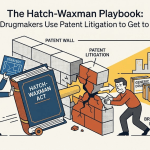
The brand lists the patent in the Orange Book with a use code. The generic company then chooses between a Paragraph IV certification, which challenges the patent, and a section viii statement, which carves the use out of the label. [10][7]
What Is a Use Code, and What Happens If It Is Wrong?
A use code describes the patented method of use. A generic company can ask a court to correct an overbroad code. In Caraco v. Novo Nordisk, decided on April 17, 2012, the Supreme Court held unanimously that a generic applicant may use the counterclaim provision to force correction of a use code. [10]
How Does a Skinny Label Work?
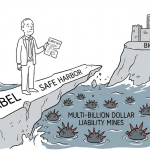
A section viii carve-out lets a generic company launch for unpatented uses and omit the patented ones. It avoids the brand notice, the 30-month stay, and typically pre-launch litigation. [7] The generic label must otherwise match the brand label. The Court called this the duty of sameness in Hikma. [31]
GSK v. Teva: How a $234 Million Verdict Shaped the Rules
Teva filed its carvedilol ANDA in 2002 and launched in 2007 with a label that left out congestive heart failure. [32] GSK’s reissue patent covered a method of decreasing mortality from congestive heart failure. It issued on January 8, 2008 and expired on June 7, 2015. [32] In 2011, FDA required Teva to make its label identical to the Coreg label. [32]
A jury awarded GSK $234 million in lost profits plus $1.4 million in royalties. The district court overturned the verdict. The Federal Circuit reinstated it. [32] The Federal Circuit’s second opinion came on August 5, 2021. It held that a skinny label that omits all patented uses and notes an AB rating cannot alone support liability. It also found substantial evidence of inducement for both the partial-label and full-label periods. Judge Prost dissented. [32] The Supreme Court denied certiorari on May 15, 2023. [33]
Hikma v. Amarin: What the Supreme Court Decided
The Facts
FDA approved Vascepa in 2012 for severe hypertriglyceridemia and in 2019 for cardiovascular risk reduction. Amarin listed patents on the cardiovascular use in the Orange Book. Hikma filed a section viii statement, omitted that use, and received ANDA approval in May 2020. Amarin sued in November 2020. [2] The district court dismissed the complaint. The Federal Circuit reversed in 2024. [3]
The Holding
The Court reversed unanimously. Justice Jackson wrote the opinion. [1] The Court held that Amarin failed to plead active inducement under 35 U.S.C. section 271(b). The question is whether the defendant actively encouraged infringing use. It is not whether a doctor could read the statements as encouragement. [13]
The Court identified conduct that cannot support inducement on its own. [13]
Statements that show compliance with labeling law or industry naming, such as calling a product a ‘generic equivalent’.
Omissions, including silence about the patented use.
Vague statements joined with speculation about what providers will do.
The Court applied the ordinary Twombly and Iqbal pleading standards. It did not write a drug-specific test. [31]
What the Court Left Open
The case returns to the lower courts. It is unclear whether Amarin can amend its complaint to meet the stricter standard. [31] The Court did not require express encouragement. A statement can be active and implicit, but it must be clear and affirmative. [31][7] Practitioners at a July 2026 Berkeley event said that litigation risk remains where a communication tells prescribers to use the generic for all of the brand’s uses. [7]
GSK v. Teva Compared With Hikma v. Amarin
Item
GSK v. Teva
Hikma v. Amarin
Drug
Carvedilol (Coreg)
Icosapent ethyl (Vascepa)
Generic launch
2007
ANDA approved May 2020
Procedural stage of ruling
After jury verdict
Motion to dismiss
Money at issue
$234 million lost profits plus $1.4 million royalties
Not decided on the pleadings
Result
Verdict reinstated by Federal Circuit; certiorari denied May 15, 2023
Supreme Court reversed Federal Circuit, June 4, 2026
Polsinelli reads Hikma as undercutting the physician-interpretation reasoning in GSK v. Teva. That is the firm’s characterization, not a quotation from the opinion. [31]
What Happens If a Generic Marketing Statement Does Cross the Line?
The brand can still plead inducement if it identifies specific, affirmative steps that promote the patented use. [31] Analysis: expect brand complaints to quote sales calls, prescriber letters, and press releases line by line. Generic companies should review every outbound statement against the carved-out indication.
Brands may also work on state law. Speakers at the Berkeley event noted a push to narrow automatic substitution to on-label indications. [7]
Case Studies: Four Repurposing Patents That Reached a Court or an Agency Decision
Each case below shows one failure mode or one winning feature. We avoid repeating the facts above and add the lesson.
Vascepa (Icosapent Ethyl): A Type 1 Claim Against a Carved-Out Label
DPW’s Vascepa page lists two Paragraph IV challenge records. Four ANDAs for the 1 g capsule carry a submission date of July 26, 2016. One ANDA for the 500 mg capsule carries August 29, 2017. The page also records that FDA approved Hikma’s generic on May 21, 2020. [34] The cardiovascular indication came later, on December 13, 2019. [21]
The sequence matters. The challengers attacked the older patents. The newer use patents drew a different response: a carve-out and a lawsuit. From the complaint in November 2020 to the Supreme Court decision on June 4, 2026, the dispute ran about 5.5 years (calculation from the dates above). Lesson: a Type 1 claim gave Amarin a lawsuit, not a bar to entry.
Carvedilol (Coreg): A Verdict That Did Not Survive the Pleading Debate
GSK won a jury verdict of $234 million in lost profits and kept it through the Federal Circuit. [32] Three years after certiorari was denied, the Supreme Court took up the same kind of question in Hikma and ruled for the generic side. [33][1] Lesson: a verdict built on how doctors might read a label is exposed after Hikma. Analysis: the GSK facts differ from a pure skinny label, because FDA required Teva to adopt the full Coreg label in 2011. [32]
Pemetrexed (Alimta): A Type 3 Regimen That Held Up
Lilly’s ‘209 patent claims folic acid and vitamin B12 pretreatment with pemetrexed disodium. Judge Lourie wrote the August 9, 2019 opinion for the Federal Circuit. [6] The court reversed literal infringement in the Hospira case because pemetrexed disodium does not exist once the ditromethamine salt dissolves in saline. [6] It still affirmed infringement under the doctrine of equivalents. [6]
Lilly had narrowed ‘an antifolate’ to ‘pemetrexed disodium’ to overcome a prior-art rejection. The court held that the amendment was tangential to the salt at issue. It also held that the disclosure-dedication rule did not apply, because the prior art named the ditromethamine salt only inside a vast genus. [6] Lesson: draft regimen claims with the salt and the form in mind, and keep the prosecution record clean.
Iloperidone and Tasimelteon: One Company, Two Outcomes
Vanda won on eligibility for its iloperidone dosing patent in 2018. [5] It lost on obviousness for its Hetlioz patents in 2023. [24] Lesson: eligibility is no longer the main risk for a well-written treatment claim. Obviousness, driven by the prior art that the sponsor itself created, is the larger risk. The Hetlioz court found that Vanda’s own clinical trials were part of the prior art combination. [24]
Repaglinide (Prandin): The Use Code Fight
Novo Nordisk listed one patent for Prandin’s use with metformin. Its use code covered all three approved regimens. FDA rejected Caraco’s section viii statement. Caraco then filed a Paragraph IV certification and a counterclaim. The Supreme Court allowed the counterclaim on April 17, 2012. [10] Lesson: write the use code to match the claim. An overbroad code invites a counterclaim.
How Do the US, Europe, the UK, and India Treat New-Use Patents?
The US allows method-of-treatment claims. Europe allows purpose-limited product claims and dosage-regimen claims. The UK tightened sufficiency for second-use claims. India bars the mere discovery of a new use of a known substance.
Europe: Article 54(5) EPC and Decision G 2/08
On February 19, 2010, the EPO Enlarged Board of Appeal issued G 2/08. It held that a known medicament can be patented for a different use, including a new treatment of the same disease. A dosage regimen can supply novelty if it also involves an inventive step. [35] Swiss-type claims lost their purpose. The EPO does not grant Swiss-type claims for applications with a filing or earliest priority date of January 29, 2011 or later. [35]
United Kingdom: Warner-Lambert v Mylan on Pregabalin
The UK Supreme Court decided Warner-Lambert v Generics (UK) on November 14, 2018. The patent was EP 0934061, and the claims were Swiss-form. By majority, the court held that the specification supported the claims only for inflammatory pain. The neuropathic pain claims were invalid for insufficiency. [36] Four justices also held that the claims would not have been infringed even if valid. The product labelling referred only to epilepsy and generalized anxiety disorder. The justices differed on whether the alleged infringer’s intention matters. [36]
India: Section 3(d) of the Patents Act, 1970
Section 3(d) excludes ‘the mere discovery of any new property or new use for a known substance’. [37] A repurposing patent that rests only on a new use of a known substance faces a statutory bar in India.
What This Means for Brand Manufacturers, Generic Manufacturers, and Investors
What This Means for Brand Manufacturers
Plan the new-use filing around the exclusivity calendar. In the cohort, most three-year exclusivities ended before generic entry. [4] Pair method claims with a product that generics must copy, such as a new strength. Write use codes narrowly. Keep marketing statements clear of promotion for any use that a competitor has carved out. [10][31]
What This Means for Generic Manufacturers
The skinny label is safer after June 4, 2026. Copying the brand label, calling the product a generic version, and following FDA naming rules are lower-risk conduct. [7][13] Dosing and regimen patents remain harder to avoid, because the dose appears in the label. [23] Review every outbound statement for any push toward the carved-out use.
What This Means for Repurposing Startups and Investors
Value the asset on the protection that it can hold. An orphan indication offers seven years and, in the cohort, usually outlasted generic entry. [9][4] A common-condition indication usually relies on patents. Oncology holds 35.5% of repurposed approvals. [11] Tools such as DPW help teams check Orange Book patents, use codes, exclusivity dates, and Paragraph IV records for a target drug. They help with freedom-to-operate work too. See DPW’s FTO guide for repurposing ventures and its repurposing overview. Confirm every date against the FDA and court record before you rely on it.
What Happens Next? Open Questions and Projections
The items below are open questions or projections. None is a confirmed event unless the text says so.
Remand: the lower courts must decide whether Amarin can amend its complaint. Confirmed procedural fact: the case returned to the lower courts. [31]
Legislation: speakers at the July 2026 Berkeley event said that the Skinny Labels, Big Savings Act had a House Judiciary hearing on the day of the decision. The bill would create a broader safe harbor and extend it to biosimilars. Its passage is not confirmed. [7]
FDA guidance: the March 2026 three-year exclusivity draft is not final. [28]
Medicare: the orphan exclusion applies from initial price applicability year 2028. [29]
Key Takeaways
The Supreme Court ruled 9-0 on June 4, 2026 that Hikma’s skinny label and ‘generic version’ statements did not plausibly show inducement. [1][13]
In a 197-drug cohort, 32% gained a new indication, and 84% of the resulting exclusivities were three-year grants. [4]
Only 13% of common-condition exclusivities ran past generic entry. 78% of orphan exclusivities did. [4]
Repurposed approvals arrive about seven years after the original: 7.2 years across 451 drugs, and 6.9 years in our six-event case set. [11]
Dosing and regimen claims are harder for generics to avoid than new-indication claims. [23][6]
India excludes mere new uses of known substances. Europe allows them. [37][35]
FAQ
What is a section viii statement?
It is a generic applicant’s statement that a listed patent does not claim a use for which the applicant seeks approval. It lets the generic launch with a label that omits the patented use. [7][10]
Does a skinny label still carry infringement risk after Hikma v. Amarin?
Yes, but less. A brand must plead clear, affirmative steps that promote the patented use. Label compliance, silence, and generic-equivalent language are not enough. [13][31]
How long is orphan drug exclusivity for a new use?
FDA lists orphan drug exclusivity at seven years. [9]
Can a new use earn three-year exclusivity?
Yes, if new clinical investigations are essential to approval and the applicant conducted or sponsored them. FDA’s March 2026 draft guidance would explain how FDA treats multi-arm studies. [26][28]
Are repurposed orphan drugs exempt from Medicare price negotiation?
A drug designated for one or more rare diseases is excluded from the qualifying single source drug definition under the 2025 law. The clock starts after the first day the drug lacks orphan designation. [29]
How long does repurposing take?
The mean interval was 7.2 years across 451 drugs. In-house efforts averaged 6 years and out-licensed efforts 9.1 years. [11]
Are dosing-regimen patents easy to invalidate?
No rule exists. The Federal Circuit upheld the Janssen missed-dose patent as not shown obvious, and it found a different regimen obvious in ImmunoGen. [23]
Can you patent a new use of a known drug in Europe?
Yes. Article 54(5) EPC and decision G 2/08 allow a known substance to be patented for a specific new use, including a new dosage regimen. [35]
Can you patent a new use of a known drug in India?
Not on the mere discovery of a new use. Section 3(d) of the Patents Act excludes it. [37]
Who does most repurposing: the original company or another company?
Among the top 20 repurposing companies, 64.7% of repurposed drugs (230 of 355) came from drugs that the same company first marketed. [11]
Sahragardjoonegani, B., Beall, R. F., Kesselheim, A. S., & Hollis, A. (2021). Repurposing existing drugs for new uses: A cohort study of the frequency of FDA-granted new indication exclusivities since 1997. Journal of Pharmaceutical Policy and Practice. https://doi.org/10.1186/s40545-020-00282-8
Akodad, S., Niu, X., Secades, B., et al., & Stevens, H. (2026). Impact of drug repurposing between 1985 and 2024 on pharmaceutical innovation. Communications Medicine, 6, 84. https://www.nature.com/articles/s43856-025-01344-1
Pushpakom, S., et al. (2019). Drug repurposing: Progress, challenges and recommendations. Nature Reviews Drug Discovery, 18, 41-58. https://www.nature.com/articles/nrd.2018.168