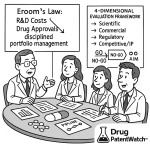
The pharmaceutical industry is struggling with its own productivity. The cost of bringing a single new chemical entity to market now frequently exceeds $2.5 billion, and the timeline stretches toward 15 years.1 For every 10,000 compounds screened, only one typically reaches the pharmacy shelf, and 90% of those that enter clinical trials fail to gain approval.1 This economic reality, often referred to as Eroom’s Law, has forced a shift in how capital is deployed within research and development. Instead of searching for new needles in increasingly large haystacks, savvy firms are re-examining the needles they already have.
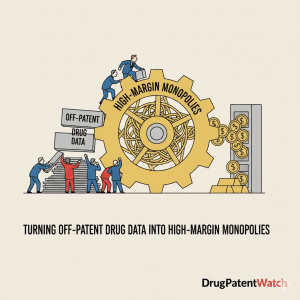
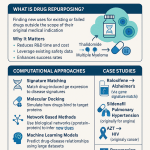
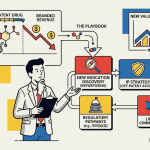
Drug repurposing—the process of identifying new therapeutic uses for existing drugs—has moved from a strategy of serendipity to one of systematic data interrogation. By leveraging molecules with established safety profiles, companies can bypass the most failure-prone stages of development.4 This approach does not just save time; it fundamentally alters the risk-reward calculus of the industry. It transforms “failed” assets into blockbuster opportunities and extends the commercial life of aging portfolios. For pharmaceutical and biotech executives, the objective is not simply scientific discovery. It is the creation of a defensible market monopoly. Success requires a sophisticated orchestration of regulatory selection, intellectual property architecture, and market access strategy.
The Crisis of R&D Productivity and the Second-Chance Economy
The business model of traditional drug discovery is under pressure. Declining internal rates of return on R&D suggest that for every dollar spent, less than a dollar of value is returned to the company.6 This inefficiency stems from high attrition rates in Phase II and III clinical trials, where candidates often fail due to a lack of efficacy or unforeseen toxicity.3 Drug repurposing offers a way to de-risk these investments. Because the safety profile of the molecule is already established through previous Phase I human trials, the primary challenge shifts from “Will it hurt the patient?” to “Can it help this specific disease?”.5
The global drug repurposing market reached a valuation of $32.6 billion in 2024 and is projected to expand to $51.1 billion by 2034, growing at a compound annual rate of 4.7%.9 This growth is driven by a focus on chronic, rare, and neglected diseases where the traditional discovery model is often financially unviable.9 For a mid-sized firm, the most pragmatic starting point is to focus on a disease-centric approach for an indication within an existing therapeutic area of expertise.3
“Drug repurposing significantly reduces development costs, timelines, and regulatory hurdles. The urgent need for treatments for chronic and rare diseases is increasing the demand for accelerated therapeutic development, thus boosting market growth.” — 11
Quantifying the Efficiency Advantage: Timelines and ROI
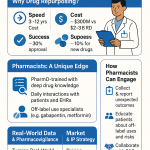
The financial case for drug repurposing is grounded in the reduction of clinical attrition. Traditional de novo drug discovery is a long-term gamble with an 11% success rate from Phase I to approval.1 Repurposing increases this probability to approximately 30%.1 This threefold improvement in the odds of success is the primary driver of the sector’s growth.
Table 1: The Economic Advantage of Repurposing vs. De Novo Discovery
Metric
Traditional De Novo Discovery
Drug Repurposing
Average Cost to Market
$1.5 billion – $4.5 billion 12
~$300 million 12
Average Development Time
10 – 17 years 1
3 – 12 years 1
Probability of Success
~10 – 12% 12
~30% 5
Early-Stage Risk
High (Toxicity, Safety) 3
Low (Known Safety Profile) 5
Timeline Savings
Baseline
5 to 7 years reduction 5
By starting with a compound that has already cleared Phase I safety trials, developers can slash five to seven years from the typical development timeline.8 This acceleration allows for quicker recoupment of R&D investments and the establishment of a stronger market position, particularly in rapidly evolving therapeutic areas or during unforeseen health emergencies.5
The 505(b)(2) Regulatory Engine: A Strategic Middle Ground
In the United States, the 505(b)(2) regulatory pathway is the primary engine for drug repurposing. Established by the Hatch-Waxman Amendments of 1984, this pathway allows an applicant to rely on existing safety and efficacy data that was not generated by the applicant and for which they do not have a right of reference.15 This is not a “shortcut” for generic manufacturers; it is a hybrid route for innovators. Unlike a 505(j) Abbreviated New Drug Application (ANDA), which requires absolute sameness to the reference drug, a 505(b)(2) allows for meaningful differences in indication, dosage form, or strength.16
The 505(b)(2) pathway creates a “value continuum,” a spectrum of risk and reward that moves beyond the binary choice of billion-dollar new molecular entities or low-margin generics.15 It allows for meaningful innovation—a new dosage form, a new indication, a new combination—without the full cost and time burden of a 505(b)(1) program.15 This pathway specifically benefits new drugs similar to already approved drugs but which have slight variations in formulation or administration routes.16
The Scientific Bridge: Navigating Data Reliance
The defining technical challenge of a 505(b)(2) application is the establishment of a “scientific bridge”.15 The applicant must provide sufficient new data, often through targeted bridging studies such as comparative pharmacokinetics, to justify the reliance on the external data.15 This provision is designed to avoid the unnecessary duplication of studies on what is already known about a drug, thereby streamlining development.15
A strategic literature review and gap analysis are critical before finalizing a development strategy.16 Many sponsors underestimate the importance of a thorough literature review. A strategic review can uncover valuable data that may reduce the need for certain studies, saving time and resources, while also identifying potential pitfalls or challenges that might not be immediately apparent.16
Table 2: Types of Innovation Possible Under 505(b)(2)
Innovation Type
Description
Strategic Benefit
New Indication
Treating a different disease with an approved drug.16
Taps into new patient populations.5
New Dosage Form
Changing from a tablet to an oral liquid or IV.16
Improves patient compliance or hospital use.18
Novel Combination
Combining two active ingredients into one pill.16
Enhances efficacy or reduces pill burden.20
Rx-to-OTC Switch
Moving a prescription drug to over-the-counter status.16
Dramatically expands market reach.16
The European Framework: Article 10(3) Hybrid Applications
The European Medicines Agency (EMA) provides a parallel framework through Article 10(3) of Directive 2001/83/EC.21 These “hybrid” applications are used when a product does not meet the strict definition of a generic—for instance, if there is a change in therapeutic indication, strength, or route of administration.22 In a hybrid dossier, reference is made to nonclinical and clinical documentation included in the dossier of the reference medicinal product.22
The EMA considers the hybrid route a way to allow innovation in development, such as new indications or new pharmaceutical forms, although it acknowledges that applicants can find the potential for additional studies off-putting.21 However, this route also allows a degree of flexibility, such as a bridge versus formal bioequivalence between test and reference products.21 The centralized procedure at the EMA is similar to the FDA process, and research suggests a high rate of agreement between the two agencies on marketing approvals for these types of products.24
The Intellectual Property Thicket: Protecting New Uses
The central legal paradox of drug repurposing is patenting a known substance. While the original molecule may be in the public domain, the discovery of a new use can be patented as a method of treatment.25 To secure these rights, innovators must navigate the pillars of novelty and non-obviousness under 35 U.S.C. §§ 102 and 103.25
Because method-of-use patents can be difficult to enforce against off-label generic prescribing, sophisticated firms build “patent thickets”.25 This involves a multi-layered defense including formulation patents, dosage patents, and combination patents.25 This can transform a method-based monopoly into a more enforceable product-based one.25 Companies utilizing DrugPatentWatch are better positioned to monitor these overlapping layers of protection and identify potential challenges to patent validity.26
Novelty, Non-Obviousness, and Inherent Anticipation
To be granted a patent, a new use must satisfy the same four fundamental pillars of patentability as any other invention: it must be directed to eligible subject matter, possess utility, be novel, and be non-obvious.25 A major hurdle is the doctrine of inherent anticipation, where a patent may be rejected if a prior art reference discloses a process that necessarily or inevitably results in the newly claimed effect, even if that effect was previously unappreciated.25
To defeat a claim of inherent anticipation, inventors often must prove the new effect arises from a different underlying biological mechanism.25 Furthermore, under 35 U.S.C. § 103, the invention must not be obvious to a person having ordinary skill in the art.25 Evidence of “teaching away” or unexpected results can often overcome this hurdle.25 Method-of-use claims remain the foundational intellectual property tool for drug repurposing, often combined with new formulation or dosage claims.10
The AI Revolution: Systematic Data Interrogation
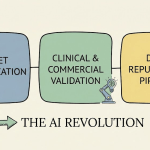
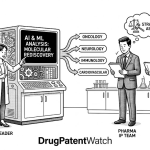
The traditional model of repurposing relied on “serendipity”—the accidental discovery of side effects.28 Artificial intelligence has transformed this into a systematic science. AI and machine learning provide the tools to interrogate vast, complex, and previously disconnected biological and clinical datasets at a scale beyond human capability.8
AI does not invent the concept of repurposing; it supercharges its execution through three traditional playbooks:
The Drug-Centric Approach: Starting with a known molecule and searching for a new disease it can treat.8
The Disease-Centric Approach: Starting with an unmet medical need and scanning the entire universe of existing drugs to find a potential solution.8
The Target-Centric Approach: Connecting disparate diseases through a shared biological target or pathway.8
Perhaps the most profound shift enabled by AI is the move from purely hypothesis-driven to data-driven discovery.8 AI systems can be turned loose on massive datasets, such as millions of electronic health records or genomic databases, to find statistically significant correlations between a drug and an unexpected positive outcome without any prior hypothesis.8
Advanced Computational Techniques in Asset Rescue
To appreciate the transformative impact of AI on drug repurposing, it is essential to look at the core technologies involved. Supervised learning algorithms, such as Support Vector Machines and Random Forests, are used to predict drug-target interactions based on labeled data.8 Deep learning architectures are proving even more transformative:
Convolutional Neural Networks (CNNs): Used to interpret the 3D structure of proteins and predict binding affinities (e.g., Atomwise’s AtomNet).8
Recurrent Neural Networks (RNNs) and LSTMs: Handle sequential data to interpret the “language” of molecular sequences.8
AI-integrated methodologies can decrease drug discovery time by as much as 50% with the help of efficient lead identification and optimization.7 Furthermore, machine learning can mimic biological responses and estimate the pharmacokinetics of a compound before getting to clinical phases, helping researchers find more feasible prototypes at an earlier stage.7
Case Study: Sildenafil and the Power of the Pivot
Sildenafil remains the most famous example of drug repositioning. Originally developed by Pfizer in the 1980s for the treatment of coronary artery disease, its side effect—marked induction of penile erections—was serendipitously found during Phase I clinical trials for hypertension and angina pectoris.28 After sildenafil failed in Phase II clinical trials for angina, it was redirected to the treatment of erectile dysfunction, receiving FDA approval in 1998 and quickly becoming a blockbuster branded as Viagra.28
Pfizer later successfully repurposed sildenafil again for pulmonary arterial hypertension (PAH) under the brand name Revatio.29 While both drugs contain the same active ingredient, they are prescribed for different conditions based on their dosage and form.30
Table 3: Comparison of Sildenafil Formulations (Viagra vs. Revatio)
Attribute
Viagra
Revatio
Indication
Erectile Dysfunction (ED)
Pulmonary Arterial Hypertension (PAH)
Manufacturer
Pfizer
Pfizer
Standard Dose
25mg, 50mg, 100mg 31
20mg (three times daily) 30
Tablet Shape
Diamond (blue film-coat) 32
Oval (white) 32
Additional Forms
Oral tablet
Oral tablet, IV, Oral liquid 30
The Revatio strategy allowed Pfizer to target a rare, progressive disease that affects between 10 and 15 people per million.30 The availability of an IV formulation gave physicians the ability to maintain treatment in patients temporarily unable to take oral medication, a critical factor in managing disease progression in PAH.33
Case Study: Dimethyl Fumarate (Tecfidera)
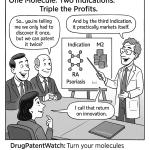
Dimethyl Fumarate (DMF) serves as a modern case study of patent coverage for a repurposed drug. While mixtures of fumarates had been used for over 50 years to treat psoriasis in Europe, Biogen analyzed DMF for the treatment of relapsing-remitting multiple sclerosis (MS).34 In 2013, the FDA authorized Tecfidera as the first DMF-based formulation for use in the US as a first-line therapy for MS.35
Biogen’s strategy involved pursuing claims for pharmaceutical formulations and useful doses specifically for treating MS.34 The US Patent Office granted a patent covering the daily administration of 480 mg of DMF, which expired in 2028.36 This dosing regimen was recognized as a remarkable innovation, and the research investment required to validate it provided a meaningful benefit to patients.36 This case illustrates how secondary patents can be pursued for compounds without composition-of-matter coverage, provided the new use represents genuinely novel information.1
Case Study: Thalidomide and the IMiD Revolution
Thalidomide’s repurposing is an example of understanding drug and disease mechanisms coupled with clinical data.37 Originally developed as a sedative in 1957, thalidomide was withdrawn from the market after causing severe limb malformations in over 10,000 children.28 Decades later, research groups found that thalidomide possessed anticancer activity, specifically the ability to inhibit angiogenesis.28
In 2006, thalidomide received FDA approval for the treatment of refractory multiple myeloma in combination with dexamethasone.28 This success led to the development of patentable derivative molecules with improved properties, such as lenalidomide, showing how repurposing can ignite a new wave of de novo discovery.25 This “hard repurposing”—taking a drug used in one area and moving it to a completely different medical field—is challenging but can yield high returns.38
Oncology: The Leading Frontier for Repurposing
The oncology segment dominated the drug repurposing market in 2024 with a revenue of $12.3 billion.9 This surge is driven by the increasing prevalence of cancer and the substantial unmet medical need for effective and affordable treatments.4 Repurposing offers a faster route to address this need by utilizing existing drugs with known safety profiles.9
Several non-cancer drugs are currently being investigated for oncology indications:
Itraconazole: A triazole antifungal now in Phase II clinical trials for non-small cell lung cancer and basal cell carcinoma.28
Nelfinavir: An HIV protease inhibitor showing multi-faceted anticancer activities, including inhibition of AKT signaling and induction of ER stress.28
Digoxin: A cardiac glycoside being studied for its ability to inhibit HIF-1α synthesis and androgen receptor signaling.28
Nitroxoline: An antibiotic for UTIs that inhibits MetAP2 and sirtuins to block cancer cell migration.28
With oncology spending set to exceed $260 billion by 2025, repurposing offers an efficient alternative to traditional development, which takes an average of 7.3 years and $648 million for cancer drugs.39
Navigating the Skinny Label: GSK v. Teva
Patent holders often face the “Skinny Label” Gambit, where generic manufacturers carve out patented indications from their labels to avoid induced infringement claims.25 However, the legal battle in GlaxoSmithKline LLC v. Teva Pharmaceuticals USA, Inc. confirmed that a skinny label alone is not enough to prevent liability.40
The Federal Circuit reinstated a jury’s verdict that Teva infringed GSK’s patented method of using Coreg (carvedilol) for congestive heart failure (CHF), even though Teva had carved that indication out of its label.41 GSK argued that Teva’s press releases and promotional materials—which marketed the generic as an “AB-rated equivalent” to the branded product—led doctors to believe the two were interchangeable for all uses, including the patented one.40
Table 4: Lessons from the GSK v. Teva Case
Strategic Concern
Key Finding
Action for Innovators
Inducement Liability
Promoting a generic as an “AB-rated” equivalent can be evidence of inducement.43
Monitor competitor marketing and press releases closely.43
Skinny Label Efficacy
Not a “blanket” safe harbor if other actions encourage patented use.43
Pay attention to how generic sponsors discuss RLD indications.43
Direct Infringement
Circumstantial evidence can prove physicians were led to infringe.40
Coordinate marketing and public statements to avoid “encouraging” off-label use.40
This case settles the debate over whether a labeling carve-out is an absolute defense. It confirms innovators’ rights to claim induced infringement and obtain substantial damages if a generic manufacturer takes active steps to promote a carved-out, patented indication.43
Market Access and Pricing Strategy
Obtaining regulatory approval is only half the battle; ensuring reimbursement is equally important.19 Physicians are unlikely to prescribe a new drug if it is not covered by payers.19 For repurposed drugs, pricing varies greatly depending on the brand, administration method, and dosing interval.19
The main attributes associated with a significant price increase for repurposed cases include a change in the administration setting to a hospital (374% increase), addressing unmet needs (69% increase), and a change in the administration route (117% increase).18 Research suggested that orphan designation also has a positive impact on repositioning prices in the US.18 However, off-patent repurposed drugs face the “free rider” dilemma: no firm wants to invest in a new indication if competitors can benefit from the results without contributing to the cost.44
The Strategic Value of DrugPatentWatch
For business professionals, turning patent data into competitive advantage requires high-quality intelligence. DrugPatentWatch serves as a critical repository for analysis on the “Repurposing Revolution,” offering deep dives into how companies can unlock hidden value in their portfolios.8 It provides a complete database covering patents, generic entry opportunities, litigation tracking, and market data.27
One of the most valuable applications of DrugPatentWatch is the ability to identify potential licensing opportunities before they become widely recognized.27 By tracking patent expirations across therapeutic areas and monitoring litigation outcomes, companies can spot emerging opportunities early—when terms are most favorable.27 This proactive approach transforms the process from reactive opportunism to strategic research planning.45
Market Dynamics and the 2025-2030 Patent Cliff
The expiration of market exclusivity, known as the “patent cliff,” is the most disruptive event in a drug’s commercial lifecycle.46 Industry analysts project a patent cliff of “tectonic magnitude” between 2023 and 2030, with an estimated $200 billion to $400 billion in annual branded drug sales at risk globally.46 For example, Merck’s Keytruda, which ruled the first half of 2025 with $15.2 billion in sales, faces U.S. patent expiry in 2028—the single biggest loss of exclusivity event on the horizon.47
Quantitative modeling of a patent cliff requires understanding the “Exclusivity Stack”—the complex, overlapping system of defenses that protect a drug’s monopoly.26 This stack includes:
Composition of Matter Patents: The strongest form of protection, covering the molecule itself.26
Method of Use Patents: Covering specific therapeutic applications.26
Regulatory Exclusivities: Shields granted by the FDA independent of patent status.26
Understanding the density and quality of this thicket allows companies to model the timing of generic entry and the intensity of competition.26
Breakthrough Approvals of 2025
The year 2025 has been a breakthrough for drug innovation, with 43 novel FDA drug approvals by the end of the year.48 These approvals highlight a trend toward durable formulations, precision treatments, and rare disease therapies.48
Table 5: Notable FDA Novel Drug Approvals (2025)
Drug Name
Active Ingredient
Indication
Approval Date
Cobenfy
Xanomeline/Trospium
Schizophrenia (First novel mechanism in 30 years) 49
These approvals demonstrate how historical pharmacology can be revived with modern structural biology, as seen with xanomeline, which originated from M1 agonist programs for Alzheimer’s decades ago.49
Future Trends: NAMs and Human-Relevant Research
The drug development ecosystem is shifting away from traditional animal models toward New Approach Methodologies (NAMs), including organoids, tissue chips, and in silico models.51 In April 2025, the FDA published a roadmap to reduce animal testing, and the NIH announced it would stop funding new grant proposals relying exclusively on animal testing by July 2025.51
This shift toward human-relevant assays is expected to compress development timelines and provide more accurate predictions of drug risks and opportunities.51 For repurposing, this means faster validation of new uses in human tissues before entering the clinic. Large contract research organizations like Charles River Labs are already pivoting toward NAMs, sending a powerful signal that these technologies are now mainstream.51
Maximizing the Business Case for Repurposed Assets
Realizing the full potential of drug repurposing requires a shift in mindset. It is no longer a “lucky break” but a deliberate, data-driven strategy.5 It transforms drug development from a high-risk exploratory endeavor into a more predictable process, allowing for more efficient allocation of R&D resources.5
To maximize ROI, companies should:
Invest in Computational Infrastructure: Leveraging AI to systematically scan portfolios for hidden therapeutic value.13
Forge Collaborative Frameworks: Partnering between academia and industry to bridge the “Valley of Death”.13
Master the IP Landscape: Building multi-layered patent thickets to defend against generic price erosion.25
Engage Payers Early: Developing a robust reimbursement strategy that highlights the clinical value of the new indication or formulation.19
The practice of repurposing is especially useful for rare or orphan diseases, as it diminishes the failure rate and speeds up patient access to promising treatments.14 For the leaders of the pharmaceutical industry, understanding and harnessing this transformation is no longer an opportunity—it is an imperative for survival and growth.3
Key Takeaways
Efficiency and Cost: Drug repurposing reduces R&D costs by up to 60%, with average costs around $300 million compared to $2.5 billion for de novo discovery.5
De-Risked Pipelines: Repurposed drugs have a 30% success rate from Phase I to approval, nearly triple the success rate of new molecular entities.1
Regulatory Pathways: The US 505(b)(2) and EU Article 10(3) are the primary routes for securing market exclusivity for modified or repurposed drugs.15
IP Strategy: Method-of-use patents and “patent thickets” are essential for defending high-margin revenue against generic “skinny labels”.25
AI Integration: AI-driven virtual screening can reduce discovery time by 50% and help identify non-obvious drug-disease associations.7
Commercial Protection: Innovators can leverage unique J-codes and orphan designations to insulate repurposed products from generic price erosion.18
Market Intelligence: Utilizing platforms like DrugPatentWatch allows firms to proactively identify licensing opportunities and model upcoming patent cliffs.26
FAQ
1. Can a drug that has already failed clinical trials be repurposed?
Yes, this is often referred to as “drug rescue.” If a drug failed for lack of efficacy in its primary indication but was proven safe, it can be tested for a different disease where its mechanism of action may be more relevant. Approximately 30% of approved drugs have been repurposed from their original intent.1
2. What is the difference between “hard” and “soft” repurposing?
“Soft” repurposing involves applying a drug to a disease within the same field (e.g., a breast cancer drug for gastric cancer). “Hard” repurposing involves moving the drug to a completely different therapeutic area (e.g., using a psychiatric drug for oncology).38
3. Does the FDA require new clinical trials for a 505(b)(2) application?
While the FDA allows applicants to rely on existing data, they must still provide “substantial evidence” of effectiveness for the new use. This often involves targeted bridging studies or Phase II/III efficacy trials, but it usually bypasses the need for redundant Phase I safety trials.15
4. How can a generic manufacturer benefit from the 505(b)(2) pathway?
By using the 505(b)(2) pathway, a generic firm can move away from commodity copies and create “differentiated” products with their own market exclusivity (3, 5, or 7 years). This allows them to avoid the 90% price erosion typical of the purely generic market.52
5. What is the impact of the “AB rating” in a skinny label lawsuit?
An “AB rating” from the FDA indicates that a generic drug is therapeutically equivalent to the brand. In legal cases like GSK v. Teva, the brand owner argued that promoting an “AB rating” for a drug with a skinny label effectively encouraged doctors to use the generic for all indications, including those that were still protected by patents.40
Full article: Transformative Role of Artificial Intelligence in Drug Discovery and Translational Medicine: Innovations, Challenges, and Future Prospects – Taylor & Francis, accessed January 31, 2026, https://www.tandfonline.com/doi/full/10.2147/DDDT.S538269
Evaluating the Role of Machine Learning and Artificial Intelligence in Oncology Drug Repurposing Efforts – PubMed Central, accessed January 31, 2026, https://pmc.ncbi.nlm.nih.gov/articles/PMC12685000/
FDA and EMA Resources, Policies, and Programs Relevant for Drug Development for Rare Diseases and Conditions – NCBI, accessed January 31, 2026, https://www.ncbi.nlm.nih.gov/books/NBK609376/