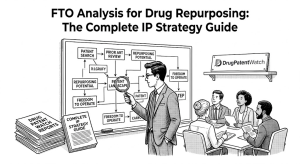
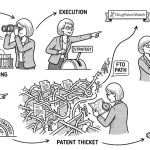
Drug repurposing has a dirty secret. For every sildenafil-to-Viagra success story, there are dozens of ventures that got five years and $50 million into development before a patent holder sent a cease-and-desist letter that ended the program overnight. The failure mode is almost always the same: an incomplete Freedom to Operate (FTO) analysis, or none at all.
This guide is written for pharma IP teams, portfolio managers, R&D leads, and the business development professionals who have to make go/no-go calls with incomplete information. It covers the full scope of FTO methodology for drug repurposing—from initial claim mapping through jurisdiction-level risk stratification, patent thicket navigation, valuation of repurposed-use IP assets, and the evergreening tactics you will run into from incumbent originators.
The global drug repurposing market sat at approximately $30.6 billion in 2023 and is projected to reach $60+ billion by 2030, growing at a CAGR just above 10%. That growth rate has attracted originators who are actively building secondary patent estates around approved compounds to capture exactly that value. Understanding the FTO terrain is not background preparation for a repurposing program—it is a core commercial decision.
Part I: What FTO Analysis Actually Is (and What It Is Not)
The Legal Mechanics of Freedom to Operate
FTO analysis is a structured legal and technical assessment of whether a specific commercial activity—manufacturing, using, selling, or importing a compound for a defined new indication—can occur without infringing valid, enforceable patent claims held by third parties. It is distinct from patentability analysis (which asks whether your invention is novel and non-obvious), from prior art searching (which maps the technical field broadly), and from patent landscaping (which describes the competitive IP terrain without rendering a freedom opinion).
An FTO opinion has a specific legal weight. In U.S. patent litigation, a written FTO opinion obtained before the alleged infringement began can negate a finding of willful infringement under 35 U.S.C. § 298 and substantially limits enhanced damages exposure under 35 U.S.C. § 284. A documented FTO process also shapes how a plaintiff frames an inducement-to-infringe claim under § 271(b), since induced infringement requires knowledge of the patent and knowledge that the induced acts constitute infringement.
In practice, most drug repurposing ventures do not pursue formal FTO opinions from outside patent counsel at the earliest exploratory stage—the cost runs from $25,000 to $150,000 or more per compound-indication pair depending on the size of the patent landscape. What they should do is conduct a rigorous internal preliminary FTO assessment using structured methodology before committing meaningful development resources, then commission a full formal opinion at the IND-filing stage or before any licensing or partnership discussions that involve IP representations and warranties.
Why Drug Repurposing Creates Distinctive FTO Complexity
A new chemical entity (NCE) program starts with a compound that is, by definition, not yet patented by anyone else. The FTO question focuses primarily on method-of-use claims and formulation claims covering related compounds or the target pathway. Drug repurposing programs operate in a fundamentally different legal environment. The compound is known. It often has an extensive patent history covering its original indication. Secondary patents may have been filed years or decades after the original compound patent, covering downstream applications including some of the very indications a repurposing team is now investigating.
The compound patent on the original indication may have expired completely, giving the repurposing team no exclusivity problem on the molecule itself. But a holder of a valid method-of-use patent covering the new indication can still block the repurposing team’s commercial activity even when the compound is freely accessible. This is the core FTO trap in drug repurposing: the molecule is free; the use is not.
Complicating this further, originators and academic medical centers have become sophisticated about filing method-of-use patents on off-patent compounds. Johns Hopkins, Stanford, and other research universities, alongside specialty pharma companies running indication expansion programs, have assembled substantial patent portfolios around off-label uses of established molecules. A team repurposing metformin for cancer prevention, thalidomide analogs for inflammatory conditions, or low-dose naltrexone for autoimmune indications will encounter patent estates filed well after the compound’s original exclusivity period ended.
The IP Valuation Dimension: Why FTO Has Financial Consequences
FTO analysis is not simply a legal compliance exercise. For portfolio managers and investors, the FTO outcome is a primary input into the risk-adjusted net present value (rNPV) calculation for any repurposing asset.
Consider the structure of IP value in a repurposing program. If an FTO assessment finds that a new method-of-use patent is valid and infringed by the proposed commercial activity, the team faces four options: redesign the program to avoid the claim (reducing its commercial scope), challenge the patent validity through an inter partes review (IPR) petition at the USPTO or opposition at the EPO, negotiate a license (adding royalty burden and transaction costs), or abandon the indication. Each of these has a quantifiable cost that must be modeled before, not after, the FTO gap is discovered.
A license for a method-of-use patent on a repurposed compound typically carries a royalty rate of 3% to 8% of net sales depending on the strength of the IP position and the negotiating leverage of the parties. If the compound is targeting a $500 million annual market, a 5% royalty represents $25 million per year in cash flows redirected from equity holders to the licensor. Discounted over the patent term at a typical pharma discount rate, that represents $150 to $200 million in present value erosion. That number belongs in the deal model before term sheets are exchanged.
For institutional investors conducting due diligence on a repurposing-stage biotech, the FTO status of core assets is a material valuation input. An unresolved FTO gap in a lead asset is a latent liability that sophisticated investors will mark down heavily or require escrow. A clean FTO opinion with documented analysis and outside counsel sign-off supports a higher equity valuation and reduces the risk of post-close indemnification claims.
Key Takeaways: FTO Foundations
FTO analysis for drug repurposing is legally distinct from patentability work and carries direct financial consequences for asset valuation. The compound being off-patent does not make the indication free to use. Preliminary internal FTO assessments should precede material resource commitment, and formal legal opinions should be in place before IND filing or any IP-representation-bearing transaction. Every identified FTO gap has a quantifiable cost that belongs in the asset’s rNPV model.
Part II: Building the Patent Landscape — Methodology That Holds Up
Defining Scope Before Searching
Every FTO analysis begins with precise scope definition, and imprecision here propagates through every subsequent step. For a drug repurposing program, scope definition requires specifying the compound at multiple levels of chemical specificity, the proposed new indication at the mechanistic and clinical level, the manufacturing process and formulation pathway, the dosing regimen being developed, and the geographic markets targeted for commercialization.
Each of these dimensions opens a separate but related set of patent claims that must be evaluated. A team repurposing a known kinase inhibitor for a new tumor type must consider compound claims on the molecule and any active metabolites, formulation patents covering the specific salt form or polymorphic form being used, method-of-use claims covering the new tumor type or the mechanistic pathway, process patents covering the synthetic route, and combination patents if the program contemplates co-administration with another therapeutic.
Geographic scope determines jurisdictional coverage. The U.S., EU (examined through national patent offices plus the EPO), Japan, China, and, for commercial-stage assets, Australia and Canada represent the primary markets for most programs. India and Brazil carry special significance in the global generics context—patent enforcement in these jurisdictions follows different rules, and the FTO picture in a country like India, where compulsory licensing provisions under the Patents Act 1970 are more practically accessible, looks materially different from the U.S.
Constructing a Search Strategy: Boolean Logic, CPC Codes, and Chemical Structure Search
A thorough pharmaceutical FTO search requires layering multiple search modalities. Keyword and Boolean searching against patent titles, abstracts, and claim text is the entry point but insufficient as a standalone approach. Patent drafters are trained to use broader language in claims than in the specification, meaning that a patent covering ‘phosphodiesterase-5 inhibitors for treating pulmonary hypertension’ will be found by keyword search, but a patent covering ‘compounds of formula I wherein R1 is selected from…’ that happens to read on your specific compound requires structure-based searching to identify.
The Cooperative Patent Classification (CPC) system provides the most granular pharmaceutical classification currently available. CPC class A61K covers pharmaceutical preparations; A61P covers the therapeutic use; C07D, C07C, and the broader C07 class cover organic chemistry by compound type. A credible FTO search for a small molecule repurposing program should cover relevant CPC subclasses across all major patent offices, combined with keyword Boolean searches, InChI/InChIKey structure searches through databases like Reaxys or SciFinder, and Markush structure searches for relevant chemical families.
For biologics or peptide-based repurposing programs, sequence-based searching through BLAST against patent sequence databases becomes essential. WIPO’s PatentScope includes SEQ ID searching. Any biologic repurposing program that skips sequence-level search is operating blind on the most legally consequential dimension of its IP risk.
Commercial databases each have specific coverage advantages. Derwent Innovation (Clarivate) has the most comprehensive global coverage and robust family-linking, which is critical when the same patent family has different claim scopes in different jurisdictions. Orbit Intelligence (Questel) has strong analytics and is widely used for visualization of patent landscapes. PatSnap has grown its AI-assisted claim mapping features and has become a serious tool for preliminary FTO work. CAS SciFinder-n provides the most thorough chemical structure and reaction database integration.
DrugPatentWatch provides a pharma-specific layer that general patent databases lack: Orange Book patent listings mapped to approved products, Paragraph IV filing history, patent term extension records, and supplementary protection certificate (SPC) data for European markets. For a drug repurposing program centered on an already-approved compound, this data immediately identifies which specific patents have been Orange Book-listed by the originator, how many Paragraph IV challengers have targeted them, and what litigation outcomes have resulted. A compound with ten Paragraph IV filings against its Orange Book patents, several resulting in successful validity challenges, carries a materially different FTO risk profile than one with no challenge history.
Claim Mapping: The Technical Core of FTO Analysis
Identifying potentially relevant patents is the search stage. Determining whether those patents actually present a freedom-to-operate problem requires claim mapping—a structured, element-by-element comparison of the patent’s independent claims against the proposed commercial activity.
Independent claims define the outer boundaries of patent protection. Dependent claims narrow those boundaries by adding additional limitations. The first FTO question is whether each element of an independent claim is met by the proposed activity. Under the doctrine of literal infringement, a claim is infringed only if every element of the claim is present in the accused activity. Under the doctrine of equivalents, a claim element may be infringed if the accused activity performs substantially the same function in substantially the same way to achieve substantially the same result, even without literal element correspondence.
Claim construction—determining the legal meaning of each claim term—is the predicate step before element-by-element mapping. In the U.S., claim construction follows the framework established in Phillips v. AWH Corp. (Fed. Cir. 2005): claim terms receive their plain and ordinary meaning to a person of ordinary skill in the art (POSITA) at the time of the invention, as informed by the intrinsic record (claims, specification, prosecution history) and, secondarily, extrinsic evidence (dictionaries, expert testimony). The prosecution history is often the most valuable narrowing tool. A patentee who distinguished prior art during prosecution by narrowing a claim term is estopped from recapturing the excluded subject matter under the doctrine of prosecution history estoppel.
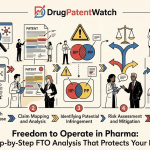
A rigorous claim map for an FTO analysis should be formatted as a structured matrix: the claim elements in rows, the proposed commercial activity’s features in columns, and a cell-by-cell assessment with citations to supporting technical data. This matrix format does two things: it produces a defensible, auditable record of the analysis methodology, and it forces the analyst to confront each element explicitly rather than reaching a global gestalt conclusion that may overlook a single critical element.
Patent Validity: FTO Is Not Just About Infringement
A patent cannot block your commercial activity if it is invalid. FTO analysis should include a preliminary validity assessment for every patent identified as presenting a potential infringement risk. The major grounds for patent invalidity under U.S. law—35 U.S.C. §§ 102 (novelty), 103 (obviousness), and 112 (written description and enablement)—each have direct application in the pharmaceutical context.
Section 102 anticipation challenges in drug repurposing commonly arise from prior art that discloses the same compound-indication combination, even if no one recognized the therapeutic significance at the time. Databases like MEDLINE, Embase, the Merck Index, and pharmaceutical reference compendia going back decades are productive prior art sources for compound-use combinations. An off-label use documented in case reports from the 1980s before a method-of-use patent was filed in 2005 is potentially invalidating prior art.
Section 103 obviousness challenges depend on whether the claimed combination or use would have been obvious to a POSITA at the time of the invention. In the pharmaceutical context, the Federal Circuit has held that structural similarity between a claimed compound and prior art compounds can give rise to a prima facie case of obviousness, rebuttable by unexpected results data. For method-of-use claims, the question is whether a POSITA would have been motivated to try the claimed use with a reasonable expectation of success based on the prior art state of the science.
Section 112 enablement and written description challenges have become particularly potent against broad composition-of-matter claims following the Federal Circuit’s 2023 decision in Amgen Inc. v. Sanofi, which the Supreme Court affirmed unanimously. The Court held that Amgen’s broadly claimed genus of PCSK9-inhibiting antibodies was not enabled because the patent specification did not teach how to make and use the full scope of the claimed antibody class. While the case directly concerned biologic antibody patents, its reasoning extends to any claim that asserts functional genus coverage without sufficient species-level examples to allow a POSITA to reach the full scope of the claims without undue experimentation.
For repurposing teams, this means that broad method-of-use patents claiming ‘treatment of any cancer’ or ‘treatment of any inflammatory disease’ with a specific compound are now more vulnerable to § 112 enablement challenges than they were before Amgen v. Sanofi. A patent limited to a specific cancer type or specific inflammatory condition, well-supported by data in the specification, is more defensible.
Key Takeaways: Building the Patent Landscape
FTO search requires parallel modalities: Boolean keyword, CPC classification, chemical structure (including Markush), and for biologics, sequence-based search. Claim mapping is an element-by-element exercise, not a holistic impression. Prosecution history estoppel frequently narrows patent scope well below the claim language’s apparent breadth. Every patent identified as an infringement risk warrants a preliminary validity assessment—patent invalidity is a complete FTO defense.
Part III: The Drug Repurposing Patent Landscape — Specific Terrain and Obstacles
Secondary Patent Estates: How Originators Protect Off-Patent Molecules
Understanding the IP architecture that originators build around approved compounds is essential context for any repurposing program. The compound patent covering a small molecule typically has a 20-year term from filing, with a practical market exclusivity period shortened by the time consumed in development and regulatory review. Patent term extensions (PTEs) under 35 U.S.C. § 156 in the U.S. and supplementary protection certificates (SPCs) in the EU can extend exclusivity by up to five years, partially compensating for regulatory review time. Even with these extensions, most compound patents expire 10 to 14 years after approval, leaving a substantial post-expiration commercial lifetime during which the molecule is accessible to repurposers and generic manufacturers alike.
Originators and their licensing partners respond by constructing secondary patent estates that do not rely on the original compound patent. These secondary estates are the primary FTO risk terrain for repurposing programs targeting off-patent molecules. The tactics are well-documented and deliberate.
Formulation patents cover new salt forms, polymorphic forms, co-crystals, prodrugs, controlled-release formulations, and combination products that incorporate the off-patent molecule. The regulatory pathway for approval of a repurposed drug typically requires demonstrating bioequivalence or clinical efficacy with a specific formulation, and if that formulation is patented, the repurposer faces an FTO problem even though the active molecule is free.
Method-of-use patents covering new indications are the most direct FTO obstacle for repurposing programs. These are filed as continuation applications or independent applications as new clinical data emerges. A particularly aggressive evergreening tactic involves filing method-of-use patents on uses that are widely practiced off-label before formal clinical development begins, attempting to capture patent rights on empirical clinical practice. These patents are vulnerable to prior art challenges, but the repurposing team must identify and challenge them proactively rather than discovering them post-launch.
Dosing regimen patents claim specific dose ranges, dosing intervals, or patient stratification criteria as patentable elements of a method-of-treatment claim. The Federal Circuit’s decision in Idenix Pharmaceuticals LLC v. Gilead Sciences Inc. (2019) tightened enablement requirements for nucleotide chemistry patents, while cases like Warner-Chilcott Co. v. Teva Pharmaceuticals USA (D. Del. 2014) illustrated how dosing patents can survive obviousness challenges when the claimed regimen produces unexpected clinical outcomes. These patents frequently appear in Orange Book listings for approved products with method-of-use protection.
Patient selection and biomarker patents cover methods of identifying which patients respond to a treatment. These have become a major secondary patent category as precision medicine has expanded the clinical development model. A patent covering ‘treatment of EGFR-mutant non-small cell lung cancer’ with a compound is legally distinct from a patent covering ‘treatment of lung cancer’ with the same compound, and a repurposing program that has navigated the broader claim may still infringe the narrower biomarker-stratified claim if its proposed indication overlaps.
Case Study: Thalidomide, Celgene, and the IP Architecture of a Successful Repurposing
Thalidomide’s commercial trajectory offers a detailed study in how secondary IP rights can be built around an off-patent compound to generate substantial and defensible exclusivity.
Thalidomide was first synthesized by Chemie Grunenthal in the 1950s. Its original compound patent expired decades before Celgene pursued its multiple myeloma program. The molecule itself was in the public domain. Celgene’s path to $8 billion in Thalomid sales—and subsequently to its acquisition by Bristol-Myers Squibb for $74 billion in 2019, a deal in which the thalidomide-class intellectual property constituted a material portion of the valuation—was built on a secondary IP estate that included several distinct elements.
The Thalomid REMS program (Risk Evaluation and Mitigation Strategy), known as STEPS (System for Thalidomide Education and Prescribing Safety), was patent-protected as a system for preventing fetal exposure. Celgene held patents covering the specific protocols, documentation requirements, and distribution controls. These REMS patents created a regulatory-plus-IP enforcement mechanism that was distinct from the therapeutic use patents and had a litigation history of its own.
Celgene’s method-of-use patents covered thalidomide in combination with dexamethasone for multiple myeloma, and subsequently in combination with lenalidomide regimens. These were not simply ‘use for cancer’ claims; they covered specific regimens with specific dosing and combination partners that the clinical evidence supported. The prosecution history of these patents shows careful claim drafting that incorporated specific clinical endpoints and patient population definitions, limiting the claims’ breadth but also strengthening their validity against obviousness attacks.
The lesson for repurposing programs is that a compound being off-patent tells you almost nothing about whether the most commercially valuable methods of using it are also free. For any compound with a history of off-label clinical use or ongoing academic investigation, the secondary patent estate is the primary FTO concern.
Case Study: Metformin’s Expanding Indication Landscape
Metformin, the biguanide approved in the 1950s (marketed in the U.S. since 1994 under the brand Glucophage by Bristol-Myers Squibb, now off-patent), has become a major target for repurposing programs across oncology, anti-aging research, and cardiovascular indications. The compound patent expired long ago. The metformin FTO landscape illustrates the density of secondary patent activity around a high-profile off-patent molecule.
A patent landscape search on metformin in oncology applications conducted in 2024 returns hundreds of patent families from academic medical centers, specialty pharma companies, and biotech firms. These cover metformin combinations with checkpoint inhibitors, metformin in specific genomically-defined cancer subtypes, extended-release metformin formulations designed for tolerability in non-diabetic patients, and metformin in combination with caloric restriction protocols for longevity applications. Many are held by institutions rather than commercial entities, creating a licensing landscape that requires engagement with university technology transfer offices rather than pharma IP departments.
The key FTO question for a metformin oncology program is not ‘is metformin free to use’ but rather ‘does our specific proposed regimen, patient population, and combination strategy infringe any of the 200+ patent families in this space, and are those patents valid and enforceable?’ That question requires the full FTO methodology—search, claim mapping, validity analysis—and cannot be answered by observing that the compound itself is off-patent.
The Paragraph IV Landscape as an FTO Intelligence Source
Paragraph IV certifications, filed under 21 U.S.C. § 355(j)(2)(A)(vii)(IV) as part of an Abbreviated New Drug Application (ANDA), represent an invaluable intelligence source for FTO analysis. When an ANDA filer challenges an Orange Book-listed patent, the filer must provide detailed written notice to the patent holder explaining the bases for the invalidity and/or non-infringement contentions. This detailed notice, while not always publicly available in full, initiates litigation that generates publicly accessible court filings including claim construction briefs, validity contentions, and invalidity contentions supported by prior art.
For a drug repurposing team assessing FTO with respect to an originator’s method-of-use patents, reviewing the Paragraph IV litigation history against those same patents is often the most efficient way to identify the strongest invalidity arguments that have already been litigated, understand how courts have construed the key claim terms, and assess whether specific patents have survived validity challenges.
A patent that has survived multiple Paragraph IV challenges and favorable Federal Circuit review carries a materially different risk profile than a patent with no challenge history. DrugPatentWatch tracks Paragraph IV filing data mapped to specific drug products and Orange Book patents, making this intelligence directly accessible without exhaustive court docket research.
Key Takeaways: The Drug Repurposing Patent Terrain
Secondary patent estates—formulation, method-of-use, dosing regimen, patient selection, and REMS-related IP—are the primary FTO obstacles for repurposing programs targeting off-patent molecules. The Thalidomide/Celgene case shows how secondary IP created billions in enterprise value from a public-domain compound. Metformin oncology programs face a dense landscape of secondary patents from academic and commercial filers. Paragraph IV litigation history against a compound’s Orange Book patents is a high-value intelligence source for identifying likely invalidity arguments and understanding how courts have construed key claim terms.
Part IV: Jurisdiction-Level FTO Strategy
United States: The Orange Book, Patent Term Extensions, and Hatch-Waxman Mechanics
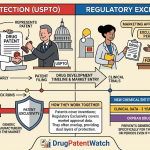
U.S. FTO for drug repurposing runs through three overlapping legal frameworks. The first is the Hatch-Waxman Act (Drug Price Competition and Patent Term Restoration Act of 1984), which governs the interaction between innovator patents and generic market entry for small molecule drugs. The second is the BPCIA (Biologics Price Competition and Innovation Act of 2009), which governs biosimilar market entry under a parallel but distinct framework. The third is the general patent litigation system under 35 U.S.C. et seq., which governs disputes not arising under Hatch-Waxman or BPCIA.
For small molecule repurposing, the most practically important Hatch-Waxman provisions for FTO purposes are the Orange Book listing requirements and the 30-month stay triggered by a Paragraph IV challenge notification. An NDA holder must list in the Orange Book all patents that claim the drug or methods of using the drug for which a claim of patent infringement could reasonably be asserted against an unauthorized manufacturer. This listing obligation has been extensively litigated, and courts have repeatedly found that method-of-use patents must be listed if they cover an FDA-approved indication, not merely off-label uses.
Patent term extensions under § 156 can add up to five years of patent term to compensate for regulatory review time, subject to a cap on the extended term of 14 years from FDA approval. Supplementary Protection Certificates (SPCs) in the EU operate analogously but with different calculation mechanics. For a compound approaching the end of its original patent term, identifying whether any related patents have received PTEs or SPCs is critical to correctly mapping the effective exclusivity timeline.
Europe: SPCs, the Unitary Patent, and Article 3(c) Complexity
European FTO for drug repurposing requires navigating SPCs at the national level (with EU-wide harmonization through the SPC Regulation, now being reformed through the Unitary SPC proposal), the European Patent Convention’s patentability standards, and, for biologic-related repurposing, the EMA’s data exclusivity provisions under the 8+2+1 framework.
The most legally complex FTO question in Europe involves Article 3(c) of the SPC Regulation, which requires that the product covered by an SPC be ‘protected’ by the basic patent. The CJEU’s decisions in Teva UK v. Gilead (C-121/17, 2018) and subsequent cases have narrowed the definition of ‘protected’—a product must be identifiable specifically in the light of the subject matter claimed, applying a two-limb Teva test. This has invalidated several SPCs for combination products and has direct relevance for repurposing programs involving patented combination regimens.
The implementation of the Unitary Patent system from June 2023, covering participating EU member states through a single European Patent with Unitary Effect and the Unified Patent Court (UPC) as a pan-European litigation venue, materially changes the FTO litigation risk profile for European programs. A patent holder can now obtain pan-EU injunctive relief from the UPC in a single proceeding rather than litigating country-by-country. The UPC Central Division also provides a venue for revocation actions with EU-wide effect, which means a successful patent challenge through the UPC can clear the field across all participating states simultaneously.
Japan, China, and Emerging Markets: Differentiated Risk Profiles
Japan’s patent system requires specific assessment for drug repurposing programs targeting that market. Japanese method-of-use claims for pharmaceutical purposes (‘use claims’) have historically been interpreted more narrowly than U.S. or European equivalents, and the scope of permissible method-of-treatment claims has evolved through Japan Patent Office practice. The JPO’s examination guidelines distinguish between claims covering a compound for a specific therapeutic use and claims covering a method of treating a patient, with different patentability standards applying to each.
China has become the most active patent market for new pharmaceutical filings outside the U.S., and its National Medical Products Administration’s drug patent linkage system (implemented under the 2021 Drug Administration Law amendments) now mirrors the Hatch-Waxman framework with a 45-day response window and potential 9-month stay of generic approval. For any repurposing program targeting the Chinese market, understanding which patents have been listed in China’s equivalent of the Orange Book is now a mandatory FTO step.
India’s Section 3(d) of the Patents Act 1970 directly affects FTO for repurposing programs. Section 3(d) prohibits grant of new-use patents for known substances unless the new use demonstrates significantly enhanced efficacy. This provision means that many of the secondary method-of-use patents that create FTO obstacles in the U.S. and Europe are simply not patentable in India, creating a differentiated FTO landscape. A repurposing program blocked from commercialization in the U.S. by a valid method-of-use patent may have a clear path in India through a local manufacturing partnership.
Key Takeaways: Jurisdiction-Level FTO
FTO analysis must be conducted jurisdiction-by-jurisdiction, not extrapolated from U.S. findings. U.S. Orange Book listings and Paragraph IV history are primary intelligence sources. European SPCs must be assessed under the CJEU’s Teva test, and the UPC introduces new pan-EU infringement and revocation risk. India’s Section 3(d) frequently clears FTO obstacles that exist in Western markets, creating selective commercialization opportunities.
Part V: Managing and Resolving FTO Gaps
Design-Around Strategies: When the Claim Can Be Navigated
When FTO analysis identifies a patent that presents an infringement risk, the first strategic question is whether the program can be redesigned to fall outside the patent’s claim scope while retaining the desired therapeutic and commercial profile. This is the ‘design-around’ approach, and in drug repurposing it has several practical dimensions.
The most straightforward design-around applies when the blocking patent covers a specific formulation. If a method-of-use patent is tied to a specific extended-release formulation of the compound, developing an immediate-release formulation (if the clinical data supports equivalent efficacy) sidesteps the formulation patent while preserving the indication. The clinical and development costs of this approach must be weighed against the cost of licensing or challenging the blocking patent.
Patient population restriction is a design-around relevant to biomarker or patient-selection patents. If a broad repurposing program would infringe a claim covering ‘all cancer patients’ but a narrower program targeting a specific genomic subtype would not, narrowing the clinical program may clear the FTO problem. The commercial tradeoff is obvious—a smaller addressable market—but it may be the operationally cleanest path when a broader challenge would be protracted and costly.
Dosing regimen design-arounds are common in the context of dosing patents. If a patent claims a specific dose range of 100 to 500 mg/day, developing outside that range may constitute a literal non-infringement, subject to the doctrine of equivalents analysis. Clinical data supporting efficacy at the non-infringing dose is required to make this design-around commercially viable, and it may require additional clinical development investment.
Inter Partes Review and Patent Opposition: When Validity Is the Lever
When a design-around is not feasible, challenging the blocking patent’s validity through post-grant administrative proceedings is often faster and less expensive than district court litigation. The IPR process at the USPTO, established by the America Invents Act (AIA) and governed under 35 U.S.C. §§ 311-319, allows a third party to challenge the validity of issued claims on § 102 and § 103 grounds (prior art-based challenges only) within one year of being served with an infringement complaint, or at any time if no litigation has been initiated.
IPR statistics through 2024 show that approximately 80% of petitions that reach a final written decision result in at least one challenged claim being cancelled or amended. For pharmaceutical method-of-use patents, the prior art available from academic literature, clinical trial registries, and prior off-label use often provides strong § 102 and § 103 grounds. The USPTO’s Patent Trial and Appeal Board (PTAB) has been receptive to prior art challenges against broad pharmaceutical method-of-use patents.
The coaleral estoppel risk of IPR must be factored into the decision. A petitioner who raises an invalidity ground in an IPR and loses is estopped from raising that same ground in subsequent district court litigation. This means IPR strategy requires careful prior art selection—the IPR petition should include the strongest available prior art because any ground not raised is effectively waived for later litigation.
Post-Grant Review (PGR) at the USPTO allows broader grounds of challenge including § 112 issues, but must be filed within nine months of patent issuance. Given the post-Amgen v. Sanofi heightened § 112 enablement scrutiny, PGR petitions based on enablement grounds are increasingly attractive for broad pharmaceutical genus claims.
When a blocking patent is valid and cannot be designed around, licensing is the path to clearance. FTO-driven licensing negotiations differ structurally from standard pharma licensing deals because the licensor (patent holder) holds a blocking position, shifting negotiating leverage in their favor.
Royalty rates for FTO licenses on pharmaceutical method-of-use patents typically range from 3% to 10% of net sales, depending on the criticality of the patent to the commercial program and the alternatives available to the licensee. A patent that is the sole blocker for a billion-dollar indication commands meaningfully higher royalties than one of several patents where design-around or challenge is viable. Field-of-use restrictions are common—licenses covering a specific indication, patient population, or geographic market leave the licensor’s rights intact outside the licensed field.
Milestone-based payments, particularly for early-stage repurposing programs where the commercial potential is unproven, often allow the licensor to participate in upside while the licensee manages the development risk. A structure with modest upfront fees, clinical milestone payments, and a royalty that steps up on reaching commercial scale aligns interests reasonably well.
Academic institution licensors—universities, research hospitals, and NIH—follow institutional licensing policies that are often less flexible than commercial licensors on royalty economics but more open to sublicensing arrangements and field-of-use carve-outs. NIH Cooperative Research and Development Agreements (CRADAs) can provide both access to federally owned patents and funding support for repurposing programs on compounds where NIH holds method-of-use IP.
Key Takeaways: Managing FTO Gaps
Three primary paths address an identified FTO gap: design-around (clinical and regulatory cost), validity challenge through IPR or opposition (strategic prior art selection required, with estoppel risk), and licensing (royalty economics that must be modeled into the asset valuation). Each path has a different cost profile and timeline. The choice depends on the strength of the blocking patent, the commercial importance of the indication, and the available prior art. Identifying the optimal path is itself a strategic decision that requires legal, clinical, and financial input simultaneously.
Part VI: FTO Intelligence Tools — A Technical Assessment
Database Coverage and Limitations
No single patent database covers the full global patent estate with equal depth, and the FTO analyst must understand where each database’s coverage is strong versus where it degrades. The major differences across databases fall along several axes: jurisdictional coverage, publication lag (how quickly new publications appear), family-linking accuracy (correctly grouping national filings from the same international application), and full-text claim availability (some databases index only title and abstract, missing claim-level content).
USPTO PatFT and AppFT provide direct access to issued U.S. patents and published applications with full text search. Coverage is complete for U.S. publications but the search interface is limited by modern standards. The USPTO’s Public PAIR and Patent Center systems provide prosecution history documents including office actions, applicant responses, and interview summaries—the prosecution history record essential for claim construction analysis.
Espacenet (EPO) provides free access to over 145 million patent documents from more than 100 patent offices. The Advanced Search function supports CPC classification search, citation search, and family search through the DOCDB patent family database. Espacenet’s full-text coverage is strong for European and PCT applications but inconsistent for older Japanese, Chinese, and emerging market patents.
WIPO PATENTSCOPE covers PCT international applications with full-text search in multiple languages. For pharmaceutical repurposing programs with international market ambitions, PATENTSCOPE’s coverage of PCT applications filed before national phase entry is often the earliest point at which a new patent filing becomes searchable.
Google Patents has the most accessible interface and strong OCR-based full-text search across a large global corpus. Its family-linking is less reliable than Derwent or Orbit for complex multinational pharmaceutical patent families. It is a useful spot-check tool but not sufficient for comprehensive FTO search.
DrugPatentWatch’s specific value for pharmaceutical FTO lies in its Orange Book integration, FDA regulatory data mapping, Paragraph IV litigation tracking, and patent expiration date calculations that incorporate PTEs and SPCs. This regulatory-to-patent linkage is not available from general patent databases and is directly relevant to the FTO question for programs involving approved compounds or compounds with Hatch-Waxman-relevant patent histories.
AI-Assisted FTO Tools: What They Can and Cannot Do
Machine learning-based claim mapping and patent relevance scoring tools have entered the pharma IP market over the past five years, and their capabilities have expanded substantially. PatSnap’s AI claim analysis, Specifio’s automated claim drafting tools, and Goldfire’s semantic patent search each apply NLP models trained on patent corpora to accelerate the search and preliminary relevance-filtering stages of FTO analysis.
These tools can reduce the time required to narrow a 500-patent search result set to a manageable set of 20 to 30 high-relevance patents for detailed claim mapping review. They are less reliable for nuanced claim construction analysis that requires understanding prosecution history, assessing doctrine of equivalents arguments, or evaluating the claim scope implications of specific legal precedents. They have no ability to assess validity independently—they can identify relevant prior art based on semantic similarity but cannot evaluate the legal significance of that prior art under § 102 or § 103 frameworks.
The appropriate role for AI-assisted tools in FTO analysis is as a precision-filtering layer on top of comprehensive traditional search, not as a replacement for claim-level legal analysis. Every AI-flagged relevance assessment requires human expert review before it supports a risk determination in a formal FTO opinion.
Key Takeaways: FTO Intelligence Infrastructure
Comprehensive FTO search requires parallel use of at least three to four databases with distinct coverage profiles. DrugPatentWatch provides regulatory-to-patent linkage unavailable from general databases, critical for compounds with Orange Book histories. AI claim mapping tools accelerate the filtering stage but cannot replace claim construction and validity analysis. Full prosecution history review is mandatory for every patent identified as presenting an infringement risk—claim scope is almost always narrower than the claim text suggests when prosecution history is examined.
Part VII: Investment Strategy — FTO as a Value Driver
How Institutional Investors Should Assess FTO in Repurposing Assets
Institutional investors evaluating repurposing-stage biotechs need a structured approach to FTO risk that goes beyond confirming that an FTO search was conducted. The relevant questions for due diligence are whether the scope of the FTO analysis matches the proposed commercial program, whether identified risks have been quantified and modeled, how the company’s response strategy to any gaps is structured, and whether the FTO opinion reflects current patent status (patents expire, get challenged, and new applications publish continuously).
A clean FTO opinion dated 18 months before a Series B close is insufficient. Patent landscapes evolve—new continuations publish from the same family, IPR decisions invalidate or confirm claims, district courts issue claim construction rulings. Due diligence should request both the original FTO opinion and evidence that it has been monitored and updated as the patent landscape shifted.
For valuation purposes, a quantified FTO gap belongs in the rNPV model as a probability-weighted liability. If a program has a 30% probability that a blocking patent will be found valid and infringed, and the license cost under that scenario is $25 million in milestone payments plus a 6% royalty, those expected values reduce the asset’s net present value before the probability adjustment is applied to the clinical development risk. Investors who conflate IP risk with clinical risk are systematically overvaluing repurposing assets with unresolved FTO gaps.
IP Valuation of Repurposed-Use Patents as Portfolio Assets
A drug repurposing program that successfully navigates FTO and secures method-of-use patent protection on the new indication creates a patent estate with quantifiable value. The standard approaches to pharmaceutical patent valuation—income approach (discounted cash flows from patent-protected revenues), market approach (comparables from precedent licensing transactions), and cost approach (cost to replicate the protection)—each apply to repurposed-use method-of-use patents, with specific adjustments for the repurposing context.
The income approach for a method-of-use patent requires estimating the incremental revenue attributable to the patent’s exclusivity (the ‘but for’ revenue premium relative to a world where generic or biosimilar competition exists) and discounting that stream at a risk-adjusted rate that incorporates both development risk and IP challenge risk. For a compound in Phase 2 development with a clearly differentiated indication, this calculation may not be feasible until clinical data matures. For an approved product with established market share, the income approach produces more reliable valuations.
Licensing comparables for method-of-use patents on off-patent small molecules typically cluster around royalty rates of 3% to 7% of net sales for single-indication licenses without exclusivity, stepping up to 7% to 15% for exclusive licenses in significant commercial indications. The BioPharma Licensing Association’s annual survey and Medius Associates’ pharma deal database provide benchmarks. Applied royalty rates in specific deals from SEC filings (which disclose material licensing agreements in 10-K and 8-K filings) provide the most precise transaction-level comparables.
Patent portfolio valuation at the company level aggregates individual asset values with adjustments for portfolio breadth (a company with method-of-use coverage across five indications for the same compound commands a higher valuation than one with a single indication) and exclusivity depth (compound plus formulation plus indication plus dosing regimen coverage is more valuable than method-of-use alone).
Strategic M&A Considerations: FTO Due Diligence in Acquisitions
Pharmaceutical M&A involving repurposing assets requires FTO due diligence at a level of depth that exceeds standard patent ownership confirmation. The acquiring party inherits any unresolved FTO gaps and associated litigation risk. Post-close litigation discoveries—particularly where the target company’s FTO analysis was superficial or based on outdated search results—have led to post-close indemnification claims that consumed significant portions of the deal value.
IP representations and warranties in pharmaceutical M&A transactions should include specific representations that a current FTO analysis has been conducted by qualified patent counsel, that all blocking patents identified in the analysis have been disclosed, and that no FTO gaps exist that would prevent commercialization in the target markets. Breach of these representations creates indemnification rights for the acquirer, though recovering on those rights post-close is expensive and relationship-damaging.
Reps and warranty insurance in pharmaceutical M&A has become increasingly available and is now routinely placed in deals above $100 million. Coverage for IP-specific representations, including FTO-related reps, requires the insurer’s technical review of the FTO analysis and the insurability of any disclosed gaps. An acquiring company that has conducted its own independent FTO assessment—not merely relying on the target’s prior work—is better positioned to negotiate insurance coverage terms and is less exposed to gaps that the target’s analysis missed.
Key Takeaways: Investment Strategy and FTO
Institutional investors should treat unquantified FTO gaps as latent liabilities that reduce rNPV before clinical probability adjustments. FTO opinions have a shelf life; due diligence should confirm currency, not just existence. Method-of-use patents on repurposed indications have quantifiable value through income and market approaches, with licensing comparables typically in the 3% to 15% royalty range depending on exclusivity structure. Pharmaceutical M&A acquirers should conduct independent FTO assessments rather than relying on target-company prior work, and reps and warranty insurance coverage should specifically address FTO representations.
Part VIII: FTO Process Architecture for Repurposing Organizations
Building an Internal FTO Function
Organizations running multiple repurposing programs benefit from institutionalizing FTO as a recurring process rather than a project-level event. This means building standardized search protocols, claim mapping templates, risk classification frameworks, and monitoring workflows that ensure consistent quality across the portfolio.
A four-tier risk classification system is commonly used in pharma IP departments. Tier 1 (Clear): no potentially infringing patents identified in relevant jurisdictions, or all potentially relevant patents are expired. Tier 2 (Monitor): potentially relevant patents identified but with substantial validity weaknesses or limited claim scope; monitor for status changes without immediate action required. Tier 3 (Act): valid patents with claims that present a material infringement risk; design-around or licensing strategy required before advancing the program. Tier 4 (Stop or Escalate): valid, broad, and apparently strong blocking patents where no clear design-around exists and licensing terms are prohibitive; program advancement requires executive decision with full legal and commercial input.
This classification system should be applied at defined program milestones—initial compound selection, IND filing, Phase 2 initiation, Phase 3 initiation, and NDA/BLA submission—with a triggered re-analysis whenever a material patent landscape change occurs in a relevant patent family.
The FTO-IP Strategy Interface: Using FTO Data to Build Your Own Patent Estate
FTO analysis generates a detailed map of the existing patent landscape that can directly inform the repurposing team’s own patent filing strategy. White space in the claim landscape—areas where the FTO search reveals gaps in existing patent coverage—identifies filing opportunities. A repurposing team that identifies a new clinical application not covered by existing patents should file its own method-of-use application before publishing clinical data or presenting at conferences, preserving patent rights under the U.S.’s one-year grace period while protecting against prior art creation by the disclosure itself.
The patent filing strategy for a repurposing program should target at minimum the new indication by method-of-use, any formulation or delivery innovations developed to optimize the compound for the new indication, any biomarker-based patient selection innovations that differentiate the clinical program, and any combination regimens demonstrated to have synergistic activity. This multi-layered filing approach creates the secondary patent estate that will protect the commercial program and provide licensing and transactional value.
Continuation and continuation-in-part applications allow the prosecution of new claims as new clinical data develops, keeping the patent estate current with the evolving clinical program. The original application’s filing date provides the priority date for continuation claims, maintaining a priority advantage over competitors who begin development later.
Key Takeaways: FTO Process Architecture
Institutionalizing FTO as a milestone-triggered portfolio process is more efficient and more defensible than conducting ad hoc assessments at the project level. A four-tier risk classification system aligns remediation decisions with commercial priorities. FTO landscape data directly informs the repurposing program’s own patent filing strategy, turning a defensive exercise into an offensive IP development tool. The earliest filing date possible for method-of-use, formulation, and combination claims should be pursued as soon as patentable inventions are identified.
Conclusion: FTO as Core Commercial Strategy
Drug repurposing programs that treat FTO analysis as a compliance checkbox rather than a strategic tool consistently underperform relative to their clinical potential. The compound being off-patent does not clear the commercial path—secondary patent estates covering methods, formulations, dosing regimens, patient populations, and REMS systems can block commercialization just as effectively as a compound patent.
The teams that execute repurposing programs with the highest probability of commercial success are the ones that integrate FTO analysis into every major decision point: compound selection, indication prioritization, formulation design, clinical program design, geographic market selection, and partnership or licensing negotiations. They quantify FTO risk in financial terms and incorporate it into asset valuation models. They build their own patent estates on top of the landscape maps their FTO analysis creates. They monitor the landscape continuously rather than treating a single historical analysis as permanently valid.
The return profile of a well-executed repurposing program—50% lower development cost, 60% shorter development timeline, with the same peak revenue potential as an NCE in the right indication—makes it one of the most capital-efficient strategies in the pharmaceutical portfolio. Protecting that return profile through disciplined, comprehensive FTO practice is the non-negotiable infrastructure that makes the strategy work.
DrugPatentWatch provides pharmaceutical-grade patent intelligence including Orange Book mapping, Paragraph IV litigation data, patent expiration tracking with PTE and SPC adjustments, and competitive IP landscape analysis. Designed for pharma IP teams, portfolio managers, and R&D decision-makers who need current, actionable patent data.