1. The Patent Bargain, Recalibrated: What the Ruling Actually Did
On May 18, 2023, the U.S. Supreme Court issued a unanimous opinion in Amgen Inc. v. Sanofi, 598 U.S. 594 (2023), invalidating two Amgen patents covering its PCSK9-inhibiting antibody Repatha (evolocumab). The opinion, written by Justice Neil Gorsuch and joined without dissent, covered eleven pages. In terms of word count, it is one of the shorter patent opinions the Court has issued in decades. In terms of commercial consequence, it is the most significant biologic patent ruling since the Court’s 2013 decision in Association for Molecular Pathology v. Myriad Genetics.
What the Court did not do is often misunderstood. It did not create a new legal standard. It did not, as some early commentaries suggested, make broad genus claims categorically unpatentable. It did not rule that biologics deserve stricter treatment than other technologies. What it did was take a principle that has been in U.S. patent law since the 1850s, state it with unusual clarity, and apply it without apology to the highest-revenue sector of the pharmaceutical industry.
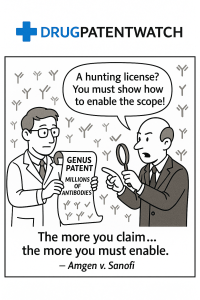
The core holding is this: a patent must enable a person of ordinary skill in the art (POSA) to make and use the full scope of what the patent claims. If the claim covers a large class of molecules, the specification must enable the entire class, not just the examples the inventor happened to make and test. Amgen’s specification disclosed the amino acid sequences of 26 specific antibodies and described two methods for generating additional ones. Its claims covered potentially millions of antibodies defined solely by their function. That gap, between 26 characterized examples and a functionally defined class of millions, was unbridgeable under the facts presented, and the Court said so clearly.
The commercial stakes framing the case are real. The global biologics market was approximately $390 billion at the time of the decision and is forecast to exceed $612 billion by 2030. An estimated $200-300 billion in annual branded biologic sales face biosimilar competition before 2030. The scope of biologic patent protection is not an abstract legal question for any company in this space; it is the primary determinant of when and how that competition arrives.
Key Takeaways: Section 1
The Amgen ruling applies a principle from 1854 case law. It changed nothing about the standard; it clarified that the standard applies fully to biologics.
Broad functional genus claims for antibodies, defined by what the antibody does rather than what its structure is, carry extreme invalidity risk under current USPTO and Federal Circuit interpretation.
The commercial consequence of the decision is asymmetric: it benefits biosimilar developers systematically and impairs innovators holding pre-2023 portfolios of functionally defined antibody claims.
2. PCSK9 Biology, Antibody Engineering, and Why Science Lost to Law
2.1 The LDL Receptor System and PCSK9 as a Target
Cardiovascular disease kills approximately 18 million people per year globally, and elevated LDL cholesterol is among its best-characterized modifiable risk factors. The biological mechanism that PCSK9 inhibitors exploit is specific: liver cells express LDL receptors on their surface, which capture circulating LDL particles and pull them into the cell for degradation. PCSK9 (proprotein convertase subtilisin/kexin type 9) is a serine protease that binds to LDL receptors and marks them for lysosomal degradation, reducing the pool of surface receptors available to clear LDL from circulation. More PCSK9 activity means fewer functioning LDL receptors, which means higher circulating LDL.
The therapeutic logic of blocking PCSK9 is direct: an antibody that prevents PCSK9 from binding to LDL receptors protects those receptors from degradation, increases LDL clearance, and reduces LDL plasma concentrations. Clinical trials for both Repatha and Praluent (alirocumab) demonstrated LDL reductions of 50-70% on top of statin therapy, and the FOURIER and ODYSSEY OUTCOMES trials respectively showed significant reductions in major adverse cardiovascular events.
The PCSK9 binding site that both companies targeted is the EGF-A-like domain of the LDL receptor. Amgen’s patents claimed antibodies that bound to specific amino acid residues on PCSK9, blocking the interaction between PCSK9 and the LDL receptor. The specific residues recited in the claims, drawn from a stretch of PCSK9’s extracellular domain, defined the claimed antibodies not by their structure but by where they landed on the target and what they prevented from happening.
2.2 Monoclonal Antibody Structure and the CDR Problem
A monoclonal antibody is a Y-shaped protein roughly 150 kilodaltons in size, composed of two heavy chains and two light chains held together by disulfide bonds. The specificity of an antibody for its antigen, the property that makes antibodies therapeutically useful, resides in the variable regions at the tips of the Y, specifically in six short loops called complementarity-determining regions (CDRs): three on the heavy chain variable domain (HCDR1, HCDR2, HCDR3) and three on the light chain variable domain (LCDR1, LCDR2, LCDR3).
HCDR3 is the longest and most structurally diverse CDR. It is also the primary determinant of antigen binding specificity in most antibodies. CDR3 sequences are generated by V(D)J recombination in B cells, producing near-limitless structural diversity. The theoretical CDR3 sequence space for human antibodies alone, when considering all combinations of V, D, and J gene segments plus junctional additions and deletions, encompasses somewhere between 10^15 and 10^18 distinct sequences.
The critical scientific fact the Court seized on is this: an antibody’s amino acid sequence does not predictably determine its three-dimensional structure, and its three-dimensional structure does not predictably determine its binding specificity. The relationship runs in both directions with significant noise. Changing a single amino acid in HCDR3 can eliminate binding entirely, shift binding to a different epitope, or, rarely, improve binding affinity. There is no reliable algorithm that translates ‘binds PCSK9 residues S153 and D374’ into ‘here is the structural family of sequences that will accomplish this.’ The Court quoted expert testimony from trial that accurately predicting how amino acid substitutions affect antibody structure and function would ‘get a Nobel Prize for somebody at some point’ but was not achievable at the time. That testimony came from 2014. The situation has changed somewhat since then, but it had not changed enough by 2023 to alter the Court’s analysis.
2.3 Amgen’s Discovery Process and Its Specification’s Limits
Amgen discovered its PCSK9-inhibiting antibodies the way most therapeutic antibodies were found in the 2000s: immunize mice with the target antigen or a relevant epitope fragment, harvest hybridomas, screen for binding, confirm functional activity (PCSK9 blocking and LDL receptor protection), then humanize the lead candidates. This process is effective but inherently empirical. It generates antibodies by random diversity and selection, not by rational design. The researcher does not know in advance which of thousands of hybridoma candidates will bind the desired epitope at useful affinity; the process involves making them all and measuring.
Amgen’s patent specification disclosed 26 antibodies found through this process. For two of these, the specification included X-ray crystallographic data showing the three-dimensional structure at the antigen-antibody interface. The specification described two methods for generating additional antibodies meeting the functional definition in the claims: a ‘roadmap’ directing a POSA to generate antibodies using standard immunization and hybridoma techniques and then screen them for the claimed binding and blocking functions, and a ‘conservative substitution’ approach directing a POSA to start with one of the 26 known antibodies and substitute amino acids one at a time, testing each variant.
The Court’s problem with both approaches was the same: neither teaches how to make a functional antibody meeting the claims. The roadmap points toward a process that will produce many candidates, most of which will not satisfy the functional requirements. The conservative substitution method is bounded by the 26 starting sequences and does not explain how to generate structurally diverse antibodies that fall outside the sequence space adjacent to those 26. Both approaches require substantial empirical work with unpredictable outcomes, and that, the Court held, is not enablement. That is a research program.
Key Takeaways: Section 2
The CDR structural diversity problem is not rhetorical. The theoretical sequence space for functional PCSK9-blocking antibodies spans a range that Amgen’s 26 examples cannot meaningfully represent.
A ‘roadmap’ to a trial-and-error screening process does not enable a genus; it describes how to conduct a research project that might or might not find additional members of the claimed class.
The ‘conservative substitution’ method has value for expanding sequence coverage around known binders, but it does not extend to structurally diverse antibodies across the full functional genus, which is what Amgen’s claims covered.
3. IP Valuation: Repatha, Praluent, and the $12 Billion Question Mark
3.1 Repatha’s Revenue Profile and Patent Position
Amgen’s Repatha (evolocumab) generated approximately $2.2 billion in global net product sales in 2024, a figure that has grown year over year as cardiovascular outcomes data have strengthened prescriber confidence and as payer coverage has expanded following price reductions Amgen implemented to counter coverage restrictions. Repatha’s commercial trajectory was materially affected by the Amgen v. Sanofi litigation itself: the original district court injunction blocking Praluent’s U.S. sale briefly gave Amgen a monopoly in the PCSK9 inhibitor class, but the Federal Circuit vacated that injunction within months.
Repatha holds a substantial patent portfolio. The composition-of-matter patent on evolocumab’s specific amino acid sequence, along with manufacturing process patents and formulation patents, remains in force. What the Supreme Court ruling specifically invalidated were the two functional genus patents, U.S. Patent Nos. 8,829,165 and 8,859,741, which had been Amgen’s primary tool for blocking not just Praluent specifically but any future PCSK9-blocking antibody from any developer.
The financial consequence of losing the genus patents was not immediate revenue impairment. Evolocumab’s own composition patents continue to protect Repatha from biosimilar competition on a separate timeline. The more significant consequence was the removal of a strategic perimeter. With the genus patents gone, any company can develop a PCSK9-blocking antibody without infringing Amgen’s remaining portfolio, provided the new antibody does not have the specific sequence of evolocumab. The market is now open for additional branded PCSK9 inhibitors, biosimilar versions of evolocumab, and biosimilar versions of alirocumab.
Amgen’s DCF-implied enterprise value for Repatha, using a 10-12% WACC and projecting revenue through anticipated composition patent expiration timelines, was materially reduced by the genus patent invalidation. Industry analysts estimated the genus patents, had they survived, could have extended Amgen’s effective PCSK9 inhibitor exclusivity by 5-7 years beyond the composition patent expiration. At Repatha’s current revenue run rate, that represents approximately $11-15 billion in risk-adjusted net present value that evaporated on the day of the Supreme Court ruling.
3.2 Praluent’s IP Position and Sanofi/Regeneron’s Strategic Posture
Praluent (alirocumab) is co-owned by Sanofi and Regeneron Pharmaceuticals under their longstanding biologics collaboration agreement. Regeneron discovered alirocumab using its proprietary VelocImmune technology, which substitutes human immunoglobulin gene loci into mice to enable generation of fully human antibodies without humanization steps. The alirocumab composition patent, held jointly by Sanofi and Regeneron, covers the specific heavy chain and light chain sequences of alirocumab and their CDR sequences. Those patents were not at issue in the litigation.
What Sanofi and Regeneron achieved in the litigation was the removal of a patent that, had it survived, would have potentially blocked Praluent from the U.S. market entirely regardless of alirocumab’s distinct structure. The 30-month stay triggered by Amgen’s lawsuit under the Biologics Price Competition and Innovation Act delayed Sanofi/Regeneron’s biosimilar pathway, but more critically, the genus patent posed a risk that a structurally distinct antibody could be found to infringe a functional claim if it performed the same binding and blocking function. The Supreme Court ruling eliminated that threat class entirely.
For Regeneron specifically, the ruling has broader implications than Praluent alone. Regeneron’s VelocImmune platform is a primary antibody discovery engine for its entire pipeline. Any technology that reduces the breadth of competitor genus claims covering Regeneron’s discovery space improves the freedom-to-operate position of VelocImmune-derived antibodies across all therapeutic areas.
Key Takeaways: Section 3
The functional genus patents invalidated in Amgen v. Sanofi represented approximately $11-15 billion in discounted future cash flow value, based on the extended exclusivity period they might have provided over PCSK9 inhibition broadly.
Repatha’s composition-of-matter patent protection remains intact; the ruling did not accelerate Repatha’s biosimilar exposure timeline. It eliminated the barrier to additional branded PCSK9 inhibitors from new entrants.
Regeneron’s VelocImmune platform gains systematic freedom-to-operate benefits from the Amgen ruling across every program it runs, as competitors’ broad functional genus antibody claims become substantially harder to maintain.
Investment Strategy: Section 3 When modeling biologic innovator companies that hold pre-2023 antibody portfolios with functionally defined genus claims, analysts should identify the specific patents in each portfolio that rely on functional rather than structural claim definitions. Those patents carry material invalidity risk and should not be credited in pipeline NPV calculations at full exclusivity-period value. A reasonable adjustment is to treat the composition-of-matter and CDR-sequence-defined claims as the primary IP asset, and to discount or zero out NPV attributable to functional genus claims pending an assessment of whether the specification discloses a ‘general quality’ as defined by the Supreme Court.
4. 35 U.S.C. Section 112: A Precise Technical Map of the Disclosure Requirements
4.1 The Three Requirements of Section 112(a)
35 U.S.C. Section 112(a) imposes three distinct and independently assessed requirements on a patent specification. Applicants and litigators sometimes conflate them; they are separate defenses and separate prosecution vulnerabilities.
The written description requirement demands that the specification describe the invention in sufficient detail to demonstrate that the inventor actually possessed the claimed invention as of the filing date. Written description is a backward-looking, evidentiary inquiry: did the inventor already have the invention when they filed, or are they using the claims to capture what others later discovered? For antibodies, written description challenges typically arise when a patent’s claims cover antibodies characterized by a CDR sequence or structural feature not explicitly disclosed in the specification, or when a continuation claim attempts to expand scope beyond what the original filing supported.
The enablement requirement demands that the specification teach a POSA how to make and use the full scope of the claimed invention without undue experimentation. Enablement is forward-looking and instructional: can someone skilled in the field replicate and extend what the inventor did, across the entire claim scope, without conducting open-ended research? Amgen v. Sanofi was decided on enablement grounds.
The best mode requirement, the third element, demands that the inventor disclose the best mode of practicing the invention known to the inventor at the time of filing. Best mode is rarely litigated for patents issued after the America Invents Act of 2011, which eliminated it as a basis for post-issuance invalidity in federal court proceedings, though it remains a USPTO examination issue.
4.2 Enablement vs. Written Description: A Decision Matrix for Patent Challengers
Patent challengers should evaluate both written description and enablement when assessing a biologic patent, as they capture distinct failure modes.
A patent fails written description when the specification describes the invention at a level of generality that does not demonstrate the inventor actually made or conceived of the specific thing being claimed. A 2022 Federal Circuit decision in Juno Therapeutics, Inc. v. Kite Pharma, Inc. found that Juno’s CAR-T cell therapy patent failed written description because the specification disclosed CAR constructs using only two specific antigen-binding domains but the claims covered all single-chain antibody fragment-based CARs capable of binding CD19. Written description failure was the operative holding. In practice, a specification that fails written description will often also fail enablement, but the converse is not always true. A specification can describe a vast class of compounds in detail, establishing the inventor’s possession, while still failing to provide a workable synthesis route for the full class.
The practical difference in litigation strategy is this: enablement challenges are often resolvable at summary judgment because the inquiry focuses on the patent document itself and the state of the art at the filing date, not on disputed factual questions about what the defendant’s product does. Written description challenges involve similar document-focused analysis. Both are potentially faster and cheaper to resolve than infringement disputes, which is why they are increasingly the first line of attack in BPCIA patent dance negotiations and PTAB petitions.
Key Takeaways: Section 4
Section 112(a) contains three independent requirements: written description, enablement, and best mode. All three should be assessed independently when challenging a biologic patent.
Amgen v. Sanofi resolved on enablement, but the Juno v. Kite line of Federal Circuit cases shows written description is an equally effective attack vector against broad CDR-space claims.
Both challenges can reach summary judgment faster than infringement disputes, making them economically attractive in BPCIA litigation where time-to-market is the primary commercial variable.
5. The Wands Factors: Operationalizing the Undue Experimentation Standard
5.1 The Eight Factors and Their Weight in Antibody Cases
The Federal Circuit established the undue experimentation standard in In re Wands, 858 F.2d 731 (Fed. Cir. 1988), in a case coincidentally involving hepatitis B surface antigen antibodies, which makes its application to Amgen’s antibody claims feel almost inevitable in retrospect. The eight Wands factors are not a checklist where a simple majority determines the outcome; they are weights in a qualitative balance, and their relative importance shifts by technology.
The breadth of the claims is the factor the Court emphasized most directly in Amgen, without using the words ‘Wands factor.’ The claims covered potentially millions of distinct antibody structures, a breadth the Court described as covering ‘a vast, unexplored territory.’ When claim breadth is extreme, all other factors must compensate by pointing heavily toward enablement.
The nature of the invention and the level of predictability in the art function as a combined force multiplier. In a predictable field, an inventor who discloses the principles of an invention can claim its broader applications with limited examples because a POSA can reliably replicate and extend the disclosed work. Antibody engineering, as established at trial and confirmed by the Court, is not that field. A single amino acid change can eliminate activity. Switching the same amino acid in a different antibody can do nothing. There is no reliable structure-activity relationship that spans the functional class Amgen claimed.
The quantity and diversity of working examples is the most operationally controllable factor for patent prosecutors. Amgen’s 26 working examples are now effectively the industry’s reference point for ‘insufficient.’ The correct strategic inference from this is not that 27 or 50 or even 100 examples will necessarily suffice; it is that the examples must span the structural and functional diversity of the claimed genus. If the claimed genus could contain antibodies with HCDR3 lengths of 10-20 amino acids, of multiple germline origins, of varying isoelectric points and solubility profiles, then the working examples must include representatives of that diversity. A cluster of structurally similar examples around a single lead candidate does not enable a class defined purely by function.
The amount of direction provided in the specification measures how prescriptive the inventor’s teaching is. Amgen’s two methods, roadmap screening and conservative substitution, were found to provide minimal direction because neither constrained or predicted which candidates would succeed. A specification that provides a structure-based design rule, for example a rule identifying which residue positions in the CDRs are critical for epitope contact and which positions tolerate variation, provides actual direction. A specification that says ‘make lots of antibodies and test them’ provides a laboratory procedure, not a teaching.
The existence of relevant prior art at the filing date is a factor that can work both for and against the patentee. If the prior art contains substantial information about a class of molecules that the invention extends, a POSA can draw on that knowledge and may need less direction from the specification. If the invention enters a new area without prior art support, more specification detail is required.
5.2 The USPTO’s January 2024 Guidance: Wands Survives Amgen
The USPTO published guidance in January 2024, expressly confirming that the Wands factors remain the operative framework for examining enablement under 35 U.S.C. Section 112(a) after Amgen v. Sanofi. The guidance clarified three things that had been sources of confusion in the months immediately following the ruling.
First, the guidance confirmed that Amgen did not create a new or higher standard; it applied the existing Wands framework to a specific factual scenario and reached a specific result. The standard for enablement did not change; the Court’s application of that standard to broad functional antibody claims was definitive.
Second, the guidance stated that the fact-specific nature of enablement means that not all functional claims are automatically suspect. A functional claim in a predictable art, or a functional claim covering a narrow class with a disclosed structural principle underlying the function, may be fully enabling. The guidance pushed back against the overbroad inference that any functional limitation in a claim is now a red flag.
Third, and most importantly for practitioners, the guidance applied Wands, not Amgen’s specific reasoning, as the operative test. Patent examiners are directed to apply the eight factors, weighted by the technology’s predictability, rather than applying the Amgen result by analogy. This distinction matters for technologies that are not antibody engineering: a functional claim in computational chemistry, for example, might survive Wands analysis even if superficially similar in structure to Amgen’s claims, because the predictability of the art is substantially higher.
Key Takeaways: Section 5
The Wands factors remain the operative USPTO examination framework post-Amgen. Examiners evaluate the eight factors based on technology-specific predictability, not by direct analogical comparison to the Amgen facts.
Claim breadth and the level of predictability in the art are the two dominant factors in biologic patent enablement disputes. The other six factors can rarely overcome a finding of extreme breadth in an unpredictable field.
A specification that provides structure-based design rules for creating new functional antibodies, rather than screening instructions, satisfies the ‘direction provided’ factor and has the best chance of supporting broad claims.
6. Anatomy of the Decision: How Justice Gorsuch Weaponized Morse’s Telegraph
6.1 The Strategic Choice to Bypass Wands
Justice Gorsuch’s majority opinion does not cite In re Wands. It does not cite the Federal Circuit’s multi-factor enablement jurisprudence from the 1990s and 2000s at all. The opinion’s citations run directly from Section 112 of the Patent Act to three Supreme Court precedents from 1854, 1895, and 1928. This was a deliberate architectural choice. By grounding the holding in cases predating the Federal Circuit’s existence, the Court accomplished two things simultaneously.
It foreclosed the ‘tech-exceptionalism’ argument that biologic patent practitioners had advanced for decades: the argument that antibody engineering is so complex, and the economic stakes so high, that normal enablement standards should apply with extra latitude. The Court signaled clearly that no technology, regardless of complexity or commercial importance, earns a more lenient version of the patent bargain.
It also established a precedent framework that is difficult to erode through future Federal Circuit interpretation. If the Federal Circuit were to drift back toward a more permissive enablement standard for biologics in the future, the Supreme Court’s Amgen opinion, grounded in 170-year-old authority, provides a direct corrective.
6.2 O’Reilly v. Morse: Samuel Morse and the Eighth Claim
Samuel Morse’s telegraph patent is famous in IP law for claim 8, in which Morse attempted to claim not his specific device but the use of ‘electro-magnetism, however developed’ for transmitting intelligible characters at any distance. The Supreme Court in 1854 invalidated that claim on the ground that Morse had not enabled every possible way of using electromagnetism for this purpose. He had enabled his specific device. He had not enabled the entire field of electromagnetic communication.
The parallel to Amgen’s claims is precise. Amgen disclosed 26 specific antibodies that performed a defined function. Its claims covered every antibody, regardless of structure, that performed that function. Morse disclosed a specific telegraph that transmitted signals electromagnetically. His claim covered every device, regardless of mechanism, that transmitted signals electromagnetically. The Court in Amgen drew this analogy explicitly and used it to refute Amgen’s argument that its screening roadmap constituted enablement. Morse’s telegraph was a roadmap to electromagnetic communication; it was not enablement of all electromagnetic communication devices.
6.3 The Incandescent Lamp Patent: Carbonized Fibrous Material and Edison’s Bamboo
The 1895 Incandescent Lamp Patent case involved inventors who had discovered that carbonized paper served as a viable light bulb filament. Their claims covered all ‘carbonized fibrous or textile material’ as filament material. Thomas Edison subsequently discovered, through what the Court described as ‘painstaking experimentation,’ that carbonized bamboo substantially outperformed carbonized paper. The original patentees, the Court held, had not enabled their broad claim covering all carbonized fibrous materials, because they could not teach Edison how to find the best material; they had only taught him one that worked.
This precedent addresses an argument that Amgen did not make explicitly but that underlies functional genus claiming generally: the argument that disclosing a class-defining principle, here ‘carbonization of fibrous material produces viable filaments’ or there ‘an antibody that blocks PCSK9-LDL receptor interaction reduces LDL,’ should be sufficient to claim the entire class, because the principle is the invention. The Court in 1895, and again in 2023, rejected this. A class-defining principle is a research hypothesis. Enabling a class requires teaching how to execute the research and obtain reliable results across the class. Pointing at a result category and saying ‘find more of these’ is not the same thing.
6.4 Holland Furniture and Starch Glue: The ‘Elaborate Experimentation’ Standard
Holland Furniture Co. v. Perkins Glue Co. (1928) involved a patent on a starch-based glue claimed to have ‘substantially the same properties as animal glue.’ The Court invalidated the claim because determining whether other starch formulations had those properties would require ‘elaborate experimentation.’ The claimant had not provided a way to know in advance which starches would work; it had only described its own discovery and claimed everything that produced the same result.
Justice Gorsuch used this case to make the same point about Amgen’s conservative substitution method. Systematically substituting amino acids into 26 starting antibody sequences and testing each variant for activity is elaborate experimentation. It is not a teaching that enables a POSA to make new, structurally diverse functional antibodies. It is an instruction to conduct a systematic screen of a fraction of the functional sequence space, with no guarantee that the desired result will be found, and no guidance for finding it outside the neighborhood of the starting sequences.
Key Takeaways: Section 6
The Supreme Court’s strategic use of Morse, Incandescent Lamp, and Holland Furniture as primary authority makes the Amgen holding nearly impervious to Federal Circuit reinterpretation. Any loosening of biologic genus claim standards would require the Supreme Court to reverse itself on three 19th-century cases it just explicitly reaffirmed.
The ‘research assignment’ framing, where a patent claiming a functional genus points at a result category without teaching how to populate it reliably, is now the operative test for identifying invalid genus claims. This framing applies regardless of the technology.
Functional genus claiming is not categorically eliminated; it is restricted to situations where the specification teaches a POSA how to make and use the entire class without conducting open-ended research. The ‘general quality’ exception, addressed in Section 7, defines what that teaching looks like.
7. The ‘General Quality’ Exception: The One Narrow Door Left Open
7.1 Defining ‘General Quality’ from the Incandescent Lamp Precedent
The Court cited the Incandescent Lamp case for a positive proposition as well as a limiting one. The Incandescent Lamp court acknowledged that a patent can enable a broad genus with a small number of examples, if the specification discloses ‘some general quality running through the class that gives it a peculiar fitness for the particular purpose.’ This phrase is now the most important language in biologic patent prosecution.
A ‘general quality’ in the antibody context would be a structural or chemical feature, common to all members of the claimed class, that a POSA could identify in candidate antibodies and use to predict which candidates will perform the claimed function. It cannot be the function itself, because that is circular: defining the ‘quality’ as ‘binds PCSK9’ for a claim covering all antibodies that ‘bind PCSK9’ adds nothing. The general quality must be something that a POSA can assess independently of running the functional assay, and that reliably predicts membership in the functional class.
In antibody science, a genuine ‘general quality’ might look like this: a structural motif in HCDR3, a specific charged residue at a conserved position, a particular loop geometry identifiable by circular dichroism or NMR, or a thermodynamic property of the antigen-antibody interface that correlates with functional activity. If an inventor can disclose such a feature and provide data showing it is both necessary and sufficient for the claimed function across structurally diverse examples, that inventor has found the path to a broader functional claim.
7.2 AI-Driven Protein Design and the Shifting Predictability Standard
AlphaFold2, released by DeepMind in 2021, demonstrated that large language model-style architectures trained on protein sequence data could predict protein three-dimensional structures with accuracy approaching experimental crystallography for single-chain proteins. AlphaFold3, released in 2024, extended this to protein-protein complexes, including antibody-antigen interfaces. ESMFold, RFdiffusion, and ProteinMPNN have added de novo protein design capabilities to the structural prediction toolkit.
These tools do not yet make antibody engineering fully predictable in the legal sense. Predicting that an antibody will fold into a particular structure does not guarantee that structure will bind a specific epitope at therapeutic affinity, or that it will have acceptable pharmacokinetic properties, or that it will not aggregate or develop liability epitopes during manufacturing. But the tools have materially reduced the unpredictability of at least one dimension of antibody science: the relationship between sequence and structure.
The legal implication is deferred but real. The Amgen Court’s ‘unpredictability’ finding was a finding about the state of the art at the time of the invention and, implicitly, at the time of decision. If AI-based structure prediction becomes accurate and accessible enough that a POSA with these tools can reliably predict, from sequence alone, whether a candidate antibody will adopt the structural conformation required to bind a disclosed epitope, the ‘unpredictability’ factual predicate of the Amgen holding weakens. A specification that incorporates computational evidence showing that a broad structural class reliably produces the claimed function, derived from validated AI models, might satisfy the ‘general quality’ requirement in ways that Amgen’s screening roadmap could not.
This is a live research question in patent prosecution and academic IP scholarship. Patent prosecutors at major biotech companies are already experimenting with incorporating AI structural predictions into specifications as supporting data. Whether the USPTO and Federal Circuit will credit such data as establishing a ‘general quality’ remains unresolved, but the direction of the argument is clear.
Key Takeaways: Section 7
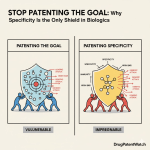
The ‘general quality’ exception is the only viable path to broad functional genus claims post-Amgen. That quality must be an independently assessable structural or chemical feature that predictably confers membership in the functional class.
AI protein structure prediction tools (AlphaFold3, ProteinMPNN, RFdiffusion) are beginning to reduce the unpredictability of antibody engineering in specific dimensions, and patent prosecutors should track how the USPTO responds to AI-generated structural data as specification support.
A specification that discloses an experimentally validated ‘general quality’ with structural mechanistic data, not just binding assay results, has the best probability of surviving an enablement challenge for a broad functional antibody claim.
8. Post-Amgen Case Law: Baxalta, Medytox, In re Starrett, and the PTAB Record
8.1 Baxalta Inc. v. Genentech, Inc.: ‘Materially Indistinguishable’
Four months after the Supreme Court’s Amgen ruling, the Federal Circuit decided Baxalta Inc. v. Genentech, Inc. (Fed. Cir. Sept. 20, 2023). Baxalta’s U.S. Patent No. 7,033,590 claimed a genus of antibodies or antibody fragments defined by two functional properties: binding to blood clotting Factor IXa, and increasing the procoagulant activity of Factor IXa by at least 5-fold. The therapeutic context was hemophilia: an antibody performing this function would substitute for the activity of Factor VIII, which is deficient in patients with hemophilia A.
The specification disclosed eleven antibodies meeting the functional definition, with their amino acid sequences, and described a hybridoma-and-screening method for generating additional candidates. The Federal Circuit panel found the facts ‘materially indistinguishable from those in Amgen.’ Eleven examples were not sufficient to enable a potentially vast genus of structurally diverse antibodies defined purely by function. The specification’s method for generating more was trial-and-error screening. No ‘general quality’ was identified. The claims were held invalid for lack of enablement.
The Baxalta decision is notable for its speed and its analytical brevity. The opinion did not conduct a detailed eight-factor Wands analysis. It compared the facts to Amgen, found them equivalent, and applied the holding. This analytical shortcut, treating Amgen as a template rather than a data point in a multi-factor balance, is the Federal Circuit’s current operational approach to biologic genus claims. Patent prosecutors and litigators should expect this pattern to persist.
8.2 Medytox, Inc. v. Galderma S.A.: Functional Ranges Are Not Immune
Medytox, Inc. v. Galderma S.A. (Fed. Cir. June 27, 2023) was decided six weeks after the Supreme Court’s Amgen ruling and represents the extension of Amgen’s logic to a different claim format: numerical functional ranges rather than molecular genus claims.
Medytox’s patent involved a botulinum toxin formulation for cosmetic and therapeutic use. In a post-grant review, Medytox sought to amend its claims to recite a specific therapeutic outcome: a ‘responder rate at 16 weeks after the first treatment of 50% or greater.’ The specification contained three data points above 50%: responder rates of 52%, 61%, and 62%.
The Federal Circuit held the amended claim invalid for lack of enablement. Construing the ‘50% or greater’ limitation as claiming a range from 50% to 100%, the court applied the Amgen principle directly: if the claim covers a functional range up to 100%, the specification must enable the full extent of that range. Data points clustered between 52% and 62% do not enable an outcome of 90% or 95%. The specification disclosed no formulation strategy, dosing approach, or patient selection method that would teach a POSA how to achieve higher responder rates.
This ruling has wide implications for claims in biologics, small molecule drugs, and medical devices that define efficacy or safety outcomes using directional language (‘at least,’ ‘greater than,’ ‘at most’). Any claim reciting an outcome ‘greater than X%’ implicitly covers the full range from X% to 100%, and the specification must enable that entire range. Sponsors using clinical trial data to claim efficacy endpoints need to ensure the specification addresses not just what the trial achieved but what strategies would achieve higher levels of the claimed outcome.
8.3 In re Starrett: Extending the Standard Beyond Life Sciences
In re Starrett (Fed. Cir. 2023, affirming PTAB) involved a patent application for a computer-readable medium supporting ‘augmented telepathic data.’ The claims contained 47 ‘or’ clauses, which the PTAB calculated could be permuted into more than 140 trillion distinct embodiments. The specification described one embodiment. The PTAB, applying Wands factors, found the claims were not enabled. The Federal Circuit affirmed.
The USPTO’s post-Amgen guidance cites Starrett specifically to make the point that enablement applies ‘regardless of the technology.’ Antibody claims and telecommunications software claims receive the same analysis: claim scope must be commensurate with enabling disclosure. The number of embodiments covered, and the degree to which the specification teaches a POSA how to make and use them, determines enablement in every field.
8.4 PTAB Post-Amgen: Application Across Technology Categories
PTAB decisions issued between May 2023 and early 2026 show consistent application of Amgen-based enablement analysis to biologic claims across multiple technology categories. Post-grant review petitions have successfully challenged CAR-T antigen receptor claims defined by functional binding properties without full structural disclosure, mRNA vaccine claims covering spike protein-encoding sequences defined by outcome properties, gene therapy claims covering broad classes of viral vector payloads, and small molecule claims covering structural classes defined by pharmacological activity rather than chemical structure.
PTAB institution rates for inter partes review (IPR) and post-grant review (PGR) petitions asserting Section 112(a) enablement grounds have increased since May 2023, reflecting both the strengthened legal framework and an increase in petitions filed by biosimilar developers who are now more confident in the argument. Historically, Section 112 grounds were treated as secondary to prior art grounds in PTAB petitions; they are now frequently the primary basis.
Once instituted on enablement grounds, PTAB trials result in at least partial claim cancellation in the majority of cases for biologic patents. The combination of Amgen’s bright-line principle and the comparative ease of applying it to pre-existing broad functional claims makes enablement the most efficient invalidity ground available to challengers in the current environment.
Key Takeaways: Section 8
Baxalta established that the Federal Circuit applies Amgen as a near-mechanical template, not as a multi-factor balancing test, when claims involve a functional antibody genus and a specification relying on screening methods.
Medytox expanded Amgen’s reach to any claim using directional functional language. Any claim reciting an outcome ‘at least X%’ covers the range to 100% and must be fully enabled across that range.
Section 112(a) enablement has become the primary ground for PTAB challenges to biologic patents, displacing prior art obviousness challenges as the most direct and efficient invalidity tool.
9. The Innovator’s Prosecution Playbook: Drafting Defensible Biologic Patents
9.1 The Specification as the Asset: What ‘Rich Handbook’ Actually Requires
Amgen’s counsel described their patent specification as a ‘rich handbook.’ The Supreme Court disagreed with that characterization. Understanding exactly why the specification fell short, and what a specification that would pass the Amgen standard looks like, is the practical center of post-2023 biologic patent prosecution.
A specification that enables a broad functional antibody class must do several things that Amgen’s did not. It must characterize working examples with enough structural diversity to represent the claimed class meaningfully. If the functional claim covers antibodies across a broad epitope surface, working examples must include antibodies contacting different regions of that surface, not just antibodies from a single structural lineage. If the claim covers antibodies with varying CDR3 lengths, working examples should include functional antibodies of the full length range.
The specification should contain epitope mapping data for multiple working examples, showing which residues each antibody contacts and demonstrating that structurally diverse antibodies contacting different residue subsets all satisfy the functional requirements. This is the empirical foundation of a ‘general quality’ argument: if the data show that antibodies from structurally distinct lineages, contacting different epitope subsites, all produce the claimed functional effect, and if the specification identifies the shared structural feature responsible, the inventor is describing a property of the target-antibody interaction, not just the result of a screen.
High-resolution structural data from X-ray crystallography or cryo-EM for multiple representative antibodies strengthens this case substantially. Amgen disclosed structural data for two antibodies. If that data had been used to identify a common binding mechanism, a specific set of contacts that any blocking antibody must make regardless of its overall structure, and the specification had articulated that mechanism with supporting data across structurally diverse examples, the outcome might have differed.
9.2 Working Examples vs. Prophetic Examples: A Hard-Nosed Assessment
Patent law permits prophetic examples, meaning descriptions of experiments that have not been conducted but are expected to yield specific results. These must be written in present or future tense to avoid implying completed work. The strategic question is whether prophetic examples can salvage an enablement case for a broad functional genus.
The short answer is: not for functional antibody genus claims. The Supreme Court’s analysis in Amgen was primarily directed at the disclosure’s failure to teach, not at whether the disclosure was based on experiments actually conducted. A prophetic example that predicts an antibody with a specific CDR3 sequence will bind PCSK9 and block LDL receptor interaction, without providing a way to know whether that prediction is correct without testing, does not enable the class any more than a working example of an antibody that does the same thing. The problem is not whether the experiments happened; the problem is whether the specification teaches how to navigate to the full scope of the claims.
Where prophetic examples retain value is in supporting species claims for antibodies not yet fully characterized, and in describing manufacturing process variations that a POSA could implement with reasonable confidence based on disclosed principles. In those contexts, a well-reasoned prophetic example tied to a disclosed principle is qualitatively different from a research suggestion.
9.3 The Continuation Strategy: Building a Portfolio Brick by Brick
A single biologic patent application is no longer adequate protection for a major biologic asset. Post-Amgen, the prosecution strategy for a novel therapeutic antibody should plan from the outset for a multi-application portfolio constructed over the product’s development and early commercial life.
The first application, filed at or near the time the lead candidate is identified, should focus on species claims covering the specific antibody sequences discovered. Full CDR sequence disclosure for all six CDRs is essential. Binding affinity and functional assay data should support any claims asserting activity. At this stage, the specification should capture everything known about the antibody’s structure and activity, because this information will be the foundation for all subsequent continuation claims.
Subsequent continuation applications, filed as additional structural and functional data accumulate during development, can extend claim scope incrementally as the specification support grows. When pre-clinical data demonstrate that a second generation of antibody variants with modified CDR sequences retains full functional activity, a continuation can add claims covering those variants and the sequence space they define. When clinical data establishes a specific dosing regimen or patient population, method-of-treatment claims covering those specifics should be added. When manufacturing scale-up data identify optimal formulation conditions, formulation patent applications should be filed.
This approach front-loads the structural and functional characterization work that Amgen’s specification lacked, distributes it across multiple applications filed at points when the data exist to support new claims, and builds a portfolio of overlapping protections with staggered expiration dates. The result is a patent estate that is substantially harder to destroy with a single Section 112 challenge than a single functional genus claim would be.
Key Takeaways: Section 9
A defensible biologic patent specification requires structurally diverse working examples, epitope mapping data across multiple representatives, high-resolution structural data where available, and explicit identification of any ‘general quality’ responsible for the functional class’s activity.
Prophetic examples do not fill the gap between limited working examples and a broad functional genus claim in antibody science. They can support species claims and process variations but cannot enable structural diversity that has not been empirically explored.
Continuation application prosecution over the product development lifecycle, systematically adding claim layers as data accumulate, is the primary tool for building a defensible multi-layered patent portfolio in the post-Amgen environment.
10. Antibody Claim Architecture: A Technology Roadmap from Species to Functional Genus
10.1 Tier 1: Full-Sequence Species Claims
The innermost tier of a defensible antibody patent portfolio covers the specific antibody sequences reduced to practice. A claim at this level recites all six CDR sequences by SEQ ID NO, the complete heavy chain variable domain sequence, and the complete light chain variable domain sequence. This claim is as narrow as a claim can be while still covering an antibody with some breadth of structural identity.
Species claims at this tier are the most enabling and the least valuable in isolation. They cover only antibodies with sequence identity at or very near 100% to the disclosed sequences. A competitor developing an antibody with even modest CDR sequence divergence from a disclosed species would not infringe. The commercial value of species claims lies in their use as the foundational layer in a portfolio, not as standalone protection.
From a prosecution standpoint, species claims require the least justification and face the fewest enablement challenges. If the specification provides the full amino acid sequence of a functional antibody and demonstrates its activity, the species claim is clearly enabled for that antibody. Written description is the more likely challenge for species claims, and it can be defeated by ensuring the specification explicitly recites the sequences in the body of the application, not only in sequence listings.
10.2 Tier 2: Sequence-Identity Claims and CDR-Defined Claims
The second tier covers antibodies that are structurally related to the disclosed examples but allow for sequence divergence within defined limits. The standard format is a claim reciting ‘an antibody comprising a heavy chain variable region having at least 90% (or 95%) sequence identity to SEQ ID NO:X, wherein the antibody binds [target] and [performs function].’
The value and risk of these claims scale with the sequence identity threshold and with the evidence in the specification that antibodies at that threshold retain function. If the specification contains data from a mutagenesis study showing that antibodies with specific positions varied retain full activity while antibodies with other positions varied lose activity, this data directly supports a sequence-identity claim covering the functional range that the data establish. Without such data, a claim that allows 10% sequence divergence without demonstrating that functional antibodies exist across that 10% space carries enablement risk.
CDR-defined claims, which recite the six CDR sequences without requiring full framework region sequence identity, are the standard approach for capturing meaningful antibody diversity without claiming the full variable domain. The CDRs are the principal determinants of binding specificity, and framework regions are more variable across functional antibodies of the same lineage. A CDR-defined claim with tolerance for conservative substitutions at defined non-contact positions, supported by mutagenesis data showing which positions tolerate variation, represents a well-supported intermediate scope.
10.3 Tier 3: Epitope-Defined Claims
A claim that covers all antibodies that bind a specific epitope, defined by the amino acid residues of the target contacted by the antibody, is an epitope-defined claim. This format is more structural than a pure functional claim, because it specifies where on the target the antibody binds, but it remains partially functional in that it does not specify the antibody’s own structure.
Post-Amgen, epitope-defined claims face the same ‘general quality’ requirement as other genus claims. The specification must teach a POSA how to make antibodies that bind the claimed epitope across the structural diversity that could satisfy the claim. If the disclosed epitope-binding mechanism is conserved across structurally diverse antibodies that the specification characterizes, this can be argued as a ‘general quality.’ If the specification merely discloses one family of antibodies that contacts the stated residues, the epitope definition adds specificity to the target but does not resolve the enablement problem for the vast structural space of potential binders.
10.4 Tier 4: Broad Functional Claims and the ‘General Quality’ Requirement
The outermost tier of the portfolio is the broadest functional claim, covering all antibodies that perform a defined biological function without structural limitation. Post-Amgen, this tier is only viable if the specification satisfies the ‘general quality’ requirement.
A viable broad functional claim requires a specification that identifies a common structural feature or mechanism shared across a structurally diverse set of functional examples, provides data demonstrating that feature is necessary for function (e.g., mutation of the identified residue eliminates activity across multiple structurally distinct antibodies), and establishes a reliable method for determining whether a new antibody has the feature, so a POSA can assess membership in the functional class without conducting a full functional screen.
This is a high bar. Meeting it requires discovery-phase science that goes substantially beyond finding a lead antibody and confirming its function. It requires characterizing the structural basis of the function across a diverse antibody set, which is essentially the kind of mechanistic work that academic structural biology labs do but that industrial antibody discovery programs have historically not prioritized. In the post-Amgen environment, that work is now a prerequisite for broad functional patent protection.
Key Takeaways: Section 10
The four-tier antibody claim architecture, from full-sequence species claims to broad functional genus claims, provides a portfolio structure where every tier adds independent value and the inner tiers survive challenges to the outer tiers.
Tier 3 and Tier 4 claims require increasing specification investment to support. Tier 3 epitope-defined claims need multi-antibody epitope mapping data. Tier 4 functional genus claims require ‘general quality’ identification with mechanistic data.
The optimal prosecution strategy files all four tiers in a coordinated family of applications, building claim scope incrementally as supporting data accumulate during development.
11. Means-Plus-Function Under Section 112(f): A New Frontier with Unresolved Edges
11.1 The Statutory Basis and Scope of Means-Plus-Function Claims
35 U.S.C. Section 112(f) allows a claim element to be expressed as a ‘means for’ performing a specified function, without reciting the specific structure, material, or acts that perform the function in the claim itself. The statute then defines the scope of such a claim: it covers the corresponding structure, material, or acts described in the specification, and their structural equivalents.
The key property of means-plus-function claiming that makes it potentially attractive post-Amgen is the ‘structural equivalents’ language. Unlike a traditional structural claim, which covers only what the claim language describes, a means-plus-function claim extends to structures not literally recited in the claim or specification, provided they are structural equivalents of the disclosed structure. In mechanical engineering, where the doctrine was developed, ‘structural equivalents’ has a well-established meaning. In antibody engineering, it does not, which is why this claiming strategy is both intriguing and legally uncertain.
11.2 Ex parte Chamberlain and Its Limits
In Ex parte Chamberlain (PTAB 2024), an Appeals Review Panel addressed a claim reciting ‘a means for binding human C5 protein’ in the context of a therapeutic antibody application. The Panel held that a means-plus-function claim for an antibody requires the specification to disclose the corresponding structure, which for an antibody is the full amino acid sequence or at minimum the CDR sequences responsible for binding. It further held that the claim need not describe all equivalents in the specification; those equivalents are determined during claim construction.
This opens a potential path. An inventor who discloses the full sequence of one anti-C5 antibody could claim, via means-plus-function, coverage extending to structurally equivalent antibodies that bind C5 via the same mechanism. The scope of ‘equivalents’ in this context would be determined by a court, likely by reference to whether the proposed equivalent performs the same function (binding C5) in substantially the same way (via the same binding mechanism/epitope) to achieve the same result (C5 blockade). For therapeutic antibodies where the mechanism is well-characterized, this is not an infinite claim; it is a structurally constrained claim that may capture meaningful commercial breadth.
The risk is litigation uncertainty. No Federal Circuit decision has fully construed the scope of antibody equivalents in a means-plus-function context, and the district courts have not yet developed consistent jurisprudence. A means-plus-function antibody claim may turn out, upon claim construction, to cover only antibodies with very high CDR sequence identity to the disclosed structure, making it no broader than a well-drafted CDR-defined claim. Or it may turn out to cover a meaningful structural neighborhood around the disclosed antibody. That question is currently unresolved.
Key Takeaways: Section 11
Means-plus-function claiming under Section 112(f) offers a potential route to broader coverage than traditional CDR-defined claims, but the scope of ‘structural equivalents’ for antibodies has not been determined by any Federal Circuit precedent.
Ex parte Chamberlain is PTAB precedent, not Federal Circuit authority, and its guidance on specification requirements for antibody means-plus-function claims may be revised on appeal.
Patent prosecution teams should include means-plus-function claims as one layer in a portfolio strategy, not as the primary vehicle for broad protection, until Federal Circuit guidance establishes the scope of antibody equivalents.
12. The Biosimilar Challenger’s Toolkit: Identifying, Targeting, and Destroying Vulnerable Patents
12.1 The Amgen Litmus Test: Five Characteristics of a Vulnerable Patent
The post-Amgen environment rewards systematic screening of innovator biologic patent portfolios for enablement vulnerability. Not every functional claim is equally exposed. The following profile identifies patents most likely to fail an Amgen-based challenge.
Claims that define an antibody or biologic solely by what it does, without specifying CDR sequences, binding affinity ranges, or structural features, are functionally defined genus claims. These are the direct targets. Claims that reference a large theoretical class of molecules, particularly claims using language like ‘an antibody that binds [target]’ or ‘an antibody that inhibits [function]’ without structural limitation, fall squarely in the Amgen risk zone.
Specifications with a small number of working examples relative to claim scope are the second signal. ‘Small’ is relative: for a claim covering all antibodies that bind a defined epitope, 11 examples (as in Baxalta) is not enough, and 26 examples (as in Amgen) is not enough. The question is whether the examples represent the structural diversity of the claimed class and whether the specification explains why they do.
Specifications that disclose their generation method as immunization-and-screening, or mutagenesis-and-screening, without providing a principle that predicts which candidates will succeed, describe a research program rather than an enabling disclosure. Patents filed before 2015, when both the USPTO and the Federal Circuit were more permissive toward broad functional claims, are overrepresented in this category.
Patents with a high number of claims relative to the number of distinct structural entities disclosed often signal a prosecution strategy that sought to maximize claim scope without proportionate disclosure investment. High claim counts built around a small number of structural examples are a patent architecture that the post-Amgen standard directly targets.
12.2 Building the Challenge: District Court vs. PTAB
Biosimilar developers have two primary venues for Section 112 enablement challenges: federal district court (in the context of BPCIA patent dance litigation) and the PTAB (via post-grant review).
District court litigation on an enablement theory can reach summary judgment if the facts are not genuinely disputed. The key question, whether the specification as written enables the full claim scope, is a question of law. If both parties agree on what the specification says and on the state of the art at the filing date, and the dispute is only about the legal conclusion, a district court can grant summary judgment of invalidity without a jury trial. In practice, parties often dispute the state of the art through competing expert declarations, which creates factual issues that preclude summary judgment. But for patents where the specification’s deficiency is apparent on its face, and where the state of the art is well-documented in published scientific literature, summary judgment is a realistic outcome.
PTAB post-grant review offers a specialized administrative forum, statistically favorable to challengers, with discovery limited primarily to expert declarations. PGR is available only within nine months of a patent’s grant date, which requires biosimilar developers to monitor grant dates for key blocking patents and prepare PGR petitions in advance of the nine-month window. IPR (inter partes review), available after the nine-month PGR window closes, is limited to prior art grounds and cannot be used to raise Section 112 challenges directly. This makes the PGR window strategically important: it is the only PTAB-based route to Section 112 invalidity. Biosimilar developers who miss the PGR window for a key blocking patent must pursue Section 112 challenges in district court.
12.3 The BPCIA Patent Dance in a Post-Amgen World
The BPCIA’s patent information exchange process, the so-called patent dance, involves the biosimilar applicant and the reference product sponsor exchanging lists of patents that may be relevant to the biosimilar product. The U.S. Supreme Court’s 2017 decision in Sandoz Inc. v. Amgen Inc. confirmed that the patent dance is largely optional for biosimilar applicants; the only mandatory element is the 180-day notice of commercial marketing.
In the post-Amgen environment, biosimilar companies that elect to participate in the patent dance have a new negotiating tool. A biosimilar developer can assert in early correspondence, or in the section 3(b)(2)(A) list of defenses, that specific innovator patents identified in the dance are invalid under Section 112 based on Amgen-standard analysis. This serves two strategic functions. It puts the reference product sponsor on notice that the biosimilar developer has conducted a Section 112 analysis and believes specific patents are vulnerable, which can deter the sponsor from including those patents in litigation. It also establishes the legal theory early, which accelerates the timeline to invalidity resolution if the sponsor does sue.
Key Takeaways: Section 12
The Amgen litmus test, focused on five characteristics: functional claim definition, small example set, screening-based generation method, filing date before 2015, and high claim count per disclosed structure, produces a reliable screening tool for identifying high-value Section 112 targets.
PGR petitions are the only PTAB vehicle for Section 112 challenges and must be filed within nine months of patent grant. Biosimilar developers should establish monitoring systems for grant dates on key blocking patents and pre-draft PGR petitions in anticipation.
The BPCIA patent dance, while largely optional, provides a structured forum for signaling Section 112 invalidity positions early, which can reduce the scope of ensuing litigation and improve settlement leverage.
13. PTAB Strategy for Biosimilar Developers: Statistics, Timing, and the Post-Grant Review Calculus
13.1 PTAB Biologic Patent Statistics: The Challenger’s Historical Record
PTAB data covering biologic patent challenges from 2012 through 2025 paint a consistent picture. Institution rates for AIA trials involving biologic patents run approximately 55%, below the average across all technologies (roughly 64%). The institution rate is the major hurdle; the PTAB is selective about biologic patent challenges, and petitions that do not clearly establish why the challenged claims are invalid, with specific evidence and claim-by-claim analysis, do not get instituted.
Once instituted, the outcome statistics favor challengers substantially. Among final written decisions on biologic patents, approximately 70% result in cancellation of all challenged claims, and fewer than 25% result in all claims being held patentable. The remainder involve partial cancellation. For the subset of biologic patent trials where Section 112 enablement was the primary ground, post-Amgen institution and cancellation rates appear to be trending higher, though the sample size of Amgen-era data points is still limited.
The cost structure of a PGR petition with Section 112 grounds runs from $400,000 to $800,000 in legal and expert fees through final written decision. That investment should be benchmarked against the commercial value of the blocking patent’s contribution to delayed biosimilar entry. A patent that delays entry into a $2 billion reference product market by 18 months represents approximately $300-500 million in lost biosimilar revenue at standard biosimilar pricing and market share assumptions. The ROI on a well-constructed PGR petition against such a patent is extremely favorable.
13.2 Timing Optimization: PGR Windows and Commercial Launch Sequencing
PGR petitions must be filed within nine months of the challenged patent’s issue date. For a patent that issues while a biosimilar aBLA is pending, this window may align with FDA review, requiring the biosimilar developer to run the patent challenge in parallel with regulatory review. This is operationally demanding but manageable if the patent strategy team has prepared the petition in advance.
For patents that issued before the biosimilar aBLA was filed, the nine-month window may have already closed, requiring the developer to plan a district court Section 112 challenge as part of BPCIA litigation instead. The strategic implication is that biosimilar developers planning to challenge biologic patents must identify the target patents, assess their PGR windows, and prepare petitions before the nine-month deadline, even if the aBLA itself is not yet filed. This means the patent challenge strategy must begin substantially earlier in the biosimilar development timeline than has historically been the case.
13.3 Constructing the Winning PGR Petition: Evidence and Expert Requirements
A PTAB Section 112 petition that gets instituted and wins must address several evidentiary elements. The petition must establish the level of skill in the art at the filing date of the challenged patent, because enablement is measured from the perspective of a POSA. The POSA definition for antibody engineering has been consistently construed to include a person with a graduate degree in biochemistry, molecular biology, or a related field, plus at least three to five years of experience in antibody discovery and characterization. This is a highly skilled person, which cuts both ways: a highly skilled POSA can practice more complex procedures without detailed instruction, but also recognizes the unpredictability of CDR engineering more acutely.
The petition must establish the state of the art at the filing date, demonstrating what was known and what was not predictable about the antibody class claimed. Published papers from the relevant time period, textbooks, review articles, and prior art antibody engineering studies all contribute to this record. The goal is to demonstrate that, at the time of filing, the relationship between sequence and function in the claimed antibody class was as unpredictable as Amgen’s record established for PCSK9-blocking antibodies.
Expert declarations from credentialed structural biologists or biochemists are essential. The PTAB weighs competing expert declarations, and the biosimilar developer’s expert must be able to articulate specifically why the patent’s specification, given the state of the art at filing, does not enable the claimed genus. Generalized assertions that ‘antibody engineering is unpredictable’ are not sufficient. The expert must connect the unpredictability to specific structural diversity within the claimed class that the specification’s examples do not cover, and explain why the specification’s generation methods cannot reliably access that uncovered structural space.
Key Takeaways: Section 13
PTAB institution rates for biologic patent challenges are approximately 55%, but once instituted, final written decisions cancel all challenged claims in approximately 70% of cases. The institution decision is the critical hurdle.
PGR petitions must be filed within nine months of the challenged patent’s issue date, requiring biosimilar development timelines to incorporate patent challenge planning at a much earlier stage than has been common.
A winning PGR petition must establish POSA definition, state of the art at filing, and connect the specification’s specific deficiencies to the structural diversity of the claimed genus through expert testimony.
Investment Strategy: Section 13 Analysts evaluating biosimilar pipeline companies should ask specifically whether the company has conducted Section 112 analysis on blocking patents for each target reference product, and whether PGR windows remain open for any key blocking patents. A company that has not analyzed its blocking patent exposure under post-Amgen standards is carrying undisclosed risk. Conversely, a company with a clear Amgen-based invalidity case against a major blocking patent, with an open PGR window, has an identifiable near-term catalytic event, PGR institution or a favorable PTAB trial outcome, that could materially advance its market entry timeline and biosimilar NPV.
14. AI-Driven Protein Design and the Predictability Standard: When the Science Changes the Law
14.1 AlphaFold, RFdiffusion, and the Changing State of the Art
DeepMind’s AlphaFold2 paper, published in Nature in July 2021, reported median accuracy for protein structure prediction of approximately 92.4 angstroms on CASP14 targets, essentially matching experimental crystallography for single-domain proteins. AlphaFold3, released in 2024, extended the model to protein complexes including antibody-antigen interfaces. For PCSK9 specifically, AlphaFold3 can predict with reasonable accuracy the structure of PCSK9 complexed with an antibody, given both sequences.
RFdiffusion, developed at the Baker lab and published in Nature in 2023, enables de novo protein design: given a target structure or functional requirement, the model generates protein sequences expected to fold into structures with that property. ProteinMPNN inverts the structure prediction task, generating amino acid sequences expected to fold into a specified backbone structure. Together, these tools provide a partially computational pathway from ‘desired binding function’ to ‘candidate amino acid sequences to test,’ reducing the pure trial-and-error character of antibody discovery.
These tools do not yet make antibody engineering fully predictable for patent law purposes. Predicting that an antibody sequence will fold into a structure that places its CDR3 loop over a specific epitope does not guarantee that it will bind with therapeutic affinity. Predicting structure does not predict affinity, selectivity, pharmacokinetics, or immunogenicity. A POSA with access to AlphaFold3 and RFdiffusion is a more powerful researcher than a POSA without those tools, but the researcher still needs to make antibody candidates and test them.
14.2 The Legal Implications of Improved Predictability
The Amgen holding’s dependence on the ‘unpredictability’ factual finding means that improvements in computational protein design can, in principle, erode the factual predicate of the decision over time. The legal mechanism is this: if a patent is filed at a time when computational tools have materially reduced the unpredictability of antibody engineering, the POSA definition at that filing date includes the computational tools, and the enablement analysis must be conducted with reference to those tools.
A patent application filed in 2026, claiming a broad functional genus of antibodies blocking a defined epitope, can incorporate AI structural prediction data as part of its specification support. If the specification uses validated computational models to demonstrate that the claimed functional outcome can be reliably achieved by antibodies of multiple structural classes, and the model’s predictions are validated against experimental data for a representative sample, this computational evidence can support a ‘general quality’ argument in ways that Amgen’s 2011-era specification could not.
Patent prosecutors should work now to understand which computational protein design tools have been validated for the specific target and antibody class of interest, and to incorporate their outputs into specifications as supporting data. The USPTO has not yet issued specific guidance on how AI-generated structural predictions will be weighted in enablement analysis, but the framework exists: if the predictions are validated and a POSA would rely on them, they count toward the specification’s teaching.
14.3 Defensive Use of AI Evidence in Enablement Challenges
The same AI tools that support innovator enablement arguments can be used by challengers in the opposite direction. A challenger conducting Section 112 analysis of a pre-2020 functional genus patent can use current computational tools to characterize the structural diversity of the claimed class, demonstrating quantitatively how vast the structural space is and how small a fraction the specification’s examples cover.
For example, a challenger can use AlphaFold3 and protein language models to generate a representative sample of the theoretical structural diversity of antibodies that bind a disclosed epitope, characterize those structures, and present expert testimony showing that the specification’s examples cluster in one corner of that diversity. This turns a qualitative assertion, ‘the claim covers millions of antibodies,’ into a quantitatively supported argument, ‘the claim covers a structural space estimated at X million distinct conformations, and the specification samples Y of them, representing Z% of that space.’
Key Takeaways: Section 14
AlphaFold3 and RFdiffusion do not currently make antibody engineering fully predictable for enablement purposes, but they materially reduce unpredictability in specific dimensions: structure prediction and de novo sequence design for defined binding geometries.
Patent applications filed after 2023 should incorporate validated computational structural predictions as specification support, with experimental validation of the computational models documented in the application.
AI tools can be used offensively by patent challengers to quantify the structural diversity of a claimed genus and demonstrate the fraction covered by a specification’s working examples, converting a qualitative enablement argument into a quantitatively supported one.
15. International Dimensions: How European, Japanese, and Chinese Patent Offices Handle Genus Claims
15.1 European Patent Office: Plausibility and the Insufficiency Standard
The European Patent Office does not use ‘enablement’ as its primary term; the equivalent requirement is ‘sufficiency of disclosure’ under Article 83 of the European Patent Convention. The EPC demands that the specification disclose the invention ‘in a manner sufficiently clear and complete for it to be carried out by a person skilled in the art.’ This is substantively similar to the U.S. enablement standard.
The EPO adds a separate dimension through the ‘plausibility’ doctrine, developed through case law. An applicant cannot claim a therapeutic effect that is not made plausible by the specification at the filing date. This requirement, distinct from enablement, was affirmed and clarified by the Enlarged Board of Appeal in G2/21 (2023), which confirmed that a claimed therapeutic effect must be substantiated in the specification at filing; post-filing data cannot retroactively establish plausibility for a claim that was not supported at filing.
For functional antibody genus claims at the EPO, the combination of Article 83 insufficiency analysis and G2/21 plausibility creates a two-pronged challenge. The claims must be both technically executable across their scope (insufficiency) and therapeutically plausible based on specification data (plausibility). EPO opposition divisions have increasingly applied both grounds to invalidate broad functional antibody claims, particularly in bispecific antibody and ADC cases where the claimed functional space encompasses novel structural formats not exemplified in the specification.
15.2 Japan: The ‘Scope of Claims’ Doctrine
Japan’s Patent Act requires that claims be ‘supported by the description’ (Section 36(6)(1)) and that the description ‘disclose the invention clearly and sufficiently’ to allow a person skilled in the art to practice the invention (Section 36(4)(1)). These requirements function analogously to written description and enablement respectively.
The Japan Patent Office has been more conservative about functional antibody genus claims than the pre-Amgen USPTO. JPO examination guidelines require that for claims to multiple antibodies with a common function, the specification must disclose specific examples that represent the full scope of the claim and must explain the common mechanism by which that function is achieved across structurally diverse examples. This is substantively similar to the ‘general quality’ requirement articulated by the U.S. Supreme Court. Companies developing global biologic portfolios with significant Japan market exposure have been drafting specifications to JPO standards for years, which means their specifications often already satisfy post-Amgen U.S. standards.
15.3 China: National Medical Products Administration and Patent Linkage
China’s pharmaceutical patent linkage system, established under regulations effective July 2021, ties drug registration approval to patent status through a mechanism analogous to Hatch-Waxman in the U.S. When a generic or biosimilar company files a drug registration application for a product that is listed in China’s Marketed Drug Patent Information Registration Platform (the Chinese equivalent of the Orange Book), the applicant must make a patent certification. Category IV certifications, asserting patent invalidity or non-infringement, are the Chinese equivalent of Paragraph IV certifications.
The China National Intellectual Property Administration (CNIPA) has been developing its enablement jurisprudence for biologic patents. The 2023 revision to CNIPA examination guidelines tightened requirements for functional genus claims in biological sciences, requiring that specifications demonstrate the claimed function across the stated structural scope through representative examples. The revisions moved CNIPA’s practice meaningfully closer to post-Amgen U.S. standards, though specific holdings from CNIPA patent re-examination or court invalidity proceedings are still developing.
Key Takeaways: Section 15
The EPO’s G2/21 plausibility doctrine adds a layer of protection beyond insufficiency: claims must be therapeutically plausible at filing, and post-filing data cannot rescue claims that lack specification support. Companies drafting for EPO and U.S. prosecution simultaneously should ensure their specifications include in vitro or in vivo data establishing therapeutic plausibility, not just binding characterization.
JPO specification requirements for functional antibody genus claims have been de facto closer to post-Amgen U.S. standards than pre-2023 USPTO practice was. Companies whose global prosecution was already JPO-compliant may find their U.S. patents are better positioned than competitors who drafted solely for pre-Amgen USPTO practice.
China’s new patent linkage system and tightening CNIPA examination standards for biologic functional claims create additional country-specific prosecution strategy considerations for companies seeking blockbuster biologic protection in the Chinese market.
16. Investment Strategy: Valuing Biologic Patent Portfolios in the Post-Amgen Environment
16.1 A Post-Amgen Due Diligence Framework
Biologic patent portfolios are core assets in pharma and biotech company valuations, but standard due diligence frameworks have not fully adapted to the post-Amgen risk environment. The following framework provides a structured approach for institutional investors, M&A teams, and licensing strategy groups.
The first step is claim classification. For each patent in the portfolio, characterize the primary claim type: species claim (full sequence), CDR-defined claim, epitope-defined claim, functional genus claim, or method-of-treatment claim. Functional genus claims without structural limitation are the high-risk tier. Method-of-treatment claims tied to a specific sequence or CDR set are substantially more defensible.
The second step is specification adequacy assessment. For each functional genus claim, count the working examples and assess their structural diversity. Determine whether the specification identifies any ‘general quality’ linking functional members of the claimed class. Assess the state of the art at the filing date and the technology’s predictability level. This step requires both legal and scientific expertise; a patent attorney alone cannot assess structural diversity across CDR space, and a structural biologist alone cannot assess the legal sufficiency of the specification’s teaching.
The third step is challenge risk scoring. Based on the preceding analysis, assign a challenge risk score to each patent. A patent with broad functional claims, fewer than 30 working examples, a pre-2020 filing date, and no ‘general quality’ disclosure scores high risk. A patent with CDR-defined claims, more than 50 structurally diverse examples, experimental validation of a common binding mechanism, and a post-2022 filing date scores low risk.
The fourth step is valuation adjustment. High-risk functional genus patents should receive a material NPV discount reflecting the probability of invalidation via PGR or district court Section 112 challenge. Based on PTAB invalidation statistics, a high-risk patent that faces a well-prepared PGR petition has an estimated 50-60% probability of losing all claims at PTAB. If the patent contributes significantly to pipeline NPV, this probability-adjusted discount can be substantial.
16.2 Monitoring Events That Alter Patent Portfolio Value
The post-Amgen environment creates a set of specific monitoring events that carry material valuation implications for biologic-focused companies.
PGR petition filings against company patents are the most direct valuation signal. A PGR petition filing, now publicly available on the USPTO’s Patent Center portal, signals that a challenger believes specific patents are vulnerable. The patent’s contribution to portfolio NPV should be flagged as contested. Institution of the PGR petition is the next signal: institution means the PTAB has found the challenger’s arguments reasonably likely to succeed, which is a meaningful probability update.
Federal Circuit decisions in Section 112 cases involving technology classes similar to a portfolio company’s primary patent classes are indirect but important signals. A Federal Circuit panel applying Amgen by direct analogy to a new technology, finding claims invalid with minimal analysis, expands the range of patents subject to the same treatment. Companies holding patents in the relevant technology class should re-assess those patents when new Federal Circuit Section 112 precedents issue.
USPTO examination trends, monitored through patent prosecution statistics and Office Action patterns, show how current USPTO examiners are applying post-Amgen guidance. An increase in Section 112 rejections in specific technology classes signals that pending applications in those classes need specification strengthening. Companies with large pending application portfolios in high-rejection classes should conduct specification gap assessments and consider filing continuation applications with supplementary data.
16.3 The Biosimilar Market Opportunity: Sizing the Post-Amgen Upside
The biosimilar market opportunity enabled by Amgen v. Sanofi is not primarily about PCSK9 inhibitors. It is about the class of blockbuster biologics whose primary IP protection rested on broad functional antibody genus claims filed between 2005 and 2020, before the Federal Circuit’s genus claim jurisprudence tightened significantly.
An analysis of FDA Purple Book biologic patent listings shows that a substantial number of blockbuster biologics hold at least one functional genus patent as a key blocking patent. Biologics with annual U.S. revenues above $2 billion, where biosimilar entry would generate substantial competition, warrant scrutiny of their functional genus patent positions. For reference, the top 20 biologic products by U.S. revenue represented approximately $120 billion in combined annual sales as of 2024. If functional genus patents protecting even half of that portfolio are validly challenged under Amgen, the biosimilar opportunity unlocked by successful challenges is in the range of $15-30 billion in annual biosimilar revenue at steady-state penetration rates.
Key Takeaways: Section 16
A four-step due diligence framework, claim classification, specification adequacy assessment, challenge risk scoring, and valuation adjustment, provides a structured approach to incorporating post-Amgen risk into biologic patent portfolio valuations.
PGR petition filings and institution decisions are the monitoring events most directly relevant to biologic patent portfolio NPV. Both are publicly available through the USPTO’s Patent Center portal.
The aggregate biosimilar market opportunity enabled by Amgen-standard invalidation of functional genus claims across blockbuster biologic portfolios may represent $15-30 billion in annual biosimilar revenue, representing the most significant IP-driven market access event in the biologics sector since the Biologics Price Competition and Innovation Act was passed in 2009.
17. Appendix: Regulatory and Legal Reference Glossary
aBLA (abbreviated Biologics License Application): FDA application pathway for biosimilar approval under 42 U.S.C. Section 262(k). Analogous to the ANDA for small molecules; requires demonstration of biosimilarity or interchangeability to the reference product.
BPCIA (Biologics Price Competition and Innovation Act): U.S. statute enacted in 2010 establishing the regulatory pathway for biosimilar approval and the patent information exchange (patent dance) process between biosimilar applicants and reference product sponsors.
CADR (Complementarity-Determining Region): The six loop structures (HCDR1, HCDR2, HCDR3, LCDR1, LCDR2, LCDR3) at the antibody variable domain tips that primarily determine binding specificity. CDR3 of the heavy chain (HCDR3) is the most structurally diverse and most influential for antigen binding specificity.
CDR-Defined Claim: A patent claim that recites the amino acid sequences of an antibody’s six complementarity-determining regions as the primary structural limitation, without requiring full framework region sequence identity. Standard post-Amgen approach for capturing sequence-related structural variants.
Enablement (35 U.S.C. Section 112(a)): Patent disclosure requirement that a specification teach a POSA how to make and use the full scope of the claimed invention without undue experimentation. The operative standard applied in Amgen v. Sanofi.
Functional Genus Claim: A patent claim that covers a class of molecules defined by what they do rather than what they structurally are. Example: ‘an antibody that binds PCSK9 and blocks its interaction with LDL receptors.’ High-risk post-Amgen claim format for biologic patents.
General Quality Exception: The doctrine articulated in the Incandescent Lamp Patent (1895) and reaffirmed in Amgen v. Sanofi (2023), permitting a broad genus claim to be enabled by a small number of examples if the specification discloses a common structural feature or principle that reliably predicts all members of the genus. The primary viable path to broad functional biologic claims post-Amgen.
Inter Partes Review (IPR): PTAB trial proceeding for challenging issued patents on prior art (anticipation or obviousness) grounds. Available at any time after patent grant (subject to one-year bar from service of infringement complaint). Cannot raise Section 112 grounds, making it a less direct vehicle for Amgen-based challenges than PGR.
Means-Plus-Function Claim (35 U.S.C. Section 112(f)): A claim element expressed as a ‘means for’ performing a function, construed to cover the corresponding structure in the specification and its structural equivalents. Potentially available for antibody claims but subject to significant legal uncertainty about the scope of ‘structural equivalents’ in an antibody context.
Patent Dance (BPCIA Patent Information Exchange): The process under 42 U.S.C. Section 262(l) by which biosimilar applicants and reference product sponsors exchange patent lists and contentions before litigation. Confirmed as largely optional by Sandoz Inc. v. Amgen Inc. (2017).
Person of Ordinary Skill in the Art (POSA): The hypothetical person through whose eyes enablement and written description are assessed. For antibody engineering, typically construed as someone with a graduate degree in biochemistry or molecular biology and multiple years of hands-on antibody discovery experience.
Post-Grant Review (PGR): PTAB trial proceeding that can challenge issued patents on any ground of invalidity, including Section 112. Available only within nine months of the challenged patent’s grant date. The primary PTAB vehicle for Amgen-based enablement challenges.
PTAB (Patent Trial and Appeal Board): Administrative tribunal within the USPTO that conducts IPR and PGR proceedings. Decisions are final written decisions appealable to the Federal Circuit.
Species Claim: A patent claim covering a single, fully characterized molecule, such as a specific antibody defined by its complete amino acid sequence. The most enabling and most narrowly protective claim format for biologic patents.
Undue Experimentation: The legal standard for enablement failure under 35 U.S.C. Section 112(a). Measured by the eight Wands factors. Experimentation required to practice the full scope of a claim is ‘undue’ if it is open-ended, unpredictable, and more analogous to original research than to routine practice within a disclosed framework.
Wands Factors: Eight factors from In re Wands (Fed. Cir. 1988) used to assess undue experimentation: (1) breadth of the claims, (2) nature of the invention, (3) state of the prior art, (4) level of ordinary skill in the art, (5) level of predictability in the art, (6) amount of direction provided in the specification, (7) existence of working examples, (8) quantity of experimentation needed. Confirmed by USPTO post-Amgen guidance as the operative examination framework.
Written Description (35 U.S.C. Section 112(a)): Patent disclosure requirement that the specification demonstrate the inventor possessed the claimed invention as of the filing date. Separate from and independently assessed from enablement. Primary ground for challenges to claims that expand scope beyond original specification disclosure through continuation prosecution.
This document is prepared for informational purposes for pharmaceutical and biotech IP teams, R&D strategy groups, and institutional investors. It does not constitute legal advice. All case citations refer to publicly available judicial opinions. Financial projections are estimates based on publicly available revenue data and standard DCF methodology.
Primary sources include: Amgen Inc. v. Sanofi, 598 U.S. 594 (2023); Baxalta Inc. v. Genentech, Inc. (Fed. Cir. Sept. 20, 2023); Medytox, Inc. v. Galderma S.A. (Fed. Cir. June 27, 2023); In re Starrett (Fed. Cir. 2023); In re Wands, 858 F.2d 731 (Fed. Cir. 1988); O’Reilly v. Morse, 56 U.S. 62 (1854); The Incandescent Lamp Patent, 159 U.S. 465 (1895); Holland Furniture Co. v. Perkins Glue Co., 277 U.S. 245 (1928); 35 U.S.C. Section 112; USPTO Guidelines for Assessing Enablement, 89 Fed. Reg. 1676 (Jan. 10, 2024); EPC Article 83; EPO Enlarged Board of Appeal G2/21 (2023); PTAB institution and trial statistics, USPTO (cumulative through 2025); FDA Purple Book biologic patent listings.