The Unavoidable Collision: Compounding, Patents, and the Pursuit of Public Health
A Strategic Crossroads
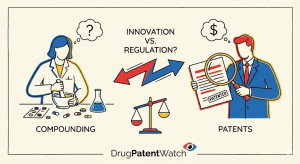
The pharmaceutical landscape is a complex and often contradictory realm, shaped by two powerful and seemingly opposing forces. On one side, there is the relentless drive for groundbreaking innovation, which is secured and monetized through the intricate framework of intellectual property (IP) law, primarily patents. On the other, there is the fundamental, immediate need for personalized patient care, a role traditionally and increasingly filled by the practice of pharmaceutical compounding. For IP, R&D, and business development teams in the pharma and biotech sectors, as well as the legal and investment professionals who support them, this tension is far more than an academic curiosity; it represents a strategic crossroads fraught with both immense risk and unprecedented opportunity. This report will demonstrate that the dynamic conflict between compounding and patents is not a simple narrative of good versus evil. It is, in fact, a nuanced and multi-faceted trilemma involving the crucial incentives for innovator companies, the pragmatic realities of regulatory oversight, and the non-negotiable needs of individual patients. By dissecting the legal frameworks, market dynamics, and real-world case studies, this analysis will provide a roadmap for navigating this complexity and, in doing so, turning what seems like an unavoidable collision into a strategic asset.
The Grand Compromise: Incentivizing Innovation Through Exclusivity
The DNA of a Pharmaceutical Patent: Beyond the Molecule
At its core, a pharmaceutical patent is a legal mechanism, a form of intellectual property, that grants an inventor the exclusive right to a new discovery for a set period, typically 20 years from the date of filing.1 This temporary monopoly is not an act of corporate benevolence; it is the lynchpin of the entire drug development ecosystem. The financial and scientific risks involved in bringing a new drug to market are staggering. A new drug can take an average of 12 years and hundreds of millions of dollars to develop, and a sobering 7 out of every 10 products that eventually reach the market never recoup their initial investment costs.3 Patents are the legal assurance that, should a drug prove successful, the innovator company will have a protected window to recover these monumental costs and generate the profits necessary to fund future R&D.
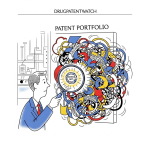
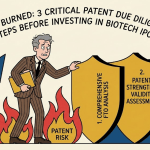
However, a pharmaceutical patent’s protection extends far beyond the core active ingredient, or “composition of matter.” A robust patent portfolio, often referred to as a “patent thicket,” can also cover the drug product’s specific formulation, a new method of using the drug, or even a novel combination with another active ingredient.1 This multi-layered approach to intellectual property protection is a critical strategy for innovators. The existence of these secondary patents is a significant indicator of a company’s proactive lifecycle management strategy. A generic company, for instance, cannot simply wait for the primary patent on the active ingredient to expire. They must navigate a complex web of secondary patents, each potentially requiring its own costly and time-consuming legal challenge. For investors and analysts, a drug with a dense and well-maintained portfolio of secondary patents is a more durable asset, as it pushes back the timeline for generic competition and the inevitable price erosion that follows.
This strategy, known as “evergreening,” is a subject of intense debate. From the innovator’s perspective, evergreening is essential lifecycle management, a way to extend a drug’s commercial viability by obtaining new patents on clinically superior formulations or new routes of administration. A classic example is Eli Lilly’s development of a once-weekly, sustained-release version of its blockbuster antidepressant, Prozac, as the original patent neared expiration.5 Similarly, Bristol-Myers Squibb patented an extended-release formulation of the diabetes drug Metformin, sold as Glucophage XR, which permitted once-daily dosing.5 These are seen as genuine improvements that enhance patient compliance and convenience. Conversely, critics argue that evergreening is a tactic to delay competition without providing significant new clinical benefits, which ultimately keeps drug prices artificially high for longer periods.6 This practice, therefore, forces generic competitors to contest a series of patents, increasing legal risk and costs, which in turn can lead to fewer generic entrants and less aggressive price reductions.
Hatch-Waxman and the Orange Book: The Rulebook for Competition
The legislative foundation for this delicate balance in the United States is the Drug Price Competition and Patent Term Restoration Act of 1984, better known as the Hatch-Waxman Act.4 This landmark legislation was designed as a grand compromise. It created an expedited pathway for generic drugs to enter the market via the Abbreviated New Drug Application (ANDA) process, which allows generic manufacturers to rely on the innovator’s clinical data to establish safety and efficacy.8 In return, the Act provided innovators with a mechanism for Patent Term Extensions (PTEs) to compensate for the time their patents were effectively inactive while the drug underwent the lengthy FDA approval process.4
The entire system is governed by a remarkable tool: the FDA’s Orange Book. This publicly available database lists all patents and regulatory exclusivities for approved drugs, providing a roadmap for potential generic entrants.4 A crucial incentive within this framework is the 180-day market exclusivity granted to the first generic company to successfully challenge a listed patent with a Paragraph IV certification.4 This provides a powerful, if temporary, reward for those willing to take on the risk of patent litigation.
However, the reality of the Hatch-Waxman Act has revealed a paradox. A study found that an astonishing 91% of drugs that obtain patent term extensions continue their monopolies well past the expiration of those extensions, often by relying on secondary patents.9 The law’s original intent was to create a clear off-ramp for competition once a drug’s core patent expired. Instead, innovators have used the law’s provisions to build a more complex and fortified IP fortress. This forces potential competitors to navigate a series of legal challenges, which can be both expensive and time-consuming. The resulting delays in generic entry can lead to fewer competitors and less aggressive price drops, which is a critical piece of information for analysts and investors when forecasting future revenue streams and market dynamics.
The Art of Tailored Medicine: Compounding’s Vital Role
Manufacturing vs. Compounding: A Fundamental Distinction
The world of pharmaceuticals is not just defined by mass production. While manufacturing is the large-scale, mass production of standardized, FDA-approved drugs for a broad audience, compounding is the “custom-made” preparation of a medication for a single patient based on a licensed practitioner’s prescription.11 This is a crucial distinction that lies at the heart of the debate. Compounding pharmacies exist to address a critical and often overlooked void in patient care. They are indispensable for individuals who cannot be treated with a commercially available drug, such as patients with allergies to inactive ingredients (excipients), those who require a different dosage not available from a manufacturer, or pediatric and geriatric patients who cannot swallow pills and need a liquid formulation.12 Compounding also plays a key role during drug shortages or when a specific drug has been discontinued and is no longer mass-produced but remains critical for certain patient populations.14
The political and ethical dimensions of this conflict are immense. Patient advocacy groups, like the Alliance for Pharmacy Compounding, champion this cause, representing thousands of pharmacists, technicians, patients, and prescribers.16 When a patient cannot get the medication they need—whether due to a shortage or a unique medical requirement—the sterile legal argument about IP rights starts to lose its force. This is why branded companies are increasingly active in public relations, trying to win the court of public opinion by emphasizing the safety and efficacy of their FDA-approved products compared to unapproved compounded versions.14 They are fighting a two-front war: one in the courtroom and one in the media.
Understanding the Regulatory Dichotomy: 503A vs. 503B Facilities
The Drug Quality and Security Act (DQSA) of 2013, a direct response to a tragic public health event, fundamentally reshaped the compounding industry by creating a clear legal and regulatory distinction.17 This act established two categories of human drug compounders with vastly different business models and compliance requirements.
503A Pharmacies: These are the traditional, state-licensed compounders. They are eligible for an exemption from Current Good Manufacturing Practice (CGMP) requirements and must compound based on a valid, patient-specific prescription.19 Their business model is rooted in individualized, low-volume production for a specific patient.
503B Outsourcing Facilities: These facilities are voluntarily registered with the FDA. They are subject to strict CGMP regulations and can produce bulk quantities of compounded drugs for “office use,” without a specific patient-specific prescription.19 They are essentially “manufacturing compounded products”.20
The creation of the 503B category was a public health measure intended to ensure the safety of bulk-produced compounded drugs. However, it also inadvertently created a new, legally sanctioned competitor to branded manufacturers. A 503B facility can produce a compounded version of a drug that is on the FDA’s shortage list without a patient-specific prescription.15 This puts them in direct competition with the innovator’s supply chain. The legal framework attempts to prevent a 503B facility from acting as a generic manufacturer by restricting them from making an “essentially a copy” of an FDA-approved drug unless it is on a shortage list.22 This provides the branded company with a legal lever to pull once the shortage is resolved, as seen in recent litigation involving GLP-1 drugs. The following table provides a clear comparison of these two distinct models.
Attribute
503A Compounding Pharmacy
503B Outsourcing Facility
Regulatory Body
State-licensed
FDA-registered
Key Statute
Section 503A of the FD&C Act
Section 503B of the FD&C Act
CGMP Requirements
Exempt
Required
Prescription Requirement
Patient-specific prescription required for each compound
Office-use/Bulk orders allowed without a patient-specific prescription
Primary Use Case
Individualized patient needs (e.g., allergies, different dosage)
High-volume production with stricter federal compliance and greater legal exposure to innovators.
The Regulatory Tightrope: When Patient Need Becomes Legal Peril
The Drug Shortage as a Catalyst: The FDA’s Policy and Its Implications
The FDA recognizes that when a drug is on its shortage list, compounding can serve an important patient need.15 To that end, the restrictions on compounding “essentially a copy” of an approved drug are suspended during a shortage, as long as other conditions are met.15 This policy creates a temporary legal “safe harbor” for compounders. The American College of Physicians, in a recent position paper, described drug shortages as a public health crisis and acknowledged that compounded drugs can play a vital role in meeting patient needs, but noted that their mass distribution should be time-limited to the duration of the shortage.25
This temporary flexibility, however, is not a permanent truce. The FDA’s policy is a fragile and temporary solution. The agency may take action if a facility continues to fill new orders more than 60 days after the shortage is resolved.15 For a compounder, this creates significant business risk. They must quickly ramp up production to meet a crisis, yet be prepared to halt production abruptly once the shortage is declared over. For an innovator, this is a clear signal: once the supply chain is stabilized and the drug is removed from the shortage list, the legal offensive can begin in earnest. The FDA’s policy, far from solving the underlying conflict, simply shifts the battlefield and dictates the timing of the next phase of the conflict.
The “Essentially a Copy” Conundrum
A core legal restriction under both sections 503A and 503B of the FD&C Act is that a compounded drug cannot be an “essentially a copy” of a commercially available, FDA-approved drug.15 The exception, as discussed, is a drug shortage. The GLP-1 saga brings this legal nuance to life in a powerful way. The FDA has stated that some compounded semaglutide products using salt forms (semaglutide sodium and semaglutide acetate) are “different active ingredients than are used in the approved drugs” and that there is “no lawful basis for their use in compounding”.26 This distinction is fundamental to the legal and business battle.
This is a masterful legal move by Novo Nordisk. Instead of just arguing that the compounded drug is an “essentially a copy” and that the shortage is resolved, they are also arguing that the compounders are using a different, unapproved substance altogether. This shifts the legal argument from a patent infringement claim to a direct FDA violation of using an unauthorized API. By framing the issue as a public safety crisis rather than just a business dispute, Novo Nordisk gains a powerful strategic advantage. This demonstrates the critical importance of a deep understanding of not just patent law, but also the chemical and regulatory filings, which is precisely the kind of detailed information provided by platforms like DrugPatentWatch.27
The Battle for the Blockbuster: Two Landmark Case Studies
In-Depth Case Study: The GLP-1 Saga
The meteoric rise of GLP-1 agonists like Novo Nordisk’s Ozempic® and Wegovy® for weight loss and diabetes has created both a global supply chain crisis and an intellectual property battleground. In response to the proliferation of compounded versions of its drugs, Novo Nordisk has filed over 130 lawsuits across 40 states, resulting in 44 permanent injunctions to halt the illegal marketing and selling of what it calls “knockoffs”.28
The company’s strategy goes far beyond a simple patent infringement defense. The lawsuits allege a broader set of violations, including violations of state laws on the “corporate practice of medicine,” improper influence over doctors’ decisions, and the use of fraudulent claims of personalization to steer patients toward unapproved products.28 This demonstrates a systemic offensive against the very business model of some large-scale compounders and their telehealth partners. The FDA has also issued multiple warnings about unapproved compounded GLP-1 drugs, citing concerns over safety, efficacy, and fraudulent products.26 The agency has received hundreds of reports of adverse events, including hospitalizations, linked to compounded semaglutide and tirzepatide, with concerns related to dosing errors and the use of unauthorized salt forms of the active ingredients.26 The fact that the lawsuits also target the use of unapproved salts (semaglutide sodium/acetate) 26 is a brilliant tactical move, as it allows the branded company to frame the issue as a public safety crisis, not just a business dispute. This signals that the threat is perceived not as a one-off infringement, but as a systemic attack on their commercial franchise.
Case Study II: Allergan’s Restasis and the Art of Defense
The litigation surrounding Allergan’s blockbuster dry-eye drug, Restasis®, provides another powerful illustration of the legal tactics used to defend a drug franchise. The company was accused of a “broad-based and ongoing anticompetitive scheme” to maintain its monopoly.29 The allegations, asserted in a class-action antitrust lawsuit, included fraudulently procuring invalid patents and improperly listing them in the Orange Book to delay generic competition.29
A particularly notorious tactic was the “sham” patent transfer to the Saint Regis Mohawk Tribe, an attempt to claim tribal sovereign immunity and prevent patent challenges.29 The failure of this strategy serves as a cautionary tale for other firms contemplating aggressive, non-traditional defensive tactics, highlighting the legal and reputational risks involved. The company also sued a compounding pharmacy, Imprimis, for false advertising and making false claims about the safety and efficacy of its compounded product, which was launched as a cheaper alternative.30 The Restasis case is a masterclass in how far a company will go to protect a blockbuster and the legal and reputational risks involved. It shows that the “evergreening” strategy is not without its legal challenges. The lawsuit’s antitrust angle 29 is crucial because it raises the stakes from a patent-specific dispute to a broader claim of anti-competitive behavior.
“There is very little recognition, for example, that the R&D risk is enormous in our industry. Few people realize that it takes an average of 12 years and $230 million to develop a new drug… Nor do people realize that 7 of every 10 products that do reach the marketplace never recover the average cost of development.” – 3
Turning Data into Advantage: Strategies for Navigating the Landscape
For Innovators: Defending the Franchise and Sustaining the Pipeline
In the face of these challenges, innovators must move from a reactive to a proactive, data-driven strategy. The time to think about defending a drug franchise is during the discovery and development phase, not at launch. This means building a multi-layered patent portfolio that protects not just the active ingredient, but also new formulations, delivery systems, and manufacturing methods.1 This strategic approach creates a dense “patent thicket” that makes it economically unviable for a generic or compounder to enter the market. Additionally, branded companies must invest in supply chain resilience to reduce reliance on compounding pharmacies, as seen in Eli Lilly’s $20 billion investment to bolster GLP-1 agonist production.14 They must also launch educational campaigns to highlight the superior quality and safety of their FDA-approved drugs compared to unapproved compounded alternatives.14
Leveraging competitive intelligence tools is no longer a luxury—it is a necessity. Innovators need an early warning system to monitor patent filings, litigation, and regulatory dockets to anticipate threats and identify invalidity opportunities.31 This is where a platform like
DrugPatentWatch provides immense value. The service offers real-time monitoring of patent expirations and litigation, as well as AI-powered analysis of investigational drugs and competitor R&D pipelines.32 It helps teams track competitor activity, monitor legal disputes, and assess generic entry timelines, turning passive data into actionable business intelligence.27 The days of reactive IP defense are over; a modern IP team must be proactive, using such platforms to make faster, more reliable decisions based on comprehensive, fully cited data.32
For Compounders: Defining a Legitimate Business Model
The GLP-1 lawsuits are a wake-up call for the entire compounding industry. The business model of acting as a pseudo-generic manufacturer is legally and commercially unsustainable. The path to long-term viability lies in reinforcing their original, patient-centric purpose: individualized, patient-focused care. The compounding market is a multi-billion dollar industry 23, and legitimate compounders provide a vital service for patients with unique needs 21 and during drug shortages.15
Compounding pharmacies, especially 503B facilities, must adhere to strict CGMP standards and be hyper-aware of FDA guidance, particularly concerning drug shortages.15 They must also vet their API suppliers to avoid using unapproved ingredients that can trigger FDA action and lawsuits.26 The legal framework is complex and unforgiving; a single violation can lead to devastating consequences. For a compounder to thrive, it must prioritize quality and compliance above all else and clearly articulate its value proposition as a provider of truly personalized solutions, not just cheaper alternatives.
For Investors and Analysts: Identifying Risk and Opportunity
Sophisticated investors and analysts must look beyond a simple patent expiration date listed in the Orange Book. The value of a branded drug franchise is directly tied to the strength and duration of its market exclusivity.1 A true valuation requires assessing the entire “patent thicket,” reviewing litigation history, and tracking all regulatory exclusivities.9 This involves analyzing the number and type of secondary patents, any pending Paragraph IV challenges, and the existence of any orphan drug or pediatric exclusivities. This data provides a more realistic timeline for generic or compounded entry and thus a more accurate valuation of the asset.
The growth of the compounding market, valued at USD 17.31 billion in 2024 with a projected CAGR of 6.9% 23, signals a significant disruption to the traditional pharmaceutical model. Investors need to understand how this growth impacts the revenue streams of branded pharma companies. They also need to be aware of the patient and political advocacy surrounding drug shortages and pricing.25 The rise of compounding isn’t just a regulatory story; it’s a market story that reflects a growing demand for personalized, accessible healthcare that the traditional pharma model, with its mass-produced, high-cost drugs, is sometimes failing to meet. Smart investors will look for opportunities to fund technologies that bridge this gap, perhaps by investing in companies that work with 503B facilities on novel, yet compliant, formulations.
Key Takeaways
The fundamental conflict between pharmaceutical innovation and patient-specific compounding is a dynamic trilemma involving innovator incentives, regulatory oversight, and patient needs.
Proactive Strategy: Innovators and investors must move from a reactive defense of their IP to a proactive, data-driven strategy. This includes building multi-layered patent portfolios and leveraging competitive intelligence tools to anticipate threats from both generic manufacturers and compounders.
The Patient-Centric Model: Legitimate compounders must double down on their patient-centric value proposition, providing truly customized and high-quality medications for unmet needs, rather than attempting to compete as pseudo-generic manufacturers.
A Hybrid Future: The future of medicine will likely involve a hybrid model where FDA-approved drugs coexist with specialized, high-quality compounded therapies for specific patient populations and during critical shortages. The legal and regulatory framework will continue to evolve to manage this complex coexistence.
Conclusion
The conflict between compounding and patents is a microcosm of a larger societal debate about the future of healthcare. It forces a confrontation between the economic imperatives that drive innovation and the fundamental human right to health and access to necessary medicines. The current system, while imperfect, attempts to strike a balance through intricate legal and regulatory mechanisms like the Hatch-Waxman Act and the DQSA. However, as the GLP-1 and Restasis® cases vividly illustrate, this balance is constantly tested by market forces, technological advancements, and the pressing needs of patients.
To navigate this landscape, a nuanced and strategic approach is required. For innovators, this means building more robust IP portfolios and supply chains, while actively engaging in a public dialogue about the value of FDA-approved drugs. For compounders, it necessitates a renewed focus on quality, compliance, and a patient-centric business model that avoids the legal and commercial perils of mass-market competition. And for investors and analysts, it demands a sophisticated understanding of the underlying legal frameworks and market dynamics to accurately assess risk and identify genuine opportunities. The path forward is not about choosing a side, but about embracing a complex and evolving reality where innovation and regulation must not only coexist but must also find ways to serve the ultimate goal: a more balanced and effective healthcare system for all.
FAQ Section
Q: Is a compounded drug the same as a generic drug?
A: No, they are fundamentally different from a legal, regulatory, and business standpoint. A generic drug is an FDA-approved, mass-produced version of a brand-name drug whose patent has expired. It must demonstrate “therapeutic equivalence” to the original drug, meaning it has the same active ingredient, strength, dosage form, and route of administration. In contrast, a compounded drug is not FDA-approved. It is a custom-made medication prepared for an individual patient to meet a specific medical need, such as an allergy to an inactive ingredient or the need for a different dosage form.
Q: What is the legal distinction between a “patent” and a “regulatory exclusivity”?
A: A patent is a property right issued by the United States Patent and Trademark Office (USPTO) that grants the owner the right to exclude others from making, using, or selling the invention for a limited time, typically 20 years from the filing date. It is based on the novelty and non-obviousness of the invention. In contrast, regulatory exclusivity is a marketing right conferred by the FDA upon a drug’s approval, which provides a period during which the FDA is barred from approving certain applications from competitors. Exclusivity is granted for a specific duration (e.g., 5 years for a New Chemical Entity) and is tied to the drug’s approval status, not the patent itself. Patents and exclusivities can run concurrently but are distinct and governed by different laws.
Q: How does a drug shortage legally change the relationship between a branded manufacturer and a compounder?
A: When a drug is on the FDA’s drug shortages list, some federal law restrictions may not apply to compounded drugs. The primary change is the temporary suspension of the legal restriction that prevents compounders from making a drug that is “essentially a copy” of an FDA-approved drug. This allows compounders to fill a critical public health need. However, this is a temporary and fragile allowance. The FDA may take action against compounders who continue to produce the drug after the shortage has been resolved, or if they fail to meet other statutory requirements.
Q: What is “evergreening” and how does it relate to the Hatch-Waxman Act?
A: Evergreening is a business strategy in which an innovator company seeks to extend the life of a drug’s market exclusivity by obtaining additional, “secondary” patents for modifications or variations to the original invention. Examples include new formulations, delivery systems, or indications. The Hatch-Waxman Act, while intended to facilitate generic entry, inadvertently provided a framework that enabled this practice by allowing patents on these incremental improvements to be listed in the Orange Book and challenged individually. While innovator companies view this as legitimate lifecycle management, critics argue it delays generic competition and keeps drug prices high without significant clinical benefits.
Q: Beyond litigation, what are the primary business strategies that branded companies are using to counter the rise of compounding pharmacies?
A: In addition to litigation, branded companies are employing three key business strategies. First, they are focusing on supply chain resilience by investing billions of dollars to bolster manufacturing capacity and reduce the risk of shortages. This aims to eliminate the primary reason patients and physicians turn to compounders. Second, they are developing new, proprietary formulations that are difficult to replicate, such as advanced delivery systems or combinations, making it impractical for compounders to create a truly equivalent product. Finally, they are engaging in public education campaigns to highlight the rigorous safety, efficacy, and quality standards of FDA-approved drugs, framing compounded alternatives as a significant health risk.