Pharmaceutical value is not built exclusively in the laboratory. It is won and lost on the global chessboard of intellectual property law, regulatory timing, and international pricing policy. While a drug’s scientific profile determines its clinical destiny, the commercial return on that science is shaped by something more arcane: the precise, country-by-country calculation of how long exclusivity actually lasts.
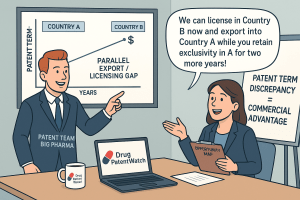
Patent term discrepancies across major markets are not random. They are the predictable output of divergent legal frameworks — the U.S. Patent Term Extension (PTE) versus the EU Supplementary Protection Certificate (SPC), different regulatory review clocks at the FDA and EMA, mismatched filing deadlines, and the timing of first launch decisions. Each variable compounds the others. The net result is that the same molecule can lose exclusivity 18 to 36 months earlier in one major market than in another. That gap is not a footnote in a regulatory affairs memo. It is an addressable business event worth hundreds of millions of dollars in revenue, market share, and IP valuation.
This guide is written for the teams that need to act on those gaps: pharmaceutical IP leads, portfolio managers, licensing strategists, M&A advisors, and institutional investors with significant pharma exposure. It integrates the foundational legal doctrine of patent exhaustion, a granular mechanical comparison of the PTE and SPC systems, offensive playbooks for parallel traders and generic filers, defensive toolkits for originators, and an investment-grade analysis of how blockchain and voluntary licensing are reshaping the rules of play.
The Economics of Parallel Trade: Regulatory Arbitrage as a Business Model
Parallel trade — also called parallel importation — is the cross-border movement of genuine, non-counterfeit branded pharmaceuticals that were purchased legally in one country and resold in another without the originator’s direct authorization. These are not counterfeits or grey-market substitutions. They are authentic products of the manufacturer, moving through distribution channels that run independently of the officially licensed supply chain.
The engine driving this entire business is regulatory arbitrage. Unlike most goods, the price of a prescription medicine is rarely set by competitive market forces. National governments and statutory health insurers negotiate or dictate ex-factory prices as a tool for managing public healthcare expenditure. The result is a pricing map with dramatic, government-engineered differentials across markets. The same branded oncology product may carry a negotiated price of EUR 1,200 per pack in Greece and EUR 4,800 in Germany — for chemically identical product manufactured at the same facility.
That EUR 3,600 spread is the business opportunity. A parallel distributor buys at Greek prices, imports into Germany, sells at a discount to the German reference price, and pockets the margin. From a pure arbitrage standpoint, the logic is watertight.
The Static vs. Dynamic Efficiency Conflict
The political economy of parallel trade rests on a genuine, unresolved tension between two competing notions of market efficiency that are central to any analysis of global pharmaceutical IP policy.
Static efficiency arguments favor parallel trade. The theory holds that allowing lower-cost product to flow from regulated low-price markets into high-price markets puts downward pressure on prices, benefits payers, and corrects artificial market segmentation. The EU’s foundational commitment to the free movement of goods is partly rooted in this logic. For decades, policymakers in Brussels and national health ministries pointed to parallel imports as a cost-containment mechanism that the market itself could supply.
The dynamic efficiency argument runs the opposite direction. Pharmaceutical R&D is a global fixed cost. AstraZeneca’s investment in developing osimertinib (Tagrisso) — approximately $4 billion in development spend before the first commercial sale — must be recovered from sales across markets with radically different willingness and ability to pay. Differential pricing is not price discrimination in the pejorative sense; it is the mechanism that makes the drug available at any price in lower-income markets while generating the revenue surplus that funds the next program. Parallel trade attacks this model directly. When low regulated prices from Greece are ‘exported’ into Germany via arbitrage, the high-price market’s ability to subsidize global R&D erodes.
This is not a purely theoretical concern, and the empirical evidence on who actually captures the financial gains from parallel trade is damning to the pro-trade argument. A London School of Economics analysis of parallel trade across six EU markets found that in the UK, the gross maximum benefit to parallel traders was approximately EUR 518 million, while the direct saving to the statutory health system was under EUR 7 million. The traders captured the arbitrage; the health system barely registered the benefit. That finding fundamentally changes the policy calculus. The trade-off is not ‘slightly lower prices today versus slightly less innovation tomorrow.’ It is ‘a wealth transfer to distribution intermediaries today versus materially reduced incentive to fund novel drug development tomorrow.’
Key Takeaways: Parallel Trade Economics
The price differentials creating parallel trade opportunities are government-engineered, not market-generated, making them politically durable but economically distorting. The financial beneficiary of the practice is the intermediary supply chain, not the end-payer. The dynamic efficiency argument against the practice is empirically stronger than its political visibility would suggest. Any IP strategy framework that ignores parallel trade dynamics is incomplete, because those dynamics directly affect a product’s effective commercial life and therefore its IP valuation.
Investment Strategy Note
Institutional investors evaluating pharma equities should model the share of EU revenues for key products that are exposed to parallel import pressure. A product with significant price dispersion across EU/EEA markets and a large pack-size differential is a higher parallel trade risk than a product with EU-harmonized pricing or specialized delivery systems. The revenue erosion from parallel imports rarely appears as a discrete line item in financial disclosures, but it is measurable via pharmacy-level dispensing data and national reimbursement databases. For products approaching SPC expiry in low-price source countries while retaining PTE protection in the U.S., model the window of maximum parallel trade risk precisely — it is bounded, predictable, and often not yet priced into consensus revenue estimates.
The Legal Bedrock: Patent Exhaustion and What It Actually Means for Market Access
The entire multibillion-dollar business of pharmaceutical parallel trade rests on a single legal principle: the exhaustion of intellectual property rights. Every offensive and defensive strategy discussed in this guide is downstream of how a given jurisdiction interprets this doctrine.
The First Sale Doctrine
Patent exhaustion — also called the first sale doctrine — establishes that once a product protected by an IP right has been sold by the IP holder or with its consent, the holder’s right to control the distribution of that specific physical unit is extinguished. The buyer may resell, transfer, or otherwise dispose of the item without requiring further authorization. The IP holder has extracted their monopoly rent from the first sale; they cannot collect a second toll on every downstream transaction.
This principle is uncontroversial within a single domestic market. The commercial disputes arise when goods cross borders. Does the authorized first sale of a patented drug in Greece exhaust the patent holder’s rights in Germany? The answer varies by jurisdiction, and that variance is the source of every parallel trade opportunity on the planet.
Three Exhaustion Regimes and Their Strategic Implications
National exhaustion treats the IP holder’s rights as exhausted only within the country of the first authorized sale. Under this model, the patent holder can prevent importation of their own genuine products sold in any other country, using their domestic patent as a border control mechanism. National exhaustion grants maximum control over international distribution and pricing. It is the most protectionist model, used by China, much of sub-Saharan Africa, and several Southeast Asian economies. For a parallel trader, a national exhaustion jurisdiction is a legal dead end.
Regional exhaustion is the model employed by the EU and EEA. Once a product is placed on any EEA market with the patent holder’s consent, IP rights are considered exhausted throughout the entire EEA. A Spanish sale exhausts German, French, and Nordic rights simultaneously. However, a sale in the U.S. or India does not exhaust EEA rights. The EEA becomes a free-trade zone internally while operating as a fortress against imports from outside the bloc.
International exhaustion is the most permissive model. A single authorized sale anywhere in the world exhausts the IP holder’s rights globally. The U.S. Supreme Court affirmed this principle for patents in its 2017 ruling in Impression Products, Inc. v. Lexmark International, Inc., a decision with far-reaching consequences for all IP-intensive industries. Japan reached the same conclusion in the BBS Kraftfahrzeug Technik AG case. Under international exhaustion, a patent holder cannot use a domestic patent to block imports of their own genuine product sold abroad.
The TRIPS Agreement, which harmonized core IP standards across WTO member states, deliberately left the question of exhaustion to each member’s discretion under Article 6. That ‘agreement to disagree’ is precisely why the fragmented global landscape exists. Any parallel trade strategy — offensive or defensive — must begin with a country-by-country exhaustion regime map. A strategy designed for EU regional exhaustion will not transfer to China, and the U.S. result under Impression Products does not mean commercial-scale parallel importation into the U.S. is legally or practically viable (for reasons discussed in the FAQ below).
Regime
Core Rule
Effect on Parallel Imports
Key Jurisdictions
National Exhaustion
Rights exhausted only in country of first sale
Parallel imports blocked; patent holder can exclude
China, many African and Southeast Asian nations
Regional Exhaustion
Rights exhausted across entire designated region after first sale in any member state
Parallel imports permitted within the region; blocked from outside
EU/EEA
International Exhaustion
Rights exhausted globally after any authorized first sale worldwide
Parallel imports generally permitted
U.S. (patents), Japan, Argentina, South Africa
Key Takeaways: Exhaustion Doctrine
The exhaustion regime in each target market is the threshold legal question for any parallel trade strategy. It determines whether a proposed trade route is a business opportunity or patent infringement. The EU regional exhaustion model creates the world’s most active market for pharmaceutical parallel trade, precisely because it mandates free movement of goods within the bloc while blocking outside competition. Post-Brexit, the UK-EU asymmetric exhaustion arrangement has created a new category of supply chain risk that is still being fully absorbed by the industry.
The Ticking Clock: PTE vs. SPC and the Exploitable Time Gaps They Create
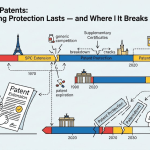
The legal gateway for parallel trade is patent exhaustion doctrine. The actual opportunity is created by time — specifically, by the systematic differences between how the U.S. and EU compensate pharmaceutical companies for the regulatory review time that erodes effective patent life. These differences produce predictable, cross-border discrepancies in when a drug’s exclusivity actually ends in each major market.
The Standard 20-Year Term and Its Practical Erosion
Under TRIPS, the standard patent term in most jurisdictions is 20 years from the filing date of the patent application. That 20-year clock starts ticking when the patent is filed, typically many years before a drug enters clinical development. By the time the FDA or EMA grants marketing authorization, 10 to 15 years of the patent term have commonly elapsed. Without some form of term restoration, a drug might have as little as 5 to 8 years of exclusivity to recover R&D costs that typically exceed $2 billion per approved molecule by standard industry accounting (and considerably more by full-cost accounting that includes capital costs and the cost of failures).
Both the U.S. and EU created legal mechanisms to restore a portion of this lost time. They did so in structurally different ways that produce different outcomes — and it is those differences that generate the arbitrage windows.
U.S. Patent Term Extension (PTE): The Hatch-Waxman Framework
The PTE mechanism in the United States was created by the Drug Price Competition and Patent Term Restoration Act of 1984 — universally called the Hatch-Waxman Act. The Act was a deliberate legislative bargain: accelerate generic entry by creating the Abbreviated New Drug Application (ANDA) pathway, and compensate originators by partially restoring the patent term consumed by FDA regulatory review.
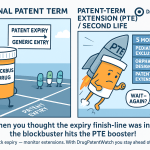
A PTE is an extension of the underlying patent’s term, not a new or separate IP right. When a PTE is granted, the expiration date of the original patent is pushed out. The USPTO administers the PTE process in collaboration with the FDA. Key mechanical features:
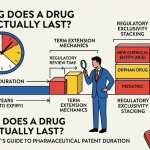
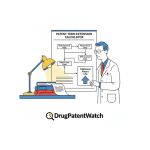
The extension is calculated as the sum of half the time spent in clinical trials (Phase I through III) plus the full time spent in FDA regulatory review, minus any periods of applicant lack of due diligence. Two hard caps apply: the extension cannot exceed five years in absolute terms, and the total remaining patent term after FDA approval (original term remaining plus extension) cannot exceed 14 years. The 14-year effective exclusivity cap is the binding constraint for most blockbuster drugs, since by the time a major drug reaches approval, the remaining original patent term is often well under 14 years.
The filing deadline is critical and frequently underappreciated: the PTE application must be submitted to the USPTO within 60 days of FDA approval. Missing this 60-day window is a permanent, unrecoverable forfeiture. There is no petition process for late filing. For a drug generating $3 billion in annual U.S. revenue, missing the PTE window by a week is a multi-billion-dollar error in patent lifecycle management.
The extension covers the approved product and its approved uses or manufacturing methods. A PTE does not extend claim scope beyond what was covered in the original patent for the approved indication and formulation.
Pediatric exclusivity under the Best Pharmaceuticals for Children Act (BPCA) provides an additional six months of exclusivity — not an extension of the patent itself, but a period during which the FDA will not approve ANDAs or 505(b)(2) applications. This six-month period attaches to any existing PTE as well, potentially extending effective exclusivity further.
EU Supplementary Protection Certificate (SPC): A Sui Generis Right
The EU took a structurally different approach. Rather than extending the existing patent, it created a separate, sui generis intellectual property right called the Supplementary Protection Certificate. The SPC is governed principally by Regulation (EC) No. 469/2009 (for medicinal products) and Regulation (EC) No. 1768/92 (its predecessor).
The SPC comes into force the day after the underlying basic patent expires and provides up to five additional years of product-specific exclusivity. It is not a patent. It is a distinct right that requires a separate application in each EU member state where protection is sought. A company that wants SPC coverage across 27 EU member states must file 27 individual national SPC applications — each subject to local procedural rules, even though the governing EU regulation is harmonized in theory.
The SPC term calculation differs meaningfully from the U.S. system. The duration equals the period between the filing date of the basic patent and the date of the first Marketing Authorisation (MA) in the EEA, minus five years. The maximum duration is five years. The overarching policy goal is to provide a total effective exclusivity period of up to 15 years from the date of the first EEA MA — compared to 14 years from FDA approval in the U.S. That 12-month difference is not trivial at the revenue levels involved.
The SPC filing deadline is six months from the date of the MA or six months from the date the basic patent was granted, whichever is later. This is dramatically more forgiving than the U.S. 60-day deadline, but the EU system creates complexity because SPC eligibility requires that the product be covered by a ‘basic patent in force’ and that a ‘valid authorisation to place the product on the market as a medicinal product’ has been granted. The interpretation of what constitutes adequate patent coverage for SPC purposes has been heavily litigated before the CJEU, most notably in cases like Teva UK Ltd v. Gilead Sciences Inc. (C-121/17), which established the ‘core inventive advance’ test for determining whether an active ingredient combination is ‘protected by a basic patent in force’ for SPC purposes.
An additional six months of SPC protection — the Paediatric Extension — is available for products for which an approved Paediatric Investigation Plan (PIP) has been completed. This mirrors the U.S. pediatric exclusivity incentive in its intent, though the mechanics and conditions differ.
Where the Gaps Come From: A Mechanical Analysis
The discrepancies between effective exclusivity end dates in the U.S. and EU arise from at least five compounding sources:
Different regulatory review timelines at the FDA vs. EMA mean the period that PTE and SPC calculations are measuring differs by product and by submission strategy. A drug that benefited from FDA Priority Review and a six-month approval clock will calculate a very different PTE than one that went through standard review. EMA timelines are governed by a 210-day clock (with clock stops), producing a different input for the SPC formula.
Sequential versus simultaneous regulatory submissions are common. Many companies file for FDA approval before EMA approval, or vice versa. Because the SPC term is measured from the first EEA MA, a late EU submission relative to a U.S. approval can materially shorten the SPC duration or, conversely, push the SPC start date to align better with late-expiring basic patents.
The patent filing landscape itself creates divergence. A U.S. patent and a European patent covering the same molecule may have different filing dates, prosecution timelines, and grant dates, all of which affect PTE and SPC calculations independently.
The 60-day vs. six-month filing window differential creates a category of products where companies secured EU SPCs but missed or elected to forgo U.S. PTEs due to portfolio prioritization, administrative error, or a calculated judgment that the 14-year cap would render a PTE worthless anyway. These products have U.S. market exclusivity that ends earlier than EU exclusivity — an unusual but commercially significant scenario.
Pediatric extensions are available in both systems but are not always pursued for every product in every market, creating a further source of asynchrony between U.S. and EU effective exclusivity dates.
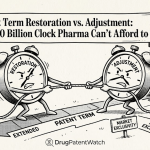
The net result: for a meaningful proportion of top-selling branded pharmaceuticals, the effective exclusivity end date in the EU (determined by SPC expiry plus any pediatric extension) and in the U.S. (determined by patent expiry plus PTE plus any pediatric exclusivity) diverge by one to three years. For a drug generating $1 billion per year, a 24-month gap represents a $2 billion revenue exposure window.
Real-World Example: Imatinib (Gleevec/Glivec)
Novartis’s imatinib mesylate, marketed as Gleevec in the U.S. and Glivec in Europe, illustrates the complexity. The compound patent expired in 2015 in the U.S. after a PTE, while Novartis pursued additional patent protection through a series of formulation, polymorphic form, and method-of-use patents that were themselves subject to extensive Paragraph IV challenges. In Europe, the SPC situation varied by country depending on when national MAs were granted and which patents served as the basis for SPC applications. Indian generic manufacturers challenged Novartis’s attempts to patent a new crystalline form of imatinib (the Section 3(d) litigation in India), highlighting how the same molecule generates completely different IP lifespans across jurisdictions. The imatinib IP lifecycle is a master class in cross-border exclusivity divergence.
Key Takeaways: PTE vs. SPC Mechanics
The structural differences between PTEs and SPCs are the direct source of exploitable cross-border patent expiry gaps. The 14-year effective exclusivity cap in the U.S. vs. 15 years from first EEA MA in the EU is the headline difference, but the compounding effects of different review timelines, filing deadlines, patent grant timing, and pediatric extension decisions produce drug-specific divergences that must be modeled individually. A product-level, country-level patent expiry analysis — not a generic industry-level assumption — is required for accurate IP valuation and competitive strategy.
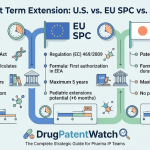
Feature
U.S. Patent Term Extension (PTE)
EU Supplementary Protection Certificate (SPC)
Enabling Legislation
Hatch-Waxman Act of 1984
Regulation (EC) No. 469/2009
Administering Body
USPTO / FDA
National patent offices of each EU member state
Nature of Right
Extension of original patent term
Separate, sui generis right; begins day after patent expires
Maximum Extension
5 years
5 years
Effective Exclusivity Cap
14 years from FDA approval date
Up to 15 years from first EEA Marketing Authorisation
Pediatric Incentive
+6 months (BPCA Pediatric Exclusivity)
+6 months (Paediatric Investigation Plan completion)
Filing Deadline
60 days from FDA approval
6 months from MA grant or patent grant (whichever later)
Coverage Scope
Approved product, method of use, method of manufacture
Active ingredient(s) covered by the basic patent
Multi-jurisdiction Filing
Single USPTO filing
Separate application in each EU member state
IP Valuation Implications: How Patent Term Discrepancies Affect Asset Pricing
The patent term gap analysis above is not merely regulatory trivia. It directly determines the IP valuation of pharmaceutical assets, which is the core input to licensing deal terms, M&A transaction pricing, royalty rate negotiations, and portfolio impairment decisions.
Roche’s Ocrelizumab (Ocrevus): A Valuation Case Study
Ocrelizumab, marketed as Ocrevus for relapsing and primary progressive multiple sclerosis, generated over $7 billion in annual global revenues at peak. The compound patent protection, SPC coverage in Europe, and PTE in the U.S. expire on different dates. The U.S. exclusivity profile is supported by the compound patent plus a PTE, along with a suite of method-of-use and formulation patents that Roche has aggressively maintained. European SPC expiry dates vary by member state depending on when national MAs were first granted. Biosimilar developers have been actively monitoring these dates to time their development programs and Paragraph IV-equivalent European challenges.
For a portfolio manager building an ocrelizumab biosimilar launch model, the difference between a 2028 vs. 2030 SPC expiry in Germany is roughly $1.4 billion in biosimilar-available revenue assuming a 70% market penetration rate for biosimilars in that product category. That is a material input to the biosimilar developer’s investment case, which means it is equally material to Roche’s defensive IP strategy.
Valuation Methodology for Patent-Driven Exclusivity
IP teams and financial analysts should use a ‘risk-adjusted net present value’ (rNPV) framework to price patent term discrepancies explicitly. The methodology:
Establish the base case revenue forecast for the branded product in each major market through the expected loss-of-exclusivity date. Apply a probability of exclusivity survival that accounts for: Paragraph IV litigation risk in the U.S. (is there an active ANDA challenge?), SPC validity challenges in key EU markets (Germany, UK, Netherlands are the most active SPC litigation jurisdictions), interplay between overlapping patents in the ‘patent cluster’ or ‘patent thicket’ around the molecule, and regulatory data exclusivity that may provide protection even after patents expire.
Discount the post-LOE revenue decline curve by the probability that generic or biosimilar entry occurs on the currently projected date versus one to two years earlier due to successful IP challenge. The spread between these scenarios is the ‘IP risk premium’ embedded in the asset’s valuation.
For an asset with $3 billion in annual revenue and a contested U.S. PTE worth 18 months of additional exclusivity, the PTE alone has a pre-tax rNPV of approximately $3.0 billion x 1.5 years x 0.85 (post-tax margin) x probability of PTE survival under litigation x discount factor. At an 85% PTE survival probability and a 10% cost of capital, the PTE is worth roughly $3.2 billion on a standalone basis. That is the number IP teams should be defending and acquirers should be stress-testing in due diligence.
The Parallel Trader’s Playbook: Offensive Strategies for Exploiting Patent Term Gaps
Step 1: Data-Driven Opportunity Identification
The foundation of any viable parallel trade strategy is systematic market intelligence that identifies products exhibiting two simultaneous conditions: a significant and durable price differential between source and destination markets, and a patent status configuration that makes the arbitrage legally permissible in both jurisdictions.
Price differential analysis must go beyond ex-factory list prices. A competent modeling framework includes statutory distribution margins for wholesalers and retail pharmacists in the destination country — because those margins can be substantial and often represent a hidden profit pool on top of the underlying price arbitrage. In some EU markets, pharmacist dispensing margins for parallel-imported products are explicitly protected by national regulation and may exceed the margins available on the originator’s domestically sourced product. This means a viable parallel trade route can exist even when the ex-factory price differential is relatively modest, provided the distribution economics in the destination country are favorable.
Patent status analysis requires product-level, country-level granularity. The target profile is a product where SPC expiry (or basic patent expiry if no SPC was obtained) has already occurred in the source country while PTE protection or a valid SPC remains in force in the destination country. This creates a window where the source country has generic competition (driving down local prices) while the destination country retains monopoly pricing. The generic-priced product from the source country can then legally flow into the destination country and undercut the branded price while still generating substantial margin.
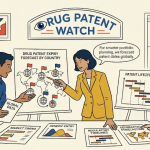
Identifying these asynchronous ‘patent cliffs’ across hundreds of products and dozens of countries is the analytical challenge at the center of this business. Platforms like DrugPatentWatch aggregate data from the FDA Orange Book, the USPTO, EMA product databases, and national patent office records to map global expiry dates — including PTE and SPC terms — in a format that enables systematic opportunity scanning. The ability to set automated alerts on SPC expiry events in specific source markets, cross-referenced against active exclusivity in destination markets, transforms this from a periodic manual exercise into a continuous surveillance capability.
Step 2: EU Regulatory Navigation
The EU provides a simplified marketing authorization pathway for parallel imports that is designed to prevent duplicative safety reviews for products that are already authorized in the destination country. The parallel importer does not submit a full clinical dossier; instead, they demonstrate that the imported product is ‘essentially similar’ to the product authorized for sale in the destination market. The national competent authority (NCA) of the destination country confirms the authorization and issues a Parallel Import License (PIL).
This abbreviated pathway dramatically reduces time to market compared to filing a standard generic ANDA or biosimilar application. A skilled parallel importer with good regulatory relationships can have a PIL in hand within six to nine months of identifying an opportunity. That speed advantage matters enormously when a source country’s SPC expires and a brief window exists to capture market share before the destination country’s own SPC expires and domestic generics flood the market.
Step 3: The Falsified Medicines Directive Compliance Imperative
The EU Falsified Medicines Directive (FMD, Directive 2011/62/EU), implemented at pack level from February 2019, has fundamentally changed the operational mechanics of parallel trade. The FMD requires each prescription medicine pack to carry a Unique Identifier (UI) — typically a two-dimensional DataMatrix barcode encoding the product code, serial number, batch number, and expiry date — and an Anti-Tampering Device (ATD) showing whether the packaging has been opened.
For parallel importers, the problem is structural. To comply with local language requirements in the destination country, they must open the original sealed packaging to insert a new patient information leaflet. Opening the pack necessarily destroys the manufacturer’s original ATD. The importer must then apply a new, verifiable ATD and ensure the UI remains scannable and correctly uploaded to the EU Medicines Verification System (EMVS).
This operational reality has ignited one of the most commercially consequential EU pharmaceutical law disputes of the past decade: whether parallel importers must re-box products in entirely new packaging, or whether they can re-label the original box and apply a new ATD. Importers strongly prefer re-boxing — it produces a cleaner product and allows them to present their own label. Originator companies have aggressively challenged re-boxing as trademark infringement.
The CJEU’s 2022 ruling in Novartis AG v. Abacus Medicine A/S (C-253/20) significantly curtailed the re-boxing option. The court held that breaking an ATD does not automatically make re-boxing ‘objectively necessary’ for market access. Re-boxing is only permissible under specifically defined circumstances, such as when the original pack size is unauthorized in the destination country. For most situations, the importer must re-label the original packaging and apply a compliant replacement ATD.
The compliance cost of implementing FMD-compliant re-labeling and ATD replacement operations has increased significantly, narrowing the effective margin available to parallel traders. This operational pressure, combined with the legal exposure created by the Novartis v. Abacus ruling, has effectively raised the minimum viable profit margin required for a parallel trade route to be commercially sustainable.
Step 4: The Generics-to-Brand Rebranding Play
The highest-risk, highest-theoretical-reward strategy in the parallel trade playbook involves importing a generic version of a drug from one jurisdiction and attempting to sell it under the originator’s trademark in the destination market. The incentive is obvious: buy at generic prices, sell at brand prices. The legal obstacles are severe.
Under EU trademark law, such rebranding constitutes prima facie trademark infringement unless the importer can satisfy the demanding conditions established by the CJEU in the BMS line of cases. The importer must demonstrate that the branded and generic products are manufactured by economically linked entities (typically under a licensing arrangement), that the originator’s use of different branding in different markets constitutes ‘artificial partitioning’ of the single market, and that the rebranding is objectively necessary to gain effective market access — not merely more profitable.
The letrozole/Femara case in the Netherlands — involving attempts to import unbranded letrozole from Belgium and sell it as Novartis’s branded Femara — illustrates how courts apply this analysis. The ‘objective necessity’ standard is a very high bar. It requires demonstrating that the importer would be effectively excluded from the market if forced to sell the product under its generic name. Commercial preference for the brand premium does not meet that standard.
Key Takeaways: Offensive Playbook
Viable parallel trade opportunities in 2026 require more rigorous pre-launch analysis than a decade ago. FMD compliance costs and stricter CJEU trademark rulings have raised the minimum margin threshold. The most defensible routes are those where the price differential is large, the re-labeling operation is straightforward, and the patent/SPC configuration creates a multi-year exclusivity window rather than a brief gap. Data platforms that provide real-time SPC and PTE expiry tracking across 100-plus countries are now a baseline operational requirement, not a competitive differentiator.
The Originator’s Fortress: Defensive Strategies and IP Lifecycle Management
For innovator companies, parallel trade represents a compound threat: it erodes revenues in high-price markets, undermines global price architecture, and potentially exposes confidential regulatory data through repackaging operations. Direct price countermeasures — harmonizing prices across the EU, for example — are largely unavailable because national governments control ex-factory prices by fiat. Originators have therefore developed a sophisticated defensive toolkit that operates largely through IP mechanics, supply chain control, and market structure design.
Strategic Product Versioning: The Most Effective Defense
The most powerful defense against parallel trade is engineering a product portfolio where a clean one-to-one arbitrage comparison is impossible. This approach, known as strategic versioning or product differentiation, involves deliberately marketing different formulations, dosage strengths, pack sizes, or even brand names in different markets.
Consider AstraZeneca’s approach to extended-release metformin (Glucophage XR in some markets, Glucophage in others with different release profiles). Or Pfizer’s longstanding practice of using different brand names and formulations for the same active ingredient in EU member states. When a parallel import license requires the imported product to be ‘essentially similar’ to the domestically authorized product, a deliberate mismatch in dosage form (tablet vs. capsule), strength (20mg vs. 10mg), or release technology (immediate vs. extended release) can create a regulatory mismatch that precludes licensing.
The strategic genius of this approach is that it works pre-emptively. It does not require litigation or regulatory engagement. It simply ensures that the necessary condition for parallel import licensing — essential similarity between the imported and domestic product — cannot be met. The manufacturing cost of maintaining multiple SKUs for the same molecule across markets is real but typically dwarfs the revenue at risk from unchecked parallel trade on a high-volume blockbuster.
Launch Sequencing as a Defensive Weapon
Originators in the EU manage parallel trade exposure through deliberate launch sequencing. The decision of when and in what order to seek national marketing authorisations in EU member states is not purely a commercial access decision — it has a direct impact on which markets will become parallel trade source countries.
Countries with low negotiated prices and robust generic manufacturing sectors (Greece, Poland, Czech Republic, Hungary) are the primary EU parallel export hubs. An originator that launches in Germany and the Netherlands before Greece, and negotiates favorable pricing in major markets before the Greek price is established, faces less severe arbitrage risk than one that grants the Greek MA early and allows the low Greek price to propagate through parallel channels.
This logic also applies to selective product ‘culling.’ When a specific pack size or formulation in a low-price market becomes the dominant source of parallel exports at scale, the originator may calculate that withdrawing that specific SKU from the source market — accepting the revenue loss — is commercially rational given the revenue protection in the high-price destination market. The math is straightforward: if EUR 30 million in annual Spanish revenue is funding EUR 200 million in German parallel imports, the withdrawal calculation is obvious.
Supply Quota Management: The Sot. Lelos Safe Harbor
Direct supply limitation is the most contested defensive tool, because it sits at the intersection of EU trademark law, competition law, and the principle of free movement of goods. The risk of Article 102 TFEU liability for abuse of dominant position was the primary reason originators historically avoided quotas.
The CJEU’s ruling in Sot. Lelos kai Sia EE and Others v. GlaxoSmithKline AEVE (C-468/06 to C-478/06) established the operative legal framework. The court recognized the fundamentally distorted nature of the pharmaceutical market — where prices are set by government regulation, not competitive dynamics — and held that a dominant pharmaceutical company may lawfully refuse to fill ‘abnormal’ orders from wholesalers when that refusal is a ‘reasonable and proportionate’ measure to protect its commercial interests against the threat of parallel trade.
The practical implementation challenge is defining and documenting what constitutes ‘normal’ domestic demand versus an ‘abnormal’ order likely intended for export. Companies that implement quota systems successfully invest significantly in demand modeling: building country-level consumption forecasts based on patient population data, prescription rate benchmarks, and historical ordering patterns. Orders that materially exceed the modeled domestic demand baseline — particularly orders from wholesalers with known parallel export affiliations — are the ‘abnormal’ orders the company may decline.
The cat-and-mouse dimension of this game is genuine. Parallel traders respond by fragmenting their orders across multiple smaller wholesalers, using affiliated entities, and timing orders to avoid detection. Originators respond by investing in distributor relationship transparency and distribution data analytics that can detect coordinated fragmented ordering from economically related entities. This is a data war as much as a legal one.
The Authorized Generic as a Multi-Purpose Strategic Weapon
The authorized generic (AG) strategy is primarily a U.S. tool, but its mechanics deserve granular analysis because they have become central to the economics of patent challenge litigation under Hatch-Waxman.
Under the Hatch-Waxman framework, the first generic filer to submit an ANDA with a Paragraph IV certification challenging an originator patent is rewarded with 180 days of generic exclusivity — a period during which the FDA will not grant final approval to any other ANDA for the same product. This first-filer exclusivity was designed to incentivize the costly and risky business of patent challenge litigation.
The AG is the originator’s countermove. Courts have confirmed that the originator’s own generic version of its branded product does not trigger, and is not blocked by, the first filer’s 180-day exclusivity. This means the originator can launch its own AG on the first day of generic market entry, immediately creating a two-generic market where the first filer expected a duopoly.
The financial impact on the first-filer generic is severe. The FTC’s study on authorized generics documented that their presence during the 180-day exclusivity period reduces the first-filer’s revenues by 40% to 52% relative to a scenario without an AG. The additional price competition from the AG drives retail generic prices down by an incremental 4% to 8% — beneficial for patients and payers, but devastating for the first filer’s investment thesis.
The AG’s most sophisticated deployment is therefore not as an actual launch but as a threat. A credible ‘no-AG commitment’ — a promise by the originator not to launch an AG during the 180-day period — has substantial economic value to a generic challenger. It is routinely incorporated into Paragraph IV settlement agreements as a non-cash form of consideration, exchanged for the generic’s agreement to delay entry until a specified date before actual patent expiry. These settlements, structured under the framework established in FTC v. Actavis, Inc. (2013), are scrutinized under the ‘rule of reason’ antitrust standard. The AG commitment’s value is the key variable the FTC and DOJ examine when assessing whether such settlements amount to ‘reverse payment’ arrangements that harm competition.
Key Takeaways: Defensive Playbook
The most durable defensive strategies are structural, not reactive. Product versioning preempts parallel trade by eliminating the essential similarity condition for parallel import licensing. Launch sequencing manages price architecture before arbitrage routes form. Supply quotas, properly implemented under the Sot. Lelos framework, provide a legally defensible supply-side tool. The AG is a precision instrument for managing Paragraph IV economics that creates optionality across both litigation and settlement scenarios.
Investment Strategy Note
For investors assessing originator companies’ ability to protect revenue from IP exposure, the quality and sophistication of the defensive IP strategy is a valuation factor. A company with a clearly articulated product versioning program across EU markets, a documented supply quota management process, and an active AG deployment history has materially lower parallel trade and generic entry risk than one relying primarily on litigation as its first-line defense. These operational IP management capabilities do not appear directly in financial statements but are observable through product launch patterns, Paragraph IV litigation outcomes, and supply chain disclosures.
Voluntary Licensing as Market Architecture
From Philanthropy to Portfolio Management
Voluntary licensing (VL) — the contractual grant by an originator to a third-party generic manufacturer to produce and sell a quality-assured version of a patented medicine in specified territories — is widely understood as a public health access mechanism. That framing is accurate but incomplete. For the originator’s portfolio management team, VL is an instrument of market architecture: it replaces the risk of uncontrolled parallel trade from low-income markets with a managed, contractually bounded, and potentially royalty-generating alternative.
The Medicines Patent Pool (MPP), established by Unitaid in 2010 and headquartered in Geneva, has become the primary institutional intermediary for structuring these agreements. Since its founding, the MPP has negotiated licenses from companies including Gilead Sciences, Bristol-Myers Squibb, Merck, AbbVie, Pfizer, and Janssen, covering antiretrovirals for HIV, direct-acting antivirals for hepatitis C, COVID-19 treatments including nirmatrelvir/ritonavir (Paxlovid), and oncology agents. The MPP model has become the industry benchmark for ‘access-friendly’ licensing.
Strategic Motivations Beyond Altruism
The decision to enter a voluntary license is a calculated commercial move driven by at least four distinct strategic motivations operating simultaneously.
Market segmentation and anti-diversion control are the primary commercial rationales. An originator’s worst parallel trade scenario is the uncontrolled, unpredictable flow of its product from a low-income country — where it may have been sold at a dramatically reduced access price — into a high-income commercial market in Europe or the U.S. This would catastrophically undermine global price architecture. A VL agreement addresses this directly by including explicit territorial restrictions and anti-diversion clauses that legally prohibit the licensed generic from being exported outside the defined territory. The originator transforms a chaotic black-market risk into an orderly, contractually managed low-price market segment with clear legal perimeters.
ESG and access-to-medicine rankings create tangible financial benefits. The Access to Medicine Index (ATMI), published by the Access to Medicine Foundation, scores major pharmaceutical companies on their access programs. MPP licenses are regarded by the ATMI as the gold standard for ensuring scaled generic access. A strong ATMI ranking influences how ESG-focused institutional investors assess pharmaceutical equities — a category that now represents a significant and growing share of global assets under management. Companies with poor access records face shareholder pressure, negative ESG scoring, and, in some jurisdictions, regulatory attention.
Operational efficiency and revenue generation in otherwise inaccessible markets represent a third motivation. Major originator companies with high-cost structures and R&D-intensive organizations are not well positioned to manufacture and distribute high-volume generic formulations efficiently in markets characterized by low prices, fragmented distribution, and complex local regulatory environments. Licensing to a high-volume generic manufacturer like Sun Pharma, Cipla, or Mylan (now Viatris) outsources these operational challenges to specialists while generating royalty revenue — typically in the low single-digit percentage range on net sales — from markets the originator might otherwise serve at a loss or not at all.
Technology transfer is the fourth and most strategically underappreciated component of VL arrangements. A patent document alone is rarely sufficient to reproduce a complex modern medicine, particularly a biologic or a drug with a sophisticated manufacturing process. True VL partnerships include the transfer of manufacturing know-how, process parameters, analytical methods, and technical assistance. This technology transfer is the element that cannot be obtained through a compulsory license — which grants rights to the patent but not to the proprietary process knowledge that makes the drug manufacturable at scale and acceptable quality. The willingness to transfer technology is therefore a differentiating factor in the depth and durability of VL partnerships and in the actual speed of generic manufacturing capacity development in licensed territories.
Key License Terms: What Actually Gets Negotiated
The territorial scope of the license is the central commercial negotiation. The originator wants a narrow, well-defined territory that captures public health benefit without encroaching on commercial markets. Generic partners want broad geographic coverage to make their manufacturing economics work. The MPP has generally pushed for expansive territories covering 100-plus countries, including middle-income countries that sit at the boundary between access markets and commercial markets. This boundary is where the most contentious negotiating occurs.
Data exclusivity waivers are a critical and sometimes overlooked provision. Even where patents have expired or been licensed, originator companies often hold regulatory data exclusivity that blocks generic marketing authorization. A meaningful VL must include an explicit waiver of data exclusivity rights in licensed territories; otherwise, the patent license is commercially worthless because the generic cannot get regulatory approval.
Sublicensing rights — whether the primary licensee can sub-license to additional manufacturers or to API producers — determine how much manufacturing competition develops within the licensed territory and therefore how quickly prices fall and volumes grow. Restrictive sublicensing limits competition; permissive sublicensing accelerates access but may reduce royalties.
Quality standards provisions require licensed manufacturers to meet specified quality benchmarks, typically WHO prequalification or equivalent stringent regulatory authority standards. This protects the originator from association with substandard products and protects patients from poor-quality medicines.
Key Takeaways: Voluntary Licensing
VL is most accurately understood as a market architecture tool that converts the threat of uncontrolled parallel trade into managed market segmentation. The anti-diversion clauses in a well-structured VL agreement are as important as the royalty rate. MPP licenses are the industry’s evolving standard for public health licensing, and their terms — particularly around territory, data exclusivity, technology transfer, and sublicensing — have progressively become more access-friendly through successive negotiations. Companies that engage proactively with VL as a strategic market management tool are better positioned on both the ESG and commercial dimensions than those that treat it purely as a compliance or reputational exercise.
Blockchain and Supply Chain Technology: The Operational Future of Anti-Diversion
The Visibility Problem
A pharmaceutical supply chain is a complex, multi-tier system in which a product may pass through a manufacturer, a primary wholesaler, one or two secondary wholesalers, a parallel importer, a repackager, and finally a retail pharmacy before reaching the patient. Each handoff is a potential diversion point. Historically, originators discovered that their product had been diverted into unauthorized markets only after the fact — through anecdotal distributor reports, unexpected price competition, or pharmacy-level intelligence. By the time the evidence was assembled, the product had been sold, the arbitrage profit had been captured, and the legal remedies were retrospective rather than preventive.
Blockchain technology changes this fundamentally. An immutable, distributed ledger that records every custody transfer of a serialized pack in real time, and that can be queried instantly by any authorized participant, converts retrospective investigation into real-time detection.
How Blockchain-Based Track-and-Trace Works
The operational architecture begins at the point of manufacture. Each individual pack receives a unique digital identifier — a serialized DataMatrix or QR code that encodes the product, batch, serial number, and expiry date. This aligns precisely with the serialization requirements already mandated by the EU’s Falsified Medicines Directive and the U.S. Drug Supply Chain Security Act (DSCSA). The serialization event is recorded as the first transaction on a permissioned blockchain ledger.
As the physical pack moves through the supply chain, every custody transfer generates a new blockchain transaction: manufacturer to primary wholesaler, primary wholesaler to secondary distributor, distributor to pharmacy. Each transaction is cryptographically linked to the previous one, creating an unalterable chain of provenance. Any participant with appropriate access permissions can query the ledger to verify a pack’s entire journey.
Smart contracts embedded in the blockchain protocol can pre-encode the authorized distribution rules for each batch. If product designated for the Spanish market is scanned at a German importer’s warehouse, the smart contract recognizes the jurisdiction mismatch and triggers an anomaly alert to the originator’s supply chain compliance team in real time — not weeks later when sales data anomalies emerge.
MediLedger: An Operational Case Study
The MediLedger Network, a blockchain consortium that includes Pfizer, Merck, AmerisourceBergen, McKesson, Cardinal Health, and other major participants, has been building and deploying a blockchain-based track-and-trace system for the U.S. pharmaceutical supply chain in compliance with DSCSA requirements. The network uses a zero-knowledge proof architecture that allows participants to verify transaction data without exposing proprietary supply chain information to competitors on the same network.
MediLedger’s deployment demonstrates that the technical infrastructure for blockchain-based pharmaceutical track-and-trace is mature and operationally viable. The remaining challenges are not technical but organizational: achieving sufficient network participation that the ledger provides genuine end-to-end visibility, harmonizing data standards across participants, and integrating the blockchain ledger with existing enterprise resource planning (ERP) and warehouse management systems.
For originator companies, the strategic implication is clear. The investment in blockchain-enabled supply chain visibility is not purely a compliance cost for DSCSA or FMD. It is an IP management investment that converts real-time supply chain data into an enforcement capability against diversion.
Integration with IoT and Cold Chain
For biologics and other temperature-sensitive products, blockchain track-and-trace can be integrated with Internet of Things (IoT) sensor data to create an end-to-end cold chain record. Temperature excursions during transit are recorded on the immutable ledger, providing both a quality assurance record and evidence in any liability dispute regarding product integrity during parallel trade.
This matters because parallel traders managing products across multiple jurisdictions, re-labeling operations, and fragmented logistics networks are more likely to create cold chain excursions than an originator’s controlled, integrated supply chain. Real-time IoT/blockchain cold chain records give originator companies grounds to challenge the quality compliance of parallel-imported product, adding a new dimension to their enforcement toolkit beyond pure patent and trademark litigation.
Key Takeaways: Supply Chain Technology
Blockchain-based track-and-trace converts anti-diversion enforcement from retrospective investigation to real-time prevention. The combination of FMD serialization mandates and DSCSA requirements means the underlying serialization infrastructure is being built regardless of parallel trade strategy; the strategic choice is whether to architect it to support active diversion monitoring. MediLedger’s operational deployment demonstrates the technology’s maturity. For originators, the IP value of this infrastructure is a function of how well it is integrated with supply chain compliance monitoring and legal enforcement capability.
The Evolving Legal Landscape: Key Litigation and Regulatory Developments
CJEU Trademark Jurisprudence Post-FMD
The Novartis AG v. Abacus Medicine A/S (C-253/20) ruling is the most consequential recent CJEU decision for parallel trade operations. By holding that breaking an ATD does not automatically justify re-boxing, the court has significantly increased the legal risk for parallel importers who have built their operations around re-boxing as standard practice. The ruling requires importers to demonstrate that re-boxing is specifically and objectively necessary for effective market access — not merely commercially convenient. This is a materially higher standard than the previous interpretation of the ‘necessity’ test.
Companies that cannot demonstrate this necessity must re-label original packaging and apply compliant replacement ATDs, which is operationally more complex and potentially less acceptable in the market. The net effect is a higher compliance cost burden for parallel traders and a stronger trademark enforcement position for originators.
SPC Litigation: The CJEU’s Teva/Gilead Test
SPC validity is a live litigation battleground across multiple EU member states. The CJEU’s 2018 ruling in Teva UK Ltd and Others v. Gilead Sciences Inc. (C-121/17) established that an active ingredient combination is ‘protected by a basic patent in force’ for SPC purposes only if each element of the combination was individually disclosed in the patent claims. This test — which the court described as requiring that the combination be ‘identifiable in the light of all the information disclosed by that patent’ — has been actively litigated in national courts applying its precise scope.
For originator IP teams, the implication is that SPC validity is not guaranteed merely because the active ingredient appears in the patent claims. The specific formulation of combination product claims and the scope of the disclosure must be engineered with SPC validity expressly in mind. This has become a core requirement of patent prosecution strategy for any compound being developed as a combination therapy.
Article 102 and Refusal to Supply: The Ongoing Enforcement Tension
The European Commission and national competition authorities have continued to scrutinize originator supply quota systems for potential Article 102 abuse. The Sot. Lelos framework provides protection for ‘reasonable and proportionate’ measures, but the boundaries of this safe harbor are regularly tested.
Servier’s patent strategy around perindopril, which the Commission found in 2014 to constitute an abuse of dominance through a combination of patent settlement agreements and market partitioning, illustrates that the Article 102 exposure for originators extends beyond simple supply quotas to the overall IP lifecycle management strategy. The Court of Justice upheld the core of the Commission’s decision in its 2023 ruling, confirming that Servier’s arrangements with multiple generic companies constituted both Article 101 infringements (as market-sharing agreements) and an Article 102 abuse.
For originator IP teams, the Servier case reinforces that patent settlement agreements with generic challengers must be structured so that the value exchanged is genuinely the resolution of patent uncertainty — not the purchase of delay in markets where the patent might not have survived challenge.
Brexit: The Asymmetric Exhaustion Experiment
The UK’s withdrawal from the EU has produced the most significant reconfiguration of pharmaceutical trade flows in Europe since the EU single market was established. The UK’s decision to maintain EEA-outbound exhaustion recognition while the EU treats the UK as a third country has created an asymmetric regime with practical consequences that the industry is still absorbing.
Products marketed in the EU can still be parallel imported into the UK under UK law. Products first placed on the UK market, however, cannot be parallel imported into the EU — the originator’s EEA patents and trademarks are not exhausted by a UK sale. This creates a structurally different incentive for originator pricing in the UK vs. EU, and it complicates the supply chain for companies that previously managed UK and EU distribution as a single integrated operation.
The UK Medicines and Healthcare products Regulatory Agency (MHRA) operates independently from the EMA following Brexit, requiring separate marketing authorisations and regulatory submissions for the UK market. This regulatory duplication has increased costs and, for some products with limited commercial potential in the smaller UK market, has slowed or reduced access as companies reprioritize their regulatory resources toward larger market-access opportunities.
Geopolitical Trends and the Future of Pharmaceutical Arbitrage
The environment for pharmaceutical parallel trade is becoming structurally more challenging across all relevant dimensions simultaneously.
The economic argument for parallel trade has weakened. The data consistently show that health systems capture only a small fraction of the price arbitrage; the bulk flows to intermediaries. As health technology assessment (HTA) bodies and national payers become more sophisticated in their analysis of pharmaceutical spending, the political case for protecting parallel trade as a cost-containment tool is harder to make.
The legal environment in the EU — the world’s primary market for pharmaceutical parallel trade — is trending toward stronger IP holder protection. The Novartis v. Abacus ruling on re-boxing, the stringent application of the CJEU’s SPC validity test from Teva v. Gilead, and the sustained application of Article 102 to originator distribution practices together create a regulatory environment where parallel trading is more legally exposed than it was a decade ago.
Technology is closing the detection gap. As blockchain-based track-and-trace systems achieve wider network participation and better integration with enterprise compliance monitoring, the ability to conduct parallel trade without detection will diminish. Real-time anomaly detection changes the enforcement calculus from ‘discover, litigate, recover’ to ‘detect, block, prevent.’
The nature of the pharmaceutical product pipeline is shifting in ways that are structurally hostile to the classic parallel trade model. Blockbuster small-molecule drugs — the commoditized products with predictable supply chains and large pack sizes that are the traditional targets of parallel arbitrage — are being replaced by targeted biologics, gene therapies, and cell therapies. These products have complex, often patient-specific manufacturing processes, cold-chain requirements that make logistics enormously more complex, and smaller patient populations that make the unit economics of parallel trade less attractive. A CAR-T therapy with a list price of $400,000 per patient is not a parallel trade target in any conventional sense.
The market will not disappear. Parallel trade is deeply embedded in EU pharmaceutical distribution infrastructure, and there will continue to be products, markets, and time windows where arbitrage remains viable. But the business will require more sophistication, higher compliance investment, and more precise data capabilities to identify and execute on the narrowing windows of opportunity.
Frequently Asked Questions
Why does U.S. international exhaustion doctrine not produce widespread parallel imports into the U.S.?
The Impression Products ruling established international exhaustion for U.S. patents, but several non-patent barriers make commercial-scale pharmaceutical parallel importation into the U.S. effectively impossible. The FDA requires that any drug sold in the U.S. carry FDA-approved labeling and be manufactured under FDA-compliant conditions. A product approved and packaged for the EU does not meet these requirements. Obtaining separate FDA approval for a parallel-imported product would require a complete NDA or ANDA — which defeats the economics of the arbitrage entirely. The Federal Food, Drug, and Cosmetic Act contains specific provisions governing the importation of prescription drugs that effectively block commercial importation by anyone other than the original manufacturer. Personal-use importation in limited quantities exists as an enforcement policy matter but is not a legal right and does not constitute a commercial parallel import pathway.
If parallel trade savings accrue mostly to traders rather than health systems, why do European health authorities still permit it?
Several political and institutional factors sustain the practice despite its modest demonstrated benefit to public payers. Parallel trade offers a visible, politically defensible demonstration of cost-containment action without requiring governments to confront pharmaceutical companies directly in price negotiations. Established intermediary industries with significant political organization have an obvious interest in preserving the legal framework. The regulatory infrastructure for managing parallel imports is already built into EU market authorization systems, and dismantling it would require legislative action at the EU level, which faces high procedural hurdles. More fundamentally, the EU’s commitment to the free movement of goods as a foundational single-market principle constrains how aggressively policymakers can move to restrict what is, at its core, a lawful trading activity within the EEA.
How do biologics and biosimilars change the parallel trade dynamic compared to small-molecule drugs?
Biologics introduce multiple complicating factors. The ‘essential similarity’ standard for parallel import licensing is more complex to apply to large-molecule biologics, where batch-to-batch variability and manufacturing process differences are clinically relevant in a way that they are not for identical small-molecule generics. Cold-chain requirements increase logistics cost and diversion risk. The regulatory pathway for biosimilar approval (via the EMA’s biosimilar guideline framework or the FDA’s 351(k) pathway) is distinct from the standard generic ANDA route and requires clinical similarity data, creating a higher barrier to entry that partially substitutes for the expired patent protection. As biosimilar interchangeability designations become more common — allowing pharmacist-level substitution without physician intervention — the downstream competitive dynamics will intensify, but the upstream parallel trade model faces structural headwinds from the operational complexity of biologic supply chains.
Can an originator use a voluntary license within the EU as a market management tool to restrict parallel trade?
No. EU competition law explicitly prohibits arrangements that artificially partition the single market. A licensing agreement that restricted a German or Spanish generic licensee from selling to other EU member states would almost certainly violate Article 101 TFEU as a market-sharing agreement. The legal architecture that protects VL arrangements in LMIC contexts — essentially the recognition that those are not ‘commercial’ markets in the EU single-market sense — does not extend to EU member states. Within the EEA, the principle of regional exhaustion and the free movement of goods are foundational legal commitments that cannot be contracted around through licensing structures.
What does a viable parallel trade compliance operation look like under the post-Novartis v. Abacus legal framework?
Compliance-forward parallel importers need to build operational capability around four core requirements. First, FMD-compliant re-labeling operations that apply new patient information leaflets without re-boxing, where technically feasible, and that generate compliant new ATDs and verifiable UIs for the EMVS. Second, sophisticated patent and SPC monitoring to identify routes with sufficient exclusivity windows to justify compliance investment. Third, in-house or deeply embedded legal counsel with current CJEU trademark and competition law expertise, given that enforcement actions by originators have become more frequent and more legally nuanced. Fourth, distribution relationship management that can demonstrate chain-of-custody compliance to regulatory authorities and, where challenged, to courts. The minimum viable scale for a compliant parallel trade operation has increased substantially since FMD implementation.
Overall Key Takeaways
Patent term discrepancies between the U.S. PTE system and the EU SPC framework are structural, predictable, and quantifiable. They arise from compounding differences in regulatory review timing, filing deadlines, cap calculations, and pediatric extension pursuit. For high-revenue pharmaceuticals, the resulting cross-border exclusivity gaps represent multi-billion-dollar valuation events.
The legal exhaustion regime in each target market is the threshold analytical variable. EU regional exhaustion creates the world’s most active pharmaceutical parallel trade market. National exhaustion jurisdictions block parallel trade entirely. International exhaustion regimes, while theoretically permissive, are often blocked in practice by non-patent regulatory barriers, particularly in the U.S.
Effective parallel trade strategies require data infrastructure to monitor SPC and PTE expiry dates at the country and product level in real time, combined with rigorous distribution margin modeling and FMD compliance capability. The post-Novartis v. Abacus legal environment has raised the operational and legal bar for parallel importers significantly.
Originator defensive strategies that are structural — product versioning, launch sequencing, technology-enabled supply chain control — outperform reactive litigation-first approaches on both cost-effectiveness and durability. The AG instrument remains a precision tool in Paragraph IV management with significant optionality across litigation and settlement scenarios.
Voluntary licensing is most accurately understood as market architecture: a tool for converting the risk of uncontrolled parallel trade from LMIC markets into a managed, legally bounded, and potentially revenue-generating market segment. Anti-diversion clause quality is as commercially important as royalty rate in VL negotiations.
Blockchain-based track-and-trace systems are converting anti-diversion enforcement from retrospective investigation to real-time detection. The investment is justified on IP protection grounds independent of its compliance value under DSCSA and FMD.
The long-term trajectory for pharmaceutical parallel trade is toward greater operational difficulty, higher compliance cost, and narrower viable windows of opportunity. The business will survive in specialized forms but will require greater sophistication and data capability than the commodity arbitrage model that characterized the practice in its earlier decades.
Data sourced from public regulatory filings, CJEU case law, FTC reports, LSE research, and industry analysis. IP teams and analysts should verify country-specific patent and SPC expiry dates against primary regulatory databases including the FDA Orange Book, USPTO patent term extension records, and national SPC registers before acting on any analysis derived from this guide.