How to convert raw patent filings into predictive R&D roadmaps that de-risk pipelines, price M&A targets, and identify white space before competitors do.
Section 1: Why Patent Data Is the Most Underused Asset in Pharma Strategy
Most pharma legal departments treat the patent database as a defensive registry, a place to check expiry dates and file infringement suits. That framing costs companies hundreds of millions in missed intelligence. Every patent application is a public, timestamped declaration of where a company is committing its most constrained resources: capital, scientific talent, and regulatory bandwidth. Filed 10 to 15 years before a drug reaches market, patents are the earliest verifiable signal of competitive intent available anywhere.
The global patent database, when analyzed in aggregate, is not a legal archive. It is a time-lagged map of the entire industry’s R&D pipeline. Individual filings are noise; clusters of filings from multiple organizations in a narrow technical field are a directional signal, a leading indicator of where clinical and commercial competition will land half a decade out.
Consider the basic economics. Bringing a single new molecular entity (NME) to market costs an estimated $2.6 billion and takes 10 to 15 years. The clinical success rate from Phase I to approval sits around 12%. In that environment, any tool that converts uncertainty about the competitive landscape into probabilistic forecasting earns its cost many times over. Companies that actively monitor and apply patent data are measurably more likely to achieve significant market growth. The mechanism is straightforward: patent trends from five to ten years ago are a near-perfect forecast of where clinical and commercial competition sits today. The same logic, applied forward, maps tomorrow’s competitive pressure.
The shift from ‘patent as document’ to ‘patent data as intelligence stream’ is the strategic reframe this playbook is built on.
The Patent Cliff as a Strategic Planning Failure
The recurring drama of the patent cliff is partly a planning failure. Between 2025 and 2030, major pharmaceutical companies face loss of exclusivity (LOE) on drugs generating more than $230 billion in combined U.S. revenue. The standard response, frantic M&A deals at peak valuations, happens because companies treat LOE as a financial event rather than as a predictable output of a patent filing made 20 years earlier.
Patent-driven technology roadmapping addresses this structurally. The same data streams that predict when a franchise ends also contain signals about where the next franchise begins. Companies that read those signals five years before LOE, rather than two years after it, buy themselves time to build organic pipeline, negotiate licensing from positions of strength rather than desperation, and structure acquisitions at pre-peak valuations.
Key Takeaways: Section 1
Patent filings precede commercial markets by 10-15 years, making them the most reliable leading indicator available for R&D strategy. The patent cliff is not an act of God; it is a predictable output of earlier IP decisions, and it is avoidable with the right analytical infrastructure.
Investment Strategy Note
Portfolio managers screening pharma equities should weight near-term LOE exposure against the depth and diversity of a company’s patent filings from the past three to seven years. A company with thin recent filings and a concentrated LOE event in the next five years is structurally more exposed than its current revenue run rate suggests.
Section 2: The IP Stack: Anatomy of a Drug Patent Portfolio
A drug is not protected by a single patent. Successful branded drugs carry a ‘patent thicket,’ an overlapping portfolio of strategically layered protections covering the molecule, its formulations, its manufacturing process, and its approved and unapproved uses. The top-selling U.S. drugs carry an average of 74 granted patents each. Understanding what each layer does, what it costs to maintain, and how it contributes to IP valuation is the starting point for any serious competitive analysis.
Composition of Matter Patents: The Crown Jewel and Its Valuation
A composition of matter patent covers the active pharmaceutical ingredient (API) itself, the specific molecular structure that produces the therapeutic effect. It is the broadest possible protection: any product containing the patented molecule infringes, regardless of formulation or indication. U.S. patent term is 20 years from filing, with Patent Term Extension (PTE) of up to 5 years available under 35 U.S.C. § 156 to compensate for regulatory review time, and Hatch-Waxman extensions pushing effective exclusivity to roughly 14 years from approval for many small molecules.
From an IP valuation standpoint, the composition of matter patent is the single highest-value asset in a drug’s portfolio. Its net present value (NPV) is calculated against the full expected revenue stream during exclusivity, discounted by litigation probability and competitive risk. For blockbuster drugs generating more than $1 billion annually, composition of matter patents commonly carry NPV valuations in the $10 billion to $50 billion range when stress-tested against Paragraph IV challenge scenarios. The LOE date on this patent is the key input to any branded-to-generic transition model.
Method-of-Use Patents: Lifecycle Extension and the Evergreening Mechanism
Method-of-use patents protect a specific application of a compound to treat a particular disease or condition. They do not protect the molecule itself; a generic manufacturer can make the molecule after the composition of matter patent expires. But if the primary commercial indication remains covered by a method-of-use patent, a generic that carves out that use in its labeling still forces prescribers and payors to navigate significant friction.
This is the core of evergreening: filing new method-of-use patents on secondary indications or dosing regimens to extend effective market exclusivity well past the original composition of matter expiry. Sildenafil’s path from angina research to Viagra (erectile dysfunction, U.S. patent 5,250,534, now expired) and then to Revatio (pulmonary arterial hypertension, a distinct method-of-use with separate exclusivity) is the canonical example. Botulinum toxin, originally patented for strabismus, now carries active patent protection across migraine, spasticity, hyperhidrosis, and cosmetic applications, each a separate method-of-use estate.
Analyzing a competitor’s method-of-use filing history reveals their lifecycle management roadmap, where they plan to take an existing asset, which indications are in preclinical or Phase II development, and how many years of additional exclusivity they are building into the franchise.
Formulation Patents: The Extended-Release Moat
Formulation patents cover the combination of an API with inactive ingredients (excipients) that produce the final drug product. Extended-release (ER), delayed-release, or modified-release formulations often qualify for separate patent protection. These patents are the most common evergreening mechanism at the formulation level: a once-daily ER version of a twice-daily IR drug creates a new patent life cycle, supports a line extension, and often allows the brand to migrate the commercial base to the new formulation before the IR composition of matter patent expires.
For IP strategists, formulation patents represent both opportunity and vulnerability. A competitor’s cluster of ER formulation filings, appearing 3 to 5 years before their API patent expiry, is a reliable signal that they are executing a formulation-driven line extension strategy. This tells you where the next generation of branded product will compete, and it identifies the formulation IP that any generic challenger will need to design around or challenge.
Process Patents: The Manufacturing Moat
Process patents cover the specific synthetic or manufacturing route used to produce a drug. Even after a composition of matter patent expires, a novel and patented manufacturing process can prevent competitors from using the same cost-efficient production method, creating a durable cost or quality advantage. In biologics, where manufacturing process and product are inseparable under regulatory standards, process patents are strategically critical. The FDA’s principle that ‘the process is the product’ in biologics manufacturing means that process IP is often as commercially relevant as composition patents in that segment.
Process patents are systematically underweighted in external IP analyses because they are technically dense and require manufacturing expertise to interpret. This creates an intelligence gap. A competitor building a process patent portfolio around a molecule approaching LOE may be constructing a cost moat that will prevent low-margin generic competitors from achieving profitability even after basic composition of matter exclusivity ends.
Combination Patents: The Multi-Drug Franchise
Combination patents protect therapies using two or more active ingredients. HIV, oncology, and cardiovascular medicine have all generated major commercial franchises built on combination IP. Gilead’s HIV portfolio, for example, is built extensively on combination patents covering co-formulations of nucleoside/nucleotide reverse transcriptase inhibitors with integrase strand transfer inhibitors, creating layered exclusivity that substantially extends beyond any single-component patent.
In oncology, checkpoint inhibitor combinations (anti-PD-1 paired with anti-CTLA-4, or with VEGF inhibitors) are the current combination patent battleground. Analyzing combination filings in any therapeutic area reveals where the competitive focus is shifting from monotherapy to combination regimens, and which companies are staking out exclusive IP positions on the most clinically validated pairings.
Key Takeaways: Section 2
A drug’s IP value is the sum of all patent layers, not just the composition of matter patent. Method-of-use, formulation, process, and combination patents each contribute distinct NPV and must be modeled separately. Evergreening is a predictable, legally available strategy; companies that ignore competitors’ secondary patent filings lose LOE forecast accuracy by years.
Section 3: Patent Document Forensics: Extracting Competitive Intelligence from the Specification, Claims, and Front Page
A patent document has five analytically relevant sections for competitive intelligence purposes: the front page (bibliographic data), the background section, the specification (detailed description), the examples section, and the claims. Each answers different strategic questions.
Front Page Intelligence
The front page is an intelligence dashboard. The assignee field identifies the legal owner; tracking assignee filing activity over time reveals a company’s investment priorities with far more granularity than any earnings call. When assignee data shows a historically small-molecule company beginning to file biologics patents, that is a strategic pivot signal that shows up years before any public announcement.
The inventor field is underutilized. Inventors are the human capital behind the IP. Repeated appearance of specific inventor names across a technology cluster identifies the scientific leaders whose movement between companies can signal both competitive threat and acquisition opportunity. An inventor who has filed 15 oncology immunology patents at Company A and just appeared in a Paragraph IV filing for Company B has likely transferred institutional knowledge of significant commercial value.
The priority date, the earliest claimed date of invention, is the timeline anchor. Filing rates plotted by priority date across a technology class reveal whether a field is in early growth, acceleration, maturity, or decline. A field showing compounding year-over-year increases in priority date filings over the past five years is in active R&D arms-race territory.
IPC and CPC classification codes allow systematic landscape construction. A keyword search misses terminological variation across geographies and time periods; CPC code-based searches capture the technology class comprehensively. The CPC hierarchy is deep enough to separate, for example, anti-PD-1 antibodies (A61K 39/3955) from anti-PD-L1 antibodies (A61P 35/00 combined with specific antibody subclasses) in a single structured query.
Specification Analysis: Reading the Technical Story
The background section of a patent specification is where inventors disclose the unmet need they are addressing. In aggregate, the background sections of a patent landscape summarize the market problems that the industry’s R&D apparatus has collectively decided are worth solving. This is free, structured market research.
The detailed description and examples reveal what data the company actually generated. A patent specification claiming a broad genus of 10,000 compounds but providing experimental data only for three specific molecules is making a strategic overclaim. It is trying to lock up the landscape with a broad composition claim while the actual research is early. This is analytically important: the breadth of the specification relative to the data in the examples tells you how confident the filer actually is in their claimed scope.
Claims Analysis: Scope, Fallback Positions, and White Space
The claims define the legal boundaries of protection. Independent claims are broad; dependent claims narrow. When a competitor’s composition of matter independent claim recites a class of molecules but the dependent claims add specific structural features (a particular stereoisomer, a specific substituent), the dependent claims represent fallback positions. If the broad independent claim is invalidated in inter partes review (IPR) or litigation, the narrower dependent claims survive. The narrower claims reveal the specific embodiment the company will ultimately rely on commercially.
For freedom-to-operate (FTO) analysis, the claims answer a binary question: does a planned product fall within the metes and bounds of the protected invention? For white space analysis, the negative space around the claims, what the claim does not cover, reveals where you can innovate without infringing.
The gap between the ambitious broad language of the specification and the actual scope of granted claims is one of the most strategically valuable signals in a patent landscape. A broad specification that produced narrow granted claims is a signal either that prior art blocked the broader protection or that the inventor could not generate supporting experimental data. Both outcomes represent strategic openings for competitors.
Key Takeaways: Section 3
Patent documents are multi-layered intelligence artifacts. The front page establishes competitive context; the specification reveals technical strategy and data confidence; the claims define the actionable legal boundary. The discrepancy between specification ambition and granted claim scope is the most diagnostic signal of IP vulnerability.
Section 4: Technology Roadmapping (TRM): Structure, Methodology, and Pharma-Specific Applications
A technology roadmap (TRM) is a structured multi-layer visualization of how an organization’s technological capabilities will evolve over time to achieve defined business objectives. It was pioneered by companies like Motorola in the 1970s and has since become the standard planning framework for capital-intensive technology industries. In pharmaceuticals, where R&D cycles span 10 to 15 years and a single product decision can commit $2 billion or more, roadmapping is not optional. It is how organizations avoid launching the wrong product into the wrong market five years from now.
The Three-Layer TRM Architecture
A pharma-specific TRM has three primary layers on a horizontal time axis, typically extending 10 years forward.
The market layer captures external drivers: unmet medical need by indication, reimbursement and payer trends, competitive pipeline pressure, and regulatory evolution. This layer grounds the entire roadmap in commercial reality rather than scientific preference. A market layer built from patent data rather than just market research reports carries a critical advantage: it is 5 to 10 years ahead of published market projections, because it draws on what companies are actually investing in, not what analysts expect them to invest in.
The product layer maps planned products and services along the time axis, from preclinical candidates through Phase I, II, and III milestones to anticipated approval and commercial launch. For a data-driven TRM, this layer is populated not just from internal pipeline data but from competitive patent intelligence, which allows it to include forecasted competitive launches that will shape the commercial context at each stage of your own pipeline.
The technology layer identifies the specific R&D platforms, manufacturing technologies, and enabling capabilities required to deliver the products above. In biologics, this layer maps the evolution from first-generation hybridoma-derived monoclonal antibodies through phage display and transgenic mouse platforms to current computationally designed antibody engineering. The patent filing trajectory for each technology cluster is the primary input driving how and when capabilities appear on this layer.
The explicit linkages drawn between these three layers are what make a TRM more than a Gantt chart. When the market layer shows increasing demand for oral administration in autoimmune disease, and the technology layer shows that small molecule degraders (PROTACs) are in active patent development by three competitors, the product layer can rationally reposition a proposed injectable biologic into a secondary role and elevate PROTAC development as the primary platform investment.
Why Pharma Specifically Needs Patent-Driven TRMs
Standard TRM methodology relies on expert interviews, published literature reviews, and market research to populate technology trend inputs. In pharma, these sources are lagging by definition: published literature describes completed research, market research describes current commercial reality, and expert opinion reflects visible clinical-stage activity. Patent data is the only systematically accessible leading indicator that captures pre-clinical research commitments before they become visible elsewhere.
A TRM populated with patent-derived technology trend data is structurally more predictive than one built on conventional inputs. The difference is not marginal. Checkpoint inhibitor patent filings began accelerating around 2005. A patent-informed TRM built in 2010 would have placed anti-PD-1 immunotherapy on the five-year product horizon with high confidence, years before Keytruda and Opdivo entered pivotal trials. A market research-informed TRM built the same year would have shown kinase inhibitors as the dominant near-term oncology modality, with immunotherapy as a speculative longer-range possibility.
The commercially decisive decisions, platform bets, clinical development prioritization, business development targets, and manufacturing capacity investment, all benefit from that extra five years of directional clarity.
Key Takeaways: Section 4
A pharma TRM built on patent intelligence is structurally superior to one built on published literature or market research because it captures research investment commitments before they become publicly visible. The three-layer architecture (market, product, technology) only realizes its full value when the links between layers are driven by systematic patent trend data rather than expert intuition.
Section 5: Building the Data-Driven TRM: A Four-Phase Field Methodology
Phase 1: Defining Strategic Scope and Key Intelligence Questions
The roadmapping exercise starts with a clear statement of purpose. An unfocused patent landscape produces unfocused strategy. Before data collection begins, the leadership team must define the strategic objective and formulate Key Intelligence Questions (KIQs) that will govern the entire process.
The KIQ set differs by objective. A company entering a new therapeutic area asks: Who controls foundational IP? What mechanisms of action are being patented? Where is patent density low enough to allow a defensible filing strategy? A company defending an existing franchise asks: What next-generation platforms are competitors patenting that could make our lead product obsolete? What delivery system innovations could shift patient and prescriber preference away from our formulation? A business development team evaluating in-licensing targets asks: Which assets carry composition of matter patents with at least 10 years of remaining life? Are there IPR vulnerability flags in the prosecution history?
Defining KIQs before data collection forces analytical discipline and prevents the common failure mode of building a large patent dataset that cannot answer the specific question the business actually needs answered.
Phase 2: Data Acquisition and Patent Landscaping
Patent landscaping is the construction of a curated, searchable dataset of patents relevant to the defined KIQs. Data sources fall into two tiers.
Public databases, including the USPTO Patent Public Search, the EPO’s Espacenet, and WIPO’s PATENTSCOPE, provide free global access to patent documents. These sources are sufficient for targeted FTO analyses but are inadequate for strategic landscape work: assignee names are not normalized, data coverage across jurisdictions is uneven, and there is no integration with regulatory or clinical trial data.
Commercial platforms address these limitations. DrugPatentWatch integrates patent data with FDA Orange Book listings, Paragraph IV challenge records, ANDA filing histories, and marketing exclusivity data. IQVIA’s ARK Patent Intelligence links patent coverage to commercial revenue estimates, enabling direct calculation of revenue-at-risk per patent. Clarivate’s Innography provides citation network visualization and portfolio benchmarking tools. The analytical value these platforms add over raw public data, primarily through data normalization, regulatory integration, and pre-built analytical workflows, is substantial enough that serious competitive intelligence programs cannot operate without at least one commercial platform as a backbone.
The landscape construction itself uses a combination of CPC/IPC codes, keyword searches with controlled vocabulary, assignee name searches (with normalization for corporate subsidiaries), and inventor name searches to build the dataset. Iterative Boolean refinement narrows the dataset to high-relevance documents while preserving recall across terminological variation.
Phase 3: Analysis and Synthesis
Phase 3 converts the raw patent dataset into strategic insights. The core analytical activities are player identification, technology clustering, temporal trend analysis, geographic filing pattern analysis, and forward and backward citation analysis.
Player identification maps who is filing in the space, at what volume, and with what rate of change. A new entrant with an accelerating filing rate in a field previously dominated by established players is a significant competitive signal. The first appearance of a Chinese state-owned enterprise or a well-funded Indian generics company in a biologic’s core technology class is often a five-year leading indicator of biosimilar competition.
Technology clustering groups patents by semantic similarity, using either manual classification or AI-assisted natural language processing. The resulting clusters map the sub-domains of innovation within the broader landscape. In GLP-1 receptor agonist research, for example, clusters currently visible in the patent landscape include injectable long-acting formulations, oral small molecule agonists, combination therapies with GIP receptor agonists, and tissue-selective agonists designed to separate metabolic benefit from GI side effects. Each cluster has a distinct filing trajectory and a distinct competitive ownership structure.
Temporal trend analysis plots filing volume per cluster over time. Compounding growth in a cluster signals an R&D arms race. Declining filing rates signal maturity or strategic retreat. A cluster with a sharp five-year peak followed by declining filings often indicates that a dominant approach failed in late-stage clinical trials and the field pivoted.
Phase 4: Mapping Insights to TRM Layers
The synthesized intelligence maps directly to TRM layers. Technology clusters and their temporal trajectories populate the technology layer, charting the evolution from current dominant platforms to emergent next-generation approaches. Competitor product intelligence derived from method-of-use and formulation filing patterns populates the competitive context within the product layer. Aggregated background section analysis from the patent landscape validates and enriches the market layer’s unmet need mapping.
The TRM becomes a living document when patent monitoring alerts, triggered by new filings in defined technology classes or by competitor assignees, feed directly into scheduled roadmap review cycles.
Patent Data to TRM Input: Translation Table
Patent Data Element
Strategic Question Answered
Assignee and inventor names
Who are current and emerging competitors? Where is specialized talent concentrated?
Priority date trajectory
Is this technology in early growth, acceleration, maturity, or decline?
CPC/IPC classification codes
How can I systematically monitor adjacent technology domains?
Forward citations
How foundational is this patent? Who is building on it?
Backward citations
What scientific infrastructure does this technology depend on?
Specification background section
What unmet clinical need is this invention addressing?
Granted claim scope vs. specification breadth
How vulnerable is this patent? Where is the white space around it?
Litigation and IPR history
Has this patent been tested? What vulnerabilities have challengers identified?
Orange Book listing status
Is this patent protecting a commercial product? What is the LOE timeline?
Paragraph IV certification filings
Is this patent being challenged? When does generic entry become probable?
Key Takeaways: Section 5
The four-phase methodology, scope definition, landscaping, analysis, and TRM integration, is a repeatable process that converts patent data into structured strategic inputs. The analytical quality of the output depends on the quality of the commercial platforms used and the discipline of the KIQ definition at Phase 1. Without defined KIQs, landscape projects produce interesting data that does not drive decisions.
Investment Strategy Note
An investor conducting patent-informed due diligence on a pharma or biotech target should request Phase 3 outputs directly: technology cluster maps with temporal filing trends and the company’s own portfolio position within each cluster. A company that cannot produce this analysis does not have systematic patent intelligence infrastructure, which is itself a risk indicator for pipeline management quality.
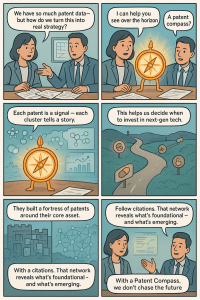
Citation analysis converts the static patent landscape into a dynamic map of how technologies evolve. Every patent lists prior art citations, earlier patents and scientific literature that the examiner and inventor identified as relevant. These citations create a structured network linking inventions across time. Analyzing this network reveals which technologies are foundational, how knowledge flows between research communities, and where the next wave of innovation is most likely to emerge.
Backward Citation Analysis: Tracing the Foundation
Backward citation analysis examines what a given patent cites. Frequently cited upstream patents, those appearing in the backward citation lists of many later inventions, are foundational pillars of a technology field. Identifying them allows competitive analysts to distinguish between companies building on shared public infrastructure and companies building on proprietary foundational IP they control.
If a competitor’s entire biologics portfolio consistently cites a single foundational patent owned by a third party, that is an IP dependency with direct commercial risk implications. It identifies a licensing leverage point, a potential acquisition rationale for the third party, and a structural vulnerability in the competitor’s IP position.
In drug discovery, backward citation trails from clinical-stage assets often trace back to specific academic institutions, particularly the labs that first characterized the biological target. Those institutions are typically active licensors, and their remaining patent estates are potential acquisition or in-licensing targets.
Forward Citation Analysis: Measuring Impact and Reading Trajectory
Forward citations measure influence. A patent with a high forward citation count, many later patents citing it as prior art, is one that many subsequent inventors found significant enough to reference. This is the closest available proxy for patent quality that is observable before litigation tests the claim.
The analytical depth comes from examining the type of patents that cite a foundational invention over time. If a composition of matter patent filed in Year 0 is cited predominantly by other composition of matter patents in Years 1 through 5, the field is in a ‘me-too’ phase: competitors are pursuing molecular variations. When forward citation patterns shift to formulation patents in Years 6 through 10, it indicates the field is maturing and competitive focus is moving to delivery optimization. When later forward citations come from method-of-use patents in new disease categories, the technology is in an expansion phase, finding new markets.
This temporal forward citation analysis is the most reliable tool available for predicting the lifecycle stage of a technology and anticipating the strategic moves of competitors who are building on it.
Structural Holes: Finding the Unclaimed Bridge
Citation network visualization reveals ‘structural holes,’ gaps between technology clusters that cite each other rarely or not at all. A structural hole between two clusters that are logically complementary represents a potential breakthrough opportunity. The company that bridges the gap, by filing patents that draw on innovations from both clusters, can create a new, dominant technological approach that neither cluster’s current leaders anticipated.
In current pharma patent landscapes, a structural hole of this type is visible between AI-driven protein structure prediction tools (driven by AlphaFold-related IP) and targeted protein degradation platforms (PROTACs and molecular glues). Very few patents currently cite innovations from both clusters. A company that develops and patents degrader designs generated by AI structural prediction tools would occupy a strategically powerful position at the bridge between these two fast-growing fields.
Key Takeaways: Section 6
Citation analysis transforms a static patent landscape into a dynamic map of knowledge flow. Backward citations reveal IP dependencies and foundational leverage points. Forward citations measure impact and predict lifecycle trajectory. Structural holes in citation networks are among the most reliable indicators of uncontested breakthrough opportunities.
Section 7: White Space Identification: Finding Uncontested IP Territory
White space is the territory where clinical need is documented but patent activity is sparse. Finding it before competitors do is one of the highest-value outputs of a patent intelligence program.
White space identification works by inverting the normal focus of a patent landscape. Instead of asking ‘Who is filing in this area?’, it asks ‘Where is nobody filing despite clear scientific rationale for doing so?’ The answer to that question is one of three things: the technical challenge is currently unsolvable, the market is too small for current R&D investment thresholds, or the area has been genuinely overlooked.
The distinguishing factor is cross-referencing patent density against two other signals: clinical trial activity (ClinicalTrials.gov) and published literature volume. An area with low patent density, low clinical trial activity, and published literature describing a clear unmet need is a genuine white space. An area with low patent density but active clinical trial registrations indicates that the clinical work is being done but companies are relying on trade secret manufacturing protection rather than patent filings, a different strategic situation.
Rare diseases represent a structurally generated white space. The FDA’s Orphan Drug Designation program, which grants 7 years of market exclusivity and a 25% tax credit on clinical trial costs for drugs targeting diseases affecting fewer than 200,000 U.S. patients, creates commercial viability for conditions that traditional patent landscape analysis would flag as too small. Patent density in orphan indications is systematically lower than in large-market therapeutic areas. The combination of regulatory exclusivity (which supplements patent protection), fast-track designation availability, and lower Phase III enrollment requirements makes white space plays in orphan disease commercially attractive even when the composition of matter patent is not as broad as a large-market NME would require.
Key Takeaways: Section 7
White space is identified by triangulating low patent density against documented clinical need and clinical trial activity. The most actionable white spaces are those where regulatory mechanisms (orphan designation, fast-track) provide additional exclusivity on top of weak patent coverage. Cross-referencing patent databases with clinical trial registries is the operational method for distinguishing true opportunity from technically intractable problems.
Section 8: Evergreening and Lifecycle Extension: The Full Tactical Playbook
Evergreening is the use of secondary patent filings to extend effective market exclusivity beyond the expiry of a drug’s original composition of matter patent. It is legal, widely practiced, and increasingly scrutinized by policymakers and payors. Every major pharma brand manager and IP strategist needs to understand its full mechanics both to execute it for their own assets and to anticipate it in competitors.
The Formulation Shift Strategy
The most common evergreening tactic is the formulation shift: developing an extended-release, modified-release, or novel delivery system version of an existing drug, patenting it, and migrating commercial prescription volume to the new formulation before the IR version’s composition of matter patent expires. The new formulation carries its own patent term, effectively extending branded exclusivity.
AstraZeneca’s execution of this strategy with omeprazole (Prilosec) and esomeprazole (Nexium) is the textbook case. As omeprazole’s composition of matter patent approached expiration, AstraZeneca developed esomeprazole, the S-enantiomer of omeprazole, obtained new composition of matter protection on the isolated stereoisomer, and invested heavily in switching prescribers to Nexium. The commercial and IP logic was sound; the political and regulatory scrutiny it attracted became a reference point for U.S. Senate hearings on pharmaceutical pricing.
For patent landscape analysts, a competitor’s cluster of formulation and enantiomer patents filed 3 to 6 years before their primary LOE date is the predictive signal that a formulation shift strategy is being executed. This allows you to anticipate their next product, model the LOE timeline accurately (including the formulation extension), and plan competitive or biosimilar entry accordingly.
Pediatric Exclusivity and the 505(b)(2) Extension
The Best Pharmaceuticals for Children Act grants 6 months of additional exclusivity, appended to all existing patents and exclusivity periods, for drugs that complete FDA-requested pediatric studies. This mechanism is widely used for lifecycle extension. For analysts, any NDA or BLA with an FDA Written Request for pediatric studies is a candidate for a 6-month extension of all Orange Book-listed patent protection. This is particularly significant when the relevant composition of matter patent has less than 12 months remaining; the pediatric extension can push generic entry by more than half a year.
Citizens Petitions and Regulatory Delay
Beyond patent filings, brand companies can extend effective exclusivity through regulatory mechanisms including Citizen Petitions to the FDA raising manufacturing or safety concerns about ANDA applicants. Courts and policymakers have increasingly scrutinized Citizen Petitions filed in close proximity to generic approval timelines as potential delay tactics, and the FDA now tracks and publicly reports on petitions filed within 30 days of a pending generic approval. This is not a patent strategy per se, but it interacts with patent term calculations and should be modeled in any LOE timeline analysis.
The PTAB Challenge and IPR Vulnerability
Post-grant review mechanisms, specifically inter partes review (IPR) at the Patent Trial and Appeal Board (PTAB), have become the primary vehicle for generic and biosimilar challengers to invalidate secondary evergreening patents before they reach Paragraph IV litigation. IPR petitions citing prior art can cancel issued claims in a fraction of the time and cost of district court litigation. The PTAB institution rate on pharma patents has historically exceeded 60%.
For brand companies, the IPR vulnerability of any secondary patent in the portfolio is a material IP risk that must be modeled in LOE projections. A method-of-use patent listed in the Orange Book may appear to extend exclusivity by 4 years but carry a high probability of IPR cancellation within 18 months of its first Paragraph IV challenge. Analysts who do not model IPR risk in secondary patent portfolios systematically overvalue the duration of branded exclusivity.
Key Takeaways: Section 8
Evergreening through formulation shifts, enantiomer patents, pediatric exclusivity, and new indication filings is a structured, predictable strategy that can be read in advance from a competitor’s patent filing history. The IPR vulnerability of secondary patents is the most commonly undermodeled risk in LOE forecasts.
Investment Strategy Note
When modeling LOE for a branded drug, apply a haircut to secondary patent exclusivity based on IPR institution probability (historically above 60% for pharma patents) and prior IPR outcomes in the specific patent class. A formulation patent with two prior PTAB cancellations of closely related claims carries materially higher invalidation risk than its legal grant date suggests.
Section 9: IP Valuation as a Core Portfolio Asset: Frameworks and Metrics
IP valuation in pharmaceuticals has historically been either too broad (enterprise-level valuation that treats IP as a collective asset) or too narrow (patent-by-patent litigation cost-benefit analysis). Neither approach is useful for the strategic decisions that IP and portfolio teams actually face: which assets to defend aggressively, which licenses are worth acquiring, which acquisition targets are overvalued because their IP portfolio is weaker than it appears.
The NPV-Adjusted Exclusivity Model
The most practical IP valuation framework for individual drug patents calculates NPV of future cash flows during the patent-protected period, adjusted for the probability that the patent survives challenge. The inputs are: projected annual revenue during exclusivity, probability of Paragraph IV challenge, probability of IPR institution and cancellation, residual exclusivity if challenged but upheld, and cost of litigation. The output is a risk-adjusted NPV for each Orange Book-listed patent, which sums to the drug’s total patent estate value.
This framework has a specific application in M&A due diligence: when a target company’s valuation is driven primarily by a single drug’s future revenue, the composition of matter patent’s litigation-adjusted NPV is the most critical single number in the deal model. A composition of matter patent that has already survived a Paragraph IV challenge is worth more than one that has not been tested, even if the untested patent has a later expiry date.
The Patent Portfolio Health Score
At a portfolio level, several metrics provide a composite view of IP health. Citation impact score measures the forward citation density of the company’s patent estate relative to peers in the same therapeutic area; higher citation impact correlates with foundational patents that competitors must design around. Patent scope breadth measures the average width of granted claims, with broader claims carrying higher commercial exclusivity value but higher IPR risk. Portfolio age distribution identifies the percentage of the estate expiring within 5 years, which maps to near-term LOE exposure.
Platforms like DrugPatentWatch provide precomputed versions of these metrics at the drug and company level. The most analytically useful output is the comparison of a company’s portfolio health score against the therapeutic area average, which identifies whether the company’s IP position is structurally stronger or weaker than the competitive baseline.
The Role of Orange Book Listings in IP Valuation
A patent’s Orange Book listing (for small molecules under 21 C.F.R. § 314.53) or Purple Book listing (for biologics) is the formal declaration that the patent covers the approved drug. Orange Book-listed patents are the only ones that trigger the 30-month stay on generic ANDA approval under Hatch-Waxman, and they are the only ones against which Paragraph IV certifications are filed. A patent that exists in the estate but is not Orange Book-listed provides no regulatory exclusivity benefit.
For valuation purposes, only Orange Book-listed patents contribute to the drug’s effective exclusivity runway. Analysts who count non-Orange Book patents in exclusivity modeling are overstating protection. Conversely, a company that has filed relevant patents but not yet listed them in the Orange Book may be building options for future listing upon approval of new indications, a strategy visible in the filing pattern before it becomes commercially actionable.
Key Takeaways: Section 9
IP valuation at the drug level requires litigation-adjusted NPV modeling per Orange Book-listed patent. At the portfolio level, citation impact, claim scope breadth, and LOE distribution provide a composite health metric. Orange Book listing status is the binary filter that separates commercially protective patents from the rest of the estate.
Section 10: Case Studies: Oncology Forecasting, Immunology M&A Due Diligence, and mRNA IP Navigation
Case Study 1: Forecasting the Oncology Technology Succession
A mid-sized pharma company with a legacy cytotoxic chemotherapy franchise needs to decide where to invest its next oncology platform bet. The question is whether to extend into next-generation cytotoxics, targeted kinase inhibitors, checkpoint immunotherapy, or cell therapy.
The company’s CI team constructs a comprehensive oncology patent landscape covering all filings from 2000 to 2025, clustered by technology class using CPC code-based automated grouping. Temporal trend analysis reveals a clear succession pattern. Small molecule chemotherapy patent filings were flat from 2000 onward. Kinase inhibitor filings peaked sharply around 2008 to 2012 and have been declining. Checkpoint inhibitor filings began accelerating around 2010, with anti-PD-1 and anti-PD-L1 claims now showing early deceleration consistent with a maturing field. CAR-T and next-generation cell therapy filings began exponential growth around 2018 and continue to accelerate through 2025. KRAS-targeted small molecules and targeted protein degraders (PROTACs) represent the newest high-growth cluster, with filing rates compounding at more than 30% per year since 2021.
Forward citation analysis of early CAR-T foundational patents, particularly those from Carl June’s University of Pennsylvania lab and from Novartis’s licensed position in those patents, confirms that they are being cited at high frequency by a broad range of subsequent inventors, including Chinese academic institutions and multiple biotech entrants. The foundational IP is well-established; the competitive activity is now in manufacturing process improvements, antigen target selection, and next-generation armored or ‘fourth-generation’ CAR designs.
The TRM output is unambiguous: the company’s platform investment should concentrate on PROTAC or molecular glue degrader technology (the fastest-growing emerging cluster with relatively sparse assignee diversity) and on next-generation cell therapy manufacturing (a technology layer where process patent positions are still forming). The legacy cytotoxic franchise should be managed for cash with minimal R&D reinvestment.
Investment Strategy Note: For an institutional investor, this analysis translates directly to portfolio positioning. Companies with deep PROTAC or molecular glue patent estates (including Arvinas, Kymera, and C4 Therapeutics, which are licensors or platforms) carry TRM-implied upside not fully priced into market cap if the patent landscape correctly predicts where clinical success will concentrate in the 2030 to 2035 window.
Case Study 2: Immunology M&A Due Diligence and Competitive IP Displacement Risk
A large pharmaceutical company is evaluating a $2 billion acquisition of a clinical-stage biotech whose lead asset is a novel anti-IL-17 monoclonal antibody for plaque psoriasis and psoriatic arthritis, protected by a composition of matter patent with 14 years of remaining life. Standard legal due diligence finds the portfolio clean. The FTO analysis passes.
The business development team commissions a strategic patent landscape overlay. The KIQ is not ‘Is the IP valid?’ but ‘Will this mechanism of action remain commercially dominant for 14 years?’
The landscape analysis surfaces a pattern that legal due diligence missed entirely. Three large pharma companies and two well-funded biotechs have been filing an accelerating series of patents on oral TYK2 inhibitors targeting the IL-23/IL-17 pathway upstream of IL-17 itself. TYK2 inhibitor patent filings in psoriasis-specific method-of-use claims have increased at a compounding rate over the past four years. The forward citation density of these TYK2 filings is rising rapidly. One compound, deucravacitinib (BMS-986165), has already demonstrated clinical proof-of-concept in Phase II psoriasis trials at the time of this analysis.
The temporal analysis projects that the first oral TYK2 inhibitors will reach the market within 4 to 6 years. Oral administration is a documented driver of patient and prescriber preference switching in dermatology. The injectable anti-IL-17 mechanism, while clinically effective, will face structural commercial pressure from a more convenient oral option that acts upstream in the same pathway.
The $2 billion valuation, built on 14 years of projected revenue at peak market share for an injectable mAb, does not account for this displacement risk. A revised model, applying a 35% probability of oral TYK2 capturing 40% market share by Year 7, reduces the NPV of the asset by approximately $600 million.
The outcome is not a deal termination but a materially different deal structure: a lower upfront consideration, with commercial milestones tied to revenue performance against oral TYK2 competitors, and a representation covering the absence of TYK2 in the target’s pipeline as a complementary asset.
Case Study 3: Navigating the mRNA Patent Thicket for a Targeted Autoimmune Application
A lipid nanoparticle (LNP) specialist biotech wants to enter the therapeutic mRNA space without competing head-on against Moderna and BioNTech in infectious disease vaccines. The challenge is navigating an IP landscape described by practitioners as ‘one of the densest patent thickets in biotech history,’ with foundational LNP and mRNA modification patents held by Moderna, BioNTech/CureVac, Shire (now Takeda), and the UBC/Acuitas Therapeutics group.
A comprehensive landscape analysis identifies five application clusters: infectious disease vaccines (highly contested, dominated by four major players with overlapping broad claims), cancer vaccines (moderately contested, with several recent entrants carving out tumor neoantigen-specific positions), protein replacement for rare metabolic diseases (less contested, with Translate Bio and Arctus leading), in vivo gene editing (nascent, high technical uncertainty, broad early Broad Institute claims creating uncertainty), and immunomodulatory applications for autoimmune disease (the least contested cluster, with fewer than 20 meaningful patent families from specialized players and no dominant framework).
The immunomodulatory mRNA cluster is a genuine white space. Published literature documents proof-of-concept for mRNA delivery of tolerogenic cytokines (IL-10, TGF-beta) and antigen-specific regulatory T-cell induction as a mechanism for treating autoimmune conditions including multiple sclerosis and type 1 diabetes. Regulatory T-cell delivery requires targeting dendritic cells and T-cells in lymphoid tissue, a delivery challenge that the company’s proprietary ionizable LNP technology, designed for lymphocyte targeting, addresses directly.
The patent strategy maps onto the TRM technology layer immediately. The company files composition of matter patents on novel ionizable lipids optimized for T-cell transfection, method-of-use patents on mRNA encoding tolerogenic proteins for specific autoimmune indications, and process patents on the manufacturing conditions that produce a particle with the immunophenotype required for regulatory T-cell induction rather than inflammatory activation.
The landscape work does double duty: it identifies the white space and it tells the company precisely which existing patents it must design around in its LNP composition claims.
Key Takeaways: Section 10
The three case studies share a common structural lesson: patent landscape analysis adds value at its highest in the gap between what legal due diligence confirms (is the IP valid?) and what strategic intelligence asks (will this IP remain commercially relevant in its competitive context?). The second question requires temporal trend analysis, citation network work, and cross-referencing against clinical pipeline data. Legal teams rarely do this; it is the IP strategist’s job.
Section 11: Human-Supervised AI in Patent Intelligence: The HITL Model
Artificial intelligence has changed patent landscape analysis as fundamentally as Google changed information retrieval. The change is not incremental; it is categorical. Manual patent landscaping required teams of analysts weeks to process thousands of documents and cluster them into technology classes. AI-powered natural language processing does this in hours across millions of documents across all languages.
But the HITL (human-in-the-loop) framing is not a hedge or a consolation for AI’s limitations. It is a technically accurate description of how the highest-value patent intelligence actually gets produced.
What AI Does Well
Semantic search is the capability where AI most directly outperforms keyword-based methods. Modern transformer-based models understand conceptual meaning across terminological variation. A search for ‘targeted protein degradation’ using semantic AI retrieves PROTAC, molecular glue, LYTAC, and ATTEC patents regardless of which term the inventor chose, and across Japanese, Chinese, and European filings simultaneously. Keyword searches miss most of this.
Automated clustering groups tens of thousands of patents by technical similarity without human curation. The output is a technology map of the landscape that would take a human team months to construct manually and is available to the analyst as a starting point for interpretation.
Predictive scoring, using machine learning models trained on historical patent data, can generate litigation probability scores, forward citation impact estimates, and claim strength assessments at scale. These are probabilistic estimates, not certainties, and their value depends on training data quality and the specificity of the model to pharmaceutical patent characteristics.
What AI Cannot Do
AI can identify that a competitor’s patent filing rate in a technology class has accelerated. It cannot tell you whether that acceleration reflects a genuine platform commitment or an IP fencing strategy designed to create nuisance claims around a third party’s core technology. That distinction requires understanding the specific company’s historical IP behavior, its financial position, and the technical details of the field.
AI can cluster patents by textual similarity. It cannot assess whether the most clinically promising cluster is the one with the largest number of filings or the one with the most concentrated filings from a single inventor group that has a track record of translating research into clinical candidates. That judgment requires domain expertise.
The HITL model assigns AI to data processing tasks where its speed and scale advantages are unambiguous, and assigns human analysts to interpretation tasks where business context, domain knowledge, and strategic judgment are required. The output is faster, more comprehensive, and more actionable than either AI alone or human analysis alone would produce.
The AI in pharma market is projected to grow from $1.8 billion in 2023 to $13.1 billion by 2034. A meaningful share of that growth is in patent intelligence infrastructure. Companies that invest now in building the human expertise to supervise and interpret AI-generated patent outputs will have a durable advantage over those that treat AI as a turnkey solution.
Key Takeaways: Section 11
AI in patent intelligence is transformative for data processing tasks: semantic search, automated clustering, and predictive scoring at scale. The strategic interpretation layer, what does this mean for our specific competitive position? requires human expertise that AI does not replicate. The HITL model is the operational standard for high-quality pharmaceutical patent intelligence programs.
Section 12: Biologics, Biosimilars, and the Interchangeability Battlefield
The biosimilar market is structurally different from the small molecule generic market in ways that make patent landscape analysis both more complex and more commercially decisive.
Why Biologic IP Is Structurally More Durable
For small molecules, the composition of matter patent covers the complete chemical structure of the API. Once that patent expires, any manufacturer who can produce the identical API and demonstrate bioequivalence wins ANDA approval. The legal and regulatory process reduces to two questions: is the patent expired? Is the generic bioequivalent?
For biologics, ‘the process is the product.’ A monoclonal antibody produced by a different cell line, with a different glycosylation pattern, using a different purification process, is not the same molecule in a clinically meaningful sense even if it has the same primary amino acid sequence. The FDA’s 351(k) pathway for biosimilar approval requires demonstrating no clinically meaningful differences from the reference biologic, which requires extensive analytical, functional, and clinical data. Biosimilar interchangeability, the designation that allows pharmacists to substitute without prescriber notification, requires additional switching study data and carries its own separate exclusivity period of one year under the BPCIA.
This means that biologic patent thickets work differently than small molecule ones. Process patents and manufacturing composition patents carry direct regulatory weight: the biosimilar manufacturer must either design around the reference product’s process patent or demonstrate that the biological differences their alternative process introduces do not affect clinical safety or efficacy. This is a significant technical and regulatory burden that has no parallel in small molecule generics.
The Patent Dance Under the BPCIA
The Biologics Price Competition and Innovation Act (BPCIA) created a structured information exchange between reference product sponsors and biosimilar applicants, informally called the ‘patent dance.’ Under 42 U.S.C. § 262(l), a 351(k) applicant must provide its detailed manufacturing description to the reference product sponsor, who then identifies patents it believes are infringed. The parties engage in a defined negotiation about which patents will be litigated before the biosimilar enters the market.
The patent dance is strategically important for IP teams because it creates a structured timeline that is directly visible in public litigation records. When a biosimilar applicant files its 351(k) application and initiates the dance, the reference product sponsor’s litigation strategy, including which patents it chooses to assert, becomes public information. This is a rich intelligence signal for competitors: the patents the reference sponsor chooses to assert in BPCIA litigation are, by definition, the ones the sponsor believes are most likely to sustain challenge.
Biosimilar Interchangeability and Market Penetration Forecasting
Biosimilar interchangeability designation has materially different commercial implications than non-interchangeable biosimilar approval. Non-interchangeable biosimilars require prescriber substitution decisions; interchangeable biosimilars can be automatically substituted at the pharmacy. The commercial analogy is to small molecule generics, where automatic substitution drives rapid volume-weighted market share transfer.
As of 2025, the FDA has granted interchangeability designations to a small number of biosimilars, including multiple insulin products and adalimumab biosimilars. The market penetration rate for interchangeable biosimilars in the U.S. is substantially higher than for non-interchangeable biosimilars, with some interchangeable products achieving more than 30% market share within 18 months of launch.
For patent landscape analysts, the biosimilar interchangeability pipeline, which companies are pursuing the additional switching data required for the designation, is a leading indicator of where aggressive market penetration is planned. The patent estates protecting reference products facing interchangeable biosimilar competition require particularly rigorous litigation-adjusted LOE modeling.
Key Takeaways: Section 12
Biologic IP is structurally more durable than small molecule IP because process patents carry direct regulatory weight and biosimilar interchangeability requires additional data and generates its own exclusivity. The BPCIA patent dance creates publicly observable intelligence about which patents the reference sponsor considers commercially critical. LOE models for biologics must account for the additional competitive friction of non-interchangeability.
Section 13: Paragraph IV Filings, ANDA Litigation, and the Hatch-Waxman Playbook
The Hatch-Waxman framework is the primary mechanism by which small molecule generic entry is governed in the United States. Understanding its procedural specifics is not only a legal function; it is a commercial forecasting function, because the timeline of generic competition is directly determined by Paragraph IV filing dates, 30-month stay duration, and litigation outcomes.
The Paragraph IV Certification Mechanism
An ANDA applicant seeking approval before all Orange Book-listed patents expire must certify that each listed patent is either invalid, unenforceable, or not infringed by the proposed generic (a Paragraph IV certification). Filing a Paragraph IV triggers two consequences: it notifies the brand company of the challenge, and if the brand company files suit within 45 days, it triggers an automatic 30-month stay on FDA approval of the ANDA, regardless of the merits of the challenge.
The first Paragraph IV filer for a drug qualifies for 180-day exclusivity, during which the FDA cannot approve any other ANDA applicant for the same drug. This 180-day first-filer exclusivity is the primary commercial incentive for generic companies to invest in the legal costs of Paragraph IV litigation. At peak patent expiry for a blockbuster drug, this exclusivity can be worth hundreds of millions of dollars.
Monitoring Paragraph IV Filings as a Commercial Intelligence Input
Paragraph IV certifications are public events. DrugPatentWatch and similar platforms track Paragraph IV filing records in real time. For brand companies, the first Paragraph IV on an Orange Book-listed patent is the starting gun for a litigation and lifecycle management strategy. For analysts and investors, the filing date is the most reliable public signal of when generic competition is being actively pursued.
The interval between the first Paragraph IV filing and actual generic entry depends on litigation outcome. If the brand company does not file suit within 45 days, the 30-month stay does not trigger and the ANDA can be approved as soon as FDA review is complete. If suit is filed, the 30-month stay applies, and post-stay approval depends on trial outcome. Cases that settle (the majority of Hatch-Waxman cases) produce negotiated generic entry dates that are publicly disclosed and typically earlier than full-term patent expiry.
Authorized Generics and the Settlement Dynamic
An authorized generic (AG) is a generic version of a brand drug marketed by the brand company itself or a licensee simultaneously with the first-filer generic during the 180-day exclusivity period. The AG is legally distinct from the 30-month stay; it competes with the first-filer generic during its exclusivity window, reducing the first-filer’s revenues and reducing the incentive for future Paragraph IV challenges.
Brand companies that launch authorized generics convert a first-filer’s 180-day exclusivity from a near-monopoly into a duopoly, materially reducing the economic value of the Paragraph IV challenge. From an IP strategy perspective, AG programs are a deterrent against Paragraph IV challenges because they reduce the expected value of the first-filer position. Monitoring which brand companies have historically used AG programs tells you something about their default posture in managing generic entry.
Key Takeaways: Section 13
Paragraph IV filings are the most reliable real-time indicator of generic entry probability and timing for Orange Book-listed drugs. The 30-month stay and 180-day first-filer exclusivity create a structured negotiation framework that produces public settlement disclosures. LOE models must account for the probability distribution across litigation outcomes, not simply assume full-term patent expiry.
Section 14: Limitations, Risks, and the Ethical Fault Lines of Patent Strategy
A data-driven approach does not eliminate analytical error. Understanding where the data fails, and where the strategy it produces attracts legitimate external challenge, is part of responsible IP planning.
The 18-Month Blind Spot
Patent applications in most jurisdictions are published 18 months after their priority date. The practical implication is that any competitor’s R&D commitments from the past 18 months are invisible to external patent analysis. For fast-moving fields like AI-designed drugs or platform biotechnologies where the R&D cycle is compressing, this blind spot is not negligible. A competitor’s AI-discovered molecule that entered IND-enabling studies 12 months ago does not yet appear in any patent database.
The mitigation is to triangulate patent data against other intelligence signals with shorter lag times: hiring data (new PhDs recruited in a specific domain), conference presentations (which reveal research directions before patents are filed), preprint servers (bioRxiv, ChemRxiv), and supply chain activity (orders for specialized synthesis materials or bioreactor components).
Patents Do Not Equal Products
A high patent filing rate in a technology class reflects R&D investment, not clinical success. Many patented inventions never enter clinical development; many clinical candidates fail. Patent-based TRMs must be stress-tested against clinical trial databases to distinguish active clinical programs from abandoned research directions. A technology cluster with a large patent estate but no active IND applications in ClinicalTrials.gov is a speculative, not confirmed, clinical opportunity.
Data Quality and Assignee Normalization
Global patent databases contain systematic data quality problems. Assignee name variations (Pfizer Inc., Pfizer, Inc., Pfizer Inc) fragment portfolio analyses unless normalization is applied. CPC reclassifications change the apparent distribution of patents across technology classes retroactively. Missing priority date data distorts temporal trend analyses. Commercial platforms invest significantly in data cleaning and normalization; analyses built on raw public database exports without normalization carry material accuracy risk.
The Ethical and Political Dimensions of Evergreening
The legal availability of secondary patent strategies does not insulate companies from political and reputational consequences. Congressional scrutiny of drug pricing has repeatedly focused on patent thickets and evergreening as mechanisms for suppressing generic competition. A UCLA Anderson Review analysis estimated that secondary, ‘add-on’ drug patents cost U.S. consumers an incremental $52.6 billion over a defined study period.
Regulators in the EU and UK have taken enforcement actions against specific lifecycle management practices. The UK Competition and Markets Authority has investigated and fined companies for strategies that delayed generic entry through secondary patent filings combined with pay-for-delay settlements. The FTC has ongoing oversight of reverse payment settlements in the U.S. under FTC v. Actavis.
An IP strategy that is legally sound may generate reputational exposure, regulatory scrutiny, and political risk that are not captured in a patent NPV model. A complete technology roadmap includes an explicit assessment of the political and regulatory risk profile of the lifecycle management strategies it recommends.
Key Takeaways: Section 14
The 18-month publication lag, the patent-to-product gap, and data quality issues are the three primary analytical limitations of patent-based intelligence. The political and regulatory risk of aggressive lifecycle management strategies is a material cost that must be modeled alongside IP NPV. No patent strategy exists outside the political economy of drug pricing.
Section 15: Investment Strategy for Analysts: Patent Data as a Due Diligence Signal
For institutional investors, sell-side analysts, and venture capital teams evaluating pharma and biotech investments, patent data provides a set of signals that are not available in any other publicly accessible form.
Near-Term LOE Exposure as a Valuation Haircut
The most direct application is quantifying LOE exposure. Any pharma company with more than 30% of its revenue concentrated in drugs with composition of matter LOE within 36 months deserves a valuation haircut that DCF models often understate. The haircut size depends on: the probability and timing of generic entry (driven by Paragraph IV filing history and litigation status), the company’s secondary patent coverage depth (how many Orange Book-listed formulation and method-of-use patents extend post-LOE exclusivity), and the pipeline replacement capacity visible in recent patent filings.
Patent Filing Rate as a Pipeline Proxy
A company’s annual patent filing rate in its core therapeutic areas, normalized by company size, is a leading indicator of R&D intensity and pipeline health that complements but precedes Phase I clinical enrollment data. A company whose filing rate in its core domain is declining for three consecutive years is signaling reduced R&D investment 5 to 10 years before that shows up in pipeline thinning and revenue pressure.
Conversely, a company that has been increasing its filing rate in a new therapeutic area for 3 to 5 years but has not yet disclosed a public clinical program in that area likely has a pipeline candidate approaching IND filing. This is the type of signal that patent landscape analysis surfaces well before any press release.
IP Portfolio Quality Score in M&A Valuation
When a pharma company acquires a biotech, the IP portfolio quality of the acquired asset is the most determinative factor in long-term deal value. The metrics most relevant to acquisition premium assessment are: remaining life of the composition of matter patent, presence of active Paragraph IV challenges and their litigation status, depth of secondary patent coverage (formulation and method-of-use), forward citation impact score (as a quality proxy), geographic filing breadth (U.S. plus EU plus Japan plus China indicates serious commercial ambition), and IPR vulnerability assessment.
Deals where the acquirer paid a premium to a composition of matter patent with less than 8 years remaining, without a robust secondary portfolio and without active lifecycle management programs in place, have historically underperformed the pharma M&A benchmark on a 5-year post-close basis.
Key Takeaways: Section 15
Patent data provides investment analysts with leading indicators not available in financial disclosures or market research: LOE timing precision, R&D intensity trends, pre-public pipeline signals, and IP quality metrics for M&A valuation. The analysts who systematically integrate Orange Book data, Paragraph IV filings, and patent filing rate trends into their models have a structural information advantage over those who rely on pipeline disclosures alone.
Section 16: Key Takeaways by Segment
For IP and Legal Teams
Patent data is a strategic intelligence asset, not just a legal registry. The composition of matter patent establishes the baseline exclusivity timeline, but the secondary portfolio (formulation, method-of-use, process, and combination patents) determines the full defensible exclusivity runway. IPR vulnerability must be quantified for every Orange Book-listed secondary patent. The BPCIA patent dance and Paragraph IV certification timelines are externally observable and should feed directly into LOE models.
For R&D Leadership
Technology roadmapping with patent data identifies where the industry is committing R&D resources 5 to 10 years ahead of clinical visibility. Temporal citation analysis predicts which technology classes will dominate clinical development in the next window. White space identification, cross-referenced against clinical trial activity and unmet medical need, is the most reliable method for identifying platform opportunities that are not yet crowded.
For Portfolio Managers and Business Development
IP valuation at the asset level requires litigation-adjusted NPV per Orange Book-listed patent, not aggregate portfolio counts. M&A due diligence that does not include strategic patent landscape analysis, specifically technology displacement risk from adjacent platforms, systematically overvalues assets whose mechanism of action faces emerging competition from more convenient or more effective next-generation approaches.
For Institutional Investors
LOE exposure, patent filing rate trends, and citation impact scores are quantifiable signals that precede financial reporting changes by years. Companies with high LOE exposure concentrated in the next 36 months, thin secondary patent coverage, and declining filing rates in their core therapeutic areas are structurally exposed regardless of current revenue. Companies with accelerating filing rates in high-growth technology clusters and strong composition of matter patent life carry pipeline value that current valuations often underrepresent.
Section 17: FAQ
Q: How does this methodology handle trade secrets, which do not appear in patent databases?
A: Trade secrets, particularly around manufacturing processes, are a genuine blind spot in patent-based intelligence. The mitigation is triangulating patent data against hiring patterns (LinkedIn, job postings for specific domain expertise), conference presentations, preprint servers, and supply chain signals. A competitor that has stopped filing process patents but is hiring large numbers of bioreactor engineers is likely protecting its process technology as a trade secret rather than through patents. TRMs should explicitly flag areas where trade secret protection is probable, marking them as zones of higher uncertainty.
Q: What is the realistic ROI for investing in commercial patent intelligence infrastructure?
A: Exact ROI is context-dependent, but the value framework is clear. A commercial patent intelligence platform plus a two-person analyst team runs $500,000 to $1 million per year for a mid-size pharma company. Against that cost, a single early identification of a technology displacement risk that would have been missed in a $500 million pipeline investment, or a single M&A negotiation where patent landscape intelligence drove down the acquisition price by 10%, generates multiples of the infrastructure cost. Deloitte’s 2025 analysis showed pharma R&D ROI rebounding to 5.9%; patent intelligence is one of the levers that separates companies above and below that average.
Q: How frequently should a patent-driven TRM be updated?
A: Continuous monitoring with annual comprehensive reviews is the operational standard. Most commercial platforms support real-time alerts on new filings by specific assignees or in defined CPC classes, on Paragraph IV certification filings, and on IPR petition initiations. These trigger events should prompt immediate assessment. The full landscape rebuild, clustering analysis, citation network refresh, and TRM layer update, should happen annually to capture shifts in filing rate trajectories and new entrants to technology clusters.
Q: How does AI-assisted drug discovery change the patent landscape dynamics?
A: AI-assisted discovery compresses the time between target identification and IND-ready candidate by 30 to 50%, according to recent estimates from companies including Recursion Pharmaceuticals and Insilico Medicine. This means that the 18-month patent publication lag covers a proportionally larger share of the competitive development window in AI-driven programs than in traditional chemistry programs. For patent landscape analysts, the implication is that fast-moving AI drug discovery programs will appear in the patent database with less advance notice of clinical entry than traditional programs. The mitigation is increased weight on non-patent leading indicators (hiring, preprints, conference presentations) for AI-focused competitors, combined with shorter monitoring cycles on their patent filings once they begin appearing.
Q: How does the methodology differ for a large pharma vs. a small biotech?
A: The analytical framework is identical; the strategic application differs. For large pharma, the primary use cases are portfolio defense, LOE management, and M&A due diligence across a large and diverse pipeline. The scale of the investment in patent intelligence infrastructure is justified by the scale of the decisions being informed. For a Series B biotech with a single lead asset, the most valuable application is white space validation: confirming that the target indication and mechanism of action are not already substantially covered by existing IP, and that the composition of matter claims being drafted will be defensible against likely prior art. The second most valuable application is the investor presentation: a well-executed patent landscape analysis that demonstrates clear, defensible IP with quantified competitive white space is a material component of an institutional Series C or IPO raise.
This analysis is produced for informational and strategic planning purposes. It does not constitute legal advice. IP valuation, FTO analysis, and litigation strategy require engagement with qualified patent counsel.
Data sources referenced in this analysis include USPTO Patent Public Search, EPO Espacenet, WIPO PATENTSCOPE, FDA Orange Book and Purple Book, ClinicalTrials.gov, DrugPatentWatch, IQVIA ARK Patent Intelligence, Clarivate Innography, Deloitte Pharma R&D ROI Report 2025, and peer-reviewed research published in journals including Nature Reviews Drug Discovery, Science Translational Medicine, and PLOS ONE.