Section 1: The Strategic Calculus of a Paragraph IV Challenge
The decision to initiate a Paragraph IV (Para IV) challenge is among the most consequential strategic choices a generic pharmaceutical company can make. It is a calculated, high-stakes endeavor defined by a significant potential prize—the 180-day market exclusivity—and substantial risks, including millions of dollars in litigation costs and the potential forfeiture of the exclusivity itself. This process is not merely a legal hurdle; it is a structured business strategy governed by the unique framework of the Drug Price Competition and Patent Term Restoration Act of 1984, commonly known as the Hatch-Waxman Act. An effective pre-filing due diligence process, therefore, requires a multidisciplinary approach that integrates commercial, scientific, and legal analysis to rigorously quantify this risk-reward calculus.
1.1 The Hatch-Waxman Compromise: A Framework for Strategic Conflict
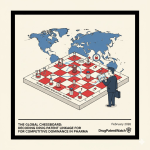
At its core, the Hatch-Waxman Act represents a legislative compromise, designed to balance the competing interests of pharmaceutical innovation and public access to affordable medicines.1 This balance, however, is not achieved through harmony but through a structured framework for conflict. The Para IV certification pathway is the primary mechanism for this conflict, allowing generic manufacturers to challenge the validity or infringement of a brand-name drug’s patents prior to their expiration.3
The Act’s architecture makes this conflict economically viable for generic challengers. By submitting an Abbreviated New Drug Application (ANDA), a generic company can rely on the innovator’s extensive safety and efficacy data, needing only to prove that its product is bioequivalent to the brand-name drug, or Reference Listed Drug (RLD).1 This provision dramatically reduces the time and cost of development, making the potential return from a successful patent challenge an attractive proposition.7
The filing of an ANDA with a Para IV certification is deemed an “artificial act of infringement” under 35 U.S.C. § 271(e)(2).1 This unique legal construct deliberately triggers a pre-market litigation pathway, allowing patent disputes to be resolved before the generic product launches and before any actual damages can accrue.9 Upon receiving a Para IV notice letter, the brand-name drug sponsor has a 45-day window to file a patent infringement lawsuit. If a suit is filed, an automatic 30-month stay of FDA approval for the ANDA is triggered.2 This stay provides a defined, albeit lengthy, period for litigation, creating a predictable framework within which both the brand and the generic challenger can execute their legal and commercial strategies.13
1.2 The First-to-File Prize: Quantifying the 180-Day Exclusivity
The primary economic driver for undertaking the risk and expense of a Para IV challenge is the 180-day period of market exclusivity awarded to the first successful challenger.2 This incentive has been described as the “brass ring” of the Hatch-Waxman Act, creating a powerful motivation for generics to challenge potentially weak or non-infringed patents.15
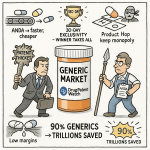
This exclusivity period creates a temporary duopoly between the brand and the first generic entrant. During these six months, the first generic can capture significant market share at prices that are only moderately discounted from the brand, often 15-25% lower. This yields substantially higher profit margins compared to a fully competitive market, where the entry of multiple generics can cause prices to plummet by 80-90% or more.2 For a blockbuster drug, the financial reward from this exclusivity can be enormous, potentially reaching hundreds of millions of dollars.11
Eligibility for this prize is conferred upon the “first” applicant to submit a “substantially complete” ANDA containing a Para IV certification against at least one Orange Book-listed patent for the RLD.2 The 180-day clock officially begins on the date of the first commercial marketing by the first-to-file applicant.16
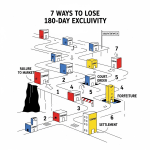
However, this valuable exclusivity is not guaranteed. The Medicare Prescription Drug, Improvement, and Modernization Act of 2003 (MMA) introduced a series of “forfeiture” provisions that can strip a first-filer of its eligibility.17 These provisions represent critical business risks that must be thoroughly assessed during pre-filing due diligence. Key forfeiture events include:
Failure to Market: The first applicant fails to launch its product within a specified timeframe, generally 75 days after its ANDA is approved or 30 months after the ANDA was submitted.17
Failure to Obtain Tentative Approval: The applicant does not secure tentative approval from the FDA within 30 months of filing the ANDA, unless the delay is caused by a change in FDA approval requirements.17
Withdrawal or Amendment of Certification: The applicant withdraws its ANDA or amends its Para IV certification to a Paragraph III certification (agreeing to wait for patent expiry) for all patents that qualified it for exclusivity.16
Anti-competitive Agreement: The first applicant enters into a settlement agreement with the brand company that is subsequently found by the Federal Trade Commission or the Attorney General to have violated antitrust laws.17
1.3 The Para IV Landscape: A Data-Driven Reality Check
The decision to file a Para IV challenge should be grounded in a clear-eyed assessment of the statistical landscape. Data reveals predictable patterns regarding which drugs are challenged, the likelihood of success, and the associated costs.
Market value is the single most dominant predictor of a Para IV challenge. High-revenue drugs are almost certain to face a challenge. One analysis found that drugs with annual sales exceeding $250 million have a 93% probability of being challenged via a Para IV filing.19 More recent data confirms this trend, showing that drugs in the highest sales deciles are challenged at rates between 71% and 90%, whereas those in the lowest deciles are challenged only 24% of the time.20 The type of patent also matters; the presence of weaker patents, such as those covering formulations or methods of use, can increase the likelihood of a challenge compared to a drug protected only by a core composition of matter patent.4
The overall “success rate” for generic challengers is frequently cited as approximately 76%.21 This figure, however, can be misleading as it typically defines “success” to include not only victories at trial but also favorable settlements and dropped cases. When examining only cases that proceed to a final court decision, the success rate for generics is significantly lower, at just 48%.22 This statistical divergence is not a contradiction but a crucial strategic insight. It reveals that the pre-filing due diligence process is fundamentally an exercise in building negotiating leverage. Given that the costs of litigation are immense for both parties—with median costs for a high-stakes case reaching $4.0 million to $5.5 million through trial and appeal—and the outcome is uncertain, a settlement often represents the most economically rational path.13 A generic challenger with a well-researched and compelling case for non-infringement or invalidity can force a settlement that provides an early, licensed market entry, which constitutes a major commercial victory without the full risk and expense of a trial. The entire due diligence process is therefore aimed at constructing a legal and scientific case so robust that it compels the brand manufacturer to negotiate.
Section 2: Phase I – Commercial Viability Assessment
Before committing significant resources to scientific development and legal preparation, a prospective challenger must conduct a rigorous commercial viability assessment. This initial phase acts as a critical screen, ensuring that the potential financial reward of a successful challenge justifies the substantial and quantifiable risks. This requires a data-driven analysis of the target market, a clear-eyed view of the competitive landscape, and a disciplined approach to financial modeling.
2.1 Market Sizing and Revenue Forecasting
The foundation of the commercial assessment is a robust model of the target drug’s market. This begins with gathering baseline data on the RLD’s historical and current performance, including sales volume, net revenue, and market share across different channels.25 This data provides the starting point for forecasting the revenue potential for a generic entrant, situated within the context of a global generic market projected to grow from approximately $450-$500 billion in the mid-2020s to over $700 billion by the early 2030s.25
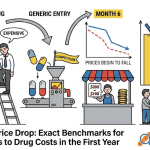
A critical input for any financial model is the anticipated price erosion following generic entry. This erosion follows a highly predictable curve that is directly correlated with the number of generic competitors in the market. This allows for the development of precise, data-backed pricing assumptions:
One Generic Competitor (First-filer Exclusivity): The price typically drops by 30% to 39% relative to the brand price.25
Two Competitors: The price falls further, by approximately 54%.25
Three to Five Competitors: The price erosion deepens to 60% to 70%.25
Six or More Competitors: The market becomes highly commoditized, and the price can plummet by over 95%.15
In parallel, the model must forecast market share capture. The first generic to launch, particularly with the benefit of 180-day exclusivity, can expect to capture a significant portion of the market very quickly.11 FDA data indicates that generics can ultimately account for 90% of the prescriptions filled for a given molecule, demonstrating their dominant position in the market over time.29
2.2 Competitive Intelligence and Pipeline Analysis
The value of the 180-day exclusivity is dramatically diminished if it must be shared among multiple “first filers.” Therefore, a primary objective of the commercial due diligence is to accurately assess the number of potential competitors who may file a Para IV challenge on the same day.
The first and most important resource for this analysis is the FDA’s public Paragraph IV Patent Certifications List.10 This database provides, for each challenged drug, the date of the first Para IV submission and, most critically, the “Number of Potential First Applicant ANDAs Submitted”.10 This single data point directly informs whether the 180-day exclusivity is likely to be a sole prize or a shared one. A higher number of potential first applicants signals a more competitive initial launch and necessitates a more conservative price and market share forecast.
This public data should be supplemented with intelligence from commercial platforms (e.g., DrugPatentWatch). These services aggregate and analyze data from the FDA, USPTO, court dockets, and clinical trial registries to provide a more holistic view of the competitive landscape.31 They can offer curated insights into competitor pipelines, the status of ongoing litigation, and the historical success rates of other potential challengers, allowing for a more sophisticated forecast of the competitive environment.32 This analysis should also include a qualitative assessment of competitors’ capabilities, such as their track record in executing complex Para IV challenges and their technical expertise in areas like sterile injectables or complex formulations.2
2.3 Preliminary ROI Modeling
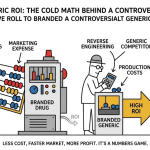
The commercial assessment culminates in a preliminary Return on Investment (ROI) model that synthesizes all findings into a clear financial case. The standard ROI formula, ROI=[(FinancialValue−ProjectCost)/ProjectCost]×100, is adapted for the specifics of a Para IV project.36
Financial Value: This is the projected net profit over a defined period (e.g., the first three to five years post-launch). It is calculated from forecasted revenue (Price x Volume) minus the Cost of Goods Sold (COGS). Industry benchmarks suggest COGS can be estimated at approximately 42% of revenue for injectable products and 36% for oral solids.37
Project Cost: This is the sum of all anticipated investment costs. Key inputs include:
R&D and ANDA Submission: These costs vary by product complexity. For generic injectables, for example, fixed development costs are estimated to be in the range of $5.9 million to $12.2 million.37
Litigation Budget: This is a major expense. Based on industry surveys, a budget of at least $4.0 million to $5.5 million should be allocated for a high-stakes patent challenge that proceeds through trial and appeal.13
Given the inherent uncertainties, the ROI model must be built on scenario analysis. By varying key assumptions—such as the launch date (reflecting a win at trial, a settlement, or a loss), the number of competitors (impacting price and market share), and the speed of market penetration—the analysis can generate a range of outcomes (best-case, base-case, worst-case). This provides a risk-adjusted view of the opportunity and allows for a more informed go/no-go decision. The following table provides a structured summary of the key inputs required for this robust financial modeling.
Category
Variable
Data Source / Rationale
Value Range (Low / Base / High)
Market Inputs
RLD Annual Net Sales (USD)
Commercial Market Data (e.g., IQVIA)
[e.g., $450M / $500M / $550M]
Market Growth Rate (%)
Analyst Reports, Market Forecasts
[e.g., 1% / 3% / 5%]
Number of First Filers
FDA Paragraph IV Certification List
[e.g., 1 / 1 / 3]
Price Discount at Launch (%)
Price Erosion Models 25
**
Generic Market Share (Year 1)
Historical Analogs, Internal Forecasts
[e.g., 40% / 50% / 60%]
Cost Inputs
R&D / Formulation Costs (USD)
Internal R&D Estimates, Industry Benchmarks 37
[e.g., $6M / $8M / $10M]
Bioequivalence Study Costs (USD)
CRO Quotes, Internal Estimates
[e.g., $1M / $1.5M / $2M]
Litigation Budget (USD)
AIPLA Litigation Cost Survey 13
[e.g., $3M / $4M / $5.5M]
Cost of Goods Sold (% of Revenue)
Industry Benchmarks 37
[e.g., 36% (Oral) / 42% (Injectable)]
Strategic Assumptions
Probability of Litigation Success (%)
Legal Due Diligence Assessment (Section 4)
[e.g., 40% / 55% / 70%]
Anticipated Launch Date
Litigation Timelines, Settlement Scenarios
[e.g., Q4 2027 / Q2 2028 / Q1 2029]
Risk of Authorized Generic Launch (%)
Brand Co. Historical Behavior Analysis
[e.g., 10% / 25% / 50%]
Section 3: Phase II – Scientific and Technical Feasibility
Once a target product is deemed commercially viable, the focus shifts to a critical question: can a legally and commercially viable generic product be developed? This phase is a deeply scientific endeavor that runs in parallel with the legal analysis. The scientific choices made during formulation directly create the factual evidence upon which the core legal arguments of non-infringement will be built. This requires a seamless integration of laboratory science and patent law.
3.1 Deformulation and Reverse Engineering the RLD
The scientific process begins with a meticulous deconstruction of the innovator’s product. The objective of this “reverse engineering” or “deformulation” is to decode the RLD’s qualitative (Q1) and quantitative (Q2) composition, as well as its critical manufacturing attributes.38 This is not a simple act of copying; it is a strategic investigation designed to understand precisely what is protected by patents in order to enable a successful “design-around”.41
This process involves a multi-step analytical investigation:
Component Identification and Quantification: Advanced analytical techniques are employed to separate, identify, and quantify every component of the RLD. Chromatography methods (e.g., HPLC, GC, LC/MS) are used to isolate the active pharmaceutical ingredient (API) and each excipient, while spectroscopic methods (e.g., NMR, FTIR, MS) are used to confirm their chemical identities.41 This analysis establishes the formulation’s “recipe,” which is necessary for demonstrating Q1/Q2 equivalence.43
Solid-State Characterization: The physical form of the API is a critical attribute that is often patented and has a direct impact on the drug’s performance. Techniques such as X-ray Powder Diffraction (XRPD), Differential Scanning Calorimetry (DSC), and Scanning Electron Microscopy (SEM) are used to characterize the API’s solid state, including its polymorphic form, salt form, crystallinity, and particle size distribution.39
Manufacturing Process Inference: By examining the physical structure of the final dosage form—such as the properties of granules within a tablet—scientists can often infer the manufacturing process used by the innovator (e.g., wet granulation, dry granulation, direct compression).39 This provides valuable clues for developing a bioequivalent product via a potentially non-infringing process.
3.2 The Art of the “Design-Around”: Formulating for Non-Infringement
The ultimate scientific goal is to develop a formulation that is bioequivalent to the RLD but is engineered to fall outside the scope of the innovator’s Orange Book-listed patents.45 This is where scientific creativity and legal strategy converge.47 The success of the entire Para IV challenge often hinges on the ability of the formulation team to successfully execute this design-around.
Common strategies include:
Excipient Substitution: Innovator patents often claim a specific formulation containing a particular functional excipient (e.g., a specific binder or disintegrant). A design-around may involve using a different, non-claimed excipient that achieves the same functional performance without infringing the patent.44 This requires a deep understanding of excipient science, including functionality and API-excipient compatibility.48
Polymorphic Form Selection: If the innovator has patented a specific crystalline form of the API, the generic developer can focus on creating a different, non-patented polymorphic or amorphous form that still provides the necessary solubility, stability, and bioavailability profile.
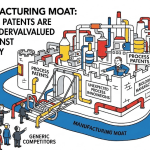
Process Modification: While process patents are not typically listable in the Orange Book, they can still be asserted in litigation.49 Therefore, developing a novel manufacturing process that avoids any of the innovator’s patented methods can be a key part of the non-infringement strategy.
This process is not conducted in a vacuum. It requires a continuous feedback loop with the legal team. The patent claim construction analysis (detailed in Section 4.2) defines the legal “boundaries” of the brand’s patents. The formulation scientists must then work within the “white space” outside those boundaries to create the non-infringing product.47 The output of the R&D lab—the new formulation, its precise composition, and its manufacturing process—becomes the central piece of evidence in the legal case for non-infringement.
3.3 Navigating the Bioequivalence (BE) Gauntlet
The core regulatory requirement for any ANDA is to scientifically demonstrate bioequivalence. This means proving that the generic product delivers the same amount of the active ingredient into a patient’s bloodstream over the same amount of time as the RLD.6 This is typically established through in vivo studies in healthy volunteers that compare key pharmacokinetic (PK) parameters, such as the maximum drug concentration (
Cmax) and the total drug exposure over time (Area Under the Curve, or AUC).44
Demonstrating BE becomes significantly more challenging for complex generics, which is a primary reason these products often face less competition and present a greater commercial opportunity.44 Key challenges include:
Complex Formulations and Delivery Systems: For products such as long-acting injectable suspensions, transdermal patches, or drug-device combinations like metered-dose inhalers, the sophisticated release mechanisms are inherently difficult to replicate and prove equivalent.54
Locally Acting Drugs: For topical, ophthalmic, or otic products, systemic blood levels are often not indicative of the drug’s therapeutic effect at the site of action. Demonstrating BE for these products often requires alternative, more complex approaches, such as comparative clinical endpoint studies or sophisticated in-vitro release tests and permeation studies.53
Regulatory Uncertainty: The regulatory pathways for establishing BE for complex generics are often less defined than for simple oral solids. This frequently requires early and extensive engagement with the FDA and careful adherence to the agency’s Product-Specific Guidances (PSGs), which outline the recommended methodologies for demonstrating BE for specific products.53
Section 4: Phase III – Intensive Legal and Patent Due Diligence
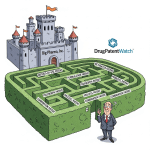
This phase represents the core legal analysis where the strength of the potential patent challenge is rigorously evaluated. The findings from this phase provide the detailed factual and legal basis for the Para IV notice letter and the subsequent litigation strategy. The process involves a systematic deconstruction of the innovator’s intellectual property fortress, probing for multiple, independent points of failure. A successful challenge only requires victory on a single dispositive issue, so developing a portfolio of strong, independent arguments is the optimal strategy.
4.1 Deconstructing the Orange Book Listing
The legal analysis begins with a systematic review of all patents listed in the FDA’s Approved Drug Products with Therapeutic Equivalence Evaluations, or Orange Book, for the target RLD.49 The initial triage involves identifying each patent’s type (drug substance/active ingredient, drug product/formulation, or method of use), its expiration date, and any associated patent term extensions or regulatory exclusivities (e.g., five-year new chemical entity, three-year new clinical investigation, pediatric, or orphan drug).1
It is also crucial to confirm that all listed patents are properly listable. FDA regulations explicitly state that patents claiming manufacturing processes, packaging, metabolites, or intermediates are not eligible for Orange Book listing.49 While challenging an improper listing is a distinct regulatory process, identifying such patents can be a relevant part of the overall strategic assessment. Additionally, the timing of a patent’s listing should be noted. If a patent is issued after an NDA is approved, the brand sponsor must submit the patent information to the FDA within 30 days of issuance. Untimely filing can affect a generic applicant’s certification requirements and may impact the brand’s ability to secure a 30-month litigation stay.61
4.2 Claim Construction Analysis: Defining the Battlefield
Claim construction is the process by which a court determines the meaning and scope of a patent’s claims. It is the foundational first step in any patent infringement or validity analysis, as it defines the precise boundaries of the patentee’s right to exclude.62 The outcome of this analysis can often determine the outcome of the entire litigation.
The analysis follows a strict hierarchy of evidence:
Intrinsic Evidence: This is the most important source for interpretation. The analysis should begin and, whenever possible, end with the intrinsic record. It consists of:
The Claim Language: The words of the claims themselves are paramount. They are generally given their “ordinary and customary meaning,” which is the meaning a Person of Ordinary Skill in the Art (POSITA) would attribute to them at the time of the invention.64
The Specification: The patent’s written description and examples can provide context and definitions that inform the meaning of claim terms. The specification can act as a dictionary for the claims, but it cannot be used to import limitations that are not present in the claims themselves.65
The Prosecution History: This is the complete record of the dialogue between the patent applicant and the USPTO during the patent’s examination. Arguments, amendments, or statements made by the applicant to distinguish their invention from the prior art and secure the patent’s allowance can create a “prosecution history estoppel,” which may permanently narrow the scope of the claims.64
Extrinsic Evidence: This category includes evidence outside of the patent and its prosecution history, such as expert testimony, scientific treatises, and dictionaries. Extrinsic evidence may be used to help the court understand the technology but cannot be used to contradict a claim meaning that is clear from the intrinsic evidence.64
Notably, statements made during the prosecution of corresponding foreign patents can also be relevant to construing U.S. claims, particularly if the foreign application contains claims identical to the U.S. claims and the statements were made in an official proceeding where the patentee had an incentive to be precise.64
4.3 Building the Non-Infringement Case
Once the claims have been construed, the legal team must conduct a meticulous, element-by-element comparison of the proposed generic product (as designed in Phase II) against each limitation of the patent’s claims.66 If even a single element of a claim is not present in the proposed generic product, either literally or under the doctrine of equivalents, then the product does not infringe that claim. The prosecution history analysis is particularly critical for assessing the risk of infringement under the doctrine of equivalents, as any subject matter that was surrendered during prosecution to overcome a rejection cannot be recaptured through this doctrine.
4.4 Building the Invalidity Case: A Multi-Pronged Attack
In parallel with the non-infringement analysis, the due diligence team must build a robust case for why the brand’s patents are invalid and should never have been granted by the USPTO.
Anticipation (35 U.S.C. § 102): This requires an exhaustive prior art search to identify a single prior art reference (such as a previously issued patent, a scientific publication, or evidence of public use) that was publicly available before the patent’s effective filing date and discloses each and every element of a claimed invention.67 For the reference to be anticipating, it must also be “enabling,” meaning a POSITA could practice the claimed invention based on the reference’s disclosure without undue experimentation.67
Obviousness (35 U.S.C. § 103): This is often the most potent and frequently litigated invalidity defense. The analysis follows the four factual inquiries established in Graham v. John Deere Co.: (1) determining the scope and content of the prior art; (2) ascertaining the differences between the prior art and the claims; (3) resolving the level of ordinary skill in the art; and (4) evaluating objective evidence of nonobviousness (so-called “secondary considerations” like commercial success, long-felt but unsolved need, and the failure of others).70 The Supreme Court’s decision in KSR Int’l Co. v. Teleflex Inc. injected flexibility into this analysis, making it clear that a patent claim can be obvious if it represents a “predictable variation” of prior art elements, the application of a known technique to a known problem, or an “obvious to try” scenario with a finite number of predictable solutions and a reasonable expectation of success.67 This flexible standard is a powerful tool for challenging formulation patents that combine known excipients to achieve predictable results.
Lack of Enablement and Written Description (35 U.S.C. § 112): This line of attack focuses on deficiencies in the patent’s specification.
Written Description: The specification must demonstrate that the inventor was in “possession” of the full scope of the claimed invention at the time of filing.65
Enablement: The specification must teach a POSITA how to make and use the entire claimed invention without “undue experimentation”.67 Patents with broad claims covering an entire class of compounds or formulations are particularly vulnerable to enablement challenges if the specification does not provide sufficient representative examples.
4.5 Assessing Unenforceability Risks: The Inequitable Conduct Defense
A finding of inequitable conduct can render an entire patent, and even related patents in the same family, completely unenforceable.73 While it has been called the “plague” of patent litigation due to its frequent assertion, it remains a powerful defense if the high burden of proof can be met.74 Proving inequitable conduct requires clear and convincing evidence of two distinct elements:
Materiality: The patent applicant withheld or misrepresented information that was material to patentability (e.g., failing to disclose known, relevant prior art to the USPTO).75
Specific Intent to Deceive: The applicant acted with a specific intent to deceive the USPTO. Intent cannot be inferred solely from the fact that material information was withheld; there must be evidence of a deliberate decision to mislead the patent examiner.75
During due diligence, a careful review of the patent’s U.S. and foreign prosecution histories may uncover undisclosed prior art or contradictory statements that could form the basis of a credible inequitable conduct defense.46 The following table provides a framework for summarizing the legal risks across the entire patent portfolio.
Patent No.
Expiration
Type
Non-Infringement
Anticipation (§102)
Obviousness (§103)
Enablement/WD (§112)
Inequitable Conduct
U.S. X,XXX,XXX
2028-05-10
Drug Product (Formulation)
High: Proposed formulation uses HPMC as a binder, while claim 1 requires PVP.
Low: No single reference found disclosing all elements.
High: Obvious to combine Smith ‘123 (base formulation) with Jones ‘456 (HPMC as a known PVP substitute).
Medium: Claims cover a broad range of excipient concentrations not fully supported by examples.
Low: No evidence of withheld art or misrepresentations found in prosecution history.
U.S. Y,YYY,YYY
2031-11-22
Method of Use
N/A: Proposing a “skinny label” to carve out this patented use.
Medium: Miller ‘789 publication discloses use for treating the claimed indication.
Medium: Further analysis needed on POSITA’s expectation of success.
Low: Method is well-described and enabled.
Low: N/A
U.S. Z,ZZZ,ZZZ
2026-01-15
Drug Substance (Polymorph)
High: Proposed API is an amorphous form, while claims are limited to crystalline Form II.
Low: N/A
Low: Prior art teaches away from developing an amorphous form due to stability concerns.
Low: N/A
Medium: Applicant failed to disclose a relevant foreign search report to the USPTO.
Section 5: Synthesis, Risk Mitigation, and The Go/No-Go Decision
The final phase of pre-filing due diligence involves synthesizing the findings from the commercial, scientific, and legal workstreams into a single, integrated business case. This requires quantifying and weighing disparate risks, planning for external threats and brand countermeasures, and ultimately making the informed, strategic decision to proceed with the ANDA filing and initiate the Para IV challenge.
5.1 The Integrated Risk Matrix
To facilitate a holistic decision, the findings from the preceding phases should be consolidated into an integrated risk matrix. This is typically a weighted scoring model that assigns probabilities and potential financial impact scores to the key risk factors identified during due diligence. This allows for a direct comparison of different types of risks on a common scale.
Commercial Risks: The probability of multiple first-filers sharing the 180-day exclusivity; the risk of lower-than-expected market penetration due to brand loyalty; the impact of aggressive brand pricing strategies post-generic entry.
Scientific and Technical Risks: The probability of failing to achieve bioequivalence in clinical studies; the risk of formulation instability or manufacturing issues during scale-up; the risk that the chosen “design-around” is not technically feasible at a commercial scale.
Legal Risks: The probability of receiving an adverse claim construction ruling; the probability of losing the infringement lawsuit on the merits (assessed for each patent); the risk of the brand successfully obtaining a preliminary injunction to block an “at-risk” launch; the risk of litigation costs significantly exceeding the initial budget.
A sophisticated due diligence process must also anticipate and model the impact of common defensive strategies employed by brand-name manufacturers.
FDA Citizen Petitions: Brand companies frequently file Citizen Petitions with the FDA, raising purported scientific or safety concerns about a potential generic product, as a tactic to delay ANDA approval.77 While the FDA denies the vast majority of these petitions (over 90% in some periods), the agency is statutorily required to respond, typically within 150 days.77 This mandatory review period can create a critical delay that costs the generic challenger millions in lost sales and, in some cases, could even trigger the “failure to market” or “failure to obtain tentative approval” forfeiture provisions for the 180-day exclusivity.17 The due diligence should include an analysis of the RLD holder’s history of filing such petitions. If the brand has a pattern of this behavior, a potential 5-6 month delay should be factored into all financial models and launch timelines.
Authorized Generics (AGs): A brand manufacturer has the right to launch its own generic version of its drug, often through a subsidiary or partner.4 This is frequently done strategically to coincide with the first-filer’s 180-day exclusivity period. The launch of an AG immediately transforms the lucrative duopoly market into a three-player market, which significantly accelerates price erosion and reduces the first-filer’s market share and overall profitability. As with Citizen Petitions, the due diligence must include research into the brand’s past behavior. A history of launching AGs against its other products is a major commercial risk that must be incorporated into the “worst-case” financial scenario.
5.3 Finalizing the Business Case: The Go/No-Go Decision
The culmination of the due diligence process is the finalization of the business case. The preliminary ROI model developed in Phase I should be updated and refined with the more precise data and probability assessments generated during the scientific and legal analyses. Initial estimates for litigation budgets, BE study costs, and manufacturing scale-up are replaced with more concrete figures, and the various launch scenarios are weighted by the legal team’s assessment of the probability of success.
This quantitative analysis must be paired with a qualitative assessment of the project’s strategic fit. Does the opportunity leverage the company’s existing manufacturing capabilities or regulatory expertise? Does it align with the company’s long-term portfolio goals and overall risk tolerance?.2
The comprehensive business case, including the integrated risk assessment and the final, risk-adjusted ROI or Net Present Value (rNPV) projections, is then presented to senior management for the final go/no-go decision. This decision is not based on a single number but on a thorough understanding of the range of potential outcomes and the probabilities associated with each. The rNPV approach, which explicitly quantifies and discounts for the probability of legal, scientific, and commercial failure, provides the most rational basis for comparing high-risk, high-reward Para IV opportunities and making a sound investment decision.
5.4 Preparing the Notice Letter: The First Shot in the War
If the decision is made to proceed, the final step of the pre-filing process is to draft the Para IV notice letter. This document is far more than a procedural formality; it is the foundational legal document for the entire challenge and the first official communication with the adversary.2 The letter must provide a “detailed statement of the factual and legal basis” for the generic applicant’s opinion that the challenged patents are invalid, unenforceable, or will not be infringed.8
The letter should be a direct product of the intensive due diligence process. It must clearly and persuasively articulate the strongest non-infringement and invalidity arguments developed during the legal analysis. A well-reasoned, comprehensive notice letter signals to the brand company that the challenger is well-prepared, has a strong case, and is serious about litigation. This can significantly increase the likelihood of securing a favorable settlement early in the process. Conversely, a notice letter that contains weak, shifting, or unsupported arguments may be viewed negatively by the courts and could undermine the challenger’s position from the outset.8 The letter should also include a formal offer of confidential access to the relevant portions of the ANDA, allowing the brand’s counsel to properly assess the non-infringement arguments without the generic company having to publicly disclose its proprietary formulation.8
Advances in quantitative methods and modeling for complex generic drugs and opportunities to hybridize learnings between innovator and generic drug developers – PubMed Central, accessed August 19, 2025, https://pmc.ncbi.nlm.nih.gov/articles/PMC10196422/