The conventional wisdom about Russia’s pharmaceutical market runs something like this: foreign companies localize drug packaging in Russia to comply with the Third Wheel rule, collect their procurement revenue, and manage geopolitical risk as best they can. Executives brief their boards on “localization compliance.” Consultants produce slide decks on managing the regulatory environment. Everyone adjusts to the new normal.
That framework is now wrong — and expensively so for anyone still operating under it.
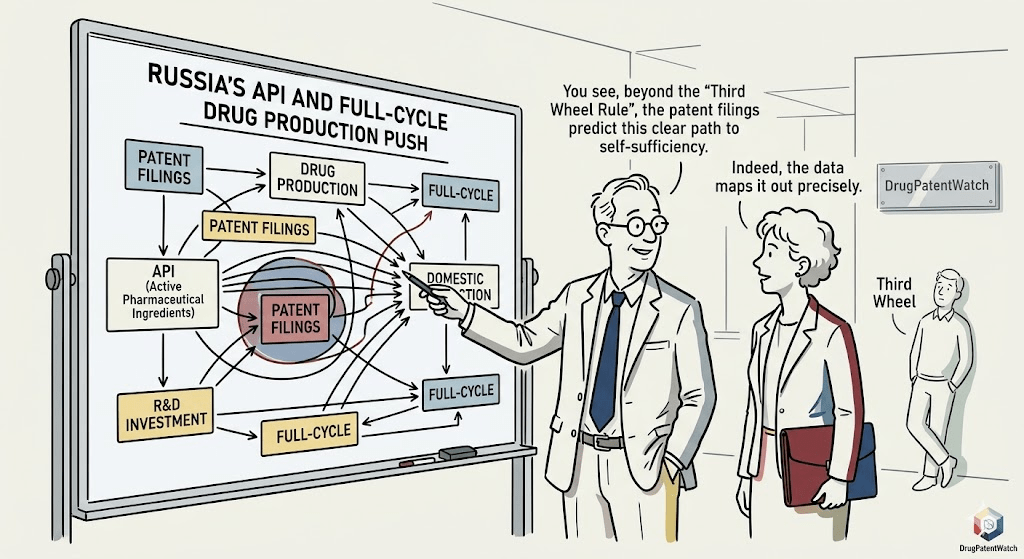
Russia did not build a points-based procurement scoring system, grant compulsory licenses for a patent-protected GLP-1 drug still twelve years from expiry, and commit 16 billion rubles to a single antitumor full-cycle plant just to tighten packaging requirements. The goal is synthesizing active pharmaceutical ingredients (APIs) domestically, at scale, for strategically important drug classes — and eliminating the conditions that made foreign-sourced APIs necessary in the first place. Patent filings at Rospatent and the Eurasian Patent Office (EAPO) are the earliest readable signal that this transition is happening, molecule by molecule.
This article works through the evidence. It covers the architecture of Russia’s localization policy from its origins in Government Decree No. 1289 through the 2026 points system; the specific ways domestic patent filing patterns telegraph API synthesis ambitions before capital investment appears; the compulsory licensing precedent created by Ozempic’s semaglutide; the competitive intelligence methodology for reading Rospatent data; and what market participants on both sides of this divide should do with that information.
The data is not encouraging for multinationals still relying on secondary packaging to satisfy procurement regulators. It is very encouraging for anyone who wants to forecast which APIs Russian firms will produce domestically within five years — and for which they will seek patent clearance, licensing deals, or compulsory licenses to do so.
The Architecture of Forced Localization: From Decree 1289 to the Points Regime
How the Third Wheel Rule Actually Works
Government Decree No. 1289, issued November 30, 2015, created what Russian market participants call the “Third Wheel” rule — or more literally, the “third odd one out.” The mechanism is operationally simple. When a state purchaser tenders for a drug on the Essential Drugs List (the “EDL” or VED), procurement officials examine the country-of-origin certificates (ST-1 certificates) of every bidder. If at least two bids come from manufacturers whose drugs originate within the Eurasian Economic Union — Russia, Belarus, Kazakhstan, Armenia, or Kyrgyzstan — any bid from a non-EAEU manufacturer is automatically disqualified, regardless of price. The foreign competitor does not lose the tender on price. It is removed from consideration before price is even evaluated.
In the years immediately after 2015, compliance with the Third Wheel rule required relatively little. Secondary packaging — taking a bulk product manufactured elsewhere, blister-packing it in Russia, and obtaining an ST-1 certificate — satisfied the country-of-origin standard in most product categories. This created what Contract Pharma would later describe as a wave of “screwdriver” localization: factories that did real but shallow work, staffed up to satisfy the letter of the regulations, dependent on imported APIs from India and China for everything chemically significant.
The rule had a corollary that received less attention. Even when a foreign manufacturer was not automatically excluded — because fewer than two domestic bidders appeared — it still faced a 15% price disadvantage: if a foreign drug won a procurement tender, the purchasing body was entitled to demand an additional 15% discount. The Third Wheel rule thus created a binary exclusion mechanism layered on top of a standing price disadvantage. Foreign firms operating in state procurement without localization were paying a 15% tax on every contract they won, and subject to zero-revenue exclusion whenever two domestic producers organized themselves to bid simultaneously.
The Federal Antimonopoly Service (FAS) eventually documented the perverse incentive this created. FAS head Igor Artemyev publicly noted cases where Russian companies submitted coordinated bids specifically to trigger the exclusion of foreign competitors offering prices up to a billion rubles lower — with the cost absorbed entirely by the state budget. Artemyev’s proposed reform — allowing foreign purchases when the foreign price was 25-30% lower than domestic offers — never made it into final regulations. The rule stayed intact.
The EDL as a Strategic Target List
The Essential Drugs List functions as the government’s prioritization document for import substitution. Drugs on the VED must be domestically available at regulated prices; procurement from foreign manufacturers is most aggressively restricted within this category. The list is not static. Additions to the EDL — particularly for oncology drugs, immunosuppressants, and biologics — effectively declare which therapeutic areas the Russian government intends to domestically source within a regulatory cycle.
Reading EDL additions is therefore the first layer of competitive intelligence about where domestic API synthesis investment will follow. When a drug appears on the VED, the regulatory conditions for preferencing domestic supply are in place. What follows — sometimes quickly, sometimes over several years — is the development of domestic manufacturing capacity for the API, typically preceded by a patent filing covering the synthesis route, crystalline form, or formulation.
The pattern is consistent enough to be predictive: EDL addition triggers procurement preference, which triggers domestic capacity investment, which requires patent clearance or challenge, which appears in Rospatent filings. Working backwards from the patent filing gives you the investment decision. Working forward from the EDL addition gives you the category where filings will appear.
Pharma 2020’s Incomplete Legacy
The Pharma 2020 program, launched in 2009 and extended to 2024, set an ambitious target: nine out of ten vital drugs should be produced domestically by 2020. That target was not met, even by the Ministry’s own assessment. What the program did accomplish was substantial: between 2010 and 2020, thirty pharmaceutical manufacturing plants opened in Russia, twenty of them built with involvement from members of the Association of International Pharmaceutical Manufacturers (AIPM). The AIPM estimated that its members collectively invested approximately one trillion rubles — around $17 billion — in localization projects over that decade.
The critical limitation of Pharma 2020’s legacy, which the government then used to design Pharma 2030’s more aggressive architecture, was that almost all of it was formulation localization. Tablets were pressed in Russia. Packaging happened in Russia. Quality release testing occurred in Russia. But the APIs — the molecules that actually do the pharmacological work — were still overwhelmingly imported. By the program’s end, Russia’s pharmaceutical market remained approximately 95% dependent on imported APIs, with roughly 69% of those imports coming from India and China.
This dependency had been an acceptable strategic risk when India and China remained neutral trading partners. After February 2022, it became a recognized vulnerability. API supply chains were not immediately disrupted — India and China continued supplying — but the government’s threat model changed. Domestic API synthesis became the explicit target of Pharma 2030.
Pharma 2030: The Full-Cycle Imperative
The government approved the Pharma 2030 strategy in January 2022. Its headline target — doubling domestic pharmaceutical production within nine years — understates the qualitative shift in what “domestic production” now means. Pharma 2020 accepted secondary packaging as sufficient for the “Made in Russia” designation in most contexts. Pharma 2030’s definition of success is full-cycle production: synthesis of the API from starting materials within the EAEU, all the way through finished dosage form and batch release.
The government set specific numeric targets. By 2030, the share of strategically important medicines produced in Russia, including the synthesis of pharmaceutical substances, should reach 80%. The market as a whole is projected to grow to 4.5 trillion rubles in the base case, from 3.3 trillion rubles in 2025. The Ministry of Economic Development projected pharmaceutical production growth of 33.1% compared to 2023 by 2027.
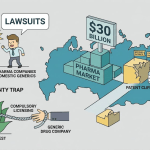
Those numbers reflect rouble-denominated projections. The hard-currency picture is more sobering. The total value of the Russian pharmaceutical market in USD terms was flat in 2024 at $30.9 billion — the same as 2023 — while contracting 0.5% in euro terms to 28.4 billion euros. Drug price inflation of 7.8% in 2024 drove the rouble growth; currency devaluation erased it in international terms. For foreign manufacturers still repatriating profits in hard currency, “robust market growth” in Russian media is almost entirely a rounding error.
The 2026 Points System: The Architecture of Exclusion
How the Scoring Works
Starting January 1, 2026, Russia replaced the binary “local vs. foreign” classification for pharmaceutical procurement eligibility with a granular points-based scoring system under Government Decree No. 719. The system assigns points to specific manufacturing operations performed within the EAEU. A drug must accumulate a minimum of 50 points to qualify as a “Russian industrial product” and access procurement preferences.
The five scoring dimensions are: local API production (synthesis or cultivation within the EAEU), full-cycle manufacturing of the finished dosage form, quality control and batch release conducted in Russia, use of local components and packaging materials, and investment levels in production facilities. API synthesis is the highest-weighted single category, contributing approximately 30-40 points toward the 50-point threshold.
The practical consequence is that secondary-packaging operations — the legacy of Pharma 2020 compliance — score approximately 10-15 points. They cannot reach 50 without API synthesis. A foreign generic manufacturer that packages tablets in Russia but sources the API from India will be below the threshold whenever a fully localized Russian competitor bids. The 2026 system makes explicit what the Third Wheel rule made implicit: mere formulation is insufficient for meaningful market access.
“Without investing in local API synthesis (which awards ~30-40 points), these companies will be disqualified whenever a fully localized Russian competitor bids.”DrugPatentWatch analysis of Government Decree No. 719 implementation, 2026 [1]
The ‘Second Extra’ Rule for Strategically Significant Medicines
For drugs on the Strategically Significant Medicines (SSM) list — a subset of the VED covering the highest-priority therapeutic areas — the government introduced an even stricter standard than the Third Wheel rule. The “Second Extra” mechanism (sometimes called the “second is odd” rule) stipulates that if one bidder offers a full-cycle domestic product, synthesized from the API stage within the EAEU, all other bids — including bids from domestically packaged drugs using foreign APIs — are rejected. It does not require two domestic full-cycle bidders. One is sufficient to exclude everyone else.
Full implementation of the Second Extra rule for the SSM list was scheduled for January 1, 2026, with further rollout for strategically significant medicines set for July 1, 2026. By March 2026, the Russian Ministry of Industry and Trade had confirmed full-cycle production status for 169 International Nonproprietary Names (INNs). Nearly 95% of those — 159 items — appear on the VED list, covering 18% of the entire essential drugs catalog. Of the localized molecules, 106 came from chemical synthesis and 63 from biotechnological and biological processes.
Velfarm leads the confirmed full-cycle producers with 27 INNs. The broader ranking includes Pharmstandard, Biocad, R-Pharm, Nanolek, Geropharm, and Pharm-Sintez — a cohort that has positioned itself specifically to benefit from the procurement preference architecture.
The Oligopoly Effect
The Third Wheel rule and the 2026 points system together produce a predictable market structure: an oligopoly of large domestic holding companies that possess the infrastructure to score above threshold and the procurement relationships to win tenders repeatedly. The rule creates high barriers to entry for new domestic entrants and near-total barriers for foreign manufacturers who have not made decade-long capital commitments to Russian synthesis infrastructure.
Pharmstandard, Russia’s largest domestic manufacturer by sales, has used this architecture to its advantage. Its annual production capacity of 1.7 billion packages across six GMP-compliant facilities makes it the go-to localization partner for multinationals who want to access state procurement without building their own Russian synthesis capacity. Pfizer and Sanofi have leveraged Pharmstandard’s facilities precisely for this purpose. BIOCAD has dominated the biosimilar segment, filing aggressive patent portfolios for monoclonal antibodies and biologics. R-Pharm has cultivated a dual role as both domestic manufacturer and technology transfer recipient from Western originators.
The competitive moats these companies have built are regulatory as much as operational. A foreign competitor would need not just manufacturing capacity but also years of procurement relationship-building, Rospatent filing strategy aligned with domestic IP law, and GMP-compliant facilities certified under Russian standards. The capital barriers are real; the regulatory barriers are higher.
Reading Patent Filings as Production Forecasts
Why Patent Filings Precede Capital Investment
The relationship between patent filing and production investment is not obvious from outside the industry. Most market observers track construction announcements, government tender awards, or regulatory registrations as indicators of localization progress. Each of these is a lagging indicator — it confirms a decision already made and partially executed. Patent filings are earlier.
A domestic company that intends to synthesize an API in Russia faces three distinct intellectual property problems before it can produce commercially. First, it needs freedom to operate — confirmation that its synthesis route does not infringe a valid Russian patent held by the originator. Second, if it wants exclusivity on its own process, it needs to file for protection of its synthesis route, crystalline form, or formulation variant. Third, if the originator’s patent blocks its preferred route, it needs either a licensing agreement, a patent challenge at Rospatent or the Intellectual Property Court, or a compulsory license from the government under Article 1360 of the Civil Code.
All three activities generate public records. Freedom-to-operate analysis precedes investment decisions, typically by 18-36 months. Patent challenges — oppositions or invalidity actions at Rospatent — appear in the public registry. Compulsory license applications go through the government and generate press coverage. New process patents filed by domestic companies appear in Rospatent’s Information Search System.
A systematic review of these records, organized by INN, reveals which APIs domestic companies are actively planning to synthesize within a regulatory planning horizon. Tools like DrugPatentWatch, which tracks estimated key patent expiration dates for specific drugs in the Russian Federation and maps global patent families to their Russian counterparts, make this analysis tractable at scale. Rospatent’s ISS database provides access to full-text patents for direct claim analysis, though meaningful use requires Russian-language query expertise that most Western IP teams lack.
The Signature Patterns of API Localization Intent
Specific filing patterns signal API synthesis intent more reliably than others. When a Russian company files a new patent for a crystalline polymorph of an existing API — a specific solid-state form of a molecule — it typically signals that it has completed synthesis of the base molecule and is now seeking patent protection for its particular process output. Polymorph patents do not require novel chemistry; they protect a novel physical form achievable through specific synthesis conditions. Filing one requires having made the molecule.
Similarly, new process patents — patents on the synthetic route to an existing active ingredient — directly signal API synthesis capability. Russian patent law permits protection of novel manufacturing processes even for known molecules. A domestic company that files a process patent for, say, a novel route to methotrexate or imatinib has almost certainly already built pilot synthesis capacity and is moving toward commercial scale.
Formulation patents covering specific dosage forms — extended-release profiles, new delivery mechanisms, fixed-dose combinations — are a different category. They signal finished product development ambition rather than API synthesis capability directly, but they frequently follow API synthesis investment. A company that has solved the API production problem will naturally move toward differentiating its finished product, and formulation patents protect that differentiation.
The most revealing signal is a patent challenge combined with a formulation filing by the same entity. When a domestic manufacturer simultaneously challenges an originator’s synthesis patent at Rospatent and files its own formulation patent covering the same INN, it is telegraphing its commercial plan: clear the IP barrier to synthesis, secure its own formulation protection, and enter the market as a fully localized competitor.
Rospatent’s Changing Examination Standards
The Russian Patent and Trademark Office has shifted its examination practices in ways that affect both domestic and foreign filing strategies. Rospatent has adopted a stricter stance on “evergreening” — the strategy of filing secondary patents on minor modifications to extend effective exclusivity beyond a core composition patent’s term. This aligns Rospatent more closely with EAPO examination practices and with the Indian patent system’s approach to Section 3(d)-equivalent analysis.
For originators, this means that the secondary patent portfolios built to extend effective exclusivity in Western markets provide less protection in Russia than expected. A formulation patent, a salt patent, or a dosage-regime patent that would hold up in European courts faces real invalidation risk at Rospatent. The legal services firm Pen & Paper noted that Rospatent satisfies approximately 75% of patent applications, a high grant rate that creates a paradoxically contested landscape: patents are easy to obtain but also frequently challenged, and litigation can run for years. The Bayer-Nativa dispute over sorafenib (Nexavar) illustrated this precisely — Bayer secured patent rights, Nativa won two court trials over its proprietary synthesis formula, and by the time Bayer’s January 2018 infringement lawsuit concluded, Nativa had already signed 301 state contracts.
On September 27, 2024, the Russian Ministry of Economic Development issued Order No. 610 — effective November 10, 2024 — introducing new provisions for patenting “use” inventions. The order addressed the longstanding practice of claiming pharmaceutical dosing regimens and administration routes as novel use claims. This matters for patent strategy because use claims often represent the last line of defense for an originator whose composition and process patents have expired or been challenged. Tighter examination of use claims accelerates the de facto patent cliff for drugs in Russia even when nominal patent terms remain.
The EAPO Route and Western Disengagement
Russia is covered by two parallel patent systems: the national system (Rospatent) and the regional Eurasian system (EAPO), which covers Russia, Belarus, Kazakhstan, Armenia, Azerbaijan, Kyrgyzstan, Tajikistan, and Turkmenistan. EAPO fees run five to ten times higher than Rospatent, but a single EAPO grant provides protection across all member states. In 2020, pharmaceutical and veterinary patents accounted for more than 50% of total EAPO filings, with foreign applicants — primarily from the US, Germany, Japan, and China — submitting roughly 80% of applications.
Since 2022, there has been a measurable decline in direct Rospatent filings by entities from Western countries. Companies that have suspended Russian operations, halted clinical trial investment, or are managing sanctions compliance have reduced their engagement with the national system. EAPO filings from these same companies have declined less sharply — regional protection via EAPO still makes strategic sense for companies that want to maintain optionality without active Russian market engagement.
This divergence matters for competitive analysis. A foreign company maintaining EAPO filings while reducing Rospatent engagement signals that it wants coverage but is not actively pursuing Russian market development. A domestic Russian company increasing Rospatent filings for a specific INN while a foreign patent holder reduces its Russian engagement signals that the domestic company is preparing to challenge or work around the originator’s IP. The combination — foreign withdrawal plus domestic filing acceleration — is the most actionable signal in the Rospatent data.
The Compulsory License Weapon: Semaglutide as the Template
How Article 1360 Works in Practice
Article 1360 of the Russian Civil Code allows the government to authorize the use of a patent without the holder’s consent in cases of “extreme necessity related to ensuring the defense and security of the state, the protection of life and health of citizens, or the protection of the natural environment.” Before 2022, compulsory licensing under this provision was theoretical. After 2022, it became operational policy.
The legal mechanism runs through government decree rather than court order. A domestic company petitions the government, typically after demonstrating that it has attempted to negotiate a voluntary license with the patent holder and received no acceptable terms. The government issues a decree authorizing production, specifying the term (initially annual, renewable), and setting the royalty rate. Under the 2024 Ozempic compulsory licenses, the royalty was capped at 0.5% of actual revenue — far below the global norm for pharmaceutical licensing, which typically runs 5-15% depending on therapeutic area and stage of development.
The 0.5% royalty cap is not incidental. It is a deliberate signal to both domestic companies and foreign patent holders about the economic terms of compulsory licensing in Russia. For a domestic company, it means the technology transfer cost is negligible. For a foreign originator, it means that the financial return from a compulsory license is essentially zero — transforming the calculus toward either voluntary licensing at better terms or complete withdrawal from the Russian market.
The Semaglutide Case in Detail
Novo Nordisk notified Russian authorities in the fall of 2022 that it would halt Ozempic supply to Russia. Commercial supply ended in March 2023. Geropharm had been monitoring the situation and had already registered a generic version of semaglutide — under the brand Semavik — by October of that year. Registration precedes commercial production; Geropharm was not yet authorized to sell because Novo Nordisk’s patent on semaglutide runs until 2035, twelve years from the moment of crisis.
In December 2023, the Russian government issued compulsory licenses to both Geropharm (for Semavik) and Promomed (for Quincenta). PSK Pharma later received authorization for its injectable Insudive brand. The government’s legal basis was the withdrawal of supply itself, which it characterized as satisfying the “extreme necessity” standard — a reading that Novo Nordisk’s lawyers contested and Russia’s Supreme Court upheld in 2025.
The market outcome was rapid. Within a year of the compulsory licenses, Russian-manufactured semaglutide analogues captured nearly 100% of domestic market volume. By 2024, total semaglutide analogue sales reached 8.8 billion rubles, with government procurement contributing an additional 1.7 billion rubles. Geropharm held approximately 50-63% market share (Semavik), Promomed 30-35% (Quincenta and Velgia), and PSK Pharma 10-15% (Insudive). In November 2025, Promomed received registration for Semaltara — the first Russian semaglutide in tablet form.
In October 2025, Geropharm delivered the first export shipment of Semavik — 10,000 packs — to Paraguay, and the drug was registered in Kazakhstan and Azerbaijan. The company with a domestic compulsory license was now exporting into third-country markets. This evolution — from emergency domestic production to export capability within two years — illustrates the speed at which compulsory licensing converts a market crisis into a domestic industrial asset.
What the Semaglutide Precedent Means for Patent Holders
Novo Nordisk is not a uniquely vulnerable company. Its error — if it can be called that — was exiting the Russian market without a transition plan that preserved any form of licensed domestic production. Had Novo Nordisk arranged a voluntary licensing agreement with a Russian partner before halting supply, it would have retained a royalty stream (probably modest but nonzero) and maintained some relationship with Russian IP courts. Instead, it created the conditions that the Russian government cited as justification for compulsory licensing, received a 0.5% royalty it did not negotiate, and watched competitors capture its entire domestic market within twelve months.
The cases now accumulating behind semaglutide suggest this was not a one-off. The AstraZeneca-Axelpharm dispute over osimertinib (Tagrisso) ran through both the FAS and the Arbitration Court of Moscow — AstraZeneca won at the FAS level in November 2024, then Axelpharm won at the court level in May 2025, with the court finding that the antimonopoly service had not properly established competition or correctly applied the law. Biogen challenged Generium’s generic of Spinraza (nusinersen) in 2024. Pfizer’s tofacitinib patent was revoked by Rospatent following an invalidity challenge that cited prior art from Indian opposition proceedings. The pattern is consistent: domestic companies challenge, courts evaluate inconsistently, and the overall trajectory favors domestic production.
The Biogen-Generium nusinersen dispute is particularly instructive because it involves a biologic — a molecule orders of magnitude more complex than a small-molecule drug like semaglutide. If Russia’s domestic companies are filing for and receiving compulsory-license-adjacent clearances for biologics, the scope of API synthesis ambition extends beyond straightforward small-molecule generics into territory that has historically required decades of Western manufacturing investment to develop.
The API Import Dependency: Where 95% Becomes the Problem Statement
The India-China Axis and Its Geopolitical Fragility
Russia’s near-total dependence on imported APIs — approximately 95% as of Yakov and Partners’ pre-Pharma 2030 assessment — was the original vulnerability that motivated the full-cycle localization push. Of that 95%, roughly 69% came from India and China, with the remainder from European suppliers who have progressively withdrawn under sanctions pressure.
India became Russia’s largest pharmaceutical supplier starting in 2023, with exports increasing approximately 3% to nearly 294 million boxes of medicines. Twenty Indian companies were engaging with Russian entities on local API production, injectable manufacturing, and R&D as of 2024. Pharmexcil, India’s pharmaceutical export council, publicly advocated for stronger India-Russia pharmaceutical industry ties at the 27th St. Petersburg Economic Forum in June 2024. The partnership was explicitly framed around API manufacturing and reducing import dependency — India helping Russia reduce dependency on Western suppliers while increasing India’s own strategic role in Russian supply chains.
China similarly expanded its pharmaceutical supplier role for Russia. API supplies to Russia actually grew despite general logistical disruptions, driven by a stronger ruble improving Russia’s purchasing power and manufacturers’ desire to build inventory buffers. The China-India API dominance creates a new dependency structure that Russia’s planners consider more geopolitically stable than Western dependence but still suboptimal compared to domestic synthesis.
The logic of full-cycle localization is straightforward: even if India and China remain friendly suppliers, Russia cannot control their regulatory compliance timelines, their manufacturing quality incidents, or their government’s own strategic calculations about the Russia relationship. API synthesis within Russian territory eliminates the single largest variable in pharmaceutical supply chain security.
Investment Capital and the New Plant Wave
The 2025 investment figures for full-cycle pharmaceutical facilities are concrete evidence that domestic API synthesis is moving from policy objective to industrial reality. Pharm-Sintez in the Kaluga region committed 16 billion rubles to a full-cycle plant for antitumor drugs. Nanolek in the Kirov region invested 7.5 billion rubles to create production for Russia’s first domestically manufactured HPV vaccine, Tsegardex. Endopharm in Moscow committed 5 billion rubles to launch seven high-tech production lines. These are not incremental upgrades to existing packaging operations. They are synthesis-level investments in therapeutic categories — oncology, vaccines — that require the most complex chemistry.
The Artcellens biotechnological R&D center in Moscow opened its first technological line in 2025, targeting novel biologics development. BIOCAD continues expanding its biosimilar platform across monoclonal antibody targets including oncology and immunology. Pharmstandard, with six existing GMP-compliant facilities, has positioned itself to absorb technology transfer agreements from Western companies that want to maintain Russian market access without building their own synthesis infrastructure.
Public-private partnership mechanisms have been critical enablers. The Industry Development Fund offers preferential financing at 3-5% annual rates for qualifying localization projects. Special Investment Contracts (SPICs, under Federal Law No. 44-FZ) stabilize the regulatory and tax environment for up to ten years for investments exceeding 3 billion rubles. Offset contracts — ten-year guaranteed demand arrangements with minimum investment thresholds of 1 billion rubles — provide revenue certainty for new facilities. These instruments collectively make full-cycle investment economics more attractive than they would be in a purely market-driven environment.
The Import Paradox and What It Tells You About Market Power
Russia’s pharmaceutical market in 2024 presented a structural paradox that is worth understanding in detail, because it explains why the government’s procurement preferences have such leverage. Imported drugs accounted for 54.6% of market value — more than half of all pharmaceutical spending in roubles went to foreign-origin medicines. But in volume terms — packages sold — domestically produced drugs made up approximately 69% of the total.
This means that domestic production dominates in low-cost, high-volume generics while imported products capture value through premium pricing on innovative therapies. Of the ten best-selling drugs in Russia by sales value in 2024, eight were produced by foreign companies — including Bayer’s Xarelto (rivaroxaban), Bristol-Myers Squibb’s Elikvis (apixaban), Reckitt’s Nurofen (ibuprofen premium), Takeda’s Edarbi (azilsartan), and Servier’s Detralex (diosmin and hesperidin).
These eight products represent both a vulnerability for their originators and a precise roadmap for domestic import substitution. Each is a high-value target for the government’s Pharma 2030 domestic production push. Each has or will have Rospatent-registered process patents, crystalline form patents, or formulation patents from Russian generics developers or domestic innovation companies. Tracking patent activity around these INNs specifically — and the expiry timelines for their originator patent families — provides the clearest forward-looking indicator of where Russia’s next full-cycle localization investments will go.
DrugPatentWatch tracks estimated patent expiration dates for numerous drugs in the Russian Federation and maps global patent families to their Russian counterparts. Its coverage of Rospatent-registered patents for specific INNs provides the foundation for exactly this kind of analysis — identifying which molecules have expiring originator protection and active domestic challenger filings simultaneously.
How to Use Patent Intelligence Operationally
The Intelligence Stack for Localization Forecasting
The four-layer intelligence stack for forecasting API localization in Russia runs from macro policy signals down to molecule-level patent filings.
The first layer is VED list monitoring. Every addition to Russia’s Essential Drugs List signals a therapeutic category where domestic production preferences will intensify. Additions requiring high-cost APIs — biologics, oncology molecules, GLP-1 receptor agonists — are the highest-value signals because they indicate government willingness to invest most aggressively in procurement preferences.
The second layer is EAPU and Rospatent filing surveillance for specific INNs on the VED or SSM lists. This requires searching both national (Rospatent ISS) and regional (EAPO) databases by INN, cross-referencing against patent family databases to identify which originators hold valid Russian protection, and screening for new applications from domestic entities. New applications from Russian companies for process patents, polymorph patents, or formulation patents on VED-listed INNs are the primary signal of API synthesis intent.
The third layer is litigation and opposition tracking. Patent challenges at Rospatent’s Chamber of Patent Disputes, invalidity actions at the Intellectual Property Court, and FAS competition complaints all generate public records. AstraZeneca’s osimertinib dispute at the FAS, Biogen’s nusinersen challenge against Generium, and the Bayer-Nativa sorafenib litigation all appeared in public records that provided advance warning of domestic production ambitions. Tracking these proceedings by INN creates a real-time indicator of which molecules are legally contested.
The fourth layer is capital investment and regulatory registration data. Construction announcements, Ministry of Industry and Trade full-cycle production certifications, and drug registration data from the State Register of Medicines provide confirmation of decisions made at the patent-filing stage. By the time a full-cycle production certification appears in the Ministry’s records, the patent strategy has been executed and the capital investment made.
The Drug Patent Watch Methodology in Practice
DrugPatentWatch’s coverage of the Russian patent landscape provides the infrastructure for tracking originator patent expiry timelines alongside domestic competitor filings. Its Russian Federation patent analysis links global patent families to specific Russian registrations, flags estimated expiration dates, and identifies which drugs are most exposed to generic entry given the current regulatory environment.
The platform’s data on drugs like APTIOM (eslicarbazine acetate) and CREON (pancrelipase), both with estimated Russian expiration dates in 2025, illustrates the kind of molecule-level intelligence that drives domestic generics planning in Russia. For each such expiry, domestic companies are calculating synthesis feasibility, filing provisional process patents, and positioning for procurement tenders before the originator’s protection lapses.
For originators, the same intelligence serves a defensive function: monitoring which domestic companies are filing around your patent portfolio in Russia gives advance warning of generic entry attempts and informs licensing negotiation strategy. The AstraZeneca case shows what happens when a company detects a generic challenge — it was able to file a concurrent FAS complaint rather than relying solely on patent litigation. Monitoring creates options; not monitoring collapses them.
The ‘Second Extra’ Rule and the Filing Acceleration Effect
The Second Extra rule — where a single full-cycle domestic bidder excludes all others — creates a specific competitive dynamic around patent filing that is worth analyzing separately. Under the Third Wheel rule, a domestic company needed to coordinate with at least one other domestic bidder to trigger the exclusion of foreign competitors. Under Second Extra, a single full-cycle producer wins automatically. The procurement incentive for completing full-cycle production — including API synthesis — is therefore not merely “preferred treatment” but “winner take all.”
This winner-take-all structure is already driving filing acceleration. If a company achieves full-cycle production certification for a VED-listed INN before any competitor does, it captures 100% of state procurement for that INN (assuming competitive pricing) regardless of what other domestic manufacturers are doing at the packaging level. The value of being first to full-cycle certification is therefore large enough to justify substantial IP investment in clearing and protecting the synthesis route.
Patent filing data should show — and anecdotally does show — an acceleration in process patent filings for VED-listed INNs since the Second Extra mechanism was announced and particularly since its January 2026 implementation. Companies racing to achieve full-cycle certification ahead of competitors are filing defensive patents on their synthesis routes to prevent others from copying the specific process they developed. The filing wave is both a signal of production intent and a competitive moat-building exercise.
Foreign Company Strategies Under the New Architecture
The Sanofi and Pfizer Approach: Deep Localization Through Partners
The multinationals that have maintained meaningful Russian market positions through 2024 and 2025 share a common characteristic: they committed to localization partnerships before the regulatory pressure reached its current intensity, and they chose partners with synthesis-level capability rather than just packaging capacity. Pfizer and Sanofi both expanded existing localization relationships with Pharmstandard. Bayer and Novartis retained local production despite suspending research and development activities. These companies have separated the “compliance operation” from the “innovation relationship” — continuing to supply established products through localized channels while redirecting R&D investment away from Russia entirely.
This bifurcation strategy has costs. R&D relationships with Russian universities, hospitals, and clinical trial networks — valuable for pharmacovigilance data, formulation development, and biological sample access — have atrophied. The suspension of international multicenter clinical trials by Western sponsors, which had effectively ceased by 2024 with foreign sponsors accounting for only 12% of first-half 2025 clinical trial activity, creates a “launch gap” for future innovations. Drugs approved by the FDA or EMA in 2024-2025 will not receive Russian registration for years, if ever, unless Russian companies conduct independent domestic trials without the originator’s cooperation. That represents permanent market access forfeiture for future pipeline products.
The Voluntary Licensing Path
For originators who want to maintain some revenue stream from Russian operations without making new capital commitments, voluntary licensing to a Russian partner remains the preferable alternative to compulsory licensing. The government explicitly prefers voluntary localization over forced licensing because it ensures more complete technology transfer and maintains some form of international IP relationship.
The economics are unfavorable compared to pre-2022 royalty norms but better than the 0.5% compulsory license rate. A Western company that negotiates a voluntary license with R-Pharm or Pharmstandard before a compulsory license petition is filed can typically secure royalty terms of 2-5% of Russian sales — still low by Western standards, but a multiple of what the government will award unilaterally. Critically, voluntary licensing also preserves the patent relationship: the Russian partner is formally licensed, has less incentive to challenge the originator’s patents, and the originator retains standing to protect its IP portfolio for future negotiations in Russia or third-country markets.
The sequence that produces compulsory licensing is predictable: originator exits Russian market, domestic company petitions for compulsory license, government grants it at 0.5%. The sequence that produces voluntary licensing is also predictable: domestic company signals synthesis capability through patent filings, originator recognizes the filing pattern as intent, negotiations begin before the petitioning stage. Patent monitoring is therefore not merely a defensive intelligence exercise — it is an early warning system that creates negotiating leverage before leverage disappears.
The SPIC and Offset Contract Calculus
For companies considering new capital commitments to full-cycle Russian production — a diminishing cohort given the geopolitical environment — the Special Investment Contract (SPIC) framework offers the most attractive economics. SPICs provide regulatory stability for up to ten years, reducing income and property taxes under negotiated terms, with minimum investment thresholds of 3 billion rubles for the most favorable conditions. The Industry Development Fund’s preferential financing at 3-5% annual rates effectively subsidizes the cost of capital for qualifying projects.
Offset contracts — guaranteed demand arrangements under Federal Law No. 44-FZ — provide revenue certainty that de-risks the investment model further. A company that enters an offset contract commits to minimum investment (1 billion rubles minimum, ten-year term) and receives in return a guaranteed purchase commitment from the government. For a full-cycle API synthesis facility targeting VED-listed molecules, this structure can make the investment economics work even in the current geopolitical climate.
The companies most likely to pursue SPIC and offset arrangements are those with limited Western market exposure — Indian and Chinese pharmaceutical manufacturers — for whom Russian regulatory risk carries less reputational cost. Indian companies have already moved in this direction, with twenty companies engaged in local API production discussions as of 2024. The Pharmexcil advocacy for deeper India-Russia ties specifically called out API manufacturing as the priority collaboration area. The India-Russia pharmaceutical partnership is moving faster than most Western market analysis acknowledges.
Therapeutic Categories: Where the Patent Signals Are Strongest
Oncology: The Highest-Intensity Category
Oncology presents the most concentrated patent filing activity for domestic API synthesis in Russia, driven by both the high therapeutic priority of cancer drugs and the high unit economics that make full-cycle production valuable. The Pharm-Sintez 16-billion-ruble antitumor drug facility in Kaluga is the largest single disclosed full-cycle investment of 2025 and represents a commitment to synthesizing oncology APIs that have previously been imported.
The Bayer-Nativa sorafenib (Nexavar) dispute was an early indicator of this pattern. Nativa’s ability to win two court trials by demonstrating a proprietary synthesis formula — separate from Bayer’s process — while simultaneously signing 301 state contracts shows how quickly domestic oncology production can establish market reality ahead of patent dispute resolution. The Pfizer tofacitinib patent revocation, citing Indian opposition proceedings as prior art, extends the pattern to JAK inhibitors.
The AstraZeneca osimertinib (Tagrisso) case demonstrates that third-generation EGFR inhibitors — among the most clinically and commercially significant oncology drugs globally — are also in the domestic synthesis queue. Axelpharm’s willingness to launch at risk, absorb a billion-ruble FAS fine, and then successfully challenge that fine in the Arbitration Court of Moscow reveals an actor that has the synthesis capability and the financial resources to sustain a multi-year legal battle against an originator with deep pockets. That suggests synthesis infrastructure already in place, with the patent dispute as the market access question rather than the production question.
Metabolic Disease and GLP-1s: Post-Semaglutide Dynamics
The semaglutide compulsory license created a template that domestic manufacturers are now applying systematically to the GLP-1 class. In 2026, key semaglutide patents expire in China, India, and Brazil — but not in Russia, where Novo Nordisk’s patent runs to 2035. The compulsory license mechanism has already resolved the Russian market question by administrative action. The more interesting question for patent analysts is which other GLP-1 and incretin-class molecules are now in the domestic synthesis pipeline.
Liraglutide (Victoza, Saxenda) is the obvious next candidate — a Novo Nordisk compound with different patent protection from semaglutide and growing demand in the Russian diabetes and obesity market. Dulaglutide (Trulicity), marketed by Eli Lilly, faces similar dynamics. The domestic companies that built semaglutide synthesis capabilities — Geropharm most prominently — have generic peptide chemistry infrastructure that transfers to other GLP-1 class molecules. Process patents for liraglutide synthesis routes by Russian entities, or compulsory license petitions for liraglutide, are logical near-term developments.
The antiviral drug category shows similar dynamics. Antiviral sales in Russia grew 21% in monetary terms in the first quarter of 2025. The COVID-19 crisis had already demonstrated Russia’s appetite for rapid domestic production of antiviral APIs — the Gilead-Pharmstandard agreement for remdesivir (Veklury) was a voluntary early-pandemic deal, but it established supply chain relationships and technical capability that now have peacetime applications.
Biologics and Biosimilars: The Long Game
The biological drug segment is where Russia’s localization ambition most clearly exceeds its current industrial capability. Biotechnological synthesis is categorically more complex than small-molecule chemical synthesis, requiring cell culture infrastructure, specialized fermentation equipment, and purification processes that take years to develop and validate. BIOCAD has invested most aggressively in this capability, building a biosimilar portfolio across monoclonal antibodies targeting oncology, autoimmune disease, and rare diseases.
By the start of 2026, 63 of the 169 confirmed full-cycle INNs in Russia came from biotechnological and biological processes — a meaningful share but still less than the 106 from chemical synthesis, reflecting the maturity gap. The segment of biosimilar drugs significantly expanded by 2025, primarily driven by the suspension of innovative foreign biologics from Western manufacturers. The share of permits issued by the Ministry of Health for bioequivalence studies reached 71% in 2024, compared to 41% in 2021 — a rapid acceleration in domestic generics development including biosimilars.
Patent filings in the biologics space are structurally different from small-molecule patents. Biologics are protected by patents on the molecular structure, manufacturing process, and specific cell lines rather than on chemical synthesis routes. Domestic companies challenging biologic patents typically attack process patents as insufficiently novel or file patents on different cell line variants that produce the same therapeutic protein. The Biogen-Generium nusinersen dispute is an early test case for how Russian courts will handle biologic patent litigation under the current geopolitical conditions.
The Clinical Trial Collapse and Its Patent Consequences
What 1,300 Suspended Trials Mean for the Patent Landscape
Sanctions have restricted access to Western innovative technologies and led to the suspension of more than 1,300 clinical trials conducted by foreign companies in Russia, according to DrugPatentWatch tracking. By the first half of 2025, foreign sponsors accounted for only 12% of clinical trial activity, with nearly 90% of ongoing trials targeting generics rather than novel therapies.
The patent consequence of this collapse is a “registration gap” that will widen over the next decade. Drugs approved by the FDA or EMA since 2022 cannot receive Russian registration without local clinical trials. Foreign sponsors are not running those trials. Russian companies are not running them for foreign originators. The result is that innovative therapies approved in Western markets in 2023, 2024, and 2025 will simply not be available through legitimate channels in Russia for years — potentially never, unless the geopolitical environment changes radically.
This registration gap creates the specific conditions that the government uses to justify compulsory licensing: a medically necessary drug is not available in Russia, domestic health policy requires it, therefore extreme necessity is satisfied. The gap is not accidental from the government’s perspective. It is a predictable consequence of Western withdrawal that provides ongoing legal justification for compulsory licensing of innovative therapies across multiple therapeutic categories.
For patent analysts, the registration gap also identifies future compulsory licensing targets. Drugs with approved foreign registrations but no Russian registration, high disease burden in Russia, and commercially viable synthesis complexity are the predictable next generation of compulsory license subjects. Monitoring FDA and EMA approvals against Russian registration status — a straightforward analysis using publicly available regulatory data — produces a candidate list. Adding patent expiry information from DrugPatentWatch allows prioritization by remaining protection term and therefore by the financial stakes for the originator.
The Domestic R&D Reorientation
The suspension of international trials has forced Russian pharmaceutical R&D to reorient around entirely domestic sources of innovation. The government’s commitment to this transition appears genuine rather than aspirational: pharmaceutical production growth of 21.5% in 2024 and 15.4% in 2025 against overall industrial production growth of 1.3% reflects sustained investment priority.
Researchers at South Ural State University and institutions like Artcellens’ new biotechnological R&D center are working on novel molecules rather than simply copying Western drugs. The patent outputs of this research — novel chemical entities discovered in Russian academic and corporate labs — are a separate intelligence category from the API synthesis patents discussed above. They represent genuine Russian pharmaceutical innovation rather than generic localization, and they create a different competitive dynamic: domestic molecules with Russian Rospatent protection, developed outside the international patent system, targeting diseases prioritized by the Russian healthcare system.
This pipeline is small relative to Western pharmaceutical R&D output but growing. The share of generics among ongoing clinical trials (90% of first-half 2025 activity) reflects the current balance, but the direction of investment is shifting toward novel therapies. Five to ten years from now, Russia’s pharmaceutical patent landscape will include a meaningful domestic innovation patent layer that does not exist today — and that will complicate market entry calculations for foreign companies seeking to re-enter the market under hypothetically improved geopolitical conditions.
The IP Court, the FAS, and the Anatomy of Russian Patent Litigation
Two Arenas, Different Outcomes
Understanding how Russian patent disputes actually resolve — not just how they are filed — is essential for any company trying to forecast the competitive value of its Russian IP portfolio. Russia’s patent litigation system operates across two primary arenas with meaningfully different audiences, standards of evidence, and outcomes.
The first arena is the Intellectual Property Court (IP Court), established in 2013 as a specialized federal court for patent, trademark, and related IP disputes. The IP Court handles invalidity actions — proceedings in which a party challenges whether a patent should have been granted in the first place — as well as appeals from Rospatent’s Chamber of Patent Disputes. It applies the Civil Code directly and has developed its own jurisprudence on the doctrine of equivalents, the novelty and inventive step standards for pharmaceutical patents, and the scope of protection for use claims.
The second arena is the commercial arbitration court system, specifically the Arbitration Court of Moscow and its appellate structure, which handles infringement claims and damages. Infringement proceedings in Russia are civil actions; there is no separate patent court jurisdiction for damages analogous to the US District Court system. This means that a company asserting patent infringement must prove its case before generalist commercial judges who apply IP law principles without the specialized background of the IP Court.
The practical consequence of this dual-arena structure is forum shopping — not in the sense of choosing between them, but in the sense that defendants use them sequentially. A domestic generic company targeted for infringement in arbitration will simultaneously file an invalidity action at the IP Court. If invalidity succeeds, the infringement case collapses regardless of its merits. If invalidity fails, the defendant continues arbitration while the appeals process runs, maximizing the delay between initial generic launch and final resolution. Bayer’s experience with Nativa over sorafenib extended across multiple court trials precisely because of this structure.
The AstraZeneca-Axelpharm Osimertinib Dispute
The AstraZeneca-Axelpharm dispute over osimertinib (Tagrisso) deserves detailed treatment because it illustrates how a sophisticated originator can use the FAS antitrust channel in parallel with patent litigation — and how Russian courts are currently calibrating the boundary between patent protection and “unfair competition.”
AstraZeneca holds valid Eurasian patent protection for osimertinib, a third-generation EGFR inhibitor that is a first-line standard of care for EGFR-mutated non-small cell lung cancer. Axelpharm, a domestic Russian generic company, registered a generic version and launched commercially while the patent remained in force — what the US system calls an “at-risk launch.” Rather than limiting its response to a standard patent infringement action, AstraZeneca concurrently filed a complaint with the Federal Antimonopoly Service, alleging that Axelpharm’s at-risk launch constituted unfair competition under Russian competition law.
The FAS investigated, found in AstraZeneca’s favor in November 2024, imposed a substantial fine on Axelpharm, and ordered it to cease sales. This was a significant win — using antitrust law as a patent enforcement tool. But Axelpharm challenged the FAS decision in the Arbitration Court of Moscow, which overturned it in May 2025. The court found that the FAS had not properly established that the companies were in direct competition, had not provided sufficient evidence of patent infringement, and had incorrectly applied the relevant competition law provisions.
The lesson is not that FAS channels are useless — the FAS ruling forced Axelpharm to cease sales for months while the case ran — but that Russian courts are applying independent scrutiny to antitrust-as-patent-enforcement arguments. For originators, the FAS channel is a delay mechanism and litigation cost multiplier for defendants, not a reliable substitute for patent litigation itself. For domestic generics companies, the Axelpharm outcome provides some reassurance that at-risk launches do not automatically attract competition law liability.
Patent Invalidation and the 75% Grant Rate Problem
Rospatent’s approximately 75% patent grant rate — cited by legal practitioners including Pen & Paper partner Sergei Uchitel — creates a systemic quality problem that paradoxically benefits neither originators nor domestic challengers in a predictable way. Patents that should not have been granted are granted routinely. Legitimate patents are also sometimes delayed or refused due to inconsistent examination. The result is a landscape where the granted patent is not a reliable proxy for legal validity, and where challenges are frequently successful.
For domestic companies pursuing freedom-to-operate analysis before entering API synthesis, the high invalidation rate is operationally useful — many originator patents covering secondary features (polymorphs, salts, specific dosage forms) are vulnerable to challenge. But the inconsistency of outcomes creates planning uncertainty. A company that receives a freedom-to-operate opinion based on an expected invalidation may face a patent that survives on appeal for years after the original challenge.
Rospatent’s stricter stance on evergreening — adopted in recent years, aligning with EAPO examination practices — is correcting this quality problem on a forward-looking basis. New secondary patent applications face higher rejection rates. But the legacy portfolio — twelve years of secondary patents granted before the standard tightened — remains in the system and continues to generate litigation. Working through those legacy patents is a decade-long process that will overlap with the Pharma 2030 implementation timeline entirely.
The Pat-INFORMED Database and the EAEU Pharmaceutical Register
Two public databases are central to systematic Russian pharmaceutical patent analysis. The Eurasian Patent Office maintains a Unified Pharmaceutical Register that links patents to International Nonproprietary Names — the INN-to-patent mapping that identifies which molecules have active regional patent protection. The Pat-INFORMED database provides global patent-to-drug mappings that can be used to cross-reference Russian and Eurasian coverage against originator global portfolios.
The critical limitation of both databases is that neither is fully authoritative in the Russian context. The Unified Pharmaceutical Register is formally non-binding — Russian courts do not treat listing in the register as conclusive evidence of patent coverage. A patent listed in the register can still be challenged; a patent not listed can still be infringed. This ambiguity forces litigation to confirm coverage in cases where the register’s scope is disputed, adding cost and time to both enforcement and invalidity proceedings. DrugPatentWatch’s Russia-specific patent data, which cross-references Rospatent and EAPO filings against drug registration data, provides more complete coverage than either official database alone and handles the non-binding status of the EAEU register by tracking all relevant patent families regardless of register status.
The Domestic Champions: Competitive Profiles and Patent Strategies
Pharmstandard: Scale and Partnership
Pharmstandard is Russia’s largest domestic pharmaceutical manufacturer by sales volume, with over 400 products in its portfolio and annual production capacity of 1.7 billion packages across six GMP-compliant manufacturing facilities. Its strategic positioning since 2022 has been defined by two complementary roles: as the preferred localization partner for Western multinationals that want to maintain Russian market access, and as an active domestic generic developer in its own right.
The partnership role is commercially central. Pfizer and Sanofi both localize production of specific products through Pharmstandard’s facilities. The arrangement gives Western companies access to Pharmstandard’s procurement relationships and GMP infrastructure while giving Pharmstandard technology transfer that upgrades its own manufacturing capabilities. The relationship is mutually reinforcing: Pharmstandard’s facilities become more technically capable with each partnership, increasing their value as localization vehicles for the next multinational that needs a Russian manufacturing base.
Pharmstandard’s own patent filing strategy focuses on established molecules — generics and biosimilar precursors — where the company has synthesis capability and market access certainty. Its patent portfolio at Rospatent is dominated by process claims and formulation claims rather than novel chemical entity claims, reflecting its strategic positioning as a high-quality generic and biosimilar manufacturer rather than an innovation-led originator. This is appropriate to its scale and procurement relationships but leaves it exposed if the government’s Pharma 2030 priorities shift toward novel drug development incentives.
BIOCAD: Biosimilar Ambition and Patent Aggression
BIOCAD is Russia’s most aggressive domestic pharmaceutical patent filer in the biologics space. Founded in 2001 and headquartered in St. Petersburg, it has built Russia’s most sophisticated biosimilar development platform, with a portfolio targeting oncology, autoimmune disease, and rare diseases. BIOCAD’s patent strategy is explicitly designed to challenge originator biologic patents while simultaneously protecting its own biosimilar process innovations.
The company’s dual-track patent approach — file process patents for novel synthesis routes to known biologics, while challenging originator patents on novelty and inventive step grounds — is the clearest current example of the patent-as-production-signal relationship discussed earlier. When BIOCAD files a new process patent for a monoclonal antibody synthesis route, it is documenting that the manufacturing process exists and is operable, not just that the molecule is theoretically producible. The patent filing is simultaneously an IP protection act and a production readiness announcement.
BIOCAD’s export ambitions — it has pursued drug registrations in several emerging markets — mean that its patent strategy must also consider freedom to operate in third-country markets, not just Russia. This creates a more sophisticated filing strategy than purely domestic players require: BIOCAD needs not just Russian/EAPU protection for its process innovations but international filing through PCT routes to protect its global commercial interests. Tracking BIOCAD’s PCT applications and their subsequent national phase entries reveals its intended commercial footprint beyond Russia.
R-Pharm: The Technology Transfer Specialist
R-Pharm occupies a distinctive market position as both a domestic manufacturer and a technology transfer intermediary. Its business model involves acquiring manufacturing rights to foreign drugs — through licensing agreements or acquisition of production technology — and localizing production in Russia under its own regulatory framework. This positions it as the preferred counterpart for Western originators pursuing the “voluntary licensing” strategy described above.
R-Pharm’s patent strategy is accordingly oriented toward process licensing rather than primary innovation. It needs freedom to operate — confirmed through due diligence on the patents it licenses in — and it needs regulatory exclusivity via drug registration rather than IP exclusivity via patent. Its Rospatent filing activity is consequently less intensive than BIOCAD’s but more internationally connected, reflecting the complex licensing arrangements that underpin its technology transfer model.
The company’s ability to function as a Western originator’s Russian production arm depends critically on maintaining GMP certification under Russian and EAEU standards while also satisfying the technology transfer partner’s quality requirements. R-Pharm has invested in GMP-compliant sterile manufacturing, biologics production, and API synthesis — a capability range that makes it one of the few Russian companies able to offer credible full-cycle production partnerships to originators with complex manufacturing requirements.
Geropharm: Speed and the Compulsory License Advantage
Geropharm’s semaglutide achievement — registered generic before the compulsory license was issued, first to market after authorization, 50-63% market share within a year, export registration in three countries within two years — illustrates the operational template for compulsory license exploitation. The company demonstrated that domestic synthesis of a complex peptide molecule (semaglutide is a 31-amino-acid GLP-1 receptor agonist) is achievable within Russia’s existing pharmaceutical industry infrastructure, given the right regulatory permissions and investment commitment.
The peptide chemistry expertise that Geropharm built for semaglutide has direct transferability to other GLP-1 class molecules. Its patent filings post-semaglutide should be monitored for process claims covering liraglutide, tirzepatide (a dual GIP/GLP-1 agonist marketed by Eli Lilly as Mounjaro), and other incretin-class molecules. Each filing would signal that Geropharm is preparing to extend its compulsory-license market position from semaglutide to adjacent molecules — either proactively through voluntary licensing with the originator or reactively through another government-authorized compulsory license if the originator exits Russia.
Nanolek and the Vaccine Frontier
Nanolek’s 7.5-billion-ruble investment in Russia’s first domestically produced HPV vaccine (Tsegardex) represents a category extension of full-cycle ambition into vaccine biologics — an area that combines the manufacturing complexity of biologics with the public health strategic importance of endemic disease prevention. HPV vaccination is a clear public health priority for Russia; dependence on imported vaccines (primarily Merck’s Gardasil and GSK’s Cervarix) creates the same type of strategic vulnerability that Novo Nordisk’s Ozempic supply withdrawal created in diabetes care.
The patent strategy for a domestically produced HPV vaccine is distinct from small-molecule or monoclonal antibody patents. HPV vaccines protect against specific viral serotypes through virus-like particle (VLP) technology. The core patents covering VLP manufacturing — held primarily by the University of Queensland and Georgetown University, with commercial rights assigned to Merck and GSK — are mature enough that Nanolek likely has freedom to operate on the VLP platform itself. Its patent filing activity will concentrate on its specific production process, purification methods, and formulation — protectable process innovations that do not require clearing the foundational VLP platform patents.
Special Investment Contracts and the Geopolitics of Capital
Who Is Actually Investing and Why
The practical question behind Russia’s full-cycle localization ambition is capital: who will fund the synthesis facilities, and on what terms? The answer, as of 2025-2026, divides cleanly into three groups.
The first group is large domestic conglomerates — Pharmstandard, BIOCAD, R-Pharm, Geropharm — that have sufficient retained earnings and access to state-subsidized financing to self-fund major capital programs. These companies are funding the investments described above: the antitumor facilities, the biosimilar platforms, the vaccine manufacturing lines. Their investment decisions are driven by a combination of commercial opportunity (full-cycle certification creates winner-take-all procurement advantages), government incentives (SPIC, IDF financing, offset contracts), and strategic alignment with national policy priorities.
The second group is Indian and Chinese pharmaceutical manufacturers, for whom the Russian market represents export opportunity and, increasingly, offshore production capacity for supply diversification. Indian companies in particular are positioned to establish Russian manufacturing subsidiaries that satisfy localization requirements while using technical expertise built for other markets. Pharmexcil’s explicit advocacy for India-Russia API manufacturing partnerships at the 2024 St. Petersburg Economic Forum was not a diplomatic nicety — it reflected commercial negotiations already underway.
The third group is Western multinationals that have not fully exited Russia and are managing a “minimum viable localization” strategy: maintaining just enough Russian production activity through Pharmstandard or R-Pharm partnerships to satisfy procurement requirements for their legacy product lines, while stopping investment in new pipeline products. Pfizer and Sanofi fit this profile — expanding existing capacity, not committing to new synthesis infrastructure. Bayer and Novartis have retained local production but halted R&D. These companies are neither committed to the full-cycle trajectory nor fully withdrawn from the Russian market.
SPIC Mechanics and Their Strategic Implications
Special Investment Contracts offer the most attractive terms for companies committing to large-scale manufacturing investment in Russia. A SPIC is a bilateral agreement between the Russian government and an investor that provides regulatory stability — no adverse changes to applicable regulations for the contract term — alongside specific tax benefits: reduced profit tax rates, property tax exemptions, and land tax relief for up to ten years from the investment completion date.
The minimum investment threshold for SPIC eligibility in pharmaceuticals is 3 billion rubles. At current exchange rates, this represents approximately $35 million — a meaningful but not prohibitive capital commitment for a company with a serious localization intention. The regulatory stability guarantee is in practice more valuable than the tax benefits for large-scale production investments, because it eliminates the risk that the localization scoring rules will change against the investor’s interests during the facility’s economic life.
The Industry Development Fund (IDF) offers complementary financing at 3-5% annual rates for qualifying SPIC projects, reducing the cost of capital substantially below commercial lending rates in Russia’s current interest rate environment. Combined with offset contract demand guarantees — which provide revenue certainty for up to ten years — the SPIC-plus-IDF-plus-offset-contract structure creates investment economics that can support full-cycle synthesis facilities even for molecules with relatively modest market scale in Russia.
The companies most likely to pursue new SPIC arrangements in 2026-2027 are Indian pharmaceutical manufacturers with existing Russian commercial relationships, domestic companies developing new synthesis capacity for VED-listed molecules, and possibly Chinese API producers seeking to establish EAEU-origin production status for procurement purposes. Western multinationals are essentially absent from new SPIC activity — the geopolitical risk calculus makes decade-long capital commitments in Russia inappropriate for most Western boards, regardless of the investment economics.
Sanctions, Parallel Imports, and the Grey Market Pharmacopoeia
How Parallel Imports Changed the Retail Landscape
Russia’s authorization of parallel imports in 2022 — allowing the importation of foreign-branded goods without the trademark holder’s consent, under Government Resolution No. 506 — created a legal grey market channel that partially compensated for the withdrawal of official supply relationships by Western companies. In pharmaceuticals, parallel imports allow Russian distributors to purchase legitimate branded drugs in third markets (Turkey, UAE, and increasingly Central Asian countries that have maintained normal trade relations with both Russia and the West) and resell them in Russia.
The practical effect on the patent and IP landscape is significant. A parallel imported drug enters Russia without the originator’s involvement, without royalty payments, and without the originator’s quality control processes beyond those applied in the country of original sale. For the originator, parallel imports represent lost revenue on Russian sales without the legal clarity of compulsory licensing — the originator receives nothing and has no formal relationship with the Russian distributor. For Russian patients, parallel imports maintain access to innovative therapies that have not been registered or are no longer officially supplied, often at higher prices than pre-withdrawal supply but lower than the commercial void that withdrawal created.
From a patent intelligence perspective, parallel imports complicate the IP landscape because they create commercial flows that are legally distinct from domestic production. A drug parallel-imported into Russia does not require a Russian manufacturing patent or a synthesis route — it requires only that the originator’s trademark be authentic and the drug registered in Russia’s State Register. The compulsory licensing pathway applies when domestic synthesis is intended; parallel imports bypass synthesis entirely. Both mechanisms exist simultaneously for different product categories, creating a layered market structure that blurs the clean “domestic production vs. import” narrative of Pharma 2030 policy documents.
Turkey, UAE, and the New Supply Chain Geography
Turkey and the UAE have emerged as primary re-export hubs for pharmaceutical products destined for Russia, functioning as the geographical buffer between Western export restrictions and Russian market access. Both countries maintain normal trade relationships with Russia and with Western pharmaceutical companies simultaneously, enabling arbitrage that formally complies with Western sanctions (which prohibit direct export to Russia but generally do not reach re-exports from third countries that purchase in open markets) while delivering product to Russian end users.
The supply chain costs of this routing — additional logistics, additional customs friction, currency conversion through multiple exchange rates — add permanent structural cost to imported pharmaceutical supply in Russia, estimated at 10-20% above pre-2022 direct supply costs. These costs make domestically produced alternatives more competitive on price even when domestic synthesis is inherently more expensive than importing from established Indian or Chinese producers. The supply chain cost premium is an invisible subsidy for domestic production that is not captured in official government incentive programs but operates continuously in the background.
For Western originators, the Turkey-UAE routing creates a monitoring problem: drugs sold in legitimate markets are appearing in Russia through channels the originator does not control and receives no revenue from. The trademark violations associated with unauthorized re-export are difficult to pursue across jurisdictions where Russia has limited treaty cooperation. The practical response for most originators has been to price Turkish and UAE purchases in ways that limit Russian re-export economics — a strategy that has had partial success in limiting volume but has not stopped the flow.
Market Outlook to 2030: What the Patent Data Predicts
The 80% Domestic API Target and Its Achievability
Russia’s target of 80% domestic production of strategically important medicines — including API synthesis — by 2030 is ambitious given the starting point of 5% domestic API capacity as recently as 2022. The Ministry of Economic Development’s 33.1% pharmaceutical production growth projection through 2027 is conservative relative to recent actuals: 18% growth in 2024, 15.4% in 2025.
The 169 confirmed full-cycle INNs by early 2026, covering 18% of the VED list, represents the baseline from which the 80% target must be reached. The gap between 18% and 80% is large and will require sustained capital investment and technology transfer at a scale that the current domestic industry has not demonstrated. The Yakov and Partners analysis concluded that “developing advanced therapy drugs and localization of the most significant ingredients, along with a number of supportive measures, could help reduce the share of imports to 50% by 2030” — a more cautious assessment that acknowledges the chemical and biological complexity of remaining targets.
The patent filing data suggests that the gap between 18% and 50% is achievable through small-molecule chemistry, where Russian companies have demonstrated competence. The gap between 50% and 80% requires biologic synthesis capabilities that are still being built. The 80% target appears aspirational on its current trajectory, but the direction is not in doubt. Russia’s pharmaceutical industry will be substantially more self-sufficient in API production by 2030 than it was in 2020, with or without meeting the precise numerical target.
India and China as Long-Term API Partners, Not Replacements
India and China will remain significant API suppliers to Russia through 2030 even as domestic synthesis capacity expands. The economics favor continued Indian and Chinese sourcing for commodity molecules where domestic synthesis would be cost-inefficient at Russian production scale. The full-cycle localization push targets strategically significant molecules — high-value, high-priority therapeutic categories where domestic supply security justifies the premium cost of domestic synthesis.
The India-Russia partnership in particular is deepening in ways that complicate the simple narrative of “Russia building full independence.” Indian companies are not merely selling APIs; they are establishing local production partnerships, investing in Russian manufacturing facilities, and negotiating licensing deals that give Indian producers Russian manufacturing assets. The Pharmexcil engagement at the St. Petersburg Economic Forum explicitly targeted this model. What emerges may be less “Russia substituting for India” and more “India becoming a domestic producer inside Russia” — a localization outcome that satisfies Russian regulatory requirements while maintaining the India-Russia commercial relationship.
The Commercial Market Reality
The 2025 Russian pharmaceutical market totaled 3.3 trillion rubles — a 17% increase from 2024, with the share of localized drugs reaching 46.8% in value and 69.3% in volume. Government procurement grew 15% in the first quarter of 2025, reaching 261 billion rubles, substantially outpacing the 8.4% growth of the pharmacy market. The state segment is becoming more important as private-sector demand is partially shaped by import restrictions and the availability of localized alternatives.
For the commercial retail market — which operates under different dynamics from state procurement — imported drugs retain their value dominance. The eight foreign products among the ten highest-selling drugs by value in 2024 reflect consumer and physician preference for branded innovative therapies that domestic generics have not yet displaced. This preference will persist as long as the products remain available through parallel import channels or residual foreign supply relationships. The parallel import mechanism — authorized in 2022 to allow importation of goods without the trademark holder’s consent — has created a grey market pathway that partially compensates for the withdrawal of official supply relationships.
IMARC Group projects the Russian pharmaceutical market to reach $14.4 billion by 2033 at a CAGR of 4.70% through 2025-2033. Yakov and Partners’ base case targets 4.5 trillion rubles by 2030. Neither projection captures the full strategic significance of the market structure transformation underway — a transition from import-dependent volume to domestically-synthesized strategic self-sufficiency that will reshape competitive dynamics regardless of whether any specific numerical target is met.
Key Takeaways
1. The Third Wheel rule was the opening move, not the endgame. Government Decree No. 1289 (2015) established the binary preference for EAEU-origin drugs. The 2026 points system replaced binary with granular, making API synthesis mathematically necessary to reach the 50-point procurement threshold. Secondary packaging alone scores 10-15 points and is insufficient.
2. The Second Extra rule creates winner-take-all dynamics in strategic drug categories. For SSM-listed drugs, a single full-cycle domestic producer’s bid excludes all other bidders — including domestically packaged drugs using foreign APIs. Full-cycle certification is the competitive moat that state procurement now rewards absolutely, not relatively.
3. Patent filings at Rospatent and EAPO are the earliest readable signals of domestic API synthesis intent. Process patents for specific synthesis routes, polymorph patents, and patent challenges against originator IP — organized by INN against the VED and SSM lists — provide an 18-36 month leading indicator of domestic production investment. Platforms like DrugPatentWatch make this intelligence accessible at scale.
4. The semaglutide compulsory license established the legal and economic template. Russian courts upheld the “extreme necessity” standard based on supply withdrawal alone. The 0.5% royalty cap makes compulsory licensing economically near-zero for the originator. Within 24 months, three domestic producers captured essentially 100% of the domestic semaglutide market and one began exporting.
5. The registration gap is a compulsory licensing pipeline. More than 1,300 clinical trials were suspended by foreign sponsors. Foreign drugs approved in 2023-2025 without Russian registration are precisely the targets for which “extreme necessity” is easiest to justify. Monitoring FDA/EMA approvals against Russian registration status produces the forward-looking compulsory license candidate list.
6. India’s role is expanding from supplier to domestic producer inside Russia. Indian companies are establishing manufacturing partnerships within Russia, not merely exporting APIs. This hybrid model satisfies Russian regulatory requirements while preserving the commercial relationship — and it is moving faster than most Western analysis acknowledges.
FAQ
Q1: How does the 2026 localization points system affect a foreign generic manufacturer that has been packaging drugs in Russia since 2017?
The transition from the Third Wheel binary (EAEU origin yes/no) to the points-based system is damaging for any company whose localization stops at formulation or packaging. A secondary packaging operation in Russia scores approximately 10-15 points under Government Decree No. 719’s pharmaceutical scoring framework. The threshold for procurement preference is 50 points. The gap — 35-40 points — can only be bridged by API synthesis within the EAEU, which awards the highest single category of points (approximately 30-40). A company at 10-15 points is below threshold whenever a fully localized Russian competitor bids for the same tender. In SSM categories under the Second Extra rule, a single full-cycle bidder triggers automatic exclusion of everyone below the full-cycle threshold. The practical consequence is that legacy packaging-only localization strategies now provide no meaningful procurement protection in the highest-value drug categories. Companies in this position face a binary choice: invest in API synthesis infrastructure (or partner with a company that has it), or accept exclusion from state procurement and confine operations to the commercial retail market — which does not benefit from the points system but also does not exclude foreign competitors the same way.
Q2: Can a Western originator company use patent monitoring to anticipate compulsory licensing threats before they materialize?
Yes, and the monitoring methodology is specific enough to be operationally useful. The sequence preceding a compulsory license petition follows a readable pattern: (1) supply disruption or withdrawal by the originator, (2) domestic company registers a generic version of the relevant drug with the Ministry of Health, (3) the same domestic company files a process patent or polymorph patent covering a synthesis route for the API, (4) the domestic company petitions the government citing unavailability of the original. Steps 2 and 3 generate public records in the Russian State Register of Medicines and Rospatent respectively. DrugPatentWatch and Rospatent’s ISS database make both searchable. An originator monitoring these records by INN against its own Russian patent portfolio can detect the precursors to a compulsory license petition 12-24 months before the petition is filed — enough time to negotiate a voluntary license at above-compulsory-license terms. Novo Nordisk’s situation with semaglutide was predictable from Geropharm’s patent filings and registration activity. Whether internal processes allowed that intelligence to reach decision-makers in time to negotiate is a different question, but the data was available.
Q3: Which therapeutic categories show the strongest patent filing acceleration signals for domestic API synthesis in Russia today?
Four categories show the most concentrated activity based on publicly available information through early 2026. Oncology leads, driven by high procurement value and government strategic prioritization — the 16-billion-ruble Pharm-Sintez antitumor facility in Kaluga is the largest single disclosed synthesis investment and reflects a filing base that preceded capital commitment. GLP-1 receptor agonists are the second, where the semaglutide compulsory license established both legal precedent and domestic synthesis infrastructure that transfers to other peptide molecules in the class. Antivirals rank third, with 21% monetary growth in Q1 2025 and existing synthesis relationships established during the COVID-19 pandemic. Biosimilar monoclonal antibodies rank fourth — slower to develop because of biologic complexity, but with BIOCAD and Generium both demonstrating sustained investment and litigation willingness. The specific INNs with active Rospatent challenger filings and expiring or contested originator protection — searchable through DrugPatentWatch’s Russian patent coverage — represent the actionable sub-list within each category.
Q4: How should an Indian API manufacturer evaluate the Russia market opportunity differently from a Western pharmaceutical company?
The calculus is materially different in at least three respects. First, Indian manufacturers carry no Western sanctions exposure, meaning they can establish Russian manufacturing partnerships, accept technology transfers, and enter SPIC agreements without reputational or legal risk that Western companies face. Second, Indian companies are already the dominant external API suppliers to Russia — India became Russia’s largest pharmaceutical supplier in 2023 with nearly 294 million boxes exported — which gives them commercial relationships and regulatory familiarity that Western re-entrants would need years to rebuild. Third, Russia’s procurement framework actively incentivizes the Indian “produce locally” model: SPIC contracts, Industry Development Fund financing at 3-5%, and offset contract demand guarantees all make the investment economics tractable for a company with competitive API synthesis costs. The downside risks are currency (rouble-denominated revenue with limited repatriation flexibility), counterparty (Russian government as primary offtaker), and geopolitical (exposure to whatever sanctions expansion occurs). Indian companies assessing this market should model the offset contract revenue certainty against the currency and political risk rather than applying a Western-style market economics framework.
Q5: What does the “registration gap” for drugs approved in 2023-2025 mean practically for Russian patients, and how is the government managing it?
The registration gap means that patients in Russia who would benefit from drugs approved in Western markets since 2022 — new oncology targeted therapies, next-generation biologics, novel metabolic disease treatments — cannot access them through official channels. The government has managed this through three mechanisms. Parallel imports allow the authorized importation of foreign-branded drugs without the trademark holder’s consent, creating a grey market pathway for drugs already registered in Russia even if the originator has withdrawn official supply. Compulsory licensing covers drugs where Russian companies can synthesize an equivalent — most applicable to small molecules and selected biologics. And the government has accelerated domestic generic and biosimilar development to fill gaps in therapeutic categories where registration has lapsed. The practical patient consequence is a stratified access picture: drugs that can be generically produced or parallel-imported remain available; truly novel therapies with no domestic synthesis path and no parallel import route are genuinely unavailable. Russia’s Yakov and Partners analysis estimated approximately 300 innovative drugs will fail to reach the Russian market over the next decade as a direct consequence of the international trial suspension — a public health consequence that the government’s localization push does not fully address, because domestic synthesis of novel molecules requires innovation capacity that takes longer to build than synthesis capacity for known molecules.
References
[1] DrugPatentWatch. (2026, January 20). The Russian pharmaceutical industry: A definitive guide to strategic evolution, geopolitical realities, and market sovereignty. https://www.drugpatentwatch.com/blog/the-russian-pharmaceutical-industry-strategic-evolution-key-players-and-technological-innovation/
[2] DrugPatentWatch. (2025, November 15). Breaking into the Russian pharmaceutical market: Opportunities and challenges. https://www.drugpatentwatch.com/blog/breaking-into-the-russian-pharmaceutical-market-opportunities-and-challenges/
[3] DrugPatentWatch. (2026, February 23). Inside the Russian pharma industry: Key players and innovations. https://www.drugpatentwatch.com/blog/inside-the-russian-pharma-industry-key-players-and-innovations/
[4] DrugPatentWatch. (2025, November 30). Russian pharmaceuticals: An overview of a growing global market. https://www.drugpatentwatch.com/blog/russian-pharmaceuticals-an-overview-of-a-growing-global-market/
[5] Contract Pharma. (2022). Russia is braced for a new localization wave. https://www.contractpharma.com/russia-is-braced-for-a-new-localization-wave/
[6] Yakov and Partners. (2022). Russian pharma 2030 outlook. https://yakovpartners.com/publications/russian-pharma-2030/
[7] CMS Law. (2015, December). ‘Third odd one out’ rule in force for the procurement of medicines in Russia. https://cms.law/en/RUS/Publication/Third-odd-one-out-rule-in-force-for-the-procurement-of-medicines-in-Russia
[8] Lexology. (2021, September 30). A general introduction to pharmaceutical IP and competition issues in Russia. https://www.lexology.com/library/detail.aspx?g=ba387fb9-8ecd-441f-be85-b160cbbc7ad4
[9] BRICS Competition. (2023, December 29). Russia issued a compulsory license to produce analogues of Ozempic. https://www.bricscompetition.org/news/russia-issued-a-compulsory-license-to-produce-analogues-of-ozempic
[10] GxP News. (2025, August 15). The Supreme Court of Russia allowed the production of Ozempic versions without the consent of the patent owner. https://gxpnews.net/en/2025/08/the-supreme-court-of-russia-allowed-the-production-of-ozempic-versions-without-the-consent-of-the-patent-owner/
[11] Pharmprom. (2026, January 27). Patent cliff and compulsory licensing to transform the semaglutide market. https://pharmprom.net/patent-cliff-and-compulsory-licensing-to-transform-the-semaglutide-market/
[12] Wereva.net. (2025, July 9). Trends of growth in the Russian pharmaceutical industry by 2025. https://wereva.net/en/pharmaceutical/reviews/details/trends-of-growth-in-the-russian-pharmaceutical-industry-by-2025/
[14] GxP News. (2026, March 18). Russia’s full-cycle drug manufacturers: Top players named. https://gxpnews.net/en/2026/03/russias-full-cycle-drug-manufacturers-top-players-named/
[15] Pharmprom. (2026, April 1). Russian pharmaceutical market in 2025: Production growth and import substitution course. https://pharmprom.net/russian-pharmaceutical-market-in-2025-production-growth-and-import-substitution-course/
[16] Kesarev Partners. (2025, January 9). Localization score shake-up in Russia. https://kesarev.partners/insights_09012025
[17] Kluwer Patent Blog. (2024). New rules for the patenting of ‘use’ inventions in Russia. https://legalblogs.wolterskluwer.com/patent-blog/new-rules-for-the-patenting-of-use-inventions-in-russia/
[18] GMP News. (2017, July). FAS of Russia advocates the ‘third wheel’ rule transformation. https://gmpnews.net/2017/07/fas-of-russia-advocates-the-third-wheel-rule-transformation/
[19] AIPM (Association of International Pharmaceutical Manufacturers). Investment in localization projects in Russia, 2010-2020. As cited in Yakov and Partners (2022) and Contract Pharma (2022).
[21] The Pharmaletter. (2024, June). Geropharm registers generic of Novo Nordisk’s Ozempic in Russia. https://www.thepharmaletter.com/generics/geropharm-registers-generic-of-novo-nordisk-s-ozempic-in-russia
[22] ALRUD Law Firm. (2023). Legal regulatory guide Russia Q3-Q4 2023. https://alrud.com/upload/Файлы/2023_newsletters/Alrud_LRG_2023-02.pdf
[23] American Intellectual Property Law Association. Pharmaceutical patents in Russia. https://www.aipla.org/list/innovate-articles/pharmaceutical-patents-in-russia
[24] DSM Group. (2026). Russian pharmaceutical market annual report 2025. As cited in Pharmprom (2026).