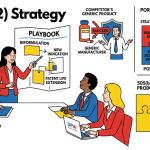
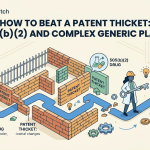
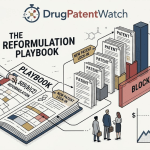
The 505(b)(2) pathway is the pharmaceutical industry’s most capital-efficient regulatory route, and it is widely misunderstood. Ask ten drug developers to explain it and you’ll get ten different answers, several of them wrong in commercially consequential ways. Companies treat it as a shortcut when it’s really a precision instrument. They submit applications based on an assumption that borrowing existing safety data is straightforward when, in practice, the architecture of that borrowing — the scientific bridge — determines whether the FDA approves the product or issues a Complete Response Letter that costs eighteen months and several million dollars to remediate.
Between 2020 and 2024, the FDA issued over 200 Complete Response Letters across NDA and BLA applications. Among 505(b)(2) submissions, nearly all CRLs hit small or mid-sized companies, and first-time filers were significantly overrepresented [1]. The deficiencies cited were not exotic. They were predictable: CMC manufacturing gaps, inadequate bridging rationale, and labeling problems that a competent pre-submission review would have caught. The companies that got it right did the same things consistently: they chose the reference listed drug strategically, they secured FDA agreement on their development plan before spending on clinical studies, they built a patent and exclusivity stack before filing rather than after approval, and they treated CMC not as a regulatory formality but as the single most likely cause of non-approval.
From 2003 through 2023, 943 drugs received approval via the 505(b)(2) pathway, and the pace has accelerated [2]. A 2024-2025 analysis found 69 approved reformulations in that window alone, with injectable formulations leading at 33.4% of approvals [3]. Those numbers tell you the pathway is mature, crowded, and competitive. What they don’t tell you is why some programs get approved on the first submission cycle and others spend years in CRL remediation loops. That’s what this guide is for.
This is a practitioner’s guide. It assumes you already know what a 505(b)(2) application is. What it gives you is a step-by-step account of how to build one that survives FDA review.
Part One: Understanding What You’re Actually Filing
The Three Pathways and Why the Distinction Matters
Section 505 of the Federal Food, Drug, and Cosmetic Act describes three routes to small-molecule drug approval. A 505(b)(1) NDA requires the sponsor to conduct all safety and efficacy studies itself — these are the full development programs that cost $1-3 billion and take ten to fifteen years. A 505(j) ANDA is the generic pathway: it requires demonstration of bioequivalence to a reference listed drug (RLD) and the same active ingredients, dosage form, strength, route of administration, and labeling as that RLD. A 505(b)(2) NDA sits between these two [4].
The pathway was created by the Drug Price Competition and Patent Term Restoration Act of 1984 — the Hatch-Waxman Amendments — with a specific statutory purpose: to avoid unnecessary duplication of studies already performed on previously approved drugs [5]. If the FDA has already determined that compound X is safe and effective in indication Y, a sponsor modifying that compound or its delivery doesn’t have to reproduce every study that established that foundation. They can rely on the FDA’s previous finding, subject to demonstrating that their modification is scientifically linked to the approved product in ways that make that reliance valid.
The operational definition matters. A 505(b)(2) application contains full reports of safety and effectiveness, but at least some of the information required for approval comes from studies not conducted by or for the applicant — studies in the public domain or from the FDA’s previous findings — and the applicant has no right of reference to those studies [6]. This is the key distinction from a 505(b)(1): you don’t own the foundational data you’re relying on. The FDA found it valid once; you’re arguing they should find it applicable to your product. Demonstrating that applicability is the scientific and regulatory work of the pathway.
What Products Qualify
The 505(b)(2) pathway applies to products that differ from any approved drug in ways that prevent ANDA filing, but which still have scientific overlap with an approved product that supports reliance on existing data. The categories include new dosage forms, new strengths, new routes of administration, new indications, new combinations, new formulations of approved drugs, and drugs with new active moieties that are closely related to approved molecules — prodrugs, new salts, and certain esterifications [7].
The practical test is this: can you draft a scientific narrative that connects your product to an approved drug in a way that makes the FDA’s previous safety and efficacy findings relevant to your submission? If yes, 505(b)(2) is likely available. If no — if your product is so different that there’s no meaningful scientific connection — you’re in 505(b)(1) territory, and you need a full development program. If your product is sufficiently similar to an approved drug that you could demonstrate bioequivalence without any additional safety or efficacy work, you should be in the ANDA lane.
The FDA’s Office of Pharmaceutical Quality and the review divisions within CDER determine pathway eligibility. Getting the determination right at the outset — and getting the FDA to confirm it — saves enormous resources. Getting it wrong late in development is catastrophic.
Why the Pathway Has Grown So Quickly
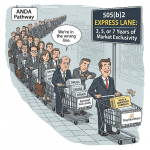
The 505(b)(2) pathway offers development costs 60 to 80 percent lower than a full 505(b)(1) program [8]. The timeline is proportionally shorter. And the exclusivity grants — three to seven years depending on the nature of the application — are genuinely valuable in a market where a product without exclusivity faces ANDA challenge within months of approval [9]. These economics explain why institutional investors increasingly track 505(b)(2)-focused specialty pharma companies as a distinct investment category. The model works: acquire or license a molecule with a known safety and efficacy profile, engineer a modification that delivers clinical benefit and generates new IP, execute a targeted development program, and launch a product with patent and exclusivity protection [10].
The model’s success has also created a crowded market. DrugPatentWatch, the patent intelligence platform that tracks active NDAs and patent expirations across the commercial pharmaceutical landscape, identifies the risk of “silent competitors” — companies developing the same modification in parallel whose earlier filing date could generate three-year exclusivity that blocks a later applicant from the market even after FDA approval [11]. This is not a theoretical risk. It’s a real one that has destroyed the commercial value of approved 505(b)(2) products.
Part Two: Strategic Product Selection and Candidate Assessment
Step 1: Identify the Right Candidate
Product selection for a 505(b)(2) program is both a scientific and commercial decision. The scientific criteria are necessary but not sufficient. A product that passes scientific feasibility and fails commercial viability review is a waste of development capital.
Scientifically, a strong 505(b)(2) candidate has: a well-characterized active ingredient with a documented safety profile, a modification that is scientifically meaningful rather than cosmetic, a plausible bridging strategy that connects the new product to an approved RLD, and a CMC profile that is achievable with current manufacturing technology without requiring breakthrough innovation at the production stage. A modification that requires exotic manufacturing to achieve stability is a CMC risk that will show up at the worst possible time — during FDA inspection of commercial manufacturing facilities before approval.
Commercially, the candidate needs to pass what experienced developers call the “payer test.” Yosprala — the aspirin/omeprazole fixed-dose combination approved under 505(b)(2) — is the cautionary tale here. The clinical logic was defensible. Combining aspirin with a gastroprotective agent addressed a real compliance problem in cardiovascular patients who required long-term aspirin therapy. But pharmacy benefit managers (PBMs) viewed Yosprala as a combination of two cheap generics that cost pennies individually. The product never achieved formulary coverage at a premium price. Physicians defaulted to writing separate prescriptions [12]. FDA approval did not translate into commercial success because the payer ecosystem rejected the value proposition.
The commercial assessment must happen before, not after, the development program. Questions worth answering at the candidate identification stage: Does the modification generate a clinical benefit that payers will code separately and reimburse at premium rates? Is the target population large enough to justify the development cost at the achievable price? Are there existing therapeutic equivalents or close substitutes that a PBM could use to block the product from formularies? Does the proposed modification create patient adherence advantages that a payer will credit?
Step 2: Build the Target Product Profile
Before any development work begins, the team needs a target product profile (TPP). This is a document that describes the desired attributes of the final approved product — not what you think you can make, but what you need to make to be commercially viable. The TPP defines the target indication, patient population, dosage form and strength, route of administration, dosing regimen, and pharmacokinetic profile requirements. It’s the anchor for every subsequent development decision [13].
For a 505(b)(2) product, the TPP also defines the relationship to the RLD. If the goal is to develop an extended-release formulation of a drug currently dosed three times daily, the TPP specifies the target Cmax and Tmax ratios relative to the RLD, the expected food effect and whether it differs from the RLD’s food effect, and the PK parameters that need to be characterized in bridging studies. This specificity matters: the FDA will evaluate the bridging strategy against the stated scientific objectives, and vague objectives produce vague feedback.
Step 3: Reference Listed Drug Selection
The RLD selection decision is more consequential than most developers appreciate. The RLD determines which patents require certification, which exclusivities block your development, what safety data you can rely on, and what bridging studies are scientifically necessary. Choosing the wrong RLD can force additional clinical work, trigger patent certification requirements for patents that would have been irrelevant with a different RLD, or result in a CRL citing inadequate bridge because the scientific differences between your product and the chosen RLD are too large to support reliance on that RLD’s safety data.
The FDA’s Orange Book lists approved drug products and their associated patents and exclusivities. The first analytical step in RLD selection is identifying all approved products containing the same active moiety as your candidate. Not just the originator product — all approved products, including prior 505(b)(2) approvals, because those may have shorter patent tails or more favorable clinical profiles for bridging purposes [14].
DrugPatentWatch consolidates patent listings, expiry dates, patent term extension (PTE) applications, and paragraph IV certification history for Orange Book-listed products in a searchable format that dramatically reduces the time required for this analysis [11]. For an RLD landscape with multiple patent holders and staged expiry dates — common for products where the original small-molecule patent has expired but method-of-use and formulation patents remain active — having this data in a consolidated view is a prerequisite for a credible development timeline. You cannot build a realistic launch date without knowing exactly when each patent blocking your entry expires or can be challenged.
The RLD selection should be finalized before the pre-IND meeting with FDA. Changing the RLD mid-program can require amending patent certifications, revising the bridging strategy, and potentially repeating studies — all of which extend timelines and burn cash.
Step 4: Patent Landscape Analysis
A 505(b)(2) applicant must certify, for each patent listed in the Orange Book for the RLD, one of four positions: that the patent information has not been submitted to FDA (Paragraph I); that the patent has expired (Paragraph II); the date on which the patent will expire and the applicant won’t seek approval before that date (Paragraph III); or that the patent is invalid, unenforceable, or will not be infringed by the manufacture, use, or sale of the proposed new drug (Paragraph IV) [15].
Paragraphs I and II are passive certifications that don’t trigger litigation. Paragraph III means you’re waiting for patent expiration — acceptable for some programs, commercially limiting for others. Paragraph IV is an artificial act of patent infringement under 35 U.S.C. § 271(e)(2): filing a Paragraph IV certification gives the patent owner a cause of action in federal court and, if suit is filed within 45 days of receiving the notice letter, triggers an automatic 30-month stay of FDA approval [16].
The commercial calculus for Paragraph IV decisions is this: winning a Paragraph IV challenge validates your early market entry but requires litigation investment, which runs $5-50 million depending on the complexity and duration of the case. Losing delays approval until patent expiration. Settling — the most common outcome — produces a negotiated market entry date that may or may not align with the product’s commercial window. The decision to file Paragraph IV versus Paragraph III should be made by a cross-functional team that includes IP counsel, regulatory affairs, and commercial — not by any single function in isolation.
Beyond Orange Book patents, a thorough patent analysis covers the broader patent landscape: continuation patents, divisional applications, and patents not listed in the Orange Book that cover the active ingredient, formulation, or method of use. Non-Orange Book patents don’t trigger the Hatch-Waxman certification and stay mechanism, but they can support infringement suits under regular patent law if a competitor believes your product practices their claims [17]. A complete freedom-to-operate analysis before development commitment is worth every dollar spent on it.
Part Three: The Pre-IND Meeting — The Single Most Important Interaction in the Program
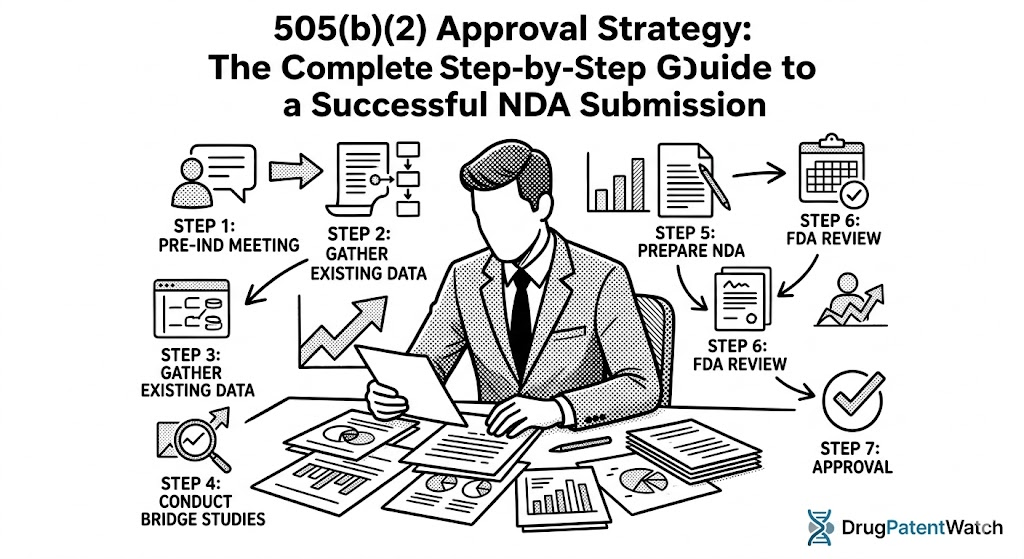
Step 5: Why the Pre-IND Meeting Changes Everything
The most effective risk-reduction step in a 505(b)(2) program is not any individual study. It is the pre-Investigational New Drug (pre-IND) meeting with FDA’s Division that will review the application [18]. This meeting, conducted under the FDA’s Type B meeting format, allows the sponsor to present the proposed development plan and bridging strategy to the agency before committing to clinical execution.
Getting FDA agreement on the bridging strategy at the pre-IND stage does not guarantee no problems later, but it substantially reduces the risk of a CRL citing inadequate bridge. An analysis of 505(b)(2) applications that required more than one review cycle found that inadequate bridging rationale was among the most frequently cited clinical deficiencies in CRLs for these applications [18]. In nearly all cases, the inadequacy could have been identified and addressed at a pre-IND meeting if the sponsor had scheduled one. Many did not.
For a 505(b)(2) program, the pre-IND meeting objective is specific and different from a 505(b)(1) pre-IND: the goal is to gain FDA input and concurrence with the studies, CMC strategy, and clinical research plans in a way that minimizes the number of new studies required [19]. This is not an open-ended discussion about the product. It is a structured negotiation with the agency about the minimum credible package of studies that will support approval — and the questions you ask determine the value of the meeting.
Step 6: Building the Pre-IND Briefing Package
The pre-IND briefing package for a 505(b)(2) program should include six core components:
Product Description: A clear technical description of the proposed product, including the active moiety, dosage form, strength, route of administration, and intended indication. Include comparison to the RLD in tabular form.
Proposed Development Program: Every study you intend to conduct, organized chronologically and by regulatory module. This includes pharmacokinetic bridging studies, any nonclinical work, Phase 1 comparative bioavailability studies, Phase 2/3 efficacy studies if required, and CMC development milestones.
Bridging Rationale: The scientific argument for why the RLD’s approved safety and efficacy data apply to your product. This is the most important component. It must explain what the modification does, how the modification affects PK and PD parameters, and why the safety margin established for the RLD remains applicable to your modified product. If there are known differences — different Cmax, different Tmax, food interaction profile — address them directly and explain why those differences don’t undermine safety reliance.
Literature and Precedent Review: Published studies supporting your scientific positions, plus any FDA precedent from similar approved 505(b)(2) products. If a comparable formulation change has been approved with a specific bridging package, reference it explicitly. FDA review divisions have institutional memory, and citing precedent they recognize is more persuasive than novel arguments.
CMC Overview: High-level description of the formulation approach, manufacturing process, and control strategy. This does not need to be final CMC data, but it should demonstrate that the formulation approach is feasible and that the sponsor understands the CMC challenges specific to the modification.
Specific Questions: The most effective pre-IND meeting strategy presents clear, yes/no questions to the FDA rather than open-ended discussions. ‘The applicant proposes to conduct a single-dose, two-way crossover comparative BA study at the proposed commercial dose in 24 healthy volunteers. Does the FDA agree that this study, combined with the existing safety data for the RLD, constitutes an adequate safety bridge?’ That is a question FDA can answer. ‘What studies do we need?’ is not — and it will generate the answer ‘That will be a review issue,’ which tells you nothing [20].
Step 7: Common Pre-IND Mistakes
Four errors appear repeatedly in pre-IND meetings for 505(b)(2) programs. First, sponsors ask questions the FDA cannot answer without a thorough review of the data. Pre-IND meetings are not data review sessions; they are strategic discussions. If your question requires the FDA to evaluate study reports or analyze pharmacokinetic data, you’re asking for a review-level response that the agency won’t provide in a pre-IND context.
Second, sponsors fail to explain how they intend to rely on existing data and what the bridging plan is. If the briefing package describes the product but doesn’t articulate the specific reliance argument — which studies on the RLD the sponsor is relying on and why — the FDA has no basis to endorse the plan.
Third, sponsors ignore CMC or treat it as a later-stage issue. For a 505(b)(2) product, the formulation must be substantially finalized before Phase 1. The clinical trial materials for Phase 1 studies must be representative of the commercial manufacturing process, including packaging [21]. If the Phase 1 formulation differs meaningfully from the commercial formulation, you may need to conduct additional bridging studies to link the two, or the FDA may conclude that the Phase 1 safety data is not predictive of the commercial product’s safety profile.
Fourth, sponsors underestimate the preparation required and arrive at pre-IND meetings without a clear strategic agenda. The FDA reviewers who attend these meetings are senior scientists with heavy workloads. A poorly organized briefing package that buries key questions in narrative text produces vague responses. A crisp, question-forward briefing package with clear decision trees produces actionable guidance.
Part Four: The Scientific Bridge — Building the Core of the Application
Step 8: What a Scientific Bridge Is and What It Must Accomplish
The scientific bridge is the evidentiary argument that connects your product to the RLD in a way that makes the FDA’s previous safety and efficacy findings applicable to your application. It is not a single study. It is a compilation of data — pharmacokinetic, pharmacodynamic, nonclinical, and clinical — that demonstrates three things: that your product delivers the active moiety in a predictable and characterizable way, that the exposure profile of your product falls within safety parameters established for the RLD or that any differences are scientifically justified, and that any new clinical or nonclinical questions raised by your modification have been adequately answered [22].
The FDA evaluates bridging strategies with skepticism, not goodwill. The agency’s default assumption is that modifications matter — that a changed dosage form, new formulation, or different route of administration may affect safety and efficacy in ways that require new data. The burden is on the applicant to demonstrate that the modification does not create new safety risks or that such risks have been quantified and addressed. A bridge that assumes safety without demonstrating it will fail.
Step 9: Pharmacokinetic Bridging Studies
For the majority of 505(b)(2) applications, the PK bridging study is the foundation of the scientific bridge. This study directly compares the in vivo performance of the new drug product to that of the RLD under controlled conditions — typically a single-dose, two-way crossover design in healthy volunteers at the proposed commercial dose. The study characterizes Cmax, AUC, Tmax, and other relevant PK parameters for both products [23].
Three scenarios emerge from a PK bridging study. If the products are bioequivalent — that is, the ratio of key PK parameters falls within the 80-125% confidence interval — the bridge is straightforward. The FDA’s safety database for the RLD transfers to the new product with minimal additional work. If the products are not bioequivalent but the differences are clinically justifiable — for example, a controlled-release formulation with lower Cmax but equivalent AUC and improved tolerability profile — the bridge requires additional supporting data: clinical evidence that the different exposure profile produces equivalent efficacy and doesn’t create new safety signals. If the modification changes the Tmax or Cmax substantially, the FDA may reject the bridge, arguing that the RLD’s safety data is no longer applicable to your product’s profile, forcing new toxicology studies [24].
The PK bridge design deserves as much strategic attention as a Phase 3 trial design. Under-powered studies that fail to characterize PK differences with sufficient precision generate uncertainty — and FDA reviewers don’t resolve uncertainty in the applicant’s favor. Study population selection matters: if the proposed product is for elderly patients with renal impairment and the bridging study uses healthy young volunteers, the agency will ask for population PK bridging data or a separate study in the target population.
Step 10: When New Clinical Efficacy Data Are Required
Not every 505(b)(2) application requires new clinical efficacy trials. Many formulation changes, new strengths, and new dosage forms for the same indication in the same population can be approved on the strength of a PK bridge and the RLD’s existing efficacy data. But certain modifications require new efficacy evidence: new indications not covered by the RLD’s approved labeling, new patient populations with materially different pharmacology, fixed-dose combinations where the combination effect has not been established, and situations where the modification substantially changes the drug’s clinical effect profile [25].
When new efficacy data are required, the 505(b)(2) program structure allows the sponsor to design a more targeted program than a full 505(b)(1) development. If the safety data from the RLD can be relied upon, the new clinical program may need only to demonstrate efficacy for the new indication or population — a substantially smaller study burden than establishing both safety and efficacy from scratch. But “smaller” does not mean easy, and the FDA holds 505(b)(2) efficacy data to the same evidentiary standard as 505(b)(1) efficacy data. A Phase 3 trial with a flawed design, inadequate power, or endpoints not accepted by the relevant review division will generate a CRL regardless of the pathway under which the application was filed.
Step 11: Nonclinical Bridging Requirements
For modifications that change the route of administration, introduce new excipients with unknown safety profiles, or create new metabolites not present with the RLD, nonclinical studies may be required as part of the bridge. A change in route of administration typically requires local tolerability studies with the new formulation. A new combination product submitted as a 505(b)(2) NDA will require clinical safety or efficacy studies as a scientific bridge to the listed drugs or combination product, and may also require nonclinical interaction studies if there are known or potential pharmacological interactions between the components [26].
The nonclinical package for a 505(b)(2) application is often substantially smaller than for a 505(b)(1). ICH S9 and related guidelines define what nonclinical work is required based on the nature of the modification and the available safety data for the RLD. Early gap analysis — comparing the existing RLD nonclinical data to the requirements for the new product — identifies what new studies are needed and what can be waived.
Part Five: CMC — The Silent Killer of 505(b)(2) Programs
Step 12: Why CMC Causes More Failures Than Clinical Data
Between 2020 and 2024, CMC and manufacturing issues — not clinical data gaps — were the leading cause of Complete Response Letters across NDA applications [1]. For 505(b)(2) applications, the data from DrugPatentWatch analysis is even starker: manufacturing deficiencies account for approximately 73% of development delays in this pathway [27]. These are not isolated incidents. They are a systemic pattern driven by a structural problem: CMC development is consistently under-resourced relative to clinical development in 505(b)(2) programs, because sponsors focus their attention and capital on the clinical work that will determine efficacy and treat CMC as a parallel track that will sort itself out.
CMC doesn’t sort itself out. It is the technical spine of the application, and deficiencies in it trigger CRLs that require remediation work — stability studies, manufacturing validation runs, scale-up activities — that take twelve to twenty-four months to complete. A single manufacturing process failure at a contract manufacturing organization (CMO) during FDA pre-approval inspection can delay approval by a full PDUFA cycle.
Step 13: Formulation Development Priorities
For a 505(b)(2) application, formulation development must achieve two objectives simultaneously: create a product that is differentiated from the RLD in the clinically meaningful way your TPP requires, and create a product that is manufacturable at commercial scale with a stable shelf-life profile that FDA will accept. These objectives sometimes conflict.
The 2024-2025 analysis of 505(b)(2) reformulations found that stability challenges drove 26% of reformulation efforts, while patient-centric factors including taste and palatability influenced 17% of products [3]. Advanced technologies including amorphous solid dispersions, prodrug strategies, and lipid-based delivery systems are increasingly deployed to solve solubility and bioavailability challenges, but each of these technologies introduces its own CMC complexity [3]. An amorphous solid dispersion (ASD) that successfully solubilizes a poorly soluble drug may crystallize under certain storage conditions, generating stability failures that the FDA will cite as a CRL deficiency. A lipid-based formulation may require specialized manufacturing equipment not available at the initially selected CMO.
Stability is not a post-development concern. The FDA requires stability data at multiple time points and conditions — typically accelerated (40°C/75% RH) and long-term (25°C/60% RH) — for the proposed commercial formulation, packaged in the proposed commercial container closure system. A 505(b)(2) NDA filed without at least twelve months of real-time stability data on the commercial formulation runs a high risk of a CRL requesting additional data. Building stability studies into the development timeline from the outset, starting with the formulation selected for Phase 1, avoids this predictable delay.
Step 14: Manufacturing Process Validation and Scale-Up
The FDA requires process validation data demonstrating that the commercial manufacturing process produces a product of consistent quality. For a 505(b)(2) program, the commercial process must be established and validated before NDA submission — not before approval, before submission. Three full-scale validation batches at the commercial site, with analytical results demonstrating that the process consistently meets all specifications, are the minimum expectation for most dosage forms.
CMO selection and management is a material risk factor in 505(b)(2) timelines. Approximately 70% of CRLs between 2020 and 2024 were issued to small or mid-sized sponsors, and CMC investment variability was cited as a driver: smaller firms outsource manufacturing to CMOs with varying quality systems and receive variable results [1]. Selecting a CMO with experience manufacturing the specific dosage form you’re developing — not just general manufacturing experience — materially reduces the risk of manufacturing failures during validation.
The FDA conducts pre-approval inspections (PAIs) of manufacturing facilities as part of the NDA review process. A facility with recent FDA warning letters, import alerts, or unresolved 483 observations is a liability in your application. Due diligence on any CMO’s recent inspection history before contract execution is non-optional. The FDA’s inspection database (Establishment Inspection Reports, or EIRs) is publicly available, and DrugPatentWatch and similar intelligence tools aggregate facility compliance data that can inform this diligence more efficiently than manual FDA database searches.
Step 15: Impurity Controls and Analytical Method Development
ICH Q3A and Q3B guidelines define the framework for identifying, characterizing, and controlling impurities in drug substances and drug products. For a 505(b)(2) application, impurity thresholds and specification limits must be scientifically justified based on the approved RLD’s impurity profile and the safety database for the active moiety. If your manufacturing process generates an impurity not present in the RLD’s approved process, the FDA will require you to characterize it and, depending on its level and structure, may require safety studies to support the specification.
The impurity story is not separate from the bridging argument. If the RLD’s safety data was generated with a product that contained a different impurity profile, the FDA can argue that your product’s impurity differences create a safety question not answered by the existing data. Addressing impurity comparability — demonstrating that your product’s impurity profile is no worse than the RLD’s — as part of the bridging strategy preempts this question.
Part Six: IND Filing and Clinical Execution
Step 16: IND Strategy for a 505(b)(2) Program
An Investigational New Drug Application (IND) is required before clinical testing in humans for most 505(b)(2) programs, with limited exceptions for bioequivalence studies that qualify for IND exemption under 21 CFR 320.31. The IND for a 505(b)(2) program is different in structure from a 505(b)(1) IND: rather than presenting a comprehensive nonclinical package as the primary safety justification for first-in-human exposure, it presents the safety case based substantially on the RLD’s approved labeling and the scientific bridge.
The IND should include, at minimum: the proposed clinical protocol for the bridging study, the investigator’s brochure (which for a 505(b)(2) product can be constructed primarily from the RLD’s approved prescriber information supplemented with product-specific data), CMC information for the Phase 1 formulation sufficient to demonstrate product quality, and the scientific bridge rationale that justifies initiating clinical studies with reliance on the RLD’s safety data.
A critical point: the clinical trial materials described in the IND must be representative of the commercial formulation. If the Phase 1 formulation is manufactured at a different site, using different equipment, or with a different process than the commercial formulation, the FDA may require a comparative bridging study between the Phase 1 and commercial formulations. Building the commercial manufacturing process early — even if at smaller scale for clinical supplies — avoids this complication.
Step 17: Designing the Comparative BA/BE Study
For most 505(b)(2) applications where the primary modification is a new dosage form or new formulation, the key clinical study is a comparative bioavailability (BA) or bioequivalence (BE) study against the RLD. Several design decisions determine whether this study supports approval or requires follow-up work.
Crossover vs. parallel design: Two-way crossover designs are standard for products where crossover is practical and the study population is appropriate. They require fewer subjects for equivalent statistical power than parallel designs and generate within-subject PK comparisons that reduce variability. Parallel designs are appropriate when the drug has a long half-life that makes washout impractical, or when the study population (pediatric patients, severely ill patients) makes crossover inappropriate.
Single dose vs. steady state: Single-dose studies are standard for most modified-release formulations. Steady-state studies may be required when the drug’s PK at steady state differs materially from single-dose PK, when dose-dependent kinetics are expected, or when the FDA has specific guidance requiring steady-state comparisons for the drug class.
Fasting vs. fed conditions: Both are typically required unless the product is specifically labeled for administration in one condition. A food effect study comparing PK under fasting and fed conditions for both the new product and the RLD characterizes whether the modification changes the drug’s food interaction profile.
Sample size: Powered adequately to detect PK differences within the bioequivalence range with 90% confidence. Under-powered bridging studies generate inconclusive results that the FDA cannot accept as evidence of bioequivalence and cannot use to confirm non-equivalence — a scientifically ambiguous outcome that typically requires a new study.
Step 18: Special Population Studies
If the proposed product is intended for use in populations with characteristics that may affect drug exposure — elderly patients, renally impaired patients, hepatically impaired patients, or pediatric patients — the FDA will likely require population PK data or dedicated special population studies. These requirements are driven by the ICH E7 guidance on studies in elderly populations and the FDAAA pediatric study requirements, among others.
The key strategic question is whether the RLD’s special population data is applicable to your product. If the modification affects absorption (a new extended-release formulation) or if the modification introduces metabolic differences (a prodrug), the FDA may not accept the RLD’s renal impairment data as predictive of your product’s behavior in renally impaired patients. The pre-IND meeting is the appropriate venue to get the FDA’s position on whether additional special population studies are required — doing this work after submission rather than before is a predictable source of CRL deficiencies.
Part Seven: Exclusivity Strategy and IP Stack Construction
Step 19: The Four-Layer IP Stack
For a 505(b)(2) product, intellectual property protection is not a legal formality. It is the structural foundation of the entire commercial thesis. Without a clearly defined and legally defensible exclusivity wall, every premium pricing strategy collapses within 180 days of the first generic ANDA filing [28]. The IP stack for a 505(b)(2) asset typically has four layers, each with distinct durations and strategic functions.
The first layer is FDA regulatory exclusivity — specifically, three-year new clinical investigation exclusivity that attaches to new approvals requiring new clinical studies, or five-year NCE exclusivity in cases involving genuinely new active moieties. These periods run from the date of NDA approval and block the FDA from approving a competing ANDA or 505(b)(2) application that relies on the same submitted data [29].
The second layer is Orange Book patent protection — compound patents, formulation patents, and method-of-use patents listed in the Orange Book that trigger the Paragraph IV certification requirement and 30-month stay mechanism. These patents vary in strength and litigation risk. Formulation patents covering the specific physical form of the product are often more difficult to design around than method-of-use patents, making them more commercially reliable.
The third layer is Patent Term Extension (PTE) under 35 U.S.C. § 156, which can restore up to five years of patent term lost during FDA review, capped at fourteen years of effective post-approval exclusivity. PTE applications must be filed within sixty days of NDA approval. Missing this window forfeits the extension permanently [30].
The fourth layer is pediatric exclusivity under FDAAA, which adds six months to any existing patents or exclusivity periods if the sponsor conducts FDA-requested pediatric studies. For a 505(b)(2) product with three-year NCI exclusivity plus a formulation patent plus PTE, a pediatric study program can extend the total effective exclusivity window by six additional months — not trivial when the product generates tens of millions in monthly revenue.
Step 20: Three-Year NCI Exclusivity — The Most Common Grant
Three-year New Clinical Investigation (NCI) exclusivity is the most commonly granted exclusivity for 505(b)(2) products. It requires that the application contain reports of new clinical investigations, other than bioavailability studies, that were conducted by or for the applicant and were essential to the drug’s approval [31]. The “essential to approval” standard is more demanding than it appears.
The FDA has denied NCI exclusivity when clinical studies were informative but not essential — when the agency concluded it could have approved the application on existing data without the new studies. Demonstrating essentialness requires building the administrative record during development: correspondence with FDA confirming the studies are required, design documents showing the studies were designed to answer regulatory questions rather than simply gather additional data, and submission language that explicitly characterizes the studies as essential to the approval decision [32].
Sponsors who assume NCI exclusivity will be granted based on the fact that they conducted clinical studies are sometimes disappointed. The FDA denies it. The denial is not contestable through normal administrative channels; there is no formal petition process for NCI exclusivity determinations of this type. Building the essentialness argument into the development record from the outset is the only reliable protection.
Step 21: NCE Exclusivity for 505(b)(2) Products
Five-year New Chemical Entity (NCE) exclusivity is available to a 505(b)(2) product if the active moiety has never been previously approved by the FDA [33]. This appears counterintuitive — the pathway is designed for products related to approved drugs — but it applies in specific cases: prodrugs where the FDA determines the prodrug itself is a new active moiety, new salt forms where the FDA determines the salt is a new chemical entity under the FD&C Act definition, and certain esterifications.
NCE exclusivity is dramatically more valuable than three-year NCI exclusivity because it prohibits ANDA filing — not merely ANDA approval — for five years after the NDA approval date. This means a generic competitor cannot even begin the formal ANDA process until four years post-approval (with Paragraph IV rights starting at year four). The commercial window this creates, combined with formulation patents and PTE, can produce ten or more years of protected market position for a product built on a compound whose original patent has long since expired.
Step 22: Orphan Drug Designation as an Exclusivity Tool
Seven-year Orphan Drug exclusivity is available to 505(b)(2) products that receive Orphan Drug Designation (ODD) for a rare disease or condition affecting fewer than 200,000 patients in the United States [34]. For 505(b)(2) products targeting orphan indications, ODD is strategically valuable: it blocks approval of the same drug for the same indication for seven years, regardless of patent status. It also confers tax credits for qualified clinical expenses and waived NDA user fees — cost reductions that can be meaningful for smaller companies.
Orphan Drug exclusivity interpretation is actively litigated. The phrase “same drug for the same disease” has been interpreted by the FDA in ways that sometimes surprise sponsors. A competitor using a different salt form of the same active moiety, or a different formulation, may or may not be blocked by the original ODD holder’s exclusivity depending on how FDA interprets “same drug.” The FDA’s ODD regulations and the litigation history interpreting them should be reviewed by IP counsel before making ODD exclusivity a cornerstone of the commercial plan.
Step 23: Stacking Exclusivities and Building the Commercial Moat
The most commercially sophisticated 505(b)(2) programs stack multiple exclusivity periods to extend total market protection beyond what any single exclusivity type provides. A product with three-year NCI exclusivity (ending year three), a formulation patent with a twelve-year term remaining at launch (ending year twelve), PTE extending that patent by three years (ending year fifteen), and pediatric exclusivity (adding six months at the end) achieves roughly fifteen to sixteen years of effective protection — comparable to the protection a new chemical entity receives despite being built on an approved active moiety [35].
This stacking strategy requires advance planning. Patent prosecution must be completed before NDA filing: the Orange Book can only list issued patents, not pending applications. PTE applications must be filed within sixty days of approval. Pediatric Written Requests from FDA must be responded to within the applicable statutory window. ODD applications should be filed early in development — typically before IND activation — to ensure designation is in place before the NDA is submitted.
‘When you combine three-year NCI exclusivity with pediatric extension and a properly timed PTE on the best formulation patent, you can reach 10-plus years of effective protection on a drug whose core compound patent expired before you filed.’ — Senior IP Counsel, mid-cap specialty pharma company [36]
Part Eight: Orange Book Patent Listing Strategy
Step 24: Which Patents to List — and How
Upon NDA approval, the sponsor must submit patent information to the FDA for listing in the Orange Book using Form FDA-3542. The FDA does not currently review the propriety of patents submitted for listing — it accepts what the sponsor submits [37]. This creates both an opportunity and a risk.
The opportunity: a robust Orange Book listing forces any future 505(b)(2) or ANDA applicant to certify against every listed patent. Each certification creates a notice obligation and, for Paragraph IV certifications, a litigation trigger. This mechanism is a gatekeeping function that delays generic entry at a structural level, separate from the merits of the underlying litigation.
The risk: listing patents that should not be listed — patents that don’t claim the drug product or an approved method of using the drug product — is a practice the FDA has sought to discourage through updated use code requirements and patent listing dispute procedures. The Federal Trade Commission views overbroad Orange Book listings as an antitrust concern. The FDA’s 2016 and subsequent regulatory updates established a 30-day period for NDA holders to respond substantively when an ANDA or 505(b)(2) applicant challenges the accuracy of a patent use code [38]. An improperly listed patent that triggers a challenge and is ultimately removed causes commercial harm — it alerts competitors to your listing vulnerabilities and may result in earlier-than-anticipated generic entry.
The correct approach is selective and defensible listing: every patent that legitimately claims the approved drug product or its approved methods of use, listed with use codes specific enough to be accurate and broad enough to capture the approved indication. IP counsel and regulatory affairs must review proposed listings together before submission.
Step 25: Skinny Labeling Risk and the Post-Amarin Landscape
The “skinny label” doctrine allows a generic manufacturer — or a 505(b)(2) filer — to carve out patented indications from its label and market only for non-patented uses, theoretically avoiding infringement of Orange Book-listed method-of-treatment patents [39]. For a 505(b)(2) sponsor who listed method-of-use patents to protect an indication, this doctrine is a competitive threat: a future filer can launch with a carved-out label and still capture a significant share of the prescribing market through off-label use driven by physician familiarity with the RLD’s broader indication.
The Federal Circuit’s June 2024 decision in the Amarin v. Hikma case materially changed the legal landscape. The court ruled that Hikma’s website — which described its product as a “generic equivalent” of Vascepa — could plausibly induce infringement of the cardiovascular risk reduction indication, even though the indication had been carved from Hikma’s label. The court held that marketing language encouraging use for the only clinically meaningful indication of the drug could constitute induced infringement without any explicit label instruction [40].
For 505(b)(2) sponsors, this ruling cuts both ways. As an NDA holder, the Amarin precedent strengthens your ability to challenge future filers who use broad marketing language that encompasses your patented indications. As a 505(b)(2) filer seeking to launch with a carved label, the ruling raises the threshold for what marketing language is permissible without triggering infringement exposure. Your commercial team’s proposed messaging for any product launched with a carved label should be reviewed by IP litigation counsel — not just regulatory counsel — before any promotional materials are distributed.
Part Nine: NDA Submission Execution
Step 26: Assembling the NDA
A 505(b)(2) NDA is organized according to the ICH Common Technical Document (CTD) format, submitted electronically through FDA’s Electronic Submissions Gateway. The CTD has five modules: Module 1 (regional administrative information), Module 2 (summaries and overviews), Module 3 (quality/CMC data), Module 4 (nonclinical study reports), and Module 5 (clinical study reports). All modules must be internally consistent — claims in Module 2 must be supported by data in Modules 3-5, and cross-references must function correctly in the electronic submission.
Submission readiness is not a formatting exercise. Common assembly failures include: outdated FDA guidance references in CTD sections (FDA guidance documents are revised regularly; submitting against superseded guidance is a technical deficiency), missing cross-functional review between regulatory affairs, CMC, and quality before finalization, and labeling text that is inconsistent with the clinical data package or the proposed patent certifications [41].
The labeling review deserves specific attention. For a 505(b)(2) application, the proposed labeling must accurately reflect the safety and efficacy profile supported by the submitted data — including the data relied upon from the RLD — while not claiming clinical attributes not demonstrated in the sponsor’s program. Inaccurate or unsupported labeling claims, inadequate instructions, or incomplete risk management language are cited in a meaningful percentage of CRLs, and labeling review is frequently the last activity completed before submission, leaving insufficient time to identify and resolve problems [1].
Step 27: Meeting the PDUFA Clock and Managing the Review Cycle
The Prescription Drug User Fee Act (PDUFA) sets the FDA’s review clock for NDA submissions. For a standard review, the PDUFA goal is ten months from the date of receipt of a complete application. For priority review (granted when the product offers a significant improvement compared to available therapy), the goal is six months. The clock starts on the date the FDA receives a substantially complete submission — not the date you submit, if the agency files a refuse-to-file letter identifying major deficiencies in the submission.
A refuse-to-file (RTF) determination resets the clock entirely and adds months to the approval timeline. RTF letters are issued when the application is clearly incomplete — missing clinical study reports, incomplete Module 3, or absent patent certifications. The pre-submission meeting (Type B pre-NDA meeting), typically held 30 days before submission, is the mechanism for identifying and resolving completeness issues before the submission date. This meeting, like the pre-IND meeting, requires a substantive briefing package and specific questions about submission content adequacy.
During the review cycle, the FDA may issue information requests (IRs) — typically minor clarifications or data requests that don’t constitute a deficiency finding but require response within the review window. Establishing a dedicated review team during the PDUFA period — with authority to respond to IRs within 24-48 hours — maintains the review momentum. Delayed responses to IRs can push critical review interactions past PDUFA dates and extend the overall timeline.
Step 28: Advisory Committee Preparation
Most 505(b)(2) applications do not require an FDA Advisory Committee meeting. The FDA reserves AdCom review for applications with novel safety questions, significant scientific uncertainty about efficacy, or public health implications that benefit from independent expert input. If your application receives an AdCom notice, treat it as a separate regulatory event requiring dedicated preparation — not as an extension of the NDA preparation process.
If an AdCom is convened for your 505(b)(2) application, the committee will typically receive the complete clinical data package and evaluate the risk-benefit profile of the product. The committee’s questions often probe the adequacy of the scientific bridge: what does the new product’s clinical profile add relative to the RLD? What is the evidence that the modification produces the claimed clinical benefit? What safety signals were observed in the bridging studies, and how should they be interpreted relative to the RLD’s known safety profile? Preparation for these questions requires a mock AdCom with external expert advisors who will stress-test the data presentation before the actual meeting.
Part Ten: Using Data Intelligence Platforms in 505(b)(2) Strategy
Step 29: How DrugPatentWatch Fits Into the Development Process
Intelligence tools purpose-built for 505(b)(2) strategy change what is achievable at the planning stage. DrugPatentWatch consolidates patent expiration data, Orange Book listings, paragraph IV certification histories, clinical trial registry data, and NDA approval timelines across the commercial pharmaceutical landscape in a searchable interface [42]. For complex RLD landscapes with multiple patent holders, staggered expiry dates, and active Paragraph IV litigation, this consolidation replaces manual Orange Book lookups across multiple FDA and USPTO databases and reduces research time from days to hours.
The specific analytical applications that DrugPatentWatch supports in 505(b)(2) development include:
Patent cliff visualization: Strategists use the platform to visualize the expiration of entire patent families — substance, formulation, method of use — to identify windows where a 505(b)(2) can launch without triggering a Paragraph IV challenge. A patent that expires in eighteen months requires a different development timeline than one expiring in six years.
Silent competitor identification: A major risk in 505(b)(2) is that another company is developing the same modification in parallel. If they file first and receive three-year NCI exclusivity, a later applicant is blocked from market entry even after obtaining FDA approval. DrugPatentWatch tracks global clinical trial registries and early patent filings to identify these stealth competitors before they become commercially fatal [43].
Paragraph IV litigation history: Understanding how courts have ruled on challenges to patents covering a specific active moiety — and which patents have survived challenge — informs the Paragraph IV certification decision. A patent that has been challenged and upheld in litigation is more expensive to challenge than a patent that has never been litigated or that has been invalidated in similar challenge proceedings.
Exclusivity expiration tracking: For 505(b)(2) products whose commercial opportunity depends on timing entry to coincide with expiration of existing NCE or three-year exclusivity on the RLD, real-time exclusivity tracking enables precise market entry planning.
The broader point is that 505(b)(2) strategy is data-intensive in ways that reward systematic intelligence gathering. The companies that consistently execute this pathway successfully treat patent and exclusivity data as strategic inputs to program design — not as compliance outputs discovered during application assembly.
Part Eleven: Post-Approval Lifecycle Management
Step 30: Post-Approval Supplements and Label Updates
NDA approval is not the end of the regulatory program. Post-approval supplements — for manufacturing changes, new strengths, label updates, and additional indications — continue the 505(b)(2) product’s development lifecycle. Each supplement that requires new clinical investigations generates an additional opportunity for three-year NCI exclusivity, provided the new studies meet the “essential to approval” standard. This mechanism allows sponsors to layer additional exclusivity periods onto the product over its commercial life, extending total protection beyond the initial approval.
CMS’s 2023 policy on 505(b)(2) products that are not therapeutically equivalent to the RLD — assigning them unique HCPCS Level II J-codes — has significant reimbursement implications for post-approval lifecycle management [44]. Products that received unique J-codes can establish separate payment rates, giving manufacturers additional leverage in formulary negotiations with PBMs and in direct contracts with hospital systems. Maintaining non-therapeutically-equivalent status through the product lifecycle — by preserving the features that distinguish the 505(b)(2) product from the RLD — is now a commercial strategy, not merely a regulatory classification.
Step 31: Generic Entry Preparedness
When a 505(b)(2) product’s exclusivity periods expire and Orange Book patents approach their end dates, generic entry becomes a planning variable rather than a distant possibility. Preparation for generic entry at least eighteen months before anticipated entry is prudent. This preparation includes: confirming the status of all Orange Book patents and whether any PTE applications have been filed or granted, evaluating whether any additional exclusivity mechanisms can be applied before the exclusivity window closes, assessing whether a next-generation product submission could extend market protection through an authorized generic arrangement or a lifecycle product, and developing commercial response plans for the market entry date.
Authorized generic programs — where the NDA holder licenses a generic manufacturer to produce and sell an identical product under the innovator’s NDA at a lower price — can protect market share and revenue at the expense of margin. The economics of authorized generic programs in the 505(b)(2) context depend on the product’s price, the likely generic entrant count, and whether the NDA holder’s manufacturing base can produce both branded and generic product efficiently.
Part Twelve: Case Studies in 505(b)(2) Success and Failure
Bendeka: The Anatomy of a $800 Million ROI
Eagle Pharmaceuticals’ Bendeka — a short-infusion bendamustine concentrate approved in 2015 — is the textbook case for 505(b)(2) execution. Teva’s original Treanda (bendamustine) was infused over 60 minutes. Eagle’s reformulation achieved a ten-minute infusion time through a different solvent system, reducing the time patients spent in outpatient oncology infusion chairs. The clinical logic was sound: outpatient infusion center capacity is a real constraint in oncology practice, and a ten-minute infusion dramatically improves scheduling efficiency [45].
The development investment was approximately $30-50 million in bridging studies and CMC development. The commercial return — royalties plus milestone payments to Eagle — exceeded $800 million over the asset’s commercial life. The ROI was driven by three factors working together: the clinical environment favored short-infusion bendamustine because of infusion center capacity constraints, the NCI exclusivity blocked ANDA filing, and the formulation patent portfolio created litigation deterrence against any manufacturer who might attempt a generic short-infusion concentrate. No Paragraph IV certification was filed against Bendeka’s primary formulation patents during the core commercial window [45].
Bendeka is not a story of a company getting lucky with a niche formulation change. It’s a story of a company that identified a clinical pain point, built a technically differentiated product, executed a disciplined CMC program, and constructed an IP stack that was defensible enough that competitors chose not to challenge it. Each of those outcomes required specific decisions made early in development.
Yosprala: When Commercial Logic Fails
Aralez Pharmaceuticals’ Yosprala — an aspirin/omeprazole fixed-dose combination for cardiovascular patients requiring long-term aspirin therapy — received 505(b)(2) approval in 2016. The product was scientifically defensible. It combined aspirin with a gastro-protective agent to reduce GI adverse events in patients who needed aspirin for cardiovascular protection. The regulatory execution was adequate. The commercial result was catastrophic.
PBMs viewed Yosprala as a combination of two cheap generics — aspirin at pennies per tablet and omeprazole at minimal cost — combined into a single capsule that cost substantially more. They refused to grant formulary access at a premium price. Without formulary coverage, prescribers defaulted to writing two separate prescriptions. Yosprala never achieved the commercial scale required for viability [12].
The lesson is not that fixed-dose combinations are uncommercial. It is that the payer assessment must be conducted with the same rigor as the bridging strategy. If PBMs can construct a therapeutic alternative from cheap generic components, they will. The 505(b)(2) sponsor’s job is to demonstrate value that the PBM cannot replicate by combining generics — improved bioavailability, meaningful adherence advantages, a unique clinical profile, or a patient population where the combination has documented clinical superiority.
Auvelity: A Modern Execution
Axsome Therapeutics’ Auvelity — a fixed-dose combination of dextromethorphan and bupropion approved in 2022 for major depressive disorder — demonstrates what sophisticated 505(b)(2) execution looks like in the current environment. Both components are approved generic drugs with extensive safety records. The combination creates a pharmacokinetic interaction: bupropion inhibits CYP2D6, increasing dextromethorphan plasma exposure and potentiating its activity at NMDA receptors. This combination produces a clinical effect in depression that neither component achieves alone at individually approved doses [46].
Auvelity received 505(b)(2) approval with NCE exclusivity — the FDA determined that the dextromethorphan/bupropion combination, in the context of NMDA receptor antagonism for depression, constituted a new chemical entity under the relevant regulatory standard. It qualified for five-year NCE exclusivity despite being composed of two approved generic molecules. The commercial opportunity is substantial: major depressive disorder is a large market, the product has a novel mechanism relative to existing antidepressants, and five-year exclusivity provides a meaningful commercial window before generic challenge.
Auvelity demonstrates that the 505(b)(2) pathway is not a vehicle for incremental reformulation only. Applied with scientific creativity, it can produce genuinely novel therapeutics from known molecules — products that achieve new mechanism-of-action profiles through combination pharmacology that would not have been predicted from either component’s individual profile.
Part Thirteen: Regulatory Trends Shaping the Pathway
FDORA and Therapeutic Equivalence Evaluation
The Food and Drug Omnibus Reform Act (FDORA) of 2022 introduced a new mechanism for 505(b)(2) applicants to request therapeutic equivalence evaluation — essentially, an “AB” rating — from the FDA. For eligible 505(b)(2) applications submitted after January 1, 2023, an applicant can request that FDA assess whether the approved drug meets the requirements for therapeutic equivalence to the RLD: bioequivalence plus evidence that the product has the same clinical effect and safety profile under labeled conditions [47].
The commercial significance: a 505(b)(2) product with an “AB” rating can be automatically substituted by pharmacists, which dramatically changes the commercial model from a prescription-driven brand to a pharmacist-dispensed product. This may be commercially advantageous for some products — particularly those competing with expensive brands where automatic substitution drives volume — and disadvantageous for others where the 505(b)(2) sponsor’s business model depends on being viewed as a distinct branded product with separate pricing.
Sponsors with pending or recently approved 505(b)(2) applications should evaluate whether requesting therapeutic equivalence evaluation serves their commercial strategy. For products intended to compete directly with the RLD on price, AB-rating is valuable. For products positioned as premium alternatives to the RLD with separate J-codes and distinct commercial identities, AB-rating may undermine the commercial differentiation strategy.
CMS Reimbursement Changes and the J-Code System
CMS’s 2023 implementation of unique HCPCS Level II J-codes for 505(b)(2) products not therapeutically equivalent to the RLD fundamentally changed the reimbursement landscape for this class of drugs, particularly in the oncology and infusion setting [44]. Previously, 505(b)(2) drugs that weren’t assigned their own J-code were grouped with the RLD’s code, making it difficult to establish separate payment rates and creating reimbursement parity that undermined pricing differentiation.
With unique J-codes, manufacturers of non-therapeutically-equivalent 505(b)(2) products can now establish product-specific ASP-based payment rates. This creates a new commercial opportunity but also a new compliance obligation: maintaining the product’s non-therapeutically-equivalent status through the lifecycle requires preserving the characteristics that distinguish it from the RLD. Any post-approval change that makes the product therapeutically equivalent to the RLD — a reformulation that achieves full bioequivalence, for example — could affect the J-code assignment and the reimbursement rate.
Complex Drug Substances and Advanced Delivery Technologies
The next generation of 505(b)(2) submissions involves more complex formulation technologies: amorphous solid dispersions, lipid-based drug delivery systems, nanoparticle formulations, 3D-printed dosage forms, and abuse-deterrent formulations [3]. These technologies solve genuine bioavailability and patient safety problems, but they introduce CMC complexity that raises the technical bar for successful submission.
The FDA’s growing sophistication in evaluating complex formulation technologies means that submissions relying on these approaches face more detailed CMC review than traditional tablet or capsule reformulations. The FDA has published product-specific guidance for several abuse-deterrent formulation technologies and has issued general guidance on formulation development for extended-release oral products. Staying current with relevant guidance documents and adapting the development program to meet current FDA expectations — not the expectations from five years ago — is a prerequisite for efficient review.
Key Takeaways
The 505(b)(2) pathway rewards systematic planning more than any other FDA approval route. Its flexibility — the ability to rely on existing safety data to reduce clinical burden — is also its principal risk: the scientific bridge must be constructed with precision, validated with FDA before major clinical investment, and integrated with a CMC program that is treated as a first-class regulatory deliverable rather than a parallel track.
From strategic product selection through post-approval lifecycle management, the decisions that determine commercial success are made earlier than most sponsors realize. The payer assessment happens before the pre-IND meeting, not after the AdCom. The Orange Book patent analysis happens before RLD selection, not during NDA assembly. The exclusivity stacking strategy is designed before IND activation, not negotiated with IP counsel after approval. The CMC commercial manufacturing process begins during Phase 1, not after Phase 3 data readout.
The programs that fail — Yosprala, and dozens of unnamed products that received CRLs and were never resubmitted — share a common characteristic: they treated the regulatory pathway as a series of sequential hurdles rather than an integrated strategy. The programs that succeed treat every element — candidate selection, RLD analysis, bridging strategy, CMC, exclusivity architecture, commercial positioning — as interdependent parts of a single execution plan that must be coherent from the first pre-IND meeting to the last lifecycle supplement.
Intelligence tools that consolidate patent, exclusivity, litigation, and clinical trial data — DrugPatentWatch is the benchmark platform for this purpose — are no longer optional for sophisticated 505(b)(2) development. The data density required to make defensible decisions on RLD selection, Paragraph IV strategy, silent competitor identification, and exclusivity window optimization is beyond what any team can gather manually and analyze in development timelines.
The 505(b)(2) pathway remains the most capital-efficient route to market in pharmaceutical development. For the company that executes it correctly, it produces approved branded products with multi-year exclusivity windows at a fraction of the cost of de novo drug development. For the company that treats it as a regulatory shortcut, it produces Complete Response Letters, remediation costs, and delayed approval timelines that eliminate the cost advantage the pathway is supposed to provide.
Frequently Asked Questions
Q1: A company developing the same modification filed before us and received three-year NCI exclusivity. We have FDA approval. Can we sell our product?
Yes, you can sell your product. Three-year NCI exclusivity blocks the FDA from approving a 505(b)(2) or ANDA application that relies on the same new clinical investigation data that supported the exclusivity grant. It does not block products already approved under their own independent data package. However, if your NDA relied on some of the same published literature or clinical data as the exclusivity holder — which is common when two companies independently develop similar modifications — you should have IP and regulatory counsel evaluate whether your reliance on specific data elements falls within the scope of the competitor’s exclusivity. The practical issue is that FDA exclusivity determinations in contested cases can be complex and are not always predictable. The better outcome is to identify silent competitors before filing and design around the exclusivity exposure before it becomes a post-approval commercial problem.
Q2: The FDA rejected our scientific bridge and issued a CRL. What are the practical options?
Four paths exist. First, conduct the additional studies FDA identified as necessary to support the bridge and resubmit — this is the most common resolution, typically requiring twelve to twenty-four months for bridging or safety studies. Second, if the CRL’s characterization of the bridge deficiency is scientifically contestable, file a formal dispute resolution request with the Office Director or Division Director above the reviewing division — this is appropriate when there is a genuine scientific disagreement, not a data gap. Third, if the additional studies required are disproportionate to the commercial value of the asset, consider whether the product’s TPP can be modified to align better with existing data. Fourth, if the CRL identifies a fundamental bridge problem that cannot be resolved without a clinical efficacy program, evaluate whether the product should be restructured as a limited 505(b)(1) program or whether the asset should be divested or deprioritized. The decision tree depends on the specific deficiency, the commercial value at stake, and the remaining patent and exclusivity runway for the product.
Q3: Can a 505(b)(2) product receive an “AB” therapeutic equivalence rating in the Orange Book, and is that commercially desirable?
A 505(b)(2) product can receive an “AB” rating under the FDORA-established therapeutic equivalence evaluation process, if it demonstrates bioequivalence to the RLD and is expected to have the same clinical effect and safety profile under labeled conditions. Whether AB-rating is commercially desirable depends entirely on the product’s commercial model. Products designed as premium-priced, physician-prescribed branded products typically benefit from non-equivalence status and unique J-code assignment — the AB rating would undermine price differentiation. Products designed to compete at lower price points against expensive originator biologics or branded drugs, where automatic pharmacist substitution drives volume, may benefit from AB-rating. The commercial team’s pricing and market access strategy should drive this decision, not the regulatory team’s default preference for either equivalence or non-equivalence.
Q4: We have a compound that’s a prodrug of an approved drug. Does the prodrug qualify as a New Chemical Entity for five-year exclusivity?
It depends on the FDA’s determination of whether the prodrug’s active moiety has been previously approved under section 505(b). If the prodrug’s active moiety is the same as the approved drug’s active moiety — that is, once metabolized in vivo the prodrug produces the same active species as the approved drug — the FDA may find that the active moiety was previously approved and deny NCE exclusivity. If the FDA determines that the prodrug itself constitutes a new active moiety — either because its metabolic activation produces a genuinely different clinical profile, or because the FDA’s interpretation of “active moiety” includes the prodrug form — NCE exclusivity may be granted. The FDA’s prodrug exclusivity determinations are not always predictable and should be analyzed by regulatory counsel with specific experience in exclusivity determinations before making NCE exclusivity a cornerstone of the development plan. Filing for NCE exclusivity with a well-reasoned regulatory argument is worth attempting; building the business model on an assumption that NCE exclusivity will be granted for a prodrug, without FDA agreement, is risky.
Q5: How do we evaluate whether our 505(b)(2) asset is worth the development investment before committing significant capital?
A rigorous Stage Gate assessment at the candidate identification phase should evaluate four independent criteria: scientific feasibility (can the bridge be constructed on available data?), regulatory pathway clarity (has FDA or a precedent decision confirmed 505(b)(2) eligibility?), IP protection adequacy (does the exclusivity and patent stack provide sufficient commercial runway?), and commercial value (will payers reimburse the product at a price that justifies the development cost?). All four gates must be passed. A product that passes scientific feasibility and IP protection but fails the commercial value assessment — like Yosprala — destroys capital despite regulatory success. Tools like DrugPatentWatch are specifically useful for the IP gate: they allow rapid assessment of patent expiration timelines, silent competitor activity, and Paragraph IV litigation risk before the team commits to pre-IND meeting preparation and IND activation. The development cost of a 505(b)(2) program through NDA approval — typically $15-80 million depending on required clinical work — is recoverable over a two-to-three year commercial horizon at achievable revenues for a product with strong formulary access. A product without formulary access or with a commercially inadequate price point is not recoverable on any timeline.
References
Auria Compliance. (2025, July 15). Learning from the letters: FDA complete response letter trends (2020–2024) and what they mean for sponsors. ACG Blog. https://www.auriacompliance.com/gmp-blog/learning-from-the-letters-fda-complete-response-letter-trends-20202024-and-what-they-mean-for-sponsors
Soefje, S. A., & Irvine, C. C. (2025, April). Understanding recent changes to 505(b)(2) drugs and reimbursement [Conference session]. 21st Hematology/Oncology Pharmacy Association Annual Conference, Portland, OR. Summarized in Pharmacy Times (2026). https://www.pharmacytimes.com/view/understanding-recent-changes-to-505-b-2-drugs-and-reimbursement
MedPath. (2025, November 7). FDA 505(b)(2) pathway drives 69 drug reformulations in 2024–2025, focusing on stability and patient experience. https://trial.medpath.com/news/2c86f6856832466d/fda-505-b-2-pathway-drives-69-drug-reformulations-in-2024-2025-focusing-on-stability-and-patient-experience
Wood, T. (2024). Understanding the 505(b)(2) pathway. Pharmacy Practice Focus: Health Systems, 13(4), 23–25.
Drug Price Competition and Patent Term Restoration Act of 1984, Pub. L. 98-417, 98 Stat. 1585 (1984).
The FDA Group. (2024, September 27). FDA’s 505(b)(2) explained: A guide to new drug applications. https://www.thefdagroup.com/blog/505b2
Premier Consulting. (2022). What is 505(b)(2)? https://premierconsulting.com/resources/what-is-505b2/
DrugPatentWatch. (2026, March 12). The 505(b)(2) goldmine: How pharma extracts maximum IP value from modified drugs. https://www.drugpatentwatch.com/blog/review-of-drugs-approved-via-the-505b2-pathway-uncovering-drug-development-trends-and-regulatory-requirements-2/
DrugPatentWatch. (2026, March 23). The 505(b)(2) pathway: Unlocking a hybrid strategy for drug innovation. https://www.drugpatentwatch.com/blog/the-505b2-drug-patent-approval-process-uses-and-potential-advantages/
DrugPatentWatch. (2025, October 19). 505(b)(2) pricing and market access: The complete commercial playbook. https://www.drugpatentwatch.com/blog/strategic-pricing-and-market-access-for-505b2-therapeutics-a-framework-for-optimal-launch/
DrugPatentWatch. (2025, November 26). Review of drugs approved via the 505(b)(2) pathway: Uncovering drug development trends and regulatory requirements. https://www.drugpatentwatch.com/blog/review-of-drugs-approved-via-the-505b2-pathway-uncovering-drug-development-trends-and-regulatory-requirements/
DrugPatentWatch. (2025, November 26). Review of drugs approved via the 505(b)(2) pathway [Yosprala analysis]. https://www.drugpatentwatch.com/blog/review-of-drugs-approved-via-the-505b2-pathway-uncovering-drug-development-trends-and-regulatory-requirements/
Salminen, A., Aloba, T., Drew, R., Marcinowicz, A., & Huang, L. (2023). US FDA 505(b)(2) NDA clinical, CMC and regulatory strategy concepts to expedite drug development. Drug Discovery Today, 28(7), Article 103639. https://doi.org/10.1016/j.drudis.2023.103639
U.S. Code of Federal Regulations, 21 C.F.R. § 314 (Applications for FDA approval to market a new drug). https://www.ecfr.gov/current/title-21/chapter-I/subchapter-D/part-314
Finnegan, Henderson, Farabow, Garrett & Dunner, LLP. (n.d.). FDA amends regulations for 505(b)(2) applications and ANDAs — Part I. https://www.finnegan.com/en/insights/articles/fda-amends-regulations-for-505b2-applications-and-andaspart-i.html
DLA Piper. (2020, June 29). Hatch-Waxman litigation 101: The Orange Book. https://www.dlapiper.com/en-us/insights/publications/2020/06/ipt-news-q2-2020/hatch-waxman-litigation-101
DrugPatentWatch. (2026, March 23). The 505(b)(2) pathway: Unlocking a hybrid strategy for drug innovation [pre-IND meeting section]. https://www.drugpatentwatch.com/blog/the-505b2-drug-patent-approval-process-uses-and-potential-advantages/
Allucent. (2026, February 25). What is the 505(b)(2) regulatory pathway? https://www.allucent.com/resources/blog/what-is-505b2
ProPharma Group. (2025, June 20). FDA pre-IND meetings: Setting yourself up for successful 505(b)(2) submissions [Whitepaper]. https://www.propharmagroup.com/hubfs/Resources/Resource%20PDFS/Whitepapers%20and%20eBooks/PRE-IND%20Mtgs.%20for%20Successful%20505b2%20Submissions_vF.pdf
BioPharma Services. (2024, September 17). ANDA or 505(b)(2): Choosing the right drug approval pathway. https://biopharmaservices.com/blog/bioequivalence-anda-or-505b2-choosing-the-right-approval-pathway-for-your-drug/
Rho, Inc. (2022, June 13). 505(b)(2) bridging studies. https://www.rhoworld.com/505b2-bridging-studies/
Allucent. (2026). What is the 505(b)(2) regulatory pathway? [bridging study design section]. https://www.allucent.com/resources/blog/what-is-505b2
DrugPatentWatch. (2025, August 29). Utilizing 505(b)(2) regulatory pathway for new drug applications: An overview on the advanced formulation approach and challenges. https://www.drugpatentwatch.com/blog/utilizing-505b2-regulatory-pathway-for-new-drug-applications-an-overview-on-the-advanced-formulation-approach-and-challenges/
The FDA Group. (2024). FDA’s 505(b)(2) explained [special population study section]. https://www.thefdagroup.com/blog/505b2
Rho, Inc. (2022). 505(b)(2) bridging studies [combination products section]. https://www.rhoworld.com/505b2-bridging-studies/
DrugPatentWatch. (2025, November 26). Review of drugs approved via the 505(b)(2) pathway [CMC section]. https://www.drugpatentwatch.com/blog/review-of-drugs-approved-via-the-505b2-pathway-uncovering-drug-development-trends-and-regulatory-requirements/
DrugPatentWatch. (2025, October 19). 505(b)(2) pricing and market access: The complete commercial playbook [IP stack section]. https://www.drugpatentwatch.com/blog/strategic-pricing-and-market-access-for-505b2-therapeutics-a-framework-for-optimal-launch/
DrugPatentWatch. (2025, August 29). Utilizing 505(b)(2) regulatory pathway for new drug applications [exclusivity section]. https://www.drugpatentwatch.com/blog/utilizing-505b2-regulatory-pathway-for-new-drug-applications-an-overview-on-the-advanced-formulation-approach-and-challenges/
DrugPatentWatch. (2026, March 23). The 505(b)(2) pathway: Unlocking a hybrid strategy for drug innovation [PTE section]. https://www.drugpatentwatch.com/blog/the-505b2-drug-patent-approval-process-uses-and-potential-advantages/
DrugPatentWatch. (2025, November 26). Review of drugs approved via the 505(b)(2) pathway [three-year NCI exclusivity]. https://www.drugpatentwatch.com/blog/review-of-drugs-approved-via-the-505b2-pathway-uncovering-drug-development-trends-and-regulatory-requirements/
DrugPatentWatch. (2026, March 12). The 505(b)(2) goldmine [NCI exclusivity essentialness standard]. https://www.drugpatentwatch.com/blog/review-of-drugs-approved-via-the-505b2-pathway-uncovering-drug-development-trends-and-regulatory-requirements-2/
DrugPatentWatch. (2026, February 7). 505(b)(2) surprises: An overlooked pain point for drug investors. https://www.drugpatentwatch.com/blog/505b2-surprises-an-overlooked-pain-point-for-drug-investors/
DDReg Pharma. (2025, June 13). Navigating the 505(b)(2) approval pathway. https://resource.ddregpharma.com/blogs/navigating-the-505b2-approval-pathway/
DrugPatentWatch. (2026, March 12). The 505(b)(2) goldmine [exclusivity stacking section]. https://www.drugpatentwatch.com/blog/review-of-drugs-approved-via-the-505b2-pathway-uncovering-drug-development-trends-and-regulatory-requirements-2/
Anonymous IP Counsel. (2024). Quoted in DrugPatentWatch. (2026, March 12). The 505(b)(2) goldmine. https://www.drugpatentwatch.com/blog/review-of-drugs-approved-via-the-505b2-pathway-uncovering-drug-development-trends-and-regulatory-requirements-2/
Federal Register. (2016, October 6). Abbreviated new drug applications and 505(b)(2) applications (Final rule). 81 FR 69580. https://www.federalregister.gov/documents/2016/10/06/2016-22690/abbreviated-new-drug-applications-and-505b2-applications
DrugPatentWatch. (2026, March 12). The 505(b)(2) goldmine [skinny label doctrine]. https://www.drugpatentwatch.com/blog/review-of-drugs-approved-via-the-505b2-pathway-uncovering-drug-development-trends-and-regulatory-requirements-2/
Amarin Pharma, Inc. v. Hikma Pharms. USA Inc., No. 23-1169 (Fed. Cir. June 2024). Referenced in DrugPatentWatch. (2026, March 12). The 505(b)(2) goldmine. https://www.drugpatentwatch.com/blog/review-of-drugs-approved-via-the-505b2-pathway-uncovering-drug-development-trends-and-regulatory-requirements-2/
DrugPatentWatch. (2025, November 26). Review of drugs approved via the 505(b)(2) pathway [platform features]. https://www.drugpatentwatch.com/blog/review-of-drugs-approved-via-the-505b2-pathway-uncovering-drug-development-trends-and-regulatory-requirements/
DrugPatentWatch. (2025, November 26). Review of drugs approved via the 505(b)(2) pathway [silent competitor identification]. https://www.drugpatentwatch.com/blog/review-of-drugs-approved-via-the-505b2-pathway-uncovering-drug-development-trends-and-regulatory-requirements/
DrugPatentWatch. (2026, March 12). The 505(b)(2) goldmine [Bendeka case study]. https://www.drugpatentwatch.com/blog/review-of-drugs-approved-via-the-505b2-pathway-uncovering-drug-development-trends-and-regulatory-requirements-2/
U.S. Food and Drug Administration. (2022). Center for Drug Evaluation and Research: Application number 213918Orig1s000 (Auvelity NDA approval). https://www.accessdata.fda.gov/scripts/cder/daf/
Troutman Pepper Locke. (n.d.). Congress forces FDA to evaluate some 505(b)(2) products for therapeutic equivalence listing in Orange Book. https://www.troutman.com/insights/locke-lord-quickstudy-congress-forces-fda-to-evaluate-some-505b2-products-for-therapeutic-equivalence-listing-in-orange-book/