The complete 2025 playbook for generic drug development strategy: Paragraph IV mechanics, complex generics IP moats, biosimilar development roadmaps, IRA portfolio recalibration, and the AI manufacturing gap that will split the industry in two.
The global generic pharmaceutical industry is at an inflection. Margin compression, supply chain fragility, the Inflation Reduction Act, and AI-driven disruption are dismantling a business model that held for four decades. The companies that come out ahead will not be the ones running the leanest cost structures. They will be the ones that weaponized intellectual property, mastered regulatory science, and built portfolios that earn defensible margins rather than race to zero. This report is the operational blueprint for that transition.
Part I
Strategic Portfolio Construction: Why Product Selection Is the Highest-Leverage Decision in Generics
Before a single gram of active pharmaceutical ingredient (API) is sourced or a bioequivalence (BE) protocol is designed, the most consequential decisions have already been made. Portfolio composition determines the ceiling on profitability, the durability of market position, and the long-term capital efficiency of a generic company. Getting these calls wrong means years of R&D spend compounding into nothing. Getting them right compounds in the other direction.
The traditional selection approach, anchored purely on a Reference Listed Drug’s (RLD) top-line revenue, is a reliable way to end up in the most competitive segments of the market. True portfolio strategy requires moving past revenue signals to assess market quality, IP accessbility, and internal capability fit as a unified scoring problem.
Multi-Factor Candidate Scoring: The Quantitative Foundation
Leading generics operators use a weighted multi-factor scoring model to rank candidates before committing R&D resources. The model combines external market factors with an internal capability review in a single comparable output. The five primary inputs are market potential (weighted at 30%), competitive intensity (25%), IP complexity (20%), technical feasibility (15%), and strategic portfolio fit (10%).
Competitive intensity scores are inverse: a market with two known ANDA filers scores higher than one with twelve. A product with a single composition-of-matter patent expiring in eighteen months scores differently than a molecule sitting behind a 27-patent thicket with three pending citizen petitions and an active REMS program. These distinctions determine whether the generic launch price is $12 per unit or $0.18.
The Structural Economic Trap Most Generics Companies Miss
Brand and generic pharmaceutical markets operate under fundamentally different economic architectures, and conflating them produces systematic pricing errors. In the branded market, manufacturers compete for formulary placement primarily through rebates negotiated with Pharmacy Benefit Managers (PBMs). The resulting net price after rebate can be 40–60% below list price, but the manufacturer retains a substantial share of that revenue. In the generic market, rebate economics essentially do not exist. Supply chain intermediaries—wholesalers, PBMs, GPOs—capture a disproportionately large share of the margin, and the manufacturer competes almost entirely on gross price. A $1.2 billion RLD does not represent a $1.2 billion opportunity for the generic entrant. After accounting for price erosion, supply chain capture, and operating costs, the addressable profit pool may be a fraction of that figure, and it shrinks further with each additional ANDA approval. Modeling the supply chain capture rate by product type before committing to a development program is not optional; it is the core of commercial due diligence.
I
Key Takeaways — Portfolio Foundation
Top-line RLD revenue is a starting point, not a proxy for generic profitability. Supply chain structure, PBM dynamics, and competitive intensity determine the actual margin pool.
A disciplined scoring model converts subjective opportunity assessments into comparable, capital-allocation-ready rankings. Without it, portfolio construction defaults to whoever argues loudest in the room.
The highest-value generic opportunities are the ones where a large brand market coincides with a thin ANDA queue, substantive IP challenge potential, and an internal capability advantage—all four conditions at once.
GDUFA filing fees now exceed several hundred thousand dollars per ANDA. Every filing is a capital commitment, not a lottery ticket. The marginal candidate should not make the cut.
For Portfolio Managers and Analysts
When evaluating a generics company’s pipeline quality, look beyond the raw count of ANDA filings and focus on the concentration of first-to-file (FTF) Paragraph IV positions. Each FTF position in a product with annual brand sales above $500M and fewer than three known challengers represents a quantifiable, time-bounded revenue event. A company holding six such positions with staggered exclusivity periods has a fundamentally different earnings profile than a company with forty ANDAs in commodity oral solid dosage markets. Track the ratio of complex generic filings to total filings as an indicator of strategic quality over time.
Part II
Patent Landscape Analysis and IP Valuation: The Terrain Beneath the Opportunity
A generic drug program’s economic ceiling is set, in large part, before any chemistry happens. The patent landscape determines how early a company can enter the market, how much litigation it will absorb, and whether a successful development effort translates into a sustainable commercial position. Treating IP analysis as a compliance exercise rather than a strategic one is where generics companies leave the most money behind.
Anatomy of the Patent Thicket
Innovator companies file patents not as a single barrier but as a layered system designed for maximum delay. The composition-of-matter (COM) patent covering the API is the core asset, typically the broadest and the hardest to challenge. Surrounding it are secondary patents on formulations, polymorphs, metabolites, methods of use, dosing regimens, delivery devices, and manufacturing processes. In some blockbuster cases, this secondary layer contains 40 or more individual patents.
The secondary patents are rarely as strong as the COM. Many are filed as prophylactic filings late in the product lifecycle, and a significant proportion contain claims that would not survive inter partes review (IPR) at the Patent Trial and Appeal Board (PTAB). The strategic question for a generic entrant is not whether the thicket exists but which patents within it are genuinely infringed, which are challengeable, and which can be designed around without affecting the product’s bioequivalence profile.
Patent Term Extension and Pediatric Exclusivity: Two Hidden Delay Levers
Two regulatory mechanisms routinely extend a branded product’s effective exclusivity period beyond the nominal patent expiration date. Patent Term Extension (PTE) under 35 U.S.C. § 156 compensates for time lost during FDA regulatory review, granting up to five additional years of protection. In practice, many COM patents receive PTEs in the two-to-four-year range, meaning a patent shown in the Orange Book as expiring in 2027 may have a true expiry in 2030. Pediatric exclusivity, a six-month extension available when a brand voluntarily conducts pediatric studies requested by the FDA under PREA or BPCA, attaches to all existing patents and exclusivities for the drug. A brand company facing a 180-day FTF challenge that earns pediatric exclusivity can push that challenge back by six months—potentially costing the FTF generic company hundreds of millions in delayed revenue.
Landscape analysis must account for both mechanisms explicitly. A DrugPatentWatch query for a target compound will surface active PTEs and pediatric exclusivity flags, but the analyst must also model the probability that the brand company earns pediatric exclusivity before the ANDA is fully reviewed. If the brand has an active PREA request outstanding, the probability is non-trivial and belongs in the launch timing model.
IP Valuation Case — Teva Sildenafil (Generic Viagra)
When Teva filed its Paragraph IV ANDA against Pfizer’s sildenafil citrate and secured the first-to-file position, the IP asset it had effectively created was a time-limited revenue exclusivity on one of the highest-recognition branded drugs in history. The valuation of that exclusivity can be estimated as a discounted probability-weighted cash flow over the 180-day window, net of litigation costs and COGS. Teva’s actual execution validated the model.
~$1.1B
U.S. Viagra annual brand sales at time of generic entry (2017)
~70%
Estimated Teva market share within 12 months of launch
~50%
Approximate launch price discount to brand list price
180 days
Exclusivity window before next ANDA approval eligible
PTAB as a Strategic Tool: Inter Partes Review in the Generic Arsenal
The America Invents Act (AIA) created the Patent Trial and Appeal Board (PTAB) and its inter partes review (IPR) mechanism, which allows any third party to challenge an issued patent’s validity at the USPTO on the basis of prior art. For generic companies, IPR has become a powerful complement, or in some cases an alternative, to Paragraph IV district court litigation.
The advantages of IPR over district court challenge are meaningful. The standard of proof at PTAB is preponderance of the evidence, which is lower than the clear-and-convincing standard required to invalidate a patent in district court. PTAB proceedings typically resolve within 18 months, compared to the multi-year timeline of district court Hatch-Waxman litigation. Filing an IPR petition can also shift settlement dynamics: a brand company facing invalidation at PTAB on a higher-probability standard may agree to licensing terms or consent to an earlier generic entry date it would not otherwise have accepted.
The strategic risk is the estoppel provision: a petitioner who raises, or who reasonably could have raised, a prior art ground during IPR is estopped from raising that same ground in subsequent district court litigation. This requires careful sequencing. IPR should be used to target patents where prior art invalidity is the primary angle. Patents best challenged on non-infringement or claim construction grounds remain better suited to district court proceedings. In complex cases where a product sits behind both types of vulnerable patents, running parallel tracks—IPR for the validity attack, district court for non-infringement—is a legitimate, if expensive, strategy.
Citizen Petitions and REMS Programs as Delay Instruments
Brand manufacturers have two administrative tools that can delay generic approval with minimal scientific basis: citizen petitions and REMS programs. Generics teams must model both as explicit risks in any development timeline.
A citizen petition is a formal request to the FDA to take or refrain from a specific action. Brand companies routinely file them near the projected ANDA approval date, raising safety or technical objections that the FDA is legally required to respond to before approving the generic. The FDA is generally skeptical of petitions that appear timed to delay competition, and Congress strengthened the FDA’s authority to summarily deny them under the Hatch-Waxman Amendments. The data shows that petitions rarely succeed on the merits. However, even an unsuccessful petition can add three to six months to the approval timeline while the FDA prepares its denial, and that delay has real economic value for the brand.
REMS (Risk Evaluation and Mitigation Strategy) programs present a more substantive barrier. When a drug has a REMS with elements to assure safe use (ETASU), the generic applicant must either obtain shared access to the brand’s REMS or develop its own FDA-approved single shared REMS with the brand. Brand companies have historically refused to provide the access needed for generic applicants to conduct the required bioequivalence studies, citing product liability concerns. Congress addressed this in the CREATES Act (2019), which created a private right of action for generic and biosimilar applicants who are denied such access. The CREATES Act enforcement cases are still working through the courts, but the threat of litigation has improved brand cooperation in several cases. Tracking active REMS programs, and the specific ETASU elements attached to any target product, is a non-negotiable part of the pre-ANDA due diligence workflow.
II
Key Takeaways — Patent Landscape & IP Valuation
Secondary patents account for the majority of effective exclusivity extension. The composition-of-matter patent is the fortress; the thicket around it is the maze that delays generic entry for years after the fortress falls.
Patent Term Extensions and pediatric exclusivity must be modeled explicitly in launch timing analyses. An Orange Book expiration date without these adjustments is incomplete.
PTAB inter partes review and district court Paragraph IV litigation are complementary tools, not substitutes. The choice of venue should be determined by the type of invalidity argument available, not by cost alone.
Citizen petition risk and REMS access barriers are quantifiable timeline risks. Both must appear as probability-adjusted delays in any NPV model for a complex ANDA program.
Part III
The Scientific Core: Deformulation, QbD, and the Bioequivalence Minefield
Generic drug development has a single scientific objective: prove sameness. The proposed generic must be a pharmaceutical equivalent (same active ingredient, dosage form, strength, and route of administration) and bioequivalent (same rate and extent of absorption) to the RLD. That framing undersells the complexity enormously. For complex generics—inhalers, topical emulsions, extended-release injectables, nasal sprays, ophthalmic suspensions—demonstrating that sameness consumes years of sophisticated work and can absorb $20–50 million in development costs before an ANDA is filed.
Reverse Engineering and Q1/Q2/Q3 Characterization
The first laboratory task in any generic development program is to decode the innovator product. This process, known as deformulation or reverse engineering, establishes the qualitative, quantitative, and physicochemical equivalence profile that will guide formulation development and support regulatory submissions.
Q1 equivalence means the generic contains the same inactive ingredients (excipients) as the RLD. Q2 means their concentrations are within a defined margin (typically ±5%). Q3 extends to the microstructural and physicochemical properties of the product—particle size distribution, crystal form of the API, spatial arrangement of components within the dosage form. Achieving Q1/Q2 sameness is a regulatory prerequisite for certain product types and can enable biowaivers that eliminate the need for expensive in vivo BE studies. Q3 equivalence is critical for complex semi-solid and locally acting dosage forms where in vivo BE studies are not the primary approval mechanism.
The analytical toolkit for deformulation spans chromatography (HPLC, GC-MS), spectroscopy (FTIR, Raman, NMR, high-resolution mass spectrometry), microscopy (SEM, TEM), and thermal analysis (DSC, TGA). Raman mapping in particular provides spatially resolved chemical information about component distribution within a solid dosage form, which is the closest available proxy to Q3 characterization without destructive testing. The upfront investment in a comprehensive deformulation program—typically $300K to $1.5M depending on product complexity—is routinely recovered by reducing the number of failed formulation iterations before the pivotal BE study.
Quality by Design as a Commercial Risk Management Tool
Quality by Design (QbD) is not a regulatory buzzword. It is the most effective risk reduction system available for high-stakes generic development. The FDA has promoted QbD principles across its generic drug guidance documents, and companies that apply them rigorously produce more robust manufacturing processes and face fewer post-approval change management headaches.
The methodology begins with a Quality Target Product Profile (QTPP)—a prospective articulation of the desired product characteristics necessary for safety and efficacy, which for a generic primarily means bioequivalence to the RLD. From the QTPP, the development team identifies Critical Quality Attributes (CQAs): the physical, chemical, or microbiological properties that must be controlled within defined ranges to deliver that profile. For an immediate-release oral tablet, CQAs typically include drug release rate, content uniformity, and degradation impurity levels. For a suspension-based inhaler, they include mass median aerodynamic diameter (MMAD), fine particle fraction (FPF), delivered dose uniformity, and device performance.
Once CQAs are defined, the team uses risk assessment tools (Failure Mode and Effects Analysis, Ishikawa diagrams) and systematic design-of-experiments (DoE) studies to map how Critical Material Attributes (CMAs) of the API and excipients, and Critical Process Parameters (CPPs), affect each CQA. The resulting multidimensional data structure defines the Design Space—the range of material and process conditions demonstrated to produce acceptable quality. Operating within the Design Space does not constitute a post-approval change, providing significant operational flexibility in commercial manufacturing.
The BE Hierarchy for Complex Generics
For most systemically acting oral drugs, bioequivalence is established by pharmacokinetic studies in healthy volunteers comparing the area under the concentration-time curve (AUC) and peak plasma concentration (Cmax) between the generic (test) and RLD (reference). The FDA’s acceptance criterion—the 90% confidence interval for the test/reference geometric mean ratio of both AUC and Cmax must lie within 80.00–125.00%—is a strict statistical standard with limited tolerance for variability in either the formulation or the study design.
Complex generics break this framework. The relevant therapeutic action occurs locally (at the lung, skin, nasal mucosa, or eye), not systemically, and plasma concentrations are either unmeasurable or irrelevant to clinical effect. For these products, the FDA has developed a hierarchy of alternative approaches, ordered roughly from easiest to most burdensome.
At the top of the hierarchy, in vitro studies using appropriately qualified equipment can establish equivalence for some inhalation and nasal products. Cascade impactor testing to measure aerodynamic particle size distribution, and spray pattern and plume geometry analysis, can demonstrate equivalence for suspension metered-dose inhalers (MDIs) when combined with evidence of Q1/Q2 formulation sameness. Below that, pharmacodynamic (PD) studies measuring a biomarker of drug effect—the skin vasoconstriction assay for topical corticosteroids is the canonical example—can substitute for PK-based BE when a validated, sensitive PD endpoint exists. At the bottom of the hierarchy, comparative clinical endpoint studies enroll actual patients and compare therapeutic outcomes directly. These studies are expensive ($2–8M for a single study is not unusual), take 18–36 months to complete, carry substantial failure risk due to endpoint variability, and require the same statistical rigor as an NDA pivotal trial.
The commercial logic here is straightforward but often underappreciated. Products requiring clinical endpoint BE studies have far fewer ANDA filers, face less price competition, and sustain higher margins for longer. Building the scientific and operational infrastructure to reliably run these studies is a defensible competitive advantage—arguably more durable than any cost position in oral solids.
III
Key Takeaways — Development Science
Comprehensive deformulation before formulation development is an ROI-positive investment. One avoided failed pivotal BE study more than recovers the cost of exhaustive analytical characterization.
QbD-derived Design Space is not only a regulatory asset—it is an operational license to adjust manufacturing conditions without triggering post-approval supplement filings.
The need for clinical endpoint BE studies functions as a market access tax that most competitors refuse to pay. Companies that pay it inherit markets with structurally better margins.
Highly variable drugs (HVDs) and narrow therapeutic index (NTI) drugs each require modified BE study designs and present distinct scientific challenges that generic programs must plan for explicitly.
Part IV
The Regulatory Gauntlet: FDA, EMA, and the 505(b)(2) Hybrid Path
Regulatory mastery produces economic advantage in several ways: shorter review timelines, fewer Complete Response Letter (CRL) cycles, facility inspection readiness, and the ability to navigate complex regulatory science questions proactively rather than reactively. The companies that treat regulatory affairs as a strategic capability—not a compliance overhead—reach market months or years ahead of the competition on identical products.
Navigating the ANDA Process Under GDUFA III
The ANDA pathway under the Hatch-Waxman Act allows generic applicants to rely on the FDA’s prior determination of safety and efficacy for the RLD. The applicant demonstrates pharmaceutical equivalence and bioequivalence and proposes labeling that, with narrow exceptions, matches the RLD. What has changed dramatically under the Generic Drug User Fee Amendments (GDUFA), now in its third reauthorization cycle, is the cost structure and review accountability.
ANDA filing fees have crossed the $300,000 threshold for domestic manufacturers and are higher for foreign facilities. This fee applies per application regardless of outcome, meaning a CRL that requires a complete resubmission costs another fee cycle. The economic pressure to submit complete, high-quality applications the first time is now substantial. GDUFA III performance goals target a 10-month review for 90% of standard ANDAs and a 12-month target for complex ANDAs, with expedited pathways for certain prioritized products. In practice, complex generics routinely extend beyond these goals due to the scientific back-and-forth on novel BE methodologies.
The Pre-ANDA Program—formalized under GDUFA—gives sponsors early access to FDA scientific staff for controlled correspondence and product development meetings. For a company developing a technically novel dosage form or a product where the appropriate BE standard is unresolved, a pre-submission meeting can prevent years of misdirected development work. The FDA’s published product-specific guidances (PSGs), which detail the recommended BE approach for over 1,000 drug products, are the primary tool for evaluating development risk before any laboratory work begins. An absent or unclear PSG is both a warning sign and a signal that early FDA engagement is warranted.
The 505(b)(2) Hybrid Strategy: Between an NDA and an ANDA
The 505(b)(2) pathway occupies strategic territory between an ANDA and a full new drug application (NDA). It allows an applicant to reference the FDA’s prior findings of safety and efficacy for an approved drug, while incorporating new data that modifies the product in a meaningful way—a new formulation, a new route of administration, a new indication, or a new dosage strength. The resulting product is not a generic (it will not be substitutable at the pharmacy), but it benefits from a substantially reduced development burden compared to a de novo NDA.
For a generic company with formulation expertise, the 505(b)(2) path is the mechanism for building proprietary intellectual property on the foundation of existing pharmacology. A company that takes a well-characterized oral molecule and develops a sustained-release injectable formulation can file a 505(b)(2), earn three to five years of market exclusivity for its new formulation, and potentially patent the delivery system. This is how generics companies enter the value-added medicines (VAMs) space—and why the category represents one of the most attractive strategic pivots available to mid-sized operators today. The 505(b)(2) pathway requires more upfront investment than a standard ANDA, but the IP position and resulting market exclusivity more than compensate in most cases.
Table 2 — FDA ANDA vs. 505(b)(2) vs. EMA Generic MAA: Comparative Framework
Feature
FDA ANDA
FDA 505(b)(2)
EMA Centralised MAA
Product Type
Direct copy of RLD
Modified version of approved drug
Generic / hybrid of Reference Medicinal Product
Clinical Data Required
BE studies only (no clinical trials)
Some clinical/nonclinical data where needed
BE studies; additional data for hybrid applications
Market Exclusivity
180-day FTF exclusivity (Paragraph IV)
3–5 years new formulation/indication exclusivity
8+2 year data/market protection for innovator; no FTF equivalent
Regulatory Fee
~$300K+ (GDUFA III)
Higher (NDA-tier user fee)
EMA application fee; varies by procedure
IP Position
None created; challenges innovator IP
Can file new patents on novel formulation
Depends on member state and dossier innovation
Substitutability
AB-rated; substitutable at pharmacy
Not AB-rated; not automatically substitutable
Depends on national automatic substitution rules
Review Target
10 months standard (GDUFA goal)
12 months standard
210 active days (Centralised Procedure)
The European Maze: Choosing Between Centralised, DCP, and MRP
The EU does not offer a single regulatory pathway for generic drug approval. Choosing incorrectly among the four available procedures—Centralised (EMA), Decentralised (DCP), Mutual Recognition (MRP), and National—has direct consequences for launch timing, the scope of market authorization, and the cost of maintaining post-approval regulatory compliance across member states.
The Centralised Procedure produces a single marketing authorization valid across all EU member states. It is mandatory for biologics and certain categories of new active substances and is strategically preferable for a pan-European launch of a high-value generic. The DCP allows simultaneous submission to a chosen Reference Member State (RMS) and multiple Concerned Member States (CMS) where no prior authorization exists, enabling broad coverage without going through the EMA. MRP extends an existing national authorization to additional member states, with the original authorizing country serving as RMS. The National Procedure is appropriate only for single-country commercial strategies.
Regulatory arbitrage is a legitimate tactical consideration. Some generic operators have historically filed via a national procedure in a jurisdiction with faster review timelines, then used the MRP to extend coverage—accepting a phased European launch in exchange for faster initial entry. Whether this strategy makes commercial sense depends entirely on the product and the target markets, but it illustrates that regulatory pathway selection is a commercial decision, not purely a scientific one.
IV
Key Takeaways — Regulatory Strategy
The Pre-ANDA Program and FDA product-specific guidances are the primary tools for reducing scientific development risk before committing to a complex BE study design. Both are systematically underutilized by mid-tier operators.
The 505(b)(2) pathway enables generic companies to create their own IP assets by combining existing pharmacology with novel formulation innovation—the clearest structural path out of the commodity market.
EU regulatory pathway selection is a commercial decision. The speed-versus-coverage tradeoff between national, DCP, and centralised procedures must be modeled against the specific revenue profile of the target product.
Part V
Paragraph IV Litigation: The Strategic Chessboard
No component of generic drug strategy generates more concentrated economic value, or higher legal risk, than the Paragraph IV patent challenge. A successful FTF certification against a multi-billion-dollar brand creates a 180-day market exclusivity window worth hundreds of millions of dollars to a single company. The legal battles fought to secure and defend these windows are expensive, complex, and not for the risk-averse. Understanding the mechanics is prerequisite to playing the game.
The 30-Month Stay Mechanics and How Brands Exploit It
When a generic company files an ANDA with a Paragraph IV certification, it must send a notice letter within 20 days of FDA filing acceptance. The brand company then has 45 days to file suit. If it does, the automatic 30-month stay prevents the FDA from granting final ANDA approval until the earlier of (a) the 30-month period expiring, (b) a court finding of non-infringement or invalidity, or (c) a consent decree between the parties. If the brand does not file suit within 45 days, the stay does not attach and the FDA may grant approval on normal timelines.
Sophisticated brand companies use the stay strategically. By listing as many patents as possible in the Orange Book—even patents of questionable commercial relevance—they ensure that a comprehensive P-IV notice letter triggers multiple 30-month stays in parallel. The generic company then faces the choice of waiting out each stay, litigating each patent in sequence, or attempting to consolidate litigation. The Hatch-Waxman Amendments tried to address over-listing by requiring patent holders to certify relevance when listing, but enforcement has been imperfect.
Case Law Intelligence: What Recent Decisions Signal
Generic litigators who ignore appellate case law patterns do so at significant financial risk. Two recurring themes from recent district court decisions merit systematic monitoring by any generic IP team.
First, label design is a primary liability vector for method-of-use infringement. When a generic’s proposed label describes a dosing regimen, a patient management protocol, or any procedure that precisely corresponds to the steps claimed in a method-of-use patent, courts have found induced infringement even when the primary indication does not infringe. The carve-out label strategy—omitting the patented indication from the generic’s label under 21 C.F.R. §314.94(a)(8)(iv)—is the standard response, but its scope is limited when the patented method represents a substantial or dominant use of the drug. The limits of carve-out protection have tightened in recent decisions, and overly aggressive use of the strategy has produced adverse holdings that cost FTF challengers their exclusivity.
Second, prosecution history estoppel and disclaimer arguments are increasingly powerful for generic defendants. When a brand company’s patent prosecution team narrowed claims or disclaimed subject matter to overcome prior art during examination, that narrowing can prevent the brand from asserting infringement under the doctrine of equivalents against a generic that falls within the disclaimed territory. A thorough prosecution history review—going back to the original application and all continuations, divisionals, and CIPs in the patent family—is a non-negotiable part of the non-infringement opinion work.
Defending Against Evergreening: The Brand Playbook and Counter-Strategies
Brand manufacturers defending against generic competition have a well-documented lifecycle management toolkit. Understanding it allows a generic company to anticipate brand moves rather than react to them.
Product hopping—switching patient populations from an original formulation to a newly reformulated, patent-protected version before the original patent expires—is the most disruptive tactic for a generic entrant. If the brand executes a product hop successfully and physicians adopt the new formulation, the generic approved for the old RLD launches into a market where the prescribable base has been substantially reduced. State auto-substitution laws typically apply only to therapeutically equivalent products under the same formulation; a different release mechanism or delivery system generally takes the generic and new brand outside the substitution framework.
The authorized generic (AG) move is designed specifically to dilute the value of the FTF 180-day exclusivity. By launching an AG—which is the identical brand product relabeled under the brand company’s own authorization or via a partner—on day one of the FTF window, the brand effectively puts a second competitor in the market during the period when the FTF generic was supposed to have a duopoly with the high-priced brand. The financial impact on the FTF generic’s exclusivity-period revenue can be 30–50% depending on the therapeutic category and channel mix.
The most effective counter to product hopping is early intelligence. If a brand company’s late-stage pipeline includes a next-generation formulation of the same molecule, the generic developer needs to know whether to include that new formulation in its own development roadmap, or to focus exclusively on the original and accept a shrinking addressable market. Monitoring brand supplemental NDA filings and clinical trial registrations for the target compound is an integral part of a competitive intelligence program, not a secondary activity.
Evergreening Counter-Tactic Decision Framework
Step 1 — Detection OngoingMonitor Brand Pipeline and Orange Book Filings
Track supplemental NDA submissions, new Orange Book patent listings, and published clinical trials for the target molecule. Flag any next-generation formulation entering Phase III. Source: DrugPatentWatch, ClinicalTrials.gov, FDA submissions database.
Model the probability and pace of prescriber switching to the new formulation using analog product-hop case studies (e.g., Concerta to Quillivant XR, AstraZeneca’s Prilosec-to-Nexium transition). If switch probability exceeds 40% before generic launch, model the resulting smaller RLD prescribable base and revise NPV assumptions accordingly.
Step 3 — Choose Response Strategy Decision point at ANDA filingParallel ANDA vs. 505(b)(2) on New Formulation vs. Accept Reduced Market
If the new formulation’s IP is challengeable and the market migration probability is high, a parallel 505(b)(2) development program on the new formulation may be the highest-NPV response. If the original market remains durable, proceed with the standard ANDA and price defensively on launch day to capture market share before other generics arrive.
Step 4 — AG Risk Pricing Commercial planning, 12–18 months pre-launchModel Authorized Generic Scenarios into Launch Price
Price the FTF exclusivity revenue under two scenarios: clean 180-day duopoly with brand, and duopoly with an authorized generic at 70% of brand price. Ensure the go/no-go litigation investment decision is profitable under the AG scenario, not just the clean one.
V
Key Takeaways — Paragraph IV & Litigation Strategy
The 180-day FTF exclusivity window is a quantifiable, time-bounded IP asset whose value must be NPV-modeled under both a clean duopoly assumption and an authorized generic scenario before litigation investment is committed.
Prosecution history disclaimer review is as important as prior art analysis. Statements made to the USPTO during original examination create durable non-infringement defenses that survive the doctrine of equivalents.
Product hopping is the most consequential evergreening tactic. Early intelligence on brand pipeline activity allows a generic developer to pivot development toward a new formulation before the market migrates away from the old one.
IPR at PTAB and district court Paragraph IV litigation are sequential strategic tools. Use IPR for invalidity attacks on the preponderance standard; reserve district court for non-infringement and claim construction arguments.
For Analysts Evaluating Generics Pipeline Exposure
When building a revenue forecast model for a generic company’s FTF pipeline, the authorized generic risk is the most commonly understated discount factor. Historical data across major product launches suggests that when a brand company launches an AG at day one of the FTF window (Pfizer’s AG strategy has been particularly consistent), the FTF generic earns 50–65% of the revenue it would earn in a clean exclusivity scenario. Any model that does not probability-weight the AG scenario is overstating expected exclusivity revenue by a material amount. The AG probability itself correlates positively with brand revenue: the larger the product, the higher the brand’s financial incentive to launch an AG and the higher the probability of one.
Part VI
The Biosimilar Development Roadmap: Complexity as Competitive Moat
Biosimilars are to complex small-molecule generics what complex generics are to simple oral solids: a higher order of scientific difficulty that, precisely because of that difficulty, creates more durable commercial positions and fewer competitors. The Biologics Price Competition and Innovation Act (BPCIA) created the abbreviated approval pathway for biosimilars in 2010, and the market remains materially underpenetrated relative to the revenue opportunity as dozens of blockbuster biologics face their first loss-of-exclusivity events this decade.
Understanding the BPCIA Pathway and Interchangeability Designation
Under the BPCIA, a biosimilar applicant demonstrates that its product is highly similar to a reference biologic (the innovator product) and that there are no clinically meaningful differences in safety, purity, and potency. The evidentiary standard is substantially higher than for small-molecule ANDA bioequivalence, reflecting the complexity of large-molecule biologics—proteins whose higher-order structure, glycosylation patterns, and aggregation properties can vary in ways with clinical significance that are impossible to characterize fully with any analytical method.
An interchangeability designation is a separate, higher standard that enables pharmacy-level substitution without prescriber intervention, analogous to the AB-rating for generic small molecules. To obtain it, the applicant must conduct switching studies that demonstrate no increase in risk or reduction in efficacy when patients alternate between the reference biologic and the biosimilar. The commercial value of an interchangeable designation is significant—it opens the auto-substitution channel and removes the need for active prescriber engagement for each patient switch—but only a handful of biosimilars had received interchangeable status by the time state substitution laws caught up with the designation. Monitoring which states have implemented interchangeability substitution legislation is a prerequisite to modeling the commercial upside of an interchangeable designation.
IP Valuation Context — Humira (Adalimumab) Biosimilar Market Entry
AbbVie’s Humira generated peak annual U.S. sales exceeding $21 billion, protected by a patent estate that at various points included over 250 U.S. patents. AbbVie’s litigation and settlement strategy with biosimilar developers delayed U.S. market entry until 2023, while European biosimilar competition began in 2018. The five-year transatlantic gap in biosimilar entry cost the U.S. healthcare system an estimated $19 billion in foregone savings, according to academic estimates. For biosimilar developers, the AbbVie litigation settlements, which resolved Paragraph IV-equivalent disputes under the BPCIA’s ‘patent dance’ mechanism, established the reference case for biosimilar IP strategy.
$21B+
Peak U.S. annual Humira revenue before biosimilar entry
250+
U.S. patents in AbbVie’s Humira estate at peak
5 years
Delay between EU and U.S. biosimilar entry
~$300M+
Estimated development cost per biosimilar program (Phase I through BLA)
Biosimilar Development Roadmap: Phase-by-Phase
Full Biosimilar Development Roadmap (Typical Timeline: 8–12 Years from Decision to Commercial Launch)
Procure multiple lots of the reference biologic across multiple geographies. Conduct extensive structural and functional characterization using mass spectrometry, X-ray crystallography, NMR, cell-based functional assays, and binding assays. Establish a comprehensive similarity profile against which the biosimilar candidate will be benchmarked throughout development. This foundational analytical work is the most important single investment in the program—its depth determines the quality of the totality-of-evidence biosimilarity package submitted to the FDA.
Phase 2 — Cell Line and Process Development 18–30 monthsCell Line Engineering and Manufacturing Process Design
Engineer an expression system (CHO, E. coli, yeast) that produces the biosimilar candidate with a structural profile consistent with the reference biologic. Develop and optimize the upstream fermentation and downstream purification processes. Achieve process consistency at laboratory and pilot scale. Each process parameter that affects protein structure—temperature, pH, dissolved oxygen, purification chromatography conditions—is a Critical Process Parameter that must be validated against the analytical similarity profile established in Phase 1.
Phase 3 — Pre-Clinical and Phase I Clinical 18–24 monthsPK/PD Bridging Studies and Safety Data Package
Conduct pharmacokinetic/pharmacodynamic bridging studies in healthy volunteers comparing the biosimilar to the reference product. These studies establish bioequivalence of PK profile and, where a suitable PD biomarker exists, pharmacodynamic similarity. Non-clinical toxicology studies are required when clinically meaningful differences in safety cannot be excluded on analytical grounds. FDA guidance allows a more targeted, stepwise approach when the analytical similarity evidence is compelling, but the totality-of-evidence standard means the agency will expect consistency across all data types.
Conduct randomized, controlled trials in a sensitive patient population to confirm clinical biosimilarity. For most mAbs and other complex biologics, a single well-powered clinical trial in the most sensitive indication (typically rheumatoid arthritis or inflammatory bowel disease for TNF-alpha inhibitors) is sufficient to support extrapolation of biosimilarity claims to other approved indications of the reference biologic. FDA will accept extrapolation when the mechanism of action, receptor binding, PK/PD, and safety profile are consistent across the extrapolated indications—a scientifically complex but commercially critical determination.
Phase 5 — BLA Submission and Review 12–18 months post-filingBiologics License Application Submission and Interchangeability Assessment
Submit the 351(k) BLA to the FDA with the full biosimilarity data package: analytical characterization, process validation, non-clinical data, PK/PD bridging, and confirmatory clinical data. If seeking interchangeability, include the switching study results. Engage in the BPCIA ‘patent dance’ to identify and negotiate the reference product sponsor’s patent position. Commercial launch planning, including payer contracting strategy and interchangeability-state substitution modeling, runs in parallel with the regulatory review period.
The BPCIA ‘Patent Dance’: Strategic Disclosure and Its Consequences
The BPCIA’s information exchange process—informally called the ‘patent dance’—requires a biosimilar applicant to provide a copy of its BLA to the reference product sponsor within 20 days of FDA acceptance. The sponsor then identifies patents it believes are infringed. A structured series of negotiations and disclosures follows, culminating in a defined list of patents that will be litigated before commercial launch. Unlike Hatch-Waxman’s automatic 30-month stay, the BPCIA litigation does not carry a mandatory approval stay. The FDA can approve the biosimilar while litigation is ongoing, though in practice the timing of litigation and approval has created approval holds in several cases.
The Supreme Court’s decision in Sandoz v. Amgen (2017) clarified that the patent dance is optional—a biosimilar applicant may skip the information exchange process and simply provide 180-day notice of commercial launch. In practice, most applicants participate in the dance because the structured information exchange can define the patent litigation scope more narrowly, potentially reducing overall litigation exposure. The decision whether to participate fully, partially, or not at all in the patent dance is a litigation strategy decision that should be made with outside counsel and with a clear view of the reference product sponsor’s likely patent assertion list.
VI
Key Takeaways — Biosimilar Strategy
Biosimilar development costs of $100–300M+ per program and timelines of 8–12 years filter out all but the most well-capitalized and scientifically capable entrants. This is the intended commercial architecture of the moat.
Interchangeability designation converts a biosimilar from a physician-prescribed product into a pharmacist-substitutable one. The commercial difference, in markets with active auto-substitution, is material enough to justify the additional switching study investment in most therapeutic categories.
Extrapolation of biosimilarity across indications is the most commercially leveraged regulatory argument in the biosimilar toolkit. A well-constructed analytical and PK/PD dataset, combined with a single confirmatory clinical trial, can support an approval across five or more indications where conducting separate trials for each would be economically prohibitive.
AbbVie’s Humira litigation and settlement strategy is the most studied template for how a reference product sponsor can use a dense patent estate to delay U.S. biosimilar entry by years—and what that delay costs both the healthcare system and biosimilar developers.
Part VII
Supply Chain Resilience: From Cost Center to Strategic Asset
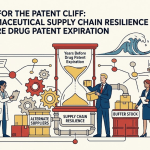
The generic drug supply chain failed publicly and spectacularly during the COVID-19 pandemic, and the structural vulnerabilities exposed were not new. The over-concentration of API and key starting material (KSM) manufacturing in China and India—a consequence of two decades of cost-driven outsourcing—left the global medicine supply dependent on geographic single points of failure. The Hurricane Maria disruptions in Puerto Rico in 2017, the valsartan nitrosamine contamination crisis of 2018, and the COVID-related supply shocks of 2020 were not independent events. They were the predictable outputs of a system designed for minimum cost and minimum redundancy.
The Nitrosamine Crisis: Regulatory Impact and Strategic Implications
The discovery of carcinogenic nitrosamine impurities (N-nitrosodimethylamine, NDMA; N-nitrosodiethylamine, NDEA) in sartan-class APIs manufactured at specific Indian and Chinese facilities in 2018 triggered the largest coordinated pharmaceutical recall in U.S. history. The contamination originated from a process change at a single API supplier—Zhejiang Huahai Pharmaceutical—that inadvertently created conditions for nitrosamine formation. The failure propagated through the supply chain to dozens of finished product manufacturers and hundreds of millions of patient doses.
The FDA’s regulatory response reshaped API and finished product quality expectations permanently. The agency issued nitrosamine risk assessment requirements applicable to all drug products (not just sartans), established acceptable daily intake limits for a growing list of nitrosamine compounds, and mandated that manufacturers conduct root cause analyses and implement confirmatory testing. The financial cost to affected manufacturers included recall costs, destroyed inventory, lost market share, and the ongoing burden of nitrosamine confirmatory testing programs across their entire API portfolios. The reputational cost was harder to quantify but demonstrably real in subsequent formulary placement negotiations.
The strategic lesson is not that companies should avoid Indian or Chinese API suppliers. It is that single-source API dependency and inadequate process change control are unacceptable operational risks in a post-nitrosamine-crisis regulatory environment. A generic manufacturer with multi-source API supply for each critical molecule, with active change control surveillance of its supplier processes, and with nitrosamine risk assessments built into its product development workflow, has a materially lower regulatory and commercial risk profile than one operating on legacy single-source arrangements.
Reshoring, Near-Shoring, and the FDORA Supply Chain Provisions
Congressional attention to pharmaceutical supply chain concentration produced the Food and Drug Omnibus Reform Act (FDORA) of 2022, which included provisions promoting domestic API manufacturing and supply chain resilience. Combined with the Inflation Reduction Act’s domestic manufacturing incentives and DARPA’s BioIndustrial Manufacturing programs, federal policy is now explicitly oriented toward reducing geographic concentration in critical pharmaceutical inputs.
For generic manufacturers, this policy environment creates both opportunity and cost pressure. Domestic API manufacturing for the most critical molecules—antibiotics, essential cardiovascular drugs, insulin—is becoming more economically viable as public funding and regulatory incentives make it closer to competitive with Asian alternatives. Companies that position themselves as domestic-supply compliant in their key product lines gain access to preferential GPO and hospital system contracts that are increasingly being written with domestic supply certification requirements. This is a real commercial lever, not a policy talking point.
CDMOs as Strategic Partners, Not Vendors
The contract development and manufacturing organization (CDMO) landscape has matured substantially. The largest CDMOs—Lonza, Recipharm, Thermo Fisher’s Patheon, and others—now offer integrated services that span cell line development, process development, analytical method development and validation, clinical batch manufacturing, and commercial scale-up with regulatory support.
For generic companies pursuing complex generics or biosimilars without the internal manufacturing infrastructure, CDMO partnerships are the access mechanism. The critical selection criteria go beyond cost per batch. Regulatory inspection history, facility Form 483 observation frequency, experience with the specific dosage form in question, capacity availability at the required commercial scale, and technology transfer competency are the variables that determine whether a CDMO relationship produces an approved product on schedule or a CRL and a manufacturing restart.
The most durable CDMO partnerships are structured as co-development agreements, where the CDMO shares some development risk in exchange for preferred manufacturing terms at the commercial stage. This alignment reduces the CDMO’s incentive to prioritize other clients’ projects in capacity constrained periods—a recurring source of timeline slippage in purely transactional CDMO engagements.
VII
Key Takeaways — Supply Chain Resilience
Single-source API dependency is not a cost optimization strategy. It is a concentration risk that materializes in recalls, shortages, and regulatory enforcement with increasing frequency. The economic case for multi-source API programs has been made by every major supply disruption of the past decade.
Nitrosamine risk assessment is now a routine regulatory requirement across the entire generic portfolio. Manufacturers without a systematic risk assessment and confirmatory testing program are in non-compliance territory, not just best-practice laggards.
Domestic supply certification requirements in GPO and hospital system contracts are a real commercial lever that rewards companies who have invested in supply chain resilience beyond pure cost minimization.
Part VIII
The Commercial Playbook: Launch Mechanics, Pricing Architecture, and Market Access
Regulatory approval is a gate, not a destination. The commercial execution between ANDA approval and sustained market position is where most of the strategic work happens. For first-to-file generics, the 180-day exclusivity window compresses years of commercial planning into a narrow execution window where pricing, channel strategy, and payer engagement must all be pre-positioned before day one. For non-FTF generics entering established multi-competitor markets, the question is entirely different: how to carve out a sustainable position in a commoditized category through cost structure, supply reliability, and strategic customer segmentation.
Launch Pricing Architecture for FTF Generics
The launch price for a first-generic entry is simultaneously a revenue maximization and market share capture problem. Setting it too close to the brand price extracts maximum per-unit margin but slows prescriber and payer switching, leaving revenue on the table during the exclusivity window. Setting it too low captures volume but permanently signals a commodity price point that will define market expectations when the exclusivity ends and additional generics enter.
The standard empirical pattern for FTF launch pricing without an AG present is 20–30% below the brand’s list price in the first days of launch, with rapid market share accretion to 60–80% within 60–90 days. With an authorized generic present, the effective market price reaches a lower equilibrium faster, and the FTF generic’s share stabilizes at a lower level. The pricing model for a 12-month commercial plan must explicitly branch on the AG probability and simulate price erosion curves under each scenario against cost of goods sold to establish the NPV-optimal launch price.
Case Study — Commercial Execution
Teva’s Generic Sildenafil Launch (2017): A Template for FTF Market Domination
Teva’s launch of generic sildenafil citrate in December 2017 demonstrated the commercial playbook for an FTF generic entering a high-recognition category. Teva set the launch price at approximately 50% below Viagra’s list price—a steeper cut than the 20–30% minimum needed to trigger formulary substitution, reflecting the specific dynamics of a men’s health product with high consumer price sensitivity. Rather than a broad DTP (direct-to-physician) campaign, Teva concentrated its medical affairs resources on urologists, the specialty with the highest prescribing density for the product.
The result: Teva captured an estimated 70% market share within twelve months, and the overall market expanded as price-sensitive patients who had previously avoided filling Viagra prescriptions entered the market at the generic price. This volume expansion effect—where a lower price grows the total prescribable market rather than just redistributing existing volume—is a commercially underexploited phenomenon in branded-to-generic transitions. Modeling the latent demand expansion in a target therapeutic category is a meaningful refinement to standard genericization revenue models.
European Pricing and Tendering: The Country-by-Country Architecture
European pharmaceutical pricing operates through several distinct mechanisms that vary by country and create significant complexity for a pan-European generic launch strategy. Reference pricing systems—common in Germany (Festbetrag), the Netherlands, and Spain—set reimbursement ceilings based on the lowest price in a therapeutic reference group. A generic that undercuts the reference price by a defined margin qualifies for unrestricted reimbursement; one priced above it is reimbursed only partially or not at all.
Tendering systems in Denmark, the Netherlands, and the Nordic countries go further, awarding exclusive supply contracts to the lowest bidder for two-year cycles. The competitive dynamics in tendering markets are brutal: margins approach zero on a pure cost basis, and the winning strategy requires operational scale and supply chain discipline that smaller operators cannot match. For a generic company weighing European market entry priorities, tendering markets should be modeled separately with appropriate margin floor assumptions, and the capital required to win and hold a tender contract should be evaluated against the opportunity cost of deploying that capital in non-tendering markets.
VIII
Key Takeaways — Commercial Strategy
FTF exclusivity period revenue is the primary financial return on Paragraph IV investment. The 180-day pricing strategy, channel execution, and payer pre-contracting must be complete before ANDA approval, not started after it.
Latent demand expansion—the new patient volume created by price reduction—is a real and often under-modeled commercial upside for generic entries into high-brand-price, consumer-sensitive categories.
European tendering markets require a separate commercial model with explicit margin floor assumptions. Winning a tender contract in Denmark or the Netherlands requires infrastructure and cost discipline that is fundamentally different from the margin structures available in non-tendering EU markets.
Part IX
AI and Advanced Manufacturing: The Technology Gap That Will Split the Industry
Artificial intelligence is already inside the pharmaceutical manufacturing floor, in the formulation laboratory, and in the supply chain control room. It is not evenly distributed. The companies that have built the data infrastructure and integrated AI-native workflows into their development and manufacturing processes are compounding their advantages quietly while most of the industry debates whether to pilot a use case. The technology gap between adopters and laggards in generics is going to drive the next major round of industry consolidation, as the companies with the AI toolkit produce complex products faster and cheaper than those without it.
AI in Generic Formulation Development
The most near-term, highest-impact AI application in generic drug development is formulation optimization. Traditional formulation science has operated as a combinatorial experimental problem: vary one or two excipient concentrations or process parameters at a time and observe the effect on dissolution or stability. With appropriate DoE designs, the experimental space can be characterized systematically, but the number of experiments required scales poorly with product complexity.
Machine learning models trained on formulation databases—proprietary datasets built from historical development records, published literature, and supplier ingredient characterization data—can predict dissolution profiles, stability outcomes, and, for IR oral solids, the probability of in vitro/in vivo correlation with target bioequivalence parameters. A well-trained model can eliminate two-thirds of the physical experiments needed to identify a viable lead formulation. For a complex product requiring a pivotal clinical endpoint BE study, shaving even one development cycle out of the pre-submission process can represent $2–5M in direct cost savings and six to twelve months of accelerated timeline.
At the more advanced end, generative AI models are being applied to propose novel formulation architectures that a human formulator might not intuit from first principles. The application to “design-around” formulation work—where the goal is to find a bioequivalent formulation that does not infringe on a specific element of the brand’s patent thicket—is particularly compelling and still underexplored by most generics operators.
AI in Manufacturing Quality and Continuous Process Verification
Process Analytical Technology (PAT), enabled by real-time in-line sensors and spectroscopic measurement, has been FDA-endorsed for over twenty years. What has changed is the integration of machine learning models that use PAT sensor data streams to predict batch quality in real time, rather than waiting for end-of-batch release testing. These continuous process verification (CPV) systems identify drift from the established control space early enough to intervene, reducing batch failures, out-of-specification investigations, and the full cost of failed production runs.
Pfizer has publicly cited AI-driven manufacturing process monitoring as a driver of 20% throughput improvements in certain production lines. For a generic manufacturer running high-volume oral solid production where batch failure costs are measured in six figures per event, the economics of CPV implementation are straightforward. The barrier is not the technology; it is the data infrastructure required to make the technology work—clean, validated sensor data streams, a process data historian with sufficient historical records to train the model, and validation documentation that satisfies FDA expectations for AI-based process monitoring systems under 21 CFR Part 11.
The Technology Consolidation Thesis
The strategic implication of uneven AI adoption in generics is not subtle. A company that uses ML-accelerated formulation development, AI-driven supply chain demand forecasting, and continuous process verification against a company that does none of these things is operating with systematically lower development costs, lower manufacturing costs, and higher development success rates across its portfolio. Over a five-to-seven-year horizon, the cost and speed advantages compound into a material difference in which products each company can profitably develop. The laggard company finds itself priced out of the most complex, highest-margin segments by the economics of development costs rather than any legal or regulatory barrier. This is the mechanism by which AI adoption drives consolidation: not an acquisition wave driven by portfolio fit, but an economic Darwinism where the technology-capable absorb the pipelines of those who cannot afford to fill them efficiently.
IX
Key Takeaways — AI & Technology Strategy
ML-driven formulation optimization is the highest near-term ROI AI application in generic development. The direct cost savings from reducing failed physical experiments more than offset the data infrastructure investment within a two-to-three-year window for mid-sized operators with active development pipelines.
Continuous process verification systems require validated data infrastructure, not just off-the-shelf software. The 21 CFR Part 11 validation documentation for AI-based process monitoring systems is the primary implementation barrier, not the underlying technology.
The technology adoption gap in generic drug manufacturing is the structural driver of the next consolidation cycle. Companies building AI capability now are accumulating a compounding economic advantage that will be difficult to close by acquisition in five years at any reasonable price.
For Institutional Investors in Generics and Specialty Pharma
When evaluating generics companies, ask specifically about three things: the percentage of the development pipeline that consists of complex generics (injectables, inhalers, ophthalmic, topical) vs. oral solids; the existence of a proprietary formulation database or AI formulation tool being deployed in development; and the company’s API multi-sourcing ratio for its top-15 molecules by revenue exposure. Companies that score well on all three are building the profile of the acquirer rather than the acquired in the next consolidation cycle. Companies that score poorly on all three are commoditized manufacturers whose valuation should be discounted accordingly.
Part X
The IRA Impact: Recalibrating the Generic Portfolio for a New Commercial Reality
The Inflation Reduction Act’s Medicare Drug Price Negotiation Program is the most consequential change to U.S. pharmaceutical economics since the Hatch-Waxman Act. Its consequences for the generic industry are both direct and structural, and neither has been fully priced into most companies’ long-term strategic plans.
How the Negotiation Program Disrupts the Generic Value Equation
The IRA empowers the Department of Health and Human Services to negotiate a Maximum Fair Price (MFP) for high-spend Medicare Part D drugs. The negotiation triggers are defined by spending thresholds and time since initial approval: small molecules become eligible nine years after approval (seven years plus a two-year buffer before negotiation takes effect), biologics at thirteen years. The first ten drugs selected for negotiation under the 2026 price year were announced in 2023, with MFPs representing discounts of 38–79% from list price.
The disruption to the generic investment calculus is straightforward: the financial return on developing a generic for a negotiated drug is the margin between the generic’s manufacturing cost and the MFP, not the margin between manufacturing cost and the original high brand list price. For drugs receiving steep negotiation discounts, the “landing price” for generics entering the market after the MFP takes effect is substantially lower than previously projected. For several of the first cohort of negotiated drugs, the resulting generic-to-brand price differential is narrow enough that the commercial incentive to develop the generic is materially diminished.
Small Molecule Penalty: Strategic Implications
The differential treatment of small molecules (seven-year negotiation eligibility) versus biologics (eleven years) creates a policy-embedded incentive for innovator companies to shift R&D investment toward biologics—and the early evidence suggests this is happening. Several major pharmaceutical companies have publicly cited the IRA’s small-molecule provisions as a factor in pipeline prioritization decisions. For the generic industry, this trend has a delayed but substantial consequence: fewer new small-molecule drugs entering clinical development today means fewer high-value generic opportunities entering the market in the 2035–2045 window. The compounding effect on the long-term small-molecule generic pipeline is negative, and portfolio strategies that rely on a constant supply of new small-molecule patent cliffs as the primary revenue engine are increasingly exposed.
Table 3 — IRA Negotiation Program Impact on Generic Portfolio Strategy
IRA Provision
Direct Market Effect
Generic Portfolio Implication
Strategic Response
Medicare Price Negotiation (MFP)
Reduces brand list price for targeted drugs pre-patent expiry
Apply “negotiation risk factor” to all candidate drugs above CMS spending thresholds; model NPV under post-MFP brand price baseline
7-Year Eligibility for Small Molecules
Shortens effective exclusivity window vs. 11-year biologic window
Reduces innovator pipeline investment in small molecules; shrinks future generic opportunity pipeline
Accelerate biosimilar and complex generic capability buildout to capture biologics and high-barrier molecules that IRA carves out
Part D Redesign (Manufacturer Discount Programs)
Shifts catastrophic coverage liability partly to manufacturers
Indirectly increases commercial pressure on brand prices across all payer channels
Monitor commercial pricing erosion in non-Medicare channels as MFPs function as benchmark prices for PBM and commercial negotiations
New Indication Disincentive
Discourages brand investment in new indications for drugs approaching negotiation eligibility
Total addressable market for affected generics shrinks if brand does not develop and commercialize additional indications
Model the reference drug’s indication expansion trajectory—not just its current market—when calculating the generic’s long-term revenue ceiling
Commercial Market Spillover
MFPs may anchor commercial payer reference prices across all channels
Creates pricing ceiling compression in commercial markets not directly covered by negotiation
Stress-test launch pricing models under commercial price compression scenarios for products in categories adjacent to negotiated drugs
What Still Works: The IRA-Resilient Generic Portfolio
The IRA does not make small-molecule generics non-viable. It requires more disciplined portfolio construction. The products most insulated from IRA negotiation disruption share several characteristics: they are primarily prescribed outside Medicare Part D (e.g., pediatric drugs, working-age patient populations), their brand spending falls below CMS selection thresholds, they involve complex dosage forms with limited competition regardless of brand pricing, or they represent value-added medicine reformulations with their own separate IP position.
Mid-market branded generics—drugs with $200–600M annual brand revenues, strong patient and prescriber adherence, and a limited ANDA filer queue—represent the most durable near-term generic opportunity in the post-IRA landscape. They are large enough to justify significant development investment, small enough to escape CMS negotiation targeting, and complex enough (through formulation, delivery, or therapeutic category) to limit the competitive queue to a manageable number of entrants.
X
Key Takeaways — IRA and Portfolio Recalibration
Every NPV model for a generic candidate in a high-spend Medicare category now requires an explicit IRA negotiation probability assumption and a sensitivity analysis on post-MFP brand price. Models built on pre-IRA brand price assumptions overstate expected generic returns by a potentially large margin.
The IRA’s structural incentive favoring biologic R&D over small molecules is a generational shift in the innovator pipeline composition. Generics companies whose strategic plans are premised on a continuous flow of new small-molecule patent cliffs should quantify the pipeline attrition risk explicitly.
IRA-resilient generic opportunities are characterized by sub-CMS-threshold brand revenues, complex dosage forms, significant non-Medicare prescription bases, and limited ANDA queue depth. Systematic screening for these characteristics should be part of every candidate evaluation process.
The 505(b)(2) pathway for value-added medicines provides a structural escape from the IRA pricing pressure: a reformulation with its own exclusivity period and patent position is priced independently of the reference drug’s negotiated MFP.
Portfolio Manager Checklist: IRA Stress-Testing a Generic Pipeline
For each product in a generics company’s pipeline, ask: (1) What is the probability the reference drug’s Medicare Part D spending qualifies for CMS negotiation before the expected ANDA approval date? (2) Under the post-MFP brand price scenario, what is the NPV of the generic program at 1, 3, and 5 entrants? (3) Does the development timeline risk pushing this generic’s launch to after the MFP takes effect? (4) If the IRA eliminates the economic case for this generic, does the company have a 505(b)(2) alternative path for the same molecule that creates independent value? Companies that have done this analysis systematically across their pipelines have a fundamentally different risk profile than those still operating on pre-2022 commercial assumptions.
FAQ
Frequently Asked Questions
How should a mid-sized generic company prioritize complex generics investment given the higher development cost?
The financial logic of complex generics investment holds when three conditions are met simultaneously: the market behind the development barrier is large enough to generate acceptable returns even with only two or three competitors; the company has or can acquire the specific technical capability required (sterile manufacturing, inhaler device expertise, topical semi-solid formulation science); and the regulatory pathway is defined clearly enough that development risk can be bounded. If any of these conditions is absent, the capital is better deployed in a product where the company has a more defensible cost and speed-to-market position. A CDMO partnership model that accesses complex manufacturing infrastructure without the capital requirement of building it internally is the most common way mid-sized operators enter this space.
What is the most common reason a Paragraph IV challenge fails, and how can it be prevented?
The most common failure is insufficient pre-filing scientific and legal preparation. A challenge that files on a patent that is legitimately strong, or that overlooks a method-of-use patent covering the primary clinical application of the drug, loses time, litigation cost, and in some cases the FTF position itself if a competitor has a stronger case. Prevention requires: a comprehensive prosecution history review of every Orange Book-listed patent before the notice letter is sent; a cross-functional pre-litigation team of patent attorneys, formulation scientists, and regulatory affairs leads who develop the non-infringement and invalidity theories jointly; and a realistic assessment of the time and cost to trial before committing to an at-risk launch strategy.
How does a company evaluate whether the 505(b)(2) path is more valuable than a standard ANDA for a given molecule?
The 505(b)(2) path is more valuable when the following conditions hold: the molecule has patent protection remaining on its original formulation (making a standard ANDA either unavailable or requiring Paragraph IV litigation); the development team can identify a meaningful, patentable improvement to the existing formulation or delivery system; and the resulting new formulation has a clearly differentiated clinical benefit that supports a premium price over the ANDA alternative. The critical financial comparison is the NPV of the 505(b)(2) program under three to five years of exclusivity and at a price premium versus the ANDA NPV under competitive generic pricing and no exclusivity. For molecules where the brand has successfully migrated prescribers to a next-generation formulation, the 505(b)(2) path on the new formulation often produces higher returns than an ANDA on the legacy product.
With the IRA reducing the upside for blockbuster drug generics, where should portfolio managers focus?
Four categories retain structural attractiveness in the post-IRA environment: complex generics (injectables, inhalers, topical semi-solids) where technical barriers limit ANDA queue depth regardless of brand pricing; biosimilars targeting biologics in the $2–10B annual revenue range that fall under the 11-year biologic IRA window; value-added medicines filed as 505(b)(2)s with independent patent positions; and mid-market small molecules in the $200–600M annual revenue range that fall below CMS selection thresholds. Products combining two or more of these characteristics—a complex dosage form, sub-threshold brand revenue, and limited ANDA queue—represent the highest-quality generic opportunities in the current environment.
What does ‘totality of evidence’ mean in practice for a biosimilar BLA, and how should companies approach it?
The totality-of-evidence standard means the FDA evaluates biosimilarity across all available data—analytical characterization, non-clinical studies, PK/PD studies, and comparative clinical data—as an integrated body of evidence rather than requiring each data type to independently establish biosimilarity. In practice, this means a company with an exceptionally strong analytical characterization package and clear PK/PD similarity can potentially support a smaller or shorter confirmatory clinical trial than one with a weaker analytical foundation. The optimal development strategy is front-loading investment in analytical characterization to produce the most compelling structural and functional similarity evidence possible, then using that evidence to limit the scope and cost of the clinical development program. The FDA’s biosimilar development guidance documents and pre-BLA meeting program are the tools for calibrating that tradeoff on a product-specific basis.
This analysis is prepared for informational purposes for pharmaceutical industry professionals, IP counsel, portfolio managers, and institutional investors. It does not constitute legal, regulatory, or financial advice. Patent and regulatory data cited should be verified through primary sources including DrugPatentWatch, FDA public databases, and primary legal research. Commercial estimates and case study figures represent publicly available or analyst-estimated data and are not guarantees of financial outcomes. All trademarks are the property of their respective holders.
SOURCES: DrugPatentWatch · FDA ANDA Database · Orange Book · USPTO · EMA · IQVIA MIDAS · Symphony Health · KFF IRA Analysis · PMC Published Literature · Company Public Disclosures