Section 1: The Deal Beneath the Deal: Why Licensing Structure Reveals Strategic Intent
A pharmaceutical patent licensing agreement is not primarily a legal document. It is a bet. Both parties are wagering capital, time, and organizational focus on a set of shared assumptions about clinical probability, market size, and competitive timing. The terms of the agreement, read carefully, reveal exactly what each party actually believes about the asset in question, regardless of what the press release says.
When Merck entered its 2021 voluntary license with the Medicines Patent Pool for molnupiravir, the royalty-free provision for 105 low-and-middle-income countries during a declared public health emergency told analysts two things simultaneously: Merck assessed that the commercial opportunity in those markets was negligible relative to the reputational and regulatory goodwill generated, and the company was confident enough in high-income market pricing to absorb the access-tier concession. Both conclusions were correct.
When Pharmacyclics licensed ibrutinib at a total consideration of $3 million in cash and equity, the structure communicated that the licensor lacked the capital to prosecute CLL development alone and that the licensee priced the asset at early-stage risk despite strong preclinical signals. The asset went on to generate more than $10 billion in peak annual revenue across its portfolio of indications. That delta between the licensing valuation and eventual commercial value is not an anomaly. It is the normal operating condition of early-stage pharmaceutical licensing, and it is the core reason why institutional investors and IP teams must be able to read deal structures analytically rather than accepting headline deal values at face value.
This pillar page covers the full architecture of pharmaceutical patent licensing from deal anatomy through IP valuation, evergreening roadmaps, Paragraph IV mechanics, biosimilar interchangeability rules, the IRA’s structural effects on deal terms, and the voluntary licensing models that now govern global access. Every section contains data benchmarks, worked examples, and investment-specific takeaways.
Key Takeaways: Section 1
Licensing terms encode each party’s actual risk assessment of the asset, often more accurately than analyst coverage.
The gap between licensing valuation and ultimate commercial value is the fundamental source of both risk and return in pharma IP investing.
Voluntary licensing decisions (MPP, royalty-free tiers) reflect deliberate market segmentation by geography and willingness-to-pay, not philanthropy alone.
Section 2: Anatomy of a Pharmaceutical Licensing Agreement
2.1 The IP Bundle: What Is Actually Being Transferred
The common shorthand, ‘patent license,’ obscures what is actually moving between parties. A licensing agreement nearly always transfers a bundle of assets, each with its own valuation logic and due diligence requirements. The core components are:
The primary patent claim covers the active pharmaceutical ingredient (API), a specific polymorph, a formulation, a method of use, or a manufacturing process. In most deals, a single product sits under a cluster of patents with different expiry dates, creating what practitioners call a ‘patent thicket.’ The licensee is acquiring the right to practice inside that thicket without infringement exposure for the duration of the agreement.
Know-how and trade secrets frequently carry more economic value than the patent itself, particularly in biologics where the recombinant cell line, fermentation parameters, and purification protocols are irreproducible without direct technical assistance. Know-how is not publicly disclosed through the patent application process and does not expire when the patent does. A deal that includes substantial know-how transfer is therefore structurally more durable than a pure patent license.
Clinical and preclinical data constitute the third component. For any asset beyond the discovery stage, the licensor’s data package, comprising toxicology studies, pharmacokinetic profiles, Phase 1 safety data, and any early efficacy signals, is the primary input for the licensee’s probability-of-technical-and-regulatory-success (PTRS) model. The quality and completeness of this package directly determines the upfront payment the licensor can command.
Biological materials, specifically proprietary cell lines engineered to produce a biologic drug, are a fourth component relevant to large-molecule deals. These are treated as physical property separate from IP rights, and their transfer (or licensed use) requires specific provisions addressing storage, handling, and biosafety.
Trademarks are included in commercialization-stage deals when the licensor has built brand equity it wants to protect. In these cases, the agreement includes quality-control provisions that give the licensor audit rights over the licensee’s manufacturing and marketing activities.
2.2 Exclusivity Mechanics: The Most Consequential Binary in Pharma Dealmaking
No term in a licensing agreement carries more economic consequence than exclusivity. An exclusive license grants the licensee a competitive moat; a non-exclusive license turns the licensed IP into a commodity. Between those poles sit two intermediate structures: the sole license (the licensor reserves its own right to practice but will not license to others) and field-limited exclusivity (exclusive within a defined therapeutic area, non-exclusive outside it).
The logic for choosing among these structures is straightforward. A licensee considering a $500 million Phase 3 trial investment in a licensed oncology compound needs an exclusive license; otherwise, a competitor can license the same compound, run a parallel trial in the same indication, and erode the eventual market share before the first licensee recoups its development spend. The exclusivity premium is not arbitrary. It is the present value of the competitive protection the licensee buys.
For the licensor, granting exclusivity has a direct opportunity cost: every other potential partner for that asset is foreclosed. This is why sophisticated licensors typically negotiate for stringent diligence obligations as the price of exclusivity, structured so that the license reverts to non-exclusive (or terminates entirely) if the licensee fails to meet defined development milestones. The reversion right is the licensor’s insurance against the ‘shelved asset’ problem.
2.3 Territory and Field of Use: The Value-Maximization Levers
Territory and field of use are the two dimensions along which a licensor can carve up a single IP asset into multiple, non-overlapping licenses without granting any one party a full exclusive. A compound with demonstrated activity in both oncology and autoimmune disease can support two separate exclusive licenses, one to an oncology specialist and one to an immunology specialist, each willing to pay a full exclusivity premium for their domain.
Geographic carve-outs follow a similar logic. A small U.S. biotech that lacks the regulatory infrastructure to navigate Japan’s PMDA or China’s NMPA can out-license those territories exclusively to regional partners while retaining North American rights. The financial upside: the licensor collects multiple upfront payments and territory-specific milestone streams. The operational upside: it deploys capital only in markets where it has genuine commercial competency.
The field-of-use boundary requires precision in drafting. A license restricted to ‘oncology indications’ becomes contested the moment the licensed compound shows activity in an inflammatory condition with a cancer-adjacent mechanism. Language such as ‘all indications approved by a regulatory authority in which the primary mechanism of action is inhibition of [specific target] in malignant cells’ creates a more defensible boundary than a broad therapeutic-area reference.
2.4 Diligence Clauses: The Licensor’s Primary Enforcement Mechanism
A licensing agreement with no enforceable diligence obligations is economically equivalent to selling the asset at the upfront payment price. If the licensee can hold the license indefinitely without advancing the drug, the licensor has monetized the asset once and relinquished all future optionality.
Diligence clauses take four forms in practice. Effort standards, either ‘best efforts’ or ‘commercially reasonable efforts’ (CRE), are the most common but the most litigated. Courts have interpreted CRE to mean what a similarly situated company would do with a product of similar commercial potential, which effectively allows a licensee to slow or halt development if the market environment changes and reduces the product’s projected value. Licensors in strong negotiating positions define CRE explicitly in the agreement body, specifying the minimum annual spend, the number of FTEs to be assigned, and the regulatory submissions to be filed by specified dates.
Specific milestone deadlines avoid the ambiguity of effort standards entirely. These are calendar-triggered obligations: file an IND within 18 months of execution, initiate a Phase 2 trial by a specified date, submit an NDA within 36 months of successful Phase 3 completion. Each missed deadline triggers a defined consequence, ranging from a lump-sum penalty payment to automatic reversion of territory-specific or indication-specific rights.
Minimum annual royalties (MARs) protect the licensor after commercialization. If actual royalties fall below the MAR threshold, the licensee must pay the shortfall regardless of sales performance. MARs simultaneously generate predictable income for the licensor and create a financial incentive for the licensee to maximize sales in order to avoid paying above-market royalties on underperforming products.
Termination rights for chronic non-performance are the licensor’s ultimate enforcement lever. A well-drafted diligence section specifies the number of missed milestones or MAR shortfalls that trigger a licensor termination right, the notice period, and the reversion mechanics for all licensed IP and data.
Key Takeaways: Section 2
The IP bundle in a licensing deal includes patents, know-how, data packages, biological materials, and (in some cases) trademarks. Valuing each component separately produces a more accurate deal assessment than treating the agreement as a simple patent transfer.
Exclusivity is the most economically consequential single term. Its price to the licensee should reflect the present value of competitive protection over the full commercialization window.
Diligence clauses written around ‘commercially reasonable efforts’ without explicit definitions are largely unenforceable in practice. Specific milestone dates with automatic consequence triggers are the only reliable protection for licensors.
Section 3: IP Valuation as a Core Asset: Drug-by-Drug Case Studies
IP valuation in pharma is not an academic exercise. For portfolio managers, the patent cliff date on a blockbuster compound determines revenue trajectory for the next decade. For business development teams, the rNPV of a licensed asset drives the upfront payment they can justify to their CFO. For IP teams, the assessed breadth and durability of a patent thicket sets the negotiating posture for every downstream sublicense and enforcement action.
The following case studies trace specific drugs through their IP-as-asset history, showing how licensing decisions reflected and shaped the underlying IP valuation at each stage.
3.1 Ibrutinib (Imbruvica): The $3 Million Acquisition That Built a $10B Franchise
Ibrutinib, a covalent inhibitor of Bruton’s tyrosine kinase (BTK), was in-licensed by Pharmacyclics from the Celera Genomics spin-off for $2 million in cash and $1 million in equity in 2006. At the time, the compound existed as a small set of early patents covering the core BTK inhibitor scaffold and a method-of-use claim for B-cell malignancies. The IP valuation implicit in that transaction price was close to zero on a risk-adjusted basis, which was arguably fair: BTK had no validated clinical proof-of-concept in CLL, and Pharmacyclics had minimal capital to run the development program.
The IP asset position strengthened dramatically as development progressed. By the time AbbVie acquired Pharmacyclics in 2015 for $21 billion, the ibrutinib portfolio had expanded to include patents covering specific BTK-binding conformational epitopes, combination use claims (ibrutinib plus rituximab), pediatric formulation patents, and method-of-treatment claims across CLL, mantle cell lymphoma, Waldenstrom’s macroglobulinemia, and marginal zone lymphoma. Each additional approved indication extended the effective commercial exclusivity window by adding a new set of use patents to the thicket, even where the core composition-of-matter patent had a fixed expiry.
The AbbVie transaction value implicitly assigned the ibrutinib IP portfolio a standalone value north of $15 billion when accounting for the acquired pipeline’s other components. That trajectory, from a $3 million licensing transaction to a $15 billion IP valuation, compresses the entire argument for early-stage licensing into a single case. The upfront payment in 2006 reflected the clinical-stage PTRS at the time. The 2015 acquisition price reflected the post-approval IP portfolio’s risk-adjusted NPV across a multi-indication, multi-patent thicket.
For IP analysts, the ibrutinib case demonstrates a key valuation principle: composition-of-matter patents on a first-in-class mechanism, when prosecuted to cover multiple crystalline forms, salt forms, and combination regimens, generate an IP estate with a commercial exclusivity window that extends well beyond the nominal expiry of the primary patent.
3.2 Lenacapavir (Sunlenca): Gilead’s Royalty-Free Voluntary License and the IP Segmentation Model
Lenacapavir, Gilead’s long-acting capsid inhibitor for HIV, received FDA approval in December 2022. In 2024, Gilead executed royalty-free voluntary licensing agreements with six generic manufacturers covering production and distribution in 120 high-incidence, resource-limited countries. The base IP estate, which includes patents on the capsid inhibitor scaffold, the long-acting injectable formulation, and manufacturing processes, remains fully intact in high-income markets where Sunlenca is priced at approximately $42,250 annually in the United States.
From a valuation standpoint, the voluntary license is a textbook example of geographic IP segmentation. The royalty-free grant to LMICs assigns an effective commercial value of zero to those territories, which reflects an accurate assessment: the combination of low willingness-to-pay, procurement by international health organizations at cost-plus pricing, and Gilead’s lack of local commercial infrastructure makes direct commercialization in most LMIC markets economically irrational. The IP is not being devalued globally; it is being explicitly zeroed in markets where it was never going to generate meaningful revenue anyway.
The IP valuation in high-income markets is unaffected. The core patents covering the capsid inhibitor mechanism run through the mid-2030s in the United States and major European markets, giving the product a 12-to-15-year exclusivity window from launch. At the current U.S. list price and with an estimated patient population of 40,000 in the HIVATUS clinical development cohort, the risk-adjusted NPV of the U.S.-alone IP position exceeds $4 billion on a mid-case basis.
The lenacapavir case also illustrates how voluntary licensing decisions generate measurable, non-market returns. The Access to Medicine Index (ATMI), which 21 institutional investors with a combined $14 trillion in AUM use to evaluate pharmaceutical companies, rates voluntary licensing programs as a significant positive indicator. For a company with Gilead’s current valuation, the ATMI score impact translates directly into reduced ESG-related divestment risk, which is a real, if hard to quantify, component of IP portfolio value.
3.3 Molnupiravir (Lagevrio): Merck’s MPP License and the IRA Exposure Problem
Merck in-licensed molnupiravir from Ridgeback Biotherapeutics in May 2020. The asset at the time of in-licensing was a broad-spectrum antiviral with preclinical activity against RNA viruses, including SARS-CoV-2. The in-licensing deal structure reflected the classic early-stage risk profile: Ridgeback retained substantial upfront economics and Merck assumed the Phase 2 and 3 development costs, which ultimately reached several hundred million dollars before the emergency-use authorization arrived in December 2021.
The IP estate for molnupiravir is narrower than the ibrutinib thicket. The core patents cover the prodrug structure of N-hydroxycytidine (NHC), the mechanism of error-catastrophe induction in viral RNA polymerases, and specific oral formulations. There is no large-scale indication expansion analogous to the ibrutinib multi-tumor strategy. This structural IP constraint, combined with the IRA’s small-molecule price negotiation timeline (which treats drugs with 9 years or fewer of Medicare market exclusivity as negotiable), means that molnupiravir faces a compressed commercial window before government price intervention.
The MPP license Merck executed in October 2021, covering 105 LMICs on royalty-free terms during the public health emergency, was both a market-access decision and an implicit acknowledgment of the geographic valuation logic: the commercial upside for Merck sat entirely in the U.S., European, and high-income Asia-Pacific markets where government procurement or private insurance at near-list prices was feasible.
IP analysts should note that the Paragraph IV challenge risk for molnupiravir is higher than for many branded drugs because the patent thicket is thin. A generic manufacturer filing a Paragraph IV certification against a compound with only a handful of listed patents and a relatively narrow claim scope faces a lower litigation burden than one attacking an ibrutinib-style multi-layer thicket.
3.4 Humulin: The Genentech-Lilly License That Created the Recombinant Biologics Industry
Genentech’s 1978 license to Eli Lilly for recombinant human insulin (Humulin) is the founding transaction of the modern biopharmaceutical licensing industry. The IP bundle included patents on the recombinant DNA expression system, the E. coli host-cell production method, and the purification process for human insulin. Genentech retained the core biotechnology platform rights; Lilly received an exclusive license for insulin production and commercialization with the manufacturing know-how transfer needed to replicate the process at commercial scale.
The IP valuation at the time of the license was genuinely novel territory. No precedent existed for pricing recombinant protein patents. The royalty rate negotiated was low by modern standards, reflecting the uncertainty about whether the FDA would approve a recombinant product, whether payers would reimburse it at a premium over porcine insulin, and whether Lilly’s manufacturing team could achieve consistent GMP-compliant yields.
Humulin received FDA approval in 1982 and reached commercial scale within two years, validating both the IP asset and the licensing model. The Genentech-Lilly structure became the template for subsequent biologic out-licensing deals: a platform biotechnology company retains its core molecular engineering IP and licenses specific product applications to pharmaceutical partners with the manufacturing and commercial scale to execute.
More than 50% of Genentech’s subsequent pipeline has been partnership-derived, a structural dependency that reflects a deliberate strategy of using its biologics platform IP as the engine for a portfolio of collaboration agreements rather than internalizing all commercial development.
Key Takeaways: Section 3
The ibrutinib case demonstrates how a multi-indication, multi-patent thicket strategy can multiply IP valuation by several thousand percent relative to the original licensing price, even before accounting for combination use claims.
Voluntary licensing in LMICs is not IP value destruction; it is geographic segmentation, assigning zero commercial value to territories where effective pricing was always zero.
The molnupiravir IP estate illustrates the IRA small-molecule vulnerability: a thin patent thicket with no indication-expansion runway creates a compressed commercial window before government price negotiation eligibility.
The Humulin deal established the biologic platform licensing model, where a biotechnology company retains core molecular engineering IP and licenses specific product applications to commercial-scale partners.
Investment Strategy: IP Valuation Signals for Portfolio Managers
When evaluating a pharmaceutical company’s licensing activity for investment purposes, focus on four IP-specific signals:
The depth of the patent thicket matters more than the primary composition-of-matter expiry date. A compound supported by formulation patents, method-of-use claims across multiple indications, manufacturing process patents, and pediatric exclusivity extensions has a materially longer effective commercial exclusivity window than the headline patent expiry suggests. Run your own Orange Book analysis or use a patent intelligence platform to count the total number of listed patents and their expiry distribution before accepting a company’s ‘LOE date’ representation.
The PTRS-adjusted milestone structure in a licensing deal reveals what both parties actually believe about clinical probability. A deal where 80% of the total deal value is back-loaded into Phase 3 and approval milestones, with a small upfront, tells you that the licensor lacked negotiating leverage and that the licensee believes Phase 2 results were soft. A deal with a large upfront and modest back-end milestones tells you the opposite.
Voluntary licensing decisions in LMICs are now a measurable ESG signal with real institutional investor consequences. Companies with strong ATMI scores face lower passive-fund divestment risk and increasingly attract dedicated healthcare impact capital. The commercial cost of a well-structured MPP license is close to zero for most drugs; the ATMI benefit is measurable in basis points of cost of capital over a five-year horizon.
The IRA’s Medicare price negotiation timeline is now a first-order IP valuation input for any drug with significant Medicare exposure. The 9-year small-molecule and 13-year biologic negotiation triggers must be mapped against the LOE date and expected generic entry date to produce a realistic revenue curve. Licensing agreements executed post-IRA should include IRA-adjustment clauses that redistribute the negotiation risk between licensor and licensee.
Section 4: The Licensor’s Playbook: Monetizing Innovation Without Burning Your Options
4.1 The Commercialization Pathway Problem
Most pharmaceutical innovation happens in environments that lack commercialization infrastructure. University technology transfer offices, NIH-funded research centers, and early-stage biotechs produce the majority of first-in-class mechanisms, but none of them can run a 10,000-patient Phase 3 trial or negotiate a national formulary placement with Express Scripts. Out-licensing is the mechanism that bridges that gap.
The fundamental value exchange is this: the licensor trades near-term operational responsibility and a share of eventual commercial upside in exchange for capital, development expertise, and market access it cannot self-fund. Done well, the out-license lets the licensor capture a defined, risk-adjusted share of the asset’s value while redirecting its own capital toward earlier-stage programs where its discovery expertise creates the most value per dollar spent.
Done poorly, the out-license is a permanent concession. The licensor accepts a modest upfront payment, agrees to a low royalty rate, fails to negotiate meaningful diligence obligations, and watches a large pharmaceutical company either shelve the asset or commercialize it at terms that return far less than the asset’s market potential would have supported.
4.2 Non-Dilutive Funding and the Capital Efficiency Argument
For a Series A or Series B biotech, the financial structure of an out-licensing deal is often as important as the strategic fit. Equity financing dilutes founder and early investor ownership. Venture debt adds interest and covenant risk. Out-licensing revenue, specifically upfront payments and development milestones, is non-dilutive: it does not reduce the ownership percentage of existing stakeholders.
A $30 million upfront payment from a licensing deal at the Phase 1 stage is financially equivalent to a $30 million equity financing at the pre-money valuation existing at that point, but without the dilution. If the company’s share price increases as the licensed asset advances, the founders and existing investors capture the full benefit of that appreciation rather than sharing it with a new equity tranche.
This math is why licensing deals that appear ‘cheap’ on a total deal value basis can still be strategically rational for the licensor. A small biotech with 18 months of runway and a Phase 1 asset that has just shown clean safety data in a Phase 1a cohort faces a binary choice: raise equity at a depressed valuation (because Phase 1 proof-of-concept is still pending) or accept a licensing deal that provides immediate non-dilutive capital plus a back-end royalty stream contingent on clinical success. The licensing option is frequently superior on a risk-adjusted per-share-value basis.
4.3 The Shelved Asset Risk and How to Mitigate It
Research by Harvard Business School using data from large pharmaceutical companies found that assets out-licensed to dedicated startups have a higher probability of technical success than comparable assets developed in-house or licensed between two large companies. The mechanism is straightforward: a startup with a single licensed asset and a team hired specifically to develop it will devote proportionally more management attention and creative problem-solving to that program than a large organization running 40 parallel development programs.
The implication for licensors is counterintuitive. When negotiating with a large pharmaceutical company, the licensor should assess not just the financial terms but the organizational home the asset will have inside the licensee. An asset dropped into a business unit with eight competing Phase 2 programs is at much higher shelving risk than one licensed to a company for which it is the top-priority indication. The diligence clause negotiations should reflect this organizational reality with specific provisions about the minimum dedicated team size, the development budget commitment, and the frequency of joint steering committee meetings.
Reversion rights with clear triggers are the licensor’s backstop. A well-drafted reversion clause specifies that if the licensee fails to initiate a Phase 2 trial within 24 months of IND acceptance (for example), all rights to the asset revert automatically to the licensor, and the licensee must return all clinical data and biological materials within 30 days. The licensor can then re-out-license the asset, often at improved terms because the IND acceptance itself has de-risked the regulatory entry point.
4.4 Know-How Protection During Negotiations
The period between initial partner interest and deal execution is the highest-risk window for inadvertent know-how disclosure. A sophisticated potential licensee will request extensive data during due diligence: manufacturing protocols, unpublished preclinical data, raw clinical data from ongoing trials, regulatory correspondence. All of this constitutes proprietary know-how that, once disclosed, is difficult to un-disclose even with a confidentiality agreement in place.
Best practice is to use a tiered disclosure model. The first-tier data room contains sanitized summaries: blinded safety data, aggregate efficacy signals, published patent claims. Only after the potential licensee has demonstrated serious commercial intent (typically by submitting a term sheet) does the licensor open the second-tier data room containing unpublished raw data, detailed manufacturing SOPs, and regulatory submissions. The confidentiality agreement should specify that the receiving party cannot use the disclosed information for any purpose other than evaluating the specific transaction, and that all data must be destroyed or returned if the deal does not close.
Key Takeaways: Section 4
Out-licensing non-dilutive income (upfront payments and milestones) is often financially superior to equity financing for early-stage biotechs, particularly when the equity alternative requires issuing shares at a pre-proof-of-concept discount.
Shelved asset risk is highest when the licensed asset competes internally with multiple other programs at the licensee. Diligence clauses should include provisions for minimum dedicated team size and annual development budgets, not just milestone dates.
Tiered data room disclosure protects core know-how during negotiations. Reserve unpublished manufacturing protocols and raw clinical data for second-tier access, triggered by a signed term sheet.
Section 5: The Licensee’s Playbook: Building and Defending Market Leadership
5.1 The Patent Cliff and the In-Licensing Imperative
Patent cliffs kill revenue. When Humira’s U.S. composition-of-matter patent expired in January 2023, AbbVie faced the entry of biosimilar competitors that had been queued up under the BPCIA settlement agreements and launched with price discounts ranging from 5% to 85% below the branded list price. AbbVie’s defense relied on a combination of a secondary patent thicket, long-term patient persistence programs, and a pre-cliff international revenue base, but the U.S. revenue erosion was still dramatic.
The standard industry response to impending patent cliffs is pipeline replenishment through in-licensing. The mathematics are predictable: a $5 billion-per-year brand drug with 24 months to loss of exclusivity (LOE) needs at least one Phase 3-ready asset generating $500 million-plus in projected peak-year sales to maintain investor confidence in the post-cliff revenue trajectory. The in-licensing market for Phase 3 and NDA-stage assets reflects this demand precisely. Average upfront payments for Phase 3 assets rose from $23.6 million in 2015 to more than $50 million in recent years, driven by the growing backlog of patent cliffs among large-cap pharmaceutical companies.
In-licensing a Phase 3 asset is strategically preferable to a full merger-and-acquisition transaction in most cases. An M&A deal requires integration of the target company’s infrastructure, pipeline, personnel, and culture, creating execution risk that can consume 18 to 36 months of management attention. An in-licensing deal acquires only the rights to the specific asset, leaving the licensor’s organization intact and operational, often as a future collaboration partner. The licensed asset can be integrated into the acquirer’s development and commercial systems without the disruption of corporate integration.
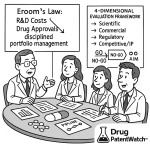
5.2 The Due Diligence Framework: Five Dimensions
Due diligence for in-licensing an asset should be structured around five investigative workstreams running in parallel, not sequentially.
Scientific and clinical diligence means the licensee’s internal medical and scientific team independently reviewing all available preclinical and clinical data, not simply accepting the licensor’s summary. This includes reviewing the raw datasets, not just the clinical study reports, to assess whether efficacy signals are robust across patient subgroups or driven by a narrow responder subset. For a Phase 2 asset, the key question is whether the signal will survive a larger, more heterogeneous Phase 3 population. For a Phase 3 asset, the question is whether the chosen primary endpoint will translate to real-world prescribing behavior and formulary access.
IP due diligence maps every patent in the licensor’s portfolio that touches the licensed asset, including patents filed by the licensor in jurisdictions where the licensee intends to commercialize. A freedom-to-operate (FTO) analysis must extend beyond the licensor’s own patents to identify any third-party patents that could block development, manufacturing, or sale of the product. Discovering a blocking patent during Phase 3 is catastrophic; discovering it during due diligence allows the licensee to negotiate an FTO license, design around the blocking claim, or price the blocking risk into the deal terms.
Regulatory due diligence reviews all correspondence between the licensor and the FDA, EMA, and other health authorities. This includes pre-IND meeting minutes, Special Protocol Assessment (SPA) agreements, clinical holds, Complete Response Letters (CRLs), and advisory committee feedback. A single CRL citing deficiencies in the clinical development program can add two to four years and several hundred million dollars to the development timeline, fundamentally altering the deal’s risk-adjusted value.
Commercial due diligence models the market opportunity using independent assumptions, not the licensor’s projections. Key inputs include the current standard of care, the labeled indication’s patient population size (diagnosed and addressable), the competitive pipeline, payer access dynamics (formulary tier, step therapy requirements, prior authorization burden), and pricing benchmarks from comparable agents. A compound entering a market where the standard of care is already two lines of combination therapy with high patient response rates faces a materially higher commercial hurdle than one entering a treatment-naive population.
Manufacturing due diligence is underweighted in most in-licensing processes but is a material risk factor, particularly for biologics. The licensee must assess whether the licensor’s manufacturing process can be transferred and scaled, whether the process is locked to a specific CMO with capacity constraints, and whether the regulatory filings (the Drug Master File in the U.S., the Active Substance Master File in Europe) are complete and current.
5.3 Alliance Management: The Post-Signature Success Factor
The signing ceremony for a licensing deal is the beginning of the operational work, not the conclusion of the strategic work. In the pharmaceutical industry, where development timelines run 7 to 12 years and the asset changes hands multiple times across different development phases, the quality of the ongoing relationship between licensor and licensee is a first-order determinant of development success.
Large pharmaceutical companies with active in-licensing portfolios typically maintain dedicated alliance management functions separate from business development. Alliance managers own the day-to-day relationship with the licensor, track all contractual obligations and milestone deadlines, prepare for and facilitate Joint Steering Committee (JSC) meetings, and serve as the primary escalation channel for disputes before they become formal legal matters.
The organizational design of the JSC matters. Governance committees with equal representation from both parties and a dispute-resolution mechanism that avoids deadlock (e.g., escalation to senior leadership, then independent expert determination) outperform committees where one party holds a tie-breaking vote in outcome quality. Asymmetric governance creates resentment and reduces information sharing, both of which are predictors of suboptimal development decisions.
Key Takeaways: Section 5
The average upfront payment for a Phase 3 in-licensed asset has more than doubled in the past decade, driven by large-cap patent cliff pressure. Budget accordingly.
FTO analysis during due diligence is the most commonly underfunded component of in-licensing due diligence. A blocking third-party patent discovered during development can be as costly as a Phase 3 failure.
Alliance management quality is a measurable predictor of development success. Dedicated alliance managers with clear governance mandates outperform ad hoc BD team coverage of post-execution partnerships.
Section 6: Evergreening and the Biologic IP Lifecycle: A Technology Roadmap
6.1 What Evergreening Is and How It Actually Works
‘Evergreening’ refers to the practice of using secondary patent filings, regulatory exclusivity periods, and formulation modifications to extend the effective commercial exclusivity window of a drug beyond the expiry of its original composition-of-matter patent. The term is used pejoratively in policy discussions and analytically in IP strategy discussions. Both uses are correct.
For a pharmaceutical IP team, evergreening is a systematic program of IP prosecution designed to maximize the duration of market exclusivity and therefore the present value of the IP estate. For a generic competitor, it is the primary obstacle between a Paragraph IV filing and an at-risk launch. For a portfolio manager, it is a key variable in projecting the LOE date and the severity of the revenue cliff.
The roadmap below traces the common evergreening strategies for small molecules and biologics, with specific examples for each layer.
6.2 Small Molecule Evergreening: The Seven-Layer Strategy
Layer 1: Composition-of-Matter Patent. This is the foundational patent, typically filed at or before IND submission. It claims the novel chemical entity by its molecular structure. For most drugs approved between 2000 and 2020, this patent expires 20 years from its filing date, often landing in a window 8 to 14 years after launch given the typical development timeline.
Layer 2: Polymorphic Form Patents. A drug’s active ingredient can exist in multiple crystalline forms (polymorphs) with different physical properties (solubility, stability, flowability). Filing patents on the specific polymorph used in the commercial formulation, and on any other polymorphs with favorable properties, creates a secondary exclusivity layer. Generic manufacturers must use the same polymorph for bioequivalence testing; if the commercialized polymorph is separately patented and listed in the Orange Book, the generic must either design around it or challenge the polymorph patent in a Paragraph IV proceeding.
Layer 3: Formulation and Drug Delivery Patents. These cover the specific excipient combination, the controlled-release mechanism, the particle size distribution, or the delivery system (extended-release tablet, nanoparticle formulation, transdermal patch) used in the approved product. AstraZeneca’s Nexium (esomeprazole) is the canonical example: the switch from omeprazole to its S-enantiomer, protected by a new formulation patent, extended commercial exclusivity for the proton pump inhibitor franchise well beyond the original omeprazole patent expiry.
Layer 4: Method-of-Use Patents. These claim specific therapeutic uses of the compound. If a drug approved for one indication shows activity in a second disease area, a method-of-use patent on the new indication extends effective exclusivity in that indication even if the composition-of-matter patent has expired. Importantly, a generic manufacturer that receives an abbreviated new drug application (ANDA) approval for the original indication is not blocked by the method-of-use patent for the new indication, but off-label use carve-outs in the generic’s labeling create a practical barrier to full substitution.
Layer 5: Metabolite Patents. The active metabolite of a parent compound is a separately patentable chemical entity if it has inventive properties. Forest Laboratories converted Celexa (citalopram) to Lexapro (escitalopram) in this manner, patenting the active S-enantiomer as a new chemical entity and managing the patent transition to maximize commercial continuity.
Layer 6: Manufacturing Process Patents. Patents on the synthetic route, the catalyst, the purification step, or the crystallization process are independently listed in the Orange Book and must be addressed in any ANDA filing. Even if a generic manufacturer designs around the active ingredient’s form patents, it must either replicate the manufacturing process or challenge the process patents.
Layer 7: Regulatory Exclusivity Extensions. Separately from the patent system, U.S. law provides several regulatory exclusivity periods that can extend effective market protection: 5-year new chemical entity (NCE) exclusivity, 3-year new clinical investigation exclusivity for approved labeling changes, 7-year orphan drug exclusivity (for drugs treating conditions affecting fewer than 200,000 U.S. patients), and 6-month pediatric exclusivity for conducting FDA-requested pediatric studies. These regulatory exclusivities are not patents; they are statutory bars on FDA approval of competing applications and can stack with patent protection to create a combined exclusivity period substantially longer than any individual component.
6.3 Biologic Evergreening: The More Complex Landscape
Biologic drugs (monoclonal antibodies, fusion proteins, recombinant enzymes) operate in a fundamentally different IP and regulatory environment than small molecules. The Biologics Price Competition and Innovation Act (BPCIA) of 2009 governs biosimilar entry in the U.S. and creates a 12-year reference product exclusivity period from the date of first licensure, longer than the 5-year NCE exclusivity for small molecules. This base exclusivity is independent of patent protection.
The biologic evergreening roadmap therefore has a different architecture.
Formulation Complexity. Unlike a small molecule crystal, a biologic’s ‘active ingredient’ is a protein defined by its amino acid sequence, its glycosylation pattern, its three-dimensional folding, and its aggregate state in solution. Patenting not just the reference product’s sequence but also the specific formulation (buffer, excipient, concentration), the storage conditions that maintain the conformation, and the administration device (pre-filled syringe, auto-injector) creates multiple patent barriers that a biosimilar developer must navigate independently.
Indication Expansion. A biologic approved for a first indication benefits from the full 12-year reference product exclusivity for that use. If the same biologic receives subsequent approval for a new indication, the question of whether that new indication receives its own exclusivity period is governed by FDA guidance. Biologics with pediatric or orphan indications can add 6 months and 7 years, respectively. A strategic indication development sequence, prioritizing the indication with the longest regulatory data protection first, maximizes the total cumulative exclusivity window.
Subcutaneous Formulation Switches. Many biologics approved first as intravenous infusions have been reformulated as subcutaneous self-administration products. The subcutaneous formulation is a patentable new invention (different concentration, different excipient package, different device) and may qualify for additional regulatory exclusivity as a new formulation. Roche’s switch from intravenous Herceptin (trastuzumab) to subcutaneous Herceptin SC, and the subsequent efforts to delay biosimilar uptake through the reformulation, illustrates the commercial logic: a more convenient administration format creates real patient preference and switching costs that slow biosimilar substitution independent of patent protection.
Device and Companion Diagnostic Patents. The auto-injector device used with an biologic is separately patentable as a medical device. If the device design is integral to the approved administration process, a biosimilar developer must either design a non-infringing device (requiring separate engineering development and usability studies) or wait for device patent expiry. Companion diagnostic patents, which cover the test used to identify appropriate patients, create an analogous barrier in oncology biologics.
6.4 The BPCIA Patent Dance: A Litigation Roadmap
The BPCIA established an information-exchange process, derisively called the ‘patent dance,’ that governs how biosimilar developers and reference product sponsors resolve patent disputes before or instead of traditional infringement litigation.
Under the BPCIA, a biosimilar applicant that files a 351(k) application with the FDA must provide the reference product sponsor with its complete application and manufacturing information within 20 days of FDA acceptance. The reference product sponsor then has 60 days to identify which of its patents it believes could be infringed by the commercial manufacture, use, import, or sale of the biosimilar. The parties then negotiate a list of patents to litigate in a first phase, followed by FDA notification and the potential for immediate declaratory judgment litigation on any unlisted patents.
This process is designed to front-load patent disputes before commercial launch, creating a structured opportunity to resolve IP conflicts during the regulatory review period rather than through at-risk launch and post-launch litigation. In practice, the dance has generated extensive satellite litigation over whether participation is mandatory, how manufacturing information can be used, and what constitutes adequate disclosure at each step. Sandoz v. Amgen (2017) established that participation in the dance is optional for the biosimilar applicant, which significantly changed the strategic calculus for all parties.
For licensors who hold reference product rights, the BPCIA dance means maintaining a detailed, current map of which patents in the portfolio are ‘dance-list eligible’ (i.e., could be asserted against any biosimilar application) and ensuring that prosecution of those patents is actively managed to keep claim scope broad enough to cover plausible biosimilar designs.
Key Takeaways: Section 6
Small molecule evergreening operates through seven sequential IP layers; composition-of-matter, polymorphic form, formulation, method-of-use, metabolite, manufacturing process, and regulatory exclusivity extensions. Each layer is independently valuable and independently challenged in Paragraph IV litigation.
Biologic evergreening relies more on the 12-year BPCIA reference product exclusivity, formulation complexity, indication sequencing, and device patents than on the same patent-thicket strategies used for small molecules.
The BPCIA patent dance is optional for biosimilar applicants post-Sandoz v. Amgen. Reference product sponsors should assume that sophisticated biosimilar developers will opt out of the formal dance and proceed directly to litigation, making proactive Orange Book listing and active patent prosecution critical.
Investment Strategy: Reading the LOE Date
The headline patent expiry date a company discloses in its earnings presentation is almost always the composition-of-matter expiry. The effective LOE date, accounting for the full evergreening stack, is frequently 3 to 7 years later for a well-managed IP portfolio. Conversely, a company that has not actively prosecuted secondary patent layers faces a sharper cliff than its disclosed primary expiry date suggests. Use an independent Orange Book or SPC (supplementary protection certificate) analysis to build your own LOE date before accepting a company’s guidance on revenue durability.
Section 7: The Financial Engineering of a Licensing Deal
7.1 The Tripartite Payment Structure and Its Risk Logic
The financial architecture of a pharmaceutical licensing agreement functions as a time-distributed risk-sharing contract. Each component, the upfront payment, the milestone payments, and the royalty stream, represents a different assumption about where risk sits and which party bears it.
The upfront payment is the licensor’s guaranteed return, non-refundable regardless of clinical outcome. It reflects the licensor’s negotiating leverage (driven by competitive interest in the asset, the licensor’s funding position, and the asset’s stage of development) and the present value of the IP bundle being transferred. Analysis of more than 2,900 deals since 2010 shows that upfront payments average $9.3 million to $15.6 million for preclinical assets, rising to $23.6 million to $39.1 million for Phase 3 assets. More than 86% of all deals include an upfront payment.
Milestone payments convert future value-inflection events into defined cash flows for the licensor. The structure of milestones reveals the parties’ shared PTRS model. A deal where the largest single milestone payment is tied to Phase 2 completion (rather than regulatory approval) tells you that both parties view Phase 2 proof-of-concept as the most critical de-risking event, likely because the mechanism of action is novel and unproven in humans. A deal where the approval milestone dwarfs all development milestones tells you the scientific risk is already substantially resolved and the primary remaining uncertainty is regulatory.
Average milestone payments by stage: $5.6 million at Phase 1 initiation, increasing systematically through Phase 2 and Phase 3 completion, with an average regulatory approval milestone of $41.4 million. Total deal values (upfront plus all potential milestones) average 7x the upfront for Phase 1 deals, 5x for Phase 2, and 4x for Phase 3, reflecting the declining risk multiplier as the asset advances.
Royalties are the licensor’s long-term share of commercial success. Rates range from low single digits for academic institution licenses on early-stage assets (median: 3%) to mid-to-high single digits and into the low teens for corporate-to-corporate deals on late-stage or approved products (median: 8%). Tiered royalty structures, where the rate steps up as sales cross defined thresholds, are increasingly common because they create shared upside incentives: the licensor benefits from blockbuster success, and the licensee pays above-standard rates only on the revenue tiers that most justify the premium.
7.2 rNPV Methodology: The Standard Valuation Framework
Risk-adjusted net present value (rNPV) is the standard quantitative framework for pharmaceutical asset valuation. The model builds a probability-weighted cash flow forecast by mapping each development phase’s probability of success against the expected revenues and costs conditional on success.
The structure of the model:
Project the peak annual sales of the drug in its target market, based on addressable patient population, pricing assumptions, market penetration rates, and competitive displacement. Discount peak sales back to a launch-year net revenue figure accounting for payer access dynamics, gross-to-net adjustments (rebates, chargebacks, co-pay programs), and off-label capture.
Model the revenue ramp from launch year to peak, typically 3 to 6 years for a new molecular entity in a competitive market. Model the revenue decline from LOE, accounting for generic or biosimilar entry discount rates (typically 80-90% volume erosion within 12 months for small molecules in competitive classes).
Subtract the fully-loaded development costs for each remaining phase, including clinical trial costs, regulatory filing fees, manufacturing scale-up costs, and commercial launch investments. Apply the stage-specific PTRS to each future cash flow: preclinical-to-Phase-1 (50-60% historically), Phase-1-to-Phase-2 (60-70%), Phase-2-to-Phase-3 (30-50% depending on indication and mechanism novelty), Phase-3-to-approval (50-75%).
Discount the resulting risk-adjusted cash flows at a rate that reflects the opportunity cost of capital in pharmaceutical development, typically 10-15% for large pharmaceutical companies and 15-25% for early-stage biotechs where the binary outcome risk justifies a higher discount.
The resulting rNPV figure is the maximum theoretically rational upfront payment from the licensee’s perspective. In practice, the actual upfront is substantially lower, reflecting the licensor’s information disadvantage (the licensee typically has more sophisticated modeling capability), the licensor’s funding urgency, and competitive dynamics in the deal process.
7.3 Net Sales Definition: The Most Contested Financial Clause
The definition of ‘net sales’ in the royalty provision determines the actual royalty base and therefore the total royalties paid over the product’s commercial life. A 1% difference in the effective royalty rate on a drug generating $2 billion in annual gross sales is $20 million per year. Across a 15-year commercialization window, the present value of that difference exceeds $150 million at a 10% discount rate. This is why ‘net sales’ definition is one of the most heavily negotiated provisions in any licensing deal.
The licensor’s preferred definition allows deductions only for: government-mandated taxes, customs duties, freight and insurance for product transport, and the cost of goods returned. The licensee’s preferred definition adds: rebates and chargebacks paid to payers and PBMs, allowances for doubtful accounts, the cost of free samples provided for promotional purposes, and co-pay assistance program costs. In markets with significant managed care rebate obligations (i.e., the U.S. market for any drug competing for formulary placement), the difference between a narrow and a broad net sales definition can reduce the royalty base by 30-40% relative to gross receipts.
7.4 Royalty Stacking: The Multi-Licensor Problem
Royalty stacking occurs when a single commercialized product requires licenses from multiple independent IP holders, each demanding its own royalty on net sales. A biologic drug product might require licenses to the antibody sequence, the manufacturing cell line, the formulation, and the administration device from four separate patent holders. Each royalty layer reduces the commercializing licensee’s operating margin.
The practical ceiling for aggregate royalty burden in pharmaceutical commercialization is approximately 15-20% of net sales for a drug with differentiated clinical value in a market with pricing power. Above that threshold, the economics of commercialization deteriorate to a point where the licensee’s financial returns do not justify the development and launch investment.
Royalty stacking clauses allow the licensee to reduce the royalty paid to a primary licensor by a defined fraction of royalties paid to third-party licensors whose patents are also infringed in manufacturing or selling the licensed product. A common formulation: the licensee may reduce the royalty owed to the licensor by 50% of any royalties paid to third parties for IP essential to practice the license, provided the royalty does not fall below a floor rate equal to 50% of the stated royalty rate. This prevents the primary licensor’s royalty from being diluted to zero by an accumulation of small third-party royalties while still providing the licensee meaningful relief from an excessive stacking burden.
Key Takeaways: Section 7
The upfront payment in a licensing deal is the licensor’s risk-adjusted, guaranteed return. Its size relative to total deal value encodes the stage-specific PTRS shared by both parties.
rNPV analysis produces the maximum rational upfront payment from the licensee’s perspective. Actual upfronts are lower due to information asymmetry and competitive dynamics. The gap between rNPV and actual upfront is the licensee’s expected economic profit from the deal.
The net sales definition can reduce the effective royalty base by 30-40% in a U.S. market with significant managed care rebate obligations. Model the impact of broad versus narrow definitions explicitly before signing.
Section 8: Paragraph IV Filings, Hatch-Waxman, and the Generic Challenge Calculus
8.1 The Hatch-Waxman Framework: How Generic Entry Is Structured
The Drug Price Competition and Patent Term Restoration Act of 1984 (Hatch-Waxman) established the legal framework that governs generic drug entry in the United States. Under Hatch-Waxman, a generic manufacturer seeking approval for a drug product already approved via a New Drug Application (NDA) files an Abbreviated New Drug Application (ANDA) with the FDA demonstrating bioequivalence to the reference listed drug (RLD).
For each patent listed in the FDA’s Orange Book that covers the RLD (the brand product), the ANDA filer must submit a patent certification. If the filer contends that a listed Orange Book patent is invalid, unenforceable, or not infringed by the generic product, it files a Paragraph IV certification and must notify the NDA holder (brand company) and each patent owner of the challenge. This notification triggers a 30-month stay on FDA approval of the ANDA (assuming the brand files an infringement suit within 45 days of receiving the notice), during which the parties litigate the patent dispute in federal district court.
The first ANDA filer to submit a Paragraph IV certification receives 180 days of marketing exclusivity before any other generic can enter, provided certain conditions are met (the filer must not have withdrawn the application or been found to have submitted an invalid certification). This 180-day exclusivity is a major financial incentive for generic manufacturers to be the first to challenge a brand patent, and it is the mechanism that creates the ‘race to file’ dynamic in the generic industry.
8.2 The Economics of a Paragraph IV Filing
A Paragraph IV challenge is a substantial financial and organizational commitment. The filing generic must commission freedom-to-operate opinions from patent counsel, develop an alternate synthesis route (if the process patents are listed), conduct bioequivalence studies, and prepare for patent litigation that may run 30 months or longer. Total costs for a contested Paragraph IV challenge, including ANDA preparation, bioequivalence studies, and patent litigation, typically range from $15 million to $50 million per product.
The financial return on a successful Paragraph IV challenge is potentially very large. For a branded drug generating $2 billion in annual U.S. net sales, 180 days of first-filer generic exclusivity at a 20-30% price discount to the brand typically generates $150 million to $200 million in gross revenue for the first-filer generic. After litigation costs, the net return is still exceptionally attractive relative to the investment.
Brand pharmaceutical companies respond to Paragraph IV filings in several ways. The most common is to file a patent infringement suit within the 45-day window, triggering the 30-month stay and buying time to either settle the litigation or have the stay expire while the patents are still active. Authorized generic agreements, where the brand company or its licensee launches a generic version of the brand simultaneously with or before the first-filer generic, are another response: the authorized generic competes directly with the first-filer during the 180-day exclusivity period, reducing the first-filer’s revenue advantage.
Pay-for-delay settlements, where the brand company pays a generic challenger to delay its market entry in exchange for a license to enter at a defined future date, were common until the Supreme Court’s FTC v. Actavis decision (2013) held that these settlements can violate antitrust law when the payment exceeds the ‘saved litigation costs’ threshold. Post-Actavis, settlements still occur but are structured more carefully to avoid the appearance of large reverse payments.
8.3 Orange Book Listing Strategy for Brand Manufacturers
Every patent listed in the FDA Orange Book is a potential Paragraph IV challenge target. Brand pharmaceutical companies list patents strategically: listing every potentially relevant patent maximizes the 30-month stay potential but also invites challenges on potentially weak claims. Not listing a patent avoids a Paragraph IV challenge on that patent but forfeits the 30-month stay.
The optimal listing strategy depends on the strength of each patent’s claims relative to the generic’s likely design-around options. A narrow process patent with easily designed-around claims may not be worth listing. A broad composition-of-matter patent with strong claim language and extensive prosecution history evidence of novelty is a high-value listing that is difficult to challenge on invalidity grounds.
For brand IP teams managing a portfolio of Orange Book-listed patents, the key operational task is continuously monitoring ANDA filings at the FDA and tracking Paragraph IV notifications. The 45-day window for filing an infringement suit is absolute; missing it forfeits the 30-month stay.
Key Takeaways: Section 8
The 180-day first-filer exclusivity under Hatch-Waxman is the primary financial incentive for Paragraph IV challenges. For a $2 billion branded drug, first-filer economics can exceed $150 million net of litigation costs.
Post-FTC v. Actavis, reverse-payment settlements remain legally viable but must be structured to avoid the inference of anticompetitive effect. Explicit cash payments exceeding litigation cost savings are the primary red flag.
Orange Book listing strategy should be patent-strength-dependent. Listing weak patents invites challenges that can invalidate them, creating new freedom-to-operate space for generic competitors.
Section 9: Biosimilar Interchangeability and the BPCIA Patent Dance
9.1 The Interchangeability Designation: What It Means Commercially
Under U.S. law, a biosimilar that receives an ‘interchangeable’ designation from the FDA can be substituted for the reference biologic at the pharmacy level without physician intervention, in states that permit pharmacy-level substitution. As of 2025, all 50 states have enacted biosimilar substitution laws, though state-specific requirements for prescriber notification and patient consent vary.
The interchangeability designation requires the manufacturer to demonstrate not just biosimilarity (the biosimilar and reference product have no clinically meaningful differences in safety, purity, and potency) but also that switching between the reference product and the biosimilar multiple times produces no greater risk than continuous use of the reference product alone. This additional clinical switching data requirement has historically been a significant barrier to interchangeable designation.
Commercially, the interchangeability designation matters most in the retail pharmacy channel, where patients receive biologics by self-administration (subcutaneous injections, for example). In the provider-administered channel (hospital or clinic infusions), physician choice and GPO contracting dominate, and the interchangeability designation is less operationally relevant. For the biosimilar manufacturer, interchangeable status is a meaningful competitive differentiator in the self-administration market but not a prerequisite for commercial success in the provider-administered market.
9.2 Biosimilar Interchangeability and Licensing Implications
For brand pharmaceutical companies, the growing availability of interchangeable biosimilars changes the commercial calculus in licensing negotiations. A biologic product facing an interchangeable biosimilar competitor loses pricing power faster than one facing only non-interchangeable biosimilars, because pharmacy substitution drives volume erosion independent of physician prescribing behavior.
This dynamic affects licensing agreements in two ways. First, it compresses the effective commercial exclusivity window for out-licensed biologics, because the post-LOE revenue erosion is sharper when interchangeable products can enter the market. Licensors should account for interchangeability risk when projecting the royalty stream terminal value. Second, it affects the IRA negotiation timeline: a biologic drug with a higher probability of interchangeable biosimilar entry in year 13 post-approval has a shorter window before market competition erodes the price above which Medicare negotiation becomes relevant.
For licensing agreements that include royalty provisions running through ‘the last-to-expire patent in the licensed territory,’ the arrival of interchangeable biosimilars can reduce net sales to near-zero before the final patent expires, eliminating the royalty stream even as the contract technically continues.
Key Takeaways: Section 9
Interchangeable biosimilar designation accelerates pharmacy-level volume substitution in the self-administration market. Biologic licensors and licensees should model interchangeability risk explicitly in their royalty terminal value projections.
In the provider-administered channel, GPO contracting and physician preference are more determinative of biosimilar uptake than interchangeability designation.
Licensing agreements with royalties tied to the last-to-expire patent must account for the possibility that net sales decline to near-zero before patent expiry due to interchangeable biosimilar competition.
Section 10: The Medicines Patent Pool Model: Public Health Licensing at Scale
10.1 How the MPP Operates
The Medicines Patent Pool, established in 2010 with support from UNITAID, negotiates voluntary licenses with patent-holding pharmaceutical companies for medicines relevant to the highest-burden diseases in low- and middle-income countries (LMICs). The MPP’s current portfolio covers HIV antiretrovirals, hepatitis C direct-acting antivirals, tuberculosis treatments, COVID-19 antivirals, and an expanding set of non-communicable disease treatments.
The MPP’s negotiating leverage comes from its position as an intermediary that aggregates the commercial interests of multiple pre-qualified generic manufacturers. Rather than each generic manufacturer negotiating independently with the patent holder (a process that would favor the patent holder through information asymmetry and transaction costs), the MPP negotiates a single license that it then sublicenses to qualified generic producers. The competition among multiple generic sublicensees drives prices down to near-manufacturing-cost levels.
MPP licenses are structurally different from commercial licenses in several key dimensions. They typically cover all LMICs (defined by per-capita income thresholds updated annually by the World Bank), are non-exclusive by definition, carry royalty rates that are either zero or in the low single-digit range (versus the 5-10% commercial standard), and include robust technology transfer provisions that require the original patent holder to provide manufacturing know-how to the generic sublicensees.
10.2 Commercial Incentives for MPP Participation
Pharmaceutical companies participate in the MPP for reasons that include, but extend beyond, corporate social responsibility. The commercial logic is territory-based: for a drug generating $3 billion in U.S. net sales, an MPP license covering 105 LMICs with aggregate addressable revenue of $15 million (at low-income country pricing) is a minor economic concession in exchange for major reputational and regulatory goodwill.
The Access to Medicine Index rates companies’ voluntary licensing programs and publishes results that are used by institutional investors with more than $14 trillion in combined AUM. An improved ATMI score reduces ESG-driven divestment risk, which is a measurable benefit for companies whose shares are included in major ESG-screened indices. The MPP license also offloads the operational complexity of managing product registration, distribution, and pricing in dozens of LMIC markets to the generic sublicensees, reducing the patent holder’s administrative burden in low-return geographies.
10.3 The Molnupiravir and Lenacapavir Templates
Merck’s October 2021 MPP license for molnupiravir, executed even before FDA emergency-use authorization, set a new precedent for pre-approval voluntary licensing in the context of a declared public health emergency. The license covered 105 LMICs on royalty-free terms during the public health emergency period, with royalties to revert to a commercial rate if and when the WHO terminated the emergency designation for COVID-19.
The commercial and IP analysis of the Merck-MPP deal is instructive. Merck’s commercial COVID-19 opportunity sat almost entirely in the United States, European Union, United Kingdom, and high-income Asia-Pacific markets. The LMICs covered by the MPP license had negligible ability to pay the $700 per 5-day treatment course that Merck priced molnupiravir at in the U.S. The royalty-free LMIC license was, from a pure commercial standpoint, a concession with near-zero opportunity cost relative to Merck’s actual revenue base.
Gilead’s 2024 royalty-free voluntary licenses for lenacapavir covering 120 countries follow the same geographic segmentation logic, with the additional dimension that lenacapavir was not yet FDA-approved for HIV prevention at the time the licenses were signed. By executing the voluntary licenses before U.S. approval, Gilead locked in the LMIC access framework on its own terms, avoiding the post-approval political pressure dynamic that has forced more contentious licensing negotiations in other disease areas.
Key Takeaways: Section 10
The MPP model drives generic competition among multiple qualified sublicensees, generating price reductions to near-manufacturing cost in LMIC markets.
Commercial incentives for MPP participation are real and quantifiable: reduced ATMI-driven divestment risk, lower operational burden in LMIC markets, and reputational benefits from ESG-conscious institutional investors.
Pre-approval voluntary licensing (the lenacapavir model) allows patent holders to define access terms before regulatory approval, avoiding the post-approval political pressure that has complicated access negotiations for high-profile drugs in the past.
Investment Strategy: ESG Scoring and IP Licensing
For institutional investors using ESG screens, a pharmaceutical company’s voluntary licensing record is now a material data input, not a supplementary disclosure. The ATMI is published biennially and rates 20 major pharmaceutical companies on access-to-medicine practices, with voluntary licensing as a primary scoring component. Companies in the top ATMI quartile face lower passive fund exclusion risk and increasingly attract dedicated healthcare impact capital from sovereign wealth funds and pension managers with explicit ESG mandates.
When screening pharmaceutical equities for ESG-adjusted positions, verify the scope of existing voluntary licenses (geographic coverage, disease coverage, royalty terms), check whether the company’s most commercially important products in high-burden diseases have MPP agreements in place, and cross-reference against the most recent ATMI publication. A company with strong ATMI scores and a history of proactive voluntary licensing is structurally less exposed to legislative compulsory licensing threats, which represent a tail risk for IP-intensive pharmaceutical companies in politically sensitive categories.
Section 11: The IRA Effect: How Price Negotiation Is Rewriting Deal Terms
11.1 The Inflation Reduction Act’s Medicare Negotiation Mechanism
The Inflation Reduction Act of 2022 (IRA) introduced government price negotiation for Medicare Part B and Part D drugs for the first time in U.S. history. The negotiation timeline creates different exposure windows for small molecules and biologics: small molecules become eligible for negotiation 9 years after FDA approval (with negotiated prices taking effect at year 11), while biologics become eligible at year 13 (with negotiated prices at year 15). Drugs with orphan disease designation, low Medicare spending (below a defined threshold), and plasma-derived biologics are excluded from the initial negotiation pools.
The IRA’s impact on pharmaceutical licensing is structural, not marginal. The negotiation mechanism compresses the revenue curve for any drug with significant Medicare utilization by creating a ceiling on pricing in the final years of effective market exclusivity. For licensing agreements that include royalty provisions calculated as a percentage of net sales, this compression directly reduces the royalty terminal value.
11.2 IRA Adjustment Clauses in Post-2022 Licensing Deals
Licensing deals executed after the IRA’s passage in August 2022 increasingly include clauses that address the price negotiation risk explicitly. Several mechanisms have emerged in practice.
Revenue-floor provisions allow the licensee to reduce the royalty rate if CMS negotiated pricing reduces the net selling price below a defined threshold. For example, a clause might state that if the government-negotiated price falls below 75% of the pre-negotiation list price, the royalty rate reduces proportionally. This shifts a portion of the IRA’s revenue impact from the licensee (who bears the commercial risk of price negotiation) to the licensor (who receives a share of the upside during the pre-negotiation exclusivity window).
Indication-specific licensing structures attempt to isolate Medicare-exposed indications from private-market indications. If a drug is approved for both a Medicare-dominant indication (e.g., a cardiovascular drug where most patients are over 65) and a non-Medicare indication (e.g., a hereditary condition primarily affecting young adults), structuring separate licensing agreements for each indication can limit the IRA exposure of the non-Medicare license.
Milestone acceleration provisions allow the licensor to receive accelerated milestone payments if the drug is selected for the first, second, or third negotiation cycle under the IRA. The logic is that IRA selection confirms the drug’s commercial significance (it must be among the top-spending Medicare drugs to be selected) while simultaneously reducing its future revenue potential. Accelerating milestone payments upon IRA selection compensates the licensor for the long-term royalty compression.
11.3 The Small Molecule Penalty: Structural Implications for Deal Architecture
The IRA’s 9-year negotiation trigger for small molecules versus 13 years for biologics creates what practitioners call the ‘small molecule penalty,’ an effective IP valuation discount for drugs with a small-molecule mechanism relative to biologic alternatives with the same indication and efficacy profile.
This asymmetry has already begun influencing drug development strategy. Several large pharmaceutical companies have shifted internal R&D resources toward biologic modalities partly because the 13-year negotiation trigger gives a biologic 4 additional years of unconstrained Medicare pricing. For licensing strategy, this means that out-licensing a small molecule in a Medicare-dominated indication now requires explicitly pricing the IRA exposure into the deal terms, both in the royalty rate and in the milestone payment schedule.
For in-licensees evaluating small-molecule assets in categories with high Medicare utilization (cardiovascular disease, diabetes, oncology in elderly populations), the rNPV model must now include a probability-weighted price-negotiation scenario in the 9-to-15-year post-approval window. The CMS negotiated prices in the first three negotiation cycles (2023-2025) ranged from 25% to 80% discounts off pre-negotiation list prices, providing concrete data for probability-weighting this scenario.
Key Takeaways: Section 11
The IRA’s small-molecule negotiation trigger at year 9 (versus year 13 for biologics) is a first-order IP valuation input for any new licensing deal. Build an IRA-adjusted revenue scenario explicitly into rNPV models for small-molecule drugs in Medicare-heavy indications.
Post-IRA licensing agreements increasingly include revenue-floor provisions, indication-specific structures, and milestone acceleration clauses to redistribute price negotiation risk between licensor and licensee.
The ‘small molecule penalty’ created by the IRA’s differential negotiation timelines is already influencing development strategy toward biologic modalities for Medicare-dominant indications. Licensing advisers should factor this structural shift into deal-flow forecasting.
Section 12: Investment Strategy: How Analysts Should Read Licensing Announcements
12.1 The Five-Signal Framework for Licensing Deal Analysis
When a pharmaceutical company announces a licensing deal, the headline deal value is almost never the most analytically important number. The following five signals, derivable from the deal announcement and public filings, provide a more accurate assessment of the deal’s strategic and financial implications.
The upfront-to-total-deal ratio encodes the stage-specific PTRS. An upfront payment representing more than 20% of total deal value for a Phase 1 or early Phase 2 asset signals that the licensee believes the asset is de-risked relative to the PTRS benchmark for that stage, likely because internal data not yet publicly disclosed is more positive than the published safety/efficacy summary suggests. An upfront below 5% of total deal value signals the opposite: the licensee is heavily back-loading payments because it assigns low confidence to the published data.
The royalty rate tier, when disclosed, positions the asset in the global commercial competitive landscape. A royalty rate in the 10-15% range for a Phase 2 oncology asset suggests the licensor had multiple competing offers and negotiated from a position of strength. A 3-5% rate on the same type of asset suggests limited competitive tension in the deal process, which may reflect IP concerns, competitive clinical pipeline overcrowding, or a licensor under funding pressure.
The diligence milestone structure reveals the licensee’s organizational commitment. A deal with 8 to 12 specific, time-bound milestones covering every development phase signals that the licensor was in a strong negotiating position and extracted serious performance commitments. A deal with only 3 to 4 milestones, anchored to regulatory submission and commercial launch, signals the licensee retained substantial operational flexibility and the licensor accepted looser performance standards in exchange for other deal terms (likely a higher upfront).
The territory scope carries implications for the licensor’s long-term strategy. A worldwide license on an early-stage asset typically means the licensor lacked the infrastructure or strategic intent to develop any regional rights independently. A license that carves out specific geographies (Japan, China, Latin America) suggests the licensor has either existing partnerships or near-term plans in those markets that it chose to retain.
The field-of-use boundary signals both parties’ view of the asset’s full indication potential. A license covering ‘all oncology indications’ versus one covering ‘treatment of B-cell chronic lymphocytic leukemia’ reflects materially different assumptions about indication expansion value and the licensor’s intent to retain or out-license other disease areas independently.
12.2 Red Flags in Licensing Announcements
Several patterns in licensing announcements warrant heightened analytical scrutiny.
A very large headline deal value with a very small upfront and back-loaded milestones is the most common form of ‘deal value inflation’ in the pharmaceutical industry. A deal announced as ‘$1.2 billion total’ may include only $30 million in non-contingent upfront plus a string of milestones that are statistically unlikely to be achieved given the asset’s stage. Use the historical milestone attainment rates for similar assets (roughly 10-15% probability of full milestone achievement from a Phase 1 starting point) to calculate the expected deal value rather than accepting the announced total.
A licensor in visible financial distress signing a deal with weak diligence terms is a warning sign for the licensor’s existing investors. When a cash-strapped biotech accepts a small upfront and loose diligence clauses from a large pharmaceutical company for its lead asset, it has effectively sold its future optionality for near-term survival capital. The asset is at high risk of being deprioritized post-deal.
Licensing deals between the same two companies for the same asset category, executed within 24 months of each other with the second deal on better terms for the licensee, often signal that the first deal’s data did not meet internal expectations and the licensor had to re-negotiate from a weakened position.
Key Takeaways: Section 12
The upfront-to-total-deal ratio, royalty rate tier, diligence milestone structure, territory scope, and field-of-use boundary collectively provide a more accurate deal assessment than the headline total deal value.
Expected deal value (probability-weighted milestone achievement) for an announced Phase 1 licensing deal is typically 10-15% of the total headline deal value. Apply this discount when modeling revenue or expense impacts on either party’s financials.
Back-to-back licensing deals on the same asset category with improving terms for the licensee are a negative signal about the asset’s internal data trajectory.
Section 13: Best Practices: Licensor and Licensee Frameworks
13.1 The Licensor’s Pre-Deal Preparation Checklist
Before entering into a licensing negotiation, the licensor must complete a set of internal preparatory steps that directly determine the deal terms it can achieve.
Patent portfolio audit: Confirm the ownership, inventorship, and maintenance status of every patent and application in the portfolio covering the licensed asset. Identify any ownership disputes, joint inventorship issues, or lapsed maintenance fees that could compromise the IP package. Resolve these issues before opening any data room.
Data package completeness: Assemble all preclinical and clinical data, regulatory correspondence, and manufacturing documentation into a tiered virtual data room. Commission an independent expert review of the clinical data to identify any vulnerabilities in the safety or efficacy dataset that a sophisticated licensee’s due diligence team will flag during review. Better to identify and address these internally than to have them surface mid-negotiation.
Competitive intelligence: Map the existing competitive licensing landscape for the asset’s therapeutic area. Identify which large pharmaceutical companies have active in-licensing programs in the relevant indication and which have recently completed competing deals. This map determines the realistic competitive tension in the deal process and the upfront payment the licensor can credibly demand.
Funding position and timeline: Honestly assess the company’s runway and the urgency of the deal. A licensor with 24 months of cash has substantially more negotiating leverage than one with 6 months. If the funding situation is acute, consider whether a smaller, non-exclusive license for a limited territory at modest terms is preferable to a large exclusive deal with weak diligence obligations, because the former preserves optionality while the latter forecloses it.
13.2 The Licensee’s In-Licensing Decision Framework
Strategic alignment is the primary filter. An asset that does not fit the licensee’s core therapeutic focus, manufacturing capabilities, or commercial infrastructure is a distraction regardless of its clinical promise. The decision to in-license should be preceded by a portfolio gap analysis that explicitly identifies the indications, mechanisms, and development stages where the licensee’s internal pipeline has coverage deficits.
Cross-functional due diligence cannot be abbreviated. The scientific, IP, regulatory, commercial, and manufacturing workstreams must run in parallel, not sequentially, to compress the due diligence timeline without compromising depth. For any Phase 2 or later asset, the due diligence process should take no fewer than 8 weeks from initial data room access to deal-team recommendation, and in most cases will run 12 to 16 weeks.
Term sheet strategy: The licensee’s initial term sheet should reflect its genuine view of the asset’s value, not a low-ball opening position designed to anchor negotiations at a low level. Sophisticated licensors will have independent rNPV models that identify an unreasonably low offer immediately. A first term sheet that reflects a credible (even if low-side) valuation shortens the negotiation timeline and builds the trust needed for a productive long-term partnership.
Post-signing governance: Invest in the alliance management infrastructure before the deal closes. Identify the alliance manager, the JSC chair, and the internal decision-making process for milestone-triggered actions before the ink is dry. Delays in establishing governance post-signing are a common predictor of partnership dysfunction in the first 18 months.
Key Takeaways: Section 13
Patent portfolio audits before deal negotiation are non-negotiable. Ownership disputes or lapsed patents discovered during the counterparty’s due diligence destroy credibility and frequently kill deals.
The licensee’s first term sheet should reflect a credible, if conservative, valuation rather than an aggressive anchor. Sophisticated licensors will recognize and reject unreasonably low offers, damaging the relationship before it begins.
Alliance management governance should be fully designed and staffed before the licensing agreement closes. Post-signing delays in establishing JSC membership and decision-making protocols are a leading indicator of partnership dysfunction.
14.1 Antibody-Drug Conjugates: The New IP Complexity Frontier
Antibody-drug conjugates (ADCs) are currently the most commercially active deal category in pharmaceutical licensing, generating multiple multi-billion-dollar transactions in 2023 and 2024 (Bristol Myers Squibb’s $8.4 billion acquisition of the BL-B01D1 co-development rights from SystImmune, and Pfizer’s in-licensing activity across several ADC platforms are recent examples). ADCs present a distinctive IP licensing challenge because the molecule is a composite of three independently patentable components: the targeting antibody, the cytotoxic payload, and the linker chemistry connecting them.
A fully developed ADC may require licenses from three to five separate IP holders, each covering a different molecular component. The resulting royalty stack and the cross-licensing obligations required to commercialize the product create a complexity that standard deal structures handle poorly. ADC-specific licensing templates are emerging that address the bundling of component licenses, the allocation of royalty reduction rights across the stack, and the governance of IP prosecution when multiple parties hold overlapping claims on the composite molecule.
Technology transfer complexity for ADCs is also higher than for conventional biologics or small molecules. The conjugation chemistry, the drug-antibody ratio (DAR) control process, and the purification methodology for removing unconjugated payload are among the most sensitive know-how elements in the ADC package. Agreements must include explicit provisions for the level and format of technology transfer assistance the licensor provides, the timeline for the licensee’s manufacturing team to achieve independently validated GMP batches, and the remediation process if the transferred process does not perform at commercial scale.
14.2 Cell and Gene Therapy: Platform IP and the Royalty-on-Royalty Problem
Cell and gene therapies operate on platform IP architectures that create a licensing challenge without precedent in the small-molecule or conventional biologic world. A CAR-T cell therapy, for example, may incorporate IP from the vector engineering (viral or non-viral delivery), the transgene regulatory elements, the CAR construct design (scFv sequence, co-stimulatory domain configuration), the manufacturing process (ex vivo transduction protocol, cell culture conditions), and the clinical protocol. Each of these components may be independently patented by a different academic group or commercial entity.
For companies like Novartis (Kymriah) and Gilead/Kite (Yescarta), building a commercially viable cell therapy franchise required assembling a licensing stack covering the foundational University of Pennsylvania CAR-T patents, the specific vector technology, and the manufacturing scale-up know-how, each under separate negotiation. The royalty burden from this stack was a significant factor in the pricing decision for both products, where list prices of $350,000 to $475,000 per treatment reflected both the manufacturing cost structure and the aggregate royalty obligations.
The governance of newly generated IP in co-development cell therapy arrangements is particularly complex. When two parties jointly develop a new CAR construct or a new transduction protocol, the ownership and licensing rights to the resulting invention must be specified in advance. A ‘joint ownership’ structure that defaults to the IP law of each partner’s jurisdiction creates unpredictable licensing obligations, since U.S. law allows each co-owner to license jointly-owned IP without the other’s consent (and without accounting for the proceeds), while many European and Asian jurisdictions require unanimous consent for licensing of jointly-owned IP.
14.3 Cross-Border Deal Complexity: The China Factor
The volume of licensing transactions between Western pharmaceutical companies and Chinese biotechnology companies has grown substantially over the past five years. Chinese companies including BeiGene, Zymeworks, and Hansoh Pharma have been active out-licensors of assets into Western markets. Merck’s deal with Hansoh Pharma for an oral GLP-1 receptor agonist (executed in 2023) is a prominent example of this trend.
Cross-border deals with Chinese partners require navigation of several layers of complexity that purely Western transactions avoid. Chinese patent law differs from U.S. and European law in several procedurally important ways, particularly in prosecution timelines, claim construction standards, and the interaction between patent protection and China’s regulatory data protection system. The NMPA (China’s National Medical Products Administration) has its own data exclusivity rules that are separate from and sometimes inconsistent with the patent protection available for the same product.
Regulatory approval timelines in China have historically been slower than in the U.S. and Europe, though the NMPA has compressed review timelines substantially since 2017. For deals where the licensee retains China rights, modeling the regulatory timeline risk is a significant component of the deal’s rNPV calculation, particularly for oncology assets where Chinese patient populations are large and the market opportunity is substantial.
Enforcement risk is a persistent concern in cross-border deals with Chinese components. While China’s IP enforcement infrastructure has improved markedly, the practical ability to enforce a patent in Chinese courts against a domestic manufacturer remains materially less certain than equivalent enforcement in U.S. federal district court or European national courts. Structuring licensing agreements with dispute resolution in neutral jurisdictions (e.g., Singapore’s SIAC or Hong Kong’s HKIAC) with explicit governing law provisions is the current best practice for managing enforcement risk in China-involved transactions.
14.4 AI-Assisted Deal Sourcing and Valuation
Artificial intelligence tools applied to drug discovery and clinical development are beginning to reshape the licensing deal-sourcing process. Companies including Recursion Pharmaceuticals, Insilico Medicine, and Exscientia have demonstrated that AI-driven target identification and molecule optimization can compress preclinical timelines and improve the quality of compounds entering IND-enabling studies. The IP implications of AI-generated compounds are still being litigated in multiple jurisdictions, with the foundational question of whether an AI system can be an ‘inventor’ under U.S. patent law resolved (for now) in the negative by the Federal Circuit in Thaler v. Vidal (2022).
For IP strategy teams, the AI-generated compound question means that licensing deals involving assets derived from AI discovery platforms require careful attention to inventorship documentation. The patent claims covering an AI-generated compound must name human inventors who made a recognizable contribution to the claimed invention; the AI system’s role in generating candidate structures must be disclosed in the prosecution history without triggering inventorship challenges.
AI tools for deal valuation are also proliferating. Platforms that use machine learning models trained on historical licensing deal data to predict appropriate upfront payments and royalty rates for a new asset, given its stage, mechanism, indication, and competitive landscape, are now commercially available. These tools reduce the information asymmetry in licensing negotiations by giving both parties access to comparable-deal benchmarks at a granularity not previously achievable with manual research.
Key Takeaways: Section 14
ADC licensing requires a composite IP bundle approach covering the antibody, payload, and linker chemistry separately. The aggregate royalty stack for a fully-licensed ADC can exceed 15% of net sales without explicit royalty-stacking relief provisions.
Cell and gene therapy co-development agreements must specify ownership and licensing rights to jointly-generated IP in the agreement body, preferably with the governing law of a single jurisdiction rather than relying on default joint-ownership rules that differ materially between the U.S. and most other jurisdictions.
Cross-border deals with Chinese biotechnology companies require China-specific patent prosecution, NMPA regulatory timeline modeling, and dispute resolution provisions in neutral jurisdictions. Enforcement risk in China remains a material but manageable factor with appropriate contractual structuring.
AI-generated compound licensing deals require careful inventorship documentation. The licensing agreement should include representations and warranties from the licensor regarding the inventorship chain, including the role of any AI-assisted discovery tools in generating the licensed compound.
Appendix: Reference Tables
Table 1: Licensing Deal Financial Benchmarks by Development Stage
Development Stage
Average Upfront ($M)
Total Deal Value Multiplier
Typical Royalty Rate Range
Primary Risk Mitigated
Preclinical
9.3 – 15.6
20-25x upfront
1-5%
Basic scientific validity; toxicology failure probability
Phase 1
20.1 – 30.3
~7x upfront
3-7%
Human safety establishment; MTD determination
Phase 2
18.6 – 33.7
~5x upfront
5-10%
Clinical proof-of-concept; efficacy signal in target population
Phase 3
23.6 – 50+
~4x upfront
8-15%
Confirmatory efficacy/safety versus standard of care
Broadest possible, including have-made and sublicense rights
Explicit enumeration of licensed activities
Exclusivity
Sole or non-exclusive preferred; if exclusive, demands stringent diligence
Exclusive required to justify development investment
Exclusivity tied to diligence milestone compliance
Territory
Carve-outs for strategic geographies
Worldwide
Phased territory expansion triggers
Field of Use
Narrow, indication-specific
Broad therapeutic area
Indication-specific definitions with expansion options
Diligence Standard
Specific dates and budget minimums
‘Commercially reasonable efforts’ without definition
CRE with explicit parameters in definition
Net Sales Definition
Narrow deductions only
Broad deductions including PBM rebates and co-pay programs
Negotiated list of enumerated deductions
Royalty Stacking
No reduction permitted
50% credit for third-party royalties, no floor
50% credit with a floor of 50% of stated rate
IRA Adjustment
Milestones accelerate upon CMS selection
Revenue floor triggers rate reduction
Dual mechanism: accelerated milestones plus rate floor
Table 3: Evergreening IP Layer Expiry Timeline (Illustrative)
IP Layer
Typical Expiry from First Approval
Notes
Composition-of-Matter Patent
Year 8-12 post-approval (20 years from filing)
Filing typically 8-12 years before approval
Polymorphic Form Patent
Year 10-18 post-approval
Filed closer to approval; covers commercial polymorph
Formulation Patent
Year 12-20 post-approval
Extended-release or delivery system coverage
Method-of-Use Patent (original indication)
Year 12-20 post-approval
Separately listed in Orange Book
Method-of-Use Patent (new indication)
Year 14-22 post-approval
Requires new clinical data; new Orange Book listing
Pediatric Exclusivity
+6 months from base patent expiry
Requires completion of FDA pediatric study request
Orphan Drug Exclusivity
+7 years from orphan approval (if applicable)
Independent of patent protection
NCE Data Exclusivity (U.S.)
5 years from first approval
Bars FDA acceptance of ANDA referencing clinical data
BPCIA Reference Product Exclusivity (biologics)
12 years from first approval
Bars FDA approval of 351(k) biosimilar regardless of patents
Final Analytical Summary
Pharmaceutical patent licensing operates as the primary capital-allocation and risk-distribution mechanism for the entire biopharmaceutical industry. The agreements themselves are not standardized contracts; they are negotiated financial instruments that encode both parties’ risk assessments, strategic priorities, and relative negotiating leverage at a specific point in time.
For IP teams, the practical priorities are: maintaining a continuously updated patent portfolio audit, prosecuting secondary layers aggressively to build durable thickets, negotiating diligence clauses with specific calendar-triggered obligations, and building IRA-adjustment provisions into all new agreements for small-molecule drugs with Medicare exposure above 50% of sales.
For portfolio managers, licensing deal announcements contain five high-signal data points: the upfront-to-total ratio, the royalty rate tier, the diligence milestone specificity, the territory scope, and the field-of-use breadth. The headline total deal value is the least analytically useful number in the announcement.
For R&D leads, the licensing decision at each stage of development is not just a financial question but an organizational one: which partner will give this asset the management attention and operational resources it needs, and what contractual structure will ensure they follow through? The diligence clause and the reversion right are the two most important instruments for answering that question.
The industry’s movement toward more complex therapeutic modalities, from ADCs to cell and gene therapies, and the growing volume of cross-border transactions with Asian biotechnology companies, will continue to increase the technical and legal complexity of licensing agreements. Companies that invest in the internal expertise to structure, execute, and manage these agreements will consistently extract more value from their IP estates than those that treat licensing as a routine business development function.
This analysis draws on published deal data from DrugPatentWatch, NBER working paper w28545, PLoS ONE PMC10065281, Venture Valuation benchmarking data, FDA Orange Book listings, Hogan Lovells IRA licensing analysis, Morgan Lewis 2025 IP trends, Harvard Business School working paper 24-067, and publicly disclosed licensing agreement terms from SEC EDGAR filings. All deal valuations and financial benchmarks are as of the most recently available public data at the time of writing.