Defining a Blockbuster Drug in 2026 — and Why the Definition Is Shifting
The pharmaceutical industry has operated with a deceptively simple benchmark for commercial success: a drug generating at least $1 billion in annual net sales earns the designation ‘blockbuster.’ That threshold, first meaningful in the 1980s with Tagamet and Zantac, has not kept pace with inflation, R&D cost escalation, or the structural transformation of global markets. In real terms, $1 billion in 2026 buys far less pipeline replenishment than it did in 1995 — yet the term persists as a shorthand for commercial credibility, analyst coverage triggers, and licensing deal valuation anchors.
The original blockbuster paradigm was built on three convergent conditions: a broad-spectrum indication affecting millions of patients, a US market with near-zero price resistance, and a patent wall thick enough to sustain premium pricing for a decade or more. Lipitor (atorvastatin) exemplified all three — it reached peak annual US sales of roughly $10 billion before Ranbaxy’s authorized generic entered in November 2011, the result of a Paragraph IV patent challenge that Pfizer ultimately settled rather than litigated to verdict.
That model is under pressure from four directions simultaneously: the Inflation Reduction Act’s Medicare Drug Price Negotiation Program, which began setting maximum fair prices for the first ten selected drugs with those prices taking effect in 2026; the Most-Favored-Nation executive order signed May 2025, which directs HHS to benchmark US prices against peer nations; the accelerating maturation of biosimilar markets globally; and the epidemiological and demographic reality that the largest untreated patient populations now sit outside North America. Each of these forces compresses the traditional US-centric revenue model — and makes the question of whether a drug can reach blockbuster status without US dominance not just theoretically interesting but strategically urgent.
$1B
Annual net sales threshold for blockbuster designation — unchanged since the 1980s
$1.5T
Global medicines market in 2022, up from ~$1T in 2013 — 50% growth outside the US driving most expansion
46%
Share of Merck total 2024 revenue accounted for by Keytruda’s $29.5B — the most concentrated single-drug revenue story in pharma history
What ‘Blockbuster’ Means for Licensing Desks and Portfolio Analysts
For licensing and M&A teams, the blockbuster designation functions as an informal filter. A compound with pre-peak sales projections below $500 million rarely attracts Phase II or Phase III acquisition premiums from large pharma. The $1B threshold signals that a drug has addressable market depth sufficient to absorb sales force deployment, market access investment, health technology assessment (HTA) submissions, and post-marketing commitment costs across at least two to three major regulatory jurisdictions. Remove US sales from that equation and you need a drug generating roughly $2.5–$3B ex-US to match the net present value of a $1B US-only product, simply because international net prices are typically 40–75% lower than US list prices for equivalent molecules.
The precision medicine era is quietly revising what ‘blockbuster’ even means operationally. A cancer drug approved in five tumor types across three histologies, each with companion diagnostic requirements, can aggregate $4B in annual sales while no single indication exceeds $800 million. Keytruda’s 2024 label lists over 40 approved indications across 17 tumor types. That breadth is its own form of geographic and therapeutic diversification — a model that distributes revenue risk in ways the single-indication blockbuster never could.
Key Takeaways — Section 01
The $1B blockbuster threshold is an industry convention, not an economic necessity. Its value as a signal is diminishing as global markets grow and US pricing faces structural pressure.
The IRA’s Medicare negotiation program sets maximum fair prices for selected drugs beginning in 2026, reducing the ceiling on US net revenue for high-volume small molecules (eligible after seven years on market) and biologics (eligible after eleven years).
Multi-indication oncology assets now aggregate blockbuster revenues through ‘distributed’ approval architecture, spreading risk across indications and geographies in ways a single-indication drug cannot.
For licensing desks, a drug projecting $2.5–$3B ex-US peak sales can now be financially equivalent to a $1B US-only product when modeled at current international net price realizations and appropriate discount rates.
Section 02
The US Revenue Dependency Problem — How Deep Does It Run?
The structural US dependency of the pharmaceutical blockbuster model is not mythological — it is quantifiable. For most of the 2000s and 2010s, US sales generated between 50% and 85% of blockbuster revenue for branded originator drugs. The mechanisms behind this concentration are well understood: the absence of centralized price negotiation (prior to the IRA), a fragmented payer system where manufacturers retained pricing power relative to any single counterparty, and a patent litigation environment that, through Hatch-Waxman Act provisions, created clear rules for exclusivity defense including citizen petition tactics and the 30-month stay available upon Paragraph IV filing.
Humira’s revenue architecture made this dependency almost grotesque in its concentration. In 2021, before biosimilar entry in the US, AbbVie reported $20.7B in global adalimumab revenue, with $17.3B — over 83% — coming from US sales alone. European markets, where the first adalimumab biosimilars entered in October 2018, had already been eroding for three years by that point, contributing just $3.4B globally ex-US. That split was not accidental. AbbVie had constructed a patent thicket around Humira comprising over 100 US patents, including formulation patents, method-of-use patents, and manufacturing process patents that extended defensible exclusivity well beyond the core composition-of-matter expiry. Outside the US, that thicket was thinner, and European courts proved less deferential to secondary patents than US courts had been.
The US market’s value to a blockbuster originator is not just price premium — it is the compounding effect of high price, high volume, and a patent enforcement environment that reliably delays generic or biosimilar entry for years beyond the nominal expiry date. Remove any one of those three elements and the math degrades significantly.Analytical framework — DrugPatentWatch Global Revenue Analysis
The IRA Compression: What Happens to the US Revenue Ceiling After 2026
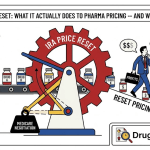
The Inflation Reduction Act’s Drug Price Negotiation Program (DPNP) targets drugs covered under Medicare Part B and Part D that lack generic or biosimilar competition and have been on the market for at least seven years (small molecules) or eleven years (biologics). CMS announced negotiated maximum fair prices for the first ten selected drugs in August 2024, with those prices taking effect January 1, 2026. A second cohort of fifteen drugs — all small molecules, per the DPNP’s selection methodology — was identified in January 2025 for the 2027 price applicability year.
The practical impact on US revenue modeling is substantial. For a small-molecule drug generating $3B annually in Medicare-covered indications, the negotiated maximum fair price could reduce net revenue by 25–65% depending on the drug’s current discount-to-list structure and the ceiling price outcome. CMS’s maximum fair price formula sets a ceiling as a percentage discount from non-federal average manufacturer price: 75% for drugs with seven to eleven years on market, 65% for twelve to fifteen years, and 40% for sixteen or more years. The biologic timeline is more generous, but the directional pressure is the same — the US ceiling is moving down.
Layered on top of DPNP is the May 2025 Most-Favored-Nation executive order, which directs HHS to align US drug prices with the lowest prices in a peer reference basket of high-income nations. If implemented at scale — currently contested through multiple legal challenges — MFN pricing would effectively import the reference pricing norms of Germany, Japan, Canada, and the UK directly into the US market structure. The implications for US-dependent revenue models are severe: the pricing arbitrage that made the US irreplaceable in blockbuster arithmetic would compress toward zero.
Key Takeaways — Section 02
Humira’s 83% US revenue concentration in 2021 represents the extreme end of US dependency — a structure that became catastrophic once biosimilar entry in the US finally arrived in January 2023.
The IRA’s DPNP introduces a hard ceiling on US net revenue for high-volume Medicare drugs, with negotiated maximum fair prices taking effect from 2026. Small molecules face the tightest timeline, eligible for negotiation after seven years versus eleven for biologics.
The 9-vs-11 year timeline distinction in the IRA is already redirecting development investment toward biologics and away from small molecules — a structural shift with decade-long pipeline consequences.
The MFN executive order, if fully implemented, would eliminate the pricing gap between the US and peer nations — effectively removing the core assumption behind US-centric blockbuster economics.
Section 03
IRA and MFN Pricing: Reading the Policy Shift as a Portfolio Signal
Pharma executives have been litigating and lobbying against the IRA since it passed in August 2022, with AstraZeneca challenging the constitutionality of the negotiation provisions as recently as 2024. The 3rd US Circuit Court of Appeals upheld the program in May 2025, dismissing AstraZeneca’s challenge — a ruling with substantial precedential weight as other manufacturers pursue their own appeals. The courts have consistently characterized participation in Medicare as voluntary and the government’s negotiation authority as consonant with that structure. This interpretation has so far held across multiple district and appellate courts.
For portfolio managers and IP teams, the legal scorecard matters less than the portfolio strategy signal. The IRA’s 9-vs-11 year distinction between small molecules and biologics has already generated measurable behavioral change. Roughly 78% of biopharma companies surveyed by academic researchers in 2024 reported that the IRA had led them to consider canceling early-stage pipeline projects. Novartis has confirmed discontinuing several early-stage cancer candidates as no longer financially viable under IRA pricing assumptions. AstraZeneca has disclosed delayed cancer drug releases and broader reprioritization of small-molecule programs.
The investment community has absorbed this signal and is acting on it. Venture and growth equity investors report the IRA explicitly factored into deal valuations, exit modeling, and company raise assessments. Approximately 45–56% of institutional investors surveyed report it has already impacted deal values and companies’ ability to raise capital. The shift favors biologics and Part B drugs (physician-administered), which carry longer negotiation-eligibility timelines, and orphan drugs, which retain some IRA exemptions under provisions expanded by the July 2025 Working Families Tax Cuts Act.
Model the IRA maximum fair price ceiling into NPV calculations for any small-molecule asset projecting significant Medicare Part D revenue. The ceiling applies from year 7, not year 20 — a material compression of the effective exclusivity window.
Biologic programs with strong composition-of-matter patents have a structural advantage: 11-year eligibility threshold and typically Part B coverage means more years of unimpeded US pricing before DPNP selection risk materializes.
Orphan drug designations carry expanded IRA protections under the July 2025 amendment — a legitimate structural shelter worth examining for pipeline assets that can plausibly qualify on prevalence criteria.
MFN pricing risk is currently prospective, not realized, due to active legal challenges. Do not price it at 100% probability, but build sensitivity ranges into 10-year revenue models for any drug with large Medicare Part B exposure.
Drugs with strong ex-US revenue diversification carry lower IRA-related NPV discount because their revenue base is less dependent on the Medicare pricing mechanism. This makes geographic diversification a genuine financial hedge, not just a strategic preference.
Section 04
Humira: The $200 Billion Case Study in US-Centric Revenue Risk
Adalimumab (Humira) accumulated more than $200 billion in cumulative global sales between its 2002 FDA approval and the end of 2024 — the largest revenue total in pharmaceutical history for a single drug. The compound, a fully human monoclonal antibody targeting tumor necrosis factor-alpha (TNF-alpha), earned approvals across rheumatoid arthritis, psoriatic arthritis, ankylosing spondylitis, Crohn’s disease, ulcerative colitis, and plaque psoriasis, among others. Its multi-indication architecture was genuine commercial breadth — but the revenue distribution told a more concentrated story.
From 2015 onward, US net revenues consistently represented 80%+ of global Humira sales. AbbVie’s ability to maintain that concentration depended on a patent estate that IQVIA and academic researchers have characterized as one of the most elaborate secondary patent accumulations in biologic history — formulation patents, manufacturing process claims, and method-of-use patents layered after the core composition-of-matter patents expired. The strategy functioned as intended in the US, where each patent layer required independent Paragraph IV certification and 30-month stay litigation. Outside the US, particularly in Europe, that strategy did not hold. The European Patent Office’s treatment of secondary pharmaceutical patents is structurally more skeptical, and the UK and German courts showed limited tolerance for formulation patents that lacked genuine inventive step beyond the reference biologic.
The European Biosimilar Erosion Timeline: 2018–2021
Adalimumab biosimilars launched in Europe starting in October 2018, led by Amgen’s Amjevita and Samsung Bioepis’ Imraldi. European net revenues for Humira declined 9.6% on a reported basis in 2021 — a figure that likely understated volume-based erosion because AbbVie’s own rebate concessions were obscuring gross-to-net dynamics. By the time US biosimilar entry finally arrived in January 2023 with Amgen’s Amjevita — following AbbVie’s settlement with multiple biosimilar manufacturers, which included paid-entry dates — AbbVie had already spent five years watching its ex-US business erode.
The US biosimilar entry story for adalimumab proved far more complex than most analysts anticipated. Despite ten biosimilars entering the market through 2023, Humira maintained approximately 97% of total adalimumab volume share by year-end 2023. The explanation was not clinical inertia — it was rebate architecture. AbbVie had pre-negotiated formulary exclusivity agreements with major pharmacy benefit managers that effectively priced biosimilars out of preferred tier placement, even when their WAC was 85% below Humira’s. CVS Caremark’s April 2024 removal of Humira from its national commercial formularies in favor of biosimilars was the inflection point that analysts had been waiting for. In the weeks following that formulary change, new prescriptions for Hyrimoz (adalimumab-adaz, Sandoz) jumped from 640 to 8,300 in a single week.
By Q4 2023, global Humira net revenues fell 40.8% year-over-year to $3.3B, with US revenues down 45.3% to $2.7B. AbbVie had absorbed the erosion it had delayed for five years — all at once, in a single quarter. The formula for deferral ran out.AbbVie Form 8-K, Q4 2023
Humira’s IP Valuation: What the Patent Estate Was Actually Worth
IP Valuation Profile — Adalimumab (Humira) / AbbVie
Core Asset Architecture
AbbVie’s adalimumab patent estate comprised the original Cambridge Antibody Technology composition-of-matter patents licensed from BASF (later acquired by Abbott, then AbbVie through the 2013 spin-off), augmented by over 100 US-specific secondary patents. The estate’s IP value derived from three layers: first, the composition-of-matter claims covering the fully human anti-TNF-alpha antibody itself; second, formulation patents covering the citrate-free, high-concentration subcutaneous formulation (the Humira Pen), which were clinically meaningful from a patient convenience standpoint and legally defensible in the US; and third, method-of-use patents covering specific dosing regimens and combination therapies across individual indications.
The aggregate value of this IP architecture, measured as the revenue delta between actual Humira US revenues from 2018 through 2022 versus what revenues would have been under biosimilar competition during that period, is conservatively estimated at $80–100 billion in net present value terms — the difference between the European erosion trajectory, which began in October 2018, and the US protection, which held until January 2023. That NPV was the measurable worth of the secondary patent estate. The composition-of-matter patent alone would have expired far earlier and generated a fraction of that value.
For IP teams evaluating biologic assets, Humira’s architecture demonstrates that the financial return on secondary patent strategy can exceed the return on the original compound patent by a factor of two to three — and that this value is jurisdiction-specific. The US patent thicket provided protection that European patent law would not replicate. Any cross-jurisdictional IP valuation model must account for the structural differences in secondary patent enforceability across the EMA and FDA regulatory environments.
Key Takeaways — Section 04
Humira’s European biosimilar erosion predated US entry by five years, demonstrating that ex-US markets offer earlier competitive exposure — and that global revenue models must account for asynchronous patent cliffs across jurisdictions.
AbbVie’s US market defense succeeded through PBM rebate contracting, not clinical differentiation. When CVS Caremark disrupted that contracting in April 2024, erosion accelerated sharply — biosimilar biosimilar interchangeability designations (Cyltezo and others) provided the clinical equivalence foundation for formulary substitution.
The secondary patent estate’s financial value — estimated at $80–100B in US revenue protection from 2018–2022 — illustrates why IP valuation must be modeled as jurisdiction-specific NPV, not a single global figure.
Humira’s terminal state reinforces the fundamental risk of US revenue concentration: when the defense fails, the revenue shock is total and rapid, with no ex-US base large enough to cushion the impact.
Section 05
Keytruda: What a Genuinely Global Blockbuster Actually Looks Like
Pembrolizumab (Keytruda, Merck/MSD) reached $29.5 billion in global net sales in 2024 — an 18% increase year-over-year, or 22% excluding foreign exchange impact. It is the best-selling drug in the world by annual revenue, surpassing Humira’s peak and showing no near-term sales plateau despite patent cliffs looming in the late 2020s. Keytruda accounted for approximately 46% of Merck’s total 2024 revenue of $64.2 billion, a concentration that makes it simultaneously the company’s greatest asset and its greatest single-asset risk.
What distinguishes Keytruda from the Humira model commercially is not primarily its mechanism — PD-1 checkpoint inhibition is well understood and BMS’s nivolumab (Opdivo) competes directly. The distinction is indication breadth and the speed with which Merck has accumulated regulatory approvals globally. With over 40 approved indications across 17 tumor types, Keytruda has created a multi-geography, multi-indication revenue architecture that distributes clinical and commercial risk in a way that single-indication biologics cannot match. International growth in Q2 2024 was driven by increased uptake in high-risk early-stage triple-negative breast cancer and expanded metastatic indications — markets with meaningful patient populations across Europe, Asia, and Latin America.
Keytruda’s Ex-US Revenue Profile and Geographic Diversification
Merck does not break out Keytruda revenues by region with full granularity in its standard earnings releases, but the directional picture is clear from company commentary. Outside the US, Keytruda growth in 2024 was described as driven by earlier-stage cancer indications — a deliberate indication sequencing strategy that opens volume in markets where adjuvant and neoadjuvant approvals expand the eligible patient population beyond the metastatic setting. In markets with centralized HTA reimbursement — Germany’s AMNOG process, France’s HAS evaluation, NICE in the UK — earlier-stage indications sometimes carry stronger cost-effectiveness arguments because the survival benefit is measured against a curative-intent treatment backdrop rather than a palliative one.
Merck’s China exposure tells a more complicated story. Total Merck pharmaceutical revenue from China fell 20% in 2024 to $5.4 billion, representing 9.4% of global pharmaceutical sales. The decline reflected both Gardasil demand deterioration in that market and broader pricing pressure from China’s National Reimbursement Drug List (NRDL) negotiations, which routinely require manufacturers to accept price reductions of 50–80% to secure volume-based reimbursement. Keytruda faces the same NRDL dynamic — a tension between volume access and revenue per unit that affects every oncology manufacturer operating in China at scale.
Drug
2024 Global Revenue
Est. US Share
Key Ex-US Markets
Primary IP Risk
Keytruda (pembrolizumab)
$29.5B
~60–65%
EU, Japan, China, LatAm
US/EU patent cliff 2028
Humira (adalimumab)
~$9B est.
~85% at peak; now lower
EU (biosimilar eroded), Japan
US biosimilar entry 2023; PBM formulary erosion 2024
Ozempic/Wegovy (semaglutide)
$40.3B (NVO total)
~55%
EU, Canada, Australia, Japan
Manufacturing capacity; Lilly GLP-1 competition
Lipitor (atorvastatin)
Peak $13B+ (2006); post-generic, China-driven
<5% post-generic entry
China (continued branded presence)
Generic entry 2011; US exclusivity fully expired
Keytruda’s IP Valuation and the 2028 Patent Cliff Problem
IP Valuation Profile — Pembrolizumab (Keytruda) / Merck
Core Patent Architecture and Cliff Timeline
Keytruda’s core composition-of-matter patents begin expiring in 2028 in the US and EU, triggering what Merck’s CFO Caroline Litchfield has described publicly as an anticipated revenue inflection. Merck’s response has been multi-layered. First, the company is developing a subcutaneous formulation of pembrolizumab, which would create both a new dosing convenience patent estate and a clinical differentiation argument relative to IV biosimilar competitors — a classic formulation-based evergreening strategy. Second, Merck has been aggressively expanding earlier-stage indications, including neoadjuvant and adjuvant settings in multiple tumor types, to deepen physician-patient relationships in settings where treatment is initiated and continued over years rather than months. Third, MK-6070 and other next-generation checkpoint combinations in Merck’s oncology pipeline are designed to cannibalize Keytruda revenue internally rather than ceding it to biosimilar competitors.
The IP valuation framework for Keytruda differs from Humira’s because the reference product’s mechanism — PD-1 blockade — is inherently more technically complex to replicate with full interchangeability. The manufacturing process for monoclonal antibody checkpoint inhibitors involves proprietary cell lines, fermentation protocols, and purification processes that create additional IP layers beyond the sequence patents. Post-2028, Keytruda biosimilar manufacturers will face not only the technical manufacturing challenge but also the regulatory requirement to demonstrate pharmacokinetic equivalence, immunogenicity equivalence, and in many jurisdictions, clinical equivalence data in at least one indication. The combination of manufacturing complexity and clinical bridging requirements historically extends the effective exclusivity window for complex biologics by 18–36 months beyond the nominal patent expiry date.
For IP teams valuing the Keytruda franchise, the 2028 cliff is not a binary event — it is a 3–5 year erosion curve shaped by the speed of biosimilar manufacturer readiness, the robustness of formulation and combination therapy patent defenses, and Merck’s success in repositioning the commercial franchise around next-generation indications and the subcutaneous formulation.
Key Takeaways — Section 05
Keytruda’s $29.5B in 2024 revenue is genuinely global — international sales growth was driven by earlier-stage indications in EU oncology markets, not solely by US pricing power.
China’s NRDL negotiation dynamic imposes 50–80% price reductions for reimbursed oncology drugs. Volume access at low unit economics is fundamentally different from premium pricing in a low-volume market — both the revenue model and the market access strategy must reflect this.
Merck’s subcutaneous formulation development is a standard evergreening strategy, but its commercial logic is sound: it creates a new dosing convenience patent and a clinical reason for physicians to prefer the branded product over IV biosimilar competitors post-2028.
The 2028 Keytruda patent cliff is the single most consequential IP event in the pharmaceutical calendar for the next three years. Its trajectory will test whether multi-indication depth and formulation switching can slow erosion the way AbbVie’s PBM rebate strategy did for Humira — under structurally different market conditions.
Section 06
IP Valuation as Core Portfolio Asset — The Analytical Framework
Pharmaceutical IP valuation in the post-IRA, post-biosimilar-expansion environment requires a more granular multi-jurisdictional model than most internal portfolio teams apply. The standard discounted cash flow approach to IP valuation typically applies a single revenue curve, a single probability of technical success factor, and a single generic/biosimilar entry assumption at patent expiry. That approach misses the three most important variables in modern pharma IP: jurisdiction-specific patent enforceability, asynchronous competitive entry across markets, and HTA reimbursement probability by market, which can be as low as 30% in some UK NICE or French HAS processes for drugs without robust cost-effectiveness data.
The Five-Layer IP Valuation Stack for Biologics
A complete IP valuation model for a biologic asset should account for five distinct patent layers, each with independent validity risk, jurisdiction-specific enforceability, and expiry timeline. The composition-of-matter patent covering the primary sequence or structure of the active molecule is the foundational layer — typically the longest-lasting and most legally defensible, but also the first to expire and the first to be challenged. Formulation patents covering delivery mechanisms, concentrations, excipients, or device design create the second layer. Process and manufacturing patents covering cell line selection, fermentation parameters, or purification steps are the third and often the most durable in practice, because they are difficult for biosimilar manufacturers to independently replicate and challenging to challenge because process details are often trade secrets. Method-of-use patents covering specific dosing regimens, combination therapies, or biomarker-defined patient populations are the fourth layer. Regulatory data exclusivity — a non-patent protection granted by statute for new biological entities — provides the fifth and often least recognized layer of protection.
In the US, biologics receive 12 years of reference product exclusivity (RPE) under the Biologics Price Competition and Innovation Act, regardless of patent status. In the EU, the reference period is 8 years of data exclusivity plus 2 years of market exclusivity. Japan grants 8 years for new biologics. These RPE periods often determine when biosimilar manufacturers can file applications, irrespective of what the patent landscape looks like — meaning IP valuation must account for the statutory exclusivity clock independently from the patent expiry clock.
Jurisdiction-Specific Patent Enforceability: Why Geography Changes the Valuation
US courts have historically been the most biologic originator-friendly in patent enforcement, with the Hatch-Waxman 30-month stay mechanism providing immediate injunctive-equivalent protection upon Paragraph IV filing. The Biologics Price Competition and Innovation Act (BPCIA) created an analogous ‘patent dance’ process for biosimilars, though its enforcement has been less predictable than Hatch-Waxman’s small-molecule analog. European patent litigation occurs at the national court level — there is no unified EU patent court for biologics at the scale or speed of US district court proceedings. UK, German, and Dutch courts have been the primary venues for biosimilar patent challenges in Europe, and their treatment of secondary pharmaceutical patents has been markedly less favorable to originators. The EPO’s Opposition Division and Boards of Appeal have revoked or substantially amended numerous Humira-related secondary patents.
For Japanese assets, the Japan Patent Office’s examination and enforcement standards are more rigorous in their novelty and inventive step requirements for secondary pharmaceutical patents, creating shorter effective exclusivity windows for formulation and method-of-use claims. China’s patent landscape is evolving rapidly under the 2021 Patent Law amendments, which introduced a patent linkage system modeled loosely on Hatch-Waxman. The Chinese patent linkage system provides 9 months of technical review protection after a biosimilar applicant discloses its patent challenge list — far shorter than the US 30-month stay — but the trend is toward stronger IP enforcement as China’s domestic innovative pharma sector matures and advocates for reciprocal protection.
Apply jurisdiction-specific probability weights to each patent layer in any cross-border IP valuation. A formulation patent with 95% US enforceability probability may carry only 40–60% enforceability probability in Germany or the UK based on EPO revocation track record for similar claims.
Regulatory data exclusivity (RPE) is often the most neglected high-value IP asset in biologic valuation. A 12-year US RPE that has not yet expired is worth more than an equivalent patent because it cannot be challenged through inter partes review or patent litigation — only through statutory processes.
Model biosimilar entry probability by market, not as a global event. Humira demonstrated five-year asynchronous entry (2018 EU vs. 2023 US). Build market-by-market entry curves with independent competitive timing assumptions for assets with complex patent landscapes.
Patent thicket strategies generate US-specific NPV — they provide minimal protection in markets where secondary patents face higher invalidity risk. The NPV of secondary patents should be jurisdiction-weighted, not applied globally at US-level assumptions.
Section 07
Market-by-Market Revenue Analysis — Where the Ex-US Blockbuster Revenue Lives
Europe: The $285B Market With Centralized Approval and Fragmented Pricing
The European pharmaceutical market reached $285.35 billion in 2023 and projects to $496.74 billion by 2033 at a CAGR of 5.7%. For originator manufacturers, the appeal of Europe is the European Medicines Agency’s centralized approval pathway: a single EMA authorization grants market access across all 27 EU member states plus Norway, Iceland, and Liechtenstein. The operational cost of that breadth is the pricing fragmentation that follows approval, because every member state negotiates reimbursement independently, typically through a combination of internal reference pricing and domestic HTA evaluation.
Germany remains the single most important European market for new launches because it has no initial HTA requirement for market entry — AMNOG’s benefit assessment applies in year two of market presence, and reimbursement at premium pricing is automatic during the first twelve months. A German launch establishes a price anchor that feeds into multiple European reference pricing systems, making German launch sequencing a strategic imperative for any drug seeking to maximize ex-US European revenue. France, by contrast, requires HAS evaluation for reimbursement before meaningful volume can develop, and the Comité Economique des Produits de Santé (CEPS) negotiates net prices with significant transparency requirements.
The five-country EU aggregate (Germany, France, Italy, Spain, UK) accounts for approximately 75% of total European pharmaceutical revenues despite representing well under half of the continent’s patient population, because pricing in Southern and Eastern Europe is substantially lower and often directly referenced from the major markets. A drug achieving blockbuster status in Western Europe must typically clear four or more HTA processes with positive reimbursement recommendations — achieving that across Germany, France, England/Wales, and at least one of Sweden or the Netherlands provides a plausible $2–4B ex-US European revenue trajectory for drugs addressing high-prevalence chronic conditions.
Japan: The Third Market You Cannot Ignore
Japan’s pharmaceutical market reached $82.27 billion in 2024, projected to $101.90 billion by 2033 at a CAGR of 2.57%. Slow aggregate growth masks a structurally attractive environment: universal health insurance coverage through the National Health Insurance (NHI) system, a sophisticated prescribing base, and regulatory alignment with FDA and EMA through the Pharmaceuticals and Medical Devices Agency (PMDA). Japan’s biennial drug price revision under the NHI applies mandatory price reductions to drugs based on market expansion criteria — a mechanism that erodes originator margins over time but does not eliminate profitability for genuinely innovative drugs with strong clinical profiles.
The SAKIGAKE designation — Japan’s priority review pathway for drugs addressing diseases without adequate treatment options or for drugs with innovative mechanisms — provides accelerated PMDA review targeting 6 months from application versus the standard 12 months. It also generates early patient access before full global approval in some cases. For drugs with high unmet medical need, SAKIGAKE designation both accelerates Japanese revenue timing and signals clinical value to European and US payer audiences. Merck’s oncology franchise, including Keytruda, has used the PMDA pathway deliberately to build a Japanese oncology presence that contributes meaningfully to global revenues.
China: The Volume Opportunity With a Net Price Problem
China’s pharmaceutical market is the second-largest in the world by volume and growing rapidly, but its revenue contribution to branded pharmaceutical manufacturers is structurally constrained by the National Reimbursement Drug List negotiation process. NRDL negotiations, conducted annually since 2018, have secured average price reductions of 50–80% from manufacturers seeking reimbursed volume. Immunotherapy drugs including PD-1 and PD-L1 inhibitors have faced this pressure directly — Keytruda entered the NRDL with substantial discounts from its ex-China price, and local PD-1 inhibitors from Junshi Biosciences, BeiGene, and others have created a domestic competitive environment that further pressures pricing.
The cautionary tale of Gardasil in China is instructive. Merck’s total China pharmaceutical revenue fell 20% in 2024 to $5.4 billion, driven partly by Gardasil demand collapse as vaccination campaigns slowed and public confidence concerns emerged. A drug generating meaningful China revenue in year three of NRDL inclusion can see that revenue collapse with speed and severity that has no direct parallel in Western markets. The idiosyncrasy of Chinese healthcare policy — centralized purchasing through the National Healthcare Security Administration, volume-based procurement mechanisms beyond NRDL, and provincial variation in implementation — creates revenue uncertainty that demands conservatism in long-range forecasting.
The Lipitor post-patent China story remains the most compelling proof of concept for branded pharmaceutical persistence after patent expiry. Pfizer’s atorvastatin continued generating significant China revenues years after US and European patent expiration because the branded product retained physician and patient trust in a market where generic quality confidence was lower. That dynamic is dissipating as China’s generic quality certification system matures and domestic manufacturers achieve WHO-prequalified manufacturing standards — but for premium-positioned biologics with complex manufacturing profiles, a version of that branded premium may persist longer than Western market dynamics would predict.
Emerging Markets: Brazil, India, MENA, and Sub-Saharan Africa
Latin America’s pharmaceutical market is led by Brazil, which has a sophisticated regulatory agency (ANVISA), tiered HTA processes, and a public health system (SUS) that increasingly incorporates innovative drugs through CONITEC cost-effectiveness evaluation. Brazil’s patent linkage system, implemented through ANVISA’s prior consent requirement for pharmaceutical patent validity before generic approval, creates some originator protection — though the process has been contentious and litigation-heavy. For drugs addressing infectious disease, oncology, and chronic conditions prevalent in the Brazilian population, peak ex-US revenues of $300–500 million are achievable over a product’s lifetime, though pricing at 20–40% of US list is a realistic assumption.
India’s pharmaceutical market is characterized by low per-capita pharmaceutical spending, strong generic manufacturing infrastructure, and compulsory licensing provisions under TRIPS that the government has occasionally deployed. For originator biologics, India represents a future volume opportunity as household incomes rise and health insurance penetration increases — but the current revenue contribution for premium-priced biologics is minimal. Sub-Saharan Africa and MENA markets present similar structural dynamics: large patient populations, rising chronic disease burden, and infrastructure development that is gradually expanding access to sophisticated therapies, but at price points that make meaningful revenue contribution to a $1B revenue threshold a 15–20 year proposition at realistic market penetration rates.
Key Takeaways — Section 07
Germany is the most important European launch market for originator drugs: no initial HTA requirement, automatic reimbursement for 12 months, and a price anchor that feeds European reference pricing systems. Launch sequencing starts in Germany.
Japan’s SAKIGAKE designation provides accelerated 6-month PMDA review for high-unmet-need drugs — a pathway that advances revenue timing and signals clinical value to global payer audiences simultaneously.
China’s NRDL negotiation extracts 50–80% price reductions for reimbursed access. The revenue model is volume-based at low unit economics — a fundamentally different commercial logic than premium-priced US or European markets.
Emerging markets (Brazil, India, MENA) are long-range revenue opportunities, not near-term blockbuster contributors. Revenue model conservatism at 20–40% of US list prices and 10–15 year time horizons is appropriate for South-South market projections.
Section 08
Biosimilar Competition and Biosimilar Interchangeability — The Ex-US Accelerant
Biosimilar competition reaches ex-US markets earlier and with greater payer support than US markets — a structural asymmetry that is a primary driver of the revenue concentration problem for US-centric blockbusters. The European biosimilar market is the most mature globally, with over 80 biosimilar products approved by the EMA as of 2024 across therapeutic categories including colony-stimulating factors, erythropoietins, TNF-alpha inhibitors, and growth hormones. European hospital formulary switching to biosimilars is largely institutionalized in high-volume settings, with tender-based procurement systems in Nordic markets and Italy driving biosimilar adoption to 70–90% of new patient starts in biosimilar-eligible categories.
In the US, the biosimilar adoption story has been slower and more contractually mediated. The Humira biosimilar experience — where ten biosimilars were approved and on market by end of 2023 but Humira retained 97% of adalimumab volume — illustrated the structural barriers: PBM formulary control, manufacturer rebate leverage, and physician inertia in switching stable patients. The FDA’s biosimilar interchangeability designation — which allows pharmacists to substitute a biosimilar for the reference product at the point of dispensing without physician authorization — is the mechanism most likely to accelerate US biosimilar adoption. Cyltezo (adalimumab-adbm, Boehringer Ingelheim) holds interchangeability for Humira; interchangeability requires additional pharmacokinetic bridging studies demonstrating that switching back and forth between reference and biosimilar does not increase safety or immunogenicity risk.
Biosimilar Interchangeability: The Regulatory Pathway and Its Commercial Implications
The FDA’s interchangeability standard under the BPCIA requires a manufacturer to demonstrate that the biological product can be expected to produce the same clinical result as the reference product in any given patient, and that the risk from alternating or switching between products is not greater than the risk of using the reference product without switching. This evidentiary standard is significantly higher than the biosimilar approval standard alone, which requires analytical, preclinical, and clinical data demonstrating no clinically meaningful differences from the reference product. The result is that interchangeability-designated biosimilars are the subset of biosimilars with the clearest regulatory pathway to pharmacy-level substitution — and therefore the most direct threat to originator volume under automatic substitution laws.
As of 2025, multiple adalimumab biosimilars hold FDA interchangeability designations. The commercial impact of those designations has been limited by formulary architecture and PBM behavior — but the CVS Caremark formulary exclusion of Humira in April 2024 showed what happens when a major PBM decides to exercise the substitution pathway fully. For any drug with expiring US patents and a biosimilar pipeline developing in parallel, the interchangeability designation timeline is a key variable in competitive entry modeling. A biosimilar that achieves interchangeability at launch is a categorically different competitive threat than one that requires physician authorization for every substitution.
FDA/EMA approval; US 12-year RPE clock starts; EU 8+2 year clock starts
Y+8
EU Biosimilar Filing Window Opens
EU data exclusivity expires; biosimilar applicants can file with EMA; approval typically 12–18 months post-filing
Y+10
EU Market Exclusivity Expires / First EU Biosimilar Entry
EU market exclusivity (the +2 years) expires; first biosimilars commercially launch; hospital tender competition begins immediately in Nordic and Mediterranean markets
Y+11
US Biosimilar Filing Window Opens
US RPE expires; biosimilar applicants can file 351(k) BLA; FDA review targeting 12 months; BPCIA ‘patent dance’ triggers within 20 days of FDA acceptance
Y+12–14
US Biosimilar Approval and Potential Launch
First US biosimilar approval; litigation settlement or court ruling determines actual launch date; 30-month stay from Paragraph IV filing may extend exclusivity further
EU biosimilar adoption in hospital tender markets reaches 70–90% of new patient starts within 12–24 months of first biosimilar launch — meaningfully faster than US adoption, which has been constrained by PBM rebate architecture.
FDA interchangeability designation is the key US biosimilar commercial catalyst: it enables pharmacist-level substitution under state automatic substitution laws, removing the physician authorization bottleneck that slowed Humira biosimilar adoption.
The BPCIA ‘patent dance’ timeline means the first US biosimilar approval does not necessarily mean immediate market entry. Settlement agreements with paid-entry dates — the mechanism AbbVie used with Humira biosimilar manufacturers — can extend US exclusivity by years beyond the RPE expiry.
For drugs where EU biosimilar entry precedes US biosimilar entry by 3–5 years, a US-heavy revenue model does not capture the sustained ex-US erosion that is already running before US competition even starts.
Section 09
Evergreening Roadmap for Biologics — The Tactics, the Timelines, and the IP Logic
Evergreening — the practice of extending commercial exclusivity beyond the original patent term through new IP filings, regulatory strategies, or product lifecycle modifications — is the single most contested topic in pharmaceutical patent strategy. Critics characterize it as a mechanism for blocking competition without genuine innovation. Manufacturers characterize the secondary innovations as real improvements in drug delivery, patient adherence, or clinical utility. Both characterizations contain elements of truth, and the legal enforceability of evergreening strategies varies substantially by jurisdiction. What follows is a technically accurate roadmap of the available mechanisms for biologic assets.
Formulation Patent Strategy
The most common evergreening pathway for biologics is the development and patenting of improved formulations. For a monoclonal antibody delivered by subcutaneous injection, the relevant formulation parameters include protein concentration (higher concentration enables smaller injection volume), excipient composition (citrate-free formulations reduce injection site pain), device design (auto-injector versus prefilled syringe), and lyophilized versus liquid presentation. Each of these parameters can, if genuinely novel and non-obvious, support a valid patent claim. Humira’s citrate-free high-concentration formulation patent was the most commercially important secondary patent in the adalimumab estate — not because it extended US exclusivity (it was part of the broader thicket strategy), but because it provided a clinically meaningful differentiation argument that physicians found credible.
Merck’s subcutaneous pembrolizumab development follows identical logic. An approved subcutaneous Keytruda formulation would create new formulation patents, reduce infusion-related costs and time burden for patients, and give prescribers a clinical reason to prefer the branded formulation over an IV biosimilar competitor post-2028. The development program is real and the regulatory pathway through FDA and EMA for a subcutaneous biologic formulation is well established. The IP value of a successful subcutaneous formulation approval — measured as the revenue from patients retained on the branded product who would otherwise have switched to IV biosimilar — is potentially worth $3–6B in NPV over a five-year protection period, depending on adoption rates and biosimilar pricing.
Indication Expansion Strategy
Method-of-use patents covering new indications provide protection only in markets where the expanded indication drives meaningful new prescribing — they do not typically block biosimilar entry in the original indication. But indication expansion has a powerful indirect commercial function: it deepens the prescriber base, creates new patient populations in markets where the drug may not have been previously reimbursed, and extends the period during which the originator has clinical trial data that biosimilar manufacturers cannot match. A Keytruda Phase III trial in a new early-stage cancer indication generates data that takes 5–8 years to produce. Biosimilar manufacturers compete on the reference product’s approved indications, not on new indications where only the originator has completed registrational trials.
Companion Diagnostic IP
The companion diagnostic requirement for pembrolizumab’s PD-L1 expression testing creates an additional layer of IP through the diagnostic assay patent estate, shared with partners including Dako (now Agilent) and Merck’s own diagnostic affiliates. A physician who selects Keytruda for a PD-L1-high patient has implicitly entered an ecosystem of companion diagnostic infrastructure — testing protocols, laboratory platforms, and clinical decision support tools — that is difficult for a biosimilar manufacturer to replicate at launch without their own diagnostics infrastructure. This ecosystem IP, while not patented in the traditional sense, creates a structural switching barrier that slows biosimilar adoption even in the absence of formal evergreening claims.
Key Takeaways — Section 09
Subcutaneous formulation development for IV-administered biologics is the most commercially valuable evergreening strategy available for Keytruda and similar checkpoint inhibitors facing the 2028 patent cliff.
Indication expansion method-of-use patents do not block biosimilar competition in existing indications, but the clinical trial data generated for new indications creates a prescriber-confidence asymmetry that slows biosimilar uptake for years beyond the nominal patent expiry.
Companion diagnostic ecosystems create structural switching barriers that are difficult for biosimilar manufacturers to replicate at launch. This ecosystem IP is an underappreciated component of biologic IP valuation.
The enforceability of formulation and method-of-use evergreening patents is jurisdiction-dependent. EPO validity rates for secondary pharmaceutical patents have been significantly lower than USPTO grant rates for comparable claims — any IP valuation must model this differential explicitly.
Section 10
The Distributed Blockbuster Model — Portfolio Architecture for the Precision Medicine Era
The single-compound, single-indication blockbuster is a commercial archetype that is becoming less common in the pipeline, though it remains achievable in certain therapeutic categories. The precision medicine era has produced a fundamentally different commercial architecture: a collection of related drugs or related indications for a single drug that collectively generates blockbuster-level revenue, where no single component may exceed $800 million annually but the aggregate portfolio crosses the $1B threshold with structural resilience that no single-indication drug can match.
The distributed blockbuster model reduces dependence on any single market, because different portfolio components may find their strongest markets in different geographies based on epidemiological, genetic, or healthcare system characteristics. A PD-1 inhibitor approved in five tumor types generates revenue across all five indication channels in all markets where it achieves reimbursement — but the revenue mix differs by market. A BRCA-mutated breast cancer indication may drive the strongest Japanese revenues, where BRCA screening penetration is high and breast cancer incidence in younger women is clinically significant. A PD-L1-high non-small cell lung cancer indication may drive the strongest European revenues, where first-line reimbursement has been secured across the major HTA systems. An adjuvant colorectal cancer indication may drive the strongest emerging market revenues, where colorectal cancer has high incidence but metastatic indications have limited reimbursement.
The Genome-Based Revenue Segmentation Model
The most technically advanced form of distributed blockbuster architecture uses genomic or biomarker segmentation to define commercially distinct patient populations within a single cancer type. A drug approved for EGFR-mutated NSCLC in first-line, KRAS G12C-mutated NSCLC in second-line, and HER2-amplified NSCLC in any line is commercially three separate products from a market access perspective — each with independent payer negotiations, independent prescriber education requirements, and independent competitive dynamics. Separately, each indication generates $200–500 million annually in a major market. Collectively, in a single patient population with high genomic testing penetration, they can aggregate toward $2B annually from NSCLC alone.
This architecture is not purely theoretical. AstraZeneca’s oncology portfolio in lung cancer — spanning osimertinib (Tagrisso) for EGFR-mutated disease, savolitinib combinations, and early-stage adjuvant data — represents a deliberate strategy of owning the oncogenic driver landscape within a single tumor type. Each indication has independent market access, independent HTA submission, and independent patent estate. The aggregate NSCLC revenue is a distributed blockbuster even if individual indications are not individually at the $1B threshold in all markets.
Key Takeaways — Section 10
The distributed blockbuster model aggregates revenue across multiple biomarker-defined populations, multiple indications, and multiple geographies — creating commercial resilience that a single-indication drug cannot achieve.
Genome-based revenue segmentation within a single tumor type (EGFR, KRAS G12C, HER2, etc.) creates commercially independent patient populations each requiring independent market access strategy, HTA submission, and patent protection.
AstraZeneca’s NSCLC franchise architecture demonstrates the distributed model in practice: no single Tagrisso indication globally is a blockbuster, but the aggregate NSCLC franchise generates multi-billion revenues through indication stacking.
For companies lacking US market dominance, the distributed blockbuster model offers a viable alternative path to $1B+ aggregate revenue — but requires investment in multiple parallel market access processes, multiple companion diagnostic platforms, and a regulatory team capable of managing simultaneous multi-market HTA submissions.
Section 11
Differential Pricing, HTA Navigation, and Market Access Architecture for Global Revenue
International market access is where commercial strategy meets political economy. Every major pharmaceutical market outside the US has a mechanism for connecting drug price to evidence of clinical value — whether through formal HTA evaluation (UK NICE, Germany AMNOG, France HAS, Canada CADTH, Australia PBAC), reference pricing to peer countries, or volume-based negotiation (China NRDL, EU joint clinical assessment pilot). Understanding these systems at a technical level is prerequisite to building a credible global revenue model for any drug seeking blockbuster status outside the US.
Germany’s AMNOG Process: The Price-Setting Anchor for Europe
Germany’s Arzneimittelmarktordnungsgesetz (AMNOG) process, in effect since January 2011, requires manufacturers to submit a benefit dossier to the Federal Joint Committee (G-BA) demonstrating added clinical benefit over the appropriate comparator within three months of market launch. The G-BA’s benefit assessment — rated on a six-point scale from ‘major added benefit’ to ‘no additional benefit proven’ — directly determines the price outcome in subsequent CEPS-equivalent negotiations with the Central Federal Association of Health Funds (GKV-Spitzenverband). Drugs with ‘major added benefit’ ratings retain near-free pricing; drugs with ‘no added benefit’ are reimbursed at the level of the appropriate comparator’s price.
The clinical comparator selection is the single most consequential analytical decision in an AMNOG submission. G-BA has full authority to set the appropriate comparator, and its choices have surprised manufacturers who assumed a standard of care that G-BA did not recognize. A drug demonstrating superiority over second-line platinum-based chemotherapy for a tumor type where G-BA considers first-line immunotherapy the appropriate comparator will receive a less favorable benefit assessment regardless of the drug’s absolute clinical performance. Early dialogue with G-BA through the Beratungsgesprach process — which can be conducted up to 36 months before anticipated approval — is essential for any drug expecting meaningful German revenue.
NICE’s Cost-Effectiveness Threshold: The £20K-£30K ICER Gateway
The National Institute for Health and Care Excellence (NICE) in England and Wales applies an incremental cost-effectiveness ratio (ICER) threshold of £20,000–£30,000 per quality-adjusted life year (QALY) for standard technology appraisals. For drugs addressing conditions with high severity or low treatment options, NICE’s Highly Specialised Technologies (HST) pathway applies a higher ICER threshold of up to £100,000 per QALY. Drugs that fail cost-effectiveness at the standard threshold have two primary options: accept NICE rejection with the associated prescribing restriction, or negotiate a commercial access agreement (CAA) — a confidential discount that brings the net price down to a QALY threshold-clearing level. The majority of cancer drugs achieving NICE positive recommendations in recent years have done so through CAAs, with confidential net prices substantially below list prices. Manufacturers who do not build CAA negotiating room into their UK pricing architecture at launch are systematically underestimating the market access cost of a NICE recommendation.
Reference Pricing Cascade: Why German Launch Price Matters Everywhere
Over 30 countries use external reference pricing (ERP) — setting their domestic drug price based on prices in a basket of reference countries. The composition of these reference baskets varies, but Germany, France, the UK, and Sweden appear in most major ERP systems across Central and Eastern Europe, Latin America, and parts of MENA. A manufacturer that secures a high German list price in the first twelve months of AMNOG launch (before the AMNOG negotiation reduces net pricing) has set a reference anchor that feeds into ERP calculations for countries that reference Germany at list price rather than net price. The gap between German list and net prices — which can be substantial after AMNOG negotiation — is often not reflected in ERP reference baskets that use published list prices. This creates a systematic revenue advantage for manufacturers who launch in Germany early and at high list price, and it means that parallel import risk from low-price reference countries flows in the opposite direction (from countries with low negotiated prices back toward high-price markets).
Build confidential access agreement (CAA) negotiating capacity into UK launch pricing from day one. The list price a drug launches at in the UK has minimal bearing on actual NICE reimbursement price — but sets a reference anchor for ERP-using countries that observe UK list prices.
German AMNOG dialogue (Beratungsgesprach) should begin 24–36 months before anticipated EMA approval. Comparator misalignment between manufacturer assumption and G-BA expectation is the most common cause of ‘no added benefit’ assessments — a finding that collapses European revenue projections by 40–60%.
For drugs with Chinese NRDL ambitions, model net revenue at 20–30% of ex-China price and volume projections at 3–5 years post-NRDL inclusion. The NRDL negotiation cycle is annual; price does not reset upward.
Japan biennial price revision applies mandatory reductions (typically 2–10% per cycle) to drugs that have exceeded volume thresholds in the prior period. Long-range Japan revenue models that do not account for revision cycles systematically overstate peak revenue by 15–25%.
Section 12
Investment Outlook and Portfolio Strategy for the Ex-US Blockbuster Era
The weight of evidence from Humira’s collapse, Keytruda’s global architecture, and the IRA’s structural pricing pressure points toward a clear strategic conclusion: the pure US-centric blockbuster model is not dead, but it is increasingly fragile as a standalone commercial strategy. Drugs that can achieve blockbuster status without US dominance are not unicorns — they are a growing category, and their characteristics can be identified and targeted in drug development and portfolio construction.
The drugs most likely to achieve genuine ex-US blockbuster status share a cluster of attributes. They address conditions with genuinely global epidemiological prevalence where the per-patient treatment duration is measured in years, not months. They carry clinical profiles strong enough to pass stringent HTA cost-effectiveness evaluations in Germany, the UK, and Japan without requiring confidential discounts that crater net price realization. They have manufacturing profiles complex enough that biosimilar entry does not immediately commoditize the market on approval. They are delivered through mechanisms — subcutaneous biologics, oral oncology drugs, gene therapies — where dosing convenience or administration setting creates physician and patient preference that outlasts the patent cliff.
GLP-1 receptor agonists currently represent the most compelling real-world test of the ex-US blockbuster model. Novo Nordisk’s semaglutide franchise (Ozempic/Wegovy) generated $40.3 billion in total revenue in 2024, with approximately 45% coming from markets outside the US. The addressable patient population for obesity and metabolic disease has global distribution, EU and UK reimbursement for cardiovascular benefit indications is expanding, and Japan has approved tirzepatide and semaglutide equivalents for type 2 diabetes. No single ex-US market is near the scale of the US for GLP-1 drugs — but the aggregate international base is large enough that, in a scenario where US pricing faces MFN compression or IRA DPNP selection, the Novo Nordisk and Lilly franchises have geographic diversification that Humira never possessed.
‘The global medicines market grew from approximately $1 trillion annually in 2013 to $1.5 trillion in 2022. That growth did not happen in the United States. It happened everywhere else — and it is accelerating.’DrugPatentWatch Global Revenue Analysis, 2026
The Strategic Framework: Five Criteria for Identifying Ex-US Blockbuster Candidates
For portfolio managers evaluating whether a pipeline asset can generate blockbuster-level revenues without US market dominance, five criteria provide the analytical framework. First, global indication breadth: conditions with worldwide prevalence allow revenue accumulation across multiple major markets simultaneously rather than sequentially, which is critical for reaching $1B without US concentration. Second, HTA passability: a drug that clears Germany’s AMNOG with major or considerable added benefit and passes NICE cost-effectiveness without requiring a CAA that reduces net price realization below sustainable levels has a genuine multi-market revenue trajectory. Third, manufacturing complexity: biologics and other complex molecules where biosimilar interchangeability requires 3–5 years of additional development work after reference product patent expiry retain pricing power longer in both US and ex-US markets. Fourth, delivery mechanism: drugs delivered via subcutaneous self-injection or oral administration outperform IV-administered drugs in most ex-US markets because they reduce healthcare system administration costs, which HTA bodies treat as a cost-offset that improves ICER calculations. Fifth, absence of IRA DPNP vulnerability: for drugs with significant anticipated Medicare volume, the DPNP selection timeline should be explicitly modeled and the revenue impact of maximum fair price scenarios incorporated into base-case projections, not treated as a downside case.
Weight ex-US revenue potential more heavily in early-stage asset valuation than standard US-centric models do. The IRA compression of US net pricing and the MFN executive order create a structural shift in the relative value of ex-US versus US revenue streams.
Assets with strong HTA passability profiles — defined as demonstrable superiority over standard of care on overall survival or quality-adjusted life years in populations relevant to European and Japanese HTA benchmarks — command materially higher acquisition multiples in the current deal environment.
GLP-1 receptor agonist franchise architecture is the current best example of a genuinely distributed global blockbuster: large addressable populations across all major markets, legitimate multi-indication expansion pathways, and a clinical evidence base that multiple HTA systems have found convincingly cost-effective.
Gene therapies and cell therapies face the most challenging ex-US market access environment: single-administration products with high upfront costs require outcomes-based payment frameworks that few ex-US payer systems have operationalized at scale. Revenue concentration in the US for these modalities is likely to persist for at least 5–8 more years even as the technology matures.
Biosimilar manufacturers with first-mover advantage in major ex-US markets — particularly hospital tender markets in the EU — can generate blockbuster-level revenues in the context of reference biologic patent cliffs. The ex-US biosimilar market is a commercial opportunity, not just a risk to originator valuations.
The Answer to the Question: Can Drugs Be Blockbusters Without the US?
Yes — conditionally, and with increasing frequency. The conditions are specific: genuine global indication breadth, HTA passability across at least the major European markets and Japan, manufacturing complexity that extends effective exclusivity beyond nominal patent expiry, and a clinical evidence profile strong enough to sustain premium pricing in markets where cost-effectiveness is formally evaluated. Drugs meeting these criteria can accumulate $1B+ in annual revenues from ex-US sources alone — not routinely, and not easily, but demonstrably.
The more actionable conclusion for the next five years is that the US-centric model is deteriorating in relative value at exactly the moment when the ex-US opportunity is expanding. The IRA’s DPNP sets price ceilings that did not exist before 2024. The MFN executive order, if upheld, imports international pricing norms into the US market. Biosimilar interchangeability designations are accelerating US competitive entry. Meanwhile, China’s pharmaceutical market is the second-largest in the world and growing, Japan’s aging population creates sustained demand for chronic disease therapies, and European HTA harmonization through the Joint Clinical Assessment regulation (which came into force January 2025) is creating a more unified — if rigorous — pathway to reimbursement across the EU.
The blockbuster model is not dead. It is relocating — geographically, therapeutically, and structurally. Companies that have spent the past two decades optimizing for US pricing power and US patent defense are now facing a market environment that rewards global clinical evidence generation, multi-HTA market access capability, and revenue diversification. The companies building those capabilities now will own the next generation of pharmaceutical blockbusters. The companies still modeling on 2015 US pricing assumptions will not.
Final Key Takeaways — Section 12
Drugs can reach blockbuster status without US revenue dominance — the conditions are global indication breadth, HTA passability, manufacturing complexity, and favorable delivery mechanism. These conditions are identifiable and modelable in early-stage asset valuation.
The IRA DPNP, MFN executive order, and biosimilar interchangeability acceleration collectively reduce the relative value of US-concentrated revenue streams — creating a structural incentive for geographic diversification that is new to the post-2022 environment.
EU Joint Clinical Assessment regulation (in force January 2025) creates a more unified EU market access pathway — still rigorous, but offering a single clinical review that feeds into national reimbursement processes across member states, reducing multi-HTA submission duplication.
GLP-1 franchise architecture (Novo Nordisk, Lilly) is the clearest current proof that genuine global commercial distribution is achievable: roughly 45% ex-US revenue share across a $40B+ annual franchise, with structural reasons to expect that international share to grow as obesity and metabolic disease treatment access expands globally.
Gene and cell therapy ex-US access remains severely constrained by lack of outcomes-based payment infrastructure in most non-US payer systems. US revenue concentration for these modalities is structural, not strategic — and will persist until payment framework innovation catches up with the clinical science.
Revenue figures cited are drawn from public company filings (Merck Q4 2024, AbbVie Form 8-K, Novo Nordisk FY2024), peer-reviewed literature (JAMA Health Forum, PMC, ScienceDirect), and market research (IMARC Group, Nova One Advisor, IQVIA). All IP valuation estimates represent analytical approximations based on publicly available data.
KEY SOURCES: Merck 2024 Annual Results (Feb 2025) | AbbVie 8-K FY2023 | JAMA Health Forum adalimumab biosimilar study (PMC11645644) | FDA BPCIA / IRA DPNP implementation guidance | EMA biosimilar framework | pharmaphorum IRA/MFN analysis | ITIF IRA innovation impact report (Feb 2025) | Oliver Wyman biosimilar contracting analysis | Spherix Global Insights adalimumab market tracking | BCG IRA strategic implications | DrugPatentWatch global revenue database