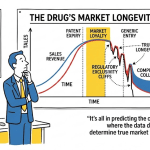
A pharmaceutical patent filed on Day 1 of discovery and a patent filed after Phase II data reads out are both 20-year instruments. The difference is what fraction of those 20 years a drug spends generating revenue rather than sitting in clinical development. That fraction, more than almost any other single variable, determines the total net present value of a drug asset.
The average drug takes 12 to 13 years to move from initial synthesis to FDA approval. File a composition-of-matter patent at the discovery stage, and you may arrive at market with only 7 to 8 years of effective exclusivity remaining. File a strategically timed secondary patent covering a specific polymorph, salt form, or optimized dosing regimen after Phase II proof-of-concept data, and you can reset that clock, sometimes dramatically. The top-selling U.S. drugs in 2017 averaged 38 years of combined exclusivity protection, a figure that reflects decades of deliberate IP layering rather than any single filing decision.
This article works through the mechanics, case law, drug-specific IP valuations, regulatory exposure, and investment implications of delayed patent filing with the precision the topic demands. It is not a primer on why patents matter. It is a practitioner’s guide to timing them.
Key Takeaways: Section 1
Delayed patent filing is not a workaround. It is a structurally rational response to the mismatch between a 20-year statutory clock that starts at filing and a commercialization window that opens only after regulatory approval, typically a decade later. Companies that treat IP strategy as a late-stage afterthought forfeit years of exclusivity that cannot be recovered.
The Mechanics of the 20-Year Clock
How Patent Term Works Under 35 U.S.C. § 154
Under 35 U.S.C. § 154, a U.S. patent expires 20 years from its earliest effective filing date, which for most drugs means the date the priority application was filed, not the date of grant. Patent prosecution takes an average of 24 to 36 months, so the effective enforceable life of most pharmaceutical patents runs closer to 17 to 18 years from priority date, assuming no terminal disclaimers or obviousness-type double patenting challenges trim it further.
Two statutory mechanisms exist to partially offset the clock erosion caused by regulatory delay. Patent Term Extension (PTE) under 35 U.S.C. § 156 compensates for time lost during FDA review, up to a maximum of 5 additional years, capped so that total post-approval patent life does not exceed 14 years. Only one patent per drug product qualifies for PTE, and the regulatory review period calculation excludes time the applicant failed to act with due diligence, a condition the USPTO scrutinizes carefully. Patent Term Adjustment (PTA) compensates separately for USPTO processing delays and can add months or occasionally years to the base term.
What ‘Effective Exclusivity’ Actually Measures
Effective market exclusivity is the period during which a drug generates revenue without generic or biosimilar competition, measured from first commercial sale to first generic or biosimilar market entry. It differs from remaining patent term because not every patent in a drug’s portfolio is litigated, not every claim survives an Inter Partes Review (IPR) petition, and not every generic filer makes a Paragraph IV certification against every listed patent. The gap between nominal patent life and effective exclusivity is where IP strategy either adds or destroys value.
For small molecules, the relevant Orange Book-listed patents carry the most weight because Hatch-Waxman’s 30-month stay attaches to them automatically upon Paragraph IV certification. For biologics, the 12-year reference product exclusivity period under the Biologics Price Competition and Innovation Act (BPCIA) establishes a hard regulatory floor independent of patent status.
The Time-Value Calculation for IP Teams
A useful internal benchmark: each additional year of exclusivity for a blockbuster drug generating $3 billion in annual revenue is worth roughly $1.5 to $2.5 billion in NPV after discounting and tax adjustments. That figure makes even expensive patent prosecution, litigation defense, and lifecycle management programs look cheap by comparison. Filing a secondary patent that generates two additional years of generic exclusion on a $4 billion product delivers more enterprise value than most mid-sized M&A transactions.
Key Takeaways: Section 2
PTE extends only one patent per drug, up to 5 years, with post-approval life capped at 14 years. PTA compensates for prosecution delays. Neither mechanism fully replaces the years consumed by strategic early filing, which is why delayed filing of secondary patents remains a core lifecycle management tool. Each recovered year of exclusivity on a large-product franchise has NPV implications in the billions.
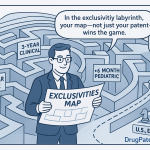
FDA Exclusivity vs. Patent Protection: A Practitioner’s Map
The Two Parallel Systems
Patents and FDA exclusivities operate on independent legal tracks. A drug can have robust patent protection and no statutory exclusivity remaining, or it can sit behind multiple exclusivity shields with a thin or expired patent estate. The interaction between the two determines the actual competitive barrier generics and biosimilar manufacturers face.
New Chemical Entity (NCE) exclusivity runs for 5 years from the date of first FDA approval for an active moiety not previously approved. During the first 4 years, no ANDA or 505(b)(2) application referencing the NCE can be submitted. In year 5, Paragraph IV certifications become available. The NCE exclusivity clock is firm and cannot be extended, but it can overlap with patents in ways that create compounding delays for generic applicants.
New Clinical Investigation (NCI) exclusivity runs 3 years and protects new formulations, new indications, and new dosing regimens that required at least one new clinical study. NCI exclusivity does not block ANDA submission; it blocks approval. That distinction matters because it allows generic manufacturers to continue prosecution of their applications while the exclusivity clock ticks down.
Orphan Drug Exclusivity (ODE) runs 7 years for the specific indication and acts as a near-absolute bar on approval of the same drug for the same orphan indication. Companies pursuing rare disease designations increasingly treat ODE as a primary exclusivity vehicle rather than a secondary one, particularly in oncology, where multiple orphan indications can generate stacking exclusivity periods across a drug’s commercial life.
Pediatric Exclusivity is not a standalone exclusivity period. It is a 6-month addition that attaches to the end of any existing patent or exclusivity period when a sponsor completes FDA-requested pediatric studies under the Best Pharmaceuticals for Children Act. On a drug with meaningful remaining exclusivity, that 6-month addition can be worth hundreds of millions of dollars.
Biologics Reference Product Exclusivity runs 12 years from the date of first licensure under the BPCIA. No biosimilar or interchangeable biosimilar can be approved before 4 years, and no biosimilar can be approved before 12 years. This 12-year floor applies regardless of the biologic’s patent status and is the primary reason biologic manufacturers face a structurally different competitive timeline than small molecule manufacturers.
Interplay with Delayed Filing
The most sophisticated IP strategies layer delayed patent filings on top of expiring statutory exclusivities to create a seamless handoff of competitive protection. A biologic protected by 12-year reference product exclusivity until 2030 might have a composition-of-matter patent expiring in 2029, device or formulation patents expiring in 2033, and method-of-treatment patents expiring in 2036. The delayed filing of those later patents, timed to specific clinical or manufacturing data milestones, fills the gap that early expiration of the base exclusivity would otherwise create.
IP Valuation Note: Stacking Value
IP teams should model exclusivity as a portfolio rather than a single instrument. A drug with NCE exclusivity expiring in 2026, a base patent expiring in 2028, a PTE-extended patent expiring in 2031, and a delayed-filed secondary formulation patent expiring in 2034 has a materially different NPV profile than a drug whose entire protection collapses in 2028. The incremental NPV of each additional layer, discounted and probability-weighted, is the metric that should drive secondary patent filing decisions.
Key Takeaways: Section 3
FDA exclusivities and patents are parallel systems. NCE exclusivity runs 5 years, NCI exclusivity runs 3 years, ODE runs 7 years per orphan indication, pediatric exclusivity adds 6 months to existing protections, and biologic reference product exclusivity runs 12 years under the BPCIA. Delayed patent filing creates sequential protection layers that bridge the gaps between expiring exclusivity periods.
The Delayed Filing Decision Framework
Why Early Filing Destroys Value on Long-Development Drugs
The conventional IP instinct is to file as early as possible to establish priority date and prevent competitors from staking the same claim. That instinct is correct for most technology sectors but is poorly calibrated for pharmaceutical development, where the commercialization runway begins years after filing.
Consider the arithmetic: a composition-of-matter patent filed during the lead optimization phase, before IND submission, establishes a priority date that precedes market entry by 12 to 15 years. With a 20-year term, that leaves 5 to 8 years of patent life after approval. Apply PTE and you recover at most 5 additional years. The best-case outcome is approximately 10 to 13 years of post-approval patent protection on the base compound, before any challenges.
A delayed filing strategy does not replace that base composition-of-matter patent. It supplements it. The compound patent is filed early because priority date on the active moiety is genuinely important and competitors actively survey the same chemical space. The secondary patents covering optimized crystal forms, specific salt forms, pediatric formulations, modified-release delivery systems, combination regimens, and manufacturing process improvements are where timing discipline generates the most value.
Phase-Specific Filing Logic
Pre-IND to Phase I: File composition-of-matter patents covering the active moiety, its salts, and its enantiomers at this stage. Priority date on the compound is the asset. Filing method-of-use patents this early is typically premature because the indication may not survive clinical development.
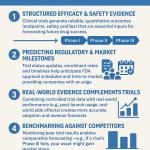
Phase II: Clinical proof-of-concept data defines the drug. After Phase II readout, a company knows the therapeutic dose range, the relevant patient population, the dosing frequency, and often the relevant clinical endpoints. Method-of-use patents filed at this stage have specific, defensible claim scope grounded in real clinical data. Formulation patents covering dosing regimens validated in Phase II carry claim support that composition-of-matter patents filed at discovery cannot provide. As patent counsel Alex Trimble of Mintz observed, ‘clinical trial-related patents should be filed later in the process to avoid prematurely starting the patent term clock.’ This is not a fringe position; it reflects how well-resourced IP shops actually operate.
Phase III: Filing after Phase III readout maximizes delayed-filing benefits for patents tied to specific efficacy claims, biomarker-defined patient populations, or clinical outcome measures. The risk is that Phase III protocols and interim results may generate public disclosure prior art under 35 U.S.C. § 102(a). Companies must evaluate whether the incremental patent term gained by waiting to Phase III is worth the elevated prior art exposure, particularly where a competitor’s parallel program might produce a blocking publication.
Post-NDA/BLA Submission: Formulation work, device improvements, and manufacturing process patents can legitimately be filed after NDA submission when that work reflects genuine post-Phase III development rather than litigation-directed portfolio padding. Courts and the USPTO examine the actual date of invention; retroactive claims engineering creates invalidity exposure.
Confidentiality Architecture During Trials
Delayed filing requires active management of what enters the public domain during clinical development. Clinical trial registration on ClinicalTrials.gov, including mandatory disclosure of primary endpoints and study design, does not typically constitute prior art that invalidates a properly scoped patent claim. But investigator presentations at medical conferences, interim results posters, and press releases describing mechanism of action in detail can create prior art that narrows or destroys claim scope.
Best practice: confidentiality agreements with all investigators that specifically restrict public disclosure of efficacy or formulation data prior to patent filing; internal data review committees that flag publication-ready results before they are submitted to journals; and a rolling patent calendar that triggers filing reviews at defined data milestones, not calendar dates.
Key Takeaways: Section 4
Compound patents should be filed early to secure priority on the active moiety. Secondary patents covering specific formulations, methods of use, dosing regimens, and manufacturing processes should be filed after Phase II or Phase III data, when claim scope is grounded in real clinical evidence and the remaining patent term aligns with commercial life. Confidentiality agreements and publication review processes are operational prerequisites for this strategy.
Evergreening Tactics: The Full Technology Roadmap
‘Evergreening’ is the term critics use for lifecycle management IP strategy. The term is pejorative but the practices are legal, extensively litigated, and economically rational. What follows is a comprehensive map of the tactics used, organized by technical basis rather than by company.
Polymorph and Crystal Form Patents
Most pharmaceutical active ingredients can exist in multiple solid-state forms, including distinct polymorphs, hydrates, solvates, and amorphous forms. Different solid forms have different solubility, bioavailability, stability, and processability profiles. A company that identifies and patents the specific polymorph used in the commercial product can extend exclusivity even after the base compound patent expires, because the generic manufacturer must either use the patented form (infringement) or find a different form that achieves equivalent bioavailability (a significant formulation challenge).
The legal durability of polymorph patents has been tested extensively. Courts require that the claimed form be genuinely distinct in properties relevant to the commercial product and that the claim scope not be so broad as to preempt forms that were in the prior art. AstraZeneca’s litigation over the esomeprazole magnesium trihydrate polymorph in Nexium is the canonical case. AstraZeneca prevailed at the district court level on the polymorph patent, which was a material contributor to Nexium’s extended exclusivity. Generic entry was delayed to 2015, roughly 7 years after the composition-of-matter patent on omeprazole had already expired for the racemic mixture.
IP Valuation: AstraZeneca / Nexium Polymorph Strategy. Nexium generated approximately $6.2 billion in U.S. sales in 2012 alone. The polymorph patent contributed to exclusivity through 2014-2015, meaning it protected at minimum $10 to $12 billion in cumulative revenue. The cost of prosecuting and litigating that polymorph patent, including the Hatch-Waxman litigation, was a fraction of that figure. The ROI on polymorph patent prosecution for major branded products is among the highest of any IP investment category.
Salt Form Patents
Pharmaceutical salts are formed by combining a drug’s active free acid or free base with a pharmaceutically acceptable counter-ion. Different salt forms produce different PK profiles, different stability under humidity and temperature stress, different tablet characteristics, and different processing requirements for manufacturing. A company that identifies a commercially superior salt form late in development, files a salt form patent, and launches with that form has a defensible secondary patent that a generic must design around or challenge.
The challenge rate for salt form patents is high. Generic manufacturers and their ANDA counsel frequently mount obviousness arguments citing the limited number of pharmaceutically acceptable counter-ions and the routine nature of salt screening. Claim drafting must therefore emphasize unexpected properties: superior bioavailability, unexpected stability against photodegradation, or specific dissolution kinetics relevant to the product’s clinical performance.
Modified Release and Formulation Patents
Sustained-release, extended-release, and modified-release formulations typically require genuine formulation development work to achieve a target PK profile. The patents covering these formulations are strongest when the specific excipient combination, membrane coating composition, or matrix structure is both novel and non-obvious relative to generic controlled-release technologies. They are weakest when the claimed formulation uses standard pharmaceutical excipients combined in ways that would have been obvious to a formulator skilled in the art.
The strategic value of modified-release patents extends beyond their validity. Under Hatch-Waxman, an Orange Book-listed formulation patent triggers a 30-month stay upon Paragraph IV certification. Even a formulation patent of marginal validity is worth filing, listing, and defending if the 30-month stay it triggers covers a commercially significant period. This calculus drives the Orange Book listing decisions that have attracted scrutiny from the FTC and the courts.
Method-of-Use and Dosing Regimen Patents
Method-of-use patents cover how a drug is used rather than what the drug is. The claim scope may define a specific patient population (patients with a defined genetic biomarker), a specific dosing regimen (once-weekly dosing at a specified dose), a specific combination with another agent, or a specific clinical outcome measure. These patents are filed after clinical data defines these parameters, which is precisely why they are good candidates for delayed filing.
The vulnerability of method-of-use patents is the ‘skinny label’ problem under 21 U.S.C. § 355(j)(2)(A)(viii). A generic manufacturer can seek approval for fewer than all the approved indications, omitting the patented indication from its label and arguing non-infringement by carve-out. Courts have split on when skinny labels create inducement liability, with GlaxoSmithKline v. Teva (Fed. Cir. 2021) holding that labeling language and promotional materials can still support an inducement claim even with a carved-out label. That decision shifted the risk calculus and made skinny label carve-outs less reliable as an ANDA filing strategy.
Dosing regimen patents specifically cover the timing, frequency, and dose of administration rather than just the therapeutic use. They are harder to carve around than indication-based method claims because dosing information cannot always be omitted from a generic label without affecting prescribing guidance. Celgene’s Revlimid portfolio included multiple dosing-specific patents that contributed to its extended exclusivity position, which Bristol Myers Squibb inherited through its 2019 acquisition of Celgene.
Combination Product and Co-Crystal Patents
Fixed-dose combinations (FDCs) of two or more active ingredients present patent opportunities at every level: the combination itself, the specific ratio of actives, the formulation that achieves the target PK for each component, and the method of treating a condition with the combination. A company that identifies a beneficial combination through Phase II or Phase III work can file patents at those stages that extend the commercial life of both constituent actives.
Co-crystal patents cover the solid-state co-crystal formed between an active pharmaceutical ingredient and a co-former molecule. Co-crystals are distinct from salts in that the interaction is non-ionic. The patent office has treated co-crystal patents as patentable subject matter when the co-crystal has distinct, non-obvious physical properties, and the courts have generally upheld well-drafted co-crystal claims.
Manufacturing Process and Synthetic Route Patents
Process patents covering the commercial manufacturing route, intermediate compounds, purification methods, and impurity control processes are filed late in development by necessity, because the commercial process is rarely finalized until Phase III or later. These patents are defensible because the commercial process often represents genuine inventive work distinct from any route disclosed in the literature, and they impose a real engineering burden on generic manufacturers who must develop alternative processes to achieve adequate purity profiles within the ICH Q3A impurity thresholds.
Biological and Antibody-Specific Evergreening Tactics
Biologics require a different evergreening toolkit. The active moiety of a biologic, whether a monoclonal antibody, fusion protein, or enzyme, is typically protected by composition-of-matter patents covering the specific amino acid sequence or glycosylation profile. Secondary patent opportunities arise from formulation work (specific buffer systems, stabilizers, and surfactants that maintain protein stability over shelf life), device patents covering the prefilled syringe, autoinjector, or on-body delivery system, manufacturing process patents covering cell culture conditions, downstream purification, and fill-finish operations, and method-of-use patents covering specific dosing regimens, patient selection criteria, and combination regimens with checkpoint inhibitors or standard-of-care agents.
Regeneron’s strategy on Eylea illustrates the biologic evergreening approach in practice. Facing biosimilar competition beginning in 2024 from Samsung Bioepis and Sandoz, Regeneron pursued litigation on its manufacturing process and formulation patents while simultaneously advancing the high-dose Eylea HD formulation (8 mg vs. the original 2 mg), which received FDA approval in August 2023. That higher-dose product carries new patents and is positioned to capture the commercial market that the original Eylea franchise loses to biosimilar competition. The clinical differentiation of Eylea HD, with a 16-week dosing interval in some patients versus the 8-week interval typical for the original formulation, provides the medical rationale for payer and prescriber retention that pure patent strategy alone cannot guarantee.
Key Takeaways: Section 5
Evergreening works through six primary technical pathways: polymorph and crystal form patents, salt form patents, modified-release formulation patents, method-of-use and dosing regimen patents, combination product patents, and manufacturing process patents. For biologics, device patents, stabilizing formulation patents, and next-generation dosage patents are the most commercially significant. Each pathway requires patent filing timed to the relevant R&D milestone, not to an arbitrary calendar date.
IP Valuation: Drug-by-Drug Asset Analysis
Bristol Myers Squibb / Celgene: Revlimid
Revlimid (lenalidomide) generated $9.98 billion in global revenue in 2021, the year before Bristol Myers Squibb finalized its managed generic entry arrangements. The Celgene acquisition closed in November 2019 for approximately $74 billion. Revlimid was the primary asset justifying that price, and its IP estate was central to the deal thesis.
The lenalidomide composition-of-matter patent expired in 2019. What sustained Revlimid’s exclusivity through the managed entry period were secondary patents covering specific solid forms, manufacturing processes, and the Risk Evaluation and Mitigation Strategy (REMS) program required because of lenalidomide’s teratogenicity. The REMS-related restrictions created a de facto barrier to generic entry separate from patent status, though generic manufacturers argued successfully in regulatory proceedings that the REMS should not be used to block safety data exchange required for generic approval. Celgene’s separate litigation strategy resulted in negotiated agreements with generic manufacturers that allowed entry beginning in 2022 at limited volumes, escalating over time.
The IP valuation of Revlimid’s secondary patent portfolio at acquisition should be understood as the bridge between the 2019 composition-of-matter expiry and the 2026 full generic availability. That 7-year bridge, at Revlimid’s revenue run rate, had a gross value of roughly $55 to $65 billion before tax, discounted and probability-weighted given litigation risk. The secondary patent portfolio was not incidental to the Celgene acquisition. It was a significant fraction of its valuation.
Novartis: Entresto
Entresto (sacubitril/valsartan) is a fixed-dose combination of a neprilysin inhibitor (sacubitril, as its active metabolite LBQ657) and an angiotensin receptor blocker (valsartan). The clinical differentiation is substantial. The PARADIGM-HF trial showed a 20% relative risk reduction in cardiovascular death or hospitalization versus enalapril in heart failure patients with reduced ejection fraction, a finding that made Entresto the standard-of-care anchor in HF-rEF management.
The base patent protecting the specific combination and the crystalline co-crystal form of sacubitril-valsartan sodium (the AHU377 compound) was scheduled to expire in July 2025. Novartis filed a citizen petition with the FDA in September 2022 arguing that bioequivalence standards for a fixed-dose combination with a complex co-crystal structure were insufficiently developed, and that generic approval prior to establishment of those standards would create safety risks. The FDA rejected that petition in July 2024. Novartis simultaneously sought and obtained a temporary restraining order against MSN Pharmaceuticals, the first generic filer, while its Paragraph IV patent litigation remained pending.
The Entresto patent cliff is also cushioned by pediatric exclusivity, which Novartis earned through completion of FDA-requested pediatric studies. That adds 6 months to existing protections. At Entresto’s 2024 revenue run rate of roughly $6 billion globally, each month of additional exclusivity is worth approximately $500 million in gross revenue. The pediatric exclusivity extension is worth approximately $3 billion at those rates before cannibalization.
IP Valuation: Entresto. The secondary patents and exclusivities layered onto Entresto’s base composition patent, including the co-crystal structure patents, the pediatric exclusivity, and the litigation-induced delays, collectively extended effective exclusivity by approximately 12 to 18 months beyond base patent expiry. At Entresto’s revenue run rate, that extension has a gross value of $6 to $9 billion. The R&D investment in the pediatric studies that earned the pediatric exclusivity extension was a rounding error relative to that figure.
Regeneron: Eylea (Aflibercept)
Eylea (aflibercept, 2 mg) is a vascular endothelial growth factor (VEGF) trap fusion protein approved for neovascular age-related macular degeneration (nAMD), diabetic macular edema (DME), and related retinal conditions. It generated approximately $6.2 billion in U.S. net sales in 2023.
The composition-of-matter patent on aflibercept faced a complex biosimilar litigation landscape beginning in 2023. Regeneron sued Samsung Bioepis and Sandoz on patents covering the aflibercept protein sequence, its glycosylation profile, and its aqueous ophthalmic formulation. The cases involved both patent infringement claims and BPCIA patent dance disputes over whether the biosimilar applicants had properly disclosed their manufacturing processes under 42 U.S.C. § 262(l).
Simultaneously, Regeneron’s internal development team advanced Eylea HD (8 mg aflibercept), which received FDA approval in August 2023 for nAMD, DME, and diabetic retinopathy. Eylea HD is not simply a higher dose of the same product. The clinical program demonstrated that the higher concentration allowed a proportion of patients to extend their treatment interval from 8 weeks to 12 or 16 weeks, which is a meaningful quality-of-life and adherence advantage in a chronic condition requiring intravitreal injections. New patents covering the 8 mg formulation, the extended dosing interval, and the specific ophthalmic delivery parameters were filed as that clinical data accumulated, representing textbook delayed filing timed to clinical milestones.
IP Valuation: Eylea / Eylea HD. The biosimilar competition that entered beginning in 2024 threatens the original 2 mg Eylea franchise, but Regeneron’s transition strategy aims to migrate the commercial base to Eylea HD before generic competition commoditizes the lower-dose market. If that transition succeeds, the Eylea HD patents, filed after the clinical data existed to support their claims, protect a next-generation franchise with a patent estate extending well beyond the 2 mg biosimilar window. The IP value of the Eylea HD portfolio is embedded in Regeneron’s market capitalization at a premium to what the original Eylea franchise alone would support.
Key Takeaways: Section 6
Revlimid’s secondary patent portfolio bridged a 7-year gap between base compound expiry and managed generic entry, representing a large fraction of the $74 billion Celgene acquisition price. Entresto’s co-crystal patents, citizen petition strategy, and pediatric exclusivity collectively extended exclusivity by 12 to 18 months at a gross value of $6 to $9 billion. Regeneron’s Eylea HD program used delayed patent filing timed to Phase III data to build a next-generation patent estate that replaces the original Eylea franchise being eroded by biosimilar entry.
Investment Strategy: Section A (Large-Cap Pharma with Patent Cliffs)
Analysts pricing patent cliff exposure should model exclusivity as a staircase, not a cliff edge. Each layer of secondary IP adds a step that slows the revenue descent and shifts the generic entry timeline. The relevant due diligence questions are:
First, what is the quality of the secondary patent portfolio? A portfolio of 20 patents that are all compositionally similar to each other and that a generic manufacturer’s ANDA counsel can challenge with a consolidated obviousness argument is less valuable than 5 patents covering technically distinct aspects of the product that require separate design-around strategies.
Second, are the secondary patents Orange Book-listed? Only listed patents trigger the 30-month stay. Unlisted patents can still be litigated but they do not generate the automatic stay that defers generic market entry.
Third, what is the litigation track record? Companies like Regeneron and Novartis that have demonstrated willingness to pursue full-scope Hatch-Waxman litigation carry more credible deterrent value against Paragraph IV filers than companies that historically settled quickly.
Fourth, what next-generation product is in development? A company facing a patent cliff without a successor product is in a fundamentally different position from one that has cleared FDA review for a clinically differentiated follow-on, as Regeneron did with Eylea HD.
Hatch-Waxman, Paragraph IV, and the Litigation Calculus
The Orange Book as IP Infrastructure
The Hatch-Waxman Act created the Abbreviated New Drug Application (ANDA) pathway and, with it, the patent certification system that structures nearly all small molecule generic competition in the U.S. An NDA holder must list patents in the FDA’s Approved Drug Products With Therapeutic Equivalence Evaluations, universally called the Orange Book, if those patents claim the drug or a method of using the drug and could reasonably be asserted against a generic manufacturer. The listing obligation does not extend to process patents, which cannot be Orange Book-listed under the statute.
A generic applicant must certify against every listed patent. A Paragraph I certification says the patent is expired. A Paragraph II certification says the patent will expire before the generic’s proposed launch date. A Paragraph III certification says the generic will not launch until the patent expires. A Paragraph IV certification says the patent is invalid, unenforceable, or will not be infringed by the proposed generic product. The Paragraph IV certification triggers a duty to notify the NDA holder, which then triggers the 30-month stay if the NDA holder files suit within 45 days.
The 30-month stay is the litigation mechanic that makes Orange Book listing commercially significant. It defers FDA approval of the ANDA for 30 months (or until a court decision, whichever comes first), buying time for the innovator to litigate the challenged patents. The first generic applicant to file a substantially complete ANDA with a Paragraph IV certification also earns 180-day generic exclusivity, which blocks all subsequent ANDA approvals during that period. This creates the economics of the generic entry race, where the first filer wins a period of duopoly pricing before the market becomes fully competitive.
Filing Strategy to Maximize the 30-Month Stay
A well-constructed Orange Book listing strategy maximizes the number of substantively distinct patents that a generic manufacturer must challenge separately. If a company lists eight patents covering distinct aspects of its product, a generic manufacturer seeking to launch at the earliest possible date must file Paragraph IV certifications against all eight, notify the innovator, and potentially defend eight separate infringement actions. Each new suit restarts the 30-month stay clock only for patents that had not yet been listed at the time of the original ANDA submission, which means timing of patent listing matters.
Secondary patents filed and listed after an ANDA is submitted do not trigger a new 30-month stay automatically. They can still be litigated, and they can still result in injunctions, but the strategic value of listing them in the Orange Book is diminished relative to patents listed before the ANDA was filed. This is one reason IP teams track ANDA filing activity and accelerate patent prosecution when Paragraph IV activity begins appearing in generic pipeline databases.
Inter Partes Review and the Challenge to Patent Portfolios
The America Invents Act (2012) created Inter Partes Review (IPR) at the Patent Trial and Appeal Board (PTAB), giving generic manufacturers and biosimilar developers an administrative route to challenge patent validity outside district court litigation. IPR petitions on pharmaceutical patents have become a standard component of generic entry strategy because the burden of proof is lower than in district court (preponderance of the evidence vs. clear and convincing evidence), the proceeding is faster (final written decision within 12 to 18 months of institution), and the costs are substantially lower than Hatch-Waxman litigation.
The institution rate for IPR petitions on pharmaceutical patents is approximately 50 to 60%, and instituted petitions result in full or partial claim cancellation at high rates. Secondary patents covering formulations and methods of use are particularly vulnerable to IPR on obviousness grounds because the PTAB applies the broadest reasonable interpretation standard during prosecution and treats combinations of prior art references flexibly. Companies filing secondary patents with litigation defense in mind must draft claims that distinguish over the nearest prior art with specificity and file supporting declarations from formulation scientists and clinicians that document the unexpected nature of the claimed properties.
Key Takeaways: Section 7
Orange Book listing converts patent rights into the 30-month stay mechanism that defers ANDA approval. Filing and listing secondary patents before ANDA submissions for the referenced drug maximizes the stay’s utility. IPR petitions at the PTAB are the primary tool generic manufacturers use to challenge secondary patents, and they succeed at high rates on obviousness grounds. Secondary patent drafting must anticipate PTAB proceedings and include specific, narrow claims supported by unexpected property data.
Biologics and the Biosimilar Patent Thicket
The BPCIA Patent Dance
The Biologics Price Competition and Innovation Act established a sequential information-exchange process between a reference product sponsor and a biosimilar applicant that the industry refers to as the ‘patent dance.’ The process requires the biosimilar applicant to provide its Biologics License Application and manufacturing process information to the reference product sponsor, followed by iterative exchanges of patent lists and contentions, before any litigation can proceed. The entire exchange takes a minimum of several months and is often a precursor to litigation that takes several years.
The patent dance is optional for the biosimilar applicant under the Supreme Court’s 2017 ruling in Sandoz v. Amgen. A biosimilar applicant can decline to engage in the patent dance and simply provide 180-day notice of commercial marketing before launch. The consequence of opting out is that the reference product sponsor may immediately seek a preliminary injunction, which courts have been willing to grant when there is a likelihood of success on the merits and irreparable harm. The practical effect is that most biosimilar developers engage in the patent dance because the litigation exposure from opting out is commercially unacceptable.
The Patent Thicket in Practice: AbbVie and Humira
AbbVie’s Humira (adalimumab) became the most-cited example of patent thicket construction in the biologic space. At peak patent estate, AbbVie held more than 250 U.S. patents related to Humira, covering the antibody’s structure, its high-concentration formulation (the citrate-free formulation that reduced injection pain), the autoinjector device, manufacturing processes, and dozens of method-of-use claims spanning Humira’s 10-plus FDA-approved indications.
U.S. biosimilar competition was delayed until January 2023, nearly 20 years after Humira’s initial 2002 FDA approval, despite biosimilar approvals beginning in the EU as early as 2018. The 5-year gap between EU and U.S. biosimilar entry is attributable almost entirely to AbbVie’s U.S. patent estate and the settlement agreements it reached with all biosimilar developers, which defined U.S. launch dates in exchange for license grants to the relevant patents. The settlements were scrutinized by the FTC, which ultimately did not challenge them, though the political pressure those settlements generated contributed to legislative proposals targeting biologic patent thickets.
IP Valuation: Humira Patent Estate. AbbVie generated approximately $21 billion in Humira global revenue in 2022, the last full year before U.S. biosimilar entry. Each year of delayed U.S. biosimilar entry had a gross value of approximately $14 to $17 billion in U.S. revenue. The patent estate that produced that delay was built over two decades through iterative secondary filings timed to each phase of Humira’s clinical expansion and formulation development. The citrate-free, high-concentration formulation patent, filed after AbbVie’s clinical and patient experience data demonstrated the commercial value of injection-site pain reduction, was a delayed filing that materially contributed to the exclusivity wall.
Interchangeability Designation and Its Strategic Value
Under the BPCIA, a biosimilar can receive the additional ‘interchangeable’ designation if the sponsor demonstrates that the product can be expected to produce the same clinical result as the reference product in any given patient, and, for products administered more than once, that the risk of alternating between the biosimilar and the reference product is not greater than the risk of using the reference product without alternation. Interchangeability allows pharmacists to substitute the biosimilar for the reference product without prescriber intervention, as permitted by state law.
The first interchangeable biosimilar for a given reference product receives a period of interchangeable biosimilar exclusivity during which no other product can receive the interchangeable designation. That exclusivity period runs for 12 months or until certain patent litigation is resolved. For reference product sponsors, the interchangeability pathway creates an opportunity: by investing in a proprietary self-administration device and a high-concentration formulation that competitors find difficult to replicate at biosimilar specifications, a company can delay the commercial adoption of substitutable biosimilars even after the biosimilar products technically enter the market.
Key Takeaways: Section 8
AbbVie’s Humira patent estate delayed U.S. biosimilar entry to January 2023, approximately 20 years post-approval, through a combination of polymorph patents, high-concentration formulation patents, device patents, and method-of-use patents, many of them filed as delayed secondary applications after clinical and commercial data defined their scope. The interchangeable biosimilar designation is the primary market adoption mechanism that reference product sponsors can make difficult through device and formulation complexity. Each year of delayed U.S. biosimilar entry for a Humira-scale product represents $14 to $17 billion in U.S. revenue.
Legal Risks of Delayed Filing
Prior Art: The Primary Technical Threat
The most significant risk in delayed filing is the generation of prior art during the delay period. Under 35 U.S.C. § 102(a)(1), a patent claim is anticipated if the claimed invention was disclosed in a printed publication or patented before the effective filing date of the claimed invention. The one-year grace period under § 102(b)(1) protects the inventor’s own disclosures made within one year before the U.S. filing date, but it does not protect against independent third-party disclosures of the same subject matter.
Clinical trial publications in peer-reviewed journals, conference abstracts, and investigator presentations, including those by academic collaborators or co-investigators, can create prior art that narrows or destroys claim scope for patents not yet filed. A company running a Phase II trial with an academic medical center partner must treat every external collaborator’s publication schedule as a potential filing trigger.
Public Use under 35 U.S.C. § 102(a)
The public use bar has specific application in pharmaceutical development. Phase I trials, where an investigational drug is administered under controlled conditions to a limited number of healthy volunteers with strict confidentiality, have generally not been found to constitute public use. The leading case, Eli Lilly and Company v. Zenith Goldline Pharmaceuticals (471 F.3d 1369, Fed. Cir. 2006), held that clinical trials conducted under confidentiality, with no commercialization, did not constitute public use. Phase II and Phase III trials, which involve larger patient populations, broader investigator networks, and more frequent data disclosures, carry higher public use risk, particularly if trial results are presented at major medical conferences before the relevant patent is filed.
Obviousness Exposure from Published Literature
Delay creates time during which the academic and patent literature accumulates. A formulation approach that would have been non-obvious in year one of development may become obvious by Phase III because other researchers have published related work. IP teams conducting delayed filing must run thorough freedom-to-operate analyses at the intended filing date, not just at the discovery stage, and must be prepared to draft narrow claims that survive the obviousness combinations that accumulated prior art enables.
Competitive Intelligence Risk
A company running a Phase II program without early patent protection on key formulation or dosing innovations risks a competitor identifying the innovation from clinical trial disclosures and filing first. In theory, the first inventor (or, under the America Invents Act for applications filed after March 2013, the first inventor to file) has priority. In practice, proving inventorship priority in a derivation proceeding is expensive, slow, and uncertain. The cost of early filing on specific innovations identified in Phase II is almost always lower than the cost of a derivation proceeding.
Key Takeaways: Section 9
Delayed filing creates prior art exposure from clinical trial publications, conference presentations, and accumulated academic literature. The § 102 grace period protects the inventor’s own disclosures for one year but does not protect against third-party disclosures of the same subject matter. IP teams must run targeted prior art searches at each intended filing milestone, treat every external collaborator’s publication as a potential priority trigger, and draft claims that anticipate the obviousness combinations that accumulate as filing is delayed.
Regulatory Scrutiny and the Patent Thicket Backlash
FTC and DOJ Attention on Hatch-Waxman Settlements
The FTC has challenged reverse payment settlements, where an innovator pays a generic manufacturer to delay market entry, under antitrust law since the early 2000s. The Supreme Court’s 2013 ruling in FTC v. Actavis established that reverse payment settlements are subject to rule-of-reason antitrust scrutiny rather than per se legality. Under Actavis, large unexplained payments from innovators to potential competitors are evidence of anticompetitive harm, and courts must balance the payment against the pro-competitive justifications offered.
The practical effect of Actavis was not to eliminate reverse payment settlements but to make them more complex. Settlements now more commonly involve non-cash consideration, authorized generic agreements, co-promotion deals, and supply arrangements rather than straightforward cash payments. These structures remain under FTC scrutiny but are harder to challenge under Actavis because the ‘large and unexplained’ payment analysis applies most cleanly to cash transfers.
Executive and Legislative Action on Biologic Patent Thickets
The White House Executive Order on Promoting Competition in the American Economy (2021) directed the FDA and HHS to take actions to address anti-competitive pharmaceutical practices, including patent thickets. The FDA subsequently increased scrutiny of citizen petitions that appeared designed to delay generic or biosimilar approval rather than raise genuine safety concerns. The FDA’s denial of Novartis’s Entresto citizen petition in July 2024 is consistent with that posture.
Legislative proposals targeting biologic patent thickets have included provisions that would limit the number of patents that can be asserted in BPCIA litigation, require earlier disclosure of patent portfolios to biosimilar applicants, and limit the BPCIA patent dance to a single round of exchanges. None of these provisions had been enacted as of Q1 2026, but the regulatory risk of more aggressive anti-thicket action is real and should be modeled in IP portfolio valuation.
The UCLA / FTC Cost-of-Evergreening Estimates
A 2024 UCLA Anderson Review analysis estimated that secondary ‘add-on’ drug patents imposed $52.6 billion in additional consumer costs compared to a counterfactual in which only base composition-of-matter patents existed and generics entered at base patent expiry. That figure is politically resonant and has been cited in Congressional hearings on drug pricing. The policy response risk, including potential statutory limitations on Orange Book listing of secondary patents or mandatory Hatch-Waxman reform, is the primary regulatory tail risk to IP-dependent pharma business models over a 5 to 10-year horizon.
Key Takeaways: Section 10
The FTC’s Actavis ruling applies rule-of-reason antitrust scrutiny to reverse payment settlements. Executive branch pressure has increased FDA skepticism of citizen petitions used as delay tactics. The UCLA estimate of $52.6 billion in consumer costs from secondary ‘add-on’ patents is the academic underpinning of legislative proposals targeting Orange Book listing and biologic patent thickets. IP teams should model regulatory reform risk as a tail scenario in portfolio NPV calculations.
Patent Filing Trend Data: What Q3 2024 Told Us
GlobalData’s pharmaceutical patent filing data showed a 14.2% decrease in Q3 2024 patent filings versus Q2 2024, continuing a trend of strategic contraction in IP activity that reflects several concurrent pressures: the Inflation Reduction Act’s drug price negotiation provisions reducing peak revenue projections for many small molecule drugs, increased PTAB petition success rates making secondary patent investment riskier, and macroeconomic pressure on R&D budget allocation.
The decline in overall filing volume does not mean companies are abandoning secondary patent strategies. It more likely means they are being selective, filing secondary patents only where claim scope is clearly defensible and where the commercial drug has a revenue profile large enough to justify the prosecution and litigation costs. A secondary formulation patent on a drug generating $200 million annually rarely earns back the cost of PTAB defense. The same patent on a $5 billion product almost always does.
The Inflation Reduction Act introduced a specific dynamic that affects delayed filing strategy for small molecules. Drugs that have been on the market for 9 years (for small molecules) become eligible for CMS price negotiation under the IRA, which compresses revenue in years 9 through patent expiry. That compression reduces the NPV of secondary patents that extend exclusivity beyond year 9, because the price-negotiated revenue is lower than the free-market price the secondary patent would otherwise protect. IP teams must integrate IRA negotiation eligibility into their patent term NPV models.
Key Takeaways: Section 11
Pharmaceutical patent filings declined 14.2% in Q3 2024, reflecting increased PTAB challenge risk, Inflation Reduction Act price negotiation exposure, and tighter R&D budgets. The IRA’s 9-year negotiation trigger for small molecules reduces the NPV of secondary patents extending exclusivity beyond that threshold. Filing decisions should integrate IRA negotiation probability and expected negotiated price into patent term value calculations.
Investment Strategy for Analysts
How to Price Patent Cliff Exposure
Sell-side and buy-side models consistently underestimate patent cliff depth in the years before cliff, and consistently overestimate the speed of revenue recovery afterward. The error pattern is symmetrical: analysts assume robust secondary patent protection in their base cases without stress-testing patent validity, and they assume rapid generic penetration in their bear cases without accounting for the practical entry barriers that secondary patents create even if not ultimately decisive.
A more rigorous approach models three scenarios. In the base case, all Orange Book-listed patents survive challenge and deliver their full effective life. In the stress case, secondary patents are invalidated through IPR or district court litigation, and generic entry occurs at base compound patent expiry with 90% penetration within 24 months. In the bull case, delayed-filed secondary patents survive challenge and the company successfully migrates the commercial franchise to a next-generation formulation or indication with its own patent estate. Each scenario gets a probability weight, and the weighted average NPV reflects the real uncertainty in the patent portfolio.
Due Diligence Checklist for IP-Intensive M&A
Transactions like the Celgene acquisition are priced on the strength of late-cycle secondary patent portfolios more than on the base compound. Due diligence on an IP-intensive target should answer: which patents are Orange Book-listed and in what quantity; what Paragraph IV certifications have been filed and at what stage are the litigation proceedings; what is the PTAB petition landscape and have any petitions been instituted; what delayed-filed secondary patents are in prosecution and what is their likely grant date relative to the product’s commercial trajectory; and what regulatory exclusivities remain and do they overlap with or bridge the patent estate.
Signals to Watch in Public Patent Intelligence
Orange Book additions are public and searchable. A company adding new formulation or method-of-use patents to a drug’s Orange Book listing months or years after initial NDA approval is executing a delayed secondary patent strategy in real time. For competitors, that is a signal that they will face additional Paragraph IV certification requirements and potential litigation on those claims. For investors, it is a signal that the company’s IP team is actively managing the exclusivity horizon and has delivered new filings that extend the expected generic entry date.
PTAB petition filings are similarly public. A cluster of IPR petitions filed against a company’s secondary patents within months of each other typically indicates that one or more generic manufacturers have concluded that the secondary patent estate is the primary barrier to their ANDA approval and are testing it. The institution decision, which the PTAB issues approximately 6 months after petition filing, is a material IP event for the reference product sponsor’s exclusivity model.
Key Takeaways: Section 12
Analysts modeling patent cliff exposure should run three distinct scenarios: full secondary patent survival, secondary patent invalidation at IPR or district court, and successful next-generation franchise migration. M&A due diligence on IP-intensive targets requires specific analysis of Orange Book listing quality, active Paragraph IV litigation status, PTAB petition landscape, and in-prosecution secondary patent pipeline. Real-time monitoring of Orange Book additions and PTAB petition filings provides actionable intelligence on competitors’ exclusivity trajectories.
FAQ
What is delayed patent filing in pharma, precisely? Delayed patent filing means choosing not to file secondary patent applications, covering formulations, methods of use, dosing regimens, or manufacturing processes, until later in drug development, typically after Phase II or Phase III clinical data is available. The compound patent is usually filed early. The delay applies to patents where clinical data meaningfully shapes the claim scope and where the remaining 20-year term is more valuable if the filing date is pushed closer to commercial launch.
Does delayed filing replace early composition-of-matter filing? No. Composition-of-matter patents on the active moiety should be filed at discovery or lead optimization to secure priority over competitors working in the same chemical or biological space. Delayed filing is a strategy for secondary patents whose claim scope can only be properly defined after clinical data exists.
What is the difference between pharma patent term and effective market exclusivity? Patent term is the statutory 20-year life from filing date, extendable by PTE (up to 5 years) and PTA. Effective market exclusivity is the period during which a drug actually generates revenue without generic or biosimilar competition. Effective exclusivity is shorter than patent term because early filing, litigation losses, and IPR invalidations all reduce the enforced life of the patent estate.
How does the Hatch-Waxman 30-month stay interact with secondary patents? Every Orange Book-listed patent triggers a 30-month stay upon a Paragraph IV certification and timely suit. Secondary formulation and method-of-use patents listed in the Orange Book before an ANDA is submitted each independently trigger the stay mechanism if challenged. Patents listed after ANDA submission do not trigger an automatic stay but can still be litigated and can support injunctive relief.
What is biosimilar interchangeability and why does it matter for IP strategy? Biosimilar interchangeability is a designation from the FDA indicating that a biosimilar can be substituted for the reference product at the pharmacy without prescriber intervention. It requires a higher evidentiary showing than standard biosimilar approval. The first product to receive interchangeability designation for a given reference product earns a period of exclusivity on that designation. Reference product sponsors can make interchangeability harder to achieve by investing in high-concentration formulations and proprietary delivery devices that biosimilar developers find difficult to replicate.
How does the IRA affect delayed filing strategy? The Inflation Reduction Act makes small molecule drugs eligible for CMS price negotiation after 9 years of market approval. The negotiated price applies beginning in the year after designation. Secondary patents that extend exclusivity into year 10 and beyond still block generic entry, but they protect revenue at the CMS-negotiated price rather than the market price. The NPV of those additional exclusivity years is materially lower than pre-IRA calculations assumed, and filing decisions for secondary patents should integrate IRA probability weighting.
What is the primary legal risk of filing a secondary patent too late? The primary risk is prior art created during the delay period, either by the company’s own clinical trial publications and conference presentations, or by third-party publications in the scientific literature. Under 35 U.S.C. § 102(a), prior art disclosures before the filing date can anticipate or make obvious the claims in the delayed patent. The one-year grace period under § 102(b)(1) protects the inventor’s own disclosures for one year but does not protect against independent third-party disclosures.
This analysis is based on publicly available patent records, FDA exclusivity databases, court filings, and published financial disclosures. It does not constitute legal advice. Patent strategy decisions should involve qualified patent counsel with drug-specific expertise.