Business Intelligence on Biologic and Small Molecule Drugs
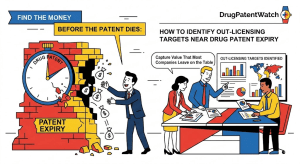
Find the Money Before the Patent Dies: How to Identify Out-Licensing Targets Near Drug Patent Expiry — and Capture Value That Most Companies Leave on the Table
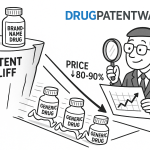
The math is brutal and straightforward. A branded drug generating $800 million annually can lose 80 to 90 percent of its revenue within 12 months of generic entry [1]. For the originator company, that number represents years of R&D investment, decades of brand equity, and hundreds of sales jobs, evaporating at the speed of a first-approved ANDA. For a licensing professional sitting on the other side of the table, that same number is an opportunity.
Out-licensing near patent expiry is one of the most misunderstood strategies in pharmaceutical business development. Most companies treat it as a last resort — a salvage operation conducted under duress, weeks before the cliff hits. The companies that build real value from it treat it as a discipline, one that starts two to five years before expiry, uses specific data tools to identify and screen candidates, and follows a structured diligence process that distinguishes between assets worth licensing and assets worth walking away from.
This article gives you that discipline. It covers the data infrastructure you need, the screening criteria that matter, the patent analysis that separates compound claims from formulation claims, the valuation mechanics near expiry, and the negotiation dynamics that shift when the clock is ticking. It is written for business development professionals, licensing executives, IP strategists, and investors who need a working framework rather than a theoretical overview.
Part One: The Strategic Logic of Late-Stage Licensing
Why Companies Wait Too Long
Ask any licensing executive at a mid-size pharmaceutical company why their team didn’t pursue a particular out-licensing deal two years before patent expiry, and you’ll hear some version of the same answer: we thought we still had time, we were focused on the next pipeline asset, or we assumed the market wasn’t ready to pay.
These are rational-sounding explanations with irrational consequences. The two-to-five-year window before primary patent expiry is precisely when an out-licensing deal carries the most value for the originator. At that point, the asset still has exclusivity protection, the brand has market penetration data to show, and potential licensees can realistically plan for manufacturing scale-up, regulatory filings, and commercial launch within the remaining exclusivity window.
Wait until 12 months before expiry, and the arithmetic changes entirely. A licensee acquiring rights with 12 months of exclusivity left must front-load regulatory and manufacturing costs against a very short revenue horizon. The economics rarely work unless the licensee is already in production with a competing generic, which means they have little incentive to take a license.
The companies that execute well on late-stage licensing share one operational habit: they run systematic screens of their own portfolio and the broader market landscape 36 to 60 months before primary patent expiry, using that lead time to identify candidates, conduct preliminary diligence, and approach potential partners with enough runway to negotiate properly.
What “Near Expiry” Actually Means in Practice
The phrase “near patent expiry” covers a range of scenarios that require different strategic responses:
The first scenario is a drug with a single composition-of-matter patent expiring within three to five years, no pediatric exclusivity extension, no granted patent term extension (PTE), and no filed continuation applications. This is the cleanest case — the cliff is visible, the timeline is certain, and the licensing window is well-defined.
The second scenario involves a drug with a composition-of-matter patent expiring in two years but with multiple method-of-use and formulation patents extending effective exclusivity for additional years. Here, the cliff is softer, the timing is contested, and the licensing opportunity depends heavily on which patents a potential generic challenger can design around or invalidate.
The third scenario is a drug that has already faced a Paragraph IV challenge, lost on a specific patent, but retained exclusivity on other listed Orange Book patents. The originator still has exclusivity, but the competitive landscape has shifted. Licensing in this scenario requires a careful analysis of which remaining patents are enforceable versus which are litigation bait.
Each scenario demands a different valuation approach, a different set of potential licensees, and a different negotiation posture. Treating them identically is how licensing deals get structured badly.
The Anatomy of a Patent Cliff
To license well near expiry, you need to understand exactly what expires and when. This requires disaggregating a drug’s patent estate into its constituent parts.
Pharmaceutical patents generally fall into four categories: composition-of-matter (COM) patents covering the active ingredient itself; formulation patents covering the specific delivery mechanism or dosage form; method-of-use patents covering specific therapeutic indications; and process patents covering the manufacturing method. The strength of exclusivity protection varies dramatically across these categories.
A composition-of-matter patent is the most powerful. It blocks all forms of the active ingredient for all uses. When it expires, the generic pathway opens completely. A formulation patent covering an extended-release version does not block generic manufacturers from developing their own extended-release formulation using a different excipient system — they just can’t copy the patented one. A method-of-use patent blocks prescribing for a specific indication but does not prevent a generic label from carrying other approved uses, with skinny labels sometimes available depending on the specifics.
Understanding this hierarchy is the starting point for any serious out-licensing analysis. An asset whose only remaining protection is a formulation patent has a different risk profile than one with an unexpired composition-of-matter patent. The royalty rate, the deal structure, and the pool of qualified licensees all differ accordingly.
Part Two: Building the Data Infrastructure
The Orange Book as Your Starting Point
The FDA’s Approved Drug Products with Therapeutic Equivalence Evaluations, universally known as the Orange Book, is the foundational document for pharmaceutical patent analysis in the United States. It lists every drug product approved under an NDA, every patent the NDA holder has declared as claiming that product, and every exclusivity code attached to those patents [2].
The Orange Book is publicly available and updated daily. Its limitations are equally important to understand: it only reflects what NDA holders have chosen to list. Companies are required to list patents that claim the approved drug product or an approved method of use, but the mechanics of what qualifies as “claiming” the product have historically been contested. The courts have clarified the listing requirements over time, but the Orange Book is neither comprehensive nor infallible as a picture of a drug’s full patent estate.
The key fields to analyze in an Orange Book entry are the patent number, the patent expiration date, the product number it’s linked to, the patent use code (which tells you whether the patent covers the drug substance, drug product, or a method of use), and any active exclusivity codes (such as NCE exclusivity, orphan drug exclusivity, or pediatric exclusivity) that could extend effective market protection beyond the patent expiry date itself.
For a licensing professional, the Orange Book provides the first filter: which drugs are approaching expiry dates in your target window, and which have patent estates simple enough to make a licensing transaction structurally possible?
USPTO and Patent Family Analysis
The Orange Book tells you which patents are listed. The USPTO’s Patent Full-Text and Image Database, along with tools like Google Patents, PatentsView, and the European Patent Office’s Espacenet, tell you what those patents actually claim and what continuation applications, divisionals, or continuations-in-part may still be pending.
Patent family analysis matters enormously in licensing decisions near expiry. A company that has filed a continuation application from a pending original application can, in theory, obtain claims that extend the effective exclusivity period for the drug beyond the original patent’s expiry date. These continuation-in-part (CIP) patents are the mechanism behind many of the “evergreening” strategies that generic manufacturers challenge as anticompetitive.
When screening an asset for licensing potential, you need to search not just the granted Orange Book patents but also the pending applications in the same family. A pending continuation with broad claims could either extend the exclusivity window (good for the licensor’s leverage) or become a target for inter partes review (IPR) proceedings by a generic manufacturer (a risk that depresses the asset’s value). Either way, the pending application picture changes the analysis.
The USPTO’s Patent Center allows full-text searching and provides family tree information. Cross-referencing this with the Orange Book patent list gives you a picture of both the current protection and the potential future protection on any given asset.
DrugPatentWatch: The Operational Intelligence Layer
For licensing professionals who work this space regularly, DrugPatentWatch provides the aggregated, cross-referenced intelligence layer that makes systematic screening practical. Rather than manually pulling Orange Book listings, cross-referencing USPTO family data, tracking Paragraph IV certification filings, and monitoring ANDA approval histories across hundreds of assets, DrugPatentWatch consolidates this information into a searchable database covering the patent expiry landscape across the branded pharmaceutical market [3].
The platform’s value in the out-licensing context goes beyond simple expiry date lookup. Its paragraph IV challenge tracking lets you see which of your candidate assets have already attracted generic challenges, how many ANDAs have been filed, and whether any first-to-file applicants are already sitting on 180-day exclusivity rights that will shape the competitive landscape post-expiry. Its patent term extension tracking shows which assets have secured extended exclusivity through the Hatch-Waxman patent term restoration mechanism. Its exclusivity expiry data distinguishes between patent protection and regulatory exclusivity protection, which can diverge significantly.
For a team running a systematic out-licensing screen across 50 to 100 potential assets, the ability to pull structured patent landscape data without building every record from scratch is the difference between a two-week analysis and a six-month project. DrugPatentWatch’s data feeds and alert systems also support continuous monitoring, which matters when you’re trying to identify licensing windows that open and close based on litigation outcomes, patent term extension decisions, and ANDA approval timelines.
The ANDA Tracker and Generic Entry Signals
The FDA’s ANDA database and the agency’s Orange Book approval history provide complementary signals. When a generic manufacturer files an ANDA with a Paragraph IV certification, they are claiming that listed Orange Book patents are either invalid or will not be infringed by their generic product. This filing triggers a 30-month stay of ANDA approval if the NDA holder files a patent infringement suit within 45 days — the basic Hatch-Waxman litigation mechanic.
For a licensing team, Paragraph IV filings are an early warning system. A drug that has received its first Paragraph IV certification is already in the generic developer’s crosshairs. The 30-month stay clock has started. If the originator loses the litigation, generic entry happens immediately at stay expiration. If they win, they buy time — but a second, third, or fourth Paragraph IV filer will likely follow, and each subsequent challenge must be evaluated on its own merits.
The presence of multiple Paragraph IV filers on a single drug is a data point that experienced licensing professionals read carefully. Five ANDA applicants with Paragraph IV certifications against a drug with two years of nominal patent life means the effective exclusivity window is contested, the litigation costs are likely to be substantial, and the licensing deal’s economics need to reflect the probability that some or all of the remaining patent term gets invalidated in court.
Conversely, a drug approaching expiry with no Paragraph IV filings in the past two years may indicate either strong patent protection that generic developers have judged as too difficult to challenge, or a small enough market size that no generic company has bothered to invest in the challenge. Distinguishing between these two explanations is essential.
SEC Filings and Pipeline Intelligence
Public pharmaceutical companies disclose patent expiry information in their annual reports (10-K filings) and in Material Change reports when significant litigation outcomes occur. These disclosures provide a curated view of how the originator company itself characterizes its patent protection timeline — which, while self-serving, contains legally accountable statements about patent expiry dates and the company’s assessment of generic entry risk.
For licensing professionals screening potential in-licensed assets, competitor 10-Ks provide useful intelligence about how management characterizes the exclusivity runway for their key products. A company that discloses “we expect generic entry in the first half of 2027” for a specific product is publicly signaling both the timing of the opportunity and their awareness of the competitive threat — which affects their willingness to negotiate a licensing deal with favorable economics.
Pipeline intelligence from clinical trial registries (ClinicalTrials.gov), regulatory submission databases, and analyst reports fills in the picture of what the originator is planning to do with the revenue stream. A company that has filed a New Chemical Entity NDA for a successor drug in the same therapeutic area has a built-in commercial rationale for out-licensing the near-expiry asset to a partner who can extend its market life while the company focuses internal resources on the new product.
Part Three: The Screening Framework
The Five Filters That Separate Signal from Noise
Running a systematic screen of the pharmaceutical patent landscape for out-licensing candidates near expiry requires filters that prioritize actionable opportunities over academic interest. Here are the five filters that experienced licensing teams apply in sequence:
Revenue threshold and market size. The first question is whether the asset generates enough revenue to make a licensing deal economically worthwhile for both parties. A drug generating $20 million annually in a generic-dominated therapeutic category has different economics than one generating $400 million in a specialty area with limited generic formulation options. There’s no universal threshold, but most mid-size licensing teams target drugs with peak revenues above $50 million annually in the primary market being considered for licensing. Below that number, the deal economics often don’t justify the transaction costs and ongoing compliance burden.
Primary patent expiry window. The target window for most out-licensing deals is two to five years before primary patent expiry. Within this window, the asset still has meaningful exclusivity, but the timeline is specific enough that a licensee can plan a commercial launch within the protected period. Assets beyond five years from expiry are more appropriate for earlier-stage partnership discussions. Assets within 18 months of expiry require a different structure — often a co-commercialization arrangement or a territory-by-territory licensing approach that gives the licensee enough time to recoup their investment before generics enter.
Therapeutic area and commercial fit. The right licensee for a near-expiry asset is usually one with existing commercial infrastructure in the relevant therapeutic area. A company with a cardiovascular sales force, distribution relationships, and managed care contracts can commercialize a near-expiry cardiovascular drug at a fraction of the build-from-scratch cost. The screening process should identify not just assets that fit the window but assets where the originator’s natural licensee base includes companies with pre-existing commercial capabilities.
Generic competitive landscape. How many generic manufacturers have filed ANDAs? Has any first-to-file applicant secured 180-day exclusivity? Are the filed ANDAs paragraph III (conceding the patent) or paragraph IV (challenging the patent)? The answers determine both the effective exclusivity period and the post-expiry revenue trajectory that shapes the licensee’s return on investment calculation.
Formulation complexity and manufacturing barriers. Some drugs are difficult to manufacture generically because of complex formulation requirements, specialized delivery systems, or active pharmaceutical ingredient (API) sourcing constraints. A drug with a difficult-to-replicate extended-release formulation, even after patent expiry, may retain a meaningful share of the branded market because generic entry is slow or quality unreliable. These “technical moat” assets command better licensing economics and attract more qualified licensees.
Building the Long List
With the five filters defined, the next step is generating a long list of candidates. The approach varies depending on whether you’re running an in-bound screen (evaluating assets you own or have been offered) or an out-bound screen (proactively identifying assets in the market that might be available for licensing).
For an out-bound screen targeting the U.S. market, start with the FDA Orange Book’s searchable patent expiry data. Filter for drugs with primary patent expiration dates in your target window (say, 24 to 60 months from today’s date). Cross-reference with DrugPatentWatch’s revenue data to eliminate sub-threshold assets. Filter by therapeutic area to align with your commercial capabilities. Review ANDA filing data to assess generic competitive pressure. This process typically yields a long list of 20 to 60 assets depending on the parameters, which gets compressed to a short list of 8 to 15 through more detailed review.
For an in-bound screen evaluating offers received, the same framework applies in reverse: you’re assessing how the asset you’ve been offered fits the revenue threshold, timing window, therapeutic fit, generic landscape, and formulation complexity criteria, and pricing your offer accordingly.
The Short List Criteria
Moving from long list to short list requires harder questions about each candidate:
Is the originator actually willing to license? Some companies with near-expiry assets pursue a strategy of managed decline — reducing commercial investment, harvesting cash flow, and allowing the revenue to run off without a licensing deal. This is a rational choice for some assets, particularly when the manufacturing and regulatory costs of supporting a license relationship exceed the incremental revenue the deal would generate. Understanding the originator’s strategic posture before investing significant diligence resources is essential.
Are there regulatory complications that a licensee would inherit? Post-marketing commitment obligations, REMS (Risk Evaluation and Mitigation Strategy) requirements, and pending label changes create regulatory compliance obligations that become part of any licensing arrangement. A drug with an active REMS requiring a restricted distribution system adds cost and complexity to any licensing deal.
Does the originator have existing co-promotion or distribution agreements that overlap with the proposed license territory? Existing contractual entanglements can make a licensing deal structurally complicated or legally impossible without first renegotiating upstream agreements.
What is the patent term extension status? A drug that has secured a five-year patent term extension (the maximum under U.S. law for NCEs) has a longer effective exclusivity window than its base patent expiry date suggests. PTEs are granted to compensate for time lost during FDA review. Checking PTE status through the USPTO’s PTE database is a basic step that frequently gets missed in cursory screening exercises.
Part Four: Deep Patent Analysis
Reading a Patent Claim Set for Licensing Relevance
In licensing deals near patent expiry, the specific claims of each listed patent determine both the scope of protection being licensed and the vulnerability of that protection to challenge. Reading a patent claim set is not optional work for a licensing professional — it is the core of the diligence.
Every patent has independent claims and dependent claims. Independent claims stand alone and define the broadest scope of protection. Dependent claims narrow the scope of the independent claim to specific embodiments. In a pharmaceutical composition-of-matter patent, an independent claim might read: “A compound of Formula I, wherein R1 is selected from the group consisting of…” while dependent claims specify particular substituents, salts, or hydrates.
For licensing purposes, the breadth of the independent claims determines the scope of protection being transferred. A narrow independent claim that covers only the specific salt form in the commercial product may offer significantly less protection than a broad claim covering the entire compound class. A generic manufacturer can design around a narrow claim without infringing; they cannot design around a broad claim without using a different active ingredient entirely.
The claim construction question — what do the claims actually cover? — is ultimately a legal determination, and serious licensing transactions require patent counsel to conduct claim analysis. But licensing professionals can and should do a first-pass read of claim sets to understand the structural scope before engaging counsel for the full analysis.
Compound vs. Formulation vs. Method Claims: Why the Distinction Matters
The distinction between compound, formulation, and method claims isn’t academic — it directly determines the economic value of the remaining patent estate and the risk profile of any licensing deal.
Consider a drug with a composition-of-matter patent expiring in 2027 and a formulation patent covering the extended-release tablet formulation expiring in 2031. The nominal patent expiry for Orange Book purposes might list 2031, but a generic manufacturer who can develop their own extended-release formulation without copying the patented excipient system can enter the market in 2027 with an immediate-release generic — which may or may not be therapeutically substitutable depending on the drug’s pharmacokinetics.
For the licensor, this distinction means the asset’s effective exclusivity is 2027, not 2031, for the core commercial opportunity. The formulation patent may protect the branded extended-release product, but generic immediate-release competition will reshape the market beginning in 2027. Licensing economics built on 2031 exclusivity assumptions will be wrong.
Method-of-use patents create a different complication. If a drug is indicated for two conditions — say, depression and generalized anxiety disorder — and the composition-of-matter patent has expired while method-of-use patents cover the anxiety indication separately from the depression indication, a generic manufacturer can use a “skinny label” listing only the depression indication to avoid infringing the anxiety method-of-use patent. The FTC’s and courts’ treatment of skinny labels has evolved, but the basic principle — that method-of-use patents provide weaker exclusivity protection than compound patents — holds.
For a licensing team evaluating an asset where the remaining patent estate consists primarily of method-of-use claims, the practical question is: can the licensed brand maintain a commercially meaningful price premium over the skinny-label generic in the indication the method-of-use patent covers? If the answer is yes (typically only in specialty drugs where physician prescribing behavior is driven by clinical data rather than formulary position), the method-of-use patent has licensing value. If the answer is no (as is typically the case in commoditized primary care drugs), the method-of-use patent is mainly a litigation tool, not a commercial protection.
Patent Term Extensions and Supplementary Protection Certificates
In the United States, the Drug Price Competition and Patent Term Restoration Act (Hatch-Waxman) allows NDA holders to apply for a patent term extension to compensate for time spent in FDA regulatory review [4]. The extension applies to a single patent per approved product, adds up to five years (subject to a maximum of 14 years of remaining patent life post-approval), and is documented in the USPTO’s PTE database.
For licensing professionals, PTE status can materially change the effective exclusivity window of an asset. A drug whose base patent expires in 2026 but whose PTE extends that protection to 2029 is a meaningfully different asset than one with no PTE. The three additional years of exclusivity change both the licensing economics (more time to generate royalties) and the negotiating leverage (the licensor has more time before the cliff arrives).
In Europe, the equivalent mechanism is the Supplementary Protection Certificate (SPC), which provides up to five years of additional protection beyond the base patent term for products that underwent the EU marketing authorization process. For deals involving European territories, SPC status is as important to verify as PTE status in the U.S. context.
The procedural history of PTE applications also matters. PTEs can be challenged by third parties in administrative proceedings, and the USPTO’s determination of the appropriate extension period is sometimes contested. An asset with a granted PTE should be confirmed as unchallenged or, if challenged, assessed for the probability that the PTE survives intact.
Paragraph IV Filings and Their Strategic Implications
When a generic manufacturer files an ANDA with a Paragraph IV certification against a listed Orange Book patent, they are publicly declaring their intent to challenge that patent’s validity or applicability to their product. The filing requires them to notify the NDA holder, which triggers the 30-month stay mechanism if the NDA holder sues within 45 days.
For a licensing team evaluating an asset with active Paragraph IV litigation, the key questions are: which patents are being challenged, what is the generic manufacturer’s invalidity theory, how strong is the NDA holder’s litigation position, and what is the likely timeline to resolution?
This analysis requires patent counsel with litigation experience, and it’s not something a licensing professional should attempt to complete independently. But the licensing professional needs to understand the high-level strategic implications well enough to structure a deal that appropriately allocates litigation risk between licensor and licensee.
A licensing deal that transfers all rights to a licensee without indemnification for pending Paragraph IV litigation is a very different transaction from one where the licensor retains litigation responsibility and provides a warranty that the licensed patent will not be declared invalid before a defined date. The former shifts all patent risk to the licensee and must be priced accordingly. The latter creates ongoing liability for the licensor that affects their financial planning.
One practical point that gets overlooked: first-to-file Paragraph IV applicants who win a 30-month stay and then prevail in litigation (or reach a settlement that allows market entry before other ANDAs are approved) secure 180 days of generic market exclusivity. If a first-to-file applicant already has this 180-day exclusivity right locked up, the post-expiry market dynamics are more predictable — you know the first competitor and its approximate timeline. This actually supports licensing deal structuring by making the licensee’s competitive modeling more precise.
Inter Partes Review: The Administrative Challenge Track
Since the America Invents Act created the Inter Partes Review (IPR) process in 2012, generic manufacturers and patent challengers have had a faster and often cheaper alternative to district court litigation for challenging pharmaceutical patents. An IPR petition is filed with the Patent Trial and Appeal Board (PTAB), which decides whether to institute the review and then — if instituted — issues a final determination of patentability within 12 months.
IPR proceedings have reshaped the pharmaceutical patent litigation landscape. PTAB’s institution rate has varied by technology area, but pharmaceutical patents, particularly those covering new uses or formulations of known compounds, have faced meaningful invalidation rates in IPR proceedings. A formulation patent or method-of-use patent that appears solid based on a district court analysis may look more fragile when evaluated against PTAB’s claim construction standards and the prior art landscape.
For licensing professionals, the IPR history of a licensed patent is a critical diligence item. Has the patent already survived an IPR? That’s a significant strengthening factor — a patent that has been tested in PTAB and held valid (at least on the grounds petitioned) is more reliable than one that has never been challenged. Has an IPR been instituted but not yet decided? That’s an active risk that must be quantified and allocated in the deal structure.
The Federal Circuit’s 2023 and 2024 decisions on PTAB procedures and patent eligibility continue to shape the landscape. Any licensing deal involving patents with potential IPR vulnerability should have current patent counsel review the post-grant challenge risk before the deal terms are finalized.
Part Five: Valuation Near Patent Expiry
The Discounted Cash Flow Model for Near-Expiry Assets
Valuing a pharmaceutical licensing opportunity near patent expiry requires a discounted cash flow (DCF) model that explicitly accounts for revenue erosion at generic entry, the probability that patent protection survives until the nominal expiry date, and the time and cost required for the licensee to achieve commercial launch.
The standard model has four components: revenue projections during the exclusivity period; the probability-adjusted post-expiry revenue tail; the licensee’s cost structure for commercial operations; and the discount rate applied to these cash flows.
Revenue during exclusivity should be based on the drug’s current market performance adjusted for any secular trends (growing or declining indication, competitive branded entries, reimbursement changes) plus the licensor’s commercial projections. Access to detailed prescription and revenue data — available from IQVIA and Symphony Health for U.S. markets — allows licensing professionals to run their own models rather than relying entirely on the licensor’s marketing-department projections.
The post-expiry revenue tail depends heavily on the therapeutic area and the competitive generic landscape. For a complex specialty drug with limited generic formulation options, branded market retention of 15 to 20 percent post-expiry is achievable for several years. For a primary care drug with multiple ANDA filers and commodity API, branded retention below 5 percent is realistic within six months of generic entry.
The probability adjustment for patent survival is the most technically demanding component. It requires a legal opinion on the probability that each listed patent survives the remaining patent term without being invalidated in Paragraph IV litigation or IPR proceedings. This probability estimate — whether 90 percent for a clean, well-tested compound patent or 40 percent for a contested method-of-use patent — directly affects the present value of the licensing opportunity.
Royalty Rate Benchmarks in Late-Stage Licensing
Royalty rates in pharmaceutical licensing agreements follow well-documented industry benchmarks, but near-expiry assets trade at a discount to mid-lifecycle rates because of the shorter royalty collection period and the higher risk of generic entry shortening it further.
Industry survey data from the Licensing Executives Society (LES) and academic studies of pharmaceutical deal terms provide reference ranges [5]. For marketed branded products with three to five years of remaining exclusivity, royalty rates in U.S. licensing deals typically range from 10 to 20 percent of net sales, with rates at the higher end of this range reserved for drugs in specialty categories with limited substitution and strong physician loyalty. For products with less than three years of exclusivity, effective royalty rates compress to 5 to 12 percent to account for the shorter collection period.
These rates require adjustments for the specific deal structure. A license that includes manufacturing supply (where the licensor manufactures the drug and sells it to the licensee at a markup) effectively embeds a portion of value capture in the supply margin rather than the royalty rate. A license with milestone payments tied to regulatory approval in specific markets front-loads value for the licensor and reduces the royalty rate needed to make the deal work for both parties.
Co-promotion deals, which are common near expiry when the originator wants to maintain brand presence while leveraging the licensee’s sales force, use a different economic framework entirely — typically a profit-sharing arrangement rather than a royalty structure.
Territory-by-Territory Licensing as a Value Maximization Strategy
One of the most effective value capture strategies for a near-expiry asset is territory-by-territory licensing rather than a single global license. Different markets have different exclusivity timelines (because patent term extensions and SPCs are granted independently per country/region), different generic entry timelines, different payer dynamics, and different competitive structures.
A drug with U.S. patent expiry in 2027, European SPC expiry in 2029, and Japanese patent expiry in 2028 represents three distinct licensing opportunities with different windows and different partner profiles. The natural U.S. licensee (a company with U.S. commercial infrastructure) is likely a different entity from the natural EU licensee (a European-focused specialty pharma company) or the Japanese licensee (which requires a local marketing authorization holder under Japan’s regulatory framework).
By licensing each territory independently, the originator can maximize competitive tension in each negotiation, match the asset to the best-positioned commercial partner in each market, and capture value from markets that would otherwise be under-commercialized in a single global deal.
The downside of this approach is transaction cost and management complexity. Running three parallel licensing negotiations, managing three separate license agreements with different terms, and maintaining ongoing compliance oversight across three partner relationships requires more bandwidth than a single global deal. For large assets in major markets, the incremental value typically justifies this complexity. For smaller assets in secondary markets, a regional-bundle deal is usually more practical.
Milestone-Driven Deal Structures
For licensing deals near expiry where the residual patent life is uncertain because of pending litigation, milestone-based deal structures shift risk from the licensee to the licensor in exchange for higher total payments if the protection holds.
A typical structure might include an upfront license fee paid at signing (reflecting the known value of current commercialization rights), development milestones triggered by regulatory approval in specific territories, and commercial milestones tied to reaching defined sales thresholds within the exclusivity period. Post-expiry payments are either absent or minimal, reflecting the reality that the licensed brand’s commercial viability against generics is speculative.
The key negotiating variable in milestone structures near expiry is the treatment of patent invalidation risk. If a Paragraph IV challenger wins a final judgment of invalidity before the milestone payment triggers, does the licensor owe a partial refund or does the deal simply stop? These provisions — sometimes called “failure to perform” or “adverse patent outcome” clauses — can be as important as the headline deal value in determining the actual economics of the transaction.
Part Six: Target Identification Across Therapeutic Areas
Which Therapeutic Areas Produce the Best Near-Expiry Licensing Opportunities
Not all therapeutic areas offer equally attractive near-expiry licensing opportunities. The economics of post-expiry branded retention, the commercial infrastructure requirements for the licensee, and the nature of generic substitution dynamics vary significantly across therapy areas.
Specialty therapeutics — oncology, neurology, rheumatology, and rare diseases — generally offer more favorable near-expiry licensing dynamics for several reasons. Physician prescribing in these categories is more resistant to generic substitution because clinical experience with a specific branded formulation matters more to prescribers and patients than in primary care. Specialty distributors and hub services create stickiness in the supply chain. Patient assistance programs and specialty pharmacy relationships are harder for a generic to displace quickly. A near-expiry specialty drug licensed to a company with an existing specialty commercial presence can maintain a commercially meaningful branded market share for several years post-expiry.
Primary care therapeutics — cardiovascular, diabetes, infectious disease, and psychiatry — tend to face faster and more complete generic substitution. Pharmacy-level automatic substitution at the point of dispensing is standard practice in these categories, and managed care formulary structures actively drive patients to generic alternatives within weeks of generic availability. Near-expiry primary care assets can still generate licensing value, but the window is shorter and the post-expiry branded retention assumption must be more conservative.
Dermatology and topical drug categories occupy a middle position. Complex formulations (emulsions, foams, gels with specific delivery properties) can slow generic substitution even after composition-of-matter patent expiry, because bioequivalence standards for topical drugs are more demanding than for oral products. FDA’s determination of therapeutic equivalence for complex topicals has historically been slow, creating de facto market extensions beyond the patent expiry date.
The Rare Disease Angle
Orphan drugs present a structurally distinct near-expiry licensing opportunity. Under the Orphan Drug Act, drugs receiving orphan designation for diseases affecting fewer than 200,000 Americans receive seven years of market exclusivity, which is independent of (and can extend beyond) patent protection [6].
When orphan exclusivity expires, generic entry is often delayed by the difficulty of running bioequivalence studies in rare disease patient populations. More importantly, the payer dynamics in rare disease — where drugs are typically priced at $50,000 to $500,000 annually per patient — mean that even modest branded market retention generates significant revenue. A licensed rare disease drug retaining 30 percent of its market post-exclusivity against a single generic competitor might still generate $40 million annually if the pre-exclusivity peak was $130 million.
The downside of orphan drug licensing is the complexity of patient registry requirements, REMS programs, and the fact that rare disease commercial networks are highly specialized. The pool of licensees with genuine rare disease commercial capabilities is small, which reduces competitive tension in the negotiation but also means that the deals that do get done are often with partners who genuinely understand the asset.
Biosimilar Patent Expiry: A Different Beast
Biologics — large-molecule drugs produced by living cell systems — operate under a separate regulatory exclusivity framework (the Biologics Price Competition and Innovation Act, BPCIA) and face “biosimilar” competition rather than small-molecule generic competition [7]. The 12-year reference product exclusivity under BPCIA, combined with the patent dance provisions of the Act (which govern the exchange of patent lists and the timing of biosimilar litigation), creates a different competitive dynamic from the Hatch-Waxman framework that governs small molecules.
For out-licensing purposes, biologics near biosimilar entry present some of the most complex and potentially most valuable opportunities in the industry. The manufacturing complexity of biologics means that biosimilar entry is slower and less complete than small-molecule generic entry — even after exclusivity expires, a reference biologic may retain 50 to 70 percent of its patient share for several years because of physician hesitation to switch stable patients, the complexity of demonstrating interchangeability, and the market concentration among the few manufacturers capable of producing biosimilar products.
Near-expiry biologic licensing deals are typically structured around either territory-specific rights (where regulatory pathways differ substantially, particularly between the U.S. and the EU), indication-specific rights (where the reference biologic has multiple approved indications with different competitive profiles), or formulation-specific rights (where a preferred formulation like a subcutaneous auto-injector retains an advantage over the biosimilar’s intravenous formulation).
Part Seven: The Due Diligence Process
The Due Diligence Checklist for Near-Expiry Assets
Effective due diligence on a near-expiry pharmaceutical licensing target covers four domains: patent and regulatory, commercial and financial, manufacturing and supply chain, and legal and contractual. Each domain has a specific set of questions that must be answered before a licensing deal can be responsibly priced and structured.
Patent and regulatory due diligence starts with the complete patent estate — not just the Orange Book listings but the full patent family including granted patents, pending applications, and abandoned applications that might reveal prosecution history estoppel limitations on the granted claims. The FDA approval history must be reviewed, including the NDA dossier summary, post-marketing commitment status, REMS requirements, and any FDA correspondence that has affected or could affect the NDA’s status. For international deals, the equivalent regulatory dossiers and approval histories in each target territory require review.
Commercial and financial due diligence covers actual prescription volume data (not just revenue, since price adjustments can obscure volume trends), market share trends, gross-to-net adjustments (the gap between list price and actual collected revenue after rebates, chargebacks, and co-pay assistance programs), the payer mix, and the competitive landscape of branded competitors in the same indication. For a drug generating $200 million in reported revenue, it’s essential to understand whether the actual net revenue after rebates is $160 million or $110 million — the gross-to-net adjustment can be substantial in categories with aggressive managed care contracting.
Manufacturing and supply chain due diligence assesses where the drug is manufactured, the quality of the manufacturing sites and their FDA/EMA inspection history, the supply chain for active pharmaceutical ingredient, the finished product inventory position, and the stability and shelf life of the commercial supply. For a licensing deal that includes a supply agreement (which is standard when the licensee does not have its own manufacturing capability), the terms of the supply agreement — including capacity reservation, pricing escalators, and minimum order obligations — are as important as the license terms themselves.
Legal and contractual due diligence covers existing licenses or sublicenses that may limit the licensor’s ability to grant the proposed license, co-promotion or distribution agreements that overlap in territory, any pending litigation beyond the Paragraph IV context (including product liability, price-fixing, or false marketing claims), and the terms of any existing co-pay assistance or patient support programs that the licensee may inherit obligations for.
The Manufacturing Due Diligence Deep Dive
Manufacturing due diligence deserves particular attention in near-expiry deals because the consequences of supply disruption are magnified when the asset has limited commercial life remaining. A six-month supply disruption caused by a manufacturing site failing an FDA inspection can eliminate the entire licensing value of an asset with 18 months of exclusivity remaining.
Key manufacturing due diligence questions to pursue: Is the drug manufactured at a single site or multiple sites? If single-site, what is the backup plan? What is the FDA inspection history of the manufacturing site — is it on FDA’s “Official Action Indicated” list? Has the API source ever been on FDA’s Import Alert list? What is the lead time for API procurement, and how does it compare to the commercial supply agreement’s required order-to-delivery timeline?
For complex formulations — sustained-release, transdermal, sterile injectable, or specialized biologics — manufacturing due diligence should include a technical assessment of whether the licensee’s supply partner can actually meet quality specifications. A licensing deal where the licensor is supposed to supply the finished product but whose manufacturing process is not adequately documented in transferable tech transfer packages creates execution risk that can derail the entire deal post-signing.
Regulatory Due Diligence: The REMS Question
REMS programs — Risk Evaluation and Mitigation Strategies required by FDA when a drug has a known safety concern that requires active management — create significant compliance obligations for NDA holders and, by extension, for licensees who inherit these obligations.
A REMS requirement can range from a simple Medication Guide (a written information document distributed at dispensing, the least burdensome form) to a full ETASU (Elements to Assure Safe Use), which might require prescriber certification, pharmacy certification, enrollment of patients in a registry, or dispensing only through certified specialty pharmacies. The operational cost of maintaining an ETASU program — staff, systems, auditing, annual FDA reporting — can be $5 to $20 million annually for a complex program.
For a near-expiry asset generating $100 million in net revenue with a complex ETASU, the $15 million annual REMS cost represents 15 percent of net revenue — a substantial operating cost that must be built into the licensee’s economics. Before accepting a licensing deal for such an asset, the licensee needs a realistic plan for managing the REMS program efficiently, which often requires contractual arrangements with specialized REMS management service providers.
The other REMS consideration is what happens at generic entry. FDA requires REMS programs to be “shared” — the originator’s REMS infrastructure must be made available to generic entrants so that they can also meet the REMS requirements. This “shared REMS” obligation adds post-expiry administrative complexity for the party maintaining the program, which may be the licensor, the licensee, or a jointly managed entity depending on the license terms.
Part Eight: Approaching Potential Targets
Identifying the Right Counterparty Within the Target Company
One of the most practical — and most frequently mismanaged — aspects of out-licensing outreach is identifying the right person to contact at the target company. Sending a cold licensing inquiry to the wrong person wastes time, damages the impression you’re trying to create, and may result in the opportunity being dismissed without proper evaluation.
In a mid-size pharmaceutical company, licensing decisions for near-expiry assets typically involve three functional groups: business development (which often owns the licensing relationship and has formal responsibility for in- and out-licensing decisions), commercial operations (which has a strong opinion about whether the asset’s commercial life justifies a licensing investment), and legal/IP (which controls the patent analysis and can veto any deal that creates unacceptable patent risk).
The right entry point depends on the nature of your approach. If you’re approaching as a potential in-licensee (seeking to license in their asset), business development is the right door. If you’re approaching as a financial or consulting partner to a company seeking to optimize the value of its near-expiry portfolio, the CFO or chief business officer is more likely to engage. If you’re approaching with specific patent intelligence that changes the originator’s view of their asset’s competitive position, IP counsel is often the more productive starting point.
LinkedIn, conference attendance lists from DPharm, BIO-Europe, the IPEM conference, and individual company investor day presentations are the practical tools for identifying the right individuals. Personalizing your outreach based on their specific asset responsibilities — rather than sending a generic licensing inquiry — is the difference between a response and silence.
The Initial Approach and the Teaser Document
The opening document in a licensing outreach — often called a teaser or executive summary — should communicate four things clearly and concisely: who you are and why you’re a credible licensee or partner for this specific asset; what you understand about the asset’s patent and commercial position; what kind of deal structure you’re proposing; and why this conversation benefits the target company.
What the teaser should not contain: a lengthy corporate history, a detailed analysis of why you believe the asset has unrecognized potential (this is perceived as condescending), or a financial model with specific dollar projections (this locks you into a valuation position before you’ve received any confidential information).
The goal of the teaser is to generate enough interest to move to a confidentiality agreement and preliminary discussions. A good teaser is two pages. It demonstrates that you’ve done your homework on the patent and commercial landscape (without requiring confidential information to have done so — precisely the kind of analysis that DrugPatentWatch and Orange Book data support) and that you have the commercial infrastructure and financial capacity to execute a deal.
Negotiation Dynamics Near Expiry
The negotiation dynamics in a near-expiry licensing deal differ from standard mid-lifecycle deals in two important ways: the urgency is asymmetric, and the information asymmetry is smaller.
The urgency asymmetry means that both parties theoretically want to close, but for different reasons. The licensor wants to monetize the remaining exclusivity before the cliff hits; an unconsummated deal near expiry is simply lost value. The licensee wants to secure rights with enough lead time to build commercial infrastructure. This mutual urgency is actually a deal-facilitating dynamic — it creates incentive to resolve disagreements rather than protract negotiations.
The information asymmetry is smaller because near-expiry assets are more observable. The patent estate is documented in public records. The commercial performance is at least partially visible through IMS/IQVIA data that both parties can access. The ANDA filing status is public. There are still information gaps — the licensor knows more about FDA correspondence, manufacturing quality, and gross-to-net adjustments — but the data universe is narrower than for early-stage assets where the licensor has all the efficacy and safety data and the potential licensee has almost none.
This reduced information asymmetry, combined with urgency, creates a negotiation environment where deal terms tend to be more practically driven than strategically sophisticated. The parties that get the best outcomes are the ones who arrive with a clear financial model, a realistic assessment of the patent risk, and a precise understanding of what they need from the deal versus what they’re willing to compromise on.
Part Nine: Advanced Strategies
The Lifecycle Extension Play
For a licensee with genuine technical capabilities, a near-expiry licensing deal can be the foundation of a lifecycle extension strategy that creates value well beyond the original patent term. The basic model: license in a compound near expiry, develop an improved formulation or a new indication that generates its own patentable intellectual property, and launch the improved product as a next-generation branded drug that competes against both the original generic and the originator’s legacy product.
This strategy has precedents across several drug categories. Extended-release formulations of immediate-release products, fixed-dose combinations of individually approved compounds, and new pediatric formulations enabled by pediatric exclusivity provisions under FDCA Section 505A can all extend commercial life while generating IP that is genuinely distinct from the near-expiry estate.
The economic model for lifecycle extension works best when the drug has a proven mechanism, an established patient base, and a formulation or delivery improvement that solves a real clinical problem. A new formulation that merely creates a new patent without offering meaningful clinical differentiation will face formulary resistance from managed care and prescriber skepticism — generating litigation costs without commercial returns.
The regulatory pathway for a lifecycle extension product depends on the relationship between the new product and the licensed compound. An NDA under Section 505(b)(2) — which allows the applicant to rely on existing safety and efficacy data from the original NDA while adding new data for the improved formulation or new indication — is typically the most efficient regulatory route and can support new Orange Book patent listings for the patents that genuinely cover the improved product.
International Co-Licensing Strategies
For originators with assets primarily commercialized in the U.S., international territories often represent underleveraged near-expiry licensing opportunities. A drug that has been commercialized entirely in North America may have SPC protection in Europe extending two to three years beyond U.S. patent expiry, an unexploited marketing authorization in Japan, and regulatory filings in emerging markets that have never been fully activated.
The near-expiry window is often the first time originators systematically address international commercialization gaps — not because they suddenly care about Germany or Brazil, but because the cliff in the home market creates motivation to harvest value from assets that were previously underinvested.
For licensing professionals seeking international opportunities, the approach to originators of U.S.-focused assets should emphasize the incremental revenue opportunity in territories the originator hasn’t fully exploited. The licensor’s upside argument (“you’re leaving money on the table in Europe”) is often more effective than a pure financial negotiation when the originator hasn’t prioritized the territory.
The complication in international licensing near expiry is regulatory. A drug marketed exclusively in the U.S. may not have an active marketing authorization in the EU, Japan, or major emerging markets. A licensee proposing to commercialize in Germany needs a valid German or EMA-approved marketing authorization, which the originator may or may not hold. If the originator’s MA has lapsed or was never activated, the licensee faces a regulatory pathway to activation that could take one to three years — potentially consuming the entire remaining exclusivity window. Regulatory due diligence on international territory viability is not optional.
The Portfolio Package Deal
When an originator has multiple near-expiry assets in related therapeutic areas, a portfolio package deal can generate value that individual asset deals cannot. The logic is simple: a licensee willing to take on a portfolio of three cardiovascular assets near expiry can create more operating leverage from their existing commercial infrastructure than by licensing a single asset, which makes the portfolio worth more to them collectively than the sum of its parts.
For the licensor, the portfolio deal simplifies partner management, creates a single contractual framework, and may allow the licensor to include assets that would be difficult to move individually (because of small size or complex regulatory situations) by bundling them with more attractive assets.
The negotiating challenge in portfolio deals is that each asset in the package has different patent timelines, different commercial profiles, and different risk factors. The parties need to agree on a valuation framework that appropriately weights each asset while preserving deal economics for both sides. This is often done through a modular structure where the package has an aggregate deal value with individual “buckets” assigned to each asset based on agreed valuation principles, allowing milestone and royalty payments to be calculated at the asset level even within a single agreement.
Drug Patent Watch as a Competitive Intelligence Platform
Licensing professionals who use DrugPatentWatch effectively don’t just use it as a database lookup tool — they use it as an ongoing competitive intelligence platform. The platform’s alerts and monitoring features allow a licensing team to set watch notices on specific assets or companies, receiving notifications when ANDA filings are made, when patent terms are extended, when litigation outcomes are recorded, or when previously unknown patent applications publish.
This continuous monitoring is particularly valuable in the 18 to 36 months immediately before a target drug’s primary patent expiry, when the competitive landscape can change quickly. A Paragraph IV certification filed six months ago may be close to triggering a 30-month stay expiry. A first-to-file ANDA applicant may have just received tentative approval, signaling that they’ll be ready to launch the moment the 30-month stay expires. A pending IPR petition may have just been instituted, creating an 18-month countdown to a PTAB decision that could eliminate the originator’s key patent.
Each of these events, tracked in real time, changes the timing and economics of a potential licensing deal. The licensing professional who is monitoring these developments continuously arrives at the negotiating table better informed than a counterpart who runs a one-time analysis six months before approaching a potential partner.
Part Ten: Risk Management and Deal Execution
The Top Risks in Near-Expiry Licensing Deals
Near-expiry licensing deals carry specific risks that standard pharmaceutical licensing agreements don’t always adequately address. The four primary risks are: patent invalidation before deal economics are realized; supply disruption that truncates the effective commercialization window; regulatory action that affects the NDA after deal signing; and generic market entry earlier than modeled.
Patent invalidation risk is the most structurally complex. A deal signed on the assumption that the primary COM patent survives until 2027 is fundamentally impaired if the patent is declared invalid in 2025 by a PTAB IPR decision. Standard licensing agreements handle this through “termination for cause” provisions, but the economic allocation of losses from an early invalidation is a negotiation point that deserves explicit attention. Licensor indemnification, milestone payment clawbacks, and royalty rate adjustments triggered by adverse patent outcomes are all mechanisms that have been used to allocate this risk.
Supply disruption risk is typically managed through a combination of minimum inventory requirements in the supply agreement, FDA-approved backup manufacturing sites, and contractual remedies for supply failures. But the practical reality is that a licensee who has invested in commercial launch — hired sales representatives, established managed care contracts, built distribution relationships — and then faces a supply disruption has limited legal remedies and very real commercial losses. The supply agreement needs to be as carefully negotiated as the license agreement, with specific performance standards and remedies that are actually capable of being enforced.
Regulatory risk post-signing is an underappreciated exposure. FDA can and does issue Complete Response Letters (CRLs), put products on clinical hold, require label changes, or impose new REMS requirements based on post-marketing safety signals. A licensing deal that fails to allocate regulatory compliance costs between the parties — including the cost of responding to FDA requests that arise after the license closes — creates disputed obligations that are expensive to resolve.
Generic market entry earlier than modeled is both the most common and the most practically damaging risk. Licensing economics built on a three-year exclusivity window are severely impaired if a Paragraph IV challenger wins at the district court level before the first year is complete. The deal structure should explicitly address “early generic entry” scenarios, including provisions for royalty rate adjustment, minimum payment clawbacks, or deal restructuring if generic entry occurs more than a defined period before the modeled expiry date.
Structuring the Supply Agreement
For licensing deals where the licensee does not have its own manufacturing capability — which describes most deals where the licensee is a specialty pharma company without internal manufacturing — the supply agreement is the operational backbone of the entire transaction.
The supply agreement should address: minimum order quantities and forecasting obligations; pricing mechanics (cost-plus, fixed price, or price indexed to API cost); quality standards and the process for resolving quality disputes; the licensor’s obligation to maintain FDA approval of the manufacturing site; technology transfer rights that allow the licensee to qualify a backup manufacturer if the primary source fails; and the term of the supply agreement relative to the license term.
One structural issue that frequently creates post-deal friction: the supply agreement term and the license term need to be aligned. A license that runs until 2028 with a supply agreement that the licensor can terminate on 12 months’ notice creates a structural vulnerability — the licensor can effectively end the licensing arrangement by terminating supply, which is not what either party intended. Supply agreements in pharmaceutical licensing deals typically mirror the license term or include mandatory notice and transition periods that give the licensee enough time to qualify an alternative manufacturer.
Post-Signing Governance and Oversight
Licensing deals near patent expiry require more active post-signing governance than their deal value often justifies in the licensor’s internal resource allocation. The combination of a short remaining patent life, regulatory obligations that don’t expire with the patent, and a commercial partner who may be new to the specific product creates a governance burden that the licensor needs to plan for at the time of deal structuring.
Joint Steering Committees (JSCs) are the standard governance mechanism for pharmaceutical licensing deals, with representation from both parties, quarterly or semi-annual meeting requirements, and defined decision rights for specific categories of decisions. Near-expiry deals benefit from a JSC structure that includes not just commercial and regulatory representation but also IP and legal representatives who can track patent litigation developments and advise both parties on their implications.
Reporting obligations — which sales data the licensee must provide, at what frequency, in what format — are standard but routinely under-specified in licensing agreements. A licensor who needs monthly prescription data to track commercial performance and compare it to royalty payments should specify this obligation clearly rather than relying on the default quarterly royalty report that standard agreement templates provide.
Part Eleven: The Out-Licensing Decision for Small and Mid-Size Companies
When Out-Licensing Is the Right Answer
Not every near-expiry asset should be out-licensed. The decision to license versus harvest versus abandon depends on the originator’s resource position, commercial capabilities, and strategic priorities.
Out-licensing makes sense when the originator lacks the commercial infrastructure to maximize the asset’s remaining value — for example, a biotech company with a strong R&D engine but a small commercial team that is best deployed on pipeline assets rather than managing a late-lifecycle marketed product. It also makes sense when the therapeutic area of the near-expiry asset no longer aligns with the company’s strategic focus — a company that has pivoted from primary care to oncology may rationally license its remaining primary care assets to a company for whom they are a strategic priority.
Out-licensing also creates specific financial benefits that pure harvesting does not: upfront payments that de-risk the company’s balance sheet, milestone payments that convert contingent future value into near-term cash, and royalty streams that provide ongoing revenue without the operating cost of commercial operations. For a company preparing for a capital raise or trying to manage its financial runway, out-licensing a near-expiry asset can be a strategically important transaction even if the deal economics are not spectacular.
The alternative to out-licensing — direct-to-generic partnering or authorized generic arrangements — should always be evaluated against the out-licensing option. An authorized generic arrangement allows the originator to participate in the post-expiry generic market by authorizing a generic partner to market the compound under the originator’s NDA, effectively cannibaling their own branded product but capturing a share of the generic market economics. For drugs expected to face rapid and complete generic substitution, an authorized generic strategy can generate more total value than a branded licensing deal that assumes branded retention that never materializes. <blockquote> “Pharmaceutical brand erosion after generic entry averages 92 percent within two years for oral solid dosage forms in primary care categories, but specialty drugs with complex administration requirements and limited generic substitution options retain an average of 38 percent branded market share 24 months post-generic entry.” — IQVIA Institute for Human Data Science, Medicine Use and Spending in the U.S., 2023 [8] </blockquote>
The Internal Champion Problem
One of the most practical and least discussed obstacles in out-licensing near-expiry assets is internal organizational resistance. Within any pharmaceutical company, near-expiry assets have internal champions — salespeople, marketing managers, and commercial leaders whose careers have been built on the product’s success. These champions resist licensing deals not because they have analyzed the economics and found them wanting, but because licensing out the asset represents a reduction in their organizational relevance.
This resistance manifests in several ways: dragging feet on information requests during due diligence, negotiating deal terms with excessive caution, raising objections based on hypothetical risks rather than demonstrated ones, and, in worst cases, actively undermining the deal by providing competing commercial proposals that don’t pencil out.
Licensing executives managing near-expiry deals need to identify internal champions early, understand their concerns, and find ways to address those concerns constructively — including, where possible, finding a role for internal champions in the ongoing partner relationship post-deal. A salesperson who becomes the company’s relationship manager with the new licensee partner is less likely to obstruct the deal than one who feels the deal eliminates their role entirely.
Senior management visibility on the licensing deal is the most effective countermeasure to internal obstruction. When the CFO or CEO is actively championing a licensing deal as a strategic priority, middle-management resistance tends to collapse quickly.
Part Twelve: Building a Systematic Program
Creating the Near-Expiry Licensing Pipeline
The companies that consistently extract value from near-expiry assets don’t treat it as a series of one-off transactions — they run a systematic program with defined processes, dedicated resources, and continuous market monitoring.
The program starts with a portfolio audit that maps every asset in the company’s product portfolio (or, for an in-licensing focused company, every marketed drug in the therapeutic areas of interest) against the five screening filters described earlier. This audit should be refreshed annually, with the patent expiry timeline adjusted for PTE grants, IPR outcomes, and litigation developments.
The audit output is a tiered pipeline of licensing candidates: Tier 1 assets that are actively in licensing discussions or prepared for outreach; Tier 2 assets that are 12 to 24 months from the optimal outreach window and should be tracked closely; and Tier 3 assets that are further out but worth monitoring for patent or competitive developments that could accelerate their timeline.
For each Tier 1 asset, the program maintains a current deal file with: the complete patent estate analysis (updated for any new filings or litigation outcomes); a commercial data summary based on the most recent IMS/IQVIA prescription data; a preliminary financial model with base, downside, and upside revenue scenarios; a target licensee list with notes on each company’s commercial capabilities and strategic fit; and a draft non-disclosure agreement ready for execution.
This preparation allows the licensing team to move quickly when an opportunity window opens — a Paragraph IV litigation win, a competitor’s product withdrawal that expands the market, or a potential licensee’s public announcement of strategic interest in the therapeutic area can all create negotiating opportunities that disappear if you need three months to prepare your data room.
Metrics for a Near-Expiry Licensing Program
Measuring the performance of a near-expiry licensing program requires metrics that capture both activity and outcomes:
Deal closure rate — the percentage of qualified opportunities (those that moved past an initial non-disclosure agreement) that resulted in a signed deal within 24 months. Industry benchmarks for pharmaceutical licensing suggest a closure rate of 20 to 35 percent for near-expiry assets that have passed initial screening; below 20 percent suggests either a deal quality problem (pursuing assets that aren’t genuinely licensable) or an execution problem (losing qualified opportunities during diligence or negotiation).
Time-to-close — the median elapsed time from first formal outreach to deal execution. For near-expiry assets, time-to-close is a strategic variable: a deal that takes 18 months to close consumes a material portion of the remaining exclusivity window. Programs that target a 9-to-12-month time-to-close from first outreach to signature are capturing more value from the remaining exclusivity period than those running at 18 to 24 months.
Total value capture per asset — the sum of upfront payments, milestones earned, and royalties collected as a percentage of the pre-deal DCF value estimate. This metric, calculated retrospectively after the deal has run for at least two to three years, tells you whether your valuation models are accurate and whether your deal structures are capturing the expected share of asset value.
Partner satisfaction and deal longevity — measured through annual partner relationship reviews and tracked by whether partners exercise options for additional deals or terminate agreements early. Near-expiry licensing deals done under time pressure sometimes sacrifice relationship quality for deal speed; programs with strong partner satisfaction scores and low early termination rates are typically doing better diligence and more realistic deal structuring.
Part Thirteen: The Regulatory Environment and Its Licensing Implications
FDA’s Role in Shaping the Licensing Landscape
FDA’s administrative actions directly shape the licensing opportunity landscape for near-expiry assets. Four specific regulatory mechanisms deserve the attention of any licensing professional working this space:
The FDA’s 180-day first-to-file exclusivity forfeiture provisions under Hatch-Waxman can eliminate a first-to-file ANDA applicant’s exclusivity if they fail to maintain commercial readiness or reach certain settlement terms with the NDA holder. A forfeited 180-day exclusivity reverts the generic market to a multi-entrant structure on day one of generic availability, compressing price faster and creating a more challenging branded retention environment. Tracking forfeiture risks for first-to-file ANDAs on your target assets is part of the standard licensing environment analysis.
FDA’s petitioned citizen petitions (formally called Citizens Petitions under 21 CFR 10.30) are sometimes filed by NDA holders to delay ANDA approval on various regulatory grounds. While FDA has become more skeptical of petitions that appear designed primarily to delay competition rather than raise genuine safety concerns, a well-grounded petition can delay ANDA approval by six to twelve months. The strategic use of citizen petitions as part of a near-expiry asset’s lifecycle management — in combination with a licensing strategy — is a legitimate tool when there are genuine regulatory issues to raise.
The FDA’s Complex Drug Substance and Complex Drug Product frameworks for ANDAs affect the speed of generic entry for complex topicals, combination products, and complex injectables. These frameworks require generic applicants to conduct more extensive bioequivalence work before ANDA approval, creating de facto exclusivity extensions for complex-formulation products. Near-expiry licensing deals for complex-formulation drugs should explicitly account for the slower generic entry timeline that FDA’s regulatory requirements create.
The FDA’s Final Rule on Orange Book patent listing requirements, which took effect in 2024 following FTC scrutiny of listing practices, requires NDA holders to certify more specifically that listed patents actually claim the approved drug product or an approved method of use. This regulatory change may reduce the number of patents listed in the Orange Book for some products, potentially narrowing the Paragraph IV litigation landscape and affecting the number of 30-month stay opportunities available to NDA holders. Licensing professionals should track how this rule affects the patent estate for specific target assets.
FTC Enforcement and Deal Structure Implications
The Federal Trade Commission’s pharmaceutical competition enforcement program directly affects how licensing deals near expiry can be structured. The FTC has challenged numerous “pay-for-delay” settlement agreements — deals where a brand company pays a generic company to delay market entry, technically structured as licensing arrangements or co-promotion deals — as anticompetitive.
The Supreme Court’s 2013 decision in FTC v. Actavis established that reverse payment settlements between brand and generic companies can violate antitrust law and must be evaluated under a rule-of-reason analysis [9]. In practice, this means that any licensing deal involving a near-expiry asset where the licensee includes a generic competitor (or a company with an existing ANDA application) must be carefully structured to avoid the characteristics that FTC and courts have identified as anticompetitive.
The key structural principle: value flowing from the brand company to the generic company should be traceable to a legitimate commercial rationale unrelated to delayed generic entry. A royalty-bearing license for genuinely distinctive intellectual property, a supply agreement priced at arm’s length, or a co-promotion arrangement based on genuine commercial services are all defensible. An upfront payment with no obvious commercial justification, paired with a delayed market entry commitment, is not.
For licensing professionals structuring deals that involve settlements of Paragraph IV litigation — which are common near expiry — FTC review risk is a real deal constraint. Deals with total value above $50 million that involve Paragraph IV settlement components may trigger Hart-Scott-Rodino pre-merger notification requirements and FTC review.
The Practical Checklist for Identifying Your Next Near-Expiry Licensing Target
Pulling together everything covered in this article, here is the operational sequence a licensing professional should follow to identify and qualify near-expiry licensing targets:
Step 1: Set the target window. Define your target patent expiry range (typically 24 to 60 months from today’s date) and your minimum revenue threshold (typically $50 million or higher in net revenue in the target territory).
Step 2: Run the Orange Book and DrugPatentWatch screen. Pull all drugs with primary patent expiry dates in your window and above your revenue threshold. Apply DrugPatentWatch’s commercial data to verify revenue. Filter by therapeutic area to match your commercial capabilities.
Step 3: Assess the ANDA landscape. For each candidate on your long list, check Paragraph IV filing status, first-to-file exclusivity status, and ANDA count. Classify assets by generic entry risk: clean (no Paragraph IV filings), contested (one to three Paragraph IV filers, litigation pending), or crowded (four or more Paragraph IV filers, outcome likely near).
Step 4: Analyze patent family depth. For each asset on your emerging short list, pull the full patent family from USPTO’s Patent Center. Identify pending continuation applications. Note granted PTE status. Flag any IPR petitions or trials.
Step 5: Conduct commercial due diligence. Pull IQVIA prescription data and revenue trend analysis. Assess gross-to-net adjustments using any available public disclosures. Map the payer and formulary landscape for the indication.
Step 6: Assess originator posture. Review SEC filings, earnings call transcripts, and investor day presentations for statements about the asset’s strategic role. Assess whether the originator has signaled openness to out-licensing or co-promotion.
Step 7: Prepare the financial model. Build a DCF model with three scenarios (base case, early generic entry, late generic entry) incorporating your probability-adjusted patent survival estimates and the post-expiry revenue tail assumptions appropriate to the therapeutic area.
Step 8: Prepare the outreach package. Draft a two-page teaser, identify the right contact at the originator, and prepare a preliminary non-disclosure agreement. Brief your patent counsel on the asset so they can move quickly on claim analysis once NDA is executed.
Step 9: Execute outreach and monitor continuously. Use DrugPatentWatch alerts to track any developments on the target asset while your outreach is in progress. Paragraph IV filings, IPR petitions, ANDA approvals, and regulatory actions can all change the deal dynamics quickly.
Key Takeaways
The most important principle in near-expiry pharmaceutical licensing is that the window is finite and asymmetric: the licensor’s leverage decreases as expiry approaches, and a licensee who waits until the last moment gets worse economics or no deal at all.
Systematic screening using Orange Book data, DrugPatentWatch’s patent expiry and ANDA filing intelligence, and USPTO patent family analysis is the data infrastructure that separates opportunistic one-off deals from a repeatable, value-generating program.
The distinction between composition-of-matter patents, formulation patents, and method-of-use patents is not academic — it determines the scope of protection being transferred, the vulnerability of that protection to generic challenge, and the appropriate economic structure for the deal.
Patent term extensions and orphan drug exclusivity can push effective exclusivity well beyond the primary patent expiry date visible in the Orange Book. Missing these extensions means building your deal economics on the wrong timeline.
Paragraph IV litigation status is the single most important risk variable in near-expiry deals. Assets with multiple active Paragraph IV challenges and imminent 30-month stay expirations require explicit litigation risk allocation in the deal structure.
Territory-by-territory licensing, lifecycle extension strategies, and portfolio package deals all offer mechanisms to extract more value from near-expiry assets than a single-territory royalty license provides.
The supply agreement is as important as the license agreement in near-expiry deals. A three-year license with an inadequate supply arrangement is not a three-year deal — it’s a deal that can be terminated by supply disruption at any time.
Internal organizational resistance to out-licensing is predictable and manageable. Senior management visibility, early stakeholder engagement, and clear communication of the financial rationale are the practical tools for managing it.
FAQ
Q1: How do you handle a near-expiry asset where the primary composition-of-matter patent has already expired but multiple secondary patents are still listed in the Orange Book?
The answer depends on which secondary patents are listed and what they cover. If the remaining listed patents cover the specific commercial formulation and the active ingredient itself is generic-accessible, a generic manufacturer can enter with a different formulation without infringing the listed patents. The licensing value in this scenario resides in the brand equity, the specific formulation patents (if they protect a clinically preferred formulation), and any method-of-use patents covering key indications. Deals for assets in this situation typically shift from royalty-bearing licenses to co-promotion arrangements, where the licensee pays for promotional services rendered rather than for patent-protected market exclusivity. Valuation is driven by branded market retention analysis rather than patent survival analysis.
Q2: What is the practical significance of “authorized generic” arrangements in the context of an out-licensing deal near expiry?
An authorized generic (AG) arrangement allows the NDA holder to authorize a third party to sell an exact copy of the branded product (same formulation, different label) under the NDA rather than under a new ANDA. AGs are typically launched simultaneously with the first generic entrant, eliminating the first-to-file exclusivity economics for that entrant and accelerating price erosion. From a licensing perspective, the right to launch an AG can be included as a component of an out-licensing deal — the licensee acquires rights to commercialize both the branded product during exclusivity and the AG product post-expiry. This structure is attractive for a licensee with both branded and generic distribution capabilities, and it can substantially improve the deal economics by extending the revenue-generating relationship beyond the patent expiry date into the generic market.
Q3: How do non-U.S. regulatory exclusivity periods interact with U.S. patent expiry in an international licensing deal?
They operate independently and create what are effectively separate licensing opportunities. A drug with U.S. patent expiry in 2026 may have European SPC protection extending to 2029, a Japanese data exclusivity period expiring in 2027, and active protection in Brazil and India through local patent filings with different prosecution histories. A licensing deal structured around the U.S. patent’s 2026 expiry doesn’t address these international exclusivities — and failing to capture them is a common source of missed value. The practical solution is to map the exclusivity and patent protection status in each territory independently, identify which territories have meaningful commercial potential, and structure the international licensing deal with territory-specific economics that reflect the different protection timelines and competitive landscapes in each market.
Q4: What should a licensing team do when a target asset’s IPR petition is instituted before the deal closes?
Immediately reassess the deal economics based on the probability that the petitioned patent survives the PTAB process. IPR institution rates vary, but institution itself is meaningful — PTAB institutes only petitions that present a reasonable likelihood of success on at least one challenged claim. The financial model should be updated with a probability-weighted scenario where the patent is invalidated on PTAB’s timeline (typically 18 months post-institution for a final written decision). If the deal’s economics are still positive under the invalidation scenario, close the deal but ensure the agreement includes provisions that reduce milestone payments and adjust royalty rates if the patent is invalidated. If the deal economics are negative under the invalidation scenario, either restructure the deal with significantly reduced upfront payments and success-contingent milestones, or defer the transaction until the IPR outcome is known.
Q5: How should a small or mid-size specialty pharma company prioritize between in-licensing a near-expiry branded asset versus launching an authorized generic of a different drug?
The relevant comparison is between the economics of two fundamentally different business models: branded commercialization with royalty obligations (in-licensing) versus commodity volume manufacturing and distribution (authorized generic). In-licensing a near-expiry branded asset requires a commercial infrastructure capable of maintaining branded loyalty in the face of generic substitution — salesforce, managed care contracting, patient support programs. An authorized generic strategy requires manufacturing or supply chain capability and distribution relationships but minimal branded commercial infrastructure. A company with a branded specialty commercial organization is better suited to in-licensing. A company with generic manufacturing capabilities and commodity distribution is better suited to the authorized generic model. Attempting to compete in the branded segment without the required commercial infrastructure, or attempting to launch an authorized generic without supply chain capabilities, reliably destroys value rather than creating it.
References
[1] IQVIA Institute for Human Data Science. (2023). Medicine use and spending in the U.S.: A review of 2022 and outlook to 2027. IQVIA Institute. https://www.iqvia.com/insights/the-iqvia-institute/reports/medicine-use-and-spending-in-the-us
[2] U.S. Food and Drug Administration. (2024). Approved drug products with therapeutic equivalence evaluations (Orange Book) (44th ed.). U.S. Department of Health and Human Services. https://www.fda.gov/drugs/development-approval-process-drugs/orange-book-approved-drug-products-therapeutic-equivalence-evaluations
[3] DrugPatentWatch. (2024). Pharmaceutical patent intelligence and generic drug competitive analysis. Evaluate Ltd. https://www.drugpatentwatch.com
[4] Drug Price Competition and Patent Term Restoration Act, Pub. L. No. 98-417, 98 Stat. 1585 (1984).
[5] Licensing Executives Society (USA and Canada). (2022). Royalty rates and deal terms in pharmaceutical licensing: An industry survey. LES. https://www.lesusacanada.org
[6] Orphan Drug Act, Pub. L. No. 97-414, 96 Stat. 2049 (1983) (codified as amended at 21 U.S.C. §§ 360aa–360ff).
[7] Biologics Price Competition and Innovation Act of 2009, Pub. L. No. 111-148, §§ 7001–7003, 124 Stat. 119 (2010) (codified at 42 U.S.C. § 262).
[8] IQVIA Institute for Human Data Science. (2023). The use of medicines in the U.S., 2023: Usage and spending trends and outlook to 2027. IQVIA Institute. https://www.iqvia.com/insights/the-iqvia-institute/reports/the-use-of-medicines-in-the-us-2023