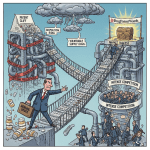
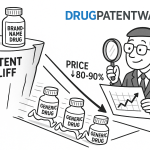
The biosimilar market is not a niche concern for generic drug manufacturers. It is the central mechanism by which payors, health systems, and governments intend to claw back hundreds of billions of dollars from biologics spending over the next decade. The FDA approved 19 biosimilars in 2024 alone, a number that would have been unimaginable in 2015 when only four had ever cleared the agency. The EMA, operating since 2006 with a now-seasoned regulatory framework, is simultaneously proposing to strip out mandatory clinical efficacy trials for well-characterized molecule classes, a structural shift that could compress development timelines by 18 to 24 months. Patents on biologics accounting for over $80 billion in annual global sales will expire by 2030.
This is not background context. It is the operating environment for every IP team, R&D lead, and institutional investor with exposure to biologics.
Part 1: What a Biosimilar Actually Is
The Molecular Complexity Gap
The ‘generic drug’ analogy gets used constantly and is wrong. A generic small molecule drug — metformin, atorvastatin, ibuprofen — is chemically identical to its reference product. The synthesis pathway may differ, but the molecular end state does not. The FDA’s Abbreviated New Drug Application (ANDA) process relies on this chemical identity to bypass clinical trials entirely, requiring only bioequivalence data.
Biologics break this logic at the molecular level. A monoclonal antibody like adalimumab (Humira) is a ~150 kDa glycoprotein assembled by living cells, expressed in Chinese hamster ovary (CHO) or other mammalian cell lines, purified through a proprietary process, and stabilized in a formulation designed by the originator. Its glycosylation pattern — the specific arrangement of sugar chains attached to asparagine residues at position N297 in the Fc region — is not fully specified in any patent or regulatory filing. It is an emergent property of the cell line, culture conditions, and downstream processing. Two bioreactor runs at the same facility can produce material with measurably different glycoform distributions.
This is what regulators mean when they say a biosimilar cannot be ‘identical’ to its reference product. Not identical in the same way that two synthesis routes for aspirin cannot produce identical crystals, but not identical in the much more consequential sense that glycosylation, charge variants, aggregation profiles, and oxidation state all affect pharmacokinetics, pharmacodynamics, and immunogenicity.
What the Regulatory Definition Actually Requires
The FDA, under 42 U.S.C. 262(i)(2), defines a biosimilar as a biological product ‘highly similar to the reference product notwithstanding minor differences in clinically inactive components’ and with ‘no clinically meaningful differences between the biological product and the reference product in terms of the safety, purity, and potency of the product.’
The EMA’s definition under Directive 2001/83/EC Article 10(4) covers ‘biological medicinal products that are similar to a reference biological medicine in terms of quality, safety and efficacy.’ The phrase ‘no clinically meaningful differences’ in the FDA standard is operationally important: it frames the evidentiary bar not as chemical identity but as clinical equivalence within margins defined by comparative trials and analytical characterization.
Both definitions intentionally sidestep the question of molecular identity. They require functional equivalence, not structural identity. This is why the biosimilar approval pathway is an abbreviated pathway and not a waiver pathway. The manufacturer still has to demonstrate something, just not everything the originator had to demonstrate from scratch.
The ‘Totality of Evidence’ Standard
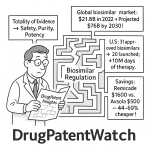
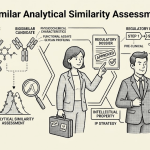
Both the FDA and EMA apply what they call a ‘totality of evidence’ framework. This means the regulatory decision is not made on any single dataset — a failed clinical pharmacology study does not automatically sink an application if the analytical package is exceptionally strong, and vice versa. Each piece of evidence is weighted in light of all other available data.
In practice, this standard has allowed regulators to become increasingly willing to approve biosimilars with streamlined clinical programs when the reference molecule is well-characterized. Adalimumab, etanercept, and infliximab biosimilars approved in the mid-2010s required full Phase III comparative efficacy trials. By contrast, some ustekinumab biosimilars approved in 2024-2025 carried narrower clinical packages because the molecule’s mechanism and clinical behavior are well-understood after 15 years of Stelara data.
Key Takeaways: Part 1
Biosimilars require demonstration of clinical equivalence, not molecular identity. The ‘totality of evidence’ standard means analytical data can offset thinner clinical packages when the reference molecule is well-characterized. For IP teams, this has a direct implication: early movers on a reference molecule benefit from less-developed comparability science, while late-entry biosimilar programs face a compressed development path because analytical methods and clinical endpoints are already established by the class.
Part 2: The Science of Demonstrating Biosimilarity
Analytical Characterization: The First and Most Important Step
Regulatory guidance from both the FDA (351(k) pathway guidance, 2019) and EMA (CHMP/437/04 Rev 1) places analytical characterization at the top of the evidence hierarchy. The reason is straightforward: if analytical data demonstrate high similarity across every measurable attribute, the probability of a clinically meaningful difference approaches zero. Strong analytical packages reduce or eliminate the need for certain non-clinical and clinical studies.
A comprehensive analytical characterization package for a monoclonal antibody biosimilar covers primary structure (amino acid sequence confirmed by peptide mapping, intact mass spectrometry), higher-order structure (circular dichroism, hydrogen-deuterium exchange mass spectrometry, nuclear magnetic resonance for small biologics), post-translational modifications (N-glycan profiling, deamidation, oxidation, C-terminal lysine clipping), biological activity (binding assays for target, FcRn, Fcgamma receptors, complement activation), and stability under stressed and real-time conditions.
Glycan profiling deserves particular attention. The fucosylation level of the core N-glycan at N297 directly affects antibody-dependent cellular cytotoxicity (ADCC) activity through FcgammaRIIIa binding. A biosimilar with a meaningfully different afucosylation ratio than its reference product would have different ADCC activity, which may or may not be clinically meaningful depending on the molecule’s mechanism. For monoclonal antibodies that operate primarily through direct target neutralization (like ustekinumab blocking IL-12/IL-23), ADCC differences are generally less relevant. For antibodies in oncology where Fc-effector function contributes to efficacy (like rituximab), the regulatory scrutiny of glycosylation data is more intense.
Non-Clinical Studies: When They Are and Are Not Required
The FDA’s 2019 guidance on non-clinical studies for biosimilar applications states that animal toxicology studies are not automatically required. If the analytical and functional data are robust, non-clinical studies may add no new information and are therefore unnecessary. This was a significant shift from the early years of the BPCIA, when most biosimilar programs included toxicology studies by default.
The EMA reached the same position earlier. Its 2012 monoclonal antibody biosimilar guideline noted that animal studies have limited value in predicting clinical immunogenicity and should only be conducted when the analytical data leave specific unresolved questions.
For biosimilar developers, this translates to a material reduction in development cost and timeline for well-characterized IgG1 and IgG4 monoclonal antibodies. The standard development path for an mAb biosimilar now runs roughly 24 to 36 months from cell line selection to regulatory submission, compared to 48 to 60 months a decade ago.
Clinical Pharmacology: The Pharmacokinetic and Pharmacodynamic Bridge
Clinical PK/PD studies remain central to most biosimilar programs. The standard design is a single-dose, randomized, two-treatment crossover or parallel-arm study in healthy volunteers or patients, measuring primary PK endpoints of AUC (area under the plasma concentration-time curve) and Cmax (maximum concentration). Acceptance limits are typically 80 to 125 percent for the ratio of geometric means, matching the bioequivalence criteria used in generic drug development.
Pharmacodynamic biomarkers are used where available. For G-CSF biosimilars (filgrastim, pegfilgrastim), absolute neutrophil count and CD34+ cell mobilization are accepted PD endpoints. For erythropoietin biosimilars, reticulocyte count response provides a PD anchor. For most monoclonal antibodies, PD endpoints either don’t exist (no validated serum biomarker correlates directly with clinical efficacy) or are too noisy to serve as primary endpoints. This is why PK similarity alone carries most of the clinical burden for mAb biosimilars.
Immunogenicity assessment — measuring anti-drug antibody (ADA) formation and neutralizing antibody titers — is required in all biosimilar clinical programs. The regulatory expectation is that immunogenicity rates for the biosimilar are comparable to the reference product, not necessarily identical. ADA rates vary across studies, patient populations, and assay sensitivity, so regulators review immunogenicity data descriptively rather than applying fixed equivalence margins.
Extrapolation of Indications: The Abbreviated Pathway’s Most Consequential Tool
Extrapolation allows a biosimilar approved in one indication to receive approval in all indications of the reference product without conducting separate clinical trials in each indication. The legal basis in the U.S. is 42 U.S.C. 262(k)(3)(B), and the EMA operates on the same scientific principle under its biosimilar guidelines.
The scientific justification for extrapolation must address three questions: whether the mechanism of action is the same across indications, whether the patient population differences affect PK/PD in ways not captured in the primary study, and whether safety and immunogenicity profiles are expected to transfer. For molecules with a single molecular target and consistent mechanism across indications, extrapolation is straightforward. Rituximab presents a more complex case because its clinical activity in rheumatoid arthritis (B-cell depletion via CD20 binding), non-Hodgkin’s lymphoma (ADCC and direct apoptosis induction), and pemphigus vulgaris (B-cell depletion) involves meaningfully different degrees of Fc-effector function contribution.
Regulators have been willing to approve extrapolation even for oncology indications based on non-oncology clinical trials, as long as the analytical data are strong and the mechanism arguments are sound. CT-P10 (rituximab biosimilar, Truxima) received EMA approval across all of Rituxan’s indications based on a clinical program primarily conducted in follicular lymphoma, with the RA and other indications approved through extrapolation.
Key Takeaways: Part 2
Analytical characterization now drives the regulatory decision more than clinical trials. Programs with robust glycan profiling, binding assay panels, and PK data can compress the clinical development path significantly. Extrapolation of indications is the mechanism by which a biosimilar’s commercial value multiplies: a single well-designed PK study in healthy volunteers can, in principle, unlock approval across a reference product’s entire indication set.
Part 3: The EMA Regulatory Framework in Full Technical Detail
Centralized Procedure Mechanics
The EMA’s centralized procedure, governed by Regulation (EC) No 726/2004, is mandatory for biosimilars. A single Marketing Authorisation Application (MAA) submitted to the EMA’s Committee for Medicinal Products for Human Use (CHMP) yields a European Commission decision granting access to all 27 EU member states plus EEA countries Norway, Iceland, and Liechtenstein. The procedure runs on a 210-day review clock with multiple designated stop-clocks where the applicant responds to CHMP questions.
The Day 120 List of Outstanding Issues and Day 180 List of Outstanding Issues are the key procedural milestones. Resolving complex questions about comparability — typically involving disagreements over the analytical interpretation of specific quality attributes or the adequacy of the clinical immunogenicity dataset — drives most procedural delays. Applicants who front-load their data packages and engage the CHMP through pre-submission scientific advice meetings systematically reduce stop-clock time.
Scientific advice through the EMA is not optional for serious biosimilar programs. The CHMP scientific advice procedure, governed by Article 57(1)(n) of Regulation 726/2004, allows sponsors to align on the scope and design of comparative studies before investing in clinical development. Sponsors who skip scientific advice and encounter CHMP questions at Day 120 frequently face 6 to 12 month delays to resolve disagreements that could have been pre-addressed.
The Quality Comparability Cascade
The EMA structures its quality comparability assessment as a cascade of increasingly specific tests. The starting point is primary structure — sequence identity confirmed by mass spectrometry. Moving up the molecular complexity hierarchy, the comparability exercise covers secondary and tertiary structure, disulfide bond patterns, glycosylation (both N-linked and O-linked), charge heterogeneity profiles (isoelectric focusing, cation-exchange chromatography), size heterogeneity (analytical ultracentrifugation, size-exclusion chromatography coupled with multi-angle light scattering), and sub-visible particle analysis.
The EMA’s 2014 guideline on comparability of biotechnology-derived products (EMA/CHMP/BWP/247713/2012) introduced the concept of a ‘similarity range’ for each quality attribute. The similarity range is derived from the variability observed in multiple lots of the reference product (typically from multiple markets and multiple manufacturing campaigns). The biosimilar’s attribute values must fall within this range, or a scientific justification must explain why the observed difference is not clinically meaningful.
This lot-to-lot variability analysis is one of the most important and most misunderstood aspects of EMA biosimilar review. Reference product lots routinely show 20 to 30 percent variability in glycoform ratios, for example. If the biosimilar’s glycosylation profile falls within this observed variability range, the EMA considers the attribute ‘similar.’ If it falls outside that range, the CHMP will ask detailed questions about biological relevance.
Tailored Clinical Approach: EMA’s 2025 Proposal
In April 2025, the EMA opened a public consultation on a proposed revision to its biosimilar guideline framework. The proposal recommends eliminating mandatory comparative clinical efficacy studies for well-characterized biological molecules where robust analytical and PK/PD data are available. The consultation period ran through September 2025, with EMA targeting a 2026 implementation if the revised guideline receives final CHMP adoption.
This is not a novel idea. The FDA has been moving in the same direction, and several published analyses of biosimilar approval data have shown that comparative clinical efficacy studies rarely identify differences not already detected by analytical or PK methods for the molecule classes where biosimilar development is most active. A 2021 analysis published in the Annals of Internal Medicine reviewed 38 FDA-approved biosimilars and found no cases where a comparative efficacy study reversed a positive analytical and PK comparability assessment.
The practical implication for sponsors with programs in active development: the investment case for a large Phase III comparative efficacy trial needs to be re-evaluated against the possibility that the EMA will accept a more streamlined package by 2026. Programs currently in Phase III for molecules with well-characterized mechanisms may find themselves in a competitive disadvantage relative to programs that delay Phase III investment in anticipation of the revised guideline.
Data Exclusivity Under EU Law: The 8+2+1 Rule
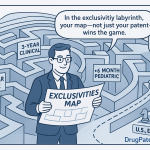
EU data exclusivity is governed by Directive 2001/83/EC as amended by Directive 2004/27/EC. The framework grants reference biological medicines eight years of data exclusivity (during which biosimilar applications can be filed but not granted) plus two years of market protection (during which a granted biosimilar cannot be placed on the market). An additional one year of market protection can be obtained if the originator receives approval for a new indication with ‘significant clinical benefit’ during the first eight years. This 8+2+1 structure produces a maximum 11-year exclusivity window from initial EU authorization.
The data exclusivity clock starts from the date of the reference product’s first EU authorization. For biologics that received initial EU approval in the late 1990s or early 2000s — erythropoietins, early G-CSFs, first-generation TNF inhibitors — this exclusivity expired well over a decade ago, which is why those molecule classes now have mature biosimilar markets with 10 or more approved competitors. For biologics authorized in 2012 to 2015, data exclusivity has recently expired or will expire shortly, creating the wave of biosimilar applications now entering EMA review.
Critically, data exclusivity and patent protection are independent. A biosimilar application can be filed after the data exclusivity clock allows it, regardless of whether the reference product’s patents have expired. Sponsors frequently file MAAs before patent expiry, accepting that market launch will be delayed until patent clearance or litigation resolution. The EMA authorization itself has no patent nexus: the agency evaluates only safety, efficacy, and quality, not IP status.
Biosimilar Interchangeability in the EU: Scientific Position vs. Legal Authority
The EMA and Heads of Medicines Agencies (HMA) published a joint statement in 2022 affirming that biosimilars approved in the EU ‘can be used interchangeably with their reference medicines.’ This statement carries scientific authority but no legal force on substitution decisions. EU member states retain sovereignty over their national substitution policies under Article 168(7) TFEU.
Germany, France, and the United Kingdom (pre-Brexit) have each taken different positions. Germany prohibits automatic pharmacy-level substitution for biosimilars entirely, relying instead on physician-driven prescribing and statutory price negotiation under the AMNOG process (Arzneimittelmarktneuordnungsgesetz). France introduced biosimilar substitution rules in 2020 allowing pharmacists to substitute biosimilars for reference biologics under specific conditions. The UK’s MHRA, now operating independently of the EMA post-Brexit, has designated certain biosimilars as ‘interchangeable’ and supports pharmacy substitution under NHS prescribing guidance.
This fragmentation matters for market access strategy. A biosimilar approved through the EMA centralized procedure will face different commercial dynamics in each member state, and sponsors who treat ‘EU approval’ as equivalent to ‘EU market access’ routinely underestimate the complexity of the market launch phase.
Key Takeaways: Part 3
EMA centralized procedure is mandatory and takes 210 days on a stop-clock basis. The quality comparability cascade, anchored in lot-to-lot variability analysis of the reference product, is the evidentiary foundation. The 2025 streamlined clinical proposal, if adopted in 2026, will compress development timelines for well-characterized molecules. EU data exclusivity runs 8+2 years with a possible 1-year extension, independent of patent status. National substitution policy variation across EU member states makes post-approval market access strategy as important as the regulatory filing itself.
Investment Strategy: EMA Regulatory Calendar
Biosimilar programs targeting reference biologics whose EU data exclusivity expired between 2022 and 2025 are entering the most competitive segment of the market. First-to-file advantage in EMA centralized procedure matters less than analytical package quality and pre-submission scientific advice engagement. For molecules where EMA adopts the streamlined clinical guideline in 2026, companies currently in Phase III face a stranded-cost risk if those clinical programs are no longer required for approval. IP teams should model Phase III cancellation scenarios against the regulatory timeline.
Part 4: The FDA Framework Under the BPCIA
BPCIA Basics and the Abbreviated Licensure Pathway
The Biologics Price Competition and Innovation Act, enacted as Title VII of the Affordable Care Act in March 2010, created the 351(k) abbreviated licensure pathway for biosimilars. The statute is codified at 42 U.S.C. 262. Unlike the Hatch-Waxman Act framework for small molecule generics, which uses the Orange Book and Paragraph IV certifications as its IP nexus mechanism, the BPCIA has its own IP dispute resolution procedure, colloquially called the ‘patent dance.’
The 351(k) pathway covers all biological products — proteins, peptides, polysaccharides, nucleic acids, and cell and tissue-based products — that previously required a Biologics License Application (BLA) rather than an NDA. The practical dividing line moved significantly in 2020, when the FDA transitioned most protein products previously regulated under the NDA/505(b) pathway to the BLA pathway. This included insulin, glucagon, and a number of other hormone products that had been treated as small molecules for regulatory purposes despite being produced through biotechnology. The transition means these products are now subject to the 12-year reference product exclusivity period under the BPCIA rather than the five-year exclusivity applicable to new chemical entities under Hatch-Waxman.
BPCIA Patent Dance: Mechanics and Litigation Strategy
The BPCIA patent dance is a structured pre-litigation information exchange designed to allow the reference product sponsor (RPS) and the biosimilar applicant (the ‘subsection (k) applicant’) to identify and litigate relevant patents before the biosimilar launches. The mechanics are set out at 42 U.S.C. 262(l).
Within 20 days of the FDA accepting a 351(k) application for review, the applicant must provide the RPS with a copy of the application and manufacturing information. The RPS then has 60 days to provide a list of patents it believes would be infringed. The applicant responds within 60 days with a statement of whether each listed patent is valid, enforceable, and infringed, and for any patent it believes is not infringed or invalid, it provides detailed factual and legal bases. The parties then negotiate to identify which patents will be litigated in a ‘first-wave’ lawsuit. If they reach no agreement, each party identifies up to five patents (the applicant’s list controls the ceiling), and those patents are litigated first.
The Supreme Court’s 2017 decision in Sandoz Inc. v. Amgen Inc. resolved two critical BPCIA questions. First, the ‘patent dance’ is not mandatory: a biosimilar applicant can opt out of providing its application to the RPS at the cost of waiving the statutory protection against a declaratory judgment action. Second, the 180-day notice of commercial marketing required under 42 U.S.C. 262(l)(8)(A) can be given after FDA approval, not before, meaning the 180-day clock starts at approval, not at application acceptance. This decision effectively shortened the launch delay biosimilar applicants face after approval.
AbbVie’s patent thicket strategy for adalimumab (Humira) remains the most consequential application of the patent dance in practice. AbbVie built a portfolio of over 250 U.S. patents covering the compound, formulation, manufacturing, dosing regimens, and methods of treatment. Rather than litigating all of them, AbbVie entered into patent settlement agreements with Amgen, Sandoz, Mylan, and others that delayed U.S. market entry for all Humira biosimilars until January 2023 — nine years after the first biosimilar had launched in Europe. The economic cost of that delay to the U.S. healthcare system has been estimated at over $100 billion in foregone savings.
The FDA’s Stepwise Approach
The FDA’s 2019 guidance on ‘Scientific Considerations in Demonstrating Biosimilarity to a Reference Product’ describes a stepwise approach that starts with analytical data and adds non-clinical and clinical data only to the extent needed to resolve residual uncertainty. This is philosophically identical to the EMA’s totality of evidence framework, but the FDA has historically been more prescriptive about what specific studies are expected.
The FDA’s product-class-specific guidance documents — covering monoclonal antibodies (2012, 2019), recombinant proteins other than mAbs (multiple documents), and insulin (2021) — provide molecule-class-specific recommendations for study design, endpoints, and analytical assays. Following the relevant product-class guidance is not legally required but deviations from it require explicit scientific justification at the time of application.
The FDA also operates a formal biosimilar development program that includes Biosimilar Initial Advisory (BIA) meetings, Type 1, Type 2, and Type 3 meetings with the biosimilar product development group, and a pre-BLA meeting. Sponsors who request and use BIA meetings at the start of development gain alignment on the comparative analytical approach and study design before committing significant capital. The BIA meeting request process under PDUFA requires the FDA to respond within 30 days, making it one of the fastest formal meeting types available.
Interchangeable Biosimilar Designation: State Law Still Controls
The interchangeable biosimilar designation, available under 42 U.S.C. 262(k)(4), requires a sponsor to demonstrate not only biosimilarity but also that the proposed product can be expected to produce the same clinical result as the reference product in any given patient, and that switching between the proposed product and the reference product does not increase safety risk or reduce efficacy. This additional showing typically requires a ‘switching study,’ a trial in which patients alternate between the reference product and the biosimilar multiple times, with immunogenicity and PK as primary endpoints.
The first interchangeable biosimilar approval was Semglee (insulin glargine-yfgn, Biocon/Viatris) in July 2021. Cyltezo (adalimumab-adbm, Boehringer Ingelheim) received interchangeable status in October 2021, becoming the first interchangeable biosimilar to a monoclonal antibody. By early 2026, more than 15 biosimilars hold the interchangeable designation.
The designation matters because it enables pharmacy-level substitution without prescriber intervention, mimicking how pharmacists substitute generic drugs for brand-name small molecules. However, the word ‘enables’ carries important qualification: whether substitution actually occurs at the pharmacy level depends on each state’s pharmacy practice laws. As of 2026, a majority of states have enacted laws permitting substitution of interchangeable biosimilars, with requirements that vary by state on prescriber notification timing (24 hours in some states, five business days in others) and patient notification procedures.
FDA Purple Book vs. Orange Book
The Purple Book is the FDA’s public database of licensed biological products and their reference product designations. It is the biosimilar equivalent of the Orange Book (the database of approved drug products with therapeutic equivalence evaluations under Hatch-Waxman). Unlike the Orange Book, the Purple Book does not list patents. Patent listings relevant to biologics are managed through the BPCIA patent dance process rather than through a public regulatory database, which reduces transparency for third parties trying to assess freedom to operate.
The Purple Book does list whether an approved biosimilar has interchangeable status, making it the primary reference for pharmacists assessing substitution eligibility. The FDA updates the Purple Book in real time following licensure actions.
Naming Conventions and Pharmacovigilance
All FDA-licensed biosimilars receive a nonproprietary name consisting of the core name shared with the reference product plus a four-letter lowercase suffix, randomly assigned and devoid of meaning. Ustekinumab’s biosimilars include ustekinumab-auub (Wezlana), ustekinumab-hmny (Starjemza), ustekinumab-stba (Steqeyma), and ustekinumab-kfce (Yesintek). The suffix is intended to ensure that adverse event reports can be traced to the specific biologic product rather than being attributed generically to the active substance.
The naming policy is not universally popular. Critics, including some biosimilar manufacturers themselves, argue that the suffix implies meaningful differences between products and creates hesitation among prescribers who might otherwise substitute freely. The World Health Organization uses a different system for international nonproprietary names for biologics, the ‘biological qualifier’ (BQ), which is alphanumeric and appended to the INN. Lack of alignment between FDA and WHO naming creates documentation complexity for global pharmacovigilance systems.
Key Takeaways: Part 4
The BPCIA’s 351(k) pathway is less transparent than Hatch-Waxman because patents are not listed in a public database. The patent dance is optional for applicants, with litigation risk as the trade-off for opting out. Sandoz v. Amgen clarified that the 180-day commercial marketing notice runs from approval, shortening effective launch delays. Interchangeable designation enables pharmacy substitution but state pharmacy law governs whether substitution actually happens. AbbVie’s Humira thicket strategy is the defining case study for how patent portfolio construction can delay biosimilar entry by nearly a decade in the U.S. market.
Investment Strategy: BPCIA Patent Dance
For biosimilar developers targeting high-value reference products, patent landscape analysis before filing a 351(k) application determines the risk profile of the entire program. The AbbVie Humira outcome demonstrates that compound patents alone do not define market exclusivity: formulation, dosing, and manufacturing patents with much later expiration dates can anchor settlement negotiations that delay market entry by years. IP teams should conduct full freedom-to-operate analyses covering all five Orange Book-equivalent patent categories for the target molecule before committing to late-stage development. Programs targeting reference products with thin downstream patent estates (formulation and method patents filed near or after biologic exclusivity expiry) carry materially lower litigation risk.
Part 5: EMA vs. FDA — A Technical Comparison
Three-Way Bridging Studies and Reference Product Sourcing
One of the operationally significant differences between EMA and FDA requirements is the reference product sourcing issue for global development programs. When a biosimilar developer runs clinical studies using EU-sourced reference product (because enrollment is in Europe or sourcing is more economical), the FDA generally requires a ‘three-way’ comparison: the biosimilar vs. EU reference product, the biosimilar vs. U.S. reference product, and the EU vs. U.S. reference products. The purpose is to confirm that the U.S.-licensed product and the EU-authorized product are sufficiently similar to each other that data generated with one is relevant to the other.
The EMA permits clinical studies using EU reference product without the same three-way constraint (though it requires analytical comparability to EU lots). This creates an asymmetry: a sponsor who conducts all clinical studies with EU reference product has a complete EMA data package but an incomplete FDA data package until bridging studies to U.S. lots are completed. Running bridging studies adds cost (approximately $3 to 8 million for the analytical and PK bridging components), but more importantly adds 6 to 12 months to the FDA submission timeline.
Sponsors have addressed this by running their primary clinical PK studies with both EU and U.S. reference product arms simultaneously, using a three-arm design. This adds complexity to enrollment and protocol, but generates both regulatory packages from a single study. Some EMA scientific advice has been accommodating of three-arm designs where they are scientifically justified.
Data Exclusivity: EU 8+2 vs. U.S. 12+4
U.S. data exclusivity under the BPCIA is 12 years of exclusivity from the date of first licensure of the reference product, with an additional four years during which a biosimilar application cannot be approved (the ‘four-year block’). This 12-year period is substantially longer than the EU’s 8-year period and was a deliberate legislative choice to protect innovation-stage biologics in the U.S. market.
The practical effect is that biologics approved in the U.S. in 2014 or later will not face FDA-approved biosimilar competition until at least 2026, while the same biologics may have already been subject to EMA-approved biosimilar competition since 2022. This explains why European healthcare systems have realized biosimilar savings years ahead of the U.S. for several molecule classes.
There are ongoing legislative discussions about reducing U.S. data exclusivity to align more closely with EU norms. The Biosimilars Competition Act of 2023 proposed reducing exclusivity to seven years. As of early 2026, no legislation has passed, but pressure from payors, the White House, and Congressional Budget Office analyses of prescription drug spending has kept the issue active.
Post-Market Surveillance Requirements
Both agencies require post-marketing pharmacovigilance for biosimilars, but the specific requirements differ. The EMA requires Risk Management Plans (RMPs) for all biosimilars, which include safety specifications, pharmacovigilance plans, and risk minimization measures. The RMP must be updated whenever new safety information becomes available, and CHMP can require additional post-authorization safety studies as a condition of approval.
The FDA requires Risk Evaluation and Mitigation Strategies (REMS) for biosimilars only when the reference product itself has a REMS. If Humira did not have a REMS, its biosimilars do not require one. This is a meaningful difference from the EMA’s universal RMP requirement, which means EU biosimilar post-market surveillance obligations are broadly more burdensome per product.
Key Takeaways: Part 5
Three-way bridging studies add 6 to 12 months and $3 to 8 million to development programs designed around EU reference product. U.S. data exclusivity at 12 years is 50 percent longer than the EU’s 8-year period, directly explaining the years-long lag in U.S. biosimilar entry across several molecule classes. Post-market obligations are heavier in the EU through the RMP requirement. For global programs, simultaneous three-arm PK study design is the most efficient path to dual filings.
Part 6: IP Valuation Deep Dives
Ustekinumab (Stelara): J&J’s $10B+ Patent Cliff
Stelara, Johnson & Johnson’s IL-12/IL-23 inhibitor, generated $10.9 billion in global sales in 2023, making it J&J’s second-largest product by revenue. The reference product’s compound patent (U.S. Patent No. 6,902,734, covering the ustekinumab antibody sequence) expired in September 2023. J&J’s broader patent estate for Stelara included formulation patents (covering the subcutaneous prefilled syringe formulation), method of treatment patents (covering specific dosing regimens in psoriasis, psoriatic arthritis, Crohn’s disease, and ulcerative colitis), and manufacturing patents.
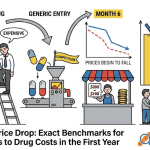
The IP valuation of Stelara for originator purposes collapsed rapidly after compound patent expiry. J&J had reported Stelara revenues of $5.8 billion in the first half of 2023; by the second half of 2024, U.S. Stelara revenues had declined by over 70 percent as biosimilar market share accumulated. Internationally, the erosion was less severe in markets without a single payer system, but European Stelara revenues had already been declining since 2022 following EMA approval of early biosimilar entrants.
For biosimilar developers, the Stelara patent landscape at the time of the first 351(k) filings (2021-2022) was defined by the compound patent cliff and the residual formulation and method patent risk. Amgen, Sandoz, Samsung Bioepis, and Teva all filed 351(k) applications and engaged in patent dance procedures with J&J. Settlement agreements were reached across the board, with biosimilar market entry set for January 2023 (consistent with U.S. data exclusivity expiry, the binding constraint in this case rather than patent litigation outcomes).
The IP valuation insight here is that the compound patent expiry defined the outer boundary of exclusivity, but data exclusivity, not patent litigation, controlled the actual launch date for most Stelara biosimilars. Programs that modeled patent litigation risk as the primary timing variable underestimated the importance of the 12-year U.S. data exclusivity as the binding constraint.
Aflibercept (Eylea): Regeneron’s IP Defense Architecture
Regeneron’s Eylea (aflibercept), a VEGF-trap fusion protein for neovascular AMD, diabetic macular edema, and related retinal conditions, generated approximately $5.8 billion in U.S. product revenues in 2023. The compound patent, U.S. Patent No. 7,070,959, expired in 2023. Regeneron built a multi-layer patent estate covering the VEGF-trap molecule sequence, the specific fusion protein design, manufacturing processes, ophthalmic formulation, intravitreal injection methods, and dosing regimens.
In addition to its patent estate, Regeneron launched Eylea HD (aflibercept 8 mg), a higher-dose formulation allowing less frequent intravitreal injection, in August 2023. This product hop to a new formulation with extended durability serves multiple purposes from an IP perspective: it establishes a new data exclusivity period for the 8 mg formulation, generates a new set of dosing and method patents, and differentiates the market from standard 2 mg Eylea as biosimilar competition on the 2 mg formulation intensifies. The 2 mg biosimilar entrants approved in 2024 (Celltrion’s CT-P42, Samsung Bioepis’ SB15, and others) compete against a reference product that Regeneron is actively repositioning in favor of the reformulated 8 mg version.
For biosimilar investors, this sequence illustrates the ‘brand straddle’ dynamic: an originator launching a next-generation product concurrent with biosimilar entry into the prior generation. The biosimilar captures share from the declining legacy product while the originator defends premium pricing on the reformulated version. Biosimilar market share of standard Eylea has been meaningful (estimates suggest 20 to 30 percent of the 2 mg segment by Q3 2025), but the revenue impact on Regeneron has been partially offset by Eylea HD uptake.
The IP valuation of the 2 mg Eylea patent estate at this point is low for originator purposes: the compound patent has expired, the product is in active biosimilar competition, and the manufacturing/formulation patents are being litigated. The 8 mg Eylea HD IP estate has higher residual value, but its protection depends on both the strength of its patents and Regeneron’s ability to shift prescribing to the reformulated product before biosimilar developers target the 8 mg dose.
Amgen’s denosumab franchise (Prolia for postmenopausal osteoporosis, Xgeva for cancer-related bone events) generated combined global revenues of approximately $6.5 billion in 2023. Denosumab is a fully human IgG2 monoclonal antibody targeting RANK Ligand (RANKL), and its compound patent (U.S. Patent No. 6,740,522) expired in May 2025, triggering the anticipated wave of biosimilar approvals.
Amgen’s IP strategy for denosumab included filing continuation patents on specific formulation aspects (particularly the high-concentration, low-volume subcutaneous formulation containing sorbitol, polysorbate 20, and sodium acetate buffer), device patents covering the prefilled syringe and autoinjector design, and method patents covering specific patient populations (e.g., patients with impaired renal function, patients on concurrent glucocorticoid therapy). These downstream patents, with expiration dates running into the 2030s, form the litigation estate that biosimilar applicants must address through the patent dance.
The FDA approved six denosumab biosimilars in early 2025: Bomyntra and Conexxence (denosumab-bnht, Sandoz), Osenvelt and Stoboclo (denosumab-bmwo, Fresenius Kabi), and Ospomyv and Xbryk (denosumab-dssb, Samsung Bioepis/Organon). The dual-product structure, with separate biosimilars referencing Prolia and Xgeva despite the identical active substance, reflects differing concentrations (60 mg/mL vs. 70 mg/mL) and approved indications.
Amgen’s own biosimilar business (which competes against its originator oncology portfolio in some markets) complicates the corporate narrative around denosumab. Amgen has a stated interest in the rapid growth of biosimilar markets generally, which theoretically moderates the aggressiveness of its anti-biosimilar litigation posture relative to a pure originator.
Omalizumab (Xolair): The Genentech/Novartis Co-Ownership Complexity
Xolair (omalizumab), an anti-IgE monoclonal antibody for severe allergic asthma and chronic idiopathic urticaria, is co-owned by Genentech (a Roche subsidiary) and Novartis under a collaboration agreement dating to 1996. Global Xolair revenues were approximately $3.8 billion in 2023. The co-ownership structure creates complications for biosimilar patent litigation because both parties have rights in the relevant patents, meaning both must be defendants in any patent infringement action and both must consent to any settlement.
The compound patent for omalizumab expired in the U.S. in April 2025. Omlyclo (omalizumab-igec, Sandoz) received FDA approval in March 2025, with a subsequent agreement allowing market launch aligned with patent resolution. Samsung Bioepis and other developers have active programs. EMA-approved omalizumab biosimilars have been available in Europe since 2023.
The IP valuation framework for Xolair is complicated by the co-ownership of its patents. In pharmaceutical IP valuation, royalty rate analysis and discounted cash flow models for patent estates assume a single rights-holder who can enter into settlements and licensing arrangements independently. Genentech-Novartis co-ownership requires a coordination step that adds legal complexity and, historically, has extended litigation timelines.
Insulin Aspart (Novolog): Novo Nordisk’s Formulation Patent Wall
Novo Nordisk’s NovoLog (insulin aspart), a rapid-acting insulin analog for Type 1 and Type 2 diabetes, had U.S. revenues of approximately $1.6 billion in 2023. The compound patent for insulin aspart expired years ago, but Novo Nordisk’s IP position was defended by a formulation patent estate covering the specific phosphate buffer system and zinc content in the NovoLog formulation, device patents on the FlexPen and FlexTouch delivery systems, and method patents covering specific titration algorithms.
Merilog (insulin aspart-szjj, Biocon/Viatris) received FDA approval in February 2025 as the first insulin aspart biosimilar. The program navigated the formulation patent issue by developing a distinct buffer formulation that Biocon characterized as non-infringing — a development strategy requiring significant analytical work to demonstrate PK equivalence despite formulation differences.
Insulin biosimilar IP valuation is distinctive from large-molecule mAb valuation because insulin programs are subject to an additional competitive pressure: the FDA’s regulation of insulins as biologics (post-2020 transition) means that originator insulins now carry 12-year exclusivity, but that exclusivity clock already started in some cases before the 2020 transition, limiting its practical effect. Combined with ongoing insulin pricing scrutiny from the Biden and Trump administrations, the commercial economics of insulin biosimilars in the U.S. differ materially from the European market.
Key Takeaways: Part 6
Patent cliffs for high-revenue biologics do not generate immediate revenue erosion when U.S. data exclusivity is the binding constraint. Reformulation product hops (Eylea HD) extend effective market exclusivity by establishing new IP estates and dosing differentiation concurrent with biosimilar entry into the prior formulation. Co-owned patent estates (Xolair) add settlement complexity. Formulation patents with later expiration dates are now the primary litigation battleground for most mAb biosimilar programs, not compound patents.
The following reference biologics have compound patents expiring or recently expired, with U.S. data exclusivity also expired or expiring by 2030, making them the highest-priority biosimilar development targets by commercial value:
Denosumab (2025 U.S. compound patent expiry, combined franchise revenues ~$6.5B): Active competitive entry underway. Multiple approved biosimilars. Amgen formulation and device patent litigation ongoing. Market capture pace depends on payor formulary decisions and Prolia patient switching.
Omalizumab (2025 U.S. compound patent expiry, revenues ~$3.8B): First biosimilar approved March 2025. Early-mover advantage material given allergist prescribing concentration.
Pertuzumab/Perjeta (Roche, HER2 dimerization inhibitor, oncology, revenues ~$3.4B): Compound patent expired 2024. Biosimilar applications in EMA and FDA review as of early 2026. Combination regimen with trastuzumab creates a bundled prescribing dynamic.
Secukinumab/Cosentyx (Novartis, anti-IL-17A, revenues ~$5.5B): U.S. data exclusivity expires 2027. Biosimilar applications have been filed. Earlier EMA biosimilar entry expected.
Dupilumab/Dupixent (Regeneron/Sanofi, anti-IL-4Ralpha, revenues ~$14.7B globally in 2024): Long data exclusivity runway to 2033 in U.S. European compound patent situation more complex. Not a near-term biosimilar target but the largest eventual patent cliff in immunology.
Part 7: The Evergreening Playbook
Patent Thickets: Stacking Composition, Formulation, and Method Patents
Originator companies treat patent portfolio construction as an extension of product lifecycle management. The goal is not to have the strongest single patent but to have enough patents, expiring at staggered dates, that biosimilar developers face a sustained litigation burden that delays launch even after the compound patent expires. The U.S. patent system enables this through continuation applications and continuation-in-part applications, which can be filed years after the original patent application and receive independent expiration dates.
AbbVie’s Humira portfolio illustrates the tactic at its extreme. Starting from the original adalimumab composition of matter patent (U.S. Patent No. 6,090,382, expiring in 2016), AbbVie filed continuations and new applications covering the high-concentration, citrate-free formulation introduced in 2016, specific dosing regimens for Crohn’s disease, the prefilled syringe and autoinjector, manufacturing process parameters, and methods of treating specific patient subpopulations. Many of these patents were issued between 2014 and 2020, creating an IP estate with effective protection through 2034, despite the compound patent’s 2016 expiry.
The FTC has opened a broader review of pharmaceutical patent listings in the context of the BPCIA, and the FDA issued a draft guidance in 2023 on what types of patents are eligible for listing in the Purple Book context. As of early 2026, no binding rules have been finalized, but the regulatory and antitrust attention on patent thickets has increased litigation risk for aggressively constructed portfolios.
Product Hopping
Product hopping refers to an originator company reformulating or redesigning a reference product to shift market prescribing to a new version just as biosimilar competition enters the original version. This can be a ‘hard switch’ (withdrawing the original product from market entirely) or a ‘soft switch’ (continuing to sell the original while heavily promoting the new version). Regeneron’s Eylea HD launch is a recent soft-switch example. Biogen’s transition from intravenous to subcutaneous natalizumab (Tysabri to Tyruko in the context of biosimilar development) is another.
Courts have addressed product hopping in antitrust contexts. In New York ex rel. Schneiderman v. Actavis PLC (2d Cir. 2015), the Second Circuit upheld a preliminary injunction against Forest Laboratories for withdrawing Namenda IR while heavily promoting Namenda XR to prevent generic substitution. The legal standard that emerged from this case — whether the switch reduces competition without procompetitive justification — is the primary antitrust framework for evaluating product hops in the pharmaceutical context.
For IP teams advising on product reformulation strategy, the Namenda precedent means that hard switches, where the original product is withdrawn from market concurrently with biosimilar entry, carry material antitrust litigation risk. Soft switches are generally safer but require that the reformulated product have genuine clinical differentiation beyond simple delivery convenience.
Co-pay Accumulators and Rebate Traps
Originator companies routinely offer manufacturer-funded co-pay assistance programs to commercially insured patients, reducing out-of-pocket costs for branded biologics. These programs do not reduce the list price to payors; they function as targeted subsidies to patients at the point of dispensing.
Payors have responded with ‘co-pay accumulator’ programs that do not count manufacturer co-pay assistance toward a patient’s deductible or out-of-pocket maximum. Under accumulator policies, patients benefit from the co-pay subsidy until it is exhausted, at which point they face full out-of-pocket costs for the remainder of the year. This creates a price shock dynamic that can increase adherence disruption, particularly for patients on high-cost infused or injected biologics.
For biosimilar market entry, the co-pay assistance dynamic functions as a barrier. If the originator’s list price is $40,000 per year but patients with commercial insurance pay $0 due to manufacturer co-pay assistance, the biosimilar’s list price reduction from $32,000 to $25,000 is invisible to the patient at the pharmacy counter. Payors using formulary management tools (prior authorization, step therapy, tiering) are the primary lever for driving biosimilar uptake in this market structure.
Pay-for-Delay After FTC v. Actavis
The Supreme Court’s 2013 decision in FTC v. Actavis held that reverse payment settlements in pharmaceutical patent disputes (where the originator pays the generic or biosimilar manufacturer to delay market entry) can violate antitrust law and are subject to rule-of-reason analysis. Prior to Actavis, courts had generally held that patent settlements within the scope of the patent were per se legal; Actavis rejected this position.
The application of Actavis to BPCIA patent dance settlements has been contested in multiple cases. The structural differences between Hatch-Waxman settlements (which typically involve a specific market entry date and a lump sum or value transfer) and BPCIA settlements (which often involve a license, a product supply arrangement, and other commercial terms) have made antitrust analysis more complex. Biosimilar settlement agreements that include significant value transfers from the originator to the biosimilar developer — whether as cash payments, supply agreements, or other commercial arrangements — carry Actavis litigation risk.
Key Takeaways: Part 7
Patent thickets delay biosimilar entry without requiring the originator to win every litigation. Staggered expiration dates mean biosimilar developers face litigation costs even if individual patents are weak, because the cost of challenging 50 patents is prohibitive. Product hops require genuine clinical differentiation to avoid the Namenda antitrust standard. Co-pay assistance programs mute the patient-level price signal that would otherwise drive biosimilar substitution. BPCIA settlements with significant value transfers carry Actavis risk that pure patent license settlements under Hatch-Waxman may not.
For institutional investors holding originator biologics companies with major patent cliffs approaching, the key variables are: (1) the depth of the downstream patent estate beyond compound patent expiry, (2) the availability and clinical differentiation of a next-generation product for soft-switch positioning, (3) the company’s history in BPCIA patent dance settlements and whether its settlement terms have been challenged as reverse payments, and (4) the payor formulary environment for the reference product. Companies with only compound patents and no credible product hop in development face a steeper revenue curve post-biosimilar entry than those with staggered formulation patents and a differentiated successor product.
Part 8: FDA Approval Surge 2023-2025
2024: 19 Approvals and What Drove Them
The FDA approved 19 biosimilars in 2024, the highest annual total since the BPCIA’s enactment. The 2024 cohort was concentrated in four molecule classes: ustekinumab (4 approvals), aflibercept (5 approvals), denosumab (applications under review that translated to 2025 approvals), and a scattered group including ranibizumab, tocilizumab, and bevacizumab continuation approvals. The numeric concentration in ustekinumab and aflibercept reflects the commercial logic that biosimilar development investment follows revenue, and both molecules were multi-billion-dollar products with patent estates that developers had mapped years in advance.
For context, the FDA approved only one biosimilar in 2016 (infliximab-qbtx, the second infliximab biosimilar) and five in 2023. The acceleration from 2023 to 2024 reflects the cumulative effect of applications filed in 2020 to 2022, when multiple programs simultaneously targeted the Stelara and Eylea patent cliffs.
2025 Approvals: Q1 and Early Pipeline
The first quarter of 2025 produced approvals for six denosumab biosimilars (Bomyntra, Conexxence, Osenvelt, Stoboclo, Ospomyv, Xbryk), one omalizumab biosimilar (Omlyclo), and one insulin aspart biosimilar (Merilog). The denosumab approvals were notable for the FDA’s willingness to process multiple applications in the same molecule class simultaneously, reflecting the agency’s capacity investments under PDUFA VII (the reauthorization signed in 2022, which included additional biosimilar user fees to fund dedicated review staff).
The 2025 pipeline beyond Q1 includes biosimilar applications for pertuzumab (Roche/Genentech, oncology), natalizumab (Biogen, multiple sclerosis), vedolizumab (Takeda, IBD), and early filings for secukinumab (Novartis). If the pace of approvals continues through 2025 at the Q1 rate, the full year could produce 20 to 25 biosimilar approvals.
FDA’s Priority Review and Expedited Programs
Biosimilars do not qualify for Priority Review (which requires substantial improvement over available therapy) or Breakthrough Therapy designation by definition, because they reference an already-approved product. They can, however, receive Accelerated Approval for specific circumstances and can qualify for Fast Track designation if they address an unmet medical need. In practice, neither mechanism has been widely used for standard biosimilar applications.
The FDA’s formal Competitive Generic Therapy (CGT) designation, established under the FDA Reauthorization Act of 2017, applies to small molecule generics with inadequate competition but has no direct analog for biologics. Congress has considered creating a ‘competitive biosimilar therapy’ track, but no such mechanism exists as of early 2026.
Key Takeaways: Part 8
The 2024 approval surge reflects a filing cycle from 2020 to 2022 targeting concentrated patent cliff opportunities. PDUFA VII fee increases funded review capacity to handle the volume. The 2025 pipeline suggests the pace will be sustained. For biosimilar developers, the competitive concentration in ustekinumab (4+ approved biosimilars) and denosumab (6 approvals) means that first-to-market advantage, while real, is shorter-lived than it was in the early infliximab era where sequential approvals came years apart.
Part 9: EMA Approvals 2024-2025 and the Streamlined Pathway
Recent EMA Approvals
The EMA approved two denosumab biosimilars in March 2025: Jubereq (denosumab, Sandoz) for skeletal-related events in patients with advanced malignancies, and Osvyrti (denosumab, Fresenius Kabi) with indications covering prostate cancer bone complications. These approvals came after EMA data exclusivity for Prolia and Xgeva expired in 2021, meaning European biosimilar programs launched approximately four years before U.S. market entry.
Dyrupeg (pegfilgrastim, Hexal/Sandoz) received EMA approval in January 2025 for neutropenia management during chemotherapy, adding to a pegfilgrastim class that already had multiple EU-approved biosimilars. The EMA also continued processing applications in the omalizumab class (European data exclusivity for Xolair expired in 2022) and early-stage evaluation of vedolizumab biosimilar applications.
Streamlined Approval Proposal: Technical Analysis
The EMA’s 2025 consultation document proposed that for biological medicines with ‘a well-established safety and efficacy profile’ where ‘the mechanism of action is well understood,’ sponsors should be able to obtain approval based on comprehensive analytical comparability data plus pharmacokinetic similarity data alone, without a comparative clinical efficacy trial.
The proposal specifically identified monoclonal antibodies acting through a single well-characterized molecular target as the primary candidate class. It acknowledged that molecules where clinical performance depends on complex, not-fully-characterized Fc-effector function contributions, or where clinical endpoints are not predicted by PK endpoints, would still require comparative clinical data.
If adopted in 2026 as proposed, this change reduces the average biosimilar development cost for eligible programs by an estimated $30 to 80 million (the cost range for a Phase III comparative efficacy trial) and by 18 to 24 months in development timeline. For programs already in Phase III with results expected in 2026, the guideline change creates a decision point: proceed to submission with the Phase III data (reducing residual regulatory uncertainty) or halt Phase III early and submit under the streamlined pathway (accepting earlier submission at the risk of lingering uncertainty about regulatory acceptance of the abbreviated package).
Key Takeaways: Part 9
EMA biosimilar approvals in 2024 to 2025 mirror FDA approvals for the same molecule classes, with a three to four year lead due to shorter EU data exclusivity. The 2025 streamlined approval proposal, if finalized, fundamentally changes the development economics for mAb biosimilar programs: Phase III comparative efficacy trials may become optional rather than expected for well-characterized molecule classes by 2026.
Part 10: Market Access, Formulary Dynamics, and Adoption Barriers
Payer Formulary Architecture and Biosimilar Uptake
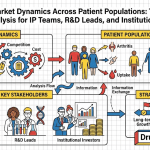
In the U.S., formulary placement is the primary lever for biosimilar market access. Pharmacy benefit managers (PBMs) and specialty pharmacy networks control formulary decisions for most commercially insured patients. For infused biologics (administered in hospital or infusion center settings), hospital formulary committees and group purchasing organization (GPO) contracts govern product selection.
The formulary dynamics for biosimilars differ between infused and self-injected products. For infused oncology biologics (bevacizumab, rituximab, trastuzumab), hospital formulary committees have driven rapid biosimilar conversion because the hospital captures the ‘buy and bill’ margin on the infused product. If the hospital purchases the biosimilar at a lower acquisition cost but bills the insurer at close to the reference product’s reimbursement rate, the margin capture is larger. This mechanism produced rapid biosimilar adoption in the hospital infusion setting well ahead of the outpatient self-injection market.
For self-injected biologics (adalimumab subcutaneous, etanercept, ustekinumab), formulary conversion is slower. PBMs negotiate rebates from both the originator and biosimilar manufacturers, and the net effective price after rebates determines formulary placement. In several documented cases, the originator’s rebate offer produces a net effective price below the biosimilar’s list price, creating a perverse incentive for the PBM to exclude the lower-list-price biosimilar from preferred formulary tiers.
Step Therapy and Prior Authorization
Step therapy requirements mandate that patients try one or more prior therapies before the prescribed agent will be covered. For biosimilars, step therapy has been applied in two directionally opposite ways: some payors require patients to try a biosimilar before the reference product (biosimilar-first step therapy, which drives biosimilar uptake), while others require patients to try the reference product first (reference-first step therapy, which entrenches the originator).
Reference-first step therapy is increasingly rare as payors have shifted their economic incentives toward biosimilar uptake. The Inflation Reduction Act’s drug negotiation provisions and the administration’s executive orders on biosimilars have accelerated this shift by making biosimilar uptake part of broader drug cost reduction policy.
GPO Contracts and Hospital Biosimilar Uptake
Group purchasing organizations aggregate hospital purchasing volume to negotiate lower acquisition costs. Major GPOs including Vizient, Premier, and HealthTrust cover the majority of U.S. acute care hospital purchasing. GPO contracts for biosimilars typically offer tiered pricing based on committed volume: a hospital that commits to sourcing a specific percentage of its infliximab or bevacizumab purchases from a single biosimilar supplier receives a lower contract price.
This structure favors hospitals with large infusion volumes (academic medical centers, comprehensive cancer centers) because they can commit to volume tiers that unlock the lowest contract pricing. Community hospitals with lower volumes may not achieve the same contract pricing, creating a disparity in biosimilar acquisition costs between large and small institutions.
Key Takeaways: Part 10
Hospital buy-and-bill economics drive faster biosimilar adoption for infused products than outpatient self-injection dynamics. PBM rebate structures can make originator net effective prices lower than biosimilar list prices, inverting the expected price competition logic. GPO contracting favors high-volume institutions.
Part 11: Global Market Size and Growth Projections
The global biosimilars market carries consensus forecasts clustering around $136 to $176 billion by 2032 to 2034, depending on the research firm and their assumption set on biosimilar penetration rates and reference product revenue baselines. Coherent Market Insights estimates the market at $42.5 billion in 2025 growing to $136.4 billion by 2032 at an 18.1 percent CAGR. Fortune Business Insights projects $176 billion by 2034. ResearchAndMarkets places the 2030 figure at $93.1 billion from a 2024 base of $34.8 billion.
The CAGR range of 17 to 18 percent over seven to eight years is high for a sector facing active generic competition. For comparison, the global branded biologics market grew at roughly 10 percent annually through the 2010s. The biosimilar sector’s higher growth rate reflects the arithmetic of a market starting from a low penetration base and addressing a large and growing reference market, not a genuinely faster rate of underlying demand growth.
Therapeutic area breakdown in 2025 shows oncology and immunology/inflammation together representing roughly 65 percent of biosimilar revenues, reflecting the concentration of high-revenue reference biologics in those two areas. Endocrinology (insulins, growth hormone) contributes 15 to 20 percent, with the remainder distributed across hematology, ophthalmology, and neurology. By 2030, the ophthalmology segment will grow as multiple aflibercept and ranibizumab biosimilars compete across the global market, and the early immunology/inflammation biosimilars (infliximab, etanercept, adalimumab) will be in fully mature markets with deeply discounted pricing.
Geographic market share by value in 2025 is roughly: Europe 35 percent, U.S. 30 percent, Asia-Pacific 20 percent, rest of world 15 percent. Europe’s lead in absolute value reflects earlier patent expiry timelines and more systematic institutional biosimilar adoption in single-payer or tightly regulated health systems. The U.S. share is growing faster as the delayed pipeline of BPCIA-gated biosimilars enters the market.
Key Takeaways: Part 11
The $136B projection is plausible but depends heavily on penetration rates in the U.S. self-injection segment, which have historically disappointed relative to hospital infusion. Oncology and immunology dominate current revenues but ophthalmology (aflibercept, ranibizumab) is the fastest-growing segment through 2028. European and U.S. market share is converging as the U.S. biosimilar pipeline matures.
Investment Strategy: Biosimilar Market Entry
For biosimilar developers, the competitive dynamics in fully launched markets (infliximab, adalimumab, trastuzumab, bevacizumab) demonstrate that price is not the only competitive variable. Market share in the hospital setting follows GPO contract positioning, while market share in the outpatient self-injection setting follows formulary placement driven by net price after rebates. Companies with large commercial infrastructure capable of managing formulary negotiations and GPO contracting simultaneously with manufacturing scale-up have a structural advantage over smaller developers whose go-to-market model relies on third-party distribution agreements.
Part 12: Patent Cliff Calendar 2025-2030
The following high-priority targets have compound patents expired or expiring, with data exclusivity expiry within the 2025 to 2030 window:
Denosumab (Prolia/Xgeva, Amgen): Compound patent expired May 2025. U.S. data exclusivity expired June 2022. Multiple FDA approvals completed as of Q1 2025. Market in active competition.
Omalizumab (Xolair, Roche/Novartis): Compound patent expired April 2025. First FDA biosimilar approved March 2025. Early competitive entry.
Pertuzumab (Perjeta, Roche): Compound patent expired September 2024. U.S. data exclusivity expires June 2025. FDA biosimilar applications filed.
Vedolizumab (Entyvio, Takeda): U.S. data exclusivity expires May 2026. European patent situation already cleared. EMA biosimilar applications in review.
Secukinumab (Cosentyx, Novartis): U.S. data exclusivity expires December 2027. Revenue ~$5.5B. Early biosimilar development programs underway.
Ixekizumab (Taltz, Eli Lilly): U.S. data exclusivity expires 2028. Revenue ~$2.6B.
Tezepelumab (Tezspire, AstraZeneca/Amgen): Too early for biosimilar competition. Monitoring only.
Dupilumab (Dupixent, Regeneron/Sanofi): U.S. data exclusivity through 2033. Largest eventual patent cliff in current immunology portfolio. No near-term biosimilar threat.
Part 13: The Analytical Technology Roadmap
Mass Spectrometry: The Enabling Technology
The revolution in biosimilar comparability science over the past decade has been driven by advances in mass spectrometry (MS). High-resolution Orbitrap mass spectrometers now enable characterization of monoclonal antibody glycoforms, charge variants, oxidation, and sequence variants at a level of sensitivity that was unavailable to most analytical laboratories in 2012. Intact mass analysis, middle-down approaches (enzymatic reduction to Fc and Fab fragments), and bottom-up peptide mapping now routinely generate datasets with sub-ppm mass accuracy.
This analytical capability has outpaced the ability of regulatory guidelines to specify exactly what data are required, which is why both the FDA and EMA have moved to principle-based guidance (demonstrate ‘comprehensive’ structural characterization) rather than prescriptive assay lists. Sponsors who build analytical platforms that capture the full spectrum of molecular attributes — including low-abundance variants detectable only by sensitive MS methods — produce comparability packages that minimize regulatory questions and support the argument for streamlined clinical development.
Glycan Profiling and Its Regulatory Significance
N-glycan profiling has become a dedicated regulatory category in both FDA and EMA review. The standard analytical toolkit includes fluorescence-labeled N-glycan release analysis by HPLC (the 2-AB method, established in the 1990s), extended to include high-resolution mass spectrometry for unambiguous structural assignment of complex glycan species. Sites that can run HILIC-UHPLC coupled with Orbitrap MS generate glycoform data that provides the CHMP with structural, not just compositional, information about each glycan species.
Sialylation levels merit specific attention. Highly sialylated glycoforms affect antibody clearance through interactions with the asialoglycoprotein receptor. For erythropoietin biosimilars, sialylation level directly affects plasma half-life and therefore clinical dosing. For most IgG1 and IgG4 monoclonal antibodies, sialylation differences within the observed reference product range are generally accepted as non-clinically meaningful.
AI-Assisted Comparability Studies
Machine learning tools are being applied to biosimilar comparability science in two areas. First, multi-attribute method (MAM) MS data analysis — where a single peptide mapping run generates hundreds of quantified attributes — benefits from ML-driven pattern recognition to identify attribute value combinations that deviate from the reference product similarity range. Manual review of hundreds of attributes per lot in a high-throughput comparability program is not scalable; ML-assisted flagging of out-of-range attributes and auto-generation of comparability summaries compresses the analytical review timeline.
Second, predictive models for immunogenicity risk are in early development at several large biosimilar manufacturers. T-cell epitope prediction algorithms have been in use in drug development for years, but their integration into the biosimilar comparability workflow, to prospectively identify sequence variants or glycoform changes that might elevate immunogenicity risk, is more recent. Regulatory agencies have not yet specified how such predictive data should be presented in a comparability dossier, but EMA’s recent scientific advice has been accommodating of sponsors who include immunogenicity risk modeling as supportive information.
Key Takeaways: Part 13
High-resolution mass spectrometry is now the foundation of biosimilar analytical development, not a supplemental tool. Programs that invest in HILIC-UHPLC-MS glycoform characterization and intact mass analysis generate data packages that can support streamlined clinical development. ML-assisted MAM data analysis is reducing analytical review cycle time. Sponsors who adopt these technologies in development rather than retrospectively compress overall development timelines by 6 to 12 months.
Part 14: Investment Strategy Summary
Where Institutional Capital Is Moving
The biosimilar sector’s investment thesis has evolved from a simple ‘generics for biologics’ narrative to a more nuanced assessment of commercial execution capability, patent clearance risk, and pipeline positioning relative to upcoming patent cliffs.
Amgen occupies a unique position: it is both a major originator (Enbrel, Prolia, Xgeva) facing biosimilar competition and a major biosimilar developer (Amjevita, Mvasi, Kanjinti, Riabni). Its biosimilar revenues ($2.2 billion in 2023, growing) partially offset originator revenue erosion, but the net effect on margins depends on the relative pricing dynamics in each competitive segment.
Samsung Bioepis (majority-owned by Samsung Biologics with a 49.9 percent Biogen stake) has built the most diversified approved biosimilar portfolio outside of Sandoz, with approvals in adalimumab, etanercept, infliximab, trastuzumab, bevacizumab, and now denosumab and aflibercept classes. The company’s go-to-market model relies on commercial partnerships with Biogen in the U.S. and independent distribution in Europe. The breadth of the portfolio positions Samsung Bioepis to participate in GPO bundling arrangements, where a single supplier offering biosimilars across multiple molecule classes can negotiate preferred placement.
Sandoz, spun out from Novartis in October 2023, is the largest publicly traded pure-play biosimilar company globally. Its pipeline spans more than 15 approved or late-stage biosimilars. Sandoz’s structural cost advantage comes from its long-standing biologic manufacturing infrastructure in Europe (Holzkirchen, Germany; Menges, Slovenia), which provides manufacturing cost-per-gram metrics that smaller biosimilar developers cannot match.
Fresenius Kabi’s biosimilar business (branded as Fresenius Kabi Biopharma) has been building rapidly, with denosumab and aflibercept biosimilars approved in both the U.S. and EU in 2024-2025. The German parent’s hospital supply chain relationships provide a channel advantage in the institutional market.
For investors assessing entry points, the near-term revenue catalyst calendar concentrates in three clusters: denosumab biosimilars (market launch in progress as of early 2025, formulary negotiation ongoing); vedolizumab biosimilars (U.S. entry expected 2026); and pertuzumab biosimilars (U.S. entry expected 2025-2026, particularly relevant for Roche/Genentech revenue modeling and for companies with approved pertuzumab biosimilars or programs in late-stage development).
Part 15: Expanded FAQs
Q1: If two biosimilars reference the same originator product, are they interchangeable with each other?
No, and this is a common source of confusion. FDA interchangeability designation applies specifically between a biosimilar and its reference product, not between two biosimilars. The FDA has not established a mechanism by which two separately approved biosimilars referencing the same reference product are automatically interchangeable with each other. Substituting one biosimilar for another at the pharmacy level would require specific prescriber authorization or a separate interchangeability study comparing the two biosimilars directly, which no sponsor has conducted. The practical implication is that formulary decisions matter even within the biosimilar class: Wezlana (ustekinumab-auub) and Steqeyma (ustekinumab-stba) are not interchangeable without prescriber action.
Q2: How does the BPCIA ’12-year exclusivity’ interact with orphan drug exclusivity?
If a reference biologic holds orphan drug designation for a specific indication, orphan drug exclusivity (seven years in the U.S.) applies to that indication and can prevent approval of a biosimilar for that specific indication for seven years from orphan designation date, even if the 12-year BPCIA exclusivity has expired. However, if the biosimilar targets a different indication of the same molecule, orphan exclusivity in one indication does not block approval in other indications. This interaction is relevant for monoclonal antibodies approved for rare diseases as part of a broader indication portfolio.
Q3: What is the current status of the EMA’s streamlined approval proposal?
As of early 2026, the EMA’s public consultation (open through September 2025) has closed, and the agency is reviewing stakeholder submissions. A final revised guideline is expected in Q3 or Q4 2026, with a transition period allowing ongoing programs to complete under either the old or new framework. The most significant industry response during the consultation period concerned the definition of ‘well-characterized molecules’ eligible for streamlined approval, which biosimilar developers want defined broadly and originators want defined narrowly.
Q4: How do naming conventions for biosimilars differ globally, and does it create pharmacovigilance problems?
In the U.S., FDA assigns a random four-letter nonproprietary name suffix (e.g., ustekinumab-auub). In the EU, biosimilars use the same INN as the reference product (ustekinumab) plus a brand name (Wezlana), with no mandatory suffix. The WHO biological qualifier (BQ) system appends an alphanumeric code to the INN but is not consistently adopted by regulatory agencies. This naming divergence creates pharmacovigilance complications: an adverse event reported in the U.S. to ustekinumab-auub cannot be matched to EU reports for the same product (Wezlana) without a manual cross-reference system. Global safety databases maintained by biosimilar sponsors must map multiple product designations to the same physical product, adding a layer of complexity that pure small-molecule generics programs do not face.
Q5: What does ‘indication carve-out’ mean in the context of biosimilar approval?
An indication carve-out (also called a ‘skinny label’ for biologics, borrowing the term from generic drug practice) occurs when a biosimilar applicant deliberately excludes an indication from its labeling because that indication remains under patent or data exclusivity protection. Under 42 U.S.C. 262(k)(2)(A)(i)(IV), a biosimilar application must include patent certifications for any ‘additional indication’ sought. If a specific indication remains protected by a use patent, the biosimilar can seek approval for all other indications while carving out the protected one. For molecules with 8 to 12 approved indications, this strategy allows earlier market entry while avoiding infringement of the residual method-of-use patents.
Q6: How do real-world evidence programs support biosimilar market access after approval?
Post-approval real-world evidence (RWE) programs serve three commercial functions. First, they generate long-term safety and immunogenicity data in patient populations broader than the clinical trial cohort, addressing prescriber concerns about real-world performance. Second, they provide outcomes data that can support formulary negotiations with payors who are willing to accept lower rebates in exchange for outcomes guarantees. Third, in the European context, RWE is beginning to inform health technology assessment (HTA) submissions, where payers are requesting real-world effectiveness data alongside the clinical trial package. EMA’s Real-World Evidence Framework (2021) and the FDA’s Real-World Evidence Program (2016, updated via FDARA 2022) both provide regulatory pathways for RWE submission, though neither agency has routinely required it for biosimilar approval to date.
Q7: What is the significance of the FDA’s ‘Purple Book’ for biosimilar IP analysis?
Unlike the Orange Book, the Purple Book does not list patents. This means third parties cannot use the Purple Book to identify which patents the originator has asserted are relevant to a biosimilar. For IP teams conducting freedom-to-operate analyses on biosimilar programs, the lack of a public patent listing database means the analysis must be conducted from first principles: patent searching by assignee, compound/method classification, and chemical registry number, without the Orange Book’s curated starting point. The FDA has discussed whether a patent-listing mechanism for the Purple Book would improve transparency, but no legislative or regulatory action has been taken as of early 2026.
Q8: How does post-translational modification variability in the reference product affect the biosimilar’s quality target profile?
The biosimilar developer’s quality target product profile (QTPP) for a monoclonal antibody biosimilar is defined by the observed attribute ranges across multiple reference product lots, ideally from multiple markets and manufacturing campaigns spanning at least two years. The wider the reference product’s natural lot-to-lot variability, the wider the acceptable range for the biosimilar’s attributes. This means that reference products produced by more tightly controlled manufacturing processes (resulting in lower glycoform variability, narrower charge distribution) impose a stricter QTPP on biosimilar developers than reference products with inherently higher process variability. Analytical characterization of 20 to 30 reference product lots is the accepted minimum for defining a statistically robust similarity range.
Q9: Are biosimilar manufacturing processes subject to the same current Good Manufacturing Practice requirements as the reference product?
Yes. Biosimilar manufacturers must comply with FDA 21 CFR Part 600-680 (for biological products under BLA) and EMA GMP Directive 2003/94/EC. The manufacturing process used to produce the biosimilar is independent of the originator’s process, and the details of the biosimilar manufacturing process are protected trade secrets not disclosed in the public MAA or BLA. The regulatory submission includes manufacturing process descriptions, characterization data, and batch analytical results, but the specific fermentation conditions, cell culture parameters, and purification process details remain confidential. This is an important structural difference from generic drug manufacturing, where the pharmacopeial monograph specifies exactly how the active pharmaceutical ingredient must be produced.
Q10: What is the expected timeline from first 351(k) filing to commercial launch for a monoclonal antibody biosimilar in the current environment?
Under current FDA review timelines (12 months standard, sometimes extended to 15 to 18 months for complex applications), assuming the application is accepted on the first cycle without a Complete Response Letter, a 351(k) application filed today would expect a target action date roughly 12 months from filing. Commercial launch then depends on patent clearance: if the patent dance has already been completed and settlement reached, launch can occur within weeks of approval. If patent litigation is ongoing at the time of approval, launch requires either court authorization (a preliminary injunction battle) or a license agreement with the originator. From a commercial planning perspective, the realistic timeline from a single-cycle FDA approval to first commercial shipment, assuming patent clearance, is 16 to 18 months from filing. Programs that enter the FDA with unresolved patent issues at the time of filing should model a 24 to 36 month post-filing timeline to commercial launch.
This article was prepared for informational purposes for pharmaceutical IP teams, R&D leads, and institutional investors. It does not constitute legal advice or investment advice. Patent expiry dates and regulatory timelines should be independently verified against current USPTO, EPO, and FDA/EMA databases before relying on them for commercial decisions.
Cited and Reference Sources:
Biologics Price Competition and Innovation Act, 42 U.S.C. 262 (2010)
EMA Guideline on Similar Biological Medicinal Products, CHMP/437/04 Rev 1 (2014)
FDA Guidance for Industry: Scientific Considerations in Demonstrating Biosimilarity to a Reference Product (2019)
Sandoz Inc. v. Amgen Inc., 582 U.S. 1 (2017)
FTC v. Actavis, Inc., 570 U.S. 136 (2013)
New York ex rel. Schneiderman v. Actavis PLC, 787 F.3d 638 (2d Cir. 2015)
EMA Public Consultation on Streamlined Biosimilar Approval Pathway (April 2025)
FDA Purple Book Database of Licensed Biological Products, accessed 2026
Coherent Market Insights: Global Biosimilars Market Report 2025-2032
DrugPatentWatch: Understanding the Barriers to US Biosimilars (November 2024)
Pharmaceutical Technology: FDA biosimilar approvals set for record-breaking year amid US pricing reforms (May 2025)
PDUFA VII Reauthorization, FDA Safety and Landmark Advancements Act of 2022